 Purdue University - Extension - Forestry and Natural Resources
Got Nature? Blog
Kristol from Tippecanoe County, IN, sent in question to the Purdue Extension-Forestry and Natural Resources experts (Ask an Expert ) asking what resources are available to help with landscaping for a front yard and sidewalk area that accumulates water after a hard rain. She also asked for resources to improve drainage.
Purdue Extension has several articles and resources to help with this type of situation.
The resources in our Rainscaping and Master Gardeners Program shares several neat options:
Rain Gardens Go with the Flow, Indiana Yard and Garden, Purdue Horticulture
Rainscaping Program
Master Gardeners Program
Don’t miss the publications located in the Purdue Extension resource center, The Education Store, relating to the topic:
Tree Installation: Process and Practices
Planting Forest Trees and Shrubs in Indiana
Climate Change: How will you manage stormwater runoff?
For Midwest Landscapes, have a look at the Purdue Landscape Report:
Purdue Landscape Report
Check out upcoming workshops available for land and woodland owners, to talk with an expert:
Purdue Extension-Forestry and Natural Resources Calendar
Check out our Got Nature? posts as well, as this is always a great resource for new information:
Got Nature?, Forestry and Natural Resources-Purdue Extension
These resources give you lots of options that match what your looking for along with experts in the field to contact if needed.
We always appreciate the questions coming in, so keep them coming. Our experts will respond quickly and give you the guidance you need for your next steps.
Diana Evans, Extension Information Coordinator
Purdue Forestry and Natural Resources
This looks to be shaping up as a tough winter for us and our trees. Lots of snow and ice are predicted for the Hoosier state and this can be a challenge for our trees and shrubs.
After a heavy snowfall, protect your trees and property with these simple tips:
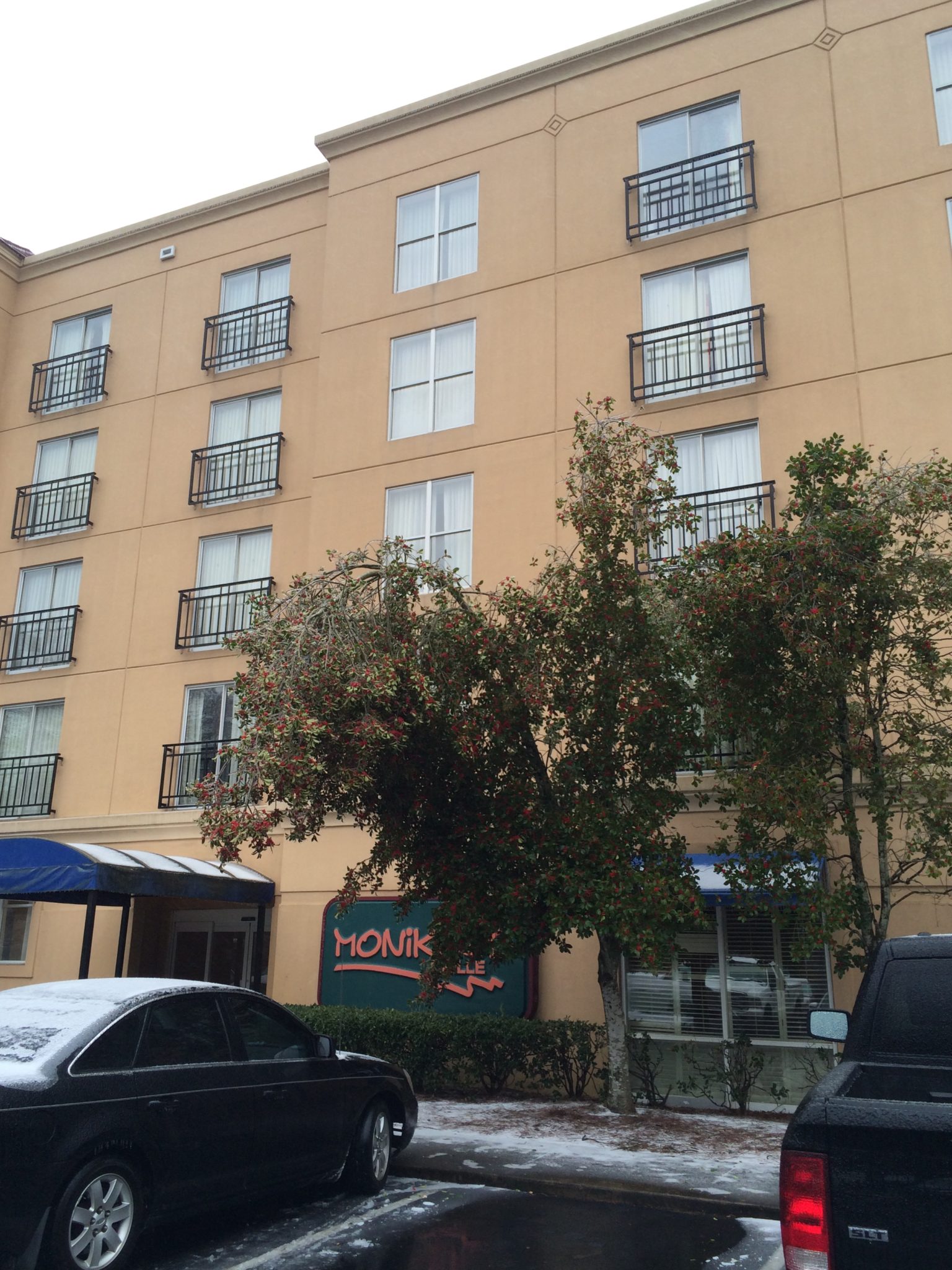
Limbs bending from ice loading.
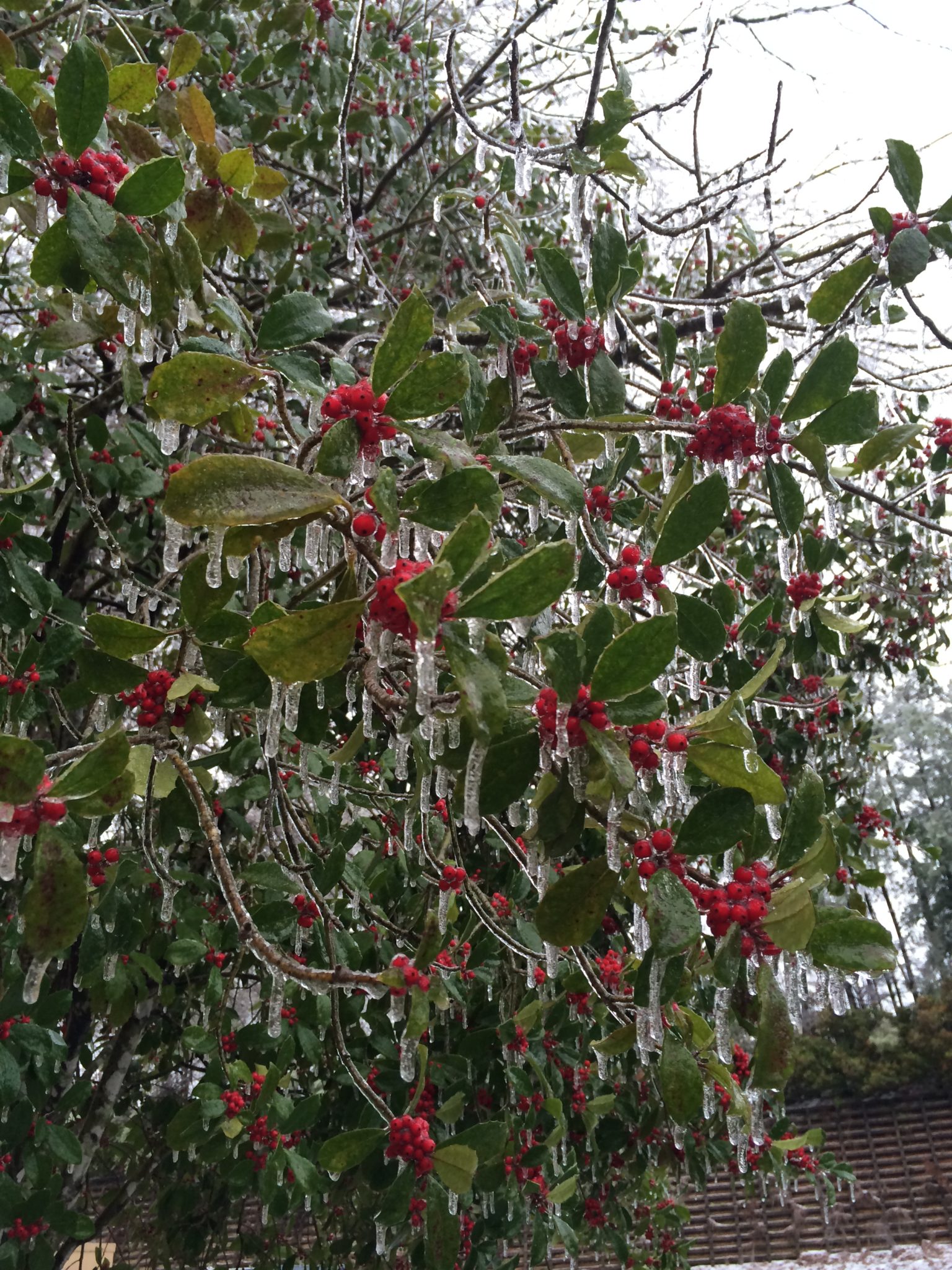
Ice accretion on hawthorn branches.
Do not shake limbs to try to remove snow or ice.
When you find your trees are bending or drooping as a result of ice or snow accumulation, your first instinct is probably to shake the branches or knock the weight off with a broom or something similar. This may cause worse damage or actually cause the branch to snap off. Stop right there! Healthy tree branches are flexible, so knocking off the accumulation of snow or ice accretion may cause them to “snap” back, potentially damaging their food and water transport system. The results of the damage may not be evident until next spring.
Trees that tend to suffer the worst damage as a result of snow and ice are upright evergreens, like arborvitae and juniper, and clump trees, like birch. And, when it comes to ice, age does not make a tree stronger; younger trees are better at actually overcoming damage in ice storms.
Hire a Professional.
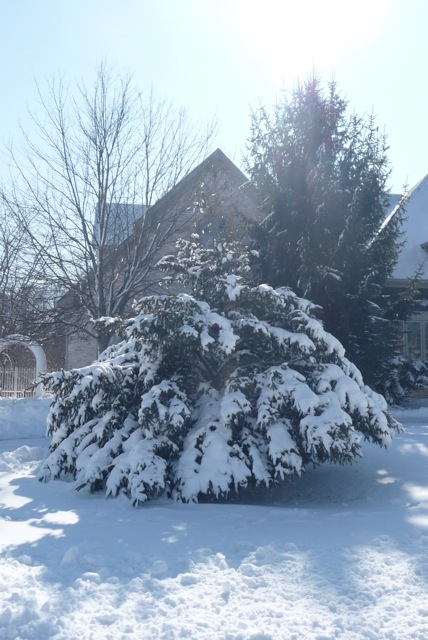
Snow weighing down spruce branches.
Safely remove broken limbs.
Broken and hanging branches can be a threat to people and property. If a limb breaks off from the weight of ice or snow and remains in the tree canopy, have it removed and the remaining stub properly pruned to the branch collar as soon as weather allows. The tree will recover better when properly pruned. For undamaged limbs bending under the weight of ice or snow, don’t prune as a means of correcting the situation. Be patient. It takes time for wood fibers in the limbs to return to its natural position.
Always be mindful of walking or parking under branches loaded down by snow or ice as they may snap and fall, causing injury or damage. If a limb breaks and becomes entangled in power lines, notify your utility company immediately. Never approach a downed power line or a branch touching a utility line.
If there is substantial damage to your tree, have an arborist examine damaged branches and limbs for signs of weakness and injury for reparations. It is best to always hire an ISA Certified Arborist. To find an arborist in your area, visit the website, www.treesaregood.org
How can you help prevent ice damage to trees? Proper pruning is one way. Particularly important is the removal of poor branch attachments and weak branch structure in the tree, prior to winter. For more information on pruning, download the publication, Tree Pruning Essentials.
Full article published in the Purdue Landscape Report.
Resources
Avoid Deadly Risk of Dying Ash Trees with Timely Tree Removal, Got Nature? Purdue Extension-FNR
New Hope for Fighting Ash Borer, Got Nature? Purdue Extension-FNR
Invasive Pest Species: Tools for Staging and Managing EAB in the Urban Forest, Got Nature?
Emerald Ash Borer, Purdue Extension-Entomology
Emerald Ash Borer Tools & Resources – Purdue Extension Entomology
Corrective Pruning for Deciduous Trees, The Education Store, Extension Publications
Lindsey Purcell, Chapter Executive Director
Indiana Arborist Association
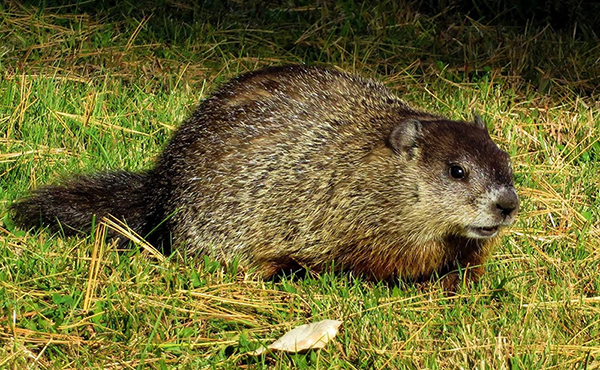 Groundhogs are good at many things, said Brian MacGowan, Purdue University Extension wildlife specialist and Forestry and Natural Resources Extension coordinator, but predicting the weather definitely isn’t one of them.
The lore surrounding Groundhog Day originated in Germany where people used the reactions of badgers and hedgehogs to gauge weather patterns. When the tradition eventually migrated to America, Jarred Brooke, Extension wildlife specialist, said hedgehogs, which can be found throughout the United States, became the mammalian forecaster of choice.
“They’re crafty little critters,” McGowan explains, “which is why they’re found in so many different places. They’re habitat generalists and can live in open woodlands, grasslands, what have you.”
While MacGowan and Brooke agreed groundhogs don’t have a great track-record of weather prediction, other facts make groundhogs one of the more interesting members of the squirrel-family.
For full article see: Groundhogs can’t predict the weather but they do poop underground.
Resources:
Selecting a Nuisance Wildlife Control Professional – The Education Store, Purdue Extension Resource Center
Preventing Wildlife Damage – Do You Need a Permit? – The Education Store
The Basics of Managing Wildlife on Agricultural Lands – The Education Store
Nuisance Wildlife – Indiana Department of Natural Resources
Dealing with nuisance geese this spring – Got Nature?
Animal Damage Management: Woodchucks, The Education Store
Brian MacGowan, Wildlife Extension Specialist
Purdue University, Forestry and Natural Resources
Jarred Brooke, Wildlife Extension Specialist
Purdue University, Forestry and Natural Resources
Emerald ash borer (EAB), the most destructive forest pest to enter North America has left hundreds of millions of dead ash trees in its wake. Although this pest has been found throughout our state, many of Indiana’s ash trees are still alive, or dead and still standing. Ash trees killed by emerald ash borer, become extremely brittle and break easily as they decline. Branches can fall on people and property in snowstorms, with a light breeze, or even on a calm clear day. Danger could be hanging over your head in the street, in the forest, and even in your backyard.
Why does emerald ash borer make ash trees so brittle?
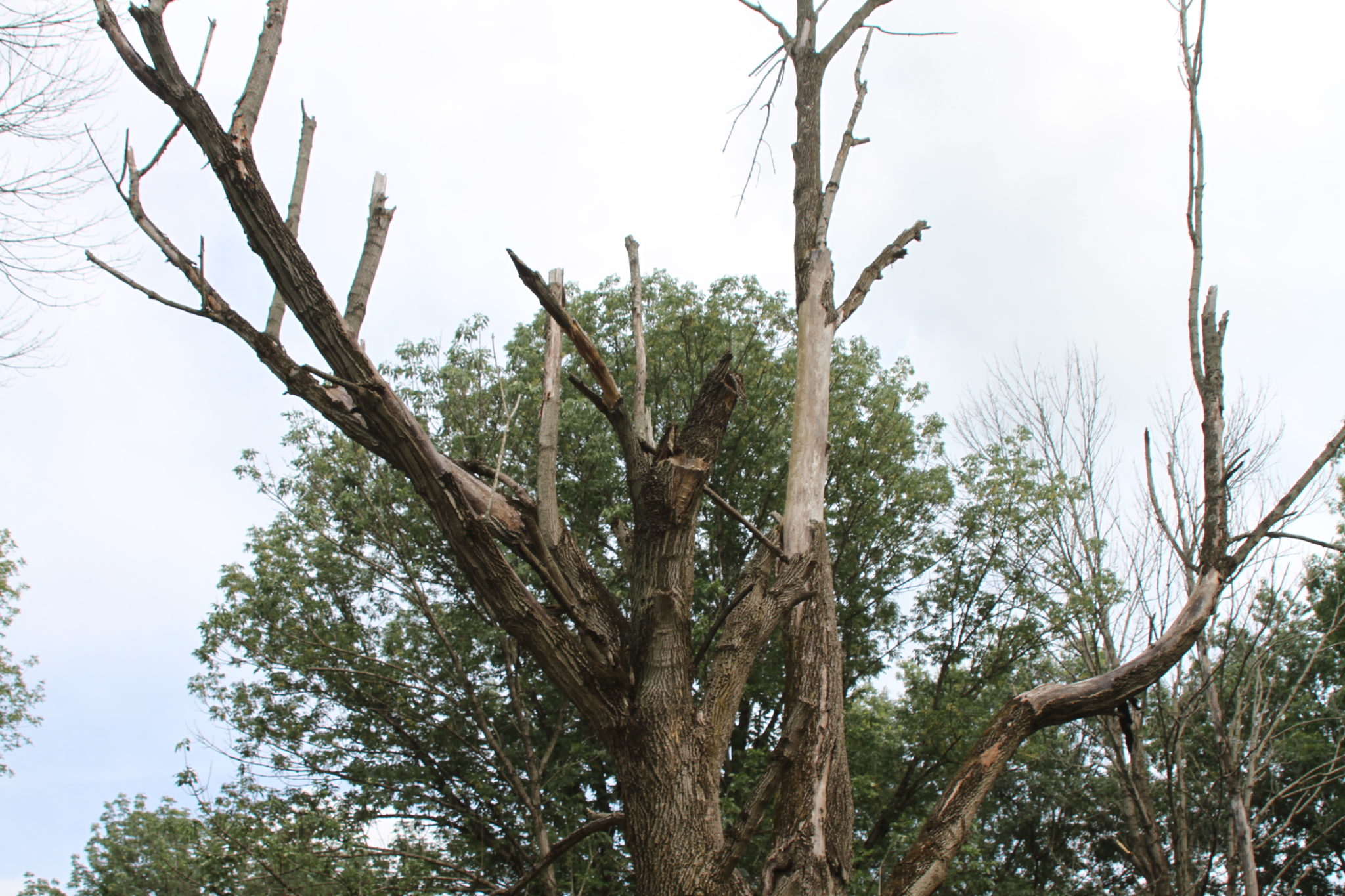
Large ash limbs that have broken off in the upper canopy.
Unlike elms, oaks, and maples, ash trees use a thin ring of conducting tissue to supply water from the roots to the entire tree. Emerald ash borer grubs will damage these functional water pipes as they chew just beneath the bark inside trunks and branches. This causes the tree to dry quickly and the structural wood to become prone to cracking. Internal breaks in the structural wood that bear the weight of the tree are often hidden from view by tree bark. As such, limbs can break and fall at any point along the branch at any time. It is not uncommon to have sizable limbs snap 30 feet off the ground on a calm day.
The threat of falling limbs is not limited to just dead ash. A comparative study of ash trees conducted in Ohio shows that structural integrity of ash trees can begin to decline even when trees are mostly green and have two thirds of the canopy still intact.
What should I do to protect myself from falling ash trees and limbs?

If your tree has lost less than 30% of its canopy hire a professional to protect the tree.
If the tree has lost more than 30% of the canopy, make plans to remove it. Delaying removal allows the tree to become more brittle and the problem more dangerous. Remember, EAB causes progressively more injury to ash trees as time goes on. The dead parts never come back to life.
If you have been treating your tree continue to do so.
How should I remove the tree?
To minimize risk of harm, hire a trained professional who has experience removing emerald ash borer damaged trees. The International Society of Arboriculture maintains a directory of Certified Arborists and their credentials. They can help find an arborist near you. Always get bids from more than one contractor. Be sure your contractor is insured and bonded in case of an accident. Professionals are happy to share this information.
Some homeowners might be hesitant to remove dead ash trees because they provide valuable habitat for a range of woodland animals and mushrooms. However, we do not recommend keeping them standing unless you can guarantee that no people, domesticated animals, or property will ever be in their path if they fall. If you have a dead tree that can’t be felled right away or ever, stay away from it until after it has fallen.
Article courtesy of the Landscape Report.
Resources:
New Hope for Fighting Ash Borer, Got Nature? Purdue Extension-FNR
Emerald Ash Borer, Purdue Extension-Entomology
Emerald Ash Borer Cost Calculator – Purdue Extension Entomology
Lindsey Purcell, Urban Forestry Specialist
Purdue Forestry and Natural Resources
Elizabeth Barnes, Exotic Forest Pest Educator
Purdue Entomology
Cliff Sadof, Professor, Ornamental, Pest Management
Purdue Entomology Extension Coordinator
 This unit highlights the resources required to produce food and the food wasted along each step of the food production system. It contains two lessons: Producers, Consumers, and Natural Resources; and Food Waste from Farm to Fork, along with all necessary overviews, notes, and resources.
For more details and free downloadable PDF see FNR-558-W publication at The Education Store: Food Waste and Natural Resources Lesson Plans.
Resources
What a Waste of Food!, lesson plans, The Education Store, Purdue Extension’s resource center
Food Waste Lesson Plans, Nature of Teaching
Rebecca Busse, Nature of Teaching Program Coordinator
Purdue Department of Forestry and Natural Resources
Rod N Williams, Engagement Faculty Fellow & Associate Professor of Wildlife Science
Purdue University Department of Forestry and Natural Resources
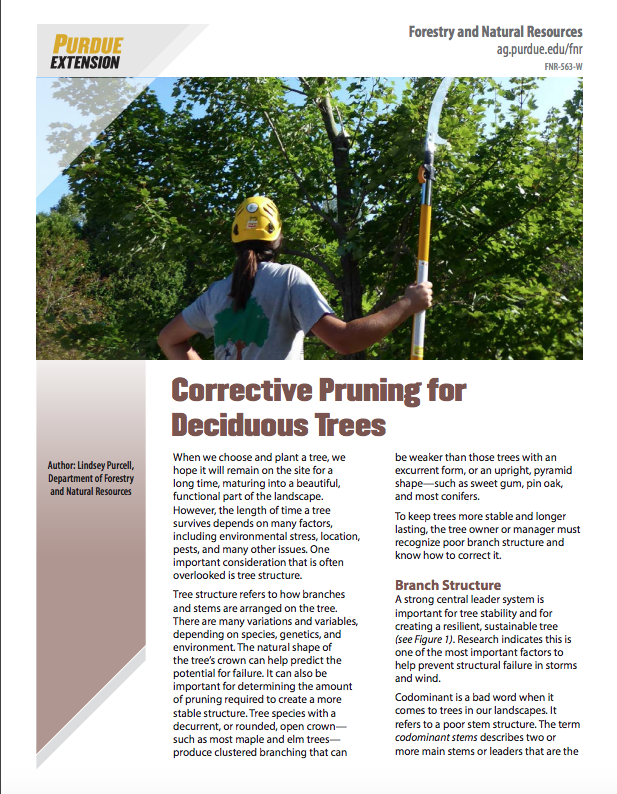
How do I remedy poor branching? Is my tree at risk of splitting, and how can pruning prevent that? Corrective pruning has many implications for tree structure, health, and longevity. Developing a strong, central branch structure in a deciduous tree is critical for preventing structural failure caused by storms, wind, and ice. This 8-page publication explains the problems resulting from a co-dominant stem structure and addresses pruning strategies for correcting poor structure.
To view this full publication please go to Corrective Pruning for Deciduous Trees located in The Education Store, Purdue Extension’s resource center.
Resources
Preparations to Prevent Southwest Tree Injury, Got Nature? Blog
When do you stake a tree?, Got Nature? Blog
Top 5 List for Tree Selection and Planting, Got Nature? Blog
Tree Selection for the “Un-natural” Environment, The Education Store, Purdue Extension
Tree Support Systems, The Education Store, Purdue Extension
Tree Installation: Process and Practices, The Education Store, Purdue Extension
Planting Your Tree Part 1: Choosing Your Tree, video, The Education Store, Purdue Extension
Lindsey Purcell, Urban Forestry Specialist
Purdue Forestry and Natural Resources

A large flock of birds flying over a field. Photo: Indiana DNR
The latest Wildlife Bulletin, provided by the Indiana Department of Natural Resources-Division of Fish and Wildlife, has all the Indiana hunting information you need to know along with upcoming events and resources. Topics include: Get your deer licenses now; Deer hunting checklist; Deer processing videos on YouTube; Hunting seasons dates; Four options to check in game; Sandhill crane migration at Jasper-Pulaski; and much more.
The Wild Bulletin is a free email newsletter offering information about Indiana’s fish and wildlife resources and recreation opportunities. Subjects covered include profiles, information about hunting and fishing season dates, regulation updates, wildlife and fisheries research status reports, tips on wildlife watching and reminders about important dates for Hoosier outdoor enthusiasts.
To subscribe to this free e-newsletter visit Wild Bulletin, Indiana Department of Natural Resources.
Other resources:
State Parks, Indiana Department of Natural Resources (IN DNR)
Outdoor Indiana, Indiana Department of Natural Resources (IN DNR)
Indiana Department of Natural Resources
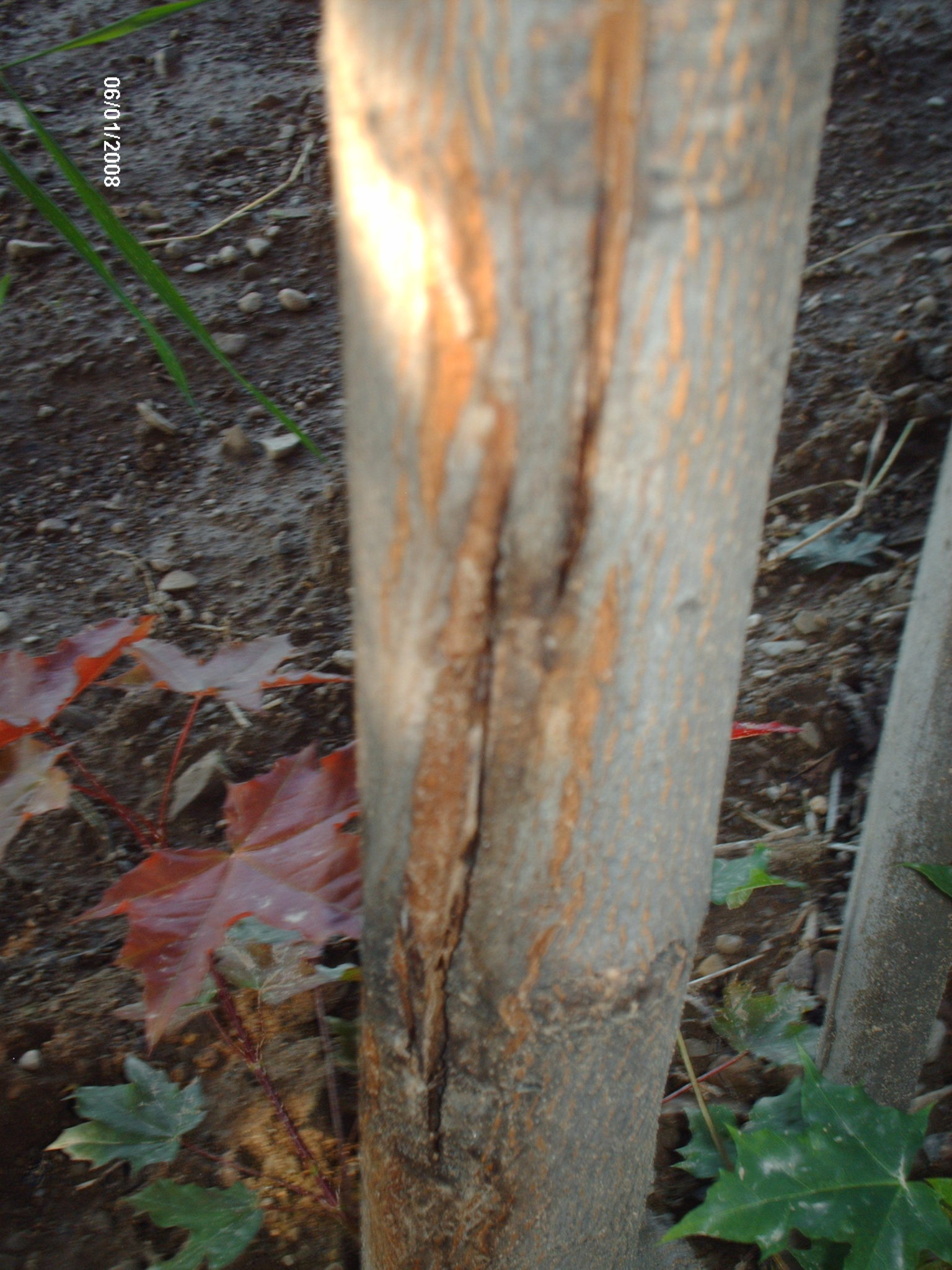
Figure 1. Bark cracking due to Southwest injury.
The time is now to start protecting your trees! Now that your ears are perked up, let’s talk a bit about Southwest injury on trees.
Bark cracking (Fig.1) is a phenomenon that occurs in many species of trees and can have many causes. One of the most common types of bark cracking is termed Southwest injury. Southwest injury occurs during the winter months on the lower section of the trunk on the southwest side. This happens when there is a sudden temperature drop, for example, the sun going behind a cloud during the winter. The freeze-thaw cycle happens very quickly when there is a change from very warm to cold conditions, which results in a crack. If there is a snow pack, the reflection of sunlight on the bark will actually increase the temperature in the bark.
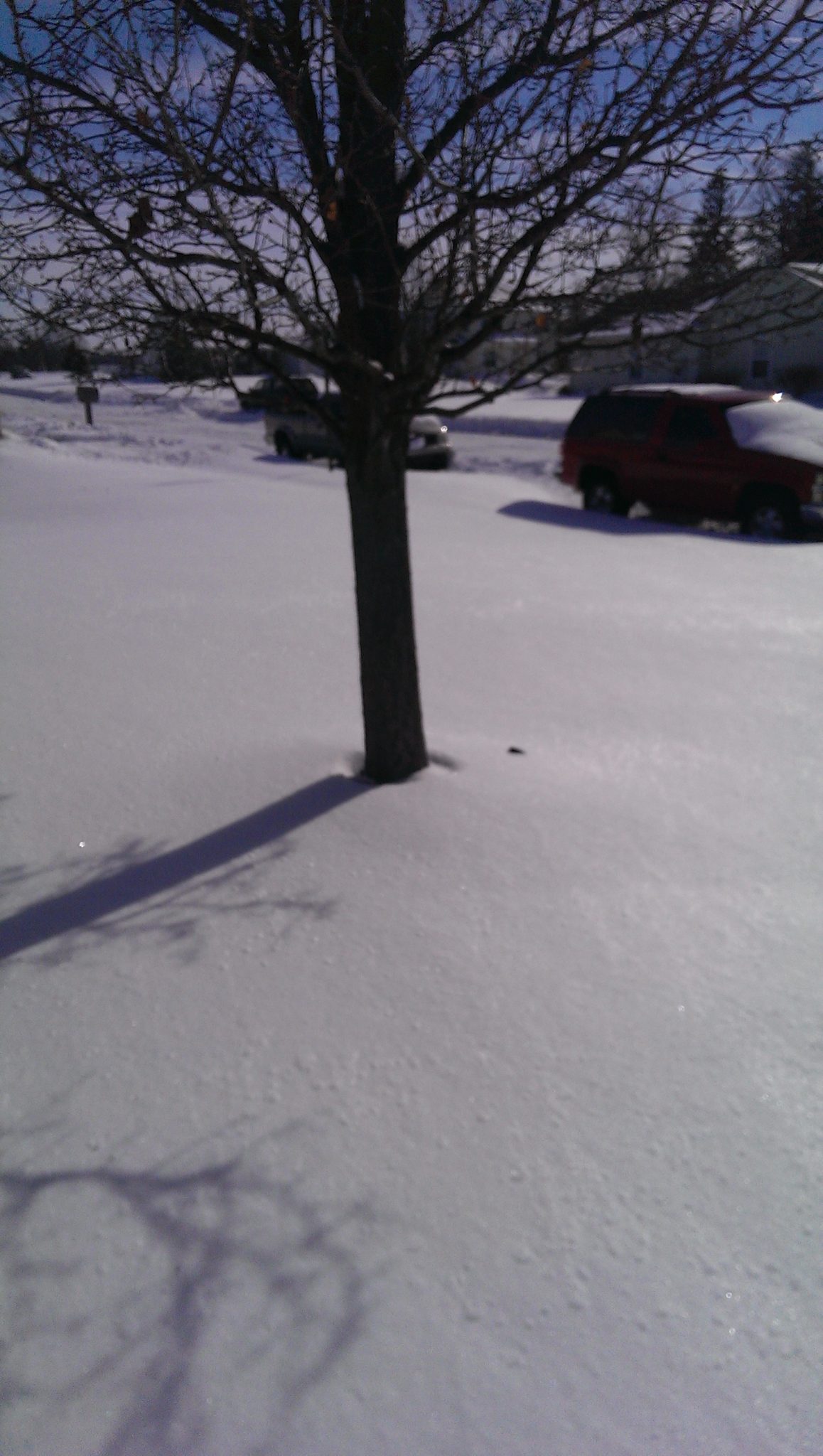
Figure 2. Snow can increase the reflection of sunlight to the tree, thus increasing the likelihood of Southwest injury.
Usually Southwest injury occurs on thin-barked trees, such as Acer spp., Cercis spp., Malus spp., and many others (Fig. 3). A thin-barked tree lacks the amount of cork cells in thicker-barked trees, thus allowing the vascular tissue to be located very close to the bark. Thick bark trees tend to be more resistant to cracking due to a greater lag in the freeze/thaw cycle. Trees that are under stress due to environmental factors, herbicide injury, and/or insect and disease are more susceptible to cracking.
No matter the initial cause of the crack, the common denominator of a crack in the bark is a pre-set wound. The freeze-thaw cycle during the cold months causes the point of injury to expand and contract. Like with your vehicle windshield, a small point of injury in bark will expand and contract due to sudden heating or cooling, thus causing a large crack.

Figure 3. Bark cracking on thin-barked species, such as maple, is common due to Southwest injury.
Any type of cracking that occurs, originates from a point of injury, such as a pruning or other mechanical injury. These are horizontal cracks that can range from <1” to the entire length of the trunk, though are usually localized near the bottom of the trunk (Fig. 4).
Once trees are greater than about four inch caliper, the likelihood of Southwest injury is diminished. On trees four inches or less, tree guards (also called tree wraps) should be installed over each trunk.
White tree guards may help prevent this from occurring due to the reflection of the sun, preventing overheating on the bottom of the trunk (Fig. 5) In order to prevent cracking, try to prevent any type of mechanical damage that could cause cracking in the winter. Bark cracks become visible most often during the late winter/early spring. Tree guards should be removed in the spring, because the guards become a problem with disease due to moisture within the guard.
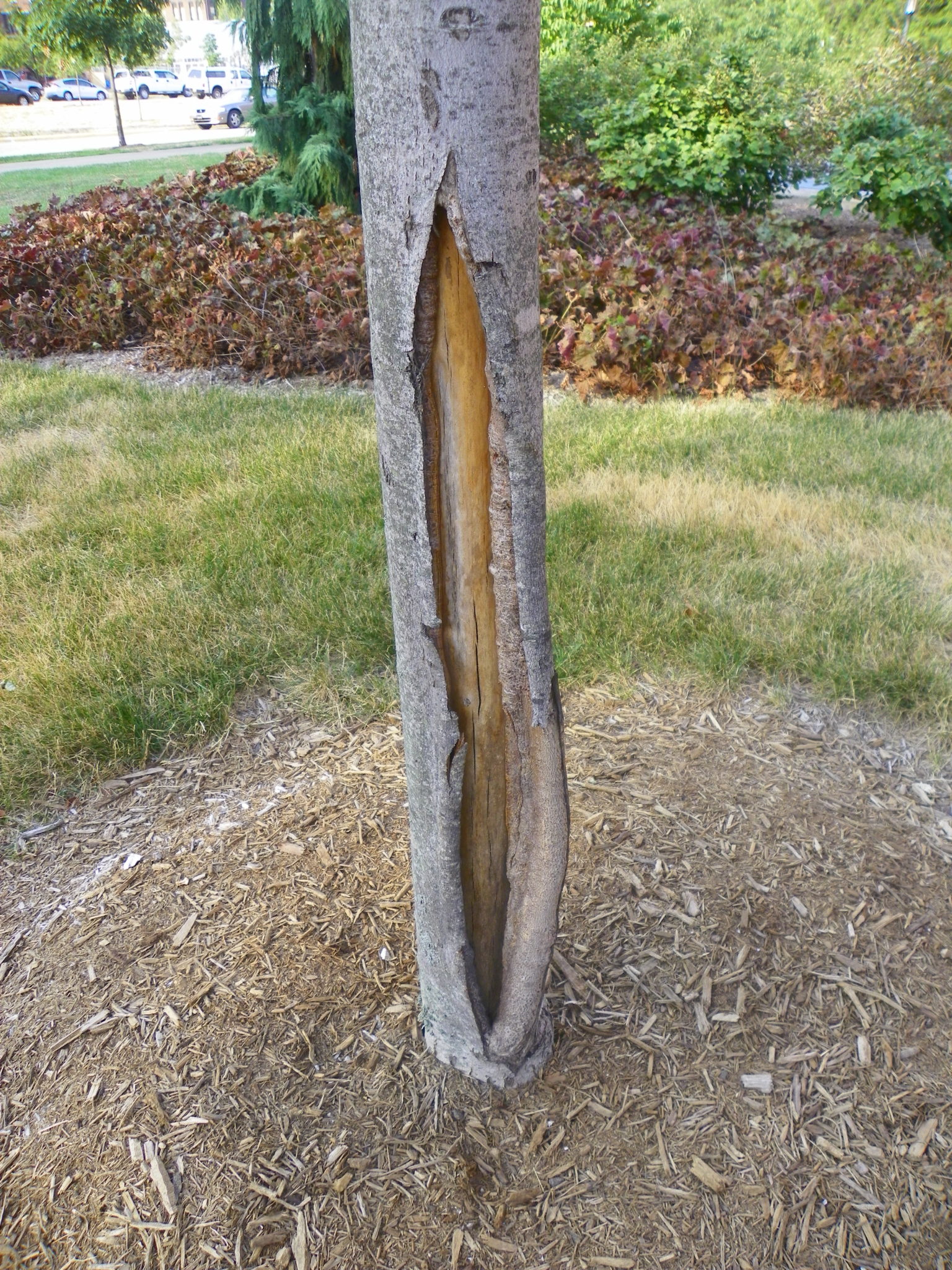
Figure 4. Southwest injury typically causes cracking up the trunk from close to the root flare
In some circumstances a healthy plant may heal, partitioning off the damaged area, but the bark on a plant under stress, due to drought, herbicide damage, etc., may last the entire life of the tree.
For full article, check out the Landscape Report
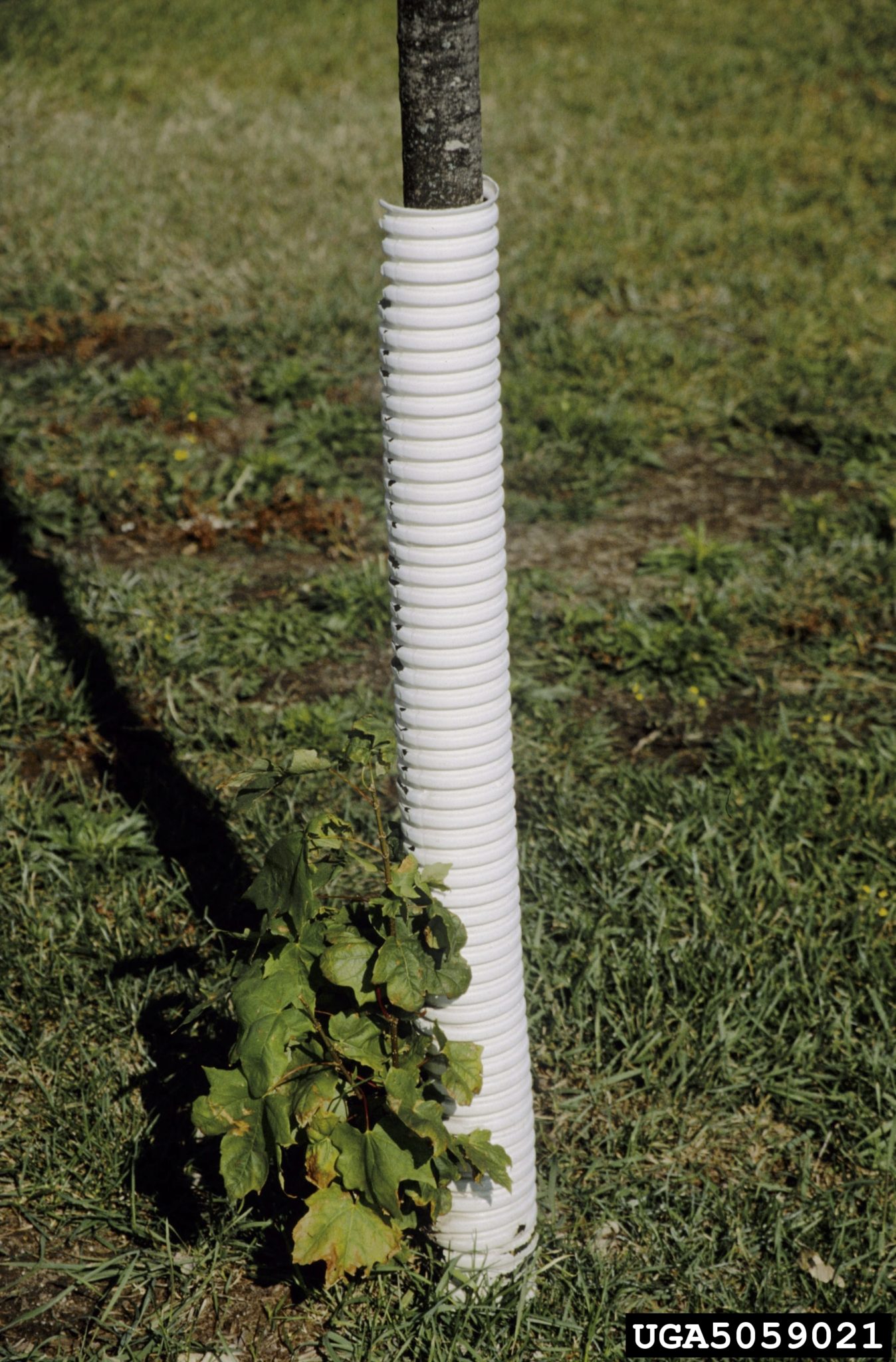
Figure 5. White tree guards can help minimize Southwest injury by reflecting sunlight. Joseph OBrien, USDA Forest Service, Bugwood.org.
Resources
Trees and Storms, The Education Store
Pruning Ornamental Trees and Shrubs, The Education Store
Why Hire an Arborist, The Education Store
Why Is My Tree Dying? The Education Store
Weeping Cherry Trees Appear to be Damaged or Dead. Was This Past Winter Hard on These Types of Trees?, Got Nature? Blog
Lindsey Purcell, Urban Forestry Specialist
Purdue Forestry and Natural Resources
The DNR Division of Entomology & Plant Pathology has discovered that a shipment of boxwood plants infected with boxwood blight was shipped to Indiana in May.
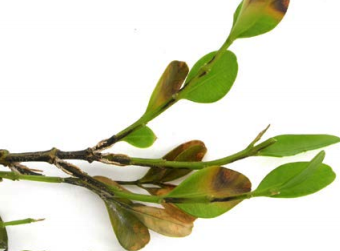
The black streaks on these stems are typical of boxwood blight. Photo by M. Daughtrey, New York.
This is important because boxwood blight (Calonectria pseudonaviculata) is a fungal disease that infests members of the popular Buxaceae family, and is often transported through the nursery trade. Hosts include Buxus (boxwood), Pachysandra (Japanese spurge) and Sarcococca (sweetbox).
In total, 23 stores in Indiana received infected material in early spring (particularly “Graham Blandy” cultivar), and it’s possible that members of the public inadvertently purchased some plants.
The fungus, which can lay dormant in drier conditions, can be found on all above-ground portions of the plant and presents itself as dark leaf spots. It causes rapid defoliation, which typically starts on the bottom of the plant and moves toward the top. This fungal pathogen can move through sporulation in water and from dropped leaves. As a result, infection can spread to surrounding plants from a single infected plant.
If you suspect one of your plants shows signs and symptoms of boxwood blight, please call (866) NO EXOTIC (866-663-9684) use the information at dnr.IN.gov/entomolo.
For more information on this pathogen see the following link extension.purdue.edu/extmedia/BP/BP-203-W.pdf
A DNR inspector found the plants at a national chain home and garden store in early October. The shipment originated at a nursery in Oregon. It was also sent to stores in 11 other states.
Upon confirmation of boxwood blight on these plants by the Purdue Plant and Pest Diagnostic Lab, the DNR required that the chain remove all boxwood from their shelves for disposal and that the stores mitigate the area through disinfection to ensure that the pathogen is no longer present and able to infect further shipments of plants.
The DNR is currently surveying for boxwood blight in Indiana. To date, the DNR has not found the pathogen, except for a few interceptions like this one.
To view all DNR news releases, please see dnr.IN.gov.
Resources:
Boxwood Blight Found in Indiana, full Landscape Report
Boxwood Blight, The Education Store, Purdue Resources
Tom Creswell, Clinical Engagement Associate Professor
Purdue Botany and Plant Pathology
Lindsey Purcell, Urban Forestry Specialist
Purdue Forestry and Natural Resources
It all starts with providing some supplemental nutrition for small to medium-aged trees in the late fall when trees go into a state of dormancy. This is when trees stop active growth and begin to form terminal buds, drop leaves and develop cold resistance. Adding fertilizer to trees too early in the season can push new growth which will be prone to winter damage.
A fertilization program is used to maintain trees in a vigorous condition and to improve their immune system against pests. Fertilizing trees refers to the practice of adding supplemental nutrients (chemical elements) required for normal growth and development. However, you really can’t “feed” a tree, since trees are autotrophs. They use nutrients to feed themselves by making sugar in the leaves through photosynthesis.
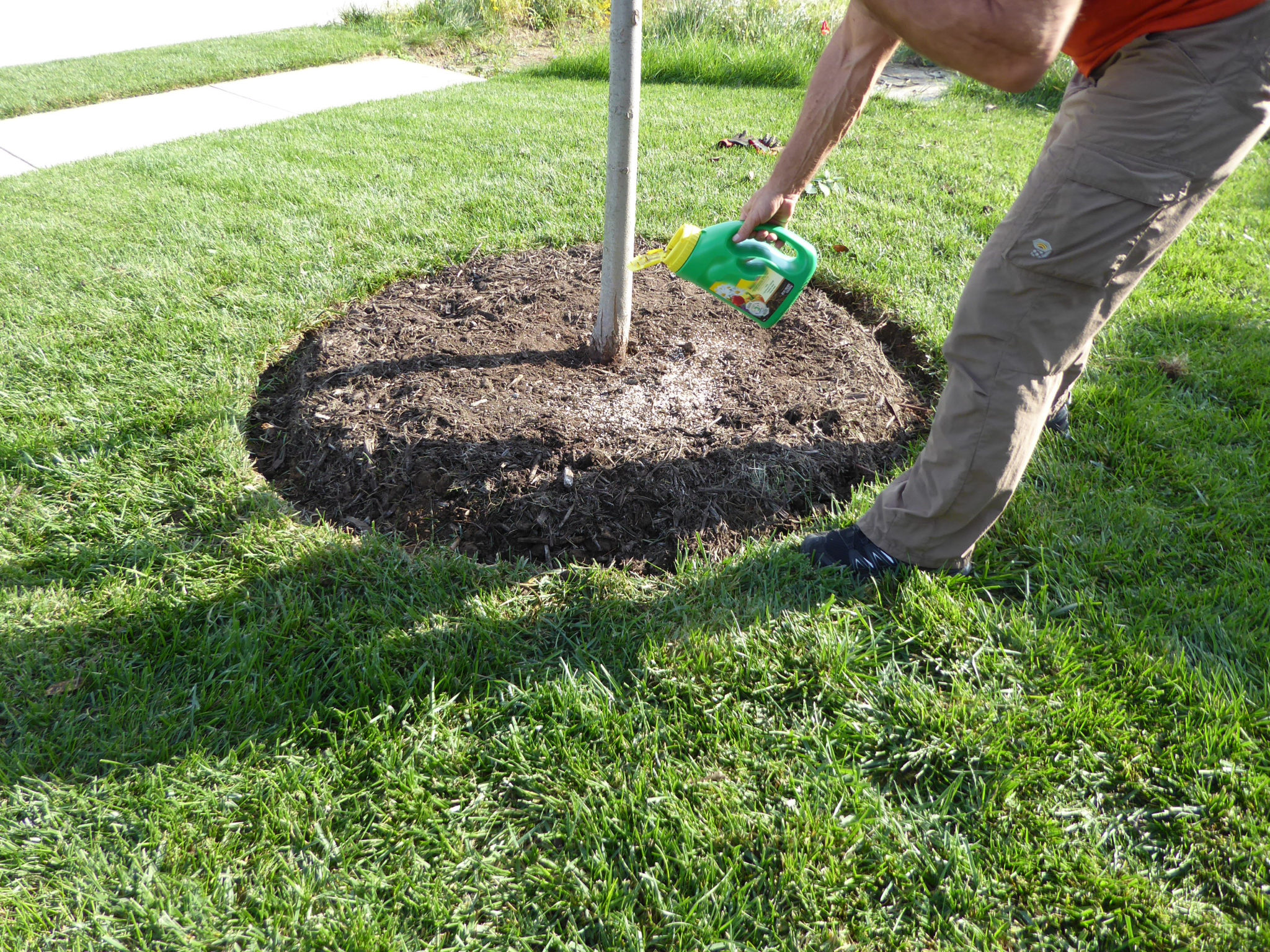
Applying fertilizer to newly established tree 3rd year after transplanting.
Nitrogen (N), phosphorus (P), and potassium (K) are plant nutrients needed in the largest quantity and these are most commonly applied as a complete fertilizer. However, the addition of any soil nutrient is recommended only if soil or plant foliage tests indicate a deficiency. For trees and shrubs in most of Indiana, the two most common causes of nutrient problems are high pH (alkaline) soils, which can lead to chronic deficiencies of nutrients in some tree species, such as red maple and pin oak, and nitrogen-deficient soils. Typical symptoms include yellowing chlorotic leaves and reduced growth and smaller leaf size.
Trees in natural settings get nutrients from the air, organic matter, nutrient cycling, and microbial activity. In many cases, supplemental nutrition is not necessary in fertile soils which have enough nutrients in the proper amounts to support healthy growth, especially on established trees, but in the urban and suburban environment, often a little assistance is needed. The more challenging urban environment provides less opportunity for healthy growth due to poor, fragmented soils, reduced microbial activity and compaction. Trees needing fertilization to stimulate growth include those exhibiting the symptoms of pale green, undersized leaves, chlorosis, reduced growth rates and those in decline resulting from insect attacks or disease problems. Also, turf can be a serious contender for nutrients and trees surround by turf benefit from additional nitrogen applications every couple of years.
Trees which should not be fertilized include newly planted trees in the current year and those with root damage from recent trenching, construction or other disturbance. The root systems of these plants will need to re-establish before fertilizers are applied with cultural practices such as supplemental moisture and mulch. Older, established trees do not need to be fertilized every year and may never need supplemental feeding. In fact, serious pest problems can result on over-fertilized trees. Research indicates that young deciduous trees benefit from additional nitrogen in low-analysis, slow release forms. Conifers require less fertilization and are genetically adapted to low-nutrient soils.
For more information on how and when to fertilize trees, refer to HO-140-W, Fertilizing Woody Plants from the Purdue Extension Education Store.
Article shared by: The Landscape Report, Start Preparing Trees for Winter and Next Year.
Resources:
Trees and Storms, The Education Store, Purdue Extension’s resource center
Tree Risk Management, The Education Store
Fertilizing Woody Plants, The Education Store
Lindsey Purcell, Urban Forestry Specialist
Purdue Forestry and Natural Resources

Recent Posts
- Urban Tree Spotlight: Planting Deciduous Shade Trees, Purdue Landscape Report
Posted: March 25, 2026 in Forests and Street Trees, Urban Forestry, Woodlands - Beetle that attacks Tree-of-Heaven found in Indiana, Purdue Landscape Report
Posted: March 20, 2026 in Invasive Insects, Wildlife, Woodlands - ID That Tree: Dwarf Chinkapin Oak
Posted: in Forestry, Urban Forestry, Wildlife, Woodlands - IN-PREPared: Essential Resources for Indiana’s Severe Weather Season
Posted: March 11, 2026 in How To, Safety - DNR Hiring for Indiana Conservation Officer Positions, MyDNR
Posted: March 9, 2026 in Urban Forestry, Wildlife, Woodlands - ID That Tree: Shumard Oak
Posted: in Plants, Urban Forestry, Wildlife, Woodlands - A Woodland Management Moment: Windbreak Around Walnut Plantings
Posted: March 3, 2026 in Forestry, Urban Forestry, Woodland Management Moment - Getting Certified as an Indiana Certified Prescribed Burn Manager
Posted: March 2, 2026 in How To, Urban Forestry, Woodlands - Uniting Indiana Residents Against Invasive Species
Posted: February 27, 2026 in Community Development, Invasive Insects, Wildlife - Have You Seen a Soaring Eagle Lately? Morning Ag Clips
Posted: February 25, 2026 in Urban Forestry, Wildlife
Archives
Categories
- Alert
- Aquaculture/Fish
- Aquatic/Aquaculture Resources
- Ask the Expert
- Christmas Trees
- Community Development
- Disease
- Drought
- Forestry
- Forests and Street Trees
- Gardening
- Got Nature for Kids
- Great Lakes
- How To
- Invasive Animal Species
- Invasive Insects
- Invasive Plant Species
- Land Use
- Natural Resource Planning
- Nature of Teaching
- Plants
- Podcasts
- Ponds
- Publication
- Safety
- Spiders
- Timber Marketing
- Uncategorized
- Urban Forestry
- Webinar
- Wildlife
- Wood Products/Manufacturing
- Woodland Management Moment
- Woodlands