 Purdue University - Extension - Forestry and Natural Resources
Got Nature? Blog
With all of the recent rain we have had throughout the state,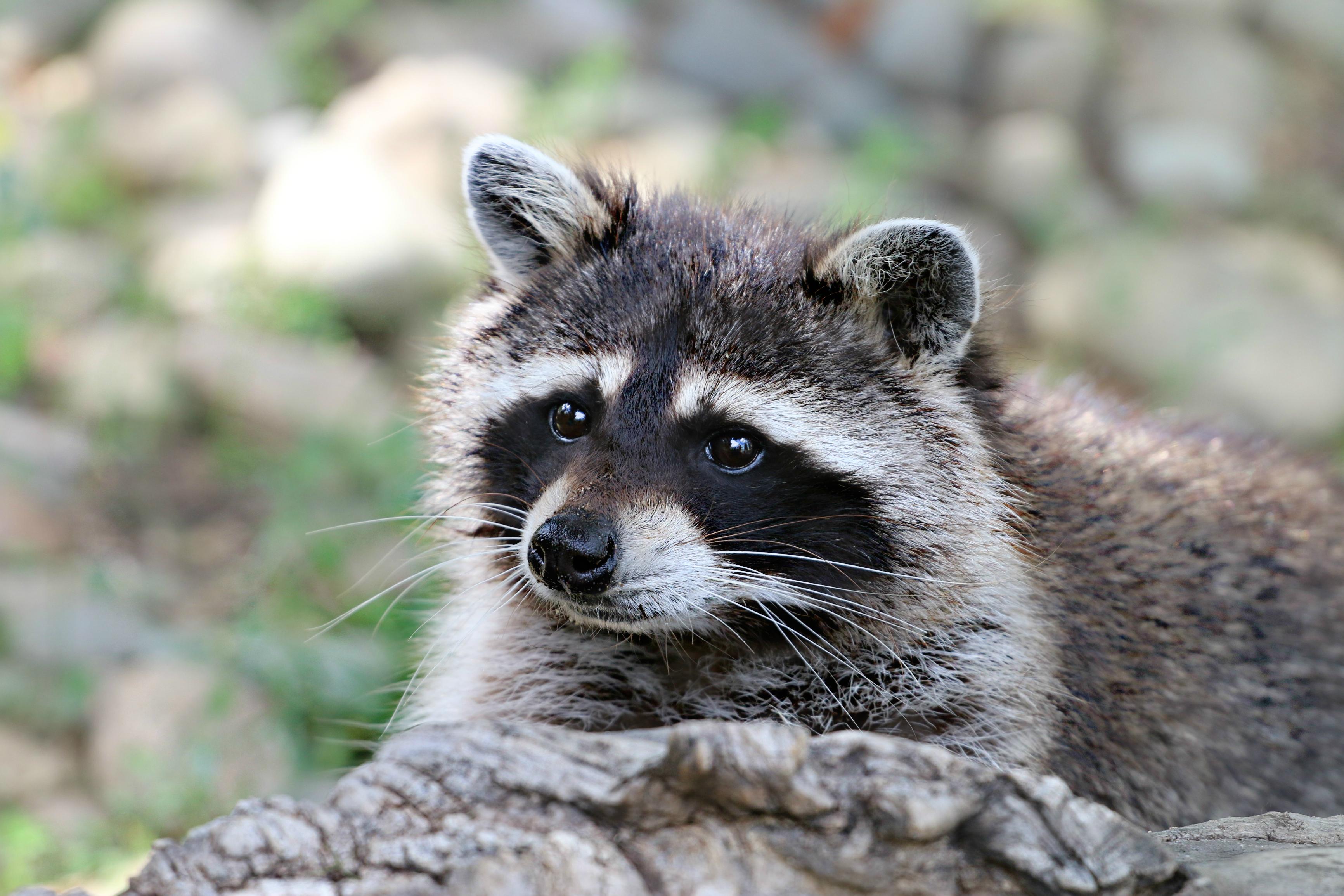 I have received several inquiries about effects on wildlife and what we can expect. While some flooding is natural in low areas and wildlife are adapted to respond, extreme flooding can impact wildlife. Flood waters can wash away nests or drown developing or very young animals for those living in low-lying areas. For example, heavy spring rains can reduce nest success of wild turkeys.
In many cases, wildlife will adapt by simply moving to higher ground. I tend to get an increase in inquiries about snakes after flooding. They begin showing up in neighborhood homes when they have never been observed in years past. Certainly our environment changes over time and wildlife can and do respond to these changes. However, sudden changes are likely due to a response of snakes moving to drier ground. The good news is this and other similar displacement of wildlife is usually temporary.
What can we do? I’m afraid not much for our currently flooded friends. However, in the long-term, times like this reinforce the need to create and enhance quality wildlife habitat. Providing wildlife with quality habitat that contains the necessary food, cover and water resources gives them a fighting chance to deal with issues that inevitably arise. In addition, wetlands that landowners build and restore on their properties not only enhance wildlife habitat, but also help retain moderate flood waters and recharge groundwater supplies.
If some unwanted wildlife has overstayed their welcome in and around your home, check out the Purdue Education Store publication, Considerations for Trapping Nuisance Wildlife with Box Traps. If you think you have found a sick or injured animal, you can find a list of licensed Wild Animal Rehabilitators in your area on the DNR Division of Fish and Wildlife’s Orphaned and Injured webpage. In Indiana, wildlife rehabilitators have necessary state and federal permits to house and care for sick or injured wild animals.
Additional Resources
Preventing Wildlife Damage – Do You Need a Permit? The Education Store, Purdue Extension
The Basics of Managing Wildlife on Agricultural Lands, The Education Store, Purdue Extension
Brian J. MacGowan, Extension Wildlife Specialist
Department of Forestry and Natural Resources, Purdue University
Cockroaches are serious threats to human health. They carry dozens of types of bacteria, such as E. coli and salmonella, that can sicken people. And the saliva, feces and body parts they leave behind may not only trigger allergies and asthma but could cause the condition in some children.
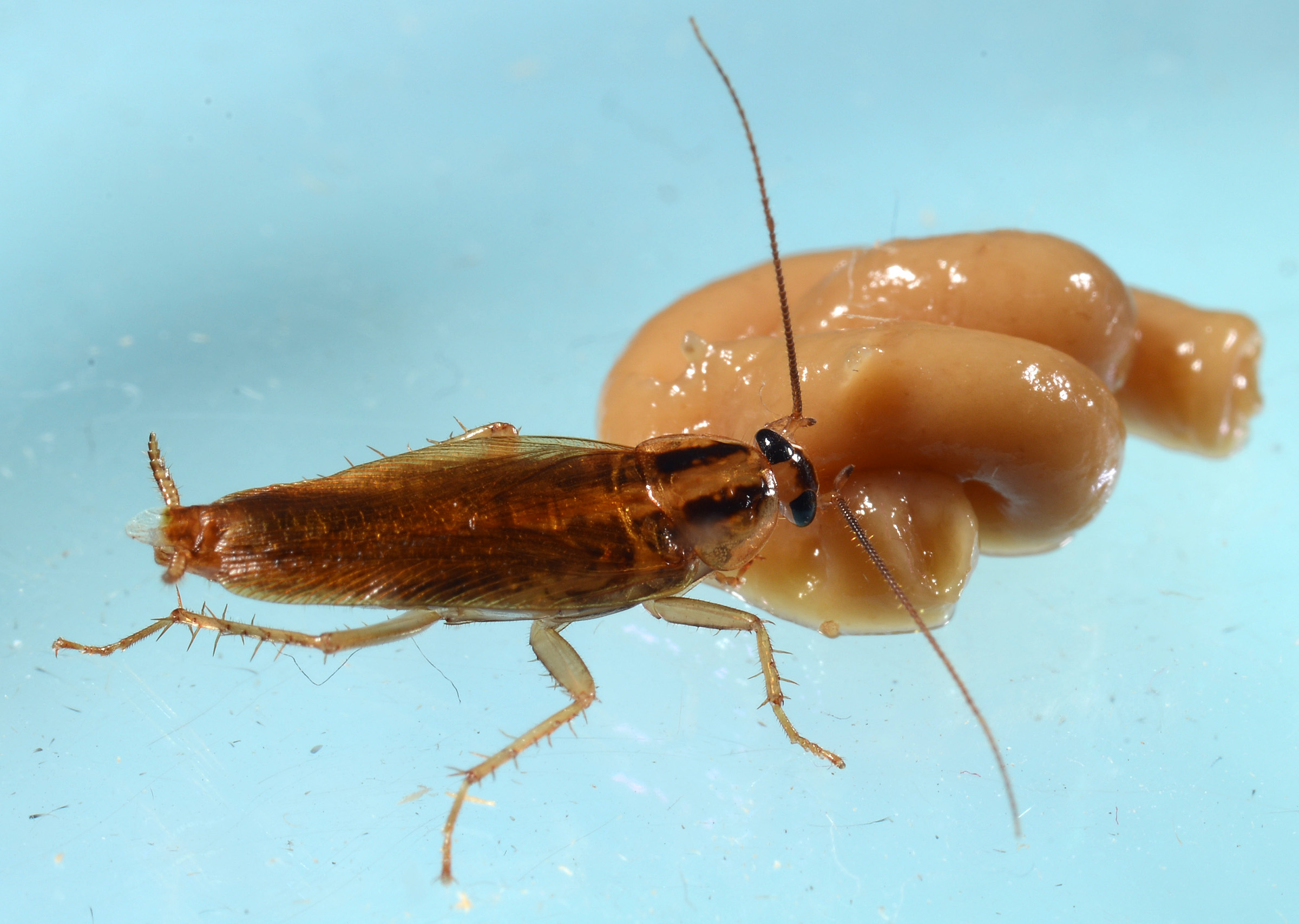
A German cockroach feeds on an insecticide in the laboratory portion of a Purdue University study that determined the insects are gaining cross-resistance to multiple insecticides at one time. (Photo by John Obermeyer/Purdue Entomology)
A Purdue University study led by Michael Scharf, professor and O.W. Rollins/Orkin Chair in the Department of Entomology, now finds evidence that German cockroaches (Blattella germanica L.) are becoming more difficult to eliminate as they develop cross-resistance to exterminators’ best insecticides. The problem is especially prevalent in urban areas and in low-income or federally subsidized housing where resources to effectively combat the pests aren’t as available.
“This is a previously unrealized challenge in cockroaches,” said Scharf, whose findings were published in the journal Scientific Reports. “Cockroaches developing resistance to multiple classes of insecticides at once will make controlling these pests almost impossible with chemicals alone.”
Each class of insecticide works in a different way to kill cockroaches. Exterminators will often use insecticides that are a mixture of multiple classes or change classes from treatment to treatment. The hope is that even if a small percentage of cockroaches is resistant to one class, insecticides from other classes will eliminate them.
Scharf and his study co-authors set out to test those methods at multi-unit buildings in Indiana and Illinois over six months. In one treatment, three insecticides from different classes were rotated into use each month for three months and then repeated. In the second, they used a mixture of two insecticides from different classes for six months. In the third, they chose an insecticide to which cockroaches had low-level starting resistance and used it the entire time.
In each location, cockroaches were captured before the study and lab-tested to determine the most effective insecticides for each treatment, setting up the scientists for the best possible outcomes.
“If you have the ability to test the roaches first and pick an insecticide that has low resistance, that ups the odds,” Scharf said. “But even then, we had trouble controlling populations.”
For full article: Rapid cross-resistance bringing cockroaches closer to invincibility.
Resources
Report Invasive Species, Purdue Agriculture & Indiana Invasive Species Council
Purdue experts encourage ‘citizen scientists’ to report invasive species, Purdue Agriculture News
New Hope for Fighting Ash Borer, Got Nature? Blog, Purdue Forestry and Natural Resources
Mile-a-Minute Invasive Vine Found Indiana, Got Nature? Blog
Sericea Lespedeza: Plague on the Prairie, Got Nature? Blog
Michael E. Scharf, Professor and O.W. Rollins/Orkin Chair
Purdue Department of Entomology
Brian J. Wallheimer, Science Writer
Purdue College of Agriculture
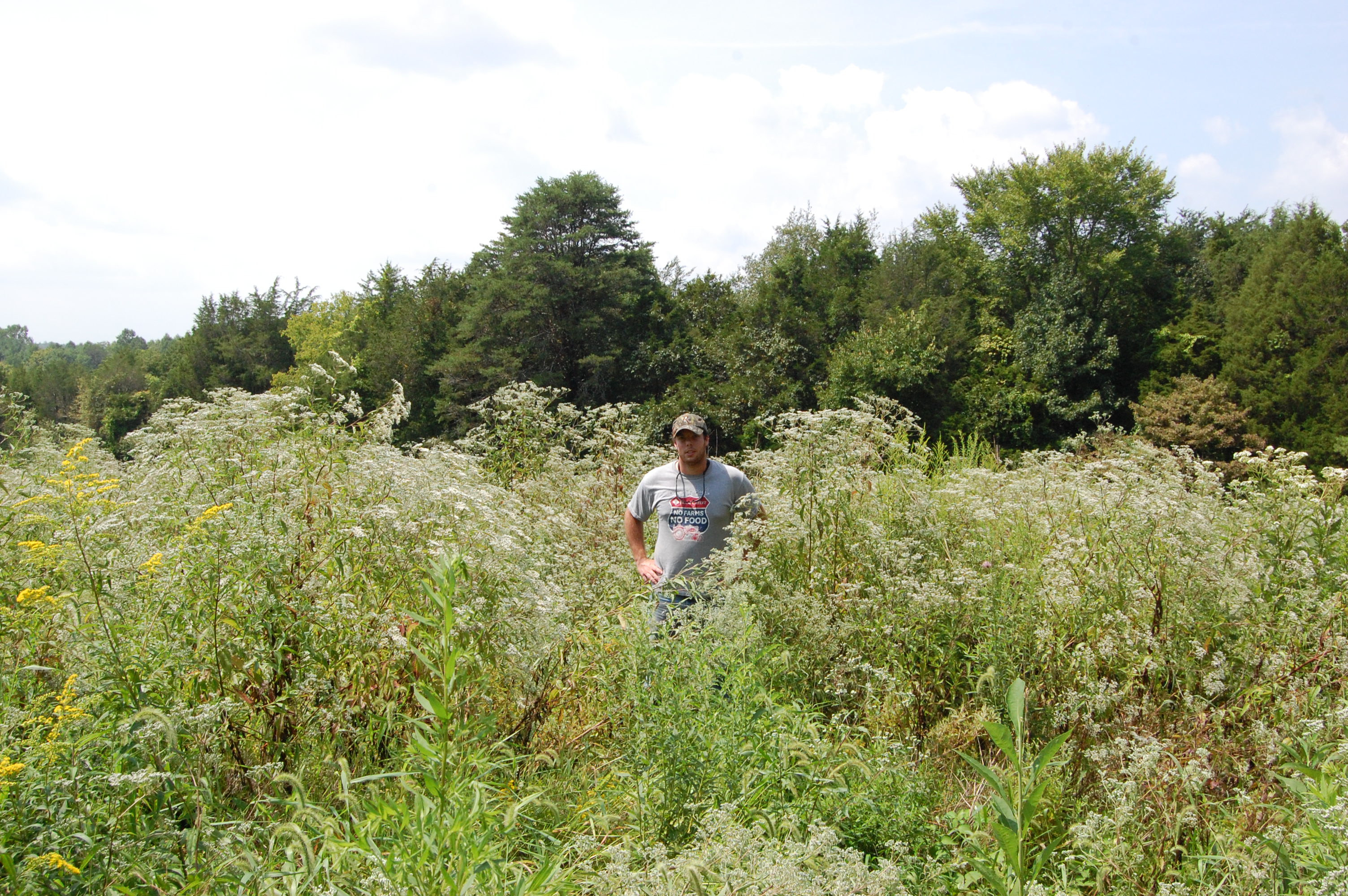
A “weedy” field like this may seem unsightly to some, but to wildlife, it provides invaluable food and cover. Just by leaving this field unmowed, you can improve habitat on your farm.

Mowing just to clean up the farm, or Recreational Mowing Syndrome (RMS), eliminates habitat for countless wildlife species.
Do you have a sudden urge to jump in the tractor and mow your fields, field borders or road ditches?
You might have RMS.
Do you enjoy spending your weekend in the cab of the tractor with a mower in tow in search of places to mow across your property?
You might have RMS.
Do you get queasy at the sight of a “weedy” unkempt field?
You might have RMS.
What is RMS you ask? RMS stands for Recreational Mowing Syndrome, a condition that afflicts many rural landowners during the summer months. And if you answered yes to any or all of the questions above, then you have RMS.
What is it?
RMS is the sudden urge many landowners get to ‘clean’ up their property by mowing the ideal fields, field borders, and road ditches around the farm during the summer months. While a mowed field may look attractive in the eyes of a landowner, in the eyes of wildlife, this is a serious problem.
These prime mowing spots provide habitat for a suite of birds, mammals, herpetofauna, and pollinating insects that inhabit our rural landscapes. Many of these species are actively nesting or raising young in these areas during peak mowing season – April through September. And the weeds coming up in these fields like common milkweed, tall ironweed, common ragweed, and many others provide food and cover for wildlife.
How to treat it?
The easiest way to treat RMS is by going cold-turkey – park the tractor for the summer. If you are not ready to give up mowing all together, then restrict your mowing to just the lanes around the fields, instead of the whole field. If you are ready to give up mowing, but still want to enjoy time in the tractor, try these options.
Instead of hooking up the mower, hook up the sprayer and go control some invasive species on the property, like bush honeysuckle, autumn olive, or sericea lespedeza. Or try hooking up the disk and disking around the field to prepare firebreaks for a late summer or fall prescribed fire.
You can still spend time on the tractor during the summer months without eliminating wildlife habitat through mowing. In fact, you can improve it!
Next time you look at your window and see a “weedy” field, don’t cringe and give into the urge to mow it. Instead, just smile and listen to all the quail whistling, songbirds singing, and bees buzzing in the habitat you improved by not mowing.
Resources
Renovating native warm-season grass stands for wildlife: A Land Manager’s Guide, The Education Store, Purdue Extension Resource Center
Effective Firebreaks for Safe Use of Prescribed Fire, Got Nature?, Purdue Extension – FNR
Sericea Lespedeza: Plague on the Prairie, Got Nature?, Purdue Extension – FNR
Jarred Brooke, Wildlife Extension Specialist
Purdue Forestry and Natural Resources
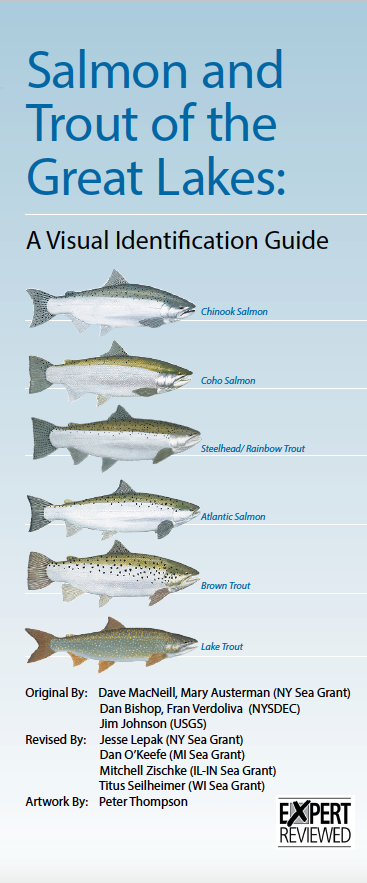 The Illinois-Indiana Sea Grant and Purdue Forestry and Natural Resources Extension have recently released a new publication through The Education Store. This collaborative publication is a visual identification guide on salmon and trout of the Great Lakes.
The Great Lakes are home to eight species of salmon and trout. These species can be difficult to distinguish from each other as they overlap in their distributions and change appearance depending on their habitat and the time of year. This illustrated, peer-reviewed, two-page guide, courtesy of the Great Lakes Sea Grant Network, shows important body features and helpful tips to identify and distinguish between salmon and trout species in the Great Lakes.
View the Salmon and Trout of the Great Lakes: A Visual Identification Guide on The Education Store-Purdue Extension. See below for other related publications and websites.
Resources
A Fish Farmer’s Guide to Understanding Water Quality, National Oceanic and Atmospheric Administration
Pond Management: Stocking Fish in Indiana Ponds, The Education Store
The Nature of Teaching: Adaptations for Aquatic Amphibians, The Education Store
DNR Fish Identification Form, Indiana Department of Natural Resources
Illinois-Indiana Sea Grant, IISG Homepage
Mitchell Zischke, Clinical Assistant Professor
Purdue University Department of Forestry and Natural Resources
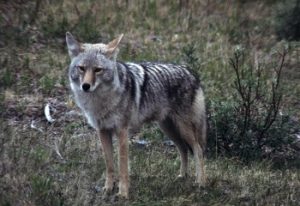
Coyote (Canis latrans) – Photo by Alfred Viola, Northeastern University, Bugwood.org
Question
Can you help me identify the canines that live on my farm? Are they “coyote” or “coywolf”? I have taken photos of the pups and have been confused on trying to identify them from articles I have found online. One article I found suggests a “coywolf” is something unusual; but another article I found suggests every canine we refer to in Indiana as “coyote” is actually a “coywolf” hybrid rather than a “true” coyote. I would like to know. Thank you.
Answer
Thanks for submitting this question. You are correct that many of the online articles we find are confusing and contradicting, and if I might add often just plain wrong. The truth is all coyotes east of the Mississippi River have some level of wolf genes as well as domestic dog genes. What is recent, is that this was discovered regarding wolf genes. Not because of a recent hybridization event, but that new genetic technologies (specifically, next gen sequencing) allowed researchers to detect this. Coyotes we have now are no different than they were 50 years ago. The term coywolf is a poor term at best. It is misleading and its use should be avoided. News outlets use it because it captures viewers attention.
In terms of variation in size and current hybridization, these things can happen but are very rare. The size of coyotes, as with people or any other animal species, can be extreme for a rare individual. However, the vast majority are within a normal range. Published weights of coyotes average 13 to 15 kg. So on average, coyotes in Maine are about 5 lbs heavier than those in Indiana. So, a typical adult coyote is 28 to 33 lbs, you do find one that is 40 lbs or even approaches 50 lbs total. Wolves are capable of breeding with coyotes, but they will most often run them off or kill them as competitors for shared resources. Also, we don’t have any wolves around either.
Stan Gerht is a researcher from Ohio State. His team has studied coyotes in the Chicagoland area for years. They have a lot of good information about them at the Urban Coyote Research website.
Resources
Coyotes, IN DNR
Coyotes (PDF), Wildlife Conflicts, Department of Entomology, Purdue University
Should I Be Worried About Coyotes in My Yard?, Purdue Extension – Forestry & Natural Resources (FNR) Got Nature? Blog
Coexisting With Coyotes, Wild Bulletin, Indiana Department of Natural Resources, Division of Fish and Wildlife
Ask the Expert: Coexisting with Coyotes , Purdue Extension – FNR Got Nature? Blog
Urban Coyotes – Should You Be Concerned?, Purdue Extension – FNR Got Nature? Blog
Pets Disappearing? The Cause May Be Coyotes, Purdue Extension – FNR Got Nature? Blog
Permitted Wildlife Rehabilitators, Indiana Department of Natural Resources
How do you eliminate a nuisance animal on your property?, Indiana Department of Natural Resources (IN DNR)-Fish and Wildlife
Urban Coyote Research Center, Urban Coyote Ecology & Management, Cook County, Illinois
Brian MacGowan, Wildlife Extension Specialist & Extension Coordinator
Purdue University Department of Forestry and Natural Resources Extension
 Fish stocking in a pond is like a retirement plan—you need to have a vision of your ultimate goal. You want to start off in the right direction or your long-term investment may not pay the dividends you had hoped for. Pond Management: Stocking Fish in Indiana Ponds is an 8-page publication written by our experts partnering together from Purdue’s Pesticide Programs, Forestry and Natural Resources and Purdue Weed Science. They share recommendations regarding fish types, numbers, and predator/prey relationships for new and renovated ponds.
Main topics include:
- Stocking new or renovated ponds with no fish present
- Assessment of ponds with existing fish populations
- Northern strain largemouth bass
- Stocking fathead minnows
- Stocking fish to control vegetation
- Dissolved oxygen – fish need it to live
- Fish health
Properly stocking your pond with the correct number of the recommended species at the right size are all important steps in creating a healthy and well-balanced pond that will provide good fishing into the future. For more information on pond management go to extension.purdue.edu/pondwildlife or contact Jarred Brooke at jmbrooke@purdue.edu.
Other resources:
Indiana Pond Fish, Species Identification Card Set, The Education Store, Purdue Extension Resource Center
Forestry and Water Quality: Pollution Control Practices, The Education Store
Marine Shrimp Biofloc Systems: Management Practices, The Education Store
The Nature of Teaching: Healthy Water, Happy Home – Lesson Plan, The Education Store
Aquaculture & Aquatics, Purdue Extension-Forestry & Natural Resources
Jarred Brooke, Wildlife Extension Specialist
Purdue University, Department of Forestry and Natural Resources
Proper disposal of medicine and personal care products is important not only  for you and your loved ones, but for the safety of the community around you. This article will walk you through methods of proper disposal for your area.
“Illinois-Indiana Sea Grant’s (IISG) Pollution Prevention Team is continually working with individuals, communities, and local governments to make the disposal of your unused, expired, or unwanted medicines convenient and safe. Since 2007, IISG has helped set up more than 70 new take-back programs, including more than 40 permanent take-back sites, collecting over 55 tons of unwanted medicines at collection events/locations in Illinois, Indiana, Michigan, and Wisconsin.” Read more and find out “Where to Dispose”. . .
Unwanted Medicine, Indiana Department of Environmental Management
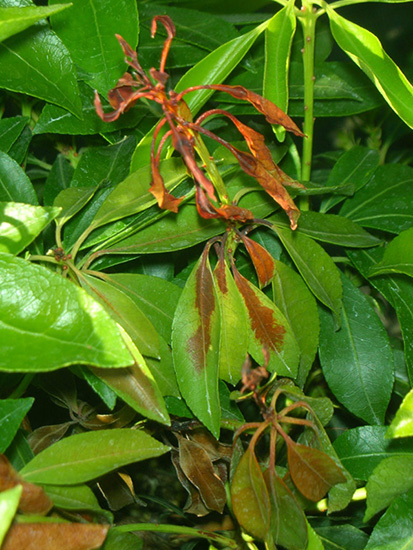 Sudden oak death, as the name suggests, is a disease that is capable of rapidly killing certain species of oaks. It was first identified in California, in 1995. Two years earlier it was identified in Germany and the Netherlands, killing rhododendron. Because the pathogen originally infected and killed tanoaks, an undesirable, understory scrub tree, it generated little interest until other, more desirable oaks species began dying. However, by this point, the disease was well established and eradication no longer an option, with millions of oak trees killed by the disease. Currently, over 120 hosts in addition to oaks have been identified, and more continue to be added to this list. What is most unusual about sudden oak death is the severity of disease symptoms coupled with the broad host range of the pathogen. This leads to difficulty in diagnosing and managing this disease.
What causes this disease?
The pathogen that causes SOD is Phytophthora ramorum (pronounced Fī-toff-thor-ă ră-mor-ǔm). This pathogen belongs to a group of organisms in the Kingdom Chromista, and has characteristics similar to fungi, plants and animals. It spreads throughout the plant by hyphal threads (like fungi), produces spores (like fungi) that have flagella and swim through water (like animals), but its cell wall is made up of cellulose (like plants). When conditions dry up, Phytophthora can produce thick walled sexual spores called oospores, or asexual chlamydospores. Because P. ramorum is not a ‘true’ fungus, many fungicides labeled for control of other fungal diseases are not effective against it.
With such a broad range of plant hosts, it is important to stress that P. ramorum affects different species in different ways. Identification must be confirmed in the laboratory and cannot be identified on field symptoms alone. Many common landscape shrubs are also infected by other endemic Phytophthora species, and symptoms look similar. Boring insects and other root rots may be mistaken for this disease. For this reason, all Phytophthora infections should be screened by the Purdue Plant and Pest Diagnostic Laboratory.
What are the symptoms of SOD?
To understand this disease, it is important to recognize that there are two categories of hosts: bark canker hosts and foliar hosts. Further complicating this is the fact that oaks are divided into three subgroups, and only the red oak group are susceptible to this pathogen. Of our 17 oak species in Indiana, half are potentially, or known to be susceptible, and include black, blackjack, cherrybark, Northern pin, pin, red, scarlet, and Shumard oaks. Diagnostic symptoms of infected red oaks include oozing sap and red-brown cankers that often leading to death.
Our concern right now is on ‘the other’ hosts. Despite its name, sudden oak death primarily spreads through foliar hosts that are sold throughout the United States. Foliar hosts include rhododendrons, azalea, viburnum, lilac, and periwinkle (Vinca minor).
These hosts (and many others) are infected via the leaves and small branches. These infections rarely cause death, and can be mistaken for sunscald, twig canker, and dieback caused by other pathogens, including native Phytophthora species. Although symptoms from these infections are not severe, and are rarely fatal, the infections produce enormous numbers of spores that can infect neighboring, susceptible oaks—and other plant species. For this reason, we are asking people to examine any rhododendrons (or other co-mingled hosts like azalea, viburnum and lilac) purchased this spring from Walmart and Rural King, while the disease may still be controlled and the pathogen contained. Although this disease doesn’t look like much on rhododendron or lilac, its ability to spread to oaks and kill them is what makes it so devastating. These shrubs play a key role in the spread of P. ramorum, acting as a breeding ground for spores (inoculum) that can spread through water, wind-driven rain, plant material, or human activity. Oaks are considered terminal hosts, since the pathogen does not readily spread from intact bark cankers; they become infected only when exposed to spores produced on the leaves and twigs of neighboring plants.
For full article and photos view: Purdue Landscape Report
Other resources:
Sudden Oak Death, California Oak Mortality Task Force
Sudden Oak Death, Indiana Department of Natural Resources
White Oak, The Education Store, Purdue Extension resource center
Planting Forest Trees and Shrubs in Indiana, The Education Store
Successful Oak and Hickory Regeneration, The Hardwood Ecosystem Experiment: 2006-2016, The Education Store
Find a Certified Arborist, International Society of Arboriculture
Janna Beckerman, Professor
Purdue Botany and Plant Pathology
Question: I have noticed that a lot of very mature (> 80 ft) sycamore trees look ill. They don’t seem to have as many 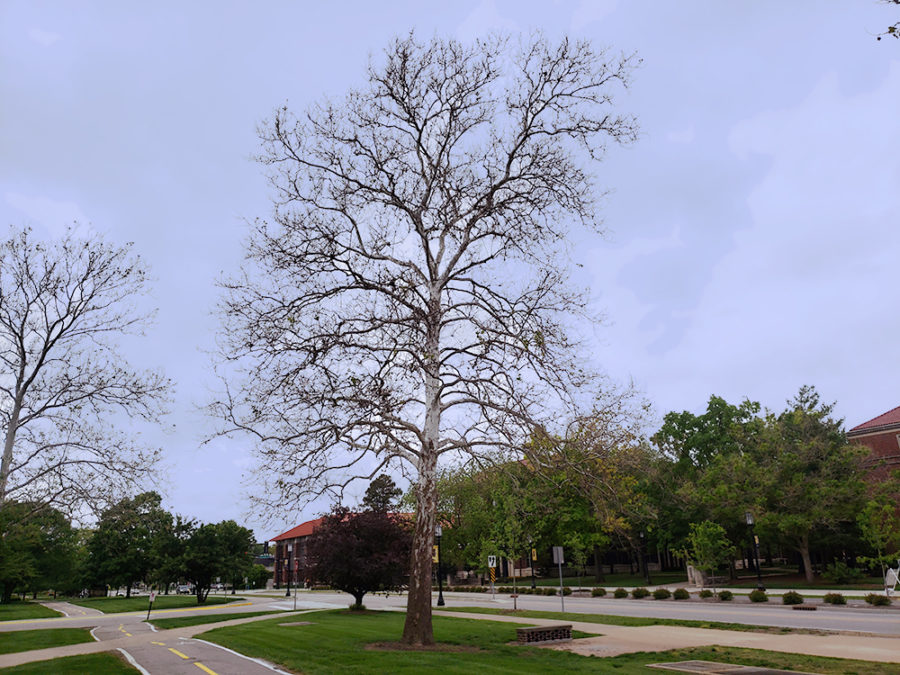 leaves, or as large as they usually get and some have already turned brown and died. There are at least 2 in my 5 acres of woods and have noticed the same with other sycamores while driving from Mooresville to Indianapolis. Is there a certain blight/canker/pest that is damaging sycamores this year?
Answer: I have also noticed that many sycamores appear relatively bare and may have brown or wilted leaves on the stems and littering the ground around the trees. The culprit is sycamore anthracnose, a fungal disease that causes damage and death of leaves as well as stem cankers. Sycamore anthracnose symptoms can be severe when we have cool, moist spring weather at the time of bud-break and leaf emergence , but healthy trees generally recover and put on new leaf area once the environmental conditions that favor the disease change to the warmer, drier conditions of late spring and summer.
Normally, the best management practices for sycamore anthracnose are patience and maintaining good tree health. The disease cycle is dependent on cool, moist spring weather, so it will run its course by late spring or summer when the average temperatures rise. Trees that are repeatedly defoliated could be reduced in vigor and be more susceptible to other problems, so steps to promote good tree health can be used as a preventative measure.
Resources:
Fertilizing Woody Plants – The Education Store, Purdue Extension Resource Center
Diseases of Landscape Plants (leaf diseases) – The Education Store
Sycamore – The Education Store
Hardwood Lumber and Veneer Series – The Education Store
Anthracnose of Shade Trees – Purdue Plant and Pest Diagnostic Laboratory
Purdue Plant Doctor App- Purdue Extension
Lenny Farlee, Sustaining Hardwood Extension Specialist
Purdue University Department of Forestry and Natural Resources
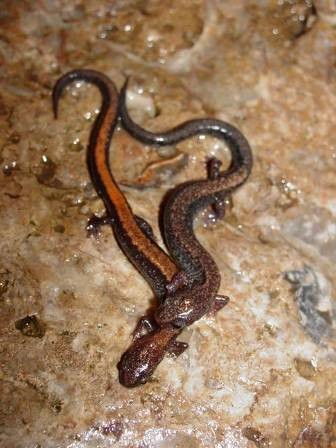 The Purdue Extension-Nature of Teaching has recently released a new publication through The Education Store. The Nature of Teaching provides free Indiana Academic Standard-based lesson plans for students in grades second through sixth to guide them on how to help maintain a healthy environment.
Understanding adaptations for aquatic amphibians can help humans learn more about healthy ecosystems. Through this educational unit, students will be able to explain how amphibian adaptations benefit survival, describe the importance of Eastern Hellbender adaptations, and identify impacts that humans have on aquatic amphibians.
These packed lesson plans are great resources for school teachers, parents, 4-H leaders and other natural resource educators. View the Adaptations for Aquatic Amphibians for the latest installment in the Nature of Teaching resources. See below for other related publications, lesson plans and games.
Resources
Frogs and Toads of Indiana, The Education Store, Purdue Extension
Salamanders of Indiana, The Education Store
Snakes and Lizards of Indiana, The Education Store
Turtles of Indiana, The Education Store
Help the Hellbender, Purdue Extension
Hellbender Decline, Purdue Extension-FNR Youtube
The Nature of Teaching, Lesson Plans K-12, Purdue Extension
Nick Burgmeier, Extension Wildlife Specialist & Research Biologist
Purdue University Department of Forestry and Natural Resources

Recent Posts
- ID That Tree: Nannyberry Viburnum
Posted: July 22, 2026 in Forestry, Plants, Wildlife, Woodlands - ID That Tree: Eastern Swamp Privet
Posted: in Forestry, Plants, Wildlife, Woodlands - Jarred Brooke Receives Early Career Award for Prescribed Fire Work
Posted: July 20, 2026 in Forestry, Forests and Street Trees, Natural Resource Planning, Safety - Bovine Tuberculosis in Wild White-tailed Deer: Background and Frequently Asked Questions
Posted: in Disease, Natural Resource Planning, Wildlife - ID That Tree: Carolina Buckthorn
Posted: July 15, 2026 in Forestry, Wildlife, Woodlands - Bat Roost Reporting Tool
Posted: July 8, 2026 in Alert, Community Development, Invasive Animal Species, Wildlife - Pruning Highlight; Espalier Pruning: Training Trees into Living Patterns
Posted: in Forestry, Forests and Street Trees, Gardening - Thank You, Turkey Trackers! Your Brood Counts Make a Difference – MyDNR
Posted: in Alert, Community Development, Wildlife - Identifying Evergreens
Posted: June 24, 2026 in Forestry, Wildlife, Woodlands - Celebrate Pollinator Week With Flowers of June Tour
Posted: June 15, 2026 in Forestry, Gardening, How To, Wildlife
Archives
Categories
- Alert
- Aquaculture/Fish
- Aquatic/Aquaculture Resources
- Ask the Expert
- Christmas Trees
- Community Development
- Disease
- Drought
- Forestry
- Forests and Street Trees
- Gardening
- Got Nature for Kids
- Great Lakes
- How To
- Invasive Animal Species
- Invasive Insects
- Invasive Plant Species
- Land Use
- Natural Resource Planning
- Nature of Teaching
- Plants
- Podcasts
- Ponds
- Publication
- Safety
- Spiders
- Timber Marketing
- Urban Forestry
- Webinar
- Wildlife
- Wood Products/Manufacturing
- Woodland Management Moment
- Woodlands