 Purdue University - Extension - Forestry and Natural Resources
Got Nature? Blog
Blackberry is a great wildlife plant as the berries are eaten by many different songbirds and wildlife, but this plant also has an important role for wildlife. In this video by wildlife extension specialist Jarred Brooke, you will learn what part this important plant plays in helping wildlife in our native grasslands.
If you have any questions regarding wildlife, trees, forest management, wood products, natural resource planning or other natural resource topics, feel free to contact us by using our Ask an Expert web page.
Resources
Blackberry, Feng Lab, Purdue University
Bramble issues, Facts for Fancy Fruits, Purdue University
Wildlife Habitat Hint, Playlist, Purdue Extension – Forestry and Natural Resouces
Invasive Species, Playlist
A Woodland Management Moment, Playlist
Woodland Stewardship for Landowners, Playlist
Habitat Help LIVE Q&A – Native Grasses and Forbs for Wildlife, Video, Purdue Extension – Forestry and Natural Resources Youtube channel
Renovating Native Warm-Season Grass Stands for Wildlife: A Land Manager’s Guide, Purdue Extension resource center
Jarred Brooke, Wildlife Extension Specialist
Purdue Department of Forestry and Natural Resources
Purdue Extension forester Lenny Farlee introduces you to the Devil’s Walking Stick, a small tree from the ginseng family found in southern Indiana. It is identifiable by thorns or spikes along the stem, unique doubly compound leaves, and large clusters of small white flowers.
If you have any questions regarding trees, forests, wildlife, wood products or other natural resource topics, feel free to contact us by using our Ask an Expert web page.
Resources
Devil’s Walking Stick, Purdue Arboretum Explorer
Devil’s Walking Stick, Native Trees of Indiana River Park, Purdue Fort Wayne
Investing in Indiana Woodlands, The Education Store
Tree Appraisal and the Value of Trees, The Education Store
Forest Improvement Handbook, The Education Store
ID That Tree, Playlist, Purdue Extension – Forestry and Natural Resources Youtube Channel
A Woodland Management Moment, Playlist, Purdue Extension – Forestry and Natural Resources Youtube Channel
Lenny Farlee, Sustaining Hardwood Extension Specialist
Purdue University Department of Forestry and Natural Resources
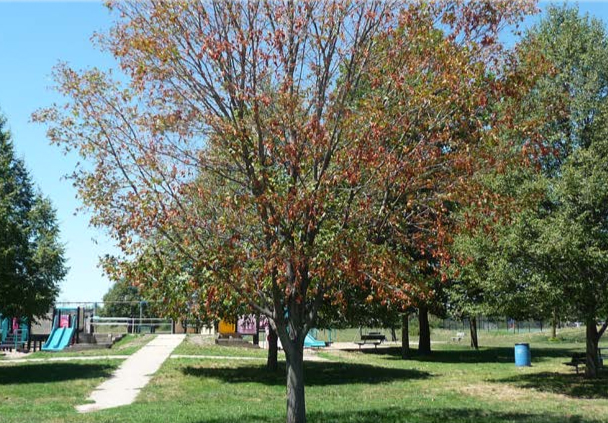 Many homeowners are finding their trees with dry and wilted leaves and no rain in sight. This publication describes how homeowners can deal with these drought-stressed trees, Drought? Don’t Forget the Trees!
Drought can have a major impact on tree health and survival. Water is the most limiting ecological resource for a tree, and without adequate moisture, decline and death are imminent. It reduces carbohydrate production, significantly lowering energy reserves and production of defense chemicals in the tree.
Trees in a weakened state from drought are more susceptible to pests, which can further weaken the tree, and even kill part or all of it. Although there is nothing we can do to prevent drought, it is important to know what can be done to reduce long-term effects of prolonged dry conditions.
Resources:
Water Your Trees, Video, Purdue Extension – Forestry and Natural Resources (FNR) YouTube Channel
Trees in Times of Drought, Video, Purdue Agriculture
INPREPared, Purdue Extension
Drought Information, Indiana Department of Natural Resources
Tree Planting Part 1: Choosing a Tree video, Purdue Extension-FNR YouTube Channel
Lindsey Purcell, Chapter Executive Director
Indiana Arborist Association
In this edition of Wildlife Habitat Hint, Purdue wildlife extension specialist Jarred Brooke shares methods to control the invasive sericea lespedeza. This plant species, though was once used for erosion control and mineland reclamation, is too invasive and of little wildlife value.
If you have any questions regarding wildlife, trees, forest management, wood products, natural resource planning or other natural resource topics, feel free to contact us by using our Ask an Expert web page.
Resources
Sericea Lespedeza: Plague on the Prairie, Purdue Extension
Wildlife Habitat Hint, Playlist, Purdue Extension – Forestry and Natural Resouces
Invasive Species, Playlist
A Woodland Management Moment, Playlist
Woodland Stewardship for Landowners, Playlist
Habitat Help LIVE Q&A – Native Grasses and Forbs for Wildlife, Video, Purdue Extension – Forestry and Natural Resources Youtube channel
Renovating Native Warm-Season Grass Stands for Wildlife: A Land Manager’s Guide, The Education Store, Purdue Extension resource center
Jarred Brooke, Wildlife Extension Specialist
Purdue Department of Forestry and Natural Resources
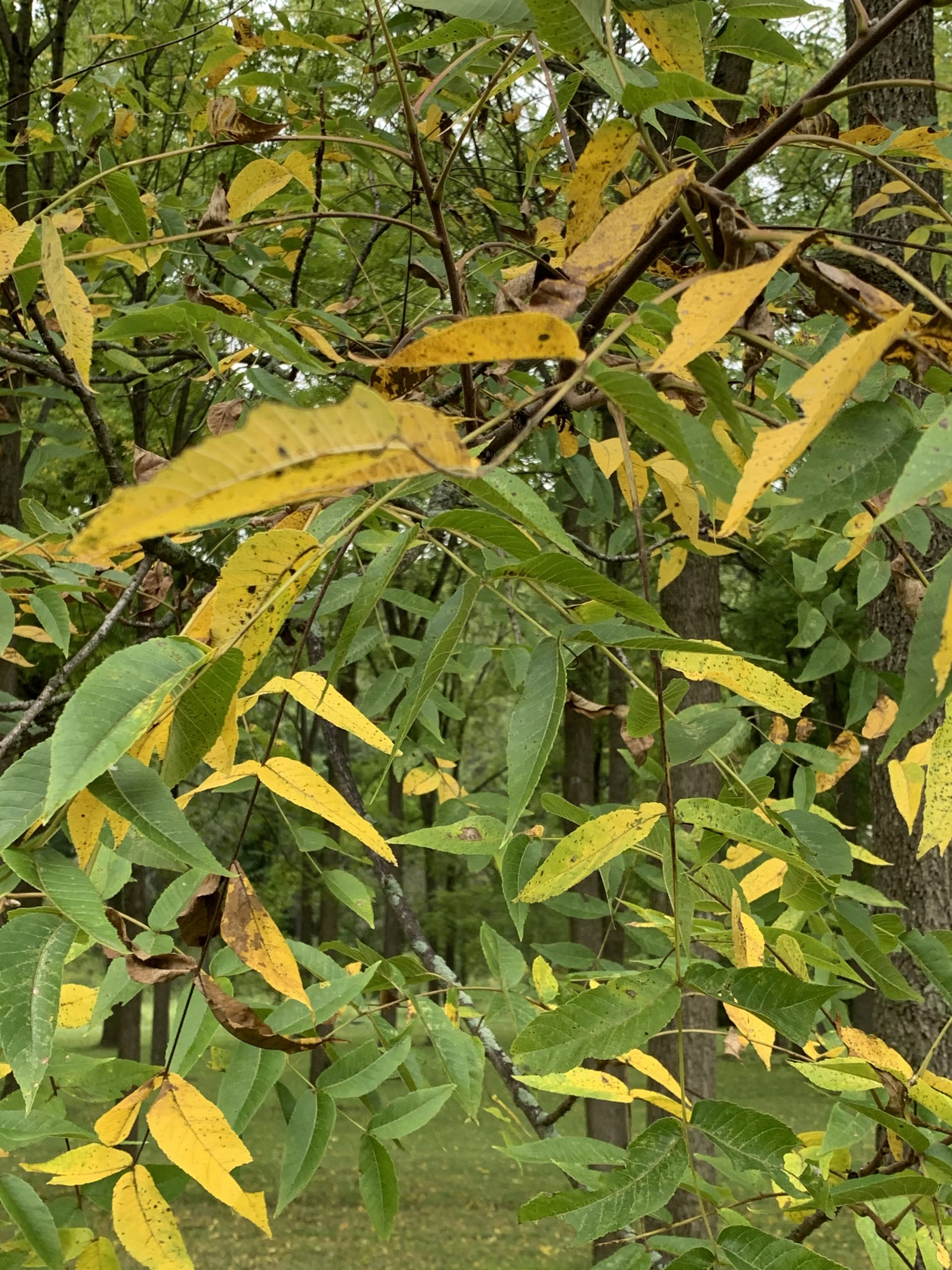
Brown or black spots with yellowing are signs of anthracnose.
This time of year, many black walnut trees’ leaves may have black spots, turn yellow and begin to drop. This is commonly known as anthracnose, a fungal disease that causes trees to drop their leaves prematurely.
Anthracnose is worsened by wet weather, and some trees are more genetically susceptible to anthracnose than others. It is not fatal but can look like a serious problem. The absence of leaves can slow a tree’s growth and can reduce the nut crop, although by this time of year growth may have slowed or stopped for the season.
Anthracnose generally begins as small circular brown to black areas on the leaflets. Over the season those spots expand and cause leaf drop. There are a few other leaf spot diseases of black walnut, see the references below for descriptions of those diseases.
Although unsightly, there is no need for further action if you are growing timber and have anthracnose in a plantation or woods. It can be an issue if you are growing walnuts for a nut crop, and there are resources and spray products to help manage the fungus in those situations.
If you have individual landscaping trees and want to limit anthracnose spread there are few things you can do:
- Gather fallen leaves and compost or remove them from the site.
- Control weeds which could carry the fungus.
- Plant walnut trees where there is good air circulation.
- Keep the trees healthy and vigorous by managing soil fertility and thinning competition as needed.
Resources
Walnut Anthracnose, Walnut Notes, U.S. Department of Agriculture, Forest Service, North Central Forest Experiment Station
Indiana Walnut Council, Industry Representatives include 45 states and 3 foreign countries
Diseases in Hardwood Tree Plantings, The Education Store, Purdue Extension resource center
Study: Fungus Behind Deadly Disease in Walnut Trees Mutates Easily, Complicating Control, Purdue Agriculture News
Indiana Walnut Council
Diseases in Hardwood Tree Plantings, The Education Store, Purdue Extension resource center
Why are my walnut trees dropping their leaves?, Purdue Extension – Forestry & Natural Resources (FNR) Got Nature? Blog
Invasive Species Walnut Twig Beetle Detected in Indiana, Purdue Extension – FNR Got Nature? Blog
Intro to Trees of Indiana: Black Walnut, Purdue Extension – FNR Got Nature? Blog
Planting Hardwood Seedlings in the Central Hardwood Region, The Education Store
Regenerating Hardwoods in the Central Hardwood Region: Soils, The Education Store
Fertilizing, Pruning, and Thinning Hardwood Plantations, The Education Store
Resources and Assistance Available for Planting Hardwood Seedlings, The Education Store
Liz Jackson, Manager Walnut Council / IN Forestry Woodland Owners Association (IFWOA) & Engagement Specialist
Purdue University Department of Forestry and Natural Resources
Purdue Extension forester Lenny Farlee introduces you to the quaking or trembling aspen. This tree is found in northern Indiana and typically identifiable by whitish to grayish bark with dark spots where the branches come out.
If you have any questions regarding trees, forests, wildlife, wood products or other natural resource topics, feel free to contact us by using our Ask an Expert web page.
Resources
Aspen, The Education Store, Purdue Extension resource center
Quaking Aspen, Purdue Fort Wayne
Investing in Indiana Woodlands, The Education Store
Investing in Indiana Woodlands, The Education Store
Tree Appraisal and the Value of Trees, The Education Store
Forest Improvement Handbook, The Education Store
ID That Tree, Playlist, Purdue Extension – Forestry and Natural Resources Youtube Channel
A Woodland Management Moment, Playlist, Purdue Extension – Forestry and Natural Resources Youtube Channel
Lenny Farlee, Sustaining Hardwood Extension Specialist
Purdue University Department of Forestry and Natural Resources
On this edition of ID That Tree, Purdue Extension forester Lenny Farlee introduces you to the northern white cedar, a native conifer that is used for ornamental, windbreak and reforestation purposes. This evergreen has distinct scale like foliage which is soft to the touch. He shares how to distinguish it from the eastern red cedar.
If you have any questions regarding trees, forests, wildlife, wood products or other natural resource topics, feel free to contact us by using our Ask an Expert web page.
Resources
ID That Tree, Playlist, Purdue Extension – Forestry and Natural Resources Youtube Channel
ID That Tree: Eastern Red Cedar, Video
Thuja occidentalis, The Purdue Arboretum Explorer
Investing in Indiana Woodlands, The Education Store
Tree Appraisal and the Value of Trees, The Education Store
Forest Improvement Handbook, The Education Store
Lenny Farlee, Sustaining Hardwood Extension Specialist
Purdue University Department of Forestry and Natural Resources
In this video, Purdue wildlife extension specialist Jarred Brooke shares tips and tricks for setting up a trail camera for monitoring your property for wildlife and preparing for hunting season.
If you have any questions regarding wildlife, trees, forest management, wood products, natural resource planning or other natural resource topics, feel free to contact us by using our Ask an Expert web page.
Resources
Wildlife Habitat Hint, Playlist, Purdue Extension – Forestry and Natural Resouces
Habitat Help LIVE Q&A – Native Grasses and Forbs for Wildlife, Video, Purdue Extension – Forestry and Natural Resources Youtube channel
Renovating Native Warm-Season Grass Stands for Wildlife: A Land Manager’s Guide, The Education Store, Purdue Extension resource center
Considerations for Trapping Nuisance Wildlife with Box Traps, The Education Store
New Indiana Hunting & Trapping Guide, Got Nature? Blog
Jarred Brooke, Wildlife Extension Specialist
Purdue Department of Forestry and Natural Resources
In this “A Moment in the Wild” episode, Nick Burgmeier, Purdue Extension wildlife specialist, talks about the black racer, one of three large black snakes found in Indiana, including the myth that this species chases people who encounter it.
If you have any questions regarding wildlife, trees and forest management, wood products, or other natural resource topics, feel free to contact us by using our Ask an Expert web page.
Resources
A Moment in the Wild, Playlist, Purdue Extension – Forestry and Natural Resources
Snakes of Indiana, The Education Store, Purdue Extension resource center
Indiana Amphibian and Reptile ID Package (4 softcover books), The Education Store
When Juvenile Snakes Come Calling, Purdue Extension
Nick Burgmeier, Research Biologist and Wildlife Extension Specialist
Purdue Department of Forestry and Natural Resources
Join researchers Alison Ochs and Danielle Williams as they share about their research on salamanders and birds respectively on the Hardwood Ecosystem Experiment (HEE).
If you have any questions regarding wildlife, trees, forest management, wood products, natural resource planning or other natural resource topics, feel free to contact us by using our Ask an Expert web page.
Resources
Hardwood Ecosystem Experiment
Ask An Expert, Playlist, Purdue Extension – Forestry and Natural Resources Youtube channel
Hardwood Ecosystem Experiment, Playlist
Ask The Expert: Intro to the Hardwood Ecosystem Experiment, Video
No Room at the Inn: Suburban Backyards and Migratory Birds, Education Store, Purdue Extension resource center
Hardwood Ecosystem Experiment – Wildlife Responses to Timber Harvesting, Purdue Extension
Alison Ochs, Graduate Research Assistant
Purdue Department of Forestry and Natural Resources
Danielle Williams, Field Coordinator
Purdue University

Recent Posts
- Urban Tree Spotlight: Planting Deciduous Shade Trees, Purdue Landscape Report
Posted: March 25, 2026 in Forests and Street Trees, Urban Forestry, Woodlands - Beetle that attacks Tree-of-Heaven found in Indiana, Purdue Landscape Report
Posted: March 20, 2026 in Invasive Insects, Wildlife, Woodlands - ID That Tree: Dwarf Chinkapin Oak
Posted: in Forestry, Urban Forestry, Wildlife, Woodlands - IN-PREPared: Essential Resources for Indiana’s Severe Weather Season
Posted: March 11, 2026 in How To, Safety - DNR Hiring for Indiana Conservation Officer Positions, MyDNR
Posted: March 9, 2026 in Urban Forestry, Wildlife, Woodlands - ID That Tree: Shumard Oak
Posted: in Plants, Urban Forestry, Wildlife, Woodlands - A Woodland Management Moment: Windbreak Around Walnut Plantings
Posted: March 3, 2026 in Forestry, Urban Forestry, Woodland Management Moment - Getting Certified as an Indiana Certified Prescribed Burn Manager
Posted: March 2, 2026 in How To, Urban Forestry, Woodlands - Uniting Indiana Residents Against Invasive Species
Posted: February 27, 2026 in Community Development, Invasive Insects, Wildlife - Have You Seen a Soaring Eagle Lately? Morning Ag Clips
Posted: February 25, 2026 in Urban Forestry, Wildlife
Archives
Categories
- Alert
- Aquaculture/Fish
- Aquatic/Aquaculture Resources
- Ask the Expert
- Christmas Trees
- Community Development
- Disease
- Drought
- Forestry
- Forests and Street Trees
- Gardening
- Got Nature for Kids
- Great Lakes
- How To
- Invasive Animal Species
- Invasive Insects
- Invasive Plant Species
- Land Use
- Natural Resource Planning
- Nature of Teaching
- Plants
- Podcasts
- Ponds
- Publication
- Safety
- Spiders
- Timber Marketing
- Uncategorized
- Urban Forestry
- Webinar
- Wildlife
- Wood Products/Manufacturing
- Woodland Management Moment
- Woodlands