 Purdue University - Extension - Forestry and Natural Resources
Got Nature? Blog
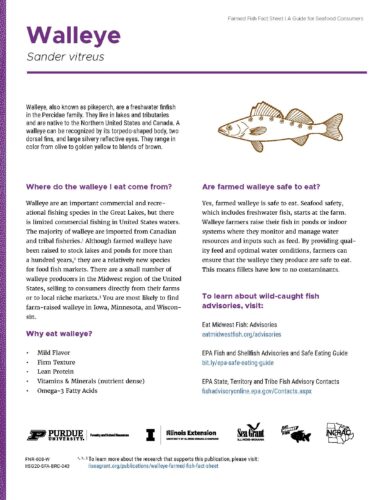 Seafood is a protein category that has many commercially and recreationally available options. Selecting seafood is more like shopping for fruits and vegetables than animal proteins. This publication is the first in a series of fact sheets that describe fish and shellfish produced in the Midwest region of the United States, where commercially available fish comes from, food safety, culinary characteristics, and cooking tips.
View other seafood publications and video resources as you place keywords in the search field located on The Education Store website.
Resources
Sustainable Aquaculture: What does it mean to you?, The Education Store, Purdue Extension resource center
Best Practices Guide for Charter Fishing and COVID-19, The Education Store
Pond Management: Managing Fish Populations, The Education Store
Indiana Pond Fish, Species Identification Card Set, The Education Store
Fish Cleaning with Purdue Extension County Extension Director, Got Nature? Blog, Purdue Extension – Forestry and Natural Resources
Amy Shambach, Aquaculture Marketing Outreach Associate
Purdue Department of Forestry and Natural Resources/Illinois Indiana Sea Grant Program
In this second of five prescribed fire ignition technique videos, Purdue Extension wildlife specialist Jarred Brooke describes a flanking fire.
If you have any questions regarding wildlife, trees, forest management, wood products, natural resource planning or other natural resource topics, feel free to contact us by using our Ask an Expert web page.
Resources
Wildlife Habitat Hint, Playlist, Purdue Extension – Forestry and Natural Resouces YouTube channel
Wildlife Habitat Hint: Late Growing Season Prescribed Fire, Video
Renovating Native Warm-Season Grass Stands for Wildlife: A Land Manager’s Guide, The Education Store, Purdue Extension resource center
Prescribed fire: 6 things to consider before you ignite, Got Nature? Blog, Purdue Extension – 4Forestry and Natural Resources
Jarred Brooke, Wildlife Extension Specialist
Purdue Department of Forestry and Natural Resources
In this video, we explain the second treatment technique utilized on the Hardwood Ecosystem Experiment, even-aged management. This technique aims to create areas where all of the trees are the same age. Watch to learn how this is accomplished.
The 100 year study, Hardwood Ecosystem Experiment (HEE), brings pertinent forest management data to many in Indiana. HEE Extension publications continue to share topics including: Wildlife Responses to Timber Harvesting, Sustaining our Oak-Hickory Forests, Forest Birds and more.
To learn more about this 100 year forest management plan and see its impacts, check out the Hardwood Ecosystem Experiment (HEE) website.
Resources
Hardwood Ecosystem Experiment (HEE), Playlist, Purdue Extension – Forestry and Natural Resources
Hardwood Ecosystem Experiment: Uneven-aged Management, Video
A Woodland Management Moment, Playlist
Woodland Stewardship for Landowners, Playlist
The Hardwood Ecosystem Experiment: Indiana Forestry and Wildlife, The Education Store, Purdue Extension resource center
Resources and Assistance Available for Planting Hardwood Seedlings, The Education Store
Charlotte Owings, Hardwood Ecosystem Experiment Project Coordinator
Purdue University, Department of Forestry and Natural Resources
In this third of five prescribed fire ignition technique videos, Purdue Extension wildlife specialist Jarred Brooke describes a strip head fire and how this technique differs from other options.
If you have any questions regarding trees, forests, wildlife, wood products or other natural resource topics, feel free to contact us by using our Ask an Expert web page.
Resources
Wildlife Habitat Hint, Playlist, Purdue Extension – Forestry and Natural Resouces YouTube channel
Wildlife Habitat Hint: Late Growing Season Prescribed Fire, Video
Renovating Native Warm-Season Grass Stands for Wildlife: A Land Manager’s Guide, The Education Store, Purdue Extension resource center
Prescribed fire: 6 things to consider before you ignite, Got Nature? Blog, Purdue Extension – 4Forestry and Natural Resources
Jarred Brooke, Wildlife Extension Specialist
Purdue Department of Forestry and Natural Resources
Hickories aren’t often thought of for their fall foliage, with some exceptions. Meet the shagbark hickory and its stunning golden leaves. Learn more in this edition of ID That Tree with Purdue Extension forester Lenny Farlee.
If you have any questions regarding wildlife, trees, forest management, wood products, natural resource planning or other natural resource topics, feel free to contact us by using our Ask an Expert web page.
Resources
ID That Tree, Playlist, Purdue Extension – Forestry and Natural Resources Youtube Channel
Hickory and Pecan Species, The Education Store, Purdue Extension resource center
Shagbark Hickory, Native Trees of Indiana River Walk, Purdue Fort Wayne
Shagbark Hickory, The Purdue Arboretum Explorer
Fall Color Pigments, Video, Purdue Extension – Forestry and Natural Resources Youtube Channel
Investing in Indiana Woodlands, The Education Store
Tree Appraisal and the Value of Trees, The Education Store
Forest Improvement Handbook, The Education Store
Lenny Farlee, Sustaining Hardwood Extension Specialist
Purdue University Department of Forestry and Natural Resources
Purdue Landscape Report: Tubakia leaf spot, caused by the fungus Tubakia, is the disease we find more commonly on oak than any other. Throughout the world, there are 11 species of Tubakia known to infect oak, with Tubakia dryina (previously known as Actinopelte dryina) being the most commonly encountered species in our landscapes. Apple, ash, black gum, chestnut, elm, maple, and redbud are all reported as hosts of Tubakia species, but oaks are the most frequently and severely affected. Among the oaks, the red oak group, specifically red, pin, and black oaks, are reported to be more susceptible to infection compared to those in the white oak group.

Figure 2: Oak leaf with circular shaped Tubakia leaf spots along with extensive veinal necrosis.
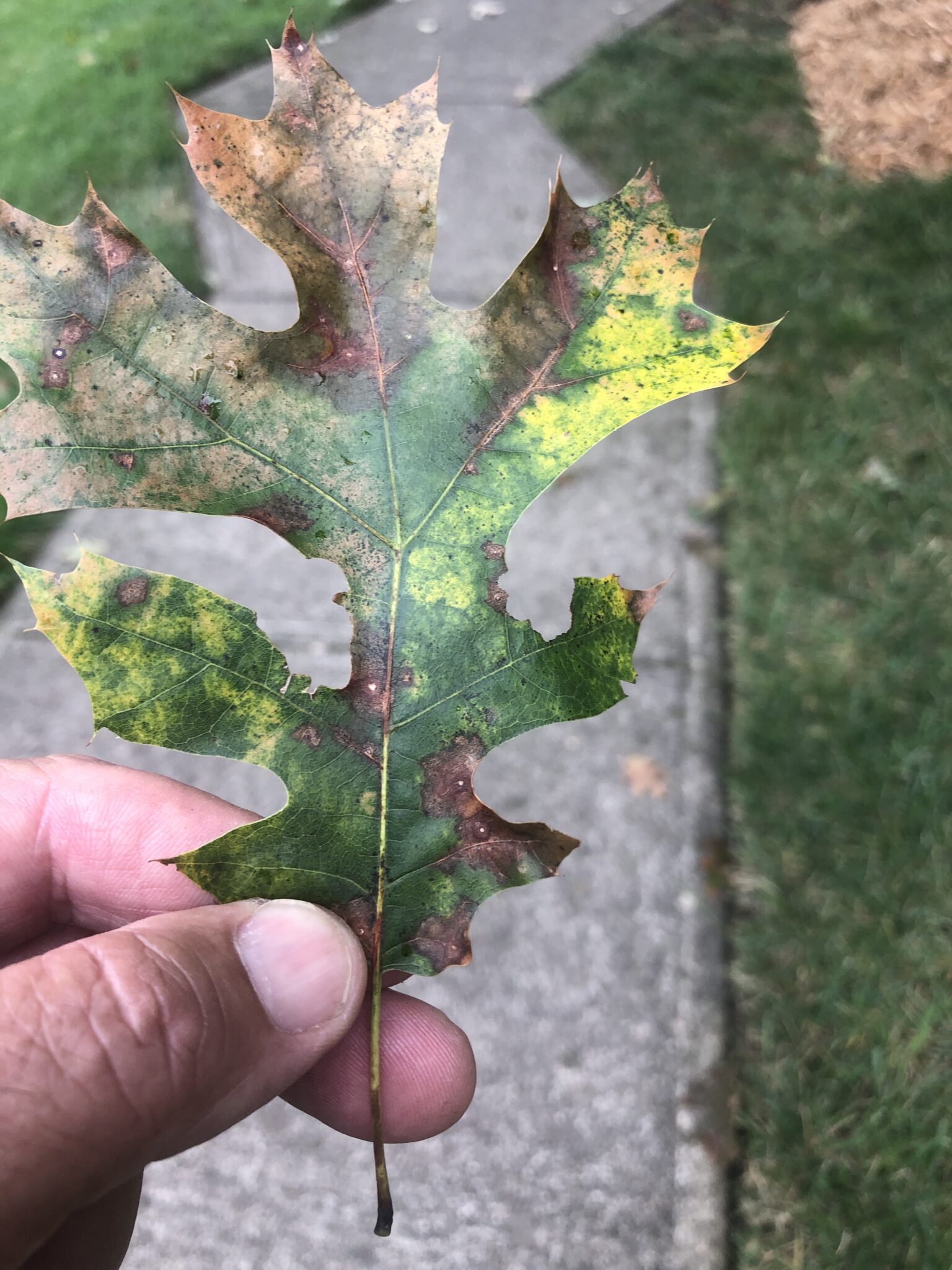
Figure 1: Oak leaf with irregularly shaped Tubakia leaf spots and veinal necrosis.
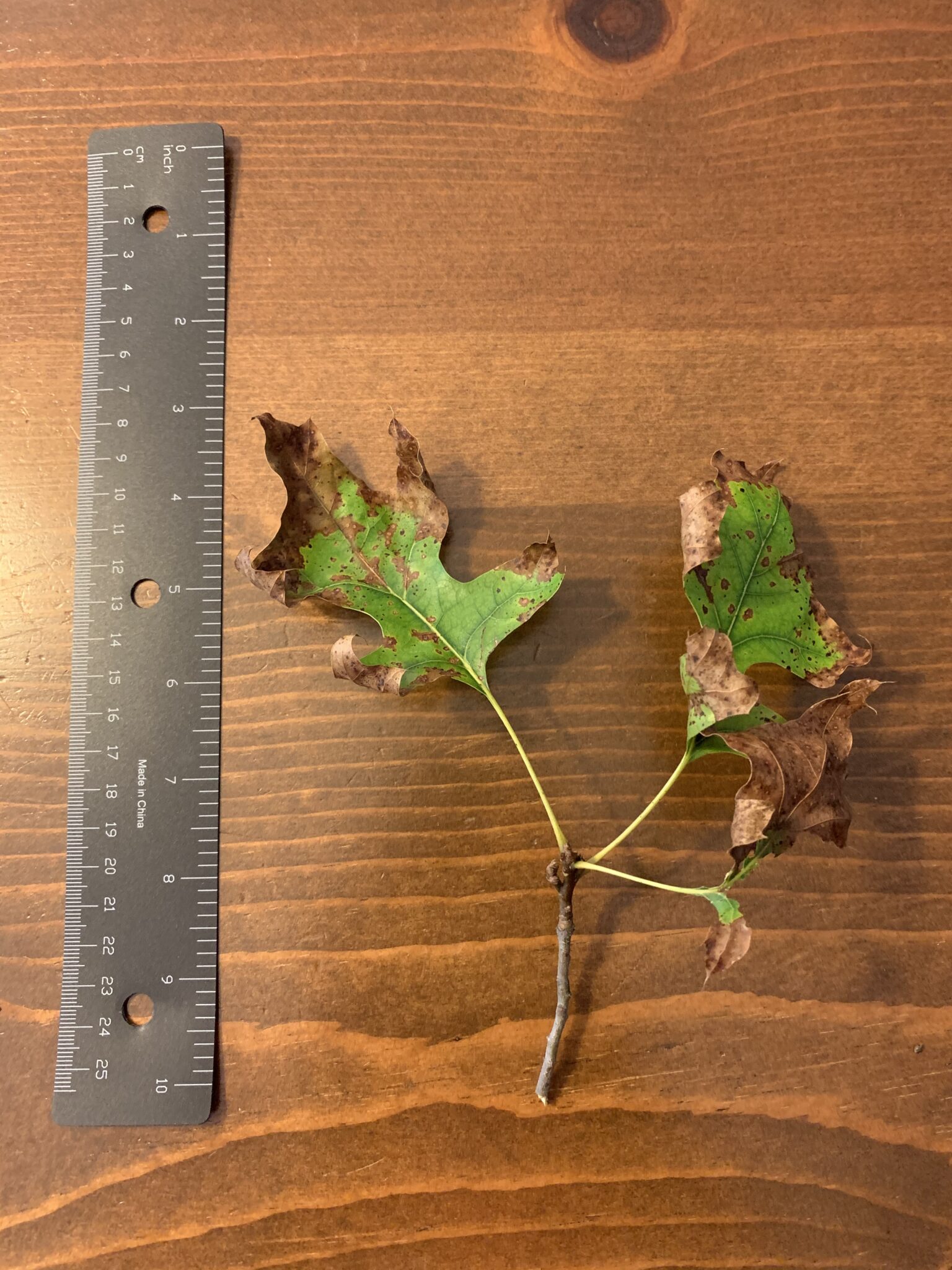
Figure 3: Marginal blighting due to coalescing spots and veinal necrosis.

Figure 5: Blighting of large leaf area caused by veinal infection by Tubakia.

Figure 4: Typical Tubakia leaf spot symptoms illustrating how the fungus spreads along leaf veins.
The pathogen produces conidia within shield shaped structures called pycniothyria (Figure 6) which can be found on both the top or bottom surface of the leaf and along veins (Figure 7). These structures are very small and can only be seen with a 40x or stronger hand lens. The fungus overwinters on fallen leaves and on dead stems which act as the source of inoculum for the next year. During early spring, spores are spread by wind and water splash dispersal (rain) to healthy new foliage. However, it takes time for symptoms to develop throughout the season, depending on tree stress and environmental conditions (warm wet weather favors spread).
For full article view: Purdue Landscape Report, Purdue Landscape Report.
Diseases of Landscape Plants: Leaf Diseases, The Education Store, Purdue Extension resource center
Consumer Horticulture: Fertilizing Woody Plants, The Education Store
Tree Disease; Oak Wilt in Indiana, The Education Store
Diseases of Soybean: Frogeye Leaf Spot, The Education Store
Bur Oak, Purdue Arboretum Explorer
Bur Oak, Native Trees of Indiana River Walk, Purdue Fort Wayne
Find an Arborist, TreesAreGood.org
John Bonkowski, Plant Disease Diagnostician
Purdue Department of Botany and Plant Pathology
Tom C Creswell, Clinical Engagement Professor – PPDL
Purdue Department of Botany and Plant Pathology
Join Purdue Extension forester Lenny Farlee and Dr. Carrie Pike, a forest regeneration specialist with the USDA Forest Service, as they share about conservation tree planting, what species are available to plant, where to get them and more.
If you have any questions regarding trees, forest management, wildlife, wood products or other natural resource topics, feel free to contact us by using our Ask an Expert web page.
Resources
Find An Indiana Forester Website
Reforestation, Nurseries and Genetics Resources Website (RNGR.NET)
A Nursery Guide for the Production of Bare Root Hardwood Seedlings, (RNGR.NET)
Landowner Information, Hardwood Tree Improvement Regeneration Center (HTIRC)
Ask An Expert, Playlist, Purdue Extension – Forestry and Natural Resources YouTube Channel
A Woodland Management Moment, Playlist
Ask An Expert: Tree Inspection, Video
Planting Forest Trees and Shrubs in Indiana, The Education Store, Purdue Extension resource center
Investing in Indiana Woodlands, The Education Store
Tree Appraisal and the Value of Trees, The Education Store
Forest Improvement Handbook, The Education Store
Lenny Farlee, Sustaining Hardwood Extension Specialist
Purdue University Department of Forestry and Natural Resource
You can improve the taste and enjoyment of your wild venison by following a few important tips that our extension specialists and educators shared in the FNR Facebook LIVE session from November 12th.
Many easy step by step resources are available and were shared in the video including How to Score Your White-tailed Deer to Cutting, Grinding & Packaging. More Purdue Extension – Forestry and Natural resources:
Video Series:
Handling Harvested Game: Episode 1, Field Dressing
Handling Harvested Game: Episode 2, Hanging & Skinning
Handling Harvested Game: Episode 3, Deboning
Handling Harvested Game: Episode 4, Cutting, Grinding & Packaging
Feel free to continue to send in your deer questions to the Ask an Expert web page. If you have any other questions regarding trees, forest management, wildlife, wood products or natural resource be sure to submit those questions by utilizing the Ask an Expert.
Publications and More Videos:
White-Tailed Deer Post Harvest Collection, video, The Education Store, Purdue Extension resource center
Deer Harvest Data Collection, Got Nature? Blog, Purdue Extension-Forestry & Natural Resources (FNR)
Age Determination in White-tailed Deer, video
How to Build a Plastic Mesh Deer Exclusion Fence, The Education Store
Indiana Hunting & Trapping Season 2020-2021 (pdf), Indiana Department of Natural Resources, Department of Fish & Wildlife
Indiana Hunting & Trapping Guide, IN DNR, Department of Fish & Wildlife
Jarred Brooke, Wildlife Extension Specialist
Purdue Department of Forestry and Natural Resources
Jonathan Ferris, Wayne County Extension Director
Purdue Extension
Dave Osborne, County Extension Director
Purdue Extension
Rod N Williams, Professor of Wildlife Science
Purdue University Department of Forestry and Natural Resources
In this first of five prescribed fire ignition technique videos, Purdue Extension wildlife specialist Jarred Brooke describes a backing fire. A backing fire is what we use to start most prescribed fires as it gives a result of a slow moving fire, one with short flame lengths that is easy to control compared to other firing techniques.
If you have any questions regarding wildlife, trees, forest management, wood products, natural resource planning or other natural resource topics, feel free to contact us by using our Ask an Expert web page.
Resources
Wildlife Habitat Hint, Playlist, Purdue Extension – Forestry and Natural Resouces YouTube channel
Wildlife Habitat Hint: Late Growing Season Prescribed Fire, Video
Renovating Native Warm-Season Grass Stands for Wildlife: A Land Manager’s Guide, The Education Store, Purdue Extension resource center
Prescribed fire: 6 things to consider before you ignite, Got Nature? Blog, Purdue Extension – 4Forestry and Natural Resources
Jarred Brooke, Wildlife Extension Specialist
Purdue Department of Forestry and Natural Resources
In this special fall color edition of ID That Tree, Purdue Extension forester Lenny Farlee introduces you to this red beauty, the winged sumac. This species, found in southern Indiana, is recognizable by opposite leaf arrangement, compound leaves with a unique miniature leaf at the end of the stem, as well as drooping clusters of red fruit.
If you have any questions regarding wildlife, trees, forest management, wood products, natural resource planning or other natural resource topics, feel free to contact us by using our Ask an Expert web page.
Resources
Winged Sumac, Purdue Arboretum Explorer
Fall Color Pigments, Video, Purdue Extension – Forestry and Natural Resources Youtube Channel
ID That Tree – Video Playlist, Purdue Extension – Forestry and Natural Resources (FNR) YouTube Channel
Purdue Arboretum Explorer
Conservation Tree Planting: Steps to Success, Purdue Extension – FNR YouTube Channel
A Woodland Management Moment, Playlist, Purdue Extension – FNR YouTube Channel
Woodland Stewardship for Landowners, Playlist, Purdue Extension – FNR YouTube Channel
Fifty Common Trees of Indiana, Purdue Extension – FNR
Indiana Invasive Species Council
Cooperative Invasive Species Management Area (CISMA)
Report Invasive, Purdue Extension
Habitat University, Episode 12 – Exploring the challenges of Invasive Species, Habitat University-Natural Resource University
Shrubs and Woody Vines of Indiana and the Midwest, Purdue University Press
Native Trees of the Midwest, Purdue University Press
Professional Forester, Indiana Forestry Woodland Owners Association
District Forester, Indiana Department of Natural Resources, 10+ acres
Find an Arborist, International Society of Arboriculture
Forest Improvement Handbook, The Education Store
Lenny Farlee, Sustaining Hardwood Extension Specialist
Purdue University Department of Forestry and Natural Resource

Recent Posts
- ID That Tree: Nannyberry Viburnum
Posted: July 22, 2026 in Forestry, Plants, Wildlife, Woodlands - ID That Tree: Eastern Swamp Privet
Posted: in Forestry, Plants, Wildlife, Woodlands - Jarred Brooke Receives Early Career Award for Prescribed Fire Work
Posted: July 20, 2026 in Forestry, Forests and Street Trees, Natural Resource Planning, Safety - Bovine Tuberculosis in Wild White-tailed Deer: Background and Frequently Asked Questions
Posted: in Disease, Natural Resource Planning, Wildlife - ID That Tree: Carolina Buckthorn
Posted: July 15, 2026 in Forestry, Wildlife, Woodlands - Bat Roost Reporting Tool
Posted: July 8, 2026 in Alert, Community Development, Invasive Animal Species, Wildlife - Pruning Highlight; Espalier Pruning: Training Trees into Living Patterns
Posted: in Forestry, Forests and Street Trees, Gardening - Thank You, Turkey Trackers! Your Brood Counts Make a Difference – MyDNR
Posted: in Alert, Community Development, Wildlife - Identifying Evergreens
Posted: June 24, 2026 in Forestry, Wildlife, Woodlands - Celebrate Pollinator Week With Flowers of June Tour
Posted: June 15, 2026 in Forestry, Gardening, How To, Wildlife
Archives
Categories
- Alert
- Aquaculture/Fish
- Aquatic/Aquaculture Resources
- Ask the Expert
- Christmas Trees
- Community Development
- Disease
- Drought
- Forestry
- Forests and Street Trees
- Gardening
- Got Nature for Kids
- Great Lakes
- How To
- Invasive Animal Species
- Invasive Insects
- Invasive Plant Species
- Land Use
- Natural Resource Planning
- Nature of Teaching
- Plants
- Podcasts
- Ponds
- Publication
- Safety
- Spiders
- Timber Marketing
- Urban Forestry
- Webinar
- Wildlife
- Wood Products/Manufacturing
- Woodland Management Moment
- Woodlands