 Purdue University - Extension - Forestry and Natural Resources
Got Nature? Blog
Join this edition of Ask an Expert video series with Dr. Joy O’Keefe and PhD candidate Elizabeth Beilke as they share about their studies of bats on the Hardwood Ecosystem Experiment.
The HEE is in its initial stages and is planned as a 100-year project. Data were collected for two years prior to the first round of timber harvests and inventories have been conducted annually since, allowing us to quantify the varied responses of plants and animals to active forest management. This data will ultimately be used to develop management prescriptions that provide for resilient and sustainable managed forest ecosystems in Indiana.
If you have any questions regarding trees, forests, wildlife, wood products or other natural resource topics, feel free to contact us by using our Ask an Expert web page.
Resources
Hardwood Ecosystem Experiment (HEE) Highlights: Bats, Video, Purdue Extension – Forestry and Natural Resources YouTube Channel
Hardwood Ecosystem Experiment (HEE), Playlist, Purdue Extension – Forestry and Natural Resources
Hardwood Ecosystem Experiment, Website
Hardwood Ecosystem Experiment – Wildlife Responses to Timber Harvesting, Purdue Extension – Forestry and Natural Resources
The Hardwood Ecosystem Experiment: Indiana Forestry and Wildlife, The Education Store
Ask An Expert: Bats on the Hardwood Ecosystem Experiment, Video, Purdue Extension – Forestry and Natural Resources Facebook
Bats in Indiana, Indiana Department of Natural Resources (IDNR)
Bat Houses, Bat Conservation International
Joy O’Keefe, Assistant professor and Wildlife Extension Specialist,
University of Illinois (Champaign) Natural Resources and Environmental Sciences
Purdue extension forester Lenny Farlee introduces you to the red elm, or slippery elm. He shares about how to identify the red elm and also how to differentiate it from its relative, the American elm.
If you have any questions regarding trees, forests, wildlife, wood products or other natural resource topics, feel free to contact us by using our Ask an Expert web page.
Resources
Elm, The Education Store, Purdue Extension resource center
Slippery Elm, Native Trees of Indiana River Walk, Purdue – Fort Wayne
ID That Tree, Playlist, Purdue Extension – Forestry and Natural Resources (FNR) Youtube Channel
A Woodland Management Moment, Playlist, Purdue Extension – FNR Youtube Channel
Investing in Indiana Woodlands, The Education Store
Tree Appraisal and the Value of Trees, The Education Store
Forest Improvement Handbook, The Education Store
Lenny Farlee, Sustaining Hardwood Extension Specialist
Purdue University Department of Forestry and Natural Resources
Purdue Extension forester Lenny Farlee brings another new video to the ID That Tree series. Enjoy the gorgeous red fall color of the black gum on this special fall foliage edition of ID That Tree.
If you have any questions regarding wildlife, trees, forest management, wood products, natural resource planning or other natural resource topics, feel free to contact us by using our Ask an Expert web page.
Resources
Black Gum and Tupelo, The Education Store, Purdue Extension resource center
Fall Color Pigments, Video, Got Nature? Blog, Purdue Extension – Forestry and Natural Resources
Black Gum/Tupelo, Native Trees of Indiana River Walk, Purdue Fort Wayne
Black Gum & Tupelo, Purdue Arboretum Explorer
ID That Tree, Playlist
A Woodland Management Moment, Playlist
Investing in Indiana Woodlands, The Education Store
Tree Appraisal and the Value of Trees, The Education Store
Forest Improvement Handbook, The Education Store
Lenny Farlee, Sustaining Hardwood Extension Specialist
Purdue University Department of Forestry and Natural Resource
Join Purdue Extension forester Lenny Farlee and extension wildlife specialist Brian MacGowan with another new video added to the Ask an Expert YouTube Playlist. This episode of Ask an Expert covers everything from the change in fall foliage to invasive species identification and control, fall foods for humans and wildlife, habitat prep and management and planning ahead for spring plantings.
If you have any questions regarding trees, forest management, wildlife, wood products or other natural resource topics, feel free to contact us by using our Ask an Expert web page.
Resources
Ask An Expert, Playlist, Purdue Extension – Forestry and Natural Resources (FNR) Youtube channel
A Woodland Management Moment, FNR Playlist
Woodland Stewardship for Landowners, FNR Playlist
Invasive Species, FNR Playlist
Fall Color Pigments, FNR Video
Wildlife Habitat Education Program – Teaching and Learning Wildlife Management Practices, The Education Store, Purdue Extension resource center
What Nurseries Need to Know About the Invasive Species Regulation, The Education Store
Invasive plants: impact on environment and people, The Education Store
Lenny Farlee, Sustaining Hardwood Extension Specialist
Purdue University Department of Forestry and Natural Resource
Brian MacGowan, Extension Wildlife Specialist
Department of Forestry & Natural Resources, Purdue University
 MyDNR – Indiana’s Outdoor News, Indiana Department of Natural Resources (IDNR): The Natural Resources Commission (NRC) recently removed the bald eagle from Indiana’s list of state endangered and special concern species due to evidence of successful recovery.
The recovery of the bald eagle is one of the greatest conservation success stories in Indiana. Habitat loss, the hat-making trade, and persecution once caused dramatic declines in eagle numbers, leading to the last eagle nest being found in Indiana in 1897. Nationwide, bald eagle populations continued to decline throughout the 1950s and 60s because pesticides, like DDT, interfered with their ability to reproduce.
A combination of legislative changes and conservation efforts put bald eagles on the road to recovery. The U.S. Congress passed the Bald Eagle Protection Act in 1940 to prevent the killing of bald eagles. DDT was banned nationwide in 1972. In 1973, bald eagles were one of the first species listed as federally endangered under the Endangered Species Act. State agencies began restoration efforts to meet conservation goals for eagles as a result of this listing.
Indiana DNR reintroduced bald eagles to the state from 1985–1989. During this time, 73 eaglets from Wisconsin and Alaska were raised and released at Monroe Lake to restore a breeding population in Indiana. The first successful nesting occurred in 1991.
By 2007, the U.S. national symbol was declared recovered and removed from the federal endangered species list. Indiana followed suit in 2008, upgrading the bald eagle from a state-endangered species to a species of special concern after reaching a goal of 50 nesting pairs. This was a significant achievement—no eagles were known to have nested in the state from around 1900–1988.
In just 35 years, the bald eagle went from extirpated in Indiana to a thriving population statewide. This year, biologists estimated Indiana supported about 300 nesting pairs across 84 counties. In the last five years, at least one bald eagle nest has been documented in 88 of Indiana’s 92 counties. Chick production was also up by 11% from 2019 to 2020.
The bald eagle reintroduction program was the first endangered species restoration project in Indiana. This project and ongoing research would not be possible without donations to the Indiana Nongame Wildlife Fund, the main funding source of all nongame and endangered species research and management.
You can donate to this fund online.
Although bald eagles are no longer listed as an endangered species, they remain protected by other state and federal laws, including the Bald and Golden Eagle Protection Act. If you see bald eagles in Indiana, observe the birds, their nests, and roosts from a distance of 330 feet, which is roughly the length of a football field. Photography enthusiasts should take photos of eagles with a telephoto lens instead of getting close to them. All should foster a climate of respect for wildlife by sharing these guidelines with friends.
Learn more about bald eagles at Indiana Department of Natural Resources.
To subscribe for the monthly newsletter view: MyDNR Email Newsletter.
Resources
Bald Eagles, Indiana Department of Natural Resources (IDNR)
Bald Eagle Breeding Season Is Upon Us, Got Nature? Blog, Purdue Extension – Forestry and Natural Resources
Breeding Birds and Forest Management: the Hardwood Ecosystem Experiment and the Central Hardwoods Region, The Education Store, Purdue Extension resource center
Indiana Department of Natural Resources (IDNR)
In this video, Purdue Extension wildlife specialist Jarred Brooke describes a point source fire. The igniters will light points or spots of fire and thus create less intense fire behavior than a strip head fire.
If you have any questions regarding wildlife, trees, forest management, wood products, natural resource planning or other natural resource topics, feel free to contact us by using our Ask an Expert web page.
Resources
Wildlife Habitat Hint, Playlist, Purdue Extension – Forestry and Natural Resouces YouTube channel
Wildlife Habitat Hint: Late Growing Season Prescribed Fire, Video
Renovating Native Warm-Season Grass Stands for Wildlife: A Land Manager’s Guide, The Education Store, Purdue Extension resource center
Prescribed fire: 6 things to consider before you ignite, Got Nature? Blog, Purdue Extension – 4Forestry and Natural Resources
Jarred Brooke, Wildlife Extension Specialist
Purdue Department of Forestry and Natural Resources
In this video, we talk about the third treatment technique used on the Hardwood Ecosystem Experiment, control units. The only management in these areas involves removing invasive species and continued maintenance for recreational purposes.
If you have any questions regarding trees, forests, wildlife, wood products or other natural resource topics, feel free to contact us by using our Ask an Expert web page.
Resources
Hardwood Ecosystem Experiment (HEE), Playlist, Purdue Extension – Forestry and Natural Resources
Hardwood Ecosystem Experiment: Uneven-aged Management, Video
Hardwood Ecosystem Experiment: Even-aged Management, Video
A Woodland Management Moment, Playlist
Woodland Stewardship for Landowners, Playlist
The Hardwood Ecosystem Experiment: Indiana Forestry and Wildlife, The Education Store, Purdue Extension resource center
Resources and Assistance Available for Planting Hardwood Seedlings, The Education Store
Charlotte Owings, Hardwood Ecosystem Experiment Project Coordinator
Purdue University, Department of Forestry and Natural Resources
In this prescribed fire ignition technique videos Purdue Extension wildlife specialist Jarred Brooke describes a ring fire. The igniters will light fires to encircle the unit. Ring fire technique usually creates more intense fire behavior than strip head fires.
If you have any questions regarding wildlife, trees, forest management, wood products, natural resource planning or other natural resource topics, feel free to contact us by using our Ask an Expert web page.
Resources
Wildlife Habitat Hint, Playlist, Purdue Extension – Forestry and Natural Resources YouTube channel
Wildlife Habitat Hint: Late Growing Season Prescribed Fire, Video
Renovating Native Warm-Season Grass Stands for Wildlife: A Land Manager’s Guide, The Education Store, Purdue Extension resource center
Prescribed fire: 6 things to consider before you ignite, Got Nature? Blog, Purdue Extension – 4Forestry and Natural Resources
Jarred Brooke, Wildlife Extension Specialist
Purdue Department of Forestry and Natural Resource
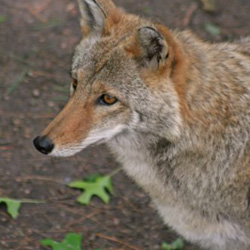 MyDNR Newsletter, Indiana Department of Forestry and Natural Resources (IDNR): Indiana residents are more likely to see coyotes during wintertime, but sightings are no cause for alarm. Coyotes become more active during winter as young coyotes leave their families to find a new home and coyotes begin breeding. Coyotes may look larger than they are due to their thick winter coats, but the average coyote only weighs 20-30 pounds.
General characteristics
- The coyote closely resembles a German shepherd dog in height and shape but it carries its tail below the level of its back instead of curved upward and is generally half the weight of a German shepherd.
- Coyotes have a long slender snout and large, pointed ears.
- The upper body is a grizzled gray or buff, with a reddish brown or gray muzzle and legs. The belly is white, cream-colored or reddish yellow.
- The coyote has a bushy tail, which it carries below the level of its back.
- Coyotes average 25 pounds (ranging from 20 to 50 pounds), and they measure 40 to 50 inches long from nose to tail tip.
- Coyotes are elusive and normally avoid humans.
- They can be active day or night, but are typically most active at dawn and dusk.
- The coyote communicates by barking, yipping and howling.
Distribution and abundance
Coyotes are present in all sections of the state. There are records of coyotes in Indiana as early as 1816, though they likely inhabited Indiana well before that time. Bounties were in place in Indiana on coyotes from at least 1849 through the late 1960s. Despite this persecution by early European settlers, coyotes persisted in Indiana. Historically, coyote populations were limited in range to the prairie regions of the state, and expansion may have partially been limited because wolves suppress coyote populations, and both red and gray wolves were once abundant in Indiana. However, with the eradication of wolves and conversion of habitat to farmland, coyotes have been able to expand and adapt to new habitats. Statewide coyote abundance has slowly increased as coyotes continued to expand into previously unoccupied habitat. Today, coyotes occupy all of Indiana, no matter the habitat type or amount of development.
Detour Coyote
If you see a coyote and want it to go away, try to make it uncomfortable:
- Yell.
- Wave your arms.
- Spray it with a hose.
- Throw tennis balls or small stones at it, but don’t throw anything that could be food, like apples.
- Carry a jar of coins to shake or a small air horn to make noise.
For more information, please visit Indiana Department of Forestry and Natural Resources (IDNR).
To subscribe for the monthly newsletter view: MyDNR Email Newsletter.
Resources
Coyotes, IN DNR
Coyotes (PDF), Wildlife Conflicts, Department of Entomology, Purdue University
Should I Be Worried About Coyotes in My Yard?, Purdue Extension – Forestry & Natural Resources (FNR) Got Nature? Blog
Coexisting With Coyotes, Wild Bulletin, Indiana Department of Natural Resources, Division of Fish and Wildlife
Ask the Expert: Coexisting with Coyotes , Purdue Extension – FNR Got Nature? Blog
Urban Coyotes – Should You Be Concerned?, Purdue Extension – FNR Got Nature? Blog
Pets Disappearing? The Cause May Be Coyotes, Purdue Extension – FNR Got Nature? Blog
Question: Which is the correct species of coyotes I have on my land here in Indiana, coyote or coywolf?, Purdue Extension – FNR Got Nature? Blog
Indiana Department of Forestry and Natural Resources
In this episode of Wildlife Habitat Hint, Purdue Wildlife Extension specialist Jarred Brooke talks about exclusion cages. Exclusion cages are cheap and easy ways to gain information about deer and food plots on your property.
If you have any questions regarding wildlife, trees, forest management, wood products, natural resource planning or other natural resource topics, feel free to contact us by using our Ask an Expert web page.
Resources
Wildlife Habitat Hint, Playlist, Purdue Extension – Forestry and Natural Resources YouTube channel
Ask an Expert: Wildlife Food Plots, Video
A Woodland Management Moment – Deer Fencing, Video
Deer Exclosures, Video, Purdue Forestry and Natural Resources YouTube channel
Frost Seeding to Establish Wildlife Food Plots and Native Grass and Forb Plantings, Purdue Extension resource center
Woodland Stewardship for Landowners: Managing Deer Damage to Young Trees, Video
Jarred Brooke, Wildlife Extension Specialist
Purdue Department of Forestry and Natural Resources

Recent Posts
- Beetle that attacks Tree-of-Heaven found in Indiana, Purdue Landscape Report
Posted: March 20, 2026 in Invasive Insects, Wildlife, Woodlands - ID That Tree: Dwarf Chinkapin Oak
Posted: in Forestry, Urban Forestry, Wildlife, Woodlands - IN-PREPared: Essential Resources for Indiana’s Severe Weather Season
Posted: March 11, 2026 in How To, Safety - DNR Hiring for Indiana Conservation Officer Positions, MyDNR
Posted: March 9, 2026 in Urban Forestry, Wildlife, Woodlands - ID That Tree: Shumard Oak
Posted: in Plants, Urban Forestry, Wildlife, Woodlands - A Woodland Management Moment: Windbreak Around Walnut Plantings
Posted: March 3, 2026 in Forestry, Urban Forestry, Woodland Management Moment - Getting Certified as an Indiana Certified Prescribed Burn Manager
Posted: March 2, 2026 in How To, Urban Forestry, Woodlands - Uniting Indiana Residents Against Invasive Species
Posted: February 27, 2026 in Community Development, Invasive Insects, Wildlife - Have You Seen a Soaring Eagle Lately? Morning Ag Clips
Posted: February 25, 2026 in Urban Forestry, Wildlife - Register for Natural Resources Teacher Institute’s Class of 2026
Posted: February 19, 2026 in Forestry, Wildlife, Woodlands
Archives
Categories
- Alert
- Aquaculture/Fish
- Aquatic/Aquaculture Resources
- Ask the Expert
- Christmas Trees
- Community Development
- Disease
- Drought
- Forestry
- Forests and Street Trees
- Gardening
- Got Nature for Kids
- Great Lakes
- How To
- Invasive Animal Species
- Invasive Insects
- Invasive Plant Species
- Land Use
- Natural Resource Planning
- Nature of Teaching
- Plants
- Podcasts
- Ponds
- Publication
- Safety
- Spiders
- Timber Marketing
- Uncategorized
- Urban Forestry
- Webinar
- Wildlife
- Wood Products/Manufacturing
- Woodland Management Moment
- Woodlands