 Purdue University - Extension - Forestry and Natural Resources
Got Nature? Blog
Question: Can I plant grass over soil where a newly removed stump was ground out?
Answer: We generally don’t want to plant new trees or turf immediately over the top of existing stumps in landscapes. The reasoning is a bit complicated but somewhat simple. The stump  location will have limited soil and rooting depth for nutrient uptake and structural stability due to its remaining below ground mass.
The woody debris material created from stump grinding has a high carbon to nitrogen (C:N) ratio. This reduces nitrogen availability for the new tree or grass. Also, there will be significant settling of the ground below the stump as it decays and loses its structural fiber. The soil should be added to replace the below ground roots and stump. It can take several years to fully decompose the stump unless it was ground very deeply or removed with an excavation machine.
The recommendations are adding soil to the stump area, and a little additional soil mounded to compensate for some decay. Plant the grass, preferably sod, however, seed can work, to adequately cover the newly exposed area. Be sure to add slow-release turf fertilizer to compensate for the high C:N ratio that will be robbing nutrition from the newly installed turf. Maintain adequate moisture and look for signs of yellowing, indicating low nitrogen levels.
Also, sprouts may be generated due to the roots acting as energy storage for the tree. Simply treat them with typical lawn herbicide as needed at the label recommended rates.
Resources:
Taking Care of Your Yard: Homeowner’s Essential Guide to Lawns, Trees, Shrubs, and Garden Flowers, The Education Store, Purdue Extension Resource Center
Homeowner Conservation Practices to Protect Water Quality, Purdue Rainscaping, Purdue Extension Resource Center
Planting Your Tree Part 1: Choosing Your Tree, Purdue Extension YouTube Channel
Purdue Landscape Report
Lindsey Purcell, Chapter Executive Director
Indiana Arborist Association
Curious about the upcoming cicada emergence? What is different about this species than the ones you see every summer? What effect can they have on wildlife or on your trees and shrubs? Find out from Purdue Extension wildlife specialist Jarred Brooke, forester Lenny Farlee and Purdue Entomology’s Elizabeth Barnes. Don’t miss the question and answer time with our experts discussing “all things cicadas”.
If you have any questions regarding wildlife, trees, forest management, wood products, natural resource planning or other natural resource topics, feel free to contact us by using our Ask an Expert web page.
Resources:
17-year Cicadas Are Coming: Are You Ready?, Purdue Landscape Report
17 Ways to Make the Most of the 17-year Cicada Emergence, Purdue College of Agriculture
Periodical Cicada in Indiana, The Education Store, Purdue Extension resource center
Cicada Killers, The Education Store
Purdue Cicada Tracker, Purdue Extension-Master Gardener Program
Dr. Elizabeth Barnes, Exotic Forest Pest Educator
Purdue Department of Entomology
Lenny Farlee, Sustaining Hardwood Extension Specialist
Purdue Forestry and Natural Resources
Jarred Brooke, Wildlife Extension Specialist
Purdue Forestry and Natural Resources
In this episode of A Moment in the Wild, Purdue Extension wildlife specialist Nick Burgmeier introduces you to mole salamanders, which live most of their lives underground. He also shares about their breeding habits and their need for ephemeral ponds and other wetlands to survive.
If you have any questions regarding wildlife, trees, forest management, wood products, natural resource planning, or other natural resource topics, feel free to contact us by using our Ask an Expert web page.
Resources
I found this in my barn. Is it a Hellbender?, Purdue Extension
Question: Which salamander is this?, Got Nature? Blog, Purdue Extension – Forestry and Natural Resources
Is it a Hellbender or a Mudpuppy?, Got Nature? Blog
Amphibians: Frogs, Toads, and Salamanders, Purdue Nature of Teaching
A Moment in the Wild, Playlist, Purdue Extension – Forestry and Natural Resources
Help the Hellbender, Playlist & Website
The Nature of Teaching: Adaptations for Aquatic Amphibians, The Education Store, Purdue Extension resource center
Help the Hellbender, North America’s Giant Salamander, The Education Store
Nick Burgmeier, Research Biologist and Wildlife Extension Specialist
Purdue Department of Forestry and Natural Resources
In this edition of ID That Tree, Purdue extension forester Lenny Farlee explains how to identify shellbark hickory without the help from its leaves. He also shares about how to distinguish this native Indiana species from its close cousin, the shagbark hickory.
If you have any questions regarding wildlife, trees, forest management, wood products, natural resource planning or other natural resource topics, feel free to contact us by using our Ask an Expert web page.
Resources
Hickory and Pecan Species, The Education Store, Purdue Extension resource center
Shellbark Hickory, Native Trees of Indiana River Walk, Purdue Fort Wayne
Shellbark Hickory, The Purdue Arboretum Explorer
ID That Tree Fall Color Edition: Shagbark Hickory, Video, Got Nature? Blog, Purdue Extension – Forestry and Natural Resources
ID That Tree, Playlist, Purdue Extension-FNR YouTube Channel
A Woodland Management Moment, Playlist, Purdue Extension-FNR YouTube Channel
Investing in Indiana Woodlands, The Education Store
Forest Improvement Handbook, The Education Store
Lenny Farlee, Sustaining Hardwood Extension Specialist
Purdue University Department of Forestry and Natural Resource
 Purdue Forestry and Natural Resources News & Stories: Vultures have a role to play as nature’s garbagemen, cleaning up animal carcasses, but what happens when a species goes from scavenging to harassing and even preying on livestock?
Pat Zollner, professor of wildlife science, along with PhD student Marian Wahl and their partners with the USDA Wildlife Services program are investigating black vultures in Indiana in order to better understand vulture ecology as well as to develop methods to mitigate future harm to Indiana livestock.
“Black vultures are relatively new to Indiana, they have been gradually moving in from the south, and right now there are a lot of unknowns that we need to figure out in order to make sound management decisions,” Wahl said. “Some of the pressing questions that we have are how many black vultures do we have here in Indiana, where are the birds located, how and where is conflict occurring, and how effective are different approaches to managing black vulture problems.
The aim of the research is two-fold. First, they are looking to see what causes some black vultures to become aggressive predators of livestock, instead of simply scavengers. Second, they are looking to learn signs that can determine whether an animal has been killed by vultures or simply scavenged, an important piece of evidence for livestock producers filing claims to the U.S. Department of Agriculture’s indemnity program hoping to recover compensation for their losses.
In order to achieve its goals, the research team is requesting the assistance of livestock producers through an online survey and also with the donation of calves believed to have been killed by black vultures. The qualtrics online survey is available now and will take only 15-20 minutes to complete. The survey is anonymous and data collected with be presented only in summary form and not via individual responses.
Resources
Qualtrics Online Survey
Contact Purdue FNR With Any Livestock Loss Due to Vultures
Black Vulture Research, March Edition of Beef Monthly
Black Vulture Ecology and Human-Wildlife Conflicts
Livestock, Education Store, Purdue Extension resource center
Pat Zollner, Professor of Wildlife Science
Purdue Forestry and Natural Resources
Marion Wahl, Graduate Research Assistant
Purdue Forestry and Natural Resources
In this edition of FNR Ask the Expert, join Rod Williams, Purdue Professor of Wildlife Science, Dr. Bruce Kingsbury Director of the Environmental Resources Center, Purdue Fort Wayne and Dr. Vicky Meretsky, Director of the Environmental Master’s Program, Indiana University, to learn about snakes and turtles, their natural history, interesting research happening in Indiana, and conservation information. Also learn the myths and truths from the experts as they discuss these reptiles.
If you have any questions regarding trees, forests, wildlife, wood products or other natural resource topics, feel free to contact us by using our Ask an Expert web page.
Resources
Snakes and Lizards of Indiana, The Education Store, Purdue Extension – Forestry and Natural Resources
Turtles of Indiana, The Education Store
Appreciating Reptiles and Amphibians in Nature, The Education Store
Forestry Management for Reptiles and Amphibians: A Technical Guide for the Midwest, The Education Store
The Nature of Teaching, Unit 3: Reptiles, Amphibians, and the Scientific Method, The Education Store
Snakes of Indiana, The Education Store
IDNR list of Endangered, Threatened & Rare Species
Indiana Herp Atlas
Partners in Amphibian and Reptile Conservation (PARC)
A Moment in the Wild: Black Racer, Video, Purdue Extension – Forestry and Natural Resources YouTube channel
A Moment in the Wild: Eastern Kingsnake, Purdue Extension – FNR Video
A Moment in the Wild: Eastern Hognose, Purdue Extension – FNR Video
Ask An Expert, Purdue Extension – FNR Playlist
Rod Williams, Professor of Wildlife Science
Purdue University Department of Forestry and Natural Resources
In this edition of A Moment in the Wild, Purdue Extension wildlife specialist Nick Burgmeier talks about ephemeral wetlands, also known as vernal or seasonal ponds. He discusses the formation of these wetlands, the species who live there, and the importance of keeping these areas for the future.
If you have any questions regarding wildlife, trees, forest management, wood products, natural resource planning or other natural resource topics, feel free to contact us by using our Ask an Expert web page.
Resources
A Moment in the Wild, Playlist, Purdue Extension – Forestry and Natural Resources
Improving Water Quality Around Your Farm, Video, Purdue Extension YouTube channel
Wildlife Habitat Evaluation Program: Preparing for the Wildlife Challenge, The Education Store, Purdue Extension resource center
Pond and Wildlife Management, Purdue College of Agriculture
Help the Hellbender
Nick Burgmeier, Research Biologist and Wildlife Extension Specialist
Purdue Department of Forestry and Natural Resources
Purdue Landscape Report: J. Sterling Morton had a strong enthusiasm for trees and advocated intensely for individuals and civic groups to plant them. Once he became secretary of the Nebraska Territory, he further spread his message of the value of trees and Morton first proposed a tree planting holiday to be called “Arbor Day” at a meeting of the State Board of Agriculture.
The celebration date was set for April 10, 1872. Prizes were offered to counties and individuals for the largest number of properly planted trees on that day. It was estimated that more than 1 million trees were planted in Nebraska on the first Arbor Day.
Many other states also passed legislation to observe Arbor Day each year. By 1920, more than 45 states and territories were celebrating Arbor Day. The tree planting tradition became prominent in schools across the nation in 1882, with students were learning about the importance of trees as well as receiving a tree to plant in their own yard. They continue to do so today in many states.
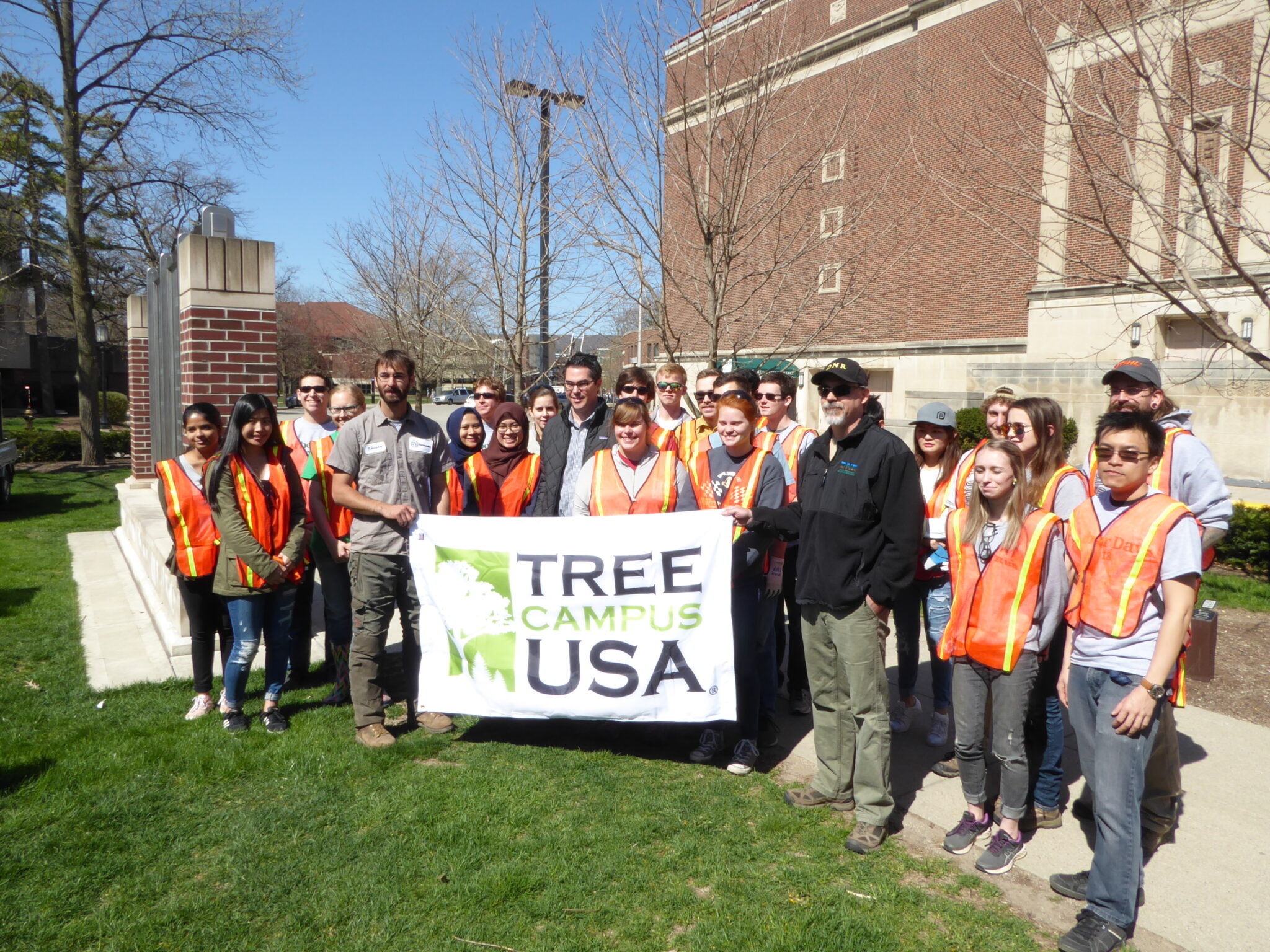
Celebrate arbor day by planting a tree!
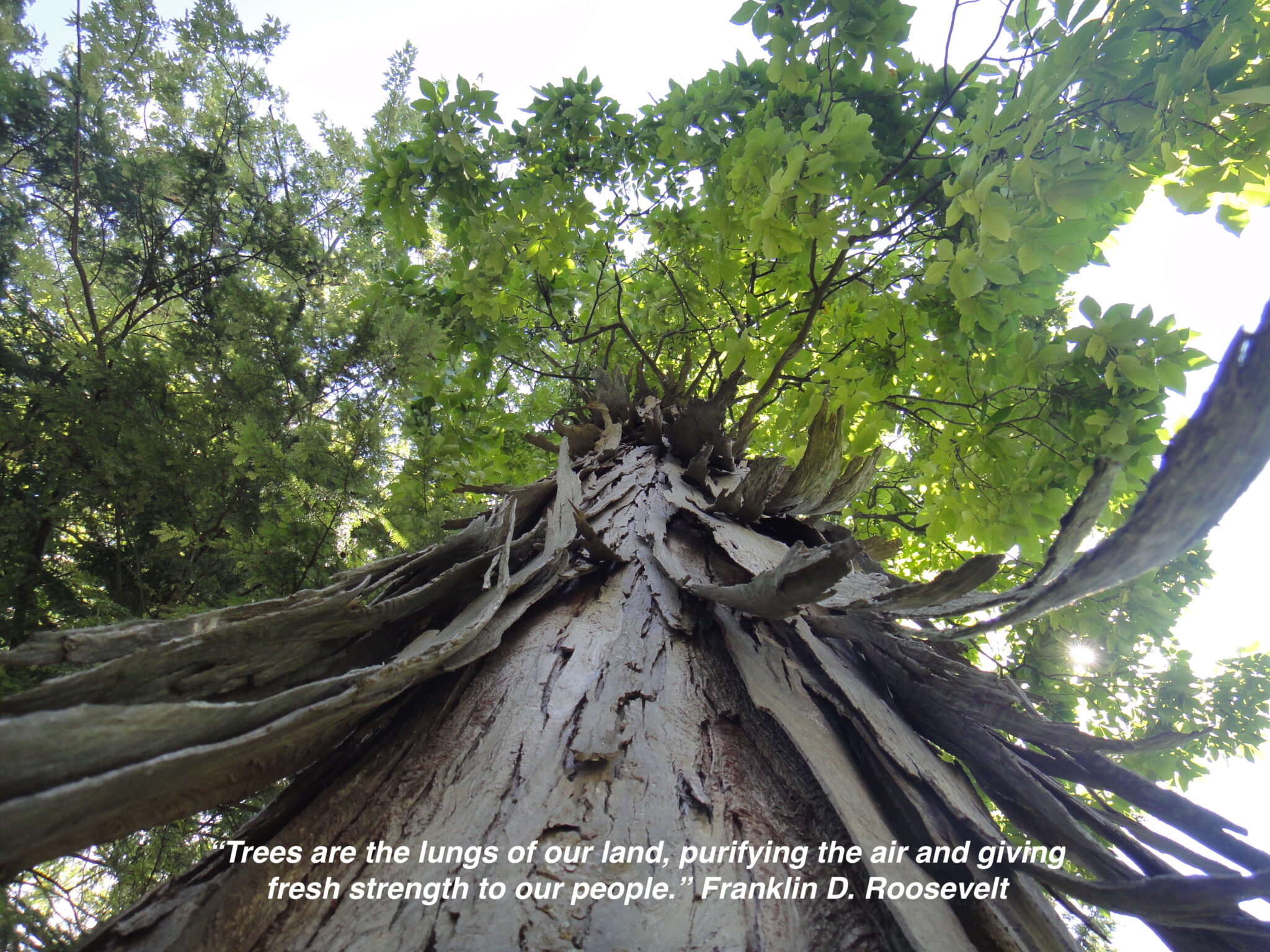
Trees make a difference in our lives, every day.
Currently, Arbor Day is celebrated in all 50 states. The most common date for the state observance is the last Friday in April — National Arbor Day — but a number of state Arbor Days are at other times to coincide with the best tree planting weather, from January and February in the south to May in the far north.
Find out when people in your state gather together to plant and celebrate trees.
So, just why do we celebrate trees? They are essential to our health and quality of life. Trees provide many benefits, called ecosystem services, that impact nearly every aspect of our daily life. Trees improve air and water quality, reduce heating and cooling costs, improve health outcomes, increase business, and so much more. Simply stated, we need trees.
How do we determine the value of those benefits trees provide where we live? Research and technology have made it much easier to quantify those ecosystem services. The value of your tree and the ecosystem services it provides can be found by visiting this web page. It’s fun and easy to find out just what your tree contributes to the urban forest.
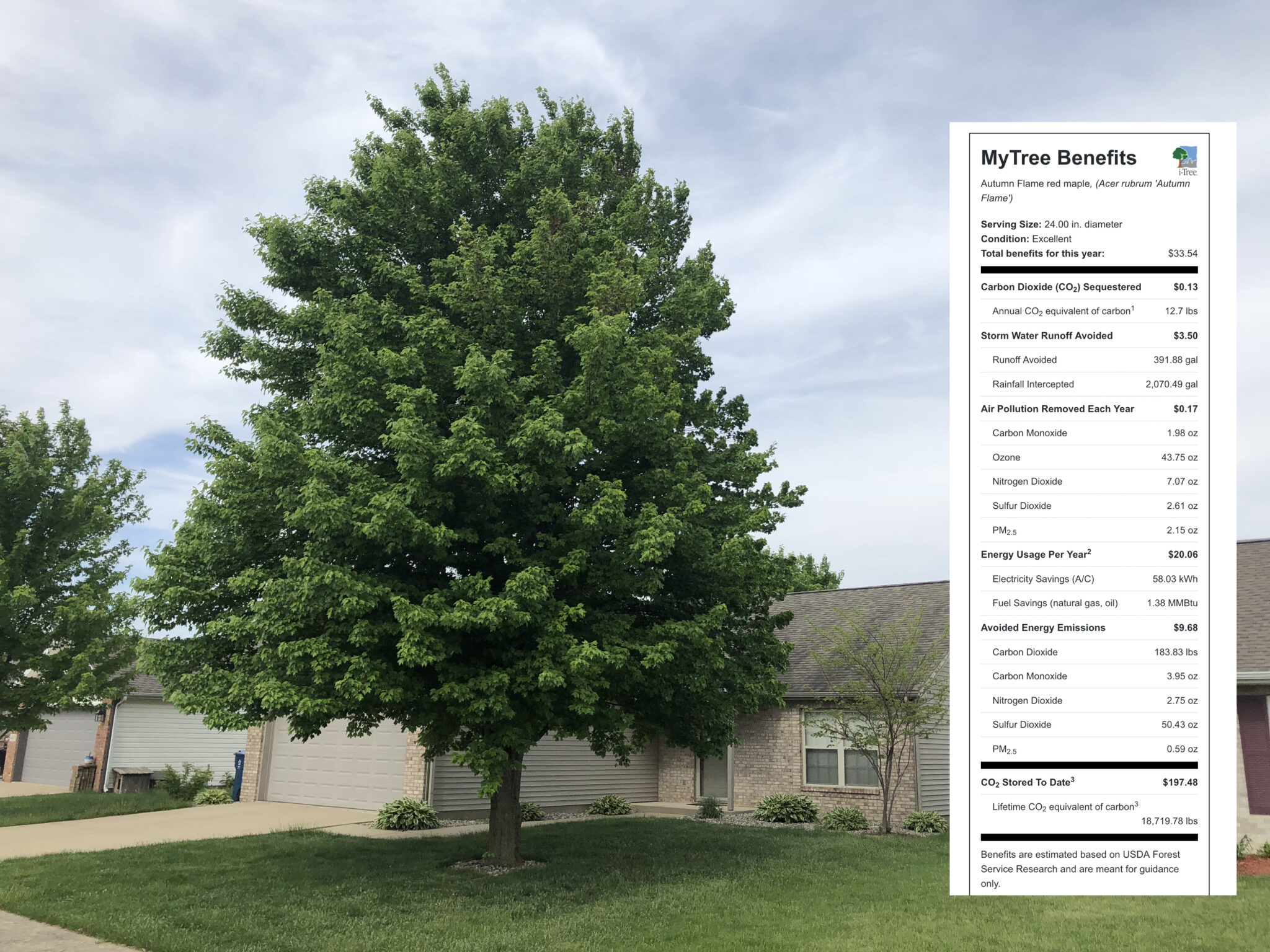
Find out what your tree is worth in benefits.

Trees provide ecosystem services including shade.
Join us in paying tribute to our trees which make up our urban forests by selecting and planting a tree where you live or taking part in a community tree planting. Learn how to choose and plant a tree properly to help improve the longevity and hopefully it will be providing those benefits in the future for your grandchildren and beyond. Trees can be a living legacy to great environmental stewardship. Plant trees not just for the future, but with a future. Some additional resources are available below:
For the best advice on tree planting and care, seek out a tree care professional with the experience and expertise to care for your trees. Search for a tree care provider in your area. Also, consider hiring an ISA Certified Arborist which can be found here.
Resources
Tree Appraisal and the Value of Trees, The Education Store, Purdue Extension resource center
Resources and Assistance Available for Planting Hardwood Seedlings, The Education Store
Tree Support Systems, The Education Store
Tree Planting Part 1: Choosing A Tree, Video, Purdue Extension YouTube channel
Tree Planting Part 2: Planting Your Tree, Purdue Extension Video
Planting Problems: Trees Planted Too Deep, Video, Purdue Extension – Forestry and Natural Resources
Tree Selection for Landscape, Purdue Extension – FNR Video
Tree Installation for the Landscape, Purdue Extension – FNR Video
Tree Pruning for the Landscape, Purdue Extension – FNR Video
Lindsey Purcell, Urban Forestry Specialist
Purdue University, Department of Forestry and Natural Resources
Purdue Landscape Report: The hard freeze April 20th & 21st had many homeowners concerned about their perennial and annual plants in their landscape. For the vast majority of perennial plants, there aren’t many issues long-term of concern. Some foliage and flowers have significant damage, but the plants will recover, and possibly release new vegetative buds in severe cases. The plants that suffered the most damage, and in some cases death, are the annuals planted by impatient landscapers and gardeners. Planting annuals prior to the frost-free date (May 10th in central Indiana) will more than likely cause a replant to occur.
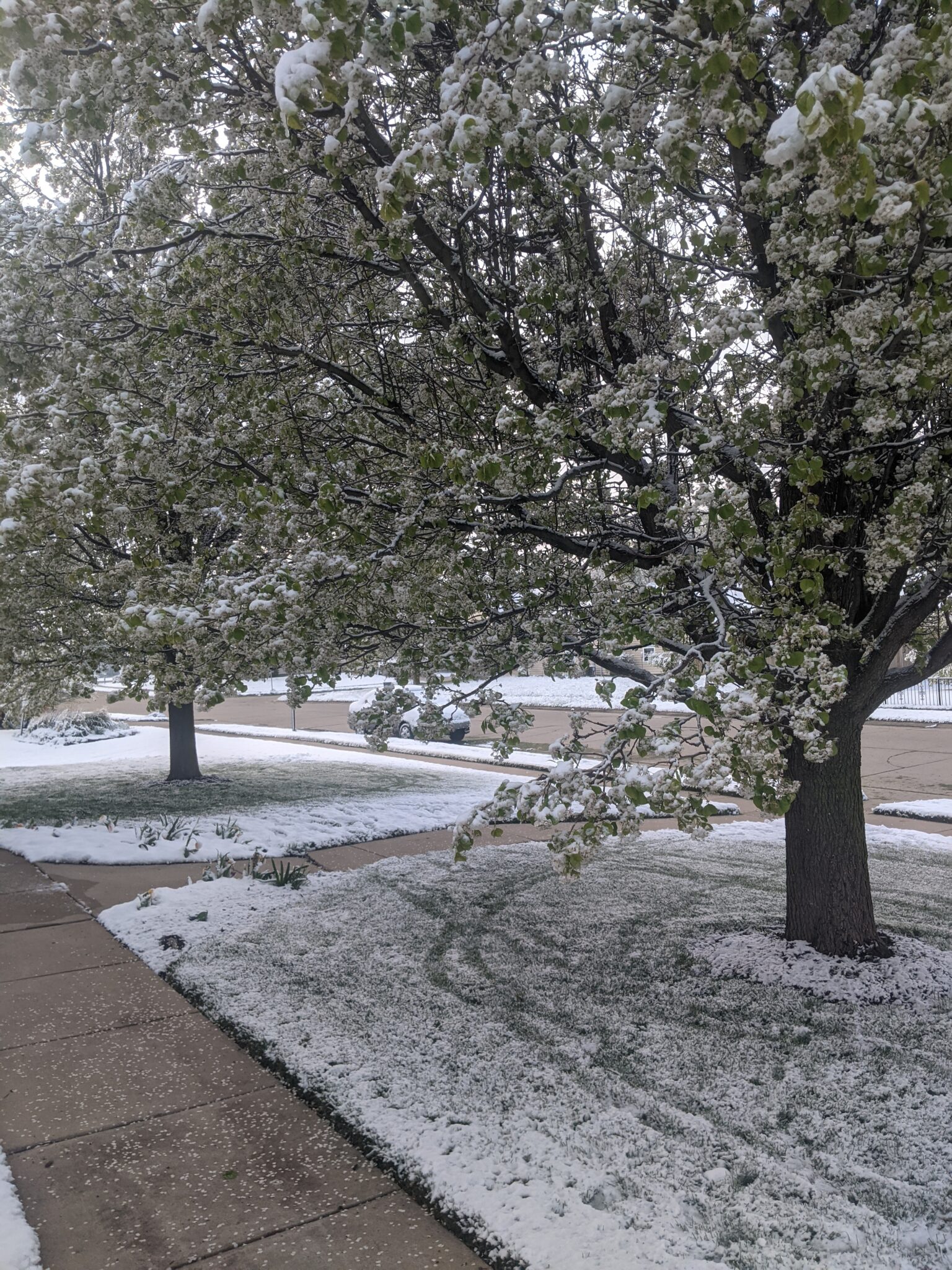
Figure 1. Cold temperatures and cold on April 21-22 caused stress on many plants that have broken buds.
In addition to the potential stress from the temperatures, many trees received broken limbs due the combined weight of the leaves/flowers and snow load.
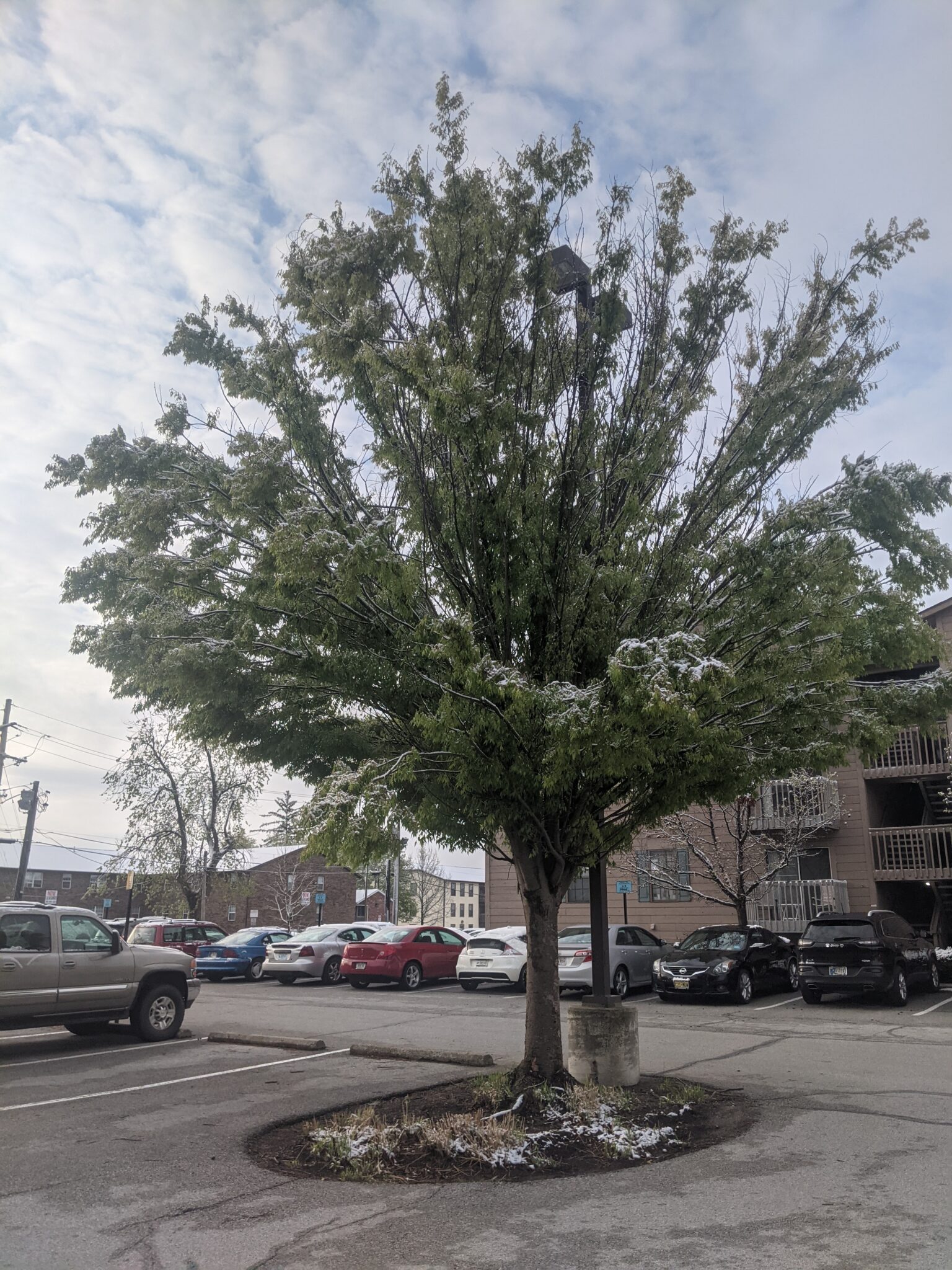
Figure 2. A Japanese Zelkova in full leaf with a heavy snow load.
If you maintain a client’s fruit trees (i.e. apples), there may be a significant impact on fruit production. The Purdue Meigs Horticultural Research Farm, located about eight miles south of the West Lafayette campus, recorded a low temperature of 22o F on April 21st. Dr. Peter Hirst, pomologist, indicated that at the current stage of flowering a temperature of 25o F might result in a 90% bud kill. Since there was a significant snowfall, the hope is that there was some moderation in temperatures.
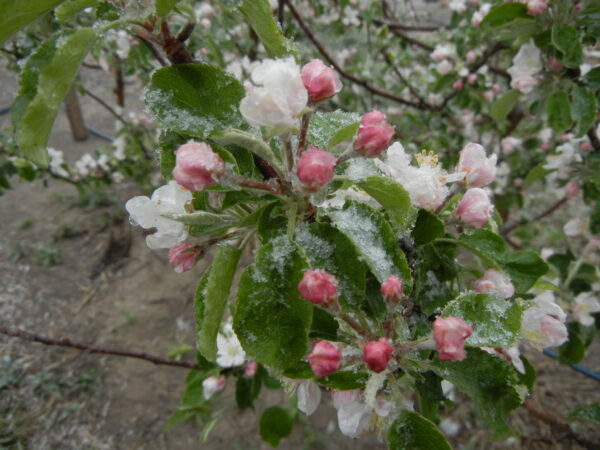
Figure 3. Apple flowers on April 22 in West Lafayette. Photo by Tristand Tucker.
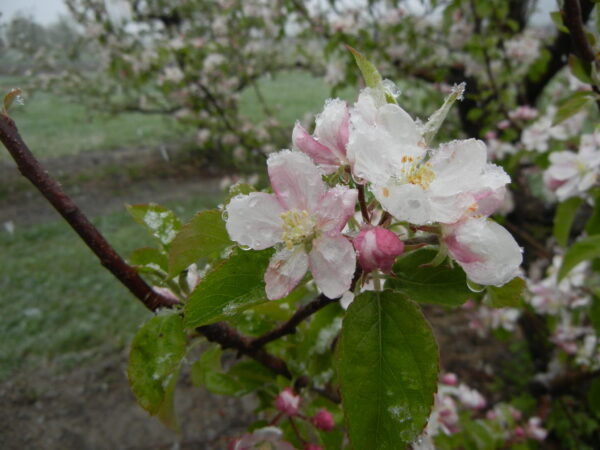
Figure 5. Apple flowers on April 22 in West Lafayette. Photo by Tristand Tucker.
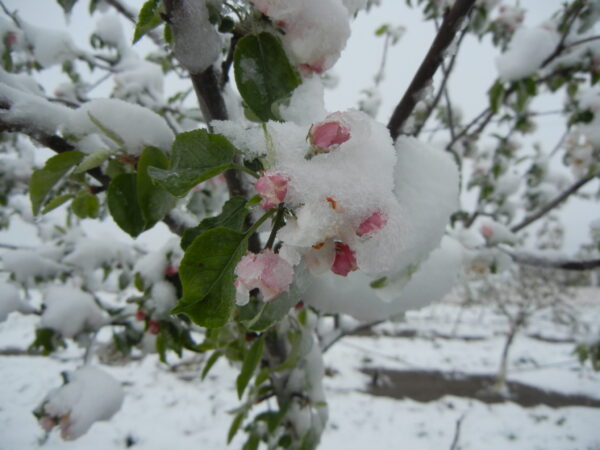
Figure 4. Apple flowers on April 22 in West Lafayette. Photo by Tristand Tucker.
Plants that have been stressed due to cold temperatures should be closely monitored over the growing season. Don’t prune ‘dead’ portions until you allow more buds to break. Chances are the early foliage was dropped and new leaves will soon emerge. Be sure to provide adequate moisture to assist in recovery. Currently about half of the state is in the beginning stages of drought, so be sure to provide irrigation now if your area is dry. Always remember that too much water can be just as detrimental as too little water.
The Indianapolis Star published an article on the extreme low temperatures.
Resources
Purdue Landscape Report
Tree Installation for the Landscape, Video, Purdue Extension – Forestry and Natural Resources YouTube Channel
Effects of Cold Weather on Horticultural Plants in Indiana, The Education Store, Purdue Extension resource center
Winterize Your Trees, The Education Store
What do Trees Do in the Winter? , Got Nature? Blog, Purdue Extension – Forestry and Natural Resources
Kyle Daniel, Nursery & Landscape Outreach Specialist
Purdue Horticulture and Landscape Architecture
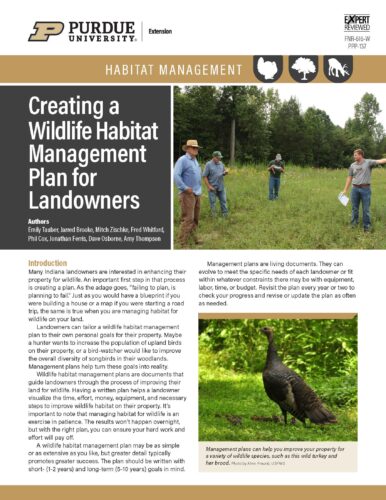 Many landowners are interested in enhancing their property for wildlife. An important first step in that process is creating a plan. As the adage goes, “failing to plan, is planning to fail.” Just as you would have a blueprint if you were building a house or a map if you were starting a road trip, the same is true when you are managing habitat for wildlife on your land.
Landowners can tailor a wildlife habitat management plan to their own personal goals for their property. Maybe a hunter wants to increase the population of upland birds on their property, or a bird-watcher would like to improve the overall diversity of songbirds in their woodlands. Management plans help turn these goals into reality.
This 12 page publication titled Creating a Wildlife Habitat Management Plan for Landowners is packed with photos, resources and suggestions to help meet your goals.
View other wildlife habitat management publications and video resources as you place keywords in the search field located on The Education Store website.
Resources
A Template for Your Wildlife Habitat Management Plan, Got Nature?, Purdue Extension
Managing Your Woods for White-Tailed Deer, The Education Store
Woodland Stewardship for Landowners, Playlist, Purdue Extension – Forestry and Natural Resources YouTube channel
A Woodland Management Moment, Purdue Extension – FNR playlist
Wildlife Habitat Hint, Purdue Extension – FNR playlist
Ask an Expert: Wildlife Food Plots, Video, Purdue Extension – Forestry and Natural Resources YouTube channel
Jarred Brooke, Wildlife Extension Specialist
Purdue Department of Forestry and Natural Resource

Recent Posts
- ID That Tree: Nannyberry Viburnum
Posted: July 22, 2026 in Forestry, Plants, Wildlife, Woodlands - ID That Tree: Eastern Swamp Privet
Posted: in Forestry, Plants, Wildlife, Woodlands - Jarred Brooke Receives Early Career Award for Prescribed Fire Work
Posted: July 20, 2026 in Forestry, Forests and Street Trees, Natural Resource Planning, Safety - Bovine Tuberculosis in Wild White-tailed Deer: Background and Frequently Asked Questions
Posted: in Disease, Natural Resource Planning, Wildlife - ID That Tree: Carolina Buckthorn
Posted: July 15, 2026 in Forestry, Wildlife, Woodlands - Bat Roost Reporting Tool
Posted: July 8, 2026 in Alert, Community Development, Invasive Animal Species, Wildlife - Pruning Highlight; Espalier Pruning: Training Trees into Living Patterns
Posted: in Forestry, Forests and Street Trees, Gardening - Thank You, Turkey Trackers! Your Brood Counts Make a Difference – MyDNR
Posted: in Alert, Community Development, Wildlife - Identifying Evergreens
Posted: June 24, 2026 in Forestry, Wildlife, Woodlands - Celebrate Pollinator Week With Flowers of June Tour
Posted: June 15, 2026 in Forestry, Gardening, How To, Wildlife
Archives
Categories
- Alert
- Aquaculture/Fish
- Aquatic/Aquaculture Resources
- Ask the Expert
- Christmas Trees
- Community Development
- Disease
- Drought
- Forestry
- Forests and Street Trees
- Gardening
- Got Nature for Kids
- Great Lakes
- How To
- Invasive Animal Species
- Invasive Insects
- Invasive Plant Species
- Land Use
- Natural Resource Planning
- Nature of Teaching
- Plants
- Podcasts
- Ponds
- Publication
- Safety
- Spiders
- Timber Marketing
- Urban Forestry
- Webinar
- Wildlife
- Wood Products/Manufacturing
- Woodland Management Moment
- Woodlands