 Purdue University - Extension - Forestry and Natural Resources
Got Nature? Blog
In this episode of A Woodland Management Moment, Purdue Extension forester Lenny Farlee talks about the process of invasive species control in woodland areas from the combination of various treatments methods to the timing of those treatments.
If you have any questions regarding trees, forests, wildlife, wood products or other natural resource topics, feel free to contact us by using our Ask an Expert web page.
Resources:
A Woodland Management Moment, Playlist, Purdue Extension – Forestry and Natural Resources (FNR) Youtube Channel
Invasive Species, FNR Playlist
Report Invasive Species, Purdue Invasive Species
The GLEDN Phone App – Great Lakes Early Detection Network
EDDMaps – Early Detection and Distribution Mapping System
Indiana Department of Natural Resources: Invasive Species
Indiana Invasive Species Council
Cooperative Invasive Species Management Area (CISMA)
Woodland Stewardship for Landowners: Environmental Quality Incentives Program (EQIP) -helping with invasive species
Invasive plants: impact on environment and people, The Education Store
What are invasive species and why should I care?, Got Nature? Blog, Purdue Extension
Woodland Invaders, Got Nature? Blog
Lenny Farlee, Sustaining Hardwood Extension Specialist
Purdue University Department of Forestry and Natural Resources
In this edition of ID That Tree, Purdue Extension forester Lenny Farlee introduces you to a native Indiana shrub that brings explosions of blossoms in the form of white flower clusters in the spring. Meet the blackhaw and learn more about how to identify this shrub inside.
If you have any questions regarding wildlife, trees, forest management, wood products, natural resource planning or other natural resource topics, feel free to contact us by using our Ask an Expert web page.
Resources:
ID That Tree, Playlist, Purdue Extension – Forestry and Natural Resources Youtube Channel
A Woodland Management Moment, Playlist, Purdue Extension – FNR Youtube Channel
Shrubs and Woody Vines of Indiana and the Midwest, Purdue University Press
Native Trees of the Midwest, Purdue University Press
Investing in Indiana Woodlands, The Education Store
Forest Improvement Handbook, The Education Store
Blackhaw, The Purdue Arboretum Explorer
Lenny Farlee, Sustaining Hardwood Extension Specialist
Purdue University Department of Forestry and Natural Resources
Purdue Landscape Report: Finally, spring has sprung and summer is on its way. The hot days and warm nights are welcome for us, but summer isn’t always so kind to our trees, especially in our urban forests and landscapes. Trees are dynamic living organisms that respond to external stimuli in very strategic ways and each season presents its own challenges and summer is no different.
During the summer, growth slows as some resources become limited and typically, this is water. As the summer season progresses, the likelihood of less rain means potential drought conditions. The primary responses of a tree to heat and drought are a reduction in photosynthesis and carbon assimilation rates. This translates to a reduction in energy production and food reserves. This reduction can increase vulnerability to health issues and reduced defense mechanisms against pests.
There are some key steps to summer tree care which can help trees through potentially challenging conditions in the summer.
- Watch the water; be sure to supplement trees with additional watering when there isn’t adequate rainfall that measures at least an inch per week. Mature trees need supplemental watering just as the younger, newly established trees. Be sure to know the symptoms of dry conditions and how much to water with more information here.
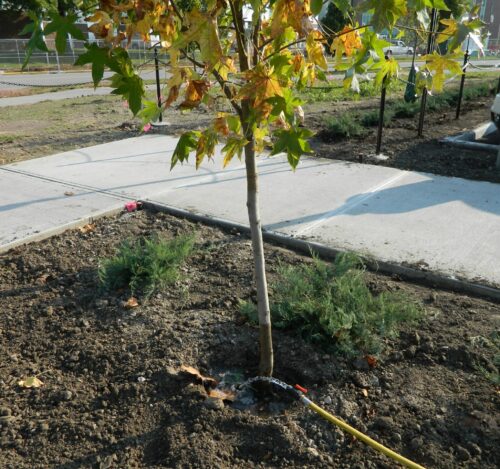
Drought symptoms should be monitored weekly to prevent decline and dieback during the dry months.
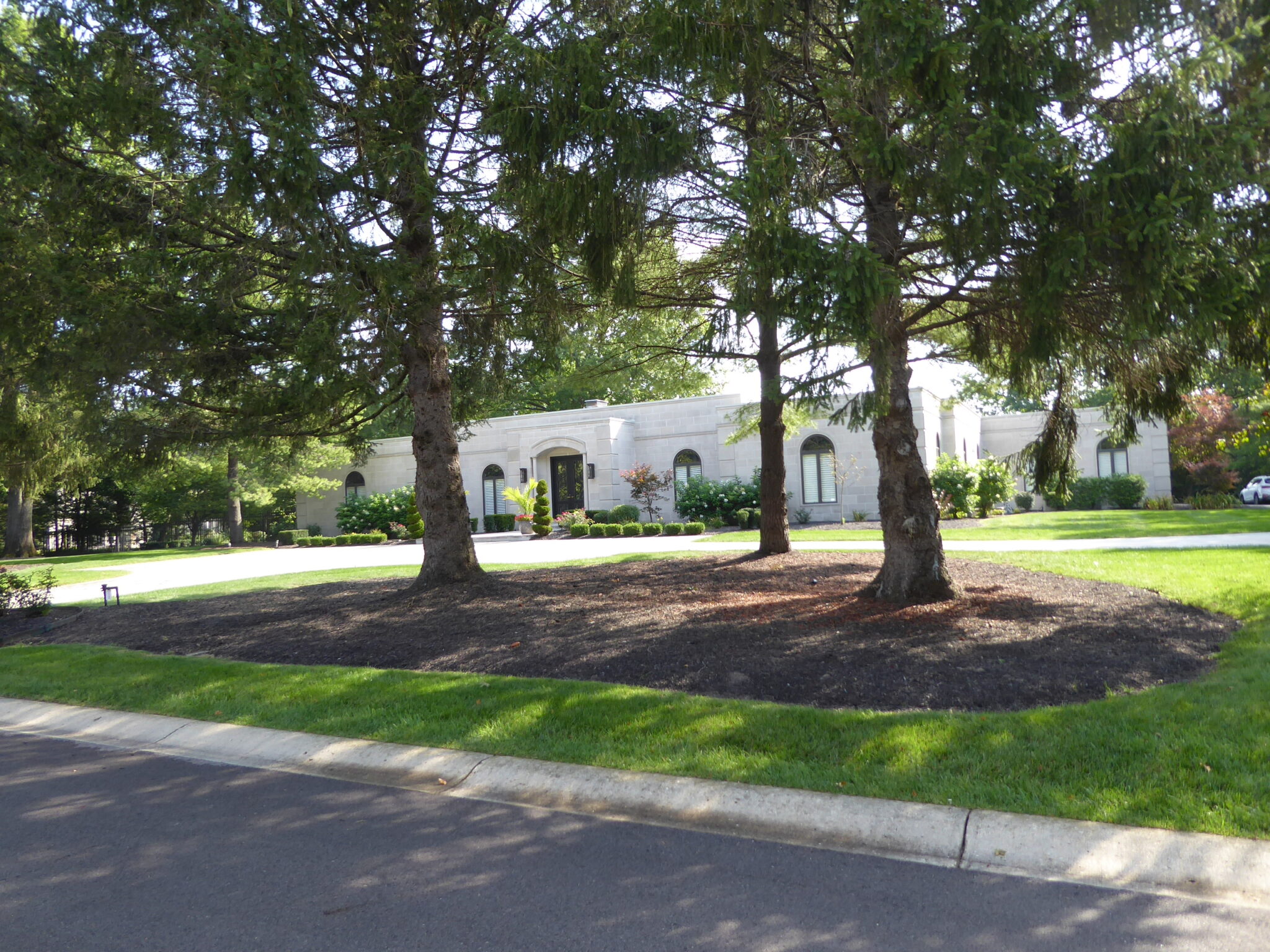
- Refresh your mulch; adding mulch to tree rings or even better, expanding them is a great way to reduce water requirements and competition for water and other resources. As trees grow, so do the roots under the tree and expanding mulching rings outward to the dripline of the crown is a great way to keep trees healthier. Also, this helps with those surface root issues as well.

Expanding mulch rings is a great way to improve tree root health and reduce surface root issues.
- Don’t get bugged too much; summer brings out the best in pests too! Many mite and scale species love the heat and can cause major damage and even death to your trees. Look for signs and symptoms of scale infestations and mite damage on your trees and shrubs now. More information on scales can be found here. Additional details on mite damage can be found here.
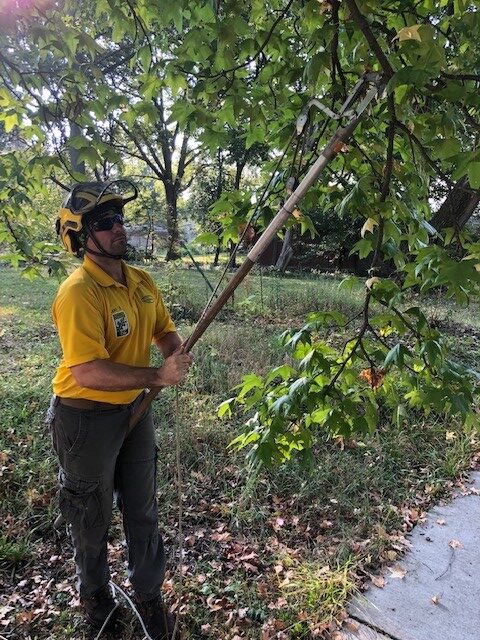
- A nip and tuck are fine; summer is actually a good time to prune as needed to meet objectives such as reducing risk, improving branch structure, and removing conflicts or improving aesthetics. Be sure to only remove what is necessary and reduce the amount of live, green tissue removal. Remember, this is what produces food for the tree. Additional tree pruning techniques are discussed in this publication.
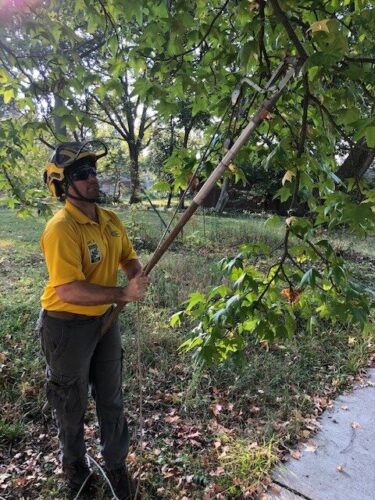
Proper pruning during the summer is a good way to improve aesthetics and stability during stormy weather.
- Call in a professional; it is always a good idea to consult an ISA Certified Arborist for answers to tree questions. A reputable arborist trained in best practices and current research can provide the best solutions to keeping trees healthy and reduce potential risk for damage during those summer storms. Finding a qualified arborist can be a challenge itself. Refer to this website to find an ISA arborist near you.
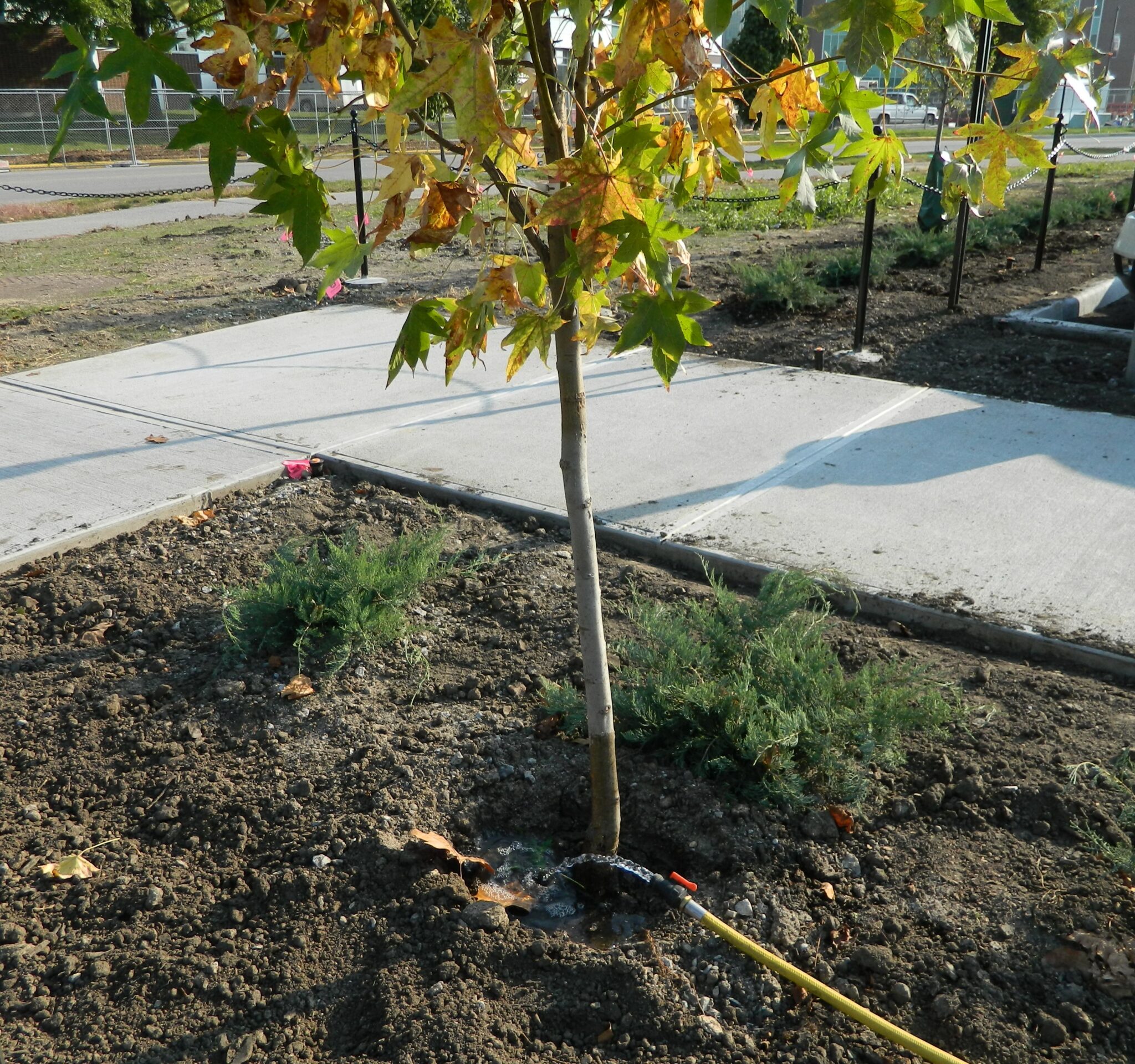
For additional information on urban tree care, check out all the publications at the Purdue Education Store.
Resources:
Planting Your Tree Part 1: Choosing Your Tree, Purdue Extension YouTube Channel
Tree Planting Part 2: Planting a Tree, Purdue Extension YouTube Channel
Tree Selection for the “Un-natural” Environment, The Education Store, Purdue Extension resource center
Tree Installation: Process and Practices, The Education Store
Tree Pruning Essentials Video, Purdue Extension YouTube Channel
Tree Defect Identification, The Education Store
Tree Wound and Healing, Got Nature? Blog, Purdue Extension – Forestry and Natural Resources
Surface Root Syndrome, The Education Store
Purdue Landscape Report
Lindsey Purcell, Urban Forestry Specialist
Purdue Department of Forestry and Natural Resources
In this edition of ID That Tree, Purdue Extension forester Lenny Farlee introduces you to a native Indiana tree that produces green blooms that turn purple and eventually produce the pawpaw fruit, also called the Indiana banana.
If you have any questions regarding wildlife, trees, forest management, wood products, natural resource planning or other natural resource topics, feel free to contact us by using our Ask an Expert web page.
Resources:
ID That Tree, Playlist, Purdue Extension – Forestry and Natural Resources Youtube Channel
A Woodland Management Moment, Playlist, Purdue Extension – FNR Youtube Channel
Shrubs and Woody Vines of Indiana and the Midwest, Purdue University Press
Native Trees of the Midwest, Purdue University Press
Investing in Indiana Woodlands, The Education Store
Forest Improvement Handbook, The Education Store
Growing Pawpaws, The Education Store
Pawpaw: The Midwest Banana?, Indiana Yard and Garden – Purdue Consumer Horticulture
Unexpected Plants and Animals of Indiana: Pawpaw tree, Got Nature? Post, Purdue Extension – Forestry and Natural Resources
Lenny Farlee, Sustaining Hardwood Extension Specialist
Purdue University Department of Forestry and Natural Resources
You may know sassafras for its fall fruit, but did you know this native Indiana tree also produces yellow spring blooms? Learn more about this tree in this edition of ID That Tree with Purdue Extension forester Lenny Farlee.
If you have any questions regarding wildlife, trees, forest management, wood products, natural resource planning or other natural resource topics, feel free to contact us by using our Ask an Expert web page.
Resources:
ID That Tree, Playlist, Purdue Extension – Forestry and Natural Resources YouTube Channel
A Woodland Management Moment, Playlist, Purdue Extension – FNR YouTube Channel
Shrubs and Woody Vines of Indiana and the Midwest, Purdue University Press
Native Trees of the Midwest, Purdue University Press
Investing in Indiana Woodlands, The Education Store
Forest Improvement Handbook, The Education Store
Sassafras albidum, Purdue Arboretum Explorer
Sassafras, The Education Store, Purdue Extension resource center
Lenny Farlee, Sustaining Hardwood Extension Specialist
Purdue University Department of Forestry and Natural Resources
Join fisheries specialist Dr. Mitch Zischke and Fred Whitford from the Purdue Pesticide program as they share about pond vegetation, from what is pond vegetation and why is it useful, to how you prevent negative effects from aquatic plants and what can you do to control problem plants.
If you have any questions regarding trees, forests, wildlife, wood products or other natural resource topics, feel free to contact us by using our Ask an Expert web page.
Resources:
Aquatics & Fisheries, Playlist, Purdue Extension – Forestry and Natural Resources YouTube Channel
Ask an Expert: Pond Wildlife Management, Video, Purdue Extension – FNR YouTube Channel
Ask an Expert: Pond Management: What to Do in Winter, How to Plan for Spring, Video, Purdue Extension – FNR YouTube Channel
Aquatic Pest Management, The Education Store, Purdue Extension resource center
Pond Management: Stocking Fish in Indiana Ponds, The Education Store
Aquatic Plant Management: Identifying and Managing Aquatic Vegetation, The Education Store
Aquatic Vegetation Management, College of Agriculture – Purdue Extension
Pond and Wildlife Management, College of Agriculture – Purdue Extension
Purdue Plant and Pest Diagnostic Lab, College of Agriculture – Purdue Extension
Find your county extension educator, College of Agriculture – Purdue Extension
Purdue Pesticide Program eLearning Aquatic Pest Management Module, Purdue Pesticide Program, Purdue Extension
Part 1: Know Your Pond, Video, Purdue Extension YouTube Channel
Part 2: Selecting the Right Equipment for the Job, Video, Purdue Extension YouTube Channel
Part 3: Proper Placement of the Herbicide, Video, Purdue Extension YouTube Channel
Part 4: Stopping the Hitchhikers Boat Cleaning, Video, Purdue Extension YouTube Channel
Mitch Zischke, Clinical Assistant Professor
Purdue Department of Forestry and Natural Resources
Fred Whitford, Clinical Engagement Professor
Purdue Department of Botany and Plant Pathology
MyDNR Newsletter, Indiana Department of Forestry and Natural Resources (IDNR): DNR biologists have confirmed a black bear sighting that occurred in northeast Vanderburgh County June 21st. The closest town to the location is Elberfeld, in Warrick County.
Biologists confirmed the bear from photos taken by the landowner.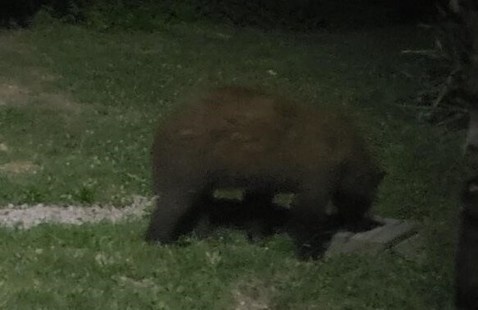
“This is Indiana’s fourth confirmed black bear,” said Brad Westrich, DNR mammalogist. “With expanding bear populations in neighboring states, this is expected.”
“Human-bear conflicts can be avoided if you remove or secure potential food sources from your yard. Bears can smell food from more than a mile away.”
Black bears are rarely aggressive toward humans.
If you see a black bear:
- Do not feed it.
- Observe it from a distance.
- Do not climb a tree.
- Advertise your presence by shouting and waving your arms and backing slowly away.
- Report bear sightings to the Indiana Division of Fish & Wildlife here.
Most problems that occur with bears arise when bears associate food sources with humans and lose their fear of people.
More guidelines for reducing or eliminating the potential for bear-human conflicts:
- Remove bird feeders and bird food if a bear is reported in your area.
- Clean and store away grills after use.
- Eliminate food attractants by placing garbage cans inside a garage or shed.
- Pick ripe fruits and vegetables as soon as possible or place an electric fence around them to ensure bears cannot reach them.
- Consolidate beehives you may have and place an electric fence around them.
- Don’t leave pet food outside overnight.
- Don’t add meat or sweets to a compost pile.
- Don’t climb a tree if you encounter a bear; wait in a vehicle or building for the bear to leave the area.
To view all DNR news releases, please see dnr.IN.gov.
Resources:
Wildlife, Playlist, Purdue Extension – Forestry and Natural Resources YouTube Channel
Black Bears, Indiana Department of Natural Resources (IDNR)
Report a Black Bear Sighting, Indiana Department of Natural Resources (IDNR)
Unexpected Plants and Animals in Indiana: Black Bear, College of Agriculture – Forestry and Natural Resources
Indiana Department of Natural Resources
In this episode of A Moment in the Wild, Purdue Extension wildlife specialist Nick Burgmeier introduces you to the eastern newt, a salamander that has a unique relationship with both land and water and also with its fellow salamanders.
If you have any questions regarding wildlife, trees, forest management, wood products, natural resource planning, or other natural resource topics, feel free to contact us by using our Ask an Expert web page.
Resources:
A Moment in the Wild, Playlist, Purdue Extension – Forestry and Natural Resources YouTube Channel
Improving Water Quality by Protecting Sinkholes on Your Property, Video, Purdue Extension – FNR YouTube Channel
Question: Which salamander is this?, Got Nature? Blog, Purdue Extension – Forestry and Natural Resources
Is it a Hellbender or a Mudpuppy?, Got Nature? Blog
Amphibians: Frogs, Toads, and Salamanders, Purdue Nature of Teaching
Help the Hellbender, Playlist & Website
The Nature of Teaching: Adaptations for Aquatic Amphibians, The Education Store, Purdue Extension resource center
Help the Hellbender, North America’s Giant Salamander, The Education Store
Nick Burgmeier, Research Biologist and Wildlife Extension Specialist
Purdue Department of Forestry and Natural Resources
Meet the Hawthorns, a family of small trees with wide-ranging features that make it difficult to tell various species apart. Learn about this group of native Indiana trees, which produce beautiful spring blooms, from Purdue Extension forester Lenny Farlee in this episode of ID That Tree.
If you have any questions regarding wildlife, trees, forest management, wood products, natural resource planning or other natural resource topics, feel free to contact us by using our Ask an Expert web page.
Resources:
ID That Tree, Playlist, Purdue Extension – Forestry and Natural Resources YouTube Channel
A Woodland Management Moment, Playlist, Purdue Extension – FNR YouTube Channel
Shrubs and Woody Vines of Indiana and the Midwest, Purdue University Press
Native Trees of the Midwest, Purdue University Press
Investing in Indiana Woodlands, The Education Store
Forest Improvement Handbook, The Education Store
Lenny Farlee, Sustaining Hardwood Extension Specialist
Purdue University Department of Forestry and Natural Resources
Starting in May, the Indiana Department of Natural Resources (DNR) began to receive reports of sick and dying songbirds from several counties around the state. As of now, the cause of the illness remains a mystery although submitted specimens have tested negative for avian influenza and West Nile virus according to the DNR. Affected birds have white crust and discharge around the eyes and damage to their nervous system. Reports of sick birds have expanded to many more counties in Indiana.
Several diseases that affect songbirds are transmitted from one animal to another. Bird feeders can increase the likelihood of disease transmission by facilitating close contact among birds. Even though the disease and its mode of transmission in this case is unknown, the DNR is recommending all Hoosiers remove their birdfeeders.
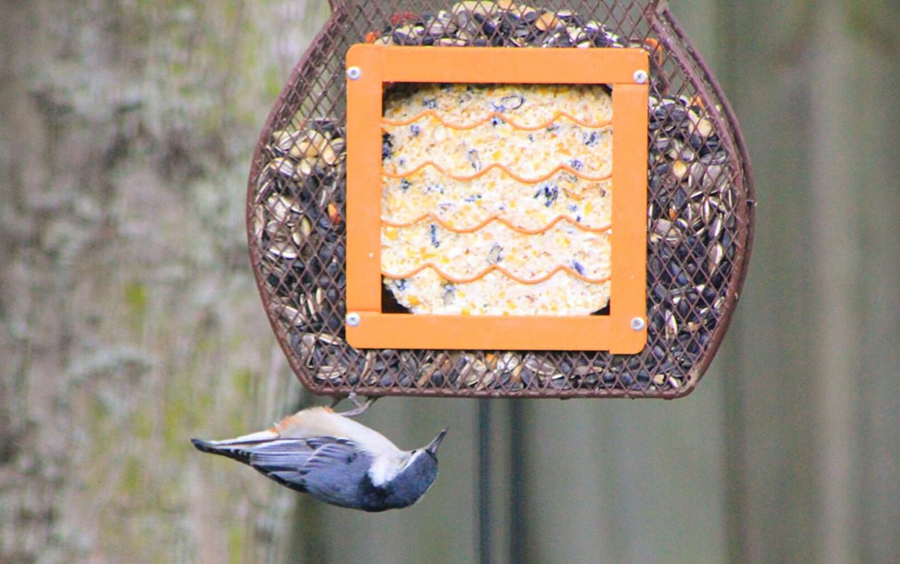 Officials recommend the following steps:
- Use the DNR sick/dead wildlife reporting tool at on.IN.gov/sickwildlife to alert DNR staff.
- Stop feeding birds until the mortality event has concluded.
- Clean feeders and baths with a 10% bleach solution.
- Avoid handling birds. If you need to handle birds, wear disposable gloves.
- When removing dead birds, wear disposable gloves and place birds and gloves in a sealable plastic bag to dispose with household trash.
- Keep pets away from sick or dead birds as a precaution.
- Proper care of bird feeders and seed is an important part of preventing disease transmission at birdfeeders.
The Audubon Society recommends the following best practices:
- Clean feeders monthly using one part bleach to nine parts warm water. Soak the feeder in the solution for a few minutes, rinse, and air dry.
- If uneaten food is accumulating in or under feeders, consider using less food or switch to a seed more to the birds’ liking.
- If birds are fighting over space at a feeder, consider adding more feeders to alleviate the congestion that can potentially be responsible for the rapid spread of disease.
- Avoid throwing large amounts of food on the ground or alternate ground feeding areas so that uneaten food does not accumulate and develop bacteria or mold.
Resources:
DNR recommends removal of birdfeeders statewide – June 25, Indiana Department of Natural Resources
Birdfeeder tips, The National Audubon Society
Birds and Residential Window Strikes: Tips for Prevention, The Education Store, Purdue Extension resource center
Breeding Birds and Forest Management: the Hardwood Ecosystem Experiment and the Central Hardwoods Region, The Education Store
Managing Woodlands for Birds Video, Purdue Extension-Forestry and Natural Resources YouTube Channel
Brian MacGowan, Wildlife Extension Specialist
Purdue University, Department of Forestry and Natural Resources

Recent Posts
- Beetle that attacks Tree-of-Heaven found in Indiana, Purdue Landscape Report
Posted: March 20, 2026 in Invasive Insects, Wildlife, Woodlands - ID That Tree: Dwarf Chinkapin Oak
Posted: in Forestry, Urban Forestry, Wildlife, Woodlands - IN-PREPared: Essential Resources for Indiana’s Severe Weather Season
Posted: March 11, 2026 in How To, Safety - DNR Hiring for Indiana Conservation Officer Positions, MyDNR
Posted: March 9, 2026 in Urban Forestry, Wildlife, Woodlands - ID That Tree: Shumard Oak
Posted: in Plants, Urban Forestry, Wildlife, Woodlands - A Woodland Management Moment: Windbreak Around Walnut Plantings
Posted: March 3, 2026 in Forestry, Urban Forestry, Woodland Management Moment - Getting Certified as an Indiana Certified Prescribed Burn Manager
Posted: March 2, 2026 in How To, Urban Forestry, Woodlands - Uniting Indiana Residents Against Invasive Species
Posted: February 27, 2026 in Community Development, Invasive Insects, Wildlife - Have You Seen a Soaring Eagle Lately? Morning Ag Clips
Posted: February 25, 2026 in Urban Forestry, Wildlife - Register for Natural Resources Teacher Institute’s Class of 2026
Posted: February 19, 2026 in Forestry, Wildlife, Woodlands
Archives
Categories
- Alert
- Aquaculture/Fish
- Aquatic/Aquaculture Resources
- Ask the Expert
- Christmas Trees
- Community Development
- Disease
- Drought
- Forestry
- Forests and Street Trees
- Gardening
- Got Nature for Kids
- Great Lakes
- How To
- Invasive Animal Species
- Invasive Insects
- Invasive Plant Species
- Land Use
- Natural Resource Planning
- Nature of Teaching
- Plants
- Podcasts
- Ponds
- Publication
- Safety
- Spiders
- Timber Marketing
- Uncategorized
- Urban Forestry
- Webinar
- Wildlife
- Wood Products/Manufacturing
- Woodland Management Moment
- Woodlands