 Purdue University - Extension - Forestry and Natural Resources
Got Nature? Blog
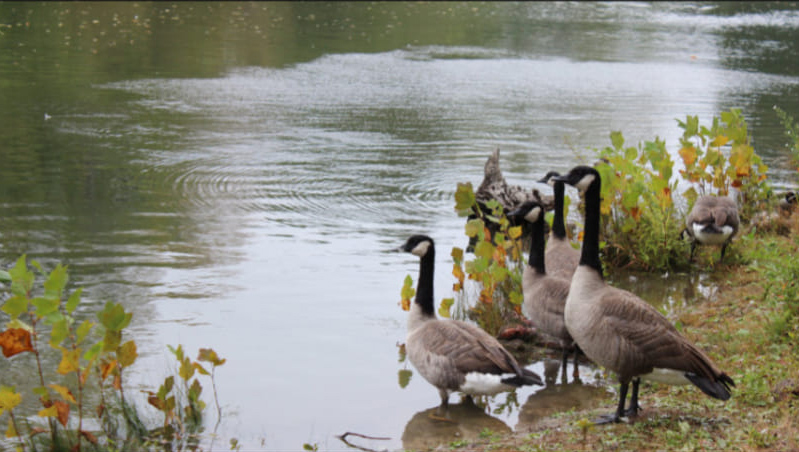 My DNR-Indiana’s Outdoor News: Make preparations now to keep geese off your land. Our friends at Indiana Department of Natural Resources remind us that Canada geese begin scouting for nesting areas in February. If you want to keep geese off your property, now is the time to start preparing. Geese prefer to nest near water surrounded by short, mowed grass and often return to where they have had previous nesting success. Well-kept lawns provide geese with food and a clear line-of-sight to see predators.
For more information and resources view the Indiana Department of Natural Resources: Fish and Wildlife – Canada Geese Management web page. You will find regulations, common goose conflicts, Canada Goose Biology, hunting information and more.
Other Resources:
Selecting a Nuisance Wildlife Control Professional, Got Nature? blog, Purdue Extension-Forestry & Natural Resources
Nuisance Canada Goose Management – Indiana Department of Natural Resources (INDNR)
Caution: Feeding Waterfowl May Be Harmful, U.S. fish & Wildlife Service
Indiana Department of Natural Resources
In this edition of ID That Tree, meet a non-native tree originally planted for fence rows, the Osage Orange, also known as a hedge apple. This tree is known by its gray bark with orange undertones and its large yellowish fruit, which has a milky center.
If you have any questions regarding wildlife, trees, forest management, wood products, natural resource planning or other natural resource topics, feel free to contact us by using our Ask an Expert web page.
Resources:
ID That Tree, Playlist, Purdue Extension – Forestry and Natural Resources YouTube Channel
A Woodland Management Moment, Playlist, Purdue Extension – FNR YouTube Channel
Shrubs and Woody Vines of Indiana and the Midwest, The Education Store, Purdue Extension Resource Center
Native Trees of the Midwest, The Education Store
Investing in Indiana Woodlands, The Education Store
Forest Improvement Handbook, The Education Store
Pin Oak, Native Trees of Indiana River Walk, Purdue Fort Wayne
Lenny Farlee, Sustaining Hardwood Extension Specialist
Purdue University Department of Forestry and Natural Resources
On this edition of ID That Tree, meet the black locust, which is recognizable by its small, rounded pinnate leaflets; gray bark with rough, long running ridges with orange undertones; and paired thorns where the buds and leaves originate.
If you have any questions regarding wildlife, trees, forest management, wood products, natural resource planning or other natural resource topics, feel free to contact us by using our Ask an Expert web page.
Resources:
ID That Tree, Playlist, Purdue Extension – Forestry and Natural Resources YouTube Channel
A Woodland Management Moment, Playlist, Purdue Extension – FNR YouTube Channel
Shrubs and Woody Vines of Indiana and the Midwest, The Education Store, Purdue Extension Resource Center
Native Trees of the Midwest, The Education Store
Investing in Indiana Woodlands, The Education Store
Forest Improvement Handbook, The Education Store
Black Locust, Native Trees of Indiana River Walk, Purdue Fort Wayne
Lenny Farlee, Sustaining Hardwood Extension Specialist
Purdue University Department of Forestry and Natural Resources
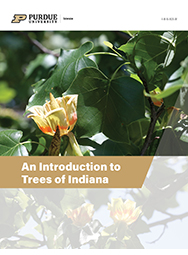
Trees are one of Indiana’s great natural resources. Professor T.E. Shaw, one of the first Indiana Extension foresters, wanted to make sure young Hoosiers, beginners in the field of forestry and tree enthusiasts alike had an educational resource to help them learn the names and identify local trees.
Shaw updated Charles C. Deam’s highly technical Trees of Indiana, which was first published in 1911, putting out an update for the 4-H forestry handbook in 1949. A second edition came out in 1950 and another revision was completed just before Shaw’s death in 1956 and published as “Fifty Common Trees of Indiana” through the Indiana Department of Conservation.
The publication, which utilizes simple methods and user-friendly language, has become a common resource many place in their backpacks before beginning an outdoor adventure.
The 1956 publication has been used for decades by 4-H, FFA and many other classroom and outdoor education programs as an introduction to tree identification for Indiana youth. Nearly 70 years later, the publication will be reintroduced as “An Introduction to Trees of Indiana,” with additional trees added to the resource along with updates of the original species. An Introduction to Trees of Indiana was a collaboration of experts from the Purdue Department of Forestry and Natural Resources (FNR), Indiana 4-H Youth Development and the Indiana Department of Natural Resources.
Add your copy of this new book to your library by visiting the Purdue Extension resource center, The Education Store: An Introduction to Trees of Indiana, product code: 4-H-15-80A.
Other resources:
Fifty Common Trees of Indiana
Native Trees of the Midwest, The Education Store
Shrubs and Woody Vines of Indiana and the Midwest, The Education Store
ID That Tree, Playlist, Subscribe to Purdue Extension – Forestry and Natural Resources YouTube Channel
A Woodland Management Moment, Playlist, Purdue Extension – FNR YouTube Channel
Investing in Indiana Woodlands, The Education Store
Forest Improvement Handbook, The Education Store
Tony Carrell, 4-H Youth Development Extension Specialist
Purdue Extension 4-H Youth Development
Lenny Farlee, Sustaining Hardwood Extension Specialist
Purdue University Department of Forestry and Natural Resources
Lindsey Purcell, Urban Forestry Specialist
Purdue University Department of Forestry and Natural Resources
 The Enhancing the Value of Public Spaces: Creating Healthy Communities Team, has been honored for its efforts by the Purdue Cooperative Extension Specialists’ Association (PUCESA).
The collaborative effort of Purdue Extension professionals from Forestry and Natural Resources, Health and Human Sciences, Supplemental Nutrition Assistance Program – Education Division (SNAP-Ed), and Community Development, as well as Illinois-Indiana Sea Grant, earned recognition as a PUCESA Team Award honoree.
The EVPS: CHC campus leadership team consisted of:
- Blake Connolly, assistant director of Purdue Extension, Nutrition Education program
- Lisa Graves, assistant program leader, Purdue Extension, Health and Human Sciences
- Kara Salazar, Assistant Program Leader for Community Development and Sustainable Communities Extension Specialist, Purdue Extension, Illinois-Indiana Sea Grant and Purdue FNR
- Daniel Walker, Community Development Regional Educator, Purdue Extension, Illinois-Indiana Sea Grant
- Michael Wilcox Jr., assistant director and program leader, Purdue Extension, Community Development
The Enhancing the Value of Public Spaces program provides Extension professionals with the information, tools, processes and research base needed for them to guide decision-makers and local leaders with oversight and management of community public spaces and public health. The program aims to help participating communities recognize public spaces as community assets; understand the significant influence of the built environment on the health of people and places in their community; develop and implement change strategies and indicators to support the process of creating Healthy Eating and Active Living environments; and to integrate public spaces into communities’ planning and development activities to contribute to the process of creating a healthy, thriving and sustainable community.
Program implementation may involve parks board and planning commission members, public officials and their staff, and members of organizations involved with programming or management of public spaces. Health coalitions and other organizations working in the realm of active living and healthy eating also play a key role.
Resources:
Community Development, Purdue Extension
Enhancing the Value of Public Spaces Program Video, Purdue Extension
Subscribe to Purdue Extension – Forestry and Natural Resources YouTube Channel
Wendy Mayer, FNR Communications Coordinator
Purdue University Department of Forestry and Natural Resources
Kara Salazar, Assistant Program Leader for Community Development and Sustainable Communities Extension Specialist
Purdue Department of Forestry and Natural Resources/Illinois-Indiana Sea Grant
Dan Walker, Community Development Regional Educator
Purdue Department of Forestry and Natural Resources/Illinois-Indiana Sea Grant
On this edition of ID That Tree, Purdue Extension forester Lenny Farlee shows you the differences between two non-native species commonly found in Indiana in decorative capacities, and especially during the holiday season, firs and spruces. Learn the differences in needles, cones and twigs so you can tell these species apart.
If you have any questions regarding wildlife, trees, forest management, wood products, natural resource planning or other natural resource topics, feel free to contact us by using our Ask an Expert web page.
Resources:
ID That Tree, Playlist, Purdue Extension – Forestry and Natural Resources YouTube Channel
A Woodland Management Moment, Playlist, Purdue Extension – FNR YouTube Channel
Shrubs and Woody Vines of Indiana and the Midwest, The Education Store, Purdue Extension Resource Center
Native Trees of the Midwest, The Education Store
Investing in Indiana Woodlands, The Education Store
Forest Improvement Handbook, The Education Store
Pin Oak, Native Trees of Indiana River Walk, Purdue Fort Wayne
Lenny Farlee, Sustaining Hardwood Extension Specialist
Purdue University Department of Forestry and Natural Resources
It’s not holly, but it will help you keep holiday cheer long into the winter, meet Winterberry. On this edition of ID That Tree, Purdue Extension forester Lenny Farlee explains the difference between winterberry and holly, as well as how to identify this deciduous plant.
If you have any questions regarding wildlife, trees, forest management, wood products, natural resource planning or other natural resource topics, feel free to contact us by using our Ask an Expert web page.
Resources:
ID That Tree, Playlist, Purdue Extension – Forestry and Natural Resources YouTube Channel
A Woodland Management Moment, Playlist, Purdue Extension – FNR YouTube Channel
Shrubs and Woody Vines of Indiana and the Midwest, The Education Store, Purdue Extension Resource Center
Native Trees of the Midwest, The Education Store
Investing in Indiana Woodlands, The Education Store
Forest Improvement Handbook, The Education Store
Pin Oak, Native Trees of Indiana River Walk, Purdue Fort Wayne
Lenny Farlee, Sustaining Hardwood Extension Specialist
Purdue University Department of Forestry and Natural Resources
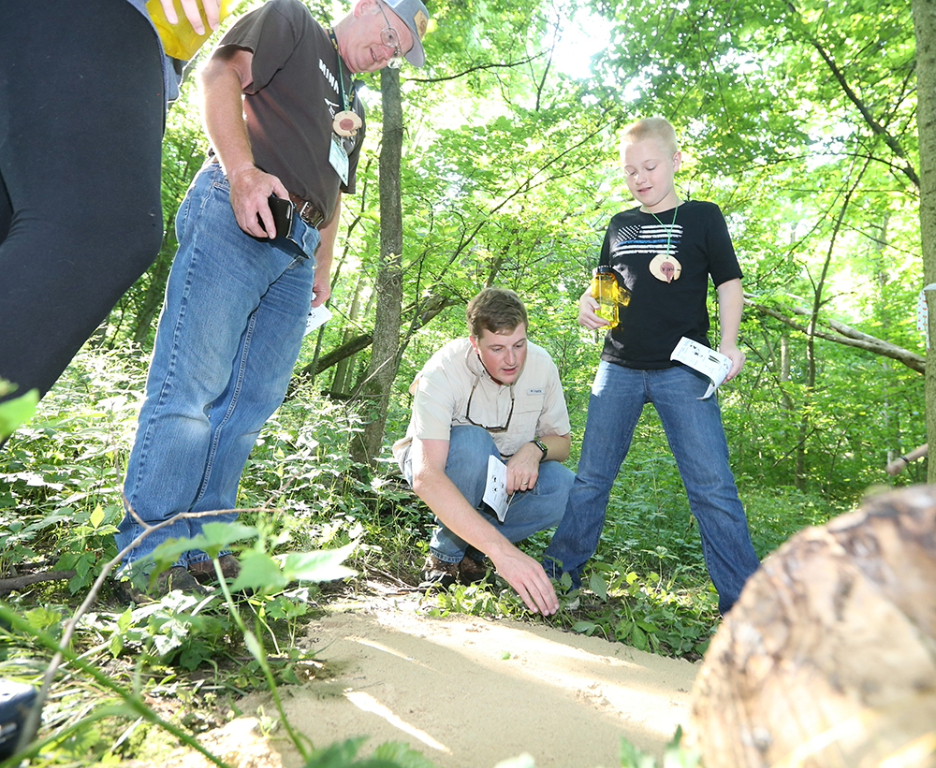 Purdue Extension wildlife specialist Jarred Brooke has been named as a recipient of the Purdue Cooperative Extension Specialists’ Association (PUCESA) Early Career Award, which recognizes an Extension specialist with less than 10 years of service.
Recipients must demonstrate Extension leadership; excellence in delivering public education programs; innovative approaches to program development and delivery; outreach efforts to county Extension educators; research that benefits Extension clientele through practical application; or through demonstrated collaboration with county educators, agencies or community leaders.
“I am truly grateful to be honored by my peers with this award, but most of my extension work would not have been possible without the wonderful people I work with both inside and outside of Purdue,” Brooke said. “I am indebted to them.”
Brooke, a 2012 wildlife science alum, returned to his alma mater in August 2016 as an Extension wildlife specialist after completing his master’s degree in wildlife management from the University of Tennessee in 2015. Over the past five years, Brooke has become a productive and effective extension specialist and has taken on multiple leadership roles, collaborated with partners in an outside of Extension, conducted applied research and worked to deliver impactful and innovative extension programming.
Brooke was honored with the PK-12 Outreach and Engagement Excellence Staff Award in April 2021 for his work with the 4H-Academy, the Wildlife Habitat Education Program and The Nature of Teaching.
Outside of Extension, Brooke helped form the Indiana Prescribed Fire Council, of which he has served as chair since 2018. He also is currently the Past President of the Indiana Chapter of the Wildlife Society, and served on the continuing education committee for the group. In these roles, Brooke collaborates with other natural resources professionals to plan and deliver natural resource-based programming to other professionals and landowners throughout Indiana.
Resources:
Jarred Brooke Receives PK-12 Council Staff Excellence Award, Got Nature? Blog, Purdue Extension-FNR
Brooke’s Prescribed Fire Videos Utilized in Global USFS Efforts, Got Nature? Blog, Purdue Extension-FNR
Pond and Wildlife Management, Purdue Extension-Forestry and Natural Resources
Natural Resources University, Deer, Fire, Pond and Habitat Podcasts
Creating a Wildlife Habitat management Plan for Landowners, Got Nature? Blog, Purdue Extension-FNR
A Template for Your Wildlife Habitat Management Plan, Got Nature? Blog, Purdue Extension-FNR
Subscribe to Purdue Extension – Forestry and Natural Resources YouTube Channel and view Jarred Brooke’s deer, fire and other wildlife videos.
Wendy Mayer, FNR Communications Coordinator
Purdue University Department of Forestry and Natural Resources
Jarred Brooke, Wildlife Extension Specialist
Purdue Forestry and Natural Resources
On this edition of ID That Tree, meet umbrella magnolia, a small tree easily identified by the clusters of long simple leaves at the end of the twigs, which form an umbrella shape, and by its beautiful white blossoms in the spring.
If you have any questions regarding wildlife, trees, forest management, wood products, natural resource planning or other natural resource topics, feel free to contact us by using our Ask an Expert web page.
Resources:
ID That Tree, Playlist, Purdue Extension – Forestry and Natural Resources YouTube Channel
A Woodland Management Moment, Playlist, Purdue Extension – FNR YouTube Channel
Shrubs and Woody Vines of Indiana and the Midwest, The Education Store, Purdue Extension Resource Center
Native Trees of the Midwest, The Education Store
Investing in Indiana Woodlands, The Education Store
Forest Improvement Handbook, The Education Store
Pin Oak, Native Trees of Indiana River Walk, Purdue Fort Wayne
Lenny Farlee, Sustaining Hardwood Extension Specialist
Purdue University Department of Forestry and Natural Resources
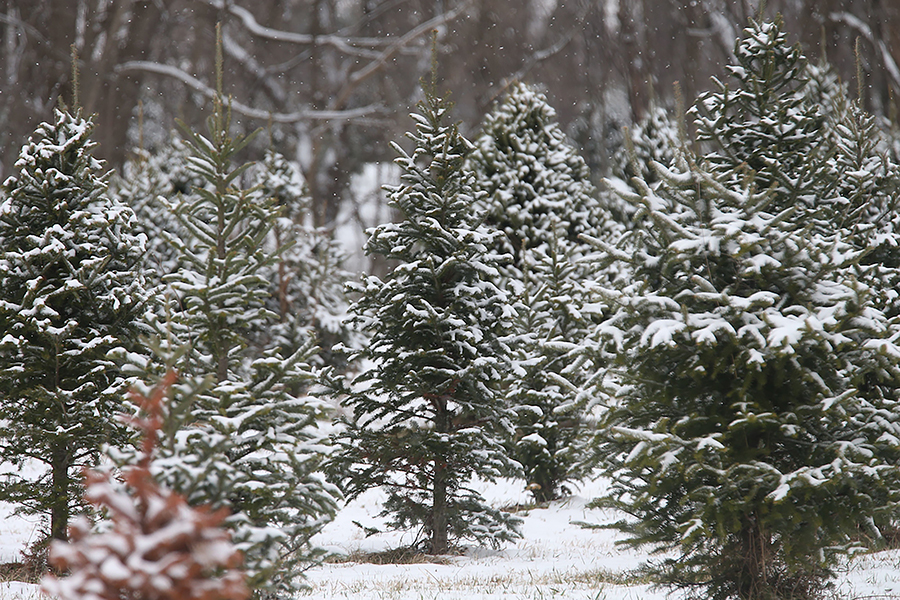 With the holidays over the needles are beginning to fall from your natural Christmas tree, continue to spread holiday cheer by returning your tree to nature.
Jarred Brooke, Extension wildlife specialist, shares a few creative ways you can repurpose and recycle your tree this year.
“Before you throw your used natural Christmas tree in the trash, think about recycling it on your property. Instead of taking up space in the landfill, your tree could decompose naturally while providing cover and food for fish, wildlife or insects,” said Brooke.
No matter how you choose to repurpose your tree, make sure it is free from ornaments and decorations. Do not recycle trees that have been sprayed with “fake” snow or treated with chemicals.
Create a habitat for fish
Throwing used Christmas trees in ponds is a great way to recycle the tree and provide a fish habitat to your pond. The small branches provide hiding spots for small fish to escape from larger predators.
If the pond is frozen with more than four inches of ice, you can drag your tree onto the ice. The tree will fall into place once the ice melts.
You should only add Christmas trees to your ponds or other private ponds with the permission of the pond owner. While they do provide great habitats for fish, they can be a nuisance for fishing as hooks and lines may get caught on branches. It is recommended that you keep trees away from popular fishing areas like docks.
Resources:
Selecting a Real Christmas Tree, Got Nature? Blog, Purdue Extension-Forestry and Natural Resources
A Choose-and-Cut Pine and Fir Christmas Tree Case Study, The Education Store, Purdue Extension’s resource center
Living Christmas Trees For The Holidays and Beyond, The Education Store
Growing Christmas Trees, The Education Store
Selecting an Indiana-Grown Christmas Tree, The Education Store
Forest/Timber Playlist, subscribe to Purdue Extension – Forestry and Natural Resources YouTube Channel
Aquatics & Fisheries, Playlist, Purdue Extension – Forestry and Natural Resources YouTube Channel
Ask an Expert: Pond Wildlife Management, Video, Purdue Extension – FNR YouTube Channel
Ask an Expert: Pond Management: What to Do in Winter, How to Plan for Spring, Video, Purdue Extension – FNR YouTube Channel
Aquatic Plant Management: Identifying and Managing Aquatic Vegetation, The Education Store
Pond and Wildlife Management, Purdue Extension-Forestry and Natural Resources
Jarred Brooke, Wildlife Extension Specialist
Purdue Forestry and Natural Resources

Recent Posts
- Beetle that attacks Tree-of-Heaven found in Indiana, Purdue Landscape Report
Posted: March 20, 2026 in Invasive Insects, Wildlife, Woodlands - ID That Tree: Dwarf Chinkapin Oak
Posted: in Forestry, Urban Forestry, Wildlife, Woodlands - IN-PREPared: Essential Resources for Indiana’s Severe Weather Season
Posted: March 11, 2026 in How To, Safety - DNR Hiring for Indiana Conservation Officer Positions, MyDNR
Posted: March 9, 2026 in Urban Forestry, Wildlife, Woodlands - ID That Tree: Shumard Oak
Posted: in Plants, Urban Forestry, Wildlife, Woodlands - A Woodland Management Moment: Windbreak Around Walnut Plantings
Posted: March 3, 2026 in Forestry, Urban Forestry, Woodland Management Moment - Getting Certified as an Indiana Certified Prescribed Burn Manager
Posted: March 2, 2026 in How To, Urban Forestry, Woodlands - Uniting Indiana Residents Against Invasive Species
Posted: February 27, 2026 in Community Development, Invasive Insects, Wildlife - Have You Seen a Soaring Eagle Lately? Morning Ag Clips
Posted: February 25, 2026 in Urban Forestry, Wildlife - Register for Natural Resources Teacher Institute’s Class of 2026
Posted: February 19, 2026 in Forestry, Wildlife, Woodlands
Archives
Categories
- Alert
- Aquaculture/Fish
- Aquatic/Aquaculture Resources
- Ask the Expert
- Christmas Trees
- Community Development
- Disease
- Drought
- Forestry
- Forests and Street Trees
- Gardening
- Got Nature for Kids
- Great Lakes
- How To
- Invasive Animal Species
- Invasive Insects
- Invasive Plant Species
- Land Use
- Natural Resource Planning
- Nature of Teaching
- Plants
- Podcasts
- Ponds
- Publication
- Safety
- Spiders
- Timber Marketing
- Uncategorized
- Urban Forestry
- Webinar
- Wildlife
- Wood Products/Manufacturing
- Woodland Management Moment
- Woodlands