 Purdue University - Extension - Forestry and Natural Resources
Got Nature? Blog
Purdue College of Agriculture News: Timber rattlesnakes are widely distributed across the eastern half of the United States, living as far north as New Hampshire and as far south as Florida. Hilly forests like those found in Brown, Monroe and Morgan County, Indiana suit the secretive lifestyle of the venomous snake. According to Purdue Extension wildlife specialist Brian MacGowan, there is no reliable estimate of the number of Timber rattlesnakes living in Indiana. Sightings are rare but most likely to occur during the hottest parts of the year.
“Late July and August are the peak of their breeding season in Indiana,” said MacGowan. “The males move around a lot more, tracking the scent of the females.”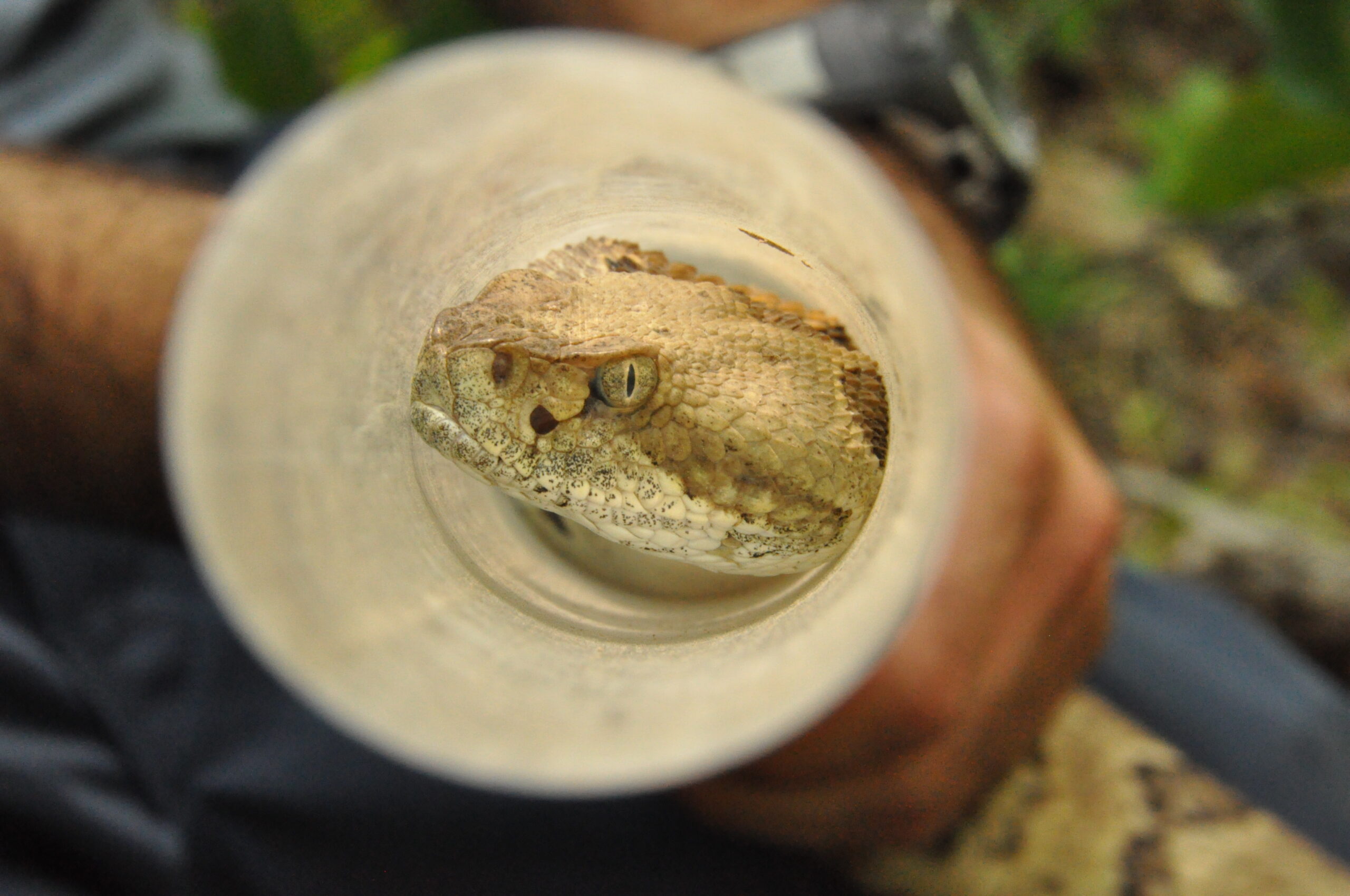
While they are normally hidden among rocks and brush, rattlesnakes have been observed 20 feet high in trees on rare occasion.
“Chipmunks are their primary food source in Indiana, but larger males eat squirrels and similarly-sized prey,” MacGowan explained. “They even consume songbirds.” A typical adult grows to be between three and five feet in length.
Rattlesnakes are patient hunters. Most often they use their natural camouflage to ambush prey. They inject a lethal venom, potentially strong enough to kill a human if left untreated. The venom contains hemotoxic elements, meaning it can damage or destroy blood vessels and cells.
But just because rattlesnakes are venomous does not mean they create frequent problems for nature lovers. “Timber rattlesnakes are reclusive and are quite unaggressive as far as snakes go,” MacGowan explained. “A lot of the locals in the areas I research don’t realize rattlers live nearby since the snakes keep to themselves.” According to the CDC, roughly 7,500 instances of venomous snakebites are recorded a year in the United States. Of those, about 5 are fatal. During his time as part of the Hardwood Ecosystems Experiment, MacGowan realized that even when looking, finding a rattlesnake is not an easy task.
For full article on the rattlesnake please visit: Unexpected Plants and Animals of Indiana: Timber Rattlesnake
Resources:
Snakes and Lizards of Indiana, The Education Store, Purdue Extension’s resource center
Snakes of the Central and Northeastern United States, The Education Store
Snakes of Indiana, The Education Store
Indiana Amphibian and Reptile ID Package (4 softcover books), The Education Store
Reptiles: Turtles, Snakes, and Lizards, Purdue Nature of Teaching Website
Ask An Expert, Playlist, Purdue Extension – Forestry and Natural Resources YouTube channel
A Moment in the Wild: Eastern Hognose, Purdue Extension – FNR Video
A Moment in the Wild: Eastern Kingsnake, Purdue Extension – FNR Video
A Moment in the Wild: Racer, Purdue Extension – FNR Video
Purdue University Department of Agricultural Communication
Dr. Brian MacGowan, Extension Wildlife Specialist
Department of Forestry & Natural Resources, Purdue University
The classic and trusted book “Fifty Common Trees of Indiana” by T.E. Shaw was published in 1956 as a user-friendly guide to local species. Nearly 70 years later, the publication has been updated through a joint effort by the Purdue Department of Forestry and Natural Resources, Indiana 4-H, and the Indiana Department of Natural Resources, and reintroduced as “An Introduction to Trees of Indiana.”
The full publication is available for download for $7 in the Purdue Extension Education Store. The field guide helps identify common Indiana woodlot trees.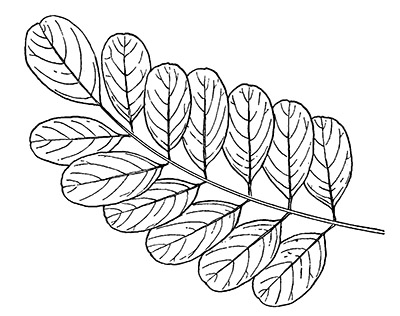
Each week, the Intro to Trees of Indiana web series will offer a sneak peek at one species from the book, paired with an ID That Tree video from Purdue Extension forester Lenny Farlee to help visualize each species as it stands in the woods. Threats to species health as well as also insight into the wood provided by the species, will be provided through additional resources as well as the Hardwoods of the Central Midwest exhibit of the Purdue Arboretum, if available.
This week, we introduce the black locust or Robinia pseudoacacia.
This tree has compound leaves that are eight to 10 inches long, made up of seven to 17 small rounded leaflets arranged alternately on the twigs. The black locust has thorns on the twig where the buds and leaf stems branch off and also on the limbs and trunks of young trees. The bark is a light to medium gray marked by very rough, long running ridges. An orange coloration can be seen when scraping the bark surface.
In the spring, black locust produces long hanging clusters of fragrant white flowers. It is a member of the broad legume family and its fruit resembles a bean, with brown or black pods that are approximately three inches long and very thin and papery.
For full article with additional photos view: Intro to Trees of Indiana: Black Locust
If you have any questions regarding wildlife, trees, forest management, wood products, natural resource planning or other natural resource topics, feel free to contact us by using our Ask an Expert web page.
Other Resources:
Hardwood Lumber and Veneer Series: Black Locust
Morton Arboretum: Black Locust
The Wood Database: Black Locust
Fifty Common Trees of Indiana
An Introduction to Trees of Indiana
Native Trees of the Midwest, The Education Store
Shrubs and Woody Vines of Indiana and the Midwest, The Education Store
Investing in Indiana Woodlands, The Education Store
Forest Improvement Handbook, The Education Store
ID That Tree, Purdue Extension-Forestry & Natural Resources (FNR) YouTube playlist
Woodland Management Moment , Purdue Extension-FNR YouTube playlist
Wendy Mayer, FNR Communications Coordinator
Purdue University Department of Forestry and Natural Resources
Lenny Farlee, Sustaining Hardwood Extension Specialist
Purdue University Department of Forestry and Natural Resources
American Eagle Foundation: Our native vultures play a crucial role in reducing the spread of disease. However, as black vulture population increases, so too have reports of human-wildlife interactions. Researchers at Purdue University are currently performing research to better understand reports of black vulture depredation on livestock, and their ultimate goal is to find solutions that protect both livestock and birds.
AEF interviewed Dr. Pat Zollner, Dr. Zhao Ma, doctoral student Marian Wahl, and Ph.D. alumna Brooke McWherter for insight into their important research.
Check out the great information in this video discussing how this research was started and the concerns shared to the USDA office from state offices and the public.
Find out what types of vulture species are here in the United States and their roles in the story Protect Our Native Vultures, American Eagle Foundation.
Vultures have a role to play as nature’s garbagemen, cleaning up animal carcasses. If you have any questions regarding this research, or have any experiences to share, contact Marian Wahl.
Resources:
Black Vulture Research Highlighted by NY Times, Got Nature Blog, Purdue Extension-Forestry and Natural Resources
Citizen Participation Needed in Black Vulture Research, Purdue Forestry and Natural Resources News
Black Vulture Research, March Edition of Beef Monthly
Black Vulture Ecology and Human-Wildlife Conflicts, Purdue FNR, Dr. Pat Zollner’s WebsiteDiana Evans, Extension and Web Communication Specialist
Purdue University Department of Forestry and Natural Resources
Marion Wahl, Graduate Research Assistant
Purdue Forestry and Natural Resources
The classic and trusted book “Fifty Common Trees of Indiana” by T.E. Shaw was published in 1956 as a user-friendly guide to local species. Nearly 70 years later, the publication has been updated through a joint effort by the Purdue Department of Forestry and Natural Resources, Indiana 4-H, and the Indiana Department of Natural Resources, and reintroduced as “An Introduction to Trees of Indiana.”
The full publication is available for download for $7 in the Purdue Extension Education Store. The field guide helps identify common Indiana woodlot trees.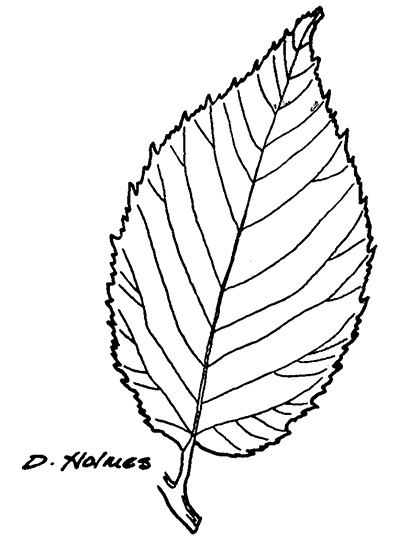
Each week, the Intro to Trees of Indiana web series will offer a sneak peek at one species from the book, paired with an ID That Tree video from Purdue Extension forester Lenny Farlee to help visualize each species as it stands in the woods. Threats to species health as well as also insight into the wood provided by the species, will be provided through additional resources as well as the Hardwoods of the Central Midwest exhibit of the Purdue Arboretum, if available.
This week, we introduce the ironwood or Ostrya virginiana.
This tree, also known as Eastern hop hornbeam, is identifiable by its oblong leaves with doubly-toothed margins, which are held alternately on very fine twigs, and its fruit, a loosely formed green pod at the tip of the branches, which resembles hops. The bark is medium to dark brown with flakes and prominent flaky ridges which develop as the tree ages. The leaves of ironwood produce vibrant yellow fall color.
The ironwood, typically an understory species but sometimes found as a landscape tree, is closely related to the American Hornbeam or blue beech or musclewood, although the bark of the latter is gray and appears stretched across the muscles and sinews of the tree.
For full article with additional photos view: Intro to Trees of Indiana: Ironwood
Other Resources:
Fifty Common Trees of Indiana
An Introduction to Trees of Indiana
Native Trees of the Midwest, The Education Store
Shrubs and Woody Vines of Indiana and the Midwest, The Education Store
Investing in Indiana Woodlands, The Education Store
Forest Improvement Handbook, The Education Store
Information for Carpinus caroliniana tree species, The Purdue Arboretum Explorer
ID That Tree, Purdue Extension-Forestry & Natural Resources (FNR) YouTube playlist
Woodland Management Moment , Purdue Extension-FNR YouTube playlist
Wendy Mayer, FNR Communications Coordinator
Purdue University Department of Forestry and Natural Resources
Lenny Farlee, Sustaining Hardwood Extension Specialist
Purdue University Department of Forestry and Natural Resources
The A Guide to Small-Scale Fish Processing Using Local Kitchen Facilities brochure is an overview of what a fish producer thinking about small-scale fish processing needs to know. The overview includes training requirements, available facilities and highlights of select farmers who have gone through the process.
This publication is a collaborative project of Illinois-Indiana Sea Grant, the North Central Regional Aquaculture Center, University of Illinois Extension, and Purdue University’s Department of Forestry and Natural Resources.
About the Author
Amy Shambach is Illinois-Indiana Sea Grant’s (IISG) aquaculture marketing outreach associate who works with the aquaculture industry in the USDA’s North Central Regional Aquaculture Center. Her work focuses on the demand side of domestic farm raised seafood products. She provides outreach and extension services to producers, potential producers, and consumers. Along with Dr. Kwamena Quagrainie, producers, aquaculture associations, and consumers, she works to determine the needs of stakeholders.
To receive the free download for the Guide to Small-Scale Fish Processing Using Local Kitchen Facilities please visit The Education Store.
Resources:
Walleye Farmed Fish Fact Sheet, The Education Store, Purdue Extension’s resource center
Pacific White Shrimp Farmed Fact Sheet, The Education Store
Yellow Perch Farmed Fish Fact Sheet, The Education Store
Tilapia Farmed Fish Fact Sheet, The Education Store
Rainbow Trout Farmed Fish Fact Sheet, The Education Store
American Paddlefish, The Education Store
Aquaculture Family Coloring Book Development, The Education Store
Eat Midwest Fish, Illinois-Indiana Sea Grant online resource hub
Amy Shambach, Aquaculture Marketing Outreach Associate
Purdue Department of Forestry and Natural Resources/Illinois Indiana Sea Grant Program
The classic and trusted book “Fifty Common Trees of Indiana” by T.E. Shaw was published in 1956 as a user-friendly guide to local species. Nearly 70 years later, the publication has been updated through a joint effort by the Purdue Department of Forestry and Natural Resources, Indiana 4-H, and the Indiana Department of Natural Resources, and reintroduced as “An Introduction to Trees of Indiana.”
The full publication is available for download for $7 in the Purdue Extension Education Store. The field guide helps identify common Indiana woodlot trees.
Each week, the Intro to Trees of Indiana web series will offer a sneak peek at one species from the book, paired with an ID That Tree video from Purdue Extension forester Lenny Farlee to help visualize each species as it stands in the woods. Threats to species health as well as also insight into the wood provided by the species, will be provided through additional resources as well as the Hardwoods of the Central Midwest exhibit of the Purdue Arboretum, if available.
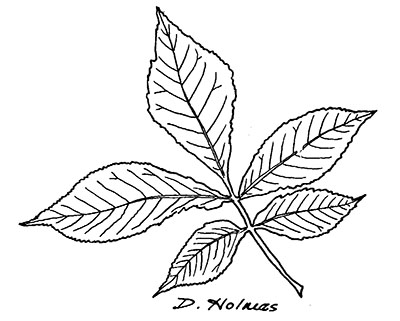 This week, we introduce the Pignut hickory or Carya glabra.
This tree is identifiable by its five-leaflet compound leaves and its small, smooth round nut with a partially open husk at the top. The pignut hickory has smaller buds and finer twigs than its cousins shagbark and mockernut hickory, and its nut is smooth and not ribbed. Its alternately held leaves are typically five leaflets, but may be seven leaflets, sometimes held on the same tree. The bark typically has long, running ridges that are medium or dark gray in color.
Pignut hickories grow to a mature height of 50-60 feet tall, but can be over 100 feet tall. They grow mostly on upland sites or in other places with good soil moisture drainage from New Hampshire west to Iowa and south to Texas and east to northern Florida except for the flood plain of the Mississippi River from Memphis south.
For full article with additional photos view: Intro to Trees of Indiana: Pignut Hickory
Other Resources:
Hickory and Pecan Species in the Hardwood Lumber and Veneer Series, The Education Store, Purdue Extension’s resource center
Sustaining Our Oak-Hickory Forests – Hardwood Ecosystem Experiment, The Education Store
The Hardwood Ecosystem Experiment: 2006-2016, The Education Store
Indiana Forestry and Wildlife: The Hardwood Ecosystem Experiment, The Education Store
Fifty Common Trees of Indiana
An Introduction to Trees of Indiana
Native Trees of the Midwest, The Education Store
Shrubs and Woody Vines of Indiana and the Midwest, The Education Store
Investing in Indiana Woodlands, The Education Store
Forest Improvement Handbook, The Education Store
Pignut Hickory, Native Trees of Indiana River Walk, Purdue University-Fort Wayne
ID That Tree, Purdue Extension-Forestry & Natural Resources (FNR) YouTube playlist
Woodland Management Moment , Purdue Extension-FNR YouTube playlist
Wendy Mayer, FNR Communications Coordinator
Purdue University Department of Forestry and Natural Resources
Lenny Farlee, Sustaining Hardwood Extension Specialist
Purdue University Department of Forestry and Natural Resources
The classic and trusted book “Fifty Common Trees of Indiana” by T.E. Shaw was published in 1956 as a user-friendly guide to local species. Nearly 70 years later, the publication has been updated through a joint effort by the Purdue Department of Forestry and Natural Resources, Indiana 4-H, and the Indiana Department of Natural Resources, and reintroduced as “An Introduction to Trees of Indiana.”
 The full publication is available for download for $7 in the Purdue Extension Education Store. The field guide helps identify common Indiana woodlot trees.
Each week, the Intro to Trees of Indiana web series will offer a sneak peek at one species from the book, paired with an ID That Tree video from Purdue Extension forester Lenny Farlee to help visualize each species as it stands in the woods. Threats to species health as well as also insight into the wood provided by the species, will be provided through additional resources as well as the Hardwoods of the Central Midwest exhibit of the Purdue Arboretum, if available.
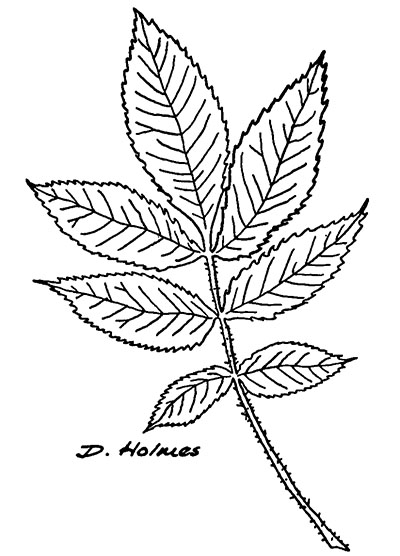
This week, we introduce the White hickory or Carya tomentosa.
This tree, also known as mockernut hickory, has stout twigs like those of shagbark hickory and large terminal buds, but its bark is not shaggy. Instead, mockernut hickory features thick, interlacing bark ridges that is often silvery on top. Its leaves are made up of seven to nine leaflets that are hairy beneath, instead of five. The bud is very rounded, resembling a scoop of ice cream. The bud, leaf stems and twigs may have hair on them. The nuts of the mockernut hickory are smooth and round with mild ridges with four seams, which break open in the fall. The leaves produce a golden-yellow color in the fall.
Mockernut hickories grow to a mature height of 50-60 feet tall. They grow mostly in high dry ridges and other well-drained soil locations from New Hampshire west to Iowa and south to Texas and east to northern Florida except for the flood plain of the Mississippi Rive from Memphis south.
For full article with additional photos view: Intro to Trees of Indiana: Mockernut Hickory
Other Resources:
Hickory and Pecan Species in the Hardwood Lumber and Veneer Series, The Education Store, Purdue Extension’s resource center
Sustaining Our Oak-Hickory Forests – Hardwood Ecosystem Experiment, The Education Store
The Hardwood Ecosystem Experiment: 2006-2016, The Education Store
Indiana Forestry and Wildlife: The Hardwood Ecosystem Experiment, The Education Store
Fifty Common Trees of Indiana
An Introduction to Trees of Indiana
Native Trees of the Midwest, The Education Store
Shrubs and Woody Vines of Indiana and the Midwest, The Education Store
Investing in Indiana Woodlands, The Education Store
Forest Improvement Handbook, The Education Store
ID That Tree, Purdue Extension-Forestry & Natural Resources (FNR) YouTube playlist
Woodland Management Moment , Purdue Extension-FNR YouTube playlist
Wendy Mayer, FNR Communications Coordinator
Purdue University Department of Forestry and Natural Resources
Lenny Farlee, Sustaining Hardwood Extension Specialist
Purdue University Department of Forestry and Natural Resources
Purdue Landscape Report, Using Pneumatic Digging Equipment to Correct Root Deformations, Deep Planting, and Compaction on Established Trees: When transplanting trees, it is important to consider the long-term viability. Since the typical life span of an urban tree is 7-20 years (USDA), proper establishment techniques are very important to decrease this mortality rate. When a tree becomes established, it is much more difficult to correct below ground problems.
Root deformations can occur for many reasons in established trees, but the most common are due to not making corrections prior to transplanting. Plants that have girdling and circling roots must 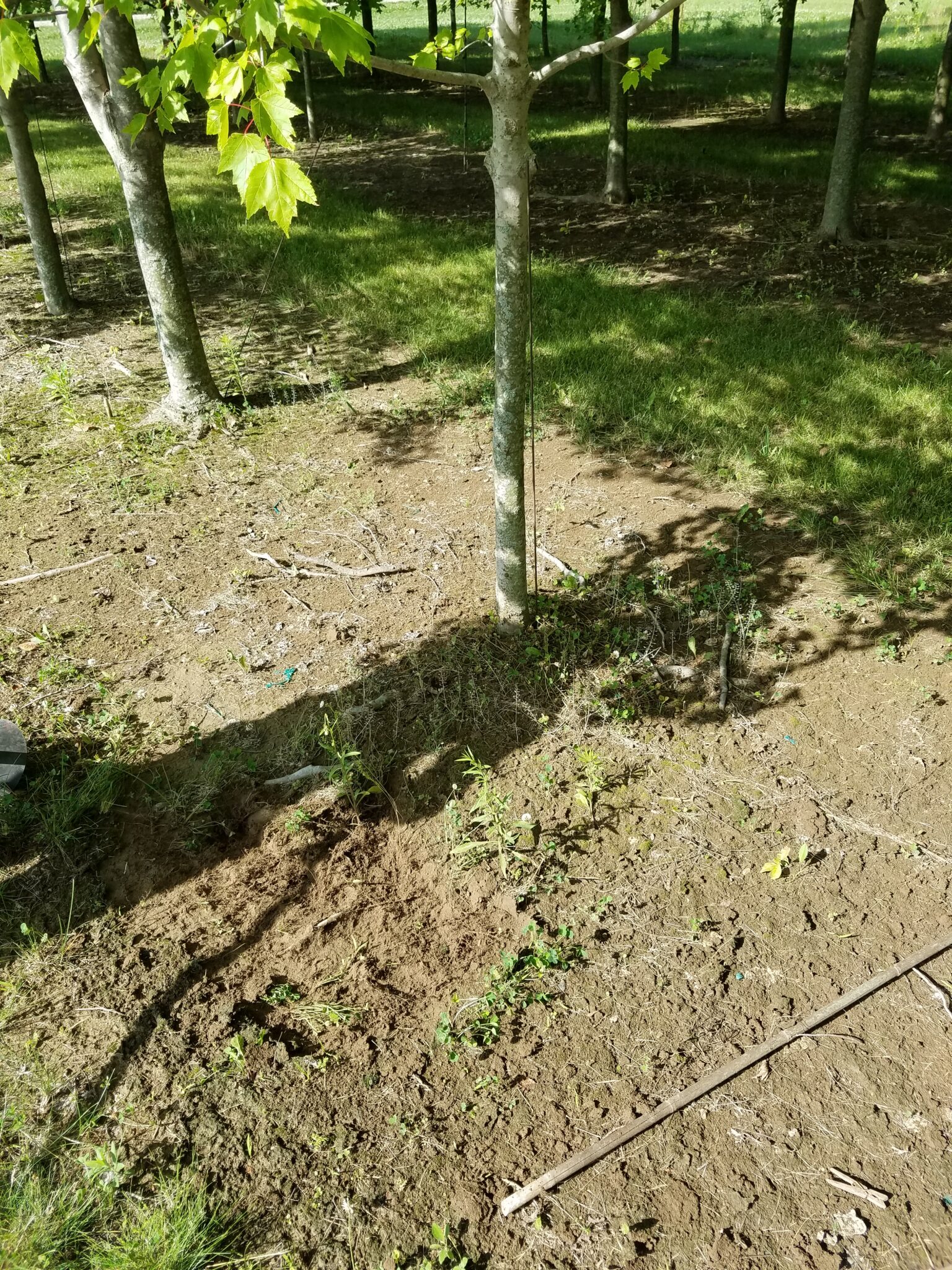 be addressed at the time of planting. If this issue is not addressed many problems may ensue when the tree is established, which includes decline, tree failure, blow-overs, and more.
Another common problem that occurs at transplanting is deep planting. In the past, plants were often planted deep in the nursery for two main reasons: 1) cold protection of the roots and root flare and 2) prevent the use of staking. In fields that are cultivated, the soil often mounds around the trees which can increase the depth of the root flare. Additionally, when planting into the landscape, trees can be planted too deep, exacerbating the problems associated with planting too deep.
Deep planting can cause an increase in disease, insects, decreased tolerance to flooded soils, adventitious roots, and root circling/girdling. Day and Harris (2008) found that there is significantly more girdled root at 30 cm below grade than at grade or 15 cm below grade. They also found that excavated trees at 30 cm had more girdling roots than non-excavated roots at 30 cm.
Compaction can become an issue when trees are located in high traffic areas. Compaction will cause a decline in trees over time and become more susceptible to increased insect and disease pressure.
Excavating the root system with a pneumatic digger is a method that can be used to correct all of these problems. Removing soil around the tree will allow root deformations to be located and corrected. Removing the soil around the collar to correct planting depth and girdling roots will increase the longevity of the tree. Compaction can be reduced by using a pneumatic digger to remove the soil from the root hairs that are typically located in the top 6 inches of soil for most trees (Morris, et.al., 2009).
To read the full article with additional images and video please visit: Using Pneumatic Digging Equipment to Correct Root Deformations, Deep Planting, and Compaction on Established Trees
For more information on correcting root problems after a tree becomes established:
Stem Girdling Roots
Root Growth on Urban Trees
Tree Root Problems
Air Digging Trench or Loosening Soil
Tree Planted Too Deeply
Roots and the Pneumatic Soil Excavation Tool
Tree Preservation Efforts
Getting Roots Right
Supersonic Air Jets Preserve Tree Roots in Underground Pipeline Installation
More resources:
Root Rot in Landscape Plants, The Education Store
Ask The Expert: Tree Inspection, Purdue Extension- FNR YouTube Channel
Ask The Expert: Tree Selection and Planting, Purdue Extension- FNR YouTube Channel
Surface Root Syndrome, The Education Store, Purdue Extension resource center
The Nature of Teaching: Trees of the Midwest, The Education Store
Tree Appraisal and the Value of Trees, The Education Store
Construction and Trees: Guidelines for Protection, The Education Store
Kyle Daniel, Extension Specialists
Purdue University Department of Forestry and Natural Resources
The classic and trusted book “Fifty Common Trees of Indiana” by T.E. Shaw was published in 1956 as a user-friendly guide to local species. Nearly 70 years later, the publication has been updated through a joint effort by the Purdue Department of Forestry and Natural Resources, Indiana 4-H, and the Indiana Department of Natural Resources, and reintroduced as “An Introduction to Trees of Indiana.”
 The full publication is available for download for $7 in the Purdue Extension Education Store. The field guide helps identify common Indiana woodlot trees.
Each week, the Intro to Trees of Indiana web series will offer a sneak peek at one species from the book, paired with an ID That Tree video from Purdue Extension forester Lenny Farlee to help visualize each species as it stands in the woods. Threats to species health as well as also insight into the wood provided by the species, will be provided through additional resources as well as the Hardwoods of the Central Midwest exhibit of the Purdue Arboretum, if available.
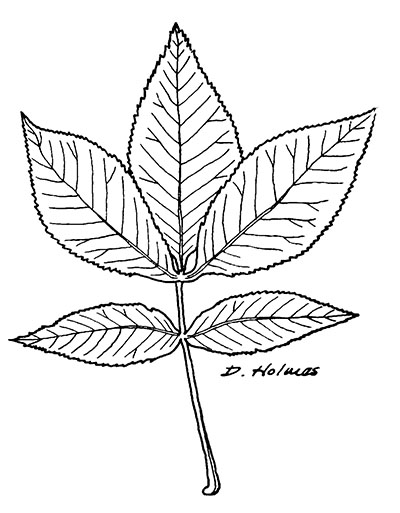
This week, we introduce the Shagbark hickory or Carya ovata.
This species is easily identifiable by its rough, shaggy bark, which is often peeling off from the trunk in thin strips. Its unique leaves feature five leaflets, two held opposite one another toward the base of the stem and three held at the end of the leaf. The fruit is a large, four-ribbed nut with a husk that will split all the way open. In the fall, shagbark hickory can provide fall color in the form of its stunning golden or yellow leaves.
Shagbark hickory has several close relatives. Shagbark can be differentiated from its cousin shellbark hickory, which features large stout twigs, seven to nine leaflets and typically has substantially larger nuts.
Shagbark hickories grow to a mature height of 60 to 80 feet tall. They grow mostly in moist, well-drained soil and are often found in upland woodlands and savannas, ranging across the Eastern United States, except in the gulf and Atlantic coastal plains, as well as in portions of Canada along Lake Erie and Ontario and the St. Lawrence River.
Shagbark hickory has a unique application in the furniture industry known as “Old Hickory Furniture,” which originated around 1900 in Indiana. This rustic furniture is made from hickory rounds or sapling with the bark left on, and was used in parks and other natural areas during his prime production.
For full article with additional photos view: Intro to Trees of Indiana: Shagbark Hickory
Other Resources:
Shagbark Hickory in Hardwoods of the Midwest, Purdue Arboretum Explorer
Hickory and Pecan Species in the Hardwood Lumber and Veneer Series, The Education Store, Purdue Extension’s resource center
Sustaining Our Oak-Hickory Forests – Hardwood Ecosystem Experiment, The Education Store
The Hardwood Ecosystem Experiment: 2006-2016, The Education Store
Indiana Forestry and Wildlife: The Hardwood Ecosystem Experiment, The Education Store
Fifty Common Trees of Indiana
An Introduction to Trees of Indiana
Native Trees of the Midwest, The Education Store
Shrubs and Woody Vines of Indiana and the Midwest, The Education Store
Investing in Indiana Woodlands, The Education Store
Forest Improvement Handbook, The Education Store
ID That Tree, Purdue Extension-Forestry & Natural Resources (FNR) YouTube playlist
Woodland Management Moment , Purdue Extension-FNR YouTube playlist
Wendy Mayer, FNR Communications Coordinator
Purdue University Department of Forestry and Natural Resources
Lenny Farlee, Sustaining Hardwood Extension Specialist
Purdue University Department of Forestry and Natural Resources
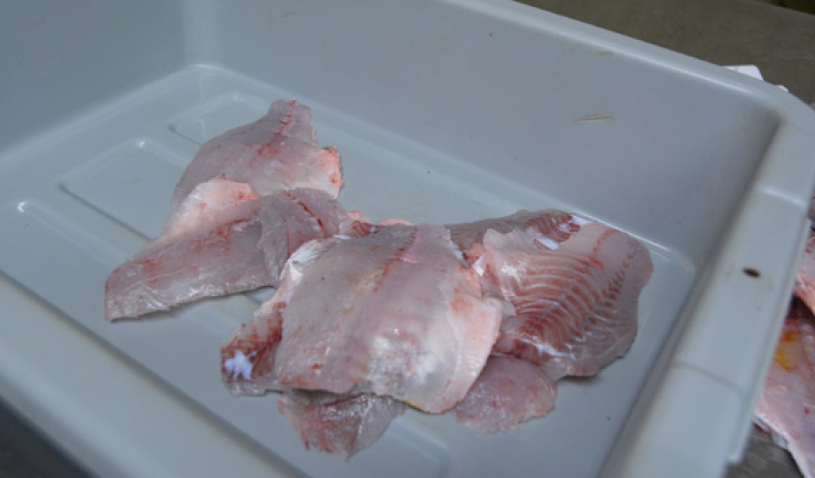 The North Central Regional Aquaculture Center (NCRAC) is supporting a small-scale seafood processing and food safety training for fish farmers in the Midwest. Sponsors for this training session include: Illinois Extension, Purdue Extension and Illinois-Indiana Sea Grant.
Interested fish and aquaponics farmers may sign up for a 2-day HACCP (Hazard Analysis Critical Control Points) training session. The location of farmers will determine how many training sessions will be available and the training session locations.
If you are highly interested and willing to commit to the process, please complete this survey as soon as possible. Seats are limited!
Sign up through this link:
https://purdue.ca1.qualtrics.com/jfe/form/SV_cuaAzf30VfRZixo
For any questions please contact:
Kwamena Quagrainie, Aquaculture Economics/Marketing Specialist
Illinois-Indiana Sea Grant/Purdue Forestry & Natural Resources/Purdue Agricultural Economics/Purdue Extension – FNR
Amy Shambach, Aquaculture Marketing Outreach Associate
Illinois-Indiana Sea Grant/Purdue Extension- FNR
Taylor Bradford, Aquaculture Extension Assistant
Illinois-Indiana Sea Grant/Purdue Forestry & Natural Resources/Purdue Agricultural Economics
Resources:
Fish: Healthy Protein Handout, The Education Store, Purdue Extension resource center
Walleye Farmed Fish Fact Sheet: A Guide for Seafood Consumers, The Education Store
Fish Cleaning with Purdue Extension County Extension Director, Got Nature? Blog, Purdue Extension – Forestry and Natural Resources (FNR)
Eat Midwest Fish, Website
Sustainable Aquaculture: What does it mean to you?, The Education Store
Best Practices Guide for Charter Fishing and COVID-19, The Education Store
Pond Management: Managing Fish Populations, The Education Store
Aquatics & Fisheries, YouTube Playlist, Purdue Extension – FNR
Purdue Aquaponics: Cut Water Usage, YouTube Channel, Purdue Extension – FNR
Largemouth Bass Fingerling Production, YouTube Channel, Purdue Extension – FNR
North Central Regional Aquaculture Center (NCRAC)

Recent Posts
- Popular Landscape Shrub is Invasive
Posted: October 15, 2026 in Alert, Forestry, Forests and Street Trees, Invasive Plant Species, Plants, Woodlands - Purdue Extension’s Regional Teams Are Here: Connecting Communities with Expertise and Opportunity
Posted: October 14, 2026 in Community Development, Forestry, Forests and Street Trees, Gardening, How To, Timber Marketing, Urban Forestry, Wildlife, Woodlands - Why Do Our Trees Go From Green Leaves to Different Colors?
Posted: in Forestry, Forests and Street Trees, Urban Forestry, Woodlands - Deer and Turkey Archery Seasons Opening Soon, MyDNR
Posted: October 13, 2026 in Alert, Safety, Wildlife - Distinguishing Dogwoods
Posted: in Forestry, Urban Forestry, Wildlife, Woodlands - It’s Not Too Early To Start Planning For Spring Tree Planting
Posted: in Forestry, How To - Can I Plant Trees in the Fall?
Posted: October 12, 2026 in Forestry, How To, Land Use, Plants, Urban Forestry, Wildlife - Burning for Benefits: Why Fire Belongs in Indiana
Posted: in Forestry, Safety, Woodlands - Publication Helps Midwest Fish Producers “Catch a Following” with Consumers
Posted: in Aquaculture/Fish, Aquatic/Aquaculture Resources, Wildlife - Disease May Cause Wilting and Eventual Death of Certain Trees and Shrubs, Purdue Landscape Report
Posted: October 5, 2026 in Disease, Forestry, Plants
Archives
Categories
- Alert
- Aquaculture/Fish
- Aquatic/Aquaculture Resources
- Ask the Expert
- Christmas Trees
- Community Development
- Disease
- Drought
- Forestry
- Forests and Street Trees
- Gardening
- Got Nature for Kids
- Great Lakes
- How To
- Invasive Animal Species
- Invasive Insects
- Invasive Plant Species
- Land Use
- Natural Resource Planning
- Nature of Teaching
- Plants
- Podcasts
- Ponds
- Publication
- Safety
- Spiders
- Timber Marketing
- Urban Forestry
- Webinar
- Wildlife
- Wood Products/Manufacturing
- Woodland Management Moment
- Woodlands