 Purdue University - Extension - Forestry and Natural Resources
Got Nature? Blog
Purdue Landscape Report, What is Happening to the Weeping Willows?: While recent temperatures have been moderate in many parts of the state, rainfall has been lacking. (See The Annual Drought Article). There are chasms in the clay of my backyard that will swallow my kids and dogs whole. While I am not truly worried about the safety of my smaller family members, a lot of the plants that are not in shade are stressed. At the Purdue Plant and Pest Diagnostic Laboratory, we have received quite a few calls, emails, and samples about trees in decline. Trees that are already stressed, infected by a pathogen, or are infested by wood-boring insects will be showing their true colors in these drought conditions: chlorosis, leaf loss, and limb dieback.
Willow showing yellowing of older leaves on lower branches.
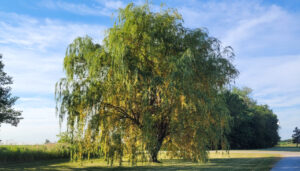 This month, one group of trees limps along to the top of our list of plants under stress due to lack of water: Willows. Salix spp. are not great landscape trees in general unless planted in locations that retain water. While they grow quickly and can appear beautiful for a number of years, when the soil becomes dry, these trees can very quickly develop limb dieback or cankers. In many cases, cankers become more obvious during these periods of stress because they were already present before the drought stress occurs. Damaged limbs die faster and multiple species of canker-causing fungi have been found to move faster in drought stressed wood of some tree species. We have found the fungi Cytospora, Botryosphaeria, and Colletotrichum associated with cankers on recent branch submissions to the lab.
Thinning of the branches, cracks/splits in the bark, and black lesions on green stems can indicate the presence of a canker which should be pruned out and destroyed, if at all possible. Supplemental irrigation may be required during dry spells for trees that are water loving or, at least, drought intolerant. Fungicides are not effective for these fungal pathogens that live inside the wood, where fungicides can’t penetrate. In most cases larger willow trees will not die because of these problems but they may suffer significant branch loss and may become disfigured. In some cases very young trees or shrub type willows may be killed.
For full article and photos view: What is Happening to the Weeping Willows?
Resources:
Summer Tree Care, Purdue Landscape Report
Drought? Don’t Forget the Trees!, The Education Store, Purdue Extension resource center
Extreme Heat, Purdue Extension – IN-PREPared
Drought Information, Indiana Department of Natural Resources
Planting Your Tree Part 1: Choosing Your Tree, Purdue Extension YouTube Channel
Tree Selection for the “Un-natural” Environment, The Education Store
Tree Pruning Essentials Video, Purdue Extension YouTube Channel
Tree Defect Identification, The Education Store
Tree Wound and Healing, Got Nature? Blog, Purdue Extension – Forestry and Natural Resources
Surface Root Syndrome, The Education Store
John Bonkowski, Plant Disease Diagnostician
Plant and Pest Diagnostic Laboratory
In this Moment in the Wild video, Purdue Extension wildlife technician Zach Truelock introduces you to the common water snake. He shows you how to tell it apart from the venomous cottonmouth and also shares identification and breeding information.
If you have any questions regarding wildlife, trees, forest management, wood products, natural resource planning, or other natural resource topics, feel free to contact us by using our Ask an Expert web page.
Resources
Snakes of Indiana, The Education Store, Purdue Extension resource center
Snakes and Lizards of Indiana, The Education Store
Snakes of Indiana, The Education Store
Snakes of the Central and Northeastern United States, The Education Store
Forestry Management for Reptiles and Amphibians: A Technical Guide for the Midwest, The Education Store
Appreciating Reptiles and Amphibians in Nature, The Education Store
Indiana Amphibian and Reptile ID Package (4 softcover books), The Education Store
When Juvenile Snakes Come Calling, FNR Got Nature? blog
A Moment in the Wild, Playlist, Purdue Extension – Forestry and Natural Resources
A Moment in the Wild: Black Racer, Video, Purdue Extension – Forestry and Natural Resources YouTube channel
A Moment in the Wild: Eastern Kingsnake, Purdue Extension – FNR Video
A Moment in the Wild: Eastern Hognose, Purdue Extension – FNR Video
Ask An Expert, Purdue Extension – FNR Playlist
Zach Truelock, Hellbender Technician
Purdue Forestry and Natural Resources
Rod Williams, Assistant Provost for Engagement/Professor of Wildlife Science
Purdue University Department of Forestry and Natural Resources
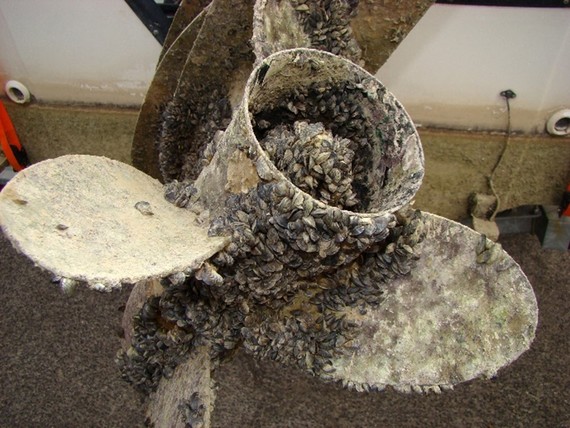 Wild Bulletin, Indiana DNR Fish & Wildlife email newsletter, Help stop the spread of aquatic invasive species: DNR and several Indiana conservation organizations gathered to take part in the fourth annual Great Lakes Aquatic Invasive Species Landing Blitz from June 24th to July 10th. Staff and volunteers were at state parks helping boaters, anglers and other water enthusiasts check their watercraft and other equipment for aquatic invasive species, along with educating them on preventive measures.
Aquatic invasive species are plants, animals, and other organisms that are not native to Indiana waters and have the potential to cause harm. These species are concerning because they outcompete native species, threaten human health, change and degrade the ecosystem, and/or require intense maintenance and monitoring.
Most invasive species find their way to Indiana through human behaviors. Modern transportation brings goods including invasive species from all around the world in a matter of hours or days. Some exotic pets or plants used in aquariums or water gardens escape into the wild and if they are adapted to Indiana’s conditions, they can become invasive. Boats and ships moving from waterbody to waterbody can spread invasives. Some invasives were brought to the U.S. intentionally as bio-controls for other invasives; others were introduced as game or food species.
Invasive species can be very expensive or impossible to control. For instance, Indiana spends an estimated $1 million per year in public waters to chemically control Eurasian watermilfoil, an invasive water plant that can shade out native species and interferes with boating and fishing. The damage to sport fisheries and commercial resources from AIS can be serious.
To learn how to stop “hitchhikers” and to learn more about aquatic invasive species view IN DNR: Aquatic Invasive Species.
Resources:
Invasive Mussels, IN DNR Fish and Wildlife
Aquatic Invasive Species in the Great Lakes: The Quagga Mussel, Purdue Extension – Forestry & Natural Resources (FNR) Got Nature? Blog
Aquatic Invaders in the Marketplace, Illinois-Indiana Sea Grant (IISG)
Invasive Species, Playlist, Purdue Extension – FNR YouTube Channel
What are invasive species and why should I care?, Got Nature? Blog, Purdue Extension – Forestry and Natural Resources
Report Invasive Species, Purdue Invasive Species
The GLEDN Phone App – Great Lakes Early Detection Network
EDDMaps – Early Detection and Distribution Mapping System
Indiana Department of Natural Resources: Invasive Species
Indiana Invasive Species Council
Cooperative Invasive Species Management Area (CISMA)
Great Lakes Sea Grant Network (GLERL), NOAA – Great Lakes Environmental Research Laboratory
A Field Guide to Fish Invaders of the Great Lake Regions, Illinois-Indiana Sea Grant (IISG)
Purdue Researchers Get to the Bottom of Another Quagga Mussel Impact, Illinois-Indiana Sea Grant (IISG)
Invasive plants: Impact on Environment and People, The Education Store, Purdue Extension’s resource center
Protect Your Waters, U.S. Fish and Wildlife Service & U.S. Coast Guard
Nongame and Endangered Wildlife, Indiana Department of Natural Resources
Indiana Department of Natural Resources (IN DNR) – Fish and Wildlife
The classic and trusted book “Fifty Common Trees of Indiana” by T.E. Shaw was published in 1956 as a user-friendly guide to local species. Nearly 70 years later, the publication has been updated through a joint effort by the Purdue Department of Forestry and Natural Resources, Indiana 4-H, and the Indiana Department of Natural Resources, and reintroduced as “An Introduction to Trees of Indiana.”
The full publication is available for download for $7 in the Purdue Extension Education Store. The field guide helps identify common Indiana woodlot trees.
Each week, the Intro to Trees of Indiana web series will offer a sneak peek at one species from the book, paired with an ID That Tree video from Purdue Extension forester Lenny Farlee to help visualize each species as it stands in the woods. Threats to species health as well as also insight into the wood provided by the species, will be provided through additional resources as well as the Hardwoods of the Central Midwest exhibit of the Purdue Arboretum, if available.
This week, we introduce the flowering dogwood or Cornus florida.
This small native Indiana tree has beautiful white blossoms in the spring, and red to maroon foliage in the fall. It has opposite leaf arrangement with simple leaves featuring a venation pattern that sees the veins angle and sweep along the edges of the leaf and curve to the tip. The bark is a rough alligator hide texture that ranges from light to medium gray.
The showy white flowers, which appear in April or May, are followed by berry-like fruit clusters that are green at first, later turning red.
Flowering dogwood is the largest dogwood in the state of Indiana. It is shade tolerant, but it prefers good soil drainage and protection from the wind.
Flowering dogwood is a great alternative to the invasive callery pear.
According to Morton Arboretum, the flowering dogwood grows to 20 to 40 feet tall.
According to the Wood Database, flowering dogwood is commonly used in golf club heads, textile shuttles, bows for archery, mallets, pulleys and turned objects.
For full article with additional photos view: Intro to Trees of Indiana: Northern catalpa
Resources:
Flowering Dogwood, Native Trees of Indiana River Walk, Purdue Fort Wayne
Fifty Common Trees of Indiana
An Introduction to Trees of Indiana
Native Trees of the Midwest, The Education Store, Purdue Extension’s resource center
Shrubs and Woody Vines of Indiana and the Midwest, The Education Store
Investing in Indiana Woodlands, The Education Store
Forest Improvement Handbook, The Education Store
ID That Tree, Purdue Extension-Forestry and Natural Resources (FNR) YouTube Channel-playlist
Woodland Management Moment, Purdue Extension-FNR YouTube Channel-playlist
Wendy Mayer, FNR Communications Coordinator
Purdue University Department of Forestry and Natural Resources
Lenny Farlee, Sustaining Hardwood Extension Specialist
Purdue University Department of Forestry and Natural Resources
The classic and trusted book “Fifty Common Trees of Indiana” by T.E. Shaw was published in 1956 as a user-friendly guide to local species. Nearly 70 years later, the publication has been updated through a joint effort by the Purdue Department of Forestry and Natural Resources, Indiana 4-H, and the Indiana Department of Natural Resources, and reintroduced as “An Introduction to Trees of Indiana.”
The full publication is available for download for $7 in the Purdue Extension Education Store. The field guide helps identify common Indiana woodlot trees.
Each week, the Intro to Trees of Indiana web series will offer a sneak peek at one species from the book, paired with an ID That Tree video from Purdue Extension forester Lenny Farlee to help visualize each species as it stands in the woods. Threats to species health as well as also insight into the wood provided by the species, will be provided through additional resources as well as the Hardwoods of the Central Midwest exhibit of the Purdue Arboretum, if available.
This week, we introduce the Black cherry or Prunus serotina.
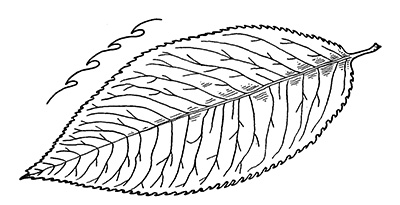 This species, also known as wild black cherry, is characterized by shiny, oblong leaves with finely toothed margins, arranged alternately on slender twigs, as well as very dark, flaky bark. The white flowers, which appear in early summer, develop into clusters of small cherries that ripen from red to black in July and August.
Black cherry, which is shade intolerant, is the only native, tree-sized cherry tree in Indiana. It is one of the quicker growing upland hardwood species in the state, and can grow to 60 to 80 feet tall and two to three feet in diameter.
The species is found from the Great Plains east and from Central Florida to the very southern portion of Ontario to New Brunswick. It also grows from central Arizona south through Mexico. Pennsylvania, parts of West Virginia and New York have developed a reputation for having the best veneer quality and relative gum free cherry.
Black cherry is susceptible to gummosis, or the depositing of resinous gum on the bark of the tree. Unfortunately, widespread gummosis caused by insect damage and other factors keeps many black cherry trees from reaching veneer quality, and reduces their value by as much as 90 percent (Cassens 2004). Black cherry trees are also susceptible to forest tent caterpillars and a variety of other insect attacks.
According to the Hardwoods of the Central Midwest exhibit, black cherry is most commonly used for fine furniture and cabinets. It is also used for high-end face veneer, furniture, molding, architectural millwork, wood paneling and toys. In the past, it was used for printer’s blocks, scientific instrument cases, pattern stock, and blocks for mounting electrotypes.
For full article with additional photos view: Intro to Trees of Indiana: Black Cherry
Resources:
Black Cherry, Hardwoods of the Central Midwest
Black Cherry, Hardwood Lumber and Veneer Series
Black Cherry, Native trees of Indiana River Walk, Purdue Fort Wayne
Case of Gummosis in Black Cherry, The Education Store, Purdue Extension’s resource center
Insects Affecting Hardwood Tree Plantings, The Education Store
Native Trees of the Midwest, The Education Store
Shrubs and Woody Vines of Indiana and the Midwest, The Education Store
Investing in Indiana Woodlands, The Education Store
Forest Improvement Handbook, The Education Store
Fifty Common Trees of Indiana
An Introduction to Trees of Indiana
ID That Tree, Purdue Extension-Forestry and Natural Resources (FNR) YouTube channel-playlist
Woodland Management Moment , Purdue Extension-FNR YouTube playlist
Wendy Mayer, FNR Communications Coordinator
Purdue University Department of Forestry and Natural Resources
Lenny Farlee, Sustaining Hardwood Extension Specialist
Purdue University Department of Forestry and Natural Resources
Illinois-Indiana Sea Grant Newsroom: Many Great Lakes communities that have carried the burden of legacy pollution for decades have an opportunity for a new lease on life when local waterways are finally cleaned up. A new video series features five cities along waterways deemed Areas of Concern (AOCs) that are in various stages of the cleanup process and are experiencing revitalization.
Historically, the Great Lakes region was a center of industry—steel, leather and lumber, to name a few—that eventually shut down or moved elsewhere as economies and priorities changed. Left behind in these waters was a soup of contamination, leaving degraded waterways and depressed communities.
In the United States and Canada, dozens of sites were identified as AOCs in the Great Lakes Water Quality Agreement, and over the years, many have undergone remediation.
The U.S. EPA Great Lakes National Program Office (GLNPO) has provided leadership throughout the cleanup process, which involves dredging or capping contaminated sediment. Even before the cleanup and subsequent restoration, local agencies and organizations have a seat at the table to discuss processes and priorities.
Funding is often a partnership between the federal government, in the form of the Great Lakes Legacy Act (now through the Great Lakes Restoration Initiative), and state, regional and local stakeholders.
The videos feature five cities—Duluth, Minnesota; Muskegon, Michigan; Sheboygan, Wisconsin; Ashtabula, Ohio; and Buffalo, New York—that have had some or all of their contaminated sites cleaned up and ecosystems restored. Local government representatives, business owners and residents share the impact of this work on recreation, tourism, economic development, housing and quality of life in the area.
For full article and videos > > >
About IISG: These are trying times for the environment. Climate change and other concerns such as population growth, aquatic invasive species, contaminated waters, and loss of natural habitat, the southern Lake Michigan region faces many challenges. Illinois-Indiana Sea Grant (IISG), with its unique mandate to bring the latest science to those who can best use the information, serves a critical role in empowering people to solve problems in sustainable ways. The program is funded through National Oceanic and Atmospheric Administration (NOAA), the University of Illinois and Purdue University, but IISG also works in partnerships with key organizations, institutions, and agencies in the region to reach more audiences and multiply opportunities for success. IISG brings together scientists, educators, policy makers, community decision makers, outreach specialists, business leaders, and the general public to work towards a healthy environment and economy.
Resources
Center For Great Lakes Literacy (CGLL), Website
Ask An Expert: Hot and Cold, Video, Purdue Extension – Forestry and Natural Resources YouTube channel
Informing the Development of the Great Lakes Region Decision Support System, The Education Store, Purdue Extension’s resource center
Urban Best Management & Low Impact Development Practices, The Education Store
Improving Water Quality Around Your Farm, The Education Store
New website: Eat Midwest Fish, Got Nature? Blog, Purdue Extension – Forestry and Natural Resources (FNR)
Scientists bring the Great Lakes to students learning from home, Got Nature? Blog
Adaptations for Aquatic Amphibians Activity 2: Water Quality Sneak Peak, Purdue Nature of Teaching
Illinois-Indiana Sea Grant (IISG)
The classic and trusted book “Fifty Common Trees of Indiana” by T.E. Shaw was published in 1956 as a user-friendly guide to local species. Nearly 70 years later, the publication has been updated through a joint effort by the Purdue Department of Forestry and Natural Resources, Indiana 4-H, and the Indiana Department of Natural Resources, and reintroduced as “An Introduction to Trees of Indiana.”
The full publication is available for download for $7 in the Purdue Extension Education Store. The field guide helps identify common Indiana woodlot trees.
 Each week, the Intro to Trees of Indiana web series will offer a sneak peek at one species from the book, paired with an ID That Tree video from Purdue Extension forester Lenny Farlee to help visualize each species as it stands in the woods. Threats to species health as well as also insight into the wood provided by the species, will be provided through additional resources as well as the Hardwoods of the Central Midwest exhibit of the Purdue Arboretum, if available.
This week, we introduce the Northern catalpa or Catalpa speciose.
This species, which provides rot resistant wood great for outdoor usage such as fence posts, is native to southern Indiana along the Ohio River bottoms. It features huge heart-shaped leaves in whorled formation, long bean-like fruit pods and beautiful, large clusters of white tubular flower clusters in early summer.
The heart-shaped leaves may be held in either opposite or more commonly in whorled arrangement, meaning three leaves originate at the same point on the twig. The bean-like fruit pods, which contain papery winged seeds, can sometimes be more than two feet in length.
For full article with additional photos view: Intro to Trees of Indiana: Northern catalpa
Resources:
Northern Catalpa, Native Trees of Indiana River Walk, Purdue Fort Wayne
Fifty Common Trees of Indiana
An Introduction to Trees of Indiana
Native Trees of the Midwest, The Education Store, Purdue Extension’s resource center
Shrubs and Woody Vines of Indiana and the Midwest, The Education Store
Investing in Indiana Woodlands, The Education Store
Forest Improvement Handbook, The Education Store
ID That Tree, Purdue Extension-Forestry and Natural Resources (FNR) YouTube Channel-playlist
Woodland Management Moment, Purdue Extension-FNR YouTube Channel-playlist
Wendy Mayer, FNR Communications Coordinator
Purdue University Department of Forestry and Natural Resources
Lenny Farlee, Sustaining Hardwood Extension Specialist
Purdue University Department of Forestry and Natural Resources
The classic and trusted book “Fifty Common Trees of Indiana” by T.E. Shaw was published in 1956 as a user-friendly guide to local species. Nearly 70 years later, the publication has been updated through a joint effort by the Purdue Department of Forestry and Natural Resources, Indiana 4-H, and the Indiana Department of Natural Resources, and reintroduced as “An Introduction to Trees of Indiana.”
 The full publication is available for download for $7 in the Purdue Extension Education Store. The field guide helps identify common Indiana woodlot trees.
Each week, the Intro to Trees of Indiana web series will offer a sneak peek at one species from the book, paired with an ID That Tree video from Purdue Extension forester Lenny Farlee to help visualize each species as it stands in the woods. Threats to species health as well as also insight into the wood provided by the species, will be provided through additional resources as well as the Hardwoods of the Central Midwest exhibit of the Purdue Arboretum, if available.
This week, we introduce the Kentucky Coffeetree or Gymnocladus dioicus.
This native species, which is part of the broad legume family, historically provided a substitute for coffee, care of the dark bean like seeds held within its fruit, which is in the form of a wide, thick-shelled pod.
It is easily identifiable by its large seed pods, long doubly-compound leaves and textured, flaking/peeling bark with vertical ridges. Its compound leaves, sometimes two feet or more in length, are arranged alternately on very thick twigs that have a mottled color and a distinct, salmon-colored pith.
This tree is found in many parts of the state, but it is never a common tree and is usually widely scattered. According to the Morton Arboretum, Kentucky coffeetree is tolerant to pollution and a wide range of soils making it a suitable tree for urban environments.
This species can grow to up to 100 feet in height and as large as five and a half feet in diameter at breast height.
For full article with photos view: Intro to Trees of Indiana: Kentucky Coffeetree
Resources:
Kentucky Coffeetree, The Purdue Arboretum Explorer
Kentucky Coffeetree, Purdue Fort Wayne Native Trees of Indiana River Walk
Top 5 List for Tree Selection and Planting, Purdue Extension-Forestry & Natural Resources (FNR) Got Nature? Blog
Fifty Common Trees of Indiana
An Introduction to Trees of Indiana
Native Trees of the Midwest, The Education Store, Purdue Extension’s resource center
Shrubs and Woody Vines of Indiana and the Midwest, The Education Store
ID That Tree, Purdue Extension-FNR’s YouTube playlist
Woodland Management Moment , Purdue Extension-FNR’s YouTube playlist
Investing in Indiana Woodlands, The Education Store
Forest Improvement Handbook, The Education Store
Wendy Mayer, FNR Communications Coordinator
Purdue University Department of Forestry and Natural Resources
Lenny Farlee, Sustaining Hardwood Extension Specialist
Purdue University Department of Forestry and Natural Resources
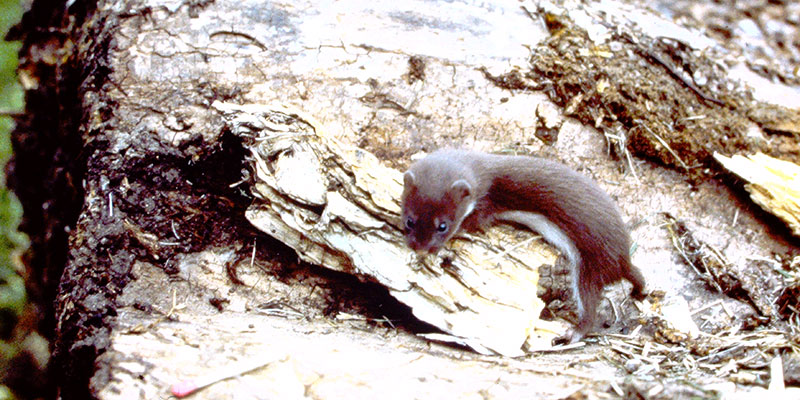
MyDNR, Indiana’s Outdoor Newsletter-Help the DNR by Reporting a Mammal: Did you get something unusual on a trail camera and want to share it to help wildlife in Indiana? DNR has launched a new Report a Mammal page. We are asking for the public’s help to submit sightings to the new online report form. Report a Mammal includes animals like armadillos, badgers, gray foxes, flying squirrels, star-nosed moles, ground squirrels, weasels, and more.
Indiana DNR offers a new, easier way to submit a report for the mammal, no password required. The report form also includes species at risk of declining and Species of Greatest Conservation Need, along with an area to submit a photo or brief video to help document the observation. Media of the animal observed would be most useful, though DNR biologists can examine evidence left by the mammal too (tracks, scat, or other signs). Completion of this form is voluntary. Data submitted may be shared within DNR and partners with the discretion of DNR staff. Personal information will be used to process your observation and may also be used for participation in surveys and other secondary purposes. DNR staff will only respond to reports if more information is needed.
To view what to report and for identification tips see: Full article > > >
Resources:
A Template for Your Wildlife Habitat Management Plan, The Education Store, Purdue Extension resource center
Wildlife Habitat Hint, Purdue Extension – Forestry & Natural Resources (FNR) YouTube Playlist
Orphaned Wildlife, Got Nature? blog
Orphaned & Injured Animals, Indiana Department of Natural Resources (IN DNR)
Purdue Extension – FNR: Ask An Expert, Video, Purdue Extension – FNR YouTube channel
Nature of Teaching, Website
A Woodland Management Moment, Playlist, Purdue Extension – Forestry and Natural Resources YouTube channel
Indiana Department of Natural Resources (IN DNR) – Fish and Wildlife
 The classic and trusted book “Fifty Common Trees of Indiana” by T.E. Shaw was published in 1956 as a user-friendly guide to local species. Nearly 70 years later, the publication has been updated through a joint effort by the Purdue Department of Forestry and Natural Resources, Indiana 4-H, and the Indiana Department of Natural Resources, and reintroduced as “An Introduction to Trees of Indiana.”
The full publication is available for download for $7 in the Purdue Extension Education Store. The field guide helps identify common Indiana woodlot trees.
Each week, the Intro to Trees of Indiana web series will offer a sneak peek at one species from the book, paired with an ID That Tree video from Purdue Extension forester Lenny Farlee to help visualize each species as it stands in the woods. Threats to species health as well as also insight into the wood provided by the species, will be provided through additional resources as well as the Hardwoods of the Central Midwest exhibit of the Purdue Arboretum, if available.
This week, we introduce the Cottonwood or Populus deltoides.
This large bottomland tree’s scientific name deltoides comes from the delta shape of the leaves, which are triangular, often with prominent teeth that resemble saw blades along the edges. This species is also named for its early season fruit, which is a little tuft of white hairs that holds a small seed and is produced in large quantities and often blown far from the parent tree.
Leaves, which are bright green on top and paler below, extend from long flattened leaf stems, which allow the leaves to flutter in the wind. The bark of young cottonwoods is smooth and yellow-green; the old bark is medium gray/brown and rough, with thick, flat ridges that run up and down the trunk.
This tree is found in moist river bottoms and stream bottoms and areas where there is flooding and new soil is created. It shades the streams, holds the soil in place on river bottoms and provides diversity to Indiana forests. Cottonwood is found from Saskatchewan through the Great Plains and east to the Appalachians and the southeast coastal plains.
This species grows rapidly and can be well over 100 feet in height and as large as three or foot feet in diameter.
The wood of eastern cottonwood is very soft, but is strong for its weight. At 12 percent moisture content, it weighs 28 pounds per cubic foot, making it one of the lightest commercially available woods.
For full article with photos view: Intro to Trees of Indiana: Cottonwood
Resources:
Eastern Cottonwood, Tour Hardwoods of the Central Midwest
Eastern Cottonwood – Purdue Arboretum
Fifty Common Trees of Indiana
An Introduction to Trees of Indiana
Native Trees of the Midwest, The Education Store, Purdue Extension’s resource center
Shrubs and Woody Vines of Indiana and the Midwest, The Education Store
ID That Tree, Purdue Extension-FNR’s YouTube playlist
Woodland Management Moment , Purdue Extension-FNR’s YouTube playlist
Investing in Indiana Woodlands, The Education Store
Forest Improvement Handbook, The Education Store
Wendy Mayer, FNR Communications Coordinator
Purdue University Department of Forestry and Natural Resources
Lenny Farlee, Sustaining Hardwood Extension Specialist
Purdue University Department of Forestry and Natural Resources

Recent Posts
- Question: Why Did the Shagbark Hickories Survive the Tornado?
Posted: August 27, 2026 in Forests and Street Trees, How To, Urban Forestry - New Indiana Woodland Steward Newsletter
Posted: August 12, 2026 in Forestry, Urban Forestry, Wildlife, Woodlands - Indiana Fall Hunting Licenses on Sale and New Mobile App Available
Posted: in Forestry, How To, Wildlife - Trees and Storms: Understanding Damage, Risk and Recovery
Posted: in How To, Urban Forestry - Lighting a Spark: Prescribed Burn Associations
Posted: August 6, 2026 in Community Development, Forestry, Safety, Wildlife - ID That Tree: Nannyberry Viburnum
Posted: July 22, 2026 in Forestry, Plants, Wildlife, Woodlands - ID That Tree: Eastern Swamp Privet
Posted: in Forestry, Plants, Wildlife, Woodlands - Jarred Brooke Receives Early Career Award for Prescribed Fire Work
Posted: July 20, 2026 in Forestry, Forests and Street Trees, Natural Resource Planning, Safety - Bovine Tuberculosis in Wild White-tailed Deer: Background and Frequently Asked Questions
Posted: in Disease, Natural Resource Planning, Wildlife - ID That Tree: Carolina Buckthorn
Posted: July 15, 2026 in Forestry, Wildlife, Woodlands
Archives
Categories
- Alert
- Aquaculture/Fish
- Aquatic/Aquaculture Resources
- Ask the Expert
- Christmas Trees
- Community Development
- Disease
- Drought
- Forestry
- Forests and Street Trees
- Gardening
- Got Nature for Kids
- Great Lakes
- How To
- Invasive Animal Species
- Invasive Insects
- Invasive Plant Species
- Land Use
- Natural Resource Planning
- Nature of Teaching
- Plants
- Podcasts
- Ponds
- Publication
- Safety
- Spiders
- Timber Marketing
- Urban Forestry
- Webinar
- Wildlife
- Wood Products/Manufacturing
- Woodland Management Moment
- Woodlands