 Purdue University - Extension - Forestry and Natural Resources
Got Nature? Blog
American Eagle Foundation: Our native vultures play a crucial role in reducing the spread of disease. However, as black vulture population increases, so too have reports of human-wildlife interactions. Researchers at Purdue University are currently performing research to better understand reports of black vulture depredation on livestock, and their ultimate goal is to find solutions that protect both livestock and birds.
AEF interviewed Dr. Pat Zollner, Dr. Zhao Ma, doctoral student Marian Wahl, and Ph.D. alumna Brooke McWherter for insight into their important research.
Check out the great information in this video discussing how this research was started and the concerns shared to the USDA office from state offices and the public.
Find out what types of vulture species are here in the United States and their roles in the story Protect Our Native Vultures, American Eagle Foundation.
Vultures have a role to play as nature’s garbagemen, cleaning up animal carcasses. If you have any questions regarding this research, or have any experiences to share, contact Marian Wahl.
Resources:
Black Vulture Research Highlighted by NY Times, Got Nature Blog, Purdue Extension-Forestry and Natural Resources
Citizen Participation Needed in Black Vulture Research, Purdue Forestry and Natural Resources News
Black Vulture Research, March Edition of Beef Monthly
Black Vulture Ecology and Human-Wildlife Conflicts, Purdue FNR, Dr. Pat Zollner’s WebsiteDiana Evans, Extension and Web Communication Specialist
Purdue University Department of Forestry and Natural Resources
Marion Wahl, Graduate Research Assistant
Purdue Forestry and Natural Resources
The classic and trusted book “Fifty Common Trees of Indiana” by T.E. Shaw was published in 1956 as a user-friendly guide to local species. Nearly 70 years later, the publication has been updated through a joint effort by the Purdue Department of Forestry and Natural Resources, Indiana 4-H, and the Indiana Department of Natural Resources, and reintroduced as “An Introduction to Trees of Indiana.”
The full publication is available for download for $7 in the Purdue Extension Education Store. The field guide helps identify common Indiana woodlot trees.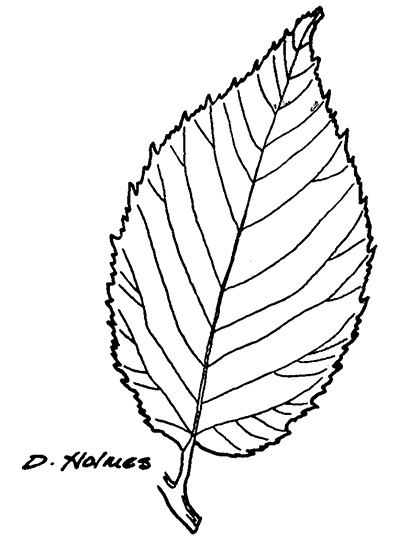
Each week, the Intro to Trees of Indiana web series will offer a sneak peek at one species from the book, paired with an ID That Tree video from Purdue Extension forester Lenny Farlee to help visualize each species as it stands in the woods. Threats to species health as well as also insight into the wood provided by the species, will be provided through additional resources as well as the Hardwoods of the Central Midwest exhibit of the Purdue Arboretum, if available.
This week, we introduce the ironwood or Ostrya virginiana.
This tree, also known as Eastern hop hornbeam, is identifiable by its oblong leaves with doubly-toothed margins, which are held alternately on very fine twigs, and its fruit, a loosely formed green pod at the tip of the branches, which resembles hops. The bark is medium to dark brown with flakes and prominent flaky ridges which develop as the tree ages. The leaves of ironwood produce vibrant yellow fall color.
The ironwood, typically an understory species but sometimes found as a landscape tree, is closely related to the American Hornbeam or blue beech or musclewood, although the bark of the latter is gray and appears stretched across the muscles and sinews of the tree.
For full article with additional photos view: Intro to Trees of Indiana: Ironwood
Other Resources:
Fifty Common Trees of Indiana
An Introduction to Trees of Indiana
Native Trees of the Midwest, The Education Store
Shrubs and Woody Vines of Indiana and the Midwest, The Education Store
Investing in Indiana Woodlands, The Education Store
Forest Improvement Handbook, The Education Store
Information for Carpinus caroliniana tree species, The Purdue Arboretum Explorer
ID That Tree, Purdue Extension-Forestry & Natural Resources (FNR) YouTube playlist
Woodland Management Moment , Purdue Extension-FNR YouTube playlist
Wendy Mayer, FNR Communications Coordinator
Purdue University Department of Forestry and Natural Resources
Lenny Farlee, Sustaining Hardwood Extension Specialist
Purdue University Department of Forestry and Natural Resources
The A Guide to Small-Scale Fish Processing Using Local Kitchen Facilities brochure is an overview of what a fish producer thinking about small-scale fish processing needs to know. The overview includes training requirements, available facilities and highlights of select farmers who have gone through the process.
This publication is a collaborative project of Illinois-Indiana Sea Grant, the North Central Regional Aquaculture Center, University of Illinois Extension, and Purdue University’s Department of Forestry and Natural Resources.
About the Author
Amy Shambach is Illinois-Indiana Sea Grant’s (IISG) aquaculture marketing outreach associate who works with the aquaculture industry in the USDA’s North Central Regional Aquaculture Center. Her work focuses on the demand side of domestic farm raised seafood products. She provides outreach and extension services to producers, potential producers, and consumers. Along with Dr. Kwamena Quagrainie, producers, aquaculture associations, and consumers, she works to determine the needs of stakeholders.
To receive the free download for the Guide to Small-Scale Fish Processing Using Local Kitchen Facilities please visit The Education Store.
Resources:
Walleye Farmed Fish Fact Sheet, The Education Store, Purdue Extension’s resource center
Pacific White Shrimp Farmed Fact Sheet, The Education Store
Yellow Perch Farmed Fish Fact Sheet, The Education Store
Tilapia Farmed Fish Fact Sheet, The Education Store
Rainbow Trout Farmed Fish Fact Sheet, The Education Store
American Paddlefish, The Education Store
Aquaculture Family Coloring Book Development, The Education Store
Eat Midwest Fish, Illinois-Indiana Sea Grant online resource hub
Amy Shambach, Aquaculture Marketing Outreach Associate
Purdue Department of Forestry and Natural Resources/Illinois Indiana Sea Grant Program
The classic and trusted book “Fifty Common Trees of Indiana” by T.E. Shaw was published in 1956 as a user-friendly guide to local species. Nearly 70 years later, the publication has been updated through a joint effort by the Purdue Department of Forestry and Natural Resources, Indiana 4-H, and the Indiana Department of Natural Resources, and reintroduced as “An Introduction to Trees of Indiana.”
The full publication is available for download for $7 in the Purdue Extension Education Store. The field guide helps identify common Indiana woodlot trees.
Each week, the Intro to Trees of Indiana web series will offer a sneak peek at one species from the book, paired with an ID That Tree video from Purdue Extension forester Lenny Farlee to help visualize each species as it stands in the woods. Threats to species health as well as also insight into the wood provided by the species, will be provided through additional resources as well as the Hardwoods of the Central Midwest exhibit of the Purdue Arboretum, if available.
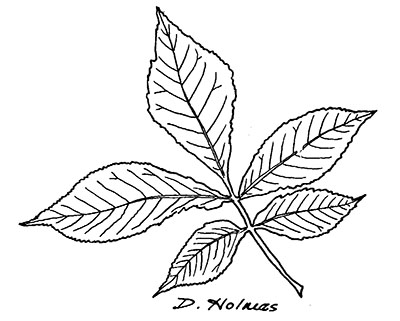 This week, we introduce the Pignut hickory or Carya glabra.
This tree is identifiable by its five-leaflet compound leaves and its small, smooth round nut with a partially open husk at the top. The pignut hickory has smaller buds and finer twigs than its cousins shagbark and mockernut hickory, and its nut is smooth and not ribbed. Its alternately held leaves are typically five leaflets, but may be seven leaflets, sometimes held on the same tree. The bark typically has long, running ridges that are medium or dark gray in color.
Pignut hickories grow to a mature height of 50-60 feet tall, but can be over 100 feet tall. They grow mostly on upland sites or in other places with good soil moisture drainage from New Hampshire west to Iowa and south to Texas and east to northern Florida except for the flood plain of the Mississippi River from Memphis south.
For full article with additional photos view: Intro to Trees of Indiana: Pignut Hickory
Other Resources:
Hickory and Pecan Species in the Hardwood Lumber and Veneer Series, The Education Store, Purdue Extension’s resource center
Sustaining Our Oak-Hickory Forests – Hardwood Ecosystem Experiment, The Education Store
The Hardwood Ecosystem Experiment: 2006-2016, The Education Store
Indiana Forestry and Wildlife: The Hardwood Ecosystem Experiment, The Education Store
Fifty Common Trees of Indiana
An Introduction to Trees of Indiana
Native Trees of the Midwest, The Education Store
Shrubs and Woody Vines of Indiana and the Midwest, The Education Store
Investing in Indiana Woodlands, The Education Store
Forest Improvement Handbook, The Education Store
Pignut Hickory, Native Trees of Indiana River Walk, Purdue University-Fort Wayne
ID That Tree, Purdue Extension-Forestry & Natural Resources (FNR) YouTube playlist
Woodland Management Moment , Purdue Extension-FNR YouTube playlist
Wendy Mayer, FNR Communications Coordinator
Purdue University Department of Forestry and Natural Resources
Lenny Farlee, Sustaining Hardwood Extension Specialist
Purdue University Department of Forestry and Natural Resources
The classic and trusted book “Fifty Common Trees of Indiana” by T.E. Shaw was published in 1956 as a user-friendly guide to local species. Nearly 70 years later, the publication has been updated through a joint effort by the Purdue Department of Forestry and Natural Resources, Indiana 4-H, and the Indiana Department of Natural Resources, and reintroduced as “An Introduction to Trees of Indiana.”
 The full publication is available for download for $7 in the Purdue Extension Education Store. The field guide helps identify common Indiana woodlot trees.
Each week, the Intro to Trees of Indiana web series will offer a sneak peek at one species from the book, paired with an ID That Tree video from Purdue Extension forester Lenny Farlee to help visualize each species as it stands in the woods. Threats to species health as well as also insight into the wood provided by the species, will be provided through additional resources as well as the Hardwoods of the Central Midwest exhibit of the Purdue Arboretum, if available.
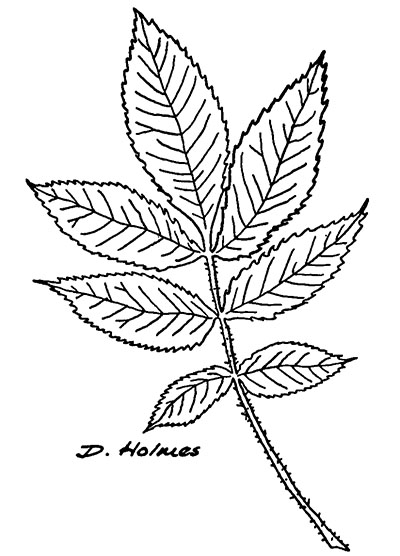
This week, we introduce the White hickory or Carya tomentosa.
This tree, also known as mockernut hickory, has stout twigs like those of shagbark hickory and large terminal buds, but its bark is not shaggy. Instead, mockernut hickory features thick, interlacing bark ridges that is often silvery on top. Its leaves are made up of seven to nine leaflets that are hairy beneath, instead of five. The bud is very rounded, resembling a scoop of ice cream. The bud, leaf stems and twigs may have hair on them. The nuts of the mockernut hickory are smooth and round with mild ridges with four seams, which break open in the fall. The leaves produce a golden-yellow color in the fall.
Mockernut hickories grow to a mature height of 50-60 feet tall. They grow mostly in high dry ridges and other well-drained soil locations from New Hampshire west to Iowa and south to Texas and east to northern Florida except for the flood plain of the Mississippi Rive from Memphis south.
For full article with additional photos view: Intro to Trees of Indiana: Mockernut Hickory
Other Resources:
Hickory and Pecan Species in the Hardwood Lumber and Veneer Series, The Education Store, Purdue Extension’s resource center
Sustaining Our Oak-Hickory Forests – Hardwood Ecosystem Experiment, The Education Store
The Hardwood Ecosystem Experiment: 2006-2016, The Education Store
Indiana Forestry and Wildlife: The Hardwood Ecosystem Experiment, The Education Store
Fifty Common Trees of Indiana
An Introduction to Trees of Indiana
Native Trees of the Midwest, The Education Store
Shrubs and Woody Vines of Indiana and the Midwest, The Education Store
Investing in Indiana Woodlands, The Education Store
Forest Improvement Handbook, The Education Store
ID That Tree, Purdue Extension-Forestry & Natural Resources (FNR) YouTube playlist
Woodland Management Moment , Purdue Extension-FNR YouTube playlist
Wendy Mayer, FNR Communications Coordinator
Purdue University Department of Forestry and Natural Resources
Lenny Farlee, Sustaining Hardwood Extension Specialist
Purdue University Department of Forestry and Natural Resources
Purdue Landscape Report, Using Pneumatic Digging Equipment to Correct Root Deformations, Deep Planting, and Compaction on Established Trees: When transplanting trees, it is important to consider the long-term viability. Since the typical life span of an urban tree is 7-20 years (USDA), proper establishment techniques are very important to decrease this mortality rate. When a tree becomes established, it is much more difficult to correct below ground problems.
Root deformations can occur for many reasons in established trees, but the most common are due to not making corrections prior to transplanting. Plants that have girdling and circling roots must 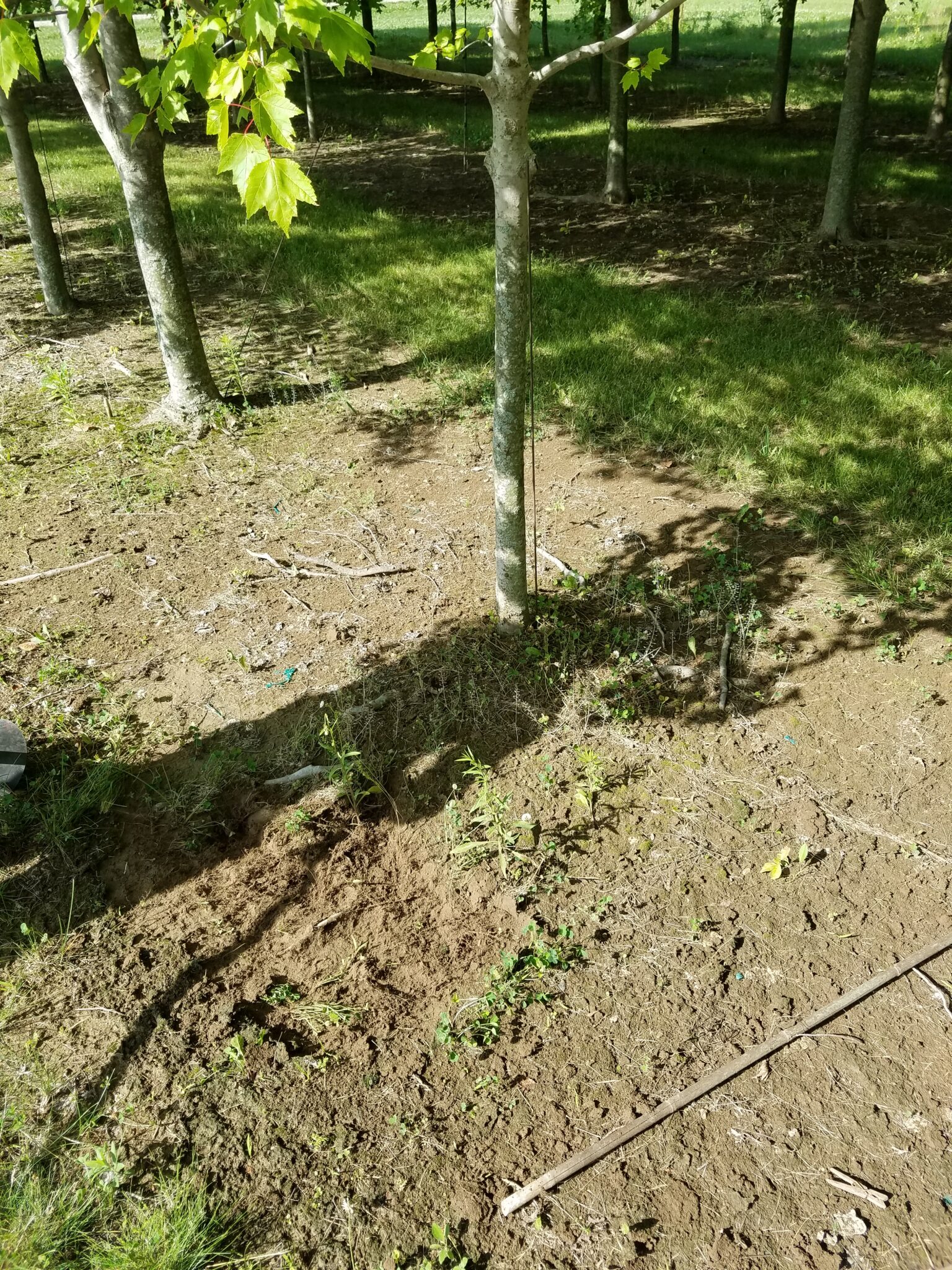 be addressed at the time of planting. If this issue is not addressed many problems may ensue when the tree is established, which includes decline, tree failure, blow-overs, and more.
Another common problem that occurs at transplanting is deep planting. In the past, plants were often planted deep in the nursery for two main reasons: 1) cold protection of the roots and root flare and 2) prevent the use of staking. In fields that are cultivated, the soil often mounds around the trees which can increase the depth of the root flare. Additionally, when planting into the landscape, trees can be planted too deep, exacerbating the problems associated with planting too deep.
Deep planting can cause an increase in disease, insects, decreased tolerance to flooded soils, adventitious roots, and root circling/girdling. Day and Harris (2008) found that there is significantly more girdled root at 30 cm below grade than at grade or 15 cm below grade. They also found that excavated trees at 30 cm had more girdling roots than non-excavated roots at 30 cm.
Compaction can become an issue when trees are located in high traffic areas. Compaction will cause a decline in trees over time and become more susceptible to increased insect and disease pressure.
Excavating the root system with a pneumatic digger is a method that can be used to correct all of these problems. Removing soil around the tree will allow root deformations to be located and corrected. Removing the soil around the collar to correct planting depth and girdling roots will increase the longevity of the tree. Compaction can be reduced by using a pneumatic digger to remove the soil from the root hairs that are typically located in the top 6 inches of soil for most trees (Morris, et.al., 2009).
To read the full article with additional images and video please visit: Using Pneumatic Digging Equipment to Correct Root Deformations, Deep Planting, and Compaction on Established Trees
For more information on correcting root problems after a tree becomes established:
Stem Girdling Roots
Root Growth on Urban Trees
Tree Root Problems
Air Digging Trench or Loosening Soil
Tree Planted Too Deeply
Roots and the Pneumatic Soil Excavation Tool
Tree Preservation Efforts
Getting Roots Right
Supersonic Air Jets Preserve Tree Roots in Underground Pipeline Installation
More resources:
Root Rot in Landscape Plants, The Education Store
Ask The Expert: Tree Inspection, Purdue Extension- FNR YouTube Channel
Ask The Expert: Tree Selection and Planting, Purdue Extension- FNR YouTube Channel
Surface Root Syndrome, The Education Store, Purdue Extension resource center
The Nature of Teaching: Trees of the Midwest, The Education Store
Tree Appraisal and the Value of Trees, The Education Store
Construction and Trees: Guidelines for Protection, The Education Store
Kyle Daniel, Extension Specialists
Purdue University Department of Forestry and Natural Resources
The classic and trusted book “Fifty Common Trees of Indiana” by T.E. Shaw was published in 1956 as a user-friendly guide to local species. Nearly 70 years later, the publication has been updated through a joint effort by the Purdue Department of Forestry and Natural Resources, Indiana 4-H, and the Indiana Department of Natural Resources, and reintroduced as “An Introduction to Trees of Indiana.”
 The full publication is available for download for $7 in the Purdue Extension Education Store. The field guide helps identify common Indiana woodlot trees.
Each week, the Intro to Trees of Indiana web series will offer a sneak peek at one species from the book, paired with an ID That Tree video from Purdue Extension forester Lenny Farlee to help visualize each species as it stands in the woods. Threats to species health as well as also insight into the wood provided by the species, will be provided through additional resources as well as the Hardwoods of the Central Midwest exhibit of the Purdue Arboretum, if available.
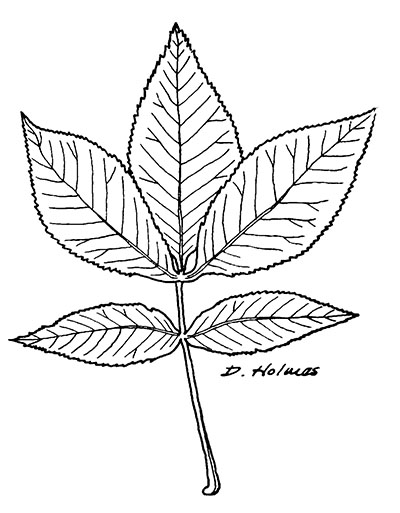
This week, we introduce the Shagbark hickory or Carya ovata.
This species is easily identifiable by its rough, shaggy bark, which is often peeling off from the trunk in thin strips. Its unique leaves feature five leaflets, two held opposite one another toward the base of the stem and three held at the end of the leaf. The fruit is a large, four-ribbed nut with a husk that will split all the way open. In the fall, shagbark hickory can provide fall color in the form of its stunning golden or yellow leaves.
Shagbark hickory has several close relatives. Shagbark can be differentiated from its cousin shellbark hickory, which features large stout twigs, seven to nine leaflets and typically has substantially larger nuts.
Shagbark hickories grow to a mature height of 60 to 80 feet tall. They grow mostly in moist, well-drained soil and are often found in upland woodlands and savannas, ranging across the Eastern United States, except in the gulf and Atlantic coastal plains, as well as in portions of Canada along Lake Erie and Ontario and the St. Lawrence River.
Shagbark hickory has a unique application in the furniture industry known as “Old Hickory Furniture,” which originated around 1900 in Indiana. This rustic furniture is made from hickory rounds or sapling with the bark left on, and was used in parks and other natural areas during his prime production.
For full article with additional photos view: Intro to Trees of Indiana: Shagbark Hickory
Other Resources:
Shagbark Hickory in Hardwoods of the Midwest, Purdue Arboretum Explorer
Hickory and Pecan Species in the Hardwood Lumber and Veneer Series, The Education Store, Purdue Extension’s resource center
Sustaining Our Oak-Hickory Forests – Hardwood Ecosystem Experiment, The Education Store
The Hardwood Ecosystem Experiment: 2006-2016, The Education Store
Indiana Forestry and Wildlife: The Hardwood Ecosystem Experiment, The Education Store
Fifty Common Trees of Indiana
An Introduction to Trees of Indiana
Native Trees of the Midwest, The Education Store
Shrubs and Woody Vines of Indiana and the Midwest, The Education Store
Investing in Indiana Woodlands, The Education Store
Forest Improvement Handbook, The Education Store
ID That Tree, Purdue Extension-Forestry & Natural Resources (FNR) YouTube playlist
Woodland Management Moment , Purdue Extension-FNR YouTube playlist
Wendy Mayer, FNR Communications Coordinator
Purdue University Department of Forestry and Natural Resources
Lenny Farlee, Sustaining Hardwood Extension Specialist
Purdue University Department of Forestry and Natural Resources
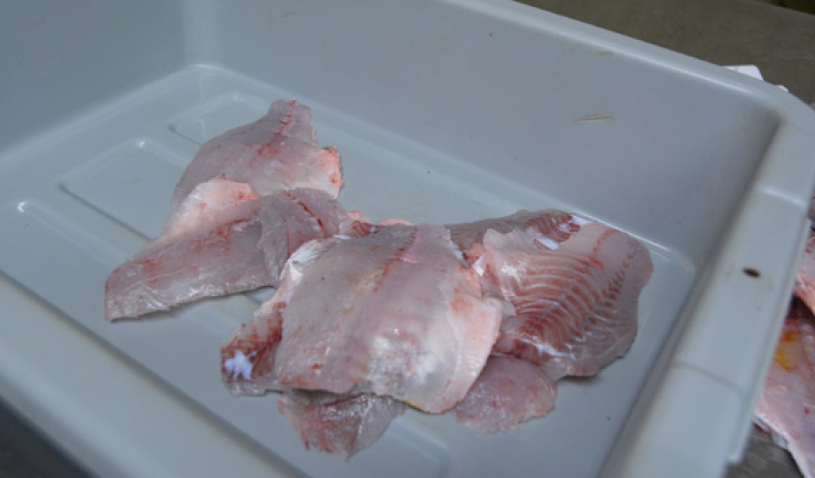 The North Central Regional Aquaculture Center (NCRAC) is supporting a small-scale seafood processing and food safety training for fish farmers in the Midwest. Sponsors for this training session include: Illinois Extension, Purdue Extension and Illinois-Indiana Sea Grant.
Interested fish and aquaponics farmers may sign up for a 2-day HACCP (Hazard Analysis Critical Control Points) training session. The location of farmers will determine how many training sessions will be available and the training session locations.
If you are highly interested and willing to commit to the process, please complete this survey as soon as possible. Seats are limited!
Sign up through this link:
https://purdue.ca1.qualtrics.com/jfe/form/SV_cuaAzf30VfRZixo
For any questions please contact:
Kwamena Quagrainie, Aquaculture Economics/Marketing Specialist
Illinois-Indiana Sea Grant/Purdue Forestry & Natural Resources/Purdue Agricultural Economics/Purdue Extension – FNR
Amy Shambach, Aquaculture Marketing Outreach Associate
Illinois-Indiana Sea Grant/Purdue Extension- FNR
Taylor Bradford, Aquaculture Extension Assistant
Illinois-Indiana Sea Grant/Purdue Forestry & Natural Resources/Purdue Agricultural Economics
Resources:
Fish: Healthy Protein Handout, The Education Store, Purdue Extension resource center
Walleye Farmed Fish Fact Sheet: A Guide for Seafood Consumers, The Education Store
Fish Cleaning with Purdue Extension County Extension Director, Got Nature? Blog, Purdue Extension – Forestry and Natural Resources (FNR)
What is Aquaponics?, Got Nature? blog, Purdue Extension – FNR
Eat Midwest Fish, Website
Sustainable Aquaculture: What does it mean to you?, The Education Store
Best Practices Guide for Charter Fishing and COVID-19, The Education Store
Pond Management: Managing Fish Populations, The Education Store
Aquatics & Fisheries, YouTube Playlist, Purdue Extension – FNR
Purdue Aquaponics: Cut Water Usage, YouTube Channel, Purdue Extension – FNR
Largemouth Bass Fingerling Production, YouTube Channel, Purdue Extension – FNR
North Central Regional Aquaculture Center (NCRAC)
The precipitous decline in songbird numbers over the past few decades has made national news and generated calls for action to address the issues contributing to this decline. One of the contributing factors to the decline of several North American bird species is the diminishing area of suitable habitat.
 The initial assumption that many people have is this loss of habitat is forests or grasslands being converted into cropland or developments. While this does happen and is a concern in some areas, Indiana has actually been increasing our area of forest over the last several decades. An increasingly common habitat threat to several bird species is changing grassland or forest structure that occur through time in the absence of historic disturbances like fires or land management activities like thinning and harvesting.
The invasion of forests, wetlands, and grasslands by invasive plant species can also degrade or destroy habitat values for birds and other wildlife. Managing areas to reduce invasive species and introducing disturbances like prescribed fires, critical area plantings, thinning, and regeneration activities can improve habitat quality for a variety of declining birds.
The The Nature Conservancy in Indiana, partnering with birders, ornithologists, foresters, and wildlife biologists, has developed the Forestry for the Birds program, modeled from a similar program in Vermont. The goal is to provide strategies that can benefit both forest management and bird communities, facilitating and simplifying the management of bird-friendly forests. “The Birders Dozen” were selected among declining birds that Indiana residents could identify by sight or song and need conservation action through habitat management.
Learn more about Forestry for the Birds, the Birders Dozen, and what you can do to help declining birds and other wildlife in Indiana. Find the Forestry for the Birds Pocket Guide which is a free download.
Resources:
Managing Woodlands for Birds Video, Purdue Extension-Forestry and Natural Resources (FNR) YouTube Channel
Breeding Birds and Forest Management: the Hardwood Ecosystem Experiment and the Central Hardwoods Region, The Education Store
The Birders’ Dozen, Profile: Baltimore Oriole, Indiana Woodland Steward
Ask An Expert, Playlist, Purdue Extension – FNR YouTube channel
It’s For the Birds, Indiana Yard and Garden-Purdue Consumer Horticulture
Birds and Residential Window Strikes: Tips for Prevention, The Education Store, Purdue Extension resource center
No Room at the Inn: Suburban Backyards and Migratory Birds, Education Store, Purdue Extension resource center
Hardwood Ecosystem Experiment – Wildlife Responses to Timber Harvesting, The Education Store
Subscribe, Purdue Extension – FNR YouTube Channel
Lenny Farlee, Sustaining Hardwood Extension Specialist
Purdue University Department of Forestry and Natural Resources
Jessica Outcalt, Agricultural & Natural Resources Educator
Purdue University Department of Forestry and Natural Resources
The Nature Conservancy – Indiana
 The classic and trusted book “Fifty Common Trees of Indiana” by T.E. Shaw was published in 1956 as a user-friendly guide to local species. Nearly 70 years later, the publication has been updated through a joint effort by the Purdue Department of Forestry and Natural Resources, Indiana 4-H, and the Indiana Department of Natural Resources, and reintroduced as “An Introduction to Trees of Indiana.”
The full publication is available for download for $7 in the Purdue Extension Education Store. The field guide helps identify common Indiana woodlot trees.
Each week, the Intro to Trees of Indiana web series will offer a sneak peek at one species from the book, paired with an ID That Tree video from Purdue Extension forester Lenny Farlee to help visualize each species as it stands in the woods. Threats to species health as well as also insight into the wood provided by the species, will be provided through additional resources as well as the Hardwoods of the Central Midwest exhibit of the Purdue Arboretum, if available.
This week, we introduce the bitternut hickory or Carya cordiformis.
This cousin of the pecan, has anywhere from five to 11 leaflets, commonly seven to nine, on each alternately held compound leaf. Leaflets are much longer than they are wide and are often curved backwards.
A sulphur-colored, elongated bud is a standout identifying characteristic. Bitternut hickory has tight light to silvery gray bark with interlacing ridges throughout the life of the tree.
The fruit is a light colored, small, round nut, with a thick hull and a slight wing where the sutures meet. It is quite bitter and not preferred by animals or humans.
The bitternut hickory is one of the fastest growing hickory species in the state behind the pecan, and produces some fall beauty with yellow and gold foliage. Bitternut hickory, one of the most abundant and wide spread hickory species, can be found on dry gravelly uplands as well as rich moist bottomland from the Atlantic coast to the Great Plains, north through Minnesota and the St. Lawrence River valley, except the gulf coastal plains and the lower Mississippi flood plain regions.
For full article with additional photos view: Intro to Trees of Indiana: Bitternut Hickory.
Other Resources:
Hackberry in Hardwoods of the Midwest, Purdue Arboretum Explorer
Hickory and Pecan Species in the Hardwood Lumber and Veneer Series, The Education Store, Purdue Extension’s resource center
Sustaining Our Oak-Hickory Forests – Hardwood Ecosystem Experiment, The Education Store
The Hardwood Ecosystem Experiment: 2006-2016, The Education Store
Indiana Forestry and Wildlife: The Hardwood Ecosystem Experiment, The Education Store
Fifty Common Trees of Indiana
An Introduction to Trees of Indiana
Native Trees of the Midwest, The Education Store
Shrubs and Woody Vines of Indiana and the Midwest, The Education Store
Investing in Indiana Woodlands, The Education Store
Forest Improvement Handbook, The Education Store
ID That Tree, Purdue Extension-Forestry & Natural Resources (FNR) YouTube playlist
Woodland Management Moment , Purdue Extension-FNR YouTube playlist
Wendy Mayer, FNR Communications Coordinator
Purdue University Department of Forestry and Natural Resources
Lenny Farlee, Sustaining Hardwood Extension Specialist
Purdue University Department of Forestry and Natural Resources

Recent Posts
- Beetle that attacks Tree-of-Heaven found in Indiana, Purdue Landscape Report
Posted: March 20, 2026 in Invasive Insects, Wildlife, Woodlands - ID That Tree: Dwarf Chinkapin Oak
Posted: in Forestry, Urban Forestry, Wildlife, Woodlands - IN-PREPared: Essential Resources for Indiana’s Severe Weather Season
Posted: March 11, 2026 in How To, Safety - DNR Hiring for Indiana Conservation Officer Positions, MyDNR
Posted: March 9, 2026 in Urban Forestry, Wildlife, Woodlands - ID That Tree: Shumard Oak
Posted: in Plants, Urban Forestry, Wildlife, Woodlands - A Woodland Management Moment: Windbreak Around Walnut Plantings
Posted: March 3, 2026 in Forestry, Urban Forestry, Woodland Management Moment - Getting Certified as an Indiana Certified Prescribed Burn Manager
Posted: March 2, 2026 in How To, Urban Forestry, Woodlands - Uniting Indiana Residents Against Invasive Species
Posted: February 27, 2026 in Community Development, Invasive Insects, Wildlife - Have You Seen a Soaring Eagle Lately? Morning Ag Clips
Posted: February 25, 2026 in Urban Forestry, Wildlife - Register for Natural Resources Teacher Institute’s Class of 2026
Posted: February 19, 2026 in Forestry, Wildlife, Woodlands
Archives
Categories
- Alert
- Aquaculture/Fish
- Aquatic/Aquaculture Resources
- Ask the Expert
- Christmas Trees
- Community Development
- Disease
- Drought
- Forestry
- Forests and Street Trees
- Gardening
- Got Nature for Kids
- Great Lakes
- How To
- Invasive Animal Species
- Invasive Insects
- Invasive Plant Species
- Land Use
- Natural Resource Planning
- Nature of Teaching
- Plants
- Podcasts
- Ponds
- Publication
- Safety
- Spiders
- Timber Marketing
- Uncategorized
- Urban Forestry
- Webinar
- Wildlife
- Wood Products/Manufacturing
- Woodland Management Moment
- Woodlands