 Purdue University - Extension - Forestry and Natural Resources
Got Nature? Blog
Purdue Landscape Report: Spring is finally here! Everywhere you look, one can find some spring color around. Some of the first plants to peek out of the ground are spring-flowering bulbs like crocus, daffodil and tulip. But there are some beautiful spring time shrubs that are Indiana native plants you can add to your yard to be the first in the neighborhood with spring interest. Below, you’ll find a top 10 list of spring-flowering shrubs (in order of flower appearance).
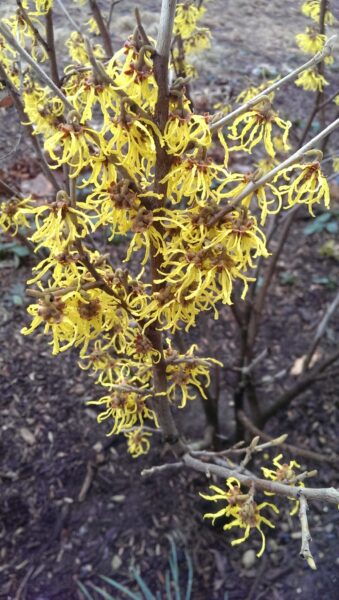
Figure 1. Witch-hazel is one of the first shrubs to bloom in the spring. Though similar to forsythia, it typically flowers a couple of weeks earlier.
Witch-hazel (Hamamelis x intermedia) Perhaps even earlier-flowering than Forsythia, is ‘Arnold Promise’ witch-hazel. This shrub can flower starting in late winter (unless we have unusually cold winter weather like polar vortices) and keep going all the way into spring. Bright flowers are yellow with red tinges, though there are red-flowering cultivars available. Witch-hazel can be grown as a shrub or a small tree and offers some yellow/orange/red fall color. It’s native!
Forsythia (Forsythia x intermedia) Forsythia is the traditional first-flowering plant in the spring. Hardy plants, their bright yellow blooms can catch your eye anywhere. There are new cultivars out.
Quince (Chaenomeles speciosa) In mid spring, you’ll find these shrubs covered with flowers. There are several cultivars and you may see white-flowering plants (‘Jet Trails’), red-flowering plants (‘Texas Scarlet’) or even large, double, fluffy, peach-pink flowers (‘Cameo’). After the show, this plant tends to fade into the background, but it’s a great native addition.
Korean Spice Viburnum (Viburnum carlesii) Korean spice viburnum blooms in late April with blooms that are pink/red while they are still in buds, opening to white flowers that are each a half inch wide. The flowers are presented on dense 2-3 inch groupings called cymes (semi-snowball) and very pleasantly fragrant. And luck of all luck, they have nice, clean leaves in the summer and great fall color. Can’t beat that in a multi-season shrub.
Flowering Almond (Prunus glandulosa) Here’s a small plant that grows well in full sun and its lovely. Flowering almond, particularly the cultivar ‘Rosea Plena’ has tons of pink flowers (double—lots of petals). Some cultivars have white flowers, and all present in mid to late spring.
Shadblow Serviceberry (Amelanchier canadensis) A multi-season-interest plant, serviceberry offers white flowers on 2-3 inch long inflorescences in April, which leads to sweet, juicy black fruit in the summer. Some plants can also have decent fall color (yellow with hints of orange and red). Serviceberry grows by suckering so it’s perhaps not a great choice for a small yard.

Figure 2. Lilac is most commonly a beautiful shade of purple.
Lilac (Syringa vulgaris). The beautiful purple flowers (many, many colors are available, but purple is most common) are wonderfully fragrant in most of spring. They may only bloom for 2 weeks, but man those 2 weeks are worth having a lilac in your garden! Takes me straight back to my childhood.
Black Chokeberry (Aronia melanocarpa) An adaptable species, this plant is known for long-lasting black fruit in the fall and wine-red fall color. Spring flowers are white, presented in groups of 9-20 resulting in 1 to 1.5 inch groupings covering the plant in May. This species can spread and colonize large areas, which makes for a striking mass effect in the spring. Small plant (under 5 feet) thrives in part shade to full sun.
Mock Orange (Philadelphus coronarius) Fans of mock orange are serious about their use in the landscape. These plants can take care of themselves and they’ll reward you every May/June with white, fragrant flowers that are 1 to 1.5 inches wide.
Siberian Peashrub (Caragana arborescens) Granted, this is a great shrub for harsh sites (poor soils, drought, alkaline soil, cold, wind), but it’s unusual and doesn’t take much care. Leaves are pea-green and emerge with the yellow flowers in May. Later in the summer the fruit of the flowers, a narrow pod, makes a popping sound when it opens.
Remember, plants with more than one season of interest are like hitting the landscape jackpot. So, if you’ve chosen one of these plants because you love the flowers in the spring, just be aware that it may need to fade into the background for the rest of the year. Having said that, plants that usher in the new season are anticipated, loved and enjoyed. Make sure you’ve got some of these in your neighborhood for a dose of early spring joy.
This was adapted from Horticulture Newsletter – Cheryl Boyer – Kansas Extension. All plants listed in this article are native species of Indiana.
Read the original article posted in the Purdue Landscape Report April 2025 Newsletter: Top 10 Spring Flowering Shrubs.
Subscribe and receive the newsletter: Purdue Landscape Report Newsletter.
Resources:
Spring Tree Preparations, Purdue Extension Forestry and Natural Resources (FNR) Got Nature? Blog
Celebrate Pollinator Week with Flowers of June Tour, Got Nature? Blog, Purdue Extension – FNR
Tracking the Bloom, Got Nature? Blog, Purdue Extension – FNR
Indiana’s Native Orchids, Indiana Forestry & Woodlands Association (IFWOA) Webinar
Wildflowers and Ferns of Indiana Forests: A Field Guide, Google Books
ID That Tree Spring Bloom Edition: Bladdernut, Got Nature? Blog, Purdue Extension – FNR
ID That Tree, Purdue Extension-FNR YouTube playlist
Alternative Options for Invasive Landscape Plants (pdf), Purdue Extension – Purdue Horticulture and Landscape Architecture
Landscape Uses of Native Plants, Indiana Native Plant Society
Find an Arborist video, Trees are Good-International Society of Arboriculture (ISA)
Tree Installation: Process and Practices, The Education Store, Purdue Extension resource center
Tree Planting Part 1: Choosing a Tree video, Purdue Extension
Tree Wound and Healing, Got Nature? Blog, Purdue Extension – FNR
Shrubs and Woody Vines of Indiana and the Midwest, Purdue University Press
Ask an Expert: Tree Selection and Planting, Purdue Extension-FNR YouTube playlist
Recommended Indiana-native Plants for Attracting Pollinators (pdf), Purdue Extension – Entomology
Gardening for Pollinators, Purdue Garden Articles
Subscribe Purdue Extension-FNR YouTube Channel
Amanda Bailey, Extension Educator – Ag and Natural Resources
Purdue Extension – Warrick County
I seem to be finding Kirtland’s snakes as I am cleaning my gardens. There seems to be an increase of grubs, beetles and worms, but I have not seen the small lizards yet. We have an abundance of chipmunks. Is there something I can do to discourage the snakes from taking up residency in my yard?
Many people have questions about snakes, and this post addresses the two most common – what is it and what can I do? The answer to the latter is, in part, related to the first, so I’ll address that one first. Indiana is home to a diversity of snake species. Identifying snakes to species can be tricky. First, geographic location often can easily differentiate among similar species or subspecies. Check the distribution map of the species in question and that of similar species. This may not resolve all issues since the distribution of similar species often overlap, distribution maps are not 100 percent accurate (i.e., they are a “best guess”) and some species and subspecies share similar characteristics where their ranges overlap. Second, scale configuration and appearance differs among some groups of species. For snakes, the texture of the body scales (keeled or smooth) or the presence/absence of a divided anal plate (the large scale that covers the cloacal opening) are key. Finally, physical characteristics including size, color and pattern can be used. For some species, conclusive identification is easier with the specimen in hand, although handling venomous species (which are rare in Indiana) is not recommended. With practice, one can become quite adept at identifying all of them.
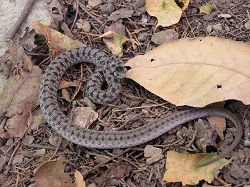
DeKay’s Brownsnake – This species is a small chestnut to dark brown snake averaging 25-30 centimeters in length. The belly is cream to pink. It has two rows of dark spots along the back that fade toward the tail. Dark bars may connect the dorsal spots, giving the impression of a ladder-like pattern. The area within this pattern is usually lighter in color than the sides, often giving the impression of a central stripe.
Kirtland’s snakes referenced in the homeowner’s question are endangered in Indiana. They are generally found near or along the margins of water bodies, but they can also be found in some urban areas on occasion. Due to these facts and since Kirtland’s snakes are generally quite secretive in behavior, this homeowner’s garden visitors are likely another species. Common garden visitors in Indiana include DeKay’s Brown snake (pictured above) or Eastern Gartersnake. Red-bellied Snakes (pictured below) have a pinkish-red belly similar to Kirtland’s snake. They are more of a woodland species, but it could be a possibility. All of these snakes can eat slugs and other garden pests.
Is there something homeowners can do to discourage snakes from taking up residency in their yards and around their homes? There really is no foolproof method to discourage snakes from utilizing a property. Reducing mulch layer thickness; removing brush piles, rock piles or other refuse; and keeping vegetation low are all steps that may help. Keep in mind that this may also reduce use of your property by wildlife you desire. There have been some repellents developed for snakes, but research results on their effectiveness have been mixed at best. In general, you should be wary of repellents that promise to keep animals out of an area. Lastly, there is plastic mesh fencing that you can purchase. Fencing can be used to exclude animals from small areas – it is generally cost-prohibitive for larger areas, and I am not aware of studies that test the effectiveness of fencing for snakes. Snake fencing is generally designed to exclude larger venomous snakes as opposed to the typical garden species that can be quite small. Snakes can also get stuck and die in mesh fences when their head fits through but the body gets stuck. The scales “catch” the mesh when the snake attempts to back out. Mesh fencing is also susceptible to damage from trimmers and falling limbs, and rabbits and rodents can chew holes in it. Thus, regular inspection and maintenance is required to maintain its function.
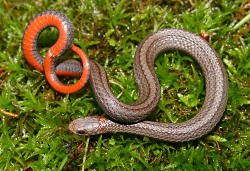
The Red-bellied Snake (18-25 cm) has both a brown and gray color phase. The two black lines along the length of its back may appear similar to the dark spots along the back of the DeKay’s Brownsnake (Storeria dekayi), but lack the crossbars. The belly has a distinctive bright pink or red coloration for which the species was named. Three light blotches may be visible behind the head on the neck.
Remember, while many folks are afraid of snakes or don’t want them around, the vast majority of species are harmless and can actually help homeowners by preying upon animals that actually are a nuisance and cause damage. Before taking any action, consider their benefits to you and how your actions affect other wildlife that call your yard home.
Resources
Snakes and Lizards of Indiana, The Education Store, Purdue Extension’s resource center
Snakes of the Central and Northeastern United States, The Education Store
Snakes of Indiana, The Education Store
Indiana Amphibian and Reptile ID Package (4 softcover books), The Education Store
Reptiles: Turtles, Snakes, and Lizards, Purdue Nature of Teaching Website
Ask An Expert, Playlist, Purdue Extension – Forestry and Natural Resources YouTube channel
A Moment in the Wild: Eastern Hognose, Purdue Extension – FNR Video
A Moment in the Wild: Eastern Kingsnake, Purdue Extension – FNR Video
A Moment in the Wild: Racer, Purdue Extension – FNR Video
Brian MacGowan, Extension Wildlife Specialist
Department of Forestry and Natural Resources, Purdue University
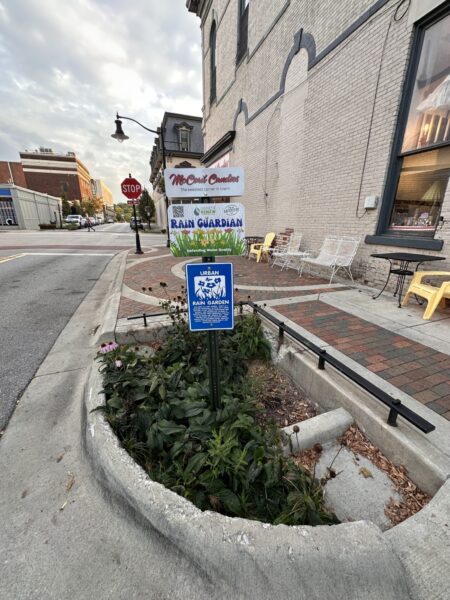
Figure 1. A rain garden in downtown Lafayette captures runoff from nearby roads and sidewalks, slowing and filtering water before it enters the stormwater system. Credit: Amy Thompson, Purdue University.
Purdue Landscape Report: Rainscaping is the practice of designing landscapes to capture, absorb, and use rainwater where it falls. Rather than sending water off-site through storm drains, the water slows down, spreads across the landscape, and soaks into the soil.
In Indiana, spring often brings intense rain events that can quickly overwhelm drainage systems, soils, and rivers. Rainscaping offers a different approach. Instead of treating rainwater as something to get rid of, it becomes a valuable resource that benefits both the landscape and the environment.
Why Rainscaping Matters
Across the Midwest, rainfall is becoming less predictable, with more intense storms delivering large amounts of water in a short period of time. Many landscapes are not designed to absorb this volume quickly. Compacted soils, large areas of turf, and paved surfaces all contribute to rapid runoff of soil, nutrients, and pollutants into nearby waterways.
With rainscaping, the goal is to keep water on-site and allow it to infiltrate slowly (Fig. 1). As the water moves through the soil, it not only irrigates the landscape, but it’s filtered, which reduces runoff, improves water quality, and eases the burden on stormwater systems.
How Rainscaping Works
The principle of rainscaping is simple: slow water down and give it time to soak in. This can be achieved in a variety of ways depending on the site conditions. The right approach depends on how water moves through your landscape.

Figure 2. Water infiltrates into a rain garden in Bloomington following an intense rain event, demonstrating how these systems manage excess runoff from the nearby parking lot. Credit: Amy Thompson, Purdue University.

Figure 3. A bioswale outside Purdue’s Horticulture building captures and directs runoff from downspouts before entering the stormwater system. Credit: John Orick, Purdue University.
The most common method for slowing runoff is with a rain garden, which is a shallow depression planted with species that can tolerate both wet and dry conditions (Fig. 2). The rain garden holds water after a storm and allows it to infiltrate within a day or two. Species that tolerate “wet feet” are planted in the bottom of the basin while drought tolerant species are planted at the top of the slope.
Other landscapes may be better suited for bioswales, particularly sloped areas where water naturally flows across the site (Fig. 3). Bioswales are shallow channels that slow and direct water, allowing it to infiltrate as it moves. As runoff passes through the soil and plant roots, sediment and pollutants are filtered out.
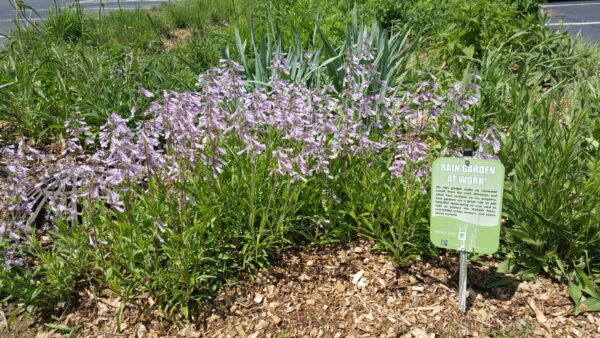
Figure 4. Rain gardens can be designed to manage water effectively while adding visual interest to the landscape. Credit: Karen Mitchell, Purdue University.
Getting Started with Rainscaping
Rainscaping does not require a complete redesign of the landscape, and the first step is simple observation. Spring is an ideal time to evaluate your site, especially during intense rain events. Observe how rainwater moves off hard surfaces, out of downspouts, across the landscape, and into storm drains. These observations will often point directly to areas for improvement and potential locations for rainscaping.
Avoid placing rain gardens in areas that remain saturated for several days after a storm, as this indicates a slow infiltration rate. Instead, focus on capturing water “upstream,” where it can soak in before reaching problem areas.
Once potential locations are identified, further site evaluation is needed. Estimate the amount of runoff entering the area and perform a simple infiltration test to determine the appropriate size and depth needed to handle larger rain events.
Plant species that tolerate both wet and dry conditions are essential, as these areas regularly cycle between extremes. Many plants native to Indiana are well adapted to these conditions, including purple coneflower, Joe-Pye weed, and prairie dropseed. By selecting species with varying heights, textures, and bloom times, these gardens can be both functional and visually appealing (Fig. 4).
Rainscaping is a practical approach to managing water in the landscape. By slowing runoff and encouraging infiltration, it reduces common problems while supporting healthier landscapes and more resilient ecosystems.
To learn more, the Purdue Rainscaping Education Program provides training and resources on planning, installation, and maintenance of rain gardens.
View the original article on the Purdue Landscape Report website: Rainscaping: Turning Water Problems into Sustainable Solutions.
Subscribe and receive the newsletter: Purdue Landscape Report Newsletter.
Resources:
Rainscaping Education Program, Purdue University
Ask an Expert: Rainscaping, Got Nature? Post, Purdue Extension
Q&A About Drainage Water Recycling for the Midwest, The Education Store, Purdue Extension resource center
Rainscaping Playlist, Purdue Extension – Forestry and Natural Resources (FNR) YouTube Channel
Ask an Expert: Rainscaping, Purdue Extension – FNR YouTube Channel
Rain Gardens Go with the Flow, Indiana Yard and Garden, Purdue Horticulture
Become a Purdue Master Gardener, The Education Store
Master Gardeners Program
Plan Today For Tomorrow’s Flood, The Education Store
Karen Mitchell, Consumer Horticulture Extension Specialist
Purdue Horticulture & Landscape Architecture
The Hardwood Tree Improvement & Regeneration Center (HTIRC) continues to share top forest research as scientists, experts and partners further the mission of tree improvement, management, and protection of hardwood forests. The most recent HTIRC Annual Report is now available and includes research, personnel and outreach news: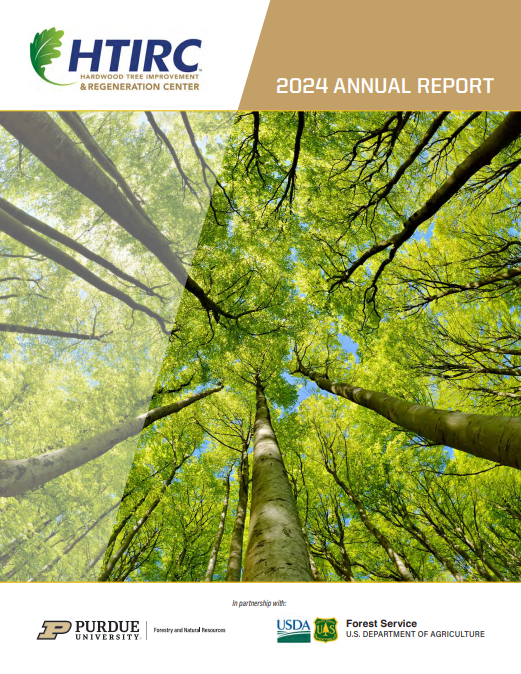
- NSF Center for Advanced Forestry System Updates, the only forestry-based National Science Foundation (NSF) Industry/University Cooperative Research Center (I/UCRC)
- Funded Research Grants which includes Backpack System for High Resolution Forest Inventory, Testing Efficacy of Enrichment Plantings for Stand Regeneration in Hardwood Forests, Better Black Walnut by Breeding Without Breeding and much more.
- Creating a Directory, Depository and Database for Historical Genetic and Tree Improvement Trials
- HTIRC Partners with Tree Pro to Distribute Hardwood Seedlings
- Institute of Digital Forestry
- 2024 Tree Improvement Report
If you would like to subscribe and receive the e-newsletter visit HTIRC e-Newsletter.
The mission of the HTIRC is to advance the science and application of tree improvement, management, and protection of hardwood forests, with emphasis in the Central Hardwood Forest Region (CHFR). They seek to develop research and technology-transfer programs that provide knowledge focused on the establishment and maintenance of sustainable, genetically diverse native forests and the development of highly productive woodlands that provide a wide array of products and services.
Other resources:
Forestry & Natural Resources
Tropical HTIRC
An Introduction to Trees of Indiana, The Education Store, Purdue Extension resource center
Native Trees of the Midwest, The Education Store
Shrubs and Woody Vines of Indiana and the Midwest, The Education Store
ID That Tree, Playlist, Subscribe to Purdue Extension – Forestry and Natural Resources YouTube Channel
A Woodland Management Moment, Playlist, Purdue Extension – FNR YouTube Channel
Investing in Indiana Woodlands, The Education Store
Forest Improvement Handbook, The Education Store
Finding help from a professional forester, Indiana Forestry & Woodland Owners Association
District Forester, Indiana DNR Division of Forestry, for over 10 acres of woodlands
Directory of Professional Foresters, Indiana Forestry & Woodland Owners Association (IFWOA)
Matthew Ginzel, Professor and Director of HTIRC
Purdue Entomology
Purdue University Department of Forestry and Natural Resources
Hardwood Tree Improvement and Regeneration Center (HTIRC)
Purdue Landscape Report: April showers bring May Flowers. Many of us were taught this little rhyme to describe the weather of Spring. April has arrived along with the beginning of the Spring storm season and damage to and from trees is a topic of concern on many minds. Depending on the intensity of the storms and the condition of the trees, damage from high winds, heavy rainfall, and lightning can be quite severe. Cracked or broken branches, stem failure, and root failure are some of the main concerns, but also the risk and liability of damage to people and property.

Storm season is upon us. There are a number of resources from Purdue to help dealing with storm-damaged trees.
If your tree is damaged, there are some steps to deal with the situation. First and foremost, consider the safety of yourself and others around you. Inspect the tree from a distance first, looking for the following:
- Heaving of the ground, indicating potential root failure
- Damage to limbs and/or the trunk of the tree
- Hanging branches can fall to the ground, resulting in injury or death
- Be aware of utility and power lines. Trees can become charged by coming in contact with live wires. All utility lines should be considered energized and dangerous.
If you find your trees damaged from a storm hiring an International Society of Arboriculture (ISA) Certified Arborist to perform a risk assessment will help guide your decision of how to manage your tree. To find an arborist near you and verify credentials, use the link at Find an Arborist, Trees are Good, International Society of Arboriculture (ISA). For more information, you can also view the publication Trees and Storms, located in The Education Store, Purdue Extension’s resource center.
Subscribe and receive the newsletter: Purdue Landscape Report Newsletter.
Resources:
Find an Arborist video, Trees are Good-International Society of Arboriculture (ISA)
Trees and Storms: Understanding Damage, Risk and Recovery – Got Nature? Blog, Purdue Extension – FNR
Caring for storm-damaged trees/How to Acidify Soil in the Yard – In the Grow, Purdue Extension
Why Is My Tree Dying? – The Education Store
Tree Risk Management – The Education Store
Mechanical Damage to Trees: Mowing and Maintenance Equipment – The Education Store
Trees and Electric Lines – The Education Store
Tree Risk Management – Got Nature? Blog, Purdue Extension – FNR
Planting Your Tree, video, The Education Store
Tree Installation, The Education Store
Tree Wound and Healing, Got Nature? Blog, Purdue Extension – Forestry and Natural Resources
Ask an Expert: Tree Selection and Planting, Purdue Extension – Forestry and Natural Resources (FNR) YouTube Channel
Tree Pruning Essentials, Purdue Extension – FNR YouTube Channel
Subscribe – Purdue Extension-FNR YouTube Channel
Ben McCallister, Urban Forestry Specialist
Purdue Forestry & Natural Resources
Congratulations to Liz Jackson, FNR Extension Specialist, on receiving the 2025 Indiana Hardwood Lumbermen’s Association (IHLA) President’s Award. This award is given for exceptional contribution to the forest products industry and to members of IHL. We are proud to celebrate her achievements along with seeing her featured in the April 2025 edition of the Agriculture & Natural Resources (ANR) newsletter.

Liz presenting an award plaque at a Walnut Council national conference.
Agricultural & Natural Resources (ANR) Newsletter: Liz has worked as an Extension specialist associated with three forestry organizations since March 2004. Liz obtained her BS in forest products (’82) from Purdue’s Forestry & Natural Resources Department and MS in business management (’84) from Krannert School of Business under a special forestry/business master’s program.
Before coming to Purdue Extension, Liz spent 15 years in wood products manufacturing as a plant manager at Aristokraft cabinets (now MasterBrand) and purchasing and inventory control manager at Lafayette Venetian Blind.
Liz’s Extension role is to provide programs and products on sustainable forest management and forest stewardship to address woodland owners’ concerns and needs. While representing the Department of Forestry and Natural Resources, she works on behalf of three organizations.
The Hardwood Tree Improvement and Regeneration Center (HTIRC) is a research partnership between Purdue FNR and the USDA Forest Service focusing on management, protection and improvement of fine hardwood species. For the HTIRC she coordinates annual meetings, research conferences and educational programs.
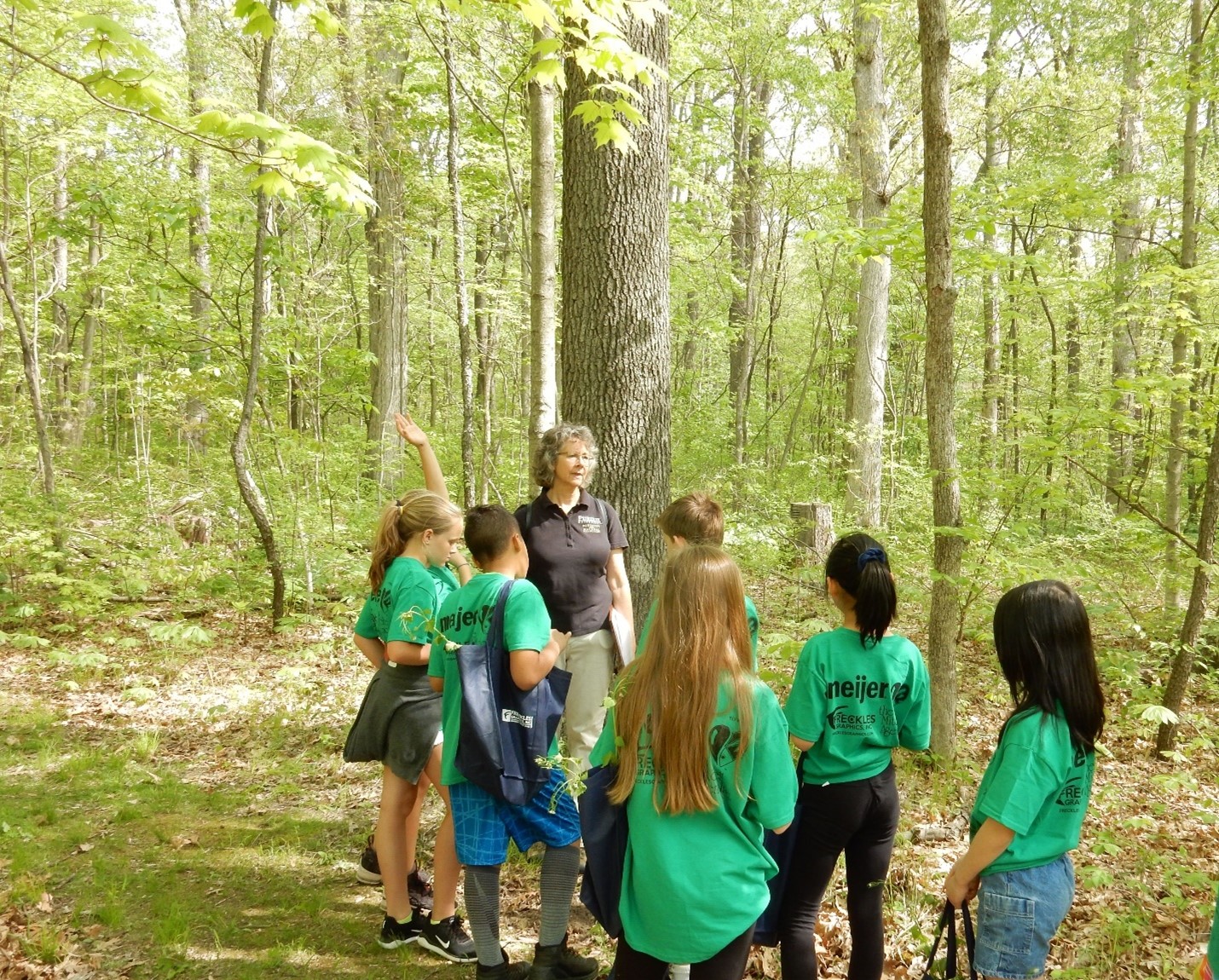
Liz presents on forest management to a group of schoolchildren at Martell Forest.
For the Indiana Forestry & Woodland Owners Association (IFWOA) and National Walnut Council, she represents the interests of the members and manages all business of the associations, including board meetings, annual conferences and education programs, membership and finances, and communications, including newsletters, websites and social media.
Liz is involved in many partnerships around the state, including as a member of the Extension Invasive Species Working Group, on the editorial board for Indiana Woodland Steward newsletter, member of NRCS state technical committee, and advisory partner with Indiana DNR Division of Forestry Forest Stewardship Committee, Sentinel Landscapes, and Let the Sun Shine In Indiana programs.
A highlight of her career was traveling to Washington, D.C., in 2005 to see Sen. Richard Lugar of Indiana and representatives from HTIRC and Indiana forestry plant an Indiana walnut tree on the U.S. Capitol grounds. Ten years later she returned to the site and was thrilled to find the tree and see it was thriving.
Resources:
Indiana Forestry & Woodland Owners Association (IFWOA) YouTube Channel
Observing Seasonal Changes in Nature Webinar with Amanda Wanless, IFWOA YouTube Channel
Magnificent Trees of Indiana Webinar with Author Carroll Ritter, IFWOA YouTube Channel
Ask the FNR Expert: Pests in your Woods, Purdue Extension – Forestry and Natural Resources (FNR) YouTube Channel
Woodland Stewardship for Landowners, Playlist, Purdue Extension – FNR YouTube Channel
Directory of Professional Foresters, Indiana Forestry & Woodland Owners Association (IFWOA)
Indiana Woodland Steward E-newsletters, Eleven Member Organization
Invasive Species, Playlist, Purdue Extension – FNR YouTube Channel
Invasive Plant Species Identification, Video, Purdue Extension – FNR YouTube Channel
Subscribe – Purdue Extension-FNR YouTube Channel
Agricultural & Natural Resources (ANR), Purdue Extension
Join Purdue Extension forester Lenny Farlee in this episode of “A Woodland Management Moment” as he explores the unique ecosystem of bottomlands. These flat, moisture-rich environments are home to a diverse array of species, shrubs, and trees. Watch the video to discover the key features and characteristics of these fascinating sites.
If you have any questions regarding trees, forests, wildlife, wood products, or other natural resource topics, feel free to contact us by using our Ask an Expert web page.
Resources:
A Woodland Management Moment, Playlist, Purdue Extension – Forestry and Natural Resources (FNR) YouTube Channel
The Nature of Oaks Webinar, Purdue Extension-FNR YouTube Channel, Shared from Indiana Forestry & Woodland Owners Association
Conservation Tree Planting: Steps to Success, Purdue Extension – FNR YouTube Channel
Shrubs and Woody Vines of Indiana and the Midwest, Purdue University Press
Native Trees of the Midwest, Purdue University Press
ID That Tree, Playlist, Purdue Extension – FNR YouTube Channel
Investing in Indiana Woodlands, The Education Store
Woodland Stewardship for Landowners Video Series, Playlist, Indiana Department of Natural Resources YouTube Channel
Ask an Expert: Tree Selection and Planting, Purdue Extension – FNR YouTube Channel
Forest Improvement Handbook, The Education Store
Find an Indiana Professional Forester, Indiana Forestry & Woodland Owners Association (IFWOA)
Purdue Arboretum Explorer
Lenny Farlee, Extension Forester
Hardwood Tree Improvement and Regeneration Center
Purdue Department of Forestry & Natural Resources
While the weather may tell you otherwise, spring is upon us. With the changing weather comes greening grass, breaking buds and sprouting plants. This plethora of fresh growth can help cure the winter blues, but it also provides wildlife with a desirable food source. Recently you may have noticed deer and other wildlife’s increased utilization of winter wheat fields and other green areas like lawns – early spring is the time you see deer in Indiana feed extensively on grass.
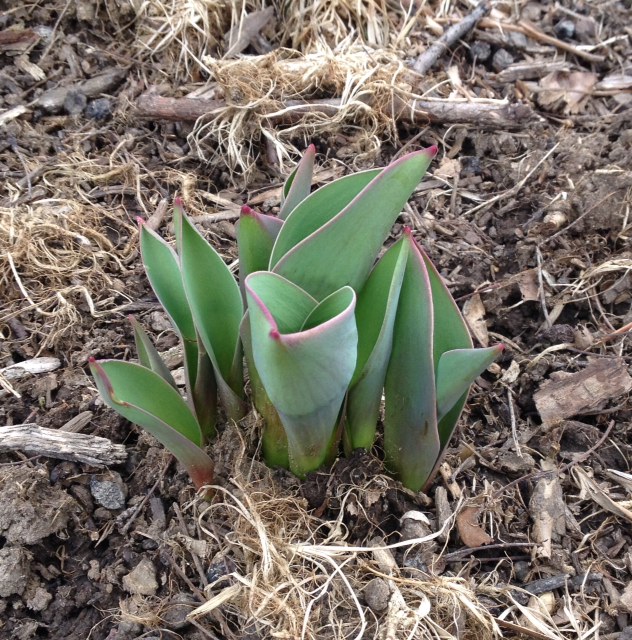 For homeowners, this is the time you need to scout around your home for emerging plants in your landscaping beds. Plants that are frequently browsed by deer such as tulips or hostas need special attention, but the limited amount of green plant material can leave any plant as a potential target. Most homeowners choose a type of taste repellent to protect plants. There are several tips on how to increase the efficacy of this approach.
- Timing: It helps to have some foresight into when damage is likely to occur and/or the plant developmental stage(s). Unfortunately, this is usually based on past experience. Ideally, you want to time applications during these periods. With tulips, for example, applying repellents early during sprouting, later during sprouting and during flower bud development will prevent damage during most years.
- Type of repellent: There are many types of taste repellents labeled for deer and other wildlife species. Most have a combination of capsaicin, putrefied egg solids and/or fatty acids of ammonium soaps. There are, of course, others with different ingredients. So which do you choose? There have been many studies that have investigated the efficacy of repellents. The bottom line – they work, but control is not 100%.
- Label: Failures can often result when not following the directions on the label. The label also provides safety information and what you can/can’t spray. Read and follow the label – it’s the law.
- Expectations: You aren’t going to solve all of your wildlife problems by spraying a few plants or even everything. If you use repellents, reapply according to label directions (every three to four weeks is usually a good rule of thumb). To increase success, you may use them as part of an integrated approach that includes exclusion, cultural practices and other approaches.
Resources
Diagnosing and Controlling Wildlife Damage, The Education Store, Purdue Extension’s rescource center
Preventing Wildlife Damage – Do You Need a Permit?, The Education Store
Wildlife Conflicts, Purdue University
New Tool for Helping Landowners to Help Declining Birds, Got Nature? Blog, Purdue Extension – Forestry & Natural Resources (FNR)
Forest Management for Reptiles and Amphibians: A Technical Guide for the Midwest, The Education Store
Ask the Expert: Hardwood Ecosystem Experiment – Birds and Salamander Research, Purdue Extension – FNR
Developing a Wildlife Habitat Management Plan, The Education Store
The Nature of Teaching, Purdue Extension
ID That Tree, Playlist, Purdue Extension – Forestry and Natural Resources Youtube Channel
A Woodland Management Moment, Playlist, Purdue Extension – FNR Youtube Channel
Shrubs and Woody Vines of Indiana and the Midwest, Purdue University Press
Native Trees of the Midwest, Purdue University Press
Forest Improvement Handbook, The Education Store
Fifty Common Trees of Indiana, Purdue Extension – FNR
Invasive plants: impact on environment and people, The Education Store
ReportINvasive, Purdue College of Agriculture – Entomology
Cooperative Invasive Species Management Area (CISMA)
District Forester, Indiana Department of Natural Resources, 10+ acres
Find an Arborist, International Society of Arboriculture
Brian MacGowan, Extension Wildlife Specialist
Department of Forestry and Natural Resources
Purdue Landscape Report: These oak trees are showing the symptoms of smooth patch ( see below Figures 1, 2, 3). This condition is the result of a fungal infection that is restricted to the outer bark, causing it to slough off. The bark layer remaining is smoother and lighter in color than uninfected, normal bark.
Patches can vary from a few inches to a foot or more in diameter and may occur on branches as well as the trunk. Several fungi can cause this condition. A common species, Aleurodiscus oakesii, produces clusters of flat, disc-like spore-bearing structures on the surface of the smooth bark. These structures are gray or beige in color and are usually less than 1⁄2 inch in diameter (Figure 4).
The best time to see this interesting phenomenon in the forest is during wet periods in late winter before new spring growth begins, when the light gray bark stands out in the light penetrating the canopy. The fungal structures shrink when dry so will be more apparent following rainy weather.
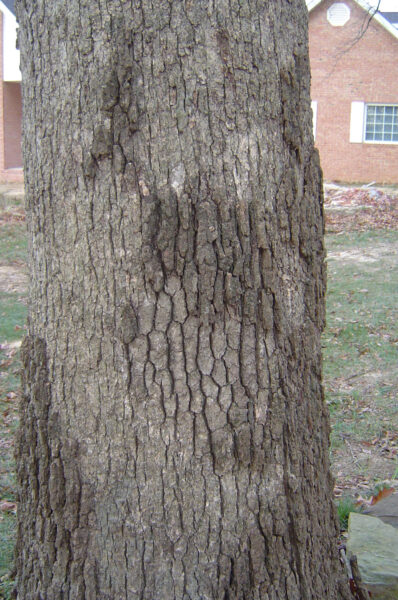

The fungal structures may be mistaken for wood decay fungi, but because smooth patch fungi invade only the nonliving, outer bark tissues, they do not affect the health of the tree. No control measures are needed.
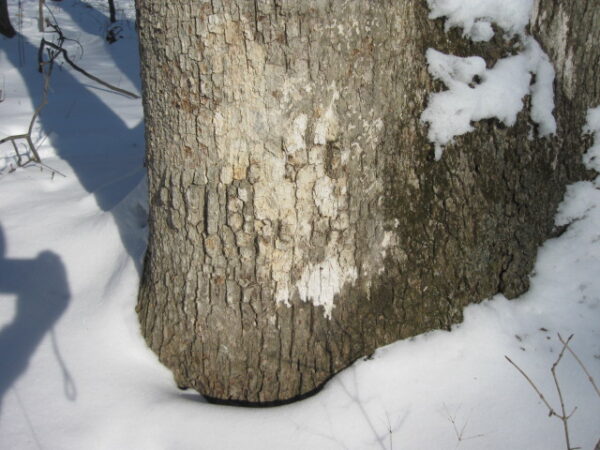
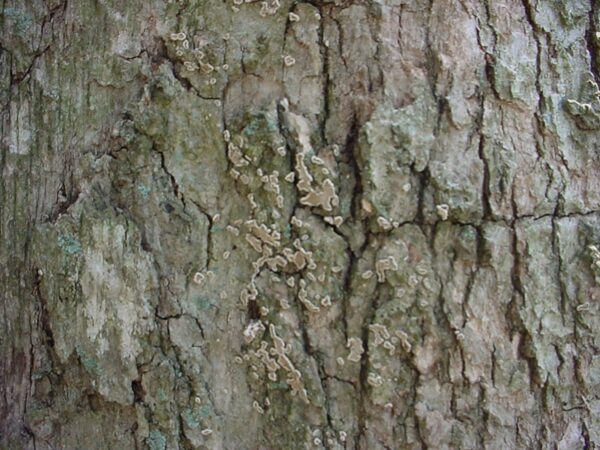
The fungal structures may be mistaken for wood decay fungi, but because smooth patch fungi invade only the nonliving, outer bark tissues, they do not affect the health of the tree. No control measures are needed.
Resources:
Indiana Forestry & Woodland Owners Association (IFWOA) YouTube Channel
District Forester, Indiana DNR Division of Forestry, for over 10 acres of woodlands
Directory of Professional Foresters, Indiana Forestry & Woodland Owners Association (IFWOA)
Indiana Woodland Steward E-newsletters, Eleven Member Organization
The Nature of Oaks Webinar, Purdue Extension-FNR YouTube Channel, Shared from Indiana Forestry & Woodland Owners Association
Purdue Arboretum Explorer
Native Trees of the Midwest, Purdue University Press
A Woodland Management Moment, Playlist, Purdue Extension – Forestry and Natural Resources (FNR) YouTube Channel
Conservation Tree Planting: Steps to Success, Purdue Extension – FNR YouTube Channel
Forest Improvement Handbook, The Education Store
Woodland Stewardship for Landowners, Playlist, Purdue Extension – FNR YouTube Channel
ID That Tree – Video Playlist, Purdue Extension – Forestry and Natural Resources (FNR) YouTube Channel
Invasive Species, Playlist, Purdue Extension – FNR YouTube Channel
Invasive Plant Species Identification, Video, Purdue Extension – FNR YouTube Channel
Report Invasive Species, Purdue Invasive Species
Subscribe – Purdue Extension-FNR YouTube Channel
Tom Creswell, Plant & Pest Diagnostic Laboratory Director
Purdue Botany and Plant Pathology
Purdue Landscape Report: The bitter winter cold has finally passed us (or has it? It’s hard to tell in the Midwest)! The days are getting warmer and longer, and that means the insects are coming out of their overwintering stages. As you prepare for your landscaping and gardening this year, are you implementing preventative measures for pests? Now is the time to think about those strategies to minimize the damage to your plants.
Preventing pest issues is foundational to integrated pest management. The first step is always to start with healthy and clean plants. Don’t be afraid to bring a hand lens to the store and check for those hard-to-see pests! You don’t want to bring a problem home. Next, remember that many pests will thrive due to improper watering, light conditions, or fertilization. Avoid these issues by reviewing the recommendations for your plants and consulting a soil test. (Read more about why soil tests are essential!)
Finally, which pests/diseases do you anticipate? What are the most common pests on the plants in your landscape? Perhaps you have had issues in past years and know what to expect. Review the biology of these pests and consider implementing preventative measures now. Let’s look at a couple of examples of frequent landscape pests and some management options you can add to your list of spring preparations.
Spider Mites
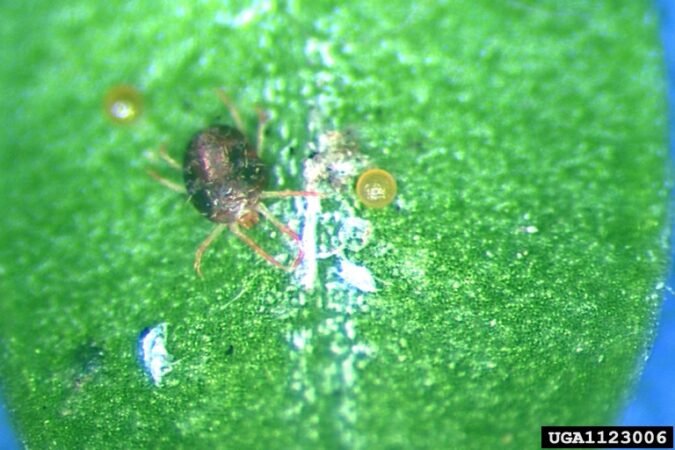
Spider mites overwinter on the host plant or in leaf litter. Around this time of year, cool season mites such as spruce mites and boxwood mites are the dominant issue. Check your plants now for these spider mites, and scout regularly to make sure populations aren’t getting out of control. A rainy spring will help keep the pressure low. If you have to spray, avoid chemicals that will harm natural enemies, which are vital to spider mite management. (Learn more about spider mite management: Spider Mites on Ornamentals; and check out the Purdue Plant Doctor Quick Guide: Managing Spider Mite Mayhem)

Bagworms
Bagworms overwinter as eggs in the bags left on the tree. They’re frequent pests of arborvitae, junipers, and several other trees and shrubs. Take action now to prevent an infestation in the summer that requires costly pesticides. Manually remove the bags from your tree and drown them in soapy water. (Learn more about bagworm management: Bagworms).

Lace Bugs
Lace bugs may overwinter as eggs or adults, depending on the species. They become active again in the spring, so now is a good time to check for these pests. Focus on the undersides of the leaves where the pests are found. Lace bugs prefer hosts planted in sunny areas with a lack of plant diversity, so consider including some flowering plants in your landscape to provide pollen and nectar to beneficials. (Learn more about Lace bug management from the Purdue Plant Doctor Quick Guide: Managing Lace bugs).

What pests do you encounter in the landscape? Take a moment to review their biology and your options for preventative management. Be proactive now and reduce your pest problems for the season ahead. Read the original article, Insects are waking up – are you prepared?
ID That Tree, Playlist, Purdue Extension – FNR YouTube Channel
A Woodland Management Moment, Playlist, Purdue Extension – FNR YouTube Channel
Woodland Stewardship for Landowners, Playlist, Purdue Extension – FNR YouTube Channel
Native Trees of the Midwest, Purdue University Press
Investing in Indiana Woodlands, The Education Store
Indiana Department of Natural Resources: Invasive Species
Indiana Invasive Species Council
Cooperative Invasive Species Management Area (CISMA)
Report Invasive, Purdue Extension
Episode 11 – Exploring the challenges of Invasive Species, Habitat University-Natural Resource University
What are invasive species and why should I care?, Got Nature? Blog, Purdue Extension – FNR
Spotted Lanternfly Found in Indiana, Purdue Landscape Report
Alicia Kelley, Cooperative Agricultural Pest Survey (CAPS) Coordinator
Purdue Extension – Entomology

Recent Posts
- Popular Landscape Shrub is Invasive
Posted: October 15, 2026 in Alert, Forestry, Forests and Street Trees, Invasive Plant Species, Plants, Woodlands - Purdue Extension’s Regional Teams Are Here: Connecting Communities with Expertise and Opportunity
Posted: October 14, 2026 in Community Development, Forestry, Forests and Street Trees, Gardening, How To, Timber Marketing, Urban Forestry, Wildlife, Woodlands - Why Do Our Trees Go From Green Leaves to Different Colors?
Posted: in Forestry, Forests and Street Trees, Urban Forestry, Woodlands - Deer and Turkey Archery Seasons Opening Soon, MyDNR
Posted: October 13, 2026 in Alert, Safety, Wildlife - Distinguishing Dogwoods
Posted: in Forestry, Urban Forestry, Wildlife, Woodlands - It’s Not Too Early To Start Planning For Spring Tree Planting
Posted: in Forestry, How To - Can I Plant Trees in the Fall?
Posted: October 12, 2026 in Forestry, How To, Land Use, Plants, Urban Forestry, Wildlife - Burning for Benefits: Why Fire Belongs in Indiana
Posted: in Forestry, Safety, Woodlands - Publication Helps Midwest Fish Producers “Catch a Following” with Consumers
Posted: in Aquaculture/Fish, Aquatic/Aquaculture Resources, Wildlife - Disease May Cause Wilting and Eventual Death of Certain Trees and Shrubs, Purdue Landscape Report
Posted: October 5, 2026 in Disease, Forestry, Plants
Archives
Categories
- Alert
- Aquaculture/Fish
- Aquatic/Aquaculture Resources
- Ask the Expert
- Christmas Trees
- Community Development
- Disease
- Drought
- Forestry
- Forests and Street Trees
- Gardening
- Got Nature for Kids
- Great Lakes
- How To
- Invasive Animal Species
- Invasive Insects
- Invasive Plant Species
- Land Use
- Natural Resource Planning
- Nature of Teaching
- Plants
- Podcasts
- Ponds
- Publication
- Safety
- Spiders
- Timber Marketing
- Urban Forestry
- Webinar
- Wildlife
- Wood Products/Manufacturing
- Woodland Management Moment
- Woodlands