 Purdue University - Extension - Forestry and Natural Resources
Got Nature? Blog
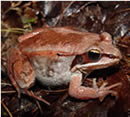 Ever wondered why people go into wildlife? I mean, we’re expected to have low salaries. Why are we spending so much money to get a degree where we’ll go out to observe animals for a living or manage them? Can’t we do that as an everyday person with pets?
I can’t answer this question for everyone, but I’ll give it a shot. We are fascinated by the world around us. We love it and want to understand it, along with our role in it. It’s that simple.
There’s so much to be learned as a student in wildlife, even though we’ve been living alongside the concepts we’re learning about all our lives. Every time I walk into my Introduction to Environmental Conservation class, I walk out and gain an entirely new viewpoint. Recycling has taken on a whole new meaning when put into the dimensions of its actual effects. All my bathroom products give me a deep sense of suspicion because there are simply so many different chemicals and plastics being used with them. I have developed a rational hatred for ginkgo trees while on Purdue’s campus; not only do they stink, they’re also not even native. I worry about the squirrel population because that many squirrels in 10 yards of grass cannot be healthy. I’m all for wooden buildings, so long as it’s sustainable, thanks to carbon sequestration. Did you know wood is made up of 50 percent carbon? So when it’s built into buildings, it’s not actually harming the environment because it’s still holding in all that carbon dioxide that would have gone into the atmosphere had the tree been burned or decomposed. All this to say, I just pay a lot more attention to the environment around me.
Those are just some of the concepts we’ve learned so far, and it’s a blast. On top of this, I feel like we’re actually doing something good for humanity. Not many people want to do the dirty work or have months of research credited with one line in a scientific paper. However, we get to better see how it’s all interconnected. The world is more entwined than anyone knows. If everyone took just one day to be a wildlife student, it would be an incredible transformation in the world, even if each person only took one aspect away from the lesson learned.
Resources
FNR Majors and Minors, Purdue FNR
Prospective Students, Purdue FNR
We Know Nature! FNR This is Your Class Project Video
Morgan Sussman, Freshman
Department of Forestry and Natural Resources, Purdue University
 This question and answer were provided by Purdue Extension: In the Grow.
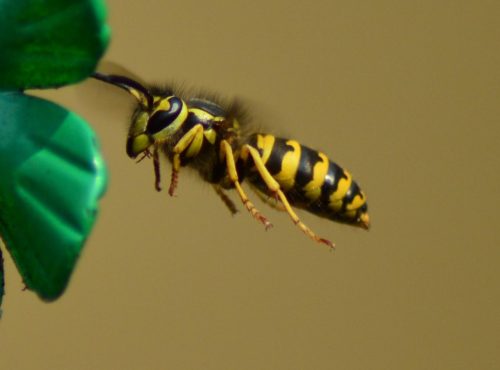
Question: I have small evergreen trees planted in my yard. They are the small, slow-growing type. They are around eight years old. Every fall, the yellow jackets start swarming around them, crawling in and out of the inside of the tree. They don’t seem to hurt it, but it looks like they are trying to find something, acting like a honey bee on a flower. But these have no flowers. They don’t bother us as long as we don’t get too close. Could you tell me why this is happening? – C.K., Shoals, Indiana
Answer: Our Purdue entomologists advise that yellow jackets commonly scavenge for food in the fall, and it is likely they are attracted to tree resin or sap that has some sugar content. Scavenging yellow jackets are less aggressive than those that are protecting a nest. And you are correct; they will not harm the trees and will generally not attack unless provoked. We commend you for aiming for a peaceful coexistence!
View the full post at Purdue Extension’s: In the Grow website.
Resources
Social Bees and Wasps, The Education Store
Indiana Beekeepers Swarm List, Indiana DNR
Department of Entomology, Purdue University
Purdue Extension: In the Grow
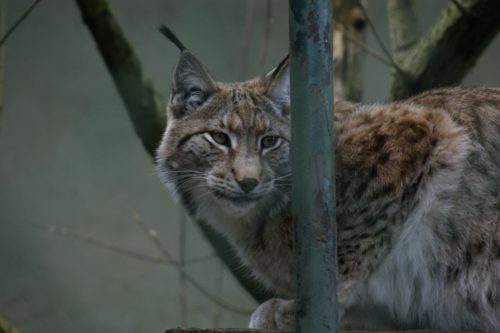 There has been an increase in bobcat sightings throughout central Indiana, namely Hamilton County, according to the Indiana Department of Natural Resources. Bobcats are not dangerous to the public, but beware of them while driving as there have been more “roadkill” cases involving these nocturnal animals. While bobcats were endangered from 1969 to 2005, they are no longer due to their growing population. However, it is still illegal to hunt or trap them in Indiana. Bobcats are also moving south as more males of this species need to find territory of their own. They feed on small animals like rats, mice, moles and squirrels. View the related articles below for more information.
Resources
Bobcat Sightings On Rise In Hamilton County, elsewhere, IndyStar.com
Bobcat, Indiana DNR
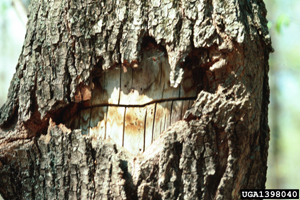
Glycobius speciosus, sugar maple borer, photo by Steven Katovich, USDA Forest Service.
Some of the most diverse taxa on the planet are rarely seen yet play critical roles within our environment. The insects found in the Order Coleoptera (beetles) are represented by over 500,000 species. Collectively, these insects provide a wide range of ecosystem services. They are important pollinators and predators on other insects, and they play essential roles in nutrient cycling. While most species are beneficial or vital for ecosystem functions, there are a few species that are considered pests.
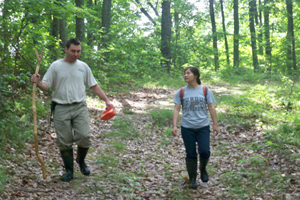
Dr. Jeff Holland and research team studying sugar maple borer in the woods.
The Sugar Maple Borer is a native species found throughout the eastern United States. The larval stage of the beetle specializes in feeding on sugar maple trees, particularly stressed or injured trees. In this podcast, our host, Rod Williams, will be interviewing Dr. Jeff Holland about the unique distribution of this wood-boring beetle, how to survey for this species on your property and the impacts to sugar maple trees throughout the eastern deciduous forests.
To find out more information about sugar maple borers, visit:
Holland Website
Bug Guide Identification
Resources
The Education Store (Search entomology or forest)
Got Nature? Blog Posts
Got Nature? Blog Posts
Jeff Holland, Associate Professor of Spatial Ecology and Biodiversity
Department of Entomology, Purdue University
Rod Williams, Associate Professor of Wildlife Science
Department of Forestry and Natural Resources, Purdue University
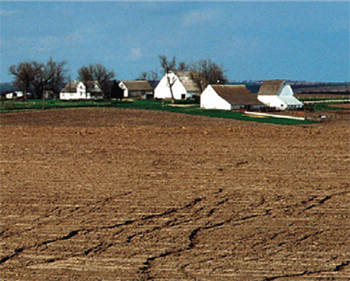 Agricultural educators, community organizers and others promoting environmental awareness can learn about the myths and realities of agricultural conservation from the perspective of a researcher, practitioner and student in a new Purdue Extension publication.
Adoption of Agricultural Conservation Practices: Insights from Research and Practice, developed by the Department of Forestry and Natural Resources at Purdue University, is available for free download from The Education Store.
The authors (Linda Prokopy, associate professor of Natural Resource Social Science; Dan Towery, Indiana Conservation Cropping System Initiative educator; and Nicholas Babin, postdoctoral research assistant in Forestry and Natural Resources) use academic studies and their own observations to address ways of motivating farmers to adopt environmentally-friendly farming practices.
To read the full article, visit Ag conservation publications available from Purdue Extension, Purdue Agriculture News.
Resources
Indiana Soils: Evaluation and Conservation Manual Review, Purdue Agronomy
Conservation Tillage and Water Quality, Purdue Extension
Optimizing Conservation Tillage Systems: Plant-to-Plant Uniformity is Essential for Optimum Yield in No-Till Cont. Corn, The Education Store
Linda Prokopy, Associate Professor of Natural Resource Social Science
Department of Forestry and Natural Resources
 The Wildlife Habitat Education Program (WHEP) helps students understand wildlife ecology and management practices. In addition, students gain skills in teamwork, oral and written communication, decision-making and leadership. The WHEP career development event includes three activities: Wildlife Challenge, Wildlife Management Practices and Wildlife Management Plan. Each activity has an important role in teaching about the management of wildlife populations. The instructions in this publication can help leaders teach students to evaluate habitat for Wildlife Management Practices (WMPs).
Wildlife Habitat Education Program – Teaching and Learning Wildlife Management Practices is available at The Education Store today.
Resources
Wildlife Habitat Education Program (WHEP)
A Template for Your Wildlife Habitat Management Plan, The Education Store
Managing Forest and Wildlife Resources: An Integrated Approach, The Education Store
Teaching and Learning Wildlife Management Practices, The Education Store
Indiana’s State Wildlife Action Plan, Indiana DNR
Brian MacGowan, Extension Wildlife Specialist
Department of Forestry and Natural Resources
The Guardian has published an article in regards to the large loss of wildlife in the past 40 years. Due to humans’ rapid consumption practices and our ecological footprint, the Earth cannot replenish what we use fast enough. The WWF analyzed 10,000 different populations consisting of animals, fish and birds in the study to create a representative “Living Planet Index” (LPI). The study showed that freshwater ecosystems had the fastest declining population. While the biggest decline in animal numbers are in low income, developing nations, rich nations are “outsourcing” wildlife decline in developing countries by importing food and other goods produced through habitat destruction. What can you do to make a difference to help keep the Earth clean?
View the full article, Earth Has Lost Half of its Wildlife in the Past 40 Years, says WWF, at theguardian.com.
Resources
Living Planet Report 2014, WWF.panda.org
Land and Water Conservation Fund, Indiana DNR
Saving Energy in Your Home series, The Education Store
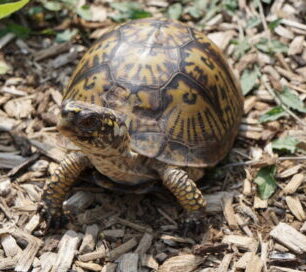
One of the most common questions people ask me is what to do with baby, orphaned wildlife that they find. Recently a homeowner from Carmel asked for advice regarding two hatchling box turtles that her family found in their yard. In early June, they saw the mother laying eggs. They watched the nest periodically throughout the summer only to find two hatchlings just before Labor Day. They wanted to help the young turtles survive but didn’t know what exactly they should do.
Much to the surprise of most people, my answer to this question is almost always “nothing,” regardless of the species. I can’t fault people for wanting to help. That shows me they care about wildlife and are concerned for their well-being. After all, that is a big reason why I got into my line of work. And when it comes to baby animals, we tend to really get concerned. Perhaps that is just the nurturing instinct of parents. We can sometimes forget that wildlife behave very differently than us.
Box turtles may mate anytime during the activity season. During field studies of box turtles in southern Indiana, I encountered pairs mating most often in late summer. After mating, females will store the sperm and delay fertilization up to four years. The following summer (usually late-May to early June), she will locate a nest site, dig the nest, deposit the clutch of eggs and subsequently conceal the nest. The selection of nest sites is unknown, but they generally return to the same area year after year. Some hypothesize they are returning to their own natal region since this is the case for other species of turtles. Once the female deposits her clutch of eggs, they are on their own – box turtles offer no parental care of eggs or hatchlings.
Our good-intended homeowner questioned if the hatchlings she found should be moved to a large state forest (some distance away), a local nature center or the park across the street where she thought the mother came from. Because hatchlings and juvenile box turtles are hard to find, there is very little information known about their movements. It really is not known if the hatching turtles would attempt to cross the street because that is the presumed home of their mother. However, since the wooded park clearly offers better habitat than the housing development, saving the young from a potentially perilous journey across the road is probably ok.
Moving them a long distance away is probably not a good idea and simply not necessary. Based on research of adult movements, we know adult box turtles are very familiar with their home range and are capable of finding this area if displaced from it by up to 3.3 km. Turtles moved a long distance away from their home range may establish a new home range but may also wander great distances looking for home. Similarly, taking the hatchling turtles to a nature center or wildlife rehabilitator isn’t really necessary. They are perfectly fine on their own as long as they have good habitat. Also maintaining a population of box turtles in the park depends on the influx of new turtles.
Resources
Turtles of Indiana, The Education Store
Eastern Box Turtle, Indiana Department of Natural Resources
Orphaned and Injured Animals, Indiana Department of Natural Resources
Brian MacGowan, Extension Wildlife Specialist
Department of Forestry and Natural Resources
Planting food plots is a popular activity for landowners interested in attracting wildlife for viewing or hunting. The following are answers to questions we commonly receive regarding food plots, providing basic information to consider when planning for food plots as part of a comprehensive wildlife management plan for your property.
What is a food plot, and how important are food plots for wildlife in general?
A food plot is simply an agricultural crop or forage planted to attract wildlife for observation or hunting. While food plots are readily used by wildlife, they are not necessarily needed by wildlife. When we manage wildlife habitat, we break the habitat down into four basic components. Those components are food, water, cover and space. When we assess a habitat for the needs of a particular wildlife species, we want to determine which of those basic habitat components are most limiting or in need of the most work. Food is rarely the most limiting factor for wildlife. The most limiting factors are usually cover and space. Therefore, food is usually not the first habitat component needing to be addressed on the landscape. The primary purpose of planting food plots is to meet human desires to attract wildlife, rather than a necessity for wildlife. That said, food plots can still be incorporated and managed as part of a comprehensive management plan for any property in which wildlife viewing or hunting is an objective.
What are the different types of food plots?
What plants you provide in a food plot is largely determined by what species of wildlife you are interested in attracting. If you are interested in attracting white-tailed deer, which is quite often the wildlife species for which most food plots are planted, plants that provide green browse throughout most of the year would be recommended. The most popular green browse plants are typically forage plants and include clovers and wheat. Other green browse options might include soybeans, alfalfa, brassicas, turnips, kale, rye, oats and triticale, among others.
Wild turkeys will also use green browse plots, especially during the spring. Due to the short growth stature of green browse plots in the spring, male turkeys will often use these areas for strutting. Hen turkeys will bring broods to food plots of clover or other legumes for “bugging.” These areas are often high in insect biomass, providing an abundant and easily accessible food source for growing turkey chicks.
Agricultural grains are often planted for small game wildlife, including northern bobwhites, ring-necked pheasant and eastern cottontails. Grains like milo (or sorghum), sunflowers and corn are popular for small game food plots. Eastern cottontails will also readily use green browse plots if there is dense shrubby cover close by to escape predation. Sunflowers are usually planted specifically for hunting mourning doves. Grain food plots will also attract many nongame wildlife, especially songbirds. A mature sunflower field will often be full of American goldfinches, indigo buntings, chipping sparrows and song sparrows.
When should food plots be planted?
When food plots should be planted depends on what plants you will be planting. Most of the agricultural grains should be planted in the spring. Typically April and May are best for spring planted grains. Exact timing for spring planting is not as critical for food plots as it is for agricultural production. For example, soybeans can be planted in late June or even early July as a food plot. Soybeans planted for food plots are usually to provide green browse through the summer rather than bean production for harvest. Although late planted soybeans may not grow as optimal as earlier planted beans, they can still enhance the nutritional quality of summer forage for deer. Green browse plots for winter forage, including wheat and clovers, are usually planted in late summer through early fall. Clovers can also be planted in late winter or early spring.
Are food plots expensive?
Food plots vary in their expense to establish. Much of the expense depends on what you plant, equipment costs, herbicides and soil amendments. The expense really boils down to how much effort you want to put in the food plot and how successful you want it to be.
Seed costs vary considerably. Some conservation organizations, like Quail Forever and Pheasants Forever, offer free seed for its members to plant grain food plots. You might check with a local agricultural seed dealer or Ag co-op for availability of old seed. Older seed is not usually sold for agricultural production, and seed dealers may be willing to make a deal to get it out of their storage facilities. Some seed suppliers can provide additional services such as mixing your seed order for a small fee to save you time in the field. Of course, there are also the name brand seed varieties available through many sporting goods stores; however, they are usually much more expensive.
Equipment can be a considerable expense for planting food plots. Small tractors and utility vehicles can be quite expensive alone. Then you will need the implements to do the job, such as discs, planters, sprayers and possibly tillers or cultivators. If you lease part of your land for farming, you might be able to negotiate food plot work as part of the contract. Some Soil and Water Conservation Districts have implements, especially grain drills, available for loan at a small fee or deposit. Some equipment can be rented from rental supply companies. There are also individuals who specialize in food plot establishment and other habitat management projects available for hire.
Expenses associated with food plot preparation should be considered during the planning process. You will likely need to control undesirable vegetation with herbicides. Fertilizer may be necessary, and fertilizer costs fluctuate yearly. You may even have to consider exclusion of wildlife during the establishment phase, especially where deer are extremely abundant. Fencing for exclusion can be a considerable cost.
What are the basic steps in establishing a food plot?
The first step in food plot planning is to consider your objectives for having a food plot. Are you a hunter wanting to attract game to increase your hunting success? Are you interested in bringing wildlife closer to you and your family for viewing and enjoying?
Once you have determined your objectives, you need to determine the location(s). If you are planting for viewing only, where do you intend to view from? A back deck or perhaps from your living room or kitchen with large windows? You will need to consider the movement patterns of wildlife through the landscape, especially if hunting is your objective. Wildlife are more likely to utilize food plots when they are planted in areas through which they are already moving. It can be difficult to attract wildlife to an area they do not otherwise occupy unless you intend to address other habitat needs, especially cover requirements. If you are hunting, you will also want to consider wind patterns that will impact your movement into and out of the food plot during hunting. Providing multiple food plots increases hunting opportunities.
Site preparation is determined by several factors, including the amount of undesirable vegetation you will have to treat with herbicides, soil tests and planting method. If the site you have selected contains a large amount of herbaceous vegetation, you will want to consider using herbicide to kill as much of the competing vegetation as possible. Which herbicide needed depends on the nature of the plants you will control. A general herbicide most people use is glyphosate. If you have mostly grass to control, then a grass-specific herbicide can be used. If you need to control mostly broad-leaved plants, then a broad-leaf specific herbicide can be used. It is critical that before you use any herbicide, you read and follow all label directions.
A soil fertility test should be conducted for each food plot in order to determine if any of the essential soil elements are lacking and in need of amendment. The basic test will provide information on soil pH, plus the amounts of nitrogen, phosphorus, potassium and lime (calcium) that should be added. The folks at your county Extension or Soil and Water Conservation offices will provide you with the information you need for soil sampling and submission for testing. After you receive the test results, it is up to you on whether you want to amend the soil as per the test recommendations. Factors to consider are cost of the amendments and the desired vigor of the crop you plant. The more vigorous the crop, the more nutritional value it will have.
The planting method you choose will dictate how much soil work will be necessary. If you will be using a no-till drill, then you will be able to drill your seed directly into the soil through vegetation without disking it first. If you are using a conventional drill or broadcasting the seed, you will need to disk the soil prior to planting. If broadcasting, you will want to make another pass over the field with a cultipacker, harrow or other drag to lightly cover the broadcasted seed.
Annual plants, such as agricultural grains, will need to be planted every year. You could lightly disk a field of annual grains following seed set and perhaps get a second growing season from the seed production, assuming all the seeds have not been consumed. You could also leave the field fallow the next year, which means do nothing with it and let it go without disking or spraying. Either way will result in some germination of the previous year’s seed production along with annual weeds. The annual weeds are likely to be of good value for wildlife. Invasive weeds, such as Canada thistle, should be controlled with herbicide. Keep in mind that ragweeds and foxtail, while agricultural weeds, are highly valued by wildlife who consume seeds.
Other food plot plants, such as many clovers, are short-lived perennial plants and do not usually need to be planted every year. Once established, many clovers can be mowed periodically to maintain a vigorous growth. It would be beneficial to allow the perennials to produce seed to help maintain the field. Reseeding perennial plants may be necessary where browse pressure by deer is excessive.
Are there negatives associated with food plots?
There are not many negative impacts of food plots on wildlife. Two that could potentially impact wildlife are disease and predation. Any time you concentrate animals, you increase the risk of communicable disease transmission and predation. These negatives can be reduced through vigilant observation of your plots and habitat management. If you do notice a disease problem, then you may want to take the plot out of production for a year or two to reduce the concentration of animals. Disease transmission associated with food plots is rare.
Anytime you concentrate a food resource, you attract animals that eat that food, and this logic follows on up the food chain. If you plant milo, you will attract northern bobwhites and other birds. This, in turn, will attract predators of those birds. You can reduce predation by providing adequate escape cover in close proximity to the food plot.
What resources are available to help with food plots?
One of the best resources available for wildlife habitat management, including food plots, is your local District Wildlife Biologist from the Indiana Department of Natural Resources. The District Wildlife Biologist will be able to assist you in meeting your land management objective, especially as it relates to wildlife habitat. They will also be able to determine if your wildlife management objectives qualify for any cost share opportunities. If you are not in Indiana, your state’s natural resource management agency will also have a team of wildlife biologists dedicated to assisting landowners.
Another source of information is the Cooperative Extension Service. All states have Extension Wildlife Specialists housed within a Land Grant university that can provide you with information on managing wildlife habitat. Your county Extension Educator/Agent will also be able to provide you with information. The University of Tennessee Extension Service has several food plot resources available that are applicable throughout the eastern United States, including the book, A Guide to Successful Wildlife Food Plots: Blending Science with Common Sense (8MB pdf). For more resources, view Food Plots from The University of Tennessee Extension.
There are many books about food plots available from online bookstores. You can also get information about food plots from non-profit conservation organizations such as Whitetail’s Unlimited, Quality Deer Management Association, Pheasants Forever, Quail Forever, Duck’s Unlimited, etc. If you use the Internet for information, look for information from organizations previously listed, from government natural resource agencies and the Cooperative Extension Service.
Don’t forget to ask neighbors, friends, hunters and others with similar interests from your area. They may be experienced with planting food plots and, from my experience, enjoy talking about their experiences. They can be a wealth of knowledge, especially in regard to what will grow and what will not in your area. They may also be willing to help you with the planting of your plots!
If you have any questions, please feel free to contact Jarred Brooke, extension wildlife specialist, at jmbrooke@purdue.edu.
Resources
Indiana’s District Wildlife Biologist, Indiana Department of Natural Resources
Food Plots for White-Tailed Deer, The Education Store
The Basics of Managing Wildlife on Agricultural Lands, The Education Store
How to Score Your White-tailed Deer, video, The Education Store, Purdue Extension Resource Center
White-Tailed Deer Post Harvest Collection, video, The Education Store
Jarred Brooke, Wildlife Specialist
Department of Forestry and Natural Resources, Purdue University
 The National Association of State Foresters (NASF) posts an Purdue Agriculture research article titled “Hunting Gives Deer-Damaged Forests in Indiana State Parks a Shot at Recovery.” The Purdue research team led by Michael Jenkins, associate professor of forest ecology, shares that a 17-year-long Indiana Department of Natural Resources policy of organizing hunts in state parks has successfully spurred the regrowth of native tree seedlings, herbs and wildflowers rendered scarce by browsing deer.
“We can’t put nature in a glass dome and think it’s going to regulate itself,” Jenkins said. “Because our actions have made the natural world the way it is, we have an obligation to practice stewardship to maintain ecological balance.”
Resources
Electric Fences for Preventing Browse Damage by White-Tailed Deer, The Education Store, Purdue Extension
Emerging Issues in White-Tailed Deer Management and Conservation, The Education Store, Purdue Extension
Corn and Soybean Crop Depredation by Wildlife, Purdue Extension

Recent Posts
- ID That Tree: Nannyberry Viburnum
Posted: July 22, 2026 in Forestry, Plants, Wildlife, Woodlands - ID That Tree: Eastern Swamp Privet
Posted: in Forestry, Plants, Wildlife, Woodlands - Bovine Tuberculosis in Wild White-tailed Deer: Background and Frequently Asked Questions
Posted: July 20, 2026 in Disease, Natural Resource Planning, Wildlife - ID That Tree: Carolina Buckthorn
Posted: July 15, 2026 in Forestry, Wildlife, Woodlands - Bat Roost Reporting Tool
Posted: July 8, 2026 in Alert, Community Development, Invasive Animal Species, Wildlife - Thank You, Turkey Trackers! Your Brood Counts Make a Difference – MyDNR
Posted: in Alert, Community Development, Wildlife - Identifying Evergreens
Posted: June 24, 2026 in Forestry, Wildlife, Woodlands - Celebrate Pollinator Week With Flowers of June Tour
Posted: June 15, 2026 in Forestry, Gardening, How To, Wildlife - Pruning Highlight-Pollarding Trees: A Traditional Pruning Practice with Modern Uses
Posted: June 11, 2026 in Forestry, Forests and Street Trees, Urban Forestry, Wildlife, Woodlands - Danielle Howard Hired as FNR Extension Prescribed Fire Specialist
Posted: June 10, 2026 in Forestry, Wildlife, Woodlands
Archives
Categories
- Alert
- Aquaculture/Fish
- Aquatic/Aquaculture Resources
- Ask the Expert
- Christmas Trees
- Community Development
- Disease
- Drought
- Forestry
- Forests and Street Trees
- Gardening
- Got Nature for Kids
- Great Lakes
- How To
- Invasive Animal Species
- Invasive Insects
- Invasive Plant Species
- Land Use
- Natural Resource Planning
- Nature of Teaching
- Plants
- Podcasts
- Ponds
- Publication
- Safety
- Spiders
- Timber Marketing
- Urban Forestry
- Webinar
- Wildlife
- Wood Products/Manufacturing
- Woodland Management Moment
- Woodlands