 Purdue University - Extension - Forestry and Natural Resources
Got Nature? Blog
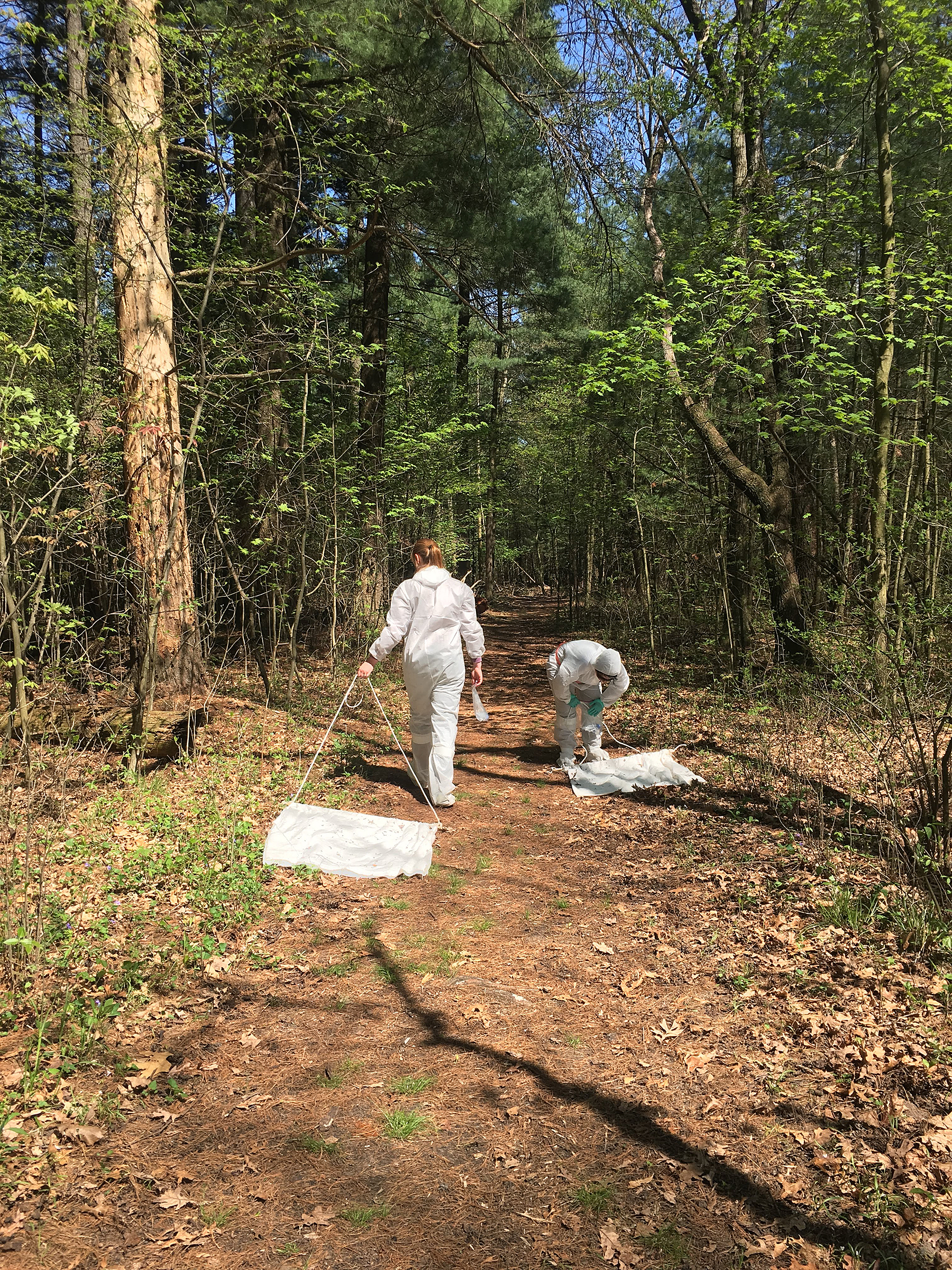
Scientists from Purdue’s Tick INsiders program, Lauren Hagen (left) and Maria Muriga (right), drag and check tick cloths at Tippecanoe River State Park in 2018. The program is looking for high school students and citizen scientists interested in helping with tick collections this year. (Tick INsiders photo)
Purdue University’s Tick INsiders program is looking for Indiana high school students and other Indiana residents willing to roll down their sleeves to get involved in a citizen science project.
Cate Hill, a Purdue professor of entomology, leads this effort to analyze the bacteria and viruses in Indiana’s ticks to build an understanding of what they are carrying and how that might impact human health. To do that, she needs volunteers to collect ticks from all over the state.
This year the Tick INsiders program will provide training for up to 50 students. Citizen scientists are also now welcome to collect and send ticks to Hill’s lab.
“It’s really important work. The Centers for Disease Control and Prevention reports that human cases of tick-borne diseases doubled from 2004 to 2016. If we’re going to get a handle on that and develop strategies for reducing tick bites and treating patients, we need to know where our ticks are and what our ticks are carrying around inside them,” Hill said. “That means we need a lot of ticks, and we need help collecting them.”
Three species of ticks – the blacklegged or deer tick, the lone star tick and the American dog tick – are found in Indiana. These ticks can transmit multiple pathogens, nine of which are known to cause human illnesses, though not all have been identified in Indiana. The Indiana State Department of Health reports more than 100 cases of Lyme disease each year and dozens of cases of Ehrlichiosis, anaplasmosis and Rocky Mountain spotted fever.
Research suggests that ticks can carry a cocktail of microbes – bacteria and viruses – that can sicken bite victims and may work in concert to affect the severity of an illness and human immune response.
“Not all tick bites are the same. We don’t know what is passed from a tick to a human each time someone is bitten, which means that health care professionals may need to consider multiple tick-borne pathogens in a person who has been bitten by a tick,” Hill said. “This program improves our knowledge so that we can improve our outcomes.”
Indiana residents interested in participating can collect ticks and send them to Hill’s lab for analysis. Videos on safe and proper collection techniques, as well as how to send ticks will be at Tick INsiders.
For full article, see Purdue Agriculture News.
Resources
Ticks 101: A Quick Start Guide to Indiana Tick Vectors, The Education Store – Extension Resource
The Biology and Medical Importance of Ticks in Indiana, The Education Store
Mosquitoes, Purdue Extension Entomology
One Small Bite: One Large Problem, Got Nature?, Purdue Extension-Forestry and Natural Resources
Mosquitoes and ticks – little pests carry big risks, Got Nature?
Catherine A Hill, Professor of Entomology/Vector Biology
Purdue University Department of Entomology

Empty cage trap with door open. Image taken by Doug Beckers and courtesy of flickr.com.
Having raccoon, groundhog, or other bothersome wildlife problems? Thinking about setting traps to catch these animals? There is much to consider when using traps. Take a look at the latest publication for best results.
Wildlife specialists Brian MacGowan and Rick Shadel have collaborated to bring you this new publication: Considerations for Trapping Nuisance Wildlife with Box Traps.
Homeowners commonly set traps to capture and remove wildlife from their home or yard. Setting a box trap improperly can decrease their effectiveness and even lead to safety risks to both people and wildlife. The purpose of this publication is to 1) outline the legal and ethical factors homeowners should consider before setting a trap, 2) review the basic procedure for effectively trapping wildlife, and 3) help you to determine the fate of the captured animal.
If you have a serious, dangerous, or a nuisance wildlife issue, you may want to consider hiring a professional. Consider reading this publication before deciding whether or not you need to hire a professional: Selecting a Nuisance Wildlife Control Professional.
Resources
Preventing Wildlife Damage – Do You Need a Permit? – The Education Store, Purdue Extension resource center
Selecting a Nuisance Wildlife Control Professional, The Education Store
How to Construct a Scent Station, The Education Store
Question: How do I properly relocate raccoons from my attic?, Got Nature? Blog, Purdue Extension FNR
Nuisance Wildlife – Indiana Department of Natural Resources
Brian MacGowan, Wildlife Extensions Specialist
Purdue Forestry and Natural Resources
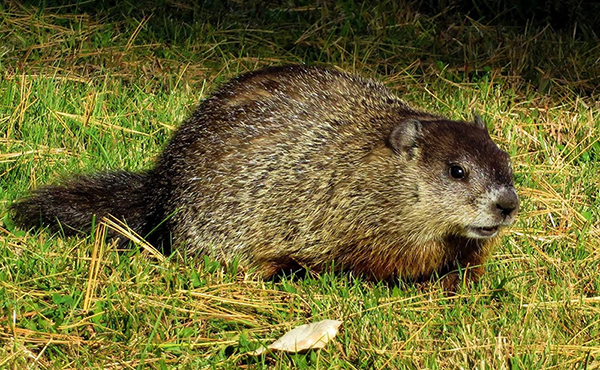 Groundhogs are good at many things, said Brian MacGowan, Purdue University Extension wildlife specialist and Forestry and Natural Resources Extension coordinator, but predicting the weather definitely isn’t one of them.
The lore surrounding Groundhog Day originated in Germany where people used the reactions of badgers and hedgehogs to gauge weather patterns. When the tradition eventually migrated to America, Jarred Brooke, Extension wildlife specialist, said hedgehogs, which can be found throughout the United States, became the mammalian forecaster of choice.
“They’re crafty little critters,” McGowan explains, “which is why they’re found in so many different places. They’re habitat generalists and can live in open woodlands, grasslands, what have you.”
While MacGowan and Brooke agreed groundhogs don’t have a great track-record of weather prediction, other facts make groundhogs one of the more interesting members of the squirrel-family.
For full article see: Groundhogs can’t predict the weather but they do poop underground.
Resources:
Selecting a Nuisance Wildlife Control Professional – The Education Store, Purdue Extension Resource Center
Preventing Wildlife Damage – Do You Need a Permit? – The Education Store
The Basics of Managing Wildlife on Agricultural Lands – The Education Store
Nuisance Wildlife – Indiana Department of Natural Resources
Dealing with nuisance geese this spring – Got Nature?
Animal Damage Management: Woodchucks, The Education Store
Brian MacGowan, Wildlife Extension Specialist
Purdue University, Forestry and Natural Resources
Jarred Brooke, Wildlife Extension Specialist
Purdue University, Forestry and Natural Resources

A large flock of birds flying over a field. Photo: Indiana DNR
The latest Wildlife Bulletin, provided by the Indiana Department of Natural Resources-Division of Fish and Wildlife, has all the Indiana hunting information you need to know along with upcoming events and resources. Topics include: Get your deer licenses now; Deer hunting checklist; Deer processing videos on YouTube; Hunting seasons dates; Four options to check in game; Sandhill crane migration at Jasper-Pulaski; and much more.
The Wild Bulletin is a free email newsletter offering information about Indiana’s fish and wildlife resources and recreation opportunities. Subjects covered include profiles, information about hunting and fishing season dates, regulation updates, wildlife and fisheries research status reports, tips on wildlife watching and reminders about important dates for Hoosier outdoor enthusiasts.
To subscribe to this free e-newsletter visit Wild Bulletin, Indiana Department of Natural Resources.
Other resources:
State Parks, Indiana Department of Natural Resources (IN DNR)
Outdoor Indiana, Indiana Department of Natural Resources (IN DNR)
Indiana Department of Natural Resources
 As a child growing up in rural St. Joe County, I can vividly recall the feeling of excitement when the occasional deer visited our backyard. It’s hard to believe now, but we actually placed salt licks out to attract deer for viewing. I still enjoy the sight of a white-tailed deer, but things are a lot different today – the Internet, iPods, and yes, more deer. Estimating the size of wildlife populations is a difficult task in most cases. Currently, experts estimate about 30 million white-tailed deer throughout its range. There are probably more white-tailed deer in North America today than at the time of European settlement. In Indiana, the total deer harvested today exceeds by many times the numbers harvested during my days of youth in the 1970s.
According to the Insurance Institute for Highway Safety, there are approximately one and a half million deer-vehicle collisions in the United States each year, resulting in about 150 deaths and over $1 billion in vehicle damage. The average claim of these deer-collisions is $3,995.
While deer-vehicle collisions can happen any time of year, October to December is the peak. Most collisions occur from dusk to dawn on high speed rural roads. In Indiana, if a deer dies following a collision with a motor vehicle, a conservation officer, DNR property manager or other law enforcement officer may issue a permit to an individual to possess the deer.
Don’t Waste Your Money
Many tactics have been tried over the years to reduce collisions. Most of these have proved ineffective or at least need more investigation. One common approach that does not work is the deer whistle. Deer whistles are attached to vehicles and emit noises at moderate to fast speeds. The noise presumably warns deer of approaching vehicles, thereby reducing collisions. While manufacturers contend that deer can hear the whistles up to a quarter mile away, published studies have not verified their effectiveness or whether or not deer can even hear them. The lack of deer response to deer whistles may be because deer don’t recognize the sounds as threatening or they have too little time to react.
What can I do?
There is no foolproof way to prevent deer-vehicle collisions. Hunting is the most biologically and economically effective method of maintaining Indiana’s deer herd at an optimal level – all else being equal, less deer translates to reduced probability of hitting a deer. Fencing deer from roadways has been proven most effective at reducing accidents at specific locations, but it is very costly to construct and maintain.
So what do you do? There are some common-sense precautions all drivers can take to reduce the risk of deer-vehicle collisions. The Insurance Information Institute recommends the following driving tips.
- Be vigilant in early morning and evening hours, the most active time for deer.
- Use your high-beam headlights.
- Slow down and blow your horn with one long blast to frighten the deer away.
- Brake firmly when you notice a deer in or near your path. Do not swerve. It can confuse the deer as to where to run. It can also cause you to lose control and hit a tree or another car.
- Be alert and drive with caution when you are moving through a deer crossing zone.
- Obey posted speed limits and always wear your seatbelt. Most people injured in car/deer crashes were not wearing their seatbelt.
- Look for other deer after one has crossed the road. Deer seldom run alone.
Got Nature? Blog post was also published in the IndyStar, How to avoid hitting a deer with your car, and what to do when you can’t.
Brian MacGowan, Extension Wildlife Specialist
Department of Forestry and Natural Resources, Purdue University
Snake fungal disease (SFD), caused by the fungus Ophidiomyces ophiodiicola, is an emerging pathogen of snakes identified in more than 15 genera of captive and free-ranging snakes in 21 states.
SFD is not considered a risk to people.
Some infected snakes show no symptoms. Others develop facial swelling and disfigurement, skin and scale lesions and internal lesions. For some snakes, the disease is fatal.
The fungus can persist in the soil. The route of transmission is unknown, but may occur through contact with soil, other infected snakes, or from mother to offspring.
SFD in Indiana
Researchers from the University of Illinois first identified SFD in Indiana in late 2017 during a surveillance project for the disease.
The researchers swabbed the skin of 53 snakes from 10 Indiana counties. Of those, 13 tested positive for the fungus. Two of those 13 snakes had visible lesions. Species that tested positive included the northern water snake (Nerodia sipedon), racer (Coluber constrictor), milk snake (Lampropeltis triangulum) and queen snake (Regina septemvittata).
The surveillance project was funded by the Indiana Department of Natural Resources State Wildlife Grant T7R22.
Why monitoring SFD is important
Snakes are important predators and play a critical role in maintaining a balanced ecosystem. Having healthy snake populations in Indiana is necessary to keep rodent populations in check.
Documenting the distribution of this disease will help us develop conservation and management plans.
Snake fungal disease may cause high mortality rates in eastern massasauga rattlesnakes (Sistrurus catenatus), a federally threatened and state-endangered species in parts of northern Indiana. The potential long-term effect on populations of massasaugas and other snakes remains uncertain.
Contact an Indiana DNR wildlife biologist if you have any information you would like to share.
For full article view Snake Fungal Disease, Indiana Department of Natural Resources.
Resources:
Snakes and Lizards of Indiana, The Education Store, Purdue Extension’s resource center
Snakes of the Central and Northeastern United States, The Education Store
Indiana Department of Natural Resources (IDNR)
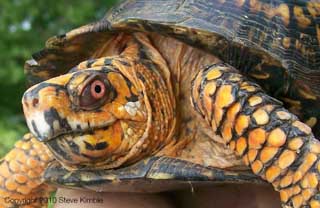
People have been catching wild turtles and selling them as pets, leading to many species becoming endangered. This is very dangerous for the health and survival of the turtle as well as being highly illegal in Indiana. We highly discourage you from taking turtles from their natural habitat and turning them into pets (or any animal for that matter). Here’s a list of reasons why it is not good to make a pet out of a wild turtle and what you can do if you see any turtle miss handling and turtle wrong doing.
Turtles DO NOT make good pets!
Reasons why turtles aren’t good pets:
- Turtles require time and money for proper care, and some species can live up to 50 years.
- Pet turtles do not like to be held and are loners; therefore, they can become boring pets for children.
- Turtles are cold-blooded and need a source of heat. They also require an ultraviolet light for proper growth and health.
- Without this special light, many health issues arise such as metabolic bone disease.
- It is very important to know what kind of species you want and the care it needs before you acquire a pet turtle. Many need special food and tanks.
- Each species has different feeding requirements, with some being strictly carnivores or herbivores. Map turtles, for example, have restricted diets that must include snails, aquatic insects and crayfish. Some species of aquatic turtles, such as the red-eared slider, map turtle and soft-shell, grow up to 12 inches long, requiring a large tank for swimming and basking.
- Land turtles need a large pen, with sufficient substrate, properly sized water bowl, a hide area, as well as heat. Some require more humidity than others.
- If you no longer want your pet turtle, you cannot release into the wild because it is not likely to survive.
- It will have to find its own food, deal with the elements and deal with predators.
- These once-captive turtles are also likely to transmit diseases to wild turtle populations.
- Turtles can carry salmonella bacteria.
- The Centers for Disease Control and Prevention recommend that children, pregnant women, and persons with compromised immune systems avoid contact with reptiles to avoid getting Salmonella.
- The DNR does not encourage the keeping of turtles as pets, but does allow it if the turtle species is obtained legally with a hunting or fishing license.
It is illegal to sell wild turtles
Many native, wild-caught turtles are still sold as pets, even though this practice is illegal in Indiana. The collection of wild turtles has caused many species to become endangered, especially when combined with habitat loss, water pollution and predators. Predators such as raccoons eat a large number of turtle eggs each year, and some species do not even breed until they are several years old, meaning that it can take many years for a population to become established. You can help protect Indiana’s turtles by helping to preserve turtle habitat, especially wetlands, through local conservation organizations or the Indiana Nongame and Endangered Wildlife Program.
Help our endangered turtle species and report any wrong handling, contact DNR Customer Service Center.
For the full article, see Turtles As Pets, Indiana Department of Natural Resources.
Resources:
Turtles of Indiana, The Education Store, Purdue Extension’s resource center
Reptile and Amphibian Regulations, Indiana Department of Natural Resources
Eastern Box Turtle Information, Indiana Department of Natural Resources
Indiana Department of Natural Resources (IDNR)
A color-banded loggerhead shrike found south of Goose Pond FWA in July 2017 successfully raised six young in Davies County this summer. Fledging six young is exceptional for shrikes, which on average fledge 2.6 per nesting attempt.

Loggerhead photo from IDNR
This female is even more special because she is the only one of 12 banded shrikes that hatched last year to be sighted back in Indiana this year. This summer she paired with a male shrike that did not nest in 2017, likely because there were no female shrikes left in his area after steep declines in this songbird’s population.
For more information view the Indiana Department of Natural Resources, Fish and Wildlife, Loggerhead Shrike.
Resources:
Birds and Residential Window Strikes: Tips for Prevention, Got Nature? blog post, Purdue Forestry and Natural Resources (FNR)
Learn How Forests are used by Birds, Got Nature? blog post, FNR
Managing Woodlands for Birds, The Education Store, Purdue Extension’s resource center
Breeding Birds and Forest Management: the Hardwood Ecosystem Experiment and the Central Hardwoods Region, The Education Store
Article from MYDNR Email Newsletter, Indiana Department of Natural Resources
 Trail camera surveys are a great tool that provide a wealth of information about white-tailed deer and other wildlife on your property. You can gather information about deer population density, doe-to-buck ratio, and fawn recruitment, which may ultimately help guide management decisions on your property.
Here are a few tips when conducting a trail camera survey for deer.
Survey design
- Place cameras at a density of 1 camera per 100 acres of property
- Run cameras for 10-14 days
- Check cameras every 4-5 days
- Conduct surveys in the late summer before hunting season or late winter after hunting season
Camera set-up & placement
- Set the camera to the correct date and time
- Turn the burst mode to off
- Set camera to a 5-10 minute delay (the delay can be shorter, but it will result in more pictures that will take longer to analyze)
- Place the camera about waist height (2.5 – 3 feet) above the ground
- Place the bait 10-15 feet from the camera
- Face the camera north or south to avoid over-exposure from the sun
- Place a ID tag on a tree in the view of the camera to differentiate camera locations
Analyzing camera data
When analyzing camera data from a survey, based on antler characteristics you can then determine the number of unique bucks captured during the survey. You also need to determine the total number of bucks, does, and fawns in all the photos. This will help you determine density, doe-to-buck ratios, and fawn recruitment (fawn-to-doe ratio). For easy data analysis check out this Trail Camera Data Computation Form from the Quality Deer Management Association.
Trail camera surveys can be a fun activity for you and your family to do prior to or after the hunting season. They can also provide you with information about deer and other wildlife that are using your property.
*Before conducting a baited camera survey be sure to check the wildlife feeding and baiting laws in your state. For the state of Indiana you can find this information in the Indiana Hunting & Trapping Guide.
Resources:
Conducting Camera Surveys to Estimate Population Characteristics of White-tailed Deer, Mississippi State University Extension
Estimating Deer Populations on Your Property: Camera Survey, University of Missouri Extension
How to Run a Trail-Camera Survey – National Deer Association
Handling Harvested Game: Field Dressing, The Education Store, Purdue Extension resource center
Bovine Tuberculosis in Wild White-tailed Deer, The Education Store
Jarred Brooke, Extension Wildlife Specialist
Department of Forestry & Natural Resource, Purdue University
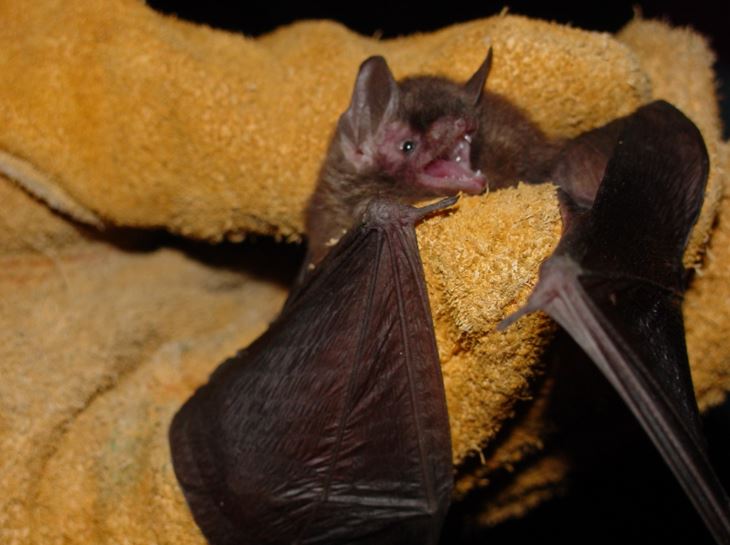 At different times of the year, I get questions about bats in structures. Bats are a timely issue towards the end of summer because young bats will soon be able to fly. Excluding bats from structures is limited to this time. This process is typically called “venting” where access points (both in use and potential) are identified, most are sealed off, and the remaining points are fitted with one-way doors that allow bats to leave but not reenter. If only the opening they use is sealed off, they will simply use another entry point. Think of it this way – our houses have multiple points of entry, but you may only use one. You will use another if necessary.
Bats can make their way into a house in a number of ways – gaps between siding and chimney, gaps between roof sheathing and fascia board, etc. New and old construction alike. Eliminating access to all of these small, potential points of access can be a challenge. The bodies of some bat species are as small as your thumb. Even though you don’t have an attic, there are still spaces inside a structure where bats can live.
Bats are one of the most difficult wildlife conflicts to deal with because of the nature of their habits. They can pass through extremely small openings, move throughout the inside of a structure, and often entre/occupy hard to reach areas. Bat exclusion is not an activity I recommend for most homeowners. There is a skill necessary to find and seal all possible access points. Since most of these are located high above ground and accessing these points can require special ladders, lifts and other safety equipment.
Having bats in the attic isn’t simply a nuisance issue, but also can be a safety issue. Like Most wildlife carry diseases. With bats, histoplasmosis and rabies are the two that are the ones most concern for people with bats in their homes. The Center of Disease Control (CDC) has good information on these and other diseases. Fleas that live on bats can also be vectors for disease. It is always a good idea to limit exposure to wildlife animals as much as possible. For bats, venting in the end of summer and fall and preventing reentry is a logical first step.
If you have bats and want to solve the problem now is the time to contact professionals who can help. Unfortunately, most nuisance wildlife control operators don’t do bat work because it requires specialized equipment and the difficulty of it. Because of that, control will not be cheap for the customer. Many people construct bat houses to attract bats. While beneficial, artificial bat houses will not attract bats from an attic.
Resources:
Selecting a Nuisance Wildlife Control Professional, The Education Store-Purdue Extension’s resource center
Bats in Indiana, Indiana Department of Natural Resources (IDNR)
Bat Houses, Bat Conservation International
Brian J. MacGowan, Extension Wildlife Specialist
Department of Forestry & Natural Resources, Purdue University

Recent Posts
- Beetle that attacks Tree-of-Heaven found in Indiana, Purdue Landscape Report
Posted: March 20, 2026 in Invasive Insects, Wildlife, Woodlands - ID That Tree: Dwarf Chinkapin Oak
Posted: in Forestry, Urban Forestry, Wildlife, Woodlands - DNR Hiring for Indiana Conservation Officer Positions, MyDNR
Posted: March 9, 2026 in Urban Forestry, Wildlife, Woodlands - ID That Tree: Shumard Oak
Posted: in Plants, Urban Forestry, Wildlife, Woodlands - Uniting Indiana Residents Against Invasive Species
Posted: February 27, 2026 in Community Development, Invasive Insects, Wildlife - Have You Seen a Soaring Eagle Lately? Morning Ag Clips
Posted: February 25, 2026 in Urban Forestry, Wildlife - Register for Natural Resources Teacher Institute’s Class of 2026
Posted: February 19, 2026 in Forestry, Wildlife, Woodlands - ID That Tree: Fragrant Sumac
Posted: February 4, 2026 in Plants, Urban Forestry, Wildlife - Woodsy Owl Edition for Educational Learning, USDA – U.S. Forest Service
Posted: January 21, 2026 in Forestry, Forests and Street Trees, Got Nature for Kids, Urban Forestry, Wildlife - Opt-in to the Deer Management Survey, MyDNR
Posted: January 12, 2026 in Forestry, Wildlife
Archives
Categories
- Alert
- Aquaculture/Fish
- Aquatic/Aquaculture Resources
- Ask the Expert
- Christmas Trees
- Community Development
- Disease
- Drought
- Forestry
- Forests and Street Trees
- Gardening
- Got Nature for Kids
- Great Lakes
- How To
- Invasive Animal Species
- Invasive Insects
- Invasive Plant Species
- Land Use
- Natural Resource Planning
- Nature of Teaching
- Plants
- Podcasts
- Ponds
- Publication
- Safety
- Spiders
- Timber Marketing
- Uncategorized
- Urban Forestry
- Webinar
- Wildlife
- Wood Products/Manufacturing
- Woodland Management Moment
- Woodlands