 Purdue University - Extension - Forestry and Natural Resources
Got Nature? Blog
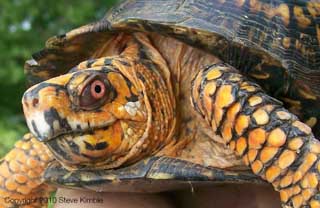
People have been catching wild turtles and selling them as pets, leading to many species becoming endangered. This is very dangerous for the health and survival of the turtle as well as being highly illegal in Indiana. We highly discourage you from taking turtles from their natural habitat and turning them into pets (or any animal for that matter). Here’s a list of reasons why it is not good to make a pet out of a wild turtle and what you can do if you see any turtle miss handling and turtle wrong doing.
Turtles DO NOT make good pets!
Reasons why turtles aren’t good pets:
- Turtles require time and money for proper care, and some species can live up to 50 years.
- Pet turtles do not like to be held and are loners; therefore, they can become boring pets for children.
- Turtles are cold-blooded and need a source of heat. They also require an ultraviolet light for proper growth and health.
- Without this special light, many health issues arise such as metabolic bone disease.
- It is very important to know what kind of species you want and the care it needs before you acquire a pet turtle. Many need special food and tanks.
- Each species has different feeding requirements, with some being strictly carnivores or herbivores. Map turtles, for example, have restricted diets that must include snails, aquatic insects and crayfish. Some species of aquatic turtles, such as the red-eared slider, map turtle and soft-shell, grow up to 12 inches long, requiring a large tank for swimming and basking.
- Land turtles need a large pen, with sufficient substrate, properly sized water bowl, a hide area, as well as heat. Some require more humidity than others.
- If you no longer want your pet turtle, you cannot release into the wild because it is not likely to survive.
- It will have to find its own food, deal with the elements and deal with predators.
- These once-captive turtles are also likely to transmit diseases to wild turtle populations.
- Turtles can carry salmonella bacteria.
- The Centers for Disease Control and Prevention recommend that children, pregnant women, and persons with compromised immune systems avoid contact with reptiles to avoid getting Salmonella.
- The DNR does not encourage the keeping of turtles as pets, but does allow it if the turtle species is obtained legally with a hunting or fishing license.
It is illegal to sell wild turtles
Many native, wild-caught turtles are still sold as pets, even though this practice is illegal in Indiana. The collection of wild turtles has caused many species to become endangered, especially when combined with habitat loss, water pollution and predators. Predators such as raccoons eat a large number of turtle eggs each year, and some species do not even breed until they are several years old, meaning that it can take many years for a population to become established. You can help protect Indiana’s turtles by helping to preserve turtle habitat, especially wetlands, through local conservation organizations or the Indiana Nongame and Endangered Wildlife Program.
Help our endangered turtle species and report any wrong handling, contact DNR Customer Service Center.
For the full article, see Turtles As Pets, Indiana Department of Natural Resources.
Resources:
Turtles of Indiana, The Education Store, Purdue Extension’s resource center
Reptile and Amphibian Regulations, Indiana Department of Natural Resources
Eastern Box Turtle Information, Indiana Department of Natural Resources
Indiana Department of Natural Resources (IDNR)
A color-banded loggerhead shrike found south of Goose Pond FWA in July 2017 successfully raised six young in Davies County this summer. Fledging six young is exceptional for shrikes, which on average fledge 2.6 per nesting attempt.

Loggerhead photo from IDNR
This female is even more special because she is the only one of 12 banded shrikes that hatched last year to be sighted back in Indiana this year. This summer she paired with a male shrike that did not nest in 2017, likely because there were no female shrikes left in his area after steep declines in this songbird’s population.
For more information view the Indiana Department of Natural Resources, Fish and Wildlife, Loggerhead Shrike.
Resources:
Birds and Residential Window Strikes: Tips for Prevention, Got Nature? blog post, Purdue Forestry and Natural Resources (FNR)
Learn How Forests are used by Birds, Got Nature? blog post, FNR
Managing Woodlands for Birds, The Education Store, Purdue Extension’s resource center
Breeding Birds and Forest Management: the Hardwood Ecosystem Experiment and the Central Hardwoods Region, The Education Store
Article from MYDNR Email Newsletter, Indiana Department of Natural Resources
 Trail camera surveys are a great tool that provide a wealth of information about white-tailed deer and other wildlife on your property. You can gather information about deer population density, doe-to-buck ratio, and fawn recruitment, which may ultimately help guide management decisions on your property.
Here are a few tips when conducting a trail camera survey for deer.
Survey design
- Place cameras at a density of 1 camera per 100 acres of property
- Run cameras for 10-14 days
- Check cameras every 4-5 days
- Conduct surveys in the late summer before hunting season or late winter after hunting season
Camera set-up & placement
- Set the camera to the correct date and time
- Turn the burst mode to off
- Set camera to a 5-10 minute delay (the delay can be shorter, but it will result in more pictures that will take longer to analyze)
- Place the camera about waist height (2.5 – 3 feet) above the ground
- Place the bait 10-15 feet from the camera
- Face the camera north or south to avoid over-exposure from the sun
- Place a ID tag on a tree in the view of the camera to differentiate camera locations
Analyzing camera data
When analyzing camera data from a survey, based on antler characteristics you can then determine the number of unique bucks captured during the survey. You also need to determine the total number of bucks, does, and fawns in all the photos. This will help you determine density, doe-to-buck ratios, and fawn recruitment (fawn-to-doe ratio). For easy data analysis check out this Trail Camera Data Computation Form from the Quality Deer Management Association.
Trail camera surveys can be a fun activity for you and your family to do prior to or after the hunting season. They can also provide you with information about deer and other wildlife that are using your property.
*Before conducting a baited camera survey be sure to check the wildlife feeding and baiting laws in your state. For the state of Indiana you can find this information in the Indiana Hunting & Trapping Guide.
Resources:
Conducting Camera Surveys to Estimate Population Characteristics of White-tailed Deer, Mississippi State University Extension
Estimating Deer Populations on Your Property: Camera Survey, University of Missouri Extension
How to Run a Trail-Camera Survey – National Deer Association
Handling Harvested Game: Field Dressing, The Education Store, Purdue Extension resource center
Bovine Tuberculosis in Wild White-tailed Deer, The Education Store
Jarred Brooke, Extension Wildlife Specialist
Department of Forestry & Natural Resource, Purdue University
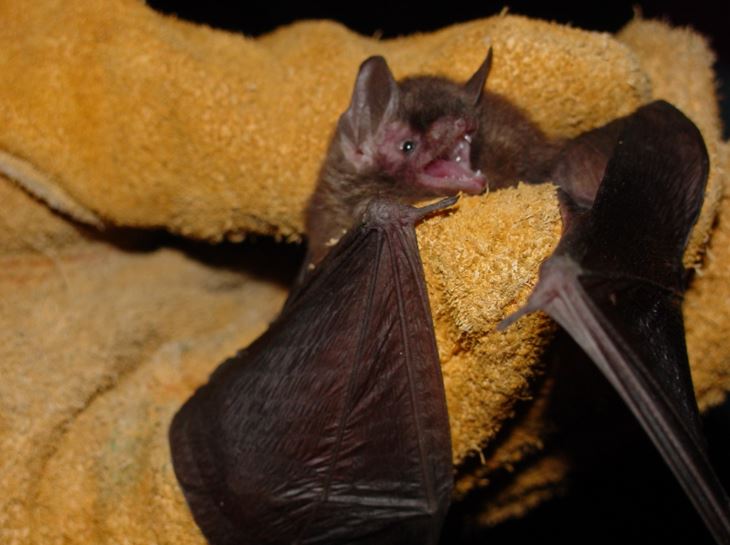 At different times of the year, I get questions about bats in structures. Bats are a timely issue towards the end of summer because young bats will soon be able to fly. Excluding bats from structures is limited to this time. This process is typically called “venting” where access points (both in use and potential) are identified, most are sealed off, and the remaining points are fitted with one-way doors that allow bats to leave but not reenter. If only the opening they use is sealed off, they will simply use another entry point. Think of it this way – our houses have multiple points of entry, but you may only use one. You will use another if necessary.
Bats can make their way into a house in a number of ways – gaps between siding and chimney, gaps between roof sheathing and fascia board, etc. New and old construction alike. Eliminating access to all of these small, potential points of access can be a challenge. The bodies of some bat species are as small as your thumb. Even though you don’t have an attic, there are still spaces inside a structure where bats can live.
Bats are one of the most difficult wildlife conflicts to deal with because of the nature of their habits. They can pass through extremely small openings, move throughout the inside of a structure, and often entre/occupy hard to reach areas. Bat exclusion is not an activity I recommend for most homeowners. There is a skill necessary to find and seal all possible access points. Since most of these are located high above ground and accessing these points can require special ladders, lifts and other safety equipment.
Having bats in the attic isn’t simply a nuisance issue, but also can be a safety issue. Like Most wildlife carry diseases. With bats, histoplasmosis and rabies are the two that are the ones most concern for people with bats in their homes. The Center of Disease Control (CDC) has good information on these and other diseases. Fleas that live on bats can also be vectors for disease. It is always a good idea to limit exposure to wildlife animals as much as possible. For bats, venting in the end of summer and fall and preventing reentry is a logical first step.
If you have bats and want to solve the problem now is the time to contact professionals who can help. Unfortunately, most nuisance wildlife control operators don’t do bat work because it requires specialized equipment and the difficulty of it. Because of that, control will not be cheap for the customer. Many people construct bat houses to attract bats. While beneficial, artificial bat houses will not attract bats from an attic.
Resources:
Selecting a Nuisance Wildlife Control Professional, The Education Store-Purdue Extension’s resource center
Bats in Indiana, Indiana Department of Natural Resources (IDNR)
Bat Houses, Bat Conservation International
Brian J. MacGowan, Extension Wildlife Specialist
Department of Forestry & Natural Resources, Purdue University
Collisions with man-made structures are one of the primary causes of bird mortality. In fact, up to a billion birds are killed each year in the United States due to window strikes. Approximately 50% of the time, these strikes result in death.
This publication offers practical, researched, do-it-yourself tips to limit bird collisions at your residence – many of which can be implemented at little or no cost. It also outlines best practices for what to do if and when a bird strike occurs.
To view this full publication please go to Birds and Residential Window Strikes: Tips for Prevention at The Education Store.
Resources
Learn how forests are used by birds new videos, Got Nature? Blog
Managing Woodlands for Birds, The Education Store-Purdue Extension resource center
Jennifer Antonides, Graduate Research Assistant
Purdue Forestry and Natural Resources
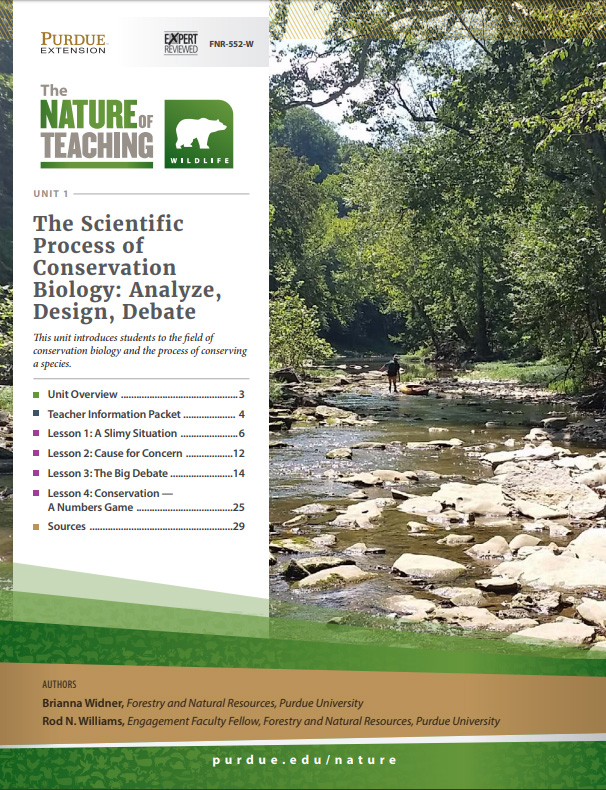 Conservation biology is considered by some to be a “crisis discipline.” Decisions within the field must often be made quickly, sometimes without enough time to gather all of the data one would ideally have, and they can decide the fate of a species. This Nature of Teaching unit titled “the Scientific Process of Conservation Biology: Analyze, Design, Debate,” introduces students to the field of conservation biology and the process of conserving a species. It includes 4 lessons and 4 case studies as well as a teacher information section and list of sources. Students will learn how to: analyze literature, graphs, and figures to discern factors threatening a species; identify different careers involved in conservation biology; learn how to edit, revise an original management plan to better comprehend the iterative process of science; and much more.
To view this free complete unit see: The Scientific Process of Conservation Biology: Analyze, Design, Debate, The Education Store, Purdue Extension.
Resources:
Health & Wellness Lesson Plans, Nature of Teaching
Wildlife Lesson Plans, Nature of Teaching
Food Waste Lesson Plans, Nature of Teaching
Briana Widner, student
Purdue University Department of Forestry and Natural Resources
Rod N Williams, Engagement Faculty Fellow & Associate Professor of Wildlife Science
Purdue University Department of Forestry and Natural Resources
If you care about wild animals, let them be wild. Most young wild animals you encounter are not orphaned. What may seem like an abandoned animal is normal behavior for most wildlife, to avoid predators. Picking up a wild animal you think is orphaned or abandoned is unnecessary and can be harmful to the animal or you.
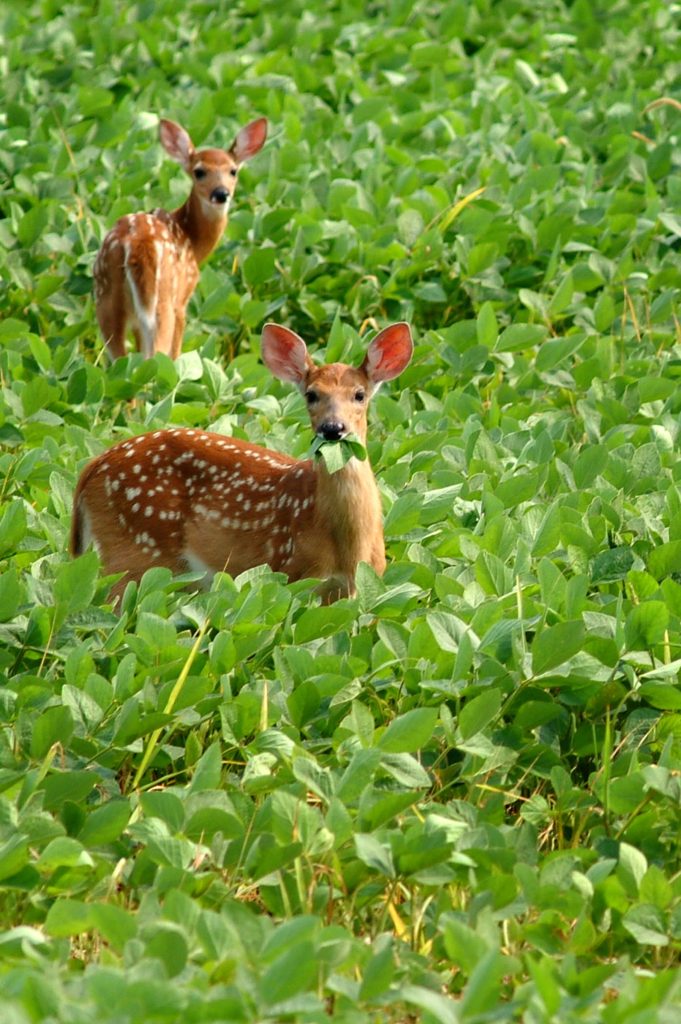 If you find a wild animal that is truly abandoned, sick or injured, here is what you can do:
- Leave it alone, in its natural environment. Don’t turn wildlife into pets.
- Call a licensed wild animal rehabilitator who is trained in caring for wild animals.
- If the animal is sick or severely injured, call a licensed veterinarian.
Resources:
Mammals of Indiana, J.O. Whitker and R.E. Mumford
Common Indiana Mammals, The Nature of Teaching, The Education Store-Purdue Extension’s resource center
Orphaned and Injured Animals, Indiana Department of Natural Resources (IDNR)
MyDNR Indiana’s Outdoor News, Indiana Department of Natural Resources
Question: This little guy lives around our house. We see him almost daily. Do you know what he is? Salamander? Skink? Lizard?
The animal pictured is both a lizard and a skink – specifically, a Common Five-lined Skink. More than 1,200 species of skinks are distributed worldwide. Most are medium-sized lizards with body lengths typically ranging 4-12 centimeters. Skinks are active and alert lizards covered with smooth overlapping scales on the sides and back.
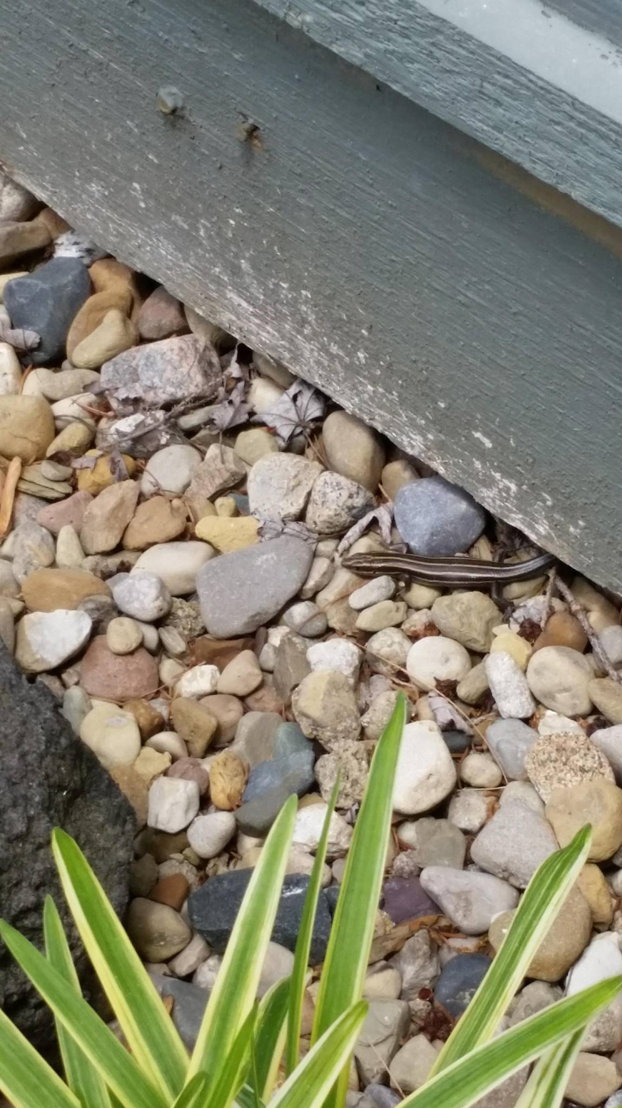
Common Five-lined Skinks are usually 5-7 centimeters in body length(12-21 cm total length) and have smooth overlapping scales. Their heads are distinct from their necks and ear openings are smaller than the eyes. Physical characteristics of Common Five-lined Skinks vary by sex and age. Juveniles have bright blue tails and shiny black bodies marked with five yellow longitudinal stripes. Adult males are uniformly brown and develop wider heads, with red to orange coloration on the snout and jaws. Very faint stripes also might be visible on some adult males. Adult females have brownish bodies marked with five yellowish to cream longitudinal stripes and sometimes have a hint of bluish tail.
Throughout most of Indiana, Common Five-lined Skinks are a common species of open woodlands and edges where stumps, logs, woody debris, and rock piles are present. Porches and rock cover around homes and driveways offer good habitat for these lizards. Areas like these offer hiding places, areas to bask in the sun, and food. Most activity occurs on or near the ground, although they occasionally will climb trees. Their active season extends from April to October. Five-lined Skinks actively pursue a variety of invertebrates including insects, spiders and millipedes.
Resources:
Snakes and Lizards of Indiana, The Education Store, Purdue Extension’s resource center
How can I tell if a snake is venomous, Purdue Extension-Forestry and Natural Resources
Brian MacGowan, Extension Wildlife Specialist
Department of Forestry & Natural Resources, Purdue University
As climate change and habitat destruction become more of a public concern, the popularity the Animal Planet channel has grown as it seeks to educate viewers about the importance of wildlife preservation and the role human interaction has in these habitats. The network now shows a variety of programming ranging from survival shows to conservation and management of wildlife.
Wildlife shows such as ‘The Crocodile Hunter’, ‘River Monsters’, and ‘The Zoo’ emphasize the efforts of biologists, wildlife researchers, and zookeepers involved with wildlife to the general public. More recent shows such as ‘Lone Starr Law’, ‘North Wood Law’, and ‘Rugged Justice’ show how Fish and Wildlife Game Wardens enforce laws (Federal and State) that protect aquatic, avian and terrestrial life.
The National Park Service mission, as directed by the Organic Act of 1916 is “to conserve the scenery, natural and historic objects, and the wildlife therein and to provide for the enjoyment of the same in such manner and by such means as will leave them unimpaired for the enjoyment of future generations.” Wildlife biologists/researchers and park managers require extensive information on the species within a habitat to best protect and conserve native wildlife. These data can then be used by managers to devise and implement strategies that will provide future protection of wildlife from invasive species as well as human-induced stresses (air and water pollution, deforestation and habitat encroachment).
Several methods for monitoring wildlife are employed by wildlife researchers in order to track animal movements and determine home range size within a particular habitat. For herding populations such as elk and deer, aircraft are used. For solitary animals such as bears and mountain lions, radio-telemetry can be used. A remote/trail camera (the most non-invasive tool for wildlife research) allows wildlife researchers to observe these animals in their natural habitat without disturbing them (our presence modifies the behavior of many species), answering the question of “What’s present when we are not there?” As an efficient and cost-effective way to supplement or replace human observers, remote wildlife viewing camera systems are used worldwide to document species presence and distribution addressing a variety of research and management objectives.
One of the most promising times to observe trail cameras is during the spring when many species have their young. A popular viewing request is to watch raptors, hummingbirds, and songbirds raise their young. Indiana and other nearby states have erected several high-definition cameras that allow real-time observations of some of these and other native species.
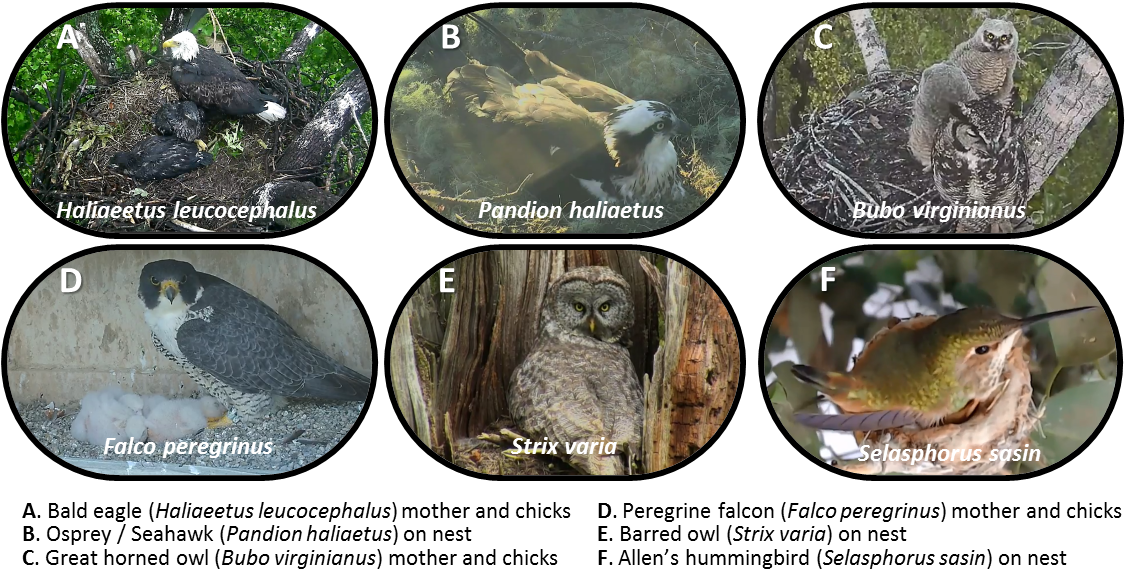
These cameras typically run 24/7 and allow viewers to see eggs hatching and parents feeding their young. There are also cameras within zoos nationwide, along waterways, and in fields to catch glimpses of other animals. If you are unable to venture into the field and want close-up views of some of our majestic wildlife. A host of different online sources are available for you to view animals in their natural habitat or those animals that may be housed in sanctuaries or zoos. Check out the cameras below to start or go to https://explore.org for more great species to watch.
- Indiana Barn Owl cam (https://www.in.gov/dnr/fishwild/8183.htm)
As technology improves and operation costs decrease, use of trail cameras is becoming an increasingly more valuable tool as it gives a more definitive view of the pressures (both natural and human-induced) that wildlife face in their natural habitat. Information collected about wildlife in parks can be as simple as confirmation of the presence of a species or as detailed as the average number of young produced per female per year. If you come across a trail camera in a park or anywhere on public land, recognize the potential for sensitive wildlife habitat in the area and leave them undisturbed.
References:
Wildlife Monitoring and Wildlife Viewing Camera Systems, National Park Service
Resources:
Zoos Work with Purdue University for Hellbender Conservation Efforts, Got Nature?, Purdue FNR-Extension
Shaneka Lawson, USDA Forest Service/HTIRC Research Plant Physiologist/Adjunct Assistant Professor
Purdue University Department of Forestry and Natural Resources
White-nose syndrome is a fatal disease that has devastated bat populations in parts of the United States and Canada. In a recent study published by the USDA Forest Service Northern Research Station, a surprising result regarding treatment and eradication of Pseudogymnoascus destructans, the psychrophilic fungus that causes white-nose syndrome, was obtained. When exploring the disease using genetic methods, it was noted that exposure to UV-light kills Pseudogymnoascus destructans.

The primary scientists involved in these studies are USDA scientists Jon Palmer (Research Botanist based in Madison, WI) and Daniel Lindner (Research Plant Pathologist based in Madison, WI) and University of New Hampshire scientists Kevin P. Drees and Jeffery T. Foster. These scientists initially noted P. destructans only infected bats during hibernation because the fungus has rigid temperature requirements for growth 39-68 °F. It was later noted that the fungus is unable to repair DNA damage done by UV light. This early study was funded by the US Fish and Wildlife Service and published in Nature Communications. It went on to explain that the fungus likely evolved with bat species in Europe and Asia allowing them to evolve defenses against the fungus while American bats have no defense. However, a moderate dose of UV-C light for a few seconds results in <1% survival of the fungus.
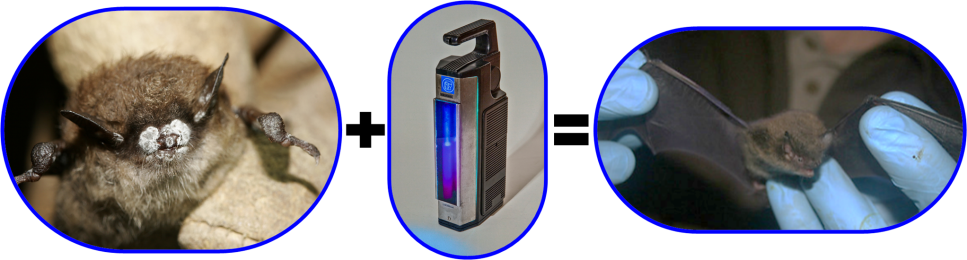
Research on this topic is ongoing, with additional funds provided by Bats for the Future to examine survival of little brown bat colonies exposed to UV-C light during hibernation compared to unexposed colonies. The study will also examine potential non-target effects such as changes in bat skin microbes and bacteria. This breakthrough could lead to the long-term survival of our bat colonies.
References
Online article: https://www.sciencedaily.com/releases/2018/01/180102153209.htm
Publication: Jonathan M. Palmer, Kevin P. Drees, Jeffrey T. Foster, Daniel L. Lindner. Extreme sensitivity to ultraviolet light in the fungal pathogen causing white-nose syndrome of bats. Nature Communications, 2018; 9 (1) DOI: 10.1038/s41467-017-02441-z
Resources:
Night Time is the Right Time to Look for Bats, Research on White Nose Syndrome – Dr. Pat Zollner
Shaneka Lawson, USDA Forest Service/HTIRC Research Plant Physiologist/Adjunct Assistant Professor
Purdue University Department of Forestry and Natural Resources

Recent Posts
- Purdue Extension’s Regional Teams Are Here: Connecting Communities with Expertise and Opportunity
Posted: October 14, 2026 in Community Development, Forestry, Forests and Street Trees, Gardening, How To, Timber Marketing, Urban Forestry, Wildlife, Woodlands - Deer and Turkey Archery Seasons Opening Soon, MyDNR
Posted: October 13, 2026 in Alert, Safety, Wildlife - Distinguishing Dogwoods
Posted: in Forestry, Urban Forestry, Wildlife, Woodlands - Can I Plant Trees in the Fall?
Posted: October 12, 2026 in Forestry, How To, Land Use, Plants, Urban Forestry, Wildlife - Publication Helps Midwest Fish Producers “Catch a Following” with Consumers
Posted: in Aquaculture/Fish, Aquatic/Aquaculture Resources, Wildlife - Minecraft Meets the Hellbender
Posted: September 22, 2026 in Aquaculture/Fish, Aquatic/Aquaculture Resources, Wildlife - What You Plant Matters to Wildlife
Posted: September 16, 2026 in Plants, Urban Forestry, Wildlife - Woodland Flowers of Late Summer
Posted: September 14, 2026 in Forestry, Gardening, Wildlife, Woodlands - Heavy August Rains Bring More Mosquitoes to Indiana
Posted: September 9, 2026 in How To, Invasive Insects, Safety, Wildlife - New Indiana Woodland Steward Newsletter
Posted: August 12, 2026 in Forestry, Urban Forestry, Wildlife, Woodlands
Archives
Categories
- Alert
- Aquaculture/Fish
- Aquatic/Aquaculture Resources
- Ask the Expert
- Christmas Trees
- Community Development
- Disease
- Drought
- Forestry
- Forests and Street Trees
- Gardening
- Got Nature for Kids
- Great Lakes
- How To
- Invasive Animal Species
- Invasive Insects
- Invasive Plant Species
- Land Use
- Natural Resource Planning
- Nature of Teaching
- Plants
- Podcasts
- Ponds
- Publication
- Safety
- Spiders
- Timber Marketing
- Urban Forestry
- Webinar
- Wildlife
- Wood Products/Manufacturing
- Woodland Management Moment
- Woodlands