 Purdue University - Extension - Forestry and Natural Resources
Got Nature? Blog
You may have many reasons why you want to plant trees on your land and this webinar Conservation Tree Planting will help you as you define your objectives and plan your planting. This webinar explains the difference between conservation tree planting and ornamental or landscape tree planting. The research based techniques and resources shared will help guide you as you work toward meeting your goals.
Lenny Farlee, Purdue extension forester, discusses topics including:
- reforestation
- tree species
- growth rates
- ordering seedlings
- weed control/herbicides
- equipment
- erosion control
- windbreaks
- soil health
- post-planting care/thinning
- fencing options
- wildlife habitat management
We Want to Hear From You:
After you have viewed the webinar please fill out the Qualtrics Survey and let us know if the video was helpful.
Resources:
Resources and Assistance Available for Planting Hardwood Seedlings, The Education Store, Purdue Extension’s resource center
Creating a Wildlife Habitat Management Plan for Landowners, The Education Store
Planting Forest Trees and Shrubs in Indiana, The Education Store
Forest Improvement Handbook, The Education Store
How to Build a Plastic Mesh Deer Exclusion Fence, The Education Store
Woodland Stewardship for Landowners Purdue Extension – Forestry & Natural Resources (FNR) Extension YouTube Playlist
Woodland Management Moment, Purdue Extension – FNR YouTube Playlist
Lenny Farlee, Sustaining Hardwood Extension Specialist
Purdue University Department of Forestry and Natural Resources
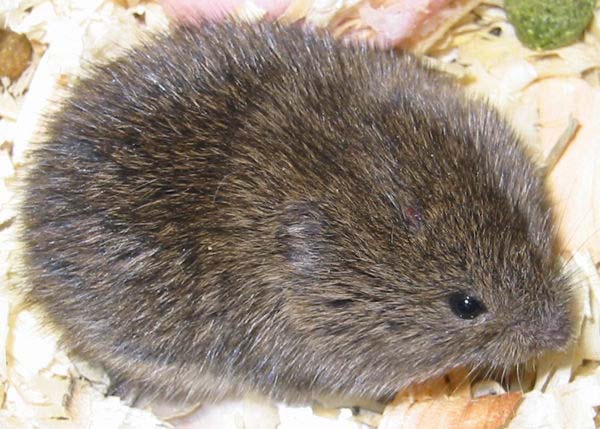 Question: I’m interested in doing regeneration planting of oaks and hickories on my property, and have made attempts with both direct seeding, as well as starting in Rootmaker containers and then planting the seedlings after one year of growth. I have been having a major problem with voles, despite my best attempts at barriers, and am wondering if there is anyone who would be able to advise me?
As an example, I had a black oak seedling, one year old, with great growth, about 18″ tall and with a root ball of comparable size, which I planted this fall. After 2-3 months, in December, the entire root system was eaten and all that remained of the seedling was the stalk, with clear gnaw-marks where it had been chewed off at the base. It was protected by a wire mesh enclosure that covered all sides plus the top, and was set about four inches into the ground. The mesh was finer than the standard chicken wire; the openings were about dime-size.
I would appreciate any guidance your experts can share.
Answer: Based on your description, it certainly sounds like pine (=woodland) voles, Microtus pinetorum, although trapping would be needed to confirm. I am no longer doing work on voles, but earlier work, Selective Feeding of Pine Voles on Roots of Seedlings, showed that they really do like roots of oak seedlings.
When I want to exclude small mammals, I use ¼ inch mesh size or smaller. One other approach I’ve used with success is to create an “apron” of hardware cloth underground and extending outward several inches from the cylinder. Since pine voles create tunnels below the ground surface, this isn’t a guarantee of exclusion, but it certainly should discourage them.
If the problem is too severe for you to tolerate, a rodenticide bait such as zinc phosphide is another option. Thiram is a repellent that could be used – like all repellents, it has variable and short-term effectiveness (but still tends to be better than other commercial products).
The following link offers some practical tips on voles and vole control, including trapping to verify that voles are present, and methods of scouting and treating with rodenticide to reduce exposure risk to other nontarget wildlife and pets, Controlling Voles in Horticulture Plantings and Orchards in Missouri, University of Missouri Extension.
Resources:
Voles!, Purdue Extension-Agronomy
Voles (remember the V), Turfgrass Science, Purdue Horticulture & Landscape Architecture
Dealing with Mole Damage in Your Yard video, Purdue Extension-Forestry & Natural Resources YouTube Channel
Orphaned Wildlife, Got Nature? blog
A Template for Your Wildlife Habitat Management Plan, The Education Store, Purdue Extension resource center
Forest Improvement Handbook, The Education Store
Wildlife Habitat Hint, Purdue Extension – Forestry & Natural Resources (FNR) YouTube Playlist
Conservation Tree Planting: Steps to Success, Purdue Extension – FNR YouTube Video
Woodland Stewardship for Landowners, Purdue Extension – FNR YouTube Playlist
Woodland Management Moment, Purdue Extension – FNR YouTube Playlist
Rob Swihart, Professor of Wildlife Ecology
Department of Forestry and Natural Resources, Purdue University
The classic and trusted book “Fifty Common Trees of Indiana” by T.E. Shaw was published in 1956 as a user-friendly guide to local species. Nearly 70 years later, the publication has been updated through a joint effort by the Purdue Department of Forestry and Natural Resources, Indiana 4-H, and the Indiana Department of Natural Resources, and reintroduced as “An Introduction to Trees of Indiana.”
The full publication is available for download for $7 in the Purdue Extension Education Store. The field guide helps identify common Indiana woodlot trees.
Each week, the Intro to Trees of Indiana web series will offer a sneak peek at one species from the book, paired with an ID That Tree video from Purdue Extension forester Lenny Farlee to help visualize each species as it stands in the woods. Threats to species health as well as also insight into the wood provided by the species, will be provided through additional resources as well as the Hardwoods of the Central Midwest exhibit of the Purdue Arboretum, if available. 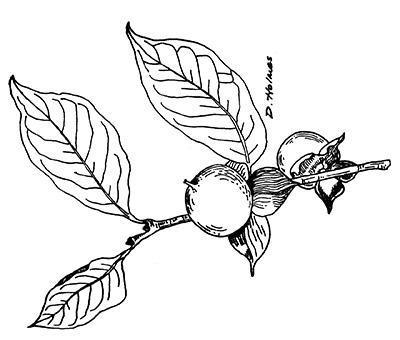
This week, we meet the persimmon or Diospyros virginiana, one of Indiana’s fruit producing trees.
The alternately held leaves of persimmon are oval shaped with smooth margins, with no lobes or teeth. The thick dark green leaves turn yellow or reddish-purple in the fall. The buds are dark colored, while leaf stems are light brown.
The bark resembles alligator hide with deep broken ridges, often with an orange coloring between the ridges.
The fruit, a pumpkin orange colored fleshy plum-like fruit, is a standout characteristic and is favored by both wildlife and humans. Once it ripens and falls from the tree, persimmon is soft and sweet. If picked from the tree, this fruit can be green, very hard, gummy in texture and acidic. The seed count in persimmon is variable with some seedless varieties and some with as many as 10 seeds.
Persimmon trees, which grow 35 to 60 feet tall, are native to southern Indiana but can be found planted across the state. This species grows best in full sun and in moist, well-drained soils, but are tolerant of alkaline soil, clay, dry sites, and occasional drought. The natural range of the persimmon is the lower Midwest and southeastern United States reaching up into southern Illinois.
For full article with additional photos view: Intro to Trees of Indiana: Persimmon, Forestry and Natural Resources’ News.
If you have any questions regarding wildlife, trees, forest management, wood products, natural resource planning or other natural resource topics, feel free to contact us by using our Ask an Expert web page.
Other Resources:
Hardwoods of the Central Midwest: Persimmon
ID That Tree: Persimmon
Morton Arboretum: Persimmon
Persimmons, The Education Store
Persimmon, Native Trees of Indiana River Walk, Purdue Fort Wayne
The Woody Plant Seed Manual, U.S. Forest Service
Fifty Common Trees of Indiana
An Introduction to Trees of Indiana
Native Trees of the Midwest, The Education Store
Shrubs and Woody Vines of Indiana and the Midwest, The Education Store
Investing in Indiana Woodlands, The Education Store
Forest Improvement Handbook, The Education Store
ID That Tree, Purdue Extension-Forestry & Natural Resources (FNR) YouTube playlist
Woodland Management Moment , Purdue Extension-FNR YouTube playlist
Wendy Mayer, FNR Communications Coordinator
Purdue University Department of Forestry and Natural Resources
Lenny Farlee, Sustaining Hardwood Extension Specialist
Purdue University Department of Forestry and Natural Resources
Wild Bulletin, IN DNR Fish and Wildlife: Bobcats, the only resident native wild cat in Indiana, are common in southern and parts of central Indiana, and increasing in northern Indiana. They are rarely seen because of their ability to blend into their surroundings and move silently.
Bobcats have been reported from almost every Indiana county but are most common in southern and west-central Indiana. A study conducted by the DNR in south-central Indiana revealed that bobcats are capable of dispersing up to 100 miles from where they were born. The DNR collects reports of bobcat sightings, trail-camera photos, and mortalities. Bobcat reports are also collected through the annual Archer’s Index, in which volunteer deer bow hunters report the number of hours they hunted and the species they saw while hunting. Snapshot Indiana, a citizen-science trail-camera survey, also helps document bobcat presence in some areas.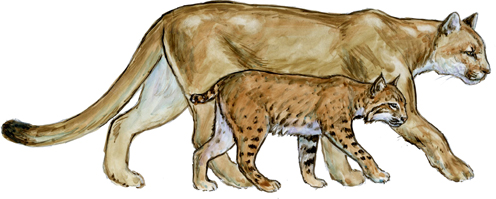
Bobcats prefer forested areas that have brushy areas, fields, or clear cuts that are beginning to regrow mixed in. Female bobcat home ranges may vary from 6–12 square miles, and male bobcat home ranges may vary from 30–75 square miles. Bobcats are primarily nocturnal, hunting and moving during early-morning and late-evening hours; however, seeing a bobcat during the day is not cause for concern.
To identify and learn more about Bobcat, please visit the Bobcat basics: Indiana’s Only Native Wild Cat.
Resources
A Template for Your Wildlife Habitat Management Plan, The Education Store, Purdue Extension resource center
Managing Your Woods for White-Tailed Deer, The Education Store
Woodland Stewardship for Landowners, Playlist, Purdue Extension – Forestry and Natural Resources YouTube channel
A Woodland Management Moment, Purdue Extension – FNR playlist
Wildlife Habitat Hint, Purdue Extension – FNR playlist
Ask an Expert: Wildlife Food Plots, Video, Purdue Extension – Forestry and Natural Resources YouTube channel
Indiana Department of Natural Resources
Wild Bulletin, IN DNR Fish and Wildlife: In September, DNR biologists found two species of salamander, the long-tailed salamander, and the southern two-lined salamander, in Knox County, marking the first time since the 1800s that either has been documented along the lower Wabash River.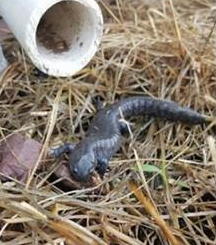
While both species are more widespread in other parts of southern Indiana, the small, rocky streams they inhabit are less common along the lower Wabash. Following this discovery, additional surveys conducted in parts of Knox, Posey, and Sullivan counties revealed more populations of southern two-lined salamanders; however, Knox County contains the only known location of a long-tailed salamander population in the region.
Salamanders and other amphibian surveys conducted by DNR biologists are supported by the Nongame Wildlife Fund. Contributions to this fund support a variety of rare and endangered wildlife.
Please visit Nongame and Endangered Wildlife to determine animals that are listed by the Indiana DNR as endangered or special concerns.
Resources:
Help the Hellbender, Purdue College of Agriculture
Question: Which salamander is this?, Got Nature? Blog, Purdue Extension – Forestry and Natural Resources
Is it a Hellbender or a Mudpuppy?, Got Nature? Blog
Amphibians: Frogs, Toads, and Salamanders, Purdue Nature of Teaching
A Moment in the Wild, Playlist, Purdue Extension – Forestry and Natural Resources
Help the Hellbender, Playlist & Website
The Nature of Teaching: Adaptations for Aquatic Amphibians, The Education Store, Purdue Extension resource center
Hellbenders Rock!, The Education Store
Help the Hellbender, North America’s Giant Salamander, The Education Store
Indiana Department of Natural Resources
Wild Bulletin, IN DNR Fish and Wildlife: Indiana hunters multiplied by all their harvest equals a lot of data. Keep track of DNR’s current harvest data and comparisons to previous seasons with our handy dashboard, which is updated daily throughout deer season. While the green bars indicate the season-to-date comparison to previous seasons, the blue bars illustrate the previous season counts after the current date. The numbers at the top show the harvest season totals.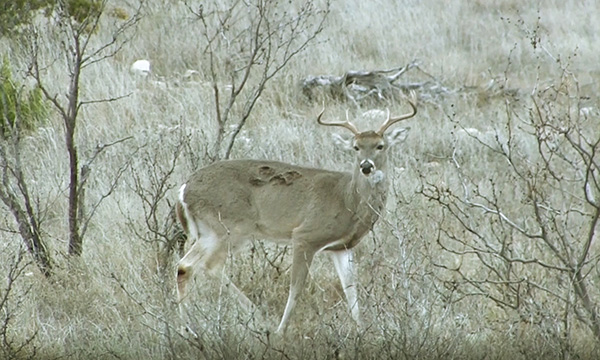
DNR’s online game check-in system was first offered in 2012 and made the primary system in 2015. The preliminary data reported on this page from this system are updated once per day during deer hunting seasons. To view the data collected, please view the Indiana Deer Harvest data.
Resources:
Indiana Hunting & Trapping Guide, Indiana Department of Natural Resources (IN DNR), Fish & Wildlife
Indiana 2022-2023 Hunting & Trapping Season (pdf) list, IN DNR, Fish & Wildlife
Wildlife Habitat Hint: Trail Camera Tips and Tricks, Got Nature? Blog
Bovine Tuberculosis in Wild White-tailed Deer, The Education Store, Purdue Extension’s resource center
Handling Harvested Game: Episode 1, Field Dressing, Video, Purdue Extension Youtube channel
Handling Harvested Game: Episode 2, Hanging & Skinning, Video
Handling Harvested Game: Episode 3, Deboning, Video
Handling Harvested Game: Episode 4, Cutting, Grinding & Packaging, Video
How to Score Your White-tailed Deer, video, The Education Store
White-Tailed Deer Post Harvest Collection, video, The Education Store
Age Determination in White-tailed Deer, video, The Education Store
Managing Your Woods for White-Tailed Deer, The Education Store
Bovine Tuberculosis in Wild White-tailed Deer, The Education Store
Indiana Department of Natural Resources
With winter upon us this is actually a good time to look for owls on your property. Most owls breed from January to March. You can either listen for calls in the evening, or use owl calls or recorded calls to get responses from owls in the area. We have three common species in Indiana and one rare species. All are non-migratory. However, each has different needs and habits. The following descriptions were written by Barny Dunning, professor of wildlife ecology at Purdue. These accounts were originally published in the Indiana Woodland Steward (www.inwoodlands.org).
Owls are among the most intriguing animals native to Indiana. They have been celebrated in story from the myths of the early Greeks to the books of Harry Potter. Owls are common across much of the state, but are relatively unknown, probably because of the nocturnal habits of these birds. But since they are efficient predators of mice and rats, among other things, owls are very useful birds to have around. Three species of owls are common year-round residents in Hoosier forests. The largest of these is the great horned owl, one of the dominant predators of our forests. Most people are surprised to learn that the great horned owl is as common as the familiar redtailed hawk even though the owl is much less likely to be seen.
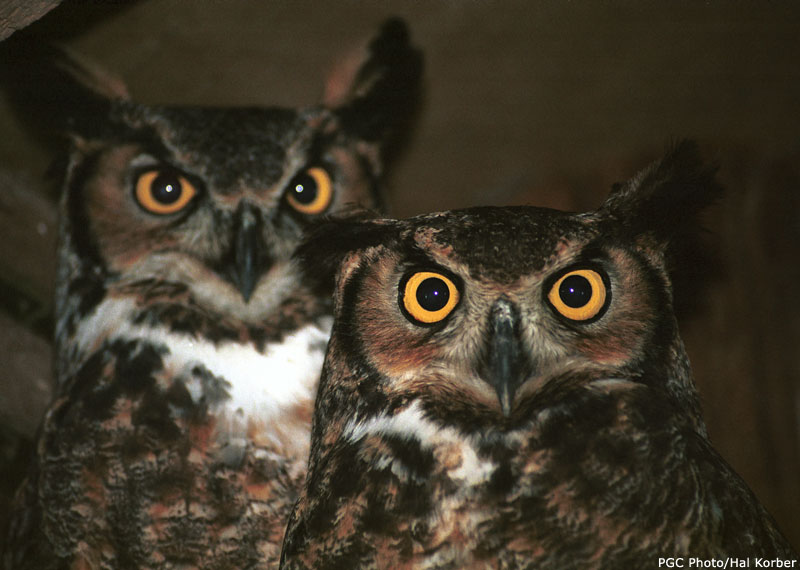
Great horned owls hunt in open areas but nest in large trees, where they take over a nest abandoned by a hawk, crow or heron. They are common where both woods and fields mix. The owls start breeding in January and February, adding new sticks to an old nest and laying a clutch of three eggs. Most species of owls nest very early in the year so that there will be a lot of easily caught prey in the form of young mammals and birds when the owl chicks are learning to hunt on their own. Many nests of the great horned owl are in snags or trees with broken tops, therefore retaining some of these forest features will provide good nesting spots for this dominant bird.
A second species of large owl is found in the larger woodlands of Indiana. The barred owl is most common in the interiors of forests and spends less time along the woodland edge. One major reason for this is the presence of the great horned owls, which will kill and eat a barred owl. Barred owls usually nest in the cavities of deciduous trees, laying their eggs in deep winter. Their dependence on tree cavities means that barred owls are likely to respond well to land management activities that retain large trees on a property and increase the number of snags with cavities. They also do well when there are forest patches of a variety of ages on a property, in addition to the older trees that provide nest sites.
Eastern screech-owls are the smallest resident owl in the state. They nest in small tree cavities and readily make use of nest boxes made especially for them. More than the other two species, screech-owls are found in suburban backyards, urban parks and on college campuses – anywhere there is a variety of trees and shrubs. Screech-owls feed on small prey such as insects, songbirds and mice. They breed later than do the big owls and have active nests in March and April. In addition to nest boxes, these owls will use old cavities excavated by northern flickers, tree holes created by storm damage, and hollow trunks of snags. Their ready use of a wide variety of cavity types makes our screech-owls a prime beneficiary of snag retention and other habitat improvement activities. Indiana’s smallest owl does not breed here, but its numbers during the fall migration can be in the thousands statewide. The northern saw-whet owl breeds from the most northern states on into Canada and migrates from there when food becomes scarce. “Swets” are an irruptive species, meaning their populations rise and fall dramatically from one year to the next on a roughly four-year cycle. A group of volunteer researchers in Yellowwood State Forest began studying the movements of these owls in 2002 as part of the larger Project Owlnet (www.projectowlnet.org). Their first year produced 71 owls on just one ridge in Yellowwood. Since then, the annual numbers have averaged around 70, but nearly 200 owls were captured and banded on that same ridge in 2007. The low point in the cycle was in 2009 when only nine owls were captured. There are now eight such banding stations scattered around Indiana. Brookeville Reservoir had the largest number of captures in 2009 with 32; while an Indianapolis station tallied only six. Some northern saw-whet owls winter in Indiana where forests with an open understory provide good foraging opportunities throughout the winter months.
The rarest owl in Indiana is, paradoxically, the species with the largest geographic range. Barn owls are found across the globe, but in the Midwestern United States their populations have declined dramatically. The species is considered endangered in Indiana. Barn owls originally nested in tree cavities, but when early settlers built barns and other farm buildings, the owls were quick to adapt. They are not limited to barns however, as recent Hoosier nests have been found in old churches, silos, and within the walls of abandoned buildings. To be suitable, human structures must have openings that allow the owls to fly in and out and an interior area that is undisturbed and big enough for the nest. The biggest factor in their decline has been changing agricultural practices. Barn owls hunt in open areas such as pastures, but do not use row crop fields. As Hoosier farmers converted pastures to corn and soybean, the barn owl lost its hunting grounds. Farmers in the southern part of the state that still retain some open grassy fields on their land can contact the state Department of Natural Resources to have a barn owl nest box added to their outbuildings if they don’t have appropriate nest sites.
Resources
Learn how forests are used by birds new videos, Got Nature? Blog
Managing Woodlands for Birds, The Education Store-Purdue Extension resource center
National Audubon Society
The Cornell Lab of Ornithology
Brian MacGowan, Wildlife Extension Specialist
Purdue University, Forestry and Natural Resources
The U.S. Department of Agriculture (USDA) announced it is awarding $197 million for 41 locally led conservation projects through the Regional Conservation Partnership Program (RCPP). RCPP is a partner-driven program that leverages partner resources to advance innovative projects that address climate change, enhance water quality, and address other critical challenges on agricultural land.
“Our partners are experts in their fields and understand the challenges in their own backyards,” Agriculture Secretary Tom Vilsack said. “Through RCPP we can tap into that knowledge, in partnership with producers and USDA, to come up with lasting solutions to the challenges that farmers, ranchers, and landowners face. We’re looking forward to seeing the results of public-private partnership at its best, made possible through these RCPP investments.”
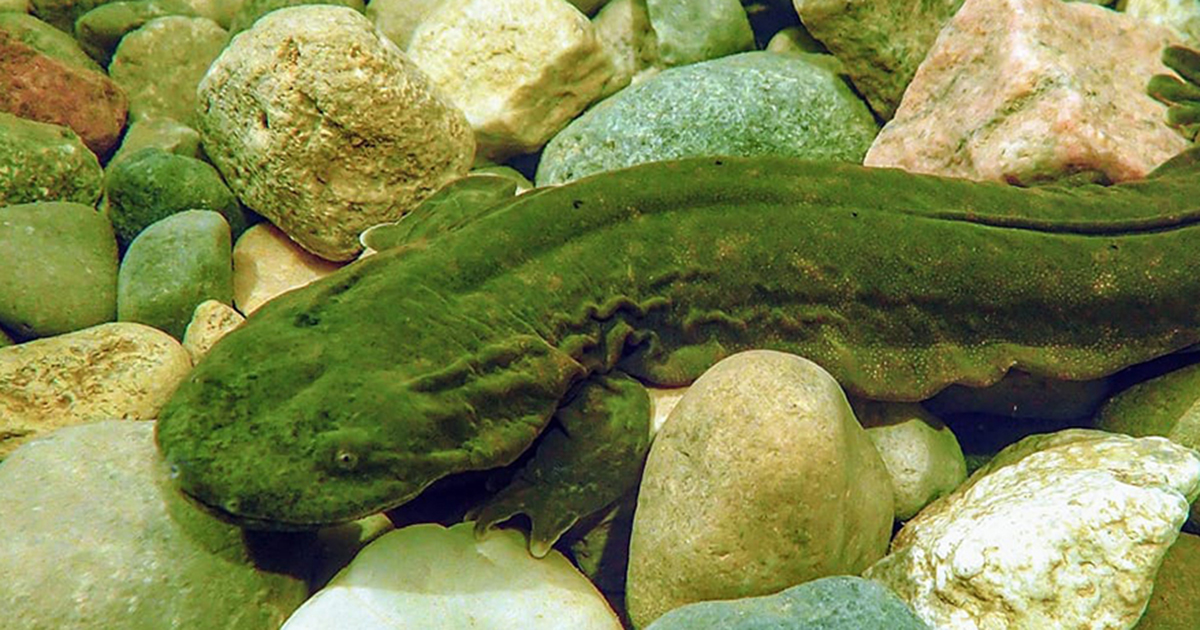
The “Farmers Helping Hellbenders” project, led by Dr. Rod Williams and Purdue Extension wildlife specialist/Help the Hellbender project coordinator Nick Burgmeier, is among the projects set to receive funding through the RCCP Classic fund, which uses NRCS contracts and easements with producers, landowners and communities in collaboration with project partners.
Fourteen contributing partners will assist in the project:
- Mesker Park Zoo and Botanic Gardens
- Fort Wayne Children’s Zoo
- Indianapolis Zoo
- Indiana Department of Environmental Management
- Crawford County Soil and Water Conservation District
- Floyd County Soil and Water Conservation District
- Harrison County Soil and Water Conservation District
- Washington County Soil and Water Conservation District
- Crawford County Cattleman’s Association
- Harrison County Cattleman’s Association
- Washington County Cattleman’s Association
- Cryptobranchid Interest Group
- The Nature Conservancy
- Wallace Center at Winrock International
With help from nearly $2.7 million in RCCP funding, the project aims to improve hellbender habitat in a four-county region in south central Indiana, the only remaining habitat for hellbenders in the state, by expanding the use of agricultural conservation practices that lead to decreased sedimentation in local rivers systems.
Sedimentation is a major cause of hellbender decline and reduced sedimentation will increase available habitat for hellbenders, mussels, and aquatic macroinvertebrates. This project also will address soil and nutrient loss, which are concerns for agricultural producers, as the targeted conservation practices and systems have been shown to have long-term benefits for agricultural systems and operations.
 “Through this initiative, focused on Crawford, Floyd, Harrison, and Washington counties, we expect to improve water quality and aquatic wildlife habitat,” Burgmeier said. “Simultaneously, we hope to improve soil retention and nutrient availability to crops by helping farmers implement practices such as cover crops, riparian buffers, grassed waterways, etc. Additional benefits will include increases in riparian and pollinator habitat and increased protection for karst habitat through the selected targeting of sinkholes.”
As part of each project, partners offer value-added contributions to amplify the impact of RCPP funding in an amount equal to or greater than the NRCS investment. Private landowners can apply to participate in an RCPP project in their region through awarded partners or at their local USDA service center.
“RCPP puts local partners in the driver’s seat to accomplish environmental goals that are most meaningful to their community. Joining together public and private resources also harnesses innovation that neither sector could implement alone,” Indiana NRCS State Conservationist Jerry Raynor said. “We have seen record enrollment of privately owned lands in NRCS’ conservation programs and RCPP will be instrumental in building on those numbers and demonstrating that government and private entities can work together for greater impacts on Indiana’s communities.”
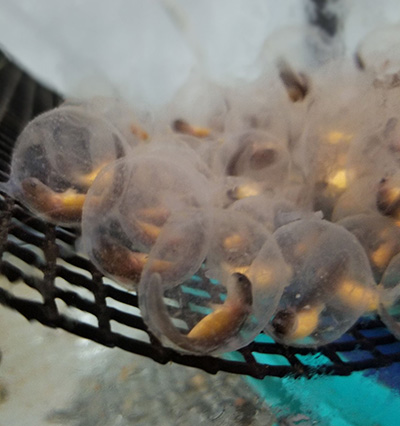
For much of the last 16 years, Williams and his team have been researching eastern hellbenders, spearheading regional conservation efforts and advancing hellbender captive propagation, or the rearing of this ancient animal in captivity and their eventual return to the wild.
Additional Resources
Improving Water Quality by Protecting Sinkholes on Your Property video
Improving Water Quality Around Your Farm video
Adaptations for Aquatic Amphibians
Hellbenders Rock! Nature of Teaching Lesson Plan
Nature of Teaching – Hellbenders Rock Sneak Peek video
Nature of Teaching – Hellbenders Rock webinar video
Learn about hellbenders and take a tour of Purdue’s hellbender rearing facility video
Learn about the hellbender work at Mesker Park Zoo video
Learn about hellbender work at The Wilds video
Dr. Rod Williams’ 2017 TEDx Talk Help the Hellbenders video
A Moment in the Wild – Hellbender Hides video
A Moment in the Wild – Hellbender Release video
Wendy Mayer, FNR Communications Coordinator
Purdue University Department of Forestry and Natural Resources
Rod Williams, Assistant Provost for Engagement/Professor of Wildlife Science
Purdue University Department of Forestry and Natural Resources
Wild Bulletin, IN DNR Fish and Wildlife: Indiana’s coyotes start to put on their winter fur this time of year. While this makes them look large and fluffy, they weigh in at less than your average sleepy beagle. Coyotes can be helpful to people by feasting on mice that invade homes in winter and voles that raid crops and stored feed. Most coyotes live near people, pets, and livestock, and never cause any problems. 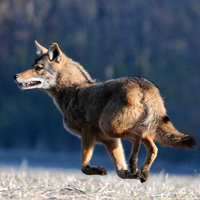
People can help ensure problems remain few and far between in a few ways. Licensed hunters and trappers can help maintain healthy coyote populations through regulated harvest, and people can also take steps around their homes and livestock to prevent coyotes from causing problems. Find a wealth of resources on the IN DNR Fish and Wildlife coyote page.
Resources:
Coyotes (PDF), Wildlife Conflicts, Department of Entomology, Purdue University
Should I Be Worried About Coyotes in My Yard?, Purdue Extension – Forestry & Natural Resources (FNR) Got Nature? Blog
Coexisting With Coyotes, Wild Bulletin, Indiana Department of Natural Resources, Division of Fish and Wildlife
Ask the Expert: Coexisting with Coyotes , Purdue Extension – FNR Got Nature? Blog
Urban Coyotes – Should You Be Concerned?, Purdue Extension – FNR Got Nature? Blog
Pets Disappearing? The Cause May Be Coyotes, Purdue Extension – FNR Got Nature? Blog
Question: Which is the correct species of coyotes I have on my land here in Indiana, coyote or coywolf?, Purdue Extension – FNR Got Nature? Blog
Permitted Wildlife Rehabilitators, Indiana Department of Natural Resources
How do you eliminate a nuisance animal on your property?, Indiana Department of Natural Resources (IN DNR)-Fish and Wildlife
Urban Coyote Research Center, Urban Coyote Ecology & Management, Cook County, Illinois
Indiana Department of Natural Resources
On this episode of A Moment in the Wild, Purdue wildlife technician Zach Truelock introduces the southern leopard frog, which is found in the southern half of Indiana. Learn how to tell them apart from the northern leopard frog and plains leopard frogs in the state, how to identify their calls and their mating habits.
If you have any questions regarding wildlife, trees, forest management, wood products, natural resource planning, or other natural resource topics, feel free to contact us by using our Ask an Expert web page.
Resources:
Sounds of Frogs & Toads, Purdue Extension – Forestry and Natural Resources (FNR)
Frogs & toads of Indiana, The Education Store, Purdue Extension resource center
Salamanders of Indiana Book, The Education Store
Amphibians: Frogs, Toads, and Salamanders, Purdue Nature of Teaching
The Nature of Teaching: Adaptations for Aquatic Amphibians, The Education Store
Hellbender ID, Playlist, Purdue Extension – FNR YouTube Channel
A Moment in the Wild, Playlist, Purdue Extension – FNR YouTube Channel
Amphibian Photos & Sounds, Purdue Nature of Teaching
Zach Truelock, Hellbender Technician
Purdue Forestry and Natural Resources
Rod Williams, Assistant Provost for Engagement/Professor of Wildlife Science
Purdue University Department of Forestry and Natural Resources

Recent Posts
- Purdue Extension’s Regional Teams Are Here: Connecting Communities with Expertise and Opportunity
Posted: October 14, 2026 in Community Development, Forestry, Forests and Street Trees, Gardening, How To, Timber Marketing, Urban Forestry, Wildlife, Woodlands - Deer and Turkey Archery Seasons Opening Soon, MyDNR
Posted: October 13, 2026 in Alert, Safety, Wildlife - Distinguishing Dogwoods
Posted: in Forestry, Urban Forestry, Wildlife, Woodlands - Can I Plant Trees in the Fall?
Posted: October 12, 2026 in Forestry, How To, Land Use, Plants, Urban Forestry, Wildlife - Publication Helps Midwest Fish Producers “Catch a Following” with Consumers
Posted: in Aquaculture/Fish, Aquatic/Aquaculture Resources, Wildlife - Minecraft Meets the Hellbender
Posted: September 22, 2026 in Aquaculture/Fish, Aquatic/Aquaculture Resources, Wildlife - What You Plant Matters to Wildlife
Posted: September 16, 2026 in Plants, Urban Forestry, Wildlife - Woodland Flowers of Late Summer
Posted: September 14, 2026 in Forestry, Gardening, Wildlife, Woodlands - Heavy August Rains Bring More Mosquitoes to Indiana
Posted: September 9, 2026 in How To, Invasive Insects, Safety, Wildlife - New Indiana Woodland Steward Newsletter
Posted: August 12, 2026 in Forestry, Urban Forestry, Wildlife, Woodlands
Archives
Categories
- Alert
- Aquaculture/Fish
- Aquatic/Aquaculture Resources
- Ask the Expert
- Christmas Trees
- Community Development
- Disease
- Drought
- Forestry
- Forests and Street Trees
- Gardening
- Got Nature for Kids
- Great Lakes
- How To
- Invasive Animal Species
- Invasive Insects
- Invasive Plant Species
- Land Use
- Natural Resource Planning
- Nature of Teaching
- Plants
- Podcasts
- Ponds
- Publication
- Safety
- Spiders
- Timber Marketing
- Urban Forestry
- Webinar
- Wildlife
- Wood Products/Manufacturing
- Woodland Management Moment
- Woodlands