 Purdue University - Extension - Forestry and Natural Resources
Got Nature? Blog
In this Moment in the Wild, Purdue wildlife technician Zach Truelock introduces you to the green tree frog. Learn about where this species lives, its physical characteristics, its call, and its breeding habits.
If you have any questions regarding wildlife, trees, forest management, wood products, natural resource planning, or other natural resource topics, feel free to contact us by using our Ask an Expert web page.
Resources:
Sounds of Frogs & Toads, Purdue Extension – Forestry and Natural Resources (FNR)
Frogs & toads of Indiana, The Education Store, Purdue Extension resource center
Salamanders of Indiana Book, The Education Store
Amphibians: Frogs, Toads, and Salamanders, Purdue Nature of Teaching
The Nature of Teaching: Adaptations for Aquatic Amphibians, The Education Store
Hellbender ID, Playlist, Purdue Extension – FNR YouTube Channel
A Moment in the Wild, Playlist, Purdue Extension – FNR YouTube Channel
Zach Truelock, Hellbender Technician
Purdue Forestry and Natural Resources
Rod Williams, Assistant Provost for Engagement/Professor of Wildlife Science
Purdue University Department of Forestry and Natural Resources
In this episode of A Moment in the Wild, meet the Pickerel Frog, a small to medium sized frog, which has thick white folds on both sides of its back, differentiating it from other species. Learn about its poisonous nature, its breeding habits and more inside.
If you have any questions regarding wildlife, trees, forest management, wood products, natural resource planning, or other natural resource topics, feel free to contact us by using our Ask an Expert web page.
Resources:
Sounds of Frogs & Toads, Purdue Extension – Forestry and Natural Resources (FNR)
Frogs & toads of Indiana, The Education Store, Purdue Extension resource center
Salamanders of Indiana Book, The Education Store
Amphibians: Frogs, Toads, and Salamanders, Purdue Nature of Teaching
The Nature of Teaching: Adaptations for Aquatic Amphibians, The Education Store
Hellbender ID, Playlist, Purdue Extension – FNR YouTube Channel
A Moment in the Wild, Playlist, Purdue Extension – FNR YouTube Channel
Zach Truelock, Hellbender Technician
Purdue Forestry and Natural Resources
Rod Williams, Assistant Provost for Engagement/Professor of Wildlife Science
Purdue University Department of Forestry and Natural Resources
In this Moment in the Wild, Purdue wildlife technician Zach Truelock introduces you to the Fowler’s Toad, shares how to tell it apart from the American toad, and dispels some common myths about toads in general.
If you have any questions regarding wildlife, trees, forest management, wood products, natural resource planning, or other natural resource topics, feel free to contact us by using our Ask an Expert web page.
Resources:
Sounds of Frogs & Toads, Purdue Extension – Forestry and Natural Resources (FNR)
Frogs & toads of Indiana, The Education Store, Purdue Extension resource center
Salamanders of Indiana Book, The Education Store
Amphibians: Frogs, Toads, and Salamanders, Purdue Nature of Teaching
The Nature of Teaching: Adaptations for Aquatic Amphibians, The Education Store
Hellbender ID, Playlist, Purdue Extension – FNR YouTube Channel
A Moment in the Wild, Playlist, Purdue Extension – FNR YouTube Channel
Zach Truelock, Hellbender Technician
Purdue Forestry and Natural Resources
Rod Williams, Assistant Provost for Engagement/Professor of Wildlife Science
Purdue University Department of Forestry and Natural Resources
In this Moment in the Wild, Purdue wildlife technician Zach Truelock explains the differences between frogs and toads, from physical characteristics to breeding and movement habits.
If you have any questions regarding wildlife, trees, forest management, wood products, natural resource planning, or other natural resource topics, feel free to contact us by using our Ask an Expert web page.
Resources:
Sounds of Frogs & Toads, Purdue Extension – Forestry and Natural Resources (FNR)
Frogs & toads of Indiana, The Education Store, Purdue Extension resource center
Salamanders of Indiana Book, The Education Store
Amphibians: Frogs, Toads, and Salamanders, Purdue Nature of Teaching
The Nature of Teaching: Adaptations for Aquatic Amphibians, The Education Store
Hellbender ID, Playlist, Purdue Extension – FNR YouTube Channel
A Moment in the Wild, Playlist, Purdue Extension – FNR YouTube Channel
Zach Truelock, Hellbender Technician
Purdue Forestry and Natural Resources
Rod Williams, Assistant Provost for Engagement/Professor of Wildlife Science
Purdue University Department of Forestry and Natural Resources
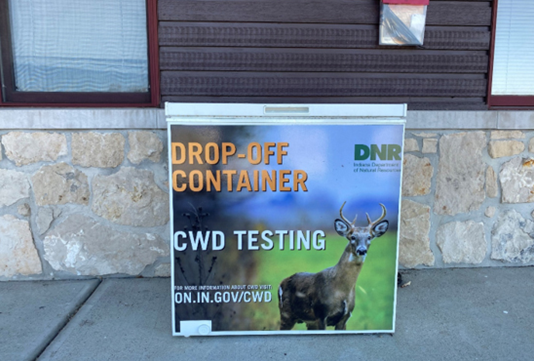 MyDNR Email Newsletter, Indiana Department of Natural Resources (IN DNR): Chronic wasting disease (CWD) is a fatal neurological disease affecting white-tailed deer, mule deer, elk, and moose. Hunters who want to have their deer tested for chronic wasting disease (CWD) can bring their deer to select Fish & Wildlife areas and State Fish Hatcheries during the hunting season.
Deer heads can be dropped into designated coolers or hunters can make an appointment for their deer to be sampled by a biologist during office hours. The 2022-23 sampling locations and their hours of operation are listed on the Fish & Wildlife: CWD website.
Hunters who submit a deer for CWD testing will receive a metal tag reminiscent of Indiana’s historical deer harvest confirmation process.
Alternatively, hunters may submit their deer to the Purdue Animal Disease Diagnostic Lab (ADDL) for testing for a fee. Hunters should complete the submission form and follow the shipping instructions on Purdue ADDL’s website.
Resources:
Indiana Hunting & Trapping Guide, Indiana Department of Natural Resources (IN DNR), Fish & Wildlife
Indiana 2022-2023 Hunting & Trapping Season (pdf) list, IN DNR, Fish & Wildlife
Indiana DNR Shares 2022-2023 Hunting Season, Got Nature? Blog, Purdue Extension-Forestry & Natural Resources
Wildlife Habitat Hint: Trail Camera Tips and Tricks, Got Nature? Blog
Bovine Tuberculosis in Wild White-tailed Deer, The Education Store, Purdue Extension’s resource center
Handling Harvested Game: Episode 1, Field Dressing, Video, Purdue Extension Youtube channel
Handling Harvested Game: Episode 2, Hanging & Skinning, Video
Handling Harvested Game: Episode 3, Deboning, Video
Handling Harvested Game: Episode 4, Cutting, Grinding & Packaging, Video
How to Score Your White-tailed Deer, video, The Education Store
White-Tailed Deer Post Harvest Collection, video, The Education Store
Age Determination in White-tailed Deer, video, The Education Store
Managing Your Woods for White-Tailed Deer, The Education Store
Bovine Tuberculosis in Wild White-tailed Deer, The Education Store
Subscribe and receive free MyDNR Email Newsletter
Indiana Department of Natural Resources, Fish & Wildlife
In this Moment in the Wild, Purdue wildlife technician Zach Truelock introduces the painted turtle, how to identify the species, its mating rituals and what is its preferred habitat. Learn more inside.
If you have any questions regarding wildlife, trees, forest management, wood products, natural resource planning, or other natural resource topics, feel free to contact us by using our Ask an Expert web page.
Resources:
Turtles of Indiana, The Education Store
Forestry Management for Reptiles and Amphibians: A Technical Guide for the Midwest, The Education Store
Appreciating Reptiles and Amphibians in Nature, The Education Store
Indiana Amphibian and Reptile ID Package (4 softcover books), The Education Store
When Juvenile Snakes Come Calling, FNR Got Nature? blog
A Moment in the Wild, Playlist, Purdue Extension – Forestry and Natural Resources
A Moment in the Wild: Black Racer, Video, Purdue Extension – Forestry and Natural Resources YouTube channel
A Moment in the Wild: Eastern Kingsnake, Purdue Extension – FNR Video
A Moment in the Wild: Eastern Hognose, Purdue Extension – FNR Video
Ask An Expert, Purdue Extension – FNR Playlist
Zach Truelock, Hellbender Technician
Purdue Forestry and Natural Resources
Rod Williams, Assistant Provost for Engagement/Professor of Wildlife Science
Purdue University Department of Forestry and Natural Resources
Purdue College of Agriculture News: Timber rattlesnakes are widely distributed across the eastern half of the United States, living as far north as New Hampshire and as far south as Florida. Hilly forests like those found in Brown, Monroe and Morgan County, Indiana suit the secretive lifestyle of the venomous snake. According to Purdue Extension wildlife specialist Brian MacGowan, there is no reliable estimate of the number of Timber rattlesnakes living in Indiana. Sightings are rare but most likely to occur during the hottest parts of the year.
“Late July and August are the peak of their breeding season in Indiana,” said MacGowan. “The males move around a lot more, tracking the scent of the females.”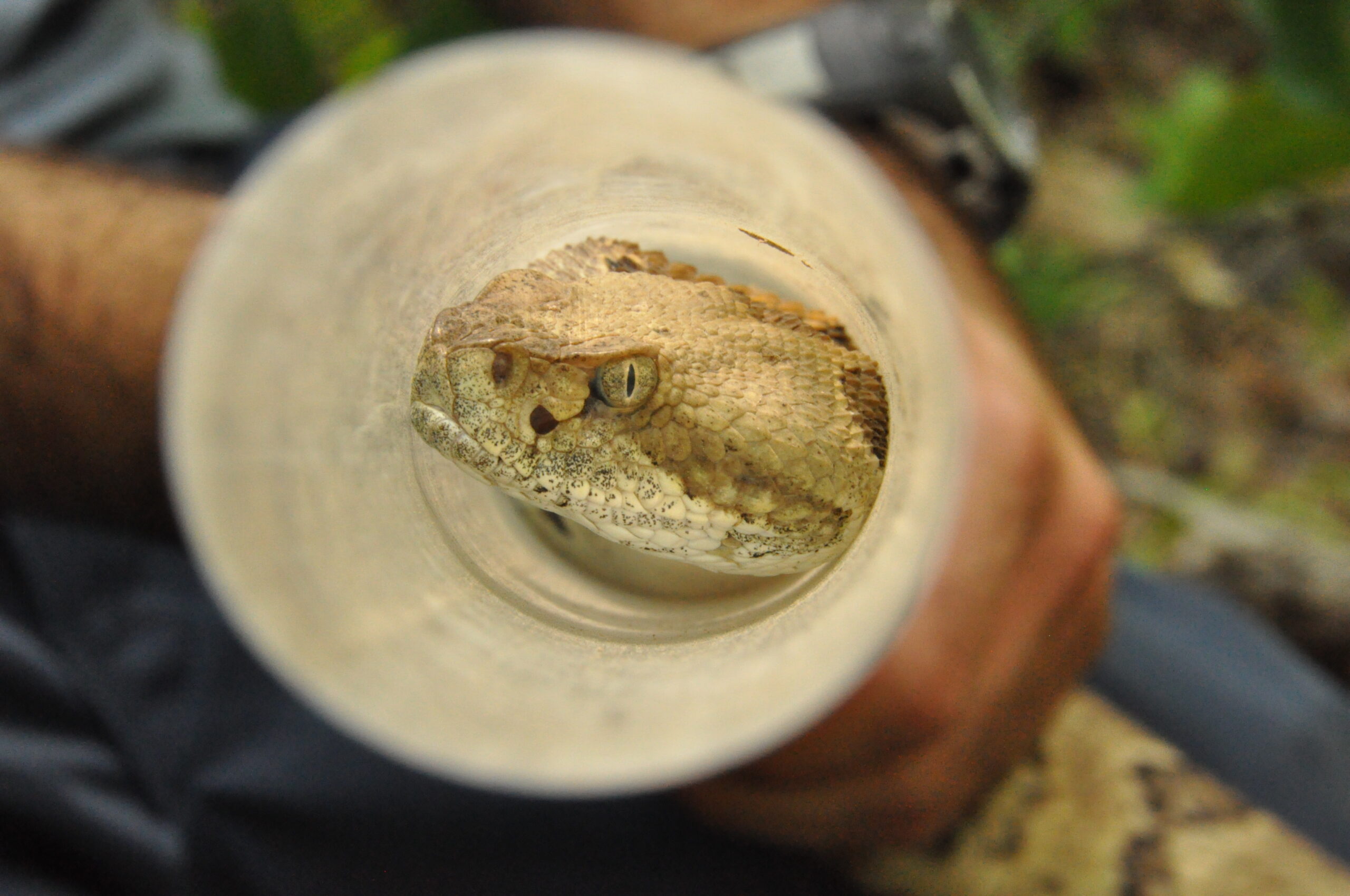
While they are normally hidden among rocks and brush, rattlesnakes have been observed 20 feet high in trees on rare occasion.
“Chipmunks are their primary food source in Indiana, but larger males eat squirrels and similarly-sized prey,” MacGowan explained. “They even consume songbirds.” A typical adult grows to be between three and five feet in length.
Rattlesnakes are patient hunters. Most often they use their natural camouflage to ambush prey. They inject a lethal venom, potentially strong enough to kill a human if left untreated. The venom contains hemotoxic elements, meaning it can damage or destroy blood vessels and cells.
But just because rattlesnakes are venomous does not mean they create frequent problems for nature lovers. “Timber rattlesnakes are reclusive and are quite unaggressive as far as snakes go,” MacGowan explained. “A lot of the locals in the areas I research don’t realize rattlers live nearby since the snakes keep to themselves.” According to the CDC, roughly 7,500 instances of venomous snakebites are recorded a year in the United States. Of those, about 5 are fatal. During his time as part of the Hardwood Ecosystems Experiment, MacGowan realized that even when looking, finding a rattlesnake is not an easy task.
For full article on the rattlesnake please visit: Unexpected Plants and Animals of Indiana: Timber Rattlesnake
Resources:
Snakes and Lizards of Indiana, The Education Store, Purdue Extension’s resource center
Snakes of the Central and Northeastern United States, The Education Store
Snakes of Indiana, The Education Store
Indiana Amphibian and Reptile ID Package (4 softcover books), The Education Store
Reptiles: Turtles, Snakes, and Lizards, Purdue Nature of Teaching Website
Ask An Expert, Playlist, Purdue Extension – Forestry and Natural Resources YouTube channel
A Moment in the Wild: Eastern Hognose, Purdue Extension – FNR Video
A Moment in the Wild: Eastern Kingsnake, Purdue Extension – FNR Video
A Moment in the Wild: Racer, Purdue Extension – FNR Video
Purdue University Department of Agricultural Communication
Dr. Brian MacGowan, Extension Wildlife Specialist
Department of Forestry & Natural Resources, Purdue University
American Eagle Foundation: Our native vultures play a crucial role in reducing the spread of disease. However, as black vulture population increases, so too have reports of human-wildlife interactions. Researchers at Purdue University are currently performing research to better understand reports of black vulture depredation on livestock, and their ultimate goal is to find solutions that protect both livestock and birds.
AEF interviewed Dr. Pat Zollner, Dr. Zhao Ma, doctoral student Marian Wahl, and Ph.D. alumna Brooke McWherter for insight into their important research.
Check out the great information in this video discussing how this research was started and the concerns shared to the USDA office from state offices and the public.
Find out what types of vulture species are here in the United States and their roles in the story Protect Our Native Vultures, American Eagle Foundation.
Vultures have a role to play as nature’s garbagemen, cleaning up animal carcasses. If you have any questions regarding this research, or have any experiences to share, contact Marian Wahl.
Resources:
Black Vulture Research Highlighted by NY Times, Got Nature Blog, Purdue Extension-Forestry and Natural Resources
Citizen Participation Needed in Black Vulture Research, Purdue Forestry and Natural Resources News
Black Vulture Research, March Edition of Beef Monthly
Black Vulture Ecology and Human-Wildlife Conflicts, Purdue FNR, Dr. Pat Zollner’s WebsiteDiana Evans, Extension and Web Communication Specialist
Purdue University Department of Forestry and Natural Resources
Marion Wahl, Graduate Research Assistant
Purdue Forestry and Natural Resources
The A Guide to Small-Scale Fish Processing Using Local Kitchen Facilities brochure is an overview of what a fish producer thinking about small-scale fish processing needs to know. The overview includes training requirements, available facilities and highlights of select farmers who have gone through the process.
This publication is a collaborative project of Illinois-Indiana Sea Grant, the North Central Regional Aquaculture Center, University of Illinois Extension, and Purdue University’s Department of Forestry and Natural Resources.
About the Author
Amy Shambach is Illinois-Indiana Sea Grant’s (IISG) aquaculture marketing outreach associate who works with the aquaculture industry in the USDA’s North Central Regional Aquaculture Center. Her work focuses on the demand side of domestic farm raised seafood products. She provides outreach and extension services to producers, potential producers, and consumers. Along with Dr. Kwamena Quagrainie, producers, aquaculture associations, and consumers, she works to determine the needs of stakeholders.
To receive the free download for the Guide to Small-Scale Fish Processing Using Local Kitchen Facilities please visit The Education Store.
Resources:
Walleye Farmed Fish Fact Sheet, The Education Store, Purdue Extension’s resource center
Pacific White Shrimp Farmed Fact Sheet, The Education Store
Yellow Perch Farmed Fish Fact Sheet, The Education Store
Tilapia Farmed Fish Fact Sheet, The Education Store
Rainbow Trout Farmed Fish Fact Sheet, The Education Store
American Paddlefish, The Education Store
Aquaculture Family Coloring Book Development, The Education Store
Eat Midwest Fish, Illinois-Indiana Sea Grant online resource hub
Amy Shambach, Aquaculture Marketing Outreach Associate
Purdue Department of Forestry and Natural Resources/Illinois Indiana Sea Grant Program
The classic and trusted book “Fifty Common Trees of Indiana” by T.E. Shaw was published in 1956 as a user-friendly guide to local species. Nearly 70 years later, the publication has been updated through a joint effort by the Purdue Department of Forestry and Natural Resources, Indiana 4-H, and the Indiana Department of Natural Resources, and reintroduced as “An Introduction to Trees of Indiana.”
 The full publication is available for download for $7 in the Purdue Extension Education Store. The field guide helps identify common Indiana woodlot trees.
Each week, the Intro to Trees of Indiana web series will offer a sneak peek at one species from the book, paired with an ID That Tree video from Purdue Extension forester Lenny Farlee to help visualize each species as it stands in the woods. Threats to species health as well as also insight into the wood provided by the species, will be provided through additional resources as well as the Hardwoods of the Central Midwest exhibit of the Purdue Arboretum, if available.
This week, we introduce the White hickory or Carya tomentosa.
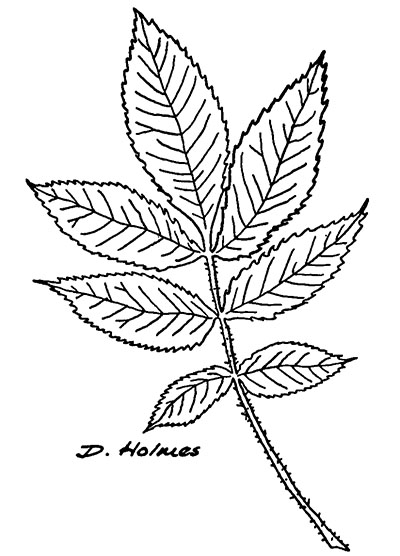
This tree, also known as mockernut hickory, has stout twigs like those of shagbark hickory and large terminal buds, but its bark is not shaggy. Instead, mockernut hickory features thick, interlacing bark ridges that is often silvery on top. Its leaves are made up of seven to nine leaflets that are hairy beneath, instead of five. The bud is very rounded, resembling a scoop of ice cream. The bud, leaf stems and twigs may have hair on them. The nuts of the mockernut hickory are smooth and round with mild ridges with four seams, which break open in the fall. The leaves produce a golden-yellow color in the fall.
Mockernut hickories grow to a mature height of 50-60 feet tall. They grow mostly in high dry ridges and other well-drained soil locations from New Hampshire west to Iowa and south to Texas and east to northern Florida except for the flood plain of the Mississippi Rive from Memphis south.
For full article with additional photos view: Intro to Trees of Indiana: Mockernut Hickory
Other Resources:
Hickory and Pecan Species in the Hardwood Lumber and Veneer Series, The Education Store, Purdue Extension’s resource center
Sustaining Our Oak-Hickory Forests – Hardwood Ecosystem Experiment, The Education Store
The Hardwood Ecosystem Experiment: 2006-2016, The Education Store
Indiana Forestry and Wildlife: The Hardwood Ecosystem Experiment, The Education Store
Fifty Common Trees of Indiana
An Introduction to Trees of Indiana
Native Trees of the Midwest, The Education Store
Shrubs and Woody Vines of Indiana and the Midwest, The Education Store
Investing in Indiana Woodlands, The Education Store
Forest Improvement Handbook, The Education Store
ID That Tree, Purdue Extension-Forestry & Natural Resources (FNR) YouTube playlist
Woodland Management Moment , Purdue Extension-FNR YouTube playlist
Wendy Mayer, FNR Communications Coordinator
Purdue University Department of Forestry and Natural Resources
Lenny Farlee, Sustaining Hardwood Extension Specialist
Purdue University Department of Forestry and Natural Resources

Recent Posts
- Purdue Extension’s Regional Teams Are Here: Connecting Communities with Expertise and Opportunity
Posted: October 14, 2026 in Community Development, Forestry, Forests and Street Trees, Gardening, How To, Timber Marketing, Urban Forestry, Wildlife, Woodlands - Deer and Turkey Archery Seasons Opening Soon, MyDNR
Posted: October 13, 2026 in Alert, Safety, Wildlife - Distinguishing Dogwoods
Posted: in Forestry, Urban Forestry, Wildlife, Woodlands - Can I Plant Trees in the Fall?
Posted: October 12, 2026 in Forestry, How To, Land Use, Plants, Urban Forestry, Wildlife - Publication Helps Midwest Fish Producers “Catch a Following” with Consumers
Posted: in Aquaculture/Fish, Aquatic/Aquaculture Resources, Wildlife - Minecraft Meets the Hellbender
Posted: September 22, 2026 in Aquaculture/Fish, Aquatic/Aquaculture Resources, Wildlife - What You Plant Matters to Wildlife
Posted: September 16, 2026 in Plants, Urban Forestry, Wildlife - Woodland Flowers of Late Summer
Posted: September 14, 2026 in Forestry, Gardening, Wildlife, Woodlands - Heavy August Rains Bring More Mosquitoes to Indiana
Posted: September 9, 2026 in How To, Invasive Insects, Safety, Wildlife - New Indiana Woodland Steward Newsletter
Posted: August 12, 2026 in Forestry, Urban Forestry, Wildlife, Woodlands
Archives
Categories
- Alert
- Aquaculture/Fish
- Aquatic/Aquaculture Resources
- Ask the Expert
- Christmas Trees
- Community Development
- Disease
- Drought
- Forestry
- Forests and Street Trees
- Gardening
- Got Nature for Kids
- Great Lakes
- How To
- Invasive Animal Species
- Invasive Insects
- Invasive Plant Species
- Land Use
- Natural Resource Planning
- Nature of Teaching
- Plants
- Podcasts
- Ponds
- Publication
- Safety
- Spiders
- Timber Marketing
- Urban Forestry
- Webinar
- Wildlife
- Wood Products/Manufacturing
- Woodland Management Moment
- Woodlands