 Purdue University - Extension - Forestry and Natural Resources
Got Nature? Blog
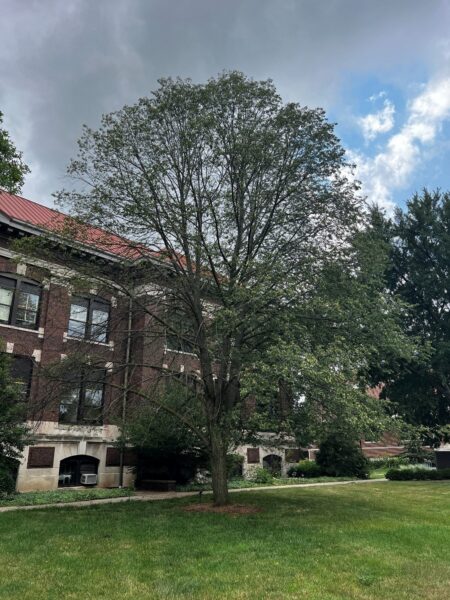
Figure 1: Drought stress can cause decline and, in some cases, death in trees.
Purdue Landscape Report: With recent rain storms across the state, watering may not be at the forefront of everyone’s minds. But as we head deeper into summer it is food to remember most of Indiana is in a state of abnormal dryness to moderate drought, continuing similar conditions from previous years. With that in mind, we should be thinking about the health of our trees (Fig. 1).
Understanding what drought is and its effects on trees can help to bolster care plans. Drought is an extended time with little to no precipitation and can slow growth, reducing photosynthesis, and depleting energy reserves trees need to survive dormancy in winter. Drought conditions can stress trees, making them susceptible to pests and diseases, reducing their ability to produce defensive chemicals, and in severe situations resulting in death (Fig. 2).
One simple task to protect your trees is watering. This is especially important in young and newly transplanted trees. A good industry guideline is the 5-plus-5 rule.
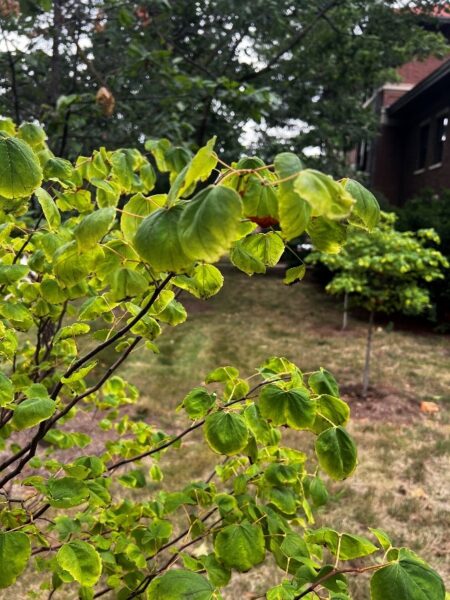
Figure 2a: Wilting in leaves and dieback in parts of the tree can indicate drought stress.
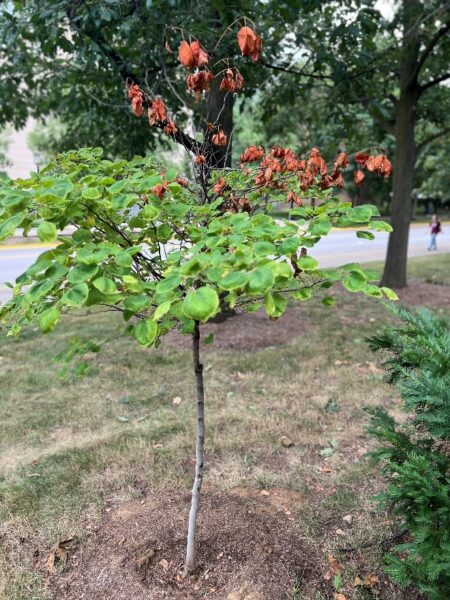
Figure 2b: Wilting in leaves and dieback in parts of the tree can indicate drought stress.
Apply 5 gallons of water plus 5 gallons for every diameter inch of the trunk. For example, a 4-inch tree would require about 25 gallons of water as needed. A good tactic to reduce water runoff from the hose is to take a large bucket and drill enough small holes to create a slow drip watering system. Also check moisture levels in your soil to see if conditions are dry, moist, or saturated.
Another way to maintain soil moisture is to mulch around the tree. Mulch rings should be at least 3 feet in diameter and 2-3 inches deep with a 2–3-inch space between the base of the trunk and the inner mulch ring. Mulching up to the trunk is called volcano mulching and causes issues like stem girdling root production and decay. Mulching reduces evaporation from the soil and helps maintain moderate soil temperatures. It also reduces competition with surrounding lawn and landscaping plants while protecting the trunk from mechanical damage caused by mowing and lawn care practices.
These little steps can go a long way to protect your trees, extending their life spans and your enjoyment with a healthy canopy. For a more detailed look at drought and trees, please have a look at the Purdue extension store here.
Original article posted: Summer Tree Care: Watering Your Trees.
Subscribe and receive the newsletter: Purdue Landscape Report Newsletter.
Resources:
Planting Your Tree Part 1: Choosing Your Tree, Purdue Extension YouTube Channel
Tree Planting Part 2: Planting a Tree, Purdue Extension YouTube Channel
Tree Installation: Process and Practices, The Education Store
Tree Pruning Essentials, The Education Store
Tree Pruning Essentials Video, Purdue Extension YouTube Channel
Drought Information, Indiana Department of Natural Resources
Drought? Don’t forget the trees!, The Education Store
Tree Defect Identification, The Education Store
Tree Wound and Healing, Got Nature? Blog, Purdue Extension – Forestry and Natural Resources
Surface Root Syndrome, The Education Store
Find an Arborist video, Trees are Good-International Society of Arboriculture (ISA)
Trees and Storms – The Education Store, Purdue Education’s resource center
Indiana Invasive Species Council
ID That Tree, Playlist, Purdue Extension – FNR YouTube Channel (Invasive White Mulberry, Siberian Elm, Tree of Heaven)
Fifty Common Trees of Indiana
An Introduction to Trees of Indiana
Native Trees of the Midwest, The Education Store
Subscribe – Purdue Extension-FNR YouTube Channel
Ben McCallister, Urban Forestry Specialist
Purdue Forestry & Natural Resources
In this edition of ID That Tree, Purdue Extension forester Lenny Farlee takes us through the different characteristics of coniferous trees found here in Indiana, particularly their foliage and the features that pertain to them. Come along as we look through real examples of shape, scales, leaf and branches of various local trees. The featured species include Eastern red cedarwood, Northern white cedar, and more.
If you have any questions regarding wildlife, trees, forest management, wood products, natural resource planning or other natural resource topics, feel free to contact us by using our Ask an Expert web page.
Resources:
ID That Tree: Firs and Spruces, Video Playlist, Purdue Extension – Forestry and Natural Resources (FNR) YouTube Channel
ID That Tree – Jack Pine, Scotch Pine, Red Pine, Virginia Pine, Eastern White Pine, Video Playlist, Purdue Extension – Forestry and Natural Resources (FNR) YouTube Channel
Beat Back Borers Attacking Pines and Other Cone Bearing Trees, Purdue Landscape Report
Tree Diseases: White Pine Decline in Indiana, The Education Store, Purdue Extension Resource Center
Purdue Arboretum Explorer
Conservation Tree Planting: Steps to Success, Purdue Extension – FNR YouTube Channel
A Woodland Management Moment, Playlist, Purdue Extension – FNR YouTube Channel
Woodland Stewardship for Landowners, Playlist, Purdue Extension – FNR YouTube Channel
Indiana Department of Natural Resources: Invasive Species
Indiana Invasive Species Council
Cooperative Invasive Species Management Area (CISMA)
Report Invasive, Purdue Extension
Episode 11 – Exploring the challenges of Invasive Species, Habitat University-Natural Resource University
Shrubs and Woody Vines of Indiana and the Midwest, The Education Store
Native Trees of the Midwest, The Education Store
Professional Forester, Indiana Forestry Woodland Owners Association
Forest Improvement Handbook, The Education Store
Find an Arborist, International Society of Arboriculture
Lenny Farlee, Extension Forester
Hardwood Tree Improvement and Regeneration Center
Purdue Department of Forestry & Natural Resources
Purdue Landscape Report: Recently a homeowner in Hamilton County posted on the Indiana Native Plant Society Facebook page with concerns about aphids, mites, and apple scab in her maple and oak trees. She asked for a second opinion and treatment options for these pests. I reached out to the homeowner and requested permission to collect samples from the trees. Let’s look at what I found (or didn’t find) and discuss when and if these issues should be treated.
Apple Scab on Maples?
First, we can eliminate the concern about apple scab because maple and oak trees are not hosts for this pathogen. Apple scab is caused by the fungus Venturia inaequalis, and hosts include apples, crabapples, hawthorn, mountain ash, firethorn, and loquat. There are other fungal diseases which cause leaf spotting in maples, such as Anthracnose, tar spot, and Phyllosticta leaf spot. To diagnosis these diseases, homeowners can submit a sample to the Purdue Plant & Pest Diagnostic Lab, or hire a certified arborist to assess the tree. However, all these diseases are primarily aesthetic issues. A healthy tree will not die from these pathogens and does not require treatment. You can find more information about maple diseases in this publication: Diseases in Hardwood Tree Plantings. You can also find a previous article on Tar Spot in Maple in the Purdue Landscape Report (Issue 18-12).

Fig. 1. Severe spider mite damage on maple leaves. (Photo: S. D. Frank, North Carolina State University)
Spider Mites
The next pest concern on these trees is spider mites. Out of the dozens of leaves I collected, I found only two immature mites on a couple of maple leaves I examined. This is a very small mite presence, and it is not recommended to treat for spider mites unless the populations threaten the health or appearance of the tree. Limiting pesticide usage will conserve the natural enemies, which are vital to keeping mite populations in check. In fact, improper pesticide applications can kill these important natural enemies and worsen mite infestations.
When do you know if the mite population is large enough to merit intervention? Check your trees for signs of heavy feeding damage, such as leaf stippling (Fig. 1), or dense webbing on the leaves. Mites can also be monitored by placing a sheet of paper (8.5×11”) beneath a branch and striking the limb. Chemical treatments should be considered when you count ≥24 mites per strike. You can find detailed management recommendations and a full list of pesticide options in this Purdue Extension publication: Spider Mites on Ornamentals.

Fig. 2: Adult painted maple aphids found on maple in Hamilton Co, Indiana. (Photo: Andrew Johnston, Purdue University).
Aphids
The aphids I found on the homeowner’s maple trees are Drepanaphis acerifoliae, or the painted maple aphid (Fig. 2). This species only feeds on maple trees, and is not a threat to the oak tree on this homeowner’s property. Painted maple aphid is a very common aphid in our region. I found only a few aphids on one of the maple trees I sampled, which is not enough to require treatment. In addition, one of the aphids was a “mummy”, or a carcass left behind from a parasitoid wasp. This indicates that natural enemies are already at work managing the aphid population. Aphids may rarely require chemical control if their numbers grow large enough to produce significant amounts of honeydew, which can result in sooty mold outbreaks.
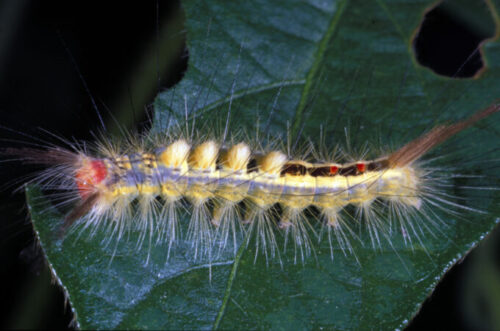
Fig. 3: White-marked tussock moth caterpillar. (Photo: John Obermeyer, Purdue University).
Tussock Moth
The only insect I found on the oak tree was a white-marked tussock moth caterpillar, Orgyia leucostigma (Fig. 3). This is the likely culprit for the minor feeding damage I noticed. These are not significant pests and do not require treatment. Don’t touch them, though! The setae of this caterpillar are irritating and may cause allergic reactions.
Overall, the pests I found were minimal and non-threatening to the trees. It’s normal to find some insect pressure in the landscape. Knowing when and if to treat requires accurate diagnosis and monitoring of pest levels. Check out PurduePlantDoctor.com for an easy-to-use diagnostic aid and treatment recommendations.
Original article posted: Purdue Landscape Report.
Subscribe and receive the newsletter: Purdue Landscape Report Newsletter.
Resources:
Large Spots on Maple Leaves that Look Like Tar, Purdue Extension News
Find an Arborist, International Society of Arboriculture
Diseases in Hardwood Tree Plantings, The Education Store, Purdue Extension’s resource center
Fifty Common Trees of Indiana
An Introduction to Trees of Indiana, The Education Store
Shrubs and Woody Vines of Indiana and the Midwest, The Education Store
Tree Installation: Process and Practices, The Education Store
Forest Improvement Handbook, The Education Store
Invasive Species, Playlist, Purdue Extension – FNR YouTube Channel
Report Invasive Species, Purdue Invasive Species
What are invasive species and why should I care?, Got Nature? Blog, Purdue Extension – Forestry and Natural Resources
Indiana Department of Natural Resources: Invasive Species
Indiana Invasive Species Council
ID That Tree, Purdue Extension-FNR YouTube playlist
Tree Defect Identification, The Education Store
Tree Wound and Healing, Got Nature? Blog, Purdue Extension – Forestry and Natural Resources
Alicia Kelley, Cooperative Agricultural Pest Survey (CAPS) Coordinator
Purdue Extension – Entomology
In this episode of A Woodland Management Moment, Purdue Extension forester Lenny Farlee talks about the importance of oak regeneration. Oak is a ‘keystone’ species, integral to supporting many different facets of wildlife. This includes insects to large mammals all across the environment in Indiana and the central hardwood region. This video also shares details regarding Purdue’s initiatives to ensure the diverse ecosystems maintained by oak and to provide the resources needed to keep regenerating this integral tree
If you have any questions regarding trees, forests, wildlife, wood products or other natural resource topics, feel free to contact us by using our Ask an Expert web page.
Resources:
A Woodland Management Moment, Playlist, Purdue Extension – Forestry and Natural Resources (FNR) YouTube Channel
Learn How to Support Oak-Hickory Ecosystems, Purdue Extension – FNR Got Nature? Blog
The Nature of Oaks Webinar, Purdue Extension-FNR YouTube Channel, Shared from Indiana Forestry & Woodland Owners Association
Oak Leaf Tatters, Purdue Landscape Report
Inonotus Dryadeus, Butt and Root Rot of Oaks, Purdue Extension – FNR Got Nature? Blog
Predicting the Height Growth of Oak Species Reproduction Over a 23-year Period Following Clearcutting, Hardwood Tree Improvement & Regeneration Center (HTIRC)
Conservation Tree Planting: Steps to Success, Purdue Extension – FNR YouTube Channel
Shrubs and Woody Vines of Indiana and the Midwest, The Education Store, Purdue Extension Resource Center
Native Trees of the Midwest, The Education Store
ID That Tree, Playlist, Purdue Extension – FNR YouTube Channel
Investing in Indiana Woodlands, The Education Store
Woodland Stewardship for Landowners Video Series, Playlist, Indiana Department of Natural Resources YouTube Channel
Ask an Expert: Tree Selection and Planting, Purdue Extension – FNR YouTube Channel
Forest Improvement Handbook, The Education Store
Find an Indiana Professional Forester, Indiana Forestry & Woodland Owners Association (IFWOA)
Purdue Arboretum Explorer
Lenny Farlee, Extension Forester
Hardwood Tree Improvement and Regeneration Center
Purdue Department of Forestry & Natural Resources
Familiar with surprise lilies? Indiana has a native surprise onion!
Many yards where I grew up in southern Indiana were graced with surprise lilies. These plants grew long narrow leaves in the spring, which faded and died by early summer. After a pause with no evidence of the plant, long stems with pink lily-like flowers emerged, with no leaves to be seen.

Ramps foliage is often found in clusters or patches in early spring. These leaves will die before summer.
While these plants are not a native species, we do have a native with similar habits that is a distant relative of the surprise lily. That plant is ramps, also known as wild leek and a variety of other local names. There are two species of ramps recognized now – the more common broad-leaved ramps, Allium tricoccum, and the narrow-leaved ramps, Allium burdickii. Ramps are related to onions and garlic and have odor and taste reminiscent of those plants. Ramps foliage emerges early in the spring and was one of the earliest green edibles available to First Nations people and early European settlers.
Many communities developed festivals or celebrations centered on the emergence of ramps as a sign of spring and some fresh greens to eat. The bright green leaves emerge before the tree leaves and fade before summer, but by the first half of June expect to see thin stems with a rounded cluster of small white flowers emerge – our surprise onion! It may take a ramps plant seven to ten years from seed to produce a flower, so this is a slow-growing and long-lived forest perennial. The flowers are pollinated by insects and produce round black seeds that may stay on the stalk through winter.
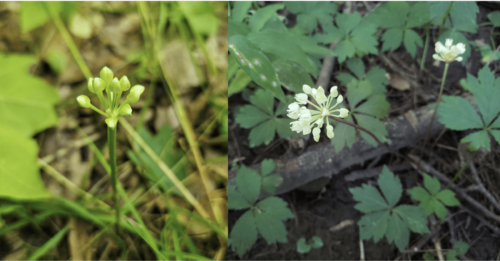
Newly emerged flower stem and buds and the blooming flowers of ramps.
Look for ramps in well-shaded forest areas with moist soils. They have a scattered distribution across Indiana, so you won’t find them in every woodland. The leaves and bulbs are edible, but absolute certainty of ID is essential as there are some toxic plants that look similar. Check ID references and spend some time with experienced foragers before eating any wild plants. The onion/garlic odor of ramps is a good indicator for positive ID.
Since this is a slow growing plant with a limited distribution, over-collection is a threat. A responsible harvesting technique is to harvest one leaf from mature plants, leaving the other leaves and the bulb. If you harvest the whole plant, take less than 5 percent of the plants in a patch, allowing seeding and bulb division to repopulate the area. Seed or bulbs can also be used to plant new patches. So keep you eyes open for our local surprise flowers this June – ramps!
Resources:
ID That Tree, Playlist, Purdue Extension – Forestry and Natural Resources (FNR) YouTube Channel
A Woodland Management Moment, Playlist, Purdue Extension – FNR YouTube Channel (Against Invasives, Garlic Mustard, Autumn Olive)
Woodland Stewardship for Landowners, Playlist, Purdue Extension – FNR YouTube Channel (Common Buckthorn, Japanese Barberry)
Indiana Department of Natural Resources: Invasive Species
Indiana Invasive Species Council
Cooperative Invasive Species Management Area (CISMA)
Episode 11 – Exploring the challenges of Invasive Species, Habitat University-Natural Resource University
What are invasive species and why should I care?, Got Nature? Blog, Purdue Extension – FNR
Shrubs and Woody Vines of Indiana and the Midwest, The Education Store, Purdue Extension Resource Center
Planting Your Tree Part 1: Choosing Your Tree, video, The Education Store
Find an Arborist website, Trees are Good, International Society of Arboriculture (ISA
Lenny Farlee, Extension Forester
Hardwood Tree Improvement and Regeneration Center
Purdue Department of Forestry & Natural Resources
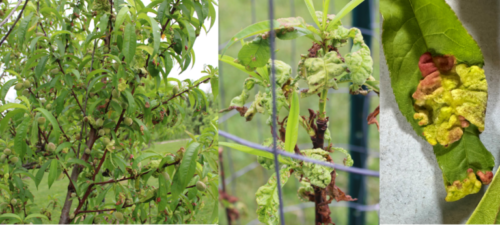
Figure 1: Peach trees showing symptoms of peach leaf curl caused by Taphrina
Purdue Landscape Report: The past two months have been relatively wet and cool to warm. This prolonged period of overcast conditions, high humidity, and light to moderate rainfall is perfect for some of our foliar disease issues.
“April flowers bring May Leaf spots” doesn’t have the right ring to it, but we are seeing quite a bit of leaf curl and leaf blister. These are two disease issues caused by Taphrina spp. fungi. Like the common names of their diseases, the symptoms caused by a Taphrina infection include leaf deformation.

Figure 2: Oak leaf blister symptoms ranging from light green early infections, changing to yellow and then becoming necrotic as the season progresses.
In the case of Peach, the leaves turn light yellow, bright pink, or red where tissue puckers and twists leading to curled leaves. In oak, leaves develop localized blisters that are light green early in the season and are easy to miss since the color is not very different from healthy tissue.
However, the blisters will turn brown later in the season which makes them more noticeable. Maples also get a disease caused by Taphrina, but it does not cause as much distortion as it does on oak or peach. Severe maple leaf blister can lead to leaves becoming slightly contorted, but the primary symptom is brown necrotic lesions.
With cool wet weather over an extended period of time, we have been seeing more foliar disease issues than in the last few years.

Figure 3: Symptoms of leaf blister on maple trees.
Since disease problems can take time to develop, Taphrina is likely just the harbinger for some other disease issues we may see in early summer if moderate conditions continue. If the weather dries out as it heats up, it will halt many of these foliar problems in their tracks.
Original article posted: Purdue Landscape Report
Subscribe and receive the newsletter: Purdue Landscape Report Newsletter.
Resources:
Learn How to Support Oak-Hickory Ecosystems, Purdue Extension – Forestry and Natural Resources (FNR) Got Nature? Post
“The Nature of Oaks” Webinar, Indiana forestry & Woodland Owners Association
How to Find an Arborist Near You!, Purdue Extension – FNR Got Nature? Post
Diplodia Tip Blight of Two-Needle Pines, The Education Store, Purdue Extension resource center
Boxwood Blight, The Education Store
Disease of Landscape Plants: Cedar Apple and Related Rusts on Landscape Plants, The Education Store
Planting Your Tree Part 1: Choosing Your Tree, Purdue Extension YouTube Channel
Indiana Department of Natural Resources: Invasive Species
Indiana Invasive Species Council
Cooperative Invasive Species Management Area (CISMA)
Report Invasive, Purdue Extension
Aquatic Invasive Species, Illinois-Indiana Sea Grant (IISG)
Episode 11 – Exploring the challenges of Invasive Species, Habitat University-Natural Resource University
What are invasive species and why should I care?, Got Nature? Blog, Purdue Extension – FNR
Shrubs and Woody Vines of Indiana and the Midwest, The Education Store, Purdue Extension Resource Center
Native Trees of the Midwest, The Education Store
John Bonkowski, Lead Extension Administrator
Purdue Department of Botany and Plant Pathology
Oak-hickory forests, which are comprised of a variety of different tree species, shrubs, grasses, sedges and wildflowers, as well as wildlife, including songbirds, are important to Indiana’s biodiversity. Learn how you can support oak-hickory ecosystems on your property through a new publication, “Forest Stewardship for Oak-Hickory Ecosystems in Indiana,” produced by Let the Sun Shine In – Indiana.
“The goal of this publication is to provide woodland owners with information about the stewardship practices they can use to sustain and enhance oak-hickory ecosystems on their land,” said co-author Jarred Brooke, Purdue Extension wildlife specialist. “Having this information will help them make informed decisions about how to manage their land to meet their forestry and wildlife objectives.”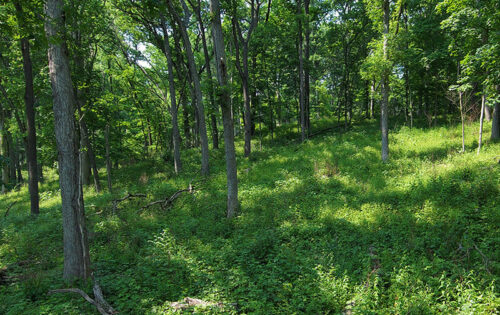
The publication discusses various methods landowners can use on their properties, from midstory removal to overstory thinning, prescribed fire, supplemental planting, controlling deer browsing, crop tree release and invasive species control. It also details options for timber harvest, which can be used to regenerate the next generation of a forest. Additional resources from forestry and wildlife professionals as well as other publications discussing current research and management tips also are included in this document.
“Oak ecosystem management is confusing,” said co-author Dan Shaver, state forester for the Indiana Natural Resources Conservation Service. “This publication provides easy to understand basic concepts to help landowners see where their property fits in the oak restoration process. It does not answer all questions or provide all the technical details, but it will help reduce confusion and foster better communication and understanding between landowners and foresters.”
The publication is co-authored by Brooke, Shaver and Kyle Brazil, Central Hardwoods Joint Venture coordinator for the American Bird Conservancy.
“The oak-hickory ecosystem of southern Indiana is incredibly important to birds, other wildlife, and overall biodiversity,” Brazil said.
“Unfortunately, it’s continued persistence isn’t a given. Lack of management, and specifically lack of fire, over the past century has left it in peril. Restoring the oak-hickory ecosystem will require a concerted effort and private landowners are a key part of the solution. This publication is intended to help landowners understand how to manage oak ecosystems on their properties, and give them a roadmap for getting started.”

Woodland owners who are curious about oak restoration or improving their woodlands for songbirds can reach out to their local IDNR forester, the Let the Sun Shine In – Indiana organization or Purdue Extension to find out how to get started.
Let the Sun Shine In – Indiana is a collaboration of several organizations with a shared goal of maintaining oak-hickory ecosystems for the benefit of the people and wildlife of Southern Indiana.
“The LSSI IN collaboration utilizes education and outreach opportunities for landowners, to inform them of the imperiled Oak-Hickory Ecosystem,” explained Judi Brown, coordinator of the Let the Sun Shine In – Indiana. “Part of this outreach includes providing the Oak Hickory Stewardship Guide to landowners. The Stewardship Guide explains common forest management concepts that they can utilize on their properties, and encourages the growth of oak and hickory trees from the acorn or nut into the forest canopy.”
The primary method of distribution of the Stewardship Guide is through the Indiana DNR district foresters, but the guide also is available online. LSSI IN is providing metal gate signs to recognize the stewardship of forest landowners who are actively managing their forest land.
Support for the stewardship guide was provided by the Central Hardwoods Joint Venture, the American Bird Conservancy, the Indiana Department of Natural Resources Division of Forestry, Let the Sun Shine In – Indiana, Purdue Forestry and Natural Resources Extension, the United States Department of Agriculture Natural Resources Conservation Service and the United States Forest Service.
To view this article along with other news and stories posted on the Purdue Forestry and Natural Resources website view: Publication Teaches Landowners How to Support Oak-Hickory Ecosystems.
Resources
ID That Tree: Shingle Oak, Purdue Extension-Forestry & Natural Resources (FNR) YouTube Channel
ID That Tree: Red Oak Group, Purdue Extension-FNR YouTube Channel
Red Oak Group – Hardwood Lumber and Veneer Series, The Education Store, Purdue Extension’s resource center
Shingle Oak, Morton Arboretum
The Nature of Oaks Webinar, Purdue Extension-FNR YouTube Channel, Shared from Indiana Forestry & Woodland Owners Association
An Introduction to Trees of Indiana, The Education Store, Purdue Extension’s resource center
Native Trees of the Midwest, The Education Store
Shrubs and Woody Vines of Indiana and the Midwest, The Education Store
Investing in Indiana Woodlands, The Education Store
Forest Improvement Handbook, The Education Store
ID That Tree, Purdue Extension-FNR YouTube playlist
Woodland Management Moment , Purdue Extension-FNR YouTube playlist
Invasive Species, Purdue Extension – FNR YouTube Playlist (Asian Bush Honeysuckle, Burning Bush, Callery Pear, Multiflora rose)
Finding help from a professional forester, Indiana Forestry & Woodland Owners Association
Wendy Mayer, FNR Communications Coordinator
Purdue University Department of Forestry and Natural Resources
Jarred Brooke, Wildlife Extension Specialist
Purdue Forestry and Natural Resources
Figure 1: Spongy moth caterpillar, credit to John Obermeyer.
Purdue Landscape Report: Spring is always a wonderful, if somewhat chaotic, time of year in Indiana. Between the heavy rains and beautiful flowers blooming, the months leading up to summer can make your head spin. While we enjoy the trees greening out and watch out for storms, we need to be aware that spring awakens other organisms, many of which have a major impact on our lives. This time of the year introduces a host of insect species hatching from eggs, emerging from cocoons, or returning from their overwintering nap, and many of those species mean bad news for our trees. One of the most impactful species we deal with in Indiana is Lymantria dispar, or the spongy moth.
The spongy moth, so named for the sponge-like egg masses they lay in the early fall, is an invasive species belonging to family Erebidae, a large group of moths that include species such as the woolly bear we see every year in Indiana. Spongy moth is a native to Eurasia, and historical record shows it has caused problems throughout Europe as early as the seventeenth century. In the late nineteenth century, an amateur entomologist and would-be entrepreneur brought spongy moth to North America in a failed attempt to create a new silk moth hybrid. Inevitably, the insect escaped captivity and has since spread through several states over the last century, including the northern portion of Indiana.

Figure 2: Mating spongy moth adults, credit to John Obermeyer.
Spongy moth is a generalist pest that strips leaf tissue from many species of trees, though it has a particular preference for oak. Like all butterflies and moths, the larva, or caterpillar, is the damaging form of this insect. Spongy moth caterpillars bear chewing mouthparts they use to consume leaf tissue, but they do not attack wood or root systems of their hosts. Adults are non-feeding and only survive long enough to reproduce. Spongy moth can produce large populations each year and move quickly across a landscape, creating sudden infestations and near-complete defoliation in those areas. While trees will typically recover after losing a significant portion of their leaf tissue, repeated infestations will make a host tree more susceptible to disease, reduce resilience, and potentially lead to death.
Like other moths and butterflies, spongy moth has well-defined life stages that can be used to easily identify them. Caterpillars will begin to appear between mid-April and early May and can be identified by their hairy appearance, distinct black, blue, and red coloration, and the tendency to move up and down the surface of a tree (Fig. 1). Male larvae will develop through five instars, while female larvae will grow over the course of six instars. Larvae will enter the pupal stage midsummer and spend approximately ten to twelve days developing. The pupae of this insect are darkly colored and lack the silk cocoon seen in other species. Adult male moths will emerge in the latter half of the summer season, followed by female moths about a week later. The moths can be identified by the pattern on their wings: a black chevron associated with a dot on a pale white or cream background (Fig. 2). Male moths will have large, feathery antennae and are capable of flight, while females are flightless with smaller antennae. Adult moths will only survive for a few days to reproduce and lay sponge-like egg masses, which will overwinter and hatch the following spring (Fig. 3).
Figure 3: Spongy moth egg mass on tree, credit to John Obermeyer.
Management of spongy moth often involves work by state and federal agencies, such as the Indiana’s Department of Natural Resources. Within the Hoosier state, the DNR has quarantined several northern counties to prevent movement of materials that could potentially spread spongy moth even further. They also conduct yearly mitigation programs to eliminate infestations that are outside of the quarantined area. Indiana DNR, specifically the Division of Entomology and Plant Pathology, posts information on all mitigation efforts as well as hosts public meetings so residents understand what treatments are used for spongy moth management, and how it will affect their community.
Most organizations, including Indiana DNR, typically use two methods to control spongy moth: mating disruption and Btk applications. Mating disruption uses the moth’s biology against it by confounding its ability to locate a mate. Spongy moths, like many species, use a chemical signal called a pheromone to attract potential mates; male moths follow the trail of pheromones emitted by a female. By filling an area with the pheromone, the male moths become unable to follow individual chemical signals, resulting in fewer eggs being laid for the next spring. Pheromones are also highly species-specific, ensuring little to no impact on other organisms. In Indiana, the chemical used for mating disruption is applied aerially to cover a significant area, and the chemical used is made of food grade materials that break down easily.
Btk applications are also done aerially, coating foliage with a selective pesticide that only affects moth and butterfly species. Btk is a protein derived from a native soil-borne bacteria (Bacillus thuringiensis kurstaki) and works by damaging the internal lining of an insect’s gut after being consumed. This is a pesticide that is commonly applied to all manner of crops, persists only for a short time in the environment, and only harms insects. It also has the benefit of having minimal impact on pollinators, especially when applied using label directions.
While spongy moth is a serious challenge, there are some options you can use to protect your natural spaces. The first option, and perhaps the most important, is to be vigilant. If you live in or near an infestation, get into the habit of checking your trees for egg masses starting in the late summer through the fall. When you find egg masses, check for small pinholes in the sponge-like covering; the hole is created by a beneficial parasitoid wasp that uses the caterpillars as hosts for their young. You can also destroy egg masses by using a horticultural oil labeled for that purpose, or by scraping off the egg masses into a bucket of soapy water. Also be watchful of egg masses being laid on homes, firewood, or the sides and undersides of vehicles that move through infested areas.
Larvae will begin to appear in late April, with warmer temperatures encouraging populations to hatch earlier. One method of controlling larvae is to use burlap banding as a trap to capture larvae moving up and down the surface of the tree trunk. This can be done by tying a folded piece of burlap around the trunk of the tree at approximately chest height. Caterpillars, attempting to hide from predators during the day, will crawl into the folds. Once the late afternoon arrives, the caterpillars can be removed and destroyed by dumping them into soapy water. You can also use sticky substances in an effort to capture the caterpillars by coating a tree at chest height with it, but this method has several drawbacks. Any substrate that is sticky enough to capture spongy moth caterpillars will also capture any other insect, beneficial and damaging, and could potentially catch small mammals and birds as well.
If you plan to use pesticides, May through June is the best time to apply. Biological pesticides such as Btk, spinosad, and others, are available for homeowner use, as well as systemic insecticides such as dinotefuran and emamectin benzoate. However, given how widespread the caterpillars can be and the heights they can reach, using some insecticides may not be feasible or may require professional assistance. Homeowners and property managers should consult certified arborists to learn what options will be best, and use pesticides as per the label directions.
While spongy moth is now a permanent part of our ecosystem, we still want to limit its ability to move into new parts of Indiana. If you live outside of quarantine areas and find an egg mass, caterpillar, or adult moth, report them by contacting the Indiana Department of Natural Resources at 1-866-NOEXOTIC, or by emailing DEPP@dnr.in.gov; make sure to include pictures and location. You can also consult your local Extension office for assistance in finding arborists, speaking with specialists, or getting problem insects identified.
Original article posted: Purdue Landscape Report.
Subscribe and receive the newsletter: Purdue Landscape Report Newsletter.
Resources:
Spongy Moth, Indiana Department of Natural Resources
The Spongy Moth in Indiana, Purdue Extension – Entomology
Invasive Species, Playlist, Purdue Extension – FNR YouTube Channel
Report Invasive Species, Purdue Invasive Species
What are invasive species and why should I care?, Got Nature? Blog, Purdue Extension – Forestry and Natural Resources
Pest Management, The Education Store
Protecting Pollinators: Why Should We Care About Pollinators?, The Education Store, Purdue Extension resource center
Subscribe Purdue Extension-Forestry and Natural Resources YouTube Channel
Bob Bruner, Exotic Forest Pest Educator
Purdue Entomology
 Populus deltoides, more commonly known as the Eastern cottonwood, becomes a topic of conversation & complaint every year around this time. A member of the willow family, this tree is found along rivers, roads, in parks, and around residential areas. It grows to heights of 75 to 100 feet spanning up to 75 feet wide. It prefers moist to wet well-drained soils but tolerates many types of sites. Cottonwoods also produce small seeds with a tuft of cotton fluff (to assist with dispersal) that can number in the millions for a single tree.
That’s right, we are in the season of the cottonwood seed. You may be walking or driving around or just looking out your window and it can look like winter is trying to attack with one last blizzard before summer sets in. Seed production occurs between May and June for about 2 weeks with the floating cotton balls accumulating on roads and paths, in yards and parks, and in other locations with a little bit of grab. Seedlings easily germinate, but are delicate, and in urban areas with an abundance of lawn care, many do not survive or are killed by excessive heat or rain.
Many concerns that I hear about are clogging of waterways or air filters, and the worry of fires. Seeds usually flow easily downstream without the volume or mass to clog waterways. They can accumulate on air conditioner units or other filters but are easily cleaned off. Cottonwood seeds are highly flammable, can pose a risk in drier climates, and should not be ignited to clean them up. They can be cleaned like leaves with fine-tined rakes or picked up in clusters and bagged. The good news is this usually only lasts for about 2 weeks.
If you do have any questions about managing your cottonwood trees, feel free to contact your local extension office or you can search for ISA-certified arborists in your area at Find an Arborist.
Resources:
ID That Tree, Playlist, Purdue Extension – FNR YouTube Channel (Invasive White Mulberry, Siberian Elm, Tree of Heaven)
Eastern Cottonwood, Article, Purdue Fort Wayne
Find an Arborist video, Trees are Good-International Society of Arboriculture (ISA)
A Woodland Management Moment, Playlist, Purdue Extension – FNR YouTube Channel (Against Invasives, Garlic Mustard, Autumn Olive)
Woodland Stewardship for Landowners, Playlist, Purdue Extension – FNR YouTube Channel (Common Buckthorn, Japanese Barberry)
Trees and Storms – The Education Store, Purdue Education’s resource center
Planting Your Tree, Video, The Education Store
Tree Installation, The Education Store
Indiana Invasive Species Council
Indiana Department of Natural Resources: Invasive Species
Subscribe – Purdue Extension-FNR YouTube Channel
Ben McCallister, Urban Forestry Specialist
Purdue Forestry & Natural Resources
 Purdue Extension News – Whitely County Posts: The recently launched Purdue Plant Doctor website at purdueplantdoctor.com navigates like a smartphone app and can help growers identify and manage insect pests and diseases of trees, shrubs, and flowers. It will also help growers recognize “good bugs,” those beneficial insects that prey on harmful insect pests or serve as valuable pollinators. Helpful instructional videos provide supplemental content.
Purdue entomologist Cliff Sadof was a key contributor to this site. He said that identifying a plant problem is the first step to improving the health of plants in the landscape. “We created a series of short (5 to 7 min.) YouTube videos to help you learn or just brush up your plant diagnostic skills,” he said. “Each video guides you through the diagnostic process in real landscapes, reviews pest biology, and provides tips on management.” Videos finish with a demonstration of how to use the Purdue Plant Doctor to confirm your diagnosis and get current recommendations. Key moments tabs help you navigate through each video.
Users may watch these videos in English or Spanish from the “Quick Guides” available on the website or directly from YouTube. Some of the topics include:
- Diagnosing Plant Problems with the Purdue Plant Doctor Web Page: Learn how to diagnose and manage pest and disease problems on ornamental plants and how to keep your plants healthy. The Plant Doctor Web page is a mobile-ready website that can improve communication between plant care professionals and their clientele. Spanish version is also available.
- Beating Back Borers of Pines and Other Cone Bearing Trees with the Purdue Plant Doctor: Borers can be a real problem in landscapes that use pines and other evergreens to serve as a windbreak or a visual screen. Learn how to detect borer problems before they destroy your planting, and get tips on protecting these coniferous trees from borers. Spanish version is also available.
- Managing Spider Mite Mayhem with the Purdue Plant Doctor: Spider mites may be small, but they can cause big problems. Learn how to detect mites before they harm plants, and what you can do to keep plants healthy before and after mites have been detected. Spanish version is also available.
- All You Need to Know about Managing Scales and Mealybugs with the Purdue Plant Doctor: Drought and rising temperatures can make plants more susceptible to scale insects. Learn about the threats these insects pose to your plants and landscapes. Then find out how you can monitor them and improve your ability to keep your plants safe from harm. Spanish version is also available.
- Taming Aphid Problems with the Purdue Plant Doctor: Aphid problems can turn your landscape into a sticky mess. Learn the threats they pose to your plants and how to detect and manage them. Spanish version is also available.
- Managing Japanese Beetle with The Purdue Plant Doctor: Japanese beetles can wreak havoc in your landscape by consuming the flowers and leaves of your ornamental planting or by killing your turf. Learn why Japanese beetle traps can make Japanese beetle problems worse. Get the latest information about these beetles and how to control them. Spanish version is also available.
- Managing Plant Galls with the Purdue Plant Doctor: Galled about Galls? Want to learn how to diagnose bumps on plants and how they affect plants? This video will discuss the causes of plant galls and what you need to do to keep your plants healthy. Spanish version is also available.
Too often when we see an insect, we automatically think it’s a pest. But that is not always the case. The Purdue Plant Doctor website will also help you recognize beneficial insects like ambush bugs, assassin bugs, ground beetles, soldier beetles, lacewings, and minute pirate bugs.
So, whether you are a homeowner or a landscape professional, the Purdue Plant Doctor can help you manage pests in landscapes and recognize the beneficial insects in landscapes.
More Resources:
Hardwoods of the Central Midwest, Purdue Arboretum Explorer
Forest Improvement Handbook, The Education Store, Purdue Extension’s resource center
ID That Tree, Purdue Extension-Forestry & Natural Resources (FNR) YouTube playlist
Native Trees of the Midwest, The Education Store
Woodland Management Moment , Purdue Extension-FNR YouTube playlist
Tree Installation: Process and Practices, The Education Store, Purdue Extension’s resource center
Planting Your Tree Part 1: Choosing Your Tree, video, The Education Store
Tree Risk Management – The Education Store
Find an Arborist website, Trees are Good, International Society of Arboriculture (ISA)
John E. Woodmansee, Extension Educator – Agriculture and Natural Resources (ANR)
Purdue Extension – Whitely County

Recent Posts
- ID That Tree: Dwarf Chinkapin Oak
Posted: March 20, 2026 in Forestry, Urban Forestry, Wildlife, Woodlands - DNR Hiring for Indiana Conservation Officer Positions, MyDNR
Posted: March 9, 2026 in Urban Forestry, Wildlife, Woodlands - ID That Tree: Shumard Oak
Posted: in Plants, Urban Forestry, Wildlife, Woodlands - A Woodland Management Moment: Windbreak Around Walnut Plantings
Posted: March 3, 2026 in Forestry, Urban Forestry, Woodland Management Moment - Getting Certified as an Indiana Certified Prescribed Burn Manager
Posted: March 2, 2026 in How To, Urban Forestry, Woodlands - Have You Seen a Soaring Eagle Lately? Morning Ag Clips
Posted: February 25, 2026 in Urban Forestry, Wildlife - ID That Tree: Fragrant Sumac
Posted: February 4, 2026 in Plants, Urban Forestry, Wildlife - Tree Silvics and Succession Webinar: A Biological Basis for Management
Posted: January 30, 2026 in Forests and Street Trees, Urban Forestry, Woodlands - Southwest Damage, Scalding or Frost Cracking
Posted: in Forestry, Urban Forestry - A Woodland Management Moment: Wide Spacing for Nut Production
Posted: January 29, 2026 in Urban Forestry, Woodland Management Moment, Woodlands
Archives
Categories
- Alert
- Aquaculture/Fish
- Aquatic/Aquaculture Resources
- Ask the Expert
- Christmas Trees
- Community Development
- Disease
- Drought
- Forestry
- Forests and Street Trees
- Gardening
- Got Nature for Kids
- Great Lakes
- How To
- Invasive Animal Species
- Invasive Insects
- Invasive Plant Species
- Land Use
- Natural Resource Planning
- Nature of Teaching
- Plants
- Podcasts
- Ponds
- Publication
- Safety
- Spiders
- Timber Marketing
- Uncategorized
- Urban Forestry
- Webinar
- Wildlife
- Wood Products/Manufacturing
- Woodland Management Moment
- Woodlands