 Purdue University - Extension - Forestry and Natural Resources
Got Nature? Blog
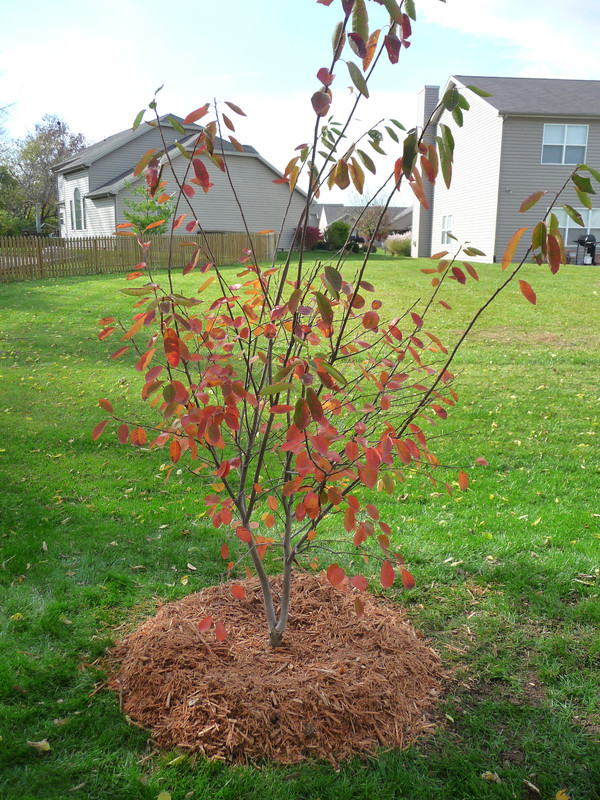 Spring and Fall is prime time for improving your property with new trees. They provide many benefits which everyone can share. Trees mean more attractive landscapes, lower energy bills and a healthier environment. However, just planting a tree without some thought and planning can create a liability rather than an asset to your site. Wise planning is essential to ensure the new trees meet your design needs and functional solutions as well. Follow these basic tips to get your tree started right and make it a long-lasting sustainable planting. For more information, download the free publication Tree Installation: Process and Practice.
Right Tree-Right Place.
Location, location, location! Planning before planting can help ensure that the right tree is planted in the right place. Proper tree selection and placement enhances your property value, prevents costly and sometimes unsightly maintenance with trimming, and lowers the risk of damage to your home and property. In some instances, trees are the innocent victim of poor planting locations and must be removed. Always allow room for growth! Also, consider native trees or those trees with fewer pests which can attack your tree. Large trees include Kentucky Coffeetree, Bur Oak and Hardy Rubber Tree. Medium-sized trees can include Japanese Pagoda Tree, Sourwood, Katsura Tree and Golden Raintree. Finally, for areas with less room, consider Serviceberry, Ironwood, Amur Maackia or Hop Tree. These are just a few of the many trees which can be chosen for your situation.
Look Up, Look Down, and Look All Around!
Regardless if the planting is in the front yard or the back yard of the home or business, be sure there will be no interference with utilities; Call 811 before you dig. It will prevent costly mistakes and maybe a life. In addition, if the tree is going to be planted along the street, typically, there is an ordinance requiring a permit to plant in the right of way. This helps Urban Forestry administration keep up the street tree inventory and allows the ISA Certified Arborists on staff a chance to offer free advice to help in the planting decisions.
It Comes from Good Stock…
Choose the tree twice, meaning get the right species for your location; then, make an informed choice on the nursery stock. Be sure the function of the tree is understood and choose the right tree for the location. Shade? Flowers? Screening? Sound Barrier? Trees can be used as tools to work for you on the site. “You get what you pay for” applies to nursery stock as well. Purchase plant material from a reputable source and get a professional opinion on the tree species for your application. One hint, if it is a fast growing tree, it probably won’t last long. See our video for tree selection tips.
This Hole is a Home!
It is a permanent home for the trees… understand the planting site prior to planting. Determine soil type and pH, drainage and exposure to the sun. If the tree isn’t naturally suited to the planting place, it doesn’t have a chance. Planting depth is a major tree planting concern. Be sure to find the “root flare” when establishing the final grade of the tree. Drainage is crucial to survival. Use the two-hour test. Dig the hole, fill it with water. If the hole is empty upon returning, there is suitable drainage for any tree. Plant the tree properly and at the proper depth, you only get one chance… Don’t dig a $10 hole for a $100 tree. See our video on tree planting tips.
Keep Good Care of the Investment.
Once the tree is in the ground, take good care of it. At least an inch of water per week to keep it growing vigorously, apply clean, hardwood mulch on the root zone to keep soils cool and moist, but never exceed three inches in depth. Remember to remove any tags on the tree and don’t forget to remove the twine from around the trunk. Don’t worry about the fertilizer at planting time, wait until next year, after the tree has gotten settled in to its new home. Enjoy your new addition to the home and landscape!
Resources:
Tree Selection for the “Un-natural” Environment, The Education Store, Purdue Extension
Tree Support Systems, The Education Store, Purdue Extension
Tree Installation: Process and Practices, The Education Store, Purdue Extension
Planting Your Tree Part 1: Choosing Your Tree, video, The Education Store, Purdue Extension
Lindsey Purcell, Urban Forestry Specialist
Purdue University, Department of Forestry and Natural Resources
 Due to reasons such as pruning, location of growth and species characteristics, trees can grow in ways that don’t endorse long-term health and safety. To counter trees growing in unsafe ways, cabling, bracing, guying, or props can be utilized to prevent branch or whole-tree failure. These tree support systems reinforce critical areas of the tree by limiting the movement of branches or leaders. In the publication titled Large Tree Cabling and Bracing, FNR-550-W, common structural deficiencies in trees and the tree support devices used to prevent problems caused by those deficiencies are described and covered.
Resources:
Tree Support Systems, The Education Store, Purdue Extension
Tree Planting Part 1: Choosing a Tree, The Education Store, Purdue Extension
Tree Pruning: What Do Trees Think?, The Education Store, Purdue Extension
Forest Improvement Handbook, The Education Store, Purdue Extension
Got Nature?, Purdue Extension, Forestry and Natural Resources
Lindsey Purcell, Urban Forestry Specialist
Purdue University, Department of Forestry and Natural Resources
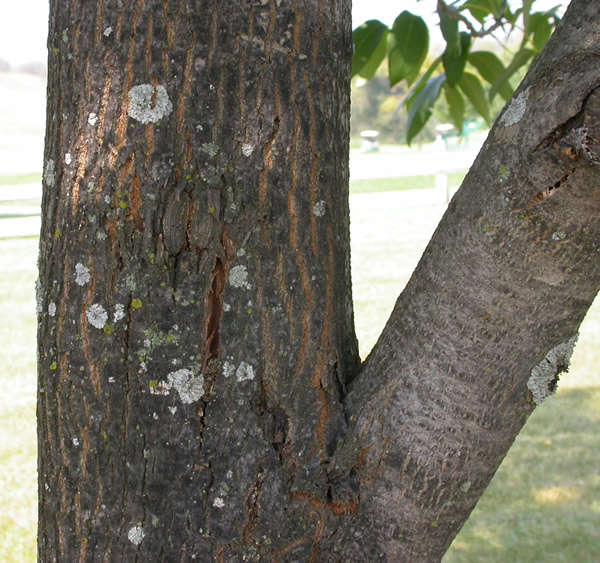 Imidacloprid, the active ingredient works by killing adults when they feed in the summer before they lay eggs. It slowly kills the two youngest stages of grubs that feed beneath the bark. The later and larger two stages are not killed. Material applied in the fall does not start killing beetles until spring. It takes twice the dose in the fall to get the same effect as a spring application. Trees with a trunk diameter of >20 inches at 4.5 ft above the ground can’t be controlled with imidacloprid.
So if your trees are starting to die I would suggest you skip the fall application of imidacloprid and switch to a professional injection of emamectin benzoate. See Management of EAB, Purdue Extension Emerald Ash Borer, for more information.
Resources:
What to do about emerald ash borer, Got Nature?, Purdue Extension-FNR
Emerald Ash Borer, Purdue Extension-Entomology
EAB research: Saving trees early less costly than replacing them, Purdue Agriculture News
Cliff Sadof
Purdue Extension – Entomology
 Trees establish themselves quite well in normal situations. However, in special situations, staking, guying, or a similar system may be needed to hold trees upright until adequate root growth anchors them firmly in the soil. The Publication Tree Support Systems answers common questions about post-planting tree care. It describes when to stake trees, how to stake and guy trees, and proper methods of trunk protection.
Resources:
Tree Planting Part 1: Choosing a Tree, The Education Store, Purdue Extension
Tree Pruning: What Do Trees Think?, The Education Store, Purdue Extension
Forest Improvement Handbook, The Education Store, Purdue Extension
Got Nature?, Purdue Extension, Forestry and Natural Resources
Lindsey Purcell, Urban Forestry Specialist
Purdue University, Department of Forestry and Natural Resources
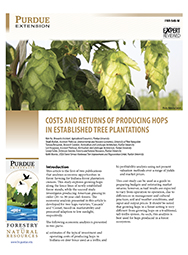 Rapid growth in the craft brewing industry has created an opportunity for Hoosier farmers to start growing hops. Hops are the female flowers (also called cones) from the hop plant (Humulus lupulus). This high-value, perennial crop is used to flavor and stabilize beer. Now available in a free download is a new publication with a study focusing on growing hops along the fence lines of newly established forest stands. This publication titled Costs and Returns of Producing Hops in Established Tree Plantations is the first of two publications that analyzes the economic opportunities in forest farming for Indiana forest plantation owners. The economic analysis presented in this article is developed for two hops varieties, ‘Cascade’ and ‘Comet’, based on marketability and presumed adaption to low sunlight, respectively.
Additional Resources:
Costs and Returns of Producing Wild-Simulated Ginseng in Established Tree Plantations, The Education Store, Purdue Extension’s resource center
Forest Improvement Handbook, The Education Store
The Nature of Teaching, Lesson Plans K-12, Purdue Extension
Hardwood Ecosystem Experiment – Sustaining Our Oak-Hickory Forests, The Education Store
Tree Pruning: What Do Trees Think?, The Education Store
Kim Ha, Research Assistant
Purdue Agricultural Economics
Other contributing authors: Dr. Shadi Atallah, Tamara Benjamin, Dr. Lori Hoagland, Lenny Farlee and Dr. Keith Woeste.
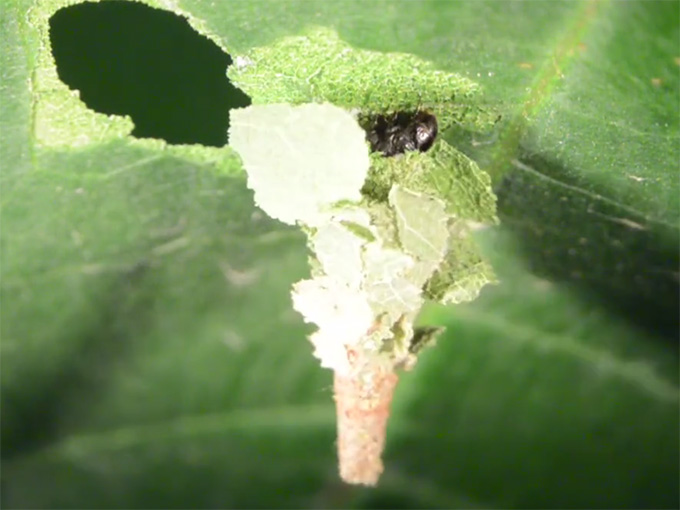 The evergreen bagworm, as its name implies, is well known for its ability to defoliate evergreen trees and shrubs like spruce, arborvitae, fir, junipers and pine. When given a chance, it will also feed on deciduous trees like maples, honeylocust, and crabapples. In late May and early June bagworms hatch from eggs that overwinter in the bag of their mother. When young bagworms begin feeding on broadleaved plants the caterpillars are too small to feed all the way through, so they leave circular patterns of skeletonization. Bagworms can be easily controlled with a spray application of spinosad (Conserve, or Fertilome borer and bagworm killer), or Bacillus thuringiensis (Dipel). More control options are available on the Purdue Tree Doctor App, purdueplantdoctor.com.
View this video located on the Purdue Plant Doctor App Suite Facebook page to watch a young bagworm caterpillar poke its head out of its silken bag to feed on a maple leaf. The young caterpillar scrapes the leaf surface to feed, and cuts bits of green tissue and glues it on its back. At the end of the video it sticks out its legs and flips the entire bag over to hide from the lights.
Resources:
Purdue Plant Doctor Diagnosis Website, Purdue Extension
Landscape & Ornamentals: Bagworms, Extension Entomology
Ask An Expert, Purdue Extension-Forestry & Natural Resources
Invasive Forest Pests in IN, Purdue Extension-Entomology
Indiana Invasive Species Council
Report Invasives
Purdue Landscape Report, Purdue University
Find an Arbroist, Trees are Good-International Society of Arboriculture (ISA)
Purdue University Department of Entomology – Extension
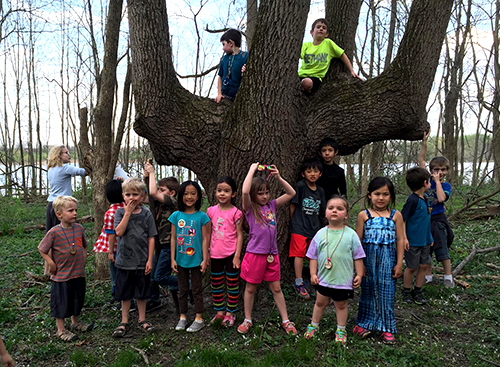
Students in Forestry and Natural Resources (FNR) continue to volunteer for Hands of the Future, Inc., a non-profit program whose mission is to help educate children about the outdoors and natural resources. As this program continues to grow, one of their dreams has been to find woods to create a children’s forest. To have a natural site that has been embellished upon with children’s needs in mind and to encourage outdoor play and adventures.
The students plan on transforming 18.8 acres of idle woods into Zonda’s Children’s Forest. The children’s forest will be composed of six main areas:
- A children’s garden, equipped with a greenhouse and kitchen, that’ll allow children to learn how to properly grow and cook food.
- An enclosed area dedicated to allowing children having fun and safe adventures.
- A viewing area for butterflies, birds and other organisms of the wild, allowing children to easily enjoy the life of the forest.
- A maze designed by sunflowers, where children can have fun and do problem-solving, while close to nature.
- A walk dedicated to viewing the owls and other organisms composing the forest.
- Another enclosed area of the woods for adventures; However, it’ll also contain tree houses, bridges and other fun additions for the children.
Donations:
Donations to help make Zonda’s Children’s Forest a reality can be made here. They have six months to raise $235,000 in order to purchase the woods.
Volunteers & Interns:
Older students and adults can apply to be a volunteer. Volunteers are always appreciated, no past experience necessary. If you love nature and kids you will enjoy this program. Internships are available for college students, contact Zonda Bryant.
Resources:
Family Nature Clubs in Indiana – Indiana Children and Nature Network
Zonda Bryant, Director
765.366.9126
director@hands-future.org
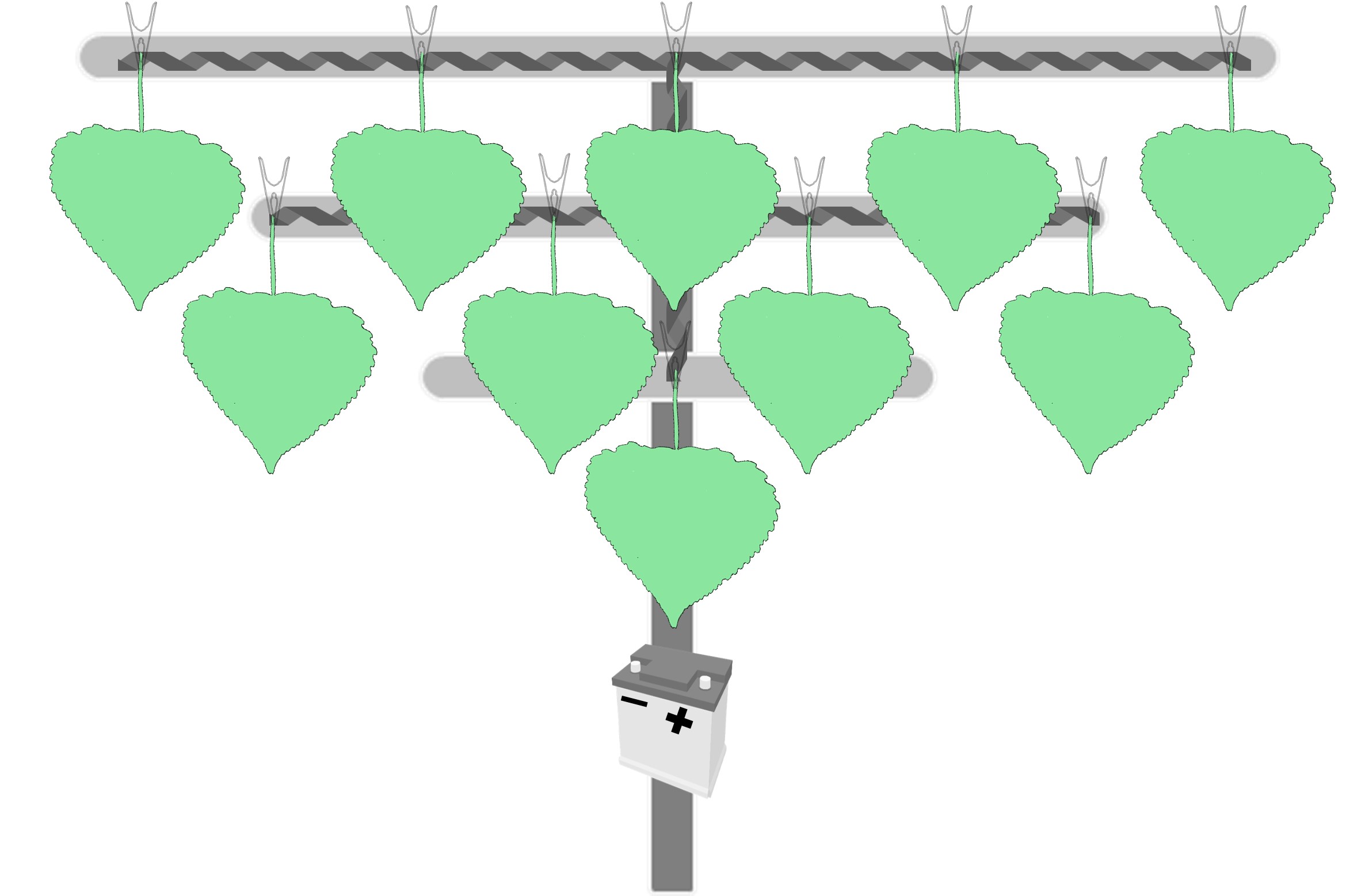
Money doesn’t grow on trees, or so the saying goes. I don’t believe those folks were talking about the cotton and linen currency of today when that phrase was first uttered. Since that period of history, many parents have edited the statement to include: shoes, clothes, toys, and a host of other items that ‘don’t grow on trees’. In the past my mother told me repeatedly that electricity didn’t grow on trees and until this past January, she was correct. Now, things have changed.
Researchers at Iowa State have designed a device that not only mimics the way tree leaves sway in the wind but generates electricity when in happens. Not meant to replace wind turbines, these inconspicuous machines are much smaller and more compact while turning wind energy into electricity. Because of their smaller footprint, these biometric (use of artificial means to mimic natural processes) trees could, with further development, be the start of a new market in electric generation.
At present the prototype resembles a wire antenna from which plastic leaves dangle that allows them all to be connected to a storage battery. Leaves on the prototype are clear but have been depicted here as green for easier viewing. The Iowa scientists envision that a scaled up model, with tens of thousands of leaves all producing electricity, would allow for a considerable amount of off-grid energy harvesting. Ensuring uncompromised efficiency remains a primary goal of the group.
The device ‘leaves’ were modeled after cottonwood (Populus deltoides) trees because the petioles (leaf stalks) are flat thus allowing the leaves greater movement in the wind. Inside the leaf stalks of the device are specialized plastic strips that release a charge when flexed. The regular fluttering of the leaves maximizes this piezoelectric effect in the model.
Future uses for such technology are variable from powering household electric devices (i.e. a tree-powered vacuum cleaner or coffee maker) to charging various modes of transportation. However, as with most new technology, efficiency remains a challenge and must be maximized to be competitive in the marketplace. New approaches are required before biometric trees and similar devices are ready to be marketed to the public. This research has already influenced new design approaches in computer science, manufacturing, and nanotechnology.
Journal Reference:
McCloskey M, Mosher CL, Henderson ER. 2017. Wind Energy conversion by Plant-Inspired Designs. PLOS ONE. doi: 10.1371/journal.pone.0170022
Web Resources:
Iowa State University. “Scientists design electricity generator that mimics trees.” ScienceDaily. ScienceDaily, 31 January 2017. www.sciencedaily.com/releases/2017/01/170131124330.htm
Additional Resources:
Purdue’s BioWall Project Aims For Cleaner Indoor Air, Got Nature?
Do Trees Sleep?, Got Nature?
Gardens by the Bay: Supertrees of Singapore Light up the Night Sky , Dailymail.com
Shaneka Lawson, USDA Forest Service/HTIRC Research Plant Physiologist/Adjunct Assistant Professor
Purdue University Department of Forestry and Natural Resources
Check out the new publication entitled Benefits of Connecting with Nature now available in The Education Store!
Times are constantly changing with the growth and integration of technology within society. As we become more and more reliant on technology for information and entertainment, we seem to be detached from many vital aspects of our world. People, especially children, are losing their touch with the outdoors. Recent reports show that children ages 6–11 spend an average of 28 hours per week watching television. The average amount of time children spent using mobile devices tripled between 2011–2013.
Natural environments have positive impacts on people’s mental health and well-being. Studies consistently show that natural settings link to much stronger developmental benefits for children.
This unit will help teachers explore student’s relationship between nature and mental health. It contains four 30-40 minutes activities: Emotion Vocabulary Exploration, Guided Imagery, Creative Writing and Exploring Nature with your Senses.
Resources:
The Nature of Teaching – Purdue Extension
Appreciating Reptiles and Amphibians in Nature –The Education Store
Frogs and Toads of Indiana – The Education Store
Molly Hunt, Extension Educator, Delaware County
Purdue University Extension Health and Human Sciences
Katie Zuber, Extension Educator, Lawrence, Jackson, Monroe and Brown County
Purdue University Extension Health and Human Sciences
Lindsey Pedigo, Extension Educator, Howard County
Purdue University Extension Health and Human Sciences
Rod N Williams, Associate Head of Extension & Associate Professor of Wildlife Science
Purdue University Department of Forestry and Natural Resources
In Tennessee, magnolia and the highly invasive ornamental pear trees are in full bloom. In New Jersey, crocuses and buttercups are vibrant spectacles of color. Here in Indiana, flowering dogwood, pawpaw, and red oak have responded to an early spring with a burst of blooms as well. This vibrant display is the result of a mild winter. Unfortunately, there is a downside. A sudden cold freeze after this swathe of warm weather could severely damage blossoms, buds, and significantly reduce yields in fruit and nut trees.
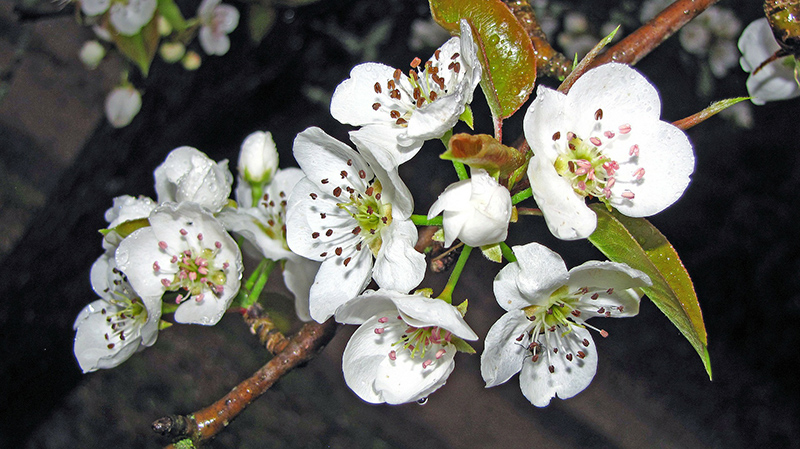
Blooms on pear tree.
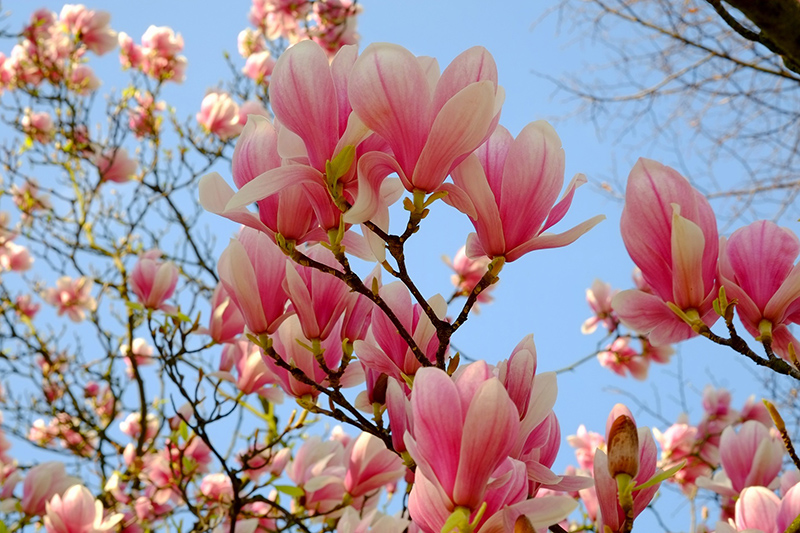
Blooms on magnolia tree.
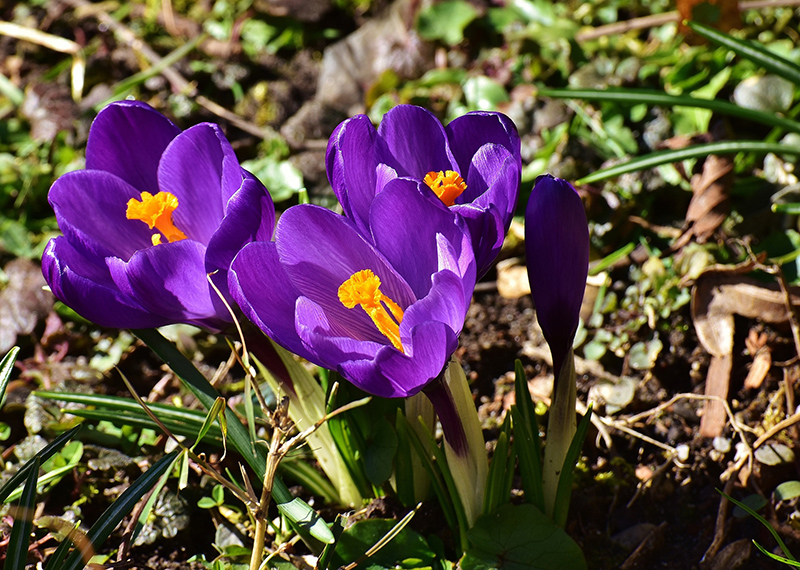
Crocus blooms.
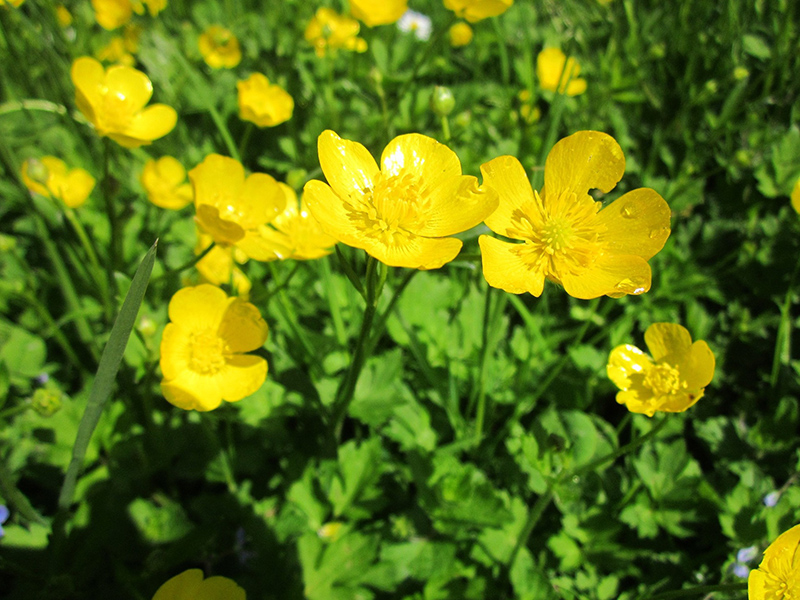
Buttercup blooms.
Growth of a tree or flower is the result of the weather and the perpetuation of its natural growth cycle. To store sufficient resources for the following year, trees use the winter season as an opportunity to shuttle nutrients to their roots. With cold temperatures keeping pests at bay, fewer nutrient resources are needed for defense and maintenance. These nutrients will be shuttled to the branches the following spring to support the growth of buds and blossoms. Interruption in the storage process caused by early spring conditions interferes with nutrient supplies and kickstarts the growing cycle again.
Nutrients once slated for root storage are now being sent to the branches to begin fruit and bud production despite having fewer resources in storage than usual. A freeze that occurs after leaves and buds begin to appear will damage the new growth and likely delay flowering and fruiting until much later in the year when surfeit energy is available to support a second growth effort. While trees are usually able to leaf out a second time, there are often more issues with low yield and early leaf drop.
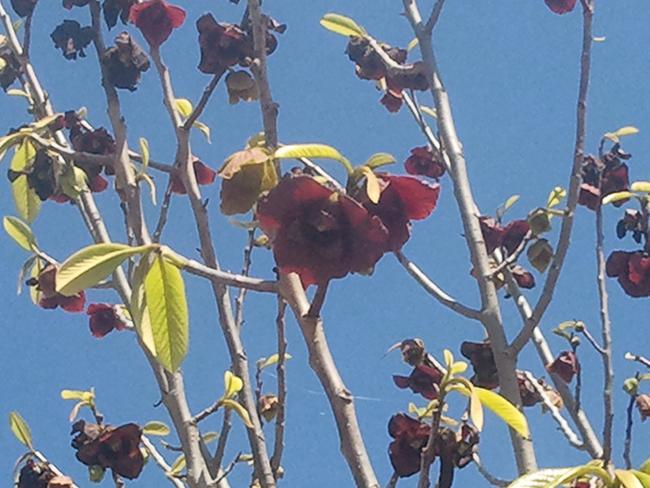
Pawpaw
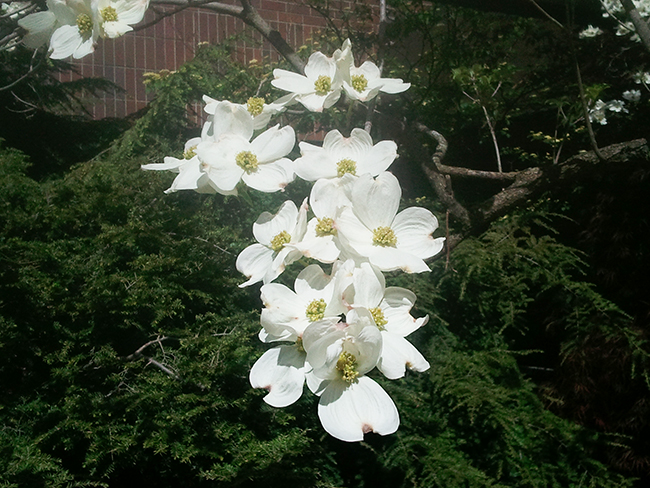
Dogwood
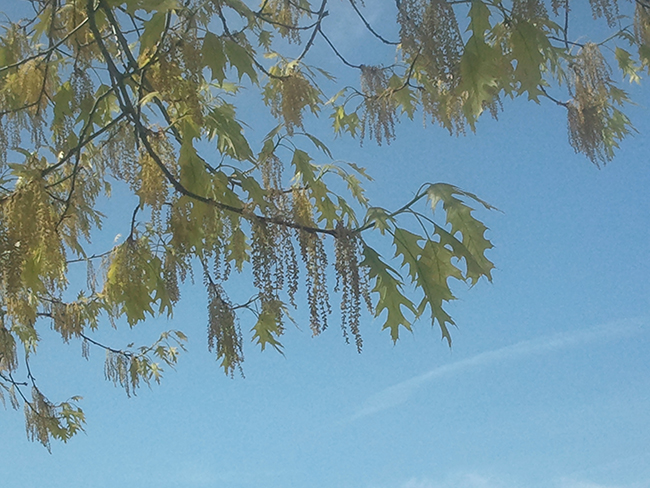
Red oak
Also, insect pests, usually subdued by cold winter temperatures are likely to be out much earlier than usual and with greater numbers. This increase in insect presence does not necessarily bode well for plant pollinator populations. If, for example, a tree flowers earlier than honeybee populations are available, then it is possible that those trees will go unpollinated. Also, if other pollinators are also unavailable, there will be no fruits the following year on that tree.
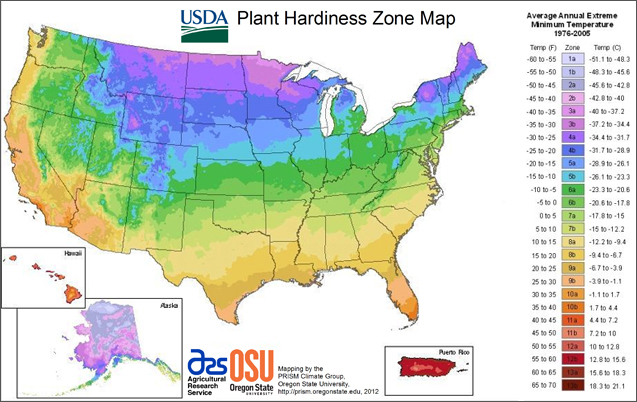
USDA Plant Hardiness Zone Map. Agricultural Research Service, U.S. Department of Agriculture, planthardiness.ars.usda.gov.
Ultimately, the state of our seed, fruit, and nut production depends on two major events; pollination and lack of a cold freeze. If we see a sudden cold snap that damages the trees and eliminates pollinators, then next spring will be a time of sorrow rather than an exciting start to the growing season. The dramatic shifts in weather temperatures over the last decade have led the Department of Agriculture to reevaluate and reassess plant hardiness zones. For the first time in thirty years, an updated map with new zones has now been created, USDA Plant Hardiness Zone Map.
Resources:
Purdue Plant Doctor App, Purdue Extension
Purdue Plant and Pest Diagnostic Laboratory, Purdue Agriculture
Planting & Transplanting Landscape Trees and Shrubs, The Education Store, Purdue Extension resource center
Tree Planting Part 1: Choosing a Tree – video, The Education Store
Tree Installation: Process and Practices, The Education Store
Shaneka Lawson, USDA Forest Service/HTIRC Research Plant Physiologist/Adjunct Assistant Professor
Purdue University Department of Forestry and Natural Resources
Lenny Farlee, Sustaining Hardwood Extension Specialist
Purdue Department of Forestry and Natural Resources

Recent Posts
- Purdue Extension’s Regional Teams Are Here: Connecting Communities with Expertise and Opportunity
Posted: October 14, 2026 in Community Development, Forestry, Forests and Street Trees, Gardening, How To, Timber Marketing, Urban Forestry, Wildlife, Woodlands - Why Do Our Trees Go From Green Leaves to Different Colors?
Posted: in Forestry, Forests and Street Trees, Urban Forestry, Woodlands - October Is Firewood Month: Protect Indiana’s Forests by Making Smart Choices
Posted: October 1, 2026 in Forestry, Forests and Street Trees, How To, Invasive Insects, Urban Forestry - Question: Why Did the Shagbark Hickories Survive the Tornado?
Posted: August 27, 2026 in Forests and Street Trees, How To, Urban Forestry - Jarred Brooke Receives Early Career Award for Prescribed Fire Work
Posted: July 20, 2026 in Forestry, Forests and Street Trees, Natural Resource Planning, Safety - Pruning Highlight; Espalier Pruning: Training Trees into Living Patterns
Posted: July 8, 2026 in Forestry, Forests and Street Trees, Gardening - Pruning Highlight-Pollarding Trees: A Traditional Pruning Practice with Modern Uses
Posted: June 11, 2026 in Forestry, Forests and Street Trees, Urban Forestry, Wildlife, Woodlands - Flat-Faced Longhorn Beetle Found in Hardwood Logs – IDNR Division of Entomology
Posted: June 8, 2026 in Alert, Forestry, Forests and Street Trees, Invasive Insects, Urban Forestry, Wildlife, Woodlands - Connecting Research to Practice: Natural Resources & Land Use Spring Training
Posted: June 5, 2026 in Forestry, Forests and Street Trees, How To, Invasive Animal Species, Invasive Plant Species, Land Use, Natural Resource Planning, Urban Forestry, Wildlife, Woodlands - Indiana Monarch and Pollinator Conservation
Posted: June 1, 2026 in Forestry, Forests and Street Trees, Gardening, How To, Natural Resource Planning, Plants, Urban Forestry, Wildlife
Archives
Categories
- Alert
- Aquaculture/Fish
- Aquatic/Aquaculture Resources
- Ask the Expert
- Christmas Trees
- Community Development
- Disease
- Drought
- Forestry
- Forests and Street Trees
- Gardening
- Got Nature for Kids
- Great Lakes
- How To
- Invasive Animal Species
- Invasive Insects
- Invasive Plant Species
- Land Use
- Natural Resource Planning
- Nature of Teaching
- Plants
- Podcasts
- Ponds
- Publication
- Safety
- Spiders
- Timber Marketing
- Urban Forestry
- Webinar
- Wildlife
- Wood Products/Manufacturing
- Woodland Management Moment
- Woodlands