 Purdue University - Extension - Forestry and Natural Resources
Got Nature? Blog
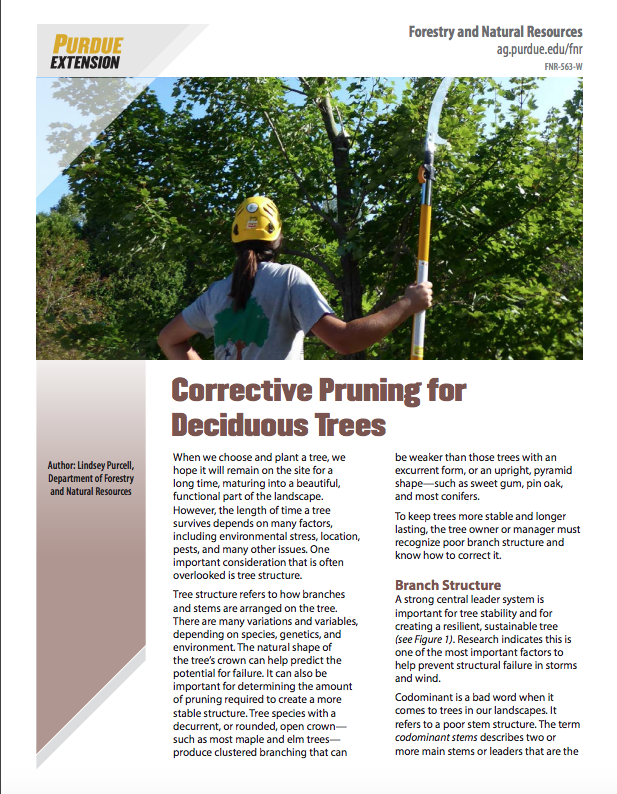
How do I remedy poor branching? Is my tree at risk of splitting, and how can pruning prevent that? Corrective pruning has many implications for tree structure, health, and longevity. Developing a strong, central branch structure in a deciduous tree is critical for preventing structural failure caused by storms, wind, and ice. This 8-page publication explains the problems resulting from a co-dominant stem structure and addresses pruning strategies for correcting poor structure.
To view this full publication please go to Corrective Pruning for Deciduous Trees located in The Education Store, Purdue Extension’s resource center.
Resources
Preparations to Prevent Southwest Tree Injury, Got Nature? Blog
When do you stake a tree?, Got Nature? Blog
Top 5 List for Tree Selection and Planting, Got Nature? Blog
Tree Selection for the “Un-natural” Environment, The Education Store, Purdue Extension
Tree Support Systems, The Education Store, Purdue Extension
Tree Installation: Process and Practices, The Education Store, Purdue Extension
Planting Your Tree Part 1: Choosing Your Tree, video, The Education Store, Purdue Extension
Lindsey Purcell, Urban Forestry Specialist
Purdue Forestry and Natural Resources

Photo Credit: Katja Schulz, flickr.com
A lepidopterist from the Florida Museum of Natural History has made a shocking discovery regarding moth behavior. Dr. Andrei Sourakov noted a dozen or so black Idia moths resting inside a hollow tree. This species, and most other moth species is typically solitary as opposed to social species like bees and ants. He went on to discover groups of as many as 400 individuals each oriented facing north (the top of the tree) and tucked away form the light. Both males and females rested quietly, each spaced away form the first reported example of moths gathering in a large group on a daily basis, similar to the roosting observed in bats, a primary predator of moths.

Photo Credit: Katja Schulz, flickr.com

Photo Credit: Collin Gillette, flickr.com
Dr. Sourakov also noted that the moths do not have a preference for tree type as they have been observed in sweetgum (Liquidambar styraciflua) and southern red oak (Quercus falcata) trees in Florida. It is suspected that a single moth finds a hollow tree and releases sex hormones to inform nearby moths where to assemble. As no mating has been observed at the location, these moths respond to the pheromone lure but do not act on a any perceived sexual stimulus.
References:
Andrei Sourakov. Mass aggregations of Idia moths (Lepidoptera: Erebidae) inside hollow trees in Florida. Tropical Lepidoptera Research, 2018 DOI: 10.5281/zenodo.1309644
Online Article: Florida Museum of Natural History. “Hollow trees host massive moth slumber parties.” ScienceDaily. ScienceDaily, 28 July 2018.
Resources:
Hardwood Ecosystem Experiment (HEE) Highlights: Moths, video, Purdue Extension – Forestry & Natural Resources Got Nature? Blog
Gypsy Moth (Spongy Moth) website, Purdue Extension-Entomology
Spongy Moth – Indiana Department of Natural Resources
The Gypsy Moth in Indiana – The Education Store, Purdue Extension resource center
Shaneka Lawson, USDA Forest Service/HTIRC Research Plant Physiologist/Adjunct Assistant Professor
Purdue University Department of Forestry and Natural Resources
A recent study at the University of British Columbia noted that a single tree along an urban street can help alleviate winds, shade pedestrians, and decrease wind pressure on nearby buildings. For both homes and businesses, the presence of trees can help decrease costs associated with maintaining indoor temperatures.
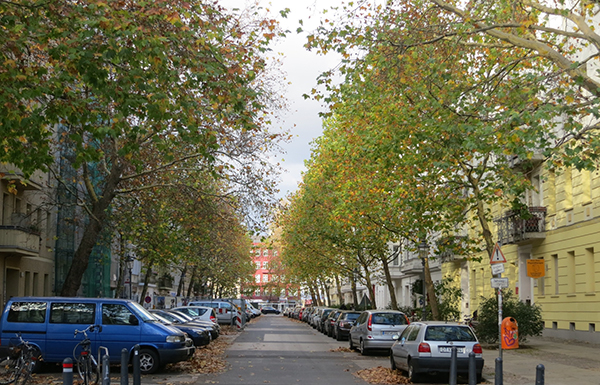
Photo credit: Kris Arnold, flickr.com
Researchers used remote sensing technology to create intricately detailed computer models of a neighborhood that included each tree, garden, and structure. The models were able to elucidate how various scenarios (no trees, bare trees, full-leaf trees) influence airflow, thermal patterns, and overall radiant heating and cooling throughout the streets of the neighborhood. Resultant data indicated trees at various stages can decrease wind speeds by as much as a factor of two. For example, a strong 30km/h wind could be reduced to a comfortable 15km/h breeze. The results also showed trees reduced the strain caused by wind pressure on building spaced closely together and farther apart. Close examination of the data indicated wind pressure causes up to a third of the costs associated with energy consumption and increased costs up to 10% in winter and 15% in summer. Using data gleaned from over a decade of measurements (from a monitored wind tower), they discovered even leafless trees are beneficial in winter months to regulate air flow and wind pressure on buildings.
This modeling effort represents the first of its kind to simulate actual neighborhood conditions using an existing neighborhood recreated in great detail as a model. Further work of this kind can be used to predict storm effects on structures and pedestrian movement. These data can assist engineers and city planners in the creation and layout of buildings, streets, and greenery while limiting energy losses and help evaluate proposed effects of weather forecasts throughout the neighborhood.
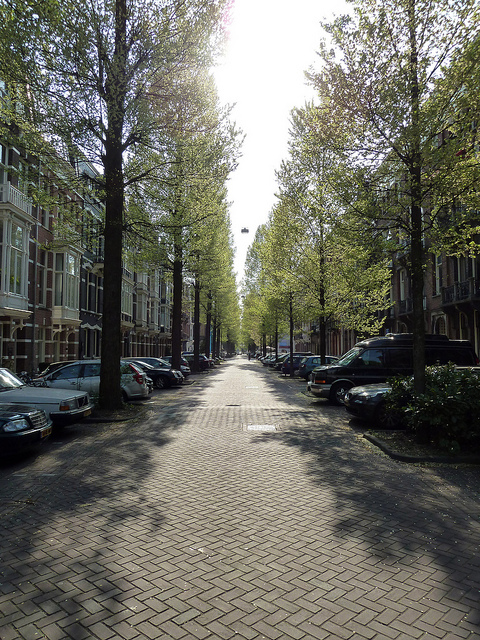
Photo credit: Rob Young, flickr.com.
References:
M.G. Giometto, A. Christen, P.E. Egli, M.F. Schid, R.T. Tooke, N.C. Coops, M.B. Parlage. 2017. Effects of trees on mean wind, turbulence and momentum exchange within and above a real urban environment. Advances in Water Resources, 106: 154 DOI: 10.1016/j.advwatres.2017.06.018
University of British Columbia. Trees can make or break city weather. Science Daily, 26 July 2017.
Resources:
Tree Selection for the “Un-natural” Environment, The Education Store – Purdue Extension’s resource center
Planting Your Tree Part 1: Choosing Your Tree (Youtube video), Purdue Extension-FNR
Tree Installation: Process and Practices , The Education Store
Tree Planting Part 2: Planting a Tree (Youtube video), Purdue Extension-FNR
Top 5 List for Tree Selection and Planting, Got Nature?, Purdue Extension-FNR
Indiana’s Urban Woodlots, The Education Store
Shaneka Lawson, USDA Forest Service/HTIRC Research Plant Physiologist/Adjunct Assistant Professor
Purdue University Department of Forestry and Natural Resources
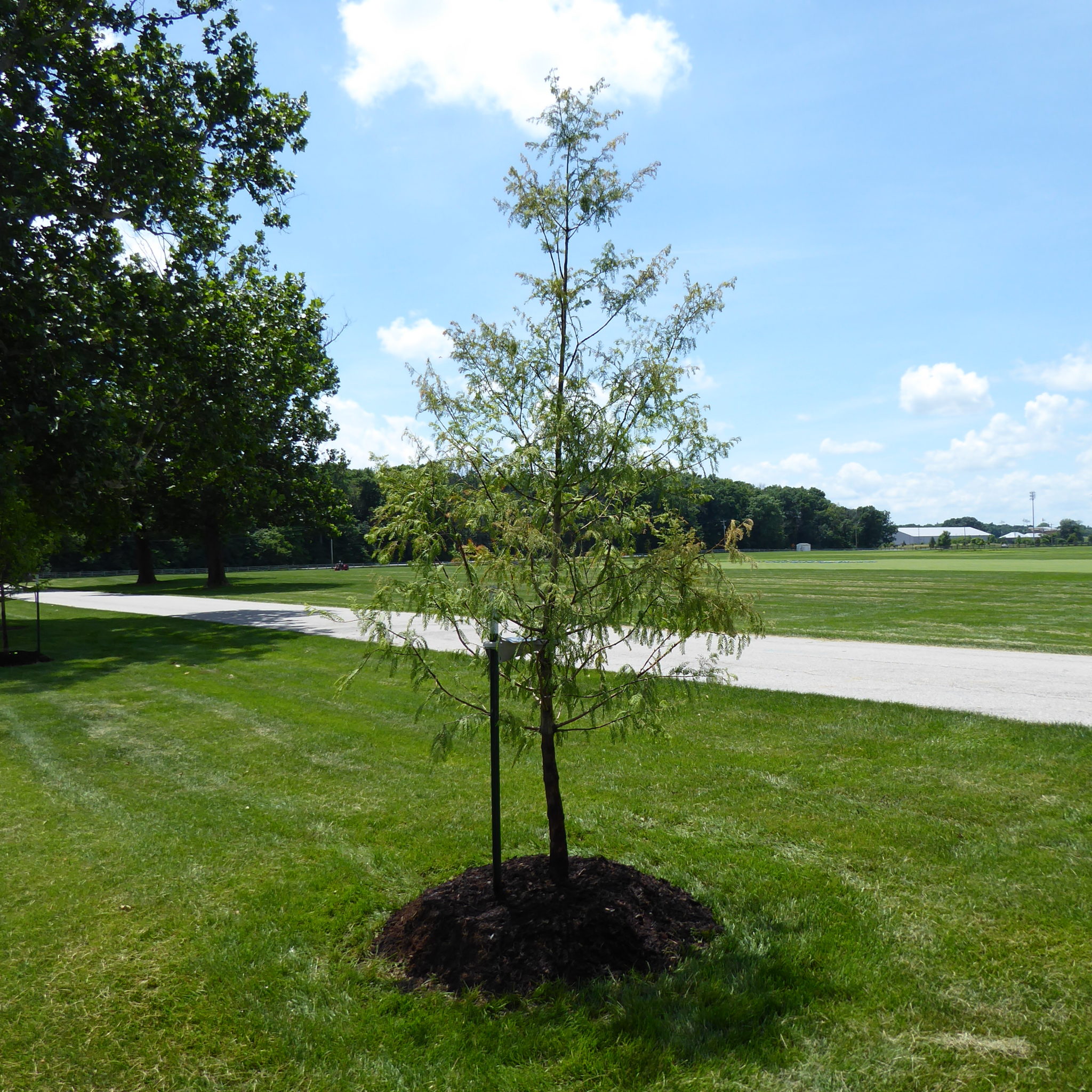
Figure 1. Properly staked tree adds support.
Stake or not to stake, that is the question!?
“No,” is the likely answer to these common questions about post-planting tree care. Trees establish themselves quite well in normal situations. Support systems such as staking and guying are, in most cases, unnecessary and can even be detrimental. Movement caused by the wind is crucial to help saplings develop into strong, structurally balanced trees.
However, in unusual conditions, staking, guying, or a similar system may be needed to hold tress upright until adequate root growth anchors them firmly in the soil. When necessary, the support system must be installed properly and removed at the appropriate time to prevent damage.
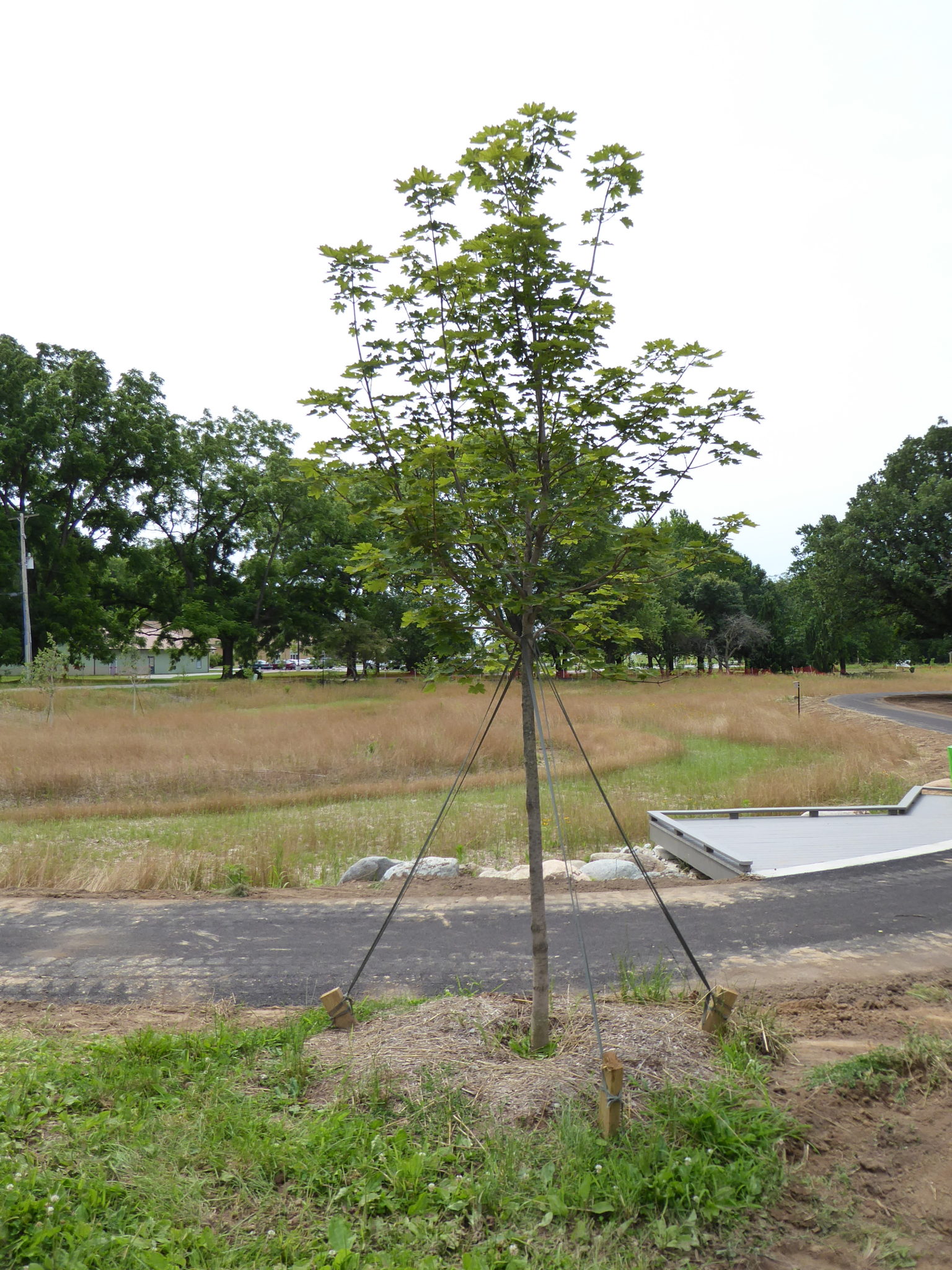
Figure 2. Guy wires can provide stability in harsh, windy conditions.
When to Stake Trees
When stakes are needed, timing depends on the environment and the type of tree.
- Bare-root trees and container-grown trees
- Large evergreen trees with high wind exposure
- Open sites exposed to strong winds
- Taller trees with undersized root balls
- Trees in areas with high rates of vandalism
- Threat of mechanical damage
Improperly staked trees suffer from poor development such as decreased truck diameters and smaller root systems – and may be unable to stay upright after you take the supports away. Often trunk tissue suffers from rubbing and may even be girdled by support materials. Also, due to poor development and taper, previously supported trunks are more likely to break off in high winds or blow over after stakes are removed.

Figure 3. Support materials left too long can damage trees.
Proper Methods and Materials of Guying and Staking
Staking and guying a tree trunk to keep it upright can be a necessary, temporary support system, but does not compensate for poor root development and establishment long-term.
- Guying is temporary and typically used on larger trees that are transplanted balled-and-burlapped. Three points of attachment provide the best support for these large-trees.
- Staking connects the trunk to a nearby steel or wooden post. This is a common approach on smaller trees or containerized tree stock.
- Underground stabilizing systems are also effective and economical for stabilizing the root balls on larger balled-and-burlapped trees. There are several commercial anchor systems available.
The cardinal sins of support include: staking trees too high, too tightly, and for too long which all cause tree damage. Improper staking can cause stem abrasions and trunk girdling. Review the anchor, attachment point, and tension on a regular basis, adjusting as needed to make certain the supports are effective and not damaging the tree. If a tree is supported, the ties and guys should be removed as soon as feasible, usually no later than after one growing season or one year. For more information see Purdue extension publication, Tree Support Systems.
Related Sources:
Stake or not to stake, that is the question?!, The Landscape Report
Tree Support Systems, The Education Store
Latest Issue of the Purdue Landscape Report, Got Nature Post
Plant for the Sun!, Got Nature Post
Lindsey Purcell, Urban Forestry Specialist
Purdue Forestry and Natural Resources
If you’ve ever had to work on a tree leaf collection, no doubt you included a leaf from Indiana’s state tree. Also known as tulip poplar and yellow poplar, the tuliptree is actually not a poplar at all. It is a member of the magnolia family known botanically as Liriodendron tulipifera.
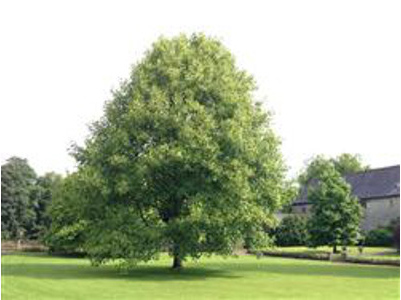
A tuliptree, the state tree of Indiana.
The tuliptree is native to most of the eastern half of the United States and prefers rich, moist, well-drained, loamy soil. It is found throughout Indiana, but it is more prevalent in the southern two-thirds
of the state.
Its unusual flowers inspired the common name. The flowers are shaped much like a tulip with greenish-yellow petals blushed with orange on the inside. Because they generally are found high in the leaf canopy, the flowers often go unnoticed until they drop off after pollination. The leaves of this tree are also quite distinct — each one has a large, V-shaped notch at the tip.
Because tuliptrees transplant easily and grow fast, they are a popular choice for in home yards. But don’t be fooled by its small size in the nursery. Give a tuliptree plenty of room in your landscape plan. A tuliptree can reach as tall as 190 feet where it’s allowed to thrive, but it is more likely to reach 70 feet tall as a mature landscape specimen. Tuliptree is not without its share of pests and diseases. Among the most common are leaf spots, cankers, scale insects, and aphids….
For full article view “State tree a popular landscape choice,” Morning AgClips.
Related Resources:
Pruning Ornamental Trees and Shrubs, The Education Store-Purdue Extension resource center
Tulip Poplar: Is Indiana’s State Tree a Protector for the Rare American Ginseng Plant?, GotNature?, Purdue Extension – Forestry and Natural Resources
Rosie Lerner, Extension Consumer Horticulturist
Purdue University, Horticulture & Landscape Architecture
Trees offer many functional and aesthetic benefits, but one of the most common is shade. Because of this, one of the most important aspects of tree selection and planting is placement. Improper placement of trees can diminish the value of the tree on the site. The tree can actually become a liability if it conflicts with infrastructure or just does not providing any useful function at all. It’s important to consider and energy efficient design to obtain shade where it’s needed most such as south or west facing structures.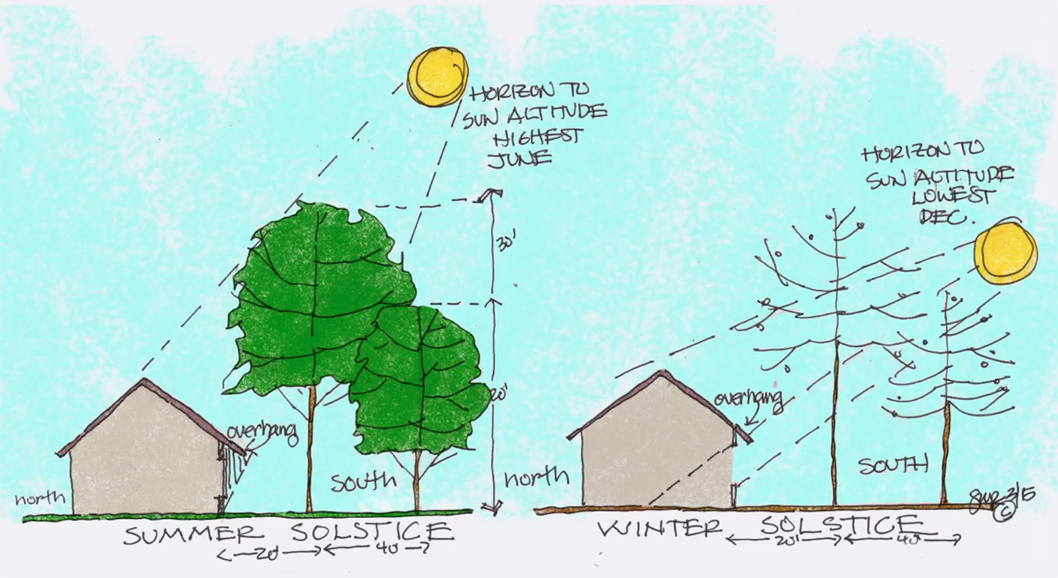
In this hemisphere, the sun is in the south and the source of cold weather is in the north. Whenever possible, place openings for sunlight and radiant heat primarily on the southern exposure, then on the west and east. For energy efficiency in winter, use the low arc of the sun to capture the maximum amount of warmth through east-, west-, and south-facing windows. Windows with a northern exposure are a source of cool air from prevailing winds during the hot months. So, give the north minimum exposure and maximum natural protection in the winter.
When selecting trees for energy efficiency, don’t plant evergreen trees near the house on southern exposures. Trees may provide some shade and screening but will also block out the warming effects of the sun during winter months. When choosing trees for shade and solar gain, choose larger, deciduous-canopy trees, which provide an advantage year-round. This means shade in the summer, blocking the sun’s energy. In the winter, after leaves have dropped, the sun’s energy can pass through the tree and into the window.
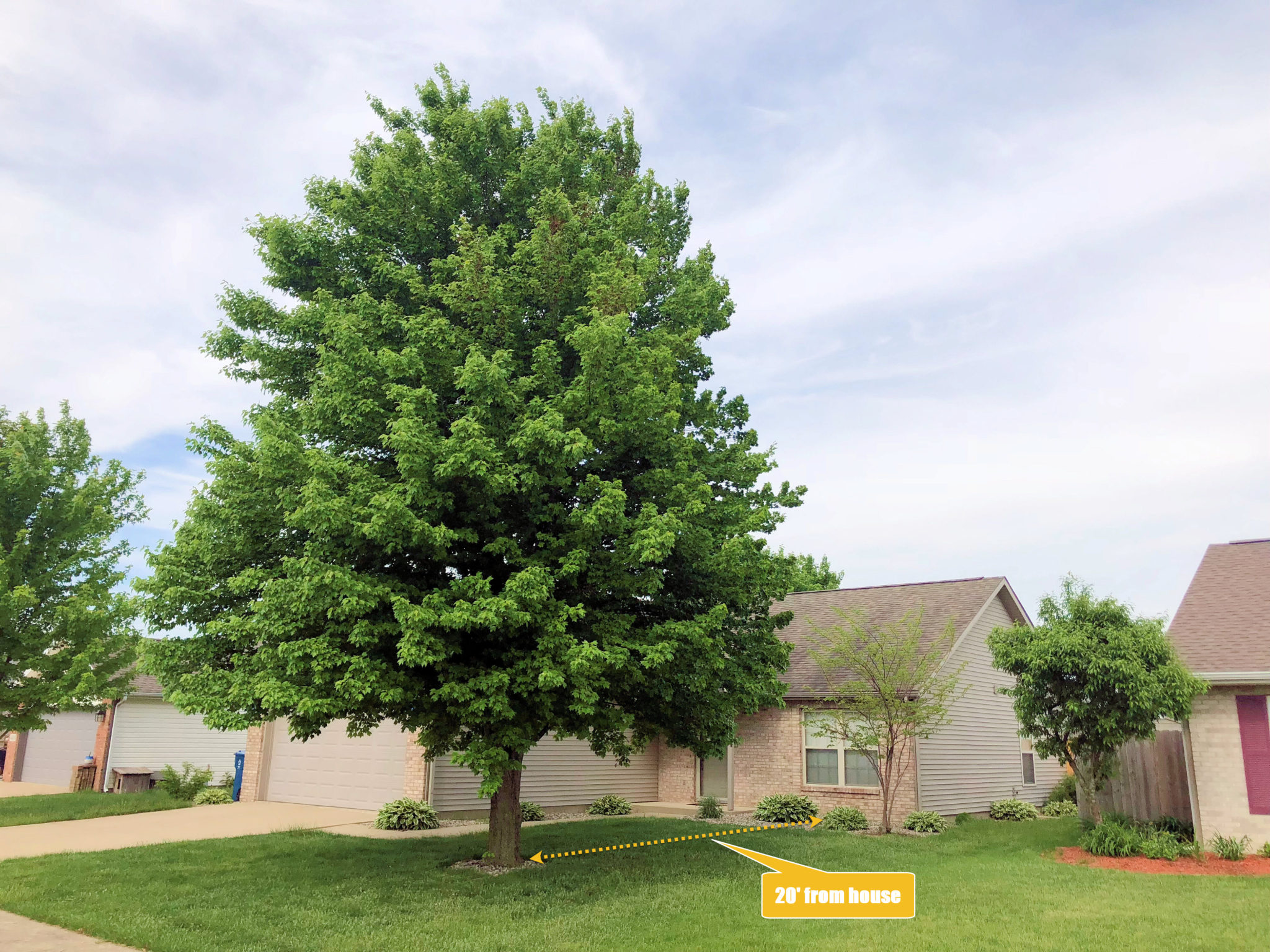
Figure 1. Protection from the summer sun.
Select good quality trees from a reputable source that are suitable for your location. The old adage, “you get what you pay for” goes for nursery stock as well. Correct placement is critical for an energy-efficient design and reduced maintenance as the tree grows and matures. Be certain the mature height and spread fit the location before purchase and planting the tree. This allows the tree freedom to spread into the design space naturally without excessive pruning needed to prevent conflicts with the home. However, the tree still must be close enough to the house for the canopy to provide shade. A good rule of thumb to begin placing the tree at least 20 feet from the house. For larger shade trees, you may need to plant as far as 40 feet from the house to insure room for growth (Figure 1).
Trees provide many benefits besides shade which includes cleaner air and increased property values. These ecosystem services are the reason why we plant trees, besides beautifying our landscape.
The functional benefits of shading help make homes energy-efficient by creating a cooling effect during the hot summer months and by allowing passive solar gain during cold winter months. However, proper selection and placement is critical to make the tree work for your site. Choose wisely, plant properly.
Full article from Purdue Landscape Report.
Resources:
Tree Selection for the “Un-natural” Environment, The Education Store – Purdue Extension resource center
Planting Your Tree Part 1: Choosing Your Tree (Youtube video), Purdue Extension-FNR
Tree Installation: Process and Practices , The Education Store
Tree Planting Part 2: Planting a Tree (Youtube video), Purdue Extension-FNR
Top 5 List for Tree Selection and Planting, Got Nature?, Purdue Extension-FNR
Lindsey Purcell, Urban Forestry Specialist
Purdue University, Department of Forestry and Natural Resources
Jennifer Koch, and other researchers with the U.S. Forest Service, has spent the last several years studying what are known as lingering ash – trees that have fared much better against the emerald ash borer. The invasive beetle, which came to North America from Asia about 20 years ago, has killed millions of ash trees around the Midwest.

An adult emerald ash borer feeds off a leaf. (Purdue University Department of Entomology photo/John Obermeyer)
But for reasons that researchers are learning more about, some trees have survived.
Koch says they’ve identified at least two reasons why. Lingering ash seem to attract fewer hungry adult ash borers, which means they’re less likely to become homes to eggs. And when eggs do hatch on lingering ash trees, they tend to be smaller and have a higher mortality rate.
Those are extremely valuable characteristic for modern ash trees, so Koch is making sure they get passed on through cloning. Not genetic modification, but rather clonal duplicates of lingering ash literally cut from part of the parent tree.
Maybe most importantly, Koch says the cloned trees appear to be even more resistant to the ash borer. With their cloned trees healthy and growing, researchers are waiting on the next generation of seeds to see if they’re even more resistant than their cloned parents.
Koch says they plan to add more lingering ash seedlings into their on-site orchard this year. Ash trees planted from seed typically take seven to 10 years to begin giving off seeds of their own, so it could be another decade before Koch knows just how successful their ash tree breeding program can be.
See full article: Attack Of The Clones: Ohio Researchers Find New Hope For Fighting Ash Borer, WOSU Public Media
Resources:
Question: What options do we have to treat our ash trees against the Emerald Ash Borer?, Got Nature?, Purdue Extension-FNR
Invasive Pest Species: Tools for Staging and Managing EAB in the Urban Forest, Got Nature?, Purdue Extension-FNR
Emerald Ash Borer, Purdue Extension-Entomology
Emerald Ash Borer Tools & Resources – Purdue Extension Entomology
WOSU Radio, Columbus, Ohio
Two important holidays that celebration our connection to nature fall in April. The first, Earth Day, falls on April 21st and marks the 48th anniversary of the day when millions of people initiated a peaceful protest to voice their views of the negative impacts of industrial development. Worldwide air pollution had led to birth defects in children and overuse of pesticides and other pollutants was causing catastrophic declines in biodiversity.
The movement was quickly supported by Congress and President Nixon worked to create the Environmental Protection Agency (EPA), the Clean Water Act (CWA), and the Endangered Species Act (ESA) along with many other environmentally friendly initiatives. Now a global holiday, billions of people across 192 countries take part in Earth Day showing their love of the planet by planting trees and flowers, contacting their congressperson and pledging to uphold more Eco-friendly practices.
On January 4, 1872, J. Sterling Morton, a journalist and later editor of a Nebraska newspaper was a great supporter of the environment with a healthy love of trees in 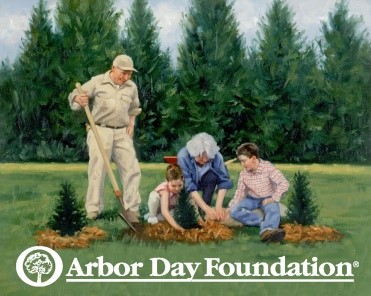 particular. In a meeting with the state board of Agriculture J. Sterling Morton, proposed a tree-planting holiday to be called “Arbor Day” for April 10, 1872. Estimates state that greater than one million trees were planted in Nebraska on the inaugural date. The success of the effort led the Nebraska governor (Robert W. Furnas) to make an official proclamation of the holiday on March 12, 1874. In 1885, Arbor Day was named a legal holiday and April 22 (J. Sterling Morton’s birthday) was deemed the permanent observance date. The success of the holiday spread nationwide as other states began holding their own Arbor Day celebrations and is now a well-celebrated holiday.
References:
Earth Day, PDF
‘Twas the Day Before Arbor Day, Got Nature?, Purdue FNR-Extension
Tree Planting Part 1: Choosing a Tree, The Education Store, Purdue Extension
Shaneka Lawson, USDA Forest Service/HTIRC Research Plant Physiologist/Adjunct Assistant Professor
Purdue University Department of Forestry and Natural Resources
Prescribed fire is a great tool to improve the food and cover for a variety of wildlife species on your property. One of the most important aspects of using prescribed fire is making sure the fire is conducted safely. This point cannot be overstated, safe use of prescribed fire is paramount. Beyond taking the appropriate training courses or seeking help from a professional, one the most important aspects of safely conducting a prescribed fire is ensuring you have adequate firebreaks.
Firebreaks can serve multiple purposes related to the safe use of prescribed fire and can provide additional food and cover for wildlife. The main purpose of firebreaks is to stop the fire from escaping the burn unit, but they also can provide quick and easy movement around the burn unit, help reduce the amount of people required for the burn and can make igniting the fire safer. Here are a few examples of different types of firebreaks.
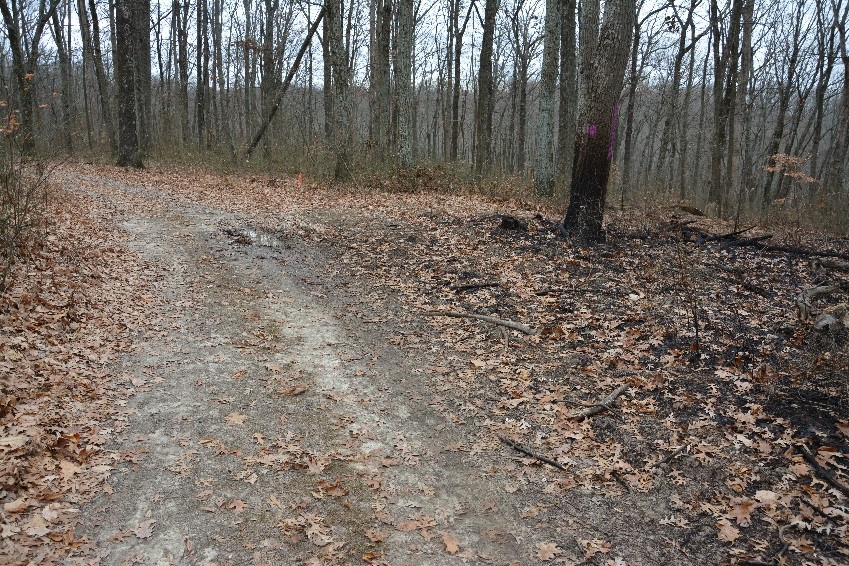
This logging road is a good example of an existing road that can be used as a firebreak.
Existing roads
Existing roads, whether they are paved, gravel, dirt, or logging roads, can serve as outstanding firebreaks, plus they require very little work to prepare prior to a burn. These are also one of the cheapest options for firebreaks. If you are using gravel, dirt, or logging roads as firebreaks, you need to make sure there is not excessive vegetation or leaf litter in the road. Too much vegetation
on the firebreak could lead to an escape.
Streams, creeks, or other bodies of water
Another cheap and easy option for firebreaks is to use existing streams, river, or bodies of water. If you are using water features as a firebreak, here are some things to consider: is the stream or river wide enough to stop the fire from escaping and can people helping with the fire move easily around, across, or through the stream or river to access various part of the burn unit or to stop an escaped fire?
Crop fields
Crop fields with cool-season grains (wheat, oats, rye) or cover crops can serve as a great firebreak. Crop fields with only soybean or corn stubble should be used with caution, as fire may creep through a field with excessive stubble. For fields with crop stubble, planting the edge of the field in a cool-season crop (wheat, clover, oats, etc.), disking the edge of the field, or wetting the crop stubble are all steps that can used to improve the field as a firebreak.
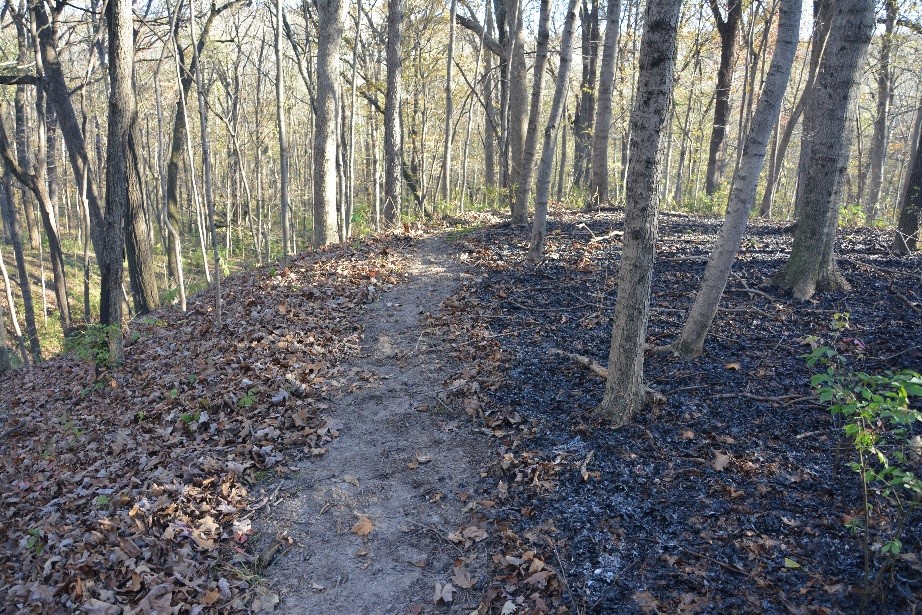
This leaf-blown firebreak was only 3-4 feet wide, but it easily stopped the fire in this situation.
Leaf-blown firebreaks
If you are burning in the woods, using a leaf blower to remove leaf litter and expose bare mineral soil is a quick and easy way to create a firebreak. These firebreaks do not need to be as wide as those in an old field or native grass stand because the flame length when burning in the woods is typically much shorter than burning in a field.
Disked firebreaks for multiple purposes
Disking or tilling to expose bare mineral soil is an extremely effective method of creating a firebreak. These breaks can also provide food and/or cover for various wildlife species if managed correctly. Disking the firebreak and then letting the firebreak remain fallow during the growing season creates outstanding cover for brooding turkeys, pheasants, and quail.
You can also plant the firebreaks after disking to create a food plot for various wildlife species. If you disk the firebreaks in the fall and plan to burn in the spring, you can plant the firebreaks with a mix of wheat and crimson clover or a mix of perennial clovers to create a great food plot for deer and turkey. You can also plant the firebreaks with millet, grain sorghum, or sunflowers after you have burned the field in the spring.

If you use mowed firebreaks you run the risk of fire creeping across the firebreak and escaping, especially if there is too much thatch in the firebreak.
My absolute favorite multiple purpose firebreak is one that is disked in Aug-Sep, planted to winter wheat (40-60 lbs/ac), and then left to remain fallow after the wheat has produced seed. This firebreak effectively stops fire, provide green browse from the fall through the spring, provides seed during the early summer, and provides excellent brood cover throughout the summer and early fall. This is truly an all-in-one firebreak.
Mowed grass firebreak
Mowed grass firebreaks are not ideal, but they can be used in certain situations. If mowed firebreaks are used, you must be sure that there is not excessive thatch built up in the break. Too much thatch will allow the fire to creep across the break and potentially escape. Even on firebreaks without excessive thatch, using water to create a “wet” firebreak is recommended.
No matter which type of firebreak you choose to use, taking the time to make sure the firebreak is adequately installed and is sufficient to stop the fire from escaping will help make the burn safer and will create less headaches for you when conducting the burn.
Additional Resources:
Firebreaks for Prescribed Burning, Oklahoma State University Extension
Prescribed fire: 6 things to consider before you ignite, Got Nature?, Purdue Extension-FNR,
On-line Basic Prescribed Fire Training, USDA, U.S. Forest Service
Publications Focus on Plan, Safety of Prescribed Burns, Iowa State Extension,
eFIRE, North Carolina State Extension
Renovating native warm-season grass stands for wildlife: A Land Manager’s Guide, The Education Store, Purdue Extension resource center
Calibrating a No-Till Drill for Conservation Plantings and Wildlife Food Plots, The Education Store
Jarred Brooke, Wildlife Extension Specialist
Purdue Department of Forestry and Natural Resources
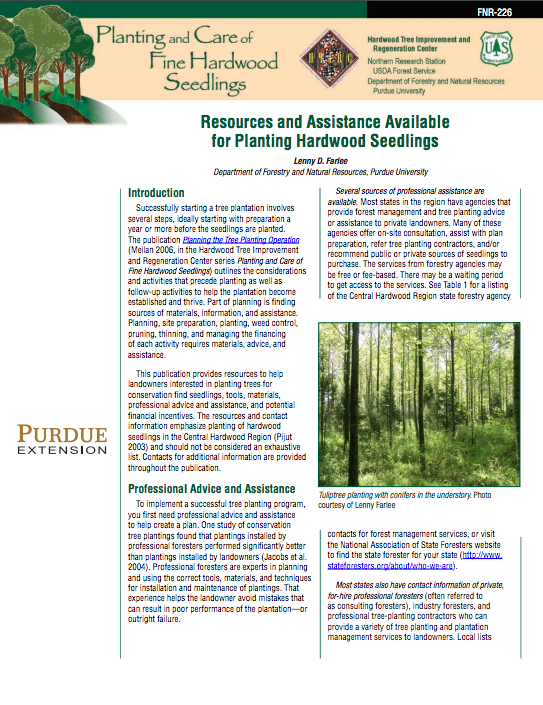 Successfully starting a tree plantation involves several steps, ideally starting with preparation a year or more before the seedlings are planted. This updated publication with current resources titled Resources and Assistance Available for Planting Hardwood Seedlings, landowners can find valuable information about planting trees for conservation, such as resources, contact information, tools, professional advice and assistance and financial incentives.
Resources:
Ordering Seedlings from the State Forest Nursery System, Got Nature?, Purdue Extension-FNR
Instructions for Ordering Tree Seedlings – Indiana DNR Division of Forestry
Importance of Hardwood Tree Planting – The Education Store, Purdue Extension Resource Center
Forest Improvement Handbook – The Education Store
Designing Hardwood Tree Plantings for Wildlife – The Education Store
Lenny D Farlee, Sustaining Hardwood Extension Specialist
Purdue University Department of Forestry and Natural Resources

Recent Posts
- Popular Landscape Shrub is Invasive
Posted: October 15, 2026 in Alert, Forestry, Forests and Street Trees, Invasive Plant Species, Plants, Woodlands - Purdue Extension’s Regional Teams Are Here: Connecting Communities with Expertise and Opportunity
Posted: October 14, 2026 in Community Development, Forestry, Forests and Street Trees, Gardening, How To, Timber Marketing, Urban Forestry, Wildlife, Woodlands - Why Do Our Trees Go From Green Leaves to Different Colors?
Posted: in Forestry, Forests and Street Trees, Urban Forestry, Woodlands - October Is Firewood Month: Protect Indiana’s Forests by Making Smart Choices
Posted: October 1, 2026 in Forestry, Forests and Street Trees, How To, Invasive Insects, Urban Forestry - Question: Why Did the Shagbark Hickories Survive the Tornado?
Posted: August 27, 2026 in Forests and Street Trees, How To, Urban Forestry - Jarred Brooke Receives Early Career Award for Prescribed Fire Work
Posted: July 20, 2026 in Forestry, Forests and Street Trees, Natural Resource Planning, Safety - Pruning Highlight; Espalier Pruning: Training Trees into Living Patterns
Posted: July 8, 2026 in Forestry, Forests and Street Trees, Gardening - Pruning Highlight-Pollarding Trees: A Traditional Pruning Practice with Modern Uses
Posted: June 11, 2026 in Forestry, Forests and Street Trees, Urban Forestry, Wildlife, Woodlands - Flat-Faced Longhorn Beetle Found in Hardwood Logs – IDNR Division of Entomology
Posted: June 8, 2026 in Alert, Forestry, Forests and Street Trees, Invasive Insects, Urban Forestry, Wildlife, Woodlands - Connecting Research to Practice: Natural Resources & Land Use Spring Training
Posted: June 5, 2026 in Forestry, Forests and Street Trees, How To, Invasive Animal Species, Invasive Plant Species, Land Use, Natural Resource Planning, Urban Forestry, Wildlife, Woodlands
Archives
Categories
- Alert
- Aquaculture/Fish
- Aquatic/Aquaculture Resources
- Ask the Expert
- Christmas Trees
- Community Development
- Disease
- Drought
- Forestry
- Forests and Street Trees
- Gardening
- Got Nature for Kids
- Great Lakes
- How To
- Invasive Animal Species
- Invasive Insects
- Invasive Plant Species
- Land Use
- Natural Resource Planning
- Nature of Teaching
- Plants
- Podcasts
- Ponds
- Publication
- Safety
- Spiders
- Timber Marketing
- Urban Forestry
- Webinar
- Wildlife
- Wood Products/Manufacturing
- Woodland Management Moment
- Woodlands