 Purdue University - Extension - Forestry and Natural Resources
Got Nature? Blog
 Quagga mussels, which arrived in Lake Michigan in the 1990s via ballast water discharged from ships, have colonized vast expanses of the Lake Michigan bottom, reaching densities as high as roughly 35,000 quagga mussels per square meter. The invasive species that can have major economic impacts filters up to 4 liters of water per day, and so far seems unaffected by any means of population control. It is also a constant threat to other systems, as it is readily transported between water bodies.
Researchers have long known that these voracious filter feeders impact water quality in the lake, but their influence on water movement had remained largely a mystery.
“Although Lake Michigan is already infested with these mussels, an accurate filtration model would be imperative for determining the fate of substances like nutrients and plankton in the water,” Purdue University PhD candidate David Cannon said. “In other quagga mussel-threatened systems, like Lake Mead, this could be used to determine the potential impact of mussels on the lake, which could in turn be used to develop policy and push for funding to keep mussels out of the lakes.”
For full article and video view Purdue Researchers Get to the Bottom of Another Quagga Mussel Impact.
Resources:
A Field Guide to Fish Invaders of the Great Lake Regions, Illinois-Indiana Sea Grant (IISG)
Protect Your Waters, U.S. Fish and Wildlife Service & U.S. Coast Guard
Profitability of Hybrid Striped Bass Cage Aquaculture in the Midwest, The Education Store, Purdue Extension resource center
A Guide to Marketing for Small-Scale Aquaculture Producers, The Education Store
Aquaculture Industry in Indiana Growing, Purdue Today
Sustainable Aquaculture: What does it mean to you?, The Education Store
Pond and Wildlife Management website, Purdue Extension
Fish Cleaning with Purdue Extension County Extension Director, Got Nature? Blog, Purdue Extension – Forestry and Natural Resources
Aquaponics: What to consider before starting your business, YouTube, Purdue Ag Economics
Aquatics & Fisheries, Playlist, YouTube, Purdue Extension – Forestry and Natural Resources
Illinois-Indiana Sea Grant (IISG)
University of Illinois Extension and Purdue University Extension
This comprehensive written abstract titled Tools for Staging and Managing Emerald Ash Borer in the Urban Forest shares research gathered in an eight-year period with a variety of management strategies.
Advances in control can help municipal foresters save ash trees from emerald ash borer (EAB) [Agrilus planipennis (Fairmaire)]
in urban forests. Although ash trees of any size can be protected from this pest, cities often do not implement programs because they fail to recognize and act o incipient populations of EAB. In this study, researchers develop a model for predicting ash mortality over an eight-year period, and validated with data from the removal of >14,000 ash trees killed by EAB in Fort Wayne, Indiana, U.S. researchers then developed a sampling scheme to help foresters map their ash trees along the expected progression of ash decline. This model was then used to modify a web-based EAB cost calculator that compares discounted annual and cumulative costs of implementing a variety of management strategies. It was determined that strategies that most heavily relied on saving ash trees were less expensive and produced a larger forest than those strategies that mostly removed and replaced ash trees. Ratios of total discounted costs to discounted cumulative benefits of strategies that saved most ash trees were over two-thirds lower than strategies of proactive tree removal and replacement. Delaying implementation of an ash management program until damage would be visible and more obvious to the community (Year 5 of the model) decreased the cost–benefit ratio by <5%. Thus, delays that rely on the abundance of locally damaged trees to bolster community support do not necessarily diminish the utility of implementing a control strategy.
For full article: Tools for Staging and Managing Emerald Ash Borer
Resources:
Tree Doctor App, The App Store
Invasive Species – Indiana Department of Natural Resources (IDNR)
Ask an Expert – Purdue Extension-Forestry and Natural Resources
Indiana Invasive Species Council – Includes: IDNR, Purdue Department of Entomology and Professional Partners
Great Lakes Early Detection Network App (GLEDN) – The Center for Invasive Species & Ecosystem Health
National Invasive Species Awareness Week: February 27-March 3, 2017
Invasive Species Week a reminder to watch for destructive pests, Purdue entomologist says – Purdue Agriculture News
Cliff Sadof, Professor
Purdue University Department of Entomology
Matt Ginzel, Associate Professor
Purdue University Department of Forestry and Natural Resources & Department of Entomology
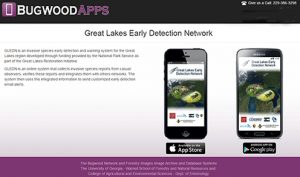 The Forest Pest Outreach and Survey Project at Purdue reminds us that early detection is the best way to slow the spread of invasive species. You can report invasive species by calling the Invasive Species hotline at 1-866-NO-EXOTIC (1-866-663-9684) or using the free Great Lakes Early Detection Network smartphone app, which can be downloaded on iTunes or Google Play. View video to see how easy it is to use the app, Great Lakes Early Detection Network App (GLEDN).
If you’re interested in learning more about invasive pests and how to report them, sign up for one of our free Early Detector Training workshops!
National Invasive Species Awareness Week: February 27-March 3, 2017.
Resources:
Invasive Species – Indiana Department of Natural Resources (IDNR)
Ask an Expert – Purdue Extension-Forestry and Natural Resources
Indiana Invasive Species Council – Includes: IDNR, Purdue Department of Entomology and Professional Partners
Invasive Species Week a reminder to watch for destructive pests, Purdue entomologist says – Purdue Agriculture News
Sara Stack, MS student
Purdue Department of Entomology
Many of the invasive plant issues we experience in the urban ecosystem is due to improper plant selection when landscaping our homes and businesses. Often times, nurseries and garden centers stock trees and shrubs that create major issues in nearby natural areas. Landscapers everywhere seek beautiful, unusual, exceptionally hardy, drought-tolerant, or fast-growing plants. Unfortunately, plants selected for their resilience may be invasive because of their adaptable nature. Plants selected for their aesthetic value may be hard to banish from garden centers even after their invasive tendencies are revealed. These plants are typically prolific seed-producers which birds deposit everywhere creating competition for native plants.
Invasive species are damaging because they: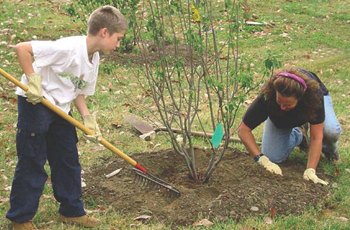
- produce large numbers of new plants each season.
- tolerate many soil types and weather conditions.
- spread easily and efficiently, usually by wind, water, or animals.
- grow rapidly, allowing them to displace slower growing plants.
- spread rampantly when they are free of the natural checks and balances found in their native range.
One of the worst offenders for invasive qualities is the Callery Pear. This ornamental pear, famous for its prolific white flowers in spring, creates a beautiful display in many landscapes. However, it is a poor choice for two major reasons. It is highly invasive and can take over entire natural areas with its heavy seed production. In addition, it is a very weak-wooded tree with poor branch structure, leaving it susceptible to splitting and breaking under heavy winds. Check out this publication for more information on the Callery Pear. See Invasive Plant Species: Callery Pear video for more information.
To help prevent the spread of invasive species, choose plants wisely. Use the following publication as a guide for alternatives for invasive landscape plants, Commercial Greenhouse and Nursery Production: Alternative Options for Invasive Landscape Plants.
Resources:
Invasive Plant Species: Callery Pear – The Education Store, Purdue Extension Resource Center
Invasive Plant Species: Oriental Bittersweet – The Education Store
Invasive Plant Species: Wintercreeper – The Education Store
Invasive Plant Species Fact Sheets: Poison Hemlock – The Education Store
Mile-a-minute Vine – The Education Store
Commercial Greenhouse and Nursery Production: Alternative Options for Invasive Landscape Plants, The Education Store
Invasive Species – Purdue Extension
Indiana’s “Most Unwanted” Invasive Plant Pest List – Indiana Cooperative Agricultural Pest Survey (CAPS) Program
Indiana Invasive Species Council – Includes: IDNR, Purdue Department of Entomology and Professional Partners
Invasive Species – Indiana Department of Natural Resources (IDNR)
National Invasive Species Awareness Week: February 27-March 3, 2017
Lindsey Purcell, Urban Forestry Specialist
Purdue University, Department of Forestry and Natural Resources
When biologists and land managers talk about managing native warm-season grasses (NWSG) they are really talking about managing early-successional plant communities. Early-successional vegetation (i.e., stands of annual or perennial grasses and forbs [broadleaf plants]) provide benefits for a variety of game and non-game wildlife species. Songbirds, northern bobwhite, and ring-necked pheasants use these areas to build nests and raise broods in the summer and for escape and thermal cover in the winter. White-tailed deer also use these areas heavily for bedding, to hide fawns from predators, and the forbs provide deer with excellent nutrition during the summer.
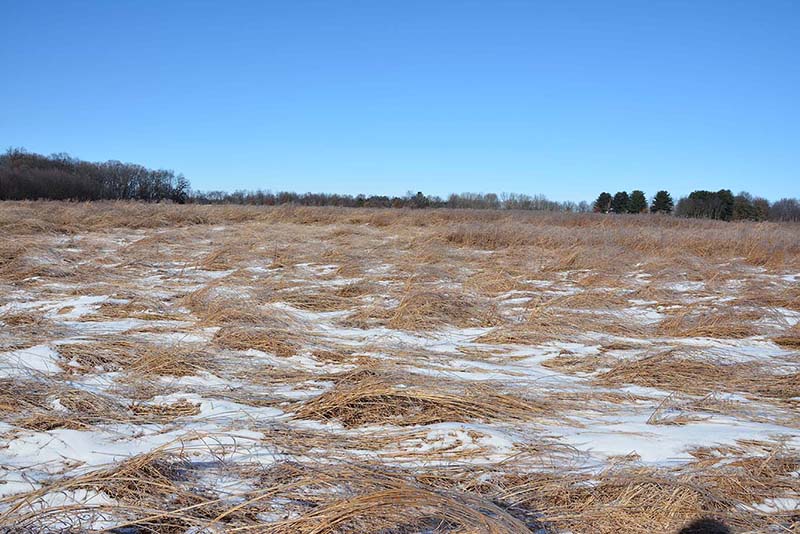
Forbs mixed with grasses help prevent the grasses from falling over and laying flat during the winter.
However, as these stands age their value to most wildlife species decreases drastically! Most stands of planted NWSG have little value, for species such as bobwhite, within 3-5 years of establishment. As the stands age, the tall perennial NWSGs (big bluestem and Indiangrass) become thicker; eventually crowding out all the forbs in the stand and creating a monoculture of grass. In the winter, the grasses fall over or “lodge”, as in the picture, and provide little to no cover.

Forbs mixed with grasses help prevent the grasses from falling over and laying flat during the winter.
This is why programs such as the Conservation Reserve Program require Mid-Contract Management (MCM) during years 4, 5, or 6 of the contract. MCM is aimed at maintaining or enhancing the wildlife value of NWSG stands by thinning the NWSGs providing room for planted and volunteering forbs to grow. These forbs act as supports for the grasses, helping them stand tall all winter, attract pollinators and insects important to foraging songbirds and game birds in the summer, and provide seed throughout the winter. Additionally, thinning the grasses and providing more room for weeds or forbs to grow will make it easier for ground dwelling wildlife to move and forage.
If your stand of NWSGs looks like the picture above, the time to manage them is not now but 2 years ago! However, managing them now can be effective and you have some options!
For most early successional wildlife species, you want the field to be from a 50/50 to 70/30 percent mix of forbs and grasses (favoring forbs). The field should be split into portions and managed on successive years. For larger fields, split the field into 4-5 acres sections. If you have multiple fields on your property you can manage the whole field. The key is to ensure that some cover is left on your farm throughout the winter.
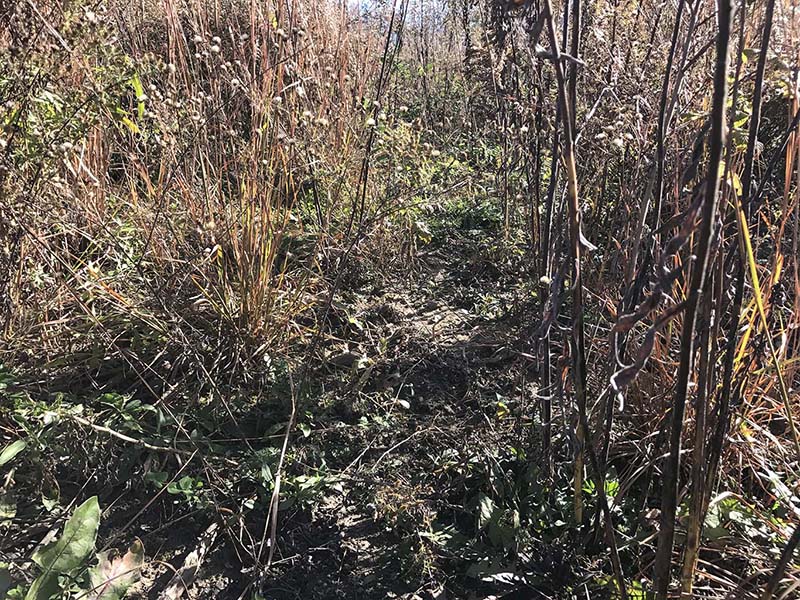
This picture gives you a “quail’s eye view” in a stand of native grasses and forbs with the ideal composition! Notice how the open space between plants and the bare ground would make it easy for a quail to maneuver and feed on insects or seed!
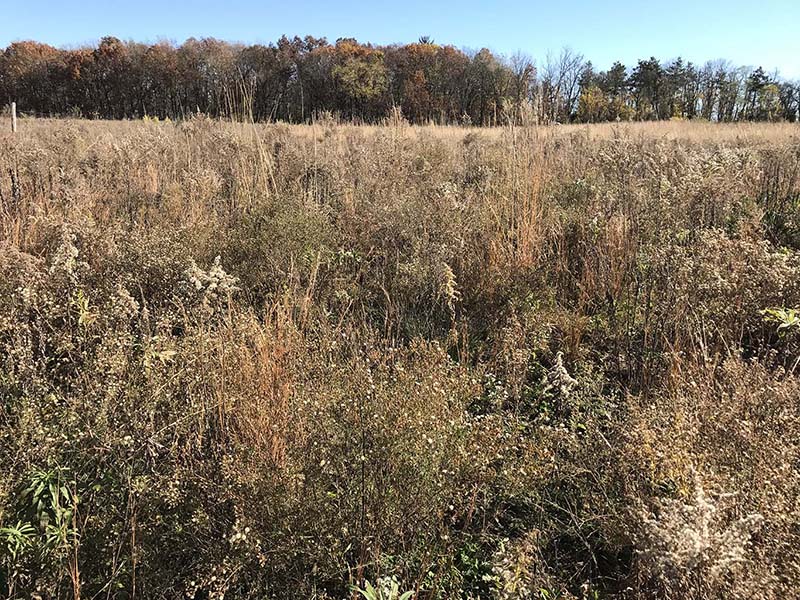
This picture represents the ideal composition of native grass stands; 50% or less of the stand is native grasses and 50% or greater of the stand is comprised of forbs.
September – March
Step 1. Burn or mow a portion of the field.
Step 2. Disk the same portion within a few weeks of burning or mowing the field.
By burning or mowing the field prior to disking, you make it easier for the disk to cut into the soil. The field should be disked so that a majority of the plant debris is worked into the soil and the soil is exposed.
Disking from September through March will result in a more beneficial plant composition than disking in the spring or summer.
May – June or August – September
Step 1. Just after winter and prior to spring green-up (late March or early April) the field should be burned to prepare the field for management. This step is not necessary but can improve the herbicide application. If applying herbicide in Aug-Sep, mowing or burning the field 2-3 weeks prior to application can be beneficial.
Step 2. Apply 2 quarts/acre of glyphosate OR 24 ounces/acre of imazapyr (53% active ingredient) to the field or portions of the field where native grasses are extremely thick.
NOTE: Spot spraying problematic areas are always better than whole field applications, but sometimes whole field applications are warranted.
CAUTION: Imazapyr can harm desirable trees; avoid spraying imazapyr within the drip line of desirable trees.
These management options will reduce or “thin” the native grasses enough to provide forbs from the seed bank with room to grow! The field may look “messy” or “weedy” the first summer or two after application but that’s okay! Actually, it’s what you want! Most of the “weeds” that come from the seed bank provide excellent cover and food for a variety of wildlife species. Just be sure to control undesirable weeds such as Canada thistle, if they appear.
For more information on how to manage NWSG or other early successional vegetation, contact your local IN-DNR wildlife biologist or NRCS office.
Additional Resources:
Herbicides to reduce NWSG density, SEAFWA
Landowner’s guide to NWSG management, TRACE
Quail Habitat – Putting the Numbers in Perspective, The Education Store
Control of Canada Thistle in CRP and Other Noncrop Acreage, The Education Store
Jarred Brooke, Extension Wildlife Specialist;
Purdue University Department of Forestry and Natural Resources
Videos:
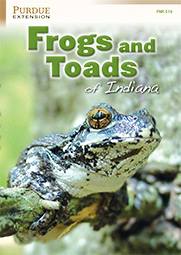
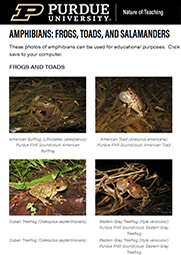
Ask an Expert: Anurans (Frogs and Toads)
Ask an Expert: Salamanders
A Moment in the Wild: Wood Frogs
A Moment in the Wild: American Toad
A Moment in the Wild YouTube Playlist-Subscribe
Reptiles, Amphibians & the Scientific Method
Learn All About Hellbenders and Take a Tour
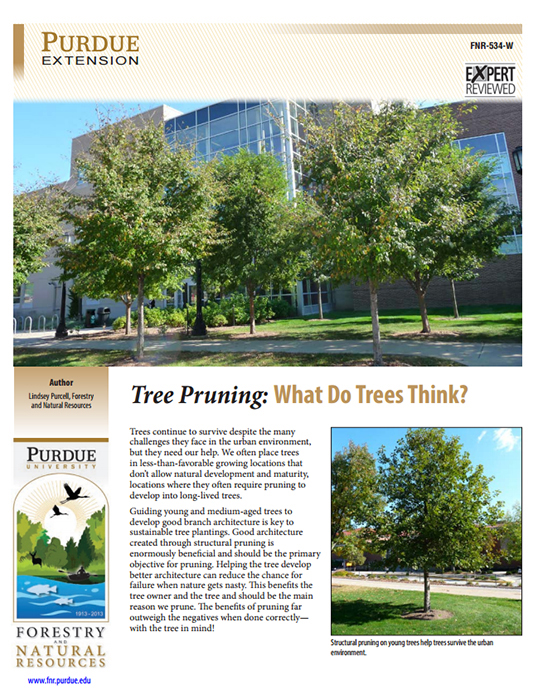 The Tree Pruning: What Do Trees Think publication explains the physiological and physical changes that happen within trees as a response to pruning. Guiding young and medium-aged trees to develop good branch architecture is key to sustainable tree plantings. Good architecture created through structural pruning is enormously beneficial and should be the primary objective for pruning. Helping the tree develop better architecture can reduce the chance for failure when nature gets nasty. The benefits of pruning far outweigh the negatives when done correctly–with the tree in mind!
Resources:
Tree Pruning Essentials – publication, The Education Store, Purdue Extension Resource Center
Tree Pruning Essentials – video, The Education Store
Trees and Storms, Got Nature?
Tree Risk Management, The Education Store
Lindsey Purcell, Urban Forestry Specialist
Purdue University, Department of Forestry and Natural Resources
Pruning has been called “one of the best, worst maintenance practices,” especially when performed on urban trees. The process creates wounds, which have a major impact on plant processes. Improper cutting on a tree causes severe damage or even death. Be sure to watch this before pruning trees! Tree Pruning Essentials video.
View publication for more details: Tree Pruning Essentials – FNR-506-W at the Education Store.
Resources
Tree Pruning Essentials – publication, Purdue Extension
Trees and Storms, Got Nature?
Tree Risk Management, The Education Store – Purdue Extension Resource Center
Lindsey Purcell, Urban Forestry Specialist
Purdue University, Department of Forestry and Natural Resources
 Changing human behavior is not easy! But, with the right tools, you can effect change over time. Whether you are designing an education and outreach campaign to get people to protect an endangered species, save energy, reduce waste, or conserve water, one thing remains the same: you have to be vigilant about your campaign.
Using two previously developed campaigns as examples, the Promote Conservation through an Effective Campaign publication walks you through four steps to help you create an effective campaign to change people’s behavior. One campaign takes a comprehensive approach to protecting a group of endangered species and the other a less extensive approach to promoting rain barrel adoption. These two examples demonstrate different levels of complexity that you can refer to as you create your own effective education and outreach campaign.
Resources:
Using Social Indicators to Evaluate the Effectiveness of Outreach in Two Indiana Watersheds, Journal of Contemporary Water Research and Education
Conserving the Eastern Hellbender Salamander, Human Dimensions of Wildlife
Rain Barrel Information and Program, Wabash River Enhancement Corporation (WREC)
Uninteresting, Strange, or Ugly: Protecting non-charismatic species, Purdue Got Nature? blog
Belyna Bentlage, Research Associate/Outreach Coordinator
Purdue University Department of Forestry and Natural Resources
Linda Prokopy, Professor of Natural Resources Social Science
Purdue University Department of Forestry and Natural Resources
 Purdue Extension’s Don’t be a Zombie exhibit is traveling the country to illustrate the need to prepare for emergencies. It urges people to be ready for an emergency and have a plan. Don’t Wait. Communicate. Make an Emergency Communication Plan for you and your family because you just don’t know when disasters will impact your community. At the Indiana State Fair, almost 60,000 visitors got a chance to check out the Don’t be a Zombie – Be Prepared exhibit, complete with zombies, interactive displays, maze, and even a video game made to simulate a zombie apocalypse!
The display aims to have its viewers take away four main points:
- Be informed – know what threats may affect your community
- Make a family emergency plan – a plan for everyone and everything in case of disaster
- Make a 72-hour emergency kit – enough supplies for everyone involved, along with first-aid, a crank radio, and a gallon of water per person each day
- Practice and maintain these plans regularly – a plan is only good if it is up to date and known by everyone
The Don’t Be a Zombie exhibit is currently travelling to museums all over the country, its existence thanks to the collaboration between Purdue Extension and EDEN, a prime source for disaster preparedness information.
Resources:
Purdue Agriculture Traveling Exhibit Program
First Steps to Flood Recovery, The Education Store
Keeping Food Safe During Emergencies, The Education Store
Purdue Traveling Exhibit Program

Recent Posts
- Purdue Extension: Empowering Indiana Through Innovation, Education and Community Impact
Posted: January 28, 2026 in Community Development, How To, Invasive Insects, Invasive Plant Species, Natural Resource Planning, Woodlands - Forest Landowners: Share Your Experience with Regeneration and Restoration
Posted: January 27, 2026 in Forestry, How To, Timber Marketing, Woodlands - It’s Not Too Late to Order Trees for Spring Planting
Posted: January 13, 2026 in Forestry, How To, Plants - Now Is The Time To Control Non-Native Bush Honeysuckle
Posted: October 30, 2025 in Forestry, How To, Invasive Plant Species, Woodlands - October Is Firewood Month: Protect Indiana’s Forests by Making Smart Choices
Posted: October 13, 2025 in Forestry, Forests and Street Trees, How To, Invasive Insects, Urban Forestry - ID That Tree: Smooth Sumac
Posted: October 2, 2025 in Forestry, How To, Wildlife - ID That Tree: Wild Grape Vine
Posted: August 12, 2025 in Forestry, How To, Urban Forestry, Wildlife - Publication – Sericea Lespedeza Control
Posted: July 7, 2025 in Forestry, How To, Invasive Plant Species, Wildlife - How to ID Asian Jumping Worms, Purdue Landscape Report
Posted: July 2, 2025 in How To, Invasive Insects, Wildlife - Alert – Water Your Trees, Watch Video
Posted: June 20, 2025 in Alert, Drought, Forests and Street Trees, How To, Urban Forestry, Wildlife, Woodlands
Archives
Categories
- Alert
- Aquaculture/Fish
- Aquatic/Aquaculture Resources
- Ask the Expert
- Christmas Trees
- Community Development
- Disease
- Drought
- Forestry
- Forests and Street Trees
- Gardening
- Got Nature for Kids
- Great Lakes
- How To
- Invasive Animal Species
- Invasive Insects
- Invasive Plant Species
- Land Use
- Natural Resource Planning
- Nature of Teaching
- Plants
- Podcasts
- Ponds
- Publication
- Safety
- Spiders
- Timber Marketing
- Uncategorized
- Urban Forestry
- Webinar
- Wildlife
- Wood Products/Manufacturing
- Woodland Management Moment
- Woodlands