 Purdue University - Extension - Forestry and Natural Resources
Got Nature? Blog
Purdue Landscape Report: It’s that time again! With the arrival of warm temperatures and increased rainfall, many of us are getting to work on our lawns, gardens, and landscaping. Unfortunately, this often comes with discovering what new (or old) invasive species are here to haunt us. So far this year, the invasive I’ve gotten the most questions on is the Asian jumping worm. This earthworm’s life cycle tends to experience ‘boom & bust’ years due to their feeding habits, and, anecdotally speaking, we appear to be experiencing an increase in their populations throughout the state this season. Now is a great time to brush up on our understanding of this organism, and the revisit how it impacts our environment.
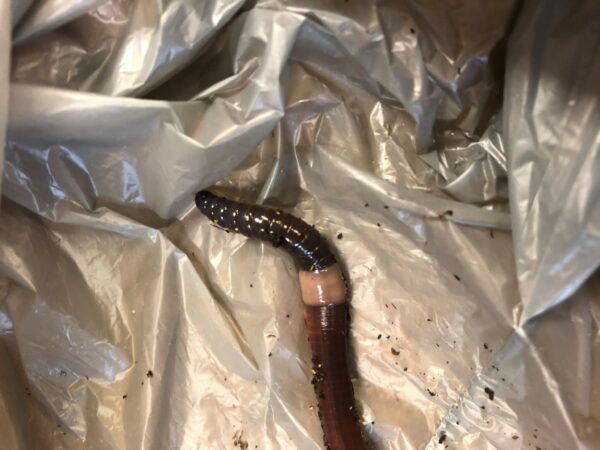
Figure 1. The clitellum, the set of pale, milky colored segments, is the reproductive organ of earthworms.
Identification
While Asian jumping worms share a lot of traits with other, less harmful earthworm species, they do have some features we can use to differentiate them from the rest. Jumping worms tend to be darker in color, since they live either on top of the soil or just under the first layer of plant detritus and get more exposure to sunlight. Asian jumping worms also have a significantly higher number of bristles, or setae, that they can use to move around. They can have as many as forty bristles per segment, in contrast to the eight found on other species, giving them the traction they need to wriggle and squirm as violently as they do. Perhaps the easiest feature we can use to identify them is the clitellum, the organ that contains they reproductive organs. On Asian jumping worms, the clitellum just looks like a very pale set of segments close to the anterior end of the worm, whereas on most other worms, it’s about midway down the body and saddle-shaped. Finally, we can detect their presence by changes in our soil. Asian jumping will not improve soil quality for growing like other earthworms can, but rather change the soil consistency into something like coffee grounds, rendering it unsuitable for growing most crops and ornamentals.
Environmental Impact
As I alluded to above, Asian jumping worms do significant damage to soil quality when left unmanaged. These earthworms, unlike their beneficial cousins, do not provide ecosystems services like soil aeration or castings that help add nutrients to the soil. Since they live at the surface, they do not burrow, and their castings lock in nutrients and often get swept away by hydrological events. Asian jumping worms also tend to gather in large groups whenever they infest an area, resulting in most of the decaying plant material and other organic material being stripped out of the soil. Often, the only plants capable of developing in those conditions are invasive themselves!
Reporting
We are still learning about the Asian jumping worms spread in Indiana, so we are asking everyone to please report sightings. You can report them either online by going to the EDDMapS website or you can call 1-866-NOEXOTIC. We ask that you take a picture and tell us where you were when you saw the worms. You can also check the Report Invasive webpage for up-to-date information on all kinds of invasive species, or reach out to Bob Bruner, Purdue University Exotic Forest Pest Educator, by emailing rfbruner@purdue.edu. With your help, we can map out this worm and create effective plans to limit its presence in our state.
View the original article on the Purdue Landscape Report website: Asian Jumping Worms: How to ID this soil pest.
Subscribe and receive the newsletter: Purdue Landscape Report Newsletter.
Resources:
Gardeners Asked to be Vigilant This Spring for Invasive Jumping Worm, Purdue Extension – FNR Got Nature? Blog
Fall webworms: Should you manage them?, Purdue Landscape Report
Mimosa Webworm, The Education Store, Purdue Extension resource center
Sod Webworms, Turf Science at Purdue University
Bagworm caterpillars are out feeding, be ready to spray your trees, Purdue Extension Forestry & Natural Resources (FNR) Got Nature? Blog
Landscape & Ornamentals: Bagworms, The Education Store
Purdue Plant Doctor App Suite, Purdue Extension-Entomology
Find an Arborist website, Trees are Good, International Society of Arboriculture (ISA)
ID That Tree – Video Playlist, Purdue Extension – Forestry and Natural Resources (FNR) YouTube Channel
Fifty Common Trees of Indiana, Purdue FNR web page list
Indiana Department of Natural Resources: Invasive Species
Indiana Invasive Species Council
Cooperative Invasive Species Management Area (CISMA)
Report Invasive, Purdue Extension
Native Trees of the Midwest, Purdue University Press
Bob Bruner, Exotic Forest Pest Educator
Purdue Entomology
With rainfall well below average, watering your trees is more important than ever. Indiana typically receives around 3.14 inches of rain in September, but as of 2025, only 1.31 inches have fallen—making this month even drier than last year. These conditions can lead to dry, wilted leaves and stress for trees across the state, especially during prolonged heat. To see how drought is affecting your area, visit the U.S. Drought Monitor for Indiana-specific maps.
In this video, Lindsey Purcell, Executive Director of the Indiana Arborist Association, explains why consistent watering is critical and shares practical tips to help your trees stay healthy through dry spells.
Extreme heat can have a major impact on tree health and survival. Water is the most limiting ecological resource for a tree, and without adequate moisture, decline and death are imminent. It reduces carbohydrate production, significantly lowering energy reserves and production of defense chemicals in the tree. Check out this publication titled Drought? Don’t Forget the Trees! to learn what to look for for any weakening issues including pests that like the dry conditions.
If you have any questions regarding wildlife, trees, forest management, wood products, natural resource planning or other natural resource topics, feel free to contact us by using our Ask an Expert web page.
More Extreme Heat Resources:
Climate and Drought Maps, Purdue Indiana State Climate Office
Summer Tree Care, Purdue Landscape Report
Drought? Don’t Forget the Trees!, The Education Store, Purdue Extension resource center
Extreme Heat Including Fact Sheets, Purdue Extension – IN-PREPared
Extreme Heat – Resources, Extension Disaster Education Network (EDEN)
Drought Information, Indiana Department of Natural Resources
Planting Your Tree Part 1: Choosing Your Tree, Purdue Extension YouTube Channel
Tree Selection for the “Un-natural” Environment, The Education Store
Tree Pruning Essentials Video, Purdue Extension YouTube Channel
Tree Defect Identification, The Education Store
Tree Wound and Healing, Got Nature? Blog, Purdue Extension – Forestry and Natural Resources
Surface Root Syndrome, The Education Store
Submit Sample, Purdue Plant & Pest Diagnostic Lab
Find an Arborist, Indiana Arborist Association
Ben McCallister, Urban Forestry Specialist
Purdue Forestry & Natural Resources
In recognition of Pollinator Week June 16-22, 2025, let’s see what is blooming at Purdue FNR Tippecanoe County property, Martell Forest.
 Wild petunia, Ruellia sp, are several species found in woodland and sunny edge habitats. The blooms do look like the familiar garden petunia, but it is a different genus of plants. I caught small insects inside the flower, evidence of its pollinator value, although I have read the individual flowers may only last one day.
 I came upon a unique parasitic plant that does not have chlorophyll or true leaves, but obtains its nutrients by parasitizing oak trees. This is American cancer root, Conopholis americana, also called bear corn, because of the similarity of the plant structure to an ear of corn. Although it lacks chlorophyll, it does possess flowers that propagate the plant.
 Not far from the cancer root I found fire pink, Silene virginica. This is one flower that would be hard to miss! This is about as red as any native flower encountered in Indiana forests. If you are wondering why pink is in the name instead of red, it is a member of the pink family of plants, which include carnations and a rare prairie relative, royal catchfly. An effort was made a few years ago to make this our state flower, but that has not been acted upon so far.
 As I headed downhill I came across Virginia spiderwort, Tradescantia virginiana, with beautiful three-petaled violet to blue flowers clustered at the top of the plant. The flowers typically last only a day, but are rapidly replaced by the numerous buds below the current blooms.
 Blue-eyed grass, Sisyrinchium sp, was encountered in a grassy area near a tree plantation. This is not a grass but several species that are members of the iris family. The tiny blooms and narrow leaves blend into the grass background.
 Some woody plants are blooming in June as well. This is the bell-shaped flower of American persimmon, Diospyros virginiana. Persimmon trees tend to bear either all male or all female flowers on a single tree, but occasionally a tree will have both. Female flowers are solitary on the stems while male flowers tend to be in small clusters.
 The final bloom I have included is rough-leaved dogwood, Cornus drummondii, a shrub relative of the flowering dogwood that provides a white blossom show earlier in the spring. As the name implies, this shrub has leaves with a slightly sandpaper-texture and clusters of small white flowers that are attractive to many pollinators. This blooms later than several other dogwoods, extending the flowering season.
More about Pollinator Week: this is an annual celebration in support of pollinator health that was initiated and is managed by Pollinator Partnership. It is a time to raise awareness for pollinators and spread the word about what we can do to protect them. Pollinators include bees, butterflies, beetles, moths, wasps, hummingbirds, bats, flies, beetles, lizards, rodents and more.
Resources:
Ask an Expert: What’s Buzzing or Not Buzzing About Pollinators, Purdue Extension – Forestry & Natural Resources (FNR) YouTube Channel
Pollinator Conservation Education, Purdue Extension – Entomology
What’s buzzing in your backyard? Learn about protecting pollinators, beekeeping with Purdue Extension, Purdue Extension News
Indiana Monarch and Pollinator Conservation website
Protecting Pollinators: Protecting Pollinators in Home Lawns and Landscapes, publication, The Education Store, Purdue Extension’s resource center
Consider Pollinators When Planning Your Garden, Got Nature? Blog, Purdue Extension – FNR
Pollinator Conservation Education, Purdue Entomology
Recommended Indiana-Native Plants for Attracting Pollinators (pdf), Purdue Extension – Entomology
Attract Hummingbirds to Your Yard video, Purdue Extension – FNR YouTube Channel
Protecting Pollinators: Biology and Control of Varroa Mites in Bee Hives, The Education Store, Purdue Extension resource center
Gardening for Pollinators, Purdue Garden Articles
Subscribe Purdue Extension-Forestry and Natural Resources YouTube Channel
Lenny Farlee, Extension Forester
Hardwood Tree Improvement and Regeneration Center
Purdue Department of Forestry & Natural Resources
Welcome to ID That Tree! In this episode, Purdue Extension Forester Lenny Farlee introduces Coralberry, a small native Indiana shrub also known as Buckbrush. Learn how it got its name, what makes its leaves unique and where it typically grows. Whether you’re a nature lover, student or just curious about local plant life, this quick and informative video is a great way to expand your knowledge of Indiana’s native shrubs.
If you have any questions regarding wildlife, trees, forest management, wood products, natural resource planning or other natural resource topics, feel free to contact us by using our Ask an Expert web page.
Resources:
ID That Tree – Video Playlist, Purdue Extension – Forestry and Natural Resources (FNR) YouTube Channel
Purdue Arboretum Explorer
Conservation Tree Planting: Steps to Success, Purdue Extension – FNR YouTube Channel
A Woodland Management Moment, Playlist, Purdue Extension – FNR YouTube Channel
Woodland Stewardship for Landowners, Playlist, Purdue Extension – FNR YouTube Channel
Indiana Department of Natural Resources: Invasive Species
Indiana Invasive Species Council
Cooperative Invasive Species Management Area (CISMA)
Report Invasive, Purdue Extension
Fifty Common Trees of Indiana, Purdue Extension – FNR
Habitat University, Episode 12 – Exploring the challenges of Invasive Species, Habitat University-Natural Resource University
Shrubs and Woody Vines of Indiana and the Midwest, The Education Store
Native Trees of the Midwest, The Education Store
Professional Forester, Indiana Forestry Woodland Owners Association
District Forester, Indiana Department of Natural Resources, 10+ acres
Find an Arborist, International Society of Arboriculture
Forest Improvement Handbook, The Education Store
Lenny Farlee, Extension Forester
Hardwood Tree Improvement and Regeneration Center
Purdue Department of Forestry & Natural Resources
 Discover the importance of thinning dense native warm-season grasses in conservation plantings to improve diversity. This guide explains methods to reduce tall native warm-season grasses to improve habitat for wildlife. Essential reading for conservationists and land managers interested in grassland ecosystems.
Learn when and how to thin these grasses effectively, and explore strategies that balance ecological health with long-term land management goals: Thinning Native Warm-Season Grasses
This publication is part of a seven publication series The Managing Conservation Plantings Series which include details on how to control invasive species and other problematic plants in Conservation Reserve Program (CRP) plantings and native warm-season grass and wildflower conservation plantings.
Publications in this series include:
- Golden Rod Control
- Thinning Native Warm-Season Grasses
- Sericea Lespedeza Control
- Woody Encroachment and Woody Invasives
- Johnson Grass Control
- Reed Canarygrass Control
- Teasel Control (Common and Cut Leaved)
- Controlling Introduced Cool-season Grasses
- Crownvetch, Sweetclover and Birdsfoot Trefoil Control
Resources:
Deer Impact Toolbox & Grassland Management, Purdue Extension Pond and Wildlife Management
Pond and Wildlife Management, Purdue Extension
Forestry for the Birds Virtual Tour and Pocket Guide, Got Nature? Blog, Purdue Extension – FNR
Frost Seeding to Establish Wildlife Food Plots and Native Grass and Forb Plantings – Purdue Extension – FNR YouTube channel
Wildlife Habitat Hint: Tips for Evaluating a First Year Native Grass and Forb Plantings, Purdue Extension – FNR YouTube Channel
Drone Seeding Native Grasses and Forbs: Project Overview & Drone Setup, Purdue Extension – FNR YouTube channel
Ask an Expert: Wildlife Food Plots, video, Purdue Extension – FNR YouTube Channel
Handling Harvested Game: Episode 1, Field Dressing, video, Purdue Extension – FNR YouTube Channel
Managing Your Woods for White-Tailed Deer, The Education Store
Forest Improvement Handbook, The Education Store
Forest Management for Reptiles and Amphibians: A Technical Guide for the Midwest, The Education Store
A Template for Your Wildlife Habitat Management Plan, The Education Store
Woodland Stewardship for Landowners, Playlist, Purdue Extension – FNR YouTube channel
Nature of Teaching Unit 1: Animal Diversity and Tracking, The Education Store
Nature of Teaching, Purdue College of Agriculture
Invasive Species Playlist, Playlist, Purdue Extension – FNR YouTube Channel
Report Invasive, Purdue Extension
Subscribe Purdue Extension – Forestry and Natural Resources YouTube Channel
Jarred Brooke, Wildlife Extension Specialist
Purdue Department of Forestry and Natural Resources
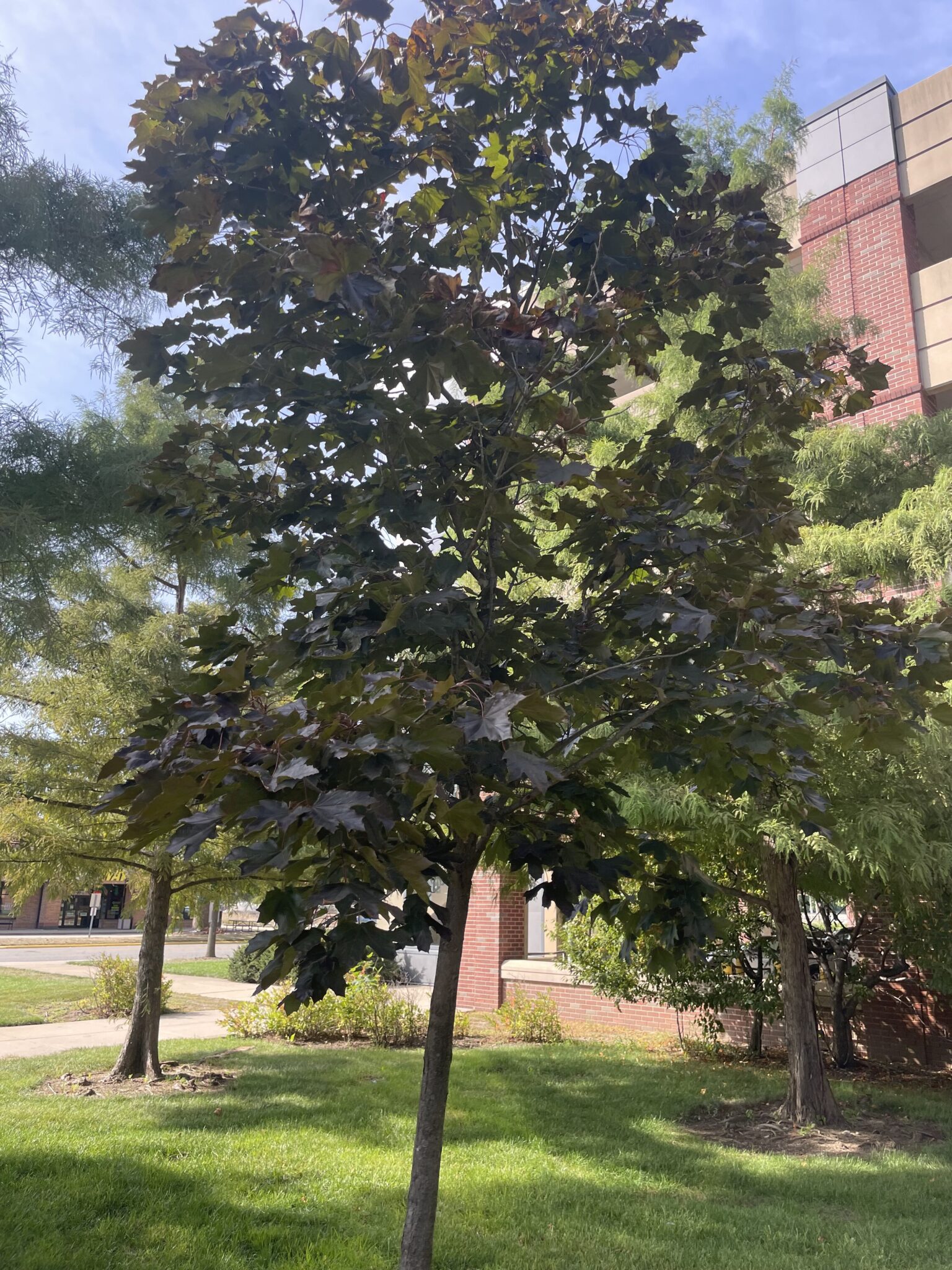
Figure 1. Norway maple is an invasive species that can resemble black and sugar maple. Photo by Purdue Arboretum.
Purdue Landscape Report: These three maples have somewhat similar-looking leaves. On the surface, you may think this is simply an academic exercise. But if you care about invasive plants and local ecology, this distinction is an important one.
Norway maple is an invasive tree species, while sugar and black maples are native tree species (sometimes called hard maples). Sugar and black maples are even more beloved for their gift of delicious sugary sap that can be made into maple syrup and similar products. They also make great shade trees. Note that there are other native and non-native maple species.
One way to distinguish between Norway (Acer platanoides), sugar (Acer saccharum), and black (Acer nigrum) maples is to count the number of lobes on the leaves. Lobes are large areas of the leaf that stick out, like an ear lobe, although that is not the clearest analogy. Norway maples typically have 5-7 lobes (commonly 7), sugar maples typically have 5, and black maples typically have 3-5. Black maple’s bottom two lobes are so much less prominent than sugar maple that it often looks like 3 main lobes. Additionally, black maple leaves droop on the sides, almost like they are starting to wilt from lack of water.
Another way to distinguish Norway maples from native maples (sugar and black) is to look at the winged seeds, called samaras. Children may call these “helicopters,” as they twirl on their way to the ground. The Norway maple has paired samaras arranged like a handlebar mustache. Sugar and black maple samara pairs look more like a Fu Manchu mustache, pointing downward rather than the near horizontal arrangement of Norway maple samaras.

Figure 2c. Black maple leaf. Photo by Purdue Arboretum.
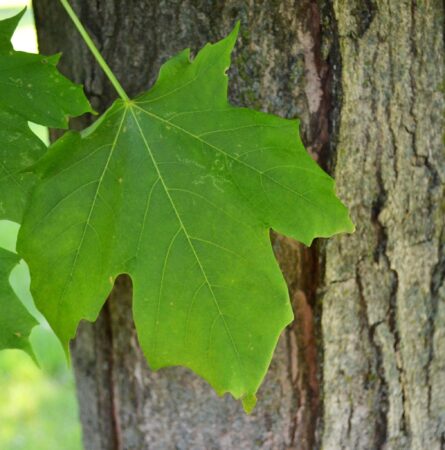
Figure 2b. Sugar maple leaf. Photo by Purdue Arboretum.

Figure 2a. Norway maple leaf. Photo by Purdue Arboretum.
A third way to distinguish Norway maples from native maples is to snap off the long leaf stem (petiole). Norway maples have a milky latex sap that exudes if you squeeze or pinch a petiole, while native maples have clear sap.
There are a few other identification nuances between these species. For example, black maples have stipules (leaf-like growths) at the base of their petioles (absent on sugar maple). They also have pubescence or hairiness on the underside of the leaves. Norway maple has hairs in the axils of leaf veins. Norway maple’s leaves are generally broader than long. Other differences may be seen in the bark, twigs, buds, and fall coloring.
Although Norway maple is an invasive species, it has been a long-time landscaping favorite of homeowners, especially cultivars like ‘Crimson King’ that retain their deep red color all year. This attribute has made Norway maple a popular choice because few other options exist to offer that color feature for the landscape. Other varieties or cultivars exhibit the normal green leaf color. Native to northern Europe, the tree was introduced in America in the late 1700s. George Washington reportedly purchased two trees in 1792 to plant at Mount Vernon.
For full article: Distinguishing Between Norway, Sugar, and Black Maples, Purdue Landscape Report.
Resources:
ReportINvasive, Purdue College of Agriculture
What are Invasive Species and Why Should I Care?, Got Nature? Blog, Purdue Extension – Forestry and Natural Resources
Large Spots on Maple Leaves that Look Like Tar, Purdue Extension News
Find an Arborist, International Society of Arboriculture
Fifty Common Trees of Indiana
An Introduction to Trees of Indiana
Native Trees of the Midwest, The Education Store
Shrubs and Woody Vines of Indiana and the Midwest, The Education Store
Tree Installation: Process and Practices, The Education Store
Planting Your Tree Part 1: Choosing Your Tree, Video, Purdue Extension – Forestry & Natural Resource (FNR) YouTube Channel
Investing in Indiana Woodlands, The Education Store
Forest Improvement Handbook, The Education Store
ID That Tree, Purdue Extension-FNR YouTube playlist
Purdue Plant and Pest Diagnostic Laboratory
John E. Woodmansee, Extension Educator – Agriculture and Natural Resources (ANR)
Purdue Extension – Whitely County
Purdue Landscape Report: April showers bring May Flowers. Many of us were taught this little rhyme to describe the weather of Spring. April has arrived along with the beginning of the Spring storm season and damage to and from trees is a topic of concern on many minds. Depending on the intensity of the storms and the condition of the trees, damage from high winds, heavy rainfall, and lightning can be quite severe. Cracked or broken branches, stem failure, and root failure are some of the main concerns, but also the risk and liability of damage to people and property.

Storm season is upon us. There are a number of resources from Purdue to help dealing with storm-damaged trees.
If your tree is damaged, there are some steps to deal with the situation. First and foremost, consider the safety of yourself and others around you. Inspect the tree from a distance first, looking for the following:
- Heaving of the ground, indicating potential root failure
- Damage to limbs and/or the trunk of the tree
- Hanging branches can fall to the ground, resulting in injury or death
- Be aware of utility and power lines. Trees can become charged by coming in contact with live wires. All utility lines should be considered energized and dangerous.
If you find your trees damaged from a storm hiring an International Society of Arboriculture (ISA) Certified Arborist to perform a risk assessment will help guide your decision of how to manage your tree. To find an arborist near you and verify credentials, use the link at Find an Arborist, Trees are Good, International Society of Arboriculture (ISA). For more information, you can also view the publication Trees and Storms, located in The Education Store, Purdue Extension’s resource center.
Subscribe and receive the newsletter: Purdue Landscape Report Newsletter.
Resources:
Find an Arborist video, Trees are Good-International Society of Arboriculture (ISA)
Trees and Storms – The Education Store, Purdue Education’s resource center
Caring for storm-damaged trees/How to Acidify Soil in the Yard – In the Grow, Purdue Extension
Why Is My Tree Dying? – The Education Store
Tree Risk Management – The Education Store
Mechanical Damage to Trees: Mowing and Maintenance Equipment – The Education Store
Trees and Electric Lines – The Education Store
Tree Defect Identification, The Education Store
Planting Your Tree, video, The Education Store
Tree Installation, The Education Store
Tree Wound and Healing, Got Nature? Blog, Purdue Extension – Forestry and Natural Resources
Ask an Expert: Tree Selection and Planting, Purdue Extension – Forestry and Natural Resources (FNR) YouTube Channel
Tree Pruning Essentials, Purdue Extension – FNR YouTube Channel
Subscribe – Purdue Extension-FNR YouTube Channel
Ben McCallister, Urban Forestry Specialist
Purdue Forestry & Natural Resources
Hummingbirds are a popular attraction in any backyard and we receive questions on when they will be coming to Indiana and how to attract them to your backyard. Our Purdue professor emeritus of wildlife ecology Barny Dunning in this interview for CBS4 Indianapolis titled “How to attract hummingbirds during peak migration,” shares how planting a variety of plants that bloom will help draw them in along with a simple hummingbird mixture.
The ruby-throated hummingbird is the only species of hummingbird that nests in the Hoosier state. These colorful visitors are migratory and arrive from their wintering grounds around mid-April.
Dr. Brian MacGowan has a publication titled Attracting Hummingbirds to Your Yard that is a great resource to share along with this video showing how to prepare your hummingbird feeders and how to find out when they will be migrating to your area. Hummingbird Central also tracks spring and fall migrations. Anyone can submit sightings on their website and view up-to-date sightings.
Resources:
Attracting Hummingbirds to Your Yard publication, The Education Store-Purdue Extension resource center
Virtual Tour Brings Forest Management for Birds to Life, Got Nature? Blog, Purdue Extension FNR
Birding Through the Seasons, Indiana Forestry & Woodland owners Association (IFWOA)
Behold! The Atlas of Breeding Birds of Indiana, MyDNR, Indiana Department of Natural Resources, Got Nature? Blog, Purdue Extension FNR
Breeding Birds and Forest Management: the Hardwood Ecosystem Experiment and the Central Hardwoods Region, The Education Store, Purdue Extension – Forestry and Natural Resources
Forest Birds, The Education Store
Managing Woodlands for Birds, The Education Store
Managing Woodlands for Birds Video, Purdue Extension-Forestry and Natural Resources (FNR) YouTube Channel
The Birders’ Dozen, Profile: Baltimore Oriole, Indiana Woodland Steward
Birds and Residential Window Strikes: Tips for Prevention, The Education Store, Purdue Extension resource center
No Room at the Inn: Suburban Backyards and Migratory Birds, Education Store
Question: Is there any risk of becoming infected with avian influenza virus by feeding backyard birds?, Got Nature? Blog, Purdue Extension FNR
Preventing Wildlife Damage – Do You Need a Permit?, The Education Store
How to Construct a Scent Station video, The Education Store
Question: How do I properly relocate raccoons from my attic?, Got Nature? Blog, Purdue Extension FNR
Nuisance Wildlife, Indiana Department of Natural Resources
Subscribe – Purdue Extension-FNR YouTube Channel
Brian MacGowan, Wildlife Extension Specialist
Purdue Forestry and Natural Resources
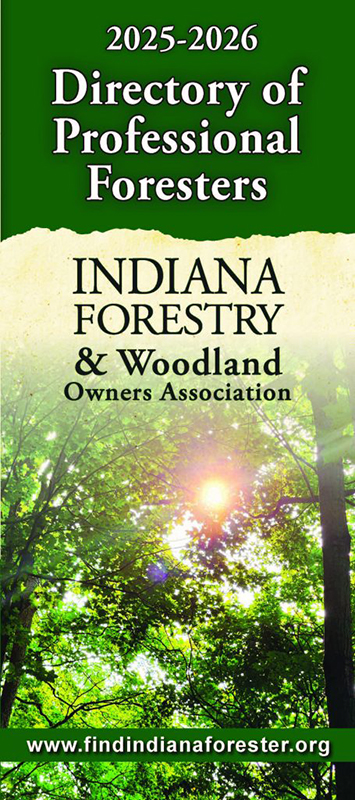 A Directory of Professional Foresters is now available, listing Indiana foresters who provide private woodland services and advice. Foresters are located throughout the state and provide assistance such as management plans, timber sales, tree planting, invasive species control, and many other services.
“Finding the resources to help you meet your woodland management objectives is important to successful stewardship,” says Liz Jackson, Purdue Extension and manager of Indiana Forestry & Woodland Owners Association. “Professional foresters can provide expert assistance to meet your property management goals.”
The Directory is available online via interactive map at www.findindianaforester.org to find foresters by location, or as a downloadable document. Printed copies of the booklet are available at County Extension and Soil & Water Conservation District offices or through a state Division of Forestry district forester.
Indiana Forestry & Woodland Owners Association promotes the wise use of Indiana’s forest resource for today and future generations. Learn more at www.ifwoa.org.
Resources:
Indiana Forestry & Woodland Owners Association (IFWOA) YouTube Channel
Deer Impact Toolbox, Purdue Extension Pond and Wildlife Management
District Forester, Indiana DNR Division of Forestry, for over 10 acres of woodlands
Directory of Professional Foresters, Indiana Forestry & Woodland Owners Association (IFWOA)
Indiana Woodland Steward E-newsletters, Eleven Member Organization
A Woodland Management Moment, Playlist, Purdue Extension – Forestry and Natural Resources (FNR) YouTube Channel
Conservation Tree Planting: Steps to Success, Purdue Extension – FNR YouTube Channel
Forest Improvement Handbook, The Education Store
Invasive Species, Playlist, Purdue Extension – FNR YouTube Channel
Woodland Stewardship for Landowners, Playlist, Purdue Extension – FNR YouTube Channel
Invasive Plant Species Identification, Video, Purdue Extension – FNR YouTube Channel
Report Invasive Species, Purdue Invasive Species
ID That Tree – Video Playlist, Purdue Extension – Forestry and Natural Resources (FNR) YouTube Channel
Subscribe – Purdue Extension-FNR YouTube Channel
Liz Jackson, IFWOA engagement specialist & Walnut Council Manager
Indiana Forestry & Woodlands Owners Association (IFWOA)
Morning AgClips — You have probably seen a cartoon or stereotypical TV show where someone sees a mouse and says, “Eek, a mouse!” Mice and rats around homes and farmsteads can be a problem. Have control methods improved on the typical snap trap of 50 years ago? In short, they have.

The adult house mouse is about 5½ to 7½ inches long, including the 3–4-inch tail. Norway rats are much larger, from 13 to 18 inches long, including the 6–8½-inch tail. According to the Internet Center for Wildlife Damage Management (ICWDM), mice eat many types of food but prefer seeds and grain. They sample new foods and are considered “nibblers.” Foods that are high in fat, protein, or sugar (e.g., bacon, chocolate, butter, nuts) may be preferred, even when grain and seeds are present. An individual mouse consumes about 1/10 of its body weight each day and up to 8 pounds per year. Mice contaminate far more food than they consume through their urine and feces.
In homes and commercial buildings, mice may feed on stored food items and pet foods. They contaminate food with their urine, droppings, and hair. On farms, they damage structures that store feed and equipment. Mice often act as reservoirs or vectors of diseases, such as swine dysentery, leptospirosis, salmonellosis, and other diseases.
ICWDM suggests several preventive and control methods people can employ. Proper sanitation around structures is helpful. This reduces sources of food, water, and shelter. Rodent-proof construction is recommended, along with proper storage and disposal of refuse and garbage. They indicate that ultrasonic frightening devices are generally not effective. Repellants and toxicants are options to consider. Trapping devices, such as snap traps, cage or box traps, and glue boards, may also be considered for use.
Read more details on the Morning AgClips website at Dealing with Rodents Around Homes & Farms.
Resources:
A Template for Your Wildlife Habitat Management Plan, The Education Store, Purdue Extension resource center
Wildlife Habitat Hint, Purdue Extension – Forestry & Natural Resources (FNR) YouTube Playlist
Woodland Stewardship for Landowners, Purdue Extension – FNR YouTube Playlist
Woodland Management Moment, Purdue Extension – FNR YouTube Playlist
Invasive Species, Playlist, Purdue Extension – FNR Youtube Channel
Invasive Plant Species Identification, Video, Purdue Extension – FNR Youtube Channel
Invasive plants: impact on environment and people, The Education Store, Purdue Extension’s resource center
Woodland Invaders, Got Nature? Blog, Purdue Extension – FNR
Preventing Wildlife Damage – Do You Need a Permit? – The Education Store, Purdue Extension resource center
Selecting a Nuisance Wildlife Control Professional, The Education Store
How to Construct a Scent Station, The Education Store
Question: How do I properly relocate raccoons from my attic?, Got Nature? Blog, Purdue Extension FNR
Nuisance Wildlife – Indiana Department of Natural Resources
Subscribe to our FNR Extension YouTube Channel with over 250 videos which include: aquatic, forestry, urban forestry, wildlife, community planning videos and much more.
John E. Woodmansee, Extension Educator – Agriculture and Natural Resources (ANR)
Purdue Extension – Whitely County

Recent Posts
- IN-PREPared: Essential Resources for Indiana’s Severe Weather Season
Posted: March 11, 2026 in How To, Safety - Getting Certified as an Indiana Certified Prescribed Burn Manager
Posted: March 2, 2026 in How To, Urban Forestry, Woodlands - Purdue Extension: Empowering Indiana Through Innovation, Education and Community Impact
Posted: January 28, 2026 in Community Development, How To, Invasive Insects, Invasive Plant Species, Natural Resource Planning, Woodlands - Forest Landowners: Share Your Experience with Regeneration and Restoration
Posted: January 27, 2026 in Forestry, How To, Timber Marketing, Woodlands - It’s Not Too Late to Order Trees for Spring Planting
Posted: January 13, 2026 in Forestry, How To, Plants - Now Is The Time To Control Non-Native Bush Honeysuckle
Posted: October 30, 2025 in Forestry, How To, Invasive Plant Species, Woodlands - October Is Firewood Month: Protect Indiana’s Forests by Making Smart Choices
Posted: October 13, 2025 in Forestry, Forests and Street Trees, How To, Invasive Insects, Urban Forestry - ID That Tree: Smooth Sumac
Posted: October 2, 2025 in Forestry, How To, Wildlife - ID That Tree: Wild Grape Vine
Posted: August 12, 2025 in Forestry, How To, Urban Forestry, Wildlife - Publication – Sericea Lespedeza Control
Posted: July 7, 2025 in Forestry, How To, Invasive Plant Species, Wildlife
Archives
Categories
- Alert
- Aquaculture/Fish
- Aquatic/Aquaculture Resources
- Ask the Expert
- Christmas Trees
- Community Development
- Disease
- Drought
- Forestry
- Forests and Street Trees
- Gardening
- Got Nature for Kids
- Great Lakes
- How To
- Invasive Animal Species
- Invasive Insects
- Invasive Plant Species
- Land Use
- Natural Resource Planning
- Nature of Teaching
- Plants
- Podcasts
- Ponds
- Publication
- Safety
- Spiders
- Timber Marketing
- Uncategorized
- Urban Forestry
- Webinar
- Wildlife
- Wood Products/Manufacturing
- Woodland Management Moment
- Woodlands