 Purdue University - Extension - Forestry and Natural Resources
Got Nature? Blog
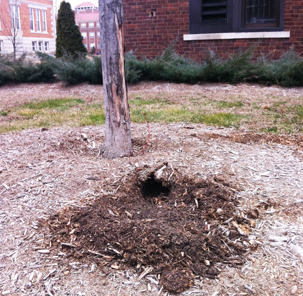
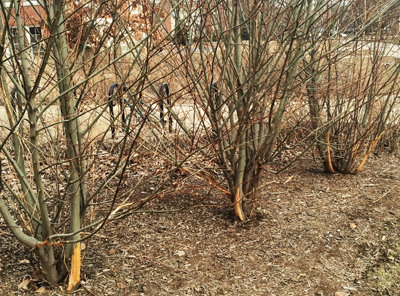 Cold winter winds, alternating extreme temperatures, ice and snow can be damaging to trees and shrubs. However, this spring, we are seeing additional damage due to the harsh winter conditions that is of the furry kind: rabbits and rodents. Mice and rabbits often damage young trees in the winter by feeding on the juicy, green cambium layer just under the bark and girdling the tree. Damage from these furry creatures occurs most commonly in winters when there is prolonged, heavy snow cover and food is scarce. Sound familiar? Rabbits feed on the bark above the snow while mice tunnel under the snow and feed near the ground level. Mouse damage is usually more severe when the trees are surrounded by heavy grass, weed cover or heavy mulch.
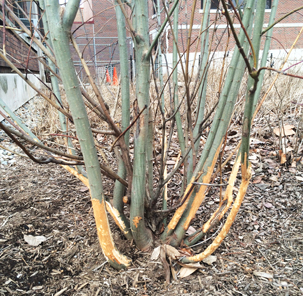 On young trees and multi-stemmed ornamental trees, rabbits remove the bark completely around the trunks and stems, effectively girdling them. All growth above the girdled areas will eventually decline and die, and for most situations, replacing the girdled trees is the best course of action. There are no applications that will mitigate the effects of rabbit damage or save severely damaged trees. Wound dressings, pruning paints, latex paints, wrappings and other alleged protective barriers do not help.
 Many deciduous shrubs have the ability to produce new shoots or suckers at their base. Because of this ability, many severely damaged deciduous shrubs can recover. However, patience is required as several years may be required for some shrubs to fully recover. In early spring as the greening begins, prune off girdled stems just below the damaged areas. This will help rejuvenate the plant in most circumstances and replace the damage growth.
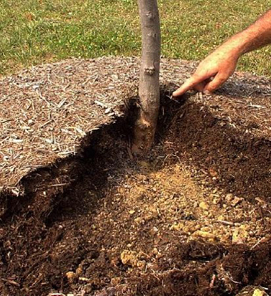 The most effective deterrent to girdling by mice or rabbits is to wrap the trunk and low branches of young trees with screen wire or hardware cloth. Be certain the wire wrap is buried below the ground line and extends high enough above the possible snow line to prevent rabbits from reaching to the trunk or branches. To help control mouse damage, maintain an area free of grass or weeds for a 1- to 2-foot radius around the base of the tree. Additionally, maintain proper mulch levels, never more than 2-3”, to eliminate the habitat for mice. Various chemicals are available to repel mice and rabbits, but these do not afford the reliability of a well-made barrier.
Resources
Preventing Wildlife Damage, The Education Store, Purdue Extension
Vole Damage in Pumpkins (and other crops), Purdue Extension – Forestry and Natural Resources (FNR) Got Nature? Blog
Moles, The Education Store, Purdue Extension resource center
Adjuvants and the Power of the Spray Droplet: Improving the Performance of Pesticide Applications, The Education Store
Preventing Wildlife Damage – Do You Need a Permit?, The Education Store
Attract Hummingbirds to Your Yard, Video, Purdue Extension Youtube Channel
How to Stop Woodland Animals from Digging in Your Flower Pots, Video, Purdue Extension Youtube Channel
Purdue Extension – Forestry and Natural Resources
Since the Polar Vortex subsided, there has been quite a bit of buzz about the Emerald Ash Borer (EAB), an exotic beetle that is killing ash trees across Indiana and the U.S., being killed by the multi-day sub-zero temperatures we experienced here in Indiana and elsewhere. Some recent research (the full paper can be accessed USDA Forest Service, Cold Hardiness of Emerald Ash Borer, Agrilus Planipennis: A New Perspective) predicts that when EAB larvae reach 0°F, 5% will die; at -10°F, 34% will die; at -20°F, 79% will die; and at -30°F, 98% will die. Based on some -15°F temperatures here at the Purdue West Lafayette campus, we might expect around 50% of the EAB will die, but some additional points need to be considered.

An adult emerald ash borer feeds off a leaf. (Purdue University Department of Entomology photo/John Obermeyer)
EAB larvae are located overwinter under the bark in infested ash trees, so the bark may offer some insulation. Snow is also an excellent insulator, so the lower trunk of ash trees in deep snow or drifts may not get as cold as ambient air temperatures. Some trees in town or near structures may remain warmer due to heat radiating or escaping from buildings. The message is, unfortunately, that the cold weather we experienced was probably not enough to solve our EAB problems.
It is good news that some of the population was probably killed by the cold weather, leaving fewer larvae to damage ash trees next spring. This will be a temporary setback for the borer, since one of the biological strengths of insects is their capacity to reproduce and grow populations quickly. Further north in places like Minnesota, the news for the ash trees may be better where temperatures below -30°F may have killed most of the larvae, providing some additional time to prepare for the EAB onslaught. Here in Indiana, we need to continue to monitor, prepare and act to limit the damage EAB will do.
Some basic steps include:
- Don’t move firewood – Firewood can harbor EAB and several other serious tree pests and spread them to new areas.
- Learn to identify ash trees, EAB and the symptoms of EAB damage.
- Learn about EAB control techniques.
- Learn how to decide if your ash tree should be treated with insecticide to protect it from EAB or removed and possibly replaced with another tree species.
- Work with your neighbors to monitor and manage the ash trees in your area.
Purdue Extension offers science-based recommendations to help you manage the EAB threat at Emerald Ash Borer in Indiana.
Resources:
New Hope for Fighting Ash Borer, Got Nature? Purdue Extension-FNR
Invasive Pest Species: Tools for Staging and Managing EAB in the Urban Forest, Got Nature?
Emerald Ash Borer Tools & Resources – Purdue Extension Entomology
Planting Your Tree Part 1: Choosing Your Tree, Purdue Extension YouTube Channel
Tree Planting Part 2: Planting a Tree, Purdue Extension – Forestry and Natural Resources YouTube Channel
Indiana Invasive Plant List, Indiana Invasive Species Council, Purdue Entomology
Landscape Report Shares Importance of Soil Testing, Purdue FNR Extension
Find an Arborist website, Trees are Good, International Society of Arboriculture (ISA)
Tree Risk Management – Got Nature? Blog, Purdue Extension – FNR
Lenny Farlee, Extension Forester
Hardwood Tree Improvement and Regeneration Center (HTIRC)
Forestry and Natural Resources, Purdue University
 Many insects are not actually the cause of tree mortality but simply “opportunists” and infest decaying wood. Spraying the remaining trees depends on the insects and their propensity for infesting live trees.
Cut wood, especially if infested, should never be moved out of the county to minimize the spread of harmful pests. See more at www.dontmovefirewood.org.
Resources
Walnut Anthracnose, Walnut Notes, U.S. Department of Agriculture, Forest Service, North Central Forest Experiment Station
Indiana Walnut Council, Industry Representatives include 45 states and 3 foreign countries
Diseases in Hardwood Tree Plantings, The Education Store, Purdue Extension resource center
Study: Fungus Behind Deadly Disease in Walnut Trees Mutates Easily, Complicating Control, Purdue Agriculture News
Indiana Walnut Council
Diseases in Hardwood Tree Plantings, The Education Store, Purdue Extension resource center
Why are my walnut trees dropping their leaves?, Purdue Extension – Forestry & Natural Resources (FNR) Got Nature? Blog
Invasive Species Walnut Twig Beetle Detected in Indiana, Purdue Extension – FNR Got Nature? Blog
Intro to Trees of Indiana: Black Walnut, Purdue Extension – FNR Got Nature? Blog
Resources and Assistance Available for Planting Hardwood Seedlings, The Education Store
Certified Arborist (International Society of Arboriculture)
Pests of Concern, Walnut Twig Beetle, Indiana Department of Natural Resources
Invasive Species Walnut Twig Beetle Detected in Indiana, Purdue Extension – Forestry & Natural Resources (FNR) Got Nature? Blog
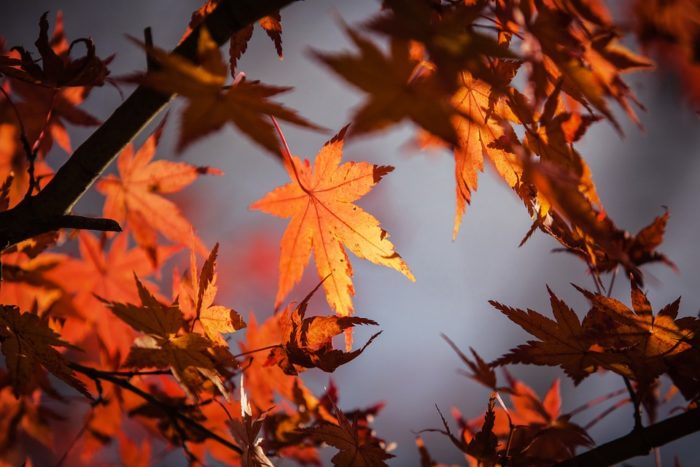 The display of color we enjoy each fall is explained by understanding plant pigments, the physiology and anatomy of leaves, and the influence of climate and seasonal weather conditions. Fall weather conditions favoring formation of bright red autumn color are warm sunny days followed by cool but not freezing nights. As days get shorter and temperatures cooler in the autumn, important physiological processes are triggered that make conditions for chlorophyll production less favorable.
Resources:
Intro to Trees of Indiana videos, Purdue Extension – Forestry and Natural Resources (FNR)
An Introduction to Trees of Indiana, The Education Store, Purdue Extension’s resource center
Native Trees of the Midwest, Purdue University Press
Shrubs and Woody Vines of Indiana and the Midwest, Purdue University Press
Forest Improvement Handbook, The Education Store
Trees and Storms: Understanding Damage, Risk and Recovery – Got Nature? Blog, Purdue Extension – FNR
Tree Risk Management – Got Nature? Blog, Purdue Extension – FNR
Planting Problems: Trees Planted Too Deep, Video, Purdue Extension – Forestry and Natural Resources YouTube Channel
Why Leaves Change Color, USDA Forest Service, Northeastern Area
Lenny Farlee, Extension Forester
Hardwood Improvement Regeneration Center (HTIRC)
Purdue Department of Forestry and Natural Resources
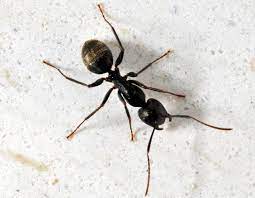 Carpenter ants are very common inside trees, especially on larger, mature trees that are hollow with cavities. They nest in rotted, decayed wood, although some nests may extend into sound heartwood in the center of the tree. Carpenter ant presence is an indication of rotting wood, and infested trees should be checked to determine whether the rot has weakened the tree enough that it has become a risk of failure.
Carpenter ants in trees are not directly harmful to the tree. Control is not necessary for the tree’s health; their presence indicates decay in the tree, and they only feed on dead wood fiber. Wood decay can set in if moisture is present; it is the wood decay that gives the carpenter ants the opportunity to colonize the tree. Carpenter ants use knots, cracks, holes and old insect tunnels to gain access to these areas.
Control of carpenter ants inside trees is difficult but can be done as a way to reduce invasion of the ants into adjacent structures and places where they are unwelcome. It is also possible for ant colonies located inside trees to form satellite colonies inside a nearby home wall. Available controls are not likely to permanently rid a tree of carpenter ants, so retreatment every year or so may be necessary. Dust insecticides (such as Sevin or Abamectin) labeled for use on trees in the landscape are suggested for control. Apply the dust directly into the nest cavity.
Sealing tree cavities or treating tree wounds with wound dressings is not advised. Such treatments are unnecessary and will not eliminate nor prevent decay or carpenter ant activity. Also cutting down otherwise viable trees that happen to be infested with carpenter ants is generally not necessary unless the tree poses a risk.
Resources:
Household & Structural, Department of Entomology, Purdue University
Who Let the Bugs Out?, 4-H Purdue Extension – Entomology
The Space Invaders of Summer, Purdue Agriculture News
Report Invasive Species, Purdue Invasive Species
The GLEDN Phone App – Great Lakes Early Detection Network
EDDMaps – Early Detection and Distribution Mapping System (Report Invasives)
Subscribe – Purdue Extension-FNR YouTube Channel, find videos for wildlife, forestry, urban forestry, community development and more.
Lindsey Purcell, Chapter Administrator & Master Arborist
Indiana Arborist Association
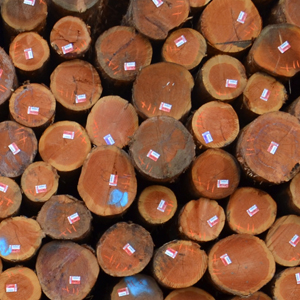 Buying locally, particularly food products from local growers, has become a popular way to support local community business and live an environmentally responsible lifestyle. In Indiana, there is another product that is renewable, recyclable, sustainable and grown locally in abundant supply and high quality – hardwood timber. Indiana is approximately 20-21 percent forestland and is home to over 100 species of native trees, most of which are deciduous hardwoods.
Our hardwood forests and tree plantings provide habitat for wildlife; protection for soil and water resources; recreational opportunities for hikers, campers, birdwatchers and hunters; and beautiful landscape scenes every season of the year. They also provide us with a renewable and sustainable supply of fine hardwood forest products, many of which are harvested, processed and turned into consumer products by companies here in Indiana.
The forests of Indiana are owned primarily by its private citizens; about 84% of the forest is held by individuals as part of a farm or personal woodland. Many of these owners use income from selling trees to maintain their woodlands, pay property taxes and support their families. Wages paid by loggers, lumber mills and wood product companies like flooring, furniture and cabinet manufacturers support thousands of families and add billions of dollars to the Indiana economy. The wood products manufacturing industry is the leading employer in the agriculture sector in Indiana.
Diversity seems to be the theme for Indiana wood products. We have many tree species that enter the marketplace in one form or another, including oak, ash, maple, walnut, cherry, tulip tree, hickory and even sassafras and sycamore. The products produced run the range of our interests and lifespans, from cradles to caskets and all the floors, furniture, cabinets and doors we use in between.
If you are concerned about responsible use of our natural resources, you can feel pretty good about Indiana wood as well. Extensive forest inventories administered by the U.S. Forest Service and Indiana DNR indicate annual growth of wood volume exceeds harvest and natural mortality by over three times. DNR Division of Forestry state forestlands, the privately held Classified Forest and Wildlands properties and privately held Tree Farm properties are certified as meeting sustainable forest management criteria as determined by internationally recognized forest sustainability certifying organizations.
Many landowners recognize the value of using a professional forester to help them meet their property management goals in a renewable, responsible, sustainable way. They are also helping us all enjoy the opportunity to own another great locally grown product – Indiana hardwoods.
If you are looking for a forester to assist you with management on your property, visit Indiana Forestry and Woodland Owners Association (IFWOA) – Directory of Professional Foresters.
To find out more about the forest products of Indiana, visit Indiana Forest Products Community.
To learn more about the extent and sustainability of Indiana forests, visit A Landowner’s Guide to Sustainable Forestry.
Resources:
Purdue Forestry and Natural Resources Publication List
The Education Store, Purdue Extension (place in search field: “timber”)
Find an Indiana Professional Forester, Indiana Forestry & Woodland Owners Association (IFWOA)
Purdue Arboretum Explorer
Native Trees of the Midwest, Purdue University Press
Shrubs and Woody Vines of Indiana and the Midwest, Purdue University Press
Investing in Indiana Woodlands, The Education Store
Forest Improvement Handbook, The Education Store
ID That Tree, Purdue Extension-Forestry & Natural Resources (FNR) YouTube playlist
Woodland Management Moment , Purdue Extension-FNR YouTube playlist
Lenny Farlee, Extension Forester
Hardwood Tree Improvement and Regeneration Center
Forestry and Natural Resources, Purdue University
 As teachers prepare their lessons for the fall, The Nature of Teaching is a great website to visit for science-based resources. Teachers can find free lesson plans, printable, posters, a photo library, information on upcoming workshops and more. You will find on the website tabs titled “Formal Curriculum” and “Informal Curriculum.” The Nature of Teaching also offers professional development workshops for teachers focused on science, the environment, and getting students connected with nature.
These organized lesson plans meet several K-5 Science and Math Academic Standards along with three 9-12 Natural Resource Management Academic Standards.
Wildlife curriculum include:
- Animal Diversity and Tracking
- Discovering the Watershed: Effects on Water Quality
- Common Indiana Mammals: Natural History and Identification
- Invasive Plants: Impact on Environment and People
- Hellbenders Rock! Natural History and Conservation of the Eastern Hellbender
Food Waste curriculum include:
- Food Waste and Natural Resources
- What a Waste of Food!
- Food Waste and The Environment
- Food Waste Solutions
- Transporting Food Waste
Health & Wellness curriculum include:
- Unit 1 Benefits of Connecting with Nature
- Unit 2 Gardening Station
- Unit 3 Tree Talk Station
Other resources:
- Help the Hellbender, Purdue Extension
- Indiana Department of Natural Resources (INDNR): For Kids
- 4-H, Purdue Extension
- National FFA Organization
- Indiana FFA
- Flying Wild, Association of Fish & Wildlife Agencies
- Project Learning Tree, Indiana Department of Natural Resources
- Project Wet
- Project Wild
- Indiana Wildlife Habitat Evaluation Program (WHEP)
Contact The Nature of Teaching team if you have any questions regarding workshops, certifications and curriculum.
The Nature of Teaching, Purdue Extension
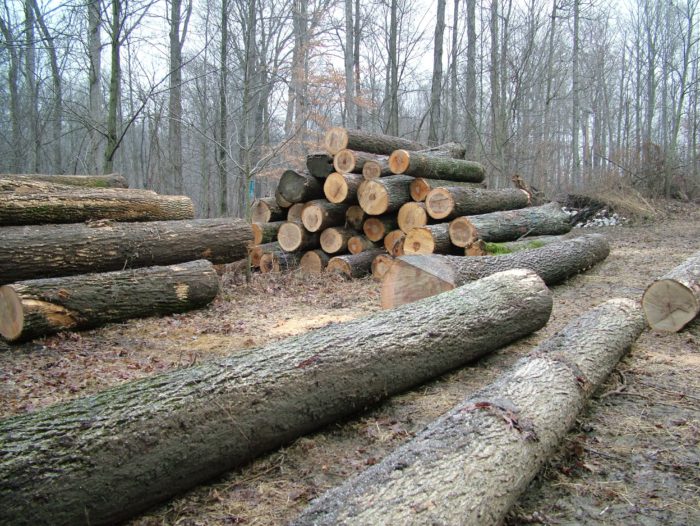 Indiana Conservation Officers and the DNR Division of Forestry are providing useful tips to landowners that can assist in protecting their valuable timber resources. To protect forestry resources, landowners should follow these steps:
- Hire a consultant forester to represent you and to mark and advertise your timber sale.
- Always get several bids from different timber buyers.
- Ask questions and get references from the timber buyer.
- Mark the trees to be cut with a paint mark on the stem and at ground level.
- Know and understand the fine details of the contract.
- Never make an oral agreement.
- Know how much you will be paid and the method of payment.
- Be a good neighbor and work out any property line disputes prior to harvesting.
The DNR offers a free information packet titled “callb4ucut” to those who may be considering harvesting their timber. See www.callb4ucut.com for further information.
For workshops on timber harvesting, check out the FNR Calendar and IN DNR Calendar.
For a list of consulting foresters, see The Indiana Forestry and Woodland Owners Association‘s (IFWOA) Directory of Professional Foresters.
Resources:
The Education Store, Purdue Extension (place in search field: “timber”)
Find an Indiana Professional Forester, Indiana Forestry & Woodland Owners Association (IFWOA)
Purdue Arboretum Explorer
Native Trees of the Midwest, Purdue University Press
Shrubs and Woody Vines of Indiana and the Midwest, Purdue University Press
Investing in Indiana Woodlands, The Education Store
Forest Improvement Handbook, The Education Store
ID That Tree, Purdue Extension-Forestry & Natural Resources (FNR) YouTube playlist
Woodland Management Moment , Purdue Extension-FNR YouTube playlist
 As the snow finally melts, we are approaching the prime time for planting bare-root trees and shrubs in Indiana. Planting bare-root seedlings is a proven, cost-efficient method to establish trees and shrubs on your property for a variety of purposes, as long as some basic steps are followed.
Prior to planting, prepare your site by eliminating competing vegetation where the seedlings will be planted. This can be done with tillage or herbicides. Areas with heavy sod or perennial weed growth are very difficult sites for small seedlings to survive and thrive. Clear all the competing vegetation in the planting area or create circles or bands two to three feet wide where the seedlings can grow. Be sure your site is suited to the species you want to plant. Soil survey and tree planting information from the USDA Natural Resources Conservation Service is available for every county in the state, either at NRCS offices or on the Web Soil Survey website: http://websoilsurvey.sc.egov.usda.gov.
When you receive your seedlings, keep them cool and moist until you can plant them. Plant them as soon as possible since the best place to store a seedling is in the soil! If you can’t plant them within a few days of their arrival, you can dig a trench and “heel in” the seedlings by planting them very close together and covering the roots with soil and/or moist mulch. This is still a short-term storage solution. You want to have your trees planted in their final locations before buds start to open.
When planting, keep seedlings stored in the shade, and roots should be kept moist until placed in the ground. A five gallon bucket with wet peat or sphagnum moss will work just fine for transporting seedlings to their planting locations. You can use several tools for planting, including shovels and commercial tree planting bars. The critical factors are planting the seedling at the correct depth and getting the root system in the ground such that it has good contact with the soil and is ready to grow. Seedlings should be planted with the root collar at or slightly below ground line. The root collar is where the stem changes to the root and is recognized by a color and texture change on the seedling stem. Be sure the soil is firmed around the seedling to close any air pockets that can dry out roots. Get your planting done as early in the spring as you can to take advantage of spring rains and a longer growing season for the seedling.
There are many more considerations for planning and implementing a successful tree planting that you can review in extension publications. See resources below for publications and videos.
To view the large photo used in this posting, visit How To Plant Seedlings.
Resources:
Planting Forest Trees and Shrubs in Indiana, The Education Store, Purdue Extension’s resource center
Native Trees of the Midwest, Purdue University Press
Shrubs and Woody Vines of Indiana and the Midwest, Purdue University Press
Investing in Indiana Woodlands, The Education Store
Forest Improvement Handbook, The Education Store
ID That Tree, Purdue Extension-Forestry & Natural Resources (FNR) YouTube playlist
Woodland Stewardship for Landowners Purdue Extension – FNR Extension YouTube Playlist
Woodland Management Moment, Purdue Extension-FNR YouTube playlist
Conservation Tree Planting: Steps to Success, Purdue Extension – FNR Got Nature? Blog
Lenny Farlee, Extension Forester
Hardwood Tree Improvement and Regeneration Center
Forestry and Natural Resources, Purdue University
 Several myths have surfaced and resurfaced over many years. Indiana’s state forests have been managed by the Division of Forestry since the first state forest was established in 1903. Questions arise including acreage, management, level of harvest, the forestry profession and a number of other issues. The maintenance of ecosystem processes is inherently more important than a given stage of development that must be preserved.
Check out the Forest Management and Wildlife Habitat Myths and Truths of Indiana State Forests (pdf).
Resources:
Frost Seeding to Establish Wildlife Food Plots and Native Grass and Forb Plantings – Purdue Extension YouTube
Wildlife Habitat Hint: Tips for Evaluating a First Year Native Grass and Forb Plantings, Purdue Extension – FNR YouTube Channel
Drone Seeding Native Grasses and Forbs: Project Overview & Drone Setup, Purdue Extension – FNR YouTube channel
Forest Improvement Handbook, The Education Store
Ordering Seedlings from the State Forest Nursery System, Got Nature? – Purdue Extension-Forestry & Natural Resources (FNR)
Designing Hardwood Tree Plantings for Wildlife – The Education Store
ID That Tree – YouTube Playlist
Forest Management for Reptiles and Amphibians: A Technical Guide for the Midwest, The Education Store
Ask the Expert: Hardwood Ecosystem Experiment – Birds and Salamander Research, Purdue Extension – FNR
A Template for Your Wildlife Habitat Management Plan, The Education Store
Managing Your Woods for White-Tailed Deer, The Education Store
Woodland Stewardship for Landowners, Playlist, Purdue Extension – FNR YouTube channel
Nature of Teaching Unit 1: Animal Diversity and Tracking, The Education Store
Subscribe Purdue Extension – Forestry and Natural Resources YouTube Channel, Playlists include wildlife, Nature of Teaching, Moments in the Wild and much more.
Indiana Department of Natural Resources
Division of Fish and Wildlife

Recent Posts
- Popular Landscape Shrub is Invasive
Posted: October 15, 2026 in Alert, Forestry, Forests and Street Trees, Invasive Plant Species, Plants, Woodlands - Purdue Extension’s Regional Teams Are Here: Connecting Communities with Expertise and Opportunity
Posted: October 14, 2026 in Community Development, Forestry, Forests and Street Trees, Gardening, How To, Timber Marketing, Urban Forestry, Wildlife, Woodlands - Why Do Our Trees Go From Green Leaves to Different Colors?
Posted: in Forestry, Forests and Street Trees, Urban Forestry, Woodlands - Distinguishing Dogwoods
Posted: October 13, 2026 in Forestry, Urban Forestry, Wildlife, Woodlands - It’s Not Too Early To Start Planning For Spring Tree Planting
Posted: in Forestry, How To - Can I Plant Trees in the Fall?
Posted: October 12, 2026 in Forestry, How To, Land Use, Plants, Urban Forestry, Wildlife - Burning for Benefits: Why Fire Belongs in Indiana
Posted: in Forestry, Safety, Woodlands - Disease May Cause Wilting and Eventual Death of Certain Trees and Shrubs, Purdue Landscape Report
Posted: October 5, 2026 in Disease, Forestry, Plants - October Is Firewood Month: Protect Indiana’s Forests by Making Smart Choices
Posted: October 1, 2026 in Forestry, Forests and Street Trees, How To, Invasive Insects, Urban Forestry - Woodland Flowers of Late Summer
Posted: September 14, 2026 in Forestry, Gardening, Wildlife, Woodlands
Archives
Categories
- Alert
- Aquaculture/Fish
- Aquatic/Aquaculture Resources
- Ask the Expert
- Christmas Trees
- Community Development
- Disease
- Drought
- Forestry
- Forests and Street Trees
- Gardening
- Got Nature for Kids
- Great Lakes
- How To
- Invasive Animal Species
- Invasive Insects
- Invasive Plant Species
- Land Use
- Natural Resource Planning
- Nature of Teaching
- Plants
- Podcasts
- Ponds
- Publication
- Safety
- Spiders
- Timber Marketing
- Urban Forestry
- Webinar
- Wildlife
- Wood Products/Manufacturing
- Woodland Management Moment
- Woodlands