 Purdue University - Extension - Forestry and Natural Resources
Got Nature? Blog
The Purdue Plant and Pest Diagnostic Laboratory (PPDL) proudly presents its latest Annual Report, offering a comprehensive overview of the year’s most significant insights, diagnostics, and trends. This essential document covers critical topics such as spruce-tordon uptake, hosta virus X, ophiostoma ulmi, diamond back moth, lettuce slime mold, and bentgrass dollar spot. As an indispensable resource for growers, researchers, and the public, PPDL remains at the forefront of providing expert analysis on plant diseases, insect identification, and environmental concerns throughout Indiana and beyond.
Visit the PPDL Annual Reports webpage to find the 2024 report and view past reports.
About PPDL:
The Plant and Pest Diagnostic Laboratory (PPDL) remains dedicated to helping protect Indiana’s agriculture, the green industry, and individual landscapes, by providing rapid and reliable diagnostic services for plant disease and pest problems. PPDL also provides appropriate pest management strategies and diagnostics training. They are a participating member lab in the National Plant Diagnostic Network (NPDN), a consortium of Land Grant University diagnostic laboratories established to help protect our nation’s plant biosecurity infrastructure.
Resources:
Find an Arborist, International Society of Arboriculture
Diseases in Hardwood Tree Plantings, The Education Store, Purdue Extension’s resource center
Fifty Common Trees of Indiana
An Introduction to Trees of Indiana
Shrubs and Woody Vines of Indiana and the Midwest, The Education Store
Tree Installation: Process and Practices, The Education Store
Forest Improvement Handbook, The Education Store
Invasive Species, Playlist, Purdue Extension – FNR YouTube Channel
Report Invasive Species, Purdue Invasive Species
What are invasive species and why should I care?, Got Nature? Blog, Purdue Extension – Forestry and Natural Resources
Indiana Department of Natural Resources: Invasive Species
Indiana Invasive Species Council
ID That Tree, Purdue Extension-FNR YouTube playlist
Tree Defect Identification, The Education Store
Tree Wound and Healing, Got Nature? Blog, Purdue Extension – Forestry and Natural Resources
Purdue Plant & Pest Diagnostic Laboratory (PPDL)
Purdue Botany and Plant Pathology
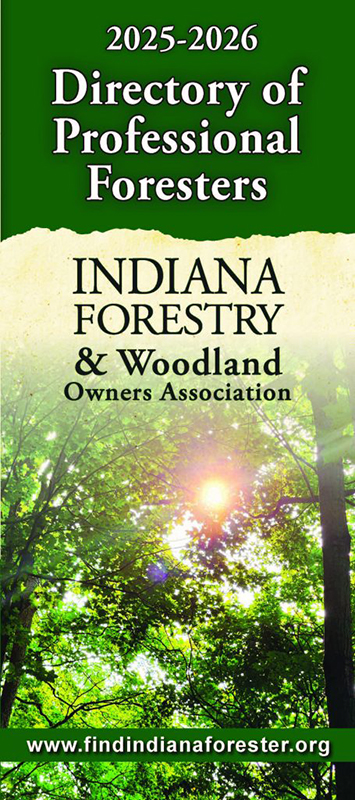 A Directory of Professional Foresters is now available, listing Indiana foresters who provide private woodland services and advice. Foresters are located throughout the state and provide assistance such as management plans, timber sales, tree planting, invasive species control, and many other services.
“Finding the resources to help you meet your woodland management objectives is important to successful stewardship,” says Liz Jackson, Purdue Extension and manager of Indiana Forestry & Woodland Owners Association. “Professional foresters can provide expert assistance to meet your property management goals.”
The Directory is available online via interactive map at www.findindianaforester.org to find foresters by location, or as a downloadable document. Printed copies of the booklet are available at County Extension and Soil & Water Conservation District offices or through a state Division of Forestry district forester.
Indiana Forestry & Woodland Owners Association promotes the wise use of Indiana’s forest resource for today and future generations. Learn more at www.ifwoa.org.
Resources:
Indiana Forestry & Woodland Owners Association (IFWOA) YouTube Channel
Deer Impact Toolbox, Purdue Extension Pond and Wildlife Management
District Forester, Indiana DNR Division of Forestry, for over 10 acres of woodlands
Directory of Professional Foresters, Indiana Forestry & Woodland Owners Association (IFWOA)
Indiana Woodland Steward E-newsletters, Eleven Member Organization
A Woodland Management Moment, Playlist, Purdue Extension – Forestry and Natural Resources (FNR) YouTube Channel
Conservation Tree Planting: Steps to Success, Purdue Extension – FNR YouTube Channel
Forest Improvement Handbook, The Education Store
Invasive Species, Playlist, Purdue Extension – FNR YouTube Channel
Woodland Stewardship for Landowners, Playlist, Purdue Extension – FNR YouTube Channel
Invasive Plant Species Identification, Video, Purdue Extension – FNR YouTube Channel
Report Invasive Species, Purdue Invasive Species
ID That Tree – Video Playlist, Purdue Extension – Forestry and Natural Resources (FNR) YouTube Channel
Subscribe – Purdue Extension-FNR YouTube Channel
Liz Jackson, IFWOA engagement specialist & Walnut Council Manager
Indiana Forestry & Woodlands Owners Association (IFWOA)
IN DNR, Division of Fish & Wildlife: For Indiana Arbor Day, the Indiana DNR tree seedling nurseries provide a tree seedling for each Indiana third grade student whose school and teachers wish to participate in the Arbor Day program.

A letter is mailed to every Indiana school in January of each year. To receive a tree seedling for every third grader, the school’s Arbor Day coordinator or principal must return the postcard to Vallonia Nursery by the date indicated in the letter.
Each Indiana school may also receive an Arbor Day seedling to plant on the school grounds. The seedling is ordered at the same time as the third grade seedlings.
To ensure your school receives its third grade trees and school seedling, be sure to return the postcard from the DNR by the date indicated!
To find out more, view the Indiana Department of Natural Resources webpage on Indiana Arbor Day Free seedlings.
Learn more: The Arbor Day Foundation is a diverse community of bold thinkers, supporters, organizers, connectors, and doers.
Arbor Day History: It takes a lot of Yeses to plant 500 million trees. That’s why when you commit to celebrating Arbor Day, you’re doing more than helping put trees in the ground. You’re saying Yes to a healthier world. So grab your gardening gloves and join an event in your area, plant a tree in your yard, or hit the donate button—however you say it, your Yes makes a difference.
Resources:
Find an Arborist video, Trees are Good-International Society of Arboriculture (ISA)
Trees and Storms – The Education Store, Purdue Education’s resource center
Moist soil and rotten roots makes it easy for trees to come crashing down – Fox 59 News
Expert: Some storm damage can be easily prevented – Fox 59
Why Is My Tree Dying? – The Education Store
Tree Risk Management – The Education Store
Mechanical Damage to Trees: Mowing and Maintenance Equipment – The Education Store
Trees and Electric Lines – The Education Store
Tree Defect Identification, The Education Store
Planting Your Tree, video, The Education Store
Tree Installation, The Education Store
Tree Wound and Healing, Got Nature? Blog, Purdue Extension – Forestry and Natural Resources
Subscribe – Purdue Extension-FNR YouTube Channel
Division of Fish and Wildlife, Indiana Department of Natural Resources
In this episode of ID That Tree, Purdue Extension Forester Lenny Farlee explores the greenbriers—Indiana’s unique climbing vines. Though distantly related to lilies, these vines stand out with their distinctive oblong leaves, prominent veins, and alternate leaf arrangement. Watch the video to discover how to identify these fascinating vines and learn more about their characteristics!
If you have any questions regarding wildlife, trees, forest management, wood products, natural resource planning or other natural resource topics, feel free to contact us by using our Ask an Expert web page.
Resources:
ID That Tree: Firs and Spruces, Video Playlist, Purdue Extension – Forestry and Natural Resources (FNR) YouTube Channel
ID That Tree – Jack Pine, Scotch Pine, Red Pine, Virginia Pine, Eastern White Pine, Video Playlist, Purdue Extension – Forestry and Natural Resources (FNR) YouTube Channel
Beat Back Borers Attacking Pines and Other Cone Bearing Trees, Purdue Landscape Report
Tree Diseases: White Pine Decline in Indiana, The Education Store, Purdue Extension Resource Center
Purdue Arboretum Explorer
Conservation Tree Planting: Steps to Success, Purdue Extension – FNR YouTube Channel
A Woodland Management Moment, Playlist, Purdue Extension – FNR YouTube Channel
Woodland Stewardship for Landowners, Playlist, Purdue Extension – FNR YouTube Channel
Indiana Department of Natural Resources: Invasive Species
Indiana Invasive Species Council
Cooperative Invasive Species Management Area (CISMA)
Report Invasive, Purdue Extension
Episode 11 – Exploring the challenges of Invasive Species, Habitat University-Natural Resource University
Shrubs and Woody Vines of Indiana and the Midwest, Purdue University Press
Native Trees of the Midwest, Purdue University Press
Professional Forester, Indiana Forestry Woodland Owners Association
Forest Improvement Handbook, The Education Store
Find an Arborist, International Society of Arboriculture
Lenny Farlee, Extension Forester
Hardwood Tree Improvement and Regeneration Center
Purdue Department of Forestry & Natural Resources
The Help the Hellbender research program, based in Purdue Forestry and Natural Resources, was honored with the National Association of Conservation Districts (NACD)’s Friends of Conservation Award at the organization’s annual meeting in Salt Lake City on Feb. 11.
“This award means a lot to our program, not just because it’s always nice to be recognized, but because it demonstrates how our program has successfully expanded beyond just conserving wildlife,” Purdue extension wildlife specialist Nick Burgmeier said. “It’s a recognition of our commitment to working with partners and stakeholders to benefit both our wildlife and human communities. When we work together to protect the soil and the land farmers depend on, we are also working together to protect the water and the land wildlife, including Hellbenders, depend on.”

Nick Burgmeier receiving the award
In its award recognition, the NACD noted:
“Led by Dr. Rod Williams and Nick Burgmeier, the Help the Hellbender Project combines research, education, and conservation to enhance the Hellbender’s habitat and promote awareness. Through a captive-rearing program, the project is helping to restore the dwindling population of hellbenders in Indiana’s Sinking Blue River Watershed. The Help the Hellbender Project’s multifaceted approach has benefited both local communities and wildlife now and into the future.”
The NACD award follows a county level Friends of Conservation Award from the Washington County Soil & Water Conservation District in February 2023 and an Indiana state level award in January 2024.
The Help the Hellbender team also received the Outstanding Achievement Award, Academic Sector, from the Indiana Water Resources Association in June 2023.
In March 2023, they received the Budd Denneman Partners in Conservation Excellence award from the Indiana Department of Natural Resources Division of Fish and Wildlife to honor outstanding conservation efforts. The Help the Hellbender partnership is a collaboration between the Indiana DNR and Purdue University with funding support from the U.S. Fish & Wildlife Service and partners in local governments, universities, non-governmental organizations and zoos that are working to recover the state-endangered hellbender. The partnership is the largest and most comprehensive group working to recover an imperiled amphibian in Indiana.
The eastern hellbender (Cryptobranchus alleganiensis alleganiensis) is a large, fully aquatic salamander, nicknamed the snot otter, water dog, devil dog, Allegheny alligator and water eel among other things. Their decline in Indiana started in the early-to-mid 1900s because of habitat loss and poor water quality. Hellbenders play an important role in aquatic ecosystems and are indicators of clean water.
For the last 17 years, the Help the Hellbender team has been researching eastern hellbenders, spearheading regional conservation efforts and advancing hellbender captive propagation, or the rearing of this ancient animal in captivity for their eventual return to the wild.
Each fall, eggs are gathered from rivers and streams in southern Indiana, Kentucky and Ohio and split among the Help the Hellbender lab and zoo partners, to be raised in captivity. At age three or four, the juvenile salamanders are returned to the wild with hopes of increasing the population and encouraging breeding.
Since the project began in 2007, 900 animals have been returned to the Blue River and surrounding areas, accounting for a 670% increase over the original population estimate from 2008-2010. Another 850 hellbenders, not including newly acquired eggs, are currently being raised in captivity.
The Help the Hellbender partnership had a major breakthrough in the summer of 2023 with the documentation of a larval hellbender in the Blue River while conducting routine surveys. This discovery is significant because over the past four decades, only adult hellbenders have been documented in the Blue River. The presence of a larval salamander suggests that conservation efforts and rearing programs are accomplishing their goals for the recovery of this endangered species.
Over the years, the lab has procured nearly $7 million in grants to fund engagement and research. All told, the Help the Hellbender lab has produced 33 research publications, eight extension publications and 12 extension videos to share about the species as well as how other researchers and the general public can aid hellbenders and other species by keeping waterways clear of obstructions and clean.
Given the multifaceted nature of hellbender declines and the broad scope of the problem, diverse stakeholders needed to be engaged to form a collaborative interdisciplinary team of organizations and conservation groups with a common goal. Consequently, a key feature of the program is the partnerships that have been cultivated. Help the Hellbender has assembled a diverse group of 24 partners, including federal, state, and local agencies, non-profits, industry, academic, zoological, and outreach-focused groups, to address the recovery of a threatened aquatic salamander. The HTH team provided the leadership necessary to bring these groups together to forge a successful path to conserve and recover the hellbender in Indiana.
The Help the Hellbender lab, now under the leadership of Dr. Jason Hoverman, is actively collaborating with the Indiana Department of Natural Resources, Indiana Division of Fish and Wildlife, the Nature Conservancy and the Sam Shine Foundation as well as several other partners across 13 states on a number of conservation projects and educational opportunities forteachers, children, farmers and more.
The newest addition to the partnership’s conservation efforts is the Farmers Helping Hellbenders project, which offers funding opportunities to agricultural producers in the Blue River – Sinking Watershed to implement conservation practices on their land to assist with topsoil retention, the improvement of aquatic resources and the recovery of Eastern Hellbenders.
The project, which is made possible by a $2.7 million in funding from the U.S. Department of Agriculture’s Regional Conservation Partnership Program, aims to improve hellbender habitat in a four-county region in south central Indiana, the only remaining habitat for hellbenders in the state, by expanding the use of agricultural conservation practices that lead to decreased sedimentation in local rivers systems. Williams talks more about hellbenders and the Farmers Helping Hellbenders project in this YouTube video.
The program is already producing astounding results. When the first two years of signed contracts (2023 and 2024) are complete, they will result in:
- Reduction of sediment by 2,568,680 pounds per year
- Reduction in nitrogen by 9,040 pounds per year
- Reduction in phosphorus by 2,374 pounds per year
Eligible producers and forest landowners who wish to implement conservation practices on their land should discuss their options with their local district conservationist. For more information or to submit an application, contact your local district conservationist by visiting Farmers.gov/Service-locator.
An in depth look at the hellbender program’s success is available through the story “Rebuilding Indiana’s Hellbender Habitat” from the Natural Resources Conservation Service.
The article was shared from Purdue College of Agriculture News: Help the Hellbender Research Program Honored with Friends of Conservation Award.
Resources:
USDA Awards Farmers Helping Hellbenders Project in Funding, Purdue Extension – Forestry and Natural Resources (FNR) Got Nature? Blog
Improving Water Quality by Protecting Sinkholes on Your Property, Purdue Extension – FNR YouTube Channel
Improving Water Quality Around Your Farm video, Purdue Extension – FNR YouTube Channel
Adaptations for Aquatic Amphibians, The Education Store, Purdue Extension’s resource center
Hellbenders Rock! Nature of Teaching Lesson Plan, The Education Store
Nature of Teaching – Hellbenders Rock Sneak Peek video, Purdue Extension – FNR YouTube Channel
Nature of Teaching – Hellbenders Rock webinar video, Purdue Extension – FNR YouTube Channel
Learn about hellbenders and take a tour of Purdue’s hellbender rearing facility video, Purdue Extension – FNR YouTube Channel
Learn about the hellbender work at Mesker Park Zoo video, Purdue FNR Facebook
Learn about hellbender work at The Wilds video, Purdue FNR Facebook
Dr. Rod Williams’ 2017 TEDx Talk Help the Hellbenders video, Purdue Extension – FNR YouTube Channel
A Moment in the Wild – Hellbender Hides video, Purdue Extension – FNR YouTube Channel
A Moment in the Wild – Hellbender Release video , Purdue Extension – FNR YouTube Channel
Wendy Mayer, FNR Communications Coordinator
Purdue University Department of Forestry and Natural Resources
Invasive species are any plant, animal, insect or plant disease not native to a specific location that can cause harm to the environment, impact the diversity of native species, reduce wildlife habitat or disrupt important ecosystem functions.
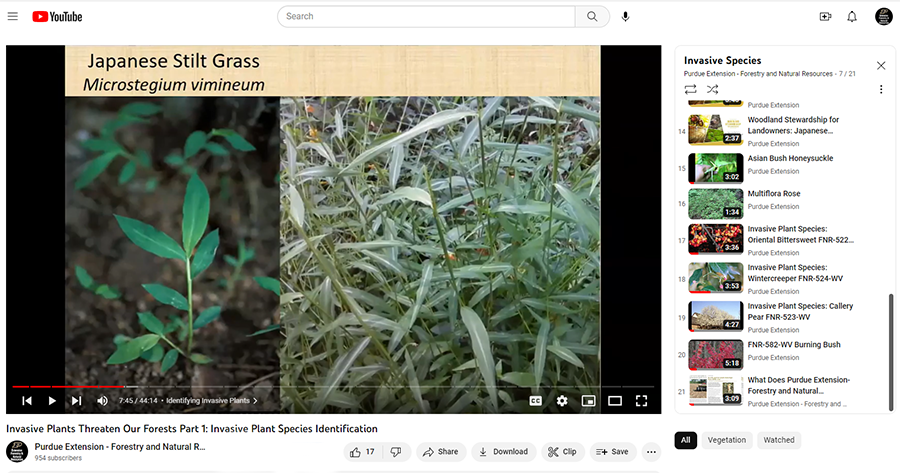 Why should you care about invasive species? Invasive species limit land use, degrade natural resources and inhibit recreational pursuits such as hunting, fishing, bird watching, and foraging. They also negatively impact fisheries, agricultural and forestry industries, destabilize soil and alter water resources. Invasive species also out compete natives and are costly to control with estimates showing that the U.S. spends $137 billion/year to control/manage invasive species.
As spring approaches, many invasive plants will begin to leaf out in woodland areas. Spring is a good time to stop them in their tracks so they don’t overtake native plants, affect water availability or damage the quality of soil among other potential impacts.
Here are some resources to help you identify various invasive plants in woodland areas near you, to know when to report them and also what you can do help control their spread.
Videos on Purdue Extension – Forestry and Natural Resources (FNR) YouTube Channel, Invasive Species Playlist
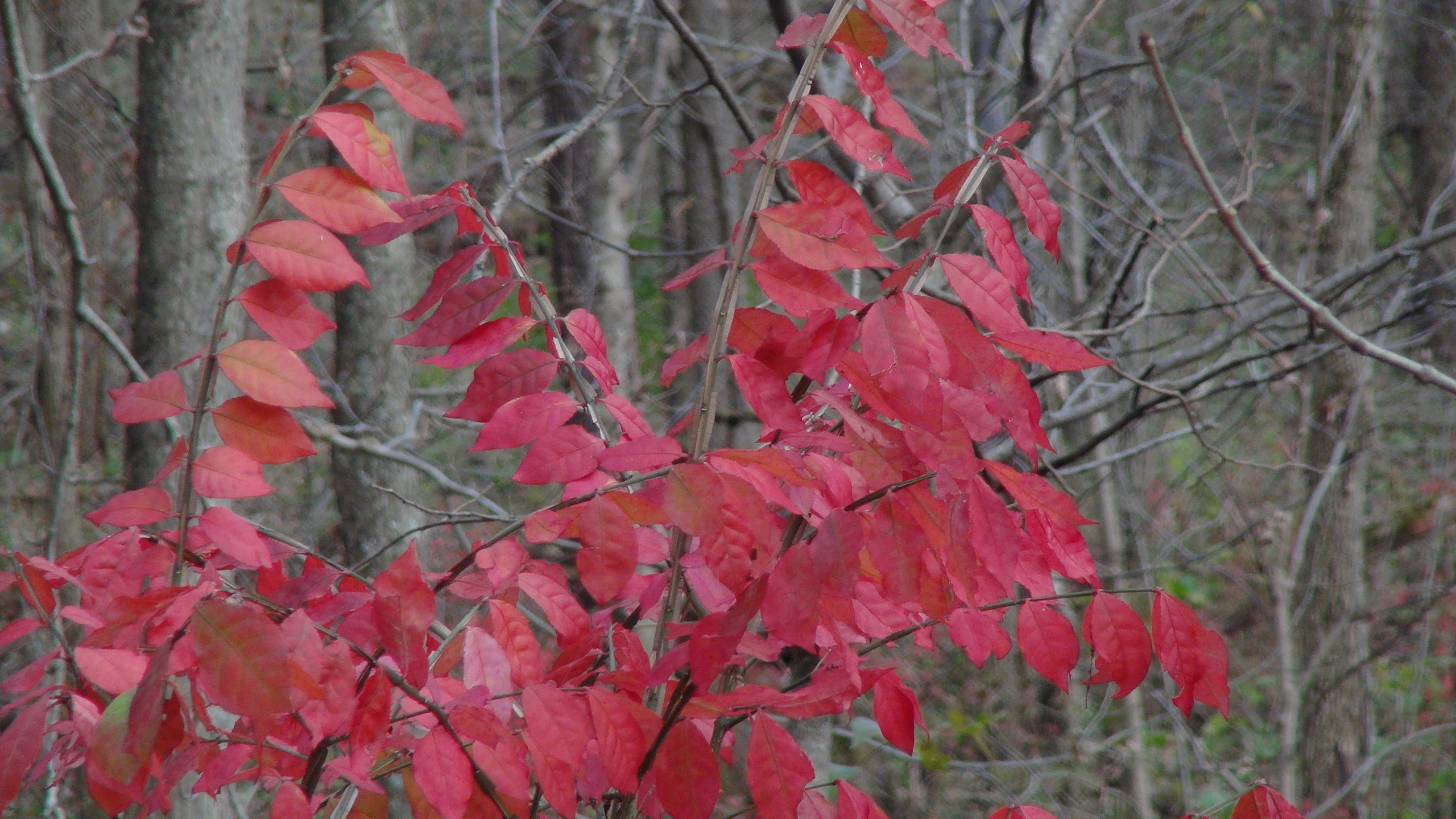
burning bush
- Asian Bush Honeysuckle
- Burning Bush
- Callery Pear
- Multiflora Rose
- Invasive Plants Threaten Our Forests Part 1: Invasive Plant Species Identification
- Invasive Plants Threaten Our Forests Part 2: Control and Management
Don’t miss this YouTube Shorts video, Lenny Farlee Talks About Invasive Plants Emerging in Early Spring
More Purdue Extension-FNR YouTube Video Series –
Woodland Management Moment Videos:
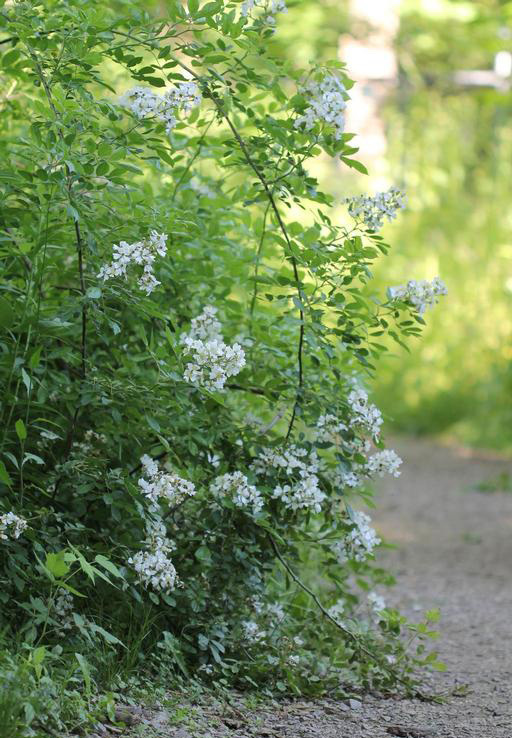
Multiflora Rose
Credit: Rob Routledge, Sault College, Bugwood.org
Woodland Stewardship for Landowners Videos:
ID That Tree Videos:
- Invasive White Mulberry
- Invasive Siberian Elm
- Invasive Tree of Heaven
- Invasive Amur Honeysuckle
- Asian Honeysuckle
FNR Extension Publications, The Education Store:
- Invasive Plant Species: Oriental Bittersweet
- Invasive Plant Species: Wintercreeper
- Japanese Chaff Flower
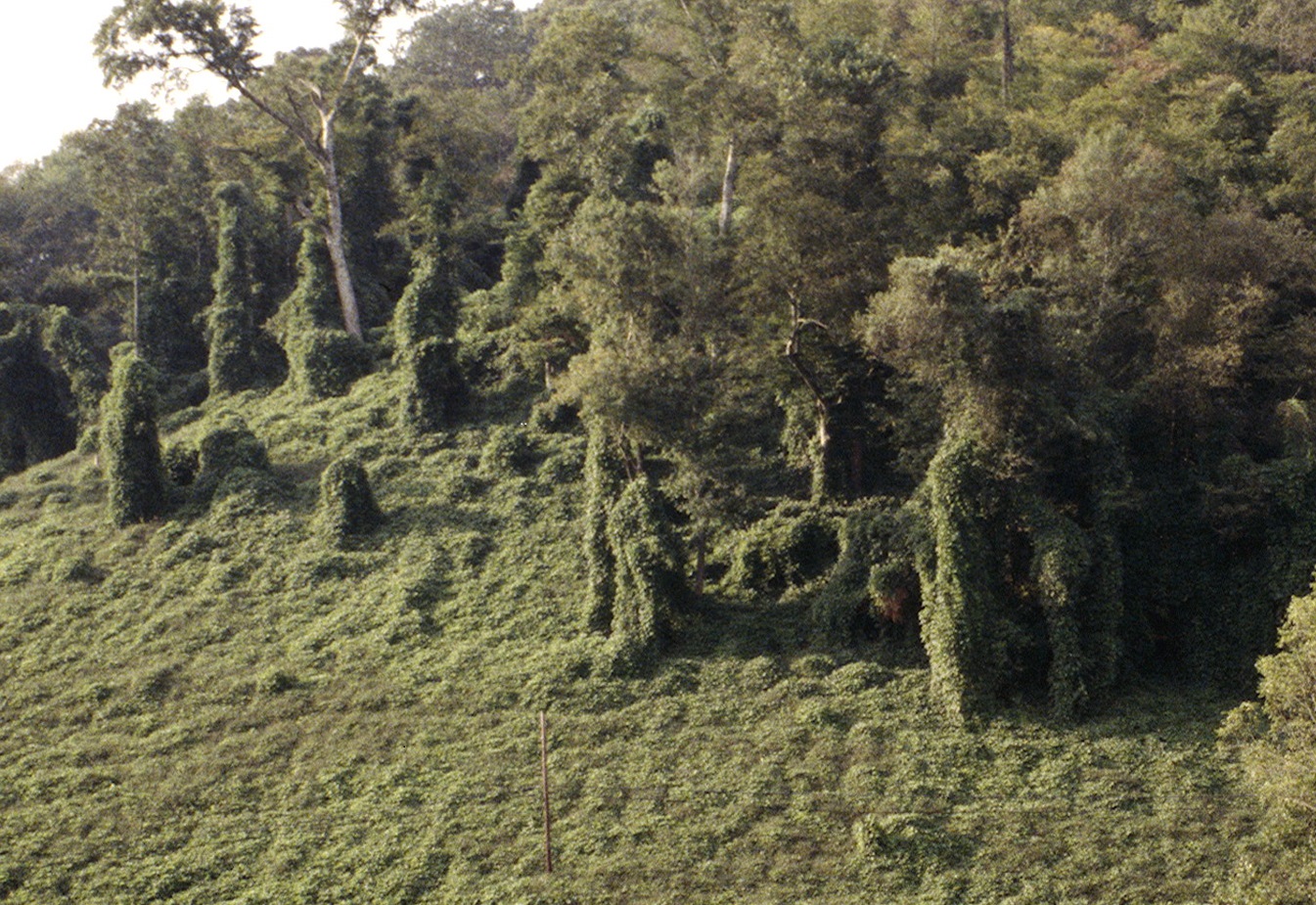
- Kudzu in Indiana
- Mile-a-minute Vine
Mile-a-minute
Purdue Landscape Report:
- Alternatives to Burning Bush for Fall Color
- Now is the Time to Identify Callery Pear
- Keyword search: Invasive
FNR Extension Got Nature? Blog:
 When and how do I report an invasive species?
The Purdue Invasive Species website will help you identify invasive species and explain how to send in your findings. If you notice something is killing an otherwise healthy stand of trees or shrubs, you will want to identify it and report it if it is on the invasive list. If you see a plant that is taking over an area where it doesn’t belong, you will want to identify it and report it if it is on the invasive list.
- The GLEDN Phone App – Great Lakes Early Detection Network
- EDDMaps – Early Detection and Distribution Mapping System
- 1-866 No EXOTIC (1-866-663-9684)
- depp@dnr.IN.gov – Email Indiana Department of Natural Resources (DNR)
More Resources
Indiana Department of Natural Resources: Invasive Species
Indiana Invasive Species Council
Cooperative Invasive Species Management Area (CISMA)
Aquatic Invasive Species, Illinois-Indiana Sea Grant (IISG)
Episode 11 – Exploring the challenges of Invasive Species, Habitat University-Natural Resource University
Emerald Ash Borer Information Network, Purdue University and Partners
What Nurseries Need to Know About the Invasive Species Regulation, The Education Store, Purdue Extension’s resource center
Invasive plants: impact on environment and people, The Education Store, Purdue Extension’s resource center
Diana Evans, Extension and Web Communication Specialist
Purdue University Department of Forestry and Natural Resources
Lenny Farlee, Extension Forester
Hardwood Tree Improvement and Regeneration Center
Purdue Department of Forestry & Natural Resources
Tax preparation time usually brings with it questions about what is deductible, how to report this income and what you can do to save on your taxes in the future. Fortunately for woodland owners, there are several excellent resources available to help you find some guidance.
A national site addressing tax issues for woodland owners is the National Timber Tax Website. This site provides updated tax tips for the 2024 filing year, as well as many guides and references to help you effectively plan a tax strategy for your property.
The first link you will see on the National Timber Tax website is the recent timber tax tips by the U.S. Department of Agriculture (USDA), Forest Service:
Tax Tips for Forest Landowners: 2024 Tax Year (pdf 176KB)
Purdue Forestry and Natural Resources Extension offers some publications covering taxation issues for timber sales and tree planting.
How to Treat Timber Sale Income
Determining Tax Basis of Timber
Financial and Tax Aspects of Tree Planting
If you sold timber or planted trees for timber production last year, the references above may help you understand your options and possibly provide some tax savings.
Familiarizing yourself with the tax treatment of timber sales and tree plantings may help you more effectively plan for future tax returns.
Other resources:
U.S. Forest Service
Indiana Department of Natural Resources Offers Program Aiding in Property Tax Reductions, Purdue Extension – Forestry & Natural Resources (FNR) Blog Article
The Education Store, Purdue Extension (place in search field: “timber”)
Find an Indiana Professional Forester, Indiana Forestry & Woodland Owners Association (IFWOA)
Purdue Arboretum Explorer
Native Trees of the Midwest, The Education Store
Shrubs and Woody Vines of Indiana and the Midwest, The Education Store
Investing in Indiana Woodlands, The Education Store
Forest Improvement Handbook, The Education Store
ID That Tree, Purdue Extension-Forestry & Natural Resources (FNR) YouTube playlist
Woodland Management Moment , Purdue Extension-FNR YouTube playlist
Indiana DNR Offers Special Program Aiding in Property Tax Reductions – IFWOA
Lenny Farlee, Extension Forester
Hardwood Tree Improvement and Regeneration Center (HTIRC)
Forestry and Natural Resources, Purdue University
 Indiana Forestry & Woodland Owners Association (IFWOA) News: If you live in Indiana and own more than ten acres of woodlands, then you may want to enroll in the Classified Forest and Wildlands Program offered through the Indiana Department of Natural Resources (DNR), Division of Forestry. This program encourages timber production, watershed protection, and wildlife habitat management on private lands in Indiana. Program landowners receive a property tax reduction in return for following a professionally written management plan. In addition to the tax incentive, landowners receive free technical assistance from DNR foresters and wildlife biologists, priority for cost-share to offset the cost of doing management, and the ability to “green” certify their forests. The minimum requirement for program enrollment is 10 acres of forest, wetland, shrubland, and/or grassland.
“Once enrolled in our program, you get a reduced property tax assessment,” says Gretchen Herbaugh, District Forester with Indiana DNR serving southwestern Indiana.
“Property can be anything from forest ground to native grasses to pollinator habitats to wildlife food plots—we span a large range of habitat types and management styles,” Herbaugh says.
For full IFWOA article view: Indiana DNR Offers a Special Program for Woodland Owners.
To learn more about the program with more resources view the Hoosier Ag Today article, Indiana DNR Offering a Special Program for Woodland Owners.
Resources:
Subscribe, IFWOA YouTube Channel (includes The Nature of Oaks, Be Tick Aware, Population Ecology of Deer and more)
Find an Indiana Professional Forester, Indiana Forestry & Woodland Owners Association (IFWOA)
Purdue Arboretum Explorer
Native Trees of the Midwest, The Education Store
Shrubs and Woody Vines of Indiana and the Midwest, The Education Store
Investing in Indiana Woodlands, The Education Store
Forest Improvement Handbook, The Education Store
ID That Tree, Purdue Extension-Forestry & Natural Resources (FNR) YouTube playlist
Woodland Management Moment , Purdue Extension-FNR YouTube playlist
District Foresters for 10 plus acres, Indiana Department of Natural Resources
Financial and Tax Aspects of Tree Planting
Diana Evans, Extension and Web Communication Specialist
Purdue University Department of Forestry and Natural Resources
Liz Jackson, Engagement Lead
Indiana Forestry & Woodland Association (IFWOA)
In this episode of A Woodland Management Moment, Purdue Extension forester Lenny Farlee discusses the regeneration of small forest openings. Even forested areas of an acre or less can offer excellent opportunities for growth. Light-loving species thrive in the center, while more shade-tolerant plants flourish at the edges. This practice enhances the diversity of your woodlands. Adequate sunlight is crucial for creating a well-structured opening. By regenerating light-loving species, you can also add valuable wildlife habitat diversity to your property.
If you have any questions regarding trees, forests, wildlife, wood products or other natural resource topics, feel free to contact us by using our Ask an Expert web page.
Resources:
A Woodland Management Moment, Playlist, Purdue Extension – Forestry and Natural Resources (FNR) YouTube Channel
The Nature of Oaks Webinar, Purdue Extension-FNR YouTube Channel, Shared from Indiana Forestry & Woodland Owners Association
Conservation Tree Planting: Steps to Success, Purdue Extension – FNR YouTube Channel
Shrubs and Woody Vines of Indiana and the Midwest, The Education Store, Purdue Extension Resource Center
Native Trees of the Midwest, The Education Store
ID That Tree, Playlist, Purdue Extension – FNR YouTube Channel
Investing in Indiana Woodlands, The Education Store
Woodland Stewardship for Landowners Video Series, Playlist, Indiana Department of Natural Resources YouTube Channel
Ask an Expert: Tree Selection and Planting, Purdue Extension – FNR YouTube Channel
Forest Improvement Handbook, The Education Store
Find an Indiana Professional Forester, Indiana Forestry & Woodland Owners Association (IFWOA)
Purdue Arboretum Explorer
Lenny Farlee, Extension Forester
Hardwood Tree Improvement and Regeneration Center
Purdue Department of Forestry & Natural Resources
Wild Bulletin, Indiana Department of Natural Resources (DNR) Fish and Wildlife: Each year, the Indiana DNR invites the public to provide feedback on the management of white-tailed deer via the Deer Management Survey. The electronic survey gathers opinions of deer management at both the county and state level, covering deer population management, trends in deer populations and other relevant topics such as chronic wasting disease (CWD), land access and equipment types permitted for hunting.
 Anyone can sign up to receive the survey, if you have previously filled out the survey, you will automatically receive the survey in future years. Find more information at DNR: Deer Management Survey webpage.
Resources:
Purdue Extension Pond and Wildlife Management
Introduction to White-tailed Deer Impacts on Indiana Woodlands
Understanding White-tailed Deer and Their Impact on Indiana Woodlands, The Education Store
Monitoring White-tailed Deer and Their Impact on Indiana Woodlands, The Education Store
Managing White-tailed Deer Impacts on Indiana Woodlands, The Education Store
Ask an Expert: Wildlife Food Plots, video, Purdue Extension – FNR YouTube Channel
How to Build a Plastic Mesh Deer Exclusion Fence, The Education Store
Managing Your Woods for White-Tailed Deer, The Education Store
Bovine Tuberculosis in Wild White-tailed Deer, The Education Store
Handling Harvested Game: Episode 1, Field Dressing, video, Purdue Extension – FNR YouTube Channel
Deer Harvest Data Collection, Got Nature? Blog, Purdue Extension – FNR
How to Score Your White-tailed Deer, video, The Education Store, Purdue Extension Resource Center
White-Tailed Deer Post Harvest Collection, video, The Education Store
Age Determination in White-tailed Deer, video, The Education Store
Handling Harvested Deer Ask an Expert? video, Purdue Extension – FNR YouTube Channel
Subscribe to Purdue Extension-Forestry & Natural Resources YouTube Channel, Wildlife Playlist
Indiana Department of Natural Resources – Division of Fish & Wildlife

Recent Posts
- ID That Tree: Dwarf Chinkapin Oak
Posted: March 20, 2026 in Forestry, Urban Forestry, Wildlife, Woodlands - A Woodland Management Moment: Windbreak Around Walnut Plantings
Posted: March 3, 2026 in Forestry, Urban Forestry, Woodland Management Moment - Register for Natural Resources Teacher Institute’s Class of 2026
Posted: February 19, 2026 in Forestry, Wildlife, Woodlands - Southwest Damage, Scalding or Frost Cracking
Posted: January 30, 2026 in Forestry, Urban Forestry - Forest Landowners: Share Your Experience with Regeneration and Restoration
Posted: January 27, 2026 in Forestry, How To, Timber Marketing, Woodlands - Woodsy Owl Edition for Educational Learning, USDA – U.S. Forest Service
Posted: January 21, 2026 in Forestry, Forests and Street Trees, Got Nature for Kids, Urban Forestry, Wildlife - It’s Not Too Late to Order Trees for Spring Planting
Posted: January 13, 2026 in Forestry, How To, Plants - Opt-in to the Deer Management Survey, MyDNR
Posted: January 12, 2026 in Forestry, Wildlife - FNR Extension Offering Forest Management for the Private Woodland Owner Course in Spring 2026
Posted: January 5, 2026 in Forestry, Urban Forestry, Wildlife, Woodlands - A Woodland Management Moment: Black Walnut in Pine Plantation
Posted: December 19, 2025 in Forestry, Forests and Street Trees, Urban Forestry, Woodlands
Archives
Categories
- Alert
- Aquaculture/Fish
- Aquatic/Aquaculture Resources
- Ask the Expert
- Christmas Trees
- Community Development
- Disease
- Drought
- Forestry
- Forests and Street Trees
- Gardening
- Got Nature for Kids
- Great Lakes
- How To
- Invasive Animal Species
- Invasive Insects
- Invasive Plant Species
- Land Use
- Natural Resource Planning
- Nature of Teaching
- Plants
- Podcasts
- Ponds
- Publication
- Safety
- Spiders
- Timber Marketing
- Uncategorized
- Urban Forestry
- Webinar
- Wildlife
- Wood Products/Manufacturing
- Woodland Management Moment
- Woodlands