 Purdue University - Extension - Forestry and Natural Resources
Got Nature? Blog
Purdue Landscape Report: By now, the emerald ash borer (EAB) invasion is an old story for landscapes and forests in the Midwest. Since EAB was first found in North America in 2002 more millions of ash trees than we can know have died and this tiny insect continues to kill ash in an ever widening zone that currently includes 37 US states and 6 Canadian provinces. Arborists and landscape managers continue to protect valuable ash trees by use of systemic insecticides, typically applied via trunk injection every 2-3 years.
While EAB is the overarching threat, ash survival may also be threatened by wood decay fungi, which may colonize insect exit holes, injections sites and other wounds. The most common decay fungi we see in the lab are Perenniporia and Fomitopsis.
Perenniporia fraxinophila is the most frequently reported wood decay fungus on ash and causes a heart rot that contributes to loss of structural integrity of the tree. Infection sites tend to be high on the tree and may be easily overlooked until decay is advanced. The fungal structure is perennial, expanding each year, and may be confused with Ganoderma applanatum, the artist’s conk. The upper surface turns black or brown with age and the underside is white with pores instead of gills.
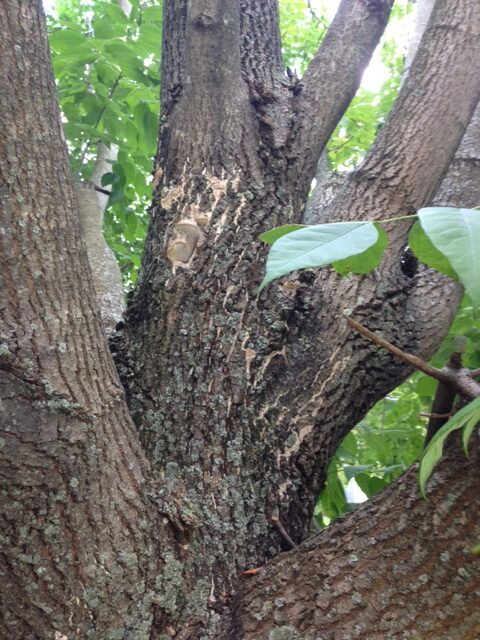

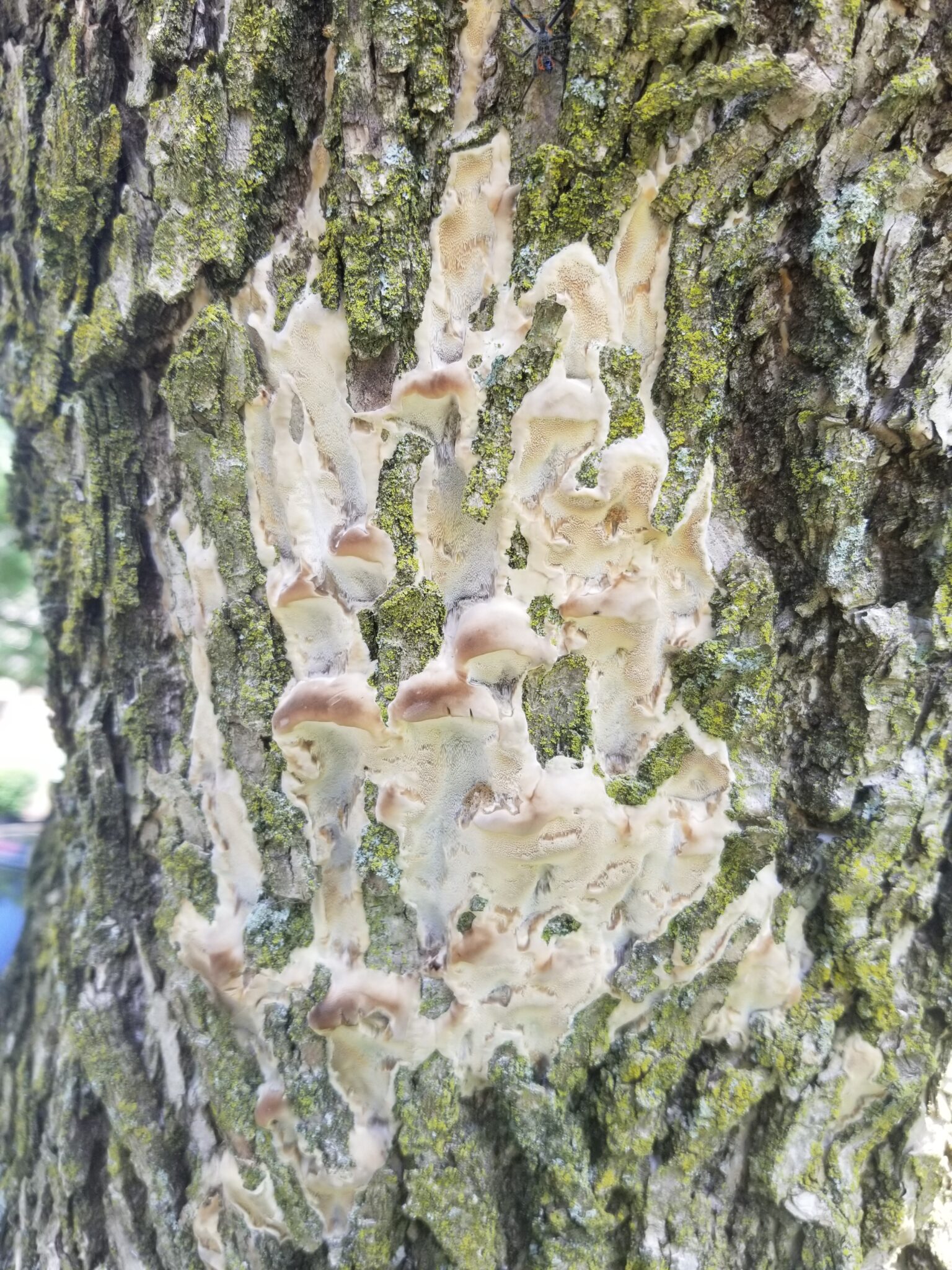
In the last few years, we have had a few samples of a similar fungus colonizing the trunk and base of ash trees, often near injection sites. Initially we were unable to identify the fungus, but DNA analysis revealed the fungus was a Fomitopsis species. This fungus develops a shallow shelf structure with white top and tan underside.
Fungal decay presents a greater risk to ash because it lacks the preservative enriched heartwood found in oak, walnut and other hardwoods that tends to slow down internal spread of fungi. Even fungi that initially invade dead areas of ash may rapidly colonize and degrade stem and trunk tissue.
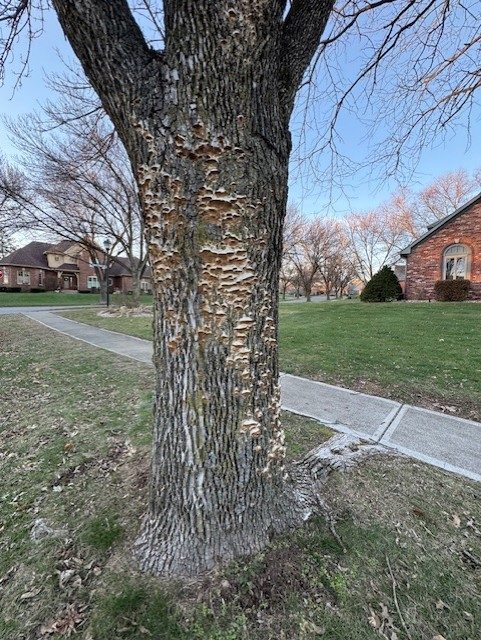
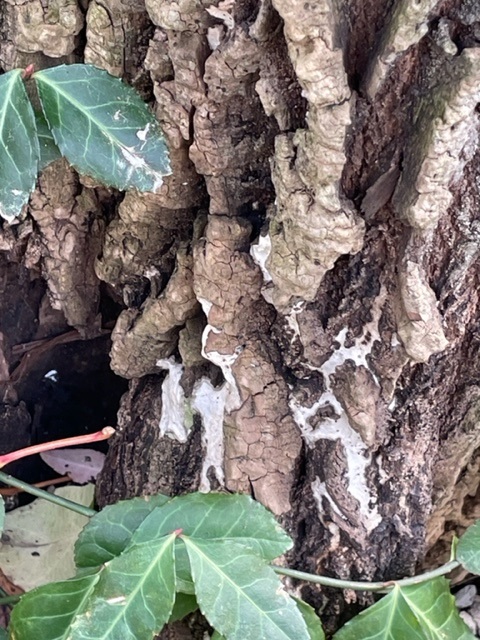
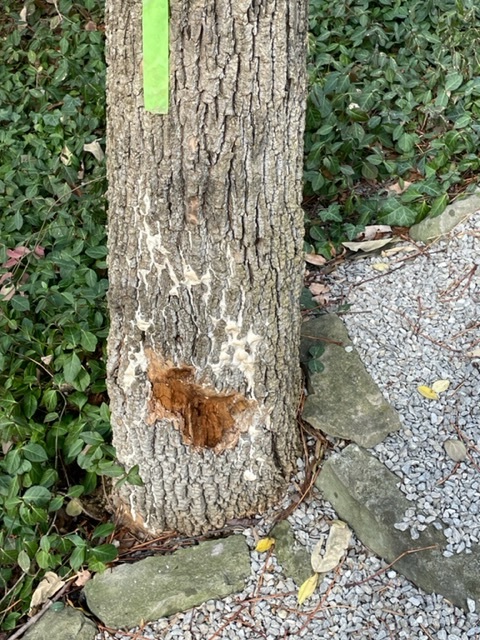
Fungal decay also disrupts vascular tissues in the stems and trunk, which further limits the movement and effectiveness of insecticide injections, so that infected trees may face greater damage from EAB. When found on small side branches the infection might be successfully pruned out, but in most cases the decay is in major branches or the trunk, which means the tree will need to be removed. If your ash trees that are being regularly treated for EAB but continue to show thinning and decline, check for these fungal invaders, they may be partly responsible.
View the original article on the Purdue Landscape Report website: Fungal Decay of Ash Trees.
Subscribe and receive the newsletter: Purdue Landscape Report Newsletter.
Resources:
Diplodia Tip Blight of Two-Needle Pines, The Education Store, Purdue Extension resource center
Boxwood Blight, The Education Store
Disease of Landscape Plants: Cedar Apple and Related Rusts on Landscape Plants, The Education Store
Planting Your Tree Part 1: Choosing Your Tree, Purdue Extension – Forestry & Natural Resources (FNR) YouTube Channel
Tree Planting Part 2: Planting a Tree, Purdue Extension – FNR YouTube Channel
Find a Certified Arborist, Trees are Good-International Society of Arboriculture (ISA)
Video: Step by Step to Find an Arborist, Trees are Good-International Society of Arboriculture (ISA)
Professional Forester, Indiana Forestry Woodland Owners Association
District Forester, Indiana Department of Natural Resources, 10+ acres
Trees and Storms: Understanding Damage, Risk and Recovery – Got Nature? Blog, Purdue Extension – FNR
Why Is My Tree Dying? – Got Nature? Blog, Purdue Extension – Forestry and Natural Resources
Tree Risk Management – Got Nature? Blog, Purdue Extension – FNR
Tree Pruning Essentials, Publication & Video, The Education Store
Tree Wound and Healing, Got Nature? Blog, Purdue Extension – FNR
What are Invasives Species and Why Should I Care?, Got Nature? Blog, Purdue Extension – FNR
Subscribe – Purdue Extension-FNR YouTube Channel
Tom Creswell, Plant & Pest Diagnostic Laboratory Director
Purdue Botany and Plant Pathology
Welcome to ID That Tree! In this episode, Purdue Extension Forester Lenny Farlee introduces us to a widespread native shrub called smooth sumac. Found in open fields, roadsides and woodland edges across Indiana, this shrub is easily identified by its recognizable stems and leaves. Watch the video to learn about these characteristics, along with the differences in smooth sumac through the different seasons. For example, in summer, this shrub has flowers that turn into fruit heads! Whether you’re a student, naturalist or simply curious about native plants, this video offers a quick and helpful guide to identifying smooth sumac in the wild.
If you have any questions regarding wildlife, trees, forest management, wood products, natural resource planning or other natural resource topics, feel free to contact us by using our Ask an Expert web page.
Resources:
ID That Tree – Video Playlist, Purdue Extension – Forestry and Natural Resources (FNR) YouTube Channel
Purdue Arboretum Explorer
Conservation Tree Planting: Steps to Success, Purdue Extension – FNR YouTube Channel
A Woodland Management Moment, Playlist, Purdue Extension – FNR YouTube Channel
Woodland Stewardship for Landowners, Playlist, Purdue Extension – FNR YouTube Channel
Fifty Common Trees of Indiana, Purdue Extension – FNR
Indiana Invasive Species Council
Cooperative Invasive Species Management Area (CISMA)
Report Invasive, Purdue Extension
Habitat University, Episode 12 – Exploring the challenges of Invasive Species, Habitat University-Natural Resource University
Shrubs and Woody Vines of Indiana and the Midwest, Purdue University Press
Native Trees of the Midwest, Purdue University Press
Professional Forester, Indiana Forestry Woodland Owners Association
District Forester, Indiana Department of Natural Resources, 10+ acres
Find an Arborist, International Society of Arboriculture
Forest Improvement Handbook, The Education Store
Lenny Farlee, Extension Forester
Hardwood Tree Improvement and Regeneration Center
Purdue Department of Forestry & Natural Resources
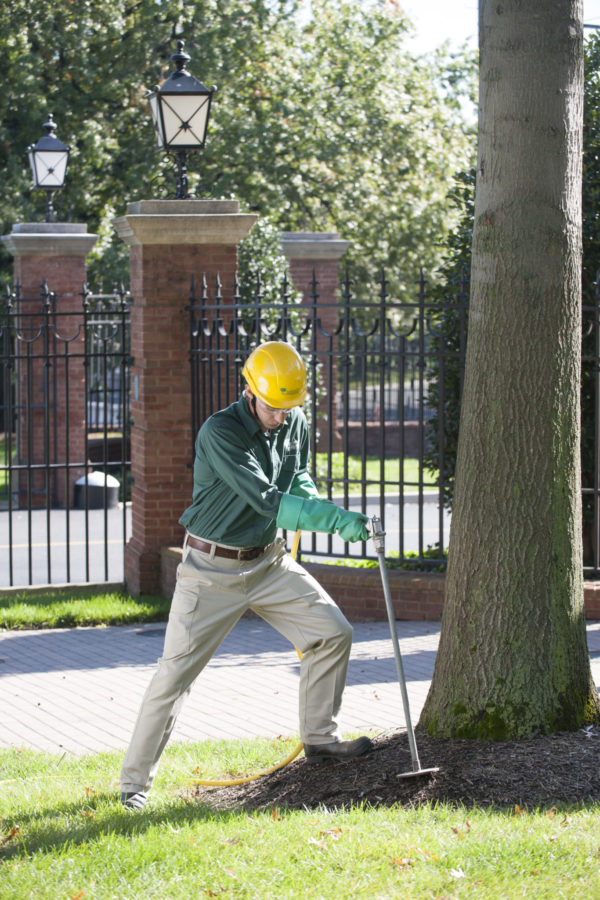
Professional arborists can best feed mature trees
Purdue University Landscape Report: Early fall is the time to begin preparing trees for the winter and get them off to a good start in the following spring. Preventative maintenance and some good cultural practices in autumn boost trees’ health and vigor during the winter and creates an encouraging growing environment in the spring. Here are 5 good tips for trees:
- Scout for pruning issues.
It’s advantageous to schedule pruning tasks after leaves have fallen. It’s much easier to see the branch structure of trees and deciduous shrubs in order to perform good selective cuts. Look for those non-beneficial plant parts and remove them. These include any dead, broken and crossing branches which can be removed. Also, search out and remove those epicormics sprouts in the canopy and basal sprouts emerging from around the trunk and root collar. Refer to this pruning publication for more information.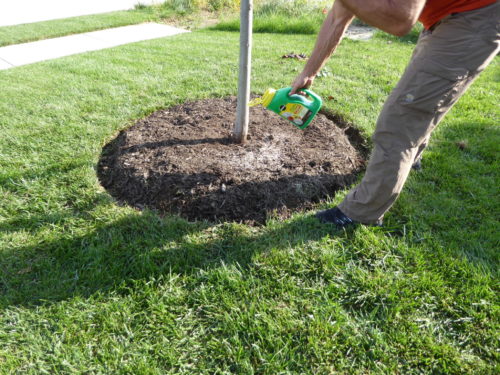
Newly-established trees benefit from fertilizer
- Feeding for the future.
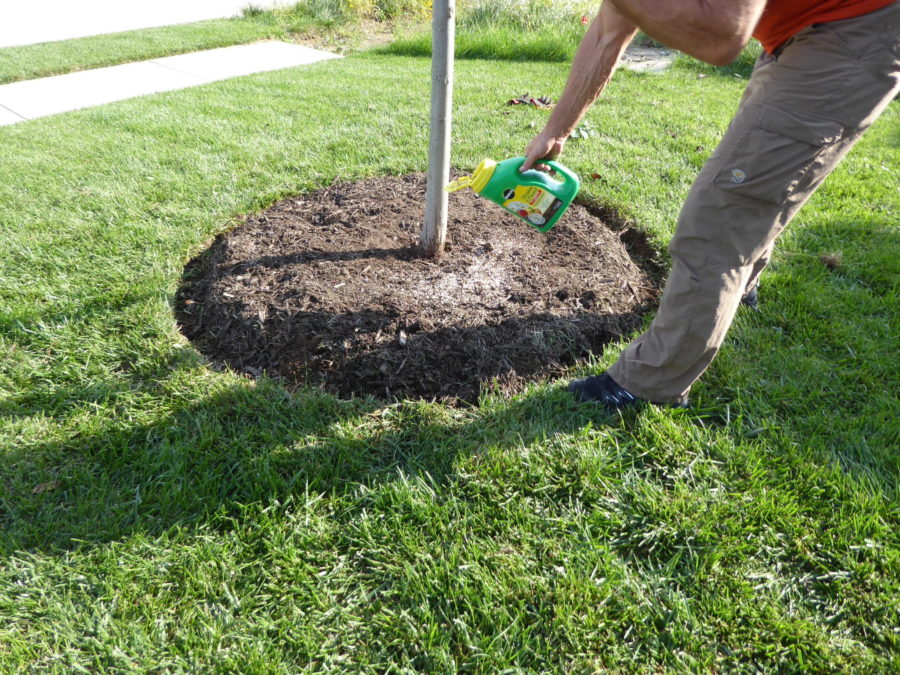
Typically, tree roots have produce more root growth during the fall. Root systems are important as storage organs or banks to reserve energy for later. These stores of starch will become active energy on demand in the spring when shoot growth, leafing and flowering occur. Fertilization during this time will maintain soil nutrient levels and increase root production, promoting new growth in the spring. Newly, established trees and those younger trees are especially responsive to supplemental feeding. However, not all trees need or require fertilization. Refer to this publication on fertilization for more information.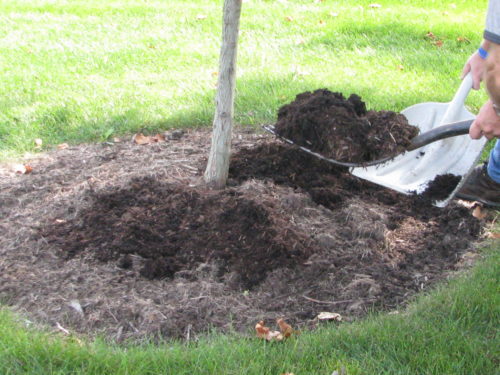
Mulch provides a blanket of protection
- Complete cultural practices.
It’s always beneficial to the tree to replenish mulch to give root systems an extra layer of protection against temperature extremes. This helps maintain the moisture levels in the soil during those drier winter months as well. Maintaining 2-3 inches of composted mulch over the root zone of the tree and landscape provides great protection. Also, it may be a good time to consider providing protective wraps on thin-barked or newly planted trees, if needed. Also, now is a good time for inspecting those existing wraps to be sure they are effective and not too tight around the trunk or harboring hidden pest issues.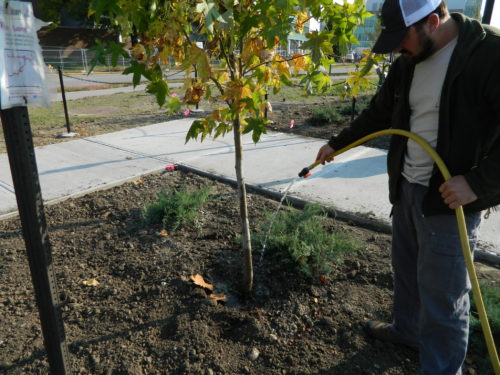
Good moisture levels going into the winter is critical for tree health
- Water needed, still.
The dry, cool air and low precipitation that can sometimes occur during fall and early winter can take a toll on trees. Provide supplemental irrigation with deep watering to prevent root damage and a good spring start. It is advisable to water only when temperatures will be above 40o Water around mid-day so there is time to soak in before the freezing night temperatures. Applying approximately 5 gallons water per inch of tree diameter will be adequate for times when there is little to no rainfall going into winter. - Take inventory.
This is a good time to assess your site for vacancies. Check your property for potential planting locations to install new trees next spring. Research during the winter allows plenty of time for good decision-making which includes proper species selection and suitable locations. Refer to the tree selection publication for more information.

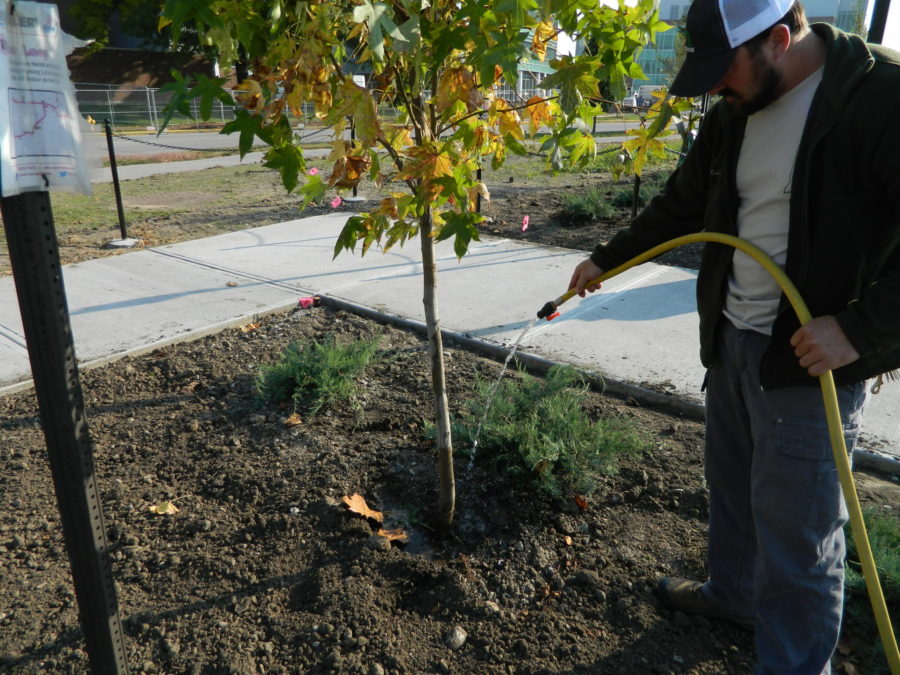
There are many resources available to learn about proper tree care. If you are uncertain on how to maintain your trees or prefer professional services, it is important to reach out to an ISA Certified Arborist to help with the tree, within your landscape, especially the larger, mature trees. A Certified Arborist can proactively identify, analyze and evaluate your tree needs to maintain this important asset, your trees.
Resources:
Why Do Our Trees Go From Green Leaves to Different Colors?, Got Nature? Blog
Fifty Common Trees of Indiana
An Introduction to Trees of Indiana
The Nature of Teaching: Trees of the Midwest, The Education Store
Why Leaves Change Color, USDA Forest Service
Lindsey Purcell, Executive Director
Indiana Arborist Association
Welcome to ID That Tree! In this episode, Purdue Extension Forester Lenny Farlee introduces us to a widespread and often overlooked native plant, the wild grape vine. Found across Indiana, this vine is especially noticeable in late summer and fall. Learn how to identify wild grape by its vine structure, bark, leaves and growth. Whether you’re a nature enthusiast, land manager or just curious about native plants, this video offers a quick and informative look at how to spot wild grape vine and appreciate its role in Indiana’s ecosystems.
If you have any questions regarding wildlife, trees, forest management, wood products, natural resource planning or other natural resource topics, feel free to contact us by using our Ask an Expert web page.
Resources:
ID That Tree – Video Playlist, Purdue Extension – Forestry and Natural Resources (FNR) YouTube Channel
Purdue Arboretum Explorer
Conservation Tree Planting: Steps to Success, Purdue Extension – FNR YouTube Channel
A Woodland Management Moment, Playlist, Purdue Extension – FNR YouTube Channel
Woodland Stewardship for Landowners, Playlist, Purdue Extension – FNR YouTube Channel
Indiana Department of Natural Resources: Invasive Species
Indiana Invasive Species Council
Cooperative Invasive Species Management Area (CISMA)
Report Invasive, Purdue Extension
Fifty Common Trees of Indiana, Purdue Extension – FNR
Habitat University, Episode 12 – Exploring the challenges of Invasive Species, Habitat University-Natural Resource University
Shrubs and Woody Vines of Indiana and the Midwest, Purdue University Press
Native Trees of the Midwest, Purdue University Press
Professional Forester, Indiana Forestry Woodland Owners Association
District Forester, Indiana Department of Natural Resources, 10+ acres
Find an Arborist, International Society of Arboriculture
Forest Improvement Handbook, The Education Store
Lenny Farlee, Extension Forester
Hardwood Tree Improvement and Regeneration Center
Purdue Department of Forestry & Natural Resources
Welcome to ID That Tree! In this episode, Purdue Extension Forester Lenny Farlee introduces us to a striking native shrub known as Wild Hydrangea. Found in forest understories and along wooded slopes in southern Indiana, this plant is especially noticeable in summer thanks to its large, white flowers. Learn how to identify this species by it’s unique characteristics. Whether you’re a student, hiker, gardener or just curious about native plants, this video offers a quick and informative look at how to spot Wild Hydrangea and appreciate its role in Indiana’s woodland ecosystems.
If you have any questions regarding wildlife, trees, forest management, wood products, natural resource planning or other natural resource topics, feel free to contact us by using our Ask an Expert web page.
Resources:
ID That Tree – Video Playlist, Purdue Extension – Forestry and Natural Resources (FNR) YouTube Channel
Purdue Arboretum Explorer
Conservation Tree Planting: Steps to Success, Purdue Extension – FNR YouTube Channel
A Woodland Management Moment, Playlist, Purdue Extension – FNR YouTube Channel
Woodland Stewardship for Landowners, Playlist, Purdue Extension – FNR YouTube Channel
Indiana Department of Natural Resources: Invasive Species
Indiana Invasive Species Council
Cooperative Invasive Species Management Area (CISMA)
Report Invasive, Purdue Extension
Fifty Common Trees of Indiana, Purdue Extension – FNR
Habitat University, Episode 12 – Exploring the challenges of Invasive Species, Habitat University-Natural Resource University
Shrubs and Woody Vines of Indiana and the Midwest, Purdue University Press
Native Trees of the Midwest, Purdue University Press
Professional Forester, Indiana Forestry Woodland Owners Association
District Forester, Indiana Department of Natural Resources, 10+ acres
Find an Arborist, International Society of Arboriculture
Forest Improvement Handbook, The Education Store
Lenny Farlee, Extension Forester
Hardwood Tree Improvement and Regeneration Center
Purdue Department of Forestry & Natural Resources
The Wisconsin Forestry Center at the University of Wisconsin–Stevens Point has just released a new episode of SilviCast, the go-to podcast for silviculture professionals. In this episode, titled “Black Gold,” forestry expert Lenny Farlee is interviewed about the science and management of black walnut, one of North America’s most valuable hardwoods.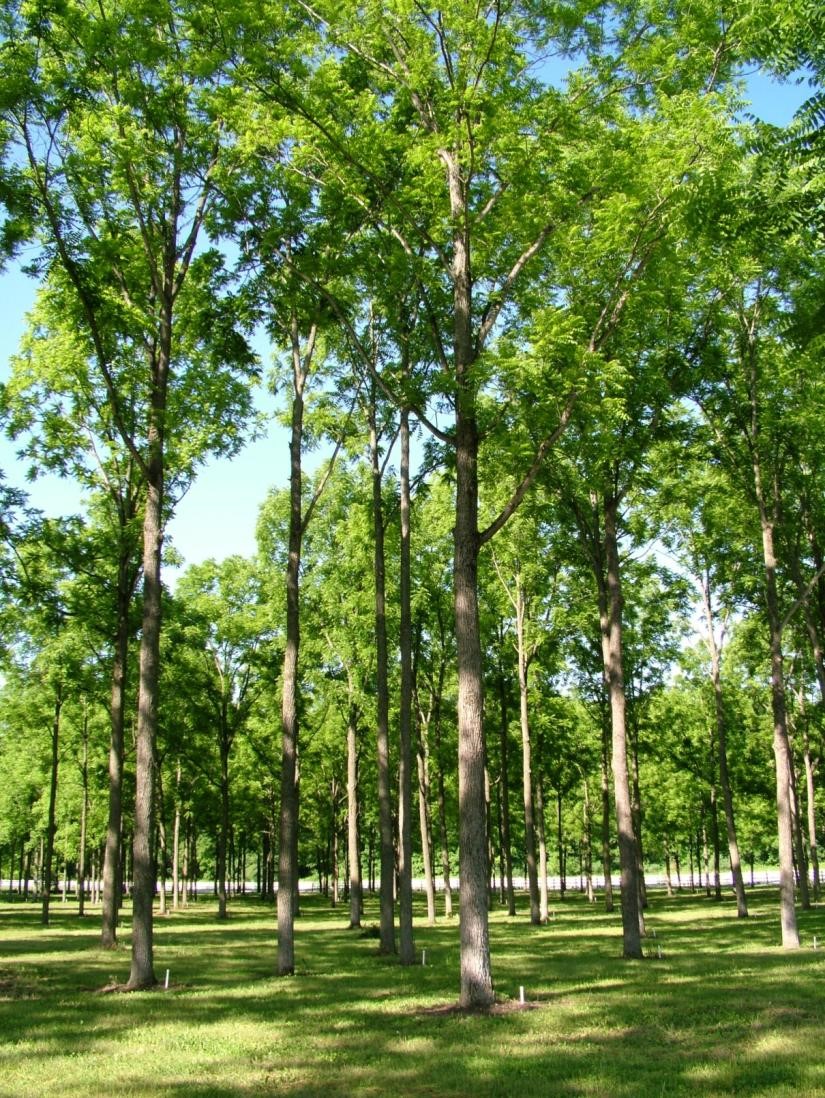
Eastern black walnut is often regarded as one of the most valuable timber species in central and eastern North America. A single high-quality tree can be worth thousands of dollars, sometimes even shaping the outcome of an entire timber sale. Given that level of interest, it may seem like we already know everything about this remarkable species. While researchers and foresters have gained a deep understanding of its silviculture and genetics, there is still more to discover.
Lenny Farlee is a Purdue University Extension Forester and a member of the Hardwood Tree Improvement & Regeneration Center (HTIRC). With decades of experience in hardwood silviculture, he brings practical insight and research-based knowledge to the conversation around managing black walnut for long-term forest health and productivity.
To listen, search SilviCast on your favorite podcast app or listen directly on the SilviCast: Black Gold episode page. You can also explore the full series at linktr.ee/SilviCast.
Other Resources:
ID That Tree: Black Walnut
Hardwoods of the Central Midwest: Black Walnut
Hardwood Lumber and Veneer Series: Black Walnut
Morton Arboretum: Black walnut
Facts About Black Walnut, The Education Store
Purdue Arboretum Explorer
Black Walnut, Native Trees of Indiana River Walk, Purdue Fort Wayne
The Woody Plant Seed Manual, U.S. Forest Service
Fifty Common Trees of Indiana
An Introduction to Trees of Indiana
Native Trees of the Midwest, Purdue University Press
Shrubs and Woody Vines of Indiana and the Midwest, Purdue University Press
Investing in Indiana Woodlands, The Education Store
Forest Improvement Handbook, The Education Store
ID That Tree, Purdue Extension-Forestry & Natural Resources (FNR) YouTube playlist
Woodland Management Moment , Purdue Extension-FNR YouTube playlist
University of Wisconsin-Stevens Point
Diana Evans, Extension & Web Communications Specialist
Purdue University Department of Forestry and Natural Resources
Welcome to ID That Tree! In this episode, Purdue Extension Forester Lenny Farlee introduces us to a relatively common Indiana shrub called Witch-Hazel. Discover the characteristics of the environment this shrub is found in, the features of the shrub itself and the interesting history behind it! As a nature lover, student or someone who’s simply just curious about local plants, this video is a great way to get a quick run-down on important information and identification.
If you have any questions regarding wildlife, trees, forest management, wood products, natural resource planning or other natural resource topics, feel free to contact us by using our Ask an Expert web page.
Resources:
ID That Tree – Video Playlist, Purdue Extension – Forestry and Natural Resources (FNR) YouTube Channel
Purdue Arboretum Explorer
Conservation Tree Planting: Steps to Success, Purdue Extension – FNR YouTube Channel
A Woodland Management Moment, Playlist, Purdue Extension – FNR YouTube Channel
Woodland Stewardship for Landowners, Playlist, Purdue Extension – FNR YouTube Channel
Indiana Department of Natural Resources: Invasive Species
Indiana Invasive Species Council
Cooperative Invasive Species Management Area (CISMA)
Report Invasive, Purdue Extension
Fifty Common Trees of Indiana, Purdue Extension – FNR
Habitat University, Episode 12 – Exploring the challenges of Invasive Species, Habitat University-Natural Resource University
Shrubs and Woody Vines of Indiana and the Midwest, Purdue University Press
Native Trees of the Midwest, Purdue University Press
Professional Forester, Indiana Forestry Woodland Owners Association
District Forester, Indiana Department of Natural Resources, 10+ acres
Find an Arborist, International Society of Arboriculture
Forest Improvement Handbook, The Education Store
Lenny Farlee, Extension Forester
Hardwood Tree Improvement and Regeneration Center
Purdue Department of Forestry & Natural Resources
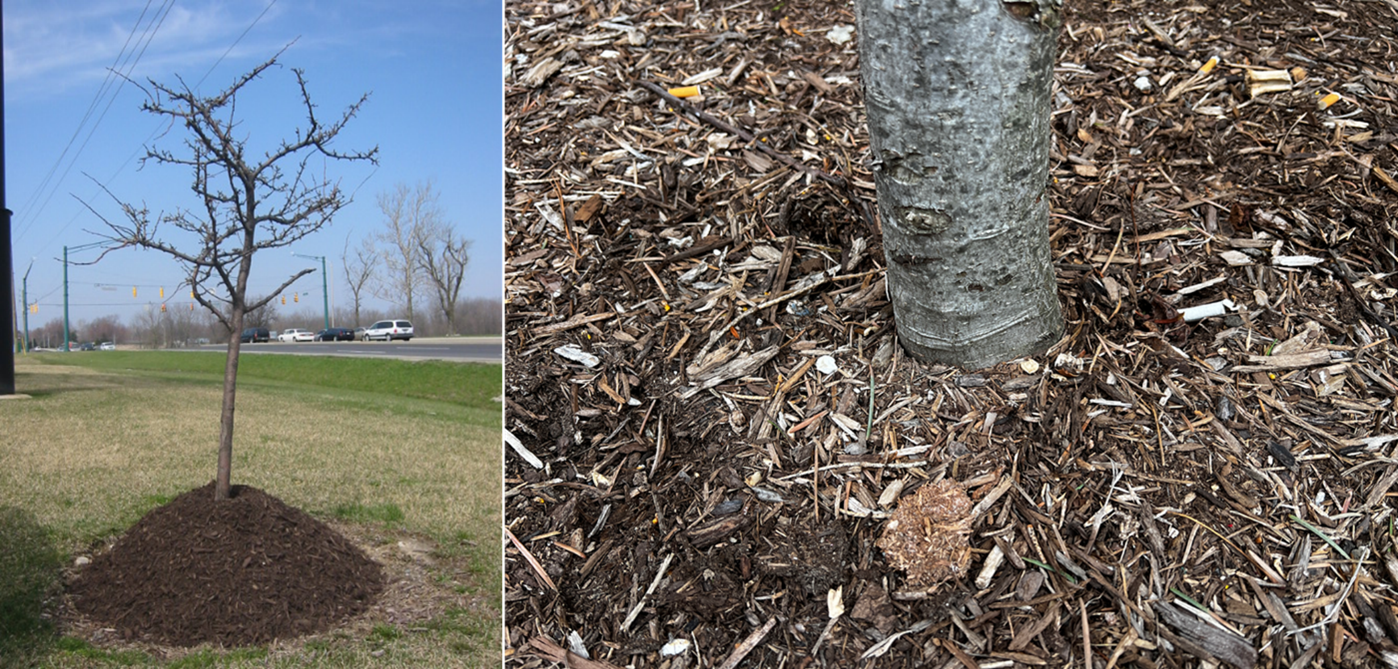
Figure 1: Examples of volcano mulching (PLR)
Purdue Landscape Report: Tree care, in many cases, can be expensive if you require the assistance of an arborist for pruning or removals. Extreme weather events, characterized by extensive rain and wind, can cause damage to the canopy or, in worst-case scenarios, lead to tree failure. In cases of failures, weather is often the final push to already existing issues. One cause that can lead to decay, decline, and failure if applied incorrectly can also extend the life of your tree with proper application.
Mulch is the double-edged sword that can promote healthy growth by maintaining soil moisture and temperature through extreme heat, cold, and drought, enrich the soil in the critical root zone, maintain a safety area from mechanical damage from lawn care tools, and add a nice aesthetic.
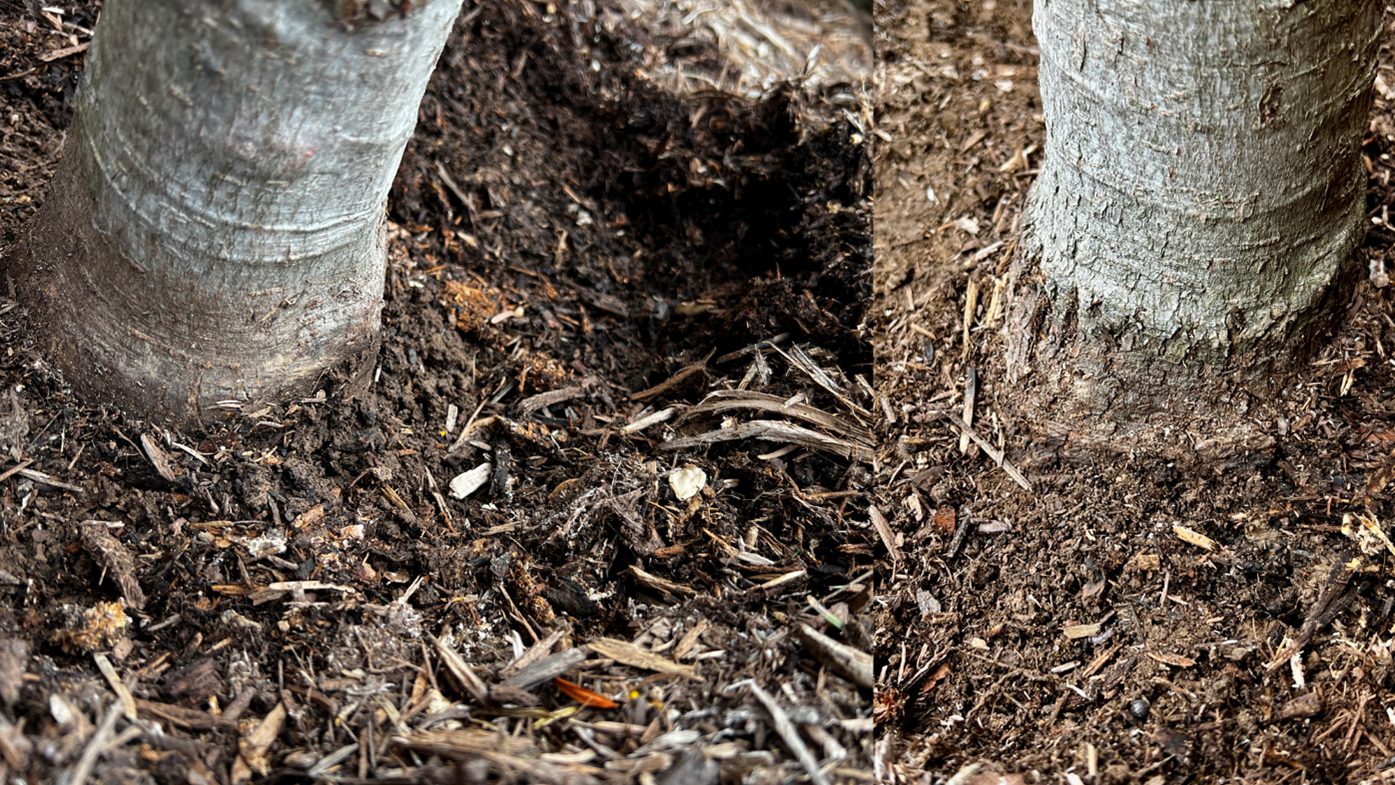
Figure 2: Digging out and exposing the root flare (PLR)
But it can also cause decay through excess moisture to the root flare, damage from pests like mice and insects that can live in mulch, expose the tree to pathogens, and promote unnecessary root growth and/or stem girdling roots that cut off nutrient supply between the root system and the rest of the tree.
The application is the same if it’s the first time mulching a tree or a re-application. Add enough mulch so there is a 2–3-inch layer sloping away from the tree with at least a 3–5-foot radius around the stem (older, larger trees can benefit from larger mulch rings). No volcano mulching, make sure you also have around a 1-2-inch gap between the stem and the start of the mulch ring.
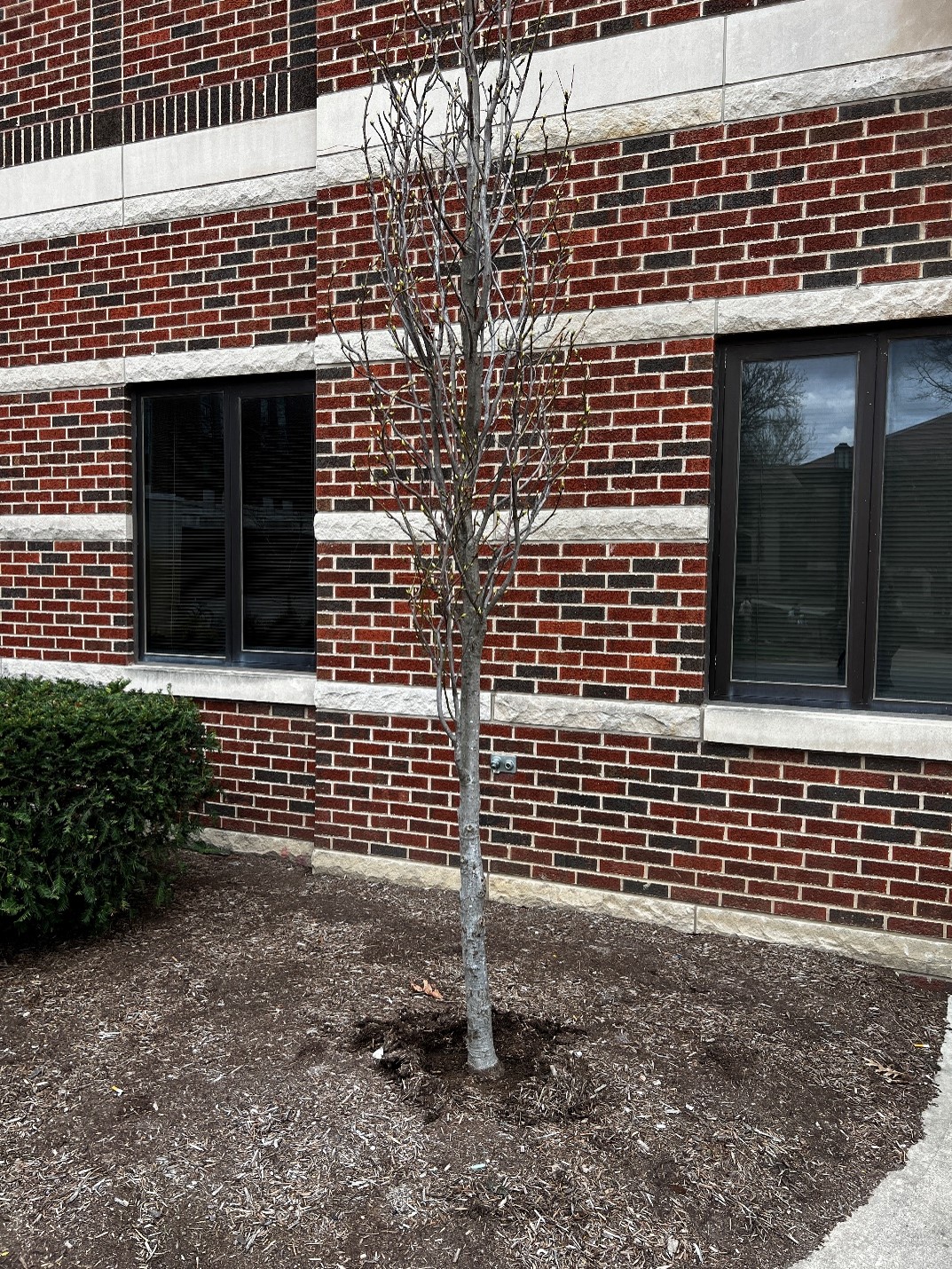
Figure 3: Creating a 1–2-inch space between the root flare and the mulch.
If you are reapplying mulch, first rake the old mulch to even the layer and mix some into the soil if possible. If your tree has already been mulched and has been volcano mulched, simply dig out the excess, exposing the root flare and creating that 1-2-inch gap between the stem and the mulch.
This simple act is relatively inexpensive, does not require a lot of time, and will help keep your tree healthy, extending its life. If you notice any other issues with your trees, hiring an ISA Certified arborist is the next step in managing your trees’ health. To find an arborist near you and verify credentials, use the link at Find an Arborist, Trees are Good, International Society of Arboriculture (ISA).
View the original article on the Purdue Landscape Report website: Simple Steps to Care for Your Tree: Mulching.
Subscribe and receive the newsletter: Purdue Landscape Report Newsletter.
Resources:
Re-mulch Your Trees, Purdue Landscape Report
Find an Arborist video, Trees are Good-International Society of Arboriculture (ISA)
Trees and Storms: Understanding Damage, Risk and Recovery – Got Nature? Blog, Purdue Extension – FNR
Moist soil and rotten roots makes it easy for trees to come crashing down – Fox 59 News
Expert: Some storm damage can be easily prevented – Fox 59
Why Is My Tree Dying? – Got Nature? Blog, Purdue Extension – Forestry and Natural Resources
Tree Risk Management – Got Nature? Blog, Purdue Extension – FNR
Tree Pruning Essentials, Publication & Video, The Education Store
Mechanical Damage to Trees: Mowing and Maintenance Equipment – The Education Store
Trees and Electric Lines – The Education Store
Tree Defect Identification, The Education Store
Planting Your Tree, video, Purdue Extension
Tree Installation, The Education Store
Tree Wound and Healing, Got Nature? Blog, Purdue Extension – Forestry and Natural Resources
Subscribe – Purdue Extension-FNR YouTube Channel
Ben McCallister, Urban Forestry Specialist
Purdue Forestry & Natural Resources
 Discover the importance of thinning dense native warm-season grasses in conservation plantings to improve diversity. This guide explains methods to reduce tall native warm-season grasses to improve habitat for wildlife. Essential reading for conservationists and land managers interested in grassland ecosystems.
Learn when and how to thin these grasses effectively, and explore strategies that balance ecological health with long-term land management goals: Thinning Native Warm-Season Grasses
This publication is part of a seven publication series The Managing Conservation Plantings Series which include details on how to control invasive species and other problematic plants in Conservation Reserve Program (CRP) plantings and native warm-season grass and wildflower conservation plantings.
Publications in this series include:
- Golden Rod Control
- Thinning Native Warm-Season Grasses
- Sericea Lespedeza Control
- Woody Encroachment and Woody Invasives
- Johnson Grass Control
- Reed Canarygrass Control
- Teasel Control (Common and Cut Leaved)
- Controlling Introduced Cool-season Grasses
- Crownvetch, Sweetclover and Birdsfoot Trefoil Control
Resources:
Deer Impact Toolbox & Grassland Management, Purdue Extension Pond and Wildlife Management
Pond and Wildlife Management, Purdue Extension
Forestry for the Birds Virtual Tour and Pocket Guide, Got Nature? Blog, Purdue Extension – FNR
Frost Seeding to Establish Wildlife Food Plots and Native Grass and Forb Plantings – Purdue Extension – FNR YouTube channel
Wildlife Habitat Hint: Tips for Evaluating a First Year Native Grass and Forb Plantings, Purdue Extension – FNR YouTube Channel
Drone Seeding Native Grasses and Forbs: Project Overview & Drone Setup, Purdue Extension – FNR YouTube channel
Ask an Expert: Wildlife Food Plots, video, Purdue Extension – FNR YouTube Channel
Handling Harvested Game: Episode 1, Field Dressing, video, Purdue Extension – FNR YouTube Channel
Managing Your Woods for White-Tailed Deer, The Education Store
Forest Improvement Handbook, The Education Store
Forest Management for Reptiles and Amphibians: A Technical Guide for the Midwest, The Education Store
A Template for Your Wildlife Habitat Management Plan, The Education Store
Woodland Stewardship for Landowners, Playlist, Purdue Extension – FNR YouTube channel
Nature of Teaching Unit 1: Animal Diversity and Tracking, The Education Store
Nature of Teaching, Purdue College of Agriculture
Invasive Species Playlist, Playlist, Purdue Extension – FNR YouTube Channel
Report Invasive, Purdue Extension
Subscribe Purdue Extension – Forestry and Natural Resources YouTube Channel
Jarred Brooke, Wildlife Extension Specialist
Purdue Department of Forestry and Natural Resources
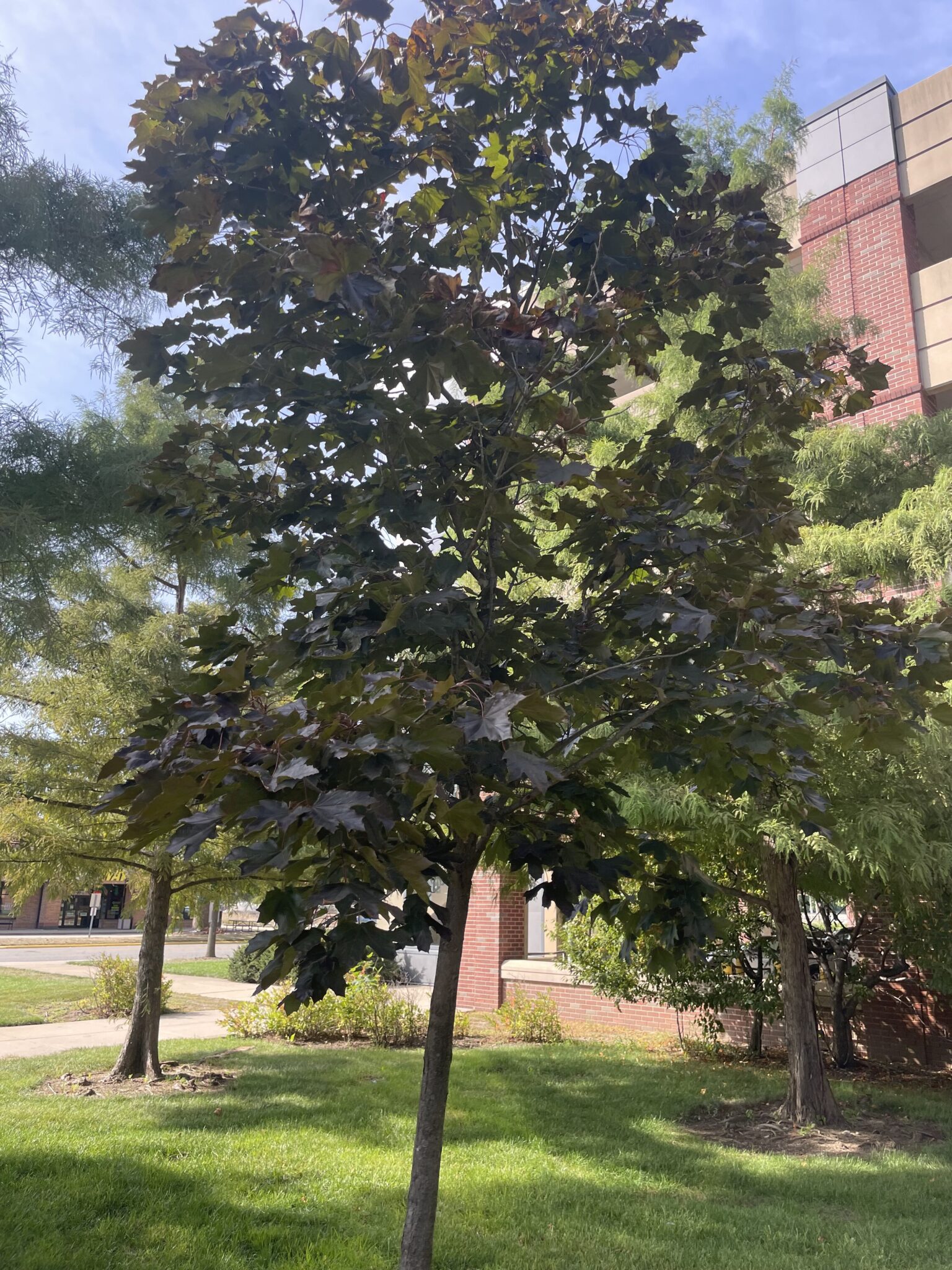
Figure 1. Norway maple is an invasive species that can resemble black and sugar maple. Photo by Purdue Arboretum.
Purdue Landscape Report: These three maples have somewhat similar-looking leaves. On the surface, you may think this is simply an academic exercise. But if you care about invasive plants and local ecology, this distinction is an important one.
Norway maple is an invasive tree species, while sugar and black maples are native tree species (sometimes called hard maples). Sugar and black maples are even more beloved for their gift of delicious sugary sap that can be made into maple syrup and similar products. They also make great shade trees. Note that there are other native and non-native maple species.
One way to distinguish between Norway (Acer platanoides), sugar (Acer saccharum), and black (Acer nigrum) maples is to count the number of lobes on the leaves. Lobes are large areas of the leaf that stick out, like an ear lobe, although that is not the clearest analogy. Norway maples typically have 5-7 lobes (commonly 7), sugar maples typically have 5, and black maples typically have 3-5. Black maple’s bottom two lobes are so much less prominent than sugar maple that it often looks like 3 main lobes. Additionally, black maple leaves droop on the sides, almost like they are starting to wilt from lack of water.
Another way to distinguish Norway maples from native maples (sugar and black) is to look at the winged seeds, called samaras. Children may call these “helicopters,” as they twirl on their way to the ground. The Norway maple has paired samaras arranged like a handlebar mustache. Sugar and black maple samara pairs look more like a Fu Manchu mustache, pointing downward rather than the near horizontal arrangement of Norway maple samaras.

Figure 2c. Black maple leaf. Photo by Purdue Arboretum.
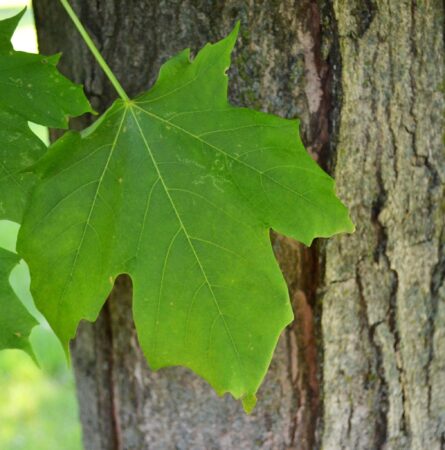
Figure 2b. Sugar maple leaf. Photo by Purdue Arboretum.

Figure 2a. Norway maple leaf. Photo by Purdue Arboretum.
A third way to distinguish Norway maples from native maples is to snap off the long leaf stem (petiole). Norway maples have a milky latex sap that exudes if you squeeze or pinch a petiole, while native maples have clear sap.
There are a few other identification nuances between these species. For example, black maples have stipules (leaf-like growths) at the base of their petioles (absent on sugar maple). They also have pubescence or hairiness on the underside of the leaves. Norway maple has hairs in the axils of leaf veins. Norway maple’s leaves are generally broader than long. Other differences may be seen in the bark, twigs, buds, and fall coloring.
Although Norway maple is an invasive species, it has been a long-time landscaping favorite of homeowners, especially cultivars like ‘Crimson King’ that retain their deep red color all year. This attribute has made Norway maple a popular choice because few other options exist to offer that color feature for the landscape. Other varieties or cultivars exhibit the normal green leaf color. Native to northern Europe, the tree was introduced in America in the late 1700s. George Washington reportedly purchased two trees in 1792 to plant at Mount Vernon.
For full article: Distinguishing Between Norway, Sugar, and Black Maples, Purdue Landscape Report.
Resources:
ReportINvasive, Purdue College of Agriculture
What are Invasive Species and Why Should I Care?, Got Nature? Blog, Purdue Extension – Forestry and Natural Resources
Large Spots on Maple Leaves that Look Like Tar, Purdue Extension News
Find an Arborist, International Society of Arboriculture
Fifty Common Trees of Indiana
An Introduction to Trees of Indiana
Native Trees of the Midwest, The Education Store
Shrubs and Woody Vines of Indiana and the Midwest, The Education Store
Tree Installation: Process and Practices, The Education Store
Planting Your Tree Part 1: Choosing Your Tree, Video, Purdue Extension – Forestry & Natural Resource (FNR) YouTube Channel
Investing in Indiana Woodlands, The Education Store
Forest Improvement Handbook, The Education Store
ID That Tree, Purdue Extension-FNR YouTube playlist
Purdue Plant and Pest Diagnostic Laboratory
John E. Woodmansee, Extension Educator – Agriculture and Natural Resources (ANR)
Purdue Extension – Whitely County

Recent Posts
- Purdue Extension’s Regional Teams Are Here: Connecting Communities with Expertise and Opportunity
Posted: October 14, 2026 in Community Development, Forestry, Forests and Street Trees, Gardening, How To, Timber Marketing, Urban Forestry, Wildlife, Woodlands - Why Do Our Trees Go From Green Leaves to Different Colors?
Posted: in Forestry, Forests and Street Trees, Urban Forestry, Woodlands - Distinguishing Dogwoods
Posted: October 13, 2026 in Forestry, Urban Forestry, Wildlife, Woodlands - It’s Not Too Early To Start Planning For Spring Tree Planting
Posted: in Forestry, How To - Can I Plant Trees in the Fall?
Posted: October 12, 2026 in Forestry, How To, Land Use, Plants, Urban Forestry, Wildlife - Burning for Benefits: Why Fire Belongs in Indiana
Posted: in Forestry, Safety, Woodlands - Disease May Cause Wilting and Eventual Death of Certain Trees and Shrubs, Purdue Landscape Report
Posted: October 5, 2026 in Disease, Forestry, Plants - October Is Firewood Month: Protect Indiana’s Forests by Making Smart Choices
Posted: October 1, 2026 in Forestry, Forests and Street Trees, How To, Invasive Insects, Urban Forestry - Woodland Flowers of Late Summer
Posted: September 14, 2026 in Forestry, Gardening, Wildlife, Woodlands - New Indiana Woodland Steward Newsletter
Posted: August 12, 2026 in Forestry, Urban Forestry, Wildlife, Woodlands
Archives
Categories
- Alert
- Aquaculture/Fish
- Aquatic/Aquaculture Resources
- Ask the Expert
- Christmas Trees
- Community Development
- Disease
- Drought
- Forestry
- Forests and Street Trees
- Gardening
- Got Nature for Kids
- Great Lakes
- How To
- Invasive Animal Species
- Invasive Insects
- Invasive Plant Species
- Land Use
- Natural Resource Planning
- Nature of Teaching
- Plants
- Podcasts
- Ponds
- Publication
- Safety
- Spiders
- Timber Marketing
- Urban Forestry
- Webinar
- Wildlife
- Wood Products/Manufacturing
- Woodland Management Moment
- Woodlands