 Purdue University - Extension - Forestry and Natural Resources
Got Nature? Blog
 With storm season just around the corner, one topic of concern on many minds is damage to and from trees. Depending on the intensity of the storms and the condition of the trees, damage from high winds, heavy rainfall, and lightning can be quite severe. Cracked or broken branches, stem failure, and root failure are some of the main concerns, but also the risk and liability of damage to people and property.
If your tree is damaged, there are some steps to deal with the situation. First and foremost, consider the safety of yourself and others around you. Inspect the tree from a distance first looking for the following:
- Heaving of the ground indicating potential root failure
- Damage to limbs and/or the trunk of the tree
- Hanging branches can fall to the ground resulting in injury or death
- Be aware of utility and power lines. Trees can become charged by coming in contact with live wires. All utility lines should be considered energized and dangerous.
If you find your trees damaged from a storm hiring an International Society of Arboriculture (ISA) Certified Arborist to perform a risk assessment will help guide your decision of how to manage your tree. To find an arborist near you and verify credentials use the link at Find an Arborist, Trees are Good, International Society of Arboriculture (ISA). For more information, you can also view the publication, Trees and Storms, located in The Education Store, Purdue Extension’s resource center.
Resources:
Find an Arborist video, Trees are Good-International Society of Arboriculture (ISA)
Trees and Storms – The Education Store, Purdue Education’s resource center
Caring for storm-damaged trees/How to Acidify Soil in the Yard – In the Grow, Purdue Extension
Moist soil and rotten roots makes it easy for trees to come crashing down – Fox 59 News
Expert: Some storm damage can be easily prevented – Fox 59
Why Is My Tree Dying? – The Education Store
Tree Risk Management – The Education Store
Mechanical Damage to Trees: Mowing and Maintenance Equipment – The Education Store
Trees and Electric Lines – The Education Store
Tree Defect Identification, The Education Store
Planting Your Tree, video, The Education Store
Tree Installation, The Education Store
Tree Wound and Healing, Got Nature? Blog, Purdue Extension – Forestry and Natural Resources
Subscribe – Purdue Extension-FNR YouTube Channel
Ben McCallister, Urban Forestry Specialist
Purdue Forestry & Natural Resources
The Farmers Helping Hellbenders program is accepting applications for the second round of its Indiana Natural Resources Conservation Service’s Regional Conservation Partnership Program (RCPP) project. The project aims to assist with the conservation/recovery of eastern hellbender salamanders and improvement of aquatic resources in south central Indiana.
Eligible farmers and landowners, who wish to obtain funding to implement practices designed to keep nutrients and soil resources on fields and improve their watersheds, should contact their local NRCS office before May 10 to apply. Financial assistance is available for agricultural lands within the Blue River-Sinking Watershed boundary in Crawford, Floyd, Harrison and Washington counties, where the eastern hellbender can be found and is being actively managed.
Eligible practices for farmers in the project area include conservation cover, grassed waterways, wildlife habitat planting, nutrient management, riparian buffers and many others. Interested farmers and forest landowners who wish to implement conservation practices on their land should discuss their options with their district conservationist. Contact your local district conservationist by visiting Farmers.gov/Service-locator.
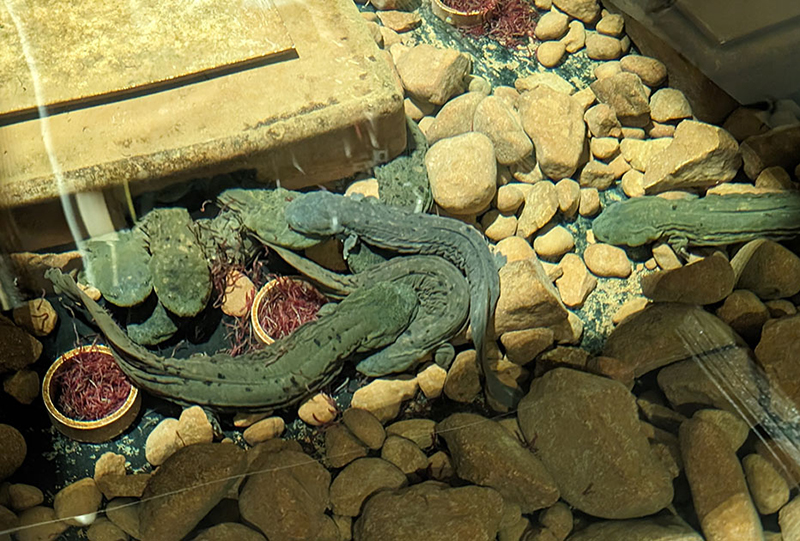 While NRCS accepts program applications year-round, Indiana producers and landowners should apply by May 10 to be considered for the current RCPP-Hellbender funding cycle. Applications received after May 10 will automatically be considered during the next funding cycle.
“The Farmers Helping Hellbenders RCPP project enables us to leverage partnerships to make a lasting positive impact on the habitat of the eastern hellbender salamander,” said Damarys Mortenson, state conservationist for the USDA’s NRCS in Indiana. “This project allows Indiana farmers and forestland owners to conserve the vital natural resources on their land while also protecting the habitat for hellbenders and other aquatic animals. It is a win-win.”
The eastern hellbender (Cryptobranchus alleganiensis) is a large, fully aquatic salamander, nicknamed the snot otter, water dog, devil dog, Allegheny alligator and water eel among other things. Their decline statewide has been documented as far back as the early-to-mid 1900s as a result of habitat loss and poor water quality. Hellbenders, which are listed as an endangered species in Indiana, play an important role in aquatic ecosystems and are indicators of clean water. Eastern hellbenders need clean water to survive as they breathe through their skin by absorbing oxygen from the river and stream water in which they live.
Hellbender populations are declining across their range, from Missouri to New York. This decline, which affects the hellbender population in Indiana’s Blue River, is likely caused by human influences such as habitat degradation and destruction. The stream-bottom habitat of hellbenders can be degraded by sediment from eroded banks and fields and destroyed when streams are dammed or dredged. Hellbenders are also captured inadvertently by anglers or purposefully for illegal sale in the pet trade. Finally, emerging diseases may be impacting some populations of hellbenders. Specifically, the chytrid fungus (Batrachochytrium dendrobatidis) and Ranavirus (family Iridoviridae) are considered to be major threats to the persistence of hellbender populations across their range.
For much of the last 17 years, Dr. Rod Williams and his team have been researching eastern hellbenders, spearheading regional conservation efforts and advancing hellbender captive propagation, or the rearing of this ancient animal in captivity and their eventual return to the wild. The partnership had a major breakthrough over the summer of 2023 with the documentation of a young hellbender salamander in the Blue River while conducting routine surveys. This discovery is significant because over the past three to four decades, only adult hellbenders have been documented in the Blue River. The presence of a young salamander suggests that conservation efforts and rearing programs are accomplishing their goals for the recovery of this endangered species.
The Farmers Helping Hellbenders RCPP project is made possible by $2.7 million in funding from the U.S. Department of Agriculture’s RCPP, Purdue and other partnering organizations. The project is led by Purdue with assistance from 14 collaborating public and private organizations on the state and local level including NRCS. The goal of the project is to improve hellbender habitat in a four-county region in south central Indiana by expanding the use of agricultural conservation practices that lead to decreased sediment in local river systems. The project aims to improve water quality, enhance aquatic habitat, increase aquatic wildlife populations, increase riparian and pollinator habitat and protect karst topography.
To view full article with more photos view Purdue Forestry and Natural Resources News & Stories: Farmers Helping Hellbenders RCPP Program Accepting Applications.
Resources:
USDA Awards Farmers Helping Hellbenders Project in Funding, Purdue Extension – Forestry and Natural Resources (FNR) Got Nature? Blog
Improving Water Quality by Protecting Sinkholes on Your Property, Purdue Extension – FNR YouTube Channel
Improving Water Quality Around Your Farm video, Purdue Extension – FNR YouTube Channel
Adaptations for Aquatic Amphibians, The Education Store, Purdue Extension’s resource center
Hellbenders Rock! Nature of Teaching Lesson Plan, The Education Store
Nature of Teaching – Hellbenders Rock Sneak Peek video, Purdue Extension – FNR YouTube Channel
Nature of Teaching – Hellbenders Rock webinar video, Purdue Extension – FNR YouTube Channel
Learn about hellbenders and take a tour of Purdue’s hellbender rearing facility video, Purdue Extension – FNR YouTube Channel
Learn about the hellbender work at Mesker Park Zoo video, Purdue FNR Facebook
Learn about hellbender work at The Wilds video, Purdue FNR Facebook
Dr. Rod Williams’ 2017 TEDx Talk Help the Hellbenders video, Purdue Extension – FNR YouTube Channel
A Moment in the Wild – Hellbender Hides video, Purdue Extension – FNR YouTube Channel
A Moment in the Wild – Hellbender Release video , Purdue Extension – FNR YouTube Channel
Wendy Mayer, FNR Communications Coordinator
Purdue University Department of Forestry and Natural Resources
Brian MacGowan, Purdue extension wildlife specialist, has been honored with the Hoosier Wildlife Award by the Indiana chapter of The Wildlife Society.
The Hoosier Wildlife Award is given annually to recognize an individual who has made, or is making, a significant contribution to professional wildlife conservation in Indiana through research, management, law enforcement, education or administration.
“The Hoosier Wildlife Award recognizes Brian’s substantial work in the field of wildlife conservation and his dedication to the Indiana Chapter of The Wildlife Society,” said Zachary Voyles, South Region Private Lands Supervisor for the Division of Fish and Wildlife. “His contributions to wildlife research, management and higher education have helped numerous wildlife management professionals become better equipped to manage wildlife in Indiana on behalf of its citizens.”
 MacGowan came to Purdue in 1995 to begin work on his master’s degree in wildlife science under Dr. Harmon “Mickey” Weeks. His thesis was titled “Avian responses to woodland habitats differentially impacted by deer browsing.”
After completing his master’s in 1998, he joined the Purdue Extension staff as a wildlife specialist in 1999. He acted as extension co-coordinator for Purdue FNR from 2007 to 2015 and has served as the sole coordinator since 2015. MacGowan went on to complete his PhD on “Facilitating management and decision-making on private and public forests in Indiana” under Dr. Linda Prokopy in the spring of 2021.
In his time in FNR, he has been honored with the Outstanding Professional Staff Award twice (2005, 2010). He received the Purdue Cooperative Extension Specialists’ Association (PUCESA) Leadership Award in 2021 for his leadership and contribution to the development of FNR 506 course “Theory and Application of Natural Resources Extension Programming” and the creation of the Natural Resources Extension program.
During his career, MacGowan has conducted meaningful research, teaching, and extension programming that has advanced wildlife conservation in Indiana, the Midwest, and more broadly. His contributions include:
- Organizing over 180 workshops, seminars, and field tours related to wildlife conservation.
- Delivering over 400 Extension presentations and 60 research presentations and posters.
- Publishing 75 Extension publications, articles, videos, and book chapters.
- Publishing 14 peer-reviewed research publications.
MacGowan’s impressive portfolio spans a wide variety of topics from human-wildlife conflict, wildlife damage management, reptile response to forest management, youth natural resources education, and evaluating the impact of extension scholarship. He has been honored for his extension programs and deliverables throughout his career. He won the Agricultural Communications in Education Gold Award twice: for electronic publications “Snakes of the Midwest” in 2005 and for website “Everything Wildlife” in 2003. He also received the Association of Natural Resources Extension Professionals (ANREP) Gold Award for mixed materials “Wildlife CSI Unraveling the Mysteries of Wildlife Crop Damage” in 2007. He also earned the ANREP Silver Award for video/DVD/CD and for web-based courses for “Wildlife CSI Unraveling the Mysteries of Wildlife Crop Damage” in 2007.
MacGowan has been a member of the Indiana Woodland Steward Editorial Board since 2007, is the editor of the Indiana Woodland Steward newsletter and has served as the project investigator for the Renewable Resources Extension Act (RREA) in Indiana. He also organizes the yearly Ohio Valley Woodlands and Wildlife Workshop, conducts professional development workshops for the Natural Resources Conservation Service (NRCS) and other conservation partners and shares his knowledge at many extension events throughout the state.
MacGowan was instrumental in producing the Woodland Stewardship for Landowners video series. He also shared his knowledge on several editions of FNR Ask An Expert and provided instructional assistance regarding protecting plants and shrubs from wildlife, how to stop woodland animals from digging in your flowerpots, deer fencing, hummingbirds and more.
“I’m overwhelmed, especially knowing who has received this honor before me,” MacGowan said. “It’s one of the highlights of my professional career. Working at Purdue, and really in the wildlife profession, has put me in the position to work with some outstanding individuals. You hope that you have made a difference in people’s lives during your career. I got into the wildlife profession because I loved the outdoors. But, it’s the people you work with every day that makes it special. I’m extremely appreciative and humbled by this honor.”
Previous Purdue Forestry and Natural Resources affiliated winners of the Hoosier Wildlife Award include current or emeritus faculty members Dr. Rob Swihart (2016), Dr. Harmon “Mickey” Weeks (2006) and Dr. Russell E. Mumford (1996).
The Wildlife Society is a professional organization whose membership is comprised of professional wildlife biologists, managers, and scientists. The mission of The Wildlife Society is to inspire, empower, and enable wildlife professionals to sustain wildlife populations and habitats through science-based management and conservation. Members are committed to the conservation of natural resources in Indiana, including its soil, water, plants, and wildlife.
Article was shared from Purdue College of Agriculture News: Extension Specialist Brian MacGowan Receives Hoosier Wildlife Award.
Resources:
Agriculture Natural Resources (ANR) Newsletter Features Specialist Brian MacGowan, Purdue Extension – Forestry and Natural Resources (FNR) Got Nature? Blog
Wildlife, Playlist, Purdue Extension – FNR YouTube Channel
Ask the Expert: Birdwatching, Purdue Extension – FNR YouTube Channel
How to Stop Woodland Animals from Digging in Your Flower Pots, Got Nature? Blog with video, Purdue Extension FNR
Considerations for Trapping Nuisance Wildlife with Box Traps, The Education Store
Hardwood Ecosystem Experiment (HEE) – Wildlife Responses to Timber Harvesting, The Education Store
Snakes and Lizards of Indiana, The Education Store
Turtles of Indiana, The Education Store
Attracting Hummingbirds to Your Yard, The Education Store
Wendy Mayer, FNR Communications Coordinator
Purdue University Department of Forestry and Natural Resources
 Governor Eric Holcomb has proclaimed February 25th to March 2nd as 2024 Invasive Species Awareness Week in Indiana.
This serves as an important reminder for Hoosiers to be aware and report potentially devastating invasives.
This proclamation states “invasive aquatic, riparian and terrestrial species influence the productivity, value and management of land and water resources in Indiana and the cost to prevent, monitor and control invasive species costs Indiana millions annually and after habitat destruction, invasive species are a great threat to biodiversity and threaten the survival of native plants and animals and interfere with ecosystem functions by changing processes like fire, nutrient flow and flooding”.
It continues with “invasive species impede industry, threaten agriculture, endanger human health and are becoming increasingly harder to control as a result of rapid global commercialization and human travel; and invasive species are as significant threat to almost half of the native species currently listed as federally endangered.”
As Invasive Species Awareness Week starts Sunday, February 25th, the Indiana Department of Natural Resources (IN DNR), Purdue Extension-Forestry and Natural Resources and the Indiana Invasive Species Council will answer any questions you may have.
For Questions:
Ask an Expert, Purdue Extension-Forestry and Natural Resources
Invasive Species – Indiana Department of Natural Resources (IDNR)
Indiana Invasive Species Council – Includes: IDNR, Purdue Department of Entomology and Professional Partners
Cooperative Invasive Species Management Area (CISMA)
Report and Learn More About Invasive Species –
Great Lakes Early Detection Network App (GLEDN) – The Center for Invasive Species & Ecosystem Health
EDDMaps – Early Detection and Distribution Mapping System
Purdue University Report Invasive Species, College of Agriculture
Check Out Our Invasive Species Videos –
Subscribe: Purdue Extension-Forestry and Natural Resources (FNR) YouTube Channel
Invasive Species YouTube Video Playlist includes:
- Asian Bush Honeysuckle
- Burning Bush
- Callery Pear
- Multiflora Rose
- Invasive Plants Threaten Our Forests Part 1: Invasive Plant Species Identification
- Invasive Plants Threaten Our Forests Part 2: Control and Management
More Purdue Extension-FNR YouTube Video Series –
Woodland Management Moment:
Woodland Stewardship for Landowners:
ID That Tree:
More Resources –
FNR Extension Publications, The Education Store:
- Invasive Plant Species: Tree of Heaven
- Invasive Plant Species: Oriental Bittersweet
- Invasive Plant Species: Wintercreeper
- Japanese Chaff Flower
- Kudzu in Indiana
- Mile-a-minute Vine
Purdue Landscape Report:
FNR Extension Got Nature? Blog:
Don’t Miss These Resources:
Episode 11 – Exploring the challenges of Invasive Species, Habitat University-Natural Resource University
What Are Invasive Species and Why Should I Care?, Purdue Extension-FNR Got Nature? Blog
Emerald Ash Borer Information Network, Purdue University and Partners
Aquatic Invasive Species, Illinois-Indiana Sea Grant (IISG)
Invasive plants: impact on environment and people, The Education Store, Purdue Extension’s resource center
Purdue Extension-Forestry and Natural Resources
 Purdue Extension is launching the Purdue Broadband Team (PBT) to harness the power of Indiana’s land-grant institution to help expand broadband access, adoption, and use as an essential catalyst for economic growth in the state. The Purdue Extension PBT is part a collaborative effort between Purdue, the Indiana Broadband Office, and the Indiana Office of Community and Rural Affairs. Coordinated by Purdue’s Office of Engagement, the Purdue Broadband Team will include Purdue Extension, 4-H, the Purdue Center for Regional Development and the Purdue for Life Foundation. View Purdue News – Purdue launches broadband team, effort to increase high-speed internet access, adoption and use throughout Indiana.
“The lack of affordable high-speed broadband affects economic development and quality of life in various communities in our state,” Purdue President Mung Chiang said. “Continuing our long-standing tradition as Indiana’s land-grant institution, Purdue is honored to play a small and hopefully useful role as the state government plans the next-level broadband deployment.”
Why PBT?
The federal government, in partnership with states, is deploying broadband funds through the Broadband Equity, Adoption, and Deployment program, also known as BEAD. Indiana is receiving close to $870 million starting mid to late 2024. A map put together by the Federal Communications Commission or FCC, the government entity that regulates telecommunications, will dictate where these funds go.
So, PBT needs to make sure Indiana’s broadband map is as accurate as possible.
The PBT will help by spreading the word on resources that will make Indiana’s broadband map more accurate and help with broadband adoption which includes:
- Validating your address and internet service available on the FCC map
- Applying for the Indiana Connectivity Program or ICP
- Conducting speed tests or reporting a lack of connectivity at your address
- Learning more about the Affordable Connectivity Program or ACP
To learn more about the PBT and how you can get involved, along with how to test your internet connection, view the : Purdue Broadband Team website.
Resources:
The Time for Broadband is Now – Purdue University is Playing its Part, Purdue Extension News
Thinking Broadly About Broadband, Purdue Extension News
Purdue Extension Community Development, programs include: Digital Ready Business; Digital Ready Community; Remote Work Certificate Program; Essential Digital Employability Skills Program; and much more.
Broadband, Purdue Center for Regional Development
Connecting Indiana: Broadband for the Future is Now, Purdue Center for Regional Development
Diana Evans, Extension & Web Communications Specialist
Purdue University Department of Forestry and Natural Resources
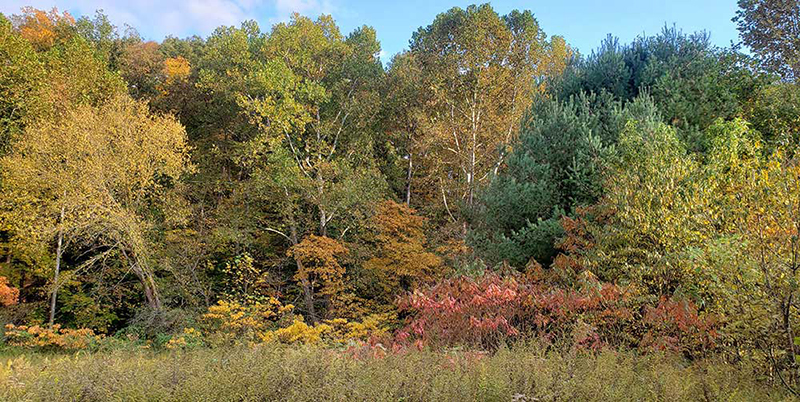 The Indiana Natural Resources Conservation Service (NRCS) is offering an opportunity for landowners to apply for cost assistance with conservation practices like tree planting, forest stand improvement, invasive species control, wildlife habitat improvement and many others.
U.S. Department of Agriculture, Natural Resources Conservation Service News Release, Indianapolis, IN, October 11, 2023 – Farm Bill program application dates have been set for Indiana’s agricultural producers who want to improve natural resources and address concerns on their land. Curtis Knueven, USDA-Natural Resources Conservation Service (NRCS) Acting State Conservationist, announced that December 8 will be the application deadline for the Environmental Quality Incentives Program (EQIP) and Conservation Stewardship Program (CSP) in Indiana. This year’s funding levels are a historic high for Indiana NRCS, bringing $42 million in EQIP and $22 million in CSP for Indiana landowners.
EQIP is a voluntary conservation program available for agricultural producers. Through EQIP, NRCS provides financial and technical assistance to install conservation practices that reduce soil erosion and sedimentation, improve soil health, improve water and air quality and create wildlife habitat. Also included in this sign up are several state and national initiatives. A full list of initiatives can be found by visiting www.nrcs.usda.gov/programs-initiatives/eqip-environmental-quality-incentives/indiana/environmental-quality-incentives.
“EQIP helps agricultural producers in a manner that promotes agricultural production and environmental quality as compatible goals,” said Knueven. “Farmers can receive assistance to implement structural and management conservation practices that optimize environmental benefits on their working agricultural land while helping to increase their yields.”
CSP is an important Farm Bill conservation program that helps producers who are already practicing good stewardship to take their natural resource management to the next level. The program helps to improve both their agricultural production and provide valuable conservation benefits such as cleaner and more abundant water, as well as healthier soils and better wildlife habitat.
“Whether you are looking to improve grazing conditions, increase crop resiliency, or develop wildlife habitat, we can custom design a CSP plan to help you meet those goals,” Knueven said. “We can help you identify natural resource problems in your operation and provide technical and financial assistance to solve those problems or attain higher stewardship levels in an environmentally beneficial and cost-effective manner.”
While applications are accepted year-round, interested producers should work with their local NRCS staff and apply by December 8 to be considered for the current funding period. Applications received after December 8 will automatically be considered during the next funding cycle.
For more information about Farm Bill programs and other technical and financial assistance available through Indiana NRCS conservation programs, visit www.nrcs.usda.gov/indiana or contact your district conservationist www.farmers.gov/working-with-us/service-center-locator.
Resources:
Woodland Stewardship for Landowners: EQUP, video, Purdue Extension-Forestry and Natural Resources (FNR) YouTube Channel
Woodland Stewardship for Landowners: Single Tree and Patch-Cut Harvesting, Purdue Extension – FNR Video
Woodland Stewardship for Landowners YouTube Playlist, Purdue Extension – FNR
Woodland Management Moment: Invasive Species Control Process, Purdue Extension – FNR Video
Woodland Management Moment YouTube Playlist, Purdue Extension – FNR
Invasive Species YouTube Playlist, Purdue Extension – FNR
What are invasive species and why should I care?, Got Nature? Blog, Purdue Extension – Forestry and Natural Resources
Report Invasive Species, Purdue Invasive Species
The GLEDN Phone App – Great Lakes Early Detection Network
EDDMaps – Early Detection and Distribution Mapping System
Hardwood Ecosystem Experiment: Uneven-aged Management, Purdue Extension – FNR Video
Hardwood Ecosystem Experiment: Even-aged Management, Purdue Extension – FNR Video
Finding help from a professional forester, Indiana Forestry & Woodland Owners Association
Forest Improvement Handbook, The Education Store, Purdue Extension resource center
Natural Resources Conservation Service
U.S. Department of Agriculture
Lenny Farlee, Extension Forester
Hardwood Tree Improvement & Regeneration Center (HTIRC)
Purdue University Department of Forestry and Natural Resources
Hunters have been busy preparing food plots, hanging tree stands and working on their marksmanship skills in hopes for getting that buck of a lifetime. The Indiana deer hunting season for 2023-2024 started September 15th and goes to January 31st. As your hunting adventures begin, Purdue Extension-Forestry and Natural Resources (FNR) has the resources you need. You will find How-To videos that address how to score your white-tailed deer, age determination, how to harvest your deer and many other deer management resources. The FNR videos and publications will give you step-by step guidance on how to receive accurate measurements and share best data collection practices, along with sharing what materials are needed.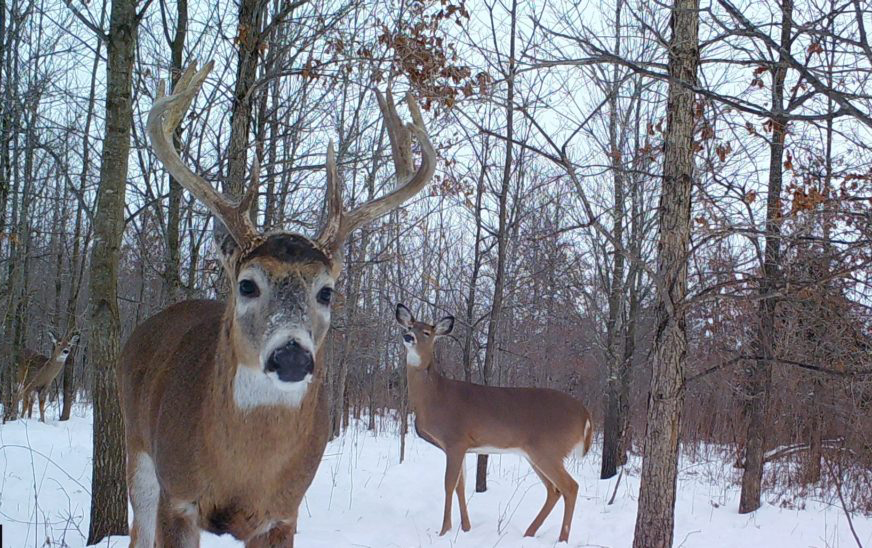
Here is a quick list of just a few of our resources for those deer hunting enthusiasts:
Ask an Expert: Wildlife Food Plots, video, Purdue Extension – Forestry and Natural Resources (FNR) YouTube Channel
Handling Harvested Game: Episode 1, Field Dressing, video, Purdue Extension – FNR YouTube Channel
Handling Harvested Game: Episode 2, Hanging & Skinning, video, Purdue Extension – FNR YouTube Channel
Handling Harvested Game: Episode 3, Deboning, video, Purdue Extension – FNR YouTube Channel
Handling Harvested Game: Episode 4, Cutting, Grinding & Packaging, video, Purdue Extension – FNR YouTube Channel
Deer Harvest Data Collection, Got Nature? Blog, Purdue Extension – FNR
How to Score Your White-tailed Deer, video, The Education Store, Purdue Extension Resource Center
White-Tailed Deer Post Harvest Collection, video, The Education Store
Age Determination in White-tailed Deer, video, The Education Store
Handling Harvested Deer Ask an Expert? video, Purdue Extension – FNR YouTube Channel
How to Build a Plastic Mesh Deer Exclusion Fence, The Education Store
Bovine Tuberculosis in Wild White-tailed Deer, The Education Store
Woodland Stewardship for Landowners: Managing Deer Damage to Young Trees, video, Purdue Extension – FNR YouTube Channel
Integrated Deer Management Project, Purdue FNR
For other hunting and trapping dates view the Indiana Department of Natural Resources, Fish and Wildlife Department website. Enjoy and stay safe!
Diana Evans, Extension & Web Communications Specialist
Purdue University Department of Forestry and Natural Resources
Rod Williams, Assistant Provost for Engagement/Professor of Wildlife Science
Purdue University Department of Forestry and Natural Resources
Jarred Brooke, Wildlife Extension Specialist
Purdue Forestry and Natural Resources
 Indiana Forestry & Woodland Owners Association (IFWOA) is a non-profit organization dedicated to conservation and sustainable management of forests in Indiana. The Fall Leaves & Limbs Newsletter is now available online and is open to all who would like to view the articles and resources.
Fall 2023 Leaves & Limbs Newsletter includes:
- Nesting and Overwintering Habitat for Pollinators and other Beneficial Insects
- Upcoming forestry events
- Chainsaw workshop for Woodland Owners
- Deam Finalists’ Excellent Stewardship to be Honored
- Series of Webinars Discuss Timber Taxes
- 2023 Woodland Owner Conference November 3-4 in Jasper/Huntingburg: Highlights, Agenda, Registration, Hotel
- Report Wilting Sassafras
- Emerging Invasive Plants of the Midwest
More About IFWOA
IFWOA is hosting the Indiana Woodland Owner Conference with field programs and indoor sessions on wildlife and habitat, forest management, and other concerns of landowners. The conference is November 3-4 and is open to anyone, nearly 200 landowners are expected to attend. See the agenda and register at https://www.ifwoa.org/resources/annual-woodland-owner-conference/.
IFWOA advocates for scientific best practices for woodland management to achieve objectives like clean water, wildlife habitat, soil protection, native species diversity, timber production, recreation, carbon sequestration and many others.
This Indiana association has members in every county of Indiana both woodland owners and non-owners, city and rural dwellers, family farmers, wildlife conservationists, agriculture and forestry professionals, tree farmers, loggers, scientists, educators — anyone who cares about the health of Indiana forests and woodlands, and wants to assure those lands receive the care and support they need.
Membership in IFWOA provides a valuable network linkage to information and resources at the leading edge of science, industry and politics impacting Indiana woodlands. If you would like to learn more about membership view Join Today, Indiana Forestry & Woodland Owners Association (IFWOA).
Resources:
Subscribe: Indiana Forestry & Woodland Owners Association (IFWOA) YouTube Channel
“Magnificent Trees of Indiana” webinar with author Carroll Ritter, IFWOA YouTube Channel
Forest Improvement Handbook, The Education Store, Purdue Extension’s resource center
Planting Hardwood Seedlings – The Education Store
Ordering Seedlings from the State Forest Nursery System, Got Nature? – Purdue Extension-FNR
Importance of Hardwood Tree Planting – The Education Store, Purdue Extension Resource Center
Designing Hardwood Tree Plantings for Wildlife – The Education Store
ID That Tree – YouTube Playlist
Forest Management for Reptiles and Amphibians: A Technical Guide for the Midwest, The Education Store
Hardwood Ecosystem Experiment – Forest Birds , Purdue Extension – FNR YouTube Channel
Ask the Expert: Hardwood Ecosystem Experiment – Birds and Salamander Research, Purdue Extension – FNR
Subscribe to Purdue Extension-FNR YouTube Channel
Liz Jackson, Engagement Lead
Indiana Forestry & Woodland Association
Join alumna Megan Benage, a regional ecologist for the Minnesota Department of Natural Resources, and Bee Redfield, a postgraduate research assistant, as they explore the world of pollinators. They cover the who’s, the what’s and how’s of pollination as well as how you can help bring pollinators to your yard and help the pollinator population in general. They also share about ongoing research and cool projects related to pollinators.
If you have any questions regarding wildlife, trees, forest management, wood products, natural resource planning or other natural resource topics, feel free to contact us by using our Ask an Expert web page.
Resources
Protecting Pollinators: Biology and Control of Varroa Mites in Bee Hives, The Education Store, Purdue Extension resource center
The Complex Life of the Honey Bee: Environmental, Biological, and Chemical Challenges to Colony Health, The Education Store
Pollinator Protection, Website, Purdue Extension
Gardening for Pollinators, Purdue Graden Articles
Megan Benage, Regional Ecologist
Minnesota Department of Natural Resources
Bee Redfield, Postgraduate Research Assistant
Purdue Forestry and Natural Resources
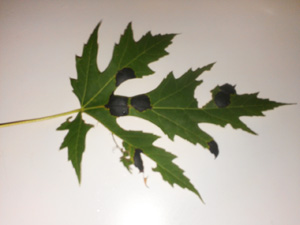 Question: we have several maple trees in our neighborhood afflicted with this black spot (see attached photo). What can we do to protect our maple trees?
Anwer: while it is difficult to confirm a diagnosis from photos alone it looks and could be a fungal disease called tar spot. The most common species are Rhytisma acerinum and R. punctatum. Symptoms first appear in late spring or early summer as infected leaves develop light green or yellow-green spots. During mid to late summer these produce black tar-like raised structures on the upper surface of leaves within the yellow spots. R. acerinum causes larger spots that are 0.5 to 2 cm in diameter; R.punctatum causes many small punctate spots that are smaller (about 1mm in diameter). Spots caused by R. punctatum are sometimes called speckled tar spots.
Tar spot is a common disease on silver maple and is primarily considered to be a cosmetic problem rather than a serious threat. The Purdue Plant and Pest Diagnostic Laboratory has additional information on tar spot including more photos and best treatment, Tar Spot on Maple.
To confirm a diagnosis, you can submit a sample directly to the Purdue Plant & Pest Diagnostic Lab (PPDL) or find a certified arborist to come to your property and access your tree.
Resources:
Large Spots on Maple Leaves that Look Like Tar, Purdue Extension News
Find an Arborist, International Society of Arboriculture
Diseases in Hardwood Tree Plantings, The Education Store, Purdue Extension’s resource center
Fifty Common Trees of Indiana
An Introduction to Trees of Indiana
Native Trees of the Midwest, The Education Store
Shrubs and Woody Vines of Indiana and the Midwest, The Education Store
Tree Installation: Process and Practices, The Education Store
Planting Your Tree Part 1: Choosing Your Tree, Video, Purdue Extension – Forestry & Natural Resource (FNR) YouTube Channel
Investing in Indiana Woodlands, The Education Store
Forest Improvement Handbook, The Education Store
ID That Tree, Purdue Extension-FNR YouTube playlist
Purdue Plant and Pest Diagnostic Laboratory
Diana Evans, Extension and Web Communication Specialist
Purdue University Department of Forestry and Natural Resources

Recent Posts
- It’s Timberdoodle Time!
Posted: April 3, 2026 in Got Nature for Kids, How To, Wildlife - Keep An Eye Out for Hammerhead Worms, Purdue Landscape Report
Posted: April 2, 2026 in Invasive Animal Species, Wildlife, Woodlands - When is the Peak Migration For Hummingbirds and How Can You Attract Them?
Posted: in How To, Wildlife - ID That Tree Featured in National Woodland Owners Association Newsletter
Posted: April 1, 2026 in Urban Forestry, Wildlife, Woodlands - New 2026 Indiana Woodland Steward Newsletter
Posted: March 30, 2026 in Urban Forestry, Wildlife, Woodlands - A Woodland Management Moment: Why Aspect Matters
Posted: in Urban Forestry, Woodland Management Moment, Woodlands - 2026 Winter Bat Survey In Progress, MyDNR
Posted: March 27, 2026 in How To, Wildlife - Fast-Growing Trees for the Landscape, Purdue Landscape Report
Posted: March 26, 2026 in Forestry, Urban Forestry, Woodlands - Urban Tree Spotlight: Planting Deciduous Shade Trees, Purdue Landscape Report
Posted: March 25, 2026 in Forests and Street Trees, Urban Forestry, Woodlands - Beetle that attacks Tree-of-Heaven found in Indiana, Purdue Landscape Report
Posted: March 20, 2026 in Invasive Insects, Wildlife, Woodlands
Archives
Categories
- Alert
- Aquaculture/Fish
- Aquatic/Aquaculture Resources
- Ask the Expert
- Christmas Trees
- Community Development
- Disease
- Drought
- Forestry
- Forests and Street Trees
- Gardening
- Got Nature for Kids
- Great Lakes
- How To
- Invasive Animal Species
- Invasive Insects
- Invasive Plant Species
- Land Use
- Natural Resource Planning
- Nature of Teaching
- Plants
- Podcasts
- Ponds
- Publication
- Safety
- Spiders
- Timber Marketing
- Uncategorized
- Urban Forestry
- Webinar
- Wildlife
- Wood Products/Manufacturing
- Woodland Management Moment
- Woodlands