 Purdue University - Extension - Forestry and Natural Resources
Got Nature? Blog
Wild Bulletin, IN DNR, Division of Fish & Wildlife: Epizootic hemorrhagic disease (EHD) is a naturally occurring viral disease commonly seen in the Indiana deer herd. Each year, typically in late summer, Indiana DNR receives reports of deer displaying signs of EHD throughout the state.
This year, DNR confirmed a significant EHD outbreak that began in the northern region of the Hoosier State. In some years, EHD can affect a larger-than-normal portion of the deer and becomes widespread across a county. In those instances, DNR lowers the County Bonus Antlerless Quotas (CBAQs) in the impacted counties to offset the effect of the counties’ EHD outbreak on the deer herd in that region.
EHD is transmitted by biting midges, also known as sand gnats or “no-see-ums.” Deer infected with EHD may display unusual behaviors such as lethargy, excessive salivation, or disorientation. EHD also causes fever in deer, which can cause deer to seek water. As a result, many deer that die from EHD are found in or near open water sources like ponds and rivers. Anyone who finds a deer showing signs of EHD or dead in water is asked to report it at on.IN.gov/sickwildlife.
County bonus antlerless quotas reduced in three counties for 2024-25
 Due to the number of reported deer mortalities and extent of EHD in the region, DNR has lowered the County Bonus Antlerless Quotas (CBAQs) in Wabash, Porter, and Allen counties from two bonus antlerless deer to one to help offset the effects of EHD on the deer herd in that region. During the winter, DNR biologists will fully evaluate the effects of EHD and will propose changes to bag limits as required. Hunters can stay informed about CBAQ changes at on.IN.gov/EHD-quotas.
To find out more view the Indiana Department of Natural Resources EHD Antlerless Bonus Quota Reductions.
Resources:
Be on the Watch for Epizootic Hemorrhagic Disease (EHD) in Deer, Got Nature? Blog, Purdue Extension – FNR
Report a Sick or Dead Deer, Indiana Department of Natural Resources (IN-DNR)
EHD Virus in Deer: How to Detect and Report video, Quality Deer Management Association
Epizootic Hemorrhagic Disease (pdf), Cornell University
How to Score Your White-Tailed Deer video, Purdue Extension – FNR YouTube Playlist
Deer Harvest Data Collection, Purdue FNR Got Nature? blog
Woodland Stewardship for Landowners: Managing Deer Damage to Young Trees, Purdue Extension-FNR YouTube Channel
Introduction to White-tailed Deer Impacts on Indiana Woodlands, Deer Impact Toolbox, Got Nature? Blog & The Education Store
Purdue Extension Pond and Wildlife Management
Managing White-tailed Deer Impacts on Indiana Woodlands, The Education Store
How to Build a Plastic Mesh Deer Exclusion Fence, The Education Store
Managing Your Woods for White-Tailed Deer, The Education Store
Deer Harvest Data Collection, Got Nature? Blog, Purdue Extension – FNR
Handling Harvested Deer Ask an Expert? video, Purdue Extension – FNR YouTube Channel
Subscribe to Purdue Extension-Forestry & Natural Resources YouTube Channel, Wildlife Playlist
A Woodland Management Moment – Deer Fencing, Purdue Extension – FNR YouTube Video
Division of Fish and Wildlife, Indiana Department of Natural Resources
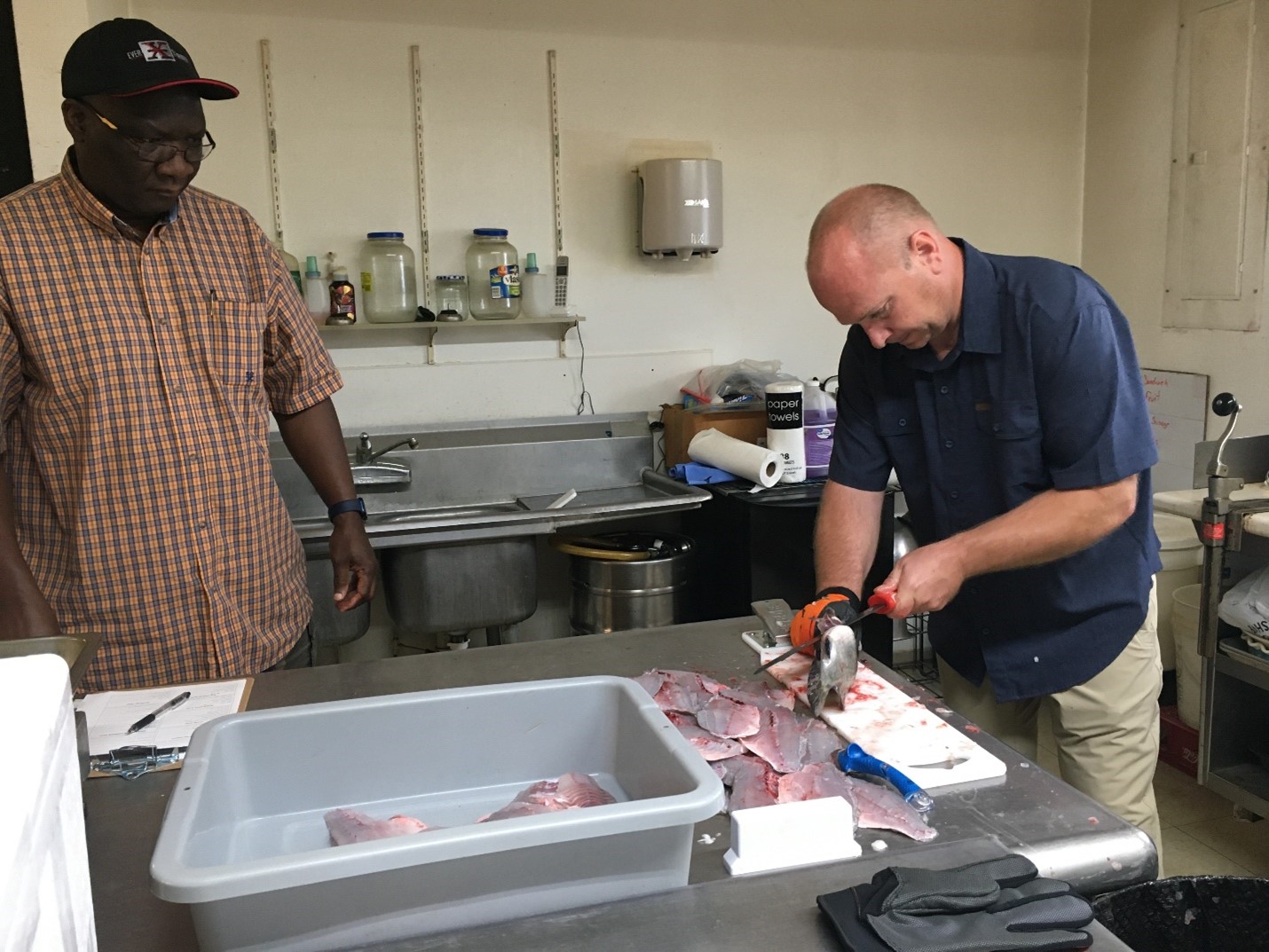
Hanilu Farms in Indiana participating in a small-scale fish processing case study. Photo by Kwamena Quagrainie.
Agricultural & Natural Resources (ANR) Newsletter: The Extension activities of Kwamena Quagrainie, clinical engagement professor in the Departments of Agricultural Economics and Forestry and Natural Resources, relate to economics in aquaculture and aquaponics. Kwamena is also affiliated with the Illinois-Indiana Sea Grant (IISG) program at Purdue University and the University of Illinois.
One aspect of his outreach activities relates to small-scale fish processing. He explored processing fish in shared-use commercial kitchens and on-farm processing facilities in local communities and hosted free HACCP training and pilot training workshops in seafood processing and food safety for fish farmers in Indiana and Illinois. Information from potential use of shared-use commercial kitchens and small on-farm fish processing kitchens were gathered to construct business models, costs, regulations, etc., as case studies, which are published in a handbook as a guide for small-scale fish farmers. The Handbook on Processing Fish for Small-Scale Fish Farmers outlines various aspects of understanding the process, including regulations, required training, requirements for renting a commercial kitchen and what it takes to own an on-farm facility. Fish farmers interested in processing their fish can use the handbook to decide if processing is a feasible pathway to add to their fish production business or to simply get into fish processing using any local facilities.
The other aspect relates to aquaponics as a sustainable food production enterprise and outreach to high schools interested in aquaponics in the classroom. Aquaponics is integrating aquaculture and hydroponics to produce seafood and plants using less land and water resources when compared with conventional food production methods. Kwamena’s primary focus with aquaponics is addressing the challenges in the adoption of aquaponics in the Midwest and helping farmers make informed decisions about getting into Aquaponics as a business. View YouTube video Aquaponics: What to consider before starting your business. Farmers are expressing interest in aquaponics as small farms and, in some cases, as urban farming, which could have some economic benefits because of its small footprint and use of less water and land resources.
The aquaponics in schools program is in its initial stages and is aimed at introducing students to basic scientific concepts through the lens of an aquaponics system. The program has lessons aligned with Science and Engineering Process Standards, incorporating material from biology, chemistry, and environmental science. An aquaponics curriculum developed by IISG is currently being pilot tested by high school teachers. The program will be implemented together with a water quality test kit loan program to schools in Indiana and Illinois.
To learn more about Dr. Quagrainie’s research and publications view: Kwamena Quagrainie, Forestry and Natural Resources profile page.
Resources:
A Guide to Marketing for Small-Scale Aquaculture Producers, The Education Store
A Guide to Small-Scale Fish Processing Using Local Kitchen Facilities, The Education Store
Marine Shrimp Biofloc Systems: Basic Management Practices, The Education Store
Aquaculture Industry in Indiana Growing, Purdue Today
Walleye Farmed Fish Fact Sheet: A Guide for Seafood Consumers, The Education Store, Purdue Extension resource center
Sustainable Aquaculture: What does it mean to you?, The Education Store
The Benefits of Seafood Consumption The Education Store, Purdue Extension Resource Center
Walleye Farmed Fish Fact Sheet: A Guide for Seafood Consumers, The Education Store, Purdue Extension resource center
Pond and Wildlife Management website, Purdue Extension
Fish Cleaning with Purdue Extension County Extension Director, Got Nature? Blog, Purdue Extension – Forestry and Natural Resources
Aquatics & Fisheries, Playlist, Purdue Extension – Forestry and Natural Resources
Eat Midwest Fish, Illinois-Indiana Sea Grant online resource hub
Agricultural & Natural Resources (ANR), Purdue Extension
Diana Evans, Extension & Web Communications Specialist
Purdue University Department of Forestry and Natural Resources
 The USDA Natural Resources Conservation Service, shares news article announcing the December 6, 2024 deadline for the Southern Indiana Sentinel Landscape Regional Conservation Partnership Program (RCPP).
Funding Available to Landowners Through the Southern Indiana Sentinel Landscape Regional Conservation Partnership Program
October 8. 2024
Damarys Mortenson, State Conservationist for USDA’s Natural Resources Conservation Service (NRCS) in Indiana announced today the deadline to apply for funding through the Southern Indiana Sentinel Landscape Regional Conservation Partnership Program (RCPP) is Dec. 6.
RCPP is a partner-led program, with NRCS directing technical and financial assistance to priorities identified by partners. Led by the Conservation Law Center, and the Southern Indiana Sentinel Landscape Partnership (SISL), this RCPP is part of a larger initiative to address pressing environmental concerns in the region.
“SISL is a great example of public, private and non-profit organizations working together to solve local concerns,” said Mortenson. “The partners are building on years of successful collaborations focused on natural resource protection, making a greater environmental impact within the focus area.”
Beginning about 20 miles south of Indianapolis, SISL comprises a unique patchwork of land uses. It is anchored by four critical Department of Defense installations and ranges and also contains state parks, state forests, state fish and wildlife areas, state-dedicated nature preserves, the Hoosier National Forest, and National Wildlife Refuges.
These natural and working lands provide an opportunity for partners and stakeholders to sustainably manage forests, build soil health and resiliency on agricultural lands, improve ecosystem health and maintain areas compatible with the military mission. SISL’s overarching goals are to preserve and protect military missions, support sustainable farming and forestry, restore and sustain ecosystems, ensure thriving human communities, and improve climate resiliency. Combined, these efforts have the potential to mitigate the effects of existing encroachment threats or avoid them altogether.
“Protecting Indiana’s oak-hickory ecosystems is essential not just for preserving our natural heritage, but also for safeguarding biodiversity, water quality, soil health and wildlife habitats,” said Mortenson. “The Southern Indiana Sentinel Landscape plays a major role in helping to maintain ecological balance, support countless species and provide clean air and water for southern Indiana communities.”
For full article view: Funding Available to Landowners Through the Southern Indiana Sentinel Landscape Regional Conservation Partnership Program.
For more information regarding the Southern Indiana Sentinel Landscape view The Sentinel Landscapes Partnership website, Southern Indiana Sentinel Landscape.
The Sentinel Landscapes Partnership is a coalition of federal agencies, state and local governments, and non-governmental organizations that work with willing landowners and land managers to advance sustainable land use practices around military installations and ranges. Founded in 2013, the partnership aligns the objectives of the U.S. Department of Agriculture, Department of Defense, Department of the Interior, and Federal Emergency Management Agency to strengthen military readiness, conserve natural resources, bolster agricultural and forestry economies, increase public access to outdoor recreation, and enhance resilience to climate change.
Landowner and Wildlife Habitat Assistance, Indiana Department of Natural Resources, Division of Fish and Wildlife
Timber Harvesting and Logging Practices for Private Woodlands, The Education Store
Investing in Indiana Woodlands, The Education Store
Marketing Timber, The Education Store
Woodland Wildlife Management, The Education Store
A Landowner’s Guide to Sustainable Forestry: Part 3: Keeping Your Forest Healthy and Productive, The Education Store
Indiana Department of Natural Resources Division of Forestry
The Nature of Teaching: Trees of the Midwest, The Education Store
Indiana Woodland Steward, Institute promoting the wise use of Indiana’s forest resources
Indiana Forestry Educational Foundation, Indiana Forestry & Woodland Owners Association
Forest Improvement Handbook, The Education Store
Invasive plants: impact on environment and people, The Education Store
Managing Your Woods for White-Tailed Deer, The Education Store
New Deer Impact Toolbox, Got Nature? Blog, Purdue Extension, Forestry and Natural Resources
Subscribe: Deer, Forest Management, ID That Tree, Woodland Management Moment, Invasive Species and many other topic video playlists Purdue Extension-Forestry and Natural Resources YouTube Channel
USDA Natural Resources Conservation Service
Diana Evans, Extension & Web Communications Specialist
Purdue University Department of Forestry and Natural Resources
The summer issue of the Purdue Alumnus magazine highlights Gabrielle Sjoberg, FNR 2008, and the Nature of Teaching. The section titled “The Nature of Well-Being” shares how Boilermakers are making connections regarding the power of nature to improve our health, moods and thinking.
For Gabrielle Sjoberg (A’08), connecting people to nature has become her life’s work.
The wildlife science alumna, whose master’s degree in biology from Miami University focused on outdoor programming, has helped kids discover nature at the Indiana Dunes National Park, ran nature programs and camps at the Natural History Museum of Los Angeles County, and led youth conservation corps programs in Angoon, Alaska.
“I’m working with kids who, even though they’ve grown up in these remote wilderness areas, have not necessarily done much exploring in the bays and rivers,” says Gabrielle Sjoberg, FNR 2008.
The rural and Indigenous youths in the program work on projects such as clearing trails and fallen trees with program partners, including the United States Forest Service, and also help with the traditional seasonal harvesting, preservation, and distribution of foodstuffs that are crucial for locals: salmon, clams, moose, deer, herring eggs, blueberries, and beach asparagus.
For full article view, For Gabrielle Sjoberg (A’08), connecting people to nature has become her life’s work.
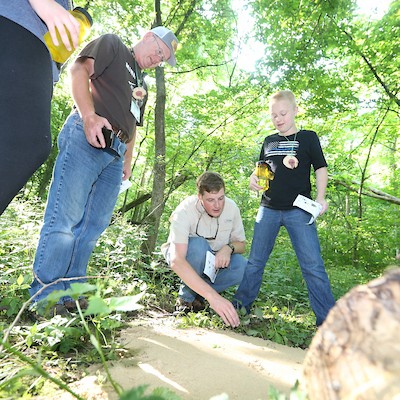
The Nature of Teaching
In 2005, when journalist Richard Louv published his groundbreaking book Last Child in the Woods: Saving Our Children from Nature-Deficit Disorder, research on the ways natural environments can benefit humans was just getting started.
The program’s three areas of focus—wildlife, food waste, and health and wellness—provide standards-based curricula along with suggestions for informal “field day” activities, all centered around getting kids outside.
The teachers said they needed training, good science-based lesson plans, and a repository of natural resource–related information they could easily access. In response, Dr. Rod Williams created a comprehensive professional development program for teachers called the Nature of Teaching, housed in the College of Agriculture’s Extension program.
Williams recently left Purdue for Texas Tech, where he serves as vice provost for outreach and engagement, but his legacy lives on in the Nature of Teaching program, which is now codirected by Veronica (Yager) Bullock (A’17) and Jarred Brooke (A’12), who is also an Extension wildlife specialist.
According to Bullock, who has taught many of the Nature of Teaching units as well as workshops for teachers, the lesson plans have been downloaded 400,000 times since the program’s launch. “That shows there’s a real interest in this,” she says.
For full article view, The Nature of Teaching.
The Nature of Teaching includes formal standards-based curricula and informal activity-based curricula all centered around getting youth outside. The three program areas of the formal curricula include: Wildlife, Health and Wellness, and Food Waste. Each program area provides standards-based lesson plans, available as free downloadable PDFs, which are classroom ready for grades K-12.
The Purdue Alumnus magazine, referred to as “Bulletin of the Purdue Alumni Association” in its early years, is the flagship publication of the Purdue for Life Foundation. It aims to inform, inspire and entertain readers through stories that provide insight into Purdue University and its initiatives, alumni, students, faculty and staff.
Resources:
Nature of Teaching, Connecting Youth With Nature for Health and Education, Agriculture Natural Resources, Got Nature? Blog Post
Virtual Workshops, Nature of Teaching
Nature of Teaching, Website, Purdue College of Agriculture
The Nature of Teaching, YouTube channel
Transporting Food Waste, The Education Store, Purdue Extension resource center
Benefits of Connecting with Nature, The Education Store
Nature of Teaching: Common Mammals of Indiana, The Education Store
The Nature of Teaching: Food Waste Solutions, The Education Store
The Nature of Teaching: Food Waste and the Environment, The Education Store
The Nature of Teaching: Trees of the Midwest, The Education Store
The Nature of Teaching: Adaptations for Aquatic Amphibians, The Education Store
Trees of the Midwest Webinar, Nature of Teaching YouTube channel
Adaptations For Aquatic Amphibians Webinar, Nature of Teaching YouTube channel
Agriculture & Natural Resources (ANR)
Diana Evans, Extension and Web Communication Specialist
Purdue University Department of Forestry and Natural Resources
Jarred Brooke, Wildlife Extension Specialist
Purdue Department of Forestry and Natural Resources
Veronica Bullock, ANR Extension Educator
Purdue Extension Franklin County
In this webinar, hosted by Indiana Forestry & Woodland Owners Association, Joe Caudell, state deer biologist with Indiana DNR Division of Fish and Wildlife, shares recent efforts to better understand Indiana deer populations and how they vary across the landscape. The research from the Integrated Deer Management Project, a multi-year research project with Purdue Forestry and Natural Resources team working closely with the DNR biologists, created research management units (RMUs) so that they could be easily incorporated into deer management practices by the DNR.
Additional resources:
- Indiana Hunt for Hunger Program, Indiana Department of Natural Resources (IN DNR).
- If you’re interested in learning more about Indiana’s white tailed deer hunting and management, see the IN DNR page. There is a section on deer management with deer reports, survey results, and real time harvest data: White-Tailed Deer Hunting.
- Integrated Deer Management Project Website Introduced, Purdue College of Agriculture News.
- DNR Adopts RMU Research Techniques Created by Integrated Deer Management Project, Purdue College of Agriculture News.
- Deer Exclosures, Integrated Deer Management Project, Video, Purdue Extension – Forestry and Natural Resources (FNR) YouTube Channel
Check out the Indiana Forestry & Woodland Association YouTube Channel for videos including: What is IFWOA?; A New Carbon Program for Hardwood Landowners Webinar, Indiana’s Native Orchids, Magnificent Trees of Indiana, Be Tick Aware and much more.
The Indiana Forestry & Woodland Owners Association (IFWOA) was founded in 1977 and is a non-profit organization dedicated to conservation and sustainable management of woodlands in Indiana. IFWOA advocates for scientific best practices for management to achieve objectives of clean water, wildlife habitat, soil protection, native species diversity, timber production, recreation, carbon sequestration and many others.
IFWOA is an affiliate of the National Woodland Owners Association. IFWOA is a partner, collaborator or is represented on leading National and State organizations. These memberships or collaborations are selected to advance Indiana Woodland owner’s interests. IFWOA monitors and influences legislation and economic trends impacting Indiana woodlands and landowners for our members. Membership in IFWOA provides a valuable network linkage to information and resources at the leading edge of science, industry and politics impacting Indiana woodlands.
More Resources:
Ask an Expert, Playlist, Purdue Extension – FNR YouTube Channel
Wildlife Habitat Hint: Trail Camera Tips and Tricks, Video, Purdue Extension – FNR YouTube channel
Wildlife Habitat Hint, Playlist
Trail camera survey for white-tailed deer, Got Nature? Blog
Handling Harvested Game: Episode 1, Field Dressing, Video
Woodland Stewardship for Landowners: Managing Deer Damage to Young Trees, Purdue Extension-FNR YouTube Channel
Managing Your Woods for White-Tailed Deer, The Education Store, Purdue Extension’s resource center
Introduction to White-tailed Deer Impacts on Indiana Woodlands, Got Nature? Blog & The Education Store
Liz Jackson, Engagement Lead
Indiana Forestry & Woodland Association
Illinois-Indiana Sea Grant (IISG) have four buoys now in place on the Great Lakes which inform scientists, weather forecasters, anglers, boaters, paddlers, surfers, swimmers and educational programs about current lake conditions. They collect data on wind speed, surface current, wave height, and water temperatures, providing valuable insights for scientists and the public.
- Michigan City Buoy – This buoy is located three miles offshore of Michigan City, Indiana. Purdue University’s Lyles School of Civil Engineering created the anchor used to keep the buoy in place. They also maintain and help deploy this buoy each year. The Michigan City Port Authority and the Lake Michigan Indiana Department of Natural Resources office played pivotal roles in helping deploy the anchor. The buoy itself was funded through a grant provided by Illinois-Indiana Sea Grant. A grant from the Indiana Department of Natural Resources Coastal Management Program allowed for the addition of the temperature chain.
- Chicago Buoy – This buoy, also called Chuoy, is based in the busy waters off Navy Pier, approximately a mile due east of the pier. This buoy is jointly owned and operated by Illinois-Indiana Sea Grant and the Lyles School of Civil Engineering at Purdue University.
For more information about Chuoy, check out this IISG article: New to Navy Pier waters, Chuoy the Buoy Proved a Valuable Forecasting Tool. - Wilmette Buoy – The Wilmette Buoy is situated approximately four miles off Wilmette, in Lake Michigan. The Sheridan Shore Yacht Club and the Coast Guard in Wilmette help deploy and store this buoy each year. Henry’s Sports and Bait shop in downtown Chicago helped deploy the anchor. The buoy was first deployed through a grant from the Great Lakes Observing System and the NOAA Coastal Storms Program.
- Waukegan Buoy – The Waukegan buoy is situated about a mile offshore from Waukegan Harbor in Lake Michigan. This buoy is owned and operated by the University of Illinois and the Illinois State Geological Survey. LimnoTech, Inc. and Illinois-Indiana Sea Grant play pivotal roles in helping deploy and support the buoy. The buoy was first deployed through a grant from NOAA. Continued funding support comes from the Illinois Department of Natural Resources Coastal Management Program.

For more information and photos view Purdue College of Agriculture News: Gearing Up for a Great Lake Day.
“The buoys act as a service to people who are active in Lake Michigan,” said Tomas Höök, director of Illinois-Indiana Sea Grant and professor of Forestry and Natural Resources at Purdue University. “A line runs from the surface of the buoy to the bottom of the lake, and sensors collect a variety of data. The buoy’s modem then communicates with a cell tower, providing data that anyone can access in real-time.”
“Near-record high water levels a few years ago were causing erosion along the shoreline, and there were even cases farther north in Lake Michigan of houses falling into the lake. But if you look back about 10 years, near-record low levels made the shoreline look like a mud flat,” Höök explained. “It’s important to understand because if infrastructure is built while the water is low, it’s highly likely the water level will rise back up and threaten that infrastructure.”
Subscribe to Illinois-Indiana Sea Grant YouTube Channel and view buoy videos along with fishing, water safety and other educational videos.
Illinois-Indiana Sea Grant is a partnership between NOAA, University of Illinois Extension, and Purdue University Forestry and Natural Resources, bringing science together with communities for solutions that work. Sea Grant is a network of 34 science, education and outreach programs located in every coastal and Great Lakes state, Lake Champlain, Puerto Rico and Guam.
Partners and Other Resources:
Lyles School of Civil Engineering, Purdue University
Henry’s Sports and Bait, Chicago, Illinois
Great Lakes Observing System
National Oceanic and Atmospheric Administration (NOAA) Coastal Storms
Illinois State Geological Survey
University of Illinois
Purdue University
Forestry and Natural Resources, Purdue University
LimnoTech
Illinois Department of Natural Resources Coastal Management Program
Indiana Department of Natural Resources Coastal Management Program
Lake Michigan Indiana Department of Natural Resources
Michigan City Port Authority
Center For Great Lakes Literacy (CGLL)
Eat Midwest Fish, Illinois-Indiana Sea Grant and North Central Regional Aquaculture Center
Informing the Development of the Great Lakes Region Decision Support System, The Education Store, Purdue Extension’s resource center
Fish Cleaning with Purdue Extension County Extension Director, Got Nature? Blog, Purdue Extension – Forestry and Natural Resources
Walleye Farmed Fish Fact Sheet: A Guide for Seafood Consumers, The Education Store
Meet the buoys of summer who help Purdue and Illinois study Lake Michigan: BTN LiveBIG, BTN
National Data Buoy Center (noaa.gov), National Data Buoy Center
Diana Evans, Extension & Web Communications Specialist
Purdue University Department of Forestry and Natural Resources
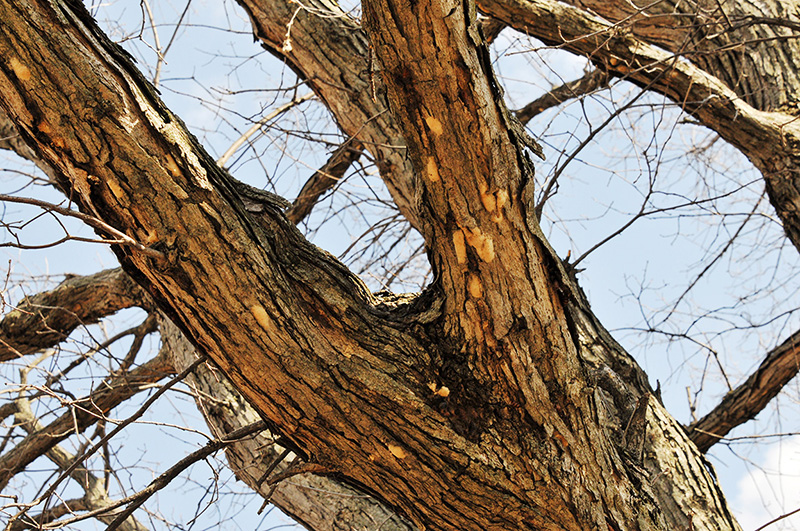
Figure 1: Spongy moth caterpillar, credit to John Obermeyer.
Purdue Landscape Report: Spring is always a wonderful, if somewhat chaotic, time of year in Indiana. Between the heavy rains and beautiful flowers blooming, the months leading up to summer can make your head spin. While we enjoy the trees greening out and watch out for storms, we need to be aware that spring awakens other organisms, many of which have a major impact on our lives. This time of the year introduces a host of insect species hatching from eggs, emerging from cocoons, or returning from their overwintering nap, and many of those species mean bad news for our trees. One of the most impactful species we deal with in Indiana is Lymantria dispar, or the spongy moth.
The spongy moth, so named for the sponge-like egg masses they lay in the early fall, is an invasive species belonging to family Erebidae, a large group of moths that include species such as the woolly bear we see every year in Indiana. Spongy moth is a native to Eurasia, and historical record shows it has caused problems throughout Europe as early as the seventeenth century. In the late nineteenth century, an amateur entomologist and would-be entrepreneur brought spongy moth to North America in a failed attempt to create a new silk moth hybrid. Inevitably, the insect escaped captivity and has since spread through several states over the last century, including the northern portion of Indiana.

Figure 2: Mating spongy moth adults, credit to John Obermeyer.
Spongy moth is a generalist pest that strips leaf tissue from many species of trees, though it has a particular preference for oak. Like all butterflies and moths, the larva, or caterpillar, is the damaging form of this insect. Spongy moth caterpillars bear chewing mouthparts they use to consume leaf tissue, but they do not attack wood or root systems of their hosts. Adults are non-feeding and only survive long enough to reproduce. Spongy moth can produce large populations each year and move quickly across a landscape, creating sudden infestations and near-complete defoliation in those areas. While trees will typically recover after losing a significant portion of their leaf tissue, repeated infestations will make a host tree more susceptible to disease, reduce resilience, and potentially lead to death.
Like other moths and butterflies, spongy moth has well-defined life stages that can be used to easily identify them. Caterpillars will begin to appear between mid-April and early May and can be identified by their hairy appearance, distinct black, blue, and red coloration, and the tendency to move up and down the surface of a tree (Fig. 1). Male larvae will develop through five instars, while female larvae will grow over the course of six instars. Larvae will enter the pupal stage midsummer and spend approximately ten to twelve days developing. The pupae of this insect are darkly colored and lack the silk cocoon seen in other species. Adult male moths will emerge in the latter half of the summer season, followed by female moths about a week later. The moths can be identified by the pattern on their wings: a black chevron associated with a dot on a pale white or cream background (Fig. 2). Male moths will have large, feathery antennae and are capable of flight, while females are flightless with smaller antennae. Adult moths will only survive for a few days to reproduce and lay sponge-like egg masses, which will overwinter and hatch the following spring (Fig. 3).
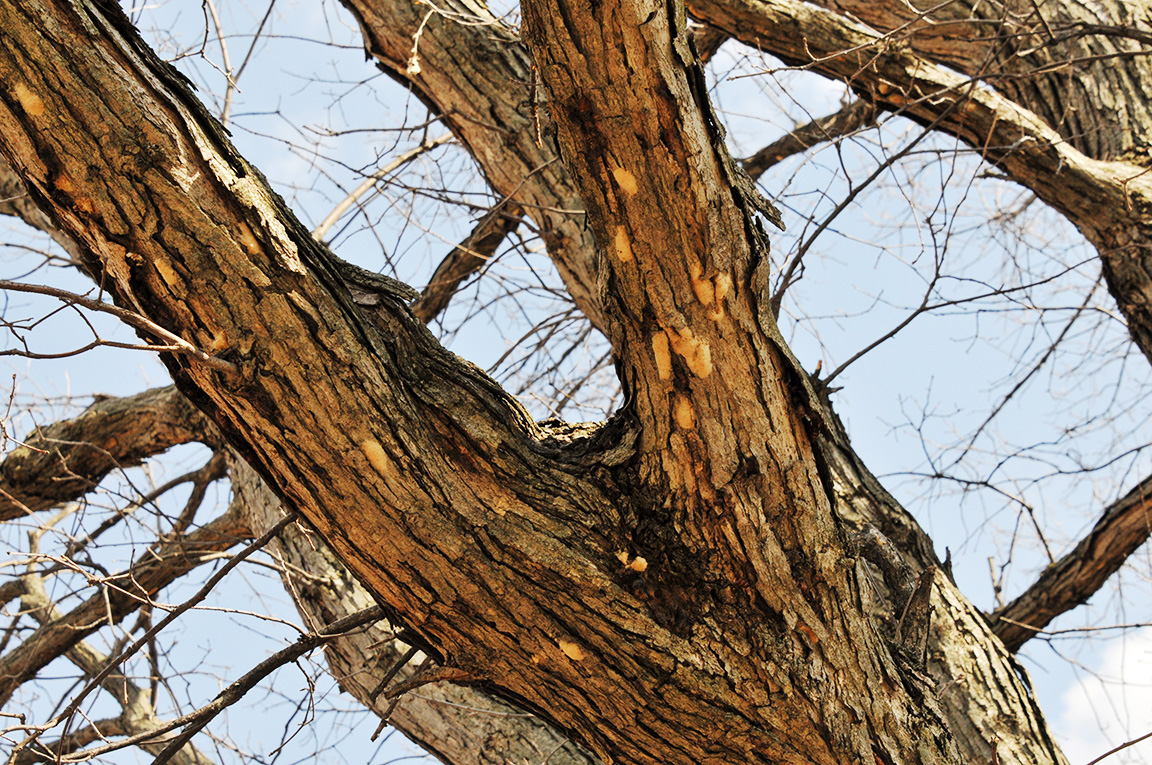
Figure 3: Spongy moth egg mass on tree, credit to John Obermeyer.
Management of spongy moth often involves work by state and federal agencies, such as the Indiana’s Department of Natural Resources. Within the Hoosier state, the DNR has quarantined several northern counties to prevent movement of materials that could potentially spread spongy moth even further. They also conduct yearly mitigation programs to eliminate infestations that are outside of the quarantined area. Indiana DNR, specifically the Division of Entomology and Plant Pathology, posts information on all mitigation efforts as well as hosts public meetings so residents understand what treatments are used for spongy moth management, and how it will affect their community.
Most organizations, including Indiana DNR, typically use two methods to control spongy moth: mating disruption and Btk applications. Mating disruption uses the moth’s biology against it by confounding its ability to locate a mate. Spongy moths, like many species, use a chemical signal called a pheromone to attract potential mates; male moths follow the trail of pheromones emitted by a female. By filling an area with the pheromone, the male moths become unable to follow individual chemical signals, resulting in fewer eggs being laid for the next spring. Pheromones are also highly species-specific, ensuring little to no impact on other organisms. In Indiana, the chemical used for mating disruption is applied aerially to cover a significant area, and the chemical used is made of food grade materials that break down easily.
Btk applications are also done aerially, coating foliage with a selective pesticide that only affects moth and butterfly species. Btk is a protein derived from a native soil-borne bacteria (Bacillus thuringiensis kurstaki) and works by damaging the internal lining of an insect’s gut after being consumed. This is a pesticide that is commonly applied to all manner of crops, persists only for a short time in the environment, and only harms insects. It also has the benefit of having minimal impact on pollinators, especially when applied using label directions.
While spongy moth is a serious challenge, there are some options you can use to protect your natural spaces. The first option, and perhaps the most important, is to be vigilant. If you live in or near an infestation, get into the habit of checking your trees for egg masses starting in the late summer through the fall. When you find egg masses, check for small pinholes in the sponge-like covering; the hole is created by a beneficial parasitoid wasp that uses the caterpillars as hosts for their young. You can also destroy egg masses by using a horticultural oil labeled for that purpose, or by scraping off the egg masses into a bucket of soapy water. Also be watchful of egg masses being laid on homes, firewood, or the sides and undersides of vehicles that move through infested areas.
Larvae will begin to appear in late April, with warmer temperatures encouraging populations to hatch earlier. One method of controlling larvae is to use burlap banding as a trap to capture larvae moving up and down the surface of the tree trunk. This can be done by tying a folded piece of burlap around the trunk of the tree at approximately chest height. Caterpillars, attempting to hide from predators during the day, will crawl into the folds. Once the late afternoon arrives, the caterpillars can be removed and destroyed by dumping them into soapy water. You can also use sticky substances in an effort to capture the caterpillars by coating a tree at chest height with it, but this method has several drawbacks. Any substrate that is sticky enough to capture spongy moth caterpillars will also capture any other insect, beneficial and damaging, and could potentially catch small mammals and birds as well.
If you plan to use pesticides, May through June is the best time to apply. Biological pesticides such as Btk, spinosad, and others, are available for homeowner use, as well as systemic insecticides such as dinotefuran and emamectin benzoate. However, given how widespread the caterpillars can be and the heights they can reach, using some insecticides may not be feasible or may require professional assistance. Homeowners and property managers should consult certified arborists to learn what options will be best, and use pesticides as per the label directions.
While spongy moth is now a permanent part of our ecosystem, we still want to limit its ability to move into new parts of Indiana. If you live outside of quarantine areas and find an egg mass, caterpillar, or adult moth, report them by contacting the Indiana Department of Natural Resources at 1-866-NOEXOTIC, or by emailing DEPP@dnr.in.gov; make sure to include pictures and location. You can also consult your local Extension office for assistance in finding arborists, speaking with specialists, or getting problem insects identified.
Original article posted: Purdue Landscape Report.
Subscribe and receive the newsletter: Purdue Landscape Report Newsletter.
Resources:
Spongy Moth, Indiana Department of Natural Resources
The Spongy Moth in Indiana, Purdue Extension – Entomology
Invasive Species, Playlist, Purdue Extension – FNR YouTube Channel
Report Invasive Species, Purdue Invasive Species
What are invasive species and why should I care?, Got Nature? Blog, Purdue Extension – Forestry and Natural Resources
Pest Management, The Education Store
Protecting Pollinators: Why Should We Care About Pollinators?, The Education Store, Purdue Extension resource center
Subscribe Purdue Extension-Forestry and Natural Resources YouTube Channel
Bob Bruner, Exotic Forest Pest Educator
Purdue Entomology
 Purdue Extension News – Whitely County Posts: The recently launched Purdue Plant Doctor website at purdueplantdoctor.com navigates like a smartphone app and can help growers identify and manage insect pests and diseases of trees, shrubs, and flowers. It will also help growers recognize “good bugs,” those beneficial insects that prey on harmful insect pests or serve as valuable pollinators. Helpful instructional videos provide supplemental content.
Purdue entomologist Cliff Sadof was a key contributor to this site. He said that identifying a plant problem is the first step to improving the health of plants in the landscape. “We created a series of short (5 to 7 min.) YouTube videos to help you learn or just brush up your plant diagnostic skills,” he said. “Each video guides you through the diagnostic process in real landscapes, reviews pest biology, and provides tips on management.” Videos finish with a demonstration of how to use the Purdue Plant Doctor to confirm your diagnosis and get current recommendations. Key moments tabs help you navigate through each video.
Users may watch these videos in English or Spanish from the “Quick Guides” available on the website or directly from YouTube. Some of the topics include:
- Diagnosing Plant Problems with the Purdue Plant Doctor Web Page: Learn how to diagnose and manage pest and disease problems on ornamental plants and how to keep your plants healthy. The Plant Doctor Web page is a mobile-ready website that can improve communication between plant care professionals and their clientele. Spanish version is also available.
- Beating Back Borers of Pines and Other Cone Bearing Trees with the Purdue Plant Doctor: Borers can be a real problem in landscapes that use pines and other evergreens to serve as a windbreak or a visual screen. Learn how to detect borer problems before they destroy your planting, and get tips on protecting these coniferous trees from borers. Spanish version is also available.
- Managing Spider Mite Mayhem with the Purdue Plant Doctor: Spider mites may be small, but they can cause big problems. Learn how to detect mites before they harm plants, and what you can do to keep plants healthy before and after mites have been detected. Spanish version is also available.
- All You Need to Know about Managing Scales and Mealybugs with the Purdue Plant Doctor: Drought and rising temperatures can make plants more susceptible to scale insects. Learn about the threats these insects pose to your plants and landscapes. Then find out how you can monitor them and improve your ability to keep your plants safe from harm. Spanish version is also available.
- Taming Aphid Problems with the Purdue Plant Doctor: Aphid problems can turn your landscape into a sticky mess. Learn the threats they pose to your plants and how to detect and manage them. Spanish version is also available.
- Managing Japanese Beetle with The Purdue Plant Doctor: Japanese beetles can wreak havoc in your landscape by consuming the flowers and leaves of your ornamental planting or by killing your turf. Learn why Japanese beetle traps can make Japanese beetle problems worse. Get the latest information about these beetles and how to control them. Spanish version is also available.
- Managing Plant Galls with the Purdue Plant Doctor: Galled about Galls? Want to learn how to diagnose bumps on plants and how they affect plants? This video will discuss the causes of plant galls and what you need to do to keep your plants healthy. Spanish version is also available.
Too often when we see an insect, we automatically think it’s a pest. But that is not always the case. The Purdue Plant Doctor website will also help you recognize beneficial insects like ambush bugs, assassin bugs, ground beetles, soldier beetles, lacewings, and minute pirate bugs.
So, whether you are a homeowner or a landscape professional, the Purdue Plant Doctor can help you manage pests in landscapes and recognize the beneficial insects in landscapes.
More Resources:
Hardwoods of the Central Midwest, Purdue Arboretum Explorer
Forest Improvement Handbook, The Education Store, Purdue Extension’s resource center
ID That Tree, Purdue Extension-Forestry & Natural Resources (FNR) YouTube playlist
Native Trees of the Midwest, The Education Store
Woodland Management Moment , Purdue Extension-FNR YouTube playlist
Tree Installation: Process and Practices, The Education Store, Purdue Extension’s resource center
Planting Your Tree Part 1: Choosing Your Tree, video, The Education Store
Tree Risk Management – The Education Store
Find an Arborist website, Trees are Good, International Society of Arboriculture (ISA)
John E. Woodmansee, Extension Educator – Agriculture and Natural Resources (ANR)
Purdue Extension – Whitely County
Illinois-Indiana Sea Grant (IISG) has recently added to its YouTube Channel new water safety videos, which share what to watch for and how to stay out of those scary situations that can become dangerous very quickly.
Water Safety Basics: Water safety is more then just knowing how to swim. You need to what can cause hazards, what type of water bodies have hazards and how to avoid or survive those hazards.
Water Safety – What to Know Before You Go to the Beach: On average every year, 87 people die in the Great Lakes, half of them are in Lake Michigan. Ocean waves are very different from Great Lake waves.
Water Safety – Winter Beach Hazards: Water safety is so important during the winter. When covered in snow and ice, it’s difficult to tell where the beach ends and the lake begins. Shelf ice is beautiful but dangerous. There are many places where it cannot support a person’s weight, which may cause a fall into freezing water below, so you should never walk on shelf ice.
Water Safety – How to Escape Dangerous Currents: Of the five Great Lakes, Lake Michigan has the highest number of drownings and rescues each year. Lake Michigan is freshwater. This is so different from an ocean. It doesn’t have the salt, so it is lacking that buoyancy already. If waves get super high and rip currents start to form and that water gets volatile, it is going to be much harder to get out of the situation if you start struggling while you are swimming.
Water Safety – Southern Lake Michigan: Lake Michigan has also had more than 250 recorded cases of swimmers caught in rip currents since 2002, which is double the combined total of the other four Great Lakes. Make sure you check the forecast before you come and have a safety plan. In the ocean you can get hit by two waves in 15 seconds but in the Great Lakes you could get his with five waves in that same time period. Learn more about high frequency waves and how dangerous it can be.
Illinois-Indiana Sea Grant combines research, education, and outreach to empower southern Lake Michigan communities to secure a healthy environment and economy. The program is funded through National Oceanic and Atmospheric Administration (NOAA) via the National Sea Grant College Program, as well as the University of Illinois and Purdue University. IISG also works in partnerships with key organizations, institutions, and agencies in the region to reach more audiences and multiply opportunities for success. IISG brings together scientists, educators, policy makers, community decision makers, outreach specialists, business leaders, and the general public to work towards a healthy environment and economy.
Subscribe to the Illinois-Indiana Sea Grant (IISG) YouTube Channel.
More Resources:
Implementation Examples of Smart Growth Strategies in Indiana, The Education Store, Purdue Extension’s resource center
Conservation Through Community Leadership, The Education Store
Community Development, Purdue Extension
Rainscaping Education Program, Purdue Extension
Rainscaping and Rain Gardens, Purdue Extension YouTube Channel
Enhancing the Value of Public Spaces, The Education Store
Enhancing the Value of Public Spaces: Creating Healthy Communities, The Education Store
Enhancing the Value of Public Spaces Program, Purdue Extension YouTube Channel
One Water Approach to Water Resources Management, The Education Store
Community Development, Purdue Extension
Community Planning Playlist, Purdue Extension-Forestry & Natural Resources (FNR) YouTube Channel
Indiana Creek Watershed Project – Keys to Success, Partnerships and People, Subscribe to Purdue Extension-FNR YouTube Channel
Climate Change and Sustainable Development, The Education Store
Climate Change: Are you preparing for it?, The Education Store
Diana Evans, Extension & Web Communications Specialist
Purdue University Department of Forestry and Natural Resources
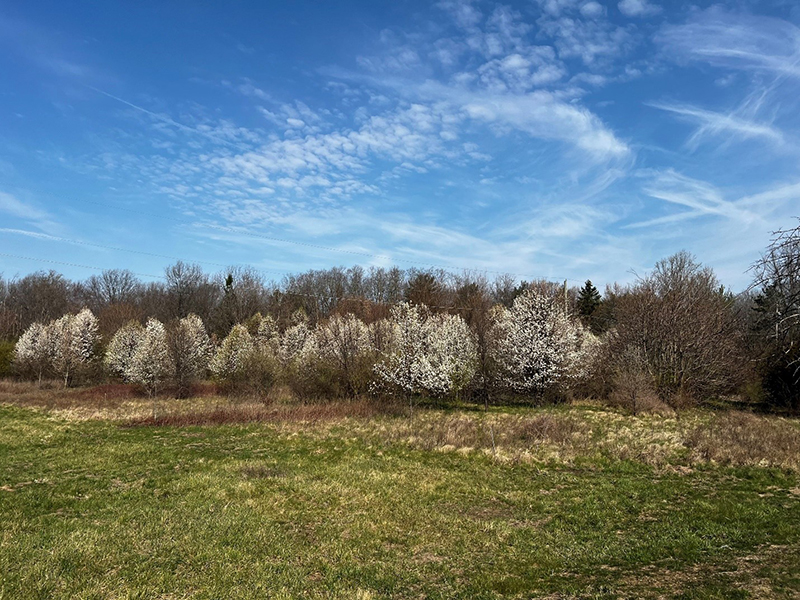 Purdue Landscape Report: Most people these days have, at the very least, heard of Callery and Bradford pear trees and know something about the invasiveness of this ornamental street tree. But I still get questions about what it is and why it’s so bad. So, I’d like to offer a little history of this infamous tree. Where did it come from, why is it so popular, why is it such an awful tree to plant, and some suggestions for better species to plant in its place.
Pyrus calleryana, the Callery pear (Fig. 1), was originally introduced from Asia to the United States in 1908. This was done in an attempt to breed pear trees that were resistant to fire blight, a bacterial disease that can spread rapidly causing leaves and branches to blacken as if burnt by fire, eventually resulting in death. Along with its resistance, the Callery pear was tested as a rootstock for the edible European pear (Pyrus communis) and its vigor in growth.
Callery Pear grows to a height of 30 to 50 feet with a spread up to 30 feet wide. Thick leaves grow alternately, are dark green, grow with sharp spurs along branches, and turn reddish-purple in the fall. They are one of the first trees to bloom and begin to grow in the spring and one of the last to drop their leaves in the fall. They produce a beautiful show of white flowers in the spring that have an unfortunate odor and an abundance of small fruits in the fall that are spread by birds and other wildlife. In fact, invasive European Starlings are one of the primary species that feed on and spread the fruits and seeds. Stems are smooth with light-colored lenticels while more mature stems are light to medium grey with fissures along the bark. Branching is usually upright in structure leading to poor branch unions that are weak and prone to failure. They grow quickly and tolerate a wide variety of planting locations and conditions, which led to the widespread use as both street and ornamental trees in urban plantings.
The Bradford pear tree is a variety of Callery pear cultivated in the early 1950s as a sterile tree without sharp spurs. Unfortunately, it cross-pollinated with other varieties leading to the rapid spread and out-competing of native species that we see in fields, along roadsides, and in forests today (Figs. 2 & 3). As awareness of the environmental issues of Callery pear spreads, local and state governments are working on removing them from the landscape. It is often joked that pruning these trees is extremely simple, involving a single cut at the base of the tree.
Due to the extensive use of these trees over the past 7 decades though, removals can lead to a large loss of existing canopy, especially with mature trees. This loss is worth negating the ecological damage they cause and with patience can be replaced with more appropriate species. Suggestions include serviceberry (Amelanchier laevis), flowering dogwood (Cornus florida), redbud (Cercis canadensis), and crabapple (Malus sylvestris).
For more information on invasive pear trees or on how to remove them see the links below.
To view this full article and other Purdue Landscape Report articles, please visit: Invasive Bradford/Callery Pear: Why it is so detrimental and what to plant instead.
Subscribe and receive the newsletter: Purdue Landscape Report.
Resources:
ID That Tree: Invasive Callery Pear, Purdue Extension – Forestry and Natural Resources (FNR) YouTube Channel
The Rise and Fall of the Ornamental Callery Pear Tree, Arboretum of Harvard University
Find an Arborist video, Trees are Good-International Society of Arboriculture (ISA)
ID That Tree, Playlist, Purdue Extension – FNR YouTube Channel (Invasive White Mulberry, Siberian Elm, Tree of Heaven)
Invasive Species Playlist, Playlist, Purdue Extension – FNR YouTube Channel (Asian Bush Honeysuckle, Burning Bush, Callery Pear, Multiflora rose)
A Woodland Management Moment, Playlist, Purdue Extension – FNR YouTube Channel (Against Invasives, Garlic Mustard, Autumn Olive)
Woodland Stewardship for Landowners, Playlist, Purdue Extension – FNR YouTube Channel (Common Buckthorn, Japanese Barberry)
Report Invasive Species, Purdue Invasive Species
The GLEDN Phone App – Great Lakes Early Detection Network
EDDMaps – Early Detection and Distribution Mapping System (Report Invasives)
How long do seeds of the invasive tree, Ailanthus altissima remain viable? (Invasive Tree of Heaven), USDA Forest Service
Indiana Department of Natural Resources: Invasive Species
Indiana Invasive Species Council
Cooperative Invasive Species Management Area (CISMA)
Aquatic Invasive Species, Illinois-Indiana Sea Grant (IISG)
Episode 11 – Exploring the challenges of Invasive Species, Habitat University-Natural Resource University
What are invasive species and why should I care?, Got Nature? Blog, Purdue Extension – FNR
Trees and Storms – The Education Store, Purdue Education’s resource center
Planting Your Tree, video, The Education Store
Tree Installation, The Education Store
Subscribe – Purdue Extension-FNR YouTube Channel
Ben McCallister, Urban Forestry Specialist
Purdue Forestry & Natural Resources

Recent Posts
- It’s Timberdoodle Time!
Posted: April 3, 2026 in Got Nature for Kids, How To, Wildlife - Keep An Eye Out for Hammerhead Worms, Purdue Landscape Report
Posted: April 2, 2026 in Invasive Animal Species, Wildlife, Woodlands - When is the Peak Migration For Hummingbirds and How Can You Attract Them?
Posted: in How To, Wildlife - ID That Tree Featured in National Woodland Owners Association Newsletter
Posted: April 1, 2026 in Urban Forestry, Wildlife, Woodlands - New 2026 Indiana Woodland Steward Newsletter
Posted: March 30, 2026 in Urban Forestry, Wildlife, Woodlands - A Woodland Management Moment: Why Aspect Matters
Posted: in Urban Forestry, Woodland Management Moment, Woodlands - 2026 Winter Bat Survey In Progress, MyDNR
Posted: March 27, 2026 in How To, Wildlife - Fast-Growing Trees for the Landscape, Purdue Landscape Report
Posted: March 26, 2026 in Forestry, Urban Forestry, Woodlands - Urban Tree Spotlight: Planting Deciduous Shade Trees, Purdue Landscape Report
Posted: March 25, 2026 in Forests and Street Trees, Urban Forestry, Woodlands - Beetle that attacks Tree-of-Heaven found in Indiana, Purdue Landscape Report
Posted: March 20, 2026 in Invasive Insects, Wildlife, Woodlands
Archives
Categories
- Alert
- Aquaculture/Fish
- Aquatic/Aquaculture Resources
- Ask the Expert
- Christmas Trees
- Community Development
- Disease
- Drought
- Forestry
- Forests and Street Trees
- Gardening
- Got Nature for Kids
- Great Lakes
- How To
- Invasive Animal Species
- Invasive Insects
- Invasive Plant Species
- Land Use
- Natural Resource Planning
- Nature of Teaching
- Plants
- Podcasts
- Ponds
- Publication
- Safety
- Spiders
- Timber Marketing
- Uncategorized
- Urban Forestry
- Webinar
- Wildlife
- Wood Products/Manufacturing
- Woodland Management Moment
- Woodlands