 Purdue University - Extension - Forestry and Natural Resources
Got Nature? Blog
Purdue Landscape Report: A new invasive insect of concern has been identified in the state of Georgia. In August of 2023, Georgia’s Department of Agriculture, along with the USDA, confirmed the presence of the yellow-legged hornet, Vespa velutina, outside of the city of Savannah. To date, this is the only confirmed identification of this insect in the United States; it has already established in Europe, the Middle East, and parts of Asia outside of its native range. V. velutina is a native of the subtropical and tropical regions of southeast Asia, and it is not yet clear how it arrived in North America. Much like the northern giant hornet, previously known as the Asian giant hornet or ‘murder hornet’, this insect will attack honeybee hives in search of food and represents a potential danger to the beekeeping industry.
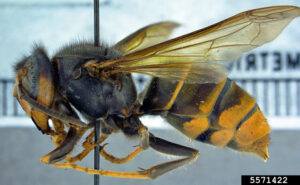
Figure 1. Yellow-Leg Hornet. Image Credit: Allan Smith-Pardo, Invasive Hornets, USDA APHIS PPQ, Bugwood.org
Yellow-legged hornets are predators and will regularly attack honeybees to provide food for their young, though it is possible they could attack other, similar species. Since honeybees concentrate their numbers in hives with a lot of in-and-out traffic, they provide an excellent opportunity for the hornets to hunt and provide food for their young. The hornets are effectively ambush predators, waiting in front of hive entrances and capturing workers with their legs as they leave the hive. The hornets then dismember the bees, returning to their young with only the thorax, which contains the largest amount of protein. However, it is believed that yellow-legged hornets only represent a lethal threat to weaker hives that are already experiencing problems; it is also too early to tell how already-existing honeybee issues, such as mite and disease issues, will interact with the presence of this insect.
The yellow-legged hornet, much like other members of Order Hymenoptera, is a social insect. They create oval or egg-shaped nests in trees that can house as many as 6,000 individuals. Colonies are composed of a foundress and her young, who become the workers within the colony. Female hornets will overwinter within tree hollows, leaf litter, or other environmentally stable locations, and once spring arrives, they start their own colony and give birth to new workers who care for young and hunt.
As with any new invasive species, it is critical to successful identify it and differentiate it from other species of wasps and hornets that we experience in the Midwest. At a glance, the yellow-legged hornet is barely discernable from European hornets, yellowjackets, and similar insects; they possess aerodynamic shapes with heavy yellow and black color patterns like many of their cousins. The most easily identified trait is their namesake: the legs of this insect tend to be black closer to the body, with the lower half of the leg bright yellow. The segments of the abdomen follow a similar pattern, with those segments closer to the center of the body being dominated by black, steadily becoming more yellow as you reach the tip of the abdomen. The yellow-legged hornet is also approximately an inch in length, with reproductive individuals sometimes reaching an inch and a half.
While remaining observant will be critical to reporting any invasive species, there are a few things to keep in mind about the yellow-legged hornet. This insect has only been found in one location in Georgia; no other states have any sightings or confirmed reports of this insect. There is also no evidence the insect has established a population in Georgia, there is only one confirmed sighting. The best course of action for now is to be vigilant and report any potential sightings by calling 1-866-NOEXOTIC, or you can contact our local Purdue Extension educator for assistance.
To view this full article and other Purdue Landscape Report articles, please visit Purdue Landscape Report.
Subscribe and receive the newsletter: Purdue Landscape Report Newsletter.
Resources:
Invasive Species, Playlist, Purdue Extension – FNR YouTube Channel
Report Invasive Species, Purdue Invasive Species
What are invasive species and why should I care?, Got Nature? Blog, Purdue Extension – Forestry and Natural Resources
Pest Management, The Education Store
Protecting Pollinators: Why Should We Care About Pollinators?, The Education Store, Purdue Extension resource center
Ask The Expert: What’s Buzzing or Not Buzzing About Pollinators , Purdue Extension – Forestry & Natural Resources (FNR) YouTube Channel
Purdue Pollinator Protection publication series, Purdue Extension Entomology
Subscribe Purdue Extension-Forestry and Natural Resources YouTube Channel
Bob Bruner, Exotic Forest Pest Educator
Purdue Entomology
Tom Creswell, Plant & Pest Diagnostic Laboratory Director
Purdue Botany and Plant Pathology
Cliff Sadof, Professor, Ornamental, Pest Management
Purdue Entomology Extension Coordinator

Figure 1. By the time all pine leaves are yellow, it is too late to save a tree.
Purdue Landscape Report: Trees stressed by prolonged drought are more subject to attack by boring insects. This article provides tips and a video link on how to manage pines for borers.
Record breaking heat and sporadic rainfall during July of 2023 took their toll on landscape trees. Cone bearing evergreens, like white pines, are especially susceptible to drought and flooding. These environmental stresses reduce the ability of trees to defend themselves against boring insects. To make matters even worse, insect borers use their keen sense of smell to guide them to these stressed trees. Trees often take several years to recover from drought. Monitoring trees for early signs of decline is critical to a successful management program.
Early intervention can help you keep infested trees from becoming a breeding ground for borers that can destroy an entire planting. Trees that are more than half dead, or those whose needles are mostly yellow are usually too damaged to save. Removing these trees in late fall and winter removes the reproducing borers from the landscape before borers they can emerge to attack healthy trees. As an extra protective measure, insecticides can be applied on to the trunk to kill boring insects chewing into or out of the trees. Apparently healthy trees located near borer-infested trees can also benefit from a soil applied insecticides, like imidacloprid or dinotefuran applied in fall and early spring.

Figure 2. Fine powdery sawdust left by bark beetles and fine shavings of sawyer beetles are signs that a tree may already be too damaged to save.
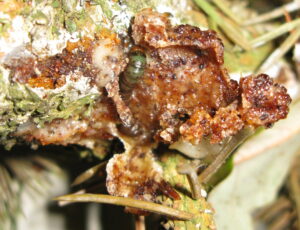
Figure 3. Zimmerman pine moth caterpillar in wound.
Zimmerman pine moth (ZPM)commonly attacks pine trees in late July. Adult female moths lay eggs at the junction of tree branches and the trunk and winters in cracks and crevices. In early spring, when forsythia bloom, larvae bore inside the trunk and can girdle and kill branches and trees leaders. These are the two times of year that this borer is most susceptible to insecticides. Note soil applied imidacloprid is not particularly effective against ZPM. Spruces and most pines are susceptible to this borer.
To view this full article and other Purdue Landscape Report articles, please visit Purdue Landscape Report.
Subscribe and receive the newsletter: Purdue Landscape Report Newsletter.
Resources:
Borers of Pines and Other Needle Bearing Evergreens in Landscapes, The Education Store
Normal Needle Drop: Even Healthy Evergreens are not Evergreen, Purdue Landscape Report
White Pine Decline in Indiana
Tree Defect Identification, The Education Store
Tree wounds and healing, Got Nature? Blog
Tree Risk Management, The Education Store
Why Is My Tree Dying?, The Education Store
Managing the Zimmerman Pine Moth, The Education Store
The Woody Plant Seed Manual, U.S. Forest Service
Native Trees of the Midwest, Purdue University Press
Investing in Indiana Woodlands, The Education Store
Forest Improvement Handbook, The Education Store
Find an Arborist, International Society of Arboriculture
Subscribe Purdue Extension-Forestry and Natural Resources YouTube Channel
Cliff Sadof, Professor, Ornamental, Pest Management
Purdue Entomology Extension Coordinator
Purdue Landscape Report: Stop me if you’ve heard this one…. A tree is in a slow decline year after year. You are called to your client’s property only to find the root flare well below grade.
Most professionals in the Green Industry have encountered this at some point in their career. The most common reason for the slow decline of trees in the landscape is due to the depth of planting and girdling roots. Deep planting can cause a number of deleterious problems, including an increase in circling/girdling roots restricting vascular tissue and decay of protective bark (Fig. 1). The vascular tissue in the bark is located on the outer portions of the trunk, while the anatomy of roots contains the vascular tissue in the center. This is why roots can graft with roots and stems can graft with stems, but also why roots can girdle the stems of trees (Fig. 2)
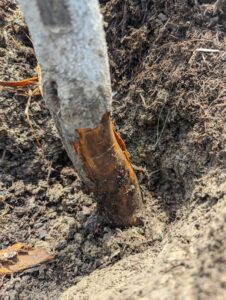
Figure 1. A tree that’s planted too deep can have bark decay from too much soil moisture around the trunk.
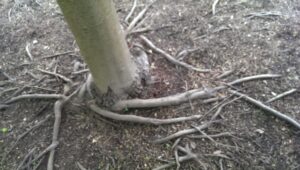
Figure 2. Root girdling can occur on trees that didn’t have a root correction during transplanting and/or being planted too deep. Restriction of vascular tissue in the trunk will decrease the amount of water and nutrients taken up by the tree.
Excessive mounding of mulch (aka volcano mulch) (Fig. 3) can contribute to tree decline, very similar to a tree planted too deep. It’s important to remember that keeping mulch several inches away from the trunk is imperative in tree health.
If a newly transplanted tree is planted significantly too deep, a faster decline can occur, especially in plants that can’t tolerate ‘wet feet’ (aka too much soil moisture) (Fig.4). In heavy-clay soils, the negative effects on tree health increase by creating a bath-tub situation by water not draining expeditiously after a rainfall or irrigation event.
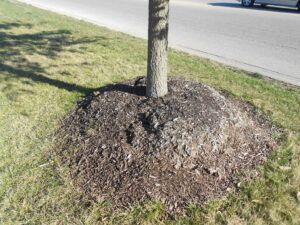
Figure 3. Volcano mulch can cause the same problems that a tree planted too deep can experience.
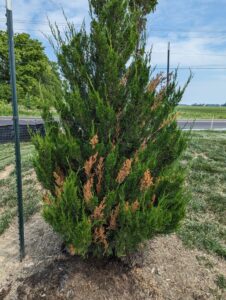
Figure 4. Decline of this juniper is caused by this tree being planted too deep.
To view this full article and other Purdue Landscape Report articles, please visit Purdue Landscape Report.
Subscribe and receive the newsletter: Purdue Landscape Report Newsletter.
Resources:
The Purdue Landscape Report
Planting Your Tree Part 1: Choosing Your Tree, Purdue Extension YouTube Channel
Summer Tree Care, Purdue Landscape Report
Tree Defect Identification, The Education Store
Tree Wound and Healing, Got Nature? Blog, Purdue Extension – Forestry and Natural Resources
Surface Root Syndrome, The Education Store
Shrubs and Woody Vines of Indiana and the Midwest, The Education Store
Ask an Expert: Tree Selection and Planting, Purdue Extension-Forestry & Natural Resources (FNR) YouTube playlist
ID That Tree, Purdue Extension-FNR YouTube playlist
Subscribe – Purdue Extension-FNR YouTube Channel
Kyle Daniel, Commercial Landscape and Nursery Crops Extension Specialist
Purdue Horticulture & Landscape Architecture
In this episode of ID That Tree, Purdue Extension forester Lenny Farlee introduces the Black Spruce. This species is found in bogs, wetlands, and sometimes dry sites within the North Woods of Upper Michigan and Wisconsin. Black Spruce has a bluish cast to the newest needle growth. It has single needles attached to the twigs that are typically less than an inch long. The twigs have a reddish brown cast. This tree also has small cones that are somewhat egg shaped.
If you have any questions regarding wildlife, trees, forest management, wood products, natural resource planning or other natural resource topics, feel free to contact us by using our Ask an Expert web page.
Resources:
ID That Tree, Playlist, Purdue Extension – Forestry and Natural Resources (FNR) YouTube Channel (Invasive White Mulberry, Siberian Elm, Tree of Heaven)
Invasive Species Playlist, Playlist, Purdue Extension – FNR YouTube Channel (Asian Bush Honeysuckle, Burning Bush, Callery Pear, Multiflora rose)
A Woodland Management Moment, Playlist, Purdue Extension – FNR YouTube Channel (Against Invasives, Garlic Mustard, Autumn Olive)
Woodland Stewardship for Landowners, Playlist, Purdue Extension – FNR YouTube Channel (Common Buckthorn, Japanese Barberry)
Report Invasive Species, Purdue Invasive Species
The GLEDN Phone App – Great Lakes Early Detection Network
EDDMaps – Early Detection and Distribution Mapping System
How long do seeds of the invasive tree, Ailanthus altissima remain viable? (Invasive Tree of Heaven), USDA Forest Service
Indiana Department of Natural Resources: Invasive Species
Indiana Invasive Species Council
Cooperative Invasive Species Management Area (CISMA)
Aquatic Invasive Species, Illinois-Indiana Sea Grant (IISG)
Episode 11 – Exploring the challenges of Invasive Species, Habitat University-Natural Resource University
What are invasive species and why should I care?, Got Nature? Blog, Purdue Extension – FNR
Shrubs and Woody Vines of Indiana and the Midwest, The Education Store, Purdue Extension Resource Center
Native Trees of the Midwest, The Education Store
Investing in Indiana Woodlands, The Education Store
Forest Improvement Handbook, The Education Store
Lenny Farlee, Extension Forester
Hardwood Tree Improvement and Regeneration Center
Purdue Department of Forestry & Natural Resources
In this episode of ID That Tree, Purdue Extension forester Lenny Farlee introduces the Quaking Aspen. This species is found in the North Woods of Northern Wisconsin, Northern Indiana, and the Upper Peninsula of Michigan. This species has simple, alternately arranged leaves. The stems are flat which allow them to quake or tremble in the wind. The stems on this species are relatively stout and have a chalky white color.
If you have any questions regarding wildlife, trees, forest management, wood products, natural resource planning or other natural resource topics, feel free to contact us by using our Ask an Expert web page.
Resources:
ID That Tree, Playlist, Purdue Extension – Forestry and Natural Resources (FNR) YouTube Channel (Invasive White Mulberry, Siberian Elm, Tree of Heaven)
Quaking Aspen, Native Trees of Indiana River Walk, Purdue Fort Wayne
Invasive Species Playlist, Playlist, Purdue Extension – FNR YouTube Channel (Asian Bush Honeysuckle, Burning Bush, Callery Pear, Multiflora rose)
A Woodland Management Moment, Playlist, Purdue Extension – FNR YouTube Channel (Against Invasives, Garlic Mustard, Autumn Olive)
Woodland Stewardship for Landowners, Playlist, Purdue Extension – FNR YouTube Channel (Common Buckthorn, Japanese Barberry)
Report Invasive Species, Purdue Invasive Species
The GLEDN Phone App – Great Lakes Early Detection Network
EDDMaps – Early Detection and Distribution Mapping System
How long do seeds of the invasive tree, Ailanthus altissima remain viable? (Invasive Tree of Heaven), USDA Forest Service
Indiana Department of Natural Resources: Invasive Species
Indiana Invasive Species Council
Cooperative Invasive Species Management Area (CISMA)
Aquatic Invasive Species, Illinois-Indiana Sea Grant (IISG)
Episode 11 – Exploring the challenges of Invasive Species, Habitat University-Natural Resource University
What are invasive species and why should I care?, Got Nature? Blog, Purdue Extension – FNR
Shrubs and Woody Vines of Indiana and the Midwest, The Education Store, Purdue Extension Resource Center
Native Trees of the Midwest, The Education Store
Investing in Indiana Woodlands, The Education Store
Forest Improvement Handbook, The Education Store
Lenny Farlee, Extension Forester
Hardwood Tree Improvement and Regeneration Center
Purdue Department of Forestry & Natural Resources
Purdue Landscape Report: Despite the sublime name, tree-of-heaven, Ailanthus altissima, is a particularly bad actor when it comes to trees encountered in the Midwest. This native of Asia was introduced to North America more than 150 years ago and has since become a widespread invasive pest. Rapid growth, extremely high seed production (hundreds of thousands from a mature female tree), and root sprouting that can turn one tree into dozens makes this a formidable competitor with our native plants. Tree-of-Heaven can sprout and grow almost anywhere, including cracks in streets and sidewalks or building foundations, resulting in infrastructure damage and increased costs of maintenance. It is also the preferred host for a new and destructive invasive insect pest, the spotted lantern fly.
Reducing tree-of-heaven numbers on the landscape is a worthy goal, but can be a difficult task. Seed is windblown and can disperse for hundreds of yards or further, producing new populations. Tree-of-heaven will produce dozens of root sprouts if the stem is cut or girdled, even when herbicides are applied to the cuts. Both seedlings and root sprouts can grow rapidly, outpacing the native trees. However, there are effective control methods and even a potential biological control agent, a native wilt fungus, on the horizon. If you have tree-of-heaven or know of those who do, here are some methods to control this invasive tree.
Young seedlings and sprouts may be controlled with foliar applications of herbicides containing glyphosate during the summer growing season. Apply the herbicide and water mixture according to label directions, covering the entire leaf area. Pulling seedlings is an option, but any root fragments left in the soil may produce new sprouts.
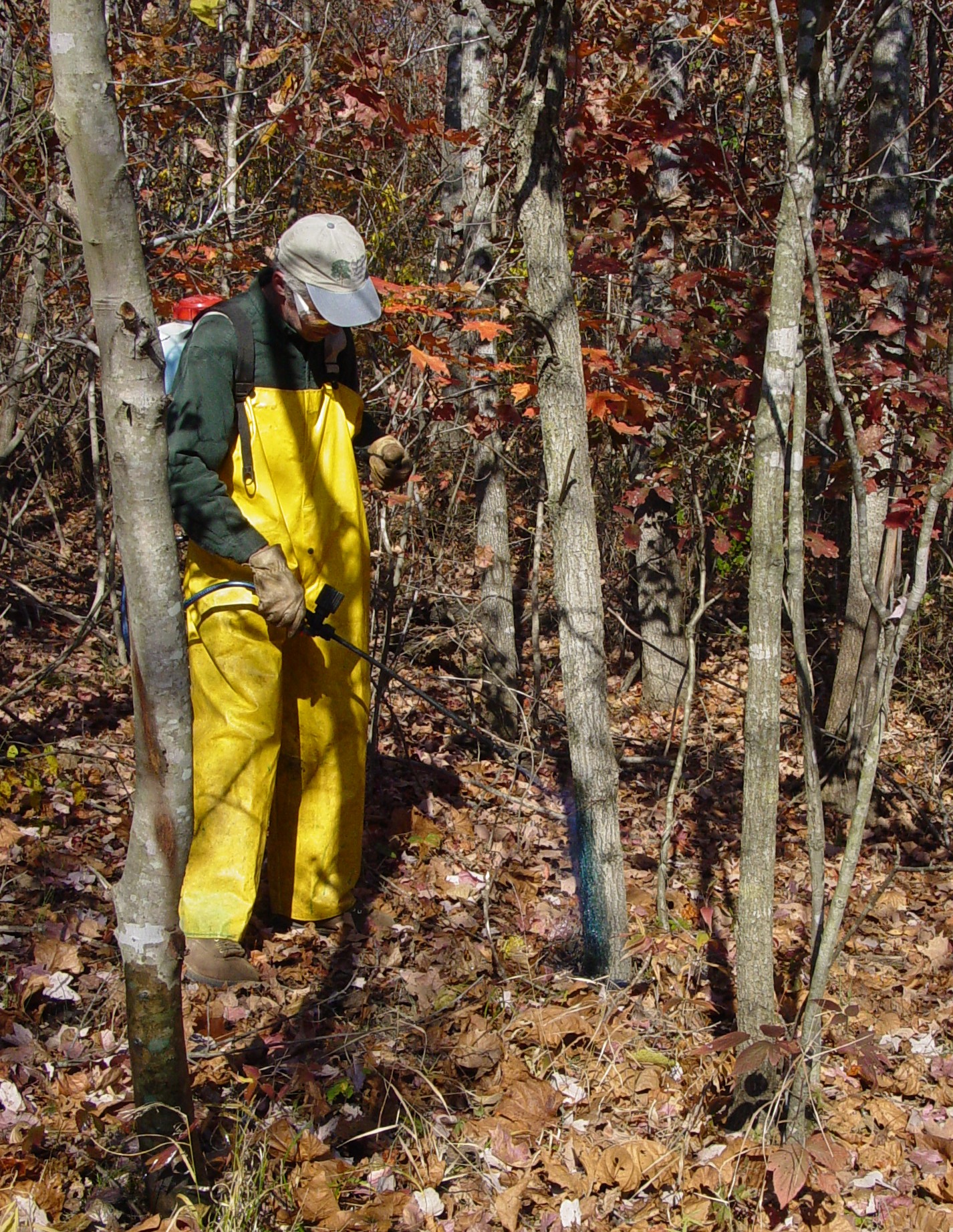
Larger tree-of-heaven too tall for foliar spray may be controlled with a couple of other techniques. The basal bark technique applies an herbicide and oil mixture to the lower 15-18 inches of the stem of the tree. The oil carries the herbicide into the tree stem and kills the tree while also limiting the amount of root sprouting. This method is recommended for stems up to 6 inches in diameter, but larger stems have been controlled effectively with this approach. The best seasons for application are summer to winter, but avoid days where temperature is over 85 degrees F as the herbicide and oil mix can volatilize and damage non-target plants. Also discontinue applications if stems are wet or when snow cover is present. Recommended herbicides are the triclopyr ester herbicides and a commercially available basal oil mixed in a ratio of 20% herbicide and 80% oil.
Trees three or more inches in diameter may also be controlled using the “hack and squirt” method, also referred to as the injection method in some cases. A narrow cutting tool like a shingle hatchet is used to make 45 degree angled cuts through the bark of the tree around the circumference, with equal-sized uncut spaces between the cuts. Herbicides like glyphosate or triclopyr amine formulations are applied as directed on the label into the pockets created by the cuts. This treatment results in very few root sprouts as compared to cutting down or girdling the tree. The number of cuts should approximately equal the diameter of the tree in inches, and be sure to leave the uncut spaces between the cuts.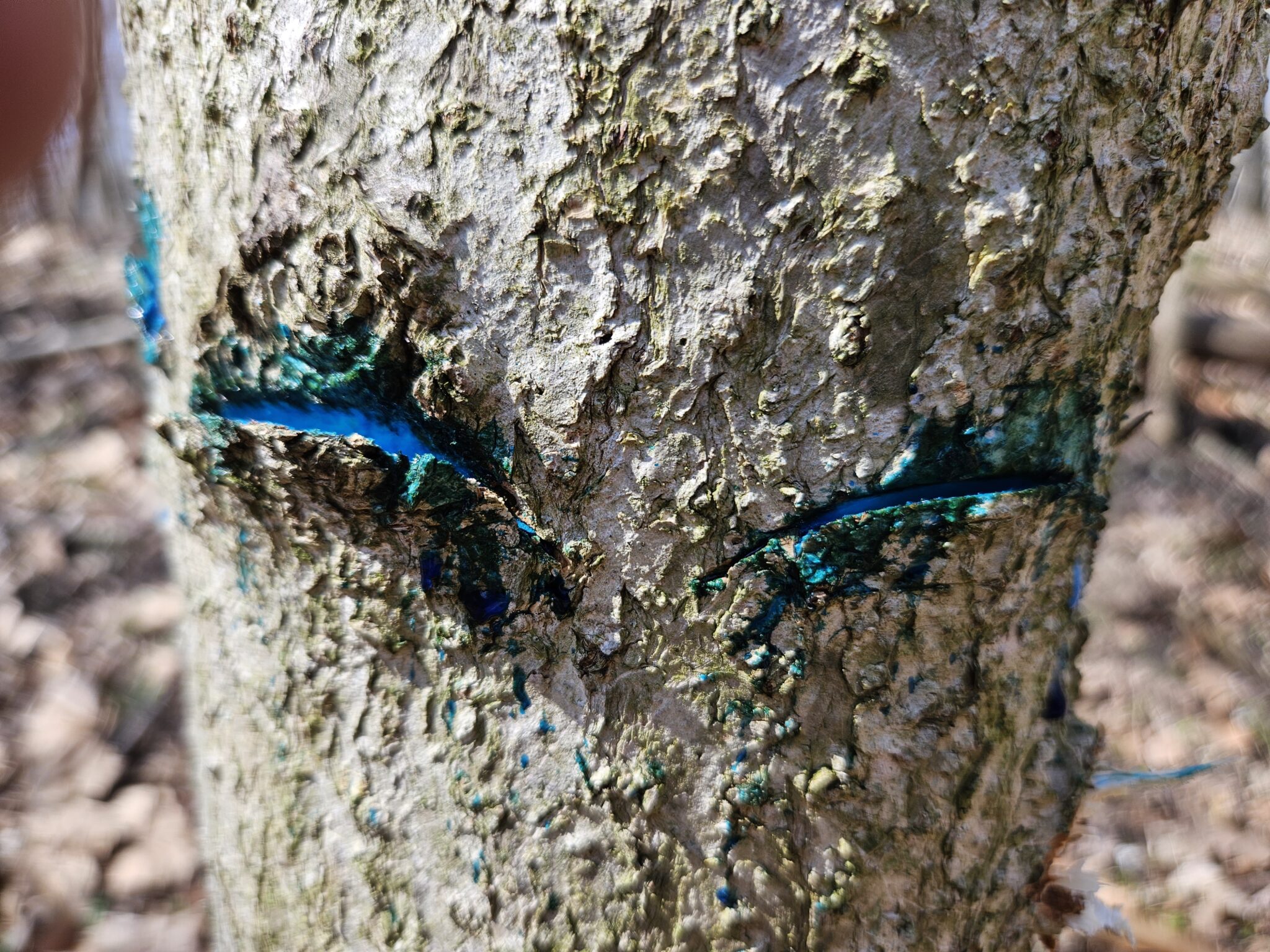
If the tree stems need to come down for safety or other reasons, apply the basal bark or hack and squirt treatments and wait approximately 30 days before cutting down the stem. This should allow time for the herbicide to impact the root system and limit the amount of root sprouting.
Work safely for yourself and the environment by reading and following the herbicide label, wearing the required personal protective gear, and working carefully with cutting tools.
To view this full article and other Purdue Landscape Report articles, please visit Purdue Landscape Report.
Subscribe and receive the newsletter: Purdue Landscape Report Newsletter.
Resources:
ID That Tree: Invasive Tree of Heaven, Purdue Extension – Forestry and Natural Resource (FNR) YouTube Channel
Control & Management — State of Indiana Cooperative Invasives Management (sicim.info)
Invasive Plant Control Database (wisc.edu)
Invasive Species, Playlist, Purdue Extension – FNR YouTube Channel
Report Invasive Species, Purdue Invasive Species
A Woodland Management Moment, Playlist, Purdue Extension – FNR Youtube Channel
Conservation Tree Planting: Steps to Success, Purdue Extension – FNR Youtube Channel
Forest Improvement Handbook, The Education Store
Tree Risk Management – The Education Store, Purdue Extension’s resource center
Investing in Indiana Woodlands, The Education Store
Woodland Invaders, Got Nature? Blog, Purdue Extension – FNR
Indiana Department of Natural Resources: Invasive Species
Invasive Plant Species Identification, Video, Purdue Extension – FNR Youtube Channel
Lenny Farlee, Sustaining Hardwood Extension Specialist
Purdue University Department of Forestry and Natural Resources
Starting in 2019, sassafras trees began wilting and dying in southern Indiana. It was originally thought that laurel wilt, a deadly disease in the southeastern U.S., had made its way to Indiana. However, neither the fungus responsible for causing laurel wilt nor its beetle vector were recovered from wilting trees at the time. A potentially novel fungus was recovered, as well as two invasive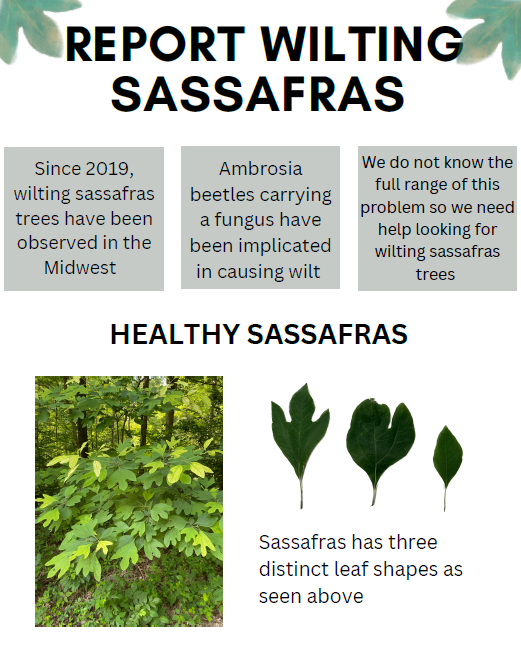 ambrosia beetle species. Invasive insects, particularly bark and ambrosia beetles are well-known carriers of devastating disease-causing fungi. Dutch elm disease is one of the most famous examples of a beetle-transmitted disease.
Sassafras trees are an important understory tree that aids in nutrient cycling and are important food sources for deer and rabbit populations in the winter months. They are also important to native butterfly populations like the Swallowtail butterfly, that uses sassafras as a host. At this time, we do not know what is killing our native sassafras trees or the range of impacted trees. This is a problem because if we do not know what is causing wilt or where trees are wilting, then we cannot work to identify ways to protect our native sassafras trees.
We need more help in identifying locations of wilting sassafras trees. We anticipate trees to start wilting towards the end of the summer, from late July through September. If you see any wilting or dying sassafras trees, please email sassafras.wilt@gmail.com to report it. You can also use the QR code on the bottom of the attached handout.
To learn more see the attached Sassafras Wilt Report Flyer.
Resources:
Report Invasive Species, Purdue Invasive Species
ID That Tree: Sassafras
ID That Tree: Sassafras Spring Bloom Edition
Morton Arboretum: Sassafras
Sassafras, Purdue Fort Wayne Native Trees of Indiana River Walk
ID That Tree Spring Bloom Editions, Got Nature Blog
Hardwood Lumber and Veneer Series: Sassafras, The Education Store
Purdue Arboretum Explorer
The Woody Plant Seed Manual, U.S. Forest Service
Native Trees of the Midwest, The Education Store
Shrubs and Woody Vines of Indiana and the Midwest, The Education Store
Investing in Indiana Woodlands, The Education Store
Forest Improvement Handbook, The Education Store
ID That Tree, Purdue Extension-Forestry & Natural Resources (FNR) YouTube playlist
Woodland Management Moment , Purdue Extension-FNR YouTube playlist
Olivia Bigham, Graduate Student
Purdue Forestry and Natural Resources & Hardwood Tree Improvement & Regeneration Center (HTIRC)
Matt Ginzel, Associate Professor
Purdue Forestry and Natural Resources & Department of Entomology
In this episode of ID That Tree, Purdue Extension forester Lenny Farlee introduces the Chokecherry. This species is found in the North Woods of Northern Wisconsin and the Upper Peninsula of Michigan as well as natively in Indiana in small/medium shrub form. This species has alternately held broad leaves with finely toothed margins, and has short leaf stalks. The stems are a light to medium gray color and have prominent lenticels scattered along them.
If you have any questions regarding wildlife, trees, forest management, wood products, natural resource planning or other natural resource topics, feel free to contact us by using our Ask an Expert web page.
Resources:
ID That Tree, Playlist, Purdue Extension – Forestry and Natural Resources YouTube Channel (Invasive White Mulberry, Siberian Elm, Tree of Heaven)
Invasive Species Playlist, Playlist, Purdue Extension – FNR YouTube Channel (Asian Bush Honeysuckle, Burning Bush, Callery Pear, Multiflora rose)
A Woodland Management Moment, Playlist, Purdue Extension – FNR YouTube Channel (Against Invasives, Garlic Mustard, Autumn Olive)
Woodland Stewardship for Landowners, Playlist, Purdue Extension – FNR YouTube Channel (Common Buckthorn, Japanese Barberry)
Report Invasive Species, Purdue Invasive Species
The GLEDN Phone App – Great Lakes Early Detection Network
EDDMaps – Early Detection and Distribution Mapping System
How long do seeds of the invasive tree, Ailanthus altissima remain viable? (Invasive Tree of Heaven), USDA Forest Service
Indiana Department of Natural Resources: Invasive Species
Indiana Invasive Species Council
Cooperative Invasive Species Management Area (CISMA)
Aquatic Invasive Species, Illinois-Indiana Sea Grant (IISG)
Episode 11 – Exploring the challenges of Invasive Species, Habitat University-Natural Resource University
What are invasive species and why should I care?, Got Nature? Blog, Purdue Extension – FNR
Shrubs and Woody Vines of Indiana and the Midwest, The Education Store, Purdue Extension Resource Center
Native Trees of the Midwest, The Education Store
Investing in Indiana Woodlands, The Education Store
Forest Improvement Handbook, The Education Store
Lenny Farlee, Extension Forester
Hardwood Tree Improvement and Regeneration Center
Purdue Department of Forestry & Natural Resources
Drones can be used to assess crop health, monitor livestock, disperse cover crop seed, optimize natural resources, for public safety, and much more. Purdue Extension’s UAV pilots are flying fields, forests, and urban areas through Indiana to help farmers, land and business owners, and government officials turn images into insights. Purdue Extension’s personnel are learning how to help farmers and agricultural professionals more easily analyze and apply data from UAVs or drones.
This publication titled Unmanned Aerial Vehicles: Checklist for Drones Flying in Indiana by Purdue Extension educators explains the steps required to legally fly a UAV or UAS in Indiana.

To legally fly an unmanned aerial vehicle (UAV) or unmanned aerial system (UAS), several steps must be taken. This document provides checklists to assist you in that process. The primary regulatory agency for UAVs is the Federal Aviation Administration (FAA). FAA puts drones in three main categories: 0.55 pounds or less, greater than 0.55 pounds to 55 pounds, and more than 55 pounds. The regulation and registration of drones varies, depending sometimes on usage but mostly on weight.
To receive the free download visit the Purdue Extension’s resource center: The Education Store – Unmanned Aerial Vehicles: Checklist for Drones Flying in Indiana.
For more information regarding Purdue Extension and Purdue Agriculture’s outreach through the agricultural use of unmanned aerial vehicles (UAVs) view Purdue Extension-UAV.
Resources:
Integrated Digital Forestry Initiative (iDiF)
Creating a Wildlife Habitat Management Plan for Landowners, The Education Store
Purdue Extension Pond and Wildlife Management Website, Purdue Extension
Timber Harvesting and Logging Practices for Private Woodlands, The Education Store, Purdue Extension’s resource center
Investing in Indiana Woodlands, The Education Store
Woodland Wildlife Management, The Education Store
ID That Tree, Playlist, Purdue Extension – Forestry & Natural Resources (FNR) YouTube Channel
Woodland Stewardship for Landowners Video Series, Playlist, Purdue Extension – FNR YouTube Channel
Frost Seeding Native Grasses and Forbs with a Drone (UAV): Lessons Learned, Purdue Extension Forestry & Natural Resources
A New Drone Supports Pollinator Efforts, Purdue Extension Forestry & Natural Resources
Nikky Witkowski, Agriculture and Natural Resources
Extension Educator, Purdue University
Mark Carter, Agriculture and Natural Resources
Extension Educator, Purdue University
Alex Helms, Assistant Director,
Purdue Agricultural Centers
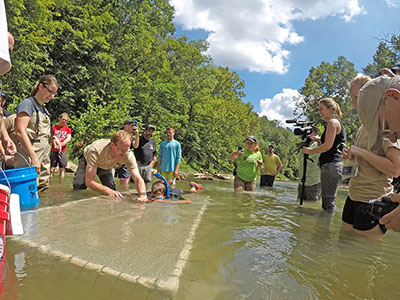
Biologists with the Indiana Department of Natural Resources (DNR) and Purdue University recently documented a very young hellbender salamander, a gilled larva, in the Blue River while conducting routine surveys in south-central Indiana. This discovery is significant because over the past three to four decades, only adult hellbenders have been documented in the Blue River. The presence of a young salamander suggests that conservation efforts and rearing programs are accomplishing their goals for the recovery of this endangered species.
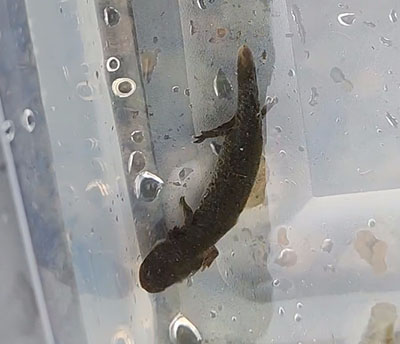
The hellbender (Cryptobranchus alleganiensis) is a large, fully aquatic salamander. Hellbenders do not reach sexual maturity until they are 7-8 years old and require specific habitats to thrive and reproduce. Their decline statewide has been documented as far back as the early-to-mid 1900s as a result of habitat loss and poor water quality. Hellbenders play an important role in aquatic ecosystems and are indicators of clean water.
“Finding hellbender larvae is a huge benchmark of the program’s success,” said DNR’s Nate Engbrecht, the state herpetologist. “It tells us that there has been successful breeding, hatching, and recruitment in the wild. It’s a wonderful sign that captive-reared and released hellbenders are doing what we want them to do at this site.”
The hellbender found by Engbrecht and Purdue hellbender program coordinator Nick Burgmeier was a gilled larva measuring 6.5 centimeters in total length with a 5 centimeter snout-vent length. Based on its size, this animal is estimated to be eight months old.
While hellbender larvae may have been found by fisherman while seining over the years, none have been officially reported to the state herpetologist or to fisheries biologists of the Indiana DNR. The last documented juvenile was reported by William H. Kern Jr. in 1983.
In the event anglers accidentally hook a hellbender, they are reminded to cut the line, let the salamander go unharmed and report the sighting to a natural resource professional.
The importance of the larval sighting is that it shows that the Help the Hellbender partnership’s conservation efforts, breeding and rearing programs are trending in a positive direction.
“Our early research on the lack of reproduction and recruitment indicated it was most likely the result of low population numbers,” said Dr. Rod Williams, director of the Help the Hellbender lab at Purdue. “For the past 12 years, Purdue and zoo partners have worked tirelessly to rear and release animals back into the wild, increase population sizes, and ultimately the chance for natural breeding. This finding, the result of nearly two decades of collective effort, signifies a milestone for our conservation program. While we have much left to do, we have evidence our approach is working.”
The Indiana Hellbender Partnership is a collaboration between the Indiana DNR and Purdue University with funding support from the Indiana DNR Nongame Wildlife Fund, U.S. Fish & Wildlife Service, and partners in local governments, universities, non-governmental organizations, and zoos that are working to recover the state-endangered hellbender. Developed over 15 years, the Indiana Hellbender Partnership is the largest and most comprehensive group working to recover an imperiled amphibian in Indiana.
For full article please visit 2023 FNR News and Stories: Researchers Discover Young Hellbender in Blue River.
Resources:
Help the Hellbender website
Help the Hellbender Facebook page
Ask the Expert: Learn All About Hellbenders and Take a Tour, Subscribe Purdue Extension – Forestry & Natural Resources (FNR) YouTube Channel
Ask the Expert video: Help the Hellbender – Dr. Stephen Spear of The Wilds, Purdue Extension – FNR YouTube Channel
Ask the Expert video: Live with Mesker Park Zoo and Botanical Gardens – Hellbenders, Purdue Extension – FNR YouTube Channel
A Moment in the Wild video: Hellbender Hide, Purdue Extension – FNR YouTube Channel
A Moment in the Wild video: Release Moment of Hellbenders,
How Anglers and Paddlers Can Help the Hellbender video, Purdue Extension – FNR YouTube Channel
Eastern Hellbender ID Video, Purdue Extension – FNR YouTube Channel
Hellbenders Rock!, The Education Store, Purdue Extension’s resource center
Help the Hellbender, North America’s Giant Salamander, The Education Store
How Our Zoos Help Hellbenders, The Education Store
The Nature of Teaching: Adaptations for Aquatic Amphibians, The Education Store
Healthy Water, Happy Home – Lesson Plan, The Education Store
Purdue Expert: Hellbender Salamander, Purdue University News YouTube Channel
FNR Assists in First Natural Breeding of Eastern Hellbender in Captivity, Purdue FNR News & Stories
Helping the Hellbender: Mesker Park Zoo Begins Captive Breeding Efforts, Purdue Agriculture News
Indiana Department of Natural Resources (IN DNR)

Recent Posts
- ID That Tree: Sugarberry
Posted: December 12, 2025 in Forestry, Wildlife, Woodlands - Powering Rural Futures: Purdue’s Agrivoltaics Initiative for Sustainable Growth
Posted: December 9, 2025 in Community Development, Wildlife - Learn How to Control Reed Canarygrass
Posted: December 8, 2025 in Forestry, Invasive Plant Species, Wildlife - Benefits of a Real Christmas Tree, Hoosier Ag Today Podcast
Posted: December 5, 2025 in Christmas Trees, Forestry, Woodlands - Succession Planning Resource: Secure your Future
Posted: December 2, 2025 in Community Development, Land Use, Woodlands - A Woodland Management Moment: Butternut Disease and Breeding
Posted: December 1, 2025 in Forestry, Forests and Street Trees, Woodland Management Moment, Woodlands - Controlling Introduced Cool-Season Grasses
Posted: in Forestry, Invasive Plant Species, Wildlife - Red in Winter – What Are Those Red Fruits I See?
Posted: in Forestry, Plants, Urban Forestry, Wildlife, Woodlands - Managing Common and Cut Leaved Teasel
Posted: November 24, 2025 in Forestry, Invasive Plant Species, Wildlife - Extension Team Wins Family Forests Comprehensive Education Award
Posted: November 21, 2025 in Forestry, Urban Forestry, Wildlife, Woodlands
Archives
Categories
- Alert
- Aquaculture/Fish
- Aquatic/Aquaculture Resources
- Ask the Expert
- Christmas Trees
- Community Development
- Disease
- Drought
- Forestry
- Forests and Street Trees
- Gardening
- Got Nature for Kids
- Great Lakes
- How To
- Invasive Animal Species
- Invasive Insects
- Invasive Plant Species
- Land Use
- Natural Resource Planning
- Nature of Teaching
- Plants
- Podcasts
- Ponds
- Publication
- Safety
- Spiders
- Timber Marketing
- Uncategorized
- Urban Forestry
- Webinar
- Wildlife
- Wood Products/Manufacturing
- Woodland Management Moment
- Woodlands