 Purdue University - Extension - Forestry and Natural Resources
Got Nature? Blog
With spring comes planting of trees and shrubs along with questions of best practices to ensure success. This 20-page publication titled “Planting Forest Trees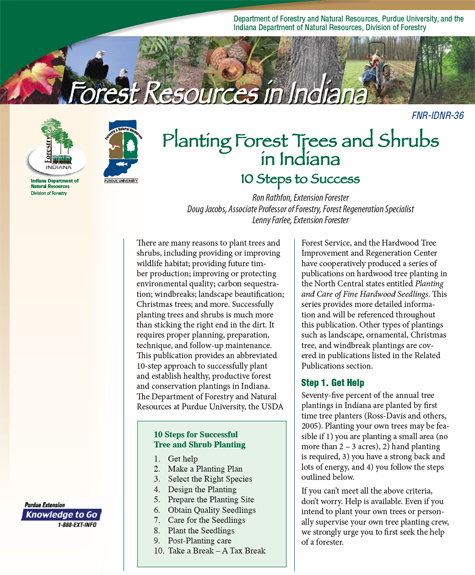 and Shrubs in Indiana” provides an abbreviated 10-step approach to successfully plant and establish healthy, productive forest and conservation plantings in Indiana. It discusses types of plantings, site selection, site preparation, how to obtain seedlings, planting methods, and care after planting. You will also find resources with further planting details, how to increase wildlife on your properties, along with how to contact a professional forester.
To order a hardcopy for $5.50 visit Planting forest Trees and Shrubs in Indiana in The Education Store. It is also available as a free download.
Resources:
Planting & Care of Fine Hardwood Seedlings, Indiana Department of Agriculture Forest Service
Woodland Wildlife Management, The Education Store
Shrubs and Woody Vines of Indiana and the Midwest: Identification, Wildlife Values, and Landscaping Use, The Education Store
Ron Rathfon, Regional Extension Forester-Southern Indiana Purdue Agricultural Center (SIPAC)
Purdue Department of Forestry & Natural Resources
The Department of Forestry and Natural Resources’ extension team have received four Purdue Extension Issue-Based Action Team (IBAT) awards out of seven. These new initiatives have been chosen from 30 submitted proposals. In an ever-changing world, Purdue Extension is launching big ideas to identify and address priority issues to enhance quality of life as well as the efficiency and/or effectiveness of organizations through research-based education.
Congratulations to the following FNR teams that are moving the world forward:
ENHANCING THE VALUE OF PUBLIC SPACES: HEALTH, WELLNESS, AND DESIGNING THE BUILT ENVIRONMENT
Project Overview: Expand upon the existing Enhancing the Value of Public Spaces program to include a health component — building community capacities for accessible means for physical activity. $50,000.
Team: Michael Wilcox, Assistant Program Leader for Community Development Extension, Purdue Center for Reginal Development; and Kara Salazar, Sustainable Communities Extension Specialist, Department of Forestry & Natural Resources; Donna Vandergraff, Extension Specialist, Nutrition Science; Lisa Graves, Assistant Program Leader and Extension Specialist, Nutrition Science; Melissa Maulding, Director, Nutrition Education Programs; and Steve Yoder, Extension Educator, Agriculture and Natural Resources (ANR), Tippecanoe County.
MARKET BASKET 360
Program Overview: A wealth of resources on a website, educational workshop agendas, certification programs, uniform materials for cooking demonstrations, and more for Farmers’ Market Masters, producers, and consumers. Market Basket 360 centralizes, streamlines, and enhances existing farmers’ market resources available through Purdue Extension, Indiana State Department of Health, the USDA Agricultural Marketing Service, and other industry organizations.
Team: James Wolff, Extension Educator, Agriculture and Natural Resources (ANR), Allen County; Julie Gray, Central District Director, ANR; Morgan Roddy, Extension Educator/Health & Human Sciences (HHS), ANR, Henry County; Curt Campbell, Extension Educator, ANR, Wabash County; Jodee Ellett, Local Foods Coordinator, Purdue Extension; Vickie Hadley, HHS Extension Educator/CED, ANR, Allen County; Nancy Manuel, HHS Extension Educator, ANR, Adams County; Gail Peitzmeier, HHS Extension Educator, Crawford County; Tim Vining, Development Educator, ANR; Teresa Witkoske, HHS Extension Educator/CED, Wabash County; Kwamena Quagrainie, Aquaculture Marketing Director and Associate Professor, Department of Forestry & Natural Resources and Agriculture Economics; Bob Rode, Aquaculture Research Lab Manager and Extension Specialist, Department of Forestry and Natural Resources.
NATURAL RESOURCES LEADERSHIP PROGRAM
Program Overview: Expanding Extension’s capacity to develop and deliver statewide natural resource programs and enhance decision-making for implementation at the community level. $30,000.
Team: Kara Salazar, Assistant Program Leader for Community Development and Sustainable Communities Extension Specialist, Department of Forestry and Natural Resources/Illinois-Indiana Sea Grant; Angie Tilton, Extension Educator, Agriculture and Natural Resources (ANR), Hendricks County Team; Lenny Farlee, Sustaining Hardwood Extension Specialist, Department of Forestry and Natural Resources; Liz Jackson, Hardwood Tree Improvement and Regeneration Center (HTIRC), Engagement Specialist and Executive Director of the Indiana Forestry and Woodland Owners Association and the Walnut Council; Steve Yoder, Regional Extension Educator, Community Development
THE NATURE OF HEALTH
Project Overview: A multifaceted approach to engaging families in nature-learning opportunities that will utilize emerging research to connect Health and Human Sciences and Agriculture and Natural Resources using curriculum developed by Rod Williams titled “The Nature of Teaching.” $20,000.
Team: Rod Williams, Professor of Wildlife Science, Department of Forestry & Natural Resources; Angie Frost, Extension Specialist-Healthy Living, College of Agriculture; Stephanie Woodcox, Extension Specialist-Health & Wellness, College of Health and Human Sciences; Deb Arseneau, Extension Educator, Agriculture Natural Resources (ANR), Newton County; Jay Christiansen, Extension Educator, ANR, Vigo County; Jan Dougan, Extension Educator, ANR, Dubois County; Molly Hoag, Extension Educator, ANR, Wells County; Molly Hunt, Extension Educator, ANR, Delaware County; Gracie Marlatt, Extension Educator, ANR, Rush County; Kelsie Muller, Extension Educator, ANR, Benton County; Lindsey Pedigo, Extension Educator, ANR, Howard County; Katie Zuber, Extension Educator, ANR, Lawrence County.
View the College of Agriculture Strategic Plan and the Purdue Extension Annual Report for more information on Purdue Extension.
For extension resources on Forestry and Natural Resources view Purdue Extension-FNR website.
Diana Evans, Extension and Web Communications Specialist
Purdue University Department of Forestry and Natural Resources
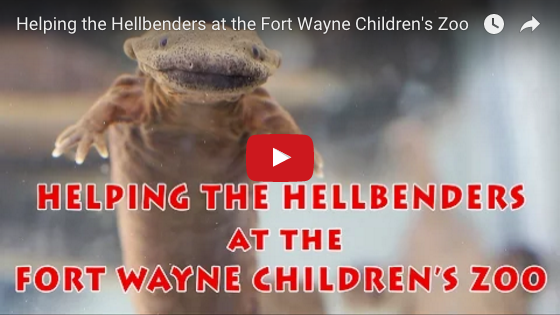 The Fort Wayne Children’s Zoo is one of three Indiana zoos working with Purdue University to study and raise hellbenders in captivity until they are ready to be released into the wild in an effort to grow their native population. Last spring, Rod Williams and his team at the Aquaculture Research Lab transferred young hellbenders to the zoo, where they will be reared for the next couple years. The zoo also puts on an outreach program called Kids4Nature where hellbenders were featured as one of the animals children could vote for with their quarters, collecting money for the hellbenders and other conservation projects.
In this new video, former Education and Communications Director Cheryl Piropato explains more about the zoo’s outreach process with the hellbenders, and Hellbender Keeper Dave Messmann offers a behind-the-scenes look at the hellbenders themselves. Check out “Helping the Hellbenders at the Fort Wayne Children’s Zoo” to see for yourself and learn more about the Fort Wayne Children’s Zoo’s involvement in the Help the Hellbender initiative.
The other two Indiana zoos are also doing great things to help the hellbenders. Columbian Park Zoo in Lafayette held a “Help the Hellbender Day” last summer with educational games and activities for the whole family to learn more about this at-risk species. Mesker Park Zoo in Evansville is preparing a public hellbender exhibit that will be available later this spring. To stay updated in the world of hellbender outreach, check out HelpTheHellbender.org.
Resources:
Helping the Hellbenders at the Fort Wayne Children’s Zoo – Purdue Extension
HelpTheHellbender.org – Purdue Extension
Help the Hellbender Day at Columbian Park Zoo a Great Success – Got Nature?
Purdue partners with Indiana zoos for hellbender conservation – Purdue Agriculture News
Rod Williams, Associate Head for Extension and Associate Professor of Wildlife Science
Purdue University Department of Forestry and Natural Resources
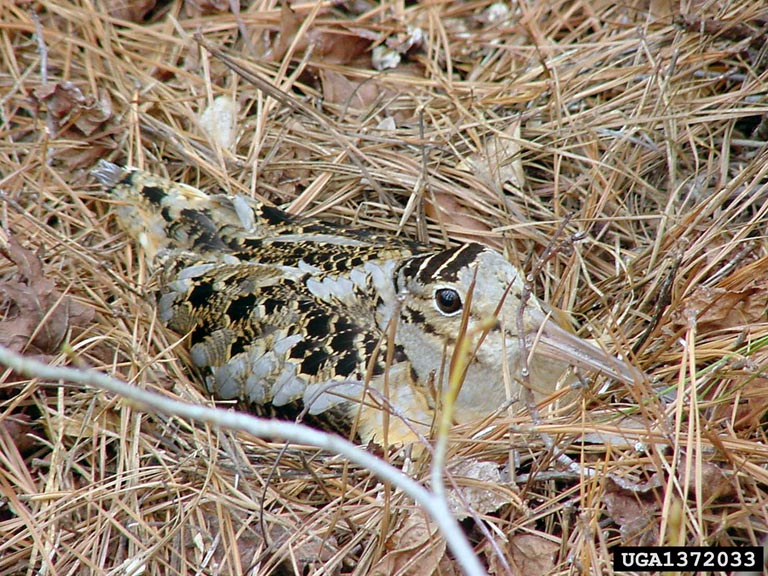
American Woodcock. Photo credit: Ricky Layson, Ricky Layson Photography, Bugwood.org.
You know Spring is around the corner when the days get longer and the temperatures rise. While the weather has pleasantly been warm this year so far, perhaps my favorite harbinger of Spring is the annual arrival of the American Woodcock, also known as the Timberdoodle. Their unique “peents” and the spectacular aerial flights of males looking to attract mates can be very entertaining.
Woodcock are migratory and spend their winters in the southern U.S. They arrive in Indiana in the early spring. This year, they arrived in late-February in the southern part of the state. The Ruffed Grouse Society has a web page with maps of female woodcock and their migration routes for this spring and previous years.
Male woodcock typically set up their singing grounds in open fields and forest openings and recently logged areas. However, they can often be seen in urban areas including parks and even residential communities. Just a couple weeks ago I arrived home just in time to see a male doing his courtship display a block up the road. The best time to observe them is at dusk. They will spend time on the ground “peenting” for a while, then fly high into the air to perform their “dance” only to return to the ground to repeat the process. This will go on until it gets dark. You can sometimes hear them peent in the morning before sunrise. Kyle Daly, a wildlife biologist who has studied them in Minnesota, wrote an excellent article on their spring dance.
Resources
American Woodcock: Habitat Best Management Practices for the Northeast, United States Department of Agriculture (USDA) & Natural Resource Conservation Service (NRCS)
American Woodcock Indiana DNR Fact Sheet, Indiana Department of Natural Resources-Fish & Wildlife
Learn how forests are used by birds new videos, Got Nature? Blog
Winter is a Good Time to Bird?, Got Nature? Blog
Managing Woodlands for Birds, The Education Store-Purdue Extension resource center
Managing Woodlands for Birds Video, Purdue Extension-Forestry and Natural Resources (FNR) YouTube Channel
Birds and Residential Window Strikes: Tips for Prevention, The Education Store, Purdue Extension resource center
Breeding Birds and Forest Management: The Hardwood Ecosystem Experiment and the Central Hardwoods Region, The Education Store
No Room at the Inn: Suburban Backyards and Migratory Birds, The Education Store
The Birders’ Dozen, Profile: Baltimore Oriole, Indiana Woodland Steward
Ask An Expert, Playlist, Purdue Extension – FNR YouTube Channel
It’s For the Birds, Indiana Yard and Garden-Purdue Consumer Horticulture
National Audubon Society
The Cornell Lab of Ornithology
Subscribe, Purdue Extension – FNR YouTube Channel
Brian MacGowan, Extension Wildlife Specialist
Purdue University, Department of Forestry and Natural Resources
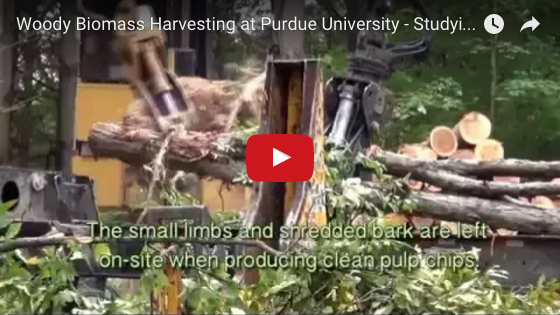 Biomass harvesting refers to harvesting where more woody material is gathered than in a traditional sawtimber harvesting. Material down to four inches in diameter is harvested along with large trees for veneer logs and saw logs. Small trees and tops are chipped and used for paper pulp and boiler fuel.
During October of 2012, a biomass harvesting project was started by harvesting a 100 acre tract of hardwood timber at the Southeastern Purdue Ag Center (SEPAC). The tract was divided into several treatment areas demonstrating various forms of harvesting including traditional clearcutting, biomass harvesting, and areas left uncut. The goal of this project was twofold: to determine the volume and value of the products produced using biomass harvesting compared to the traditional methods, and to gain a more thorough understanding of what happens to a harvest site following biomass harvesting when restoration practices are used.
The harvest site has experienced a rapid recovery of new vegetation. Forbs, shrubs, tree seedlings, and sprouts densely covered the ground and began providing new wildlife habitats and the beginnings of a new diverse forest area.
The new Extension video “Woody Biomass Harvesting at Purdue University” explores this process in further depth, showing the harvest as well as the aftermath and regrowth. It also introduces a Purdue Extension – FNR developed web application called the Woody Biomass Calculator. This calculator can be used by landowners, foresters, and wood products harvesters and managers to estimate the volume and value of several different wood product groups and tree species, including woody biomass. Before harvesting, consider using this tool to evaluate if biomass harvesting is a better choice than traditional sawtimber harvesting for you.
Resources:
Woody Biomass Harvesting at Purdue University – Studying the Advantage Over Traditional Harvesting – Purdue Extension
Woody Biomass Calculator – Purdue Extension – FNR
Harvesting Biomass: A Guide to Best Management Practices – IDNR Division of Forestry
Woody Biomass Feedstock for the Bioenergy and Bioproducts Industries – IDNR Division of Forestry
IN Wood Industry Facts – Purdue FNR Wood Research Laboratory
Lenny Farlee, Sustaining Hardwood Extension Specialist
Purdue University Department of Forestry and Natural Resources
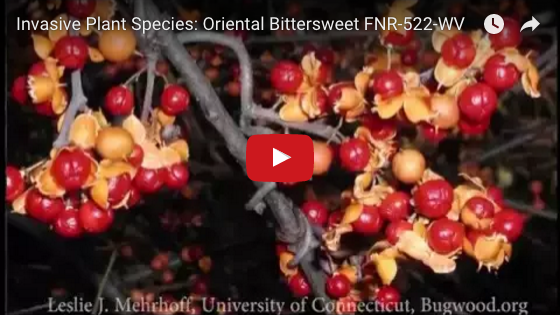 Purdue Extension-FNR now has two new expert-reviewed videos to help spread awareness of two significant invasive plant species in Indiana: the oriental bittersweet and wintercreeper. These videos share plant characteristics, their effect on forests, and alternative native species that can be utilized.
Oriental bittersweet is a vine that was brought over from Asia in the 1960’s. It is a pleasant looking plant that is popular in landscaping and home decor items. However, they can be harmful to trees as they wrap around them and cut off their access to light and are also problematic on the forest floor.
Wintercreeper was brought over as an ornamental ground cover in 1907 and is still planted for landscaping today. As birds eat its seeds, wintercreeper spreads from urban areas into the forests where it grows earlier in the spring than native plants and prevents new growth from emerging.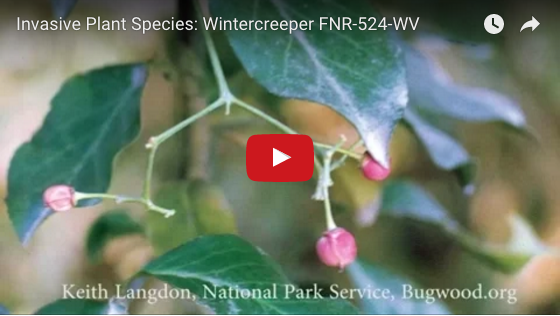
Check out the oriental bittersweet and wintercreeper videos to learn more about these invasive species and to how to join the fight to stop them from spreading further.
Resources:
Invasive Plants of the Eastern U.S.: An Introduction to the Problematic Non-Native Species – The Education Store
Invasive Plants – Purdue University, Department of Botany and Plant Pathology
Invasive Plants – Indiana Invasive Species Council
Purdue Extension-FNR Internship Program – Purdue University, Department of Forestry and Natural Resources
Danny Thomas, Purdue Extension-FNR intern
Purdue University Department of Forestry and Natural Resources
Lenny Farlee, Sustaining Hardwood Extension Specialist
Purdue University Department of Forestry and Natural Resources
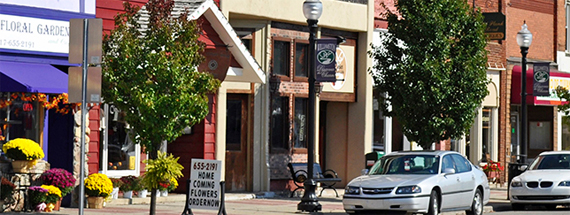 A Purdue Extension program that helps Indiana communities improve public spaces such as parks and town centers is surveying West Lafayette residents to get input on the city parks and recreation department’s next five-year master plan.
Specialists and educators in Extension’s Enhancing the Value of Public Spaces program are administering the survey and collecting and analyzing the feedback. The objective is to create a five-year plan for improving facilities, services and programs.
Citizens can access the survey online. Those who do not have access to a computer but would like to participate can receive a copy of the survey at the Morton Community Center, the Riverside Skating Center, the Lilly Nature Center and the West Lafayette Parks & Recreation Service Center on Kalberer Road. Deadline to complete the survey is March 15.
“The Enhancing program is strongly rooted in the community development principles of good practice,” said Kara Salazar, sustainable communities Extension specialist. “As such, we concentrate on participation, inclusion, capacity building and balancing action planning with long-term sustainability.”
To read more, check out Purdue Agriculture News‘ full article titled “Purdue Extension program’s objective: enhance public spaces.” Further questions about the survey can be directed to Kara Salazar at 765.496.1070 or salazark@purdue.edu.
Resources:
Purdue Extension program’s objective: enhance public spaces – Purdue Agriculture News
Enhancing the Value of Public Places Home Page – Purdue Extension
Enhancing the Value of Public Places Action Plan – The Education Store, Purdue Extension Resource Center
Sustainable Communities – Purdue Extension
Kara Salazar, Sustainable Communities Extension Specialist
Purdue University Department of Forestry and Natural Resources
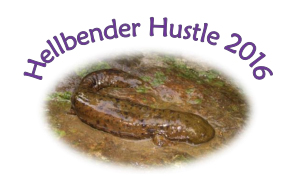 Come to the 13th consecutive Hellbender Hustle 5K Run/Walk at the O’Bannon Woods State Park in Corydon, Indiana to learn more about hellbenders and how they are faring in the nearby Blue River. The race is part road, part trail, and fun for the whole family. After crossing the finish line, enjoy the outstanding refreshments that are a hallmark of this event. Awards will be given to top finishers and there will be a drawing for a handcrafted door prize, made exclusively for the Hellbender Hustle. And if running/walking a 5K isn’t your thing, come and take a look at the Nature Center exhibits or just kick back and relax and listen to the sounds of a local traditional band.
Resources:
Help the Hellbender – Purdue Extension
Nick Burgmeier, Research Biologist and Extension Wildlife Specialist
Purdue Department of Forestry and Natural Resources
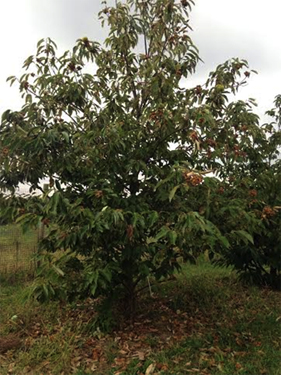
10 year old American chestnut tree. Photo: Jim McKenna
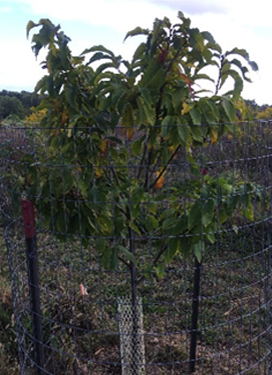
Juvenile American chestnut (Castanea dentata) tree. Photo: Dr. Shaneka Lawson, USDA Forest Service, Purdue FNR
When you hear about endangered species, most of us think about the plights of our furry or feathered friends. This article describes the plight of some of the less cuddly members of the endangered species list. Indiana is home to a number of endangered and threatened tree species. In this multi-part series, we will identify some of the tree species and describe some of their unique characteristics.
Our first species is the American chestnut (Castanea dentata) sometimes called the “Sequoia of the East”. This species was once found thriving throughout eastern forests from central Maine west to southeastern Michigan, and south to northern Mississippi, Alabama, and Georgia.

American chestnut fruit (nuts) inside an opened bur. Photo: Jim McKenna
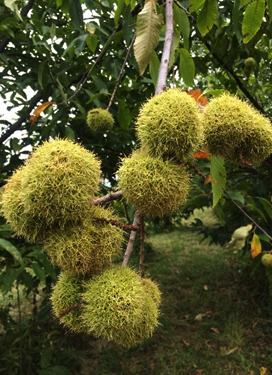
American chestnut fruit protected by a spiny bur. Photo: Dr. Shaneka Lawson, USDA Forest Service, Purdue HTIRC
Early 20th century estimates indicated that these trees numbered closed to 4 billion with the finest, most productive stands found in the Appalachian Mountains and southern New England. American chestnut is a fast growing species that can reach a pinnacle of 120 feet high and 10 feet or more in diameter. The majority of the mature trees were between 3 and 5 feet in diameter and 60 to 90 feet high. The fruit from this tree has been a valued food source for humans, wildlife, and livestock alike. Timber from this former giant is naturally rot-resistant and nearly as durable as oak yet lighter.
American chestnut populations went into decline after the introduction of chestnut blight.
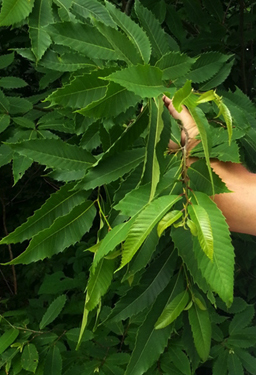
Mature American chestnut leaves. Photo: Dr. Shaneka Lawson, USDA Forest Service, Purdue FNR
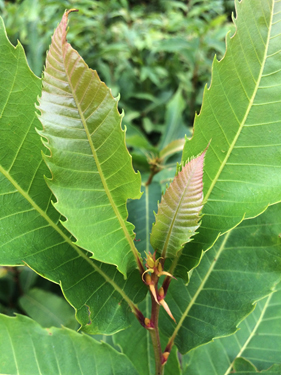
Immature American chestnut leaves. Photo: Dr. Shaneka Lawson, USDA Forest Service, Purdue FNR
Chestnut blight is caused by the fungal pathogen (Cryphonectria parasitica), and was accidentally introduced into the American population by imported Asian chestnut trees a century ago. American chestnut is highly susceptible to the fungus which enters the tree through any small wound or crack in the bark. The fungus replicates beneath the bark and produces toxins which lead to plant cell death. The fungus continues to grow until it has circumnavigated the tree and effectively stopped the flow of nutrients. Everything above the girdled circle of fungus will die. The primary symptoms of chestnut blight disease are a sunken canker and orange spores covering the bark.
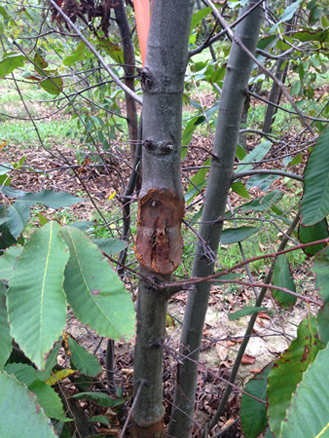
Chestnut blight canker four months after inoculating a susceptible chestnut tree. Photo: Jim McKenna
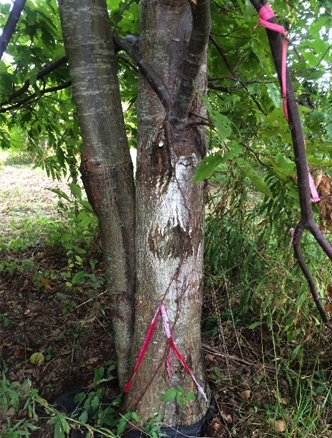
12 year old resistant 15/16 American chestnut after direct challenge with (Cryphonectria parasitica) fungus. Photo: Dr. Shaneka Lawson, USDA Forest Service, Purdue FNR
Loss of American chestnut on the landscape has resulted in reduced species diversity and severely reduced fall mast for woodland animal species. In addition, leaves of American chestnut contain greater nutrient concentrations (nitrogen [N], phosphorus [P], potassium [K]) than most other co-occurring trees therefore its loss affects soil nutrient cycling.
American chestnut has survived thus far because it has the ability to sprout from roots and stumps of diseased trees. However, these trees rarely live to maturity thus are often unable to flower and bear fruit. Numerous efforts to restore the tree to its former glory have been and are currently being attempted. Thus far, two of the most effective methods of breeding for resistance are hybridizing with resistant Asian parents and attempting to intercross surviving pure American chestnuts. The HTIRC within the Forestry and Natural Resources Department at Purdue University is working on hybridization of American chestnuts with Asian chestnuts for future restoration of resistant American-like chestnuts for Indiana.
Resources:
The American Chestnut Foundation
A New Generation of American chestnut Trees May Redefine America’s Forests – Scientific American
Consequences of Shifts in Abundance and Distribution of American Chestnut for Restoration of a Foundation Forest Tree – Forests Open Access Forestry Journal
Transgenic American chestnuts show enhanced blight resistance and transmit the trait to T1 progeny – Science Direct (Plant Science)
Scientists Work to Create a Blight-Resistant Chestnut with Hopes of Restoring Tree to America, Forest Service, U.S. Department of Agriculture
FNR Hardwood – American Chestnut, Purdue Arboretum Explorer
Hardwood Tree Improvement Regeneration Center (HTIRC) Research Publications
American Chestnut Trees return to the Hoosier National Forest, Indiana Woodland Steward
Forest Regeneration and Restoration Laboratory, Purdue Forestry and Natural Resources, Dr. Doug Jacobs
Shaneka Lawson, USDA Forest Service and HTIRC Research Plant Physiologist & Adjunct Assistant Professor
Purdue University Department of Forestry and Natural Resources
 Southern Indiana Cooperative Invasives Management (SICIM) is holding its annual meeting on March 8th from 9:30 to 3:30 at the Spring Mill State Park. This year’s keynote speaker will be Lisa Brush, Executive Director and co-founder of The Stewardship Network. Join us for a day dedicated to celebrating the power of partnerships and a ‘how to’ develop local CWMAs (Cooperative Weed Management) and conservation groups though partnerships, projects, and shared vision. MC IRIS and Brown County Native Woodlands Project, both county level CWMAs, will also share their stories, challenges, and successes.
Registration is $25 and includes a lunch. Please check out the SICIM website for more information, and for further questions contact SICIM at sicim.info@gmail.com or Cheryl Coon at ccoon@fs.fed.us.
Resources:
Southern Indiana Cooperative Invasives Management (SICIM)
Registration – SICIM
Invasive Species – Purdue Extension
Invasive Plant Species in Hardwood Tree Plantations – The Education Store, Purdue Extension Resource Center
2016 Weed Control Guide for Ohio, Indiana, and Illinois – Purdue Extension

Recent Posts
- ID That Tree: Sugarberry
Posted: December 12, 2025 in Forestry, Wildlife, Woodlands - Powering Rural Futures: Purdue’s Agrivoltaics Initiative for Sustainable Growth
Posted: December 9, 2025 in Community Development, Wildlife - Learn How to Control Reed Canarygrass
Posted: December 8, 2025 in Forestry, Invasive Plant Species, Wildlife - Benefits of a Real Christmas Tree, Hoosier Ag Today Podcast
Posted: December 5, 2025 in Christmas Trees, Forestry, Woodlands - Succession Planning Resource: Secure your Future
Posted: December 2, 2025 in Community Development, Land Use, Woodlands - A Woodland Management Moment: Butternut Disease and Breeding
Posted: December 1, 2025 in Forestry, Forests and Street Trees, Woodland Management Moment, Woodlands - Controlling Introduced Cool-Season Grasses
Posted: in Forestry, Invasive Plant Species, Wildlife - Red in Winter – What Are Those Red Fruits I See?
Posted: in Forestry, Plants, Urban Forestry, Wildlife, Woodlands - Managing Common and Cut Leaved Teasel
Posted: November 24, 2025 in Forestry, Invasive Plant Species, Wildlife - Extension Team Wins Family Forests Comprehensive Education Award
Posted: November 21, 2025 in Forestry, Urban Forestry, Wildlife, Woodlands
Archives
Categories
- Alert
- Aquaculture/Fish
- Aquatic/Aquaculture Resources
- Ask the Expert
- Christmas Trees
- Community Development
- Disease
- Drought
- Forestry
- Forests and Street Trees
- Gardening
- Got Nature for Kids
- Great Lakes
- How To
- Invasive Animal Species
- Invasive Insects
- Invasive Plant Species
- Land Use
- Natural Resource Planning
- Nature of Teaching
- Plants
- Podcasts
- Ponds
- Publication
- Safety
- Spiders
- Timber Marketing
- Uncategorized
- Urban Forestry
- Webinar
- Wildlife
- Wood Products/Manufacturing
- Woodland Management Moment
- Woodlands