 Purdue University - Extension - Forestry and Natural Resources
Got Nature? Blog
Purdue Landscape Report: By now, the emerald ash borer (EAB) invasion is an old story for landscapes and forests in the Midwest. Since EAB was first found in North America in 2002 more millions of ash trees than we can know have died and this tiny insect continues to kill ash in an ever widening zone that currently includes 37 US states and 6 Canadian provinces. Arborists and landscape managers continue to protect valuable ash trees by use of systemic insecticides, typically applied via trunk injection every 2-3 years.
While EAB is the overarching threat, ash survival may also be threatened by wood decay fungi, which may colonize insect exit holes, injections sites and other wounds. The most common decay fungi we see in the lab are Perenniporia and Fomitopsis.
Perenniporia fraxinophila is the most frequently reported wood decay fungus on ash and causes a heart rot that contributes to loss of structural integrity of the tree. Infection sites tend to be high on the tree and may be easily overlooked until decay is advanced. The fungal structure is perennial, expanding each year, and may be confused with Ganoderma applanatum, the artist’s conk. The upper surface turns black or brown with age and the underside is white with pores instead of gills.
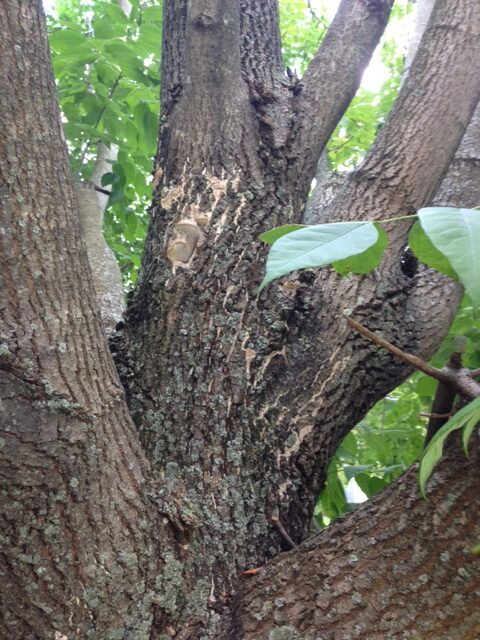

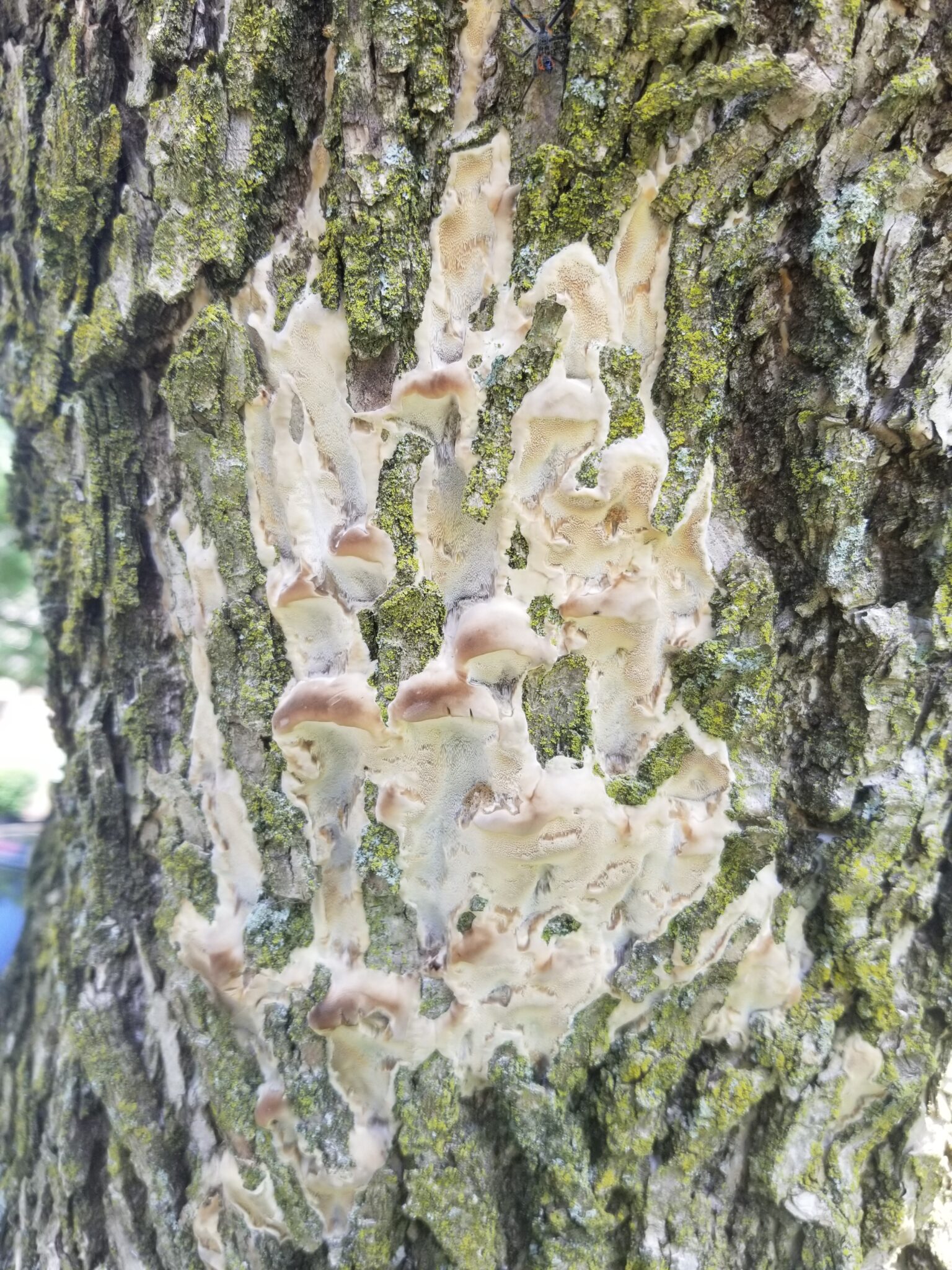
In the last few years, we have had a few samples of a similar fungus colonizing the trunk and base of ash trees, often near injection sites. Initially we were unable to identify the fungus, but DNA analysis revealed the fungus was a Fomitopsis species. This fungus develops a shallow shelf structure with white top and tan underside.
Fungal decay presents a greater risk to ash because it lacks the preservative enriched heartwood found in oak, walnut and other hardwoods that tends to slow down internal spread of fungi. Even fungi that initially invade dead areas of ash may rapidly colonize and degrade stem and trunk tissue.
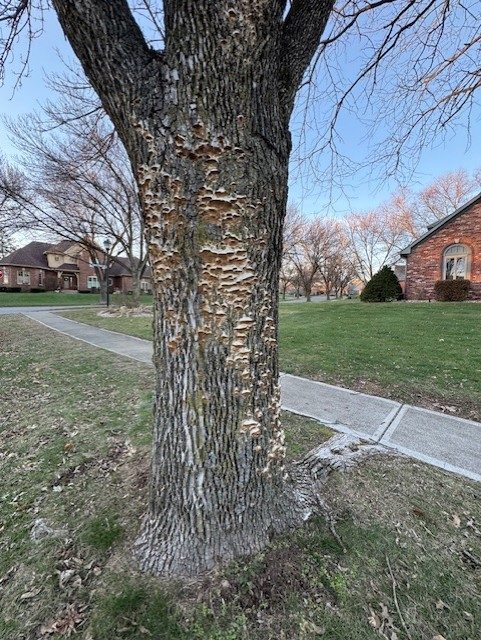
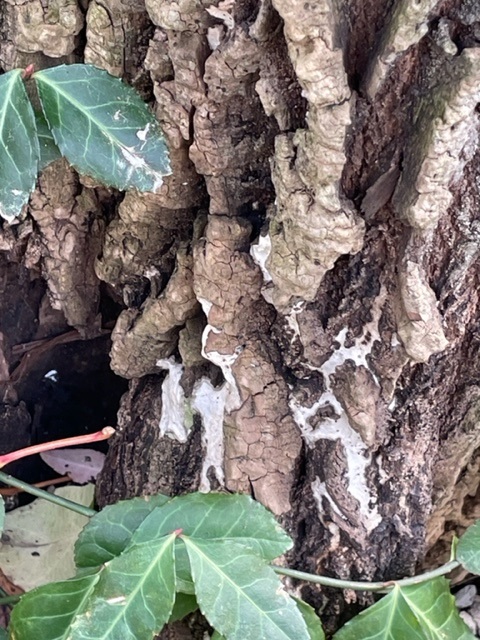
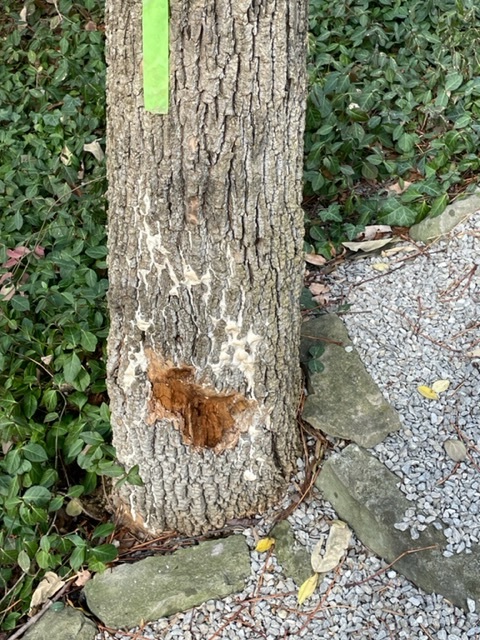
Fungal decay also disrupts vascular tissues in the stems and trunk, which further limits the movement and effectiveness of insecticide injections, so that infected trees may face greater damage from EAB. When found on small side branches the infection might be successfully pruned out, but in most cases the decay is in major branches or the trunk, which means the tree will need to be removed. If your ash trees that are being regularly treated for EAB but continue to show thinning and decline, check for these fungal invaders, they may be partly responsible.
View the original article on the Purdue Landscape Report website: Fungal Decay of Ash Trees.
Subscribe and receive the newsletter: Purdue Landscape Report Newsletter.
Resources:
Diplodia Tip Blight of Two-Needle Pines, The Education Store, Purdue Extension resource center
Boxwood Blight, The Education Store
Disease of Landscape Plants: Cedar Apple and Related Rusts on Landscape Plants, The Education Store
Planting Your Tree Part 1: Choosing Your Tree, Purdue Extension – Forestry & Natural Resources (FNR) YouTube Channel
Tree Planting Part 2: Planting a Tree, Purdue Extension – FNR YouTube Channel
Find a Certified Arborist, Trees are Good-International Society of Arboriculture (ISA)
Video: Step by Step to Find an Arborist, Trees are Good-International Society of Arboriculture (ISA)
Professional Forester, Indiana Forestry Woodland Owners Association
District Forester, Indiana Department of Natural Resources, 10+ acres
Trees and Storms: Understanding Damage, Risk and Recovery – Got Nature? Blog, Purdue Extension – FNR
Why Is My Tree Dying? – Got Nature? Blog, Purdue Extension – Forestry and Natural Resources
Tree Risk Management – Got Nature? Blog, Purdue Extension – FNR
Tree Pruning Essentials, Publication & Video, The Education Store
Tree Wound and Healing, Got Nature? Blog, Purdue Extension – FNR
What are Invasives Species and Why Should I Care?, Got Nature? Blog, Purdue Extension – FNR
Subscribe – Purdue Extension-FNR YouTube Channel
Tom Creswell, Plant & Pest Diagnostic Laboratory Director
Purdue Botany and Plant Pathology
Purdue Landscape Report: It’s finally October, and we should be enjoying lovely fall temps and colors. While some of the trees are changing, it’s not necessarily due to the change in seasons. As I write this, the temperature is 84 F (29 C). I look out my window and see mostly green leaves with some colors from the short cold snap we had and some from heat and drought stress. Whether you are worried about the trees in your yard and community or not, there are some simple tasks that we can do to assist them as we await the cooler temperatures of Autumn.

A 3 foot radius mulch ring around a medium sized tree (Purdue Landscape Report)
Mulching: One simple task to better prepare your trees for winter is to add a new layer of mulch, which benefits your trees in multiple ways. Adding a 2-3 inch thick layer of mulch will better maintain moisture levels and buffer extreme temperature changes in the soil and will add some organic matter too. Mulching to the drip line will benefit the tree the most, but in the case of larger trees it’s not always feasible. Try for at least a 3-foot radius from the trunk and make sure to leave a 2 inch or so gap between the trunk and the mulch. Remember, no volcano mulching.
Fertilizing: That mulch you just added will add some organic material to your soil as it slowly breaks down, but an autumn fertilization can benefit your trees too. Unlike trees in the forest that have a natural supply of nutrients from fallen leaves and twigs, trees around our homes are usually deprived as we rake and clean up our yards. Adding a slow-release fertilizer in the fall helps provide a nutrient boost over the winter, can promote root growth, and better prepare your tree for Spring.
Watering: Water is still an essential part of your tree care plan, but as temperatures drop and trees begin to head into dormancy they don’t need as much water as is required in the hit summer months. If you have irrigation systems in your yard start to drop the frequency of watering. You can water up until the first freeze, but make sure soils are just a little damp and not soaked. Evergreens in particular will benefit from slow deep watering 1-2 times a week until the soil freezes. Winter winds and temperatures can desiccate the needles without an adequate supply of water.
Pruning: Now is a good time to prune out any dead, damaged, or diseased limbs in your trees. If you have access to hand saws and pole saws or pruners, you can remove smaller branches or those closer to the ground. Make sure you are making proper pruning cuts though, and if there are large limbs, those at heights, or you are just unsure of how to make a good cut enlist the help of a professional arborist.

Use of white tree guards can protect the trunk from temperature changes that cause damage (Joseph O’Brien, USDA Forest Service)
Trunk Damage: Sunscald or southwest damage occurs on young and/or thin barked trees in the winter. Wounds can occur between the south to southwest facing part of the trunk on sunny days in the winter as temperatures rise and suddenly drop. Over time these wounds can become quite large. Trees can also incur damage from deer during the rut. Bucks will scrape trees with their antlers, scraping off the bark and damaging the cambium. Both of these injuries can be reduced one younger trees by installing tree guards in the fall. Tree guards are plastic barriers you place around the main stem of the tree. I recommend using white corrugated drainage pipe that can be found at most home centers. You can make a cut lengthwise along the pipe for easy installation and make sure it has a large enough diameter to leave a space between it and the tree. Just remember to remove it come Spring.
Inspections: Visual inspections can be done year-round, but this time of the year it might be easier to see changes in your tree as leaves are falling and the canopy becomes more visible. From the ground up to the canopy, some of the things you’re looking for include fungal growth around the base of the tree, any sort of damage on the main stem or branches, premature leaf drop or color change, and branches that are dead, cracked, diseased, or seem weak. Any concerns you find are also great information to share with an ISA Certified arborist which can be found using the Trees Are Good website.
View the original article on the Purdue Landscape Report website: Help Your Trees Transition into Autumn.
Subscribe and receive the newsletter: Purdue Landscape Report Newsletter.
Resources:
Re-mulch Your Trees, Purdue Landscape Report
Find an Arborist video, Trees are Good-International Society of Arboriculture (ISA)
Trees and Storms: Understanding Damage, Risk and Recovery – Got Nature? Blog, Purdue Extension – FNR
Moist soil and rotten roots makes it easy for trees to come crashing down – Fox 59 News
Expert: Some storm damage can be easily prevented – Fox 59
Why Is My Tree Dying? – Got Nature? Blog, Purdue Extension – Forestry and Natural Resources
Tree Risk Management – Got Nature? Blog, Purdue Extension – FNR
Tree Pruning Essentials, Publication & Video, The Education Store
Mechanical Damage to Trees: Mowing and Maintenance Equipment – The Education Store
Trees and Electric Lines – The Education Store
Tree Defect Identification, The Education Store
Planting Your Tree, video, Purdue Extension
Tree Installation, The Education Store
Tree Wound and Healing, Got Nature? Blog, Purdue Extension – Forestry and Natural Resources
Subscribe – Purdue Extension-FNR YouTube Channel
Ben McCallister, Urban Forestry Specialist
Purdue Forestry & Natural Resources
Welcome to ID That Tree! In this episode, Purdue Extension Forester Lenny Farlee introduces us to a widespread native shrub called smooth sumac. Found in open fields, roadsides and woodland edges across Indiana, this shrub is easily identified by its recognizable stems and leaves. Watch the video to learn about these characteristics, along with the differences in smooth sumac through the different seasons. For example, in summer, this shrub has flowers that turn into fruit heads! Whether you’re a student, naturalist or simply curious about native plants, this video offers a quick and helpful guide to identifying smooth sumac in the wild.
If you have any questions regarding wildlife, trees, forest management, wood products, natural resource planning or other natural resource topics, feel free to contact us by using our Ask an Expert web page.
Resources:
ID That Tree – Video Playlist, Purdue Extension – Forestry and Natural Resources (FNR) YouTube Channel
Purdue Arboretum Explorer
Conservation Tree Planting: Steps to Success, Purdue Extension – FNR YouTube Channel
A Woodland Management Moment, Playlist, Purdue Extension – FNR YouTube Channel
Woodland Stewardship for Landowners, Playlist, Purdue Extension – FNR YouTube Channel
Fifty Common Trees of Indiana, Purdue Extension – FNR
Indiana Invasive Species Council
Cooperative Invasive Species Management Area (CISMA)
Report Invasive, Purdue Extension
Habitat University, Episode 12 – Exploring the challenges of Invasive Species, Habitat University-Natural Resource University
Shrubs and Woody Vines of Indiana and the Midwest, Purdue University Press
Native Trees of the Midwest, Purdue University Press
Professional Forester, Indiana Forestry Woodland Owners Association
District Forester, Indiana Department of Natural Resources, 10+ acres
Find an Arborist, International Society of Arboriculture
Forest Improvement Handbook, The Education Store
Lenny Farlee, Extension Forester
Hardwood Tree Improvement and Regeneration Center
Purdue Department of Forestry & Natural Resources
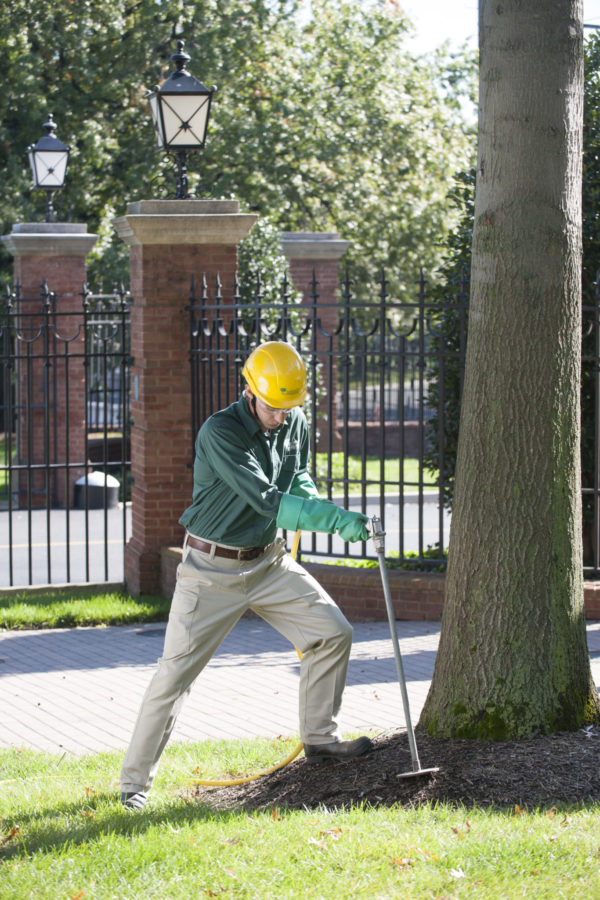
Professional arborists can best feed mature trees
Purdue University Landscape Report: Early fall is the time to begin preparing trees for the winter and get them off to a good start in the following spring. Preventative maintenance and some good cultural practices in autumn boost trees’ health and vigor during the winter and creates an encouraging growing environment in the spring. Here are 5 good tips for trees:
- Scout for pruning issues.
It’s advantageous to schedule pruning tasks after leaves have fallen. It’s much easier to see the branch structure of trees and deciduous shrubs in order to perform good selective cuts. Look for those non-beneficial plant parts and remove them. These include any dead, broken and crossing branches which can be removed. Also, search out and remove those epicormics sprouts in the canopy and basal sprouts emerging from around the trunk and root collar. Refer to this pruning publication for more information.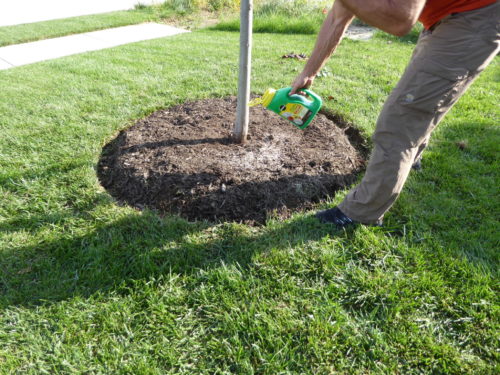
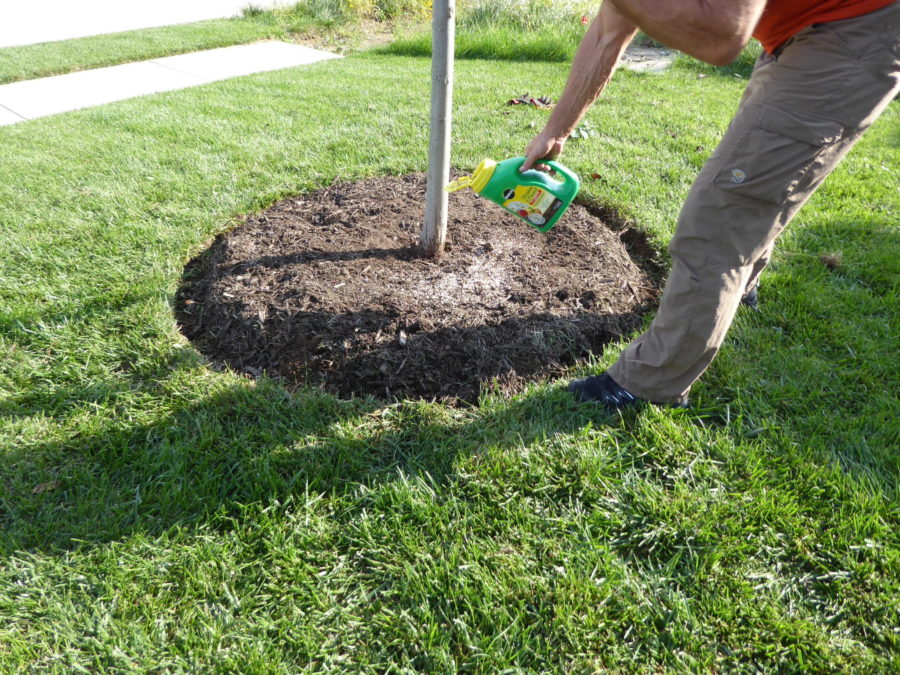
Newly-established trees benefit from fertilizer
- Feeding for the future.
Typically, tree roots have produce more root growth during the fall. Root systems are important as storage organs or banks to reserve energy for later. These stores of starch will become active energy on demand in the spring when shoot growth, leafing and flowering occur. Fertilization during this time will maintain soil nutrient levels and increase root production, promoting new growth in the spring. Newly, established trees and those younger trees are especially responsive to supplemental feeding. However, not all trees need or require fertilization. Refer to this publication on fertilization for more information.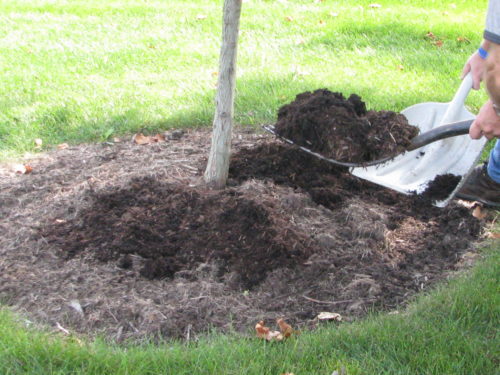
Mulch provides a blanket of protection
- Complete cultural practices.
It’s always beneficial to the tree to replenish mulch to give root systems an extra layer of protection against temperature extremes. This helps maintain the moisture levels in the soil during those drier winter months as well. Maintaining 2-3 inches of composted mulch over the root zone of the tree and landscape provides great protection. Also, it may be a good time to consider providing protective wraps on thin-barked or newly planted trees, if needed. Also, now is a good time for inspecting those existing wraps to be sure they are effective and not too tight around the trunk or harboring hidden pest issues.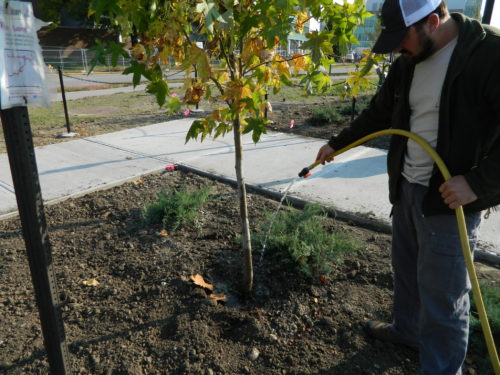
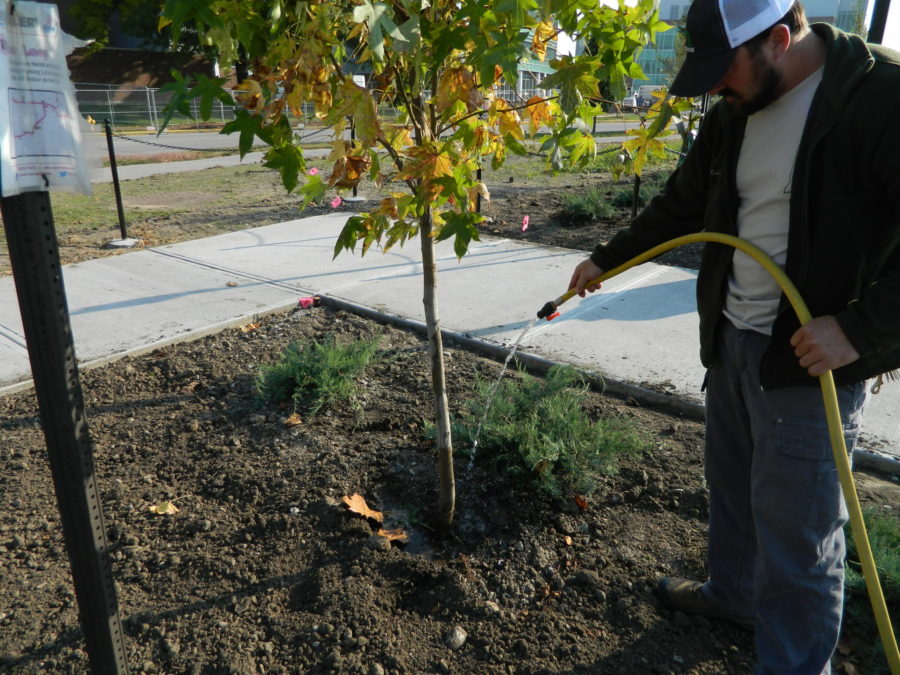
Good moisture levels going into the winter is critical for tree health
- Water needed, still.
The dry, cool air and low precipitation that can sometimes occur during fall and early winter can take a toll on trees. Provide supplemental irrigation with deep watering to prevent root damage and a good spring start. It is advisable to water only when temperatures will be above 40o Water around mid-day so there is time to soak in before the freezing night temperatures. Applying approximately 5 gallons water per inch of tree diameter will be adequate for times when there is little to no rainfall going into winter. - Take inventory.
This is a good time to assess your site for vacancies. Check your property for potential planting locations to install new trees next spring. Research during the winter allows plenty of time for good decision-making which includes proper species selection and suitable locations. Refer to the tree selection publication for more information.

There are many resources available to learn about proper tree care. If you are uncertain on how to maintain your trees or prefer professional services, it is important to reach out to an ISA Certified Arborist to help with the tree, within your landscape, especially the larger, mature trees. A Certified Arborist can proactively identify, analyze and evaluate your tree needs to maintain this important asset, your trees.
Resources:
Why Do Our Trees Go From Green Leaves to Different Colors?, Got Nature? Blog
Fifty Common Trees of Indiana
An Introduction to Trees of Indiana
The Nature of Teaching: Trees of the Midwest, The Education Store
Why Leaves Change Color, USDA Forest Service
Lindsey Purcell, Executive Director
Indiana Arborist Association
Welcome to ID That Tree! In this episode, Purdue Extension Forester Lenny Farlee introduces us to a widespread and often overlooked native plant, the wild grape vine. Found across Indiana, this vine is especially noticeable in late summer and fall. Learn how to identify wild grape by its vine structure, bark, leaves and growth. Whether you’re a nature enthusiast, land manager or just curious about native plants, this video offers a quick and informative look at how to spot wild grape vine and appreciate its role in Indiana’s ecosystems.
If you have any questions regarding wildlife, trees, forest management, wood products, natural resource planning or other natural resource topics, feel free to contact us by using our Ask an Expert web page.
Resources:
ID That Tree – Video Playlist, Purdue Extension – Forestry and Natural Resources (FNR) YouTube Channel
Purdue Arboretum Explorer
Conservation Tree Planting: Steps to Success, Purdue Extension – FNR YouTube Channel
A Woodland Management Moment, Playlist, Purdue Extension – FNR YouTube Channel
Woodland Stewardship for Landowners, Playlist, Purdue Extension – FNR YouTube Channel
Indiana Department of Natural Resources: Invasive Species
Indiana Invasive Species Council
Cooperative Invasive Species Management Area (CISMA)
Report Invasive, Purdue Extension
Fifty Common Trees of Indiana, Purdue Extension – FNR
Habitat University, Episode 12 – Exploring the challenges of Invasive Species, Habitat University-Natural Resource University
Shrubs and Woody Vines of Indiana and the Midwest, Purdue University Press
Native Trees of the Midwest, Purdue University Press
Professional Forester, Indiana Forestry Woodland Owners Association
District Forester, Indiana Department of Natural Resources, 10+ acres
Find an Arborist, International Society of Arboriculture
Forest Improvement Handbook, The Education Store
Lenny Farlee, Extension Forester
Hardwood Tree Improvement and Regeneration Center
Purdue Department of Forestry & Natural Resources
The Wisconsin Forestry Center at the University of Wisconsin–Stevens Point has just released a new episode of SilviCast, the go-to podcast for silviculture professionals. In this episode, titled “Black Gold,” forestry expert Lenny Farlee is interviewed about the science and management of black walnut, one of North America’s most valuable hardwoods.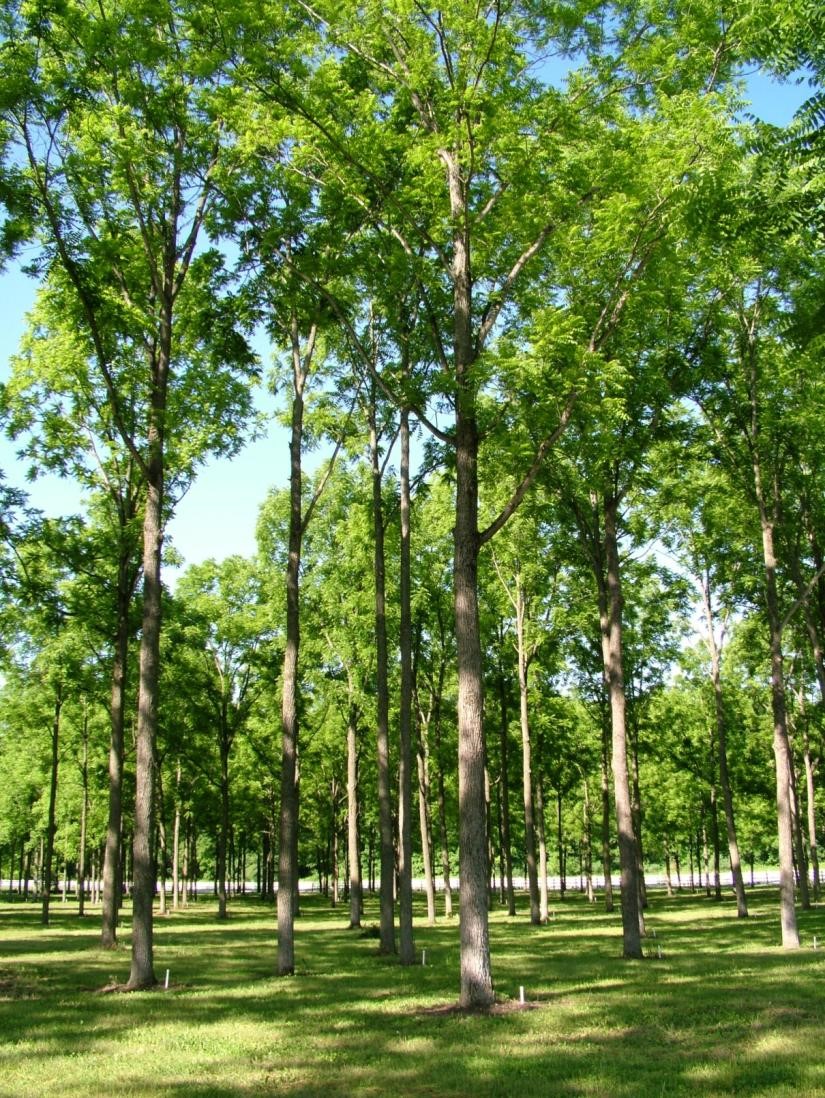
Eastern black walnut is often regarded as one of the most valuable timber species in central and eastern North America. A single high-quality tree can be worth thousands of dollars, sometimes even shaping the outcome of an entire timber sale. Given that level of interest, it may seem like we already know everything about this remarkable species. While researchers and foresters have gained a deep understanding of its silviculture and genetics, there is still more to discover.
Lenny Farlee is a Purdue University Extension Forester and a member of the Hardwood Tree Improvement & Regeneration Center (HTIRC). With decades of experience in hardwood silviculture, he brings practical insight and research-based knowledge to the conversation around managing black walnut for long-term forest health and productivity.
To listen, search SilviCast on your favorite podcast app or listen directly on the SilviCast: Black Gold episode page. You can also explore the full series at linktr.ee/SilviCast.
Other Resources:
ID That Tree: Black Walnut
Hardwoods of the Central Midwest: Black Walnut
Hardwood Lumber and Veneer Series: Black Walnut
Morton Arboretum: Black walnut
Facts About Black Walnut, The Education Store
Purdue Arboretum Explorer
Black Walnut, Native Trees of Indiana River Walk, Purdue Fort Wayne
The Woody Plant Seed Manual, U.S. Forest Service
Fifty Common Trees of Indiana
An Introduction to Trees of Indiana
Native Trees of the Midwest, Purdue University Press
Shrubs and Woody Vines of Indiana and the Midwest, Purdue University Press
Investing in Indiana Woodlands, The Education Store
Forest Improvement Handbook, The Education Store
ID That Tree, Purdue Extension-Forestry & Natural Resources (FNR) YouTube playlist
Woodland Management Moment , Purdue Extension-FNR YouTube playlist
University of Wisconsin-Stevens Point
Diana Evans, Extension & Web Communications Specialist
Purdue University Department of Forestry and Natural Resources
Purdue Landscape Report: Spring is finally here! Everywhere you look, one can find some spring color around. Some of the first plants to peek out of the ground are spring-flowering bulbs like crocus, daffodil and tulip. But there are some beautiful spring time shrubs that are Indiana native plants you can add to your yard to be the first in the neighborhood with spring interest. Below, you’ll find a top 10 list of spring-flowering shrubs (in order of flower appearance).
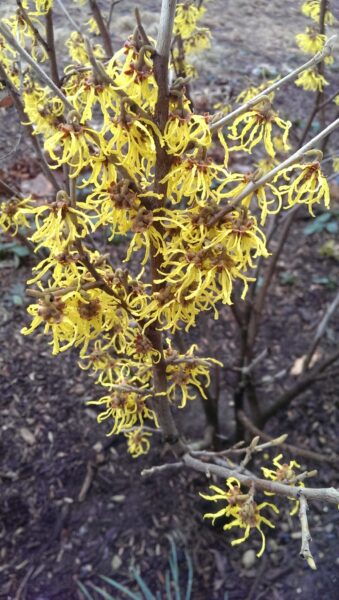
Figure 1. Witch-hazel is one of the first shrubs to bloom in the spring. Though similar to forsythia, it typically flowers a couple of weeks earlier.
Witch-hazel (Hamamelis x intermedia) Perhaps even earlier-flowering than Forsythia, is ‘Arnold Promise’ witch-hazel. This shrub can flower starting in late winter (unless we have unusually cold winter weather like polar vortices) and keep going all the way into spring. Bright flowers are yellow with red tinges, though there are red-flowering cultivars available. Witch-hazel can be grown as a shrub or a small tree and offers some yellow/orange/red fall color. It’s native!
Forsythia (Forsythia x intermedia) Forsythia is the traditional first-flowering plant in the spring. Hardy plants, their bright yellow blooms can catch your eye anywhere. There are new cultivars out.
Quince (Chaenomeles speciosa) In mid spring, you’ll find these shrubs covered with flowers. There are several cultivars and you may see white-flowering plants (‘Jet Trails’), red-flowering plants (‘Texas Scarlet’) or even large, double, fluffy, peach-pink flowers (‘Cameo’). After the show, this plant tends to fade into the background, but it’s a great native addition.
Korean Spice Viburnum (Viburnum carlesii) Korean spice viburnum blooms in late April with blooms that are pink/red while they are still in buds, opening to white flowers that are each a half inch wide. The flowers are presented on dense 2-3 inch groupings called cymes (semi-snowball) and very pleasantly fragrant. And luck of all luck, they have nice, clean leaves in the summer and great fall color. Can’t beat that in a multi-season shrub.
Flowering Almond (Prunus glandulosa) Here’s a small plant that grows well in full sun and its lovely. Flowering almond, particularly the cultivar ‘Rosea Plena’ has tons of pink flowers (double—lots of petals). Some cultivars have white flowers, and all present in mid to late spring.
Shadblow Serviceberry (Amelanchier canadensis) A multi-season-interest plant, serviceberry offers white flowers on 2-3 inch long inflorescences in April, which leads to sweet, juicy black fruit in the summer. Some plants can also have decent fall color (yellow with hints of orange and red). Serviceberry grows by suckering so it’s perhaps not a great choice for a small yard.

Figure 2. Lilac is most commonly a beautiful shade of purple.
Lilac (Syringa vulgaris). The beautiful purple flowers (many, many colors are available, but purple is most common) are wonderfully fragrant in most of spring. They may only bloom for 2 weeks, but man those 2 weeks are worth having a lilac in your garden! Takes me straight back to my childhood.
Black Chokeberry (Aronia melanocarpa) An adaptable species, this plant is known for long-lasting black fruit in the fall and wine-red fall color. Spring flowers are white, presented in groups of 9-20 resulting in 1 to 1.5 inch groupings covering the plant in May. This species can spread and colonize large areas, which makes for a striking mass effect in the spring. Small plant (under 5 feet) thrives in part shade to full sun.
Mock Orange (Philadelphus coronarius) Fans of mock orange are serious about their use in the landscape. These plants can take care of themselves and they’ll reward you every May/June with white, fragrant flowers that are 1 to 1.5 inches wide.
Siberian Peashrub (Caragana arborescens) Granted, this is a great shrub for harsh sites (poor soils, drought, alkaline soil, cold, wind), but it’s unusual and doesn’t take much care. Leaves are pea-green and emerge with the yellow flowers in May. Later in the summer the fruit of the flowers, a narrow pod, makes a popping sound when it opens.
Remember, plants with more than one season of interest are like hitting the landscape jackpot. So, if you’ve chosen one of these plants because you love the flowers in the spring, just be aware that it may need to fade into the background for the rest of the year. Having said that, plants that usher in the new season are anticipated, loved and enjoyed. Make sure you’ve got some of these in your neighborhood for a dose of early spring joy.
This was adapted from Horticulture Newsletter – Cheryl Boyer – Kansas Extension. All plants listed in this article are native species of Indiana.
Read the original article posted in the Purdue Landscape Report April 2025 Newsletter: Top 10 Spring Flowering Shrubs.
Subscribe and receive the newsletter: Purdue Landscape Report Newsletter.
Resources:
Spring Tree Preparations, Purdue Extension Forestry and Natural Resources (FNR) Got Nature? Blog
Celebrate Pollinator Week with Flowers of June Tour, Got Nature? Blog, Purdue Extension – FNR
Tracking the Bloom, Got Nature? Blog, Purdue Extension – FNR
Indiana’s Native Orchids, Indiana Forestry & Woodlands Association (IFWOA) Webinar
Wildflowers and Ferns of Indiana Forests: A Field Guide, Google Books
ID That Tree Spring Bloom Edition: Bladdernut, Got Nature? Blog, Purdue Extension – FNR
ID That Tree, Purdue Extension-FNR YouTube playlist
Alternative Options for Invasive Landscape Plants (pdf), Purdue Extension – Purdue Horticulture and Landscape Architecture
Landscape Uses of Native Plants, Indiana Native Plant Society
Find an Arborist video, Trees are Good-International Society of Arboriculture (ISA)
Tree Installation: Process and Practices, The Education Store, Purdue Extension resource center
Tree Planting Part 1: Choosing a Tree video, Purdue Extension
Tree Wound and Healing, Got Nature? Blog, Purdue Extension – FNR
Shrubs and Woody Vines of Indiana and the Midwest, Purdue University Press
Ask an Expert: Tree Selection and Planting, Purdue Extension-FNR YouTube playlist
Recommended Indiana-native Plants for Attracting Pollinators (pdf), Purdue Extension – Entomology
Gardening for Pollinators, Purdue Garden Articles
Subscribe Purdue Extension-FNR YouTube Channel
Amanda Bailey, Extension Educator – Ag and Natural Resources
Purdue Extension – Warrick County
Purdue Landscape Report: April showers bring May Flowers. Many of us were taught this little rhyme to describe the weather of Spring. April has arrived along with the beginning of the Spring storm season and damage to and from trees is a topic of concern on many minds. Depending on the intensity of the storms and the condition of the trees, damage from high winds, heavy rainfall, and lightning can be quite severe. Cracked or broken branches, stem failure, and root failure are some of the main concerns, but also the risk and liability of damage to people and property.

Storm season is upon us. There are a number of resources from Purdue to help dealing with storm-damaged trees.
If your tree is damaged, there are some steps to deal with the situation. First and foremost, consider the safety of yourself and others around you. Inspect the tree from a distance first, looking for the following:
- Heaving of the ground, indicating potential root failure
- Damage to limbs and/or the trunk of the tree
- Hanging branches can fall to the ground, resulting in injury or death
- Be aware of utility and power lines. Trees can become charged by coming in contact with live wires. All utility lines should be considered energized and dangerous.
If you find your trees damaged from a storm hiring an International Society of Arboriculture (ISA) Certified Arborist to perform a risk assessment will help guide your decision of how to manage your tree. To find an arborist near you and verify credentials, use the link at Find an Arborist, Trees are Good, International Society of Arboriculture (ISA). For more information, you can also view the publication Trees and Storms, located in The Education Store, Purdue Extension’s resource center.
Subscribe and receive the newsletter: Purdue Landscape Report Newsletter.
Resources:
Find an Arborist video, Trees are Good-International Society of Arboriculture (ISA)
Trees and Storms: Understanding Damage, Risk and Recovery – Got Nature? Blog, Purdue Extension – FNR
Caring for storm-damaged trees/How to Acidify Soil in the Yard – In the Grow, Purdue Extension
Why Is My Tree Dying? – The Education Store
Tree Risk Management – The Education Store
Mechanical Damage to Trees: Mowing and Maintenance Equipment – The Education Store
Trees and Electric Lines – The Education Store
Tree Risk Management – Got Nature? Blog, Purdue Extension – FNR
Planting Your Tree, video, The Education Store
Tree Installation, The Education Store
Tree Wound and Healing, Got Nature? Blog, Purdue Extension – Forestry and Natural Resources
Ask an Expert: Tree Selection and Planting, Purdue Extension – Forestry and Natural Resources (FNR) YouTube Channel
Tree Pruning Essentials, Purdue Extension – FNR YouTube Channel
Subscribe – Purdue Extension-FNR YouTube Channel
Ben McCallister, Urban Forestry Specialist
Purdue Forestry & Natural Resources
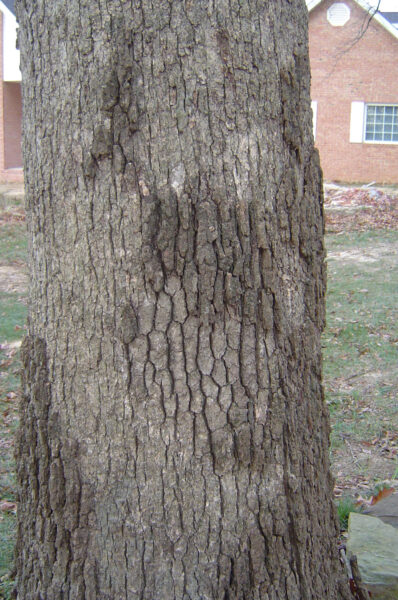
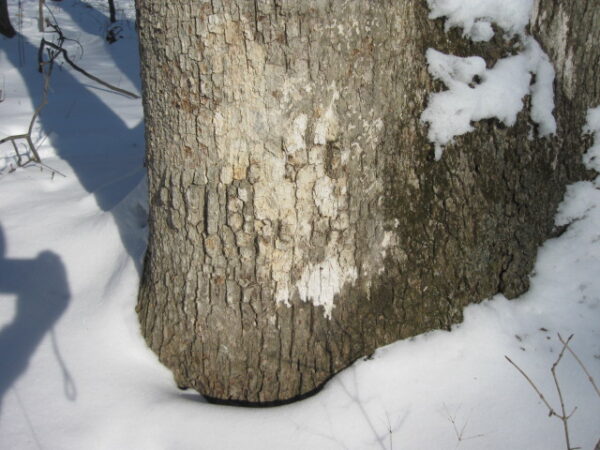
Purdue Landscape Report: These oak trees are showing the symptoms of smooth patch ( see below Figures 1, 2, 3). This condition is the result of a fungal infection that is restricted to the outer bark, causing it to slough off. The bark layer remaining is smoother and lighter in color than uninfected, normal bark.
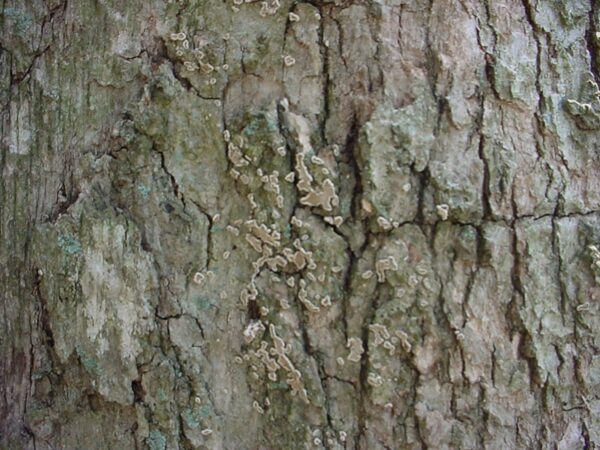
Patches can vary from a few inches to a foot or more in diameter and may occur on branches as well as the trunk. Several fungi can cause this condition. A common species, Aleurodiscus oakesii, produces clusters of flat, disc-like spore-bearing structures on the surface of the smooth bark. These structures are gray or beige in color and are usually less than 1⁄2 inch in diameter (Figure 4).
The best time to see this interesting phenomenon in the forest is during wet periods in late winter before new spring growth begins, when the light gray bark stands out in the light penetrating the canopy. The fungal structures shrink when dry so will be more apparent following rainy weather.

The fungal structures may be mistaken for wood decay fungi, but because smooth patch fungi invade only the nonliving, outer bark tissues, they do not affect the health of the tree. No control measures are needed.
The fungal structures may be mistaken for wood decay fungi, but because smooth patch fungi invade only the nonliving, outer bark tissues, they do not affect the health of the tree. No control measures are needed.
Resources:
Indiana Forestry & Woodland Owners Association (IFWOA) YouTube Channel
District Forester, Indiana DNR Division of Forestry, for over 10 acres of woodlands
Directory of Professional Foresters, Indiana Forestry & Woodland Owners Association (IFWOA)
Indiana Woodland Steward E-newsletters, Eleven Member Organization
The Nature of Oaks Webinar, Purdue Extension-FNR YouTube Channel, Shared from Indiana Forestry & Woodland Owners Association
Purdue Arboretum Explorer
Native Trees of the Midwest, Purdue University Press
A Woodland Management Moment, Playlist, Purdue Extension – Forestry and Natural Resources (FNR) YouTube Channel
Conservation Tree Planting: Steps to Success, Purdue Extension – FNR YouTube Channel
Forest Improvement Handbook, The Education Store
Woodland Stewardship for Landowners, Playlist, Purdue Extension – FNR YouTube Channel
ID That Tree – Video Playlist, Purdue Extension – Forestry and Natural Resources (FNR) YouTube Channel
Invasive Species, Playlist, Purdue Extension – FNR YouTube Channel
Invasive Plant Species Identification, Video, Purdue Extension – FNR YouTube Channel
Report Invasive Species, Purdue Invasive Species
Subscribe – Purdue Extension-FNR YouTube Channel
Tom Creswell, Plant & Pest Diagnostic Laboratory Director
Purdue Botany and Plant Pathology
Purdue Landscape Report: The bitter winter cold has finally passed us (or has it? It’s hard to tell in the Midwest)! The days are getting warmer and longer, and that means the insects are coming out of their overwintering stages. As you prepare for your landscaping and gardening this year, are you implementing preventative measures for pests? Now is the time to think about those strategies to minimize the damage to your plants.
Preventing pest issues is foundational to integrated pest management. The first step is always to start with healthy and clean plants. Don’t be afraid to bring a hand lens to the store and check for those hard-to-see pests! You don’t want to bring a problem home. Next, remember that many pests will thrive due to improper watering, light conditions, or fertilization. Avoid these issues by reviewing the recommendations for your plants and consulting a soil test. (Read more about why soil tests are essential!)
Finally, which pests/diseases do you anticipate? What are the most common pests on the plants in your landscape? Perhaps you have had issues in past years and know what to expect. Review the biology of these pests and consider implementing preventative measures now. Let’s look at a couple of examples of frequent landscape pests and some management options you can add to your list of spring preparations.
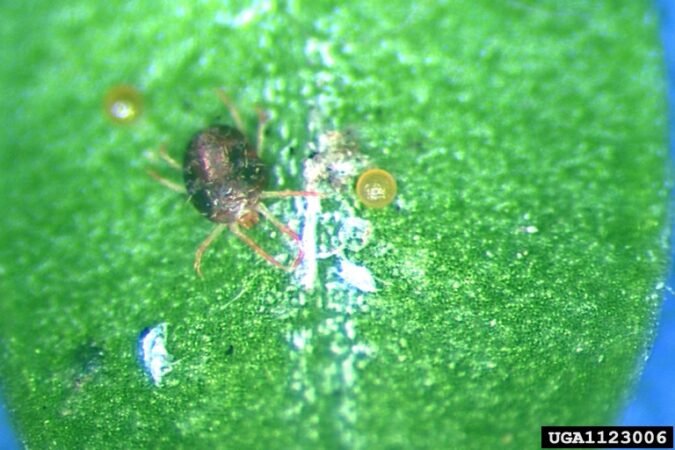
Spider Mites
Spider mites overwinter on the host plant or in leaf litter. Around this time of year, cool season mites such as spruce mites and boxwood mites are the dominant issue. Check your plants now for these spider mites, and scout regularly to make sure populations aren’t getting out of control. A rainy spring will help keep the pressure low. If you have to spray, avoid chemicals that will harm natural enemies, which are vital to spider mite management. (Learn more about spider mite management: Spider Mites on Ornamentals; and check out the Purdue Plant Doctor Quick Guide: Managing Spider Mite Mayhem)

Bagworms
Bagworms overwinter as eggs in the bags left on the tree. They’re frequent pests of arborvitae, junipers, and several other trees and shrubs. Take action now to prevent an infestation in the summer that requires costly pesticides. Manually remove the bags from your tree and drown them in soapy water. (Learn more about bagworm management: Bagworms).

Lace Bugs
Lace bugs may overwinter as eggs or adults, depending on the species. They become active again in the spring, so now is a good time to check for these pests. Focus on the undersides of the leaves where the pests are found. Lace bugs prefer hosts planted in sunny areas with a lack of plant diversity, so consider including some flowering plants in your landscape to provide pollen and nectar to beneficials. (Learn more about Lace bug management from the Purdue Plant Doctor Quick Guide: Managing Lace bugs).

What pests do you encounter in the landscape? Take a moment to review their biology and your options for preventative management. Be proactive now and reduce your pest problems for the season ahead. Read the original article, Insects are waking up – are you prepared?
ID That Tree, Playlist, Purdue Extension – FNR YouTube Channel
A Woodland Management Moment, Playlist, Purdue Extension – FNR YouTube Channel
Woodland Stewardship for Landowners, Playlist, Purdue Extension – FNR YouTube Channel
Native Trees of the Midwest, Purdue University Press
Investing in Indiana Woodlands, The Education Store
Indiana Department of Natural Resources: Invasive Species
Indiana Invasive Species Council
Cooperative Invasive Species Management Area (CISMA)
Report Invasive, Purdue Extension
Episode 11 – Exploring the challenges of Invasive Species, Habitat University-Natural Resource University
What are invasive species and why should I care?, Got Nature? Blog, Purdue Extension – FNR
Spotted Lanternfly Found in Indiana, Purdue Landscape Report
Alicia Kelley, Cooperative Agricultural Pest Survey (CAPS) Coordinator
Purdue Extension – Entomology

Recent Posts
- Disease May Cause Wilting and Eventual Death of Certain Trees and Shrubs, Purdue Landscape Report
Posted: October 5, 2026 in Disease, Forestry, Plants - October Is Firewood Month: Protect Indiana’s Forests by Making Smart Choices
Posted: October 1, 2026 in Forestry, Forests and Street Trees, How To, Invasive Insects, Urban Forestry - Minecraft Meets the Hellbender
Posted: September 22, 2026 in Aquaculture/Fish, Aquatic/Aquaculture Resources, Wildlife - Is It Too Early to Think About Christmas Tree Pests?
Posted: in Christmas Trees, Invasive Insects, Safety - What You Plant Matters to Wildlife
Posted: September 16, 2026 in Plants, Urban Forestry, Wildlife - Woodland Flowers of Late Summer
Posted: September 14, 2026 in Forestry, Gardening, Wildlife, Woodlands - Heavy August Rains Bring More Mosquitoes to Indiana
Posted: September 9, 2026 in How To, Invasive Insects, Safety, Wildlife - Question: Why Did the Shagbark Hickories Survive the Tornado?
Posted: August 27, 2026 in Forests and Street Trees, How To, Urban Forestry - New Indiana Woodland Steward Newsletter
Posted: August 12, 2026 in Forestry, Urban Forestry, Wildlife, Woodlands - Indiana Fall Hunting Licenses on Sale and New Mobile App Available
Posted: in Forestry, How To, Wildlife
Archives
Categories
- Alert
- Aquaculture/Fish
- Aquatic/Aquaculture Resources
- Ask the Expert
- Christmas Trees
- Community Development
- Disease
- Drought
- Forestry
- Forests and Street Trees
- Gardening
- Got Nature for Kids
- Great Lakes
- How To
- Invasive Animal Species
- Invasive Insects
- Invasive Plant Species
- Land Use
- Natural Resource Planning
- Nature of Teaching
- Plants
- Podcasts
- Ponds
- Publication
- Safety
- Spiders
- Timber Marketing
- Urban Forestry
- Webinar
- Wildlife
- Wood Products/Manufacturing
- Woodland Management Moment
- Woodlands