 Purdue University - Extension - Forestry and Natural Resources
Got Nature? Blog
It all starts with providing some supplemental nutrition for small to medium-aged trees in the late fall when trees go into a state of dormancy. This is when trees stop active growth and begin to form terminal buds, drop leaves and develop cold resistance. Adding fertilizer to trees too early in the season can push new growth which will be prone to winter damage.
A fertilization program is used to maintain trees in a vigorous condition and to improve their immune system against pests. Fertilizing trees refers to the practice of adding supplemental nutrients (chemical elements) required for normal growth and development. However, you really can’t “feed” a tree, since trees are autotrophs. They use nutrients to feed themselves by making sugar in the leaves through photosynthesis.
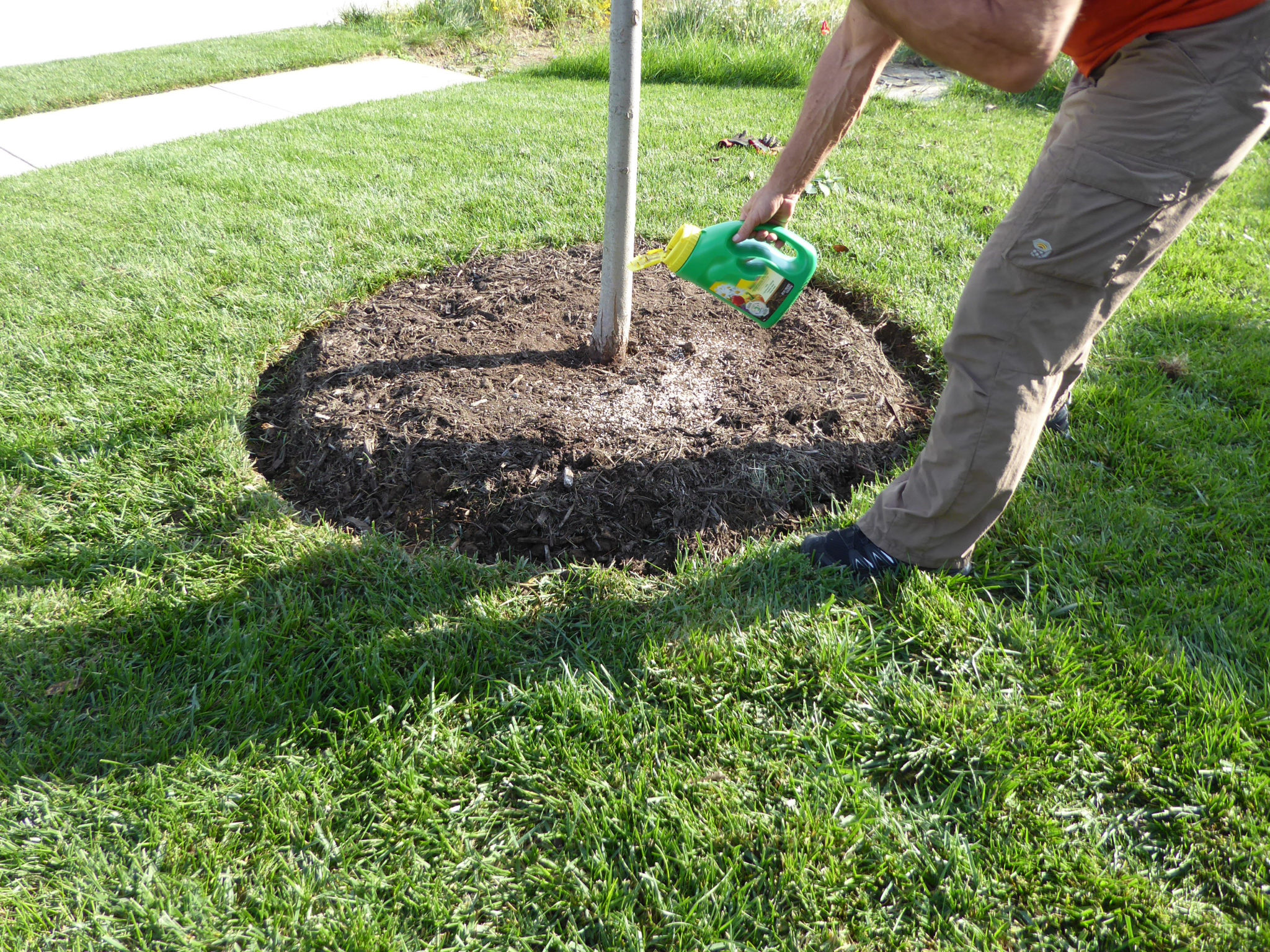
Applying fertilizer to newly established tree 3rd year after transplanting.
Nitrogen (N), phosphorus (P), and potassium (K) are plant nutrients needed in the largest quantity and these are most commonly applied as a complete fertilizer. However, the addition of any soil nutrient is recommended only if soil or plant foliage tests indicate a deficiency. For trees and shrubs in most of Indiana, the two most common causes of nutrient problems are high pH (alkaline) soils, which can lead to chronic deficiencies of nutrients in some tree species, such as red maple and pin oak, and nitrogen-deficient soils. Typical symptoms include yellowing chlorotic leaves and reduced growth and smaller leaf size.
Trees in natural settings get nutrients from the air, organic matter, nutrient cycling, and microbial activity. In many cases, supplemental nutrition is not necessary in fertile soils which have enough nutrients in the proper amounts to support healthy growth, especially on established trees, but in the urban and suburban environment, often a little assistance is needed. The more challenging urban environment provides less opportunity for healthy growth due to poor, fragmented soils, reduced microbial activity and compaction. Trees needing fertilization to stimulate growth include those exhibiting the symptoms of pale green, undersized leaves, chlorosis, reduced growth rates and those in decline resulting from insect attacks or disease problems. Also, turf can be a serious contender for nutrients and trees surround by turf benefit from additional nitrogen applications every couple of years.
Trees which should not be fertilized include newly planted trees in the current year and those with root damage from recent trenching, construction or other disturbance. The root systems of these plants will need to re-establish before fertilizers are applied with cultural practices such as supplemental moisture and mulch. Older, established trees do not need to be fertilized every year and may never need supplemental feeding. In fact, serious pest problems can result on over-fertilized trees. Research indicates that young deciduous trees benefit from additional nitrogen in low-analysis, slow release forms. Conifers require less fertilization and are genetically adapted to low-nutrient soils.
For more information on how and when to fertilize trees, refer to HO-140-W, Fertilizing Woody Plants from the Purdue Extension Education Store.
Article shared by: The Landscape Report, Start Preparing Trees for Winter and Next Year.
Resources:
Trees and Storms: Understanding Damage, Risk and Recovery – Got Nature? Blog, Purdue Extension – FNR
Tree Risk Management – Got Nature? Blog, Purdue Extension – FNR
Fertilizing Woody Plants, The Education Store
Lindsey Purcell, Urban Forestry Specialist
Purdue Forestry and Natural Resources

Photo Credit: Katja Schulz, flickr.com
A lepidopterist from the Florida Museum of Natural History has made a shocking discovery regarding moth behavior. Dr. Andrei Sourakov noted a dozen or so black Idia moths resting inside a hollow tree. This species, and most other moth species is typically solitary as opposed to social species like bees and ants. He went on to discover groups of as many as 400 individuals each oriented facing north (the top of the tree) and tucked away form the light. Both males and females rested quietly, each spaced away form the first reported example of moths gathering in a large group on a daily basis, similar to the roosting observed in bats, a primary predator of moths.

Photo Credit: Katja Schulz, flickr.com

Photo Credit: Collin Gillette, flickr.com
Dr. Sourakov also noted that the moths do not have a preference for tree type as they have been observed in sweetgum (Liquidambar styraciflua) and southern red oak (Quercus falcata) trees in Florida. It is suspected that a single moth finds a hollow tree and releases sex hormones to inform nearby moths where to assemble. As no mating has been observed at the location, these moths respond to the pheromone lure but do not act on a any perceived sexual stimulus.
References:
Andrei Sourakov. Mass aggregations of Idia moths (Lepidoptera: Erebidae) inside hollow trees in Florida. Tropical Lepidoptera Research, 2018 DOI: 10.5281/zenodo.1309644
Online Article: Florida Museum of Natural History. “Hollow trees host massive moth slumber parties.” ScienceDaily. ScienceDaily, 28 July 2018.
Resources:
Hardwood Ecosystem Experiment (HEE) Highlights: Moths, video, Purdue Extension – Forestry & Natural Resources Got Nature? Blog
Gypsy Moth (Spongy Moth) website, Purdue Extension-Entomology
Spongy Moth – Indiana Department of Natural Resources
The Gypsy Moth in Indiana – The Education Store, Purdue Extension resource center
Shaneka Lawson, USDA Forest Service/HTIRC Research Plant Physiologist/Adjunct Assistant Professor
Purdue University Department of Forestry and Natural Resources
A recent study at the University of British Columbia noted that a single tree along an urban street can help alleviate winds, shade pedestrians, and decrease wind pressure on nearby buildings. For both homes and businesses, the presence of trees can help decrease costs associated with maintaining indoor temperatures.
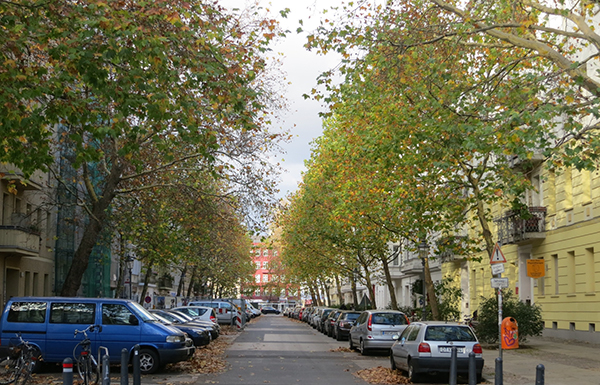
Photo credit: Kris Arnold, flickr.com
Researchers used remote sensing technology to create intricately detailed computer models of a neighborhood that included each tree, garden, and structure. The models were able to elucidate how various scenarios (no trees, bare trees, full-leaf trees) influence airflow, thermal patterns, and overall radiant heating and cooling throughout the streets of the neighborhood. Resultant data indicated trees at various stages can decrease wind speeds by as much as a factor of two. For example, a strong 30km/h wind could be reduced to a comfortable 15km/h breeze. The results also showed trees reduced the strain caused by wind pressure on building spaced closely together and farther apart. Close examination of the data indicated wind pressure causes up to a third of the costs associated with energy consumption and increased costs up to 10% in winter and 15% in summer. Using data gleaned from over a decade of measurements (from a monitored wind tower), they discovered even leafless trees are beneficial in winter months to regulate air flow and wind pressure on buildings.
This modeling effort represents the first of its kind to simulate actual neighborhood conditions using an existing neighborhood recreated in great detail as a model. Further work of this kind can be used to predict storm effects on structures and pedestrian movement. These data can assist engineers and city planners in the creation and layout of buildings, streets, and greenery while limiting energy losses and help evaluate proposed effects of weather forecasts throughout the neighborhood.
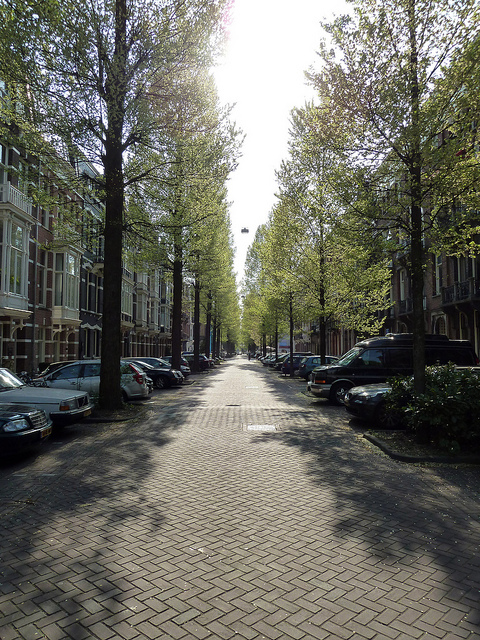
Photo credit: Rob Young, flickr.com.
References:
M.G. Giometto, A. Christen, P.E. Egli, M.F. Schid, R.T. Tooke, N.C. Coops, M.B. Parlage. 2017. Effects of trees on mean wind, turbulence and momentum exchange within and above a real urban environment. Advances in Water Resources, 106: 154 DOI: 10.1016/j.advwatres.2017.06.018
University of British Columbia. Trees can make or break city weather. Science Daily, 26 July 2017.
Resources:
Tree Selection for the “Un-natural” Environment, The Education Store – Purdue Extension’s resource center
Planting Your Tree Part 1: Choosing Your Tree (Youtube video), Purdue Extension-FNR
Tree Installation: Process and Practices , The Education Store
Tree Planting Part 2: Planting a Tree (Youtube video), Purdue Extension-FNR
Top 5 List for Tree Selection and Planting, Got Nature?, Purdue Extension-FNR
Indiana’s Urban Woodlots, The Education Store
Shaneka Lawson, USDA Forest Service/HTIRC Research Plant Physiologist/Adjunct Assistant Professor
Purdue University Department of Forestry and Natural Resources

Review trees on a regular basis for health and safety.
Trees provide many benefits for our homes with shade, beauty and improved air quality as just a few, however, if a tree has defects which could lead to a failure, your shade tree could become a liability. It is important to understand that tree owners have a legal duty to inspect and maintain their trees. All property owners should take reasonable steps to protect themselves and others by taking a look at trees around the property on a regular basis. Here are some suggestions to consider in making your trees safer for everyone.
Reduce Tree Liabilities: In general, the law obligates tree owners to periodically inspect their property and take reasonable care to maintain it and this includes trees. Routine inspections also exhibit that the tree owner is actively managing their property and trees and thereby reduces their liability if a failure does occur.
When it comes to trees, it’s best to have a professional conduct risk and tree health assessments if there is any uncertainty. However, Homeowners can look for tree defects, including dead branches, broken limbs, decay pockets or other conditions that reduce a tree’s strength. Review the tree from the top, down. Look at the tree’s crown, main branches, trunk and root area to see if there is anything abnormal. If you find easily recognizable defects like dead and falling branches, cavities, fungal fruiting bodies or newly-formed leans on a tree, consider having the tree examined by a certified arborist. This is especially important after a severe storm. Trees can easily survive normal weather conditions for many years, however, excessive winds can have a real impact. Make certain trees aren’t removed prematurely out of fear without making an informed decision along with the arborist.
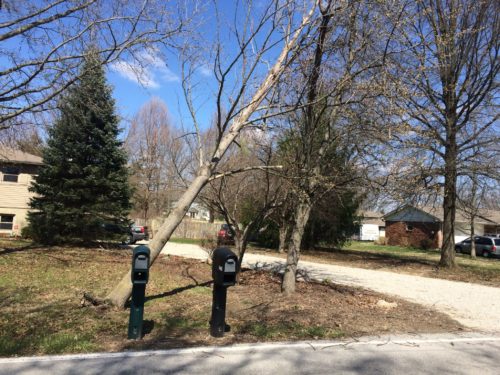
Recent leans developing on trees may be corrected, however, they do pose a risk and should be inspected by an arborist.
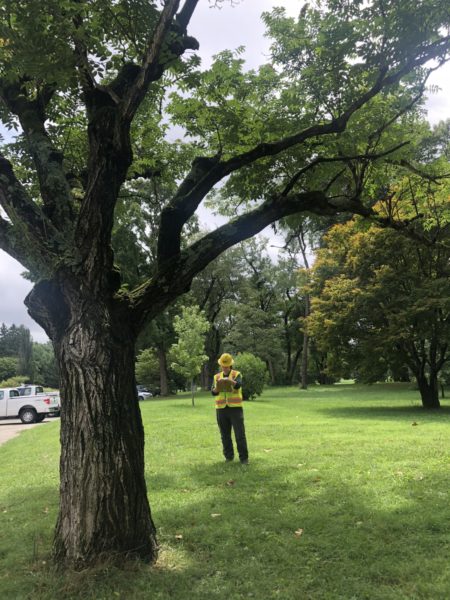
Understanding tree health and risk is challenging for tree owners. It is best to find a ISA Certified Arborist to help with identifying tree issues.
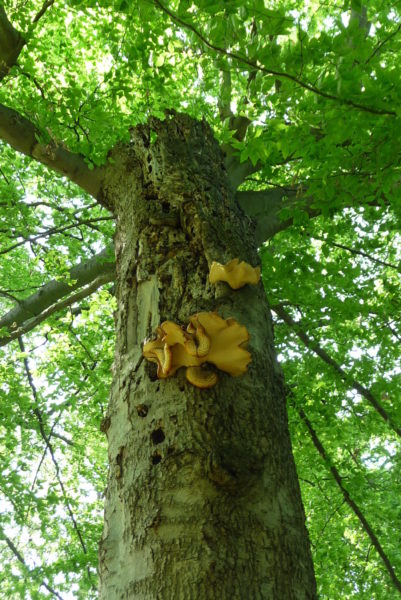
Look for unusual fungal growths on you trees. This indicates decay which can lead to a higher risk of failure.
Schedule Tree Work: If risk or health issues are found during the inspection, schedule the tree work with a qualified arborist. Be sure to find a tree care company in the area that is reputable and can provide references. Also, being fully insured is another important item to be aware when choosing an arborist. To find an arborist in your area, go to the website, www.treesaregood.org.
Inspection on a regular basis: Trees should be inspected regularly. These inspections should occur during the growing season and dormancy. Further inspections should be conducted after major weather occurrences. At a minimum, trees should be inspected every five years by an arborist, especially if there is decline and dieback present in your trees.
Article shared by: The Landscape Report, Why Tree Inspections?.
Resources:
Trees and Storms: Understanding Damage, Risk and Recovery – Got Nature? Blog, Purdue Extension – FNR
Tree Risk Management – Got Nature? Blog, Purdue Extension – FNR
Planting Problems: Trees Planted Too Deep, Video, Purdue Extension – Forestry and Natural Resources YouTube Channel
Planting Your Tree Part 1: Choosing Your Tree, Video, Purdue Extension YouTube Channel
Tree Planting Part 2: Planting a Tree, Video, Purdue Extension YouTube Channel
Tree Appraisal and the Value of Trees, The Educational Store, Purdue Extension resource center
Surface Root Syndrome, The Education Store
Iron Chlorosis of Trees and Shrubs, The Education Store
Tree Pruning Essentials, Publication & Video, The Education Store
Cold Injury to Trees, Got Nature? Post, Purdue FNR Extension
Urban Forestry
Purdue Extension – Forestry and Natural Resources (FNR)
If you’ve ever had to work on a tree leaf collection, no doubt you included a leaf from Indiana’s state tree. Also known as tulip poplar and yellow poplar, the tuliptree is actually not a poplar at all. It is a member of the magnolia family known botanically as Liriodendron tulipifera.
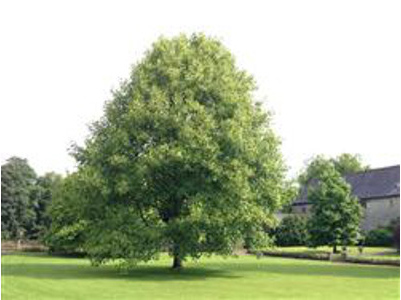
A tuliptree, the state tree of Indiana.
The tuliptree is native to most of the eastern half of the United States and prefers rich, moist, well-drained, loamy soil. It is found throughout Indiana, but it is more prevalent in the southern two-thirds
of the state.
Its unusual flowers inspired the common name. The flowers are shaped much like a tulip with greenish-yellow petals blushed with orange on the inside. Because they generally are found high in the leaf canopy, the flowers often go unnoticed until they drop off after pollination. The leaves of this tree are also quite distinct — each one has a large, V-shaped notch at the tip.
Because tuliptrees transplant easily and grow fast, they are a popular choice for in home yards. But don’t be fooled by its small size in the nursery. Give a tuliptree plenty of room in your landscape plan. A tuliptree can reach as tall as 190 feet where it’s allowed to thrive, but it is more likely to reach 70 feet tall as a mature landscape specimen. Tuliptree is not without its share of pests and diseases. Among the most common are leaf spots, cankers, scale insects, and aphids….
For full article view “State tree a popular landscape choice,” Morning AgClips.
Related Resources:
Pruning Ornamental Trees and Shrubs, The Education Store-Purdue Extension resource center
Tulip Poplar: Is Indiana’s State Tree a Protector for the Rare American Ginseng Plant?, GotNature?, Purdue Extension – Forestry and Natural Resources
Rosie Lerner, Extension Consumer Horticulturist
Purdue University, Horticulture & Landscape Architecture
‘Twas the day before Arbor Day, when all through the park
Not a creature was stirring, no chirp, squeak, or bark;
The birds were perched on the utility wires with care,
In hopes that many trees soon would be there;
All types of squirrels, gray, fox, and red;
Had visions of oak trees dancing in their head;
And mamma with her overalls, and I my work jeans,
Were prepared and ready to make the park green,
When out in the park there arose such a clatter,
I sprang to my window to see what was the matter.
Away out my door I flew like a flash,
Running to the crowd that was gathered ‘round the ash.
The dead looking tree with no leaves to show,
Gave a glimmer of midday through its branches to objects below,
When what to my wondering eyes came ‘round the corner with ease,
But a miniature truck and in the bed, eight tiny trees,
With a little old driver so lively and quick,
I knew in a moment it must be Mayor Nick.
The trees looking so healthy and flourishing as they came,
He whistled, and shouted, and called them by name:
“White Oak! Red Cedar! Silver Maple and Black Cherry!
Cottonwood, Black Walnut, American Beech and Hackberry!
It is time to grab your gloves, shovels, and spades!” He did call,
“Now plant away! Plant away! Plant away all!”
With his blueprints out he started to show,
Where in the park each tree would go;
So excited and anxious with all my gear I flew
To the truck full of trees, and Mayor Nicolas too.
And then, in a moment, I heard on the road
The roaring of more trucks with trees overflowed.
As I lifted my head, and was turning around,
The city forester and many arborists came with a bound.
Mayor Nick had called in the professionals to help us out,
So we all would understand what this project was all about.
“Before we start planting, I want to explain
the benefits from these trees the city will gain!
Trees increase property value and improve living conditions.
They also relieve stress and help with CO2 emissions.
Better air and water quality, and sound barriers, too,
And the best part is the beautiful new view!”
After Mayor Nick’s speech, the city forester stepped in
“Whose ready to plant some trees?” He said with a grin.
The crowd cheered and the project was now on its way
Making the park beautiful and green in honor of Arbor Day.
First thing we had to do, was remove the dead trees.
The park was originally filled with ash, which was a feast for EAB.
The arborists cut all the trees down one by one.
There was so much help, in no time the cleanup was done.
As we finally started planting, the professionals came around
Making sure we were putting the trees properly into the ground.
I learned that you cut and remove only 1/3-1/2 of the B&B,
Then, you check the roots, the most important part of the tree.
If the tree has spiraling roots, all four sides must be sawed,
So the tree’s way of nutrient uptake and anchorage is not flawed.
It is also important that the root flare is not below the soil line,
Many people tend to bury it, thinking their tree will be fine.
Before planting your tree, consider the tree’s full-grown size.
Improper planting can cause the tree to die otherwise.
I’m so glad I decided to volunteer today
I learned so much about planting trees the right way!
After countless hours of hard work and sweat,
Mayor Nick’s goals for the park were finally met.
He thanked everyone, and as he drove out of sight,
He shouted “Happy Arbor Day to all, and to all a good night!”
Arbor Day Paper, FNR-445 Urban Forestry Topics
Author: Erin Hipskind, BS 2016
Arbor Day is an annual observance that celebrates the role of trees in our lives and promotes tree planting and care. As a formal holiday, it was first observed in 1872, in Nebraska, but tree planting festivals are as old as civilization. The tree has appeared throughout history and literature as the symbol of life. Arbor Day celebrations for 2017 is on Saturday, April 29th. Check out activities around your area: Purdue Extension County Offices, Indiana Department of Natural Resources or Tippecanoe Soil & Water Conservation District.
Other resources:
Tree Installation: Process and Practices, The Education Store-Purdue Extension resource center
Tree Planting Part 1: Choosing a Tree – video, The Education Store
Tree Planting Part 2: Planting Your Tree – video, The Education Store
Lindsey Purcell, Urban Forestry Specialist
Purdue University, Department of Forestry and Natural Resources
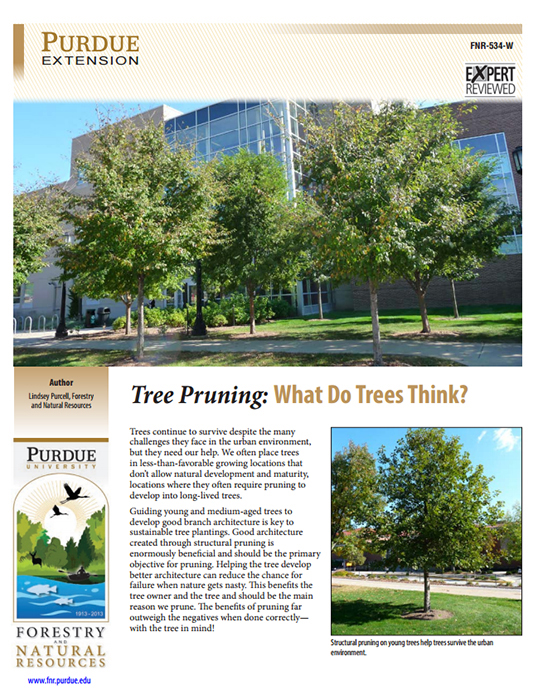 The Tree Pruning: What Do Trees Think publication explains the physiological and physical changes that happen within trees as a response to pruning. Guiding young and medium-aged trees to develop good branch architecture is key to sustainable tree plantings. Good architecture created through structural pruning is enormously beneficial and should be the primary objective for pruning. Helping the tree develop better architecture can reduce the chance for failure when nature gets nasty. The benefits of pruning far outweigh the negatives when done correctly–with the tree in mind!
Resources:
Tree Pruning Essentials – publication, The Education Store, Purdue Extension Resource Center
Tree Pruning Essentials – video, The Education Store
Trees and Storms, Got Nature?
Tree Risk Management – Got Nature? Blog, Purdue Extension – FNR
Lindsey Purcell, Urban Forestry Specialist
Purdue University, Department of Forestry and Natural Resources
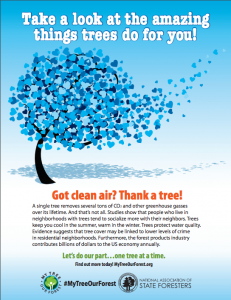 Both urban and community forests alike are indispensable staples of our ecosystem that we cannot live without. The My Tree—Our Forest® campaign, from The National Association of State Foresters, is an urban and community forestry campaign that aims to increase public understanding about the benefits that healthy forests offer to communities across the United States and the role that state forestry agencies play in protecting the nation’s urban trees.
For your next outreach event, consider downloading the My Tree—Our Forest® fact sheet, a free pdf that takes a look at the amazing things trees do for you.
Resources:
Indiana’s Urban Woodlots, The Education Store
Urban Wood and Traditional Wood: A Comparison of Properties and Uses, The Education Store
Tree selection for the “Un-natural” Environment, The Education Store
Planting Your Tree Part 1: Choosing Your Tree – Video, The Education Store
Lumber from Urban and Construction-Site Trees, The Education Store
National Association of State Foresters (NASF)
Trees and all forestlands are a major asset to our cities, towns, and communities. They work hard to provide aesthetic, functional and environmental benefits to improve the quality of life. A well-planted and maintained tree will grow faster and live longer than one improperly planted or maintained. Before planting your tree consider selection, placement, and maintenance to ensure an outcome that will meet your needs. This video will walk you through everything you need to know before you plant your tree.
Resources:
Tree Planting Part 1: Choosing a Tree, The Education Store
Tree Installation: Process and Practices, The Education Store
Financial and Tax Aspect of Tree Planting, The Education Store
Tree Risk Management – Got Nature? Blog, Purdue Extension – FNR
Designing Hardwood Tree Plantings for Wildlife, The Education Store
Planning the Tree Planting Operation, The Education Store
Lindsey Purcell, Urban Forestry Specialist,
Purdue Department of Forestry and Natural Resources
Choosing and planting a tree should be a well-informed and planned decision. Proper selection and planting can provide years of enjoyment for you and future generations as well as increased property value, improved environmental quality, and economic benefits. On the other hand, an inappropriate tree for your site or location can be a continual challenge and maintenance problem, or even a potential hazard, especially when there are utilities or other infrastructure nearby. This informative video will describe everything needed to know about choosing the right tree.
Resources:
Financial and Tax Aspect of Tree Planting, The Education Store
Tree Risk Management – Got Nature? Blog, Purdue Extension – FNR
Designing Hardwood Tree Plantings for Wildlife, The Education Store
Importance of Hardwood Tree Planting, The Education Store
Planning the Tree Planting Operation, The Education Store
Purdue Extension – Forestry and Natural Resources

Recent Posts
- Disease May Cause Wilting and Eventual Death of Certain Trees and Shrubs, Purdue Landscape Report
Posted: October 5, 2026 in Disease, Forestry, Plants - October Is Firewood Month: Protect Indiana’s Forests by Making Smart Choices
Posted: October 1, 2026 in Forestry, Forests and Street Trees, How To, Invasive Insects, Urban Forestry - Minecraft Meets the Hellbender
Posted: September 22, 2026 in Aquaculture/Fish, Aquatic/Aquaculture Resources, Wildlife - Is It Too Early to Think About Christmas Tree Pests?
Posted: in Christmas Trees, Invasive Insects, Safety - What You Plant Matters to Wildlife
Posted: September 16, 2026 in Plants, Urban Forestry, Wildlife - Woodland Flowers of Late Summer
Posted: September 14, 2026 in Forestry, Gardening, Wildlife, Woodlands - Heavy August Rains Bring More Mosquitoes to Indiana
Posted: September 9, 2026 in How To, Invasive Insects, Safety, Wildlife - Question: Why Did the Shagbark Hickories Survive the Tornado?
Posted: August 27, 2026 in Forests and Street Trees, How To, Urban Forestry - New Indiana Woodland Steward Newsletter
Posted: August 12, 2026 in Forestry, Urban Forestry, Wildlife, Woodlands - Indiana Fall Hunting Licenses on Sale and New Mobile App Available
Posted: in Forestry, How To, Wildlife
Archives
Categories
- Alert
- Aquaculture/Fish
- Aquatic/Aquaculture Resources
- Ask the Expert
- Christmas Trees
- Community Development
- Disease
- Drought
- Forestry
- Forests and Street Trees
- Gardening
- Got Nature for Kids
- Great Lakes
- How To
- Invasive Animal Species
- Invasive Insects
- Invasive Plant Species
- Land Use
- Natural Resource Planning
- Nature of Teaching
- Plants
- Podcasts
- Ponds
- Publication
- Safety
- Spiders
- Timber Marketing
- Urban Forestry
- Webinar
- Wildlife
- Wood Products/Manufacturing
- Woodland Management Moment
- Woodlands