 Purdue University - Extension - Forestry and Natural Resources
Got Nature? Blog
Do you know what’s “bugging” your trees? There are several exotic insects which may be attacking our trees that you should be on the lookout for. Some have already arrived in Indiana, and others are still beyond our borders but have a risk of showing up here in the future.
Dr. Elizabeth Barnes, exotic forest pest educator with Purdue Department of Entomology, and Liz Jackson Purdue extension forestry specialist, describe these exotic insects, symptoms to watch for in your trees, and discuss what some of the biggest future pest concerns are in this Facebook Live session from June 18, 2020.
Resources
Purdue Report Invasive website
Indiana Department of Natural Resources Division of Entomology & Plant Pathology
Don’t Move Firewood
Purdue Plant and Pest Diagnostic Lab
Indiana District Foresters
Indiana Consulting Foresters
Purdue Landscape Report
Insect specific sites:
Asian Longhorned Beetle Information (from APHIS)
Spotted Lanternfly (Penn State Extension)
Emerald Ash Borer Information from Purdue
EAB University: Invasive insects and pathogens webinar series
Elizabeth Barnes, Exotic Forest Pest Educator
Purdue University Entomology
Purdue Landscape Report: Yes, we need trees and here’s why…
Trees have presented as more than just a pretty face as research has indicated that trees are even more valuable for their function as much as their form. Currently, more than 50 percent of the world’s population now lives in towns and cities. In the Hoosier state, the last census indicated that 72% of our population lives in an urban area and this statistic is increasing annually.
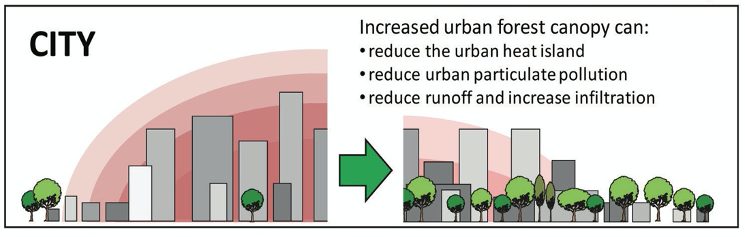
Properly planted trees improve living conditions in downtown and suburban areas. Sources
For the most part, the rapid expansion of cities takes place with little consideration to land use planning strategy. The resulting human pressure has highly damaging effects on our urban trees and green spaces. The environmental impacts of climate change are intensified by urbanization such as increased pollution, increased temperatures, and larger demands on infrastructure such as stormwater systems.
Urban trees can help to mitigate some of the negative impacts and social consequences of urban sprawl and make cities more resilient to these changes. These important functions are called ecosystem services. This is the way urban foresters measure the benefits that trees provide other than just their beauty. Ecosystems services are the many benefits that trees and plants provide to the community. They improve our quality of life by providing food, cleaner air and water, regulating temperatures, supporting pollination and providing recreational, health and spiritual benefits.
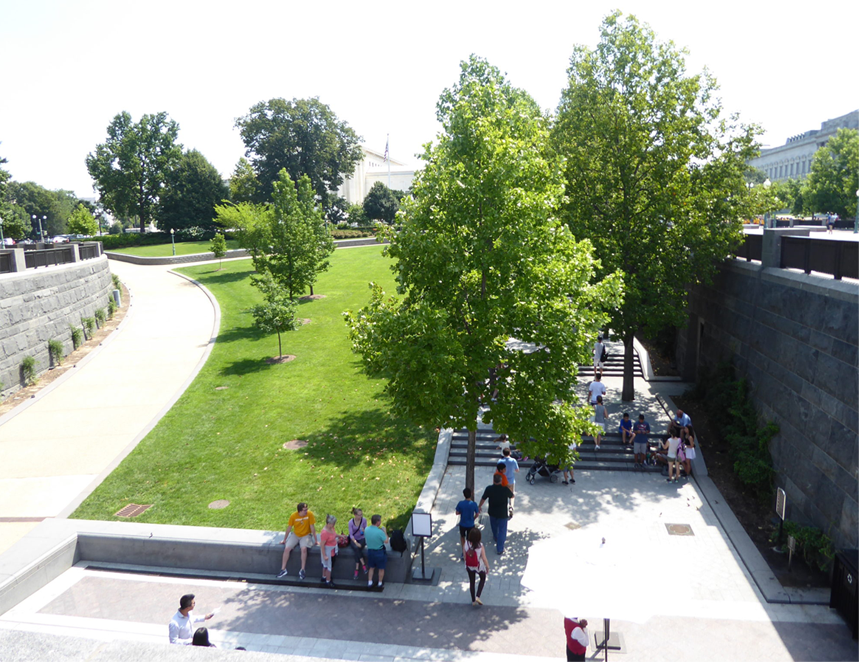
People will stay longer and enjoy urban economy more with tree-lined streets. Sources
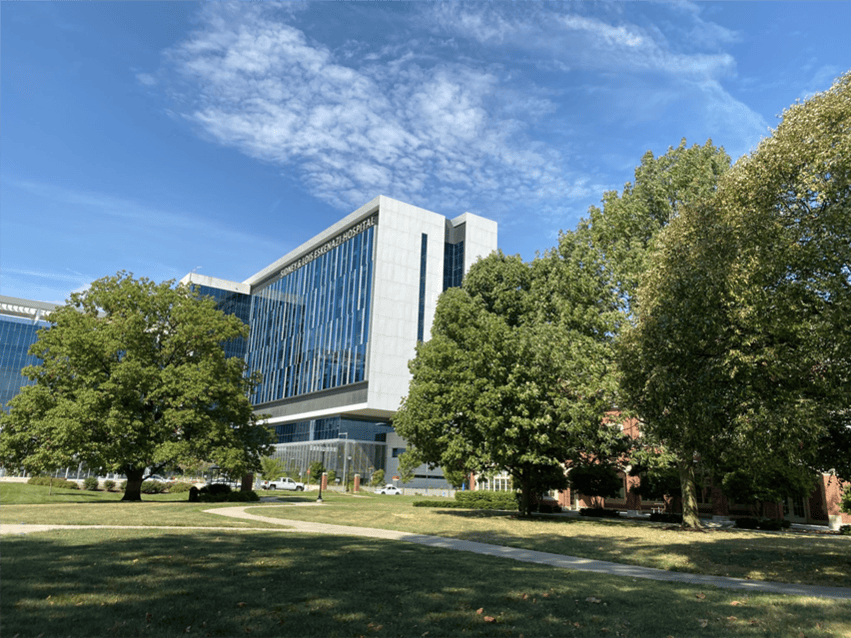
Trees are proven to reduce length of hospital stays and improve birth outcomes. Sources
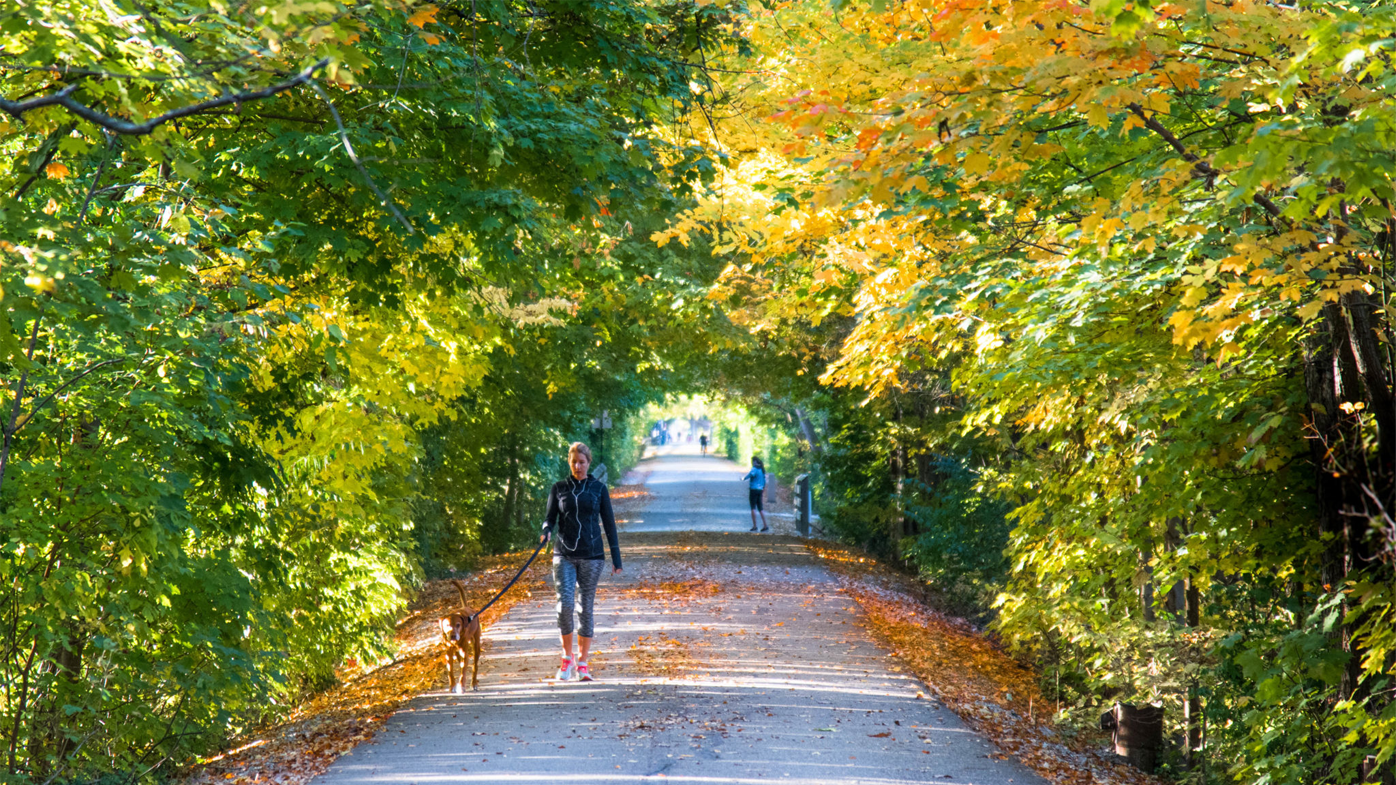
Recreational areas are critical to community well-being. Sources
Here are some easy ways in which urban trees and woodlots contribute to making cities more environmentally sustainable and livable:
- Trees can contribute to the increase of local food and nutrition security, providing food such as fruits and nuts for wildlife and human consumption.
- Trees play an important role in increasing urban biodiversity, providing plants and animals with a proper habitat, food and protection.
- A mature tree can absorb up to 350 lbs. of CO2 per year. As a result, trees play an important role in climate change mitigation. In cities with high levels of pollution, trees can improve air quality making cities healthier places to live in.
- Strategic placement of trees in cities can help to cool the air between 30-40o F, thus reducing the urban “heat island” effect, helping reduce extreme heat conditions in summer weather.
- Large trees are great biological filters for urban pollutants and particulate pollution. They absorb pollutant gases (such as carbon monoxide, nitrogen oxides, ozone and Sulphur oxides) and filter fine particulates such as dust, dirt, or smoke out of the air by trapping them on leaves and bark.
- Research shows that living in close proximity of urban green spaces and having access to them, can improve physical and mental health, for example by decreasing high blood pressure and stress. Also, research indicates greatly improved neo-natal health as well. This, in turn, contributes to the well-being of urban communities.
- Mature trees regulate water flow and play a key role in preventing floods and reducing the risk of sewer overflow. Stormwater management is a crucial city infrastructure issue and trees help. A mature tree, for instance, can intercept more than 5,000 gallons of water per year and without trees, every rain would contribute floods.
- Trees also help to reduce carbon emissions by helping to conserve energy. For example, the correct placement of trees around buildings can reduce the need for air conditioning by 30 percent and reduce winter heating bills by 20-50 percent.
- Planning urban landscapes with trees can increase property value, by up to 15 percent, and attract tourism and business.
These are just a few examples of the functional benefits that trees provide to our everyday life. A community or neighborhood with well-planned and well-managed green infrastructure becomes more resilient, sustainable and equitable in terms of livelihood improvement, climate change mitigation and adaptation, disaster risk reduction and ecosystems conservation. Throughout their lifetime, trees can thus provide a benefit package worth two to three times more than the investment made in planting and caring for them. Trees aren’t the answer, but they are part of the equation. Planting trees is important, but their maintenance is as equally important.
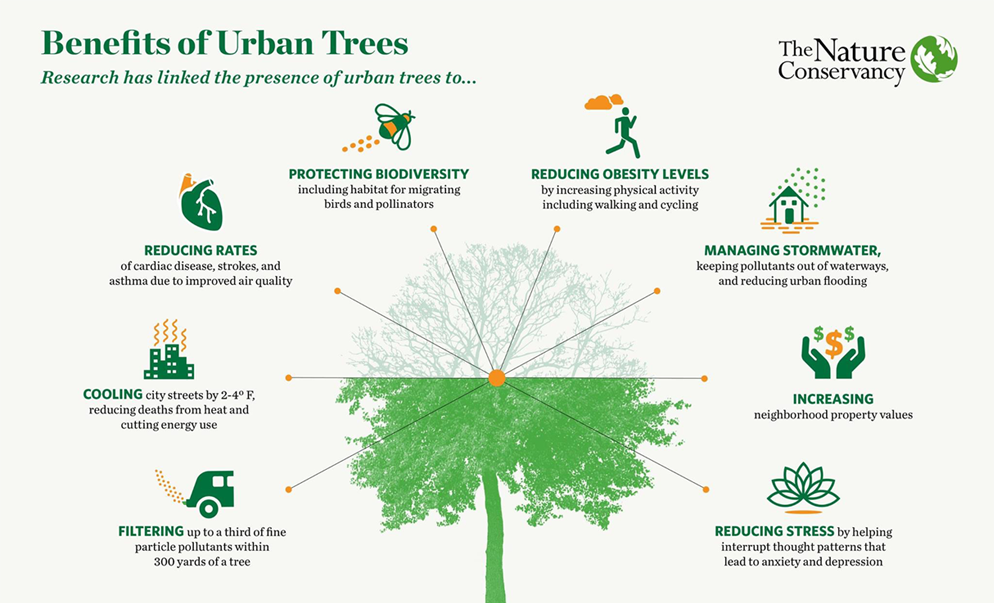
Trees make life better. Sources
For more information on urban tree care, visit the Purdue Education Store for tree care tips and suggestions.
Resources
Tree Appraisal and the Value of Trees, The Education Store, Purdue Extension’s resource center
Tree Pruning Essentials, Publication & Video, The Education Store
Tree Installation: Process and Practices, The Education Store
Tree Selection for the “Un-natural” Environment, The Education Store
The Nature of Teaching: Trees of the Midwest, The Education Store
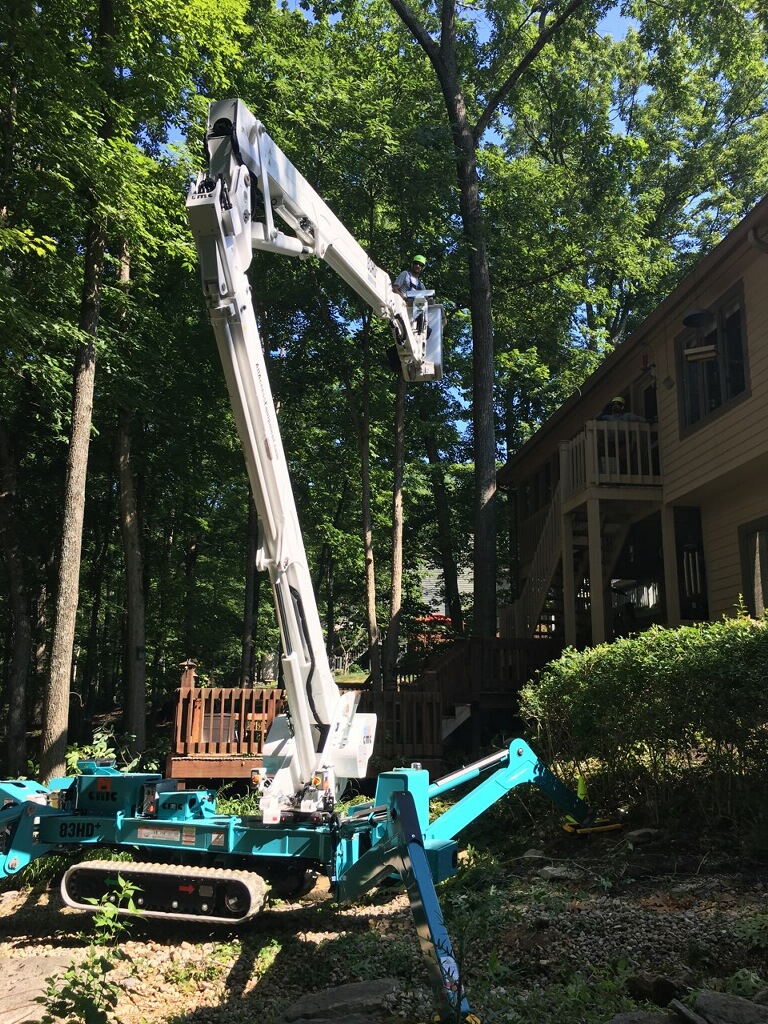
Purdue Landscape Report: There are many different aspects of tree work which include a wide range of costs, but let’s start with the most common expense: tree removal. It can be difficult to understand why removing a tree can cost so much when the whole process seems as simple as “just cutting it down.” In reality, the work is usually much more involved than making a few cuts with a chain saw and then hauling it all away.
Complexity – Trees being removed often need to be cut apart in sections to avoid dropping the whole tree or large pieces onto the lawn or landscape or into the street. This is a safer approach and also prevents serious damage to the turf and landscape below. News reports are full of accidents involving untrained tree workers, or homeowners, attempting to cut down a tree without the knowledge of how the tree reacts to being cut. Usually, specialized equipment is needed, such as aerial lifts or cranes to access the tree safely. This equipment is costly to acquire and maintain. Some of the typical equipment such as these mentioned can cost more than some homes! Often, the use of this equipment involves setting up traffic control in busy streets where permits and additional flagging support are needed.
Difficult and dangerous – 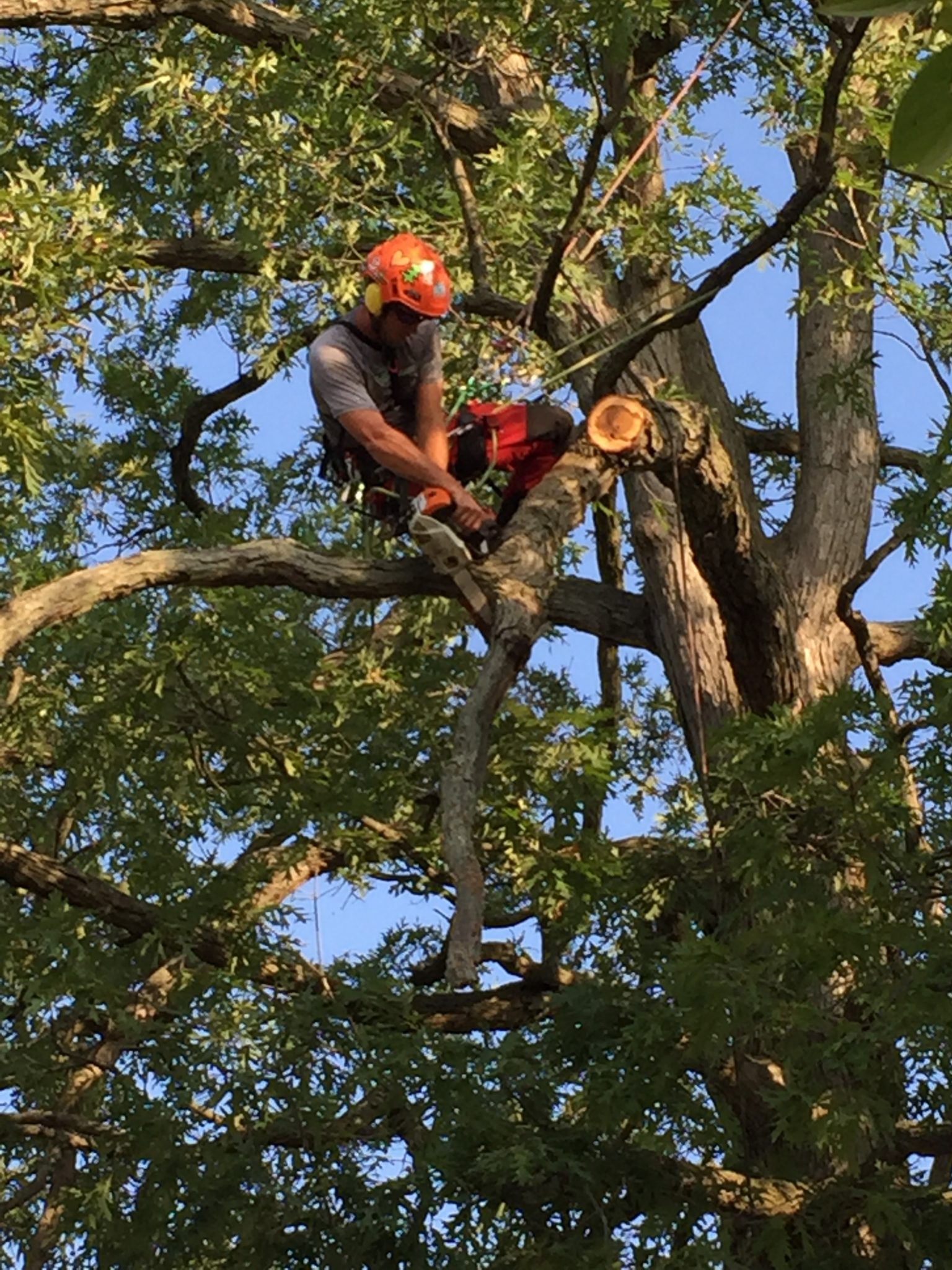 Tree pruning and tree removal, is difficult and dangerous work. Also, there is a reason why the tree is being removed. Often it has been deemed high risk or presents a danger on the site. Tree crews are regularly asked to work on trees with compromised structure from storm damage or years of neglect. These compromised trees are often dead trees, which are particularly dangerous. A tree that has been dead for several years usually becomes brittle and inflexible. When you try to cut it down, controlling the direction of fall is a challenge and it will often shatter, throwing broken branches in an uncontrolled manner. Often, tree workers are in trees that have electrical conductors running through the branches. That risky situation should speak for itself.
Insurance, Licensing – Because tree work can be hazardous, qualified companies will have expensive liability insurance to protect the homeowner’s property, as well as workers’ compensation insurance to help cover injuries sustained by the crew, should they occur. You get what you pay for and this includes tree care as well! If you select a company that is less expensive, they may not carry insurance which leaves the tree owner at a high risk of having to pay damages several times the original job estimate, if something goes wrong. Always check with your tree care company to be sure they can validate proper insurance before starting tree work. This applies to any service company which may be used in and around your home or property.
Trained and Certified Workers – Its best to choose a tree care company where the crew has current industry credentials 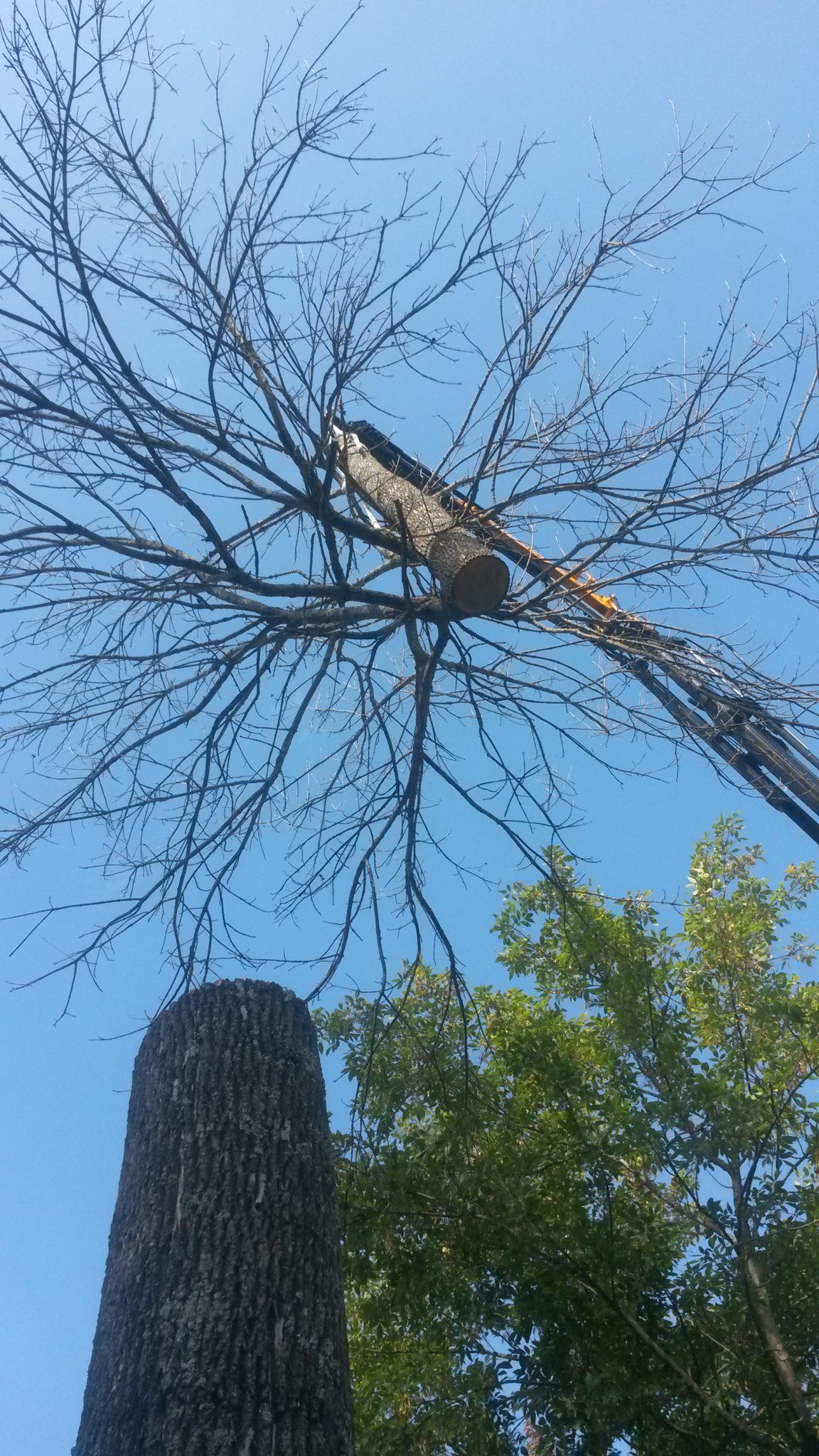 and a history of training and experience. How do you know if a company’s staff is trained and experienced? Ask to see their credentials and look for programs such as the International Society of Arboriculture (ISA) Certified Arborist, or the Tree Care Industry Association (TCIA) Certified Treecare Safety Professional which are indicators of a professional business with the expertise to perform the work. Tree owners and managers have the option to interview two or three tree care companies before deciding about tree removal or other critical practices such as pruning. Ask to see a copy of the current insurance certificate as well as copies of the crew’s competency credentials. If a company representative hesitates to provide these documents or insists, they don’t need to “prove” themselves, find another company to perform the work. Ask for references. This is easy since often all that is needed is to drive by a location to see the quality of the pruning work or removal work completed.
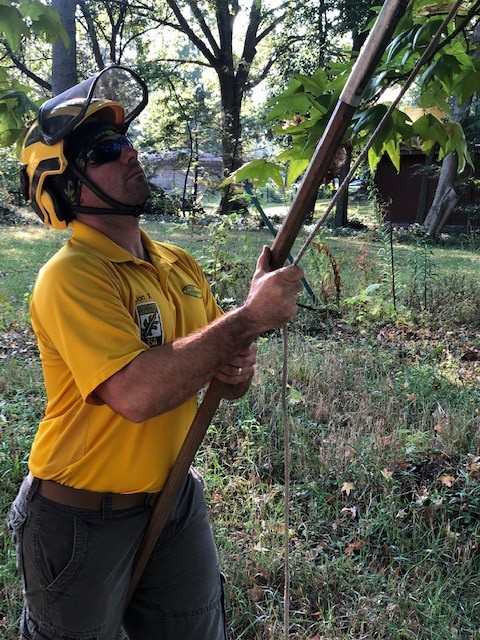
Find a professional – Also, to check for an ISA Certified Arborist in your area, visit the website www.treesaregood.org then click on the link “Find an Arborist”. By entering your zip code, a list of credentialed arborists can be found nearest your location.
Tree care performed properly will be an investment in your property that, when done correctly, will give you valued returns for decades.
Resources
Mechanical Damage to Trees: Mowing and Maintenance Equipment, The Education Store, Purdue Extension’s resource center
Tree Appraisal and the Value of Trees, The Educational Store
Tree Pruning Essentials, video, The Education Store
Tree Pruning Essentials, The Education Store
Tree Selection for the “Un-natural” Environment, The Education Store
Lindsey Purcell, Chapter Executive Director
Indiana Arborist Association
Purdue Landscape Report: Just as sure as you try to predict the weather, it is likely to change. But going out on a limb, I predict that we will have a bit of a dud for fall color display this year. Not a very risky prediction, considering that many plants already are starting to turn color and/or drop leaves in some areas of the state.
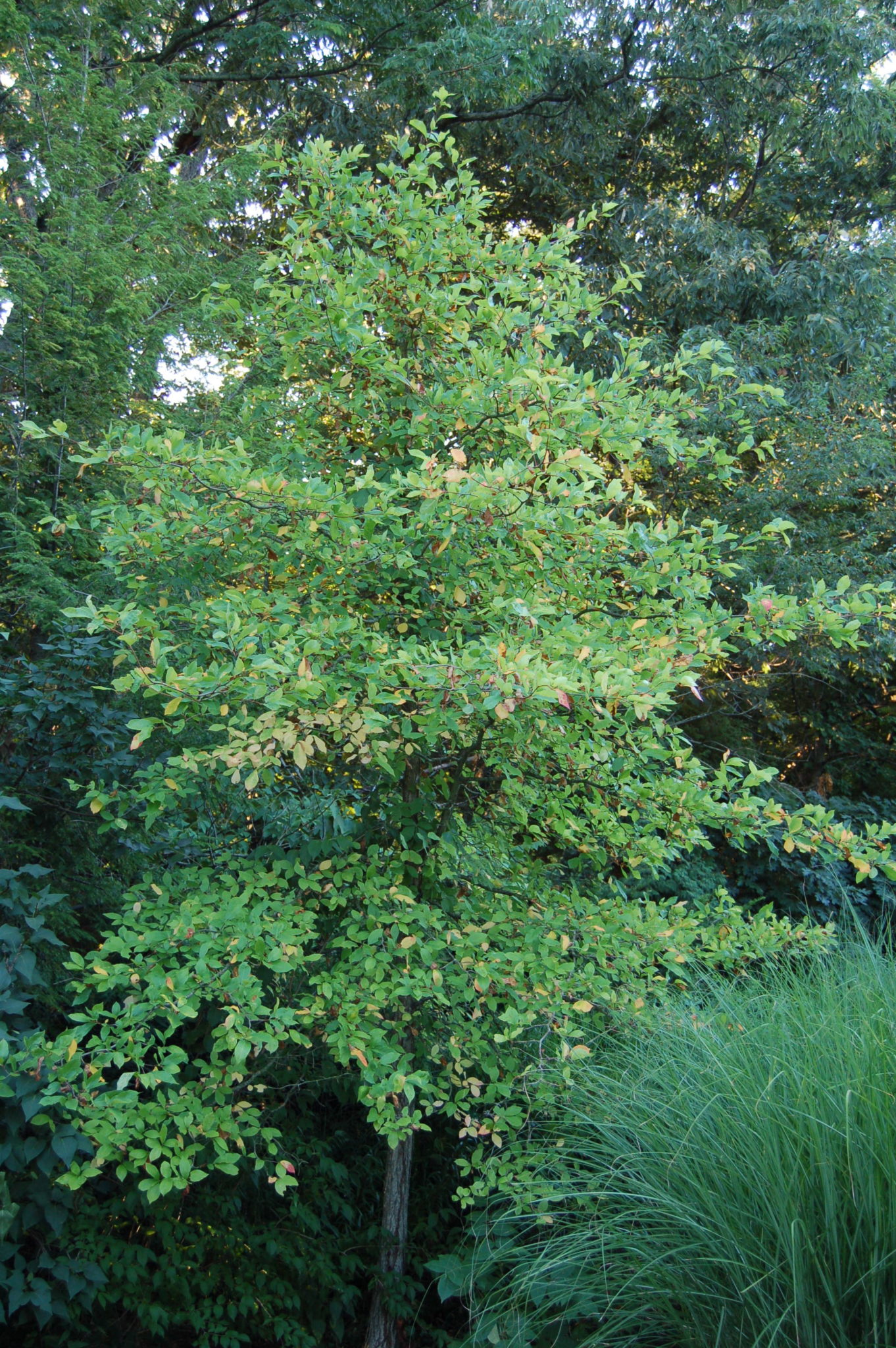
Nyssa sylvatica (black gum) showing early fall color due to drought stress. Source
So why would the colors be early and/or a bit duller than usual? Certainly, some of the reason why plants display fall colors has to do with the genetic makeup of the plant. That doesn’t change from year to year. But the timing and intensity of fall colors do vary, depending on factors such as availability of soil moisture and plant nutrients, as well as environmental signals such as temperature, sunlight, length of day, and cool nighttime temperatures.
The droughty conditions experienced during much of the second half of summer are likely to have decreased the amount of fall color pigment. Southern Indiana has been particularly parched. Despite recent rains in some areas, much of the state remains designated as abnormally dry to moderate drought. You can check your area’s conditions at the US Drought Monitor for Indiana. Additional maps and data is available at the Midwest Regional Climate Center.
Growing conditions throughout the season affect fall color as does current weather. Colors such as orange and yellow, which we see in the fall, are actually present in the leaf all summer. However, those colors are masked by the presence of chlorophyll, the substance responsible for green color in plants during the summer. Chlorophyll allows the plant to use sunlight and carbon dioxide from the air to produce carbohydrates (sugars and starch). Trees continually replenish their supply of chlorophyll during the growing season.
As the days grow shorter and (usually) temperatures cooler, the trees use chlorophyll faster than they can replace it. The green color fades as the level of chlorophyll decreases, allowing the other colored pigments to show through. Plants that are under stress–from conditions like prolonged dry spells–often will display early fall color because they are unable to produce as much chlorophyll.
Yellow, brown and orange colors, common to such trees as birch, some maples, hickory and aspen, come from pigments called carotenoids, the same pigments that are responsible for the color of carrots, corn and bananas.
Red and purple colors common to sweet gum, dogwoods and some maples and oaks are produced by another type of pigment called anthocyanin, the pigment responsible for the color of cherries, grapes, apples and blueberries. Unlike chlorophyll and carotenoids, anthocyanins are not always present in the leaf but are produced in late summer when environmental signals occur. Anthocyanins also combine with carotenoids to produce the fiery red, orange, and bronze colors found in sumac, oaks, and dogwoods.
Red colors tend to be most intense when days are warm and sunny, but nights are cool–below 45º F. The color intensifies because more sugars are produced during warm, sunny days; cool night temperatures cause the sugars to remain in the leaves. Pigments are formed from these sugars, so the more sugar in the leaf, the more pigment, and, thus, more intense colors. Warm, rainy fall weather decreases the amount of sugar and pigment production. Warm nights cause what sugars that are made to move out of the leaves, so that leaf colors are muted.
Leaf color also can vary from tree to tree and even from one side of a tree to another. Leaves that are more exposed to the sun tend to show more red coloration while those in the shade turn yellow. Stress such as drought, poor fertility, disease or insects may cause fall color to come on earlier, but usually results in less intense coloration, too. And stress or an abrupt hard freeze can cause leaves to drop before they have a chance to change color.
So far, weather conditions lead me to think this will be one of those not so showy fall color years. I hope I am proven wrong!
Resources
Fifty Common Trees of Indiana
An Introduction to Trees of Indiana
Native Trees of the Midwest, Purdue University Press
Why Leaves Change Color, USDA Forest Service, Northeastern Area
B. Rosie Lerner, Retired Extension Consumer Horticulturist
Purdue Horticulture and Landscape Architecture
Cities and towns in the U.S. contain more than 130 million acres of forests. These forests vary extensively in size and locale. An urban forest can describe an urban park such as Central Park in New York City, NY, street trees, nature preserves, extensive gardens, or any trees collectively growing within a suburb, city, or town. Urban forestry is the name given to the care and maintenance of those ecosystem areas that remain after urbanization. Data from the 2010 census indicated more than 80% of Americans live in urban centers with a population increase greater than 12%. The population of Indiana represents only 2.1% of the nation. In the last 8 years, IN has had an influx of 200,000 people which represents a population increase of 3.0%!
Urban forests, which help filter air and water, control storm water runoff, help conserve energy and provide shade and animal habitat must be maintained. As our nation becomes more urbanized, appreciate those urban foresters working to ensure we have save urban forest spaces to enjoy. These precious resources add more than curb appeal and economic value, they improve our quality of life.
What does an urban forester do? Here’s a quick answer:
References:
Purdue Urban Forestry & Arboriculture, Purdue Forestry and Natural Resources
USDA Forest Service Urban Forests, United States Department of Agriculture
US Census Bureau, United States Census Bureau
Interested in Purdue Urban Forestry? Contact:
Lindsey Purcell, Chapter Executive Director
Indiana Arborist Association
Ben McCallister, Urban Forestry Specialist
Forestry and Natural Resources
Resources:
Tree Support Systems, The Education Store, Purdue Extension Resource Center
Corrective Pruning for Deciduous Trees, The Education Store
Tree Installation: Process and Practices, The Education Store
What plants can I landscape with in area that floods with hard rain?, Got Nature? Blog, Purdue University Forestry and Natural Resources Extension
One of the most dangerous pests to trees is a human, especially with equipment. 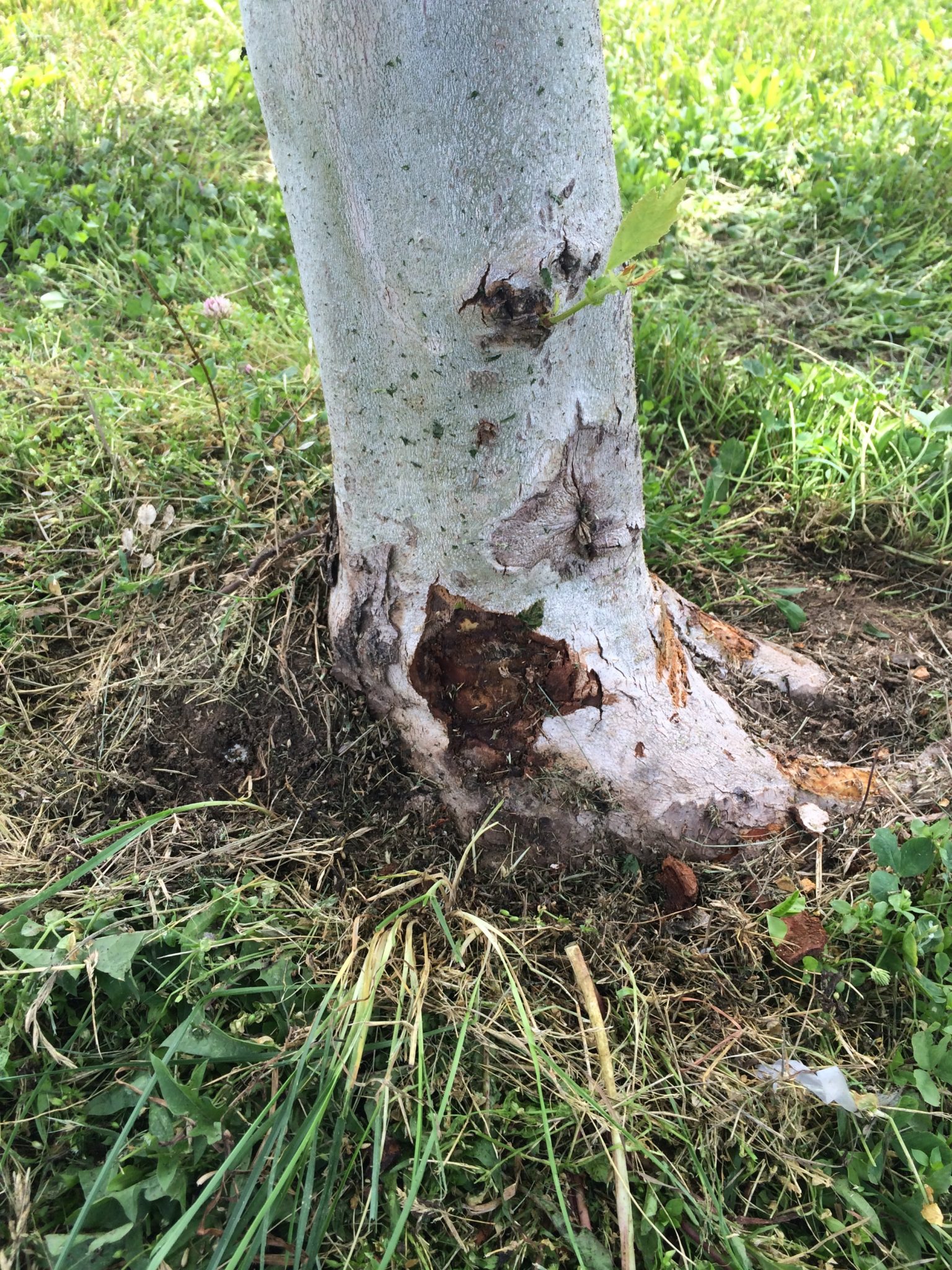 Injuries to trees caused by a lawn mower or weed trimmer can seriously threaten a tree’s health.
Additionally, damage to the bark layer of trees causes a long-term liability by creating a wound which leads to a defect, becoming an unsafe tree.
The site of injury is usually the root flare area, where the tree meets the turf and gets in the path of the mower or trimmer. The bark on a tree acts to protect a very important transport system called the cambium layer.
This is where specialized tubes are located which move nutrients and water between the roots and the leaves. Bark layers can vary in thickness on different tree species. It can be more than an inch in thickness or less than 1/16 of an inch on young, smooth-barked trees such as maples and birch trees. This isn’t much protection against string trimmers and mowing equipment, especially the young trees.
Any type of damage or removal of the bark and the transport system can result in long-term damage. Damage, which extends completely around the base of the tree called girdling, will result in ultimate death in a short time.
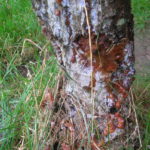
Tree wounds are serious when it comes to tree health. The wounded area is an opportunity for other insects and diseases to enter the tree that causes further damage. Trees can be completely killed from an attack following injuries. Fungi becomes active on the wound surface, causing structural defects from the decay. This weakens the tree or it eventually dies, creating a risk tree to people around it.
Newly planted, young trees need all the help we can provide to become established in the landscape and these trees are often the most commonly and seriously affected by maintenance equipment. However, injury can be avoided easily and at very low cost with these suggestions.
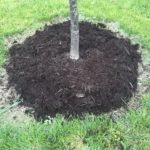 The removal of turf or prevention of grass and weeds from growing at the base of the tree are low-tech solutions to eliminate a serious problem. Spraying herbicides to eliminate vegetation around the base of the tree can decrease mowing maintenance costs. Be sure to use care when applying herbicides around trees.
- A 2-3” layer of mulch on the root zone of the tree provides an attractive and healthy environment for the tree to grow. Additionally, it provides a visual cue to keep equipment away from the tree.
- Also, trunk guards and similar devices can add an additional measure of protection for the tree. Using white, expanding tree guards can help improve the trees ability to withstand equipment contact, but also help to reduce winter injury.

Trees are a major asset to your property and important to our environment. Protect our trees and preserve these valuable assets by staying away from tree trunks with any mowing or weed trimming equipment. The damage lasts and it cannot be repaired and often results in losing your tree.
Purdue University Landscape Report Article
Resources
Corrective Pruning for Deciduous Trees, The Education Store – Purdue Extension resource center
What plants can I landscape with in areas that floods with hard rain?, Purdue Got Nature? Blog
Tree support systems, The Education Store
Tree Installation: Process and Practices, The Education Store
Lindsey Purcell, Urban Forest Specialist
Forestry and Natural Resources
Purdue Landscape Report: When was the last time you really looked at your trees? It’s all too easy to just 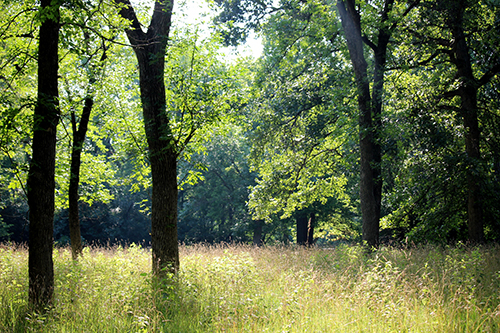 enjoy their cool shade and the sound of their leaves, but if you don’t know what to look for you could miss deadly diseases or dastardly demons lurking in their leaves and branches. A quick check can help you stop a problem before it kills your tree or your local forest!
National Tree Check Month is the perfect time to make sure your tree is in tip-top shape! Our checklist will help you spot early warning signs of native pests and pathogens and invasive pests like Asian longhorned beetle, spotted lanternfly, and sudden oak death. You can stop invasive pests in their tracks by reporting them if you see them.
Is your tree healthy and normal?
Start by making sure you know the type of tree you have. Is it a deciduous tree like an oak or maple? Or is it an evergreen that like a spruce or a pine? Don’t worry about exactly what species it is. It’s enough for you to have a general sense of what the tree should look like when it’s healthy.
Check the leaves
- Are the leaves yellow, red or brown?
- Are they spotted or discolored?
- Do the leaves look distorted or disfigured?
- Is there a sticky liquid on the leaves?
- Do the leaves appear wet, or give off a foul odor?
- Are leaves missing?
- Are parts of the leaves chewed?
Check the trunk and branches
- Are there holes or splits in the trunk or branches?
- Is the bark peeling from a tree that shouldn’t shed its bark?
- Are there tunnels or unusual patterns under the bark?
- Is there sawdust on or under the tree?
- Is there sap oozing down the tree?
- Does the sap have a bad odor?
- Do sticky drops fall on you when you stand under the tree? You might have spotted lanternfly. Please report it right away!
Now what? If you answered YES to any of the questions above, there’s a good chance something is wrong. To decide if and how you should treat or report the problem, you’ll need to have a tentative diagnosis. Luckily, there are many ways to get one!
Know the tree species? Use the Purdue Tree Doctor to get a diagnosis and a recommendation on whether treating or reporting is needed. This app allows you to flip through photos of problem plagued leaves, branches and trunks to help you rapidly identify the problem. If you have an invasive pest, it will guide you how to report it.
Don’t know the tree species and still need help? Reach out to local experts. We’re happy to help!
- Purdue Cooperative Extension Service (https://extension.purdue.edu/) can answer your questions or direct you to a local tree care professional with the right expertise.
- Contact an arborist who can give you an assessment of your tree and specific treatment recommendations (https://www.treesaregood.org/findanarborist).
Confused but think something is TERRIBLY WRONG? Contact Purdue’s Exotic Forest Pest Educator, report online, or call 1-866-NOEXOTIC.
Resources:
Trees and Storms: Understanding Damage, Risk and Recovery – Got Nature? Blog, Purdue Extension – FNR
Why Is My Tree Dying? – Got Nature? Blog, Purdue Extension – Forestry and Natural Resources
Caring for storm-damaged trees/How to Acidify Soil in the Yard, In the Grow, Purdue Extension
Tree Risk Management, The Education Store
Mechanical Damage to Trees: Mowing and Maintenance Equipment, The Education Store
Tree Installation: Process and Practices, The Education Store
Tree Planting Part 1 & Tree Planting Part 2, videos, The Education Store
This looks to be shaping up as a tough winter for us and our trees. Lots of snow and ice are predicted for the Hoosier state and this can be a challenge for our trees and shrubs.
After a heavy snowfall, protect your trees and property with these simple tips:
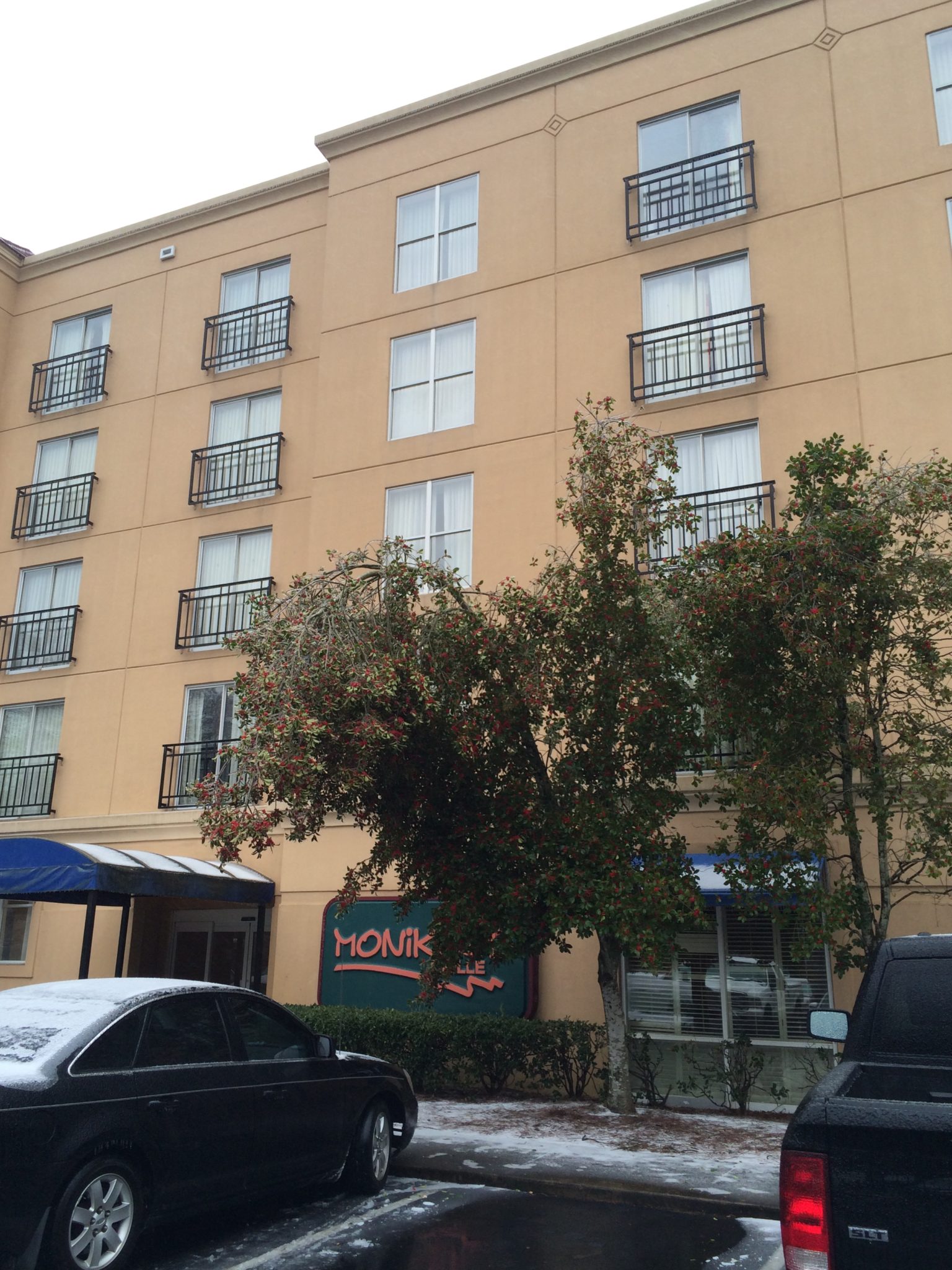
Limbs bending from ice loading.
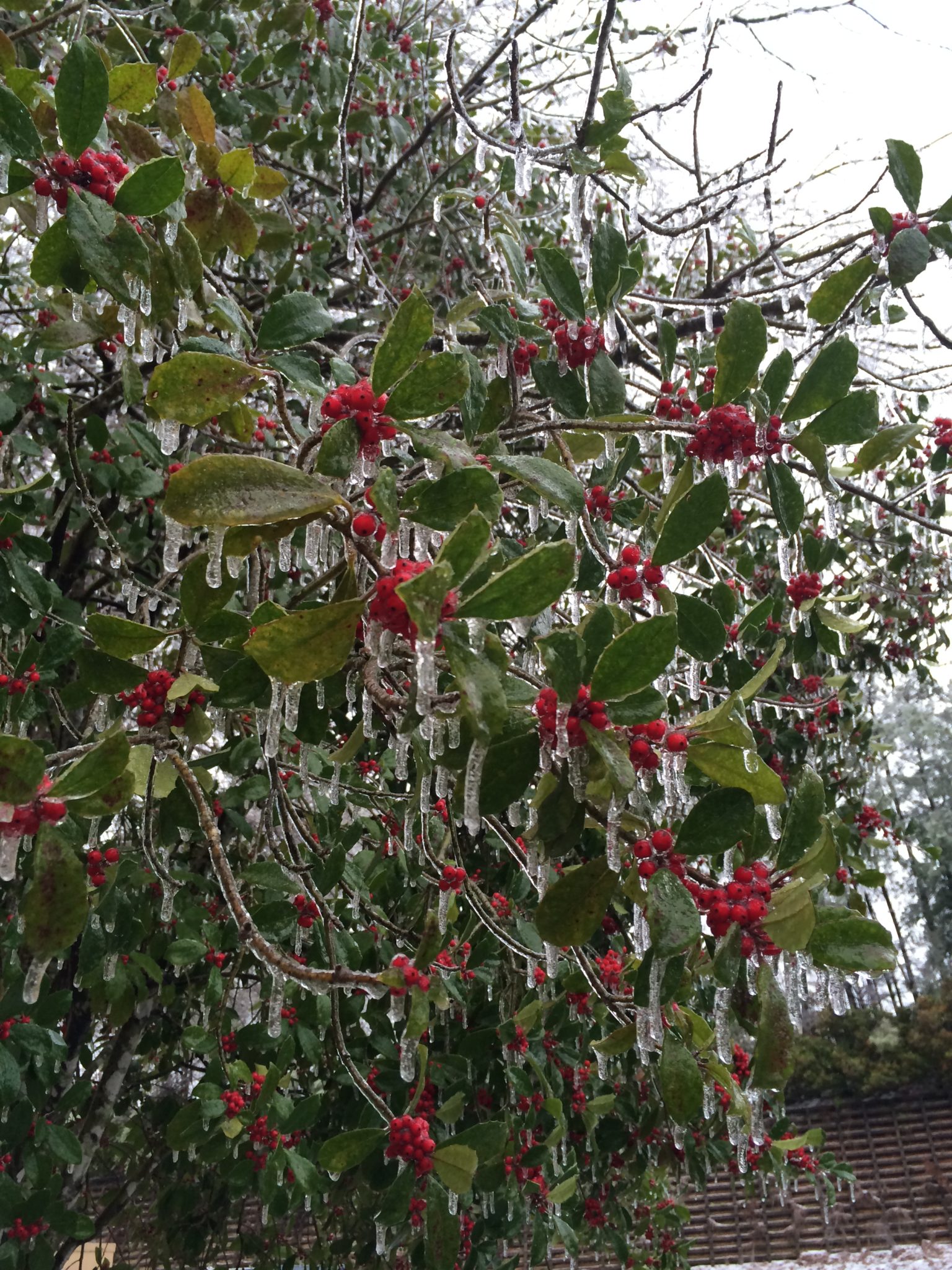
Ice accretion on hawthorn branches.
Do not shake limbs to try to remove snow or ice.
When you find your trees are bending or drooping as a result of ice or snow accumulation, your first instinct is probably to shake the branches or knock the weight off with a broom or something similar. This may cause worse damage or actually cause the branch to snap off. Stop right there! Healthy tree branches are flexible, so knocking off the accumulation of snow or ice accretion may cause them to “snap” back, potentially damaging their food and water transport system. The results of the damage may not be evident until next spring.
Trees that tend to suffer the worst damage as a result of snow and ice are upright evergreens, like arborvitae and juniper, and clump trees, like birch. And, when it comes to ice, age does not make a tree stronger; younger trees are better at actually overcoming damage in ice storms.
Hire a Professional.
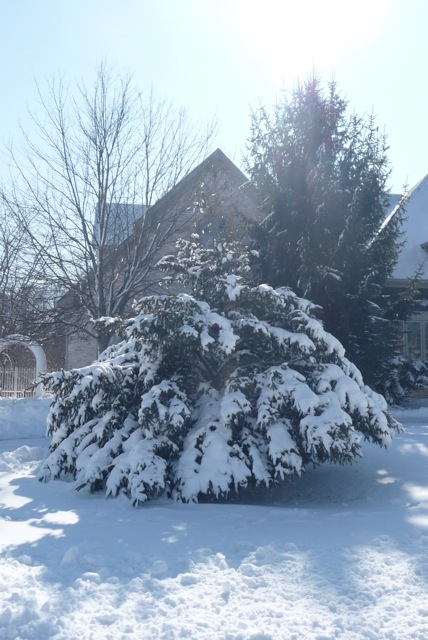
Snow weighing down spruce branches.
Safely remove broken limbs.
Broken and hanging branches can be a threat to people and property. If a limb breaks off from the weight of ice or snow and remains in the tree canopy, have it removed and the remaining stub properly pruned to the branch collar as soon as weather allows. The tree will recover better when properly pruned. For undamaged limbs bending under the weight of ice or snow, don’t prune as a means of correcting the situation. Be patient. It takes time for wood fibers in the limbs to return to its natural position.
Always be mindful of walking or parking under branches loaded down by snow or ice as they may snap and fall, causing injury or damage. If a limb breaks and becomes entangled in power lines, notify your utility company immediately. Never approach a downed power line or a branch touching a utility line.
If there is substantial damage to your tree, have an arborist examine damaged branches and limbs for signs of weakness and injury for reparations. It is best to always hire an ISA Certified Arborist. To find an arborist in your area, visit the website, www.treesaregood.org
How can you help prevent ice damage to trees? Proper pruning is one way. Particularly important is the removal of poor branch attachments and weak branch structure in the tree, prior to winter. For more information on pruning, download the publication, Tree Pruning Essentials.
Full article published in the Purdue Landscape Report.
Resources
Avoid Deadly Risk of Dying Ash Trees with Timely Tree Removal, Got Nature? Purdue Extension-FNR
New Hope for Fighting Ash Borer, Got Nature? Purdue Extension-FNR
Invasive Pest Species: Tools for Staging and Managing EAB in the Urban Forest, Got Nature?
Emerald Ash Borer, Purdue Extension-Entomology
Emerald Ash Borer Tools & Resources – Purdue Extension Entomology
Corrective Pruning for Deciduous Trees, The Education Store, Extension Publications
Lindsey Purcell, Chapter Executive Director
Indiana Arborist Association
Emerald ash borer (EAB), the most destructive forest pest to enter North America has left hundreds of millions of dead ash trees in its wake. Although this pest has been found throughout our state, many of Indiana’s ash trees are still alive, or dead and still standing. Ash trees killed by emerald ash borer, become extremely brittle and break easily as they decline. Branches can fall on people and property in snowstorms, with a light breeze, or even on a calm clear day. Danger could be hanging over your head in the street, in the forest, and even in your backyard.
Why does emerald ash borer make ash trees so brittle?
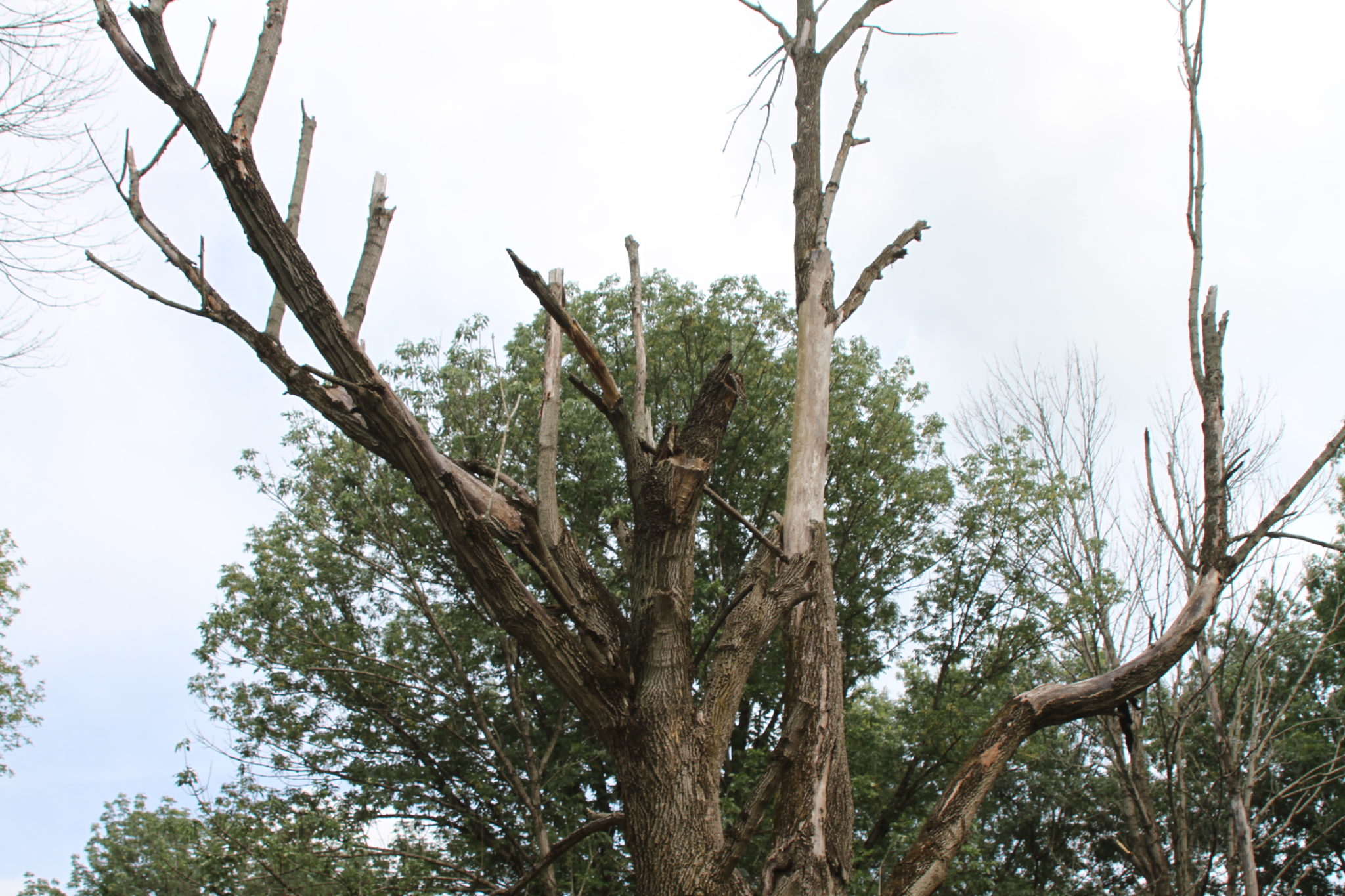
Large ash limbs that have broken off in the upper canopy.
Unlike elms, oaks, and maples, ash trees use a thin ring of conducting tissue to supply water from the roots to the entire tree. Emerald ash borer grubs will damage these functional water pipes as they chew just beneath the bark inside trunks and branches. This causes the tree to dry quickly and the structural wood to become prone to cracking. Internal breaks in the structural wood that bear the weight of the tree are often hidden from view by tree bark. As such, limbs can break and fall at any point along the branch at any time. It is not uncommon to have sizable limbs snap 30 feet off the ground on a calm day.
The threat of falling limbs is not limited to just dead ash. A comparative study of ash trees conducted in Ohio shows that structural integrity of ash trees can begin to decline even when trees are mostly green and have two thirds of the canopy still intact.
What should I do to protect myself from falling ash trees and limbs?

If your tree has lost less than 30% of its canopy hire a professional to protect the tree.
If the tree has lost more than 30% of the canopy, make plans to remove it. Delaying removal allows the tree to become more brittle and the problem more dangerous. Remember, EAB causes progressively more injury to ash trees as time goes on. The dead parts never come back to life.
If you have been treating your tree continue to do so.
How should I remove the tree?
To minimize risk of harm, hire a trained professional who has experience removing emerald ash borer damaged trees. The International Society of Arboriculture maintains a directory of Certified Arborists and their credentials. They can help find an arborist near you. Always get bids from more than one contractor. Be sure your contractor is insured and bonded in case of an accident. Professionals are happy to share this information.
Some homeowners might be hesitant to remove dead ash trees because they provide valuable habitat for a range of woodland animals and mushrooms. However, we do not recommend keeping them standing unless you can guarantee that no people, domesticated animals, or property will ever be in their path if they fall. If you have a dead tree that can’t be felled right away or ever, stay away from it until after it has fallen.
Article courtesy of the Landscape Report.
Resources:
New Hope for Fighting Ash Borer, Got Nature? Purdue Extension-FNR
Emerald Ash Borer, Purdue Extension-Entomology
Emerald Ash Borer Cost Calculator – Purdue Extension Entomology
Lindsey Purcell, Urban Forestry Specialist
Purdue Forestry and Natural Resources
Elizabeth Barnes, Exotic Forest Pest Educator
Purdue Entomology
Cliff Sadof, Professor, Ornamental, Pest Management
Purdue Entomology Extension Coordinator
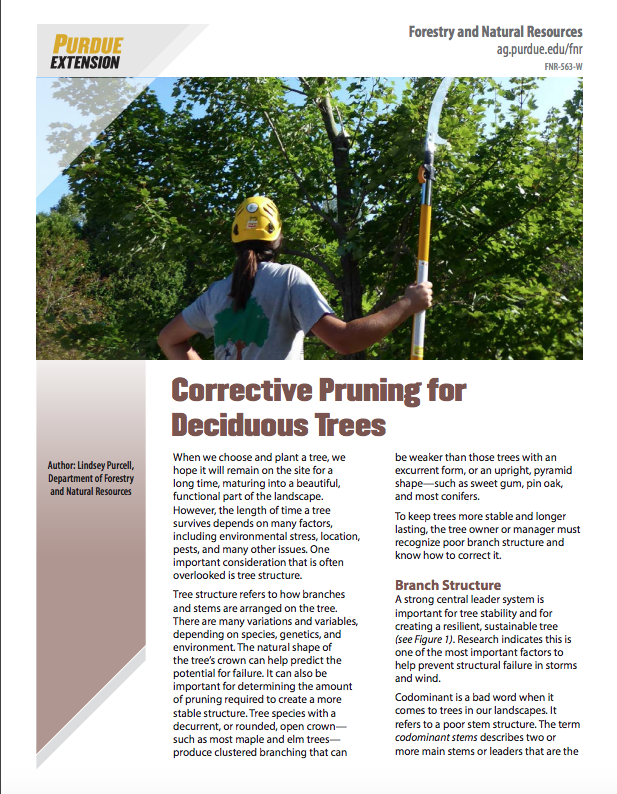
How do I remedy poor branching? Is my tree at risk of splitting, and how can pruning prevent that? Corrective pruning has many implications for tree structure, health, and longevity. Developing a strong, central branch structure in a deciduous tree is critical for preventing structural failure caused by storms, wind, and ice. This 8-page publication explains the problems resulting from a co-dominant stem structure and addresses pruning strategies for correcting poor structure.
To view this full publication please go to Corrective Pruning for Deciduous Trees located in The Education Store, Purdue Extension’s resource center.
Resources
Preparations to Prevent Southwest Tree Injury, Got Nature? Blog
When do you stake a tree?, Got Nature? Blog
Top 5 List for Tree Selection and Planting, Got Nature? Blog
Tree Selection for the “Un-natural” Environment, The Education Store, Purdue Extension
Tree Support Systems, The Education Store, Purdue Extension
Tree Installation: Process and Practices, The Education Store, Purdue Extension
Planting Your Tree Part 1: Choosing Your Tree, video, The Education Store, Purdue Extension
Lindsey Purcell, Urban Forestry Specialist
Purdue Forestry and Natural Resources

Recent Posts
- Disease May Cause Wilting and Eventual Death of Certain Trees and Shrubs, Purdue Landscape Report
Posted: October 5, 2026 in Disease, Forestry, Plants - October Is Firewood Month: Protect Indiana’s Forests by Making Smart Choices
Posted: October 1, 2026 in Forestry, Forests and Street Trees, How To, Invasive Insects, Urban Forestry - Minecraft Meets the Hellbender
Posted: September 22, 2026 in Aquaculture/Fish, Aquatic/Aquaculture Resources, Wildlife - Is It Too Early to Think About Christmas Tree Pests?
Posted: in Christmas Trees, Invasive Insects, Safety - What You Plant Matters to Wildlife
Posted: September 16, 2026 in Plants, Urban Forestry, Wildlife - Woodland Flowers of Late Summer
Posted: September 14, 2026 in Forestry, Gardening, Wildlife, Woodlands - Heavy August Rains Bring More Mosquitoes to Indiana
Posted: September 9, 2026 in How To, Invasive Insects, Safety, Wildlife - Question: Why Did the Shagbark Hickories Survive the Tornado?
Posted: August 27, 2026 in Forests and Street Trees, How To, Urban Forestry - New Indiana Woodland Steward Newsletter
Posted: August 12, 2026 in Forestry, Urban Forestry, Wildlife, Woodlands - Indiana Fall Hunting Licenses on Sale and New Mobile App Available
Posted: in Forestry, How To, Wildlife
Archives
Categories
- Alert
- Aquaculture/Fish
- Aquatic/Aquaculture Resources
- Ask the Expert
- Christmas Trees
- Community Development
- Disease
- Drought
- Forestry
- Forests and Street Trees
- Gardening
- Got Nature for Kids
- Great Lakes
- How To
- Invasive Animal Species
- Invasive Insects
- Invasive Plant Species
- Land Use
- Natural Resource Planning
- Nature of Teaching
- Plants
- Podcasts
- Ponds
- Publication
- Safety
- Spiders
- Timber Marketing
- Urban Forestry
- Webinar
- Wildlife
- Wood Products/Manufacturing
- Woodland Management Moment
- Woodlands