 Purdue University - Extension - Forestry and Natural Resources
Got Nature? Blog
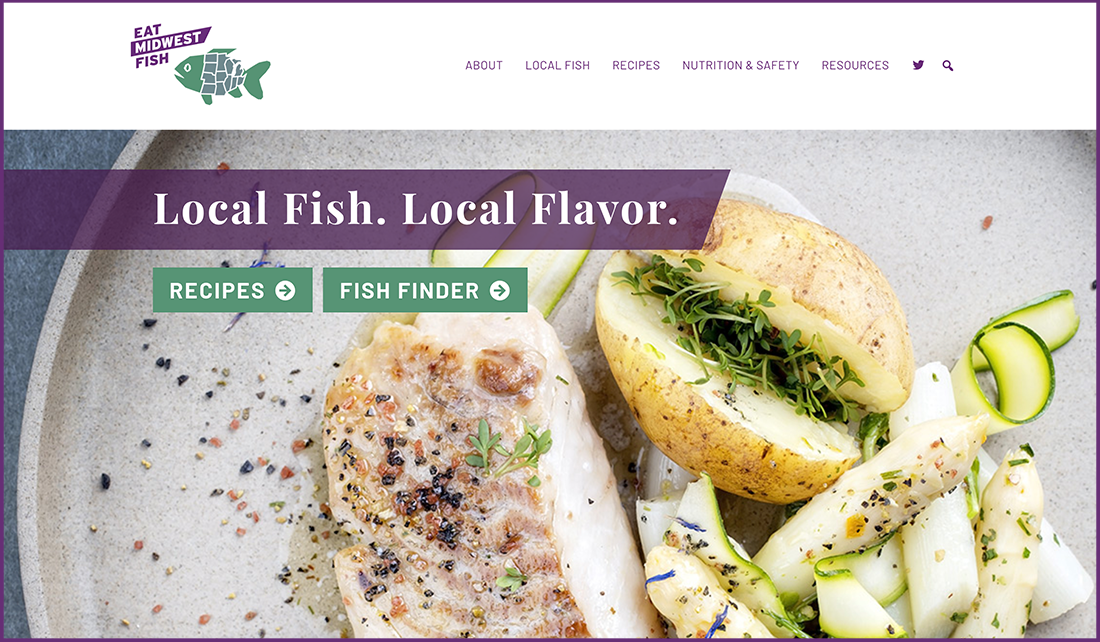 Eat Midwest Fish is an online resource hub that educates consumers about sustainable aquaculture in the Midwest. Consumers have a lot of questions about water farming and farm-raised fish products. Eat Midwest Fish provides resources to inform and inspire consumers to eat more fish and shellfish, including resources focused on where to find locally grown products, what types of products are available, how to source and cook these products, and how farmers are growing both freshwater and marine animals in the Midwest. Information is provided on aquaculture and farm-raised products from the twelve states in the North Central Region: Illinois, Indiana, Iowa, Kansas, Michigan, Minnesota, Missouri, Nebraska, North Dakota, Ohio, South Dakota, and Wisconsin.
Eat Midwest Fish’s mission is to support safe and sustainable seafood through extension, education, and fostering connections. It is a collaborative project involving Illinois-Indiana Sea Grant, North Central Regional Aquaculture Center, Purdue University Extension, University of Illinois Extension, and the Great Lakes Sea Grant Network. This project is supported by the United States Department of Agriculture project number 2016-38500-25753.
Resources
Fish: Healthy Protein Handout, The Education Store, Purdue Extension resource center
Walleye Farmed Fish Fact Sheet: A Guide for Seafood Consumers, The Education Store
Best Practices Guide for Charter Fishing and COVID-19, The Education Store
Fish Cleaning with Purdue Extension County Extension Director, Got Nature? Blog, Purdue Extension – Forestry and Natural Resources
Aquatics & Fisheries, Playlist, Purdue Extension – Forestry and Natural Resources
Aquaculture and Aquatics, Website, Purdue Extension – Forestry and Natural Resources
Eat Midwest Fish website launches fresh fish finder, Illinois – Indiana Sea Grant
Amy Shambach, Aquaculture Marketing Outreach Associate
Purdue Department of Forestry and Natural Resources/Illinois Indiana Sea Grant Program
Question: I have noticed that a lot of very mature (> 80 ft) sycamore trees look ill. They don’t seem to have as many 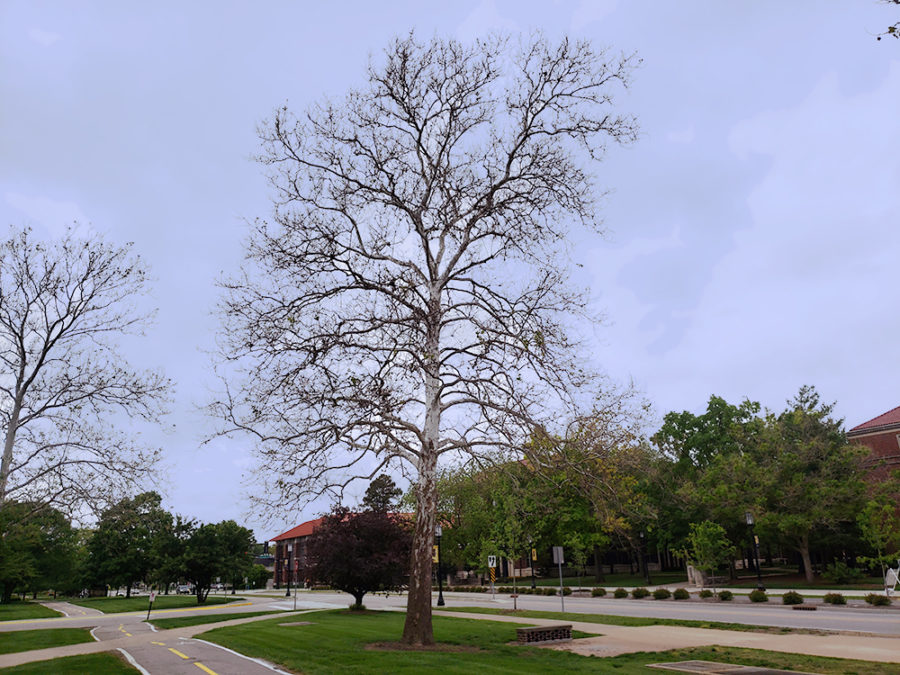 leaves, or as large as they usually get and some have already turned brown and died. There are at least 2 in my 5 acres of woods and have noticed the same with other sycamores while driving from Mooresville to Indianapolis. Is there a certain blight/canker/pest that is damaging sycamores this year?
Answer: I have also noticed that many sycamores appear relatively bare and may have brown or wilted leaves on the stems and littering the ground around the trees. The culprit is sycamore anthracnose, a fungal disease that causes damage and death of leaves as well as stem cankers. Sycamore anthracnose symptoms can be severe when we have cool, moist spring weather at the time of bud-break and leaf emergence , but healthy trees generally recover and put on new leaf area once the environmental conditions that favor the disease change to the warmer, drier conditions of late spring and summer.
Normally, the best management practices for sycamore anthracnose are patience and maintaining good tree health. The disease cycle is dependent on cool, moist spring weather, so it will run its course by late spring or summer when the average temperatures rise. Trees that are repeatedly defoliated could be reduced in vigor and be more susceptible to other problems, so steps to promote good tree health can be used as a preventative measure.
Resources:
Fertilizing Woody Plants – The Education Store, Purdue Extension Resource Center
Diseases of Landscape Plants (leaf diseases) – The Education Store
Sycamore – The Education Store
Hardwood Lumber and Veneer Series – The Education Store
Anthracnose of Shade Trees – Purdue Plant and Pest Diagnostic Laboratory
Purdue Plant Doctor App- Purdue Extension
Lenny Farlee, Sustaining Hardwood Extension Specialist
Purdue University Department of Forestry and Natural Resources
 Question: I have noticed that a lot of very mature (> 80 ft) sycamore trees look ill. They don’t seem to have as many leaves, or as large as they usually get and some have already turned brown and died. There are at least 2 in my 5 acres of woods and have noticed the same with other sycamores while driving from Mooresville to Indianapolis. Is there a certain blight/canker/pest that is damaging sycamores this year?
Answer: I have also noticed that many sycamores appear relatively bare and may have brown or wilted leaves on the stems and littering the ground around the trees. The culprit is sycamore anthracnose, a fungal disease that causes damage and death of leaves as well as stem cankers. Sycamore anthracnose symptoms can be severe when we have cool, moist spring weather at the time of bud-break and leaf emergence, but healthy trees generally recover and put on new leaf area once the environmental conditions that favor the disease change to the warmer, drier conditions of late spring and summer.
Normally, the best management practices for sycamore anthracnose are patience and maintaining good tree health. The disease cycle is dependent on cool, moist spring weather, so it will run its course by late spring or summer when the average temperatures rise. Trees that are repeatedly defoliated could be reduced in vigor and be more susceptible to other problems, so steps to promote good tree health can be used as a preventative measure.
Resources:
Purdue Plant Doctor – Purdue Extension
Fertilizing Woody Plants – The Education Store, Purdue Extension’s resource center
Anthracnose of Shade Trees or Wind Injury: Look Alike Symptoms Can be Perplexing, Purdue Plant & Pest Diagnostic Laboratory
Sycamore – The Education Store
Native Trees of the Midwest, The Education Store
Shrubs and Woody Vines of Indiana and the Midwest, The Education Store
Investing in Indiana Woodlands, The Education Store
Forest Improvement Handbook, The Education Store
ID That Tree, Purdue Extension-Forestry & Natural Resources (FNR) YouTube playlist
Woodland Management Moment, Purdue Extension-FNR YouTube playlist
Lenny Farlee, Extension Forester
Purdue University Department of Forestry and Natural Resources
The Department of Forestry and Natural Resources’ extension team have received four Purdue Extension Issue-Based Action Team (IBAT) awards out of seven. These new initiatives have been chosen from 30 submitted proposals. In an ever-changing world, Purdue Extension is launching big ideas to identify and address priority issues to enhance quality of life as well as the efficiency and/or effectiveness of organizations through research-based education.
Congratulations to the following FNR teams that are moving the world forward:
ENHANCING THE VALUE OF PUBLIC SPACES: HEALTH, WELLNESS, AND DESIGNING THE BUILT ENVIRONMENT
Project Overview: Expand upon the existing Enhancing the Value of Public Spaces program to include a health component — building community capacities for accessible means for physical activity. $50,000.
Team: Michael Wilcox, Assistant Program Leader for Community Development Extension, Purdue Center for Reginal Development; and Kara Salazar, Sustainable Communities Extension Specialist, Department of Forestry & Natural Resources; Donna Vandergraff, Extension Specialist, Nutrition Science; Lisa Graves, Assistant Program Leader and Extension Specialist, Nutrition Science; Melissa Maulding, Director, Nutrition Education Programs; and Steve Yoder, Extension Educator, Agriculture and Natural Resources (ANR), Tippecanoe County.
MARKET BASKET 360
Program Overview: A wealth of resources on a website, educational workshop agendas, certification programs, uniform materials for cooking demonstrations, and more for Farmers’ Market Masters, producers, and consumers. Market Basket 360 centralizes, streamlines, and enhances existing farmers’ market resources available through Purdue Extension, Indiana State Department of Health, the USDA Agricultural Marketing Service, and other industry organizations.
Team: James Wolff, Extension Educator, Agriculture and Natural Resources (ANR), Allen County; Julie Gray, Central District Director, ANR; Morgan Roddy, Extension Educator/Health & Human Sciences (HHS), ANR, Henry County; Curt Campbell, Extension Educator, ANR, Wabash County; Jodee Ellett, Local Foods Coordinator, Purdue Extension; Vickie Hadley, HHS Extension Educator/CED, ANR, Allen County; Nancy Manuel, HHS Extension Educator, ANR, Adams County; Gail Peitzmeier, HHS Extension Educator, Crawford County; Tim Vining, Development Educator, ANR; Teresa Witkoske, HHS Extension Educator/CED, Wabash County; Kwamena Quagrainie, Aquaculture Marketing Director and Associate Professor, Department of Forestry & Natural Resources and Agriculture Economics; Bob Rode, Aquaculture Research Lab Manager and Extension Specialist, Department of Forestry and Natural Resources.
NATURAL RESOURCES LEADERSHIP PROGRAM
Program Overview: Expanding Extension’s capacity to develop and deliver statewide natural resource programs and enhance decision-making for implementation at the community level. $30,000.
Team: Kara Salazar, Assistant Program Leader for Community Development and Sustainable Communities Extension Specialist, Department of Forestry and Natural Resources/Illinois-Indiana Sea Grant; Angie Tilton, Extension Educator, Agriculture and Natural Resources (ANR), Hendricks County Team; Lenny Farlee, Sustaining Hardwood Extension Specialist, Department of Forestry and Natural Resources; Liz Jackson, Hardwood Tree Improvement and Regeneration Center (HTIRC), Engagement Specialist and Executive Director of the Indiana Forestry and Woodland Owners Association and the Walnut Council; Steve Yoder, Regional Extension Educator, Community Development
THE NATURE OF HEALTH
Project Overview: A multifaceted approach to engaging families in nature-learning opportunities that will utilize emerging research to connect Health and Human Sciences and Agriculture and Natural Resources using curriculum developed by Rod Williams titled “The Nature of Teaching.” $20,000.
Team: Rod Williams, Professor of Wildlife Science, Department of Forestry & Natural Resources; Angie Frost, Extension Specialist-Healthy Living, College of Agriculture; Stephanie Woodcox, Extension Specialist-Health & Wellness, College of Health and Human Sciences; Deb Arseneau, Extension Educator, Agriculture Natural Resources (ANR), Newton County; Jay Christiansen, Extension Educator, ANR, Vigo County; Jan Dougan, Extension Educator, ANR, Dubois County; Molly Hoag, Extension Educator, ANR, Wells County; Molly Hunt, Extension Educator, ANR, Delaware County; Gracie Marlatt, Extension Educator, ANR, Rush County; Kelsie Muller, Extension Educator, ANR, Benton County; Lindsey Pedigo, Extension Educator, ANR, Howard County; Katie Zuber, Extension Educator, ANR, Lawrence County.
View the College of Agriculture Strategic Plan and the Purdue Extension Annual Report for more information on Purdue Extension.
For extension resources on Forestry and Natural Resources view Purdue Extension-FNR website.
Diana Evans, Extension and Web Communications Specialist
Purdue University Department of Forestry and Natural Resources

Recent Posts
- Publication – Planting Forest Trees and Shrubs in Indiana
Posted: April 8, 2026 in Forests and Street Trees, Urban Forestry, Wildlife, Woodlands - ID That Tree: Virgin’s Bower Clematis
Posted: April 6, 2026 in Urban Forestry, Wildlife, Woodlands - It’s Timberdoodle Time!
Posted: April 3, 2026 in Got Nature for Kids, How To, Wildlife - Keep An Eye Out for Hammerhead Worms, Purdue Landscape Report
Posted: April 2, 2026 in Invasive Animal Species, Wildlife, Woodlands - When is the Peak Migration For Hummingbirds and How Can You Attract Them?
Posted: in How To, Wildlife - ID That Tree Featured in National Woodland Owners Association Newsletter
Posted: April 1, 2026 in Urban Forestry, Wildlife, Woodlands - New 2026 Indiana Woodland Steward Newsletter
Posted: March 30, 2026 in Urban Forestry, Wildlife, Woodlands - A Woodland Management Moment: Why Aspect Matters
Posted: in Urban Forestry, Woodland Management Moment, Woodlands - 2026 Winter Bat Survey In Progress, MyDNR
Posted: March 27, 2026 in How To, Wildlife - Fast-Growing Trees for the Landscape, Purdue Landscape Report
Posted: March 26, 2026 in Forestry, Urban Forestry, Woodlands
Archives
Categories
- Alert
- Aquaculture/Fish
- Aquatic/Aquaculture Resources
- Ask the Expert
- Christmas Trees
- Community Development
- Disease
- Drought
- Forestry
- Forests and Street Trees
- Gardening
- Got Nature for Kids
- Great Lakes
- How To
- Invasive Animal Species
- Invasive Insects
- Invasive Plant Species
- Land Use
- Natural Resource Planning
- Nature of Teaching
- Plants
- Podcasts
- Ponds
- Publication
- Safety
- Spiders
- Timber Marketing
- Uncategorized
- Urban Forestry
- Webinar
- Wildlife
- Wood Products/Manufacturing
- Woodland Management Moment
- Woodlands