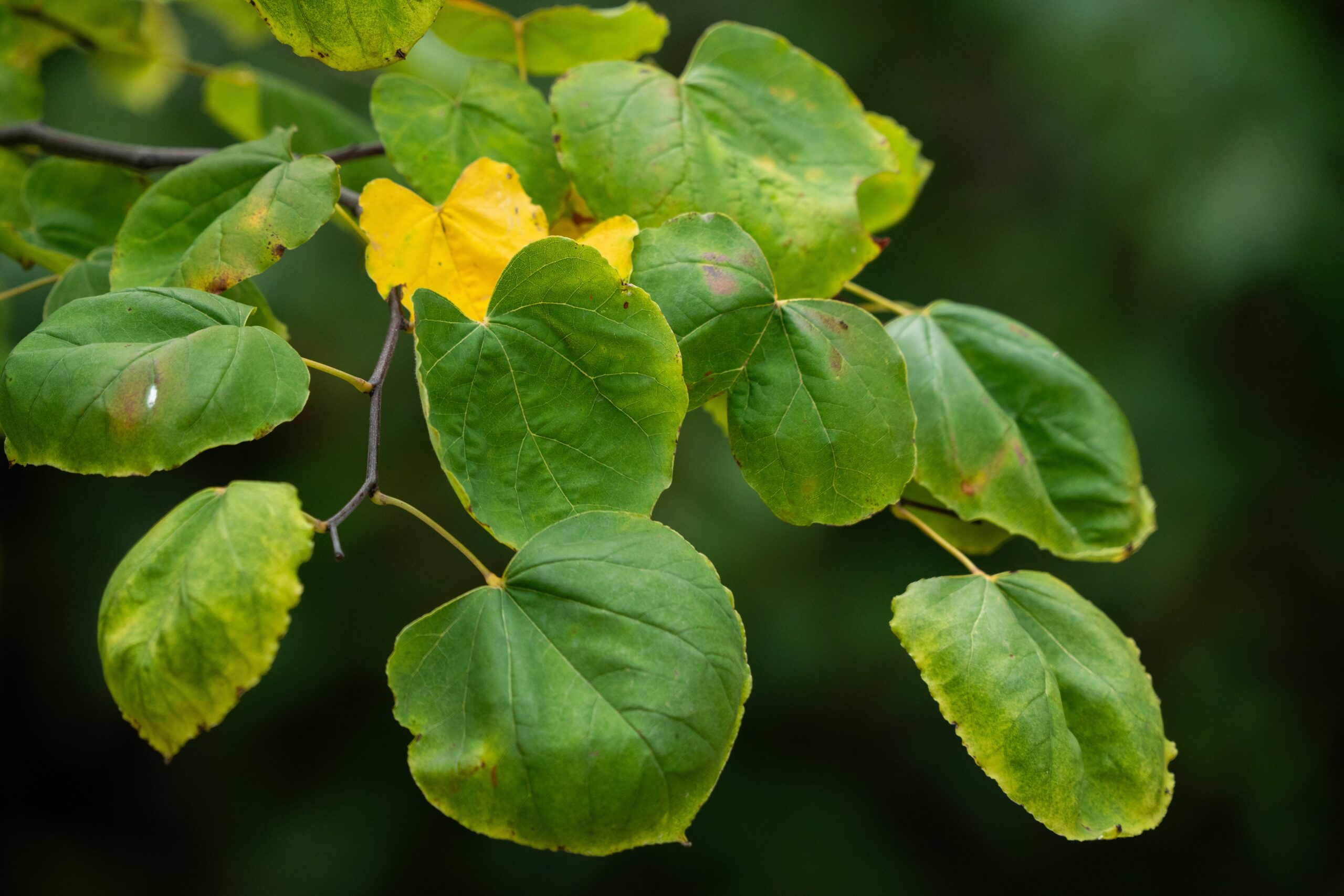
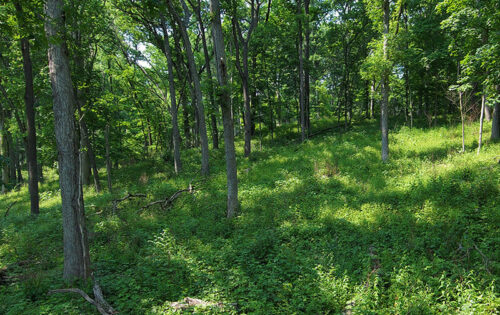
Purdue Agriculture News: As autumn settles in, we eagerly await the transformation of leaves into vibrant hues of red, orange and yellow. However, this year might tell a different story due to prolonged periods of hot weather. Ben McCallister, urban forestry specialist in Purdue University’s Department of Forestry and Natural Resources, sheds light on what to expect this fall.
The Impact of Weather on Fall Foliage Timing
“Right now, we’re seeing a mix of fall coming in and shifting temperatures, which is causing trees to respond. This back-and-forth hot weather is creating some color changes related to drought and stress. This can be expressed as brown color where leaves are starting to wilt and look a little crunchy from exposure to heat and drought stress,” McCallister explains.
While the typical color change occurs from mid-September to early November, it’s not unusual for leaves to remain green at this point in the season. McCallister suggests that while the hot weather “most likely won’t affect anything visually, it could influence fall foliage over time as climate change progresses.”
He anticipates a more pronounced display of fall colors extending through October, with some species showing their colors into November. Ultimately, the vibrancy and timing of these changes will depend on daily temperature fluctuations and the amount of sunlight trees receive.
The environment also plays a significant role in how trees respond. For instance, urban areas with more concrete and buildings create a “urban heat island” effect, which can delay color changes compared to more rural settings.
The Science Behind Color Transformation
The science of fall foliage is both fascinating and complex. McCallister explains that different tree species respond to autumn at varying times, with chlorophyll being a key player in this process.
“Changes in chlorophyll production leads to the color changes in leaves. Chlorophyll allows leaves to take up sunlight and convert it into energy, creating carbohydrates in the form of sugars – really anything that gives energy to the tree to help it grow, sustain itself and compartmentalize,” McCallister notes.
As temperatures cool and the sunlight diminishes, chlorophyll production declines, allowing the green hues of leaves to fade. This decline reveals carotenoids and anthocyanins – two chemicals essential to fall foliage. Carotenoids contribute to the yellow and orange shades, while anthocyanins produce reds and purples. As chlorophyll wanes, these vibrant colors emerge.
“It’s a very cool process,” McCallister adds. “Each color absorbs different spectrums of light, altering energy uptake and preparing trees for leaf drop and dormancy. As leaves in deciduous trees transition, trees store energy in their roots and wood so they can brave the winter.”
Viewing Fall Foliage
When it comes to enjoying fall foliage, McCallister emphasizes that Indiana offers many great viewing locations not far from Purdue’s campus.
Locally, Martell Forest, which is open to the public, is a great spot to check out the fall foliage and immerse yourself in the woods,” says McCallister.
What’s Next?
Leaf drop is likely to occur anytime from mid-October into December, although this process may take longer than usual due to the milder winters we’ve been experiencing. Similar to color changing, the timing of leaf drop varies by tree species and their growth patterns, as well as the overall weather conditions.
“For instance, ginkgo trees turn this brilliant yellow and have a cool reaction to leaf drop. Typically, all their leaves fall within a day or so, creating a carpet of yellow. In contrast, trees like maples and oaks, which have a mix of yellow, orange and red leaves, tend to hold onto their foliage a bit longer,” McCallister recalls.
It’s also important to note that while coniferous trees, like pines, spruces and furs, retain their needles year-round, some conifers like bald-cypress trees drop theirs. This sometimes causes confusion for homeowners who mistake these deciduous conifers for dying trees.
To provide the best care for your trees during these changing weather patterns, McCallister advises familiarizing yourself with different tree species. Resources like Google and dichotomous keys in forestry books can help with species identification and lead to tips for care. Regularly checking your trees’ health is essential year-round. Specialists in your local county Extension offices and ISA Certified Arborists can be valuable resources for proper tree management.
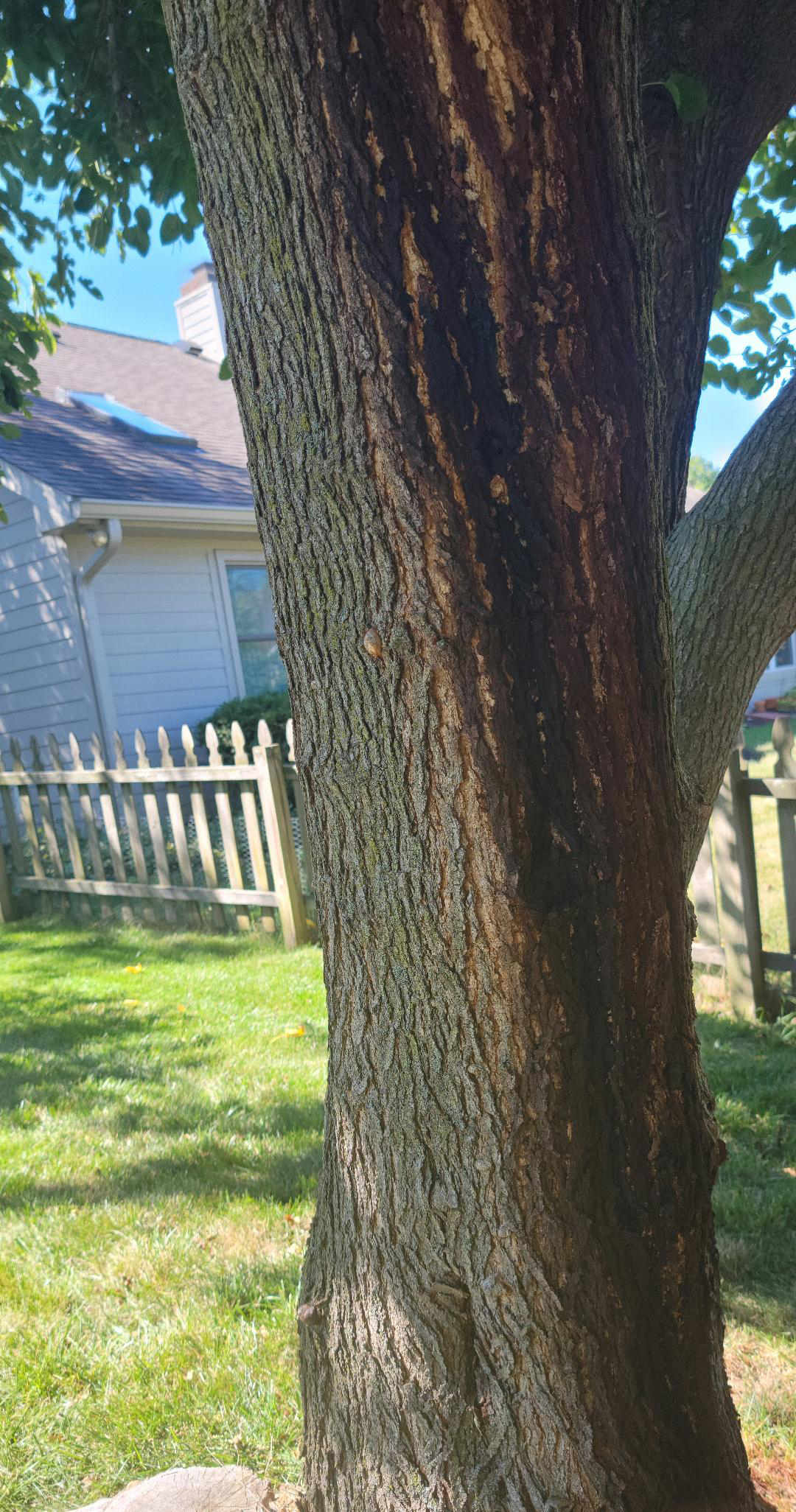
Question: We have a large 60+ foot mulberry tree in our backyard that is located by our pond. This is the first year I have seen these dark streaks on the bark of the tree. Should I have concerns?
Answer: From the photos, it looks like wet wood/slime flux is affecting your tree. It is a bacterial infection on trees and in most cases is not a serious issue, but unfortunately, there is nothing to be done about it. Many years ago they used to drill holes to try and allow gases and liquids drain from an area with the slime flux but through research and experience this practice is not recommended.
The Purdue Landscape Report titled Slime Flux of Trees shares more about this disease:
Slime flux (also known as wet wood) is a dark, foul-smelling and unsightly seepage of sap from tree trunks. The disease is not usually a serious problem but the appearance can be alarming. Slime flux is caused by common surface-inhabiting bacteria or yeast fungi that enter the trunk through wounds associated with improper pruning, stem breakage, injections, cracks from freeze injury or weak limb crotches. The bacteria and yeast may live on sap nutrients within injured trees for many years without any outward evidence.
Symptoms
The main symptom is the appearance of the dark sap oozing on the trunk exterior which happens when gasses produced by growth of the bacteria and yeast cause the internal pressure of the sap to become high enough to force the sap out through cracks in the bark. The dark streaks usually turn light gray or white upon drying. Oozing sap may be frothy and white at the point of exit. Airborne bacteria, yeasts, and fungi often colonize the wet oozing material, which ferments and releases a foul odor. Slime flux may delay wound healing (callus formation).
Lenny Farlee, sustaining hardwood Extension specialist for Purdue’s Department of Forestry and Natural Resources (FNR), has been named a 2024 Fellow of the Society of American Foresters (SAF). The SAF Fellow Award, one of the highest honors bestowed on an SAF member by their peers, recognizes long-standing service to forestry at the local, state, regional and national levels.
Farlee was honored with the award during the 2024 SAF National Convention, which took place in Loveland, Colorado from Sept. 17-20.
Zhao Ma accepts the 2024 Family Forests Education Award on behalf of Lenny Farlee and the other project team members.
“Being named a Fellow of the Society of American Foresters is particularly meaningful to me since it originates from a nomination by my peers at the state level,” Farlee said. “I am very grateful that my colleagues in forestry here in Indiana considered my service worthy of recognition, and I owe much of the credit to them for their support of me through my career. It has been my privilege to serve the people and the profession as an Extension forester here at Purdue.”
Farlee educates people about forestry in many ways, including through the popular Extension YouTube series “ID That Tree,” which has over 100,000 views.
Farlee, Ronald Rathfon, Don Carlson, Jonathan Ferris,Dave Osborne and Phil Woolery worked together to develop the course. The course introduces forest landowners to the biology and management of forests and what resources and professional assistance are available. According to survey results from 2021 participants, “94.4% stated that the information was useful to help them make future decisions and 92.5% stated that the information was useful to help act to manage their property objectives.”
“We in FNR, along with forestry professionals in Indiana and the landowners who have communicated with Lenny and his colleagues through the ‘Forest Management for the Private Woodland Owner’ course, know how valuable this program has been to sustainable forest management in Indiana,” said Zhao Ma, interim department head and professor of forestry and natural resources. “So it is absolutely wonderful when others outside of our FNR community and beyond Indiana also recognize the excellent work that Lenny and his colleagues have been doing…, I would also like to share one more note about Lenny – not only has Lenny been a highly valued and respected member of FNR and the forestry profession for many years, but he is also one of the nicest people I have met. He is knowledgeable yet humble, effective yet gentle, serious about his work yet able to have fun, very busy yet always willing to help others and try to be present. We are lucky to have Lenny as our colleague in FNR.”
Purdue Landscape Report: August was National Check Your Tree Month, but this is something that every tree owner/manager should be doing year-round. As the last hot days of summer are finishing up and we look forward to cooler fall days, we can look to our trees for different signs of trouble.
Most people tend to look up at the canopy before anything else in trees. Check leaves for dieback, discoloration, stickiness or signs of chewing. Check branches and the main stem for damage like splits and breaks, peeling bark, tunneling patterns under the bark, oozing wet spots, or sawdust around the tree. These could be signs of issues in the root system, pathogens like bacteria or fungal organisms, insect problems, or structural damage.
This is not an exhaustive list and if you notice these or anything else that seems off, it could be time for a deeper dive into what might be wrong. If you know the species of your tree the Purdue Plant Doctor is a great tool to narrow down a diagnosis. You can also contact your local Extension office or an ISA Certified Arborist.
On a more positive side, you don’t have to be on the lookout for damage, decline, or signs of pathogens and pests. It is also a matter of enjoying the trees in your landscape. Take some time out of your day to sit in the shade especially as we transition from hot summer temperatures into the cooling of autumn. Revel in the color changes as chlorophyll production slows revealing the carotenoids (that give us yellows, oranges, and browns) and anthocyanin (that produces reds and purples). In winter, not only can you better see damage in the canopy hidden by leaves in the growing seasons, but also the structure and architecture of the canopies in different tree species and the differences in bark textures. And in Spring, new growth of leaves and flowers shows us Winter is nearing its end, bringing warmer days.
So check your trees throughout the year. But not only for potential issues and risk management but also for enjoyment. Trees offer us no many benefits and sometimes it takes a little reminder. If you do see any signs of decline or damage, again, be sure to contact your local Extension office or an ISA Certified Arborist.
Purdue Landscape Report: Early June, we received a white pine sample at the Purdue University Plant and Pest Diagnostic Lab that showed early season needle loss lower in the tree canopy (Figure 1, 2). The majority of conifers hold onto their needles for multiple years, so loss of needles, even in the fall, can come as a shock to homeowners. In this particular case, we found multiple fungi that could be contributing to needle blight or needlecast.
Figure 1: Eastern white pine trees with early season needle loss.
Figure 2: Closeup images of white pine with needlecast. Multiple fungi were present: Lophodermium, Lecanosticta, and, Septorioides. Note, primarily the older needles have been affected. New needles appear green and healthy.
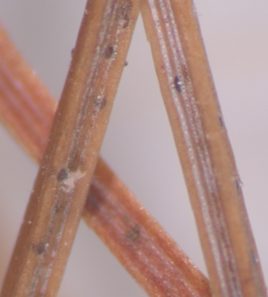
The first two fungi were determined to be relatively common pathogens for Indiana: Lophodermium and Lecanosticta (brown spot). Symptoms appeared relatively typical for these pathogens where the needles turned brown over-time. However, there were other needles in the canopy and on the sample that had a lighter coloration. We found small black fungal structures dotted along the length of these needles producing light colored cirrhi (also called spore horns) (Figure 3). After examining the fungal spores, isolating the fungus, and performing DNA testing, we determined this third fungus to be Septorioides strobi, the causal agent of Septorioides needle blight of pines. This fungus has been determined to be a contributor to white pine needle damage/defoliation.
Figure 3: Black fungal structures developing on dead needles with white sporulation exuding from the top.
White pine needle damage/defoliation (WPND) was first observed in the state of Maine in 2010 and was attributed to three needle blight diseases, including Lecanosticta, and has since been observed throughout the Northeast US. However, researchers eventually determined that a new fungus, Septorioides strobi, was also found consistently in blighted needles and could be contributing to WPND.
This is the first time we have found this fungus in the state of Indiana, though it has been present for longer than a single season. We do not know how it will react to our climate nor if it will cause significant damage to affected trees. Like other needle blight pathogens, Septorioides has been observed to sporulate around the same time during humid, wet weather, but symptoms may not develop until the following year. White pines are the primary host for this needle cast disease, but it can also develop on 2, 3, and 5 needle pines. While we see white pine decline is a major problem, Septorioides will not likely be the final nail in the coffin for white pines in Indiana, though it certainly will not help us keep them healthy.
In this edition of ID That Tree, Purdue Extension forester Lenny Farlee takes us through the different characteristics of coniferous trees found here in Indiana, particularly their foliage and the features that pertain to them. Come along as we look through real examples of shape, scales, leaf and branches of various local trees. The featured species include Eastern red cedarwood, Northern white cedar, and more.
If you have any questions regarding wildlife, trees, forest management, wood products, natural resource planning or other natural resource topics, feel free to contact us by using our Ask an Expert web page.
Purdue Landscape Report: Recently a homeowner in Hamilton County posted on the Indiana Native Plant Society Facebook page with concerns about aphids, mites, and apple scab in her maple and oak trees. She asked for a second opinion and treatment options for these pests. I reached out to the homeowner and requested permission to collect samples from the trees. Let’s look at what I found (or didn’t find) and discuss when and if these issues should be treated.
Apple Scab on Maples?
First, we can eliminate the concern about apple scab because maple and oak trees are not hosts for this pathogen. Apple scab is caused by the fungus Venturia inaequalis, and hosts include apples, crabapples, hawthorn, mountain ash, firethorn, and loquat. There are other fungal diseases which cause leaf spotting in maples, such as Anthracnose, tar spot, and Phyllosticta leaf spot. To diagnosis these diseases, homeowners can submit a sample to the Purdue Plant & Pest Diagnostic Lab, or hire a certified arborist to assess the tree. However, all these diseases are primarily aesthetic issues. A healthy tree will not die from these pathogens and does not require treatment. You can find more information about maple diseases in this publication: Diseases in Hardwood Tree Plantings. You can also find a previous article on Tar Spot in Maple in the Purdue Landscape Report (Issue 18-12).
Fig. 1. Severe spider mite damage on maple leaves. (Photo: S. D. Frank, North Carolina State University)
Spider Mites
The next pest concern on these trees is spider mites. Out of the dozens of leaves I collected, I found only two immature mites on a couple of maple leaves I examined. This is a very small mite presence, and it is not recommended to treat for spider mites unless the populations threaten the health or appearance of the tree. Limiting pesticide usage will conserve the natural enemies, which are vital to keeping mite populations in check. In fact, improper pesticide applications can kill these important natural enemies and worsen mite infestations.
When do you know if the mite population is large enough to merit intervention? Check your trees for signs of heavy feeding damage, such as leaf stippling (Fig. 1), or dense webbing on the leaves. Mites can also be monitored by placing a sheet of paper (8.5×11”) beneath a branch and striking the limb. Chemical treatments should be considered when you count ≥24 mites per strike. You can find detailed management recommendations and a full list of pesticide options in this Purdue Extension publication: Spider Mites on Ornamentals.
Fig. 2: Adult painted maple aphids found on maple in Hamilton Co, Indiana. (Photo: Andrew Johnston, Purdue University).
Aphids
The aphids I found on the homeowner’s maple trees are Drepanaphis acerifoliae, or the painted maple aphid (Fig. 2). This species only feeds on maple trees, and is not a threat to the oak tree on this homeowner’s property. Painted maple aphid is a very common aphid in our region. I found only a few aphids on one of the maple trees I sampled, which is not enough to require treatment. In addition, one of the aphids was a “mummy”, or a carcass left behind from a parasitoid wasp. This indicates that natural enemies are already at work managing the aphid population. Aphids may rarely require chemical control if their numbers grow large enough to produce significant amounts of honeydew, which can result in sooty mold outbreaks.
Tussock Moth
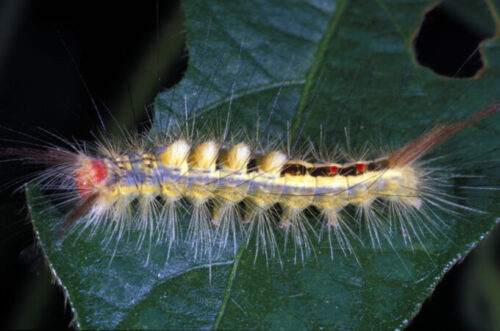
The only insect I found on the oak tree was a white-marked tussock moth caterpillar, Orgyia leucostigma (Fig. 3). This is the likely culprit for the minor feeding damage I noticed. These are not significant pests and do not require treatment. Don’t touch them, though! The setae of this caterpillar are irritating and may cause allergic reactions.
Overall, the pests I found were minimal and non-threatening to the trees. It’s normal to find some insect pressure in the landscape. Knowing when and if to treat requires accurate diagnosis and monitoring of pest levels. Check out PurduePlantDoctor.com for an easy-to-use diagnostic aid and treatment recommendations.
In this episode of A Woodland Management Moment, Purdue Extension forester Lenny Farlee talks about the importance of oak regeneration. Oak is a ‘keystone’ species, integral to supporting many different facets of wildlife. This includes insects to large mammals all across the environment in Indiana and the central hardwood region. This video also shares details regarding Purdue’s initiatives to ensure the diverse ecosystems maintained by oak and to provide the resources needed to keep regenerating this integral tree
If you have any questions regarding trees, forests, wildlife, wood products or other natural resource topics, feel free to contact us by using our Ask an Expert web page.
The long lifespan of many trees, which could be centuries or even millennia in the case of a few species, is a source of awe and inspiration for many. The bark of trees can often tell some stories about their life and history, if we know how to interpret what we see. Here are a few examples you may run across in Indiana.
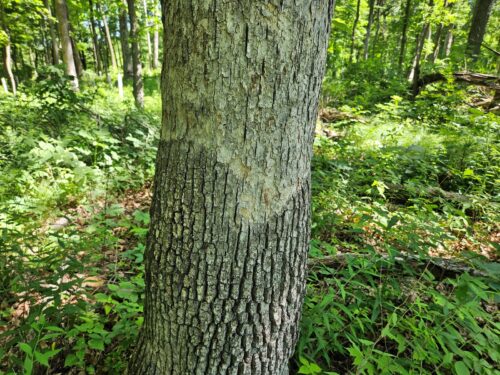
Is this tree sick? That may be a natural question to ask when looking at the striking difference in the bark pattern on this white oak. In fact, it is an infection, but not a harmful one to the survival of the tree. This is called smooth patch and is caused by a fungus that infects the outer bark of oak and some other tree species. There are several species of fungus that may cause this appearance, but the most common is Aleurodiscus oakesii. The fungus gradually decomposes the outer layers of bark, producing the flattened and smooth surfaces which contrast with the rough bark that is uninfected. If you look closely during moist periods, you may see the small cup-shaped fruiting bodies of the fungus on the bark. It is not a threat to the health or integrity of the tree as only the outer bark is impacted.
Figure 1 – Smooth patch on white oak. The normal bark pattern can be seen on the lower trunk.
Figure 2 – Smooth patch fungus, Aleurodiscus oakesii, fruiting body on white oak bark.
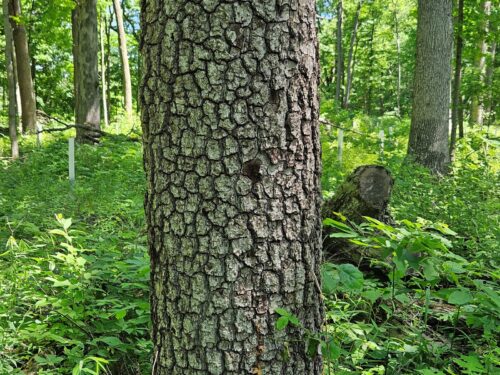
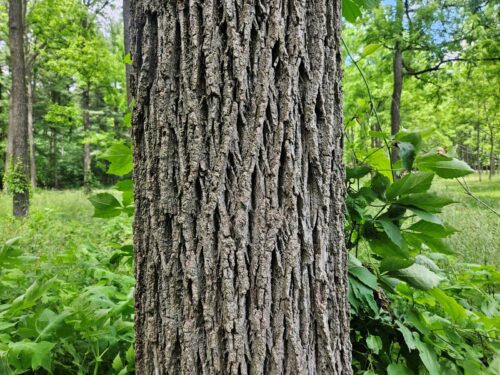
This isn’t the same species of tree, is it? Yes, it is! Bark pattern differences in some species may reflect the growth rate or relative vigor of the tree. These photos show black walnut bark from two very different growing sites. The blocky, alligator-hide bark pattern is often an indication of slow growth and may result from a tree growing on a very difficult site, like the dry hilltop where this tree is located, or severe competition from surrounding trees. The strongly interlacing ridges of the bark in the second photo are from a black walnut growing in a plantation on a creek bench with deep, moist and fertile soils, resulting in more vigorous growth.
Figure 3 – Black walnut with slow-growth bark pattern.
Figure 4 – Black walnut with vigorous growth bark pattern.
What happened here? The pattern in a horizontal line across these trees looks too perfect to be natural, but it was not produced by a human. This is the feeding activity of the yellow-bellied sapsucker, a species of woodpecker that migrates through Indiana. The sapsucker, true to its name, uses its sharp bill to create holes through the bark that ooze sap. The sapsucker feeds on the sap and may also feed on insects drawn to the sap. They tend to create straight lines of holes that leave this diagnostic pattern behind, even long after the birds have ceased their activity. This activity is usually not fatal to the tree, but does cause some damage to the wood beneath the bark, so trees that have been used by sapsuckers may have discolored spots or other blemishes in the wood revealed when processed for wood products.
Figure 5 and 6 – Yellow-bellied sapsucker feeding activity on sugar maple trees. These are older holes being covered by wood growth.
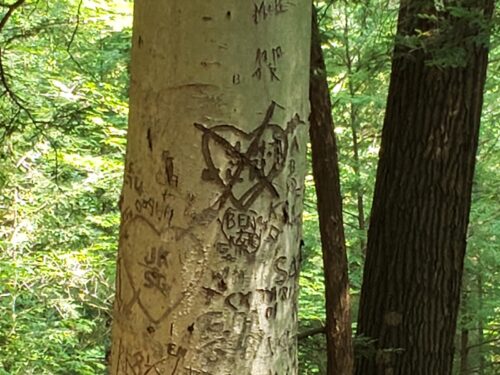
Humans also may leave a history of our presence on trees. This American beech tree in a recreation area has recorded the comings and goings of visitors, with some apparent editing as well! I do not endorse this activity as it can be harmful to the tree by introducing avenues for decay and disease, and is generally prohibited on public property. Instead, enjoy reading the nature stories found in bark.
Figure 7 – American beech bark defaced by carving.
Oak-hickory forests, which are comprised of a variety of different tree species, shrubs, grasses, sedges and wildflowers, as well as wildlife, including songbirds, are important to Indiana’s biodiversity. Learn how you can support oak-hickory ecosystems on your property through a new publication, “Forest Stewardship for Oak-Hickory Ecosystems in Indiana,” produced by Let the Sun Shine In – Indiana.
“The goal of this publication is to provide woodland owners with information about the stewardship practices they can use to sustain and enhance oak-hickory ecosystems on their land,” said co-author Jarred Brooke, Purdue Extension wildlife specialist. “Having this information will help them make informed decisions about how to manage their land to meet their forestry and wildlife objectives.”
The publication discusses various methods landowners can use on their properties, from midstory removal to overstory thinning, prescribed fire, supplemental planting, controlling deer browsing, crop tree release and invasive species control. It also details options for timber harvest, which can be used to regenerate the next generation of a forest. Additional resources from forestry and wildlife professionals as well as other publications discussing current research and management tips also are included in this document.
“Oak ecosystem management is confusing,” said co-author Dan Shaver, state forester for the Indiana Natural Resources Conservation Service. “This publication provides easy to understand basic concepts to help landowners see where their property fits in the oak restoration process. It does not answer all questions or provide all the technical details, but it will help reduce confusion and foster better communication and understanding between landowners and foresters.”
“The oak-hickory ecosystem of southern Indiana is incredibly important to birds, other wildlife, and overall biodiversity,” Brazil said.
“Unfortunately, it’s continued persistence isn’t a given. Lack of management, and specifically lack of fire, over the past century has left it in peril. Restoring the oak-hickory ecosystem will require a concerted effort and private landowners are a key part of the solution. This publication is intended to help landowners understand how to manage oak ecosystems on their properties, and give them a roadmap for getting started.”
Let the Sun Shine In – Indiana is a collaboration of several organizations with a shared goal of maintaining oak-hickory ecosystems for the benefit of the people and wildlife of Southern Indiana.
“The LSSI IN collaboration utilizes education and outreach opportunities for landowners, to inform them of the imperiled Oak-Hickory Ecosystem,” explained Judi Brown, coordinator of the Let the Sun Shine In – Indiana. “Part of this outreach includes providing the Oak Hickory Stewardship Guide to landowners. The Stewardship Guide explains common forest management concepts that they can utilize on their properties, and encourages the growth of oak and hickory trees from the acorn or nut into the forest canopy.”
The primary method of distribution of the Stewardship Guide is through the Indiana DNR district foresters, but the guide also is available online. LSSI IN is providing metal gate signs to recognize the stewardship of forest landowners who are actively managing their forest land.
Support for the stewardship guide was provided by the Central Hardwoods Joint Venture, the American Bird Conservancy, the Indiana Department of Natural Resources Division of Forestry, Let the Sun Shine In – Indiana, Purdue Forestry and Natural Resources Extension, the United States Department of Agriculture Natural Resources Conservation Service and the United States Forest Service.