 Purdue University - Extension - Forestry and Natural Resources
Got Nature? Blog
The aquaculture industry in the United States Department of Agriculture North Central Region (USDA NCR) is relatively small and diverse, consisting primarily of small- to medium-scale family-owned and operated farms, with a few large operations scattered throughout the region. Regardless of farm size, regional aquaculture businesses face similar product marketing challenges, such as low prices and competition with wild-capture and imported farm-raised fish products.
To maximize profits, companies generally adapt marketing strategies based on factors such as location, product offerings, consumers’ willingness to pay, and profit margins. In the NCR, due to relatively high regional production costs, low production capacities, and lack of economically feasible processing infrastructure, many aquaculture businesses have opted to market and sell to wholesalers specializing in recreational stocking, the pet trade, bait, and live food fish. With ongoing changes to the way people shop, including more online purchasing than ever before, regional aquaculture businesses are exploring opportunities for direct marketing to consumers to diversify their sales portfolios. This requires finding new customers who are willing to pay a premium price.
Direct marketing means any marketing strategy that relies on business-to-consumer communication or distribution. This guidebook is for small- to medium-scale farmers interested in directly marketing aquaculture products to individual consumers, essentially shortening the supply chain by eliminating all or some of the intermediaries or “middlemen.”
To receive the free download, visit the Purdue Extension’s resource center: The Education Store – Direct Marketing Guidebook for Small- to Medium-Scale Aquaculture Businesses.
Resources:
Profitability of Hybrid Striped Bass Cage Aquaculture in the Midwest, The Education Store, Purdue Extension resource center
A Guide to Marketing for Small-Scale Aquaculture Producers, The Education Store
A Guide to Small-Scale Fish Processing Using Local Kitchen Facilities, The Education Store
Marine Shrimp Biofloc Systems: Basic Management Practices, The Education Store
Aquaculture Industry in Indiana Growing, Purdue Today
Tilapia Farmed Fish Fact Sheet, The Education Store
Rainbow Trout Farmed Fish Fact Sheet, The Education Store
Pacific White Shrimp Farmed Fish Fact Sheet, The Education Store
Walleye Farmed Fish Fact Sheet: A Guide for Seafood Consumers, The Education Store
Sustainable Aquaculture: What does it mean to you?, The Education Store
The Benefits of Seafood Consumption The Education Store
Walleye Farmed Fish Fact Sheet: A Guide for Seafood Consumers, The Education Store
Pond and Wildlife Management website, Purdue Extension
Fish Cleaning with Purdue Extension County Extension Director, Got Nature? Blog, Purdue Extension – Forestry and Natural Resources
Aquaponics: What to consider before starting your business, YouTube, Purdue Ag Economics
Aquatics & Fisheries, Playlist, YouTube, Purdue Extension – Forestry and Natural Resources
Eat Midwest Fish, Illinois-Indiana Sea Grant online resource hub
Kwamena Quagrainie, Aquaculture Marketing Director/Clinical Engagement Full Professor
Purdue Agricultural Economics/Purdue Forestry & Natural Resources/Illinois Indiana Sea Grant Program
Amy Shambach, Aquaculture Marketing Outreach Associate
Purdue Forestry & Natural Resources/Illinois Indiana Sea Grant Program
Taylor Bradford, Aquaculture Extension Assistant
Illinois-Indiana Sea Grant/Purdue Forestry & Natural Resources/Purdue Agricultural Economics
Stuart Carlton, IISG Assistant Director
Illinois-Indiana Sea Grant/Purdue Forestry & Natural Resources
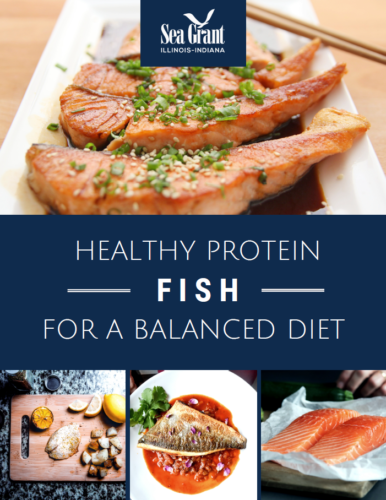 Fish is part of a healthy, balanced diet, but it is sometimes difficult to find fish locally as well as know what to look for and how to cook it. Illinois-Indiana Sea Grant (IISG) has added this new free pdf downloadable quick guide, Fish-Healthy Protein For a Balanced Diet, to their many resources providing easy tools to help as we increase fish in our diets.
Check out the new website Eat Midwest Fish which includes a fish finder map that shows users where fresh seafood is produced near their location, recipes submitted by IISG staff to inspire creativity in the kitchen, how-to cooking videos, nutrition information, an introduction to aquaculture and more.
Resources
Walleye Farmed Fish Fact Sheet: A Guide for Seafood Consumers, The Education Store, Purdue Extension resource center
Best Practices Guide for Charter Fishing and COVID-19, The Education Store
Pond Management: Managing Fish Populations, The Education Store
Pond and Wildlife Management website, Purdue Extension
Natural Resources University Podcasts, Collaboration with Mississippi, Florida, Iowa and Indiana Extension Services
Fish Cleaning with Purdue Extension County Extension Director, Got Nature? Blog, Purdue Extension – Forestry and Natural Resources
Aquatics & Fisheries, Playlist, Purdue Extension – Forestry and Natural Resources
Amy Shambach, Aquaculture Marketing Outreach Associate
Purdue Department of Forestry and Natural Resources/Illinois Indiana Sea Grant Program
While our FNR Purdue Extension specialists can’t be with you in person at workshops, meetings or in the field right now, they are still here to assist you. Don’t hesitate to reach out.
Purdue Extension – Forestry and Natural Resources, purdue.edu/fnr/extension
Ask An Expert
Wendy Mayer, Communications Coordinator
Purdue University Department of Forestry and Natural Resources
Diana Evans, Extension & Web Communications Specialist
Purdue University Department of Forestry and Natural Resources

Recent Posts
- Replace Invasives with Natives: 2026 Plant Swap Program
Posted: April 13, 2026 in Invasive Plant Species, Urban Forestry - Publication – Planting Forest Trees and Shrubs in Indiana
Posted: April 8, 2026 in Forests and Street Trees, Urban Forestry, Wildlife, Woodlands - ID That Tree: Virgin’s Bower Clematis
Posted: April 6, 2026 in Urban Forestry, Wildlife, Woodlands - It’s Timberdoodle Time!
Posted: April 3, 2026 in Got Nature for Kids, How To, Wildlife - Keep An Eye Out for Hammerhead Worms, Purdue Landscape Report
Posted: April 2, 2026 in Invasive Animal Species, Wildlife, Woodlands - When is the Peak Migration For Hummingbirds and How Can You Attract Them?
Posted: in How To, Wildlife - ID That Tree Featured in National Woodland Owners Association Newsletter
Posted: April 1, 2026 in Urban Forestry, Wildlife, Woodlands - New 2026 Indiana Woodland Steward Newsletter
Posted: March 30, 2026 in Urban Forestry, Wildlife, Woodlands - A Woodland Management Moment: Why Aspect Matters
Posted: in Urban Forestry, Woodland Management Moment, Woodlands - 2026 Winter Bat Survey In Progress, MyDNR
Posted: March 27, 2026 in How To, Wildlife
Archives
Categories
- Alert
- Aquaculture/Fish
- Aquatic/Aquaculture Resources
- Ask the Expert
- Christmas Trees
- Community Development
- Disease
- Drought
- Forestry
- Forests and Street Trees
- Gardening
- Got Nature for Kids
- Great Lakes
- How To
- Invasive Animal Species
- Invasive Insects
- Invasive Plant Species
- Land Use
- Natural Resource Planning
- Nature of Teaching
- Plants
- Podcasts
- Ponds
- Publication
- Safety
- Spiders
- Timber Marketing
- Uncategorized
- Urban Forestry
- Webinar
- Wildlife
- Wood Products/Manufacturing
- Woodland Management Moment
- Woodlands