 Purdue University - Extension - Forestry and Natural Resources
Got Nature? Blog
Agricultural & Natural Resources (ANR) Newsletter: Since joining the faculty at Purdue in 1997, Rado Gazo, a professor of wood processing and industrial engineering, has educated students, industry professionals and the general public about the possibilities of the wood products industry.
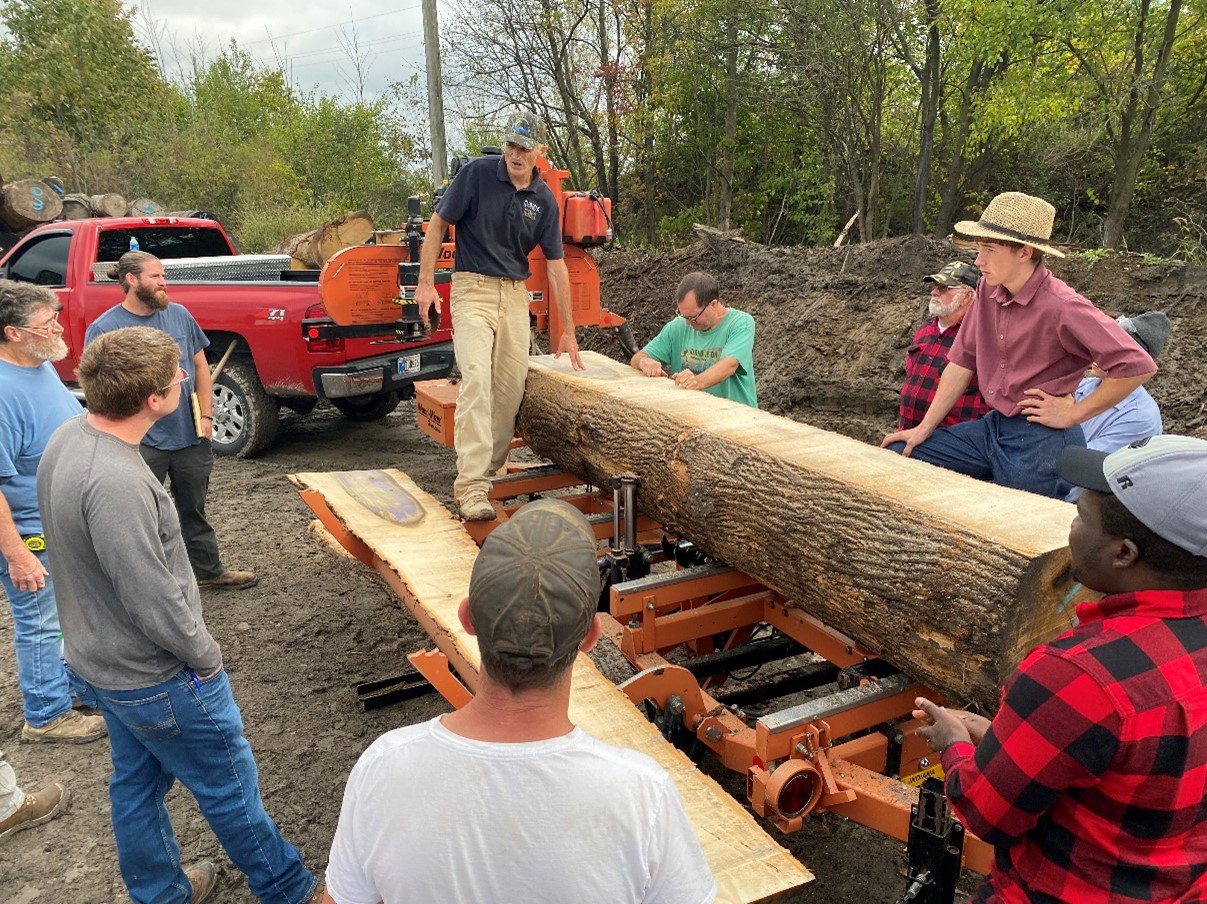
Prof. Gazo demonstrates hardwood log grade-sawing process on a portable Wood-Mizer sawmill.
In addition to teaching undergraduate courses in Properties of Wood, Wood Products Manufacturing and Furniture Design for CNC Manufacturing, Gazo conducts research focused on evaluating tree, log and lumber quality using CT (X-ray computed tomography), laser and image scanning and related manufacturing. He also investigates the competitiveness of furniture manufacturers as well as the application of industrial engineering techniques to value-added wood products manufacturing.
In 2020, Gazo created Hardwood University, a self-sustaining collaborative program with the Indiana Hardwood Lumbermen’s Association, which aims to provide hardwood industry professionals and landowners in the Central Hardwood region with cutting-edge information and training. Gazo is one of the primary instructors for the program.
Hardwood University, which consists of 10 sessions annually, is intended for new employees in the hardwood industry as well as those preparing for advancement or cross-training. The program, which takes place monthly at various Indiana hardwood plants and Purdue agricultural centers, offers informational and technical sessions on topics ranging from forest taxation to tree and log scaling and grading; log bucking; marketing hardwood veneer, stave and sawlogs; grade-sawing lumber; air drying and kiln drying lumber; hardwood lumber grading; lean manufacturing and logistics; and sawmill efficiency and quality control.
In addition, Gazo has worked with nearly 300 companies, providing technical assistance, troubleshooting and consulting services as well as implementation of manufacturing best practices.
To learn more about Rado Gazo’s work view: Rado Gazo, Forestry and Natural Resources profile page.
To read the rest of the newsletter and view the original article, see the ANR November 2024 Newsletter.
Resources:
Wood Products Manufacturing Technology Minor, FNR Minor
Hardwoods of the Central Midwest, The Purdue Arboretum
Wood Products, Purdue Extension – Forestry & Natural Resources (FNR)
Wood is Best Video, Forestry and Natural Resources YouTube Channel, Woodisbest.org
An Introduction to Trees of Indiana, The Education Store, Purdue Extension resource center
Native Trees of the Midwest, The Education Store
Shrubs and Woody Vines of Indiana and the Midwest, The Education Store
ID That Tree, Playlist, Subscribe to Purdue Extension – Forestry and Natural Resources YouTube Channel
A Woodland Management Moment, Playlist, Purdue Extension – FNR YouTube Channel
Investing in Indiana Woodlands, The Education Store
Forest Improvement Handbook, The Education Store
Finding help from a professional forester, Indiana Forestry & Woodland Owners Association
District Foresters for 10 plus acres, Indiana Department of Natural Resources
Hardwood Tree Improvement & Regeneration Center (HTIRC)
Agricultural & Natural Resources (ANR), Purdue Extension
Wild Bulletin, Indiana Department of Natural Resources (DNR) Fish and Wildlife: Interested in processing your own deer? Head over to our new webpage to view instructional videos from our partners at the International Hunter Education Association (IHEA) and National Deer Association (NDA). They’ll guide you through each step, including grinding and preserving the meat. Plus, you can download our printable PDF that includes step-by-step instructions for skinning and processing your own deer.
To learn more, view the Deer Processing page on the official Indiana DNR website. This is where you can find the instructional PDF along with training videos and other resources!
Subscribe to the Indiana Department of Natural Resources YouTube Channel.
Resources:
Ask an Expert, Playlist, Purdue Extension – FNR YouTube Channel
Handling Harvested Game: Episode 1, Field Dressing, video, Purdue Extension – FNR YouTube Channel
Handling Harvested Game: Episode 2, Hanging & Skinning, video, Purdue Extension – FNR YouTube Channel
Handling Harvested Game: Episode 3, Deboning, video, Purdue Extension – FNR YouTube Channel
Handling Harvested Game: Episode 4, Cutting, Grinding & Packaging, video, Purdue Extension – FNR YouTube Channel
Introduction to White-tailed Deer Impacts on Indiana Woodlands, Got Nature? Blog & The Education Store
Purdue Extension Pond and Wildlife Management
Understanding White-tailed Deer and Their Impact on Indiana Woodlands, The Education Store
Monitoring White-tailed Deer and Their Impact on Indiana Woodlands, The Education Store
Managing White-tailed Deer Impacts on Indiana Woodlands, The Education Store
How to Build a Plastic Mesh Deer Exclusion Fence, The Education Store
Managing Your Woods for White-Tailed Deer, The Education Store
Deer Harvest Data Collection, Got Nature? Blog, Purdue Extension – FNR
Handling Harvested Deer Ask an Expert? video, Purdue Extension – FNR YouTube Channel
Subscribe to Purdue Extension-Forestry & Natural Resources YouTube Channel, Wildlife Playlist
A Woodland Management Moment – Deer Fencing, Purdue Extension – FNR YouTube Video
Indiana Department of Natural Resources – Division of Fish & Wildlife
 Wild Bulletin, Indiana Department of Natural Resources (DNR) Fish and Wildlife: Instead of raking and bagging leaves this fall, consider allowing them to stay and naturally decay. Fallen leaves, plant stems, flower heads, twigs, and logs provide crucial winter habitat for Indiana’s wildlife.
The warmth and cover of leaves provide shelter for Eastern box turtles, salamanders and frogs, as well as insulation for butterflies and moths. Leaf piles can even benefit landscaping, as they can suppress weeds, retain moisture, and add nutrients to the soil as they decay. Leaves don’t have to be left exactly where they fall—you can rake them into flower beds and around tree bases.
For more information about creating habitat for wildlife in your backyard, visit the DNR website and the Wildlife Habitat Fact Sheet.
Resources:
Frost Seeding to Establish Wildlife Food Plots and Native Grass and Forb Plantings – The Education Store, Purdue Extension’s resource center
Wildlife Habitat Hint: Tips for Evaluating a First Year Native Grass and Forb Plantings, Purdue Extension – FNR YouTube Channel
Drone Seeding Native Grasses and Forbs: Project Overview & Drone Setup, Purdue Extension – FNR YouTube channel
Forest Improvement Handbook, The Education Store
Ordering Seedlings from the State Forest Nursery System, Got Nature? – Purdue Extension-Forestry & Natural Resources (FNR)
Designing Hardwood Tree Plantings for Wildlife – The Education Store
ID That Tree – YouTube Playlist
Forest Management for Reptiles and Amphibians: A Technical Guide for the Midwest, The Education Store
Ask the Expert: Hardwood Ecosystem Experiment – Birds and Salamander Research, Purdue Extension – FNR
A Template for Your Wildlife Habitat Management Plan, The Education Store
Managing Your Woods for White-Tailed Deer, The Education Store
Woodland Stewardship for Landowners, Playlist, Purdue Extension – FNR YouTube channel
Nature of Teaching Unit 1: Animal Diversity and Tracking, The Education Store
Subscribe Purdue Extension – Forestry and Natural Resources YouTube Channel, Playlists include wildlife, Nature of Teaching, Moments in the Wild and much more.
Indiana Department of Natural Resources – Division of Fish & Wildlife

Sandhill cranes at Jasper-Pulaski Fish & Wildlife Area. Photo by Indiana DNR.
Wild Bulletin, Division of Fish & Wildlife, IN DNR: Each fall, thousands of sandhill cranes visit the marsh at Jasper-Pulaski Fish & Wildlife Area (FWA) as they migrate, and their visits make for a prime wildlife viewing opportunity from its observation deck. To spot the flocks of cranes, visit at sunrise or sunset until mid-December. The observation deck has a few stationary viewing scopes, but bringing your own spotting scope or binoculars may enhance your viewing experience.
If you can’t make it to the area, you can follow along with our sandhill crane counts, which we update weekly during the migratory season.
Jasper-Pulaski Fish & Wildlife Area provides quality outdoor recreational opportunities while maintaining 8,179 acres of wetland, upland, and woodland game habitat. It provides an ideal stopover for migratory birds. More than 15,000 sandhill cranes stop during fall migration.
Best time to view:
- Sunrise: Gigantic flocks rise and fly from their roosting marshes to feed in surrounding private land (agricultural fields). On their way to feed some birds stop in the open grassland areas of the refuge.
- Sunset: Beginning about one hour before sunset, flocks of cranes kite into the refuge near the observation area from all directions. They gab and socialize again before returning to roosting marshes at dusk.
While this is the cranes’ usual routine, it is important to remember they are wild animals and are not always predictable.
Best location to view
The crane spectacle is best seen from the observation platform at the Sandhill Crane Observation Area (view map). During the day, cranes can be spotted feeding and dancing in nearby harvested farm fields. Roosting marshes in the Waterfowl Resting Area are closed to the public so that migrating birds can rest without human disturbance.
Viewing tips
While cranes may gather close to the observation platform, they are usually several hundred yards away. A few stationary viewing scopes are available but bringing your own spotting scope or binoculars is recommended. If you are photographing cranes, your most powerful zoom lens will be handy, as trying to get too close to these birds will easily spook them.
Learn more about the fall sandhill crane migration at Jasper-Pulaski FWA.
Sign up to receive the Wild Bulletin E-Newsletter.
Resources:
International Crane Foundation
Birds and Residential Window Strikes: Tips for Prevention, The Education Store, Purdue Extension resource center
Breeding Birds and Forest Management: the Hardwood Ecosystem Experiment and the Central Hardwoods Region, The Education Store
Managing Woodlands for Birds Video, Purdue Extension-Forestry and Natural Resources (FNR) YouTube Channel
Ask An Expert, Playlist, Purdue Extension – FNR YouTube channel
No Room at the Inn: Suburban Backyards and Migratory Birds, Education Store, Purdue Extension resource center
Subscribe, Purdue Extension – FNR YouTube Channel
Indiana Department of Natural Resources
In this edition of ID That Tree, Purdue Extension forester Lenny Farlee takes us through the different characteristics of Hoptree, a relatively common shrub here in Indiana. This is a unique native plant with three-part leaves and hop-like seed pods. Also called Wafer Ash due to its distinctive wafer-shaped seeds, this shrub can often be confused with Poison Ivy or Bladdernut, so be sure to pay attention to key differences in the video. Features include trifoliate leaves and the temperate areas in which it grows.
If you have any questions regarding wildlife, trees, forest management, wood products, natural resource planning or other natural resource topics, feel free to contact us by using our Ask an Expert web page.
Resources:
ID That Tree: Firs and Spruces, Video Playlist, Purdue Extension – Forestry and Natural Resources (FNR) YouTube Channel
ID That Tree – Jack Pine, Scotch Pine, Red Pine, Virginia Pine, Eastern White Pine, Video Playlist, Purdue Extension – Forestry and Natural Resources (FNR) YouTube Channel
Beat Back Borers Attacking Pines and Other Cone Bearing Trees, Purdue Landscape Report
Tree Diseases: White Pine Decline in Indiana, The Education Store, Purdue Extension Resource Center
Purdue Arboretum Explorer
Conservation Tree Planting: Steps to Success, Purdue Extension – FNR YouTube Channel
A Woodland Management Moment, Playlist, Purdue Extension – FNR YouTube Channel
Woodland Stewardship for Landowners, Playlist, Purdue Extension – FNR YouTube Channel
Indiana Department of Natural Resources: Invasive Species
Indiana Invasive Species Council
Cooperative Invasive Species Management Area (CISMA)
Report Invasive, Purdue Extension
Episode 11 – Exploring the challenges of Invasive Species, Habitat University-Natural Resource University
Shrubs and Woody Vines of Indiana and the Midwest, The Education Store
Native Trees of the Midwest, The Education Store
Professional Forester, Indiana Forestry Woodland Owners Association
Forest Improvement Handbook, The Education Store
Find an Arborist, International Society of Arboriculture
Lenny Farlee, Extension Forester
Hardwood Tree Improvement and Regeneration Center
Purdue Department of Forestry & Natural Resources
The aquaculture industry in the Midwest region of the United States has limited or no access to economically feasible seafood processing infrastructure for farmed seafood products, leaving producers to rely on live ethnic fish and recreational markets. This handbook highlights the necessary elements of processing fish to guide any interested fish farmer or entrepreneur.
Local kitchens, such as shared-use commercial kitchens and licensed on-farm kitchens, can provide resources for fish farming entrepreneurs interested in adding some form of value to their fish, by allowing them to diversify their market. These shared-use commercial kitchens can be found in many communities and are rented by food producers, local food entrepreneurs, and caterers to prepare and process their food products for consumer markets. Using local facilities for processing fish and developing aquaculture products could diversify marketing opportunities for small-scale fish farmers and have a positive impact on farm profitability. A diversified market also reduces market risks for fish farmers. Embarking on processing is an additional investment for a fish farmer and requires resources.
This handbook provides some information and resources for fish farmers interested in using licensed kitchen facilities for fish processing or setting up their own on-farm processing kitchen. This handbook highlights the necessary elements of processing fish to guide any interested fish farmer or entrepreneur.
To receive the free download, visit the Purdue Extension’s resource center: The Education Store – Handbook on Processing Fish for Small-Scale Fish Farmers.
Resources:
Profitability of Hybrid Striped Bass Cage Aquaculture in the Midwest, The Education Store, Purdue Extension resource center
A Guide to Marketing for Small-Scale Aquaculture Producers, The Education Store
A Guide to Small-Scale Fish Processing Using Local Kitchen Facilities, The Education Store
Marine Shrimp Biofloc Systems: Basic Management Practices, The Education Store
Aquaculture Industry in Indiana Growing, Purdue Today
Tilapia Farmed Fish Fact Sheet, The Education Store
Rainbow Trout Farmed Fish Fact Sheet, The Education Store
Pacific White Shrimp Farmed Fish Fact Sheet, The Education Store
Walleye Farmed Fish Fact Sheet: A Guide for Seafood Consumers, The Education Store
Sustainable Aquaculture: What does it mean to you?, The Education Store
The Benefits of Seafood Consumption The Education Store
Walleye Farmed Fish Fact Sheet: A Guide for Seafood Consumers, The Education Store
Pond and Wildlife Management website, Purdue Extension
Fish Cleaning with Purdue Extension County Extension Director, Got Nature? Blog, Purdue Extension – Forestry and Natural Resources
Aquaponics: What to consider before starting your business, YouTube, Purdue Ag Economics
Aquatics & Fisheries, Playlist, YouTube, Purdue Extension – Forestry and Natural Resources
Eat Midwest Fish, Illinois-Indiana Sea Grant online resource hub
Kwamena Quagrainie, Aquaculture Marketing Director/Clinical Engagement Full Professor
Purdue Agricultural Economics/Department of Forestry and Natural Resources/Illinois Indiana Sea Grant Program
Amy Shambach, Aquaculture Marketing Outreach Associate
Purdue Department of Forestry and Natural Resources/Illinois Indiana Sea Grant Program
Purdue Landscape Report: In the last newsletter, an article on triclopyr brought up much discussion on the Roundup brands now containing multiple active ingredients other than glyphosate. Professionals in the industry may encounter a client with herbicide damage symptoms that mimic growth-regulator injury instead of typical glyphosate damage symptoms. While the client may have used Roundup, they didn’t necessarily use glyphosate. Going forward, it’s important to keep in mind that Roundup no longer means glyphosate in the consumer market.
Roundup has been one of the most used herbicides for many different weed control applications. Roundup, with the active ingredient glyphosate, was first registered with the EPA in 1974. When Roundup went off patent in 2000, glyphosate started being sold under many different names. According to the National Pesticide Information Center there are currently over 750 products containing glyphosate. Formulations may differ with salt carriers, adjuvants, concentrations, and mixed with other herbicides.
Recently, Bayer announced glyphosate would be phased out of consumer Roundup products. In its place, consumer Roundup products include other active ingredients. This can lead to confusion in the consumer market. It’s important to note that professional-use Roundup (turf and ornamental, agronomic crops, etc.) still contains glyphosate.
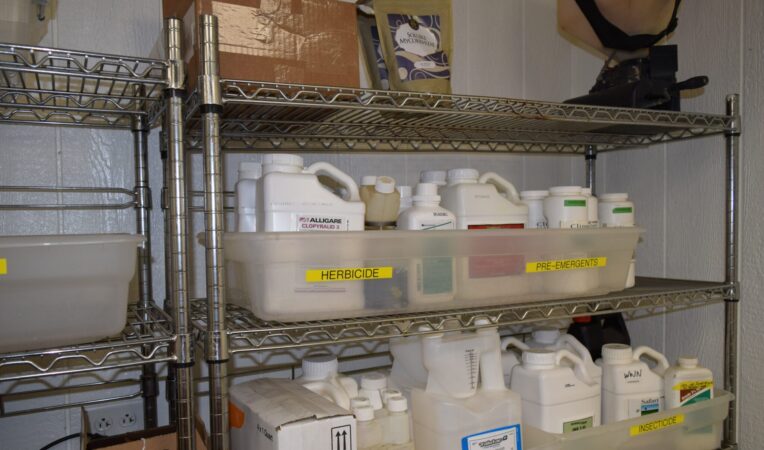
Figure 1. Consumer versions of Roundup are no longer glyphosate. Pay close attention to the active ingredients on labels to prevent unwanted plant injury.
Within the consumer Roundup product line, there are many different formulations designed for specific purposes, which include Roundup Weed and Grass Killer, Roundup for Lawns, Roundup for Lawns: Crabgrass Destroyer, Roundup Dual Action Weed and Grass Killer, Roundup Poison Ivy and Tough Brush Killer, among others. Each of these products contains distinct active ingredients that target different types of weeds.
Roundup Weed and Grass Killer: Glyphosate as the Active Ingredient
The original Roundup herbicide contains glyphosate as its primary active ingredient. Glyphosate is a systemic, non-selective herbicide, meaning it is absorbed by the plant and translocated throughout the vascular system, ultimately leading to the plant’s death. Glyphosate works by inhibiting the enzyme 5-enolpyruvylshikimate-3-phosphate synthase (EPSPS), which is a key component of the shikimic acid pathway—a pathway critical for the synthesis of aromatic amino acids in plants.
Active Ingredient:
- Glyphosate: The ‘traditional’ version of Roundup that controls many different weeds. Can take 10-14 days to kill weeds.
- Pelargonic Acid: A contact herbicide that quickly breaks down cell walls. This is added to provide a quick burndown of the weed.
Roundup Dual Action Weed and Grass Killer Plus 4 Month Preventer: Multiple modes of action
Round Dual Action is a formulation that includes four very different herbicides that is intended for use in areas with limited vegetation (i.e. sidewalks, driveways, mulched beds). In addition to postemergence herbicides, this product includes two preemergence active ingredients.
Active Ingredients:
- Triclopyr: Systemic herbicide that mimics auxins. Very effective herbicide for woody plants, which is used frequently in invasive species treatments.
- Fluazifop: Grass-specific herbicide (graminicide) that controls several annual and perennial grasses.
- Diquat: Contact herbicide that exhibit symptoms rapidly. Good for annual weeds.
- Imazapic: Pre- and Postemergence control of several grasses and broadleaf weeds.
Roundup for Lawns: A Combination of Selective Herbicides
Roundup for Lawns is a specialized formulation designed for residential use, particularly for controlling broadleaf weeds in lawns. Unlike traditional Roundup, which contains glyphosate, Roundup for Lawns contains a combination of selective herbicides, including MCPA, quinclorac, dicamba, and sulfentrazone. These ingredients are chosen for their ability to target broadleaf weeds and grassy weeds without harming most turfgrass species. This product is similar to the traditional ‘three-way’ herbicides that are commonly used in turf.
Active Ingredients:
- MCPA: MCPA is a selective herbicide that mimics the action of natural plant hormones known as auxins. When absorbed by broadleaf weeds, it causes uncontrolled growth, leading to the plant’s death.
- Quinclorac: Quinclorac is effective against grassy weeds, primarily used for crabgrass control in turf. It can be similar to auxin herbicides, causing epinasty, curling, and a change of color.
- Dicamba: Similar to MCPA, dicamba disrupts the growth of broadleaf weeds by mimicking natural plant hormones.
- Sulfentrazone: Pre- and postemergence activity in turf. Very effective on nutsedge.
Roundup for Lawns: Crabgrass Destroyer
Roundup for Lawns: Crabgrass Destroyer is a product designed to control grassy weeds and several broadleaf weeds in cool-season turf. In addition to crabgrass, other grassy weeds and some broadleaves can be controlled.
Active Ingredients:
- Topramezone: Very effective herbicide for several annual and perennial grassy weeds and some common broadleaf weeds.
Roundup Poison Ivy and Tough Brush Killer: Triclopyr for Tough Woody Plants
Roundup Brush Killer is formulated to tackle tough, woody plants, such as brush, brambles, and small trees. The active ingredient in this product is triclopyr, a selective herbicide that targets broadleaf plants with less damage to grasses. This product can be effective on invasive woody plants.

Figure 2. Glyphosate damage to sycamore.
Active Ingredients:
- Triclopyr: Systemic herbicide that mimics auxins. Very effective herbicide for woody plants, which is used frequently in invasive species treatments.
- Glyphosate: The ‘traditional’ version of Roundup that controls many different weeds. Can take 10-14 days to kill weeds.
Conclusion
All of the consumer Roundup products contain unique active ingredients tailored to specific weed control needs. There can be understandable confusion around these products due to the historical uses of glyphosate. The Green Industry needs to be aware of the confusion around these products to better inform their clients. Understanding the active ingredients and mechanisms of action of these herbicides is crucial for their effective and safe use in various settings.
View the original article here: When Roundup Isn’t Roundup: Clearing up the confusion between products
Subscribe and receive the newsletter: Purdue Landscape Report Newsletter.
Resources:
Beyond Roundup: Alternatives to consider adding to your weed management plan, Purdue Landscape Report
Diagnosing Herbicide Injury on Garden and Landscape Plants, The Education Store, Purdue Extension’s resource center
Herbicide Injury, Purdue Plant Doctor
Find an Arborist video, Trees are Good-International Society of Arboriculture (ISA)
ID That Tree, Playlist, Purdue Extension – FNR YouTube Channel
Invasive Species Playlist, Playlist, Purdue Extension – FNR YouTube Channel
A Woodland Management Moment, Playlist, Purdue Extension – FNR YouTube Channel (Against Invasives, Garlic Mustard, Autumn Olive)
Woodland Stewardship for Landowners, Playlist, Purdue Extension – FNR YouTube Channel (Common Buckthorn, Japanese Barberry)
Report Invasive Species, Purdue Invasive Species
The GLEDN Phone App – Great Lakes Early Detection Network
EDDMaps – Early Detection and Distribution Mapping System
Episode 11 – Exploring the challenges of Invasive Species, Habitat University-Natural Resource University
What Are Invasive Species and Why Should I Care?, Purdue Extension-FNR Got Nature? Blog
Emerald Ash Borer Information Network, Purdue University and Partners
Aquatic Invasive Species, Illinois-Indiana Sea Grant (IISG)
Invasive plants: impact on environment and people, The Education Store
Subscribe Purdue Extension-Forestry and Natural Resources YouTube Channel
Kyle Daniel, Commercial Landscape and Nursery Crops Extension Specialist
Purdue Horticulture & Landscape Architecture
 Agricultural & Natural Resources (ANR) Newsletter: This fall marks the conclusion of the fourth consecutive year of the American Citizen Planner – Indiana program. Launched during the pandemic in 2020, the program has successfully been offered statewide twice a year and has trained more than 250 community leaders. Participants come from diverse backgrounds, such as elected officials, professional planners, members of plan commissions, boards of zoning appeals, surveyors, engineers, and engaged citizens interested in local planning issues.
Tailored for Indiana’s planning statutes by the Purdue Land Use Team, the program has evolved to include new modules on Environmental Planning and Community Engagement, Enhancing Equity in Planning, and features invited guest speakers, alongside 28 online content modules. The core curriculum covers a wide range of topics essential for planning including ethics, decision making, a wide range of comprehensive planning and zoning topics, and engaging the public in the planning process. Registration for the 16-week virtual program opens each February and July, with Purdue Extension educators meeting with participants online four times throughout the course to facilitate discussions and interactive scenarios.
Feedback from participants underscores the program’s positive impact on their communities. A recent long-term follow-up survey revealed that many have utilized their newfound knowledge to update codes and ordinances, incorporate natural resource planning, and about 75% indicated they would share insights with their peers. One participant noted, “As a member of the town council in a community of about 230, this course has greatly enhanced my understanding of the planning process in our county. I feel much better equipped to evaluate zoning requests and look forward to leveraging planning to further develop our community!” Those who complete all course requirements are eligible to take the comprehensive exam and earn a course certificate.
The American Citizen Planner – Indiana program is available in your community. Follow Extension’s social media for registration updates and reach out to your local ANR educator to request an in-person workshop.
Resources:
Implementation Examples of Smart Growth Strategies in Indiana, The Education Store, Purdue Extension’s resource center
Conservation Through Community Leadership, The Education Store
Climate Change and Sustainable Development, The Education Store
Climate Change: Are you preparing for it?, The Education Store
Enhancing the Value of Public Spaces: Creating Healthy Communities, The Education Store
One Water Approach to Water Resources Management, The Education Store
Community Soundscape Planning Guide: Controlling Noise & Protecting Natural & Cultural Sonic Spaces, The Education Store
Agricultural Best Management Practices, The Education Store
Urban Best Management & Low Impact Development Practices, The Education Store
Rainscaping Education Program, Purdue Extension
Community Development, Purdue Extension
Community Planning Playlist, Purdue Extension-Forestry & Natural Resources (FNR) YouTube Channel
Rainscaping and Rain Gardens, Purdue Extension YouTube Channel
Conservation through Community Leadership, Purdue Extension You Tube Channel
Enhancing the Value of Public Spaces Program, Purdue Extension YouTube Channel
Indiana Creek Watershed Project – Keys to Success, Partnerships and People, Purdue Extension You Tube Channel
Subscribe to Purdue Extension – Forestry and Natural Resources YouTube Channel
Dan Walker, Community Development regional Educator
Purdue Forestry and Natural Resources/Illinois-Indiana Sea Grant/Purdue Extension
Kara Salazar, Assistant Program Leader for Community Development and Sustainable Communities Extension Specialist
Purdue Forestry and Natural Resources/Illinois-Indiana Sea Grant/Purdue Extension
Wild Bulletin, IN DNR, Division of Fish & Wildlife: Epizootic hemorrhagic disease (EHD) is a naturally occurring viral disease commonly seen in the Indiana deer herd. Each year, typically in late summer, Indiana DNR receives reports of deer displaying signs of EHD throughout the state.
This year, DNR confirmed a significant EHD outbreak that began in the northern region of the Hoosier State. In some years, EHD can affect a larger-than-normal portion of the deer and becomes widespread across a county. In those instances, DNR lowers the County Bonus Antlerless Quotas (CBAQs) in the impacted counties to offset the effect of the counties’ EHD outbreak on the deer herd in that region.
EHD is transmitted by biting midges, also known as sand gnats or “no-see-ums.” Deer infected with EHD may display unusual behaviors such as lethargy, excessive salivation, or disorientation. EHD also causes fever in deer, which can cause deer to seek water. As a result, many deer that die from EHD are found in or near open water sources like ponds and rivers. Anyone who finds a deer showing signs of EHD or dead in water is asked to report it at on.IN.gov/sickwildlife.
County bonus antlerless quotas reduced in three counties for 2024-25
 Due to the number of reported deer mortalities and extent of EHD in the region, DNR has lowered the County Bonus Antlerless Quotas (CBAQs) in Wabash, Porter, and Allen counties from two bonus antlerless deer to one to help offset the effects of EHD on the deer herd in that region. During the winter, DNR biologists will fully evaluate the effects of EHD and will propose changes to bag limits as required. Hunters can stay informed about CBAQ changes at on.IN.gov/EHD-quotas.
To find out more view the Indiana Department of Natural Resources EHD Antlerless Bonus Quota Reductions.
Resources:
Be on the Watch for Epizootic Hemorrhagic Disease (EHD) in Deer, Got Nature? Blog, Purdue Extension – FNR
Report a Sick or Dead Deer, Indiana Department of Natural Resources (IN-DNR)
EHD Virus in Deer: How to Detect and Report video, Quality Deer Management Association
Epizootic Hemorrhagic Disease (pdf), Cornell University
How to Score Your White-Tailed Deer video, Purdue Extension – FNR YouTube Playlist
Deer Harvest Data Collection, Purdue FNR Got Nature? blog
Woodland Stewardship for Landowners: Managing Deer Damage to Young Trees, Purdue Extension-FNR YouTube Channel
Introduction to White-tailed Deer Impacts on Indiana Woodlands, Deer Impact Toolbox, Got Nature? Blog & The Education Store
Purdue Extension Pond and Wildlife Management
Managing White-tailed Deer Impacts on Indiana Woodlands, The Education Store
How to Build a Plastic Mesh Deer Exclusion Fence, The Education Store
Managing Your Woods for White-Tailed Deer, The Education Store
Deer Harvest Data Collection, Got Nature? Blog, Purdue Extension – FNR
Handling Harvested Deer Ask an Expert? video, Purdue Extension – FNR YouTube Channel
Subscribe to Purdue Extension-Forestry & Natural Resources YouTube Channel, Wildlife Playlist
A Woodland Management Moment – Deer Fencing, Purdue Extension – FNR YouTube Video
Division of Fish and Wildlife, Indiana Department of Natural Resources
Purdue Landscape Report: We have received a few elm tree samples this year with a disease we do not often see, but which is relatively common: black spot of elm. This disease, also called elm anthracnose, is caused by the fungus Stegophora ulmea and can affect most species of elm with American elm varieties being more susceptible.

Figure 1. Elm foliage with chlorotic spotting and black fungal structures caused by Stegophora ulmea.
The fungus becomes active in the spring at temperatures of 45 deg F or above. It can release spores that will infect newly unfolding leaves leading to chlorotic leaf spots or blotches on the upper leaf surface. Black fungal fruiting bodies will develop within the affected tissue, making it seem like the leaves have been dotted with tar. These fungal structures are raised and will give the leaf a bumpy texture. As more spots develop and coalesce, they will create white areas of dead tissue that can eventually turn brown.
The black fungal stromata can produce asexual spores (conidia) which can cause new infections during the growing season. Conidia are produced in a mucilage which becomes loose in humid conditions and can be spread by water splash (rain or irrigation). While leaf infections are the most commonly observed symptom, Stegophora can also infect leaf petioles and twigs. Premature leaf drop due to severe leaf spotting can occur, but significant defoliation may also develop when petioles are infected. Stem infections can lead to shoot blighting and small limb dieback.

Figure 2. Elm foliage with large black fruiting bodies of Stegophora ulmea.
Black spot is generally worse when the weather is cool and moist over an extended period of time. The fungus can reinfect the tree throughout the season during rainy. When the summer turns hot and dry, disease development will slow down and trees with twig blighting may show some recovery by pushing out new growth from dormant buds below affected shoots. Please note that twig blighting may look similar to flagging branches associated with Dutch elm disease (DED), so we recommend pruning off the branch and looking for internal vascular streaking to rule out DED.
Fungicides are not normally recommended to manage this disease for mature trees in landscapes since it is impractical to get full coverage of the foliage and damage is not usually severe. However, preventative applications may be warranted in nursery settings when the disease is severe to protect new growth and slow down disease spread until drier weather occurs, especially where overhead irrigation is used. Raking up leaf litter and pruning out infected stems will remove inoculum for the following season and help prevent existing infections from spreading.
Click here for more information on Dutch elm disease and view this original article here: A New Threat to Elms in North America
Subscribe and receive the newsletter: Purdue Landscape Report Newsletter.
Resources:
Intro to Trees of Indiana: American Elm, Got Nature? Blog, Purdue Extension – FNR
Intro to Trees of Indiana: Slippery Elm, Got Nature? Blog, Purdue Extension – FNR
ID That Tree, Playlist, Red Elm, Siberian Elm, Winged Elm, Purdue Extension – Forestry and Natural Resources (FNR) YouTube Channel
Invasive Species Playlist, Playlist, Purdue Extension – FNR YouTube Channel
A Woodland Management Moment, Playlist, Purdue Extension – FNR YouTube Channel
Woodland Stewardship for Landowners, Playlist, Purdue Extension – FNR YouTube Channel
Indiana Department of Natural Resources: Invasive Species
Indiana Invasive Species Council
Cooperative Invasive Species Management Area (CISMA)
Report Invasive, Purdue Extension
Episode 11 – Exploring the challenges of Invasive Species, Habitat University-Natural Resource University
What are invasive species and why should I care?, Got Nature? Blog, Purdue Extension – FNR
Native Trees of the Midwest, The Education Store
Investing in Indiana Woodlands, The Education Store
Forest Improvement Handbook, The Education Store
John Bonkowski, Lead Extension Administrator
Purdue Department of Botany and Plant Pathology

Recent Posts
- Popular Landscape Shrub is Invasive
Posted: October 15, 2026 in Alert, Forestry, Forests and Street Trees, Invasive Plant Species, Plants, Woodlands - Purdue Extension’s Regional Teams Are Here: Connecting Communities with Expertise and Opportunity
Posted: October 14, 2026 in Community Development, Forestry, Forests and Street Trees, Gardening, How To, Timber Marketing, Urban Forestry, Wildlife, Woodlands - Why Do Our Trees Go From Green Leaves to Different Colors?
Posted: in Forestry, Forests and Street Trees, Urban Forestry, Woodlands - Deer and Turkey Archery Seasons Opening Soon, MyDNR
Posted: October 13, 2026 in Alert, Safety, Wildlife - Distinguishing Dogwoods
Posted: in Forestry, Urban Forestry, Wildlife, Woodlands - It’s Not Too Early To Start Planning For Spring Tree Planting
Posted: in Forestry, How To - Can I Plant Trees in the Fall?
Posted: October 12, 2026 in Forestry, How To, Land Use, Plants, Urban Forestry, Wildlife - Burning for Benefits: Why Fire Belongs in Indiana
Posted: in Forestry, Safety, Woodlands - Publication Helps Midwest Fish Producers “Catch a Following” with Consumers
Posted: in Aquaculture/Fish, Aquatic/Aquaculture Resources, Wildlife - Disease May Cause Wilting and Eventual Death of Certain Trees and Shrubs, Purdue Landscape Report
Posted: October 5, 2026 in Disease, Forestry, Plants
Archives
Categories
- Alert
- Aquaculture/Fish
- Aquatic/Aquaculture Resources
- Ask the Expert
- Christmas Trees
- Community Development
- Disease
- Drought
- Forestry
- Forests and Street Trees
- Gardening
- Got Nature for Kids
- Great Lakes
- How To
- Invasive Animal Species
- Invasive Insects
- Invasive Plant Species
- Land Use
- Natural Resource Planning
- Nature of Teaching
- Plants
- Podcasts
- Ponds
- Publication
- Safety
- Spiders
- Timber Marketing
- Urban Forestry
- Webinar
- Wildlife
- Wood Products/Manufacturing
- Woodland Management Moment
- Woodlands