 Purdue University - Extension - Forestry and Natural Resources
Got Nature? Blog
With winter upon us this is actually a good time to look for owls on your property. Most owls breed from January to March. You can either listen for calls in the evening, or use owl calls or recorded calls to get responses from owls in the area. We have three common species in Indiana and one rare species. All are non-migratory. However, each has different needs and habits. The following descriptions were written by Barny Dunning, professor of wildlife ecology at Purdue. These accounts were originally published in the Indiana Woodland Steward (www.inwoodlands.org).
Owls are among the most intriguing animals native to Indiana. They have been celebrated in story from the myths of the early Greeks to the books of Harry Potter. Owls are common across much of the state, but are relatively unknown, probably because of the nocturnal habits of these birds. But since they are efficient predators of mice and rats, among other things, owls are very useful birds to have around. Three species of owls are common year-round residents in Hoosier forests. The largest of these is the great horned owl, one of the dominant predators of our forests. Most people are surprised to learn that the great horned owl is as common as the familiar redtailed hawk even though the owl is much less likely to be seen.
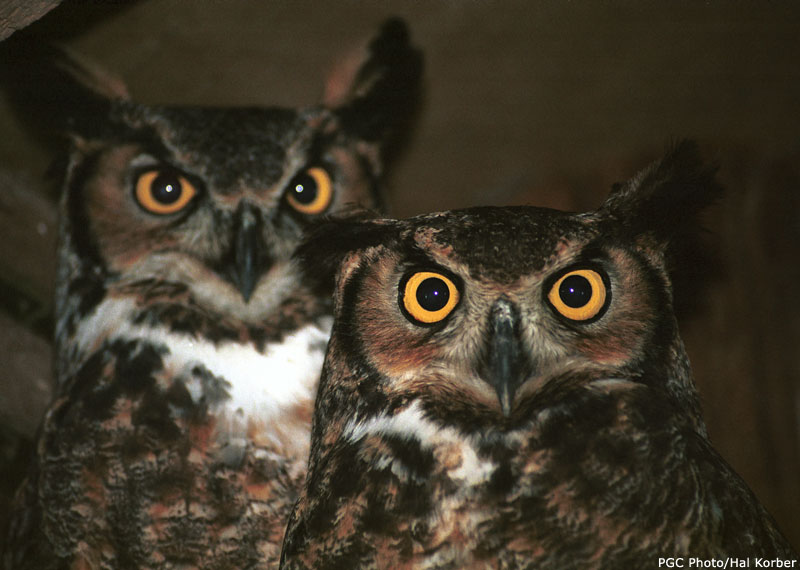
Great horned owls hunt in open areas but nest in large trees, where they take over a nest abandoned by a hawk, crow or heron. They are common where both woods and fields mix. The owls start breeding in January and February, adding new sticks to an old nest and laying a clutch of three eggs. Most species of owls nest very early in the year so that there will be a lot of easily caught prey in the form of young mammals and birds when the owl chicks are learning to hunt on their own. Many nests of the great horned owl are in snags or trees with broken tops, therefore retaining some of these forest features will provide good nesting spots for this dominant bird.
A second species of large owl is found in the larger woodlands of Indiana. The barred owl is most common in the interiors of forests and spends less time along the woodland edge. One major reason for this is the presence of the great horned owls, which will kill and eat a barred owl. Barred owls usually nest in the cavities of deciduous trees, laying their eggs in deep winter. Their dependence on tree cavities means that barred owls are likely to respond well to land management activities that retain large trees on a property and increase the number of snags with cavities. They also do well when there are forest patches of a variety of ages on a property, in addition to the older trees that provide nest sites.
Eastern screech-owls are the smallest resident owl in the state. They nest in small tree cavities and readily make use of nest boxes made especially for them. More than the other two species, screech-owls are found in suburban backyards, urban parks and on college campuses – anywhere there is a variety of trees and shrubs. Screech-owls feed on small prey such as insects, songbirds and mice. They breed later than do the big owls and have active nests in March and April. In addition to nest boxes, these owls will use old cavities excavated by northern flickers, tree holes created by storm damage, and hollow trunks of snags. Their ready use of a wide variety of cavity types makes our screech-owls a prime beneficiary of snag retention and other habitat improvement activities. Indiana’s smallest owl does not breed here, but its numbers during the fall migration can be in the thousands statewide. The northern saw-whet owl breeds from the most northern states on into Canada and migrates from there when food becomes scarce. “Swets” are an irruptive species, meaning their populations rise and fall dramatically from one year to the next on a roughly four-year cycle. A group of volunteer researchers in Yellowwood State Forest began studying the movements of these owls in 2002 as part of the larger Project Owlnet (www.projectowlnet.org). Their first year produced 71 owls on just one ridge in Yellowwood. Since then, the annual numbers have averaged around 70, but nearly 200 owls were captured and banded on that same ridge in 2007. The low point in the cycle was in 2009 when only nine owls were captured. There are now eight such banding stations scattered around Indiana. Brookeville Reservoir had the largest number of captures in 2009 with 32; while an Indianapolis station tallied only six. Some northern saw-whet owls winter in Indiana where forests with an open understory provide good foraging opportunities throughout the winter months.
The rarest owl in Indiana is, paradoxically, the species with the largest geographic range. Barn owls are found across the globe, but in the Midwestern United States their populations have declined dramatically. The species is considered endangered in Indiana. Barn owls originally nested in tree cavities, but when early settlers built barns and other farm buildings, the owls were quick to adapt. They are not limited to barns however, as recent Hoosier nests have been found in old churches, silos, and within the walls of abandoned buildings. To be suitable, human structures must have openings that allow the owls to fly in and out and an interior area that is undisturbed and big enough for the nest. The biggest factor in their decline has been changing agricultural practices. Barn owls hunt in open areas such as pastures, but do not use row crop fields. As Hoosier farmers converted pastures to corn and soybean, the barn owl lost its hunting grounds. Farmers in the southern part of the state that still retain some open grassy fields on their land can contact the state Department of Natural Resources to have a barn owl nest box added to their outbuildings if they don’t have appropriate nest sites.
Resources
Learn how forests are used by birds new videos, Got Nature? Blog
Managing Woodlands for Birds, The Education Store-Purdue Extension resource center
National Audubon Society
The Cornell Lab of Ornithology
Brian MacGowan, Wildlife Extension Specialist
Purdue University, Forestry and Natural Resources
The classic and trusted book “Fifty Common Trees of Indiana” by T.E. Shaw was published in 1956 as a user-friendly guide to local species. Nearly 70 years later, the publication has been updated through a joint effort by the Purdue Department of Forestry and Natural Resources, Indiana 4-H, and the Indiana Department of Natural Resources, and reintroduced as “An Introduction to Trees of Indiana.”
The full publication is available for download for $7 in the Purdue Extension Education Store. The field guide helps identify common Indiana woodlot trees.
Each week, the Intro to Trees of Indiana web series will offer a sneak peek at one species from the book, paired with an ID That Tree video from Purdue Extension forester Lenny Farlee to help visualize each species as it stands in the woods. Threats to species health as well as also insight into the wood provided by the species, will be provided through additional resources as well as the Hardwoods of the Central Midwest exhibit of the Purdue Arboretum, if available. 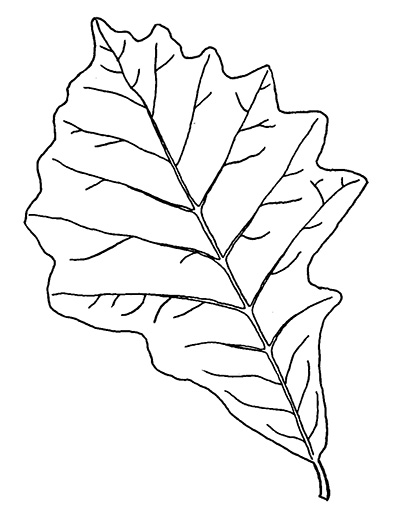
This week, we take a look at the third of our oak varieties in Indiana, the Swamp White Oak or Quercus bicolor.
The swamp white oak has leaves with wavy, uneven lobed margins with blunt teeth, which are wider toward the tip than at the base. The alternately-held leaves are typically dark green on top with a silvery-white underside, which turn orange, gold and yellow in the fall.
The bark on swamp white oak is similar to that of white oak and often peels back especially on younger trees. Mature bark is dark gray-brown with flaky/shreddy bark or blocky ridges that are consistent up and down the tree.
The fruit of the swamp white oak is an acorn held on a long stalk, typically an inch or inch and a half long, called a peduncle.
Swamp white oaks, which grow to 50 to 60 feet tall, are named for the fact that they often grow in wet places, such as line drawing of swamp white oak acorns and peduncle. upland swamps and lowlands. This species also can tolerate well-drained upland sites, making it a good option for landscape plantings. The natural range of swamp white oak is the northern half of the eastern United States, reaching as far south as Missouri, southern Illinois and Kentucky, and north into Wisconsin, Michigan and Pennsylvania.
The Morton Arboretum warns to plant swamp white oak in full sun and shares that the species is one of the easiest oaks to transplant and is more tolerant of poor drainage than other oaks. It also notes that oaks should be pruned in the dormant season to avoid attracting beetles that may carry oak wilt. Swamp white oak can be affected by pests such as anthracnose, powdery mildew, chlorosis in high pH soils, insect galls and oak wilt.
In general, lumber from the white oak group is among the heaviest next to hickory, weighing in at 47 pounds per cubic foot. It is very resistant to decay and is one of the best woods for steam bending.
White oak lumber has been used for a variety of purposes including log cabins, ships, wagon wheels and furniture. It also is preferred for indoor decorative applications ranging from furniture, especially in churches, to cabinets, interior trim, millwork and hardwood flooring and veneers. It also may be used for barrel making.
Its density and durability make white oak a favorite for industrial applications such as railroad ties, mine timbers, sill plates, fence posts and boards, pallets, and blocking, as well as industrial, agricultural and truck flooring.
For full article with additional photos view: Intro to Trees of Indiana: Swamp White Oak, Forestry and Natural Resources’ News.
If you have any questions regarding wildlife, trees, forest management, wood products, natural resource planning or other natural resource topics, feel free to contact us by using our Ask an Expert web page.
Other Resources:
ID That Tree: Swamp White Oak
ID That Tree: White Oak Group
Hardwood Lumber and Veneer Series: White Oak Group
Morton Arboretum: Swamp White Oak
Fifty Common Trees of Indiana
An Introduction to Trees of Indiana
Native Trees of the Midwest, The Education Store
Shrubs and Woody Vines of Indiana and the Midwest, The Education Store
Investing in Indiana Woodlands, The Education Store
Forest Improvement Handbook, The Education Store
ID That Tree, Purdue Extension-Forestry & Natural Resources (FNR) YouTube playlist
Woodland Management Moment , Purdue Extension-FNR YouTube playlist
Wendy Mayer, FNR Communications Coordinator
Purdue University Department of Forestry and Natural Resources
Lenny Farlee, Sustaining Hardwood Extension Specialist
Purdue University Department of Forestry and Natural Resources
The classic and trusted book “Fifty Common Trees of Indiana” by T.E. Shaw was published in 1956 as a user-friendly guide to local species. Nearly 70 years later, the publication has been updated through a joint effort by the Purdue Department of Forestry and Natural Resources, Indiana 4-H, and the Indiana Department of Natural Resources, and reintroduced as “An Introduction to Trees of Indiana.”
The full publication is available for download for $7 in the Purdue Extension Education Store. The field guide helps identify common Indiana woodlot trees.
Each week, the Intro to Trees of Indiana web series will offer a sneak peek at one species from the book, paired with an ID That Tree video from Purdue Extension forester Lenny Farlee to help visualize each species as it stands in the woods. Threats to species health as well as also insight into the wood provided by the species, will be provided through additional resources as well as the Hardwoods of the Central Midwest exhibit of the Purdue Arboretum, if available. 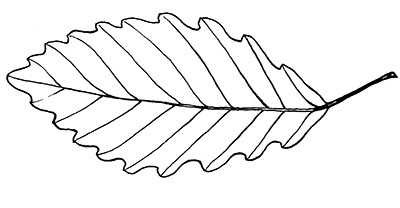
This week, we take a look at the fourth of our oak varieties in Indiana, the Chestnut Oak or Quercus montana.
The leaves of the chestnut oak have small, evenly lobed rounded margins. The upper leaf surface is leathery in appearance and is dark green in color, while the lower surface is a duller green. In the fall, the leaves can range from red and orange to yellow and brown.
The bark may be its tell-tale characteristic. Unlike other members of the white oak group, the bark of Chestnut oak bark chestnut oak is dark and deeply ridged.
The fruit of the chestnut oak is a relatively-large dark brown acorn with a smooth edge on the outer margin of the cap.
Chestnut oaks, which grow to 60 to 70 feet tall, are often found on high, dry sites in Indiana. The natural range of chestnut oak is across the northeastern United States, extending south to the northern parts of Alabama and Georgia and west to the southern tip of Illinois.
The Morton Arboretum warns that chestnut oak is a difficult to transplant due to a deep taproot, but that it can tolerate most soils except those that drain poorly. It also notes that oaks should be pruned in the dormant season to avoid attracting beetles that may carry oak wilt. Chestnut oak can be affected by pests such as scale insects and two-lined chestnut borer. Chestnut oak acorns
In general, lumber from the white oak group is among the heaviest next to hickory, weighing in at 47 pounds per cubic foot. It is very resistant to decay and is one of the best woods for steam bending. Chestnut oak, however, is considered a poor lumber species.
White oak lumber has been used for a variety of purposes including log cabins, ships, wagon wheels and furniture. It also is preferred for indoor decorative applications ranging from furniture, especially in churches, to cabinets, interior trim, millwork and hardwood flooring and veneers. It also may be used for barrel making.
Its density and durability make white oak a favorite for industrial applications such as railroad ties, mine timbers, sill plates, fence posts and boards, pallets, and blocking, as well as industrial, agricultural and truck flooring.
For full article with additional photos view: Intro to Trees of Indiana: Chestnut Oak, Forestry and Natural Resources’ News.
If you have any questions regarding wildlife, trees, forest management, wood products, natural resource planning or other natural resource topics, feel free to contact us by using our Ask an Expert web page.
Other Resources:
ID That Tree: Chestnut Oak
ID That Tree: White Oak Group
Hardwood Lumber and Veneer Series: White Oak Group
Morton Arboretum: Chestnut Oak
Fifty Common Trees of Indiana
An Introduction to Trees of Indiana
Native Trees of the Midwest, The Education Store
Shrubs and Woody Vines of Indiana and the Midwest, The Education Store
Investing in Indiana Woodlands, The Education Store
Forest Improvement Handbook, The Education Store
ID That Tree, Purdue Extension-Forestry & Natural Resources (FNR) YouTube playlist
Woodland Management Moment , Purdue Extension-FNR YouTube playlist
Chestnut Oak, Native Trees of Indiana River Walk, Purdue-Fort Wayne
Wendy Mayer, FNR Communications Coordinator
Purdue University Department of Forestry and Natural Resources
Lenny Farlee, Sustaining Hardwood Extension Specialist
Purdue University Department of Forestry and Natural Resources
The classic and trusted book “Fifty Common Trees of Indiana” by T.E. Shaw was published in 1956 as a user-friendly guide to local species. Nearly 70 years later, the publication has been updated through a joint effort by the Purdue Department of Forestry and Natural Resources, Indiana 4-H, and the Indiana Department of Natural Resources, and reintroduced as “An Introduction to Trees of Indiana.”
The full publication is available for download for $7 in the Purdue Extension Education Store. The field guide helps identify common Indiana woodlot trees.
Each week, the Intro to Trees of Indiana web series will offer a sneak peek at one species from the book, paired with an ID That Tree video from Purdue Extension forester Lenny Farlee to help visualize each species as it stands in the woods. Threats to species health as well as also insight into the wood provided by the species, will be provided through additional resources as well as the Hardwoods of the Central Midwest exhibit of the Purdue Arboretum, if available. 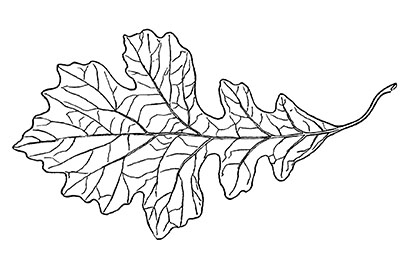
This week, we take a look at the second of our oak varieties in Indiana, the Bur Oak or Quercus macrocarpa.
The bur oak has rounded lobes on the end of the leaves, which have deep sinuses and are very broad across the top. Leaves are typically dark green that turn yellow or brown in the fall.
The bark on bur oak is medium to dark gray in color with heavy ridges and plates, often so thick that it is often fire resistant and resistant to damage from burning. Bur oak may have terminal buds that include small hairs and resemble bear claws.
The fruit of the bur oak is an acorn with a large cap that features a hairy fringe forming a burr along the outside edge. The acorns vary in size, but average one inch in length, and the cap covers half to two thirds of the acorn.
Bur oaks, which grow to 70-80 feet tall and up to five feet wide, are common in both bottomlands and prairie regions, and can tolerate many different sites. Bur oaks can be found in nearly any county and any habitat type in Indiana. The natural range of bur oak is the eastern Great Plains from the Dakotas to Ohio to the eastern Appalachians, except through the southeastern United States. The range also extends into southern Canada.
Lumber from the white oak group, which includes bur oak, is among the heaviest next to hickory, weighing in at 45 pounds per cubic foot. It is very resistant to decay and is one of the best woods for steam bending. Bur oak, however, is somewhat weaker than other species in the white oak group.
For full article with additional photos view: Intro to Trees of Indiana: Bur Oak
If you have any questions regarding wildlife, trees, forest management, wood products, natural resource planning or other natural resource topics, feel free to contact us by using our Ask an Expert web page.
Other Resources:
ID That Tree: Bur Oak
ID That Tree: White Oak Group
ID That Tree: Alternate Leaf Arrangement – Honey Locust/Bur Oak
Hardwood Lumber and Veneer Series: White Oak Group
Morton Arboretum: Bur Oak
Fifty Common Trees of Indiana
An Introduction to Trees of Indiana
Native Trees of the Midwest, The Education Store
Shrubs and Woody Vines of Indiana and the Midwest, The Education Store
Investing in Indiana Woodlands, The Education Store
Forest Improvement Handbook, The Education Store
ID That Tree, Purdue Extension-Forestry & Natural Resources (FNR) YouTube playlist
Woodland Management Moment , Purdue Extension-FNR YouTube playlist
Bur Oak, Native Trees of Indiana River Walk, Purdue-Fort Wayne
Wendy Mayer, FNR Communications Coordinator
Purdue University Department of Forestry and Natural Resources
Lenny Farlee, Sustaining Hardwood Extension Specialist
Purdue University Department of Forestry and Natural Resources
The White Oak Initiative – Landowners for Oaks series is now available! This series, made up of 11 publications, is geared toward landowners engaged in upland oak management with a focus on white oak. Three of the publications provide information on the importance of oaks, their biology, and an overview of common management practices to enhance oak regeneration and growth. Eight publications provide landowners with basic information on common upland oak species, how to identify them and important management and utilization information. All factsheets in the series are available for free download at Landowner Resources – White Oak Initiative.
Landowners for Oaks Series: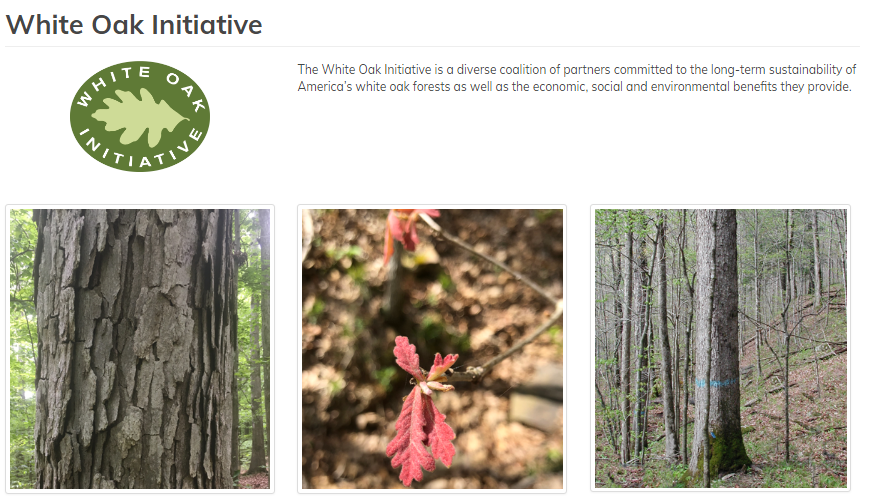
- Landowners Guide to – Challenges of Upland Oak Regeneration
- Landowners Guide to – Sustainable Oak Management Practices
- Landowners Guide to – Understanding the Importance of White Oak
Landowners Guide to Identification and Characteristics Series:
- Landowners Guide to Identification and Characteristics – Black Oak
- Landowners Guide to Identification and Characteristics – Chestnut Oak
- Landowners Guide to Identification and Characteristics – Chinkapin Oak
- Landowners Guide to Identification and Characteristics – Northern Red Oak
- Landowners Guide to Identification and Characteristics – Post Oak
- Landowners Guide to Identification and Characteristics – Scarlet Oak
- Landowners Guide to Identification and Characteristics – Southern Red Oak
- Landowners Guide to Identification and Characteristics – White Oak
University of Kentucky Department of Forestry & Natural Resources/Extension authors:
- Darren Morris, Forestry Extension Associate Senior
- Laurie T. Thomas, Extension Forester
- Jeffrey W. Stringer, Ph.D., Chairman, Department of Forestry and Natural Resources
Mike Saunders, associate professor of silviculture for Purdue Forestry & Natural Resources, continues adding his expertise with the white oak publications. “Personally, I think these are great resources for enlightening the public regarding the serious concerns natural resource managers have regarding the future of oak-hickory forests in the eastern U.S. They set a great tone in describing a complex issue. The impacts from the decades-long, persistent lack of oak regeneration are not easy for most to understand. For example, one may look up and see all the mature, large trees and think “hey, this is a healthy forest”. But the true future of the forest is at their feet, and whether they see it or their grandkids see it, that future is not great. There will be a dramatic shift to maple-dominance in our forests, something that will have profound, and potentially negative, impacts on all the values we associate with the forest (wildlife, water, recreation and timber),” states Dr. Saunders.
The White Oak Initiative is a diverse coalition of partners committed to the long-term sustainability of America’s white oak forests as well as the economic, social and environmental benefits they provide.
Resources:
Sustaining Our Oak-Hickory Forests – Hardwood Ecosystem Experiment, The Education Store
“The Nature of Oaks” Webinar With Author Doug Tallamy, Indiana Forestry & Woodland Owners Assocaition
Indiana Forestry and Wildlife: The Hardwood Ecosystem Experiment, The Education Store
Native Trees of the Midwest, The Education Store
Shrubs and Woody Vines of Indiana and the Midwest, The Education Store
Investing in Indiana Woodlands, The Education Store
Forest Improvement Handbook, The Education Store
ID That Tree, Purdue Extension-Forestry & Natural Resources (FNR) YouTube playlist
Woodland Management Moment , Purdue Extension-FNR YouTube playlist
Indiana Woodland Steward, promoting wise use of Indiana’s forest resources
Diana Evans, Extension and Web Communication Specialist
Purdue University Department of Forestry and Natural Resources
The classic and trusted book “Fifty Common Trees of Indiana” by T.E. Shaw was published in 1956 as a user-friendly guide to local species. Nearly 70 years later, the publication has been updated through a joint effort by the Purdue Department of Forestry and Natural Resources, Indiana 4-H, and the Indiana Department of Natural Resources, and reintroduced as “An Introduction to Trees of Indiana.”
The full publication is available for download for $7 in the Purdue Extension Education Store. The field guide helps identify common Indiana woodlot trees.
Each week, the Intro to Trees of Indiana web series will offer a sneak peek at one species from the book, paired with an ID That Tree video from Purdue Extension forester Lenny Farlee to help visualize each species as it stands in the woods. Threats to species health as well as also insight into the wood provided by the species, will be provided through additional resources as well as the Hardwoods of the Central Midwest exhibit of the Purdue Arboretum, if available.
This week, we introduce the red mulberry or Morus rubra.
Red mulberry has variable leaves, which can come without lobes (entire) or with two (mitten), three or even five lobes. Regardless of shape, the leaves have serrated margins and pointed tips and are arranged alternately on the twigs. The topside of the dark green leaves is sandpapery to the touch and has a matte or flat finish. The dark green leaves turn a golden yellow in the fall.
Basswood has leaves similar to the unlobed variety of red mulberry, but those leaves are smooth to the touch and have finely toothed margins. White mulberry, which is not native to Indiana, also has similar leaves to its cousin red mulberry, but those leaves are typically bright green and smooth, have more rounded teeth on the margins and feature a shinier upper leaf surface.
The bark of red mulberry is gray or brown in color with long flaky ridges, but may show some orange or tan peeking through the fissures in the bark.
The fruit of red mulberry, which hangs individually only the twig, resembles a small blackberry, with a dark purple or almost black color when ripe, that is favored by both birds and humans. Mulberry fruit is typically produced from mid-June to July.
Red mulberry, which is often found under the canopy of other hardwood trees in moist areas such as river bottoms as well as along wooded slopes, wood’s edges and shady roadways, are typically small understory trees, but can grow between 40 and 60 feet tall. Red mulberries are becoming less common on the landscape than the invasive white mulberry, but can be found growing throughout the eastern United States.
The Morton Arboretum warns that red mulberry is susceptible to a variety of pests, including leaf spots, witches brooms, canker diseases, powdery mildew, spider mites and scale insects.
For full article with additional photos view: Intro to Trees of Indiana: Red Mulberry
If you have any questions regarding wildlife, trees, forest management, wood products, natural resource planning or other natural resource topics, feel free to contact us by using our Ask an Expert web page.
Other Resources:
FNR Know Your Tree Series: Red and White Mulberry in Indiana
Morton Arboretum: Red Mulberry
Red Mulberry, Native Trees of Indiana River Walk, Purdue Fort Wayne
Fifty Common Trees of Indiana
An Introduction to Trees of Indiana
Native Trees of the Midwest, The Education Store
Shrubs and Woody Vines of Indiana and the Midwest, The Education Store
Investing in Indiana Woodlands, The Education Store
Forest Improvement Handbook, The Education Store
ID That Tree, Purdue Extension-Forestry & Natural Resources (FNR) YouTube playlist
Woodland Management Moment , Purdue Extension-FNR YouTube playlist
Wendy Mayer, FNR Communications Coordinator
Purdue University Department of Forestry and Natural Resources
Lenny Farlee, Sustaining Hardwood Extension Specialist
Purdue University Department of Forestry and Natural Resources
The classic and trusted book “Fifty Common Trees of Indiana” by T.E. Shaw was published in 1956 as a user-friendly guide to local species. Nearly 70 years later, the publication has been updated through a joint effort by the Purdue Department of Forestry and Natural Resources, Indiana 4-H, and the Indiana Department of Natural Resources, and reintroduced as “An Introduction to Trees of Indiana.”
The full publication is available for download for $7 in the Purdue Extension Education Store. The field guide helps identify common Indiana woodlot trees.
Each week, the Intro to Trees of Indiana web series will offer a sneak peek at one species from the book, paired with an ID That Tree video from Purdue Extension forester Lenny Farlee to help visualize each species as it stands in the woods. Threats to species health as well as also insight into the wood provided by the species, will be provided through additional resources as well as the Hardwoods of the Central Midwest exhibit of the Purdue Arboretum, if available.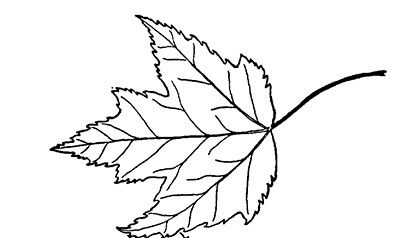
This week, we introduce the red maple or Acer rubrum.
Red maple has simple three to five-lobed leaves with relatively shallow, v-shaped divisions between the lobes. The oppositely held leaves may resemble sugar maple but the V shaped shallow divisions stand in contrast to sugar maple’s deep u-shaped sinuses. In the early spring, it is one of the earliest native trees to flower, producing clusters of reddish flowers as well as reddish colored pairs of winged seeds/fruit. In the fall, foliage typically turns a bright red to maroon color.
The bark is gray and smooth in young trees and may become flaky in older trees.
Red maple, which is a popular ornamental and street tree selection, is one of Indiana’s soft maples alongside silver maple. It also can be found in Indiana woodlands in both moist and dry sites and in bottomlands and uplands.
Red maple, grow 50 to 80 feet tall and are found growing throughout the eastern United States including the coastal regions.
The Morton Arboretum warns that red maple was display chlorosis symptoms of pale green leaves with dark green veins in high pH soil and drought conditions. The species also does not tolerate heavy pollution.
For full article with additional photos view: Intro to Trees of Indiana: Red Maple
If you have any questions regarding wildlife, trees, forest management, wood products, natural resource planning or other natural resource topics, feel free to contact us by using our Ask an Expert web page.
Other Resources:
Hardwoods of the Central Midwest: Soft Maple
Hardwood Lumber and Veneer Series, The Education Store: Soft Maple
Morton Arboretum: Red Maple
Red Maple, Native Trees of Indiana River Walk, Purdue Fort Wayne
Fifty Common Trees of Indiana
An Introduction to Trees of Indiana
Native Trees of the Midwest, The Education Store
Shrubs and Woody Vines of Indiana and the Midwest, The Education Store
Investing in Indiana Woodlands, The Education Store
Forest Improvement Handbook, The Education Store
ID That Tree, Purdue Extension-Forestry & Natural Resources (FNR) YouTube playlist
Woodland Management Moment , Purdue Extension-FNR YouTube playlist
Wendy Mayer, FNR Communications Coordinator
Purdue University Department of Forestry and Natural Resources
Lenny Farlee, Sustaining Hardwood Extension Specialist
Purdue University Department of Forestry and Natural Resources
The classic and trusted book “Fifty Common Trees of Indiana” by T.E. Shaw was published in 1956 as a user-friendly guide to local species. Nearly 70 years later, the publication has been updated through a joint effort by the Purdue Department of Forestry and Natural Resources, Indiana 4-H, and the Indiana Department of Natural Resources, and reintroduced as “An Introduction to Trees of Indiana.”
The full publication is available for download for $7 in the Purdue Extension Education Store. The field guide helps identify common Indiana woodlot trees.
Each week, the Intro to Trees of Indiana web series will offer a sneak peek at one species from the book, paired with an ID That Tree video from Purdue Extension forester Lenny Farlee to help visualize each species as it stands in the woods. Threats to species health as well as also insight into the wood provided by the species, will be provided through additional resources as well as the Hardwoods of the Central Midwest exhibit of the Purdue Arboretum, if available.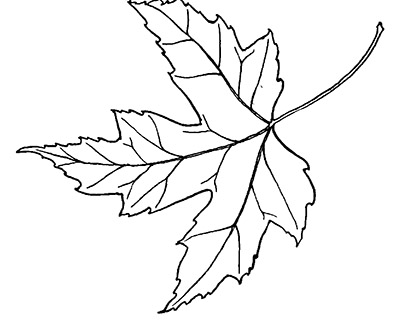
This week, we introduce the silver maple or Acer saccharinum.
Silver maple has simple, typically five-lobed leaves with deeply cut divisions, or sinuses, between the lobes, with narrow lobes at the base. The leaves, which are silvery on the underside, are held oppositely on long leaf stems coming off the twigs. The bark on young trees is smooth and light gray, and darker and scaly on older trees.
Silver maple, which is commonly found in swamps and overflow bottomlands, is one of Indiana’s soft maples alongside red maple. It flowers early and sheds its large winged seed in the spring, typically by late May.
Silver maples, which prefer moist or well-drained soil, grow 50 to 80 feet tall and are found growing from the Great Plains eastward, excluding the Gulf and Atlantic coastal region. Most silver maple lumber is produced in the Mississippi Delta and central states region.
The Morton Arboretum warns that without proper and frequent pruning, high winds and ice can cause limbs to break on silver maple trees due to its weak wood and branch structure. These species is also drought sensitive, so be careful to provide supplemental water during dry periods.
For full article with additional photos view: Intro to Trees of Indiana: Sugar Maple
If you have any questions regarding wildlife, trees, forest management, wood products, natural resource planning or other natural resource topics, feel free to contact us by using our Ask an Expert web page.
Other Resources:
Hardwoods of the Central Midwest: Silver Maple
Hardwood Lumber and Veneer Series, The Education Store: Soft Maple
Morton Arboretum: Silver Maple
Fifty Common Trees of Indiana
An Introduction to Trees of Indiana
Native Trees of the Midwest, The Education Store
Shrubs and Woody Vines of Indiana and the Midwest, The Education Store
Investing in Indiana Woodlands, The Education Store
Forest Improvement Handbook, The Education Store
ID That Tree, Purdue Extension-Forestry & Natural Resources (FNR) YouTube playlist
Woodland Management Moment , Purdue Extension-FNR YouTube playlist
Wendy Mayer, FNR Communications Coordinator
Purdue University Department of Forestry and Natural Resources
Lenny Farlee, Sustaining Hardwood Extension Specialist
Purdue University Department of Forestry and Natural Resources
The classic and trusted book “Fifty Common Trees of Indiana” by T.E. Shaw was published in 1956 as a user-friendly guide to local species. Nearly 70 years later, the publication has been updated through a joint effort by the Purdue Department of Forestry and Natural Resources, Indiana 4-H, and the Indiana Department of Natural Resources, and reintroduced as “An Introduction to Trees of Indiana.”
The full publication is available for download for $7 in the Purdue Extension Education Store. The field guide helps identify common Indiana woodlot trees.
Each week, the Intro to Trees of Indiana web series will offer a sneak peek at one species from the book, paired with an ID That Tree video from Purdue Extension forester Lenny Farlee to help visualize each species as it stands in the woods. Threats to species health as well as also insight into the wood provided by the species, will be provided through additional resources as well as the Hardwoods of the Central Midwest exhibit of the Purdue Arboretum, if available.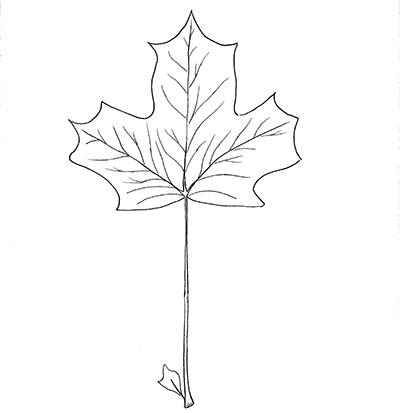
This week, we introduce the black maple or Acer nigrum.
Black maple is easily confused with its cousin, the sugar maple, but there are a few key identifying characteristics to tell them apart. Black maple commonly has stipules, or miniature leaves, at the base of the leaf stem. This species features mottled gray stems and black pointed buds oppositely arranged on the stems. The lobed leaves are darker green and tend to droop down at the edges as the summer goes on.
The bark is lighter gray and smooth in young trees and features flakes or plates in older trees.
The seed or fruit of black maple is a winged seed which occurs in pairs and turns from green to brown when mature, similar to sugar maple.
Black maples, frequently found on moist or bottomland sites, grow 60 to 75 feet tall and can be 40 to 50 feet wide, providing excellent shade with their full foliage.
The Morton Arboretum warns again pruning maps in the spring as they are ‘bleeders’ and will lose large amounts of sap. This species also is susceptible to leaf scorch, verticillium wilt, tar spot and anthracnose and can be affected by borers and cottony maple scale. Black maple suffers from salt, drought and air pollution.
“Don’t be confused by the similarities. Use the tiny stipule (leaf) at the base of the stem, the drooping edges of the dark leaf and its dark buds on gray mottled stems to tell this native apart from its cousin sugar maple. Can you ID this native tree? Meet black maple or Acer nigrum.”
For full article with additional photos view: Intro to Trees of Indiana: Sugar Maple
If you have any questions regarding wildlife, trees, forest management, wood products, natural resource planning or other natural resource topics, feel free to contact us by using our Ask an Expert web page.
Other Resources:
Morton Arboretum: Black Maple
Fifty Common Trees of Indiana
An Introduction to Trees of Indiana
Native Trees of the Midwest, The Education Store
Shrubs and Woody Vines of Indiana and the Midwest, The Education Store
Investing in Indiana Woodlands, The Education Store
Forest Improvement Handbook, The Education Store
ID That Tree, Purdue Extension-Forestry & Natural Resources (FNR) YouTube playlist
Woodland Management Moment , Purdue Extension-FNR YouTube playlist
Black Maple, Native Trees of Indiana River Walk, Fort Wayne, Purdue University
Wendy Mayer, FNR Communications Coordinator
Purdue University Department of Forestry and Natural Resources
Lenny Farlee, Sustaining Hardwood Extension Specialist
Purdue University Department of Forestry and Natural Resources
Each week, the Intro to Trees of Indiana web series will offer a sneak peek at one species from the book, paired with an ID That Tree video from Purdue Extension forester Lenny Farlee to help visualize each species as it stands in the woods. Threats to species health as well as also insight into the wood provided by the species, will be provided through additional resources as well as the Hardwoods of the Central Midwest exhibit of the Purdue Arboretum, if available.
This week, we introduce the sugar maple or Acer saccharum.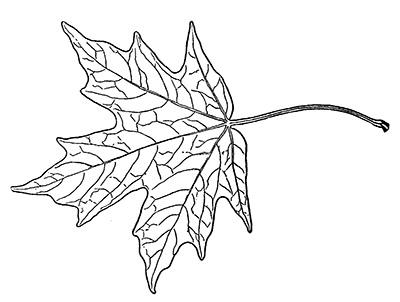
This tree, also called hard maple, has simple leaves typically with five lobes, two smaller lobes at the base and three larger lobes at the top, with u-shaped sinuses between the lobes. The shade-tolerant species has opposite leaf arrangement with relatively long leaf stems as well as opposite branch arrangement. The thin twigs are green in their youth, turning to a medium brown as they age. The leaves produce brilliant fall colors ranging from yellow to burnt orange.
The bark of sugar maple typically has a light to medium gray color, but its appearance is variable and somewhat confusing. It can range from relatively smooth on saplings to minor crevices and ridging on medium sized trees to deeper ridges on older trees.
The seed or fruit of sugar maple is a winged seed which occurs in pairs and turned from green to brown when mature.
Sugar maples grow 60 to 75 feet tall and can be 40 to 50 feet wide, providing excellent shade with their full foliage.
Sugar maples produce maple sap, which can be used to make maple syrup. The yield of sugar maples is one of the highest among maple trees. The Morton Arboretum warns again pruning maps in the spring as they are ‘bleeders’ and will lose large amounts of sap. This species also is susceptible to leaf scorch, verticillium wilt, tar spot and anthracnose and can be affected by borers and cottony maple scale.
For full article with additional photos view: Intro to Trees of Indiana: Sugar Maple
If you have any questions regarding wildlife, trees, forest management, wood products, natural resource planning or other natural resource topics, feel free to contact us by using our Ask an Expert web page.
Other Resources:
Hardwoods of the Central Midwest: Sugar Maple
Hardwood Lumber and Veneer Series: Sugar Maple
Morton Arboretum: Sugar Maple
Sugar Maple, Native Trees of Indiana River Walk, Purdue Fort Wayne
Fifty Common Trees of Indiana
An Introduction to Trees of Indiana
Native Trees of the Midwest, The Education Store
Shrubs and Woody Vines of Indiana and the Midwest, The Education Store
Investing in Indiana Woodlands, The Education Store
Forest Improvement Handbook, The Education Store
ID That Tree, Purdue Extension-Forestry & Natural Resources (FNR) YouTube playlist
Woodland Management Moment , Purdue Extension-FNR YouTube playlist
Wendy Mayer, FNR Communications Coordinator
Purdue University Department of Forestry and Natural Resources
Lenny Farlee, Sustaining Hardwood Extension Specialist
Purdue University Department of Forestry and Natural Resources

Recent Posts
- New Indiana Woodland Steward Newsletter
Posted: August 12, 2026 in Forestry, Urban Forestry, Wildlife, Woodlands - ID That Tree: Nannyberry Viburnum
Posted: July 22, 2026 in Forestry, Plants, Wildlife, Woodlands - ID That Tree: Eastern Swamp Privet
Posted: in Forestry, Plants, Wildlife, Woodlands - ID That Tree: Carolina Buckthorn
Posted: July 15, 2026 in Forestry, Wildlife, Woodlands - Identifying Evergreens
Posted: June 24, 2026 in Forestry, Wildlife, Woodlands - Pruning Highlight-Pollarding Trees: A Traditional Pruning Practice with Modern Uses
Posted: June 11, 2026 in Forestry, Forests and Street Trees, Urban Forestry, Wildlife, Woodlands - Danielle Howard Hired as FNR Extension Prescribed Fire Specialist
Posted: June 10, 2026 in Forestry, Wildlife, Woodlands - Flat-Faced Longhorn Beetle Found in Hardwood Logs – IDNR Division of Entomology
Posted: June 8, 2026 in Alert, Forestry, Forests and Street Trees, Invasive Insects, Urban Forestry, Wildlife, Woodlands - Connecting Research to Practice: Natural Resources & Land Use Spring Training
Posted: June 5, 2026 in Forestry, Forests and Street Trees, How To, Invasive Animal Species, Invasive Plant Species, Land Use, Natural Resource Planning, Urban Forestry, Wildlife, Woodlands - Spring Storms Are Coming: How to Reduce Tree Damage and Risk
Posted: May 1, 2026 in How To, Urban Forestry, Wildlife, Woodlands
Archives
Categories
- Alert
- Aquaculture/Fish
- Aquatic/Aquaculture Resources
- Ask the Expert
- Christmas Trees
- Community Development
- Disease
- Drought
- Forestry
- Forests and Street Trees
- Gardening
- Got Nature for Kids
- Great Lakes
- How To
- Invasive Animal Species
- Invasive Insects
- Invasive Plant Species
- Land Use
- Natural Resource Planning
- Nature of Teaching
- Plants
- Podcasts
- Ponds
- Publication
- Safety
- Spiders
- Timber Marketing
- Urban Forestry
- Webinar
- Wildlife
- Wood Products/Manufacturing
- Woodland Management Moment
- Woodlands