 Purdue University - Extension - Forestry and Natural Resources
Got Nature? Blog
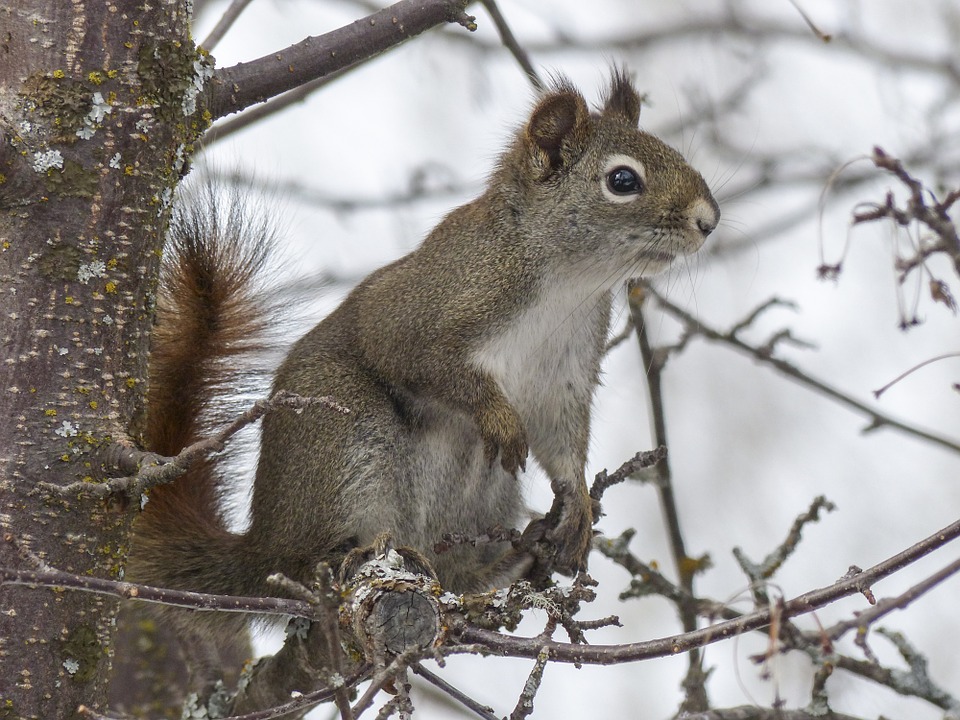 People can be taken aback by the sight of squirrels missing hair. Sightings of partially furred squirrels is not unusual with warmer temperatures experienced through the winter. Like many wildlife issues, the cause of hair loss in squirrels is not easy to answer and often results in more questions than answers. In most situations, hair loss does not impact populations of squirrels. However, individuals may be impacted during winter.
Most people assume, often incorrectly, that hair loss in squirrels is the result of mange, a disease caused by microscopic mites that burrow into the skin and are unseen by the naked eye. Hair loss attributed to the squirrel mange mite, Notoedres douglasi, has been reported in both fox and gray squirrels. Notoedric mange is different from sarcoptic mange. The latter, caused by the mite Sarcoptes scabiei, occurs primarily among red foxes and coyotes. Questions exist regarding the host specificity of mange mites. In light of new evidence, some pathologists now believe that sarcoptic mange mites are not as host-specific as previously thought. However, notoedric mange mites appear to be more host-specific, and don’t colonize non-hosts (like humans), although a few bites may occur. Transmission of notoedric mange to species other than squirrels has not been documented, including to canine and feline pets.
Symptoms of notoedric mange in squirrels includes loss of hair and dry, thickened and dark skin. Crust does not form on the skin in notoedric mange in squirrels like it does in sarcoptic mange in red fox. Mange is most commonly spread by direct animal to animal contact. Treatment of adult squirrels with mange is generally not recommended because reinfection from their nest is likely. An adult squirrel can survive mange if in otherwise good condition. While mange can be fatal to squirrels as a result of exposure during the winter, full recovery is often observed in squirrels.
While mange is commonly presumed to be the culprit, most hair loss in squirrels is caused by a variety of superficial fungal diseases generally termed dermatophytoses. Hair from squirrels infected with fungal agents is typically broken off at the skin, leaving a fine stubble of short hairs. Damp weather is thought to play a role in some fungal outbreaks. This past autumn was relatively wet for Indiana standards and may have contributed to the apparent observed increase of hair loss in squirrels this winter. Most animals will eventually gain an immune response and recover from the fungal infection without any apparent consequences.
Some hair loss in gray and flying squirrels is thought to be an inherited condition where the hair follicles are non-functional or absent, although studies confirming this have not been done. These squirrels have normal, but bare skin.
The next time you see a squirrel with hair loss, don’t become alarmed. In most cases, the hair will return with no apparent ill affects to the squirrel, other than perhaps some embarrassment and name calling among his squirrel friends.
Resources:
Indiana Animal Disease Diagnostic Laboratory
Indiana DNR Permitted Wildlife Rehabilitators, Indiana Department of Natural Resources (IN DNR)-Fish & Wildlife
Orphaned Wildlife, Got Nature? blog
Orphaned & Injured Animals, Indiana Department of Natural Resources (IDNR)
Brian MacGowan, Wildlife Extension Specialist
Purdue University, Department of Forestry and Natural Resources
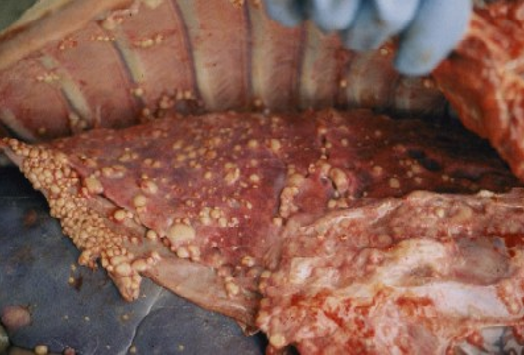
Lesions from bovine Tb infection in the chest cavity of a wild white-tailed deer. Photo by the Michigan Department of Natural Resources.
Bovine tuberculosis (bovine Tb) is an on-going issue in Indiana’s wild white-tailed deer herd. Bovine Tb was first discovered in wild deer in Indiana in August 2016 near a bovine Tb positive cattle farm in Franklin County. Since August 2017, Indiana Department of Natural Resources and the Board of Animal Health have been monitoring and managing the bovine Tb situation. A second cattle farm in Franklin County tested positive for bovine Tb in December 2016, but no hunter harvested deer have tested positive for bovine Tb during the 2016 deer season. The IDNR will continue to monitor and manage the bovine Tb situation according to a departmental management plan. View the following web page to find more information, Bovine Tb in Wild White-Tailed Deer: Background and Frequently Asked Questions.
Resources:
How to Score Your White-tailed Deer, video, The Education Store, Purdue Extension Resource Center
White-Tailed Deer Post Harvest Collection, video, The Education Store
Age Determination in White-tailed Deer, video, The Education Store
How to Build a Plastic Mesh Deer Exclusion Fence, The Education Store
Bovine Tuberculosis in Wild White-tailed Deer, The Education Store
Indiana Deer Hunting, Biology and Management, and Safe Food Handling and Preparation, IDNR
Jarred Brooke, Wildlife Extension Specialist
Purdue Department of Forestry and Natural Resources
Description of Bovine Tuberculosis:
Bovine tuberculosis (bovine Tb) is a disease found in mammals caused by the bacteria Mycobacterium bovis (M. bovis). In North America, bovine Tb is most commonly found in domestic cattle and captive and wild cervids (white-tailed deer, elk, etc.) and less commonly in other mammals such as raccoon, opossums, coyotes, and wild boars.
Bovine Tb has been greatly reduced in the cattle industry since the National Cooperative State-Federal Bovine Tuberculosis eradication program began in 1917. Currently, most states are accredited as “Bovine Tuberculosis-Free” by the United States Department of Agriculture, however, sporadic outbreaks do still occur throughout the United States.
Cattle, captive cervids, and wild white-tailed deer are considered reservoir hosts for bovine Tb. A reservoir host is a species in which bovine Tb can persist and be transmitted among individuals within a species or be transmitted to another species. Wild white-tailed deer may pose the greatest threat to the establishment of bovine Tb on the landscape because they move freely across the landscape and may contact multiple domestic cattle herds.
In Indiana, bovine Tb was detected in domestic cattle in 2008, 2010, and 2011 and most recently in April 2016 and a captive red deer and elk herd in Franklin County in 2009. The first case of bovine Tb in a wild white-tailed deer in Indiana occurred in August 2016 in Franklin County. All confirmed cases of bovine Tb in Indiana have been from the same strain of M. Bovis.
As of Dec 14th, 2016, 2,024 white-tailed deer samples have been collected, 2 exhibited lesions consistent with bovine Tb; 1,897 samples have been tested and 0 samples have tested positive for bovine Tb.
Frequently asked questions:
Yes, bovine Tb is transmissible to humans but bovine Tb accounts for <2% of tuberculosis cases in the United States. Most cases of bovine Tb in humans are caused by consuming unpasteurized dairy products and the likelihood of contracting bovine Tb from a wild deer is minuscule. There has been only one confirmed case of transmission of bovine Tb to a human from an infected white-tailed deer. In that case, bovine Tb was thought to be transmitted via bodily fluids from the infected deer contacting an open wound on the person during the field dressing process.
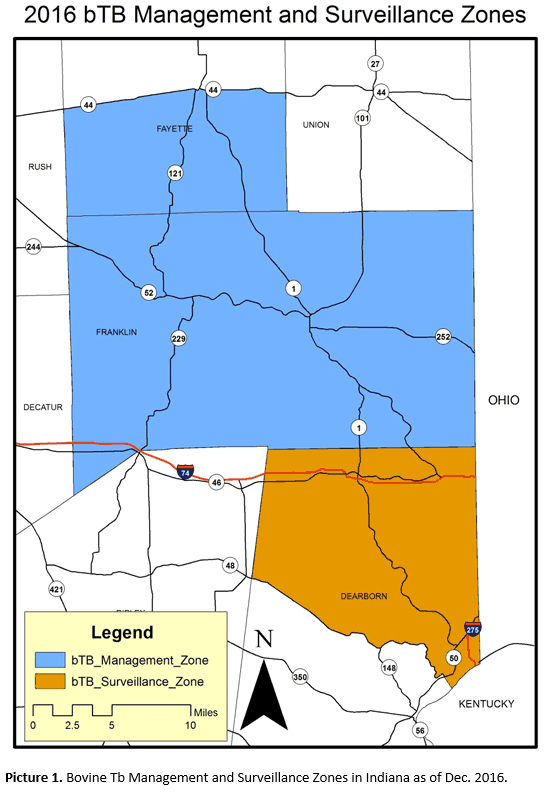
Picture 1. Bovine Tb Management and Surveillance Zones in Indiana as of Dec. 2016.
Both Michigan and Minnesota have had outbreaks of bovine Tb in wild white-tailed deer. Currently, bovine Tb occurs in less than 2% of deer in the Bovine Tb Management Zone in Michigan and has not been detected since 2009 in a wild deer in Minnesota. There are certainly lessons to be learned from both states and those lessons are being incorporated in the management of bovine Tb in Indiana.
Human health is the main concern; given that bovine Tb is transmissible to humans. Additionally, bovine Tb is not a naturally occurring disease in white-tailed deer. Deer can also be a reservoir for bovine Tb potentially transmitting bovine Tb to uninfected deer and also to uninfected cattle through direct contact or through shared feeding. Because deer are free-ranging they have the potential to contact multiple cattle herds and transmit bovine Tb across the landscape. If bovine Tb is maintained in the wild deer herd, Indiana is at risk of losing the “Bovine Tuberculosis-Free” accreditation from the USDA, which has negative economic impacts for the cattle industry in Indiana.
An animal infected with bovine Tb can shed the M. bovis bacteria through repertory secretions, feces, urine, or unpasteurized milk. Under the right environmental conditions, the bacteria can remain viable in the environment for months. The disease is spread when an uninfected animal comes into direct contact with secretions of an infected animal or indirectly through an M. bovis contaminated source in the environment (e.g. feed pile). Deer can contract bovine Tb through direct contact with an infected animal, either another deer or cattle or through sharing feeding with an infected animal at wildlife supplemental feeding piles or areas where cattle are fed or cattle feed is stored. Deer can transmit bovine Tb in the same ways as contracting the disease. Indirect contact, by means of shared feeding, is believed to be the primary pathway between deer and cattle.
Both Michigan and Minnesota have followed the same general approach to eradicating bovine Tb. Their approach consisted of (1) reducing deer density in the bovine Tb management zone, (2) eliminating baiting and supplemental feeding of wildlife, and (3) continual monitoring for bovine Tb in wild deer.
The Indiana Department of Natural Resources (IDNR) and Indiana Board of Animal Health (BOAH) are considering similar steps as in Michigan and Minnesota to eliminate bovine Tb in wild deer in Indiana. First, a bovine Tb Management Zone has been established in Franklin County and southern Fayette County and a Bovine Tb Surveillance Zone has been established in Dearborn County (Picture 1). In the management and surveillance zones, the IDNR sampled >2,000 hunter harvested deer during the 2016 deer season – none of which tested positive for bovine Tb. As a result, the IDNR determined active population reduction through sharp shooting (as used in other states) is not warranted at this time. The IDNR is still allowing landowners in the management zone to request disease permit to control deer near cattle farms in an effort to reduce cattle and deer interactions. Also, feeding deer or any wildlife is banned in the management zone. Management and surveillance will continue into the future. More information on the management of bovine Tb in Indiana can be found on the Indiana Department of Natural Resources (IDNR)-Bovine Tb Surveillance and Management and the Indiana State Board of Animal Health (BOAH)-Bovine Tuberculosis.
Reducing deer density is important to eliminate bovine Tb because the disease is density-dependent and spreads more efficiently in areas with high deer densities. In densely populated areas, deer come into contact with other wild deer, captive cervids, and cattle herds more frequently, thus potentially spreading bovine Tb to uninfected animals. The purpose of deer reductions is to reduce the risk of transmission by reducing population density, removing diseased deer, and to estimate the percentage of the population with bovine Tb.
One of the primary routes in which bovine Tb can be spread is through shared feeding. This is because supplemental feeding artificially concentrates deer in a very small area increasing contact among deer and other wildlife species. Additionally, M. bovis can survive for months on a supplemental feed pile. Thus, banning supplemental feeding is a critical step to limit the contact of infected and uninfected animals.
To date, there are no effective treatments for bovine Tb in wild white-tailed deer. This is why practices such as deer density reduction, a ban on supplemental feeding, and continued surveillance are vital in combating bovine Tb in wild deer.
Picture 2. Lesions from bovine Tb infection in the chest cavity of a wild white-tailed deer. Photo by the Michigan Department of Natural Resources.
The clinical signs of bovine Tb recognizable to hunters would be small to large white, tan, or yellow lesions on the lungs, rib cage, or in the chest cavity (Picture 2). However, in Michigan only 64% of deer exhibited lesions and only 42% would have been recognizable to hunters. If you harvest a deer in the bovine Tb management or surveillance zone, you should submit it for sampling. After submitting you can search for the bovine Tb test results of your submission by going to the Indiana Department of Natural Resources – IDNR’s bovine Tb management website and clicking the “Look up the results of a deer you submitted” link.
Check the IDNR’s Bovine Tb website for information on submitting harvested deer for sampling.
Venison from deer harvested within the Bovine Tb Management and Surveillance Zone should be cooked to an internal temperature of 165 degrees Fahrenheit to kill M. bovis and other bacteria. Bovine Tb is rarely present on muscle tissue (meat) and the most likely way bovine Tb would be on meat would be through contamination from secretions within the body cavity.
Bovine Tb may be transmitted through bodily secretions of an infected deer contacting an exposed wound on a person during the field dressing process. If lesions consistent with bovine Tb are found inside a harvested deer you should contact the IDNR and submit the deer for testing. It’s important to mention that the likelihood of contracting bovine Tb from wild deer is very rare, but there are some steps you can take to further minimize the risk.
*Always wear gloves when field dressing, skinning, and processing a deer because bovine Tb may be present in fluids from the internal body cavity.
* Make sure to clean knives that are used for field dressing thoroughly prior to using them to skin or process a deer, or use different knives for each step.
* Thoroughly wash your hands after field dressing, skinning, and processing deer.
* Cook all venison to an internal temperature of 165 degrees Fahrenheit.
Cattle operators in the Bovine Tb Management and Surveillance Area should limit contact between deer and cattle or cattle feed by:* Only feed cattle an amount that can be consumed in one day
* Fence areas where cattle feed is stored
* Store feed away from deer
* Close the end of large plastic bags used to store corn, haylage, or silage and also remove any feed from the ground around the ends of the bag
* Use hunting and additional landowner permits from the IDNR as a management tool to reduce deer density around your farm
If you own land in the Bovine Tb Management Zone (Picture 1) you should contact Joe Caudell (812) 334-1137, the Indiana State Deer Biologist, or the Indiana Bovine Tb Hotline at (844) 803-0002.
Additional Bovine Tb Resources:
Bovine Tuberculosis in Wild White-tailed Deer, FNR-551-W publication, Purdue Extension – Forestry & Natural Resources
Bovine Tb, Indiana Department of Natural Resources (IDNR)
Bovine Tb, Indiana State Board of Animal Health (BOAH)
Bovine Tb Disease, USDA, Animal and Plant Health Inspection Service
Bovine Tb, Michigan Department of Natural Resources
Bovine Tb, Minnesota Department of Natural Resources
Bovine Tb factsheet, Center for Disease Control
Information provided by: Jarred Brooke, Extension Wildlife Specialist
Purdue Department of Forestry and Natural Resources
You’ve heard about all the traditional careers. But what about being an outdoor scientist? Introducing the world to The Familiar Faces Project which shares careers in fisheries, aquatic sciences, forestry, wildlife and sustainable biomaterials. This video will show by example what it’s like to be an outdoor scientist, walking you through a typical work day of Megan Gunn. For more information about The Familiar Faces Project, contact thefamiliarfacesproject@gmail.com.
Resources:
Aquatic Ecology Research Lab, Forestry and Natural Resources
Megan Gunn, Aquatic Ecology Research Scientist
Purdue University Department of Forestry and Natural Resources
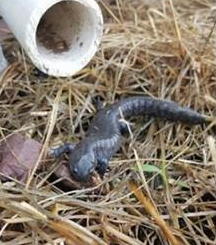 Question from Josh L Lady: Which salamander is this?
Answer:
The picture posted is one of our mole salamanders (family Ambystomatidae). This common family name comes from their habit of staying underground and in burrows of other creatures, except when breeding. Species in this family can be difficult to tell apart at times. Adding to the confusion, there is a species called the Mole salamander (Ambystoma talpoideum) which in Indiana is only found in the extreme southwestern part of the state.
The species below is likely a Small-mouthed Salamander (Ambystoma texanum). It can be found throughout Indiana except the extreme northwestern and southeastern portions of the state. The Small-mouthed Salamander is a moderate sized salamander characterized by its slender head and small mouth. Most individuals are dark gray to grayish brown with light gray speckles (often resembling lichen-like markings), particularly on the lower sides of the body. Adults usually reach 11-19 cm in length and have an average of 15 costal grooves (i.e., the “wrinkles” on the sides of the body; range 13-15).
I say it is likely a Small-mouthed Salamander because they are nearly identical to in appearance to the Streamside Salamander (Ambystoma barbouri). There are minor differences in the teeth and premaxillary bones between the two species; however, these structures are not readily observable in the field. Geographic location and habitat type are the best ways to distinguish these two species. Streamside Salamanders are restricted to extreme southeastern Indiana, occupy hilly areas, and breed in streams. Small-mouthed Salamanders exist nearly statewide, occur in wooded floodplains, and breed in ephemeral wetlands.
Resources:
Salamanders of Indiana, The Education Store, Purdue Extension resource center.
Appreciating Reptiles and Amphibians, The Education Store
Forest Management for Reptiles and Amphibians: A Technical Guide for the Midwest, The Education Store
Ranavirus: Emerging Threat to Amphibians, The Education Store
Brian MacGowan, Wildlife Extension Specialist
Purdue Forestry and Natural Resources
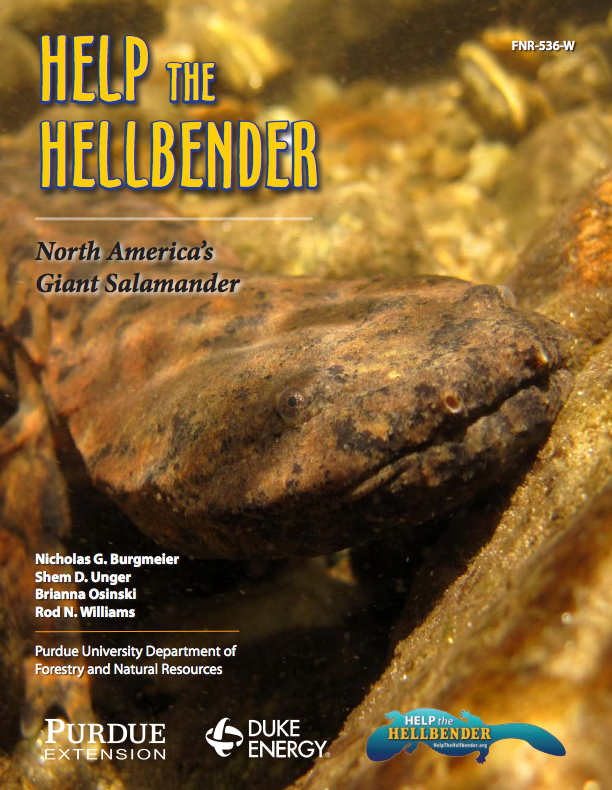 The eastern hellbender is a large, fully aquatic salamander that requires cool, well-oxygenated rivers and streams. Because they require high-quality water and habitat, they are thought to be indicators of healthy stream ecosystems. While individuals may live up to 29 years, possibly longer, many populations of this unique salamander are in decline across their geographic range. It is the largest salamander in North America, found in and around rivers and streams in 17 states from New York to Missouri. Many hellbender populations are in decline within their geographic range. This publication provides information on identifying and preserving this important aquatic animal. You can find Help the Hellbender, FNR-536-W, as well as other great resources that can be found at The Purdue Education Store.
Resources:
How Anglers and Paddlers Can Help the Hellbender, The Education Store
Hellbender ID, The Education Store
Improving Water Quality by Protecting Sinkholes on Your Property, The Education Store
Improving Water Quality at Your Livestock Operation, The Education Store
Healthy Water, Happy Home – Lesson Plan, The Education Store
Nick Burgmeier, Research Biologist and Extension Wildlife Specialist
Purdue Department of Forestry and Natural Resources
Dr. Rod Williams, Associate Head of Extension and Associate Professor of Wildlife Science
Purdue Department of Forestry and Natural Resources
The Eastern hellbenders are the largest salamander in North America and have survived unchanged for nearly 2 million years. Hellbender populations are declining across their range, from Missouri to New York. This decline is likely caused by human influences such as habitat degradation and destruction. Many states are developing conservation programs to help the hellbender. To find out what you can do visit helpthehellbender.org.
Resources:
How Anglers and Paddlers Can Help the Hellbender, The Education Store
Hellbender ID, The Education Store
Improving Water Quality by Protecting Sinkholes on Your Property, The Education Store
Improving Water Quality at Your Livestock Operation, The Education Store
Healthy Water, Happy Home – Lesson Plan, The Education Store
Nick Burgmeier, Project Coordinator, Research Biologist & Wildlife Extension Specialist
Purdue Department of Forestry and Natural Resources
Dr. Rod Williams, Associate Head of Extension and Associate Professor of Wildlife Science
Purdue Department of Forestry and Natural Resources
Every hunter knows the importance of acorns for game and non-game species alike. When acorns are plentiful it can alter the movements and patterns of game species and when acorns are absent wildlife must rely on alternative food sources to meet their nutritional needs during the fall, winter, and early spring. Knowing the importance of acorns to many wildlife species, it is beneficial to identify which trees are the most reliable and best producing in the woods.
Intro to oaks
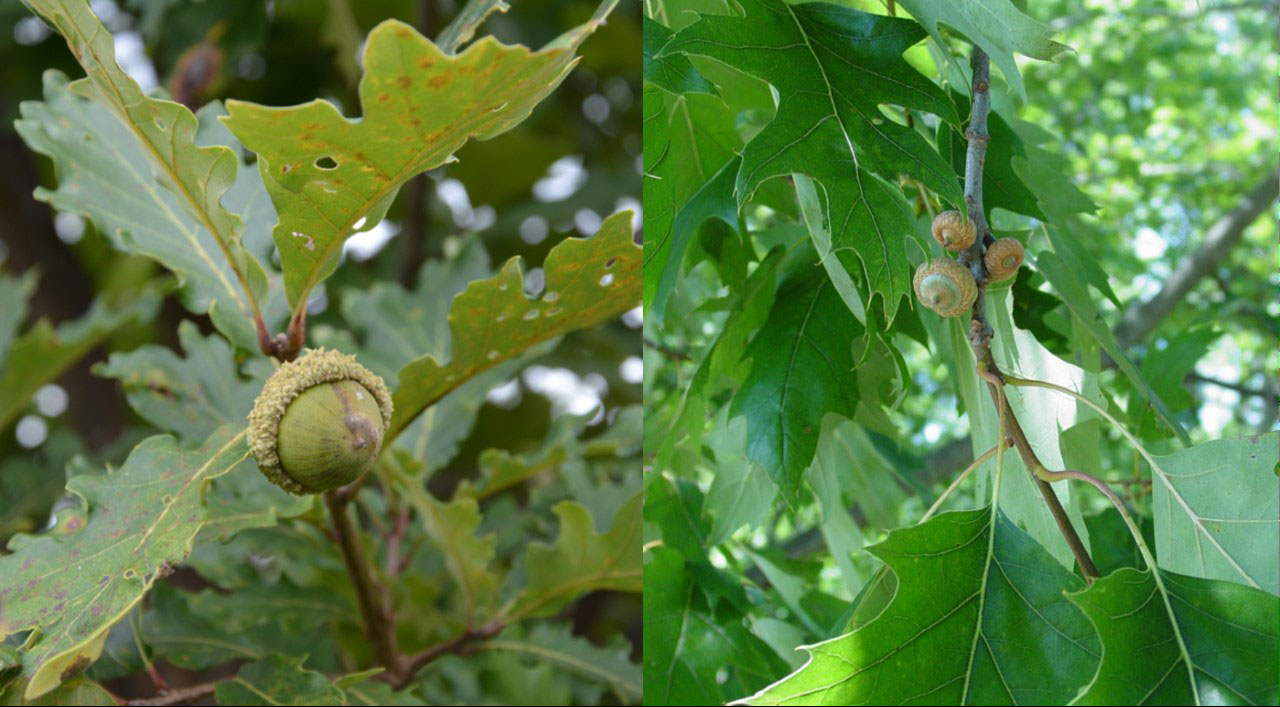
White oak acorns are clustered at the end of the branch – this year’s growth, like on this swamp white oak on the left. Whereas, red oak acorns are farther down the branch at the end of last year’s growth, like the northern red oak acorns on the right. (Photo by Brian MacGowan)
Oak trees in Indiana fall into 1 of 2 groups, white oak (e.g., white, swamp white, and chinkapin) or red oak (e.g., northern red, black, and pin). White oaks produce acorns in 1 growing season (acorns falling in 2016 are from flowers that were pollinated in the spring of 2016) and red oaks produce acorns in 2 growing seasons (acorns falling in 2016 are from flowers that were pollinated in the spring of 2015). This means a late frost in the spring may result in poor acorn production in white oaks in the fall of the same year, but will not influence red oak acorn production the same fall. However, a late frost in back-to-back years may result in a mast failure from both groups.
White oak acorns tend to be selected by wildlife more than red oak acorns because they contain less tannins resulting in a less bitter and more digestible acorn. Check out the Native Trees of the Midwest to learn more about oaks, their value for wildlife, and help you learn to identify different species.
Oak trees can be split into production groups based on their relative acorn production capabilities. Some individual oak trees are inherently poor producers and rarely produce acorns even in a bumper crop. Whereas other individuals are excellent producers and may produce acorns even in the poorest year. Research from the University of Tennessee reported poor mast producing trees represented 50% of white oaks in a stand and produced only 15% of the white oak acorn crop in a given year, whereas excellent producing trees represented 13% of white oaks, but produced 40% of the total white oak acorn production. When you included excellent and good producing white oaks together (31% of trees), they accounted for 67% of the total white oak acorn crop in a stand. This means a minority of the white oaks in a stand may produce a majority of the acorns!
Scouting oak trees
Understanding that some individual oak trees are poor producers, some are excellent, and some fall between poor and excellent, surveying oak trees can help identify important mast producing individuals. The late summer and early fall, just prior to or at the beginning of acorn drop, are perfect times to identify the best and worst producing oaks in your stand of timber. Scouting can be as formal as conducting a mast survey, National Deer Association, or as informal as taking mental notes of oak trees with heavy crops of acorns on the ground while you are walking to and from your tree stands in the fall. Either way, scouting oaks for acorn production capability can provide more information when determining where to hunt in the fall or which trees to retain and which trees to remove during a timber harvest. If wildlife management is an objective on your property, trees that you identify as the best acorn producers in the woods can be retained during a timber harvest, while poor producing trees can be removed with little detriment to overall acorn production. It is important to remember to retain a balance of oaks from both the red and white oak group, favoring red oak, to help safeguard against complete mast failures.
Forest management is insurance for mast failure

The top photo is of a mature forest with very few canopy gaps resulting in very little cover or food for wildlife. The bottom picture is of a forest stand where undesirable trees have been girdled (tree on the right-hand side of picture) to increase light to the forest floor and where multiple prescribed fire have been conducted to increase forage production and cover.
Annual acorn production in a stand of oaks is highly variably and can be dependent on environmental conditions. For example, late frosts, poor pollination, and insect infestations all can be culprits for poor mast production across a stand of oaks. Because of these factors, white oaks tend to only produce reliably 2 out of every 5 years, meaning 3 out of 5 years (60%) there is poor mast production or a failed mast crop in white oaks. Red oaks may produce a good crop as frequently as 2 to 5 years, but only produce a bumper crop an average every 5 to 7 years.
The extreme variability in acorn production underscores the importance in considering alternative food sources for fall, winter, and early spring for wildlife. In most mature forests with few canopy gaps there could be as little as 50-100 lbs of deer selected forage per acre in the understory. However, with some management, like thinning and prescribed fire the amount of deer selected forage can be increased to almost 1000 lbs/ac! Additionally, forest management also increases the amount cover throughout the year for species like white-tailed deer, wild turkey, ruffed grouse, woodcock, and many forest songbirds. Contrary to popular belief, cover can be more of a limiting factor for many wildlife species compared to food availability. Forest management could include girdling undesirable trees to expand growing space for mast producing trees or conducting a timber harvest removing undesirable trees and poor producing oak trees while retaining good producing trees. For more information on conducting a timber harvest for wildlife on your property contact a professional wildlife biologist or professional forester in your area.
When spending time in the woods this fall, take the time to look up and down to see which oaks in your woods are the best producers.
Resources:
Native Trees of the Midwest, The Education Store, Purdue Extension’s resource center
Masting Characteristics of White Oaks: Implications for Management, University of Tennessee
Wildlife Biologists, Indiana Department of Natural Resources (IDNR)
Find a Forester, Indiana Department of Natural Resources (IDNR)
Enrichment Planting of Oaks, The Education Store
Forest Improvement Handbook, The Education Store
The Hardwood Ecosystem Experiment: Indiana Forestry and Wildlife, The Education Store
Jarred Brooke, Wildlife Extension Specialist
Purdue University Department of Forestry and Natural Resources
Human changes to the environment, like urbanization and climate change, have caused and will cause many wildlife extinctions. Efforts to conserve species occur all over the world, but not all species are seen as equal. In the animal conservation world, charismatic species play the lead roles in a show, while lesser-known or less-attractive species act as stage crew: we all know they are present, but we’re largely uncertain of what they do or how they play into the whole picture. As a result, we tend to see less conservation funding for these species.
Charismatic species are often large, fluffy, or cute: polar bears, narwhals, pandas, and koalas are excellent examples. They dominate news stories, children’s books, and most forms of media. In contrast, non-charismatic species are more difficult for humans to relate with: mussels, mice, and small fish fall into this category.
Societal bias towards charismatic species starts young: if you ask any child what their favorite animal is, chances are high that the species will be either cute and cuddly like a rabbits and foxes, or big and fearsome like bears or sharks. Chances are low that it will be a something slimy, small, or otherwise unattractive like a fish, reptile or bug.
Why is funding so low, or non-existing, for the not so furry, not so cute endangered species?
According to a study in the U.K., adults are more likely to donate money to causes represented by photos of charismatic species than non-charismatic species. This bias appeal results in the majority of research and conservation funding being dedicated to a small group of about 80 well-known, charismatic species. These species have what Dr. Hugh Possingham of the National Environmental Research Program (NERP) refers to as “donor appeal”. The remaining, non-charismatic species, tend to fall by the wayside, receive less funding and research interest. As a result, they tend to go extinct at higher rates. As Dr. Possingham says, “…if you’re an obscure animal or plant in a remote place, you have next to no hope of getting conservation resources.”
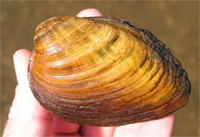
Clubshell mussel.

Results showing that the public are not excited to conserve non-charismatic wildlife is not surprising to Belyna Bentlage, a Purdue University outreach specialist, who specializes in research and outreach related to mussels. “People like to protect species that they feel they can relate to, that they can imagine owning as pets, like bear cubs or playful monkeys. It’s difficult to feel a connection to a hellbender or mussel. These animals don’t move as much, aren’t very interactive, and are not very cute. People just can’t relate to them in the same way as more charismatic species,” says Bentlage.
The lack of relate-ability of non-charismatics can spell disaster for many species. Belyna says, “When people don’t feel connected to a species, they won’t give money to fund research or protect the species. Lawmakers aren’t interested because the public isn’t interested, so it’s left up to researchers. So little is known about the ecological role of many of these species, that it’s difficult for researchers to justify why they should be studied. With the competitive funding climate in research, less charismatic species loose out.”
With a tight funding climate, uninterested lawmakers, and a fickle, how can we protect these threatened non-charismatic species?
One solution might just be in making non-charismatic species charismatic. Outreach coordinators like Belyna Bentlage are working cooperatively with biologists to change the way humans perceive of slimy, spiny, gross or otherwise unattractive species.
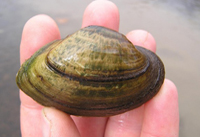
Snuffbox mussel.
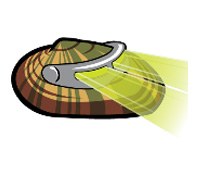
The project Belyna works on, with Purdue FNR Professor Linda Prokopy and Associate Professor Rod Williams gives super-hero personalities to non-charismatic mussels. Each mussel species has a special power that reflects something about its innate characteristics, like the snuffbox and clubshell mussel images shared in this blog.
“Making these animals more relatable and fun allows both children and adults to better understand their importance. People consciously pick their favorites, compare the drawings, and then get excited when they see these species in the wild. It creates a public that is really interested in protecting the species,” Bentlage explained.
Erin Kenison, a PhD student at Purdue University, has helped use similar tactics to promote conservation of hellbenders. The poorly named species is actually a giant salamander that used to inhabit all Indiana rivers, but is now restricted to the Blue River giant salamander that used to inhabit all Indiana rivers, but is now restricted to the Blue River.
The large, green, slimy creature is aptly nicknamed “old lasagna sides” because of its flappy skin that bunches at its sides. The Help the Hellbender project uses costumes, cartoons, coloring pages and games to generate public attention for the species.
“Historically, its been believed that hellbenders had evil powers and could even cause the death of babies,” says Kenison. “Making the hellbender more relatable dismantles a lot of these beliefs, making it more likely that river-users won’t try to harm them.”
Are we willing to learn more about the non-charismatic species and help with conservation efforts?
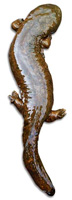
While there are many challenges for the conservation of non-charismatic species, Belyna Bentlage also says that the public’s lack of familiarity with these species may be a strength. “When people don’t know much, they are often willing to learn and adapt their actions. They are not as set in their ways, so it’s more likely that we can introduce new behaviors to protect a species. Overall, people generally want to help threatened species, not hurt them.”
Non- charismatic wildlife, as slimy or spiny or unattractive as they may be, are an important part of the natural ecosystem. Next time you see a mussel, hellbender, or similar creature, take a photo, but leave it be. These species need your help and support to survive, even if their beauty is mainly on the inside.
If you would like to find out how you can help or learn more about these endangered species, see the resources listed below:
Help the Hellbender
DNR: Nature Preserves: Endangered Threatened & Rare Species, Indiana Department of Natural Resources (IDNR)
Zoe Glas, Graduate Research Assistant
Purdue Department of Forestry and Natural Resources
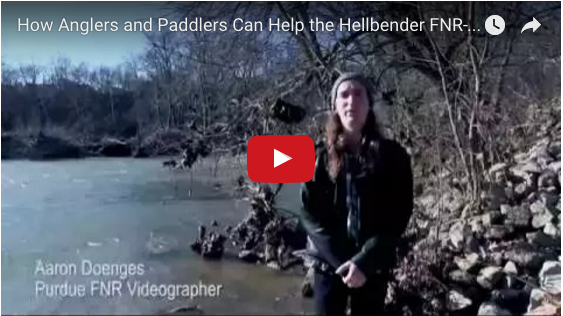 Paddling and fishing are great ways to enjoy our rivers and streams. However, these seemingly harmless activities can actually be harmful to the eastern hellbender and other aquatic wildlife if the proper precautions are not followed.
In this video, Purdue videographer Aaron Doenges speaks with Tom Waters and Ranger Bob Sawtelle, two professionals around Indiana’s Blue River, to learn more about safe ways to paddle and fish. By following a few simple tips, paddlers and anglers can still enjoy these aquatic activities without harming the local wildlife.
If we all do our part to help the hellbender, this at-risk species can survive and grow. Anglers and paddlers aren’t the only people that can help. Farmers can also check out the video Improving Water Quality Around Your Farm to learn healthy farming practices to improve water quality for the hellbender and other aquatic wildlife, and landowners are encouraged to check out Improving Water Quality At Your Livestock Operation to learn about how to manage livestock without polluting nearby rivers and streams.
To stay current with the latest news and research on the eastern hellbender, please visit the Help the Hellbender website.
Resources:
How Anglers and Paddlers Can Help the Hellbender – The Education Store, Purdue Extension Resource Center
Improving Water Quality Around Your Farm – The Education Store
Improving Water Quality At Your Livestock Operation – The Education Store
Eastern Hellbender ID Video – The Education Store
Help the Hellbender – Purdue Extension
Rod Williams, Associate Head of Extension and Associate Professor of Wildlife Science
Purdue University Department of Forestry and Natural Resources

Recent Posts
- Beetle that attacks Tree-of-Heaven found in Indiana, Purdue Landscape Report
Posted: March 20, 2026 in Invasive Insects, Wildlife, Woodlands - ID That Tree: Dwarf Chinkapin Oak
Posted: in Forestry, Urban Forestry, Wildlife, Woodlands - DNR Hiring for Indiana Conservation Officer Positions, MyDNR
Posted: March 9, 2026 in Urban Forestry, Wildlife, Woodlands - ID That Tree: Shumard Oak
Posted: in Plants, Urban Forestry, Wildlife, Woodlands - Uniting Indiana Residents Against Invasive Species
Posted: February 27, 2026 in Community Development, Invasive Insects, Wildlife - Have You Seen a Soaring Eagle Lately? Morning Ag Clips
Posted: February 25, 2026 in Urban Forestry, Wildlife - Register for Natural Resources Teacher Institute’s Class of 2026
Posted: February 19, 2026 in Forestry, Wildlife, Woodlands - ID That Tree: Fragrant Sumac
Posted: February 4, 2026 in Plants, Urban Forestry, Wildlife - Woodsy Owl Edition for Educational Learning, USDA – U.S. Forest Service
Posted: January 21, 2026 in Forestry, Forests and Street Trees, Got Nature for Kids, Urban Forestry, Wildlife - Opt-in to the Deer Management Survey, MyDNR
Posted: January 12, 2026 in Forestry, Wildlife
Archives
Categories
- Alert
- Aquaculture/Fish
- Aquatic/Aquaculture Resources
- Ask the Expert
- Christmas Trees
- Community Development
- Disease
- Drought
- Forestry
- Forests and Street Trees
- Gardening
- Got Nature for Kids
- Great Lakes
- How To
- Invasive Animal Species
- Invasive Insects
- Invasive Plant Species
- Land Use
- Natural Resource Planning
- Nature of Teaching
- Plants
- Podcasts
- Ponds
- Publication
- Safety
- Spiders
- Timber Marketing
- Uncategorized
- Urban Forestry
- Webinar
- Wildlife
- Wood Products/Manufacturing
- Woodland Management Moment
- Woodlands