 Purdue University - Extension - Forestry and Natural Resources
Got Nature? Blog
 Mark your calendar for four upcoming Facebook LIVE events from Purdue FNR Extension specialists.
On April 30, tune in at 3 p.m. to expand your knowledge about the Hellbender husbandry program as Dr. Rod Williams chats live with Dr. Stephen Spear from The Wilds, who is going to talk about captive rearing, different age groups of hellbenders and some of their research using EDNA to sample for hellbenders across the country. This Facebook LIVE event will take place on the Help the Hellbender page. https://www.facebook.com/HelpTheHellbender
Check back in a few hours later at 6 p.m. for a live Q&A with extension wildlife specialist Jarred Brooke. He will offering habitat help and offering tips and tricks about establishing native grasses and forbs for wildlife. Tune in on the Purdue FNR Facebook page. https://www.facebook.com/PurdueFNR/
On May 5, a host of Purdue extension specialists will be available to answer your questions on a variety of topics during a noon ET Ask the Expert session on the Purdue FNR Facebook page . Have a question about woodlands, wildlife, fish, or ponds you want to ask a Forestry and Natural Resource Specialist? We will be discussing wildlife habitat management, prescribed fire, forest management, invasive plants, wildlife conflict management, wildlife damage, amphibian and reptile identification, wildlife ecology, pond management and fish ecology. This Q&A session will put you in touch with:
- Jarred Brooke, Extension Wildlife Specialist, wildlife habitat management, prescribed fire
- Lenny Farlee, Extension Forestry Specialist, forest management, invasive plants
- Brian MacGowan, Extension Wildlife Specialist, wildlife conflict management, wildlife damage
- Rod Williams, Extension Wildlife Specialist, amphibian and reptile identification, wildlife ecology
- Mitch Zischke, Extension Fisheries Specialist, pond management and fish ecology
On May 7 at 3 p.m., in Episode 3 of our Help the Hellbenders Facebook LIVE series, Dr. Rod Williams will talk with the keepers at the Mesker Park Zoo and Botanical Gardens about their efforts to breed hellbenders in captivity. Viewers will also have a tour of the facility and see interactive exhibits.
All Facebook LIVE sessions will be archived on Facebook. Go back and watch Episode 1 of the Help the Hellbender series.
To access a Facebook live feed, go to the page at the established time. When the event is live, a LIVE icon will show up next to the word video on the left hand side of the page. Click the video link and a new page will open. The video that is live will be the first video in the list. Click that to begin watching.
Resources:
Report Invasive, Purdue Extension
Effective Firebreaks for Safe Use of Prescribed Fire, Got Nature? Blog, Purdue University Forestry and Natural Resources Extension
Renovating native warm-season grass stands for wildlife: A Land Manager’s Guide, The Education Store, Purdue Extension resource center
Invasive plants: impact on environment and people, The Education Store
Pond and Wildlife Management, Purdue Extension
Forest Improvement Handbook, The Education Store, Purdue Extension resource center
Wendy Mayer, FNR Communications Coordinator
Purdue University Department of Forestry and Natural Resources
Do you have issues with wildlife digging in your flower pots and disturbing or even killing your plants? Extension wildlife specialist Brian MacGowan has a few simple tips that you can try in order to deter these animals and save your plants.
Resources:
Preventing Wildlife Damage – Do You Need a Permit? – The Education Store, Purdue Extension resource center
Selecting a Nuisance Wildlife Control Professional, The Education Store
How to Construct a Scent Station, YouTube, Purdue Extension
Question: How do I properly relocate raccoons from my attic?, Got Nature? Blog, Purdue Extension FNR
Nuisance Wildlife, Indiana Department of Natural Resources
Brian MacGowan, Wildlife Extension Specialist
Purdue Forestry and Natural Resources
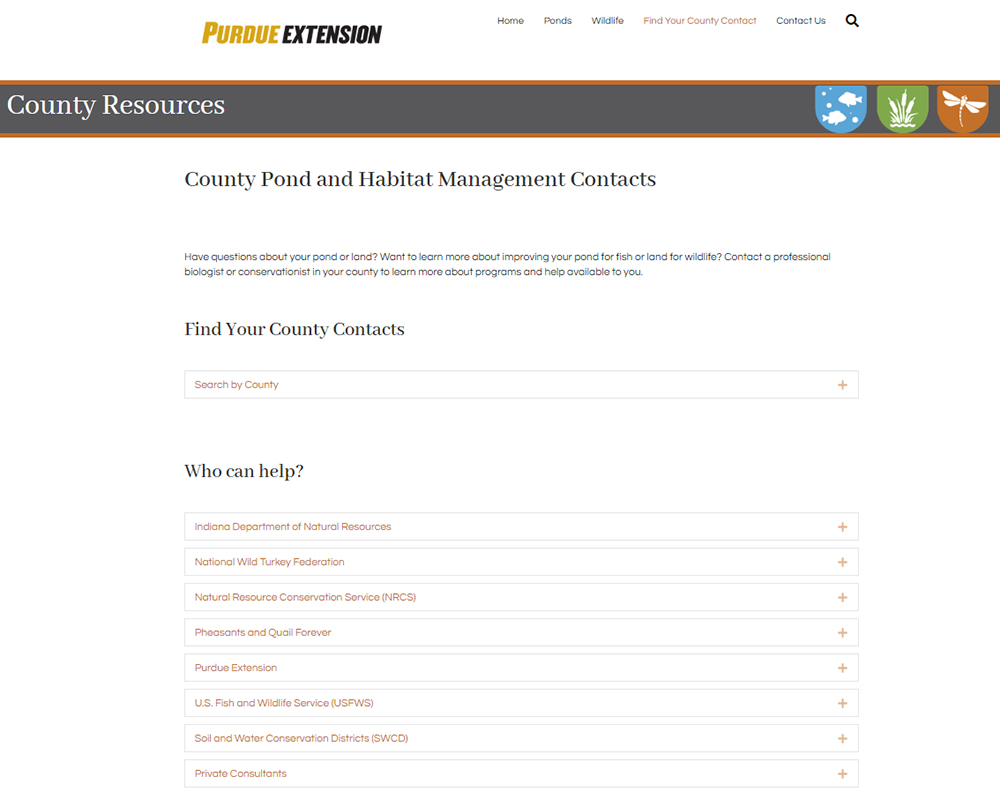 The Purdue Extension Pond and Wildlife Management website has been updated with a contact search function to better help you find the right professional biologist or conservationist in your county to serve your needs.
The newly created County and Habitat Management Contacts page allows individuals to search for experts within their county by simply selecting it from a dropdown menu. Within each individual county is a listing of Indiana Department of Natural Resources contacts, extension specialists and more.
In addition, the contacts page lists various agencies and services that can also help with questions about pond or habitat management. These resources include the Indiana DNR, the National Wild Turkey Federation, the Natural Resources Conservation Service (NRCS), Pheasants and Quail Forever, Purdue Extension, the U.S. Fish and Wildlife Service (USFWS), the Soil and Water Conservation Districts and event private consultants.
As fishing, hunting and other wildlife recreation continues to be popular in Indiana, Purdue Extension has developed this new program to help Indiana landowners manage their ponds and wildlife.
Along with the search features to help you find professional contacts, you will also find these topics and resources on the website:
- The Pond Ecosystem
- Fish Population Management
- Pond Construction and Maintenance
- Aquatic Vegetation Management
- Evaluating Your Property
- Forest Management
- Grassland Management
- Habitat Management Planning
To better understand and manage pond ecosystems in Indiana for fishing and wildlife habitat this website provides detailed information to help you reach your goals.
Resources:
Salmon and Trout of the Great Lakes: A Visual Identification Guide, The Education Store, Purdue Extension Resource Center
Pond Management: Stocking Fish in Indiana Ponds, The Education Store
The Nature of Teaching: Adaptations for Aquatic Amphibians, The Education Store
Illinois & Indiana Sea Grant, using research, outreach, and education to bring the latest science to communities and their residents
How to Score Your White-tailed Deer, Video, The Education Store
How to Build a Plastic Mesh Deer Exclusion Fence, The Education Store
Assessing Your Land’s Potential for Wildlife, The Education Store
Jarred Brooke, Extension Wildlife Specialist
Purdue Department of Forestry and Natural Resources
While our FNR Purdue Extension specialists can’t be with you in person at workshops, meetings or in the field right now, they are still here to assist you. Don’t hesitate to reach out.
Purdue Extension – Forestry and Natural Resources, purdue.edu/fnr/extension
Ask An Expert
Wendy Mayer, Communications Coordinator
Purdue University Department of Forestry and Natural Resources
Diana Evans, Extension & Web Communications Specialist
Purdue University Department of Forestry and Natural Resources
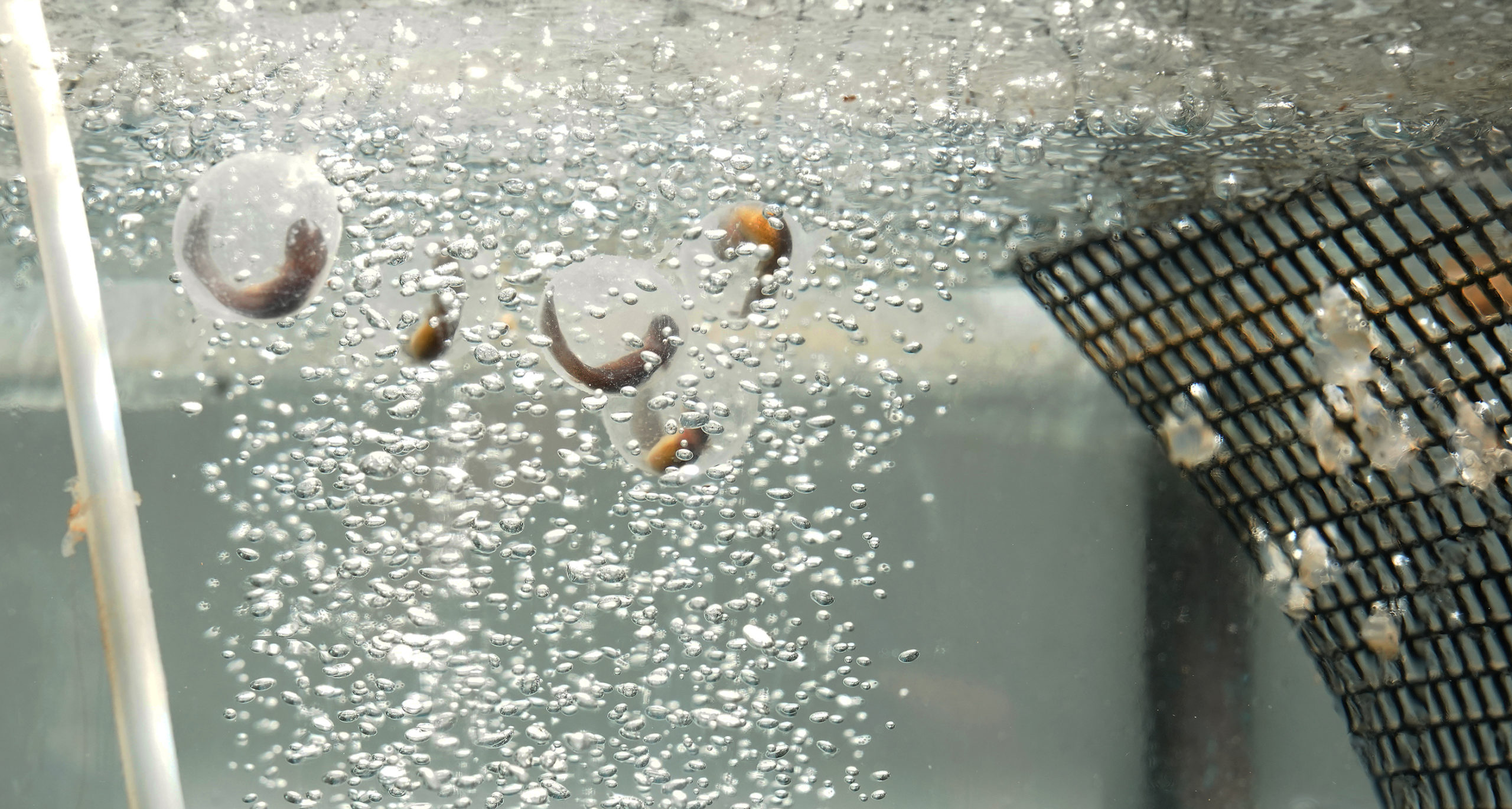 Have you heard of a Hellbender? No? Have you been living under a rock?
Eastern hellbenders are the largest salamander in North America, a rare species that has been getting a lot of conservation attention over the past two decades. If you would like to learn about Hellbenders, how you can help protect aquatic wildlife, and have the opportunity to ask Purdue biologists questions about Hellbender conservation, then please join us on our Help the Hellbender-Facebook Live question and answer time, www.facebook.com/HelpTheHellbender/.
Thursday, April 23rd
3:00 pm ET
We hope to see you there and please bring your questions!
Resources:
Help the Hellbender website, Purdue Extension-Forestry and Natural Resources
Hellbender Decline, The Education Store, Purdue Extension resource center
Zoos Work with Purdue University for Hellbender Conservation Efforts, Got Nature? Blog, FNR
The Nature of Teaching: Adaptations for Aquatic Amphibians, The Education Store
Nick Burgmeier, Project Coordinator, Research Biologist & Wildlife Extension Specialist
Purdue Department of Forestry and Natural Resources
Shelby Royal, Husbandry Lab Coordinator
Purdue Department of Forestry and Natural Resources
Rod N Williams, Professor of Wildlife Science
Purdue University Department of Forestry and Natural Resources
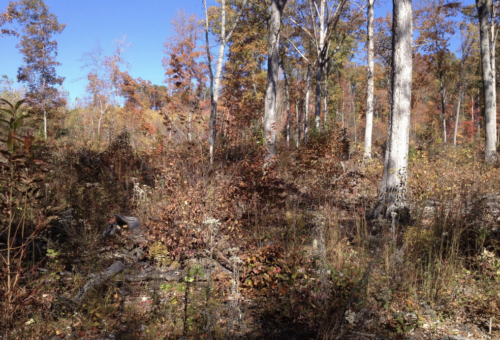
Many woodland landowners are interested in improving their properties for one of Indiana’s most abundant game animals, white-tailed deer. This publication titled Managing Your Woods for White-Tailed Deer outlines different options landowners have to enhance white-tailed deer habitat in their woodlands. Learn the pros and cons of mature forests vs. young forest stands along with finding answers to these and other questions you may have:
- Can mature forests cause less forage?
- What does lacking oak trees mean for managing deer?
- Which plants do deer eat?
This 16-page publication filled with plants and forest photos is a free download from the Purdue Extension resource center, The Education Store. View other deer publications and video resources as you place keywords in the search field located on The Education Store website.
Resources
Renovating native warm-season grass stands for wildlife: A Land Manager’s Guide, The Education Store, Purdue University
Bovine Tuberculosis in Wild White-tailed Deer, The Education Store
How to Score Your White-tailed Deer, Video, The Education Store
How to Build a Plastic Mesh Deer Exclusion Fence, The Education Store
Frost Seeding to Establish Wildlife Food Plots and Native Grass and Forb Plantings, Video
Jarred Brooke, Extension Wildlife Specialist
Purdue Department of Forestry and Natural Resources
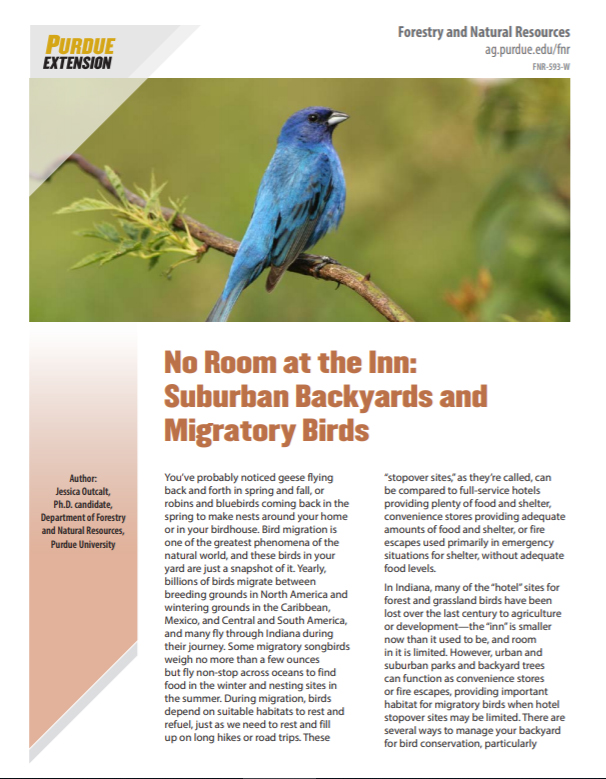 Bird migration is one of the greatest phenomena of the natural world. Birds depend on suitable habitats to rest and refuel. In this free download publication titled No Room at the Inn: Suburban Backyards and Migratory Birds, a Purdue researcher describes ways to manage your backyard to attract birds of all types, for your enjoyment and their survival. Including a list of common migratory birds in Indiana, this publication also provides a list of other suggested resources to learn more about birds and how to identify them.
Resources:
Forest Birds, Video, Purdue Extension
Birds and Residential Window Strikes: Tips for Prevention, The Education Store, Purdue Extension resource center
Managing Woodlands for Birds, video
Jessica Outcalt, Graduate Research Assistant
Department of Forestry and Natural Resources, Purdue University
Just because the winter days are cold and dreary doesn’t mean the work to improve wildlife habitat on your property has to stop. In fact, now is a perfect time for a wide range of habitat projects. One such project is frost seeding native grasses and forbs. Here’s why you should brave the cold and consider sowing your seeds this winter.
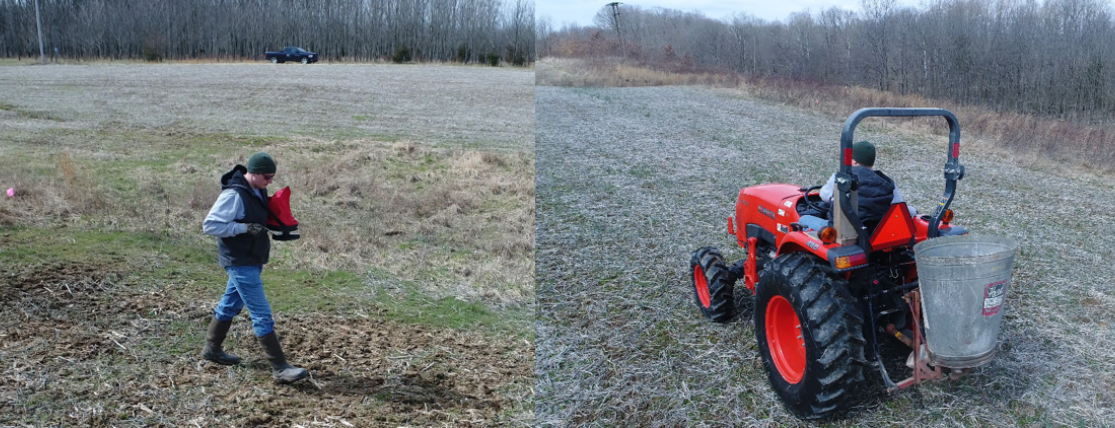
Picture 3. Smaller fields can be established with just a hand seed spreader (left), whereas an ATV or tractor-mounted spreader is better for larger fields (right).
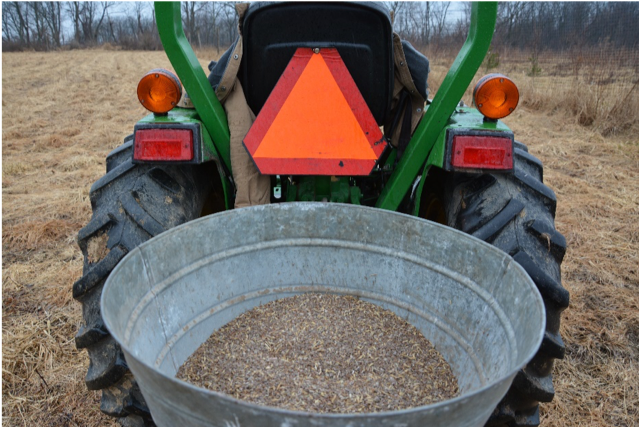
Picture 2. When broadcasting native seed, it should be mixed with a carrier (pelletized lime here) to help the seed flow through the spreader.
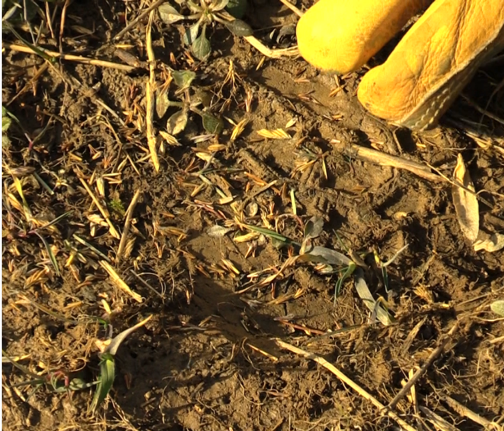
Picture 1. After frost seeding, the native grass and forb seed is visible on the ground, but the freezing and thawing of the soil will ensure good seed-to-soil contact.
Its natural
If you think about how a native prairie works, many of the seeds ripen in the late summer and early fall and drop to the ground throughout the fall and winter. So, sowing seeds from January through March or frost seeding is mimicking what would have occurred naturally. By doing such, you are taking advantage of the freezing and thawing cycles of the soil. The helps with a couple things.
First, many native plant seeds – forbs (wildflowers) especially – need that natural freezing and thawing cycles to break their dormancy. Thus, frost seeding can help increase the germination of many of these species. Second, the freezing and thawing of the soil helps to work the seed into the soil, which can improve seed-to-soil contact, an important factor in planting success (picture 1).
Less time to waste
Dormant seeding or seeding once the soil dips below a certain temperature (as early as November) is another viable option to establish a native grass and forb stand. But with frost seeding, the seed remains on the soil for less time before germination. Which may reduce the seeds’ exposure to soil pathogens, rodents, birds, or other critters that may eat the seed or reduce germination.
Minimalist-style
Frost seeding native grasses and forbs can be done will minimal equipment. All you need to frost seed is a hand or mechanical seed spreader, the seed, and a carrier (picture 2). Using a hand seed spreader works great for small fields, but you may consider using an ATV or tractor-mounted mechanical spreader for larger fields (picture 3).
Another option is to use a no-till seed drill. Of course, this will require more specialized equipment, but many Soil and Water Conservation Districts or Pheasants and Quail Forever Chapters have no-till drills that you can borrow or rent to help complete your project.
When it comes to establishing native grasses and forbs, there is more than one way to plant a field. But, frost seeding might be the option that is best suited for you and your site.
For a How-To on frost seeding, check out our Frost Seeding Video below:
Resources
Frost Seeding to Establish Wildlife Food Plots & Native Grass and Forb Plantings, video, The Education Store, Purdue Extension Resource Center
Calibrating a No-Till Drill for Conservation Plantings and Wildlife Food Plots, video, The Education Store
Renovating native warm-season grass stands for wildlife: a land manager’s guide, The Education Store
Purdue Extension Pond and Wildlife Management Website, Purdue Extension
Jarred Brooke, Wildlife Extension Specialist
Department of Forestry & Natural Resource, Purdue University
 Winged burning bush, winged euonymus, or simply burning bush (Euonymus alatus) is a medium-sized deciduous shrub native to China, Japan and Korea but is widely planted in the United States. Winged burning bush has been planted in the US since the 1860s, primarily as an ornamental shrub due to its bright red fall foliage. Reports of this species escaping cultivation and establishing in natural areas, such as woodlands, prairies and other uncultivated areas, emerged in the 1970s in the Northeast and Midwest US. The species is now considered invasive in most of the eastern US, including Indiana.
Invasive Plant Series: Winged Burning Bush is an 8-page publication written by experts Brian Beheler, farm manager, Don Carlson, forester, Lenny Farlee, sustaining hardwood extension specialist and Ron Rathfon, regional extension forester SIPAC. In this publication, you can learn about the identification, distribution, impact, management and control of this deciduous shrub found in Indiana hardwood forests. For more information check out the Burning Bush Video.
Resources
Report Invasive Species, Purdue Agriculture & Indiana Invasive Species Council
The GLEDN Phone App – Great Lakes Early Detection Network
EDDMaps – Early Detection and Distribution Mapping System (Report Invasives)
Cooperative Invasive Species Management Area (CISMA)
Indiana Department of Natural Resources: Invasive Species
Indiana Invasive Species Council
Burning Bush Video, video, The Education Store, Purdue Extension resource center
What Nurseries Need to Know About the Invasive Species Regulation, The Education Store
Invasive plants: impact on environment and people, The Education Store
Invasive Plant Species: Oriental Bittersweet, The Education Store
Invasive Plant Species: Callery Pear, The Education Store
Invasive Plant Species: Wintercreeper, The Education Store
Lenny Farlee, Extension Forester
Purdue University Department of Forestry and Natural Resources

December IDNR Wildlife Bulletin Newsletter: DNR has recently launched a new interactive website allowing deer hunters to access white-tailed deer harvest data. Hunters have asked for detailed harvest data and comparisons between years. This new website is a direct result of that feedback. Harvest data is updated daily. For full article and more information >>>
Resources
How to Score Your White-tailed Deer, video, The Education Store, Purdue Extension Resource Center
White-Tailed Deer Post Harvest Collection, video, The Education Store
Age Determination in White-tailed Deer, video, The Education Store
How to Build a Plastic Mesh Deer Exclusion Fence, The Education Store
Bovine Tuberculosis in Wild White-tailed Deer, The Education Store
Maine Hunting License and Rules, Maine Department of Inland Fisheries & Wildlife
Indiana Deer Hunting, Biology and Management Safe Food Handling and Preparation, IDNR
Indiana Department of Natural Resources, Department of Fish & Wildlife

Recent Posts
- Beetle that attacks Tree-of-Heaven found in Indiana, Purdue Landscape Report
Posted: March 20, 2026 in Invasive Insects, Wildlife, Woodlands - ID That Tree: Dwarf Chinkapin Oak
Posted: in Forestry, Urban Forestry, Wildlife, Woodlands - DNR Hiring for Indiana Conservation Officer Positions, MyDNR
Posted: March 9, 2026 in Urban Forestry, Wildlife, Woodlands - ID That Tree: Shumard Oak
Posted: in Plants, Urban Forestry, Wildlife, Woodlands - Uniting Indiana Residents Against Invasive Species
Posted: February 27, 2026 in Community Development, Invasive Insects, Wildlife - Have You Seen a Soaring Eagle Lately? Morning Ag Clips
Posted: February 25, 2026 in Urban Forestry, Wildlife - Register for Natural Resources Teacher Institute’s Class of 2026
Posted: February 19, 2026 in Forestry, Wildlife, Woodlands - ID That Tree: Fragrant Sumac
Posted: February 4, 2026 in Plants, Urban Forestry, Wildlife - Woodsy Owl Edition for Educational Learning, USDA – U.S. Forest Service
Posted: January 21, 2026 in Forestry, Forests and Street Trees, Got Nature for Kids, Urban Forestry, Wildlife - Opt-in to the Deer Management Survey, MyDNR
Posted: January 12, 2026 in Forestry, Wildlife
Archives
Categories
- Alert
- Aquaculture/Fish
- Aquatic/Aquaculture Resources
- Ask the Expert
- Christmas Trees
- Community Development
- Disease
- Drought
- Forestry
- Forests and Street Trees
- Gardening
- Got Nature for Kids
- Great Lakes
- How To
- Invasive Animal Species
- Invasive Insects
- Invasive Plant Species
- Land Use
- Natural Resource Planning
- Nature of Teaching
- Plants
- Podcasts
- Ponds
- Publication
- Safety
- Spiders
- Timber Marketing
- Uncategorized
- Urban Forestry
- Webinar
- Wildlife
- Wood Products/Manufacturing
- Woodland Management Moment
- Woodlands