Join Purdue Extension wildlife specialists Brian MacGowan and Rod Williams as they clear up what is fact and fiction when it comes to wildlife. They burst the bubble on some commonly heard “facts” about snapping turtles, hellbenders, coyotes, snakes and more.
 Purdue University - Extension - Forestry and Natural Resources
Got Nature? Blog
In this “A Moment in the Wild” episode, Rod Williams, Purdue professor of wildlife science, talks about the conservation efforts to save the North America’s giant salamander, the hellbender. Walk with Rod through Purdue Forestry and Natural Resources’ facilities and see how they are raised and released in the few clean rivers and streams that they can still be found.
If you have any questions regarding wildlife, or other natural resource topics, feel free to contact us by using our Ask an Expert web page.
Resources
A Moment in the Wild, Playlist, Purdue Extension – Forestry and Natural Resources
Help the Hellbender, Playlist & Website
The Nature of Teaching: Adaptations for Aquatic Amphibians, The Education Store, Purdue Extension resource center
How Our Zoos Help Hellbenders, The Education Store
Hellbenders Rock!, The Education Store
Rod Williams, Professor of Wildlife Science
Purdue University Department of Forestry and Natural Resources
In this “A Moment in the Wild” episode, Rod Williams, Purdue professor of wildlife science, talks about where hellbenders hide and how sedimentation adds more difficulty for these endangered giant salamanders living on the bottom of our rivers and streams. How can we help?
If you have any questions regarding wildlife, or other natural resource topics, feel free to contact us by using our Ask an Expert web page.
Resources
A Moment in the Wild, Playlist, Purdue Extension – Forestry and Natural Resources
Help the Hellbender, Playlist & Website
The Nature of Teaching: Adaptations for Aquatic Amphibians, The Education Store, Purdue Extension resource center
How Our Zoos Help Hellbenders, The Education Store
Hellbenders Rock!, The Education Store
Rod Williams, Professor of Wildlife Science
Purdue University Department of Forestry and Natural Resources
Posted on July 31st, 2020 in Forestry, Forests and Street Trees, Land Use, Publication, Urban Forestry, Wildlife | No Comments »
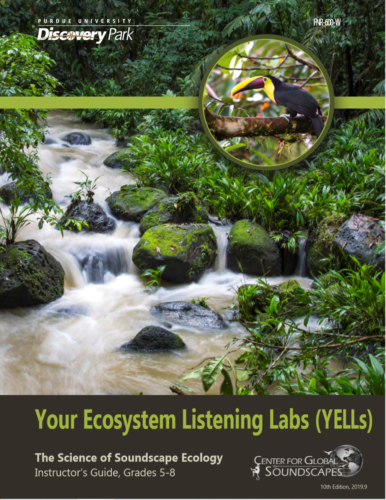 Your Ecosystem Listening Labs (YELLS): The Science of Soundscape Ecology Instructor’s Guide, Grades 5-8 is a 160-page publication, consisting of four chapters that focus on physics of sound, animal communication, soundscapes, and soundscape ecology.
The world around us is full of amazing sounds that are often ignored by humans. Unfortunately, many of the sources of these sounds are actually in danger of being destroyed by human activities. The activities contained in this package take students through the entire scientific method, from observations through conclusions, pairing the practice of science with the exploration of soundscape-based content.
To learn more about soundscape ecology and the sounds around us we might be missing or don’t know are there, visit Center for Global Soundscapes.
Resources
Record the Earth, APP
Community Soundscape Planning Guide: Controlling Noise & Protecting Natural and Cultural Sonic Spaces, The Education Store, Purdue Extension resource center
Bryan Pijanowski, Professor of Landscape and Soundscape Ecology
Purdue University Department of Forestry and Natural Resources
Kristen Bellisario, Post Doc Research Associate
Purdue University Department of Forestry and Natural Resources
If you have any questions regarding wildlife, or other natural resource topics, feel free to contact us by using our Ask an Expert web page.
Ask an Expert, Playlist, Purdue Extension – Forestry and Natural Resources Youtube Channel
Wildlife, Playlist
Wildlife, Playlist
Reptiles: Turtles, Snakes, and Lizards, Purdue Nature of Teaching
Coyotes are on the Move, Got Nature? Blog, Purdue FNR Extension
Help the Hellbender, Website
Indiana Amphibian and Reptile ID Package (4 softcover books), The Education Store, Purdue Extension resource center
Coyotes are on the Move, Got Nature? Blog, Purdue FNR Extension
Help the Hellbender, Website
Indiana Amphibian and Reptile ID Package (4 softcover books), The Education Store, Purdue Extension resource center
Brian MacGowan, Wildlife Extension Specialist
Purdue Forestry and Natural Resources
Purdue Forestry and Natural Resources
Rod Williams, Professor of Wildlife Science
Purdue Forestry and Natural Resources
Purdue Forestry and Natural Resources
Posted on July 13th, 2020 in Disease, Natural Resource Planning, Nature of Teaching, Plants, Ponds, Webinar, Wildlife | No Comments »
Welcome to the Nature of Teaching Professional Development Webinar Series: Ecotoxicology Part 1. This webinar shared by Rod Williams, a professor and extension wildlife specialist with Purdue University Extension, and Jason Hoverman, an associate professor at Purdue University and a co-author on the unit on ecotoxicology, discusses the principles of ecotoxicology, contaminants, and threats to the freshwater ecosystems.
This webinar shares the resources teachers, and K-12 leaders, need to teach students about ecotoxicology. This state standard curriculum includes free downloads of posters, photos, charts, data sheets, and fun activities along with the opportunity to receive a Certificate of Completion.
Resources
The Nature of Teaching: Ecotoxicology and Environmental Health, The Education Store, Purdue Extension’s resource center
Benefits of Connecting with Nature, The Education Store
The Nature of Teaching: Disease Ecology, The Education Store
Resourceful Animal Relationships, The Education Store
The Nature of Teaching, YouTube Channel
Nature of Teaching, Website
Rod Williams, Professor of Wildlife Science
Purdue University Department of Forestry and Natural Resources
Jason Hoverman, Associate Professor Vertebrate Ecology
Purdue University Department of Forestry and Natural Resources
Posted on July 10th, 2020 in Aquaculture/Fish, Aquatic/Aquaculture Resources, Wildlife | No Comments »
Meet Dr. Stephen Spears the director of wildlife ecology at the 10,000 acre zoo in Ohio, The Wilds. Dr. Spears takes you on a virtual tour of their hellbender conservation center and gives us insight of where they find hellbenders in Ohio. Don’t miss the question and answer time with Dr. Spears and Purdue University’s wildlife biologists.
Resources
Help the Hellbender Website
Hellbender Havoc, Video Game: Purdue Envision PC / Apple App Store
The Wilds
Help the Hellbender, Playlist, Purdue Extension – Forestry and Natural Resources
The Nature of Teaching: Adaptations for Aquatic Amphibians, The Education Store, Purdue Extension resource center
Hellbenders Rock!, The Education Store
Rod Williams, Professor of Wildlife Science
Purdue University Department of Forestry and Natural Resources
Posted on July 6th, 2020 in Aquaculture/Fish, Aquatic/Aquaculture Resources, Wildlife | No Comments »
Do you know what a hellbender is or where they can be found? This live session will answer those questions for you, show you what they look like by taking you on a virtual tour, share where they live, what they like to eat and who their predators are.
Resources
Help the Hellbender Website
Hellbender Havoc, Video Game: Purdue Envision PC / Apple App Store
Help the Hellbender, Playlist, Purdue Extension – Forestry and Natural Resources
The Nature of Teaching: Adaptations for Aquatic Amphibians, The Education Store, Purdue Extension resource center
Hellbenders Rock!, The Education Store
Rod Williams, Professor of Wildlife Science
Purdue University Department of Forestry and Natural Resources
Across the entire United States, and into Canada and Mexico, coyotes can be found just about everywhere. But what would you do if you encountered a coyote while out all alone? Would you feel comfortable knowing how to act? How about how to keep your children or pets safe in such an encounter?
In our June 11th Ask the Experts series, “Coexisting with Coyotes,” Purdue researchers Brian MacGowan and Bee Overbey talked about these topics and more. As a keystone species in their ecosystem, coyotes play an extremely important role in maintaining population levels of other animals, such as deer, rabbits, raccoons, and voles. By keeping these populations in check, plants and trees are better able to grow, and this creates greater biodiversity and healthier habitat. And coyotes are not going anywhere! This resilient, intelligent species has learned to adapt around humans and every change that we bring.
Check out the video below to learn more about coyotes, how important they are to the lands where they are found, and tips on how to coyote-proof your property and keep yourself and your loved ones safe in coyote encounters. By working together, we can easily and safely coexist with this vital native species.
Resources
Ask an Expert, Playlist, Purdue Extension – Forestry and Natural Resources (FNR) YouTube Channel
Coyotes, IN DNR
Coyotes (PDF), Wildlife Conflicts, Department of Entomology, Purdue University
Coexisting With Coyotes, Wild Bulletin, Indiana Department of Natural Resources, Division of Fish and Wildlife
Urban Coyotes – Should You Be Concerned?, Purdue Extension – FNR Got Nature? Blog
Pets Disappearing? The Cause May Be Coyotes, Purdue Extension – FNR Got Nature? Blog
Question: Which is the correct species of coyotes I have on my land here in Indiana, coyote or coywolf?, Purdue Extension – FNR Got Nature? Blog
Permitted Wildlife Rehabilitators, Indiana Department of Natural Resources
Dealing with Nuisance Coyotes, Indiana Department of Natural Resources (IN DNR)-Fish and Wildlife
Urban Coyote Research Center, Urban Coyote Ecology & Management, Cook County, Illinois
Brian MacGowan, Wildlife Extension Specialist
Purdue Forestry and Natural Resources
Brande (Bee) Overbey
Purdue Forestry and Natural Resources
Posted on June 18th, 2020 in Forestry, Gardening, Urban Forestry, Wildlife, Woodlands | No Comments »
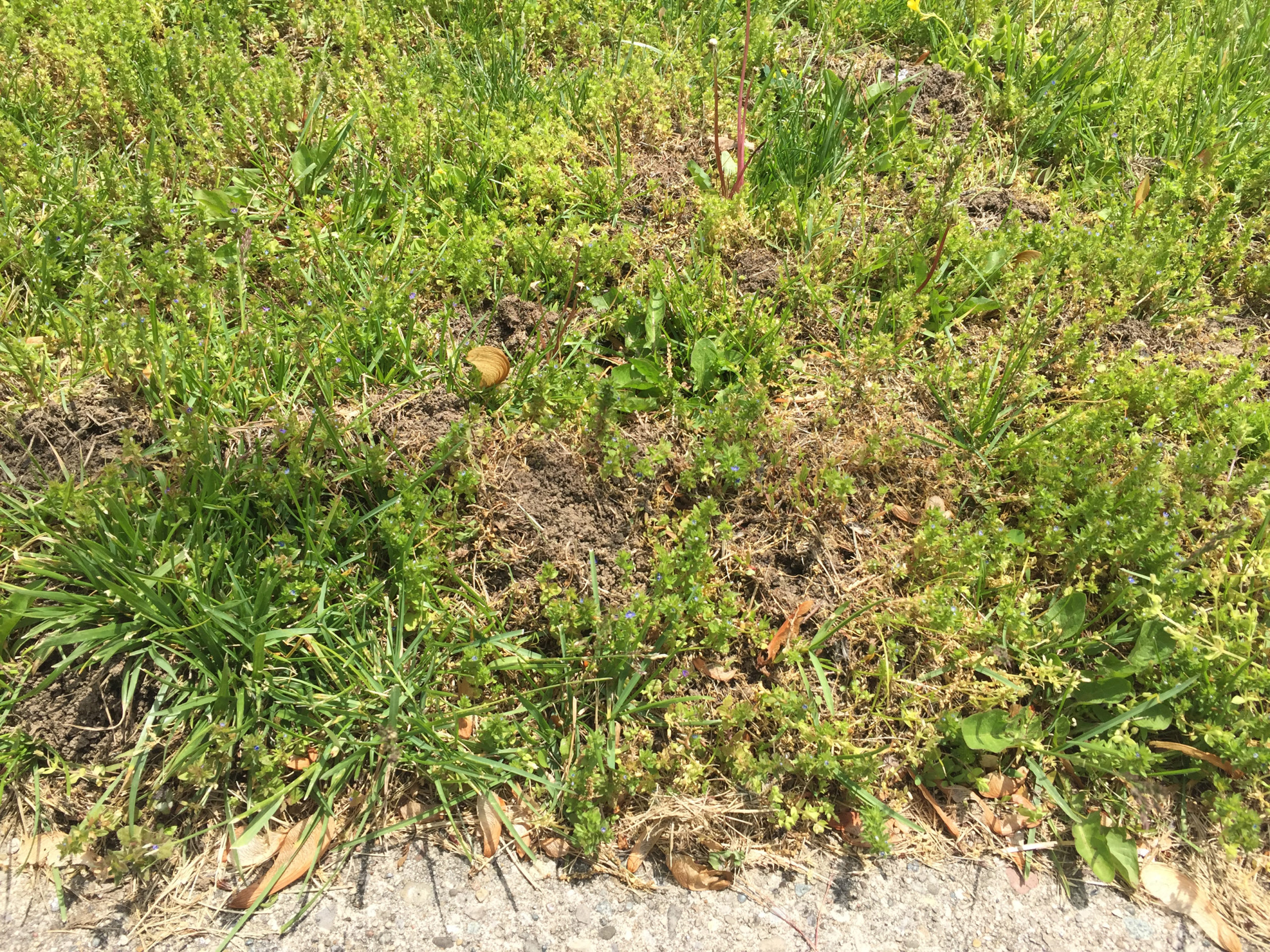
Recently during an online program (video) I received a question about the risk of using toxicants for controlling moles in lawns. Specifically, the question was if animals (pets or wild animals) ate the moles that consumed the bromethalin “worms” or “grubs” would that harm them. I decided to do some digging (no pun intended) for more information so people can make informed decisions regarding their use.
What is bromethalin?
From the Purdue University Animal Disease and Diagnostic Laboratory:
“Bromethalin was developed and released in 1985 to combat a world-wide problem of rodent resistance to warfarin-like anticoagulant rodenticides. Bromethalin is not an anticoagulant but is a highly potent rodenticide that provides a lethal dose to rodents in a single feeding. Death occurs within 24 to 36 hours after ingestion. It is a pale, odorless, crystalline solid compound in the diphenylamine family. Its mechanism of action is to uncouple oxidative phosphorylation in the mitochondria of the central nervous system. This leads to a decreased production of ATP. Low levels of ATP inhibit the activity of the Na/K ATPase and lead to a subsequent buildup of cerebral spinal fluid and vacuolization of myelin. The increased CSF results in high intracranial pressure, causing damage to nerve axons, inhibiting neural transmission and leading to paralysis, convulsions and death. Signs of a sub-lethal dose include hind limb ataxia, depression, extensor rigidity, opisthotonus, lateral recumbency and vomiting. High doses may bring about severe muscle fasciculations, hind limb hyperreflexia, seizures, hyperthermia, depression and death.”
From the Merk Veterinary Manual:
“Bromethalin, a nonanticoagulant, single-dose rodenticide, is a neurotoxin available as bars (blocks), pellets, seed, and worm. Mole baits are sold as worm containing 0.025% bromethalin, whereas rat and mouse baits contain 0.01% bromethalin. Bromethalin and its main metabolite desmobromethalin are strong uncouplers of oxidative phosphorylation. This results in intra-myelin fluid accumulation, leading to long nerve demyelination and intra-myelin cerebral edema. The net result is cerebral and spinal edema and increased CSF pressure, leading to neurologic dysfunction. In toxicity trials, the oral toxic dose of bromethalin when used as part of bait appears to be much lower than the dose administered as a technical grade agent. For example, in dogs, an average lethal dose of technical grade bromethalin is reported to be 4.7 mg/kg but 2.38 mg/kg in bait. Young dogs (<1 yr old) appear more sensitive; death has been reported at dosages of ~1 mg/kg in bait. Dogs are more commonly involved. Cats are 2–3 times more sensitive than dogs.”

What is the risk with mole baits?
The level of risk of any pesticide depends on a combination of toxicity and exposure. Anytime you are considering using a toxicant or other pesticide, first read the label in its entirety. Labels will contain information on how to apply a product safely, under what circumstances, and any precautions you should take. However, labels also contain other information that can users determine if they should use a product. This information is key in preventing pesticide exposure to people and the environment. In fact the label is a legal document. The pesticide user is bound by law to follow all label directions. Label directions for mole baits instruct users to keep pets out of treated areas and not to use the product above ground. Bait must be applied directly into moles’ tunnel systems. Following these directions will greatly reduce, or even eliminate, the exposure risk to pets. What might be the consequences if your dog or a neighbor’s dog mistakenly entered your yard and went digging around in a treated area?
To determine this we can calculate how much bait a dog would have to consume to reach the average lethal dose. The more technical term is the LD50 dose which is the individual dose that kills 50 percent of a population of test animals. A single worm mole bait weighs approximately 5g since a package of 20 worms has a weight of 100g. With 0.025% active ingredient, each worm would contain 1.25 mg of bromethalin. Thus, an 11lb (5kg) dog would need to consume 18 to 19 worms to reach the average lethal dose using the 4.7 mg/kg level for technical grade bromethalin, or 9 to 10 worms for the 2.38 mg/kg level in bait. Recall, these rates were listed in the Merk Veterinary Manual. The amount of bait consumption would be more for larger dogs. The average lethal dose is just that – an average. Some dogs would die with lower dosages and some with higher dosages within a specified timeframe.
It would be extremely unlikely that a dog could find, dig up, and consume the number of worms to reach or even approach the average lethal dose. Consider the following:
- How many worm baits will you use? According to label directions, worm baits are placed underground every 5 to 10 feet in active subsurface runways. Worms may be placed in the deeper underground runways. Limiting their use to only active runways reduces the amount of product applied. The label directions outline the procedure for identifying active runways.
- Applying the product according to label instructions (in underground active mole tunnels) helps minimize the risk of accidental ingestion. However there are additional strategies to prevent accidental ingestion of the bait, including: applying the product in areas inaccessible to pets or installing barriers, covering the application sites with pavers, and supervising the pet’s use of the yard (especially important for dogs that like to dig). Allow at least two weeks (or longer under dry conditions) for breakdown of any uneaten worms.
- Toxic baits placed in runways breakdown over time. That is, a treated area is not treated forever. This is a direct quote from one manufacturer, “Uneaten worms typically remain intact up to 14 days in mole runs. The amount of time it takes for the Mole Killer worm to degrade depends on soil type and the weather. Frequent and heavy rain or high temperatures may accelerate worm degradation. The active ingredient takes longer to degrade.”
- Toxic baits may be combined with other methods. For example, you may choose to limit use of toxic baits only in areas where the soil type or tunnel structure make trapping difficult.
In the end, it is up to the individual user on whether or not they choose to use toxic baits to get rid of moles in their yard. If you do choose to use them, read the label in its entirety. In the case of mole toxicants, the label clearly states that pets should not be allowed in treated areas. If you are not confident this is possible, then alternative control options are likely a better option for you.
Resources
Pesticides and personal safety (pdf), Purdue Pesticide Program
Pesticides and wildlife (pdf), Purdue Pesticide Program
Moles, The Education Store, Purdue Extension resource center
Adjuvants and the Power of the Spray Droplet: Improving the Performance of Pesticide Applications, The Education Store
Purdue Extension – FNR: Ask An Expert, Video, Purdue Extension – Forestry and Natural Resources YouTube channel
Brian MacGowan, Wildlife Extension Specialist
Purdue University, Department of Forestry and Natural Resources
One of the challenges of living, even in urban areas, is dealing with white-tailed deer and browsing damage that they can cause. In this video by Purdue extension wildlife specialist Brian MacGowan, he will show you how to protect you newly planted trees and shrubs from white-tailed deer and other wildlife that can cause damage.
Resources
How to Stop Woodland Animals from Digging in Your Flower Pots, Video, Purdue Extension Youtube Channel
How to Attract “The Fascinating Hummingbirds” to Your Backyard, Video
Woodland Management Moment – Deer Fencing, Video
Tree Appraisal and the Value of Trees, The Education Store, Purdue Extension resource center
Brian MacGowan, Wildlife Extension Specialist
Purdue Forestry and Natural Resources

Recent Posts
- Beetle that attacks Tree-of-Heaven found in Indiana, Purdue Landscape Report
Posted: March 20, 2026 in Invasive Insects, Wildlife, Woodlands - ID That Tree: Dwarf Chinkapin Oak
Posted: in Forestry, Urban Forestry, Wildlife, Woodlands - DNR Hiring for Indiana Conservation Officer Positions, MyDNR
Posted: March 9, 2026 in Urban Forestry, Wildlife, Woodlands - ID That Tree: Shumard Oak
Posted: in Plants, Urban Forestry, Wildlife, Woodlands - Uniting Indiana Residents Against Invasive Species
Posted: February 27, 2026 in Community Development, Invasive Insects, Wildlife - Have You Seen a Soaring Eagle Lately? Morning Ag Clips
Posted: February 25, 2026 in Urban Forestry, Wildlife - Register for Natural Resources Teacher Institute’s Class of 2026
Posted: February 19, 2026 in Forestry, Wildlife, Woodlands - ID That Tree: Fragrant Sumac
Posted: February 4, 2026 in Plants, Urban Forestry, Wildlife - Woodsy Owl Edition for Educational Learning, USDA – U.S. Forest Service
Posted: January 21, 2026 in Forestry, Forests and Street Trees, Got Nature for Kids, Urban Forestry, Wildlife - Opt-in to the Deer Management Survey, MyDNR
Posted: January 12, 2026 in Forestry, Wildlife
Archives
Categories
- Alert
- Aquaculture/Fish
- Aquatic/Aquaculture Resources
- Ask the Expert
- Christmas Trees
- Community Development
- Disease
- Drought
- Forestry
- Forests and Street Trees
- Gardening
- Got Nature for Kids
- Great Lakes
- How To
- Invasive Animal Species
- Invasive Insects
- Invasive Plant Species
- Land Use
- Natural Resource Planning
- Nature of Teaching
- Plants
- Podcasts
- Ponds
- Publication
- Safety
- Spiders
- Timber Marketing
- Uncategorized
- Urban Forestry
- Webinar
- Wildlife
- Wood Products/Manufacturing
- Woodland Management Moment
- Woodlands