 Purdue University - Extension - Forestry and Natural Resources
Got Nature? Blog
White-tailed deer are an important part of our Hoosier natural areas and a true conservation success story. Once extirpated from Indiana, deer now thrive in all 92 counties.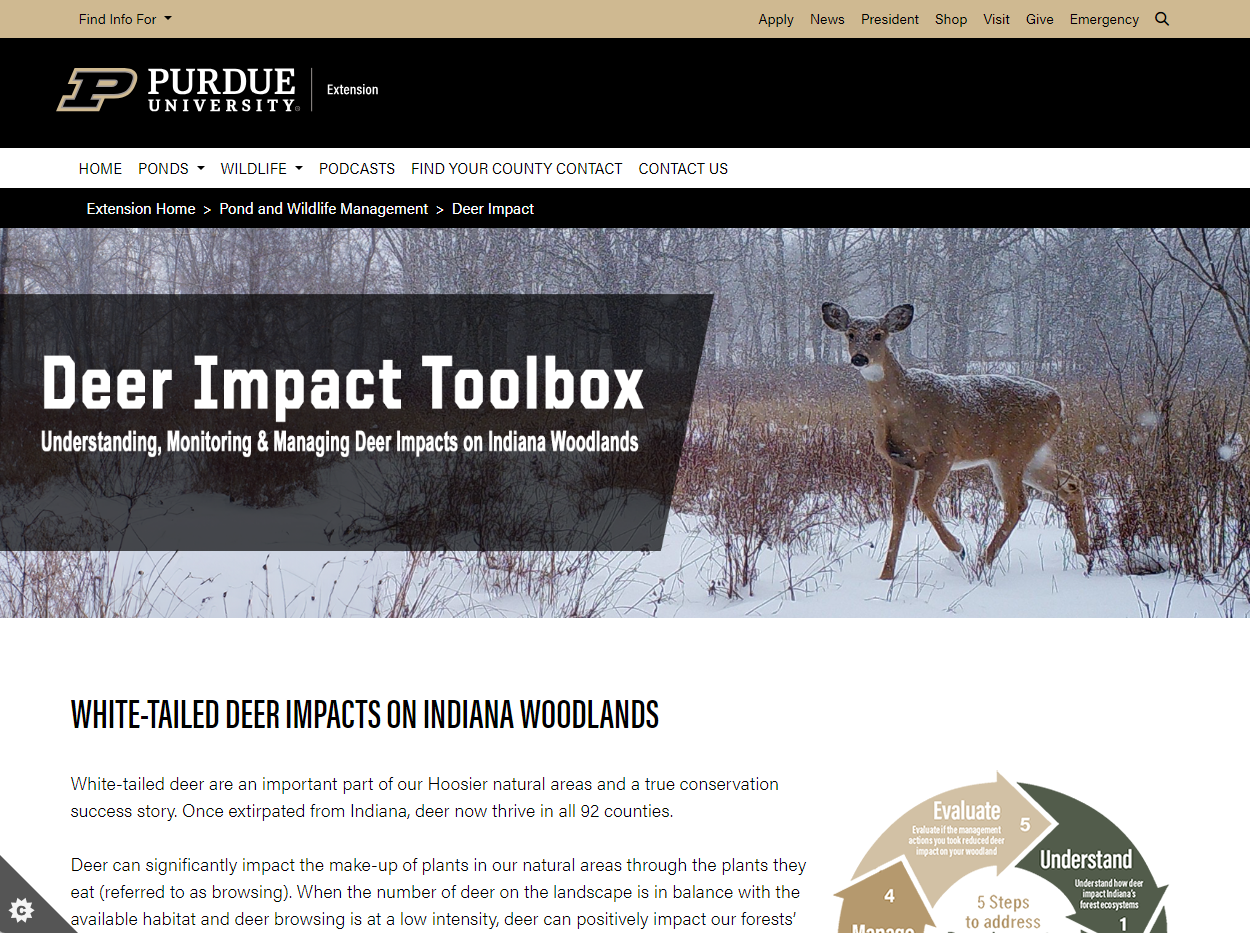
Deer can significantly impact the make-up of plants in our natural areas through the plants they eat (referred to as browsing). When the number of deer on the landscape is in balance with the available habitat and deer browsing is at a low intensity, deer can positively impact our forests’ plant diversity. When deer are overabundant, their browsing can impact forests in a variety of negative ways.
5 Steps to address deer impacts to Indiana Woodlands:
Understanding
Understand how deer impact Indiana’s forest ecosystems.
Identify
Identify signs and symptoms of deer impact in your woodland.
Monitor
Monitor how deer are impacting your woodland over time.
Manage
Decide how to manage deer and their impact on your woodland.
Evaluate
Evaluate if the management actions you took reduced deer impact on your woodland.
Check out the new Deer Impact Toolbox website for publications and more details to discover the steps landowners and land managers can take to understand, monitoring, and manage deer impacts to Indiana’s forests.
Don’t miss the videos: Monitoring Deer Impacts on Indiana Forests: Ten-Tallest Method and Monitoring Deer Impacts on Indiana Forests: Accessing Vegetation Impacts for Deer (AVID) Plots.
Check out the College of Agriculture news article to learn more: Deer Impact Toolbox provides guidance for Indiana forest landowners and managers.
Resources:
Purdue Extension Pond and Wildlife Management
Understanding White-tailed Deer and Their Impact on Indiana Woodlands, The Education Store
Monitoring White-tailed Deer and Their Impact on Indiana Woodlands, The Education Store
Managing White-tailed Deer Impacts on Indiana Woodlands, The Education Store
Ask an Expert: Wildlife Food Plots, video, Purdue Extension – FNR YouTube Channel
How to Build a Plastic Mesh Deer Exclusion Fence, The Education Store
Managing Your Woods for White-Tailed Deer, The Education Store
Bovine Tuberculosis in Wild White-tailed Deer, The Education Store
Handling Harvested Game: Episode 1, Field Dressing, video, Purdue Extension – FNR YouTube Channel
Deer Harvest Data Collection, Got Nature? Blog, Purdue Extension – FNR
How to Score Your White-tailed Deer, video, The Education Store, Purdue Extension Resource Center
White-Tailed Deer Post Harvest Collection, video, The Education Store
Age Determination in White-tailed Deer, video, The Education Store
Handling Harvested Deer Ask an Expert? video, Purdue Extension – FNR YouTube Channel
Subscribe to Purdue Extension-Forestry & Natural Resources YouTube Channel, Wildlife Playlist
Jarred Brooke, Wildlife Extension Specialist
Purdue Department of Forestry and Natural Resources
Wild Bulletin, Indiana Department of Natural Resources (DNR) Fish and Wildlife: Our latest Fishing Guide features women anglers, responsible fishing practices, a delicious French-style walleye recipe, and the regulations you need for having a successful day fishing in Indiana’s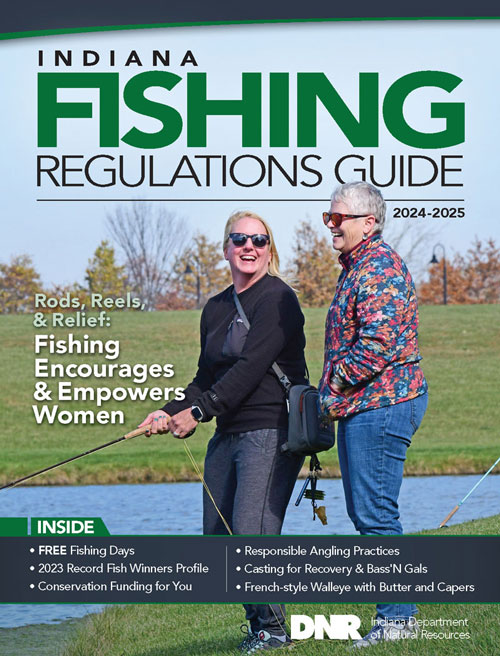 waters.
You can find the free guide online or pick up a hard copy at your local license retailer.
This guide provides a summary of Indiana fishing regulations. These regulations apply only to fish that originate from or are taken from Indiana’s public waters. Fish from public waters that migrate into or from private waters are still covered by these regulations. These regulations do not apply to fish in private waters that did not originate from public waters.
This guide is not intended to be a complete digest of regulations. If you need complete versions of Indiana rules and regulations for fishing, they can be found in Indiana Code or in Indiana Administrative Code Title 312.
To view this new guide, please visit Indiana Department of Natural Resources: Fishing Guide & Regulations.
Resources:
Hybrid Striped Bass Farmed Fish Fact Sheet, The Education Store
Largemouth Bass Farmed Fish Fact Sheet, The Education Store
Seafood Basics: A Toolkit for Understanding Seafood, Nutrition, Safety and Preparation, and Sourcing, The Education Store
Walleye Farmed Fish Fact Sheet, The Education Store
Rainbow Trout Farmed Fish Fact Sheet, The Education Store
A Guide to Small-Scale Fish Processing Using Local Kitchen Facilities, The Education Store
Aquaculture Family Coloring Book Development, The Education Store
Eat Midwest Fish, Illinois-Indiana Sea Grant online resource hub
Subscribe to Purdue Extension-Forestry & Natural Resources YouTube Channel, Wildlife Playlist
Indiana Department of Natural Resources

Illustrations from the CWD Web App, courtesy of Purdue University.
Wild Bulletin, Indiana Department of Natural Resources (DNR) Fish and Wildlife: Researchers at Purdue University are studying the willingness of hunters and nonhunters to help reduce the spread of chronic wasting disease (CWD) in white-tailed deer. CWD is a fatal neurological disease affecting deer and is caused by an infective protein (prion) that damages the animal’s nervous system. CWD is contagious to deer and can spread through deer-to-deer contact or through contaminated environments. To date, CWD has not been detected in Indiana. No cases of CWD have been recorded in humans.
Researchers at Purdue University are seeking volunteers to participate in this research study. Information collected may help inform Indiana DNR’s response to CWD. Participants will answer online survey questions and use a web app that shows how CWD may spread. The activity and survey questions take about 30 minutes to complete. The study is open to everyone 18 years or older. All that is required to participate is a computer or tablet. Follow this link to Purdue’s website to participate in the study.
Chronic wasting disease (CWD) is a fatal neurological disease affecting white-tailed deer, mule deer, elk, and moose. It is a member of a group of diseases called transmissible spongiform encephalopathies (TSEs), or prion diseases. For more information about this disease visit Indiana Department of Natural Resources – Chronic Wasting Disease (CWD).
For questions about this study, please email the research team at cwdwebapp@purdue.edu and place in the subject line: “Web App Use and Intention to Reduce Chronic Wasting Disease Spread; Principal Investigator – Dr. Patrick Zollner; IRB Number – IRB-2023-1039″.
To get started, please visit the CWD Web App.
Resources:
Dr. Pat Zollner, Professor of Quantitative Ecology, Purdue Forestry and Natural Resources
Bovine Tuberculosis in Wild White-tailed Deer, The Education Store, Purdue Extension resource center
Designing Hardwood Tree Plantings for Wildlife , The Education Store
Wildlife Habitat Hint: Trail Camera Tips and Tricks, Got Nature? Blog
Hunting Guide for 2023-2024, Indiana Department of Natural Resources
How to Score Your White-tailed Deer, video, The Education Store
White-Tailed Deer Post Harvest Collection, video, The Education Store
Age Determination in White-tailed Deer, video, The Education Store
How to Build a Plastic Mesh Deer Exclusion Fence, The Education Store
Forest Management for Reptiles and Amphibians: A Technical Guide for the Midwest, The Education Store
Ask the Expert: Hardwood Ecosystem Experiment – Birds and Salamander Research, Purdue Extension – FNR
A Template for Your Wildlife Habitat Management Plan, The Education Store
Managing Your Woods for White-Tailed Deer, The Education Store
Indiana Department of Natural Resources
Reptiles and amphibians are an important and often times abundant part of forest communities. However, their presence in the woods are often overlooked. Learn about the biology, identification, and habitats of many reptile and amphibian species found in and around your woods. Presenter Brian MacGowan has been an Extension Wildlife Specialist with the Department of Forestry & Natural Resources at Purdue University since 1999.
Check out the Indiana Forestry & Woodland Association YouTube Channel for videos including: What is IFWOA?; A New Carbon Program for Hardwood Landowners Webinar, Indiana’s Native Orchids, Magnificent Trees of Indiana, Be Tick Aware and much more.
The Indiana Forestry & Woodland Owners Association (IFWOA) was founded in 1977 and is a non-profit organization dedicated to conservation and sustainable management of woodlands in Indiana. IFWOA advocates for scientific best practices for management to achieve objectives of clean water, wildlife habitat, soil protection, native species diversity, timber production, recreation, carbon sequestration and many others.
IFWOA is an affiliate of the National Woodland Owners Association. IFWOA is a partner, collaborator or is represented on leading National and State organizations. These memberships or collaborations are selected to advance Indiana Woodland owner’s interests. IFWOA monitors and influences legislation and economic trends impacting Indiana woodlands and landowners for our members. Membership in IFWOA provides a valuable network linkage to information and resources at the leading edge of science, industry and politics impacting Indiana woodlands.
Resources:
Frogs and Toads of Indiana, The Education Store
Forest Management for Reptiles and Amphibians: A Technical Guide for the Midwest, The Education Store
Appreciating Reptiles and Amphibians in Nature, The Education Store
Snakes and Lizards of Indiana, The Education Store
Salamanders of Indiana book, The Education Store
Turtles of Indiana, The Education Store
Ask the Expert: Hardwood Ecosystem Experiment – Birds and Salamander Research, Purdue Extension – FNR
Developing a Wildlife Habitat Management Plan, The Education Store
The Nature of Teaching, YouTube channel
Subscribe to Purdue Extension-Forestry & Natural Resources YouTube Channel, Wildlife Playlist
Liz Jackson, Engagement Lead
Indiana Forestry & Woodland Association
In this webinar hosted by Indiana Forestry & Woodland Owners Association, Whitney Yoerger of Indiana Audubon shares about the incredible joy of birding in Indiana. Discover the delights of each season, from winter waterfowl to fall migration, and learn about local bird life all year. This presentation will provide you with inspiration and practical tips to help you interact with Indiana’s feathered residents and visitors, whether you’re a novice or a seasoned birder.
Check out the Indiana Forestry & Woodland Association YouTube Channel for videos including: What is IFWOA?; A New Carbon Program for Hardwood Landowners Webinar, Indiana’s Native Orchids, Magnificent Trees of Indiana, Be Tick Aware and much more.
The Indiana Forestry & Woodland Owners Association (IFWOA) was founded in 1977 and is a non-profit organization dedicated to conservation and sustainable management of woodlands in Indiana. IFWOA advocates for scientific best practices for management to achieve objectives of clean water, wildlife habitat, soil protection, native species diversity, timber production, recreation, carbon sequestration and many others.
IFWOA is an affiliate of the National Woodland Owners Association. IFWOA is a partner, collaborator or is represented on leading National and State organizations. These memberships or collaborations are selected to advance Indiana Woodland owner’s interests. IFWOA monitors and influences legislation and economic trends impacting Indiana woodlands and landowners for our members. Membership in IFWOA provides a valuable network linkage to information and resources at the leading edge of science, industry and politics impacting Indiana woodlands.
Resources:
Indiana Audubon
Indiana Birding Trail, Indiana Audubon Society
Indiana Dunes Birding Festival
E Bird, The Cornell Lab of Ornithology
BirdNET Sound ID, The Cornell Lab
Forest Improvement Handbook, The Education Store, Purdue Extension’s resource center
Breeding Birds and Forest Management: the Hardwood Ecosystem Experiment and the Central Hardwoods Region, The Education Store, Purdue Extension – Forestry and Natural Resources
Forest Birds, The Education Store
Managing Woodlands for Birds, The Education Store
Managing Woodlands for Birds Video, Purdue Extension-Forestry and Natural Resources (FNR) YouTube Channel
Breeding Birds and Forest Management: the Hardwood Ecosystem Experiment and the Central Hardwoods Region, The Education Store
The Birders’ Dozen, Profile: Baltimore Oriole, Indiana Woodland Steward
Ask An Expert, Playlist, Purdue Extension – FNR YouTube channel
It’s For the Birds, Indiana Yard and Garden-Purdue Consumer Horticulture
Liz Jackson, Engagement Lead
Indiana Forestry & Woodland Association
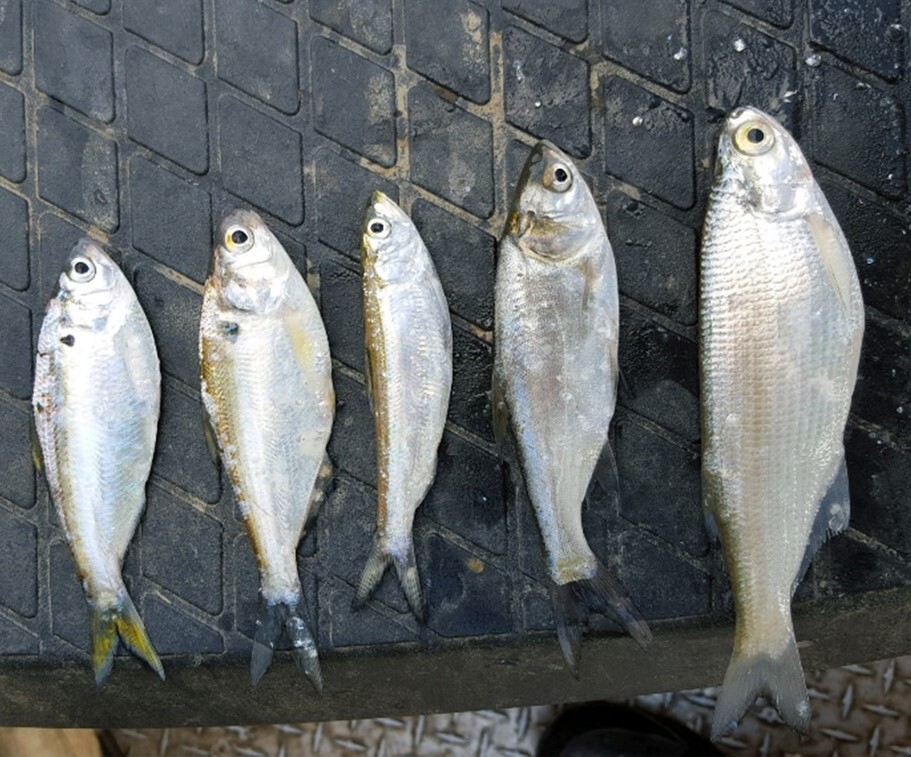
Fish from left to right: Threadfin Shad, Gizzard Shad, Skipjack Herring, Silver Carp (invasive carp), and Goldeye.
Wild Bulletin, Indiana Department of Natural Resources (DNR) Fish and Wildlife: Spring is the time anglers return to fishing on Indiana’s lakes and rivers. Often that includes catching and using live bait. Remember to dispose of all unused bait fish properly in the trash, as invasive carp could be lurking in your bait bucket. Improperly disposing of unused bait fish in a lake or stream could potentially allow invasive species, like silver carp, to spread in Indiana waters.
Invasive carp are a select group of cyprinid fishes (minnow family) that are native to Asia. The term “invasive carp,” formerly known as “Asian carp,” collectively refers to bighead carp, silver carp, grass carp, and black carp. Each of these species was intentionally introduced into the United States for different purposes; however, all are now considered invasive nationally and in Indiana. Invasive carp compete with native species and pose a threat to Indiana’s aquatic ecosystems.
Find out more about how you can help in the fight against invasive carp at DNR: Fish & Wildlife Resources.
Resources:
Asian Carp | Purdue University Report Invasive Species
Question: Aren’t There Concerns About Consuming Asian Carp As A Food Source In Indiana Streams?
Invasive Species, Playlist, Purdue Extension – FNR YouTube Channel
What are invasive species and why should I care?, Got Nature? Blog, Purdue Extension – Forestry and Natural Resources
Report Invasive Species, Purdue Invasive Species
Walleye Farmed Fish Fact Sheet, The Education Store, Purdue Extension’s resource center
Yellow Perch Farmed Fish Fact Sheet, The Education Store
A Guide to Small-Scale Fish Processing Using Local Kitchen Facilities, The Education Store
Eat Midwest Fish, Illinois-Indiana Sea Grant online resource hub
Indiana Department of Natural Resources
MyDNR, Indiana’s Outdoor Newsletter: All annual licenses and stamp privileges from last season expire on March 31. Purchase your 2024 license online, in person, or b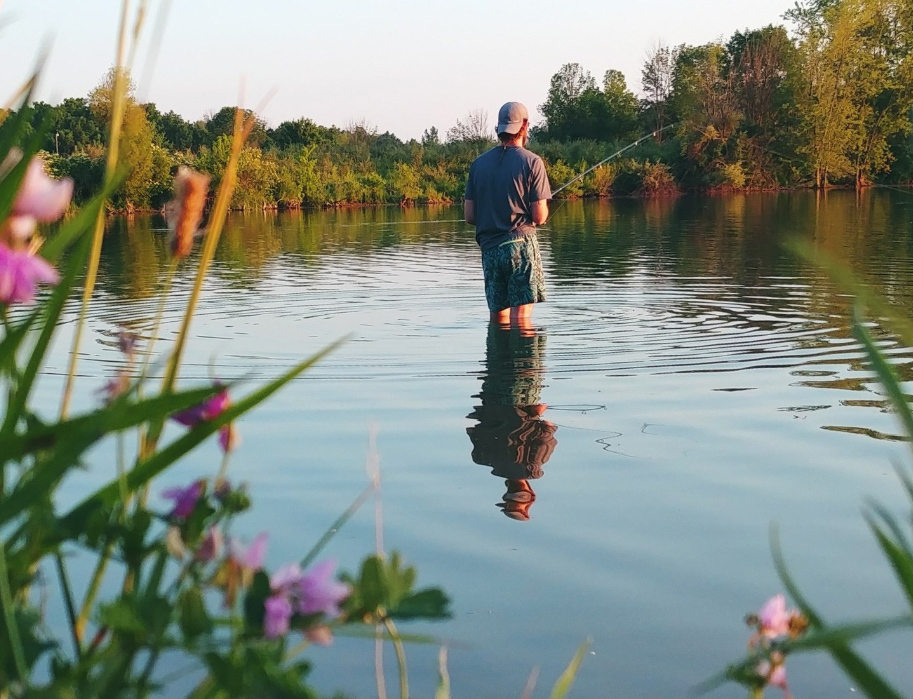 y mail, and check out our Licenses & Permits webpage for more information on license expiration dates and fees.
Once you have your new license, start planning for your spring fishing fun. The DNR starts stocking fish in early April, and you can take advantage of these opportunities to get an early start on your spring fishing adventures.
View fish stocking locations on the fish stocking webpage and Urban Fishing webpage. Mark your calendars for May 12, the first Free Fishing Day of the year.
To subscribe to the newsletter visit MyDNR Email Newsletter.
Resources:
Hybrid Striped Bass Farmed Fish Fact Sheet, The Education Store
Largemouth Bass Farmed Fish Fact Sheet, The Education Store
Seafood Basics: A Toolkit for Understanding Seafood, Nutrition, Safety and Preparation, and Sourcing, The Education Store
Walleye Farmed Fish Fact Sheet, The Education Store
Rainbow Trout Farmed Fish Fact Sheet, The Education Store
A Guide to Small-Scale Fish Processing Using Local Kitchen Facilities, The Education Store
Aquaculture Family Coloring Book Development, The Education Store
Eat Midwest Fish, Illinois-Indiana Sea Grant online resource hub
Ask an Expert: Wildlife Food Plots, video, Purdue Extension – FNR YouTube Channel
How to Build a Plastic Mesh Deer Exclusion Fence, The Education Store
Managing Your Woods for White-Tailed Deer, The Education Store
Handling Harvested Game: Episode 1, Field Dressing, video, Purdue Extension – FNR YouTube Channel
Deer Harvest Data Collection, Got Nature? Blog, Purdue Extension – FNR
Age Determination in White-tailed Deer, video, The Education Store
Subscribe to Purdue Extension-Forestry & Natural Resources YouTube Channel, Wildlife Playlist
Indiana Department of Natural Resources
In this edition of ID That Tree, we’re going to introduce you to a very rare Indiana shrub that’s a relic of the ice age here, and that is Canada yew. It’s only found in Indiana on very steep slopes, rock faces, and cliffs. It’s an evergreen, so it is coniferous. It’s also very palatable to deer, so deer browse has been very hard on this particular shrub.
If you have any questions regarding wildlife, trees, forest management, wood products, natural resource planning or other natural resource topics, feel free to contact us by using our Ask an Expert web page.
Resources:
ID That Tree, Playlist, Purdue Extension – Forestry and Natural Resources (FNR) YouTube Channel (Invasive White Mulberry, Siberian Elm, Tree of Heaven)
Invasive Species Playlist, Playlist, Purdue Extension – FNR YouTube Channel (Asian Bush Honeysuckle, Burning Bush, Callery Pear, Multiflora rose)
A Woodland Management Moment, Playlist, Purdue Extension – FNR YouTube Channel (Against Invasives, Garlic Mustard, Autumn Olive)
Woodland Stewardship for Landowners, Playlist, Purdue Extension – FNR YouTube Channel (Common Buckthorn, Japanese Barberry)
How long do seeds of the invasive tree, Ailanthus altissima remain viable? (Invasive Tree of Heaven), USDA Forest Service
Indiana Department of Natural Resources: Invasive Species
Indiana Invasive Species Council
Cooperative Invasive Species Management Area (CISMA)
Report Invasive, Purdue Extension
Aquatic Invasive Species, Illinois-Indiana Sea Grant (IISG)
Episode 11 – Exploring the challenges of Invasive Species, Habitat University-Natural Resource University
What are invasive species and why should I care?, Got Nature? Blog, Purdue Extension – FNR
Shrubs and Woody Vines of Indiana and the Midwest, The Education Store, Purdue Extension Resource Center
Native Trees of the Midwest, The Education Store
Investing in Indiana Woodlands, The Education Store
Professional Forester, Indiana Forestry Woodland Owners Association
District Forester 10+acres of woodlands, Indiana Department of Natural Resources
Forest Improvement Handbook, The Education Store
Lenny Farlee, Extension Forester
Hardwood Tree Improvement and Regeneration Center
Purdue Department of Forestry & Natural Resources
MyDNR, Indiana’s Outdoor Newsletter: As spring has sprung, so has new wildlife. It may be tempting to cuddle cute, young wildlife, but it’s important to always assess the situation from a safe distance.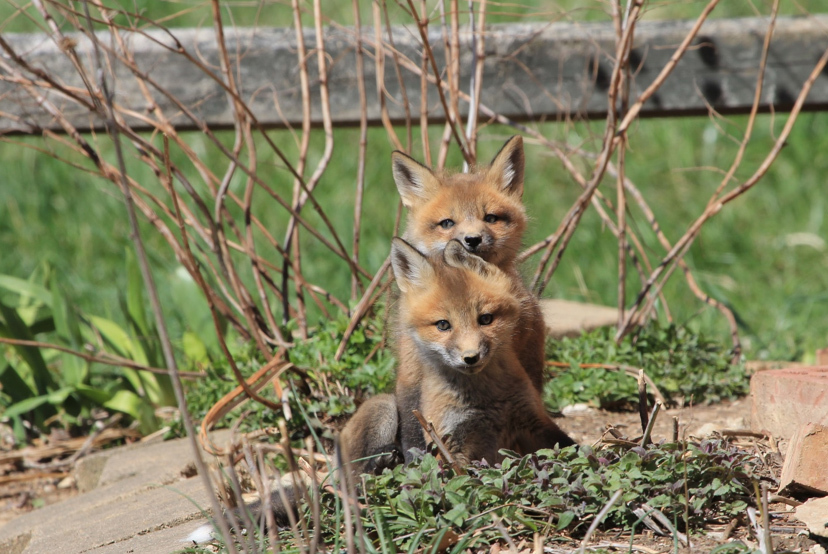
Young wildlife’s best chance of survival is with their mother, and your support can often unintentionally harm wildlife if that support is not needed. If young wildlife have fallen out of a den or nest, you can return them to their home and then leave the area. It is common for a mother to leave her young for long periods of time to forage for her and her young, so don’t linger around wildlife or their homes too long. Doing this can dissuade a mother from returning or alert predators to the young.
If you’re uncertain whether wildlife need assistance, contact a wildlife rehabilitator before picking up wildlife. If wildlife truly need assistance, they must be turned over to a permitted wildlife rehabilitator within 24 hours. Find a list of permitted wildlife rehabilitators on our website.
To learn more, please visit DNR: Fish & Wildlife Resources.
To subscribe to the newsletter visit MyDNR Email Newsletter.
Resources:
Designing Hardwood Tree Plantings for Wildlife – The Education Store
ID That Tree – YouTube Playlist
Forest Management for Reptiles and Amphibians: A Technical Guide for the Midwest, The Education Store
Ask the Expert: Hardwood Ecosystem Experiment – Birds and Salamander Research, Purdue Extension – FNR
A Template for Your Wildlife Habitat Management Plan, The Education Store
Managing Your Woods for White-Tailed Deer, The Education Store
Woodland Stewardship for Landowners, Playlist, Purdue Extension – FNR YouTube channel
Creating a Wildlife Habitat Management Plan for Landowners, The Education Store, Purdue Extension’s resource center
A Template for Your Wildlife Habitat Management Plan, The Education Store
Birds and Residential Window Strikes: Tips for Prevention, The Education Store, Purdue Extension resource center
Managing Woodlands for Birds Video, Purdue Extension-Forestry and Natural Resources (FNR) YouTube Channel
Developing a Wildlife Habitat Management Plan, The Education Store
The Nature of Teaching, YouTube channel
Nature of Teaching: Common Mammals of Indiana, The Education Store
Subscribe to Purdue Extension-Forestry & Natural Resources YouTube Channel, Wildlife Playlist
Indiana Department of Natural Resources
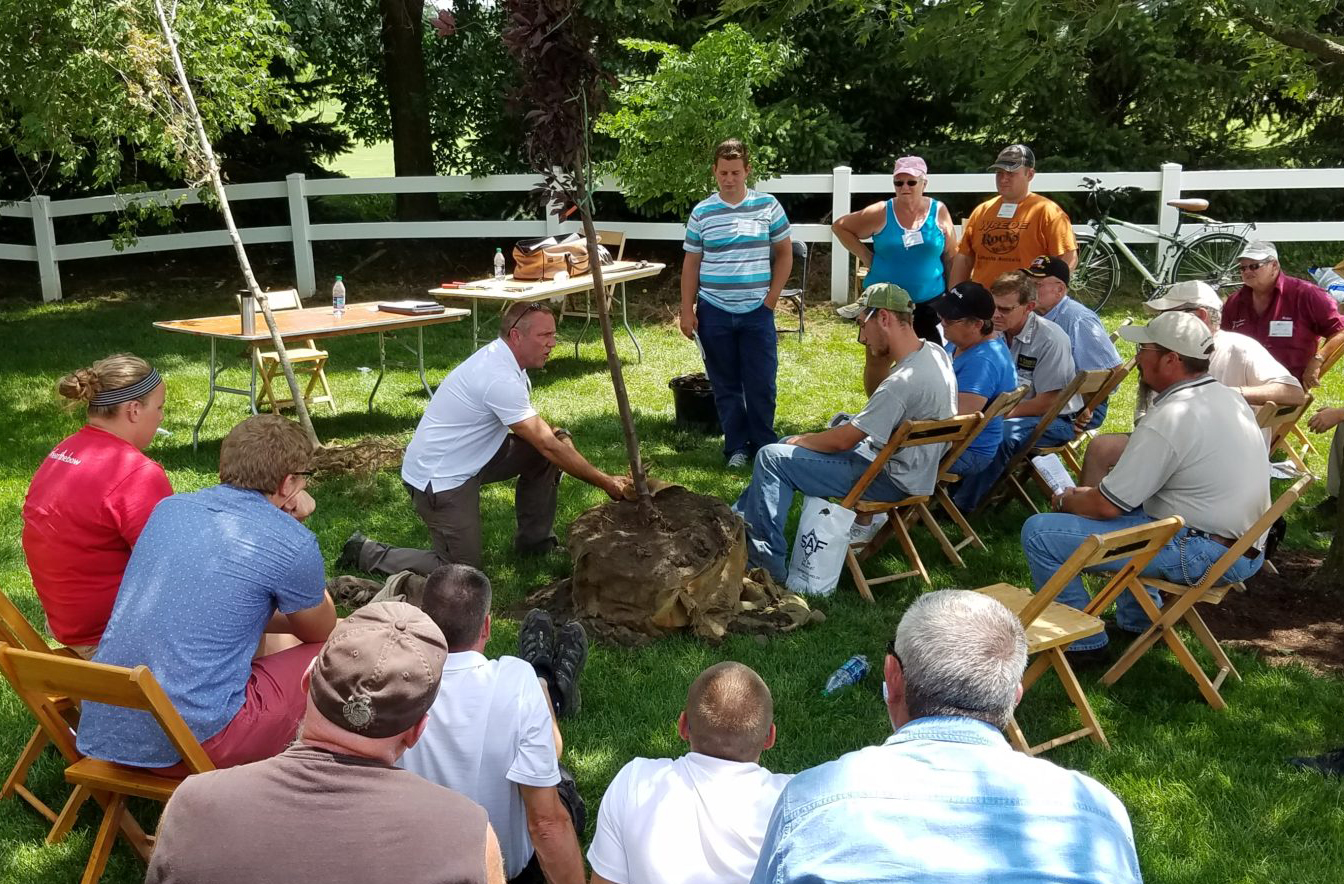 Spring is almost here and we get to wave goodbye to winter. Temperatures are rising, the winds are blowing, and trees are waking up—one of the hot topics every spring is planting. If you missed the chance to get a tree or two (or many more) in the ground this past autumn, then now is the time to start thinking about it again. Look at your planting spaces to see what kind of tree would do well. Think about the tree going in the ground now vs 10 years from now, 30 years, or even 50 years. Will a full-size oak fit in your space or will a smaller redbud work better? Do you have poorly drained soil where a willow or bald cypress will enjoy the excess water or well-drained soil that an American beech or black gum might fare better? Think about what you might want growing in your portion of the ecosystem. Are you looking for spring flowers, shade in the summer, color in the fall, or even different bark types and branch architecture for the winter? Also, once you’ve made your decision and got your new tree make sure you plant it properly to ensure a long happy life and lots of enjoyment.
Don’t forget about the trees you already have in the ground, too. One simple act that you can do to help them out is to re-mulch your current trees. Mulching helps to regulate soil moisture and temperature for the roots of your trees. Grab a rake and work last year’s mulch into the ground a little, then apply enough new mulch to have about a 2–3-inch layer around your tree. Depending on the size of your tree you might need to have a larger mulch ring, but aim for at least a 3-foot diameter, and DO NOT mulch up to the trunk. This is volcano mulching and creates an area of decay in the trunk that can lead to failure. Leave a 2-3-inch ring between the trunk and the mulch.
For more spring tree tips check out the Purdue Extension – Forestry and Natural Resources (FNR) “YouTube Shorts” video, Ben McCallister Offers Spring Tree Tips
If you have any questions about these topics, please check out the links provided on tree selection, planting, and mulching.
Resources:
The Purdue Landscape Report
Tree Installation, The Education Store
Choosing a Tree video, The Education Store
Planting Your Tree video, The Education Store
Mechanical Damage to Trees, The Education Store
Re-Mulch Your Trees, Purdue Landscape Report
Planting Your Tree Part 1: Choosing Your Tree, Purdue Extension YouTube Channel
Summer Tree Care, Purdue Landscape Report
Tree Defect Identification, The Education Store
Tree Wound and Healing, Got Nature? Blog, Purdue Extension – Forestry and Natural Resources
Surface Root Syndrome, The Education Store
Shrubs and Woody Vines of Indiana and the Midwest, The Education Store
Ask an Expert: Tree Selection and Planting, Purdue Extension-Forestry & Natural Resources (FNR) YouTube playlist
ID That Tree, Purdue Extension-FNR YouTube playlist
Subscribe – Purdue Extension-FNR YouTube Channel
Ben McCallister, Urban Forestry Specialist
Purdue Forestry & Natural Resources

Recent Posts
- Beetle that attacks Tree-of-Heaven found in Indiana, Purdue Landscape Report
Posted: March 20, 2026 in Invasive Insects, Wildlife, Woodlands - ID That Tree: Dwarf Chinkapin Oak
Posted: in Forestry, Urban Forestry, Wildlife, Woodlands - DNR Hiring for Indiana Conservation Officer Positions, MyDNR
Posted: March 9, 2026 in Urban Forestry, Wildlife, Woodlands - ID That Tree: Shumard Oak
Posted: in Plants, Urban Forestry, Wildlife, Woodlands - Uniting Indiana Residents Against Invasive Species
Posted: February 27, 2026 in Community Development, Invasive Insects, Wildlife - Have You Seen a Soaring Eagle Lately? Morning Ag Clips
Posted: February 25, 2026 in Urban Forestry, Wildlife - Register for Natural Resources Teacher Institute’s Class of 2026
Posted: February 19, 2026 in Forestry, Wildlife, Woodlands - ID That Tree: Fragrant Sumac
Posted: February 4, 2026 in Plants, Urban Forestry, Wildlife - Woodsy Owl Edition for Educational Learning, USDA – U.S. Forest Service
Posted: January 21, 2026 in Forestry, Forests and Street Trees, Got Nature for Kids, Urban Forestry, Wildlife - Opt-in to the Deer Management Survey, MyDNR
Posted: January 12, 2026 in Forestry, Wildlife
Archives
Categories
- Alert
- Aquaculture/Fish
- Aquatic/Aquaculture Resources
- Ask the Expert
- Christmas Trees
- Community Development
- Disease
- Drought
- Forestry
- Forests and Street Trees
- Gardening
- Got Nature for Kids
- Great Lakes
- How To
- Invasive Animal Species
- Invasive Insects
- Invasive Plant Species
- Land Use
- Natural Resource Planning
- Nature of Teaching
- Plants
- Podcasts
- Ponds
- Publication
- Safety
- Spiders
- Timber Marketing
- Uncategorized
- Urban Forestry
- Webinar
- Wildlife
- Wood Products/Manufacturing
- Woodland Management Moment
- Woodlands