 Purdue University - Extension - Forestry and Natural Resources
Got Nature? Blog
Ornamental plants provide many environmental and ecological benefits to landscapes and urban areas. They can be aesthetically pleasing, reduce stormwater 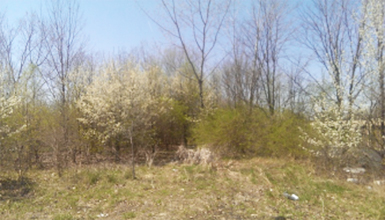 runoff, lower carbon dioxide and pollutants, alleviate the urban “heat island” effect, and provide habitats to pollinators, birds, and mammals. Unfortunately, a few of these landscape species can escape into wild areas and create ecological problems in unintended areas such as forests and woodlands.
The Indy Star shares article titled, “Bradford pears and other backyard bullies to avoid in Indiana” listing some of the invasive species that are taking over Indiana woodlands. If you are planning on adding trees or shrubs to your property this spring, you will want to view this article before planting.
Author:
Cara Anthony, cara.anthony@indystar.com
Release date of article April 2, 2016.
IndyStar
Resources from The Education Store, Purdue Extension Resource Center:
Commercial Greenhouse and Nursery Production: Alternative Options for Invasive Landscape Plants
Invasive Plant Species in Hardwood Tree Plantations
Invasive Plant Species Fact Sheets: Poison Hemlock
Mile-a-minute Vine
Native Trees of the Midwest
Shrubs and Woody Vines of Indiana and the Midwest: Identification, Wildlife Values, and Landscaping Use
Videos:
Invasive Plant Species: Callery Pear
Invasive Plant Species: Oriental Bittersweet
Invasive Plant Species: Wintercreeper
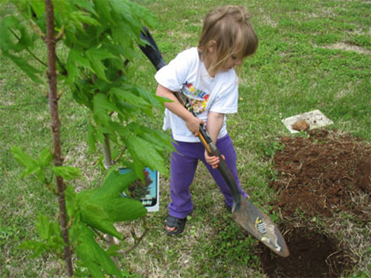 Arbor Day is always the last Friday of April in Indiana and it falls on April 29th this year. Many of us are familiar with the tradition of planting a tree in celebration of this holiday, but have we stopped to count the benefits and reasons why we celebrate planting trees? In honor of Arbor Day, here are 10 reasons to remember why we love and plant trees:
- Public health: Research shows that trees planted in the city make people happier! The result is a reduction in stress levels, crime rates, and improves patient recovery time.
- Beauty: Trees are a great way to soften the often harsh city environment. A tree with vibrant fall color, interesting branch structure or bark patterns in the winter, flowering in the spring, or providing shade with its lush, green leaves in the summer will always provide a pleasing distraction from the urban environment.
- Clean air: Trees are an important source of life-giving oxygen in the air that we breathe. They filter out harmful particulate matter and other pollutants common in the urban or suburban areas that would otherwise make it into our lungs.
- Clean water: Trees help filter the water we drink. The leaves of a tree slow rainfall on the ground, preventing soil erosion and pollutants from washing into our water sources.
- Energy conservation: Trees shade our houses from the sun and provide insulation and create windbreaks, keeping heating and cooling costs during the extreme temperatures of summer and winter lower.
- Property Value: Benefits of trees include lower energy costs and beauty and are recognized and reflected in higher property values where trees are strategically placed.
- Wildlife: Trees provide shelter and food for wildlife that we love to watch, such as songbirds and squirrels.
- Beloved landmarks: City trees properly cared for will provide years of memories for residents. They can serve as a place to gather and as a source of civic pride, as well as a way to mark the changing of the seasons and progression of time.
- Global warming: – Trees are a major factor in carbon sequestration. CO2 is a major contributor to global warming and tress put it to good use rather than causing harm in the atmosphere.
- Our children: Every day, many trees are cut down to allow for our continued growth as populations expand. We must work to replace them if we want our children to receive the same benefits from them in the future that we enjoy today.
We have our 10 reasons, now where will we get our 10 trees? For a $10 contribution you can become a member of the National Arbor Day Foundation and receive a gift of 10 trees through the mail. Also with your membership, you will receive discounts on over 100 other varieties of trees and a free guide to planting and care called The Tree Book.
To become a member, you can join online at the Arbor Day Foundation website.
Resources:
Membership – Arbor Day Foundation
Indiana Arborist Association
Tree Installation: Process and Practices – The Education Store, Purdue Extension Resource Center
Importance of Hardwood Tree Planting – The Education Store
‘Twas The Day Before Arbor Day – Got Nature?
Amy Wetzel, Former Urban Forestry Student
Lindsey Purcell, Urban Forestry Specialist
Purdue University Department of Forestry and Natural Resources
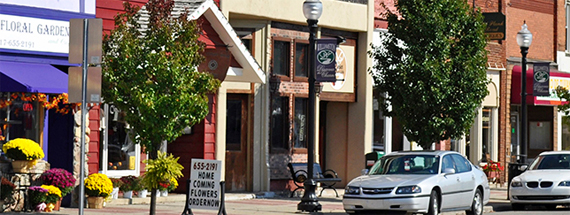 A Purdue Extension program that helps Indiana communities improve public spaces such as parks and town centers is surveying West Lafayette residents to get input on the city parks and recreation department’s next five-year master plan.
Specialists and educators in Extension’s Enhancing the Value of Public Spaces program are administering the survey and collecting and analyzing the feedback. The objective is to create a five-year plan for improving facilities, services and programs.
Citizens can access the survey online. Those who do not have access to a computer but would like to participate can receive a copy of the survey at the Morton Community Center, the Riverside Skating Center, the Lilly Nature Center and the West Lafayette Parks & Recreation Service Center on Kalberer Road. Deadline to complete the survey is March 15.
“The Enhancing program is strongly rooted in the community development principles of good practice,” said Kara Salazar, sustainable communities Extension specialist. “As such, we concentrate on participation, inclusion, capacity building and balancing action planning with long-term sustainability.”
To read more, check out Purdue Agriculture News‘ full article titled “Purdue Extension program’s objective: enhance public spaces.” Further questions about the survey can be directed to Kara Salazar at 765.496.1070 or salazark@purdue.edu.
Resources:
Purdue Extension program’s objective: enhance public spaces – Purdue Agriculture News
Enhancing the Value of Public Places Home Page – Purdue Extension
Enhancing the Value of Public Places Action Plan – The Education Store, Purdue Extension Resource Center
Kara Salazar, Sustainable Communities Extension Specialist
Purdue University Department of Forestry and Natural Resources

Photo by Brian MacGowan
As the weather begins to warm up later this year, the sight of Canada geese returning is pleasant to some as a reminder of spring approaching. It can also be downright irritating to others who experience property damage and other conflicts as the geese concentrate on their property. There are several strategies for dealing with geese listed in further detail at the Indiana Department of Natural Resources (IDNR) website, ranging from mild to severe.
The first thing that is important to know regarding geese is that it is simply not a good idea to feed them. While this act is positive in intention, it is a bad thing for both people and geese. Feeding geese gives them an artificially abundant source of food, which can cause them to delay or skip their migration and instead congregate in areas where they will conflict with people. Furthermore, being fed can cause geese to lose their fear of people, giving them the confidence to stroll across roadways and runways. Finally, large amounts of geese competing over bread and other food of limited nutritional value greatly increases their chances of developing and spreading avian diseases. The U.S. Fish & Wildlife Service‘s free publication “Caution: Feeding Waterfowl May Be Harmful!” further explains the need to stop feeding geese.
INDNR offers a significant amount of other advice on other methods of handling goose problems. Habitat modification such as adding vegetative barriers or suspended grid systems can be a good long term solution by making your land less attractive to geese. If geese have already begun to settle in, nonlethal harassment techniques like air horns and sprayers can be used twice a day to scare geese away from your property. Nests can be legally removed as long as there are no eggs present. If the situation calls for more severe actions, a permit can be acquired to destroy nests with eggs, or another permit can be issued by a District Wildlife Biologist to capture and relocate the animals. In cases of excessive property damage, a District Wildlife Biologist can also issue an agricultural depredation permit to shoot geese outside of the normal hunting season.
There are many methods of handling nuisance Canada geese this spring, and not one solution for every problem. If there is a goose problem in your area, please view INDNR’s Nuisance Canada Goose Management page to learn more about what you can do and how to acquire permits if needed.
Resources:
Nuisance Canada Goose Management – Indiana Department of Natural Resources (IDNR)
Caution: Feeding Waterfowl May Be Harmful! – U.S. Fish & Wildlife Service
Selecting a Nuisance Wildlife Control Professional, Got Nature? blog, Purdue Extension-Forestry & Natural Resources
Aaron Doenges, videographer & assistant web designer
Purdue Forestry and Natural Resources
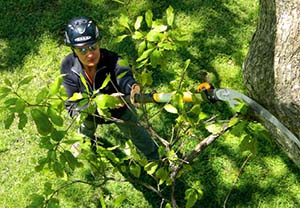 Urban Forestry Specialist Lindsey Purcell‘s helpful publication “Tree Pruning Essentials” is now available in a Spanish-language version, “Lo Esencial Para la Poda de Árboles.” This publication explores the techniques behind good pruning, from the planning process before planting to monitoring the tree’s response after the pruning cuts.
Trees continue to survive in spite of the many challenges they face in the urban environment. However, to grow from seedling to a mature tree in the urban forest, they need our help. They are the largest, oldest living organisms on the planet and can live long, healthy lives with some assistance. We often place trees in less-than-favorable growing locations that don’t allow natural development and maturity and often require pruning to develop a durable structure, improve clearance and maintain aesthetics.
Pruning has been called “one of the best, worst maintenance practices” performed on trees. The process creates wounds, which have a major impact on plant processes. Improper cutting on a tree causes severe damage or even death. To prune properly, it is important to understand both the proper techniques and how the tree responds to pruning.
Check out “Lo Esencial Para la Poda de Árboles” or “Tree Pruning Essentials” and make sure you are pruning your trees to maximize safety, aesthetics, and tree health!
Resources:
Lo Esencial Para la Poda de Árboles (Tree Pruning Essentials)– The Education Store, Purdue Extension Resource Center
Instalación de Árboles: Proceso y practicas (Tree Installation) – The Education Store, Purdue Extension Resource Center
Tree Pruning Essentials – The Education Store
Trees and Storms – The Education Store
Tree Risk Management – The Education Store
Prune Your Trees – Indiana Department of Natural Resources
Lindsey Purcell, Urban Forestry Specialist
Purdue University Department of Forestry and Natural Resources
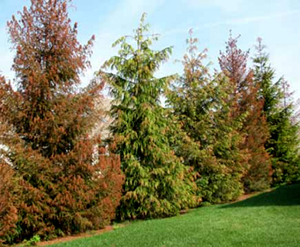 Question: I am noticing pine trees dying in my neighbors’ yards and along the streets in Carmel and NE Indianapolis. The needles turn rust colored and fall within a couple weeks – leaving a bare tree. Some of these trees are mature but most are young. Should I be concerned? What should I do to protect my pine trees? What should I be looking for if it is a pest?
Answer: Many Indiana trees are dying from stress caused by the extreme weather we have had in the last few years. Urban Forestry Specialist Lindsey Purcell and Extension Consumer Horticulture Specialist Rosie Lerner discuss this in more detail in the Purdue Agriculture News article “Purdue experts: Tree deaths across Indiana may be related to weather stress.” There are also other potential causes of foliar discoloration and branch dieback in pine trees that are explained in the publication “Stress-related Conifer Dieback“.
If you’d like to investigate the issue further, a certified arborist can conduct a ground evaluation or you can examine the trees on your own using the Purdue Tree Doctor app.
Resources:
Purdue experts: Tree deaths across Indiana may be related to weather stress – Purdue Agriculture News
Stress-related Conifer Dieback – The Education Store, Purdue Extension Resource Center
Purdue Plant Doctor App – Purdue Botany and Plant Pathology and Extension Entomology
Needle cast in Colorado Blue Spruce, Purdue Landscape Report
Blue Spruce Update, Purdue Landscape Report
Why Spruce Trees Lose Their Needles, Purdue Extension
Blue Spruce Decline, Purdue Extension
Diseases Common in Blue Spruce, Purdue Extension
Tree Installation: Process and Practices, The Education Store, Purdue Extension resource center
Tree Planting and Urban Forestry Videos, Subscribe to our Purdue Extension-FNR YouTube Channel
Find an Arborist, International Society of Arboriculture
Lenny Farlee, Sustaining Hardwood Extension Specialist
Purdue University Department of Forestry and Natural Resources
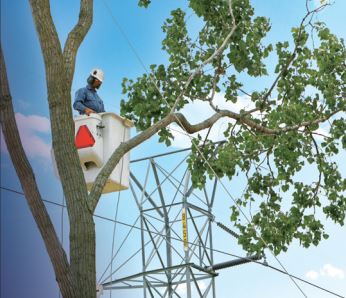 Electrical utility lines serve nearly every neighborhood, adding efficiency and luxury to every day of our lives.
Likewise, trees enhance our neighborhoods and bring beauty to our surroundings. Trees improve our air and water quality. They shade our homes, screen undesirable views, and help reduce noise along with many other ecosystem services.
We want both.
Purdue FNR Urban Forestry Specialist Lindsey Purcell addresses the conflicts that sometimes arise when trees and electrical lines must share space and ways to avoid them in his latest publication “Trees and Electric Lines“. Check out the publication to learn more about how to avoid boundary issues, safety concerns, power outages, and more while dealing with trees and electric lines.
Resources:
Trees and Electric Lines – The Education Store, Purdue Extension Resource Center
Tree Risk Management – The Education Store
Trees and Storms – The Education Store
Urban Forestry and Arboriculture – Purdue Forestry and Natural Resources
Power Friendly Trees – Indiana Department of Natural Resources
Lindsey Purcell, Urban Forestry Specialist
Purdue University Department of Forestry and Natural Resources
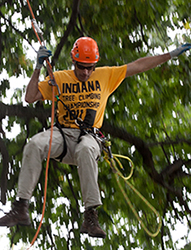 This year’s Indiana Tree Climbing Competition has come to a close, with Purdue’s Casey Johnson finishing first place in the preliminary events and Jon Montgomery winning the Masters Challenge and going on to the international competition in San Antonio next spring.
“What it does is mimics what you do in a work production standpoint, only in a competition environment,” says Lindsey Purcell, who teaches forestry at Purdue and serves as president of the Indiana Arborists Association. “I mean, I call them tree athletes. Instead of ‘triathletes’ I call them ‘tree athletes,’ because you not only have to understand the physiology and biology of the tree, but you also have to be athletic to get to work.”
To read more, check out WBAA’s article. For this year’s scores and more information on the competition, check out Indiana Arborist Association’s Tree Climbing Competition page.
Resources:
A Different Kind of Athlete: Competitive Tree Climbers Compete In Indiana Championship – WBAA
Tree Climbing Competition – Indiana Arborist Association
International Tree Climbing Championship – International Society of Arboriculture
Purdue Forestry & Natural Resources
Indiana has experienced extreme weather over the last couple of years. Extreme heat, draught, cold, winds, you name it, we’ve dealt with it. Most recently, through June and July, Indiana has experienced record-breaking rainfall and flooding. These weather conditions can make it difficult for our surroundings, but it can also cause a lot of stress on our trees.
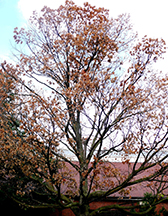
Photo credit: Keith Robinson
Urban trees are more susceptible to weather-related injury because of their oftentimes compromised root systems. In forested areas, trees spread their roots out two to three times the length of the tree. This is important because roots are the tree’s way to receive oxygen from the soil. This provides for a healthy defense system, giving the tree advantages like the ability to draw in moisture during dry spells and secrete fungi- and insect-repelling chemicals. In urban areas, roads and construction oftentimes sever roots or restrict where they can go, leaving the trees in a vulnerable state.
Our vulnerable urban trees are especially likely to be harmed by weather-induced stress. Symptoms like browning of leaves, dying branches and early coloration in the fall are all signs that a tree’s health is declining.
Keep an eye on your trees, and if you are concerned, use the Purdue Tree Doctor app or submit a sample to the Purdue Plant and Pest Diagnostic Lab as you seek best practices to care and protect your trees.
Resources
Purdue Experts: Tree Deaths Across Indiana May be Related to Weather Stress, Purdue Agriculture News
Drought? Don’t forget the trees! The Education Store, Purdue Resource Center
Plan Today For Tomorrow’s Flood, The Education Store
Community & Urban Forestry, Indiana Department of Natural Resources
The Root of the Problem, Northern Woodlands
Purdue University Agriculture News
Lindsey Purcell, Urban Forestry Specialist
Department of Natural Resources, Purdue University
B. Rosie Lerner, Extension Consumer Horticulture Architecture
Department of Horticulture and Landscape Architecture, Purdue University
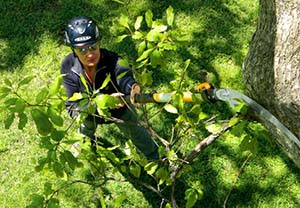 Trees continue to survive in spite of the many challenges they face in the urban environment. However, to grow from seedling to a mature tree in the urban forest, they need our help. They are the largest, oldest living organisms on the planet and can live long, healthy lives with some assistance. We often place trees in less-than-favorable growing locations that don’t allow natural development and maturity and often require pruning to develop a durable structure, improve clearance and maintain aesthetics.
Pruning has been called “one of the best, worst maintenance practices” performed on trees. The process creates wounds, which have a major impact on plant processes. Improper cutting on a tree causes severe damage or even death. To prune properly, it is important to understand both the proper techniques and how the tree responds to pruning.
In this publication, Urban Forestry Specialist Lindsey Purcell explores the techniques behind good pruning, from the planning process before planting to monitoring the tree’s response after the pruning cuts. Check out Tree Pruning Essentials and make sure you are pruning your trees to maximize safety, aesthetics and tree health!
Resources
Tree Pruning Essentials, Purdue Extension
Tree Pruning Essentials Video, Purdue Extension
Trees and Storms, Got Nature?
Tree Risk Management, The Education Store, Purdue Extension Resource Center
Pruning, Indiana Department of Natural Resources
Prune Your Trees, Indiana Department of Natural Resources
Lindsey Purcell, Urban Forestry Specialist
Department of Natural Resources, Purdue University

Recent Posts
- Urban Tree Spotlight: Planting Deciduous Shade Trees, Purdue Landscape Report
Posted: March 25, 2026 in Forests and Street Trees, Urban Forestry, Woodlands - ID That Tree: Dwarf Chinkapin Oak
Posted: March 20, 2026 in Forestry, Urban Forestry, Wildlife, Woodlands - DNR Hiring for Indiana Conservation Officer Positions, MyDNR
Posted: March 9, 2026 in Urban Forestry, Wildlife, Woodlands - ID That Tree: Shumard Oak
Posted: in Plants, Urban Forestry, Wildlife, Woodlands - A Woodland Management Moment: Windbreak Around Walnut Plantings
Posted: March 3, 2026 in Forestry, Urban Forestry, Woodland Management Moment - Getting Certified as an Indiana Certified Prescribed Burn Manager
Posted: March 2, 2026 in How To, Urban Forestry, Woodlands - Have You Seen a Soaring Eagle Lately? Morning Ag Clips
Posted: February 25, 2026 in Urban Forestry, Wildlife - ID That Tree: Fragrant Sumac
Posted: February 4, 2026 in Plants, Urban Forestry, Wildlife - Tree Silvics and Succession Webinar: A Biological Basis for Management
Posted: January 30, 2026 in Forests and Street Trees, Urban Forestry, Woodlands - Southwest Damage, Scalding or Frost Cracking
Posted: in Forestry, Urban Forestry
Archives
Categories
- Alert
- Aquaculture/Fish
- Aquatic/Aquaculture Resources
- Ask the Expert
- Christmas Trees
- Community Development
- Disease
- Drought
- Forestry
- Forests and Street Trees
- Gardening
- Got Nature for Kids
- Great Lakes
- How To
- Invasive Animal Species
- Invasive Insects
- Invasive Plant Species
- Land Use
- Natural Resource Planning
- Nature of Teaching
- Plants
- Podcasts
- Ponds
- Publication
- Safety
- Spiders
- Timber Marketing
- Uncategorized
- Urban Forestry
- Webinar
- Wildlife
- Wood Products/Manufacturing
- Woodland Management Moment
- Woodlands