 Purdue University - Extension - Forestry and Natural Resources
Got Nature? Blog
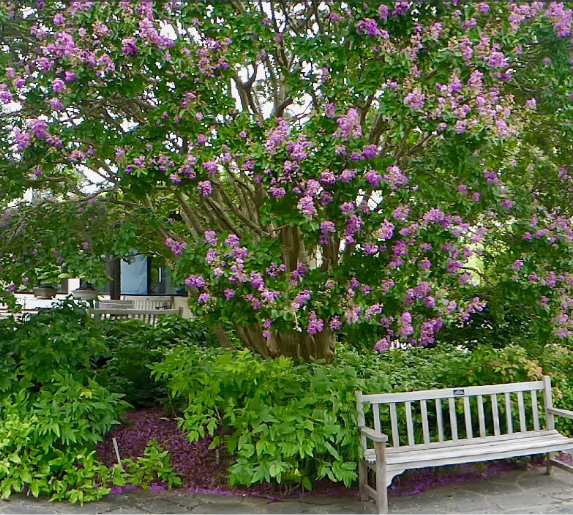 Trees provide many benefits and value to property owners in functional, aesthetic, social, environmental, and even economic ways. Functional benefits include mitigating climate change by storing carbon, removing pollution from the atmosphere, managing stormwater runoff, and improving air quality. Trees provide oxygen and many other benefits – such as shade, which can impact home cooling costs.
The collective value of trees makes a difference in people’s health and quality of life in cities and towns everywhere. This updated Purdue Extension publication Tree Appraisal and the Value of Trees describes methods used to appraise trees and landscapes that can determine their value and worth, reasons why a tree should be appraised, the factors that go into tree appraisal, what appraisal ratings mean, and sample scenarios.
Resources
The Nature of Teaching: Trees of the Midwest, The Education Store, Purdue Education Resource Center
Corrective Pruning for Deciduous Trees, The Education Store
Resources and Assistance Available for Planting Hardwood Seedlings, The Education Store
Tree Support Systems, The Education Store
Purdue University, Department of Forestry and Natural Resources
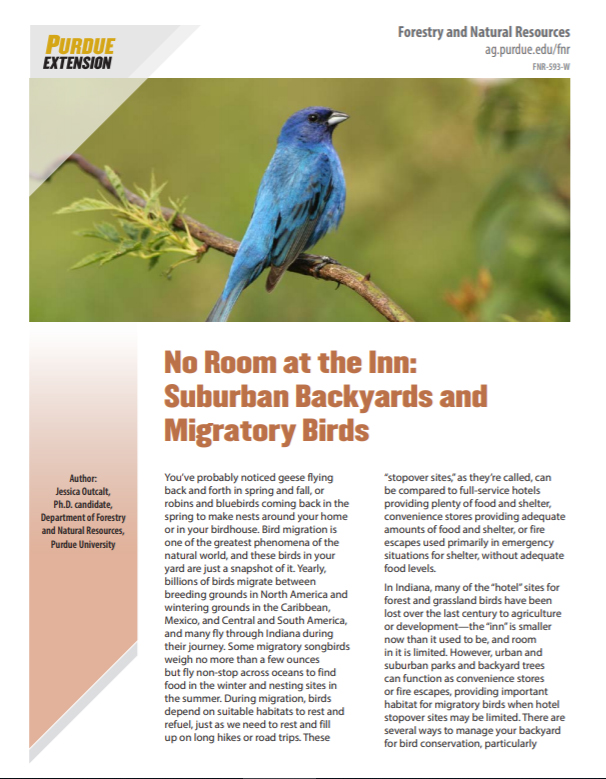 Bird migration is one of the greatest phenomena of the natural world. Birds depend on suitable habitats to rest and refuel. In this free download publication titled No Room at the Inn: Suburban Backyards and Migratory Birds, a Purdue researcher describes ways to manage your backyard to attract birds of all types, for your enjoyment and their survival. Including a list of common migratory birds in Indiana, this publication also provides a list of other suggested resources to learn more about birds and how to identify them.
Resources:
Forest Birds, Video, Purdue Extension
Birds and Residential Window Strikes: Tips for Prevention, The Education Store, Purdue Extension resource center
Managing Woodlands for Birds, video
Jessica Outcalt, Graduate Research Assistant
Department of Forestry and Natural Resources, Purdue University
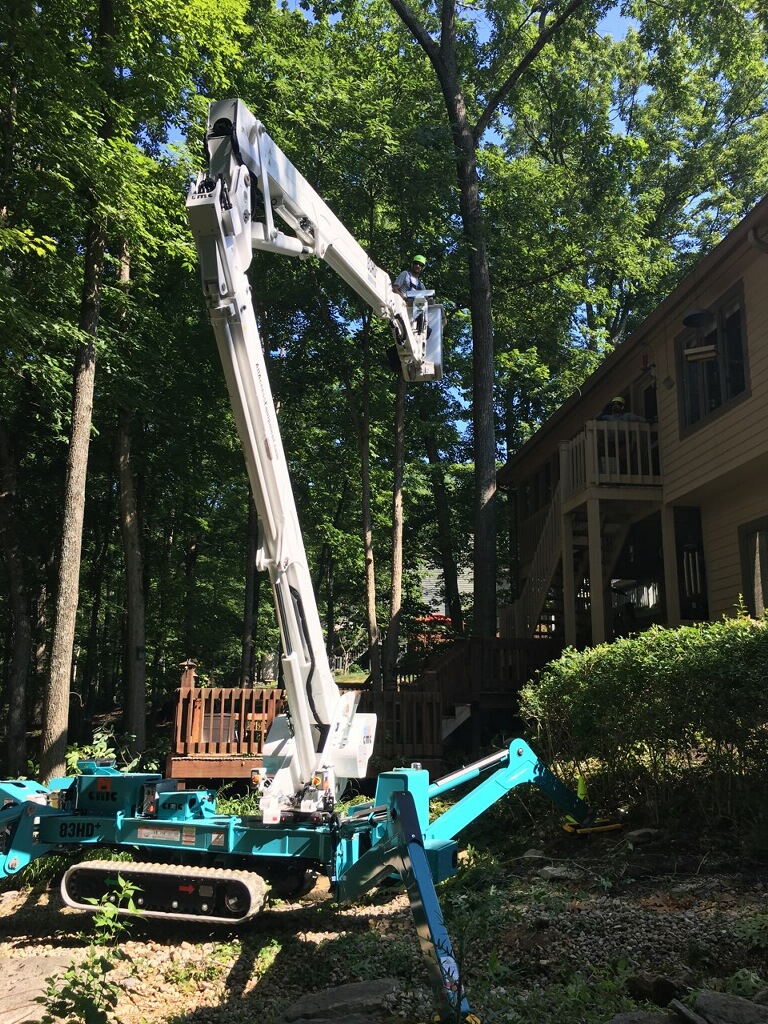
Purdue Landscape Report: There are many different aspects of tree work which include a wide range of costs, but let’s start with the most common expense: tree removal. It can be difficult to understand why removing a tree can cost so much when the whole process seems as simple as “just cutting it down.” In reality, the work is usually much more involved than making a few cuts with a chain saw and then hauling it all away.
Complexity – Trees being removed often need to be cut apart in sections to avoid dropping the whole tree or large pieces onto the lawn or landscape or into the street. This is a safer approach and also prevents serious damage to the turf and landscape below. News reports are full of accidents involving untrained tree workers, or homeowners, attempting to cut down a tree without the knowledge of how the tree reacts to being cut. Usually, specialized equipment is needed, such as aerial lifts or cranes to access the tree safely. This equipment is costly to acquire and maintain. Some of the typical equipment such as these mentioned can cost more than some homes! Often, the use of this equipment involves setting up traffic control in busy streets where permits and additional flagging support are needed.
Difficult and dangerous – 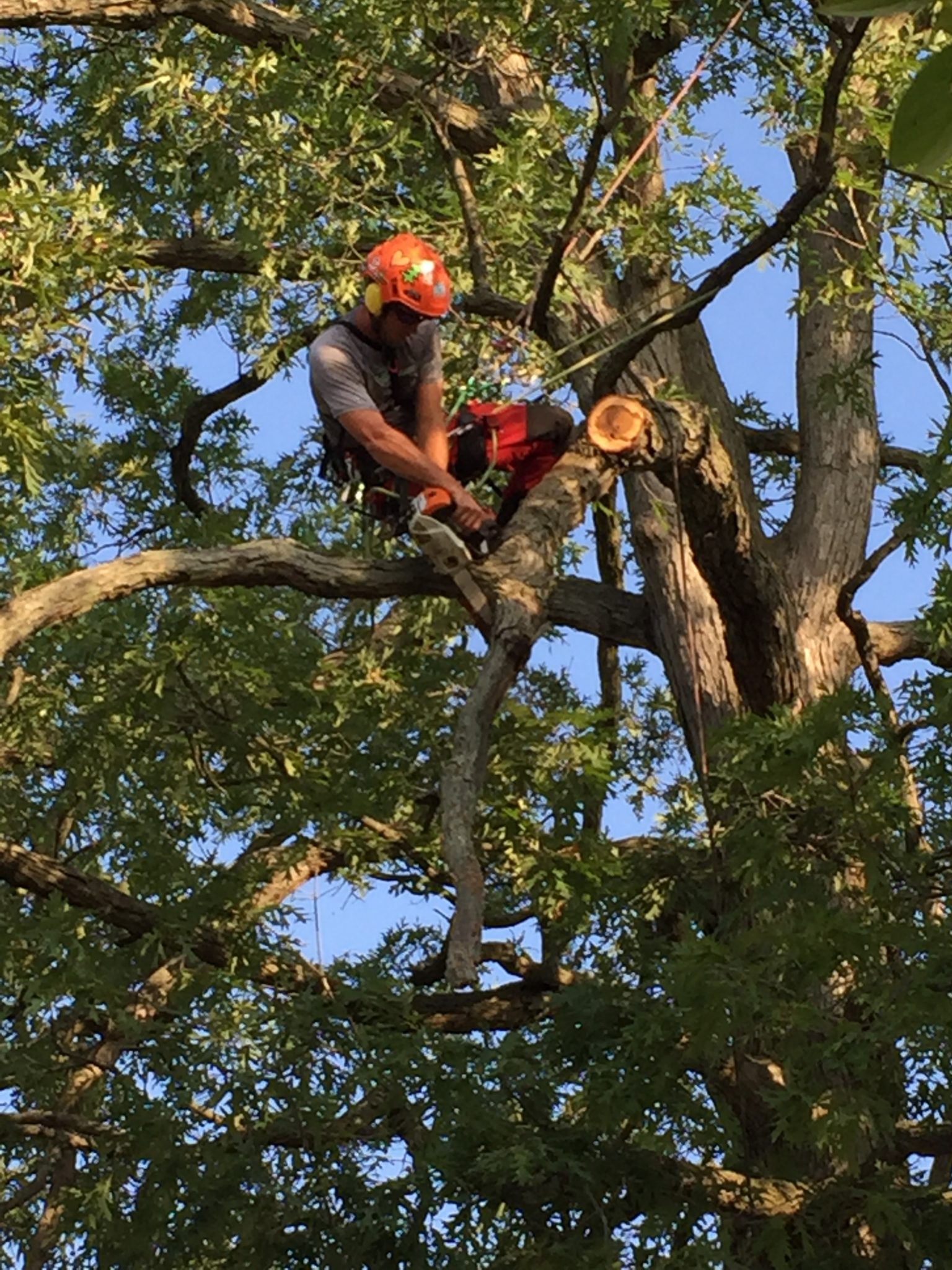 Tree pruning and tree removal, is difficult and dangerous work. Also, there is a reason why the tree is being removed. Often it has been deemed high risk or presents a danger on the site. Tree crews are regularly asked to work on trees with compromised structure from storm damage or years of neglect. These compromised trees are often dead trees, which are particularly dangerous. A tree that has been dead for several years usually becomes brittle and inflexible. When you try to cut it down, controlling the direction of fall is a challenge and it will often shatter, throwing broken branches in an uncontrolled manner. Often, tree workers are in trees that have electrical conductors running through the branches. That risky situation should speak for itself.
Insurance, Licensing – Because tree work can be hazardous, qualified companies will have expensive liability insurance to protect the homeowner’s property, as well as workers’ compensation insurance to help cover injuries sustained by the crew, should they occur. You get what you pay for and this includes tree care as well! If you select a company that is less expensive, they may not carry insurance which leaves the tree owner at a high risk of having to pay damages several times the original job estimate, if something goes wrong. Always check with your tree care company to be sure they can validate proper insurance before starting tree work. This applies to any service company which may be used in and around your home or property.
Trained and Certified Workers – Its best to choose a tree care company where the crew has current industry credentials 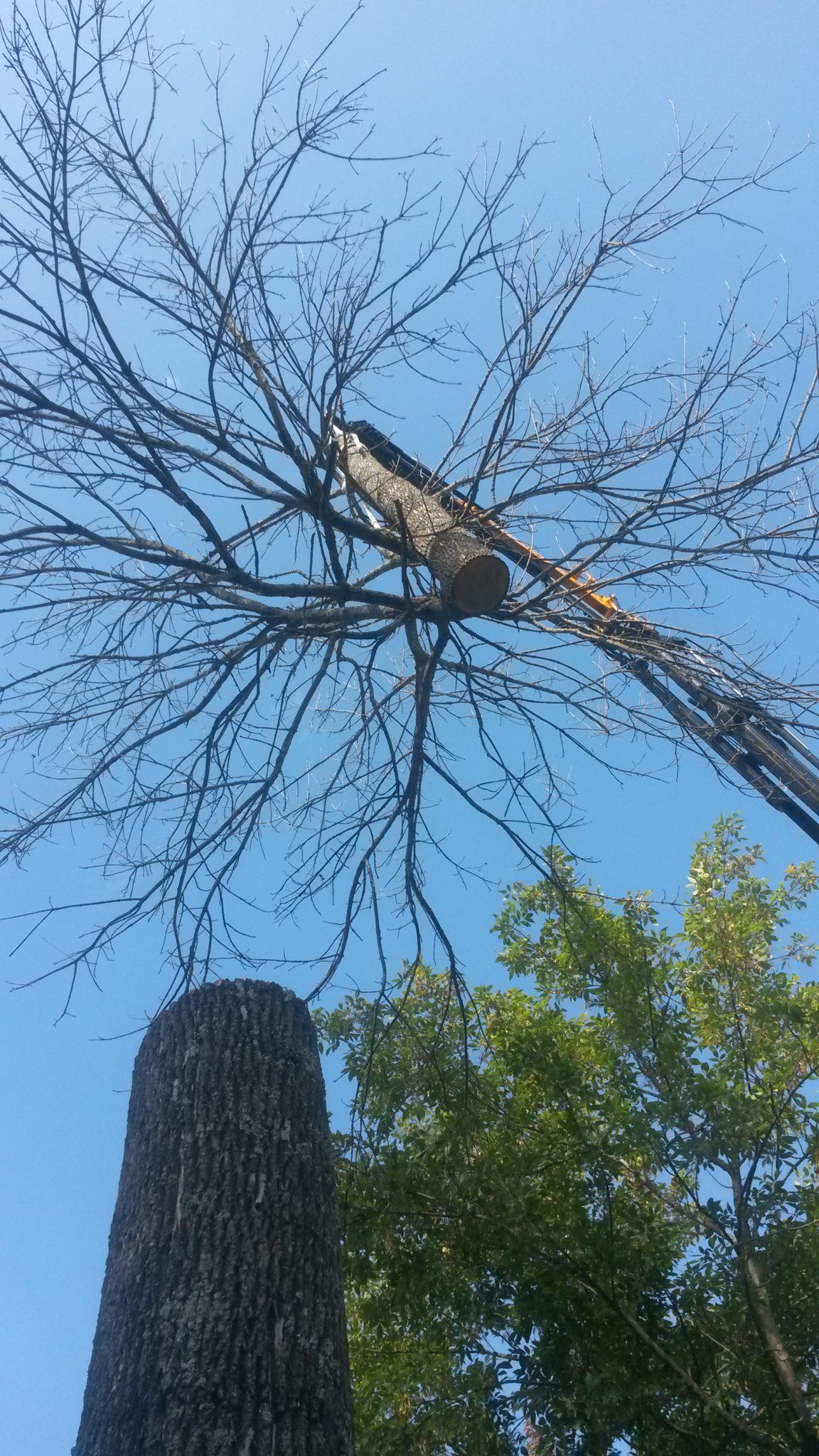 and a history of training and experience. How do you know if a company’s staff is trained and experienced? Ask to see their credentials and look for programs such as the International Society of Arboriculture (ISA) Certified Arborist, or the Tree Care Industry Association (TCIA) Certified Treecare Safety Professional which are indicators of a professional business with the expertise to perform the work. Tree owners and managers have the option to interview two or three tree care companies before deciding about tree removal or other critical practices such as pruning. Ask to see a copy of the current insurance certificate as well as copies of the crew’s competency credentials. If a company representative hesitates to provide these documents or insists, they don’t need to “prove” themselves, find another company to perform the work. Ask for references. This is easy since often all that is needed is to drive by a location to see the quality of the pruning work or removal work completed.
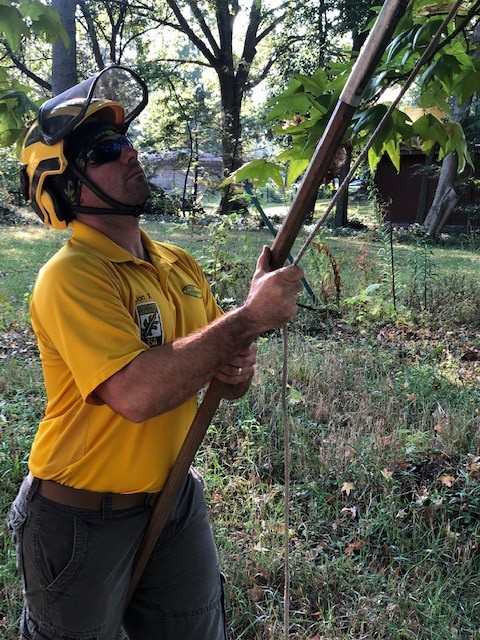
Find a professional – Also, to check for an ISA Certified Arborist in your area, visit the website www.treesaregood.org then click on the link “Find an Arborist”. By entering your zip code, a list of credentialed arborists can be found nearest your location.
Tree care performed properly will be an investment in your property that, when done correctly, will give you valued returns for decades.
Resources
Mechanical Damage to Trees: Mowing and Maintenance Equipment, The Education Store, Purdue Extension’s resource center
Tree Appraisal and the Value of Trees, The Educational Store
Tree Pruning Essentials, video, The Education Store
Tree Pruning Essentials, The Education Store
Tree Selection for the “Un-natural” Environment, The Education Store
Lindsey Purcell, Chapter Executive Director
Indiana Arborist Association
Purdue Landscape Report: Just as sure as you try to predict the weather, it is likely to change. But going out on a limb, I predict that we will have a bit of a dud for fall color display this year. Not a very risky prediction, considering that many plants already are starting to turn color and/or drop leaves in some areas of the state.
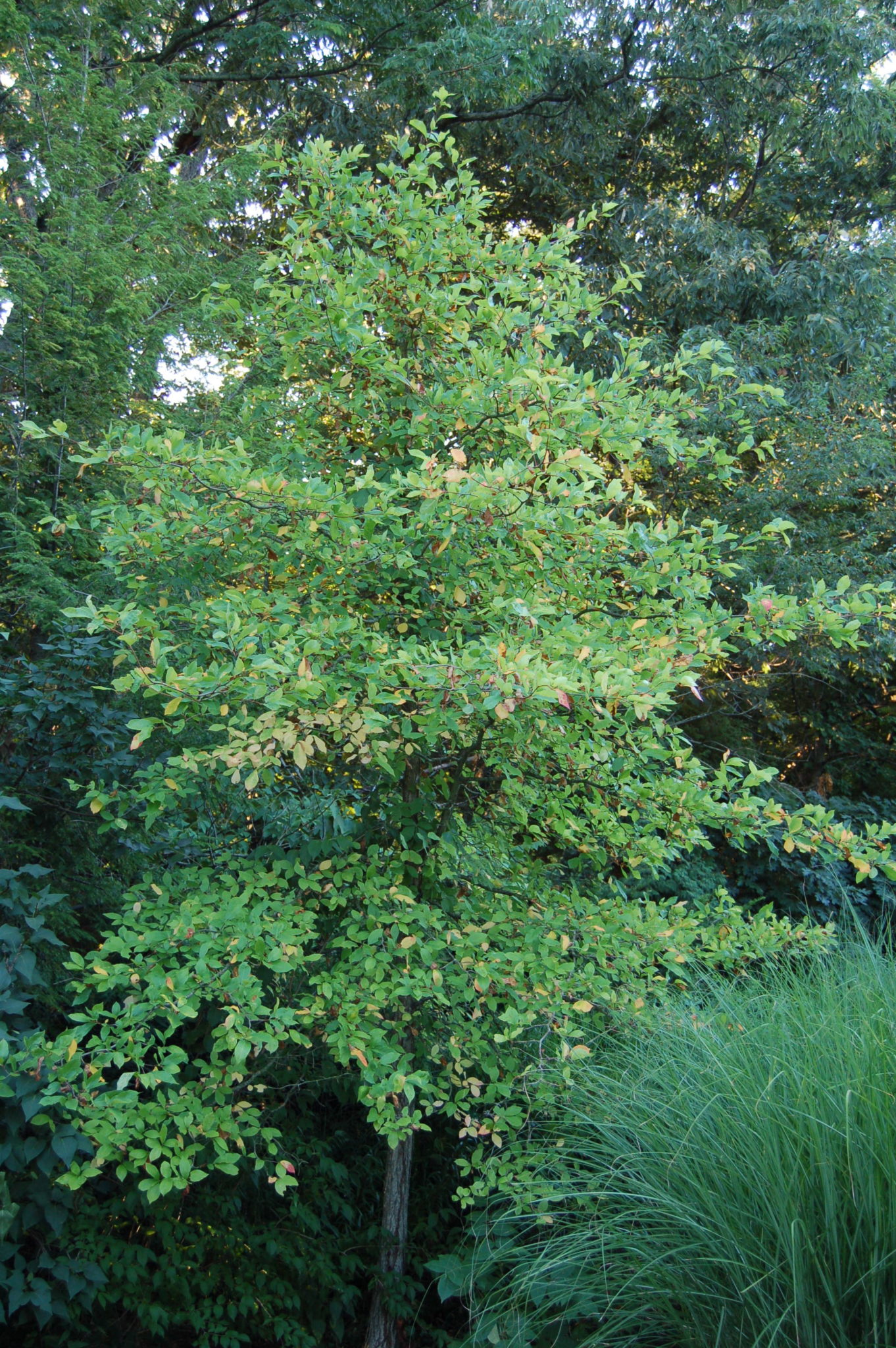
Nyssa sylvatica (black gum) showing early fall color due to drought stress. Source
So why would the colors be early and/or a bit duller than usual? Certainly, some of the reason why plants display fall colors has to do with the genetic makeup of the plant. That doesn’t change from year to year. But the timing and intensity of fall colors do vary, depending on factors such as availability of soil moisture and plant nutrients, as well as environmental signals such as temperature, sunlight, length of day, and cool nighttime temperatures.
The droughty conditions experienced during much of the second half of summer are likely to have decreased the amount of fall color pigment. Southern Indiana has been particularly parched. Despite recent rains in some areas, much of the state remains designated as abnormally dry to moderate drought. You can check your area’s conditions at the US Drought Monitor for Indiana. Additional maps and data is available at the Midwest Regional Climate Center.
Growing conditions throughout the season affect fall color as does current weather. Colors such as orange and yellow, which we see in the fall, are actually present in the leaf all summer. However, those colors are masked by the presence of chlorophyll, the substance responsible for green color in plants during the summer. Chlorophyll allows the plant to use sunlight and carbon dioxide from the air to produce carbohydrates (sugars and starch). Trees continually replenish their supply of chlorophyll during the growing season.
As the days grow shorter and (usually) temperatures cooler, the trees use chlorophyll faster than they can replace it. The green color fades as the level of chlorophyll decreases, allowing the other colored pigments to show through. Plants that are under stress–from conditions like prolonged dry spells–often will display early fall color because they are unable to produce as much chlorophyll.
Yellow, brown and orange colors, common to such trees as birch, some maples, hickory and aspen, come from pigments called carotenoids, the same pigments that are responsible for the color of carrots, corn and bananas.
Red and purple colors common to sweet gum, dogwoods and some maples and oaks are produced by another type of pigment called anthocyanin, the pigment responsible for the color of cherries, grapes, apples and blueberries. Unlike chlorophyll and carotenoids, anthocyanins are not always present in the leaf but are produced in late summer when environmental signals occur. Anthocyanins also combine with carotenoids to produce the fiery red, orange, and bronze colors found in sumac, oaks, and dogwoods.
Red colors tend to be most intense when days are warm and sunny, but nights are cool–below 45º F. The color intensifies because more sugars are produced during warm, sunny days; cool night temperatures cause the sugars to remain in the leaves. Pigments are formed from these sugars, so the more sugar in the leaf, the more pigment, and, thus, more intense colors. Warm, rainy fall weather decreases the amount of sugar and pigment production. Warm nights cause what sugars that are made to move out of the leaves, so that leaf colors are muted.
Leaf color also can vary from tree to tree and even from one side of a tree to another. Leaves that are more exposed to the sun tend to show more red coloration while those in the shade turn yellow. Stress such as drought, poor fertility, disease or insects may cause fall color to come on earlier, but usually results in less intense coloration, too. And stress or an abrupt hard freeze can cause leaves to drop before they have a chance to change color.
So far, weather conditions lead me to think this will be one of those not so showy fall color years. I hope I am proven wrong!
Resources
Why Leaves Change Color, The Education Store, Purdue Extension
Fifty Common Trees of Indiana
An Introduction to Trees of Indiana
Native Trees of the Midwest, Purdue University Press
Why Leaves Change Color, USDA Forest Service, Northeastern Area
B. Rosie Lerner, Retired Extension Consumer Horticulturist
Purdue Horticulture and Landscape Architecture
Cities and towns in the U.S. contain more than 130 million acres of forests. These forests vary extensively in size and locale. An urban forest can describe an urban park such as Central Park in New York City, NY, street trees, nature preserves, extensive gardens, or any trees collectively growing within a suburb, city, or town. Urban forestry is the name given to the care and maintenance of those ecosystem areas that remain after urbanization. Data from the 2010 census indicated more than 80% of Americans live in urban centers with a population increase greater than 12%. The population of Indiana represents only 2.1% of the nation. In the last 8 years, IN has had an influx of 200,000 people which represents a population increase of 3.0%!
Urban forests, which help filter air and water, control storm water runoff, help conserve energy and provide shade and animal habitat must be maintained. As our nation becomes more urbanized, appreciate those urban foresters working to ensure we have save urban forest spaces to enjoy. These precious resources add more than curb appeal and economic value, they improve our quality of life.
What does an urban forester do? Here’s a quick answer:
References:
Purdue Urban Forestry & Arboriculture, Purdue Forestry and Natural Resources
USDA Forest Service Urban Forests, United States Department of Agriculture
US Census Bureau, United States Census Bureau
Interested in Purdue Urban Forestry? Contact:
Lindsey Purcell, Chapter Executive Director
Indiana Arborist Association
Ben McCallister, Urban Forestry Specialist
Forestry and Natural Resources
Resources:
Tree Support Systems, The Education Store, Purdue Extension Resource Center
Corrective Pruning for Deciduous Trees, The Education Store
Tree Installation: Process and Practices, The Education Store
What plants can I landscape with in area that floods with hard rain?, Got Nature? Blog, Purdue University Forestry and Natural Resources Extension
Purdue Landscape Report: When was the last time you really looked at your trees? It’s all too easy to just 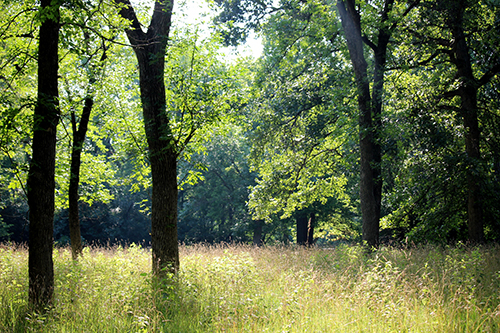 enjoy their cool shade and the sound of their leaves, but if you don’t know what to look for you could miss deadly diseases or dastardly demons lurking in their leaves and branches. A quick check can help you stop a problem before it kills your tree or your local forest!
National Tree Check Month is the perfect time to make sure your tree is in tip-top shape! Our checklist will help you spot early warning signs of native pests and pathogens and invasive pests like Asian longhorned beetle, spotted lanternfly, and sudden oak death. You can stop invasive pests in their tracks by reporting them if you see them.
Is your tree healthy and normal?
Start by making sure you know the type of tree you have. Is it a deciduous tree like an oak or maple? Or is it an evergreen that like a spruce or a pine? Don’t worry about exactly what species it is. It’s enough for you to have a general sense of what the tree should look like when it’s healthy.
Check the leaves
- Are the leaves yellow, red or brown?
- Are they spotted or discolored?
- Do the leaves look distorted or disfigured?
- Is there a sticky liquid on the leaves?
- Do the leaves appear wet, or give off a foul odor?
- Are leaves missing?
- Are parts of the leaves chewed?
Check the trunk and branches
- Are there holes or splits in the trunk or branches?
- Is the bark peeling from a tree that shouldn’t shed its bark?
- Are there tunnels or unusual patterns under the bark?
- Is there sawdust on or under the tree?
- Is there sap oozing down the tree?
- Does the sap have a bad odor?
- Do sticky drops fall on you when you stand under the tree? You might have spotted lanternfly. Please report it right away!
Now what? If you answered YES to any of the questions above, there’s a good chance something is wrong. To decide if and how you should treat or report the problem, you’ll need to have a tentative diagnosis. Luckily, there are many ways to get one!
Know the tree species? Use the Purdue Tree Doctor to get a diagnosis and a recommendation on whether treating or reporting is needed. This app allows you to flip through photos of problem plagued leaves, branches and trunks to help you rapidly identify the problem. If you have an invasive pest, it will guide you how to report it.
Don’t know the tree species and still need help? Reach out to local experts. We’re happy to help!
- Purdue Cooperative Extension Service (https://extension.purdue.edu/) can answer your questions or direct you to a local tree care professional with the right expertise.
- Contact an arborist who can give you an assessment of your tree and specific treatment recommendations (https://www.treesaregood.org/findanarborist).
Confused but think something is TERRIBLY WRONG? Contact Purdue’s Exotic Forest Pest Educator, report online, or call 1-866-NOEXOTIC.
Resources:
Trees and Storms, The Education Store, Purdue Extension’s resource center
Why Is My Tree Dying?, The Education Store
Caring for storm-damaged trees/How to Acidify Soil in the Yard, In the Grow, Purdue Extension
Tree Risk Management, The Education Store
Mechanical Damage to Trees: Mowing and Maintenance Equipment, The Education Store
Tree Installation: Process and Practices, The Education Store
Tree Planting Part 1 & Tree Planting Part 2, videos, The Education Store
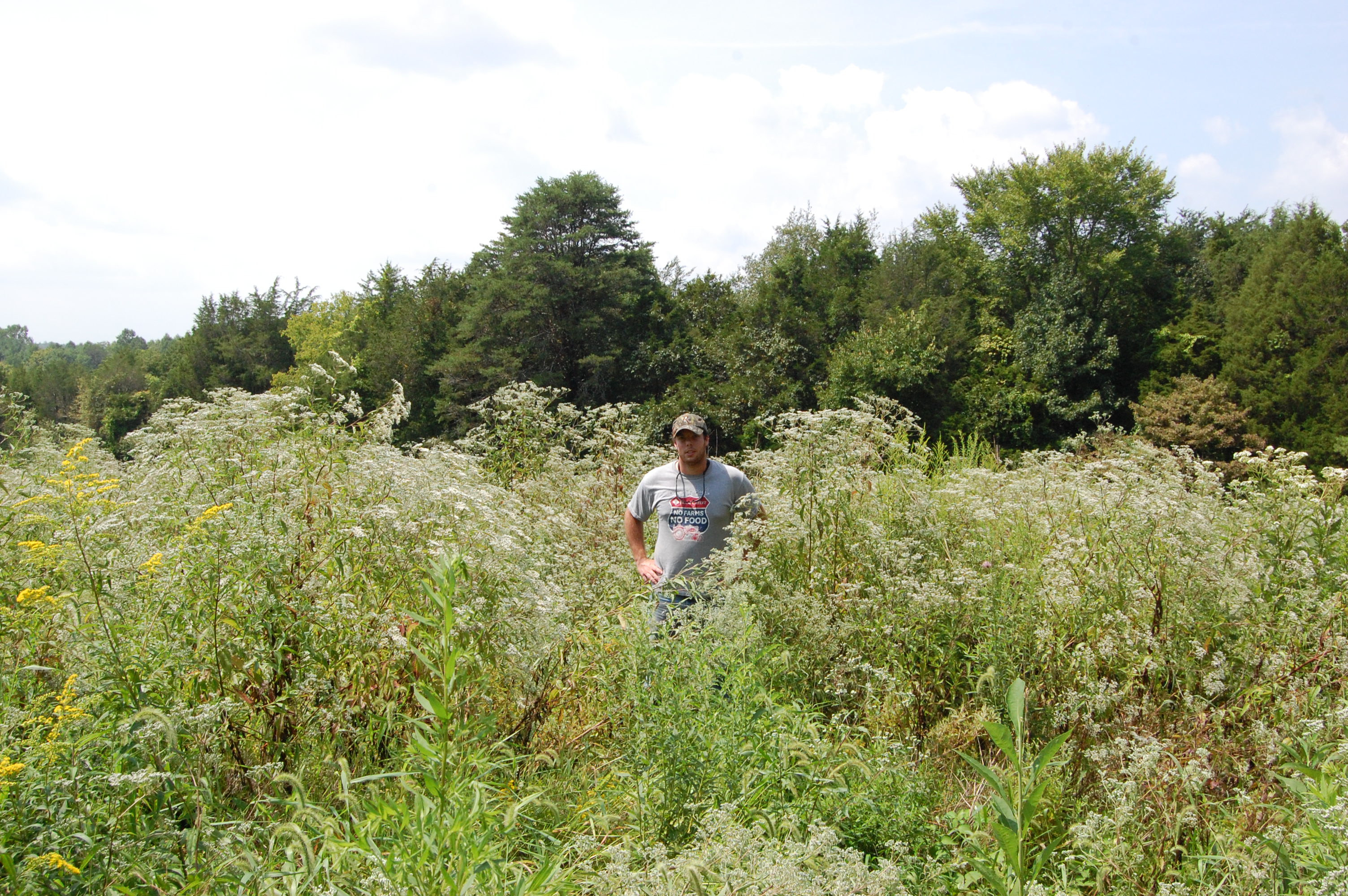
A “weedy” field like this may seem unsightly to some, but to wildlife, it provides invaluable food and cover. Just by leaving this field unmowed, you can improve habitat on your farm.

Mowing just to clean up the farm, or Recreational Mowing Syndrome (RMS), eliminates habitat for countless wildlife species.
Do you have a sudden urge to jump in the tractor and mow your fields, field borders or road ditches?
You might have RMS.
Do you enjoy spending your weekend in the cab of the tractor with a mower in tow in search of places to mow across your property?
You might have RMS.
Do you get queasy at the sight of a “weedy” unkempt field?
You might have RMS.
What is RMS you ask? RMS stands for Recreational Mowing Syndrome, a condition that afflicts many rural landowners during the summer months. And if you answered yes to any or all of the questions above, then you have RMS.
What is it?
RMS is the sudden urge many landowners get to ‘clean’ up their property by mowing the ideal fields, field borders, and road ditches around the farm during the summer months. While a mowed field may look attractive in the eyes of a landowner, in the eyes of wildlife, this is a serious problem.
These prime mowing spots provide habitat for a suite of birds, mammals, herpetofauna, and pollinating insects that inhabit our rural landscapes. Many of these species are actively nesting or raising young in these areas during peak mowing season – April through September. And the weeds coming up in these fields like common milkweed, tall ironweed, common ragweed, and many others provide food and cover for wildlife.
How to treat it?
The easiest way to treat RMS is by going cold-turkey – park the tractor for the summer. If you are not ready to give up mowing all together, then restrict your mowing to just the lanes around the fields, instead of the whole field. If you are ready to give up mowing, but still want to enjoy time in the tractor, try these options.
Instead of hooking up the mower, hook up the sprayer and go control some invasive species on the property, like bush honeysuckle, autumn olive, or sericea lespedeza. Or try hooking up the disk and disking around the field to prepare firebreaks for a late summer or fall prescribed fire.
You can still spend time on the tractor during the summer months without eliminating wildlife habitat through mowing. In fact, you can improve it!
Next time you look at your window and see a “weedy” field, don’t cringe and give into the urge to mow it. Instead, just smile and listen to all the quail whistling, songbirds singing, and bees buzzing in the habitat you improved by not mowing.
Resources
Renovating native warm-season grass stands for wildlife: A Land Manager’s Guide, The Education Store, Purdue Extension Resource Center
Effective Firebreaks for Safe Use of Prescribed Fire, Got Nature?, Purdue Extension – FNR
Sericea Lespedeza: Plague on the Prairie, Got Nature?, Purdue Extension – FNR
Jarred Brooke, Wildlife Extension Specialist
Purdue Forestry and Natural Resources
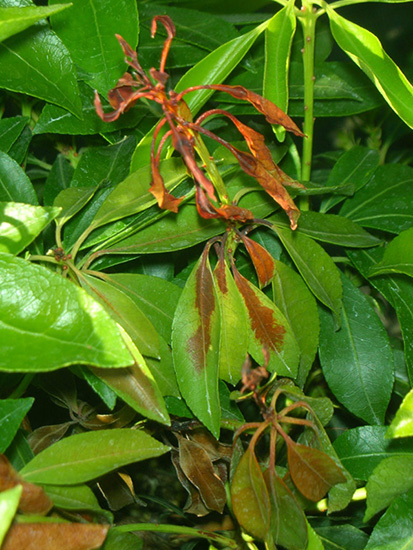 Sudden oak death, as the name suggests, is a disease that is capable of rapidly killing certain species of oaks. It was first identified in California, in 1995. Two years earlier it was identified in Germany and the Netherlands, killing rhododendron. Because the pathogen originally infected and killed tanoaks, an undesirable, understory scrub tree, it generated little interest until other, more desirable oaks species began dying. However, by this point, the disease was well established and eradication no longer an option, with millions of oak trees killed by the disease. Currently, over 120 hosts in addition to oaks have been identified, and more continue to be added to this list. What is most unusual about sudden oak death is the severity of disease symptoms coupled with the broad host range of the pathogen. This leads to difficulty in diagnosing and managing this disease.
What causes this disease?
The pathogen that causes SOD is Phytophthora ramorum (pronounced Fī-toff-thor-ă ră-mor-ǔm). This pathogen belongs to a group of organisms in the Kingdom Chromista, and has characteristics similar to fungi, plants and animals. It spreads throughout the plant by hyphal threads (like fungi), produces spores (like fungi) that have flagella and swim through water (like animals), but its cell wall is made up of cellulose (like plants). When conditions dry up, Phytophthora can produce thick walled sexual spores called oospores, or asexual chlamydospores. Because P. ramorum is not a ‘true’ fungus, many fungicides labeled for control of other fungal diseases are not effective against it.
With such a broad range of plant hosts, it is important to stress that P. ramorum affects different species in different ways. Identification must be confirmed in the laboratory and cannot be identified on field symptoms alone. Many common landscape shrubs are also infected by other endemic Phytophthora species, and symptoms look similar. Boring insects and other root rots may be mistaken for this disease. For this reason, all Phytophthora infections should be screened by the Purdue Plant and Pest Diagnostic Laboratory.
What are the symptoms of SOD?
To understand this disease, it is important to recognize that there are two categories of hosts: bark canker hosts and foliar hosts. Further complicating this is the fact that oaks are divided into three subgroups, and only the red oak group are susceptible to this pathogen. Of our 17 oak species in Indiana, half are potentially, or known to be susceptible, and include black, blackjack, cherrybark, Northern pin, pin, red, scarlet, and Shumard oaks. Diagnostic symptoms of infected red oaks include oozing sap and red-brown cankers that often leading to death.
Our concern right now is on ‘the other’ hosts. Despite its name, sudden oak death primarily spreads through foliar hosts that are sold throughout the United States. Foliar hosts include rhododendrons, azalea, viburnum, lilac, and periwinkle (Vinca minor).
These hosts (and many others) are infected via the leaves and small branches. These infections rarely cause death, and can be mistaken for sunscald, twig canker, and dieback caused by other pathogens, including native Phytophthora species. Although symptoms from these infections are not severe, and are rarely fatal, the infections produce enormous numbers of spores that can infect neighboring, susceptible oaks—and other plant species. For this reason, we are asking people to examine any rhododendrons (or other co-mingled hosts like azalea, viburnum and lilac) purchased this spring from Walmart and Rural King, while the disease may still be controlled and the pathogen contained. Although this disease doesn’t look like much on rhododendron or lilac, its ability to spread to oaks and kill them is what makes it so devastating. These shrubs play a key role in the spread of P. ramorum, acting as a breeding ground for spores (inoculum) that can spread through water, wind-driven rain, plant material, or human activity. Oaks are considered terminal hosts, since the pathogen does not readily spread from intact bark cankers; they become infected only when exposed to spores produced on the leaves and twigs of neighboring plants.
For full article and photos view: Purdue Landscape Report
Other resources:
Sudden Oak Death, California Oak Mortality Task Force
Sudden Oak Death, Indiana Department of Natural Resources
White Oak, The Education Store, Purdue Extension resource center
Planting Forest Trees and Shrubs in Indiana, The Education Store
Successful Oak and Hickory Regeneration, The Hardwood Ecosystem Experiment: 2006-2016, The Education Store
Find a Certified Arborist, International Society of Arboriculture
Janna Beckerman, Professor
Purdue Botany and Plant Pathology
Question: I have noticed that a lot of very mature (> 80 ft) sycamore trees look ill. They don’t seem to have as many 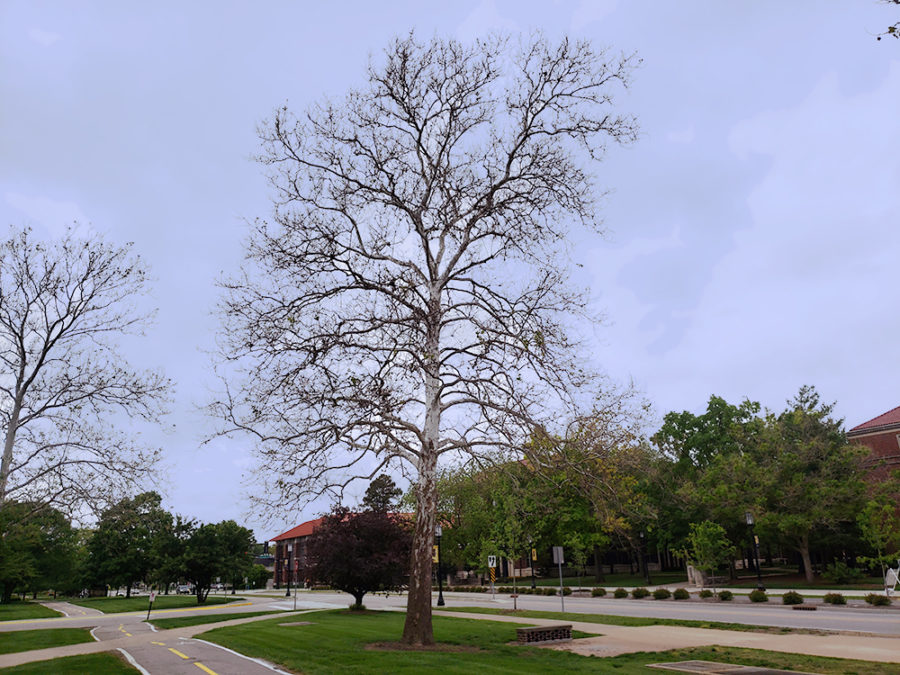 leaves, or as large as they usually get and some have already turned brown and died. There are at least 2 in my 5 acres of woods and have noticed the same with other sycamores while driving from Mooresville to Indianapolis. Is there a certain blight/canker/pest that is damaging sycamores this year?
Answer: I have also noticed that many sycamores appear relatively bare and may have brown or wilted leaves on the stems and littering the ground around the trees. The culprit is sycamore anthracnose, a fungal disease that causes damage and death of leaves as well as stem cankers. Sycamore anthracnose symptoms can be severe when we have cool, moist spring weather at the time of bud-break and leaf emergence , but healthy trees generally recover and put on new leaf area once the environmental conditions that favor the disease change to the warmer, drier conditions of late spring and summer.
Normally, the best management practices for sycamore anthracnose are patience and maintaining good tree health. The disease cycle is dependent on cool, moist spring weather, so it will run its course by late spring or summer when the average temperatures rise. Trees that are repeatedly defoliated could be reduced in vigor and be more susceptible to other problems, so steps to promote good tree health can be used as a preventative measure.
Resources:
Fertilizing Woody Plants – The Education Store, Purdue Extension Resource Center
Diseases of Landscape Plants (leaf diseases) – The Education Store
Sycamore – The Education Store
Hardwood Lumber and Veneer Series – The Education Store
Anthracnose of Shade Trees – Purdue Plant and Pest Diagnostic Laboratory
Purdue Plant Doctor App- Purdue Extension
Lenny Farlee, Sustaining Hardwood Extension Specialist
Purdue University Department of Forestry and Natural Resources
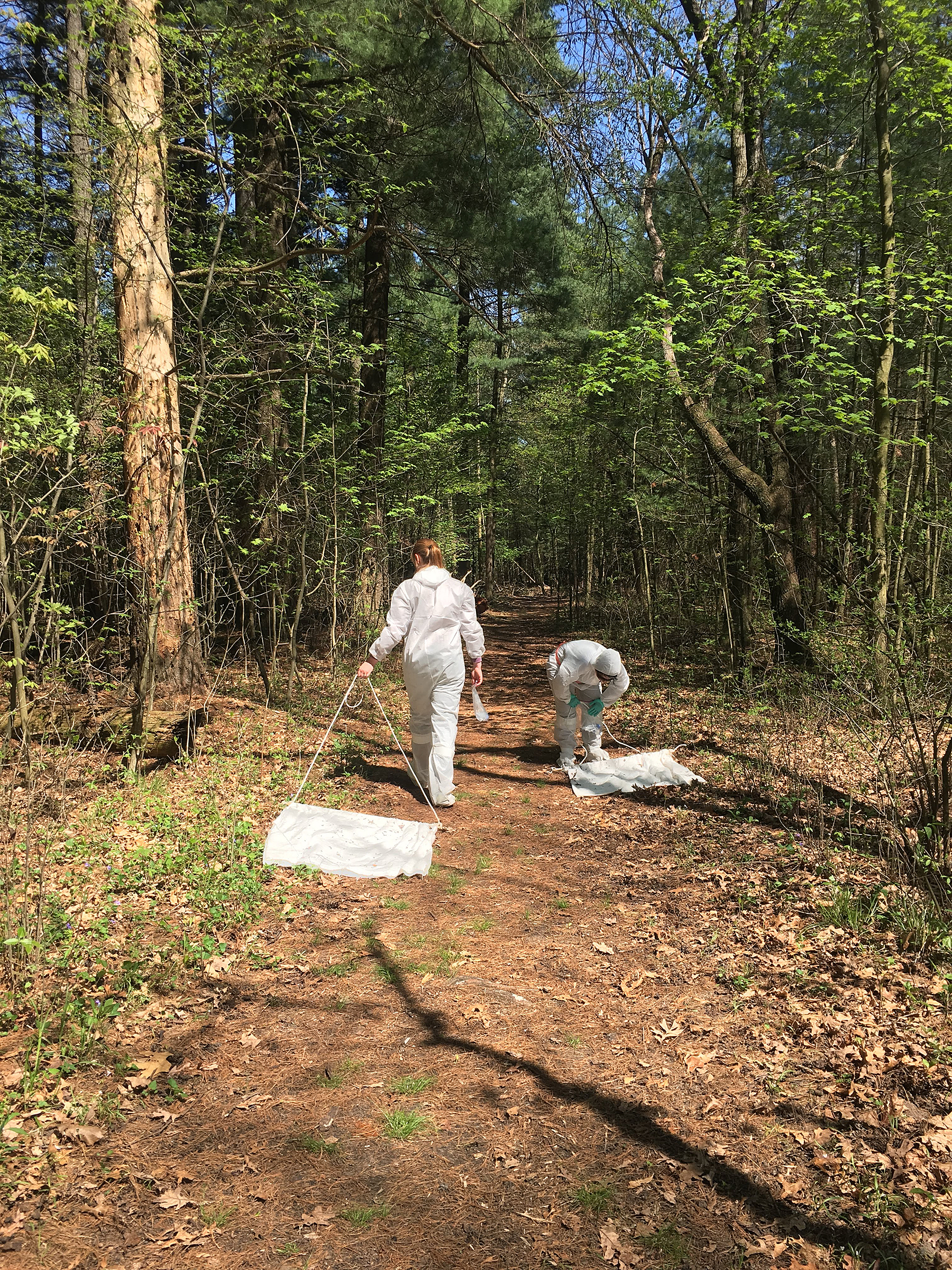
Scientists from Purdue’s Tick INsiders program, Lauren Hagen (left) and Maria Muriga (right), drag and check tick cloths at Tippecanoe River State Park in 2018. The program is looking for high school students and citizen scientists interested in helping with tick collections this year. (Tick INsiders photo)
Purdue University’s Tick INsiders program is looking for Indiana high school students and other Indiana residents willing to roll down their sleeves to get involved in a citizen science project.
Cate Hill, a Purdue professor of entomology, leads this effort to analyze the bacteria and viruses in Indiana’s ticks to build an understanding of what they are carrying and how that might impact human health. To do that, she needs volunteers to collect ticks from all over the state.
This year the Tick INsiders program will provide training for up to 50 students. Citizen scientists are also now welcome to collect and send ticks to Hill’s lab.
“It’s really important work. The Centers for Disease Control and Prevention reports that human cases of tick-borne diseases doubled from 2004 to 2016. If we’re going to get a handle on that and develop strategies for reducing tick bites and treating patients, we need to know where our ticks are and what our ticks are carrying around inside them,” Hill said. “That means we need a lot of ticks, and we need help collecting them.”
Three species of ticks – the blacklegged or deer tick, the lone star tick and the American dog tick – are found in Indiana. These ticks can transmit multiple pathogens, nine of which are known to cause human illnesses, though not all have been identified in Indiana. The Indiana State Department of Health reports more than 100 cases of Lyme disease each year and dozens of cases of Ehrlichiosis, anaplasmosis and Rocky Mountain spotted fever.
Research suggests that ticks can carry a cocktail of microbes – bacteria and viruses – that can sicken bite victims and may work in concert to affect the severity of an illness and human immune response.
“Not all tick bites are the same. We don’t know what is passed from a tick to a human each time someone is bitten, which means that health care professionals may need to consider multiple tick-borne pathogens in a person who has been bitten by a tick,” Hill said. “This program improves our knowledge so that we can improve our outcomes.”
Indiana residents interested in participating can collect ticks and send them to Hill’s lab for analysis. Videos on safe and proper collection techniques, as well as how to send ticks will be at Tick INsiders.
For full article, see Purdue Agriculture News.
Resources
Ticks 101: A Quick Start Guide to Indiana Tick Vectors, The Education Store – Extension Resource
The Biology and Medical Importance of Ticks in Indiana, The Education Store
Mosquitoes, Purdue Extension Entomology
One Small Bite: One Large Problem, Got Nature?, Purdue Extension-Forestry and Natural Resources
Mosquitoes and ticks – little pests carry big risks, Got Nature?
Catherine A Hill, Professor of Entomology/Vector Biology
Purdue University Department of Entomology

Recent Posts
- Urban Tree Spotlight: Planting Deciduous Shade Trees, Purdue Landscape Report
Posted: March 25, 2026 in Forests and Street Trees, Urban Forestry, Woodlands - ID That Tree: Dwarf Chinkapin Oak
Posted: March 20, 2026 in Forestry, Urban Forestry, Wildlife, Woodlands - DNR Hiring for Indiana Conservation Officer Positions, MyDNR
Posted: March 9, 2026 in Urban Forestry, Wildlife, Woodlands - ID That Tree: Shumard Oak
Posted: in Plants, Urban Forestry, Wildlife, Woodlands - A Woodland Management Moment: Windbreak Around Walnut Plantings
Posted: March 3, 2026 in Forestry, Urban Forestry, Woodland Management Moment - Getting Certified as an Indiana Certified Prescribed Burn Manager
Posted: March 2, 2026 in How To, Urban Forestry, Woodlands - Have You Seen a Soaring Eagle Lately? Morning Ag Clips
Posted: February 25, 2026 in Urban Forestry, Wildlife - ID That Tree: Fragrant Sumac
Posted: February 4, 2026 in Plants, Urban Forestry, Wildlife - Tree Silvics and Succession Webinar: A Biological Basis for Management
Posted: January 30, 2026 in Forests and Street Trees, Urban Forestry, Woodlands - Southwest Damage, Scalding or Frost Cracking
Posted: in Forestry, Urban Forestry
Archives
Categories
- Alert
- Aquaculture/Fish
- Aquatic/Aquaculture Resources
- Ask the Expert
- Christmas Trees
- Community Development
- Disease
- Drought
- Forestry
- Forests and Street Trees
- Gardening
- Got Nature for Kids
- Great Lakes
- How To
- Invasive Animal Species
- Invasive Insects
- Invasive Plant Species
- Land Use
- Natural Resource Planning
- Nature of Teaching
- Plants
- Podcasts
- Ponds
- Publication
- Safety
- Spiders
- Timber Marketing
- Uncategorized
- Urban Forestry
- Webinar
- Wildlife
- Wood Products/Manufacturing
- Woodland Management Moment
- Woodlands