 Purdue University - Extension - Forestry and Natural Resources
Got Nature? Blog
This native Indiana shrub can be found on the edge of standing water and in wetlands. In this episode of ID That Tree, Purdue Extension forester Lenny Farlee introduces you to the buttonbush, which is known for its attractive round flowers in mid-summer, which are a favorite of pollinators, and its simple leaves, which are held in a whorled arrangement.
If you have any questions regarding wildlife, trees, forest management, wood products, natural resource planning or other natural resource topics, feel free to contact us by using our Ask an Expert web page.
Resources:
ID That Tree, Playlist, Purdue Extension – Forestry and Natural Resources YouTube Channel (Invasive White Mulberry, Siberian Elm, Tree of Heaven)
Invasive Species Playlist, Playlist, Purdue Extension – FNR YouTube Channel (Asian Bush Honeysuckle, Burning Bush, Callery Pear, Multiflora rose)
A Woodland Management Moment, Playlist, Purdue Extension – FNR YouTube Channel (Against Invasives, Garlic Mustard, Autumn Olive)
Woodland Stewardship for Landowners, Playlist, Purdue Extension – FNR YouTube Channel (Common Buckthorn, Japanese Barberry)
Report Invasive Species, Purdue Invasive Species
The GLEDN Phone App – Great Lakes Early Detection Network
EDDMaps – Early Detection and Distribution Mapping System
How long do seeds of the invasive tree, Ailanthus altissima remain viable? (Invasive Tree of Heaven), USDA Forest Service
Indiana Department of Natural Resources: Invasive Species
Indiana Invasive Species Council
Cooperative Invasive Species Management Area (CISMA)
Aquatic Invasive Species, Illinois-Indiana Sea Grant (IISG)
Episode 11 – Exploring the challenges of Invasive Species, Habitat University-Natural Resource University
What are invasive species and why should I care?, Got Nature? Blog, Purdue Extension – FNR
Shrubs and Woody Vines of Indiana and the Midwest, The Education Store, Purdue Extension Resource Center
Native Trees of the Midwest, The Education Store
Investing in Indiana Woodlands, The Education Store
Forest Improvement Handbook, The Education Store
Lenny Farlee, Extension Forester
Hardwood Tree Improvement and Regeneration Center
Purdue Department of Forestry & Natural Resources
Purdue Landscape Report: Some of the questions that I get asked quite frequently are “Are my trees ok?”, “Do I need to have an arborist come work on my trees?”, and “Is there anything I can do to help my trees without hurting my savings?”. Just like many questions, the answers are dependent on the situation. There are a multitude of cases where it is in the best interest of both you and the tree to hire a professional. From removals and storm damage, to pruning at height and/or around utilities, and other dangerous situations, you really should invest in the cost of a certified arborist. But there are instances where you can save some money and feel the pride of caring for your trees yourself by doing some of your own pruning work.
You might not think too much about pruning. Maybe you feel like “Hey! Anyone can cut off a branch”, and you’re right but also not. There is a right and wrong way to pruning and cleaning out dead wood. Depending on where you cut and how much you remove, you might end up doing more damage to your tree and end up requiring the assistance of an arborist earlier than needed. For the pruning layperson, there are several topics that can help you prune like a pro: safety, equipment, and proper pruning cuts.
First and foremost is safety. From this time of the year onward it’s only going to get hotter, but it’s important to protect your body from accidents with your tools, from the elements, and even from the plants you’re pruning by wearing the proper personal protective equipment (PPE). From the toes up, skilled professionals have their work boots (closed toed shoes), pants (not shorts), at the very least a t-shirt, gloves and safety glasses, and hearing and head protection depending on the equipment and scale of work. And if you’re using power equipment like chainsaws make sure you’ve got protective chaps for that added level of safety.
The standard equipment available for pruning includes hand pruners, loppers, and hand and pole saws (I’ll touch on chainsaws more in a later article). The two main types of pruners and loppers are called bypass and anvil styles. Bypass pruners have two blades that “bypass” each other like scissors, leaving clean cuts on your trees and shrubs. Anvil pruners have a single blade that shuts against a flat surface, the “anvil”, and can leave bruised or crushed plant material after cuts. Use your hand pruners for smaller cuts (up to 3/4” in diameter depending on the quality of your blade) and your loppers for larger diameters that might not require a hand saw.
When choosing a hand or pole saw, it is best to have one specifically designed for pruning. Pruning saws come in different configurations. They can be straight or curved, have fixed or folding blades, and come in different lengths and teeth sizes. A good rule of thumb is shorter blades or blades with smaller teeth for finer pruning cuts and longer blades with larger teeth for bigger diameter limbs (pole saws will usually have larger blades attached to single or extendable poles). You’ll also want a blade that isn’t so thin that it buckles on the first cut. For pruning at home, I recommend a 10-12” saw with medium sized teeth. That coupled with a hand pruner and some loppers should cover most of your pruning projects.
Now that you have your PPE and your pruning equipment you’ll want to begin cutting, but there are some considerations along with dos and don’ts for pruning. First, you want to decide what your goals are (raising the canopy off the ground or a building, thinning the crown to increase light and/or wind, or reducing the canopy by shortening limbs) and how much you need to remove from your tree (Fig. 1). In most cases, less is more. Whenever you remove plant material you are doing two things:
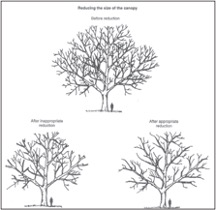
Figure 1a: Examples of canopy reduction, thinning, and raising (FNR-506-W).

Figure 1b: Examples of canopy reduction, thinning, and raising (FNR-506-W).
1) you are injuring the tree, exposing open cuts to pests, diseases, and the elements
2) you are removing plant material that could continue to create energy for the tree if left on.
Both will stress your tree and it will need time to adapt and heal. You can always remove more later, but once you make your cuts you cannot put them back. If your tree needs a heavier prune, it’s time to bring in an arborist.
Next you need to consider what are you cutting? Are you removing whole limbs back to the trunk or are you shortening limbs? If you are removing limbs you want to avoid flush cuts, cutting back even to the trunk. Flush cuts (Fig. 2) are usually oval and have a larger surface area exposing more of the tree to pests, diseases, and the elements. Instead, you want to cut up to the branch bark ridge, a raised portion of bark on the top of the limb where it meets the trunk, and the branch collar, usually a swollen area on the bottom side of the limb where it begins to flare out from the trunk (Fig. 3). This is a proper removal cut that has the smallest surface area exposed and is usually more circular than oval.
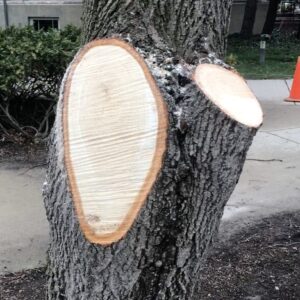
Figure 2: Examples of a flush cut (left) and a proper removal cut (right).
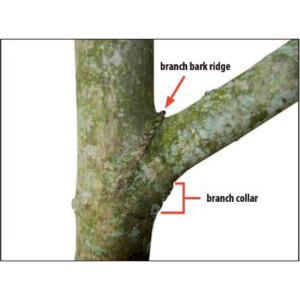
Figure 3: Identifying the branch bark ridge and the branch collar for proper removal cuts (FNR-506-W).
If you are shortening limbs you want to perform a reduction cut, which is removing a larger stem by cutting back to a lateral branch that is at least 1/3 the diameter of the portion you are removing (Fig. 4). This provides sufficient energy production the keep the remaining limb alive. In this situation, you want to avoid heading cuts, which are length reductions without regard to the position or diameter of the lateral branch you are cutting back too. Cutting too far away from the lateral will lead to dead stubs that increase exposure and the time needed to heal over wounds. Cutting to laterals that are too small won’t allow the limb to produce enough energy to survive.
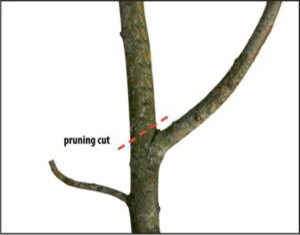
Figure 4: Correct placement of a reduction cut to an properly sized lateral branch (FNR-506-W).
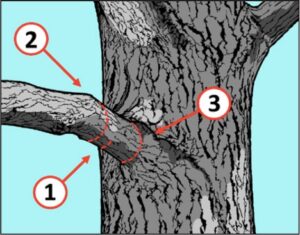
Figure 5: The 3-cut method for safe removal of limbs (FNR-506-W).
Last, whether you are applying removal or reduction cuts, you want to utilize what is called the ternary or 3-Cut Method (Fig. 5). The purpose of this method to stop damage from splitting and tear-outs in larger limbs that can’t be controlled by hand. The first cut is the undercut, about 1/3 the diameter of the limb and usually 6-12 inches from your final cut. The second cut is the top cut just outside the undercut. This cut continues down until it meets the same plane as the undercut where gravity will take hold as the branch snaps and falls. The final cut is to the branch collar, or the chosen lateral as noted above.
Proper pruning can be a daunting task at first. With time, the correct materials, and practice you can better care for your trees, your landscape, and yourself. If you are still worried about your trees, there are plenty of resources at Purdue Extension and The Education Store or you can always find an ISA Certified Arborist nearby using the Trees Are Good website. They will be able to help assess any other issues and provide excellent professional help.
Resources:
Tree Pruning Essentials, Video & Document
Tree Pruning for the Landscape Webinar, Purdue Extension – Forestry and Natural Resources (FNR) Youtube Channel
Tree Appraisal and the Value of Trees, The Education Store, Purdue Extension resource center
Tree Pruning: What Do Trees Think?, The Education Store
Mechanical Damage to Trees: Mowing and Maintenance Equipment, The Education Store
Tree Installation Process and Practices, The Education Store
Tree Planting Part 1: Choosing a Tree, The Education Store
Tree Planting Part 2: Planting Your Tree, The Education Store
Planting Problems: Planting Too Deep, Video, Purdue Extension – FNR Youtube Channel
Ben McCallister, Urban Forestry Specialist
Purdue Forestry and Natural Resources
In this episode of ID That Tree, Purdue Extension forester Lenny Farlee introduces the yellow buckeye. This native species, found in southeastern Indiana on high quality sites, features palmately compound leaves, like fingers on a hand, mostly featuring five leaflets with lighter colored undersides. This species is named for its yellow flower clusters, which appear in the spring. It holds its buckeye seeds in smooth husks, unlike its cousin Ohio buckeye, which has warts and spines.
If you have any questions regarding wildlife, trees, forest management, wood products, natural resource planning or other natural resource topics, feel free to contact us by using our Ask an Expert web page.
Resources:
ID That Tree, Playlist, Purdue Extension – Forestry and Natural Resources (FNR) YouTube Channel (Invasive White Mulberry, Siberian Elm, Tree of Heaven)
Invasive Species Playlist, Playlist, Purdue Extension – FNR YouTube Channel (Asian Bush Honeysuckle, Burning Bush, Callery Pear, Multiflora rose)
A Woodland Management Moment, Playlist, Purdue Extension – FNR YouTube Channel (Against Invasives, Garlic Mustard, Autumn Olive)
Woodland Stewardship for Landowners, Playlist, Purdue Extension – FNR YouTube Channel (Common Buckthorn, Japanese Barberry)
Yellow Buckeye, Native Trees of Indiana River Walk, Purdue University, Fort Wayne
Report Invasive Species, Purdue Invasive Species
The GLEDN Phone App – Great Lakes Early Detection Network
EDDMaps – Early Detection and Distribution Mapping System
How long do seeds of the invasive tree, Ailanthus altissima remain viable? (Invasive Tree of Heaven), USDA Forest Service
Indiana Department of Natural Resources: Invasive Species
Indiana Invasive Species Council
Cooperative Invasive Species Management Area (CISMA)
Aquatic Invasive Species, Illinois-Indiana Sea Grant (IISG)
Episode 11 – Exploring the challenges of Invasive Species, Habitat University-Natural Resource University
What are invasive species and why should I care?, Got Nature? Blog, Purdue Extension – FNR
Shrubs and Woody Vines of Indiana and the Midwest, The Education Store, Purdue Extension Resource Center
Native Trees of the Midwest, The Education Store
Investing in Indiana Woodlands, The Education Store
Forest Improvement Handbook, The Education Store
Lenny Farlee, Extension Forester
Hardwood Tree Improvement and Regeneration Center
Purdue Department of Forestry & Natural Resources
Question: Once I’ve pulled or cut, and have treated the bush honeysuckle stumps, can it be left to decay, particularly if not piled directly on the ground in a woodland?
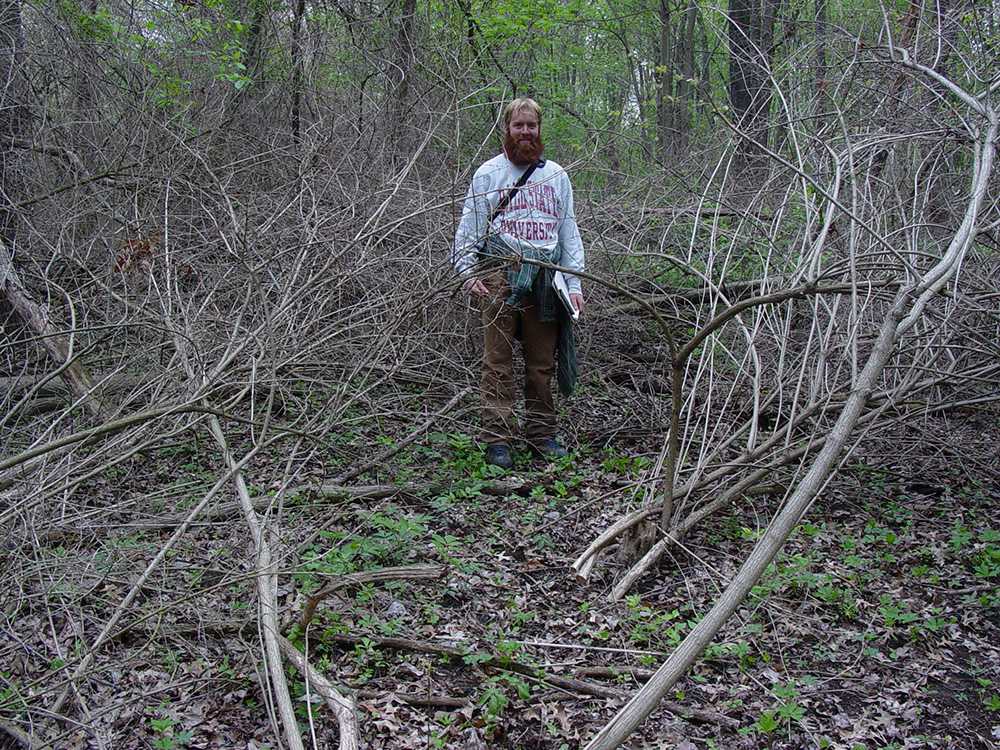
Figure 1. Invasive brush cut and left in place to decay. (click to enlarge)
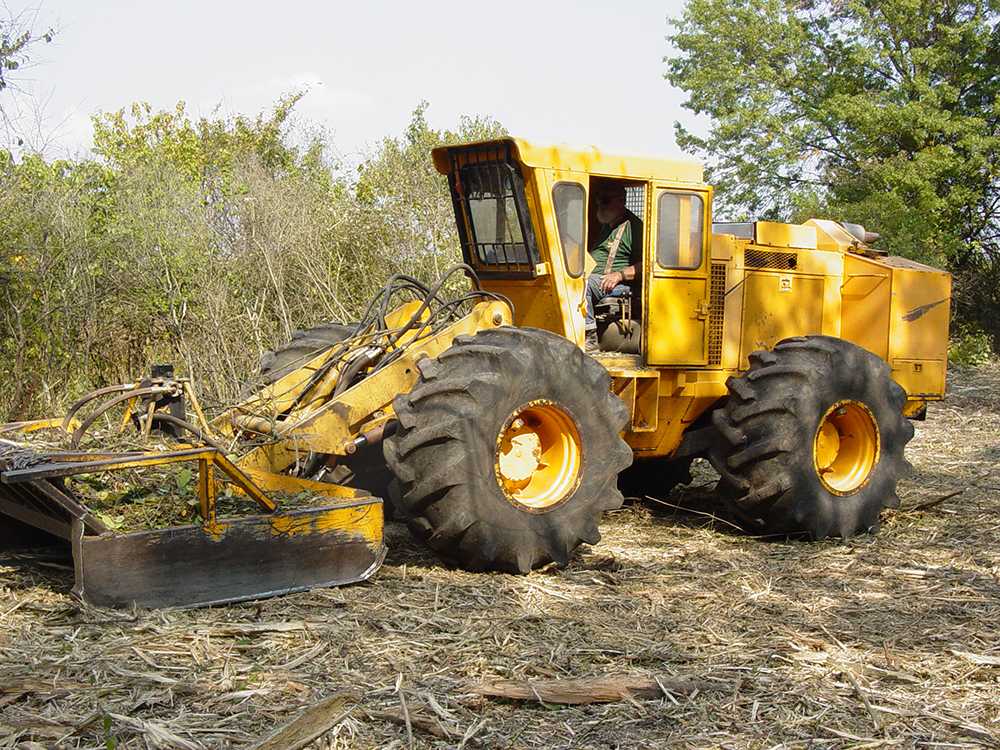
Figure 2. Kershaw Hydroax brush cutter. (click to enlarge)
When deciding what methods to use to control invasive brush on your property, one of the questions often asked is “what should I do with the cut tops?” (Fig. 1) A similar question we often get from landowners planning to have timber harvested from their woods is “what should I or the loggers do with the tree tops that are left?” The simple answer is just leave them where they are and they will decay over time and gradually disappear. If you have many acres to treat for invasive brush infestation, then this is good news. But there may be other factors to consider. In this blog post I will try to unpack those other considerations to help you decide what to do.To start let’s do a quick review of the more common methods of controlling invasive brush and the resulting ground conditions left in their aftermath. By invasive brush, I am primarily talking about non-native brush species that have invaded our native habitats, including the woods, and that are wreaking ecological havoc and degrading the productive potential of those lands for wildlife, timber, and recreation. The more common species include Asian bush honeysuckle, autumn olive, multiflora rose and callery pear (aka Bradford, Cleveland, ornamental pear).There are a variety of methods, tools, equipment, and chemicals used for invasive brush control. Other blog posts cover many of these methods, so I will not describe their use except to show what a site looks like in their wake. Large equipment like skid steer mounted mulchers or brush cutters or the industrial size Hydroax (Fig. 2) thoroughly chop up or mulch all that brush material and leave a fairly clean site (Fig. 3). In this case, there are no brush tops to dispose of. If you are wanting a very “clean” site, then hiring a dozer may be what you’re after. All those tops can then be piled and burned. The bare soil can then be planted in desired vegetation.Most forest landowners are going to use smaller scale methods and equipment, especially in the woods. Spraying herbicide on the foliage (Fig. 4) or applying it as a basal bark application to the lower stems leaves dead standing shrubs. Using brushsaws and chainsaws to cut the shrubs close to the ground and then applying a concentrated herbicide to the stump (commonly called cut-stump treatment, Fig. 5) leaves severed brush tops lying about. Even the less conventional prescribed fire will almost always leave standing dead shrub tops.
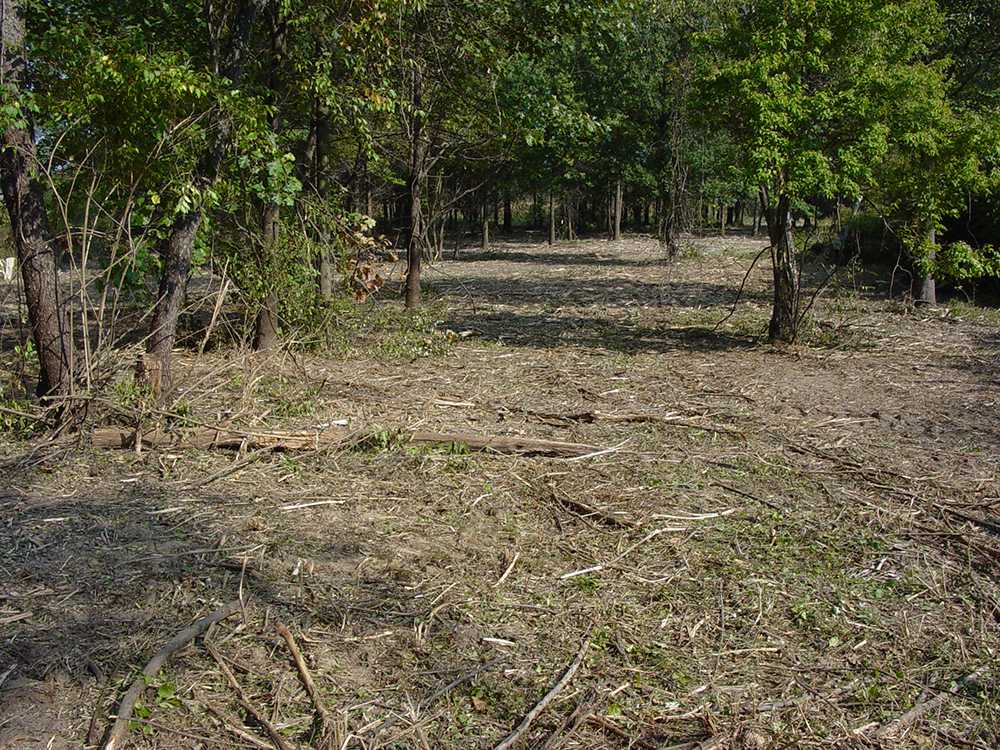
Figure 3. Once dominated by large non-native bush honeysuckle shrubs, this site was recently cleared by large brush cutting equipment. (click to enlarge)
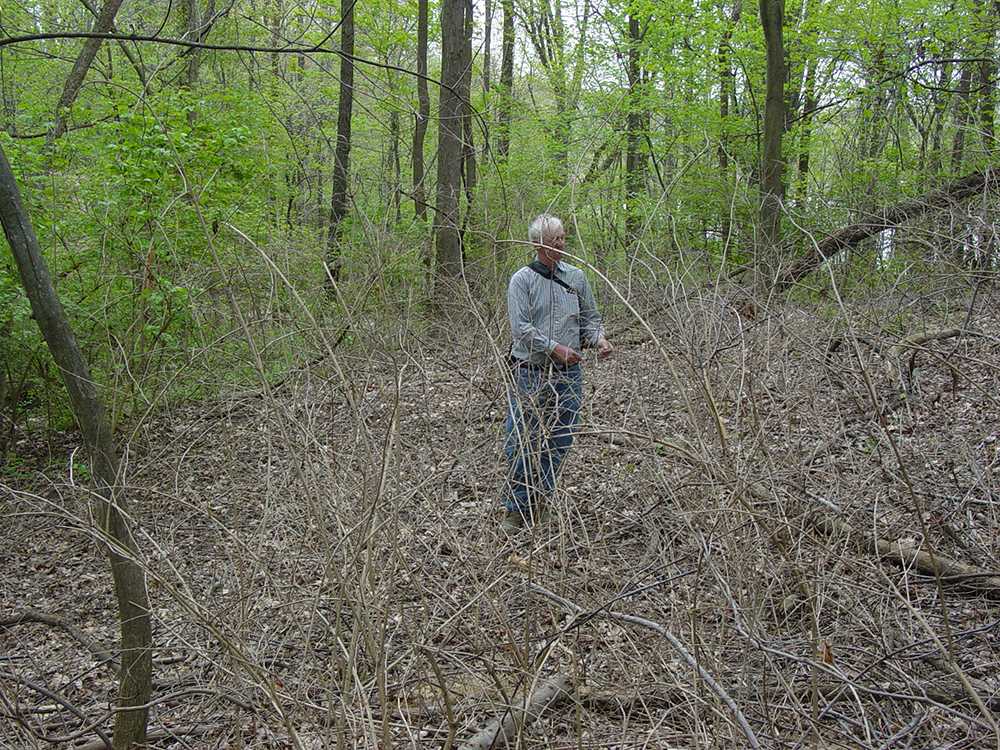
Figure 4. Dead non-native bush honeysuckle recently sprayed with herbicide. (click to enlarge)
For many people, the problem with all these dead shrubs lying about is aesthetic – it makes the property look cluttered, at best, if not downright unsightly. If aesthetics were the only concern, we might be able to talk ourselves into putting up with it for several years until the dead shrub tops begin to decay and break down and new vegetation grows up to mask them.
But are there other concerns that would justify expending time and money to dispose of the dead tops?
Access may be another consideration, especially in high use areas such as those used frequently for recreation like hunting or hiking. Depending on habitat restoration plans, you may want access to those areas to seed or plant native trees, shrubs, forbs or grasses. Especially if you are using specialized planting or seed drill equipment, the site may need to be relatively clear of obstructions and debris.
How does leaving dead invasive shrub tops impact this restoration process?
The removal of invasive species should not be the end goal in managing habitat, but only an important step in restoring a healthy native plant community. How does leaving dead invasive shrub tops impact this restoration process? Researchers in Ohio found in the short term that cutting and applying herbicide to the stumps of Amur honeysuckle (Asian bush honeysuckle) and leaving the tops in place allowed more sunlight to reach the forest floor than the basal bark treatment which left dead tops standing in place (Cipollini et al. 2009). This resulted in greater height growth for native herbaceous plant growth. However, in the presence of deer browse, the native plants suffered less deer damage in the basal bark treatment area, due to the greater protection afforded by the standing dead tops, compared to the areas where tops were cut. One might surmise that even leaving cut tops in place may provide some protection from deer browse compared to complete removal of the tops. Joshua Shields and fellow researchers at Purdue University (2014) studied the impact of clearing bush honeysuckle in a forest environment on white footed mice populations. They found that where bush honeysuckle was cut and the tops removed from the site that white footed mice numbers increased, compared with mice numbers in nearby standing live bush honeysuckle. They did not, however, test how leaving cut honeysuckle tops on site would affect mice populations.
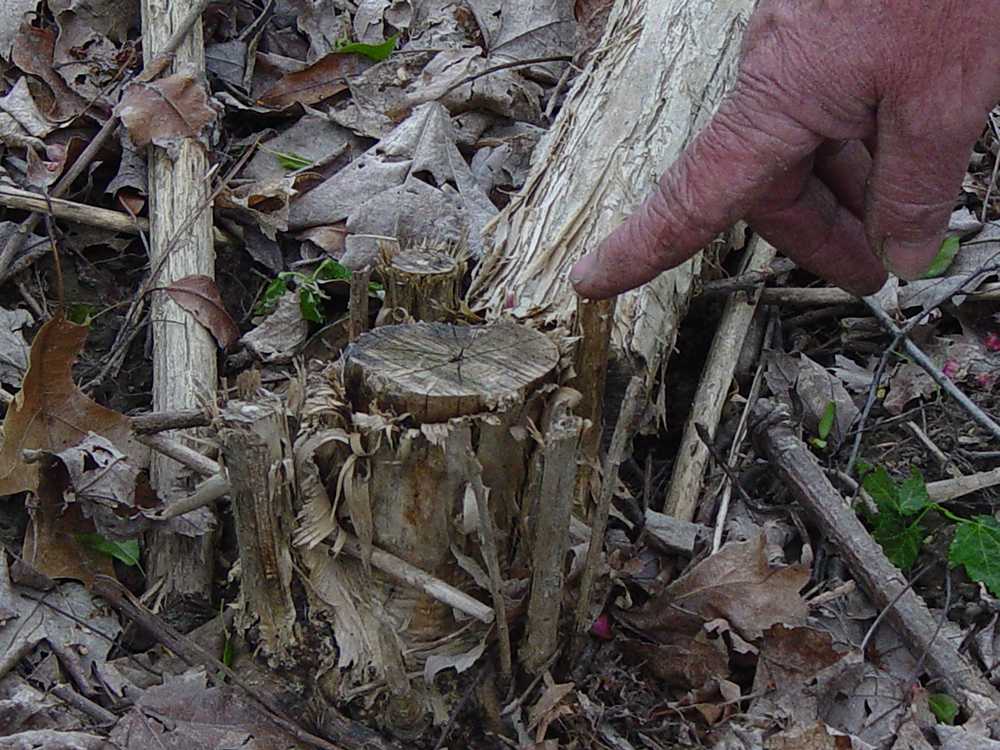
Figure 5. Cut stump of bush honeysuckle. (click to enlarge)
Many people may cringe at the thought of increasing numbers of mice, but mice in their natural environment are an important source of food for many predators, including hawks, owls, fox, mink, weasels, and bobcats. In a study comparing the cut stump method (cutting the stems and treating the stump with herbicide) and the use of a mulching head attachment on a skid steer for controlling bush honeysuckle, Purdue researchers found no difference in the growth and recovery of the native plants (Graham et al. 2018). However, the mulching head treatment resulted in a greater abundance of garlic mustard, a non-native invasive biennial herb. Invasive brush control treatments resulting in greater soil disturbance often lead to a second wave of invasive plants that need follow-up treatment.
So what can we conclude from all this?
There are benefits and drawbacks to removing invasive brush tops when managing invasive species on your property. It really depends on your management objectives. It can even vary depending on the specific location on your property. In some select areas it may be very beneficial to remove the tops while in most other areas you can just let them rot in place. The important thing is that you have a well thought out plan for managing the invasive species on your property and that you are working your plan. As you work your plan you will begin seeing the positive results as native plant communities begin to make a comeback.
Resources:
A Woodland Management Moment, Playlist, Purdue Extension – Forestry and Natural Resources (FNR) Youtube Channel
Conservation Tree Planting: Steps to Success, Purdue Extension – FNR Youtube Channel
Invasive Species, Playlist, Purdue Extension – FNR Youtube Channel
Woodland Stewardship for Landowners, Playlist, Purdue Extension – FNR Youtube Channel
Invasive Plant Species Identification, Video, Purdue Extension – FNR Youtube Channel
Report Invasive Species, Purdue Invasive Species
The GLEDN Phone App – Great Lakes Early Detection Network
EDDMaps – Early Detection and Distribution Mapping System
Indiana Department of Natural Resources: Invasive Species
Indiana Invasive Species Council
Cooperative Invasive Species Management Area (CISMA)
Invasive plants: impact on environment and people, The Education Store, Purdue Extension’s resource center
A Landowner’s Guide to Sustainable Forestry: Part 7: Managing for a Diversity of Value-Added Forest Products, The Education Store
Investing in Indiana Woodlands, The Education Store
Woodland Invaders, Got Nature? Blog, Purdue Extension – FNR
Ron Rathfon, Regional Extension Forester, Southern Indiana Purdue Agriculture Center (SIPAC)
Purdue Forestry and Natural Resources
Purdue Landscape Report: Each spring the PPDL receives several samples of oak trees showing curled, twisted, stunted and/or generally ratty looking leaves. When there are holes in the leaves or leaf edges are missing tissue, we add another symptom name to the mix: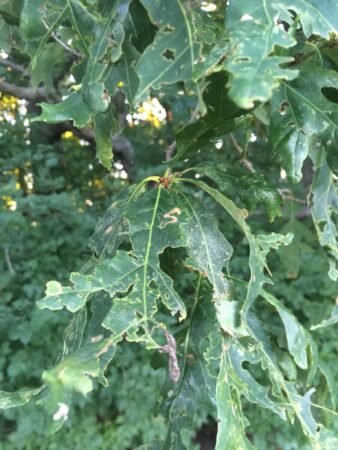 tatters.
Distorted new growth and tatters are most common on white oaks and may occasionally show up on red oak, hackberry and other trees. Upon initial inspection the leaves look as if they have been shredded or severely fed upon by insects. However, a closer observation of the leaves will reveal that the leaf tissue has not been removed, but rather, it never developed normally. We have seen this problem on white oaks for many years in Indiana and it has been reported in other states throughout the Midwest.
Several possible causes for this symptom have been proposed, including poor growing conditions, insect injury, leaf diseases, late spring frost damage and herbicide drift; however, no single factor serves to explain all the cases. In 2020 we saw a distinct link between tattered oak leaves and a late spring frost that year but the connection is not always so clear cut. See PLR article: Oaks Will Persist After Ugly Summer Start.
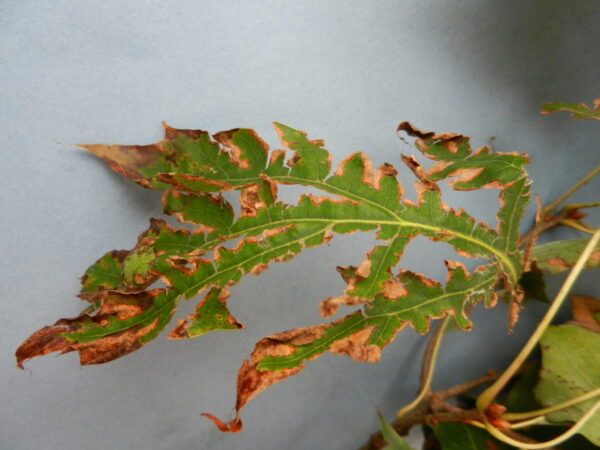
Researchers have shown that acetochlor and s-metolachlor drift can cause tatters-like symptoms but results were variable, and in some treatments red oaks were more affected than white oaks, contrary to the expected results. In many instances there is no direct link to herbicide drift. We once had samples from a white oak tree that showed symptoms of tatters and leaf curl every year, yet was located in the middle of a heavily forested area miles away from any agricultural fields that might have been a source of herbicide drift. While the exact cause may not be clear, it does appear that conditions that lead to tatters occur while the leaves are still developing.
To view this full article and other Purdue Landscape Report articles, please visit Purdue Landscape Report.
Subscribe and receive the newsletter: Purdue Landscape Report Newsletter.
Resources:
The Purdue Landscape Report
Certified Soil Testing Laboratories, Purdue Extension-Master Gardener Program
Consumer Horticulture: Collecting Soil Samples for Testing, The Education Store
Purdue Landscape Report Facebook Page
Find an Arborist website, Trees are Good, International Society of Arboriculture (ISA)
Tree Installation: Process and Practices, The Education Store
Planting Forest Trees and Shrubs in Indiana, The Education Store
Planting Your Tree Part 1: Choosing Your Tree, Video, Purdue Extension – Forestry and Natural Resources YouTube Channel
Tree Defect Identification, The Education Store, Purdue Extension resource center
Tree wounds and healing, Got Nature? Blog
Tree Pruning Essentials, Publication & Video, The Education Store
Shrubs and Woody Vines of Indiana and the Midwest, The Education Store
Tree Risk Management, The Education Store
Why Is My Tree Dying?, The Education Store
Tom Creswell, Plant & Pest Diagnostic Laboratory Director
Purdue Botany and Plant Pathology
In this episode of A Woodland Management Moment, Purdue Extension forester Lenny Farlee talks about the high deer populations around forest land, which can make it difficult to get hardwood seedlings established. This video brings more details and introduces a revised less expensive design option as it coincides with our first deer fencing video.
If you have any questions regarding trees, forests, wildlife, wood products or other natural resource topics, feel free to contact us by using our Ask an Expert web page.
Resources:
A Woodland Management Moment, Playlist, Purdue Extension – Forestry and Natural Resources (FNR) YouTube Channel
Shrubs and Woody Vines of Indiana and the Midwest, The Education Store, Purdue Extension Resource Center
Native Trees of the Midwest, The Education Store
ID That Tree, Playlist, Purdue Extension – FNR YouTube Channel
Investing in Indiana Woodlands, The Education Store
Woodland Stewardship for Landowners Video Series, Playlist, Indiana Department of Natural Resources YouTube Channel
Ask an Expert: Tree Selection and Planting, Purdue Extension – Forestry and Natural Resources (FNR) YouTube Channel
Lenny Farlee, Sustaining Hardwood Extension Specialist
Purdue University Department of Forestry and Natural Resources
The classic and trusted book “Fifty Common Trees of Indiana” by T.E. Shaw was published in 1956 as a user-friendly guide to local species. Nearly 70 years later, the publication has been updated through a joint effort by the Purdue Department of Forestry and Natural Resources, Indiana 4-H, and the Indiana Department of Natural Resources, and reintroduced as “An Introduction to Trees of Indiana.”
The full publication is available for download for $7 in the Purdue Extension Education Store. The field guide helps identify common Indiana woodlot trees.
Each week, the Intro to Trees of Indiana web series will offer a sneak peek at one species from the book, paired with an ID That Tree video from Purdue Extension forester Lenny Farlee to help visualize each species as it stands in the woods. Threats to species health as well as also insight into the wood provided by the species, will be provided through additional resources as well as the Hardwoods of the Central Midwest exhibit of the Purdue Arboretum, if available.
This week, we meet the Virginia pine, or Pinus virginiana. In Indiana, this species is native to the southern part of the state, namely Clark and Floyd counties in the dry, hilly areas known as the Knobs near the Ohio River, but it has been widely planted across the state.
This native conifer has clusters of two needles, approximately two inches long, which are often twisted.
The Virginia pine has an open canopy. Bark on the Virginia pine is flaky, with a combination of gray and red-orange tones. The bark gets more orange higher up the trunk. Cones are one to three inches long and have very sharp thorns at the end of the scales. Cones typically stay on the tree for several years.
For full article with additional photos view: Intro to Trees of Indiana: Virginia Pine, Forestry and Natural Resources’ News.
If you have any questions regarding wildlife, trees, forest management, wood products, natural resource planning or other natural resource topics, feel free to contact us by using our Ask an Expert web page.
Other Resources:
ID That Tree: Virginia Pine
Borers of Pines and Other Needle Bearing Evergreens in Landscapes, The Education Store, Purdue Extension’s resource center
Managing the Zimmerman Pine Moth, The Education Store
Purdue Arboretum Explorer
The Woody Plant Seed Manual, U.S. Forest Service
Native Trees of the Midwest, The Education Store
Shrubs and Woody Vines of Indiana and the Midwest, The Education Store
Investing in Indiana Woodlands, The Education Store
Forest Improvement Handbook, The Education Store
ID That Tree, Purdue Extension-Forestry & Natural Resources (FNR) YouTube playlist
Woodland Management Moment , Purdue Extension-FNR YouTube playlist
Wendy Mayer, FNR Communications Coordinator
Purdue University Department of Forestry and Natural Resources
Lenny Farlee, Extension Forester
Purdue University Department of Forestry and Natural Resources
In this edition of ID That Tree, Purdue extension forester Lenny Farlee helps you identify American elderberry, a native shrub found in wetland areas and other areas with good-quality moist soils. This shrub produces small white flowers which turn to berries and are favored by birds and humans alike. It has opposite leaf arrangement with compound leaves and often is found as a cluster of stems with relatively smooth texture.
If you have any questions regarding wildlife, trees, forest management, wood products, natural resource planning or other natural resource topics, feel free to contact us by using our Ask an Expert web page.
Resources:
ID That Tree, Playlist, Purdue Extension – Forestry and Natural Resources YouTube Channel (Invasive White Mulberry, Siberian Elm, Tree of Heaven)
Invasive Species Playlist, Playlist, Purdue Extension – FNR YouTube Channel (Asian Bush Honeysuckle, Burning Bush, Callery Pear, Multiflora rose)
A Woodland Management Moment, Playlist, Purdue Extension – FNR YouTube Channel (Against Invasives, Garlic Mustard, Autumn Olive)
Woodland Stewardship for Landowners, Playlist, Purdue Extension – FNR YouTube Channel (Common Buckthorn, Japanese Barberry)
Report Invasive Species, Purdue Invasive Species
The GLEDN Phone App – Great Lakes Early Detection Network
EDDMaps – Early Detection and Distribution Mapping System
How long do seeds of the invasive tree, Ailanthus altissima remain viable? (Invasive Tree of Heaven), USDA Forest Service
Indiana Department of Natural Resources: Invasive Species
Indiana Invasive Species Council
Cooperative Invasive Species Management Area (CISMA)
Aquatic Invasive Species, Illinois-Indiana Sea Grant (IISG)
Episode 11 – Exploring the challenges of Invasive Species, Habitat University-Natural Resource University
What are invasive species and why should I care?, Got Nature? Blog, Purdue Extension – FNR
Shrubs and Woody Vines of Indiana and the Midwest, The Education Store, Purdue Extension Resource Center
Native Trees of the Midwest, The Education Store
Investing in Indiana Woodlands, The Education Store
Forest Improvement Handbook, The Education Store
Lenny Farlee, Extension Forester
Hardwood Tree Improvement and Regeneration Center
Purdue Department of Forestry & Natural Resources
Join Indiana Forestry & Woodland Owners Association (IFWOA) as they celebrate the state’s natural beauty by sharing photos and stories from Carroll Ritter’s book of “Magnificent Trees of Indiana.” They discuss the changes that have occurred over the last two centuries in Indiana’s forests, including the landscape geology and physiography.
Check out the Indiana Forestry & Woodland Association YouTube Channel for videos including: What is IFWOA?; A New Carbon Program for Hardwood Landowners Webinar, Indiana’s Native Orchids, Magnificent Trees of Indiana, Be Tick Aware and much more.
The Indiana Forestry & Woodland Owners Association (IFWOA) was founded in 1977 and is a non-profit organization dedicated to conservation and sustainable management of woodlands in Indiana. IFWOA advocates for scientific best practices for management to achieve objectives of clean water, wildlife habitat, soil protection, native species diversity, timber production, recreation, carbon sequestration and many others.
IFWOA is an affiliate of the National Woodland Owners Association. IFWOA is a partner, collaborator or is represented on leading National and State organizations. These memberships or collaborations are selected to advance Indiana Woodland owner’s interests. IFWOA monitors and influences legislation and economic trends impacting Indiana woodlands and landowners for our members. Membership in IFWOA provides a valuable network linkage to information and resources at the leading edge of science, industry and politics impacting Indiana woodlands.
Resources:
Magnificent Trees of Indiana, Purdue University Press
Forest Improvement Handbook, The Education Store, Purdue Extension’s resource center
Planting Hardwood Seedlings – The Education Store
Ordering Seedlings from the State Forest Nursery System, Got Nature? – Purdue Extension-FNR
Importance of Hardwood Tree Planting – The Education Store, Purdue Extension Resource Center
Forest Improvement Handbook – The Education Store
Designing Hardwood Tree Plantings for Wildlife – The Education Store
ID That Tree – YouTube Playlist
Forest Management for Reptiles and Amphibians: A Technical Guide for the Midwest, The Education Store
Hardwood Ecosystem Experiment – Forest Birds , Purdue Extension – FNR YouTube Channel
Managing Woodlands for Birds , Purdue Extension – FNR YouTube Channel
Sustaining Our Oak-Hickory Forests , Purdue Extension – FNR YouTube Channel
Ask the Expert: Hardwood Ecosystem Experiment – Birds and Salamander Research, Purdue Extension – FNR
Subscribe to Purdue Extension-FNR YouTube Channel
Liz Jackson, Engagement Lead
Indiana Forestry & Woodland Association
Purdue Landscape Report: The emerald ash borer (EAB), Agrilus planipennis, is still one of the most damaging insect pests ever to invade North American forests. Unlike most native boring insects, this beetle can attack and kill relatively healthy ash trees. In Indiana cities we found this insect capable of killing most of the unprotected ash trees within 6 to 10 years. Nearly 20 years after its first detection in Indiana (2004), trees still need to be protected to keep them alive. The benefits of these living ash trees easily justify the cost of monitoring them. We provide answers to common questions people have about the need for continued treatment.
- I have had a tree care specialist treat my ash trees for the last 10 years. What will happen to these trees if I stop this service? If your trees are still healthy, they were probably treated with injections of emamectin benzoate. Initially we recommended treating trees once every 2 years. This was especially helpful during the initial invasion when each newly infested tree was producing hundreds of beetles per year. Now that most of the untreated ash trees are dead in Indiana, there are fewer emerald ash borers to attack the surviving ash trees. Research clearly shows that treating trees once every 3 years is enough to keep ash trees alive. Increasing the time between treatments beyond 3 years will increase the risk of losing your trees.
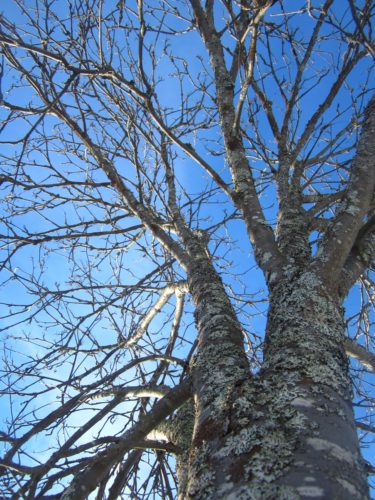
We recently completed a 10-year study in Indianapolis, where large ash trees were treated at 3-year intervals (2013 and 2016), Although they were well-protected through 2019, we saw a slight increase in damage 4 and 5 years after the last injection (2020 and 2021). By the 6th year trees after the last treatment (2022), trees declined to the point that they were a safety hazard. Overall, spring treatments were more effective than fall treatments.
- Is it worthwhile to continue treating my trees? The simple answer is YES, especially if you think about the costs of the alternatives over time. Consider the following choices:
- Homeowner tree removal vs treatment. Suppose you had ash tree that was whose trunk diameter was 30 inches. If you were to have that tree and its stump removed, the cost could easily be $1800. If an ash tree is near your house or other valuable structure special precautions need to be taken to keep limbs from causing damage. These protective measures add greatly to the labor costs and could easily double the removal costs ($3600). In contrast, to keep that tree alive, you would have to inject that tree once every three years at a cost of $300 (assuming the fee is $10/ diameter inch). In other words, the $1800 -3600 you pay to remove the trees would provide 18-36 years of enjoying your tree!
- Homeowner tree replacement vs treatment. Trees grow slowly. Most add a bit less than a half an inch per year of diameter to the trunk. So, if you add $500 on top of the removal costs to plant a new tree ($2300- $4100), the same money would provide 23 to 42 years of tree enjoyment. Moreover, the tree you planted would only be half the size of the original ash tree in 30 years.
For the full article please visit Purdue Landscape Report: Should ash trees still be protected from emerald ash borer?
Resources:
New Hope for Fighting Ash Borer, Got Nature? Purdue Extension-FNR
Invasive Pest Species: Tools for Staging and Managing EAB in the Urban Forest, Got Nature?
Emerald Ash Borer, Purdue Extension-Entomology
Emerald Ash Borer Tools & Resources – Purdue Extension Entomology
Planting Your Tree Part 1: Choosing Your Tree, Purdue Extension YouTube Channel
Tree Planting Part 2: Planting a Tree, Purdue Extension – Forestry and Natural Resources YouTube Channel
Indiana Invasive Plant List, Indiana Invasive Species Council, Purdue Entomology
Landscape Report Shares Importance of Soil Testing, Purdue FNR Extension
Find an Arborist website, Trees are Good, International Society of Arboriculture (ISA)
Tree Risk Management – The Education Store, Purdue Extension’s resource center
Bob Bruner, Exotic Forest Pest Educator
Purdue Entomology
Cliff Sadof, Professor, Ornamental, Pest Management
Purdue Entomology Extension Coordinator

Recent Posts
- Tree Silvics and Succession Webinar: A Biological Basis for Management
Posted: January 30, 2026 in Forests and Street Trees, Urban Forestry, Woodlands - Woodsy Owl Edition for Educational Learning, USDA – U.S. Forest Service
Posted: January 21, 2026 in Forestry, Forests and Street Trees, Got Nature for Kids, Urban Forestry, Wildlife - ID That Tree: Trumpet Creeper
Posted: January 20, 2026 in Forests and Street Trees, Urban Forestry, Woodlands - A Woodland Management Moment: Black Walnut in Pine Plantation
Posted: December 19, 2025 in Forestry, Forests and Street Trees, Urban Forestry, Woodlands - A Woodland Management Moment: Butternut Disease and Breeding
Posted: December 1, 2025 in Forestry, Forests and Street Trees, Woodland Management Moment, Woodlands - Why Do Our Trees Go From Green Leaves to Different Colors?
Posted: November 4, 2025 in Forestry, Forests and Street Trees, Urban Forestry, Woodlands - October Is Firewood Month: Protect Indiana’s Forests by Making Smart Choices
Posted: October 13, 2025 in Forestry, Forests and Street Trees, How To, Invasive Insects, Urban Forestry - Help Your Trees Transition Into Autumn, Purdue Landscape Report
Posted: October 7, 2025 in Forests and Street Trees, Urban Forestry, Woodlands - Marssonina Leaf Spot and Blotch of Poplar, Purdue Landscape Report
Posted: October 1, 2025 in Disease, Forests and Street Trees, Urban Forestry, Woodlands - Discover the Rich World of Oaks with Purdue Extension – FNR
Posted: September 26, 2025 in Ask the Expert, Forests and Street Trees, Wildlife, Woodlands
Archives
Categories
- Alert
- Aquaculture/Fish
- Aquatic/Aquaculture Resources
- Ask the Expert
- Christmas Trees
- Community Development
- Disease
- Drought
- Forestry
- Forests and Street Trees
- Gardening
- Got Nature for Kids
- Great Lakes
- How To
- Invasive Animal Species
- Invasive Insects
- Invasive Plant Species
- Land Use
- Natural Resource Planning
- Nature of Teaching
- Plants
- Podcasts
- Ponds
- Publication
- Safety
- Spiders
- Timber Marketing
- Uncategorized
- Urban Forestry
- Webinar
- Wildlife
- Wood Products/Manufacturing
- Woodland Management Moment
- Woodlands