 Purdue University - Extension - Forestry and Natural Resources
Got Nature? Blog
In this edition of ID That Tree, Purdue Extension forester Lenny Farlee introduces you to the chinkapin oak, a member of the white oak family that has leaves that appear sharp like red/black oaks, but really are not. Learn more inside as well as other easier to identify characteristics.
If you have any questions regarding wildlife, trees, forest management, wood products, natural resource planning or other natural resource topics, feel free to contact us by using our Ask an Expert web page.
Resources
Chinkapin Oak, Native Trees of Indiana River Walk, Purdue Fort Wayne
Quercus muehlenbergii, The Purdue Arboretum Explorer
White Oak, The Education Store, Purdue Extension resource center
ID That Tree, Purdue Extension – Forestry & Natural Resources Playlist
A Woodland Management Moment, Purdue Extension – Forestry & Natural Resources Playlist
Investing in Indiana Woodlands, The Education Store
Forest Improvement Handbook, The Education Store
Lenny Farlee, Sustaining Hardwood Extension Specialist
Purdue University Department of Forestry and Natural Resources
In this edition of ID That Tree, Purdue Extension forester Lenny Farlee introduces you to a rebel of the oak family, the shingle oak. Unlike its relatives, the shingle oak’s shiny leaves do not feature any lobes and have a complete margin. Learn more about this oddity and other ways to identify this species inside.
If you have any questions regarding wildlife, trees, forest management, wood products, natural resource planning or other natural resource topics, feel free to contact us by using our Ask an Expert web page.
Resources
Shingle Oak, Native Trees of Indiana River Walk, Purdue Fort Wayne
Quercus imbricaria, The Purdue Arboretum Explorer
ID That Tree, Purdue Extension – Forestry & Natural Resources Playlist
A Woodland Management Moment, Purdue Extension – Forestry & Natural Resources Playlist
Investing in Indiana Woodlands, The Education Store
Forest Improvement Handbook, The Education Store
Lenny Farlee, Sustaining Hardwood Extension Specialist
Purdue University Department of Forestry and Natural Resources
In this edition of ID That Tree, Purdue Extension forester Lenny Farlee introduces a whole family of trees, the red oak group. He identifies four common species and shows how to differentiate between them as well as how to keep the red and white oak groups separated.
If you have any questions regarding trees, forests, wildlife, wood products or other natural resource topics, feel free to contact us by using our Ask an Expert web page.
Resources
Red Oak, The Education Store, Purdue Extension – Forestry and Natural Resources
FNR Hardwood – Red Oak, The Purdue Arboretum Explorer
Red Oak, Native Trees of Indiana River Walk, Purdue – Fort Wayne
ID That Tree, Playlist, Purdue Extension – Forestry and Natural Resources Youtube Channel
A Woodland Management Moment, Playlist, Purdue Extension – Forestry and Natural Resources Youtube Channel
Investing in Indiana Woodlands, The Education Store
Forest Improvement Handbook, The Education Store
Lenny Farlee, Sustaining Hardwood Extension Specialist
Purdue University Department of Forestry and Natural Resources
Did you know that pecan is a relative of the native bitternut hickory? Purdue Extension forester Lenny Farlee shares more about this species, which features relatively narrow leaflets, strong sulphur yellow colored elongated buds and a tight light gray colored bark with small interlacing ridges.
If you have any questions regarding trees, forests, wildlife, wood products or other natural resource topics, feel free to contact us by using our Ask an Expert web page.
Resources
Carya cordiformis, The Purdue Arboretum Explorer
Hickory and Pecan Species, Education Store, Purdue Extension resource center
Bitternut Hickory, Native Trees of Indiana River Walk, Purdue – Fort Wayne
ID That Tree, Playlist, Purdue Extension – Forestry and Natural Resources Youtube Channel
A Woodland Management Moment, Playlist, Purdue Extension – Forestry and Natural Resources Youtube Channel
Investing in Indiana Woodlands, The Education Store
Tree Appraisal and the Value of Trees, The Education Store
Forest Improvement Handbook, The Education Store
Lenny Farlee, Sustaining Hardwood Extension Specialist
Purdue University Department of Forestry and Natural Resources
Some trees just don’t follow the rules. Case in point, the alternate leaved dogwood. As Purdue Extension forester Lenny Farlee explains, this native tree has an alternate leaf arrangement unlike its dogwood cousins in North America, which have an opposite leaf arrangement. It is still recognizable, however, by the venation running parallel to the outside edge of the leaf, and very large, egg-shaped leaves. It also has clusters of small white flowers in the spring.
If you have any questions regarding wildlife, trees, forest management, wood products, natural resource planning or other natural resource topics, feel free to contact us by using our Ask an Expert web page.
Resources
Cornus alternifolia, The Purdue Arboretum Explorer
ID That Tree, Purdue Extension – Forestry & Natural Resources Playlist
A Woodland Management Moment, Purdue Extension – Forestry & Natural Resources Playlist
Tree Appraisal and the Value of Trees, The Education Store
Investing in Indiana Woodlands, The Education Store
Forest Improvement Handbook, The Education Store
Lenny Farlee, Sustaining Hardwood Extension Specialist
Purdue University Department of Forestry and Natural Resources
In this edition of ID That Tree, we introduce you to the cucumber magnolia. This native Indiana species is much like other members of the magnolia family, except it has green cucumber like fruit and a unique bark. Learn more from Purdue Extension forester Lenny Farlee.
If you have any questions regarding wildlife, trees, forest management, wood products, natural resource planning or other natural resource topics, feel free to contact us by using our Ask an Expert web page.
Resources
Indiana’s Native Magnolias, The Education Store, Purdue Extension resource center
Cucumber Magnolia, Native Trees of Indiana River Walk, Purdue Fort Wayne
Magnolia Acuminata, The Purdue Arboretum Explorer
ID That Tree, Purdue Extension – Forestry & Natural Resources Playlist
A Woodland Management Moment, Playlist
Investing in Indiana Woodlands, The Education Store, Purdue Extension resource center
Forest Improvement Handbook, The Education Store
Lenny Farlee, Sustaining Hardwood Extension Specialist
Purdue University Department of Forestry and Natural Resource
Purdue Extension forester Lenny Farlee introduces you to the American Basswood. He shares about how to identify this species, where you might find them and common uses.
If you have any questions regarding trees, forests, wildlife, wood products or other natural resource topics, feel free to contact us by using our Ask an Expert web page.
Resources
FNR Hardwood – American Basswood, The Purdue Arboretum Explorer
Tilia Americana, The Purdue Arboretum Explorer
Basswood, Native Trees of Indiana River Walk, Purdue – Fort Wayne
ID That Tree, Playlist, Purdue Extension – Forestry and Natural Resources Youtube Channel
A Woodland Management Moment, Playlist, Purdue Extension – Forestry and Natural Resources Youtube Channel
Investing in Indiana Woodlands, The Education Store
Tree Appraisal and the Value of Trees, The Education Store
Forest Improvement Handbook, The Education Store
Lenny Farlee, Sustaining Hardwood Extension Specialist
Purdue University Department of Forestry and Natural Resources
Join Purdue Extension forester Lenny Farlee and extension wildlife specialist Brian MacGowan with another new video added to the Ask an Expert YouTube Playlist. This episode of Ask an Expert covers everything from the change in fall foliage to invasive species identification and control, fall foods for humans and wildlife, habitat prep and management and planning ahead for spring plantings.
If you have any questions regarding trees, forest management, wildlife, wood products or other natural resource topics, feel free to contact us by using our Ask an Expert web page.
Resources
Ask An Expert, Playlist, Purdue Extension – Forestry and Natural Resources (FNR) Youtube channel
A Woodland Management Moment, FNR Playlist
Woodland Stewardship for Landowners, FNR Playlist
Invasive Species, FNR Playlist
Fall Color Pigments, FNR Video
Wildlife Habitat Education Program – Teaching and Learning Wildlife Management Practices, The Education Store, Purdue Extension resource center
What Nurseries Need to Know About the Invasive Species Regulation, The Education Store
Invasive plants: impact on environment and people, The Education Store
Lenny Farlee, Sustaining Hardwood Extension Specialist
Purdue University Department of Forestry and Natural Resource
Brian MacGowan, Extension Wildlife Specialist
Department of Forestry & Natural Resources, Purdue University
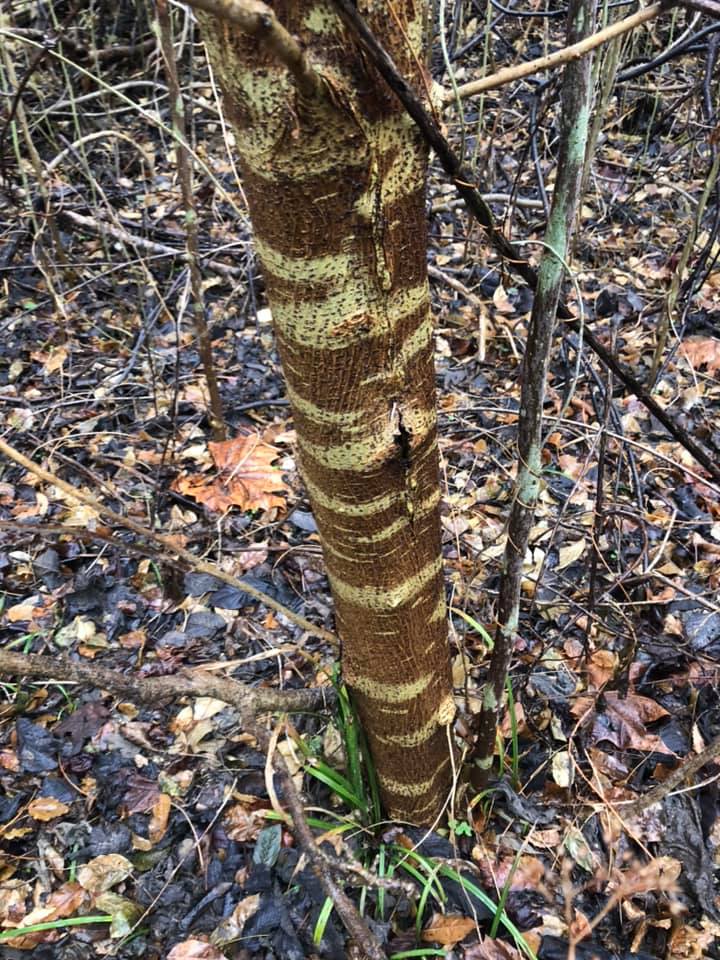
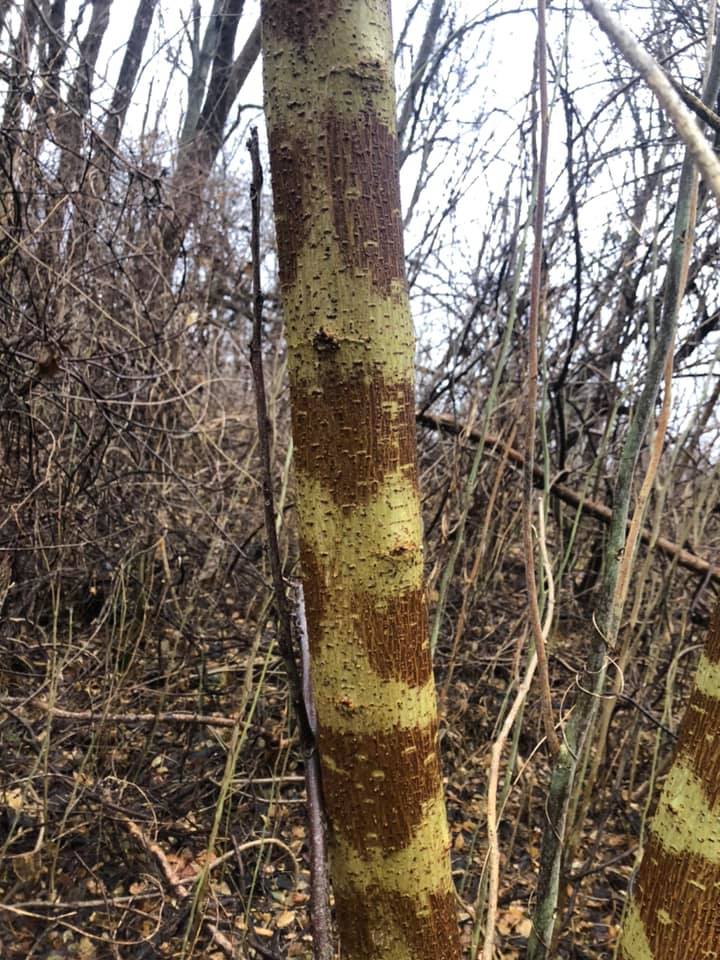
Question: My husband and I are 64 and have been in woods all our lives. We came across a tree we couldn’t identify and are wondering if you are familiar with it. It kind of looks like a birch with giraffe like markings. We are wondering if it is diseased since it is so unusual. Please see photos.

Answer:
Thank you for your Ask an Expert inquiry regarding the identification of this tree and asking if it is invasive. After sharing this with other master arborists we have identified this tree:
Paper Mulberry
Broussonetia papyrifera (L.) L’Her. ex Vent
Mulberry family (Moraceae)
Origin: Japan and Taiwan
Background: Paper mulberry was introduced for use as a fast-growing shade tree. Native Pacific cultures use it to make bark cloth.
Distribution and Habitat: Found from Illinois to Massachusetts, south to Florida and west to Texas, paper mulberry invades open habitats such as forest and field edges. Internationally, it is identified as an invasive weed in over a dozen countries.
Ecological Threat: Once established it grows vigorously, displacing native plants through competition and shading. If left unmanaged, paper mulberry can dominate a site. Its shallow root system makes it susceptible to blowing over during high winds, posing a hazard to people and causing slope erosion and further degradation of an area.
We have several resources to help you as you identify trees and invasives:
Purdue Plant and Pest Diagnostic Laboratory, send in a sample or photos to help identify or diagnose trees and plants (cost $11+), Purdue Extension-Botany and Plant Pathology
Tree Doctor, download app that can be used to help identify and learn more regarding tree diseases Purdue Extension-The Education Store
Certified Arborist, Find an Arborist, International Society of Arboriculture
Invasive Forest Pests in IN, Purdue Extension-Entomology
Indiana Invasive Species Council
Ask an Expert, Purdue Extension-Forestry & Natural Resources
More Resources:
Red and White Mulberry in Indiana, The Education Store, Purdue Extension Depot
Invasive plants: impact on environment and people, The Education Store
Woodland Stewardship for Landowners: EQIP, YouTube, Purdue Extension
Invasive Species, Playlist, Purdue Extension – Forestry and Natural Resources YouTube Channel
Woodland Stewardship for Landowners, Playlist
FNR Ask An Expert: Invasive Plant Species, Video
ID That Tree, Playlist
What are invasive species and why should I care?, Got Nature? Blog, Purdue Extension – Forestry and Natural Resources
Report Invasive Species, Purdue Invasive Species
The GLEDN Phone App – Great Lakes Early Detection Network
EDDMaps – Early Detection and Distribution Mapping System
Indiana Department of Natural Resources: Invasive Species
Indiana Invasive Species Council
Cooperative Invasive Species Management Area (CISMA)
Lindsey Purcell, Chapter Executive Director
Indiana Arborist Association
In this video, we explain the second treatment technique utilized on the Hardwood Ecosystem Experiment, even-aged management. This technique aims to create areas where all of the trees are the same age. Watch to learn how this is accomplished.
The 100 year study, Hardwood Ecosystem Experiment (HEE), brings pertinent forest management data to many in Indiana. HEE Extension publications continue to share topics including: Wildlife Responses to Timber Harvesting, Sustaining our Oak-Hickory Forests, Forest Birds and more.
To learn more about this 100 year forest management plan and see its impacts, check out the Hardwood Ecosystem Experiment (HEE) website.
Resources
Hardwood Ecosystem Experiment (HEE), Playlist, Purdue Extension – Forestry and Natural Resources
Hardwood Ecosystem Experiment: Uneven-aged Management, Video
A Woodland Management Moment, Playlist
Woodland Stewardship for Landowners, Playlist
The Hardwood Ecosystem Experiment: Indiana Forestry and Wildlife, The Education Store, Purdue Extension resource center
Resources and Assistance Available for Planting Hardwood Seedlings, The Education Store
Charlotte Owings, Hardwood Ecosystem Experiment Project Coordinator
Purdue University, Department of Forestry and Natural Resources

Recent Posts
- Popular Landscape Shrub is Invasive
Posted: October 15, 2026 in Alert, Forestry, Forests and Street Trees, Invasive Plant Species, Plants, Woodlands - Purdue Extension’s Regional Teams Are Here: Connecting Communities with Expertise and Opportunity
Posted: October 14, 2026 in Community Development, Forestry, Forests and Street Trees, Gardening, How To, Timber Marketing, Urban Forestry, Wildlife, Woodlands - Why Do Our Trees Go From Green Leaves to Different Colors?
Posted: in Forestry, Forests and Street Trees, Urban Forestry, Woodlands - October Is Firewood Month: Protect Indiana’s Forests by Making Smart Choices
Posted: October 1, 2026 in Forestry, Forests and Street Trees, How To, Invasive Insects, Urban Forestry - Question: Why Did the Shagbark Hickories Survive the Tornado?
Posted: August 27, 2026 in Forests and Street Trees, How To, Urban Forestry - Jarred Brooke Receives Early Career Award for Prescribed Fire Work
Posted: July 20, 2026 in Forestry, Forests and Street Trees, Natural Resource Planning, Safety - Pruning Highlight; Espalier Pruning: Training Trees into Living Patterns
Posted: July 8, 2026 in Forestry, Forests and Street Trees, Gardening - Pruning Highlight-Pollarding Trees: A Traditional Pruning Practice with Modern Uses
Posted: June 11, 2026 in Forestry, Forests and Street Trees, Urban Forestry, Wildlife, Woodlands - Flat-Faced Longhorn Beetle Found in Hardwood Logs – IDNR Division of Entomology
Posted: June 8, 2026 in Alert, Forestry, Forests and Street Trees, Invasive Insects, Urban Forestry, Wildlife, Woodlands - Connecting Research to Practice: Natural Resources & Land Use Spring Training
Posted: June 5, 2026 in Forestry, Forests and Street Trees, How To, Invasive Animal Species, Invasive Plant Species, Land Use, Natural Resource Planning, Urban Forestry, Wildlife, Woodlands
Archives
Categories
- Alert
- Aquaculture/Fish
- Aquatic/Aquaculture Resources
- Ask the Expert
- Christmas Trees
- Community Development
- Disease
- Drought
- Forestry
- Forests and Street Trees
- Gardening
- Got Nature for Kids
- Great Lakes
- How To
- Invasive Animal Species
- Invasive Insects
- Invasive Plant Species
- Land Use
- Natural Resource Planning
- Nature of Teaching
- Plants
- Podcasts
- Ponds
- Publication
- Safety
- Spiders
- Timber Marketing
- Urban Forestry
- Webinar
- Wildlife
- Wood Products/Manufacturing
- Woodland Management Moment
- Woodlands