 Purdue University - Extension - Forestry and Natural Resources
Got Nature? Blog
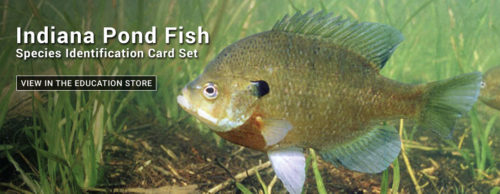 This guide called Indiana Pond Fish, Species Identification Card Set identifies commonly stocked fish and problem fish that may be encountered in Indiana ponds. It includes full-color pictures and information about sunfishes, other panfish, sport fish, catfishes and bullheads, carp, suckers and buffalo, minnows, shiners and much more.
These colorful cards are a great resource for teachers, 4-H leaders, natural resource educators, anglers and fishing enthusiast. Enjoy this free download or place an order through The Education Store to receive the printed colorful cards.
Resources
Aquaculture & Aquatics, Purdue Extension-Forestry & Natural Resources
Salmon and Trout of the Great Lakes: A Visual Identification Guide, The Education Store, Purdue Extension Resource Center
Pond Management: Stocking Fish in Indiana Ponds, The Education Store
The Nature of Teaching: Adaptations for Aquatic Amphibians, The Education Store
Illinois & Indiana Sea Grant, using research, outreach, and education to bring the latest science to communities and their residents.
Mitch Zischke, Clinical Assistant Professor
Purdue University, Department of Forestry and Natural Resources
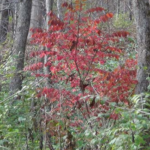 Winged burning bush, winged euonymus, or simply burning bush (Euonymus alatus) is a medium-sized deciduous shrub native to China, Japan and Korea but is widely planted in the United States. Winged burning bush has been planted in the US since the 1860s, primarily as an ornamental shrub due to its bright red fall foliage. Reports of this species escaping cultivation and establishing in natural areas, such as woodlands, prairies and other uncultivated areas, emerged in the 1970s in the Northeast and Midwest US. The species is now considered invasive in most of the eastern US, including Indiana.
Invasive Plant Series: Winged Burning Bush is an 8-page publication written by experts Brian Beheler, farm manager, Don Carlson, forester, Lenny Farlee, sustaining hardwood extension specialist and Ron Rathfon, regional extension forester SIPAC. In this publication, you can learn about the identification, distribution, impact, management and control of this deciduous shrub found in Indiana hardwood forests. For more information check out the Burning Bush Video.
Resources
Report Invasive Species, Purdue Agriculture & Indiana Invasive Species Council
The GLEDN Phone App – Great Lakes Early Detection Network
EDDMaps – Early Detection and Distribution Mapping System (Report Invasives)
Cooperative Invasive Species Management Area (CISMA)
Indiana Department of Natural Resources: Invasive Species
Indiana Invasive Species Council
Burning Bush Video, video, The Education Store, Purdue Extension resource center
What Nurseries Need to Know About the Invasive Species Regulation, The Education Store
Invasive plants: impact on environment and people, The Education Store
Invasive Plant Species: Oriental Bittersweet, The Education Store
Invasive Plant Species: Callery Pear, The Education Store
Invasive Plant Species: Wintercreeper, The Education Store
Lenny Farlee, Extension Forester
Purdue University Department of Forestry and Natural Resources
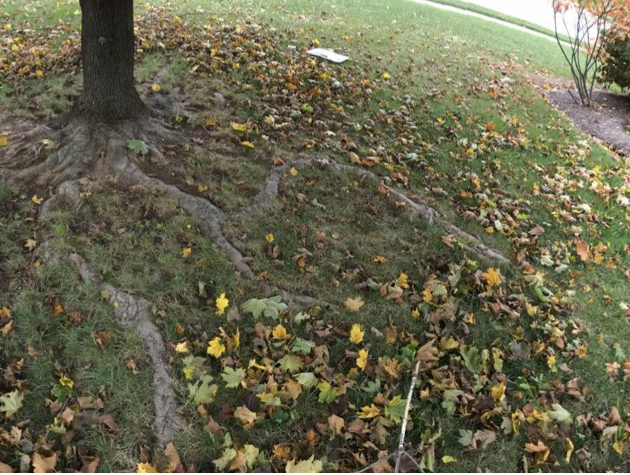 Trees in the landscape are highly prized and provide many benefits to you and your home. However, those shallow roots that appear on the surface of our lawns can create real headaches, especially when trying to grow lush turfgrass. This free download Surface Root Syndrome publication will help you learn what surface roots are, common approaches to address the problem, and best practices to management.
Resources
Find an Arborist video, Trees are Good-International Society of Arboriculture (ISA)
Caring for storm-damaged trees/How to Acidify Soil in the Yard – In the Grow, Purdue Extension
Tree Appraisal and the Value of Trees, The Education Store, Purdue Extension resource center
Tree Support System, The Education Store
Why Is My Tree Dying? – The Education Store
Tree Risk Management – The Education Store
Mechanical Damage to Trees: Mowing and Maintenance Equipment – The Education Store
Trees and Electric Lines – The Education Store
Urban Forestry Playlist, Purdue Extension-Forestry and Natural Resources YouTube Channel
Lindsey Purcell, Chapter Administrator & Master Arborist
Indiana Arborist Association
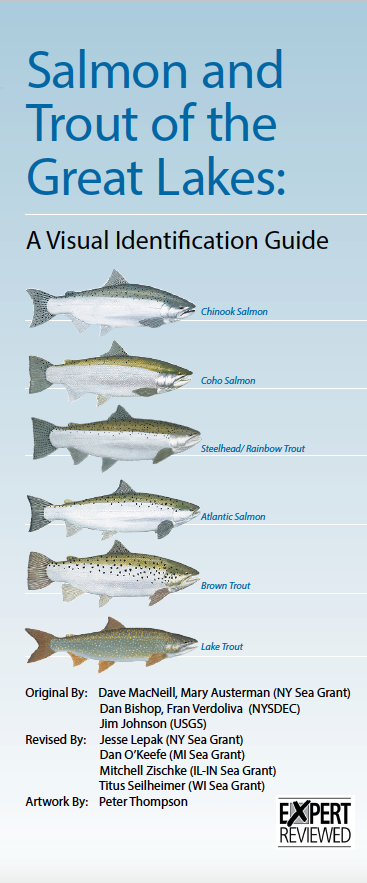 The Illinois-Indiana Sea Grant and Purdue Forestry and Natural Resources Extension have recently released a new publication through The Education Store. This collaborative publication is a visual identification guide on salmon and trout of the Great Lakes.
The Great Lakes are home to eight species of salmon and trout. These species can be difficult to distinguish from each other as they overlap in their distributions and change appearance depending on their habitat and the time of year. This illustrated, peer-reviewed, two-page guide, courtesy of the Great Lakes Sea Grant Network, shows important body features and helpful tips to identify and distinguish between salmon and trout species in the Great Lakes.
View the Salmon and Trout of the Great Lakes: A Visual Identification Guide on The Education Store-Purdue Extension. See below for other related publications and websites.
Resources
A Fish Farmer’s Guide to Understanding Water Quality, National Oceanic and Atmospheric Administration
Pond Management: Stocking Fish in Indiana Ponds, The Education Store
The Nature of Teaching: Adaptations for Aquatic Amphibians, The Education Store
DNR Fish Identification Form, Indiana Department of Natural Resources
Illinois-Indiana Sea Grant, IISG Homepage
Mitchell Zischke, Clinical Assistant Professor
Purdue University Department of Forestry and Natural Resources
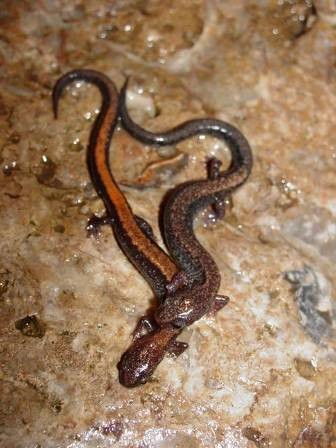 The Purdue Extension-Nature of Teaching has recently released a new publication through The Education Store. The Nature of Teaching provides free Indiana Academic Standard-based lesson plans for students in grades second through sixth to guide them on how to help maintain a healthy environment.
Understanding adaptations for aquatic amphibians can help humans learn more about healthy ecosystems. Through this educational unit, students will be able to explain how amphibian adaptations benefit survival, describe the importance of Eastern Hellbender adaptations, and identify impacts that humans have on aquatic amphibians.
These packed lesson plans are great resources for school teachers, parents, 4-H leaders and other natural resource educators. View the Adaptations for Aquatic Amphibians for the latest installment in the Nature of Teaching resources. See below for other related publications, lesson plans and games.
Resources
Frogs and Toads of Indiana, The Education Store, Purdue Extension
Salamanders of Indiana, The Education Store
Snakes and Lizards of Indiana, The Education Store
Turtles of Indiana, The Education Store
Help the Hellbender, Purdue Extension
Hellbender Decline, Purdue Extension-FNR Youtube
The Nature of Teaching, Lesson Plans K-12, Purdue Extension
Nick Burgmeier, Extension Wildlife Specialist & Research Biologist
Purdue University Department of Forestry and Natural Resources
The Invasive Terrestrial Plant Rule was signed by Governor Holcomb and published on March 18, 2019. the rule goes into effect 30 days after publishing, so it will be effective in April.
The Rule States that a person must not: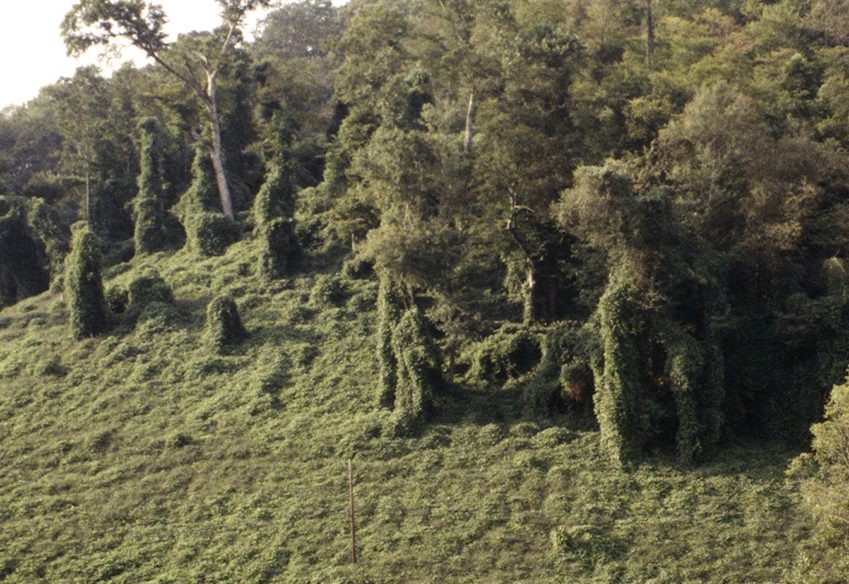
- sell, offer or grow for sale, gift, barter, exchange, or distribute a species;
- transport or transfer a species;
- introduce a species
with respect to the 44 invasive plant species (see full list in the Landscape Report).
Note: Selling, offering, distributing and transporting doesn’t go into effect until April of 2020, so nurseries will have some time to sell down their stock. This is an important component of the rule to minimize economic loss to nurseries that grow and/or sell the few commercially available species that are on the list. Currently there is no mandate to eradicate existing plantings in nurseries, landscapes, or forested areas
To learn more about what an invasive species is, what damage they do, what Indiana is doing, and more please read the Landscape Report, Terrestrial Invasive Species Rule Signed by Indiana Governor.
Resources
Mile-a-Minute Invasive Vine Found Indiana, Got Nature? Blog
Invasive plants: impact on environment and people, Purdue Extension The Education Store
Invasive Plant Species in Hardwood Tree Plantations, The Education Store
Invasive Plant Species: Callery Pear, Purdue Extension The Education Store
Invasive Plant Species: Wintercreeper, Purdue Extension The Education Store
Invasive Plant Species Oriental Bittersweet, Purdue Extension The Education Store
Report Invasive Species, Purdue Invasive Species
The GLEDN Phone App – Great Lakes Early Detection Network
EDDMaps – Early Detection and Distribution Mapping System (Report Invasives)
Cooperative Invasive Species Management Area (CISMA)
Indiana Department of Natural Resources: Invasive Species
Indiana Invasive Species Council
Indiana Department of Natural Resources (IDNR)

Empty cage trap with door open. Image taken by Doug Beckers and courtesy of flickr.com.
Having raccoon, groundhog, or other bothersome wildlife problems? Thinking about setting traps to catch these animals? There is much to consider when using traps. Take a look at the latest publication for best results.
Wildlife specialists Brian MacGowan and Rick Shadel have collaborated to bring you this new publication: Considerations for Trapping Nuisance Wildlife with Box Traps.
Homeowners commonly set traps to capture and remove wildlife from their home or yard. Setting a box trap improperly can decrease their effectiveness and even lead to safety risks to both people and wildlife. The purpose of this publication is to 1) outline the legal and ethical factors homeowners should consider before setting a trap, 2) review the basic procedure for effectively trapping wildlife, and 3) help you to determine the fate of the captured animal.
If you have a serious, dangerous, or a nuisance wildlife issue, you may want to consider hiring a professional. Consider reading this publication before deciding whether or not you need to hire a professional: Selecting a Nuisance Wildlife Control Professional.
Resources
Preventing Wildlife Damage – Do You Need a Permit? – The Education Store, Purdue Extension resource center
Selecting a Nuisance Wildlife Control Professional, The Education Store
How to Construct a Scent Station, The Education Store
Question: How do I properly relocate raccoons from my attic?, Got Nature? Blog, Purdue Extension FNR
Nuisance Wildlife – Indiana Department of Natural Resources
Brian MacGowan, Wildlife Extensions Specialist
Purdue Forestry and Natural Resources
Kristol from Tippecanoe County, IN, sent in question to the Purdue Extension-Forestry and Natural Resources experts (Ask an Expert ) asking what resources are available to help with landscaping for a front yard and sidewalk area that accumulates water after a hard rain. She also asked for resources to improve drainage.
Purdue Extension has several articles and resources to help with this type of situation.
The resources in our Rainscaping and Master Gardeners Program shares several neat options:
Rain Gardens Go with the Flow, Indiana Yard and Garden, Purdue Horticulture
Rainscaping Program
Master Gardeners Program
Don’t miss the publications located in the Purdue Extension resource center, The Education Store, relating to the topic:
Tree Installation: Process and Practices
Planting Forest Trees and Shrubs in Indiana
Climate Change: How will you manage stormwater runoff?
For Midwest Landscapes, have a look at the Purdue Landscape Report:
Purdue Landscape Report
Check out upcoming workshops available for land and woodland owners, to talk with an expert:
Purdue Extension-Forestry and Natural Resources Calendar
Check out our Got Nature? posts as well, as this is always a great resource for new information:
Got Nature?, Forestry and Natural Resources-Purdue Extension
These resources give you lots of options that match what your looking for along with experts in the field to contact if needed.
We always appreciate the questions coming in, so keep them coming. Our experts will respond quickly and give you the guidance you need for your next steps.
Diana Evans, Extension Information Coordinator
Purdue Forestry and Natural Resources
 This unit highlights the resources required to produce food and the food wasted along each step of the food production system. It contains two lessons: Producers, Consumers, and Natural Resources; and Food Waste from Farm to Fork, along with all necessary overviews, notes, and resources.
For more details and free downloadable PDF see FNR-558-W publication at The Education Store: Food Waste and Natural Resources Lesson Plans.
Resources
What a Waste of Food!, lesson plans, The Education Store, Purdue Extension’s resource center
Food Waste Lesson Plans, Nature of Teaching
Rebecca Busse, Nature of Teaching Program Coordinator
Purdue Department of Forestry and Natural Resources
Rod N Williams, Engagement Faculty Fellow & Associate Professor of Wildlife Science
Purdue University Department of Forestry and Natural Resources
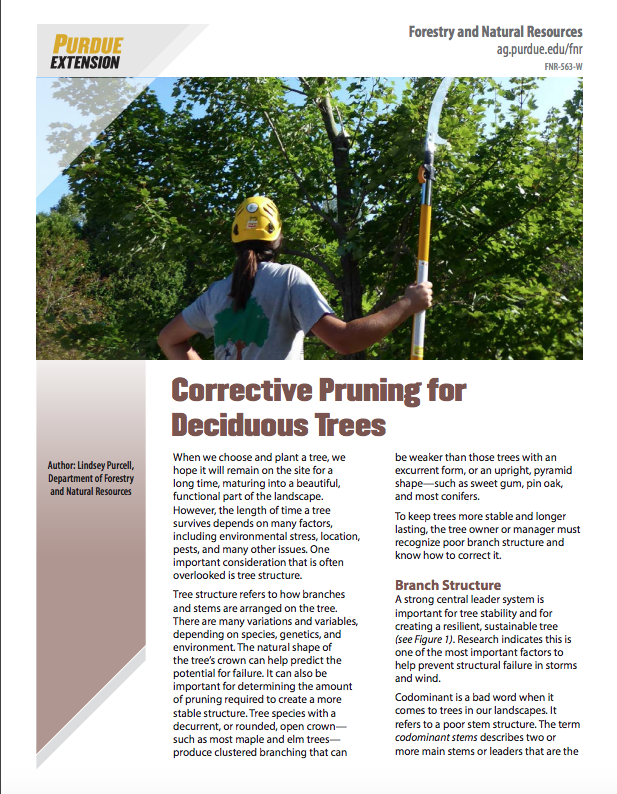
How do I remedy poor branching? Is my tree at risk of splitting, and how can pruning prevent that? Corrective pruning has many implications for tree structure, health, and longevity. Developing a strong, central branch structure in a deciduous tree is critical for preventing structural failure caused by storms, wind, and ice. This 8-page publication explains the problems resulting from a co-dominant stem structure and addresses pruning strategies for correcting poor structure.
To view this full publication please go to Corrective Pruning for Deciduous Trees located in The Education Store, Purdue Extension’s resource center.
Resources
Preparations to Prevent Southwest Tree Injury, Got Nature? Blog
When do you stake a tree?, Got Nature? Blog
Top 5 List for Tree Selection and Planting, Got Nature? Blog
Tree Selection for the “Un-natural” Environment, The Education Store, Purdue Extension
Tree Support Systems, The Education Store, Purdue Extension
Tree Installation: Process and Practices, The Education Store, Purdue Extension
Planting Your Tree Part 1: Choosing Your Tree, video, The Education Store, Purdue Extension
Lindsey Purcell, Urban Forestry Specialist
Purdue Forestry and Natural Resources

Recent Posts
- Publication – Direct Marketing Guidebook for Small/Medium-Scale Aquaculture Businesses
Posted: March 7, 2025 in Aquaculture/Fish, Aquatic/Aquaculture Resources, Publication - Publication – Handbook on Processing Fish for Small-Scale Fish Farmers
Posted: October 17, 2024 in Aquaculture/Fish, Aquatic/Aquaculture Resources, How To, Publication, Wildlife - Virtual Tour Brings Forest Management for Birds to Life
Posted: July 19, 2024 in Forestry, How To, Publication, Wildlife - Publication – Quality of Place and Community Development
Posted: July 18, 2024 in Community Development, Land Use, Publication, Urban Forestry - Publication – Introduction to White-tailed Deer Impacts on Indiana Woodlands
Posted: April 28, 2024 in Forestry, Land Use, Plants, Publication, Wildlife, Woodlands - Publication – Understanding White-tailed Deer and Their Impact on Indiana Woodlands
Posted: in Forestry, Land Use, Plants, Publication, Wildlife, Woodlands - Publication – Monitoring White-tailed Deer and Their Impact on Indiana Woodlands
Posted: in Forestry, Land Use, Plants, Publication, Wildlife, Woodlands - Publication – Managing White-tailed Deer Impacts on Indiana Woodlands
Posted: in Forestry, Land Use, Plants, Publication, Wildlife, Woodlands - New Deer Impact Toolbox
Posted: April 7, 2024 in Forestry, Land Use, Plants, Publication, Safety, Wildlife, Woodlands - Publication- Bluegill Farmed Fish Fact Sheet
Posted: December 15, 2023 in Aquaculture/Fish, Aquatic/Aquaculture Resources, Publication, Wildlife
Archives
Categories
- Alert
- Aquaculture/Fish
- Aquatic/Aquaculture Resources
- Ask the Expert
- Christmas Trees
- Community Development
- Disease
- Drought
- Forestry
- Forests and Street Trees
- Gardening
- Got Nature for Kids
- Great Lakes
- How To
- Invasive Animal Species
- Invasive Insects
- Invasive Plant Species
- Land Use
- Natural Resource Planning
- Nature of Teaching
- Plants
- Podcasts
- Ponds
- Publication
- Safety
- Spiders
- Timber Marketing
- Uncategorized
- Urban Forestry
- Webinar
- Wildlife
- Wood Products/Manufacturing
- Woodland Management Moment
- Woodlands