 Purdue University - Extension - Forestry and Natural Resources
Got Nature? Blog
As you decide best management practices for your woodlands, this short video shares how native grape vine can be a positive addition or a detriment depending on your goals. Lenny Farlee, Purdue Extension forester, shows you what it looks like and how it grows even to the tops of the trees.
If you have any questions regarding trees, forests, wildlife, wood products or other natural resource topics, feel free to contact us by using our Ask an Expert web page.
Resources
A Woodland Management Moment, Playlist, Purdue Extension – Forestry and Natural Resources Youtube Channel
Invasive Species, Playlist
Woodland Stewardship for Landowners, Playlist
Investing in Indiana Woodlands, The Education Store, Purdue Extension resource center
Forest Improvement Handbook, The Education Store
Invasive plants: impact on environment and people, The Education Store
What are invasive species and why should I care?, Got Nature? Blog, Purdue Extension
Woodland Invaders, Got Nature? Blog
Lenny Farlee, Sustaining Hardwood Extension Specialist
Purdue University Department of Forestry and Natural Resources
Garlic mustard is an invasive herbaceous plant that is shade tolerant and can invade our forest understories. In its second growing season it produces a flower which releases many seeds. In the video below, Purdue Extension forester Lenny Farlee will share what options we have to help control it.
If you have any questions regarding trees, forests, wildlife, wood products or other natural resource topics, feel free to contact us by using our Ask an Expert web page.
Resources
A Woodland Management Moment, Playlist, Purdue Extension – Forestry and Natural Resources Youtube Channel
Invasive Species, Playlist
Woodland Stewardship for Landowners, Playlist
Investing in Indiana Woodlands, The Education Store, Purdue Extension resource center
Invasive plants: impact on environment and people, The Education Store
Woodland Invaders, Got Nature? Blog
Lenny Farlee, Sustaining Hardwood Extension Specialist
Purdue University Department of Forestry and Natural Resources
 Mark your calendar for four upcoming Facebook LIVE events from Purdue FNR Extension specialists.
On April 30, tune in at 3 p.m. to expand your knowledge about the Hellbender husbandry program as Dr. Rod Williams chats live with Dr. Stephen Spear from The Wilds, who is going to talk about captive rearing, different age groups of hellbenders and some of their research using EDNA to sample for hellbenders across the country. This Facebook LIVE event will take place on the Help the Hellbender page. https://www.facebook.com/HelpTheHellbender
Check back in a few hours later at 6 p.m. for a live Q&A with extension wildlife specialist Jarred Brooke. He will offering habitat help and offering tips and tricks about establishing native grasses and forbs for wildlife. Tune in on the Purdue FNR Facebook page. https://www.facebook.com/PurdueFNR/
On May 5, a host of Purdue extension specialists will be available to answer your questions on a variety of topics during a noon ET Ask the Expert session on the Purdue FNR Facebook page . Have a question about woodlands, wildlife, fish, or ponds you want to ask a Forestry and Natural Resource Specialist? We will be discussing wildlife habitat management, prescribed fire, forest management, invasive plants, wildlife conflict management, wildlife damage, amphibian and reptile identification, wildlife ecology, pond management and fish ecology. This Q&A session will put you in touch with:
- Jarred Brooke, Extension Wildlife Specialist, wildlife habitat management, prescribed fire
- Lenny Farlee, Extension Forestry Specialist, forest management, invasive plants
- Brian MacGowan, Extension Wildlife Specialist, wildlife conflict management, wildlife damage
- Rod Williams, Extension Wildlife Specialist, amphibian and reptile identification, wildlife ecology
- Mitch Zischke, Extension Fisheries Specialist, pond management and fish ecology
On May 7 at 3 p.m., in Episode 3 of our Help the Hellbenders Facebook LIVE series, Dr. Rod Williams will talk with the keepers at the Mesker Park Zoo and Botanical Gardens about their efforts to breed hellbenders in captivity. Viewers will also have a tour of the facility and see interactive exhibits.
All Facebook LIVE sessions will be archived on Facebook. Go back and watch Episode 1 of the Help the Hellbender series.
To access a Facebook live feed, go to the page at the established time. When the event is live, a LIVE icon will show up next to the word video on the left hand side of the page. Click the video link and a new page will open. The video that is live will be the first video in the list. Click that to begin watching.
Resources:
Report Invasive, Purdue Extension
Effective Firebreaks for Safe Use of Prescribed Fire, Got Nature? Blog, Purdue University Forestry and Natural Resources Extension
Renovating native warm-season grass stands for wildlife: A Land Manager’s Guide, The Education Store, Purdue Extension resource center
Invasive plants: impact on environment and people, The Education Store
Pond and Wildlife Management, Purdue Extension
Forest Improvement Handbook, The Education Store, Purdue Extension resource center
Wendy Mayer, FNR Communications Coordinator
Purdue University Department of Forestry and Natural Resources
While our FNR Purdue Extension specialists can’t be with you in person at workshops, meetings or in the field right now, they are still here to assist you. Don’t hesitate to reach out.
Purdue Extension – Forestry and Natural Resources, purdue.edu/fnr/extension
Ask An Expert
Wendy Mayer, Communications Coordinator
Purdue University Department of Forestry and Natural Resources
Diana Evans, Extension & Web Communications Specialist
Purdue University Department of Forestry and Natural Resources
Many of our favorite plants have multiple personalities. There is a good side and a bad side, shown especially when they escape the landscape and spread to our native areas, becoming invasive. When it comes to invasive plants in landscapes, there is good news and bad news. The bad news is that invasive plants are planted intentionally as ornamentals, and several species known to be invasive are readily available for sale from nurseries and garden centers. The good news is that there are many beautiful plants to choose from that are not invasive. Indeed, while many of the most picturesque garden plants are not native to the Midwest, the majority are not invasive. For example, hosta, smoke tree, boxwoods, Japanese tree lilacs, and dwarf shrub junipers are all non-native to the region but are not known to be invasive. However, brad ford pear, red barberry, burning bush and other “go-to” landscape plants are damaging our natural ecosystem by establishing themselves where they really aren’t welcome. These plants should be avoided and even considered for removal and replacement.
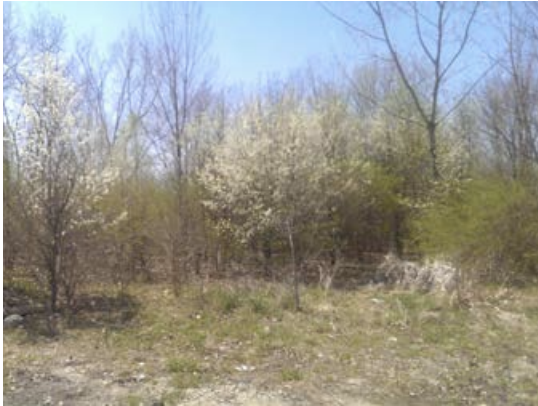
After their seeds are disseminated, callery pears can invade natural and disturbed areas.
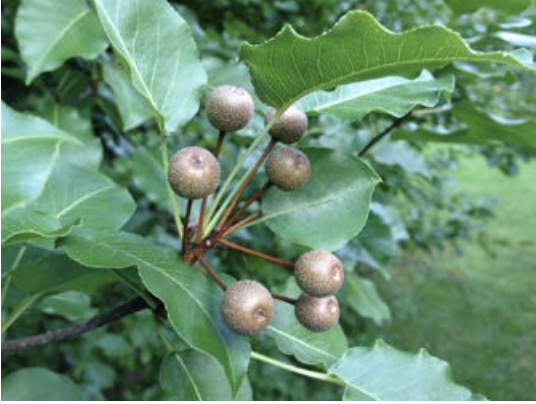
Many callery pears can produce abundant fruit
that are widely distributed by birds

Mile-a-minute vine grows more than 25 feet in height in one growing season while covering and smothering forest trees.
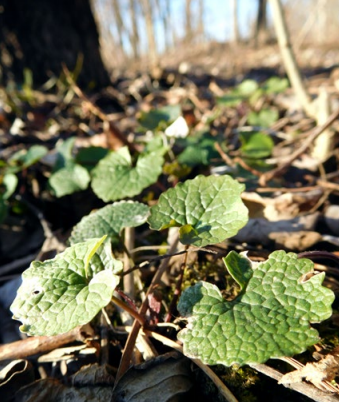
Garlic mustard produces chemicals that inhibit the growth of other plants.
Several professional landscape and nursery organizations have taken the charge in eliminating these harmful plants. They believe invasive species adversely affect the integrity of ecosystems and cause both environmental degradation and economic harm. Invasive species – whether they are plants, animals, fungi, or insects – may cause deterioration of native habitats and plant communities as well as damage to designed and managed ecosystems. Because invasives reduce biodiversity and disrupt the healthy structure and function of both native and human ecosystems, planners, contractors, arborists, landscape architects and other green industry professionals should not introduce or support the use of known invasive species. And, where they are already existing, steps should be taken to eradicate them.
Read the publication Commercial Greenhouse and Nursery Production: Alternative Options for Invasive Landscape Plants for more information. Also, here are several online resources for details on invasive pests:
Midwest Invasive Plant Network
Indiana Invasive Species Council
Invasive.org
Indiana Wildlife Federation
To view more Got Nature? posts on Invasive Species:
Woodland Invaders
What are invasive species and why should I care?
Resources
Indiana DNR Division of Forestry
Report Invasive, Purdue Extension
The GLEDN Phone App – Great Lakes Early Detection Network
EDDMaps – Early Detection and Distribution Mapping System (Report Invasives)
Cooperative Invasive Species Management Area (CISMA)
Indiana Department of Natural Resources: Invasive Species
Indiana Invasive Species Council
Commercial Greenhouse and Nursery Production: Alternative Options for Invasive Landscape Plants, The Education Store, Purdue Extension’s resource center
What Nurseries Need to Know About the Invasive Species Regulation, The Education Store, Purdue Extension’s resource center
Invasive plants: impact on environment and people, The Education Store, Purdue Extension’s resource center
Lindsey Purcell, Chapter Executive Director
Indiana Arborist Association
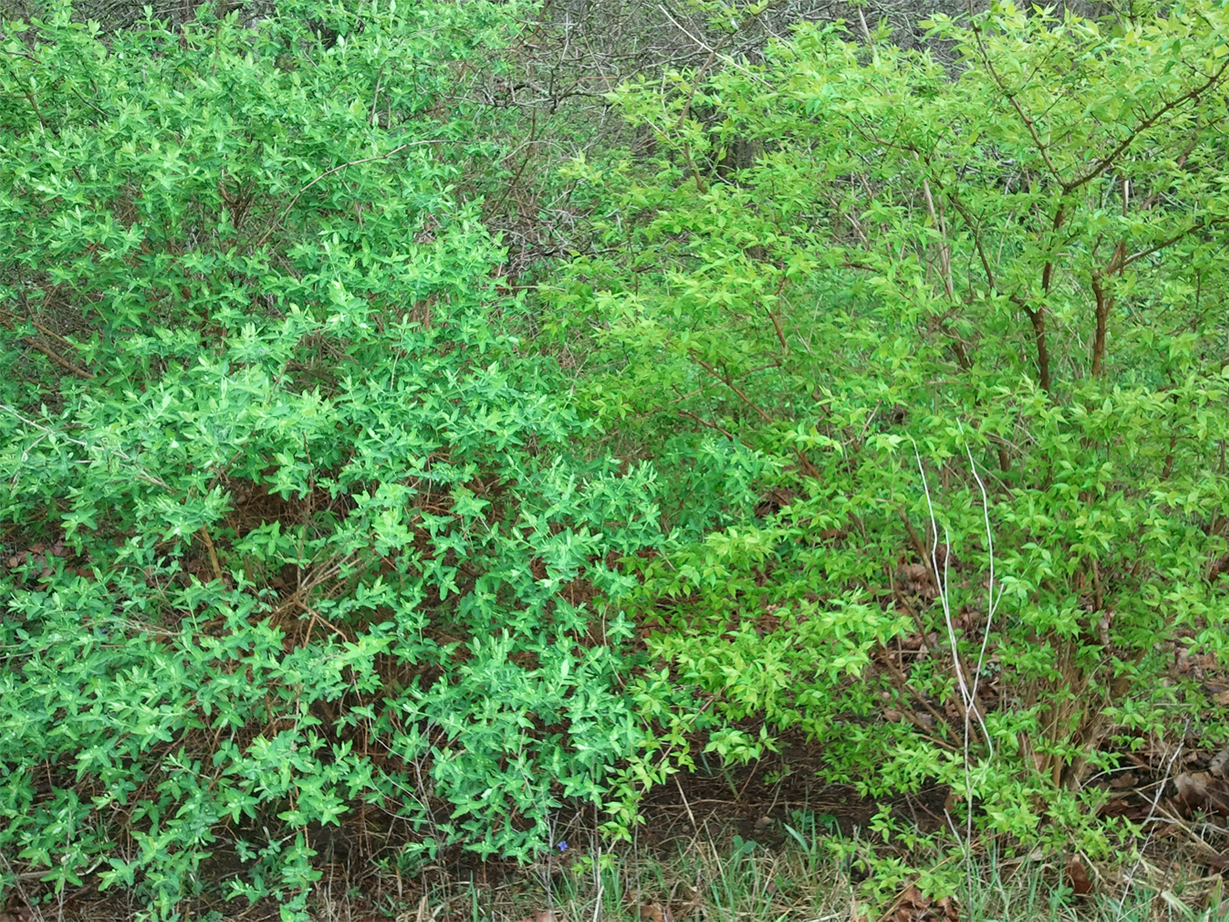
Invasive Asian bush honeysuckle species in spring
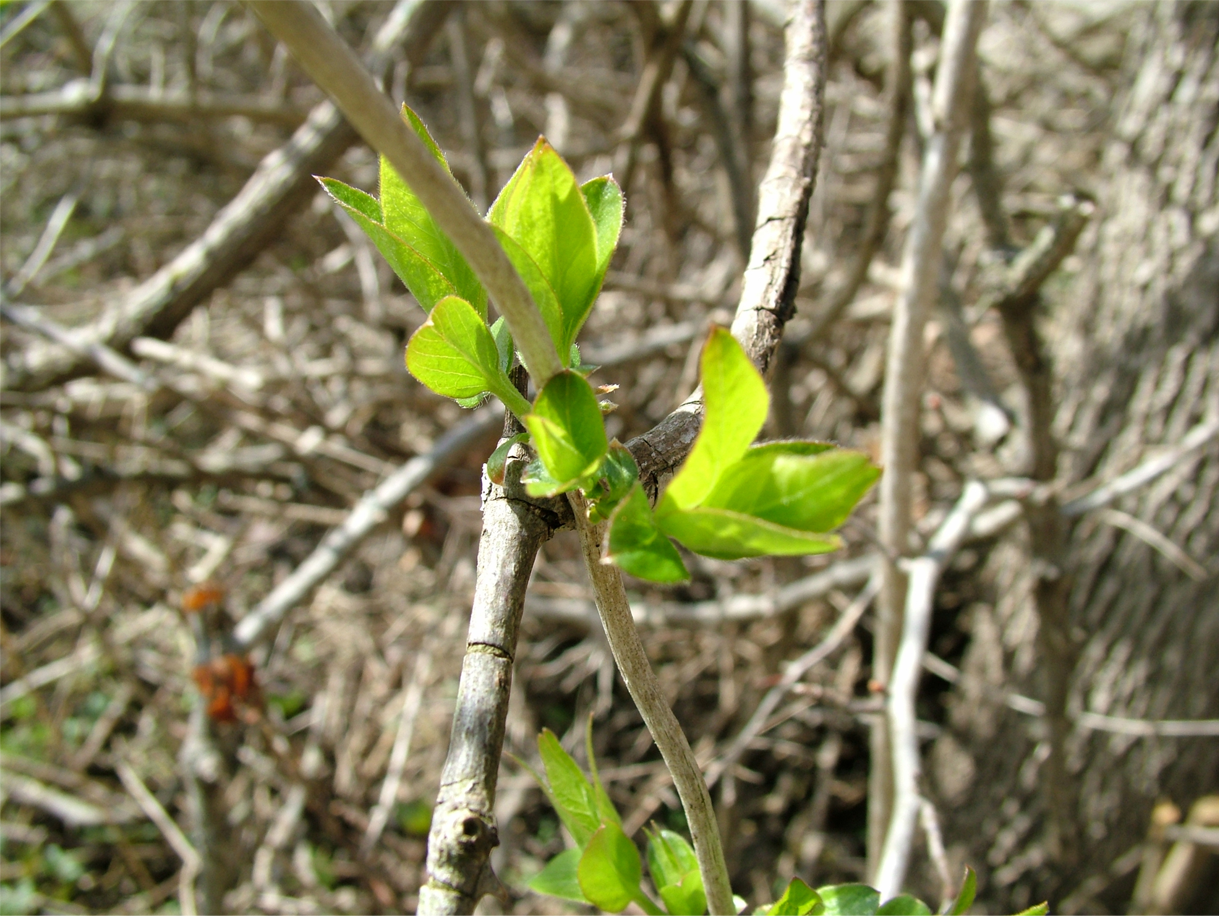
Invasive Asian bush honeysuckle species in spring
The longer daylight period and the warming weather are bringing new life to woodlands. We have a community of native plants, called spring ephemerals, that grow, bloom, and produce seed quickly before the tree leaves emerge and the forest understory is wrapped in shade. Several of my favorite wildflowers are in this group, including hepaticas, trilliums, bloodroot, squirrel-corn, and trout lily.
Some unwelcome invaders also emerge early in the spring, producing early foliage and an unnatural shade competing with our native plants. Several woody invasive plants have moved into our woodlands from ornamental and other plantings and now compete aggressively with our natives. These include Asian bush honeysuckles, privets, winged burning bush, and multiflora rose. These plants tend to produce foliage faster than most of our native trees and shrubs, proving them with a competitive advantage through a longer growing season. This early leaf emergence also provides us with an opportunity to identify these invaders in our woodlands. When walking out to observe the wildflowers or hunt for morels, keep your eyes open for the invasive plants. Small specimens can be pulled when soils are moist. Larger specimens may be cut and the stump treated with a herbicide to prevent sprouting. An easy and effective herbicide to access for landowners is glyphosate concentrate products mixed at a 50% ratio with water. Apply this mixture to the cut stump immediately after cutting. Read the herbicide label to understand the protective gear and application instructions required to apply safely.
If you have a large infestation that is beyond your capacity to control, consider contacting a local forester or other natural resources professional for advice on how best to deal with your invasive plant problem. You may contact the Indiana DNR Division of Forestry for advice from the District Forester. Private-sector foresters and environmental groups and contractors may also be able to help you manage invasive species on your property. To find a private-sector forester visit www.findindianaforester.org. You can find environmental groups and contractors, and additional information on invasives at the Indiana Invasive Species Council website. Purdue Extension has many invasive species resource publications and videos that can help with identification and management.
Controlling invasive plants can bring a sense of satisfaction, knowing you are doing something to promote the health and sustainability of your property.
To view more Got Nature? posts on Invasive Species:
What are invasive species and why should I care?
Invasive Species: the Good News and the Bad News
Resources
Indiana DNR Division of Forestry
Indiana Invasive Species Council
Report Invasive, Purdue Extension
Invasive Plant Series: Winged Burning Bush, The Education Store, Purdue Extension’s resource center
Burning Bush Video, The Education Store, Purdue Extension’s resource center
What Nurseries Need to Know About the Invasive Species Regulation, The Education Store, Purdue Extension’s resource center
Invasive plants: impact on environment and people, The Education Store, Purdue Extension’s resource center
Lenny Farlee, Sustaining Hardwood Extension Specialist
Purdue University Department of Forestry and Natural Resources
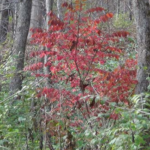 Winged burning bush, winged euonymus, or simply burning bush (Euonymus alatus) is a medium-sized deciduous shrub native to China, Japan and Korea but is widely planted in the United States. Winged burning bush has been planted in the US since the 1860s, primarily as an ornamental shrub due to its bright red fall foliage. Reports of this species escaping cultivation and establishing in natural areas, such as woodlands, prairies and other uncultivated areas, emerged in the 1970s in the Northeast and Midwest US. The species is now considered invasive in most of the eastern US, including Indiana.
Invasive Plant Series: Winged Burning Bush is an 8-page publication written by experts Brian Beheler, farm manager, Don Carlson, forester, Lenny Farlee, sustaining hardwood extension specialist and Ron Rathfon, regional extension forester SIPAC. In this publication, you can learn about the identification, distribution, impact, management and control of this deciduous shrub found in Indiana hardwood forests. For more information check out the Burning Bush Video.
Resources
Report Invasive Species, Purdue Agriculture & Indiana Invasive Species Council
The GLEDN Phone App – Great Lakes Early Detection Network
EDDMaps – Early Detection and Distribution Mapping System (Report Invasives)
Cooperative Invasive Species Management Area (CISMA)
Indiana Department of Natural Resources: Invasive Species
Indiana Invasive Species Council
Burning Bush Video, video, The Education Store, Purdue Extension resource center
What Nurseries Need to Know About the Invasive Species Regulation, The Education Store
Invasive plants: impact on environment and people, The Education Store
Invasive Plant Species: Oriental Bittersweet, The Education Store
Invasive Plant Species: Callery Pear, The Education Store
Invasive Plant Species: Wintercreeper, The Education Store
Lenny Farlee, Extension Forester
Purdue University Department of Forestry and Natural Resources
ArcGIS.com
Unmanned Aerial Systems and Burn Management Strategies
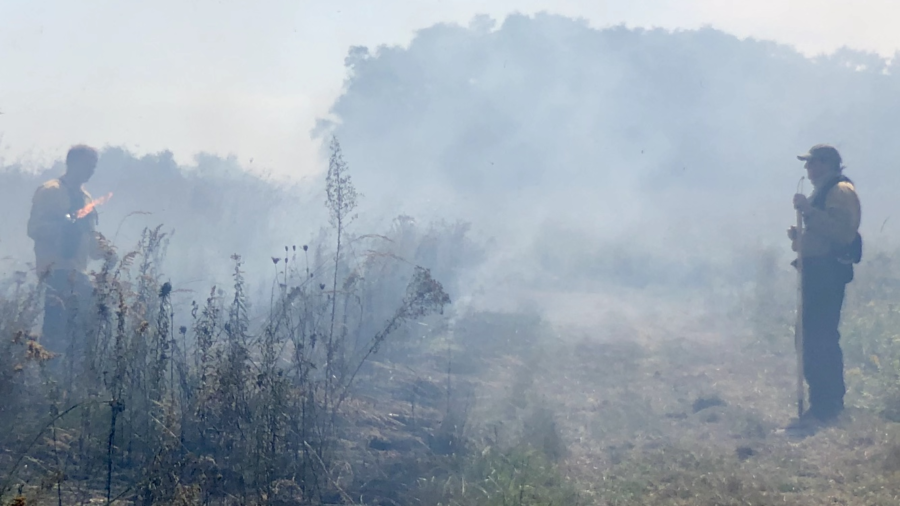
On September 19, 2019 a controlled burn was conducted on the Doak grassland and forest property, owned and managed by the Department of Forestry and Natural Resources at Purdue University. Burn events such as this one present a unique opportunity to demonstrate how UAS can be utilized as an effective tool to both monitor the burn events in real time, but also to effectively gather data before and after the burn to map and better manage vegetation. This collection of maps, videos, and images provide a narrative on how UAS can be used as an effective tool in controlled burn management practices. Beyond controlled burns, the story should demonstrate how UAS can be used to better monitor and inventory other disturbance events, whether they are planned or unexpected.
A Collaborative Effort
The data collected for this event represents a collaborative effort between multiple colleges at Purdue University and private industry. Employees with Purdue Forestry and Natural Resources (College of Agriculture) performed and managed the burn while data collection for the pre and post-burn mapping was conducted by student researchers and pilots from the Purdue School of Aviation and Transportation Technology (SATT; Polytechnic Institute). Peter Menet and Chris Johnson from MenetAero provided aerial monitoring support throughout the controlled burn. A total of three different aircraft were used during this event. The SATT student pilots deployed a C-Astral Bramor PPX equipped with a MicaSense Altum 6 band multispectral sensor at 121 meters before and after the event for mapping purposes. MenetAero deployed a C-Astral C4Eye to monitor the burn in real time using EO/Thermal IR video with real time geographic coordinates at 121 meters while SATT students monitored the burn with a DJI M600 equipped with a Zenmuse XT2 sensor at lower altitudes.
Monitoring the Burn:
The nimble nature of UAS makes them ideally suited to deploy rapidly, and into tight situations otherwise too dangerous for ground crews and manned aircraft. Add to this the aerial perspective offered by UAS via real-time video feed, and you have the perfect platform to assist in hazard events such as fire. The real-time video feed allows the UAS pilot and crew to communicate with ground-based fire crews, providing information on potential hazards and overall fire behavior patterns. For this aerial perspective to be effective, however, the video needs to have geospatial context so what the UAS operator is seeing is effectively communicated to ground-based fire crews. Full-Motion-Video, or video that has metadata with geospatial coordinate information, is a game changer in this regard. The video below shows how software such as Remote Geosystems Line Vision Ultimate can place video in a geospatial context. The video below is being played after the flight, but Pete Menet from MenetAero had the video live streaming to his Ground Station during the flight and was able to effectively serve as an ‘eye in the sky’ to provide real time information to ground based crews. This was all done in a controlled burn, but this same technology and method is used by MenetAero during Wild Fire Events where MenetAero provides UAS services as a contractor with the U.S. Department of Interior. Peter Menet and the MenetAero crew were kind enough to donate their services and time to the controlled burn event this day as part of a collaborative research effort between industry and Purdue.
A Before and After Comparison
Prior to recent advances in UAS technology, gathering imagery at sub-centimeter accuracy and resolution immediately before and after a planned burn event would prove difficult at best. The PPK technology on the C-Astral PPX allowed us to conduct the flights without the need to layout and survey ground control markers, but still achieve centimeter level accuracy by post-processing our data with a Continuously Operating Reference Stations in close proximity. Without UAS, getting satellite data within this time frame would have been pretty much impossible, and getting a manned aircraft to do this prohibitively expensive.
Making Sense of it all through Classification Analysis
Pre-Burn Land Cover Classification
When we think of disturbance events, we often think of the unplanned ones – fire, ice storms, wind storms, floods, etc. But what about planed disturbances such as a controlled burn, or a timber harvest operation? In the case of a planned disturbance, we have the ability to inventory land cover immediately before an event, and then with classification methods, quantify that land cover. Land Use/Cover classification methods are nothing new, and go back to the very beginnings of GIS/Remote Sensing, but new here is the ability to deploy a UAS to get this data in a way that is accurate and precise enough to classify down to resolutions of several square centimeters. Add to that the imagery was gathered less than an hour before the burn and you have some amazing potential for forestland management.
*Thank you to ArcGIS.com for sharing the great work of our FNR specialists as they continue to “strengthen lives and livelihoods” here in Indiana and around the world.
Resources
Unmanned Aerial Systems and Burn Management Strategies, Unmanned Aerial Systems and Burn Management Strategies webpage
Effective Firebreaks for Safe Use of Prescribed Fire, Got Nature? Blog, Purdue University Forestry and Natural Resources Extension
Prescribed fire: 6 things to consider before you ignite, Got Nature? Blog
Renovating native warm-season grass stands for wildlife: A Land Manager’s Guide, The Education Store, Purdue Extension resource center
Calibrating a No-Till Drill for Conservation Plantings and Wildlife Food Plots, The Education Store
Jarred Brooke, Extension Wildlife Specialist
Purdue Department of Forestry and Natural Resources
Purdue Landscape Report: When was the last time you really looked at your trees? It’s all too easy to just 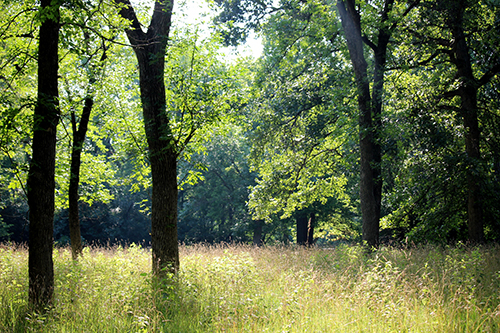 enjoy their cool shade and the sound of their leaves, but if you don’t know what to look for you could miss deadly diseases or dastardly demons lurking in their leaves and branches. A quick check can help you stop a problem before it kills your tree or your local forest!
National Tree Check Month is the perfect time to make sure your tree is in tip-top shape! Our checklist will help you spot early warning signs of native pests and pathogens and invasive pests like Asian longhorned beetle, spotted lanternfly, and sudden oak death. You can stop invasive pests in their tracks by reporting them if you see them.
Is your tree healthy and normal?
Start by making sure you know the type of tree you have. Is it a deciduous tree like an oak or maple? Or is it an evergreen that like a spruce or a pine? Don’t worry about exactly what species it is. It’s enough for you to have a general sense of what the tree should look like when it’s healthy.
Check the leaves
- Are the leaves yellow, red or brown?
- Are they spotted or discolored?
- Do the leaves look distorted or disfigured?
- Is there a sticky liquid on the leaves?
- Do the leaves appear wet, or give off a foul odor?
- Are leaves missing?
- Are parts of the leaves chewed?
Check the trunk and branches
- Are there holes or splits in the trunk or branches?
- Is the bark peeling from a tree that shouldn’t shed its bark?
- Are there tunnels or unusual patterns under the bark?
- Is there sawdust on or under the tree?
- Is there sap oozing down the tree?
- Does the sap have a bad odor?
- Do sticky drops fall on you when you stand under the tree? You might have spotted lanternfly. Please report it right away!
Now what? If you answered YES to any of the questions above, there’s a good chance something is wrong. To decide if and how you should treat or report the problem, you’ll need to have a tentative diagnosis. Luckily, there are many ways to get one!
Know the tree species? Use the Purdue Tree Doctor to get a diagnosis and a recommendation on whether treating or reporting is needed. This app allows you to flip through photos of problem plagued leaves, branches and trunks to help you rapidly identify the problem. If you have an invasive pest, it will guide you how to report it.
Don’t know the tree species and still need help? Reach out to local experts. We’re happy to help!
- Purdue Cooperative Extension Service (https://extension.purdue.edu/) can answer your questions or direct you to a local tree care professional with the right expertise.
- Contact an arborist who can give you an assessment of your tree and specific treatment recommendations (https://www.treesaregood.org/findanarborist).
Confused but think something is TERRIBLY WRONG? Contact Purdue’s Exotic Forest Pest Educator, report online, or call 1-866-NOEXOTIC.
Resources:
Trees and Storms, The Education Store, Purdue Extension’s resource center
Why Is My Tree Dying?, The Education Store
Caring for storm-damaged trees/How to Acidify Soil in the Yard, In the Grow, Purdue Extension
Tree Risk Management, The Education Store
Mechanical Damage to Trees: Mowing and Maintenance Equipment, The Education Store
Tree Installation: Process and Practices, The Education Store
Tree Planting Part 1 & Tree Planting Part 2, videos, The Education Store
The Invasive Terrestrial Plant Rule was signed by Governor Holcomb and published on March 18, 2019. the rule goes into effect 30 days after publishing, so it will be effective in April.
The Rule States that a person must not: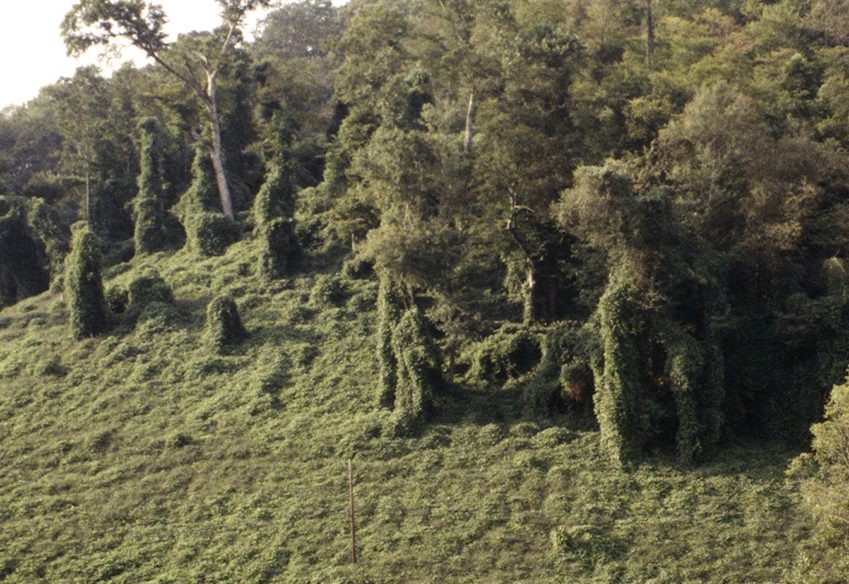
- sell, offer or grow for sale, gift, barter, exchange, or distribute a species;
- transport or transfer a species;
- introduce a species
with respect to the 44 invasive plant species (see full list in the Landscape Report).
Note: Selling, offering, distributing and transporting doesn’t go into effect until April of 2020, so nurseries will have some time to sell down their stock. This is an important component of the rule to minimize economic loss to nurseries that grow and/or sell the few commercially available species that are on the list. Currently there is no mandate to eradicate existing plantings in nurseries, landscapes, or forested areas
To learn more about what an invasive species is, what damage they do, what Indiana is doing, and more please read the Landscape Report, Terrestrial Invasive Species Rule Signed by Indiana Governor.
Resources
Mile-a-Minute Invasive Vine Found Indiana, Got Nature? Blog
Invasive plants: impact on environment and people, Purdue Extension The Education Store
Invasive Plant Species in Hardwood Tree Plantations, The Education Store
Invasive Plant Species: Callery Pear, Purdue Extension The Education Store
Invasive Plant Species: Wintercreeper, Purdue Extension The Education Store
Invasive Plant Species Oriental Bittersweet, Purdue Extension The Education Store
Report Invasive Species, Purdue Invasive Species
The GLEDN Phone App – Great Lakes Early Detection Network
EDDMaps – Early Detection and Distribution Mapping System (Report Invasives)
Cooperative Invasive Species Management Area (CISMA)
Indiana Department of Natural Resources: Invasive Species
Indiana Invasive Species Council
Indiana Department of Natural Resources (IDNR)

Recent Posts
- Purdue Extension: Empowering Indiana Through Innovation, Education and Community Impact
Posted: January 28, 2026 in Community Development, How To, Invasive Insects, Invasive Plant Species, Natural Resource Planning, Woodlands - Learn How to Control Reed Canarygrass
Posted: December 8, 2025 in Forestry, Invasive Plant Species, Wildlife - Controlling Introduced Cool-Season Grasses
Posted: December 1, 2025 in Forestry, Invasive Plant Species, Wildlife - Managing Common and Cut Leaved Teasel
Posted: November 24, 2025 in Forestry, Invasive Plant Species, Wildlife - Crownvetch, Sweetclover and Birdsfoot Trefoil Control
Posted: November 17, 2025 in Forestry, Invasive Plant Species, Wildlife - Now Is The Time To Control Non-Native Bush Honeysuckle
Posted: October 30, 2025 in Forestry, How To, Invasive Plant Species, Woodlands - ID That Tree: Invasive Multiflora Rose
Posted: October 9, 2025 in Forestry, Invasive Plant Species, Urban Forestry, Wildlife - Untangling and Identifying Vines, Purdue Landscape Report
Posted: September 29, 2025 in Invasive Plant Species, Plants, Wildlife - Discover Effective Strategies for Controlling Johnsongrass
Posted: September 3, 2025 in Forestry, Invasive Plant Species, Wildlife - Publication – Woody Encroachment and Woody Invasives
Posted: August 29, 2025 in Forestry, Invasive Plant Species, Wildlife
Archives
Categories
- Alert
- Aquaculture/Fish
- Aquatic/Aquaculture Resources
- Ask the Expert
- Christmas Trees
- Community Development
- Disease
- Drought
- Forestry
- Forests and Street Trees
- Gardening
- Got Nature for Kids
- Great Lakes
- How To
- Invasive Animal Species
- Invasive Insects
- Invasive Plant Species
- Land Use
- Natural Resource Planning
- Nature of Teaching
- Plants
- Podcasts
- Ponds
- Publication
- Safety
- Spiders
- Timber Marketing
- Uncategorized
- Urban Forestry
- Webinar
- Wildlife
- Wood Products/Manufacturing
- Woodland Management Moment
- Woodlands