 Purdue University - Extension - Forestry and Natural Resources
Got Nature? Blog
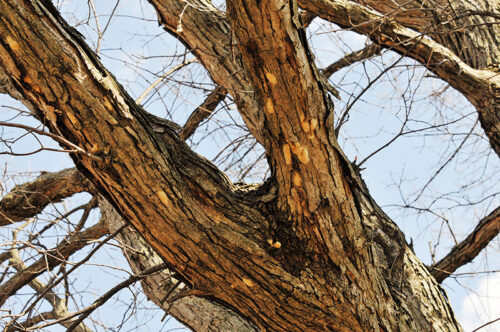
Figure 1: Spongy moth caterpillar, credit to John Obermeyer.
In the late 1860s, French scientist Étienne Trouvelot brought over a seemingly harmless insect from Europe called the gypsy moth to conduct breeding experiments with American moths. When they escaped his backyard and entered into an ecosystem without their native predators, their population exploded. 150 years later, these moths are still a destructive forest pest in Indiana and other states. Every year an effort is made to attempt to curb their population. This year, the Indiana Department of Natural Resources will continue the fight to save our forests from these invasive insects.
Phase one consists of a crop dusting of bacterial chemical spray over the gypsy moth caterpillars’ food sources. This spray is harmless to humans and native wildlife, but is lethal to the caterpillars. Later in the summer, a pheromone will be dispersed over the moths, disrupting the mating process and causing fatal exhaustion.
This huge undertaking isn’t estimated to stop the gypsy moth – in fact, state entomologists don’t see an end in sight. We can only continue to manage this forest pest and aim for reducing populations to a level where local predators can manage them on their own. Indiana citizens can help combat this pest by understanding the gypsy moth problem and learning about its management.
For more information and when the aerial treatments will be conducted in your county visit the Indiana Department of Natural Resources, 2017 Indiana Gypsy Moth Treatment Program. For Tippecanoe view Purdue News.
Resources:
Gypsy Moth (Spongy Moth) website, Purdue Extension-Entomology
Spongy Moth – Indiana Department of Natural Resources
The Gypsy Moth in Indiana – The Education Store, Purdue Extension resource center
Indiana Department of Natural Resources
This comprehensive written abstract titled Tools for Staging and Managing Emerald Ash Borer in the Urban Forest shares research gathered in an eight-year period with a variety of management strategies.
Advances in control can help municipal foresters save ash trees from emerald ash borer (EAB) [Agrilus planipennis (Fairmaire)]
in urban forests. Although ash trees of any size can be protected from this pest, cities often do not implement programs because they fail to recognize and act o incipient populations of EAB. In this study, researchers develop a model for predicting ash mortality over an eight-year period, and validated with data from the removal of >14,000 ash trees killed by EAB in Fort Wayne, Indiana, U.S. researchers then developed a sampling scheme to help foresters map their ash trees along the expected progression of ash decline. This model was then used to modify a web-based EAB cost calculator that compares discounted annual and cumulative costs of implementing a variety of management strategies. It was determined that strategies that most heavily relied on saving ash trees were less expensive and produced a larger forest than those strategies that mostly removed and replaced ash trees. Ratios of total discounted costs to discounted cumulative benefits of strategies that saved most ash trees were over two-thirds lower than strategies of proactive tree removal and replacement. Delaying implementation of an ash management program until damage would be visible and more obvious to the community (Year 5 of the model) decreased the cost–benefit ratio by <5%. Thus, delays that rely on the abundance of locally damaged trees to bolster community support do not necessarily diminish the utility of implementing a control strategy.
For full article: Tools for Staging and Managing Emerald Ash Borer
Resources:
Tree Doctor App, The App Store
Invasive Species – Indiana Department of Natural Resources (IDNR)
Ask an Expert – Purdue Extension-Forestry and Natural Resources
Indiana Invasive Species Council – Includes: IDNR, Purdue Department of Entomology and Professional Partners
Great Lakes Early Detection Network App (GLEDN) – The Center for Invasive Species & Ecosystem Health
National Invasive Species Awareness Week: February 27-March 3, 2017
Invasive Species Week a reminder to watch for destructive pests, Purdue entomologist says – Purdue Agriculture News
Cliff Sadof, Professor
Purdue University Department of Entomology
Matt Ginzel, Associate Professor
Purdue University Department of Forestry and Natural Resources & Department of Entomology
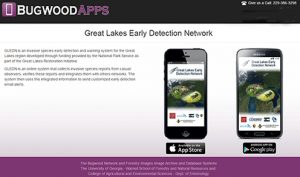 The Forest Pest Outreach and Survey Project at Purdue reminds us that early detection is the best way to slow the spread of invasive species. You can report invasive species by calling the Invasive Species hotline at 1-866-NO-EXOTIC (1-866-663-9684) or using the free Great Lakes Early Detection Network smartphone app, which can be downloaded on iTunes or Google Play. View video to see how easy it is to use the app, Great Lakes Early Detection Network App (GLEDN).
If you’re interested in learning more about invasive pests and how to report them, sign up for one of our free Early Detector Training workshops!
National Invasive Species Awareness Week: February 27-March 3, 2017.
Resources:
Invasive Species – Indiana Department of Natural Resources (IDNR)
Ask an Expert – Purdue Extension-Forestry and Natural Resources
Indiana Invasive Species Council – Includes: IDNR, Purdue Department of Entomology and Professional Partners
Invasive Species Week a reminder to watch for destructive pests, Purdue entomologist says – Purdue Agriculture News
Sara Stack, MS student
Purdue Department of Entomology

Issue:
Woodlands provide a multitude of environmental (e.g., carbon sequestration, enhance water quality, wildlife habitat), economic (e.g., timber, wood products manufacturing, tourism), and social (e.g., recreation, aesthetics) benefits to Indiana residents. The sustainability of these benefits is strongly tied to stability of the resource. In Indiana, 75 percent of the 4.65 million acres of forestland is owned by families. Actions they take on their property can impact the benefits woodlands provide all Indiana residents. However, many do not understand available options or sources of assistance.
What Has Been Done:
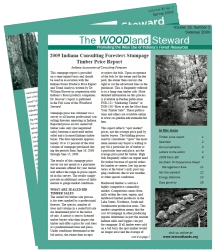 The Department of Forestry and Natural Resources, in partnership with many other organizations, helps produce and mail over 31,000 copies of the Indiana Woodland Steward to woodland owners three times each year. This 16-page, two-color publication includes in-depth articles on forest stewardship and health, invasive species and pests, wildlife habitat management, economics, and more.
Results:
Subscribers owned more woods (71.6 ac) for a longer tenure (33 years) than the average woodland owner in Indiana based on data from the National Woodland Owner Survey. As a group, they were also more active managers based on the proportion enrolled in assistance programs and who had a written stewardship plan. Fifty-four percent regularly utilized information from the Woodland Steward. In addition, 51 percent of respondents have implemented at least one practice they read about from The Woodland Steward, potentially impacting an estimated 1.2 million acres of forestland. His use of print media to communicate with woodland owners could be considered expensive, but clearly a large number of woodland owners regularly read and utilize the information making the average investment per landowner much lower.
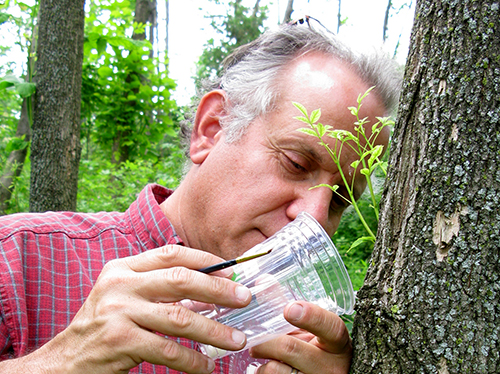 Cities and towns with “urban forests” such as parks and streets lined with trees could spend less money by taking steps to save emerald ash borer-infested trees early rather than wait until they can only replace them, Purdue University researchers concluded in a study.
Cliff Sadof, professor of Entomology and Matt Ginzel, associate professor in the Department of Entomology and Department of Forestry and Natural Resources, developed a model to help foresters predict the progression of ash decline over time. This model helps them use early reports of damaged trees to alert the community to the imminent threat posed by EAB. The percentage of damaged ash trees in a city typically doubles every year.
Owners of ash trees in Indiana, as well as all around the country, are encouraged to check out the full article provided by Purdue Agriculture News EAB research: Saving trees early less costly than replacing them. You will find several resources on what we can do to aid the ash trees.
Resources:
EAB research: Saving trees early less costly than replacing them – Purdue Agriculture News
Purdue Tree Doctor – Purdue Botany and Plant Pathology
Emerald Ash Borer in Indiana – Purdue Extension
Emerald Ash Borer Cost Calculator – Purdue Extension Entomology
Emerald Ash Borer – Purdue Extension Entomology
Cliff Sadof, Professor of Ornamental and Pest Management
Purdue University Department of Entomology
Matt Ginzel, Associate Professor
Department of Entomology and Department of Forestry & Natural Resources
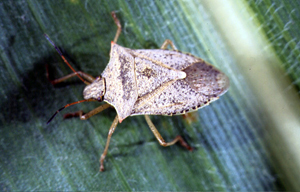
Photo credit: B. Christine
Every fall, a little pest called the brown marmorated stink bug returns to annoy and destroy. This invasive species from the far east has no local predators to control its numbers and does a great deal of damage to fruits, vegetables, and other plants. As the weather cools down, they also like to sneak into homes to stay warm, and will remain there throughout the winter unless dealt with. As the name suggests, these bugs’ defense mechanism is the release of a foul-smelling chemical, and dealing with them can be unpleasant.
Purdue Extension Entomologist Rick Foster answers several questions about stink bugs and what to do about them in a Q&A article for The Star Press. Check out “Stink bug Q&A with Purdue expert” and learn some more about these pesky invaders.
Resources:
Brown Marmorated Stink Bug In Homes – Purdue Extension Entomology
Stink bug Q&A with Purdue expert – The Star Press
Brown Stink Bug – Purdue University Field Crops IPM
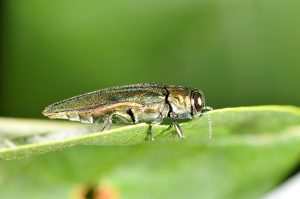
An adult emerald ash borer feeds off a leaf. (Purdue University Department of Entomology photo/John Obermeyer)
Article by Pat Munsey, taken from KokomoPerspective.com:
The ash borer beetle is a scourge that has spread across the Midwest for more than a decade, laying waste to trees as it burrows and feeds. Now it is in Howard County.
Ash trees in several areas of the community are showing signs of the inevitable death that comes with infestation, but citizens can stop the pest in its tracks.
According to the Indiana Department of Natural Resources (DNR), the beetles were first discovered in Indiana on April 21, 2004. Since that time, it has steadily spread across the state with heavy concentrations in the northeast. Evidence of the insects’ arrival locally began appearing two years ago, and according to Kristy McNeil, an associate at Salsbery Garden Center, it is vital that people take action now to prevent further damage.
Resources
Emerald Ash Borer, Indiana Department of Natural Resources (IDNR)
Emerald Ash Borer in Indiana, Purdue Extension
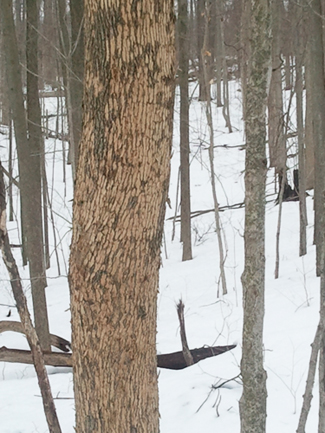 If you’re walking in the woods or maybe even traveling along a road this spring in Indiana, you may come across some trees that look like the one in the photos. Clearly, something unusual is going on here. What made the bark change color so quickly, and why are there holes in the bark?
The answer to both of those questions for ash trees around the state is Emerald Ash Borer and woodpeckers. As Emerald Ash Borer spreads across Indiana, the population of Emerald Ash Borer larvae overwintering under the bark of ash trees can quickly increase. These grubs provide a tasty treat and important winter and early spring nutrition to hungry woodpeckers.
 Woodpeckers of several species are experts at detecting and extracting these grubs by pounding holes in tree bark. Ash bark is generally gray on the surface, but the inner bark is a light corky tan color. Once the woodpeckers find the EAB larvae, their excavation activities flake off the outer bark to expose the lighter colored inner bark. This is actually one of the best indicators of the presence of Emerald Ash Borer in a tree. The woodpecker activity often starts in the upper main stem and branches of ash trees, but as the population of EAB larvae in the trees increase, the woodpecker activity spreads down the trunk of the tree. Trees with this much inner bark exposed indicate an advanced infestation of EAB and signal ash tree mortality in the next year or two.
If you would like to learn more about ash trees and the Emerald Ash Borer, visit the Purdue Emerald Ash Borer website.
Resources
Arrest That Pest! – Emerald Ash Borer in Indiana, Purdue Extension
Purdue Extension – Forestry & Natural Resources website with search bar, place “Invasive Insect”
Emerald Ash Borer, Indiana Department of Natural Resources (IDNR)
Emerald Ash Borer in Indiana, Purdue Extension
New Hope for Fighting Ash Borer, Purdue Extension – Forestry and Natural Resources Got Nature? blog
Lenny Farlee, Extension Forester
Purdue University Department of Forestry and Natural Resources
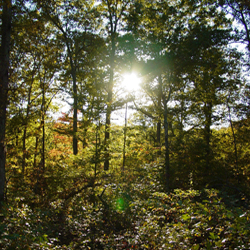 Tree disease and insect outbreaks are a lot like fires and floods – they make the news headlines and can lead to some anxiety on the part of landowners. They may also bring out those who use the crisis to make some fast money by taking advantage of that anxiety. I was recently contacted by a landowner who had been advised by a person wanting to buy some timber from him that he should sell some walnut trees “before they are all killed by Thousand Cankers Disease.” There certainly are times when we should consider harvesting trees before they are destroyed by a pest as part of a timber management program (Emerald Ash Borer, for instance), but the evidence we have related to Thousand Cankers Disease (TCD) would suggest that selling your trees immediately to avoid mortality and loss is not necessary. Thousand Cankers Disease has two components: a small twig beetle that carries a canker-forming fungus into the inner bark of walnuts. Black walnut trees in several states have been killed by this disease complex, but so far, although the fungus was found on some weevils in Brown County and the beetle was recently detected at a sawmill in Franklin County, no walnut trees in Indiana have been confirmed as killed by TCD. For additional information on TCD, you can visit the following websites: Thousand Cankers Disease and Indiana Department of Natural Resources (IDNR) TCD.
There is currently no strong evidence suggesting a need to rush to harvest walnut for fear of a massive die-off caused by TCD. In fact, some trees infected with TCD in Tennessee have shown some recovery from disease symptoms that has coincided with improved growing conditions at those sites. This would suggest doing management that keeps walnut healthy and vigorous like thinning, vine control and elimination of invasive plant species may help your trees resist damage from TCD and other diseases or environmental extremes. This story also demonstrates the importance of getting professional, science-based advice with your forest management decisions. Consult a professional forester when making decisions about the sale of trees. You can find foresters in your area at Indiana Forestry & Woodland Owners Association’s (IFWOA) Directory of Professional Foresters. You can learn more about considerations when selling timber at Call Before You Cut and the extension publications Tips on How to Get the Most From Your Timber Harvest and Marketing Timber.
Landowners, timber buyers and foresters form an important team to manage and utilize the amazing renewable resource that is our hardwood forest in Indiana. There are many reputable firms across the state that purchase timber, providing a great marketplace and economic value to landowners. Your professional forester can help you choose the right buyers, loggers and market outlets to provide a fair price for the products and good work in the woods. Get their help and do your homework before making that decision.
Resources
Indiana Department of Natural Resources (IDNR) TCD
Directory of Professional Foresters, Indiana Forestry & Woodland Owners Association (IFWOA)
Call Before You Cut
Tips on How to Get the Most From Your Timber Harvest, The Education Store, Purdue Agriculture Resource Center
Marketing Timber, The Education Store, Purdue Agriculture Resource Center
Lenny Farlee, Hardwood Ecosystem Extension Specialist
Department of Forestry & Natural Resources, Purdue University
 “The Walnut Twig Beetle (WTB), Pityophthorus juglandis, the insect involved in Thousand Cankers Disease of Black Walnut (TCD), has been detected in Indiana for the first time at a Franklin County sawmill.
The beetle was detected in a trap placed at the sawmill for a 2014 statewide survey for WTB. Additional WTBs were found during an inspection of walnut logs and lumber at the sawmill. TCD is caused by the fungus Geosmithia morbida that is transmitted by WTB.
The beetles bore into walnut branches, feeding on the tree’s tissues and depositing the fungus that creates a canker, or dead area, under the bark. Multiple feedings cause the formation of thousands of cankers under the bark and destroy the tree’s ability to transport water and nutrients. Gradually the tree dies.
Tests for the fungus from the collected beetles and walnut samples in Franklin County are ongoing. So far, the fungus has not been detected. Surveys at the sawmill have not detected any infested walnut trees. Another survey is planned for this summer for the area surrounding the sawmill.
State Entomologist Phil Marshall has ordered the sawmill quarantined. The sawmill is working with the DNR and is destroying walnut material on the property to prevent movement of TCD from the property.”
Note that no live trees have been found with TCD in Indiana yet. It is not recommended that landowners cut their walnut trees due to the disease. Instead, it is recommended that residents do not move firewood or other bark on materials of any species due to the risk of transporting known and unknown insects and diseases.
View Thousand Cankers Disease, Indiana Department of Natural Resources, for more information.
Resources
Walnut Anthracnose, Walnut Notes, U.S. Department of Agriculture, Forest Service, North Central Forest Experiment Station
Indiana Walnut Council, Industry Representatives include 45 states and 3 foreign countries
Diseases in Hardwood Tree Plantings, The Education Store, Purdue Extension resource center
Study: Fungus Behind Deadly Disease in Walnut Trees Mutates Easily, Complicating Control, Purdue Agriculture News
Indiana Walnut Council
Diseases in Hardwood Tree Plantings, The Education Store, Purdue Extension resource center
Why are my walnut trees dropping their leaves?, Purdue Extension – Forestry & Natural Resources (FNR) Got Nature? Blog
Invasive Species Walnut Twig Beetle Detected in Indiana, Purdue Extension – FNR Got Nature? Blog
Intro to Trees of Indiana: Black Walnut, Purdue Extension – FNR Got Nature? Blog
Planting Hardwood Seedlings in the Central Hardwood Region, The Education Store
Regenerating Hardwoods in the Central Hardwood Region: Soils, The Education Store
Fertilizing, Pruning, and Thinning Hardwood Plantations, The Education Store
Resources and Assistance Available for Planting Hardwood Seedlings, The Education Store

Recent Posts
- Beetle that attacks Tree-of-Heaven found in Indiana, Purdue Landscape Report
Posted: March 20, 2026 in Invasive Insects, Wildlife, Woodlands - Uniting Indiana Residents Against Invasive Species
Posted: February 27, 2026 in Community Development, Invasive Insects, Wildlife - Purdue Extension: Empowering Indiana Through Innovation, Education and Community Impact
Posted: January 28, 2026 in Community Development, How To, Invasive Insects, Invasive Plant Species, Natural Resource Planning, Woodlands - Spotted Lanternflies on the Move! – Purdue Landscape Report
Posted: October 13, 2025 in Forestry, Invasive Animal Species, Invasive Insects, Wildlife, Woodlands - October Is Firewood Month: Protect Indiana’s Forests by Making Smart Choices
Posted: in Forestry, Forests and Street Trees, How To, Invasive Insects, Urban Forestry - Cryptomeria Scale on Christmas Trees, Purdue Landscape Report
Posted: September 9, 2025 in Invasive Insects, Woodlands - How to ID Asian Jumping Worms, Purdue Landscape Report
Posted: July 2, 2025 in How To, Invasive Insects, Wildlife - Revisiting Ash Tree Protection, Purdue Landscape Report
Posted: May 23, 2025 in Forests and Street Trees, Invasive Insects, Wildlife, Woodlands - Sawflies: Caterpillar Pests but not Caterpillars – PLR
Posted: in Invasive Insects, Wildlife, Woodlands - Prepared for Insects Waking Up? – PLR
Posted: March 26, 2025 in Forestry, Invasive Insects, Urban Forestry, Wildlife
Archives
Categories
- Alert
- Aquaculture/Fish
- Aquatic/Aquaculture Resources
- Ask the Expert
- Christmas Trees
- Community Development
- Disease
- Drought
- Forestry
- Forests and Street Trees
- Gardening
- Got Nature for Kids
- Great Lakes
- How To
- Invasive Animal Species
- Invasive Insects
- Invasive Plant Species
- Land Use
- Natural Resource Planning
- Nature of Teaching
- Plants
- Podcasts
- Ponds
- Publication
- Safety
- Spiders
- Timber Marketing
- Uncategorized
- Urban Forestry
- Webinar
- Wildlife
- Wood Products/Manufacturing
- Woodland Management Moment
- Woodlands