 Purdue University - Extension - Forestry and Natural Resources
Got Nature? Blog
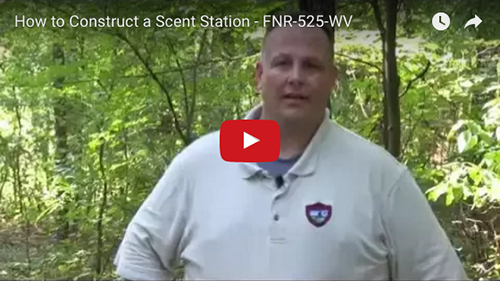 Have you ever wanted to set up your own scent station? Here’s a great video that will teach you how! Scent stations are a non-invasive alternative to other trapping methods for determining what species of wildlife populate an area. Scent stations work by using a scent lure surrounded by sand in which animals will leave their tracks. These tracks can then be identified later for each species that visits the scent station.
However, it can be difficult to set up an animal scent station for the first time. In this video, Robert Cordes, assistant regional wildlife biologist at the Maine Department of Inland Fisheries and Wildlife, shows you step-by-step how to construct your own scent station.
“How to Construct a Scent Station” is a companion to Lesson 2 in The Nature of Teaching’s Unit 1: Animal Diversity and Tracking. This free lesson plan includes a data sheet you can fill out after setting up your scent station, as well as other fun projects that can be used in a classroom. You can find other free lesson plans at the Nature of Teaching website with topics like food webs, watersheds, and the scientific method.
Resources:
How to Construct a Scent Station – The Education Store, Purdue Extension Resource Center
The Nature of Teaching Unit 1: Animal Diversity and Tracking – The Education Store
The Nature of Teaching – Purdue Extension
Nature Publications – The Nature of Teaching
Megan Kuechle, Undergraduate Extension Intern
Purdue Department of Forestry and Natural Resources
Dr. Rod Williams, Associate Head of Extension and Associate Professor of Wildlife Science
Purdue Department of Forestry and Natural Resources
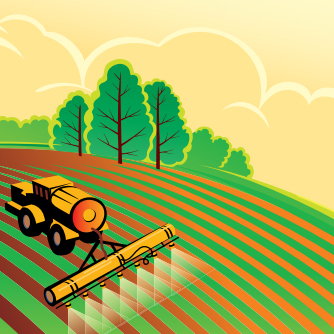 Pesticides are a great way for farmers and homeowners to protect plants against insects and disease. However, sometimes pesticide ends up where it isn’t supposed to – on neighboring properties like homes, schools, and parks. This is called pesticide drift, and it can be very dangerous to your health and damaging to property. You have the legal right to be free from pesticide drift, and it is important to be able to recognize it and understand what to do next if you are experiencing it. Purdue Extension-Pesticide Program has a new publication titled “Options for Dealing with a Pesticide Drift Incident” sharing resources to help simplify that process, explore what exactly pesticide drift is, what causes it, and what steps you can take to resolve it. The publication is available as a free download in The Education Store, so those interested can take a look and be sure to stay safe and informed about pesticide drift.
Resources:
Options for Dealing with a Pesticide Drift Incident – The Education Store, Purdue Extension Resource Center
Driftwatch: Watch Out for Pesticide Drift and Organic Production – Purdue Extension
Agricultural Plant Pest Control – The Education Store
Purdue Pesticide Programs – Purdue Agriculture
National Pesticide Information Center – U.S. Environmental Protection Agency
District Forester (forestry landowners with 10+acres) – Indiana Department of Natural Resources
Directory of Professional Foresters – Indiana Forestry & Woodland Owners Association
Michael O’Donnell, Purdue Extension Educator of Delaware County
Purdue University Department of Botany and Plant Pathology
Roy Ballard, Purdue Extension Educator of Hancock County
Purdue University Department of Agriculture
Fred Whitford, Clinical Engagement Professor of Purdue Pesticide Programs
Purdue University Department of Botany and Plant Pathology
Joe Becovitz, Pesticide Investigator
Office of Indiana State Chemist
With spring comes planting of trees and shrubs along with questions of best practices to ensure success. This 20-page publication titled “Planting Forest Trees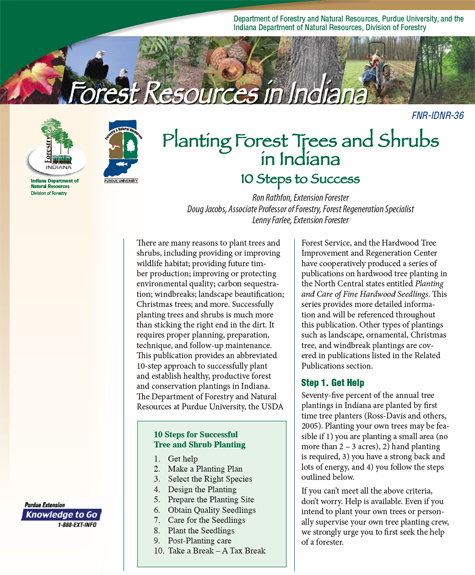 and Shrubs in Indiana” provides an abbreviated 10-step approach to successfully plant and establish healthy, productive forest and conservation plantings in Indiana. It discusses types of plantings, site selection, site preparation, how to obtain seedlings, planting methods, and care after planting. You will also find resources with further planting details, how to increase wildlife on your properties, along with how to contact a professional forester.
To order a hardcopy for $5.50 visit Planting forest Trees and Shrubs in Indiana in The Education Store. It is also available as a free download.
Resources:
Planting & Care of Fine Hardwood Seedlings, Indiana Department of Agriculture Forest Service
Woodland Wildlife Management, The Education Store
Shrubs and Woody Vines of Indiana and the Midwest: Identification, Wildlife Values, and Landscaping Use, The Education Store
Ron Rathfon, Regional Extension Forester-Southern Indiana Purdue Agricultural Center (SIPAC)
Purdue Department of Forestry & Natural Resources
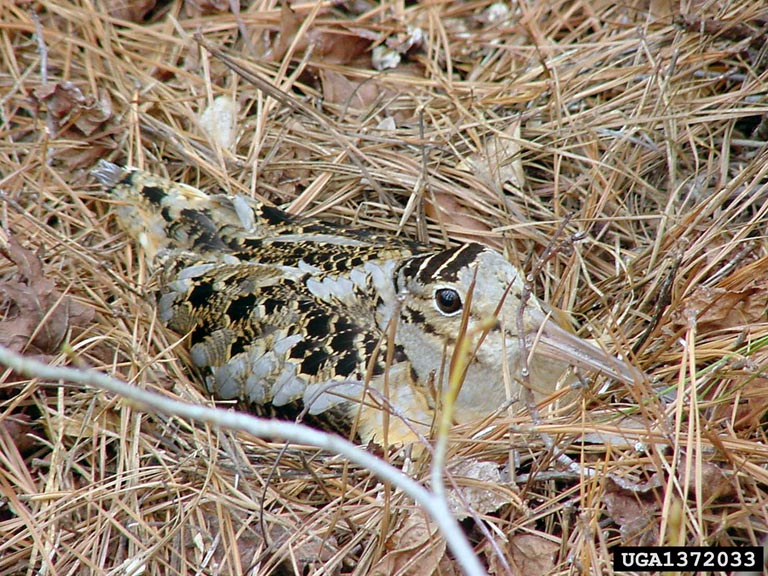
American Woodcock. Photo credit: Ricky Layson, Ricky Layson Photography, Bugwood.org.
You know Spring is around the corner when the days get longer and the temperatures rise. While the weather has pleasantly been warm this year so far, perhaps my favorite harbinger of Spring is the annual arrival of the American Woodcock, also known as the Timberdoodle. Their unique “peents” and the spectacular aerial flights of males looking to attract mates can be very entertaining.
Woodcock are migratory and spend their winters in the southern U.S. They arrive in Indiana in the early spring. This year, they arrived in late-February in the southern part of the state. The Ruffed Grouse Society has a web page with maps of female woodcock and their migration routes for this spring and previous years.
Male woodcock typically set up their singing grounds in open fields and forest openings and recently logged areas. However, they can often be seen in urban areas including parks and even residential communities. Just a couple weeks ago I arrived home just in time to see a male doing his courtship display a block up the road. The best time to observe them is at dusk. They will spend time on the ground “peenting” for a while, then fly high into the air to perform their “dance” only to return to the ground to repeat the process. This will go on until it gets dark. You can sometimes hear them peent in the morning before sunrise. Kyle Daly, a wildlife biologist who has studied them in Minnesota, wrote an excellent article on their spring dance.
Resources
American Woodcock: Habitat Best Management Practices for the Northeast, United States Department of Agriculture (USDA) & Natural Resource Conservation Service (NRCS)
American Woodcock Indiana DNR Fact Sheet, Indiana Department of Natural Resources-Fish & Wildlife
Learn how forests are used by birds new videos, Got Nature? Blog
Winter is a Good Time to Bird?, Got Nature? Blog
Managing Woodlands for Birds, The Education Store-Purdue Extension resource center
Managing Woodlands for Birds Video, Purdue Extension-Forestry and Natural Resources (FNR) YouTube Channel
Birds and Residential Window Strikes: Tips for Prevention, The Education Store, Purdue Extension resource center
Breeding Birds and Forest Management: The Hardwood Ecosystem Experiment and the Central Hardwoods Region, The Education Store
No Room at the Inn: Suburban Backyards and Migratory Birds, The Education Store
The Birders’ Dozen, Profile: Baltimore Oriole, Indiana Woodland Steward
Ask An Expert, Playlist, Purdue Extension – FNR YouTube Channel
It’s For the Birds, Indiana Yard and Garden-Purdue Consumer Horticulture
National Audubon Society
The Cornell Lab of Ornithology
Subscribe, Purdue Extension – FNR YouTube Channel
Brian MacGowan, Extension Wildlife Specialist
Purdue University, Department of Forestry and Natural Resources
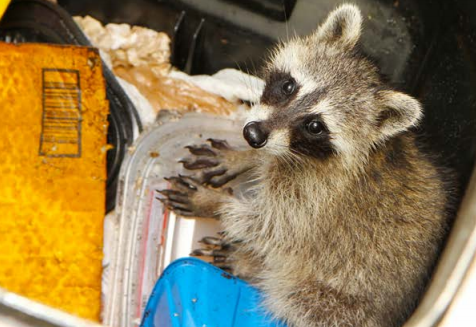 It’s likely you have had some type of run-in with wildlife—no matter where you live. Regardless of the situation, you have essentially three choices when you deal with a wildlife problem. You can ignore the problem and hope it goes away (not the best choice!), fix the problem yourself, or hire someone to fix the problem for you.
Even if you want to fix things yourself, you may find that the situation warrants professional assistance. Or, you may simply want to hire someone because you don’t have time to deal with the problem, you aren’t sure what is causing the problem, or you are unable or unwilling to do the job yourself. The question then becomes, “Who can help?”
Wildlife Extension Specialist Brian MacGowan‘s new publication “Selecting a Nuisance Wildlife Control Professional” provides information about nuisance wildlife control professionals, things to consider when deciding whether or not you need to hire a professional, and tips on how to find a professional who is right for you.
Resources:
Selecting a Nuisance Wildlife Control Professional – The Education Store, Purdue Extension Resource Center
Preventing Wildlife Damage – Do You Need a Permit? – The Education Store
The Basics of Managing Wildlife on Agricultural Lands – The Education Store
Nuisance Wildlife – Indiana Department of Natural Resources
Dealing with nuisance geese this spring – Got Nature?
Brian MacGowan, Wildlife Extension Specialist
Purdue University Department of Forestry and Natural Resources

Photo by Brian MacGowan
As the weather begins to warm up later this year, the sight of Canada geese returning is pleasant to some as a reminder of spring approaching. It can also be downright irritating to others who experience property damage and other conflicts as the geese concentrate on their property. There are several strategies for dealing with geese listed in further detail at the Indiana Department of Natural Resources (IDNR) website, ranging from mild to severe.
The first thing that is important to know regarding geese is that it is simply not a good idea to feed them. While this act is positive in intention, it is a bad thing for both people and geese. Feeding geese gives them an artificially abundant source of food, which can cause them to delay or skip their migration and instead congregate in areas where they will conflict with people. Furthermore, being fed can cause geese to lose their fear of people, giving them the confidence to stroll across roadways and runways. Finally, large amounts of geese competing over bread and other food of limited nutritional value greatly increases their chances of developing and spreading avian diseases. The U.S. Fish & Wildlife Service‘s free publication “Caution: Feeding Waterfowl May Be Harmful!” further explains the need to stop feeding geese.
INDNR offers a significant amount of other advice on other methods of handling goose problems. Habitat modification such as adding vegetative barriers or suspended grid systems can be a good long term solution by making your land less attractive to geese. If geese have already begun to settle in, nonlethal harassment techniques like air horns and sprayers can be used twice a day to scare geese away from your property. Nests can be legally removed as long as there are no eggs present. If the situation calls for more severe actions, a permit can be acquired to destroy nests with eggs, or another permit can be issued by a District Wildlife Biologist to capture and relocate the animals. In cases of excessive property damage, a District Wildlife Biologist can also issue an agricultural depredation permit to shoot geese outside of the normal hunting season.
There are many methods of handling nuisance Canada geese this spring, and not one solution for every problem. If there is a goose problem in your area, please view INDNR’s Nuisance Canada Goose Management page to learn more about what you can do and how to acquire permits if needed.
Resources:
Nuisance Canada Goose Management – Indiana Department of Natural Resources (IDNR)
Caution: Feeding Waterfowl May Be Harmful! – U.S. Fish & Wildlife Service
Selecting a Nuisance Wildlife Control Professional, Got Nature? blog, Purdue Extension-Forestry & Natural Resources
Aaron Doenges, videographer & assistant web designer
Purdue Forestry and Natural Resources
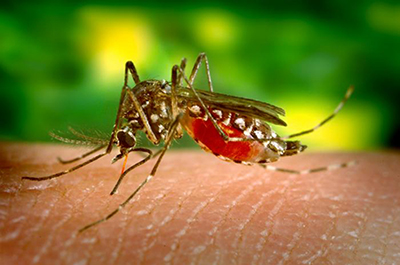
Photo by: James Gathany, Center for Disease Control and Prevention
You may have likely heard of the Zika virus at this point – a new infection on the rise that is drawing many parallels to the West Nile virus that caused 286 deaths in the United States in 2012. Like the West Nile, Zika was first discovered over sixty years ago and wasn’t considered to be a large concern until it reemerged unexpectedly years later. Both viruses are carried by mosquitos, and 80% of people infected display no symptoms and are at risk of unwittingly further spreading the infection. And most importantly, both viruses have no current treatment or vaccination and can be deadly.
When discussing the Zika virus, it is important to know that currently there have been no cases of infection in the continental U.S. While this means there is no need to immediately panic, transmission of diseases are often unpredictable as human population and global travel increase. Zika appeared in Brazil last May and has quickly spread to over 20 countries across Central and South America, causing the World Health Organization to declare the virus an international public health emergency, predicting that Zika could infect as many as 4 million people by the end of this year. With that ominous prediction looming over us, a good precaution to take is knowing how the mosquitos potentially carrying the virus can be controlled and avoided.
Simply avoiding mosquitos is an effective first step. Staying indoors during the daytime when mosquitos feed can help lessen exposure to mosquitos, as well as wearing long sleeves, pants, and U.S. Environmental Protection Agency-approved mosquito repellant when going outdoors.
Another preventative measure you can take is eliminating potential mosquito breeding sites from your area. Mosquitos breed in containers of standing water, and getting rid of them can reduce mosquito population in your area. Dog bowls, birdbaths, potted plants, and similar objects are all potential breeding grounds, and removing them means less places for mosquito eggs to hatch.
Again, the Zika virus isn’t currently an immediate concern for people in the United States, but this information is crucial to know as scientists learn more about how this virus is spread. At any rate, they’re also give good tips for avoiding annoying mosquito bites! To learn more, please check out the Purdue University Agriculture News article “Controlling and avoiding mosquitos helps minimize risk of Zika.”
Resources:
Controlling and avoiding mosquitos helps minimize risk of Zika – Purdue University Agriculture News
Zika virus and mosquito-borne disease experts – Purdue University News
Mosquitos – Purdue University Medical Entomology
Zika Virus – World Health Organization
Management of Ponds, Wetlands, and Other Water Reservoirs to Minimize Mosquitos – The Education Store, Purdue Extension Resource Center
Aaron Doenges, videographer & assistant web designer
Purdue Forestry and Natural Resources
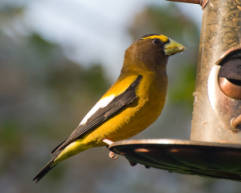
Evening Grosbeaks are common winter visitors to bird feeders. (Photo by U.S. Fish & Wildlife Service)
When the temperatures drop and the snow falls, we often turn our attention to what we can do to help the wildlife which calls our yards home. In most cases, professional wildlife biologists don’t recommend the feeding of wildlife. We instead focus on providing structural elements that provide food, water and cover to provide the necessary wildlife habitat. However, bird feeding, and particularly winter bird feeding, is an exception. It should not replace providing other elements of wildlife habitat in your backyard.
What can you do? Like most things, it comes down to how much time you have and what you want to spend. There are a couple good tips you can follow to get the best results for your investment.
Food type – bird seed mixes can contain “fillers” that is relatively inexpensive and can attract undesirable species of birds. Different bird species have different needs. If you can, offer a single type of bird food in a single feeder. Mixes are ok, but birds will sift through what they don’t want to find what they do want. If you have to pick one to start, offer black-oil sunflower. It is a high-quality food that is attractive to a variety of bird species. Suet is a favorite food of woodpeckers and nuthatches. Commercially available suet cakes also contain seeds and nuts that other birds will consume.
Feeder type – different bird species are adapted to feeding in different ways and locations (e.g., for example). Better designed feeders are sturdy, easy to clean, and easy to fill. Covered platform feeders keep seeds protected from moisture and is attractive for many species of birds (you can fill with black-oil sunflowers). Even though they are covered, the tray should have drainage holes. Tube feeders attract different species of birds such as finches. The small perches and access holes for feeding exclude larger birds such as grackles and blue jays. Open trays close to the ground are good for jays and doves. However, they offer no protection from moisture or squirrels.
Non-targets – squirrels are a common problem at feeders. Metal or plastic baffles or cones can exclude squirrels from many feeders that are mounted on poles or hung from a wire. Some feeders are enclosed in wire cages that prevent squirrels from reaching the seed but still allow access to smaller birds. Starlings are a common problem at suet feeders. However, their feet are relatively week. Suet feeders that only allow access from the bottom prevent starlings access but still allow access for woodpeckers and nuthatches.
Placement – feeders should be placed in areas where you can observe them. Placing them within a few feet of cover can provide “rest” areas for birds to wait their turn. However, low and shrubby ground cover can provide hiding places for domestic cats to ambush birds. Avoid placing feeders in these locations. In extreme cases, you may have to fence off feeding areas to exclude cats.
These are just a few tips to get you started. There are many good resources for feeding songbirds and attracting wildlife to your backyard.
Publications
– Henderson, C.L. 1995. Wild about birds: the DNR bird feeding guide. Minnesota Department of Natural Resources, St. Paul, MN.
– For the Birds, U.S. Fish and Wildlife Service
Resources
– Cornell Lab or Ornithology, Cornell University
– Audubon Society, Bird Feeding Tips
Brian MacGowan, Wildlife Extension Specialist
Purdue Forestry and Natural Resources
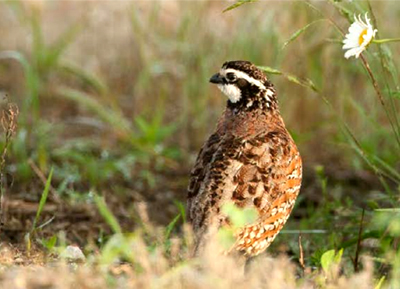 As wildlife biologists, we often help people manage habitat for quail on their property. Every property is different, but areas with good quail numbers have one thing in common: quail-friendly habitat structure. The plant community on the property is especially important, but what plants do you need? It’s great if you know plant species beneficial to quail, but if you’re not a botanist, don’t sweat it. Just learn to recognize and manage for structure. If you’ve got the right structure, chances are the right plants will be present.
Quail need several basic elements for good habitat: grass clumps for nesting, weedy areas for brood rearing, shrub cover for protection from the elements and predators, herbaceous vegetation for night-time roosting, and bare ground. In the new publication “Quail Habitat: Putting the Numbers in Perspective,” Extension wildlife specialist Robert Chapman and small game coordinator Scott Sudkamp explain how to add these elements to your property in the proper way to make it an ideal habitat for quail.
Resources:
Quail Habitat: Putting the Numbers in Perspective – The Education Store, Purdue Extension Resource Center
Bobwhite Quail – Indiana Department of Natural Resources
Developing a Wildlife Habitat Management Plan – The Education Store
Breeding Birds and Forest Management: The Hardwood Ecosystem Experiment and the Central Hardwoods Region – The Education Store
Small Woodlots: Important Rest Stops for Migratory Songbirds – The Education Store
Robert Chapman, Extension Wildlife Specialist
Purdue University Department of Forestry and Natural Resources
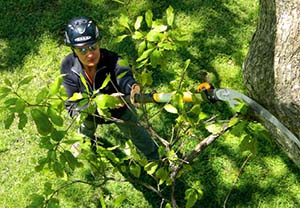 Urban Forestry Specialist Lindsey Purcell‘s helpful publication “Tree Pruning Essentials” is now available in a Spanish-language version, “Lo Esencial Para la Poda de Árboles.” This publication explores the techniques behind good pruning, from the planning process before planting to monitoring the tree’s response after the pruning cuts.
Trees continue to survive in spite of the many challenges they face in the urban environment. However, to grow from seedling to a mature tree in the urban forest, they need our help. They are the largest, oldest living organisms on the planet and can live long, healthy lives with some assistance. We often place trees in less-than-favorable growing locations that don’t allow natural development and maturity and often require pruning to develop a durable structure, improve clearance and maintain aesthetics.
Pruning has been called “one of the best, worst maintenance practices” performed on trees. The process creates wounds, which have a major impact on plant processes. Improper cutting on a tree causes severe damage or even death. To prune properly, it is important to understand both the proper techniques and how the tree responds to pruning.
Check out “Lo Esencial Para la Poda de Árboles” or “Tree Pruning Essentials” and make sure you are pruning your trees to maximize safety, aesthetics, and tree health!
Resources:
Lo Esencial Para la Poda de Árboles (Tree Pruning Essentials)– The Education Store, Purdue Extension Resource Center
Instalación de Árboles: Proceso y practicas (Tree Installation) – The Education Store, Purdue Extension Resource Center
Tree Pruning Essentials – The Education Store
Trees and Storms – The Education Store
Tree Risk Management – The Education Store
Prune Your Trees – Indiana Department of Natural Resources
Lindsey Purcell, Urban Forestry Specialist
Purdue University Department of Forestry and Natural Resources

Recent Posts
- Purdue Extension: Empowering Indiana Through Innovation, Education and Community Impact
Posted: January 28, 2026 in Community Development, How To, Invasive Insects, Invasive Plant Species, Natural Resource Planning, Woodlands - Forest Landowners: Share Your Experience with Regeneration and Restoration
Posted: January 27, 2026 in Forestry, How To, Timber Marketing, Woodlands - It’s Not Too Late to Order Trees for Spring Planting
Posted: January 13, 2026 in Forestry, How To, Plants - Now Is The Time To Control Non-Native Bush Honeysuckle
Posted: October 30, 2025 in Forestry, How To, Invasive Plant Species, Woodlands - October Is Firewood Month: Protect Indiana’s Forests by Making Smart Choices
Posted: October 13, 2025 in Forestry, Forests and Street Trees, How To, Invasive Insects, Urban Forestry - ID That Tree: Smooth Sumac
Posted: October 2, 2025 in Forestry, How To, Wildlife - ID That Tree: Wild Grape Vine
Posted: August 12, 2025 in Forestry, How To, Urban Forestry, Wildlife - Publication – Sericea Lespedeza Control
Posted: July 7, 2025 in Forestry, How To, Invasive Plant Species, Wildlife - How to ID Asian Jumping Worms, Purdue Landscape Report
Posted: July 2, 2025 in How To, Invasive Insects, Wildlife - Alert – Water Your Trees, Watch Video
Posted: June 20, 2025 in Alert, Drought, Forests and Street Trees, How To, Urban Forestry, Wildlife, Woodlands
Archives
Categories
- Alert
- Aquaculture/Fish
- Aquatic/Aquaculture Resources
- Ask the Expert
- Christmas Trees
- Community Development
- Disease
- Drought
- Forestry
- Forests and Street Trees
- Gardening
- Got Nature for Kids
- Great Lakes
- How To
- Invasive Animal Species
- Invasive Insects
- Invasive Plant Species
- Land Use
- Natural Resource Planning
- Nature of Teaching
- Plants
- Podcasts
- Ponds
- Publication
- Safety
- Spiders
- Timber Marketing
- Uncategorized
- Urban Forestry
- Webinar
- Wildlife
- Wood Products/Manufacturing
- Woodland Management Moment
- Woodlands