 Purdue University - Extension - Forestry and Natural Resources
Got Nature? Blog
 Across the globe, most vulture species are declining dramatically. This is concerning because vultures provide valuable ecosystem service by cleaning the environment of carrion, thereby reducing disease risk for humans and livestock. In contrast to most other vulture species, populations of the American black vulture have grown and expanded into new areas during the past several decades. This has created the potential for conflict because black vultures have been documented to kill weak or newborn livestock.
The Purdue Forestry and Natural Resources’ research team seeks to better understand vulture ecology to inform conservation of other vulture species, as well as to understand how best to minimize conflict between vultures and producers by investigating what factors place some farms at greater risk.
What to do if you lose an animal:
• Take lots of pictures from every angle.
• If scavengers are around, move the carcass somewhere they cannot access.
• Call or text Marian Wahl at (317) 647-5294 as soon as you can. Marian is a graduate research assistant working with Pat Zollner, professor of wildlife science.
Thank you for your help as we gather livestock loss due to vultures in the states of Indiana and Kentucky.
To view, print and share flyer: Loss of Livestock to Vultures.
Resources
Livestock, Education Store, Purdue Extension resource center
Dr. Pat Zollner Research, Purdue Forestry and Natural Resources
Wildlife Research, Purdue Forestry and Natural Resources
Marian Wahl, Graduate Research Assistant
Purdue Department of Forestry and Natural Resources
In this “A Moment in the Wild” episode, Nick Burgmeier, Purdue Extension wildlife specialist, talks about the practice of rock stacking and how it affects the habitat of stream-dwelling species.
If you have any questions regarding wildlife, trees, forest management, wood products, natural resource planning or other natural resource topics, feel free to contact us by using our Ask an Expert web page.
Resources
A Moment in the Wild, Playlist, Purdue Extension – Forestry and Natural Resources
Help the Hellbender, Playlist & Website
The Nature of Teaching: Adaptations for Aquatic Amphibians, The Education Store, Purdue Extension resource center
How Our Zoos Help Hellbenders, The Education Store
Help the Hellbender, North America’s Giant Salamander, The Education Store
Nick Burgmeier, Research Biologist and Wildlife Extension Specialist
Purdue Department of Forestry and Natural Resources
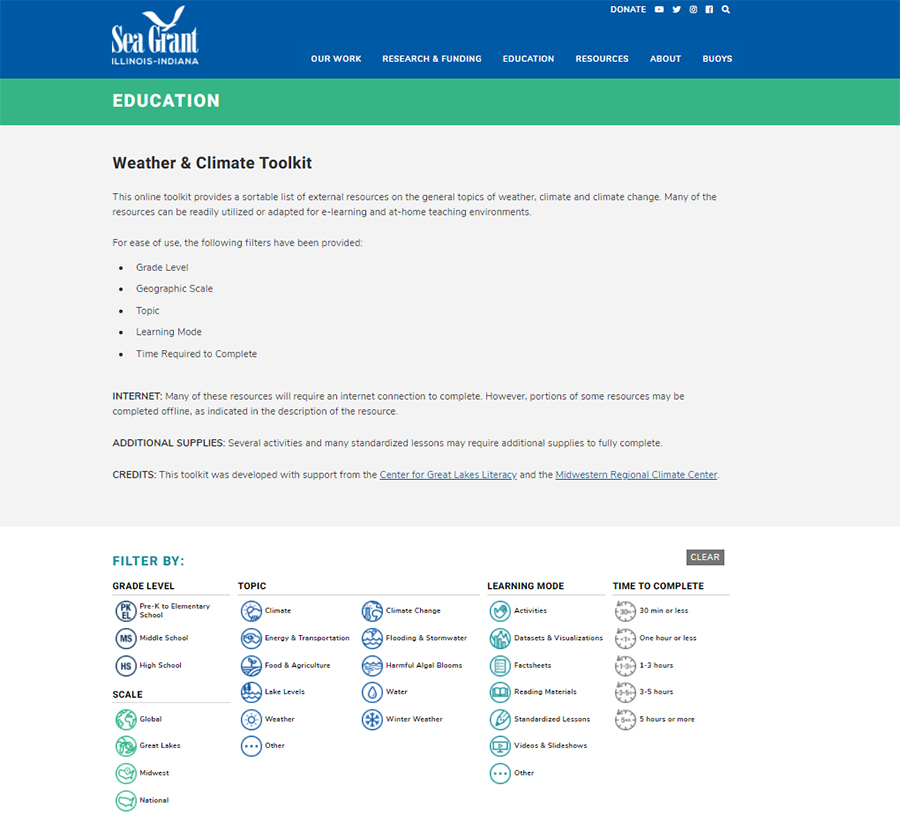 Illinois-Indiana Sea Grant (IISG) Newsroom: With the prolonged pandemic continuing to affect the United States, traditional education has turned toward at-home learning and virtual classrooms to keep students safe. Now more than ever, teachers must be able to find lesson plans for their students that are adaptable to different learning environments and cover topics required by the curriculum. To meet these needs, Illinois-Indiana Sea Grant (IISG) has created a weather and climate education toolkit where teachers can find resources on the topics of weather, climate and climate change.
IISG developed the weather and climate education toolkit with support from the Center for Great Lakes Literacy and the Midwestern Regional Climate Center.
*Illinois-Indiana Sea Grant is a part of University of Illinois Extension and Purdue Extension.
Resources
Climate Resources – Institute for a Sustainable Future
The Nature of Teaching, Purdue Extension
Trees and Storms, The Education Store, Purdue Extension resource center
Illinois-Indiana Sea Grant (IISG)
In a previous job, I helped landowners enroll in and implement private land conservation programs like the Conservation Reserve Program. Much of my job centered around talking with landowners about how to establish and manage native grass and forb (wildflower) plantings for wildlife. Even in my job today, I provide educational opportunities including seminars, field days, and workshops centered on this topic.
One of the most common emails, phone calls, and questions I get when talking about establishing these plantings revolves around evaluating the planting during the first year.
Typically, the inquires go like this “I planted native grasses and wildflowers for wildlife this spring, and now I just have a field of weeds! Did the planting fail?” or “Nothing I planted this spring is growing!”
Following these flustered phone calls and frantic emails, I usually do a site visit with the landowner to help them evaluate their planting. Below are the four things I look for when evaluating a new native grass and wildflower planting.
Before we get into the things I look for during an evaluation, it’s important to note that native grass and wildflower plantings for wildlife typically take 2-3 years to establish. So, what you see in year one, may not be what you get in year two, three, or four. But, there are a few signs you can use to monitor your planting’s progress.

This planting was full of “weeds” in year 1, but by year 2 planted wildflowers were abundant on the site.
1. Weed pressure
Inevitably when you plant these diverse mixes of native grasses and wildflowers you will get weeds. Even if you control weeds before planting (which you should), some weeds will still show up, especially annual weeds like foxtail, ragweed, and horseweed. In the past, we used herbicides like imazapic (Plateau) to help control weeds during the first growing season after planting – which is still an option in native grass only stands or with certain wildflowers. But, with more diverse plantings we do not have any herbicide options to control weeds without harming what we planted. Therefore, weeds may be more of an issue in diverse plantings like pollinator plantings.
Controlling these weeds may require mowing during the growing season before they produce seed, which can help planting success. But this mowing can come at a cost. Many of these weeds like common ragweed, provide cover and food for wildlife. Mowing the field may temporarily reduce its value to many wildlife species. When evaluating weed pressure, we need to decide if weeds are dense or thick enough to reduce the germination and growth of what we planted. Generally, if the weed pressure in the field is high and it is shading out the ground, you should think about mowing to control weeds. If weed pressure is not high and sunlight is still reaching the ground, you may want to consider skipping or delaying the mowing until later in the summer.
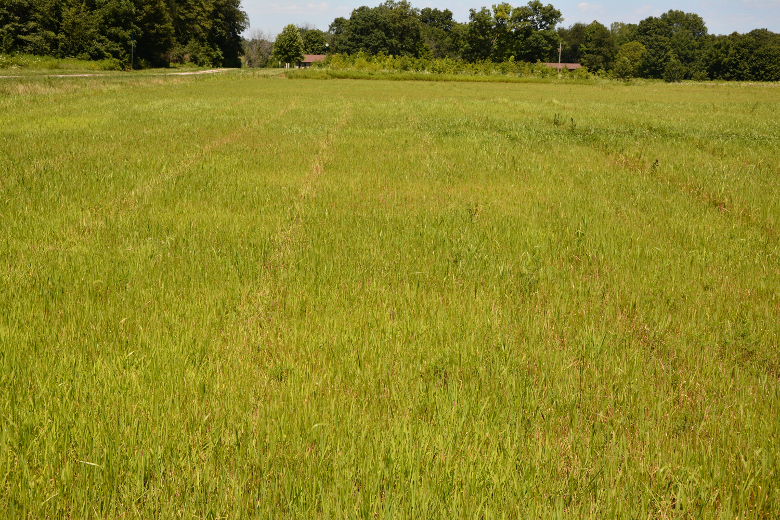
This field that was planting to native grasses and wildflowers is now dominated by foxtail. This would be a situation where mowing may improve the establishment of the what you planted.
2. Look for rows or drill marks
If you plant the field with a no-till drill, you may see rows of plants appear during the first growing season. This is a sure indication that what you planted has germinated and is growing. However, if you frost seeded the field by broadcasting the seed on top of the ground, you will not see rows. Sometimes the rows of plants will not be obvious at first, but will be very obvious later on.
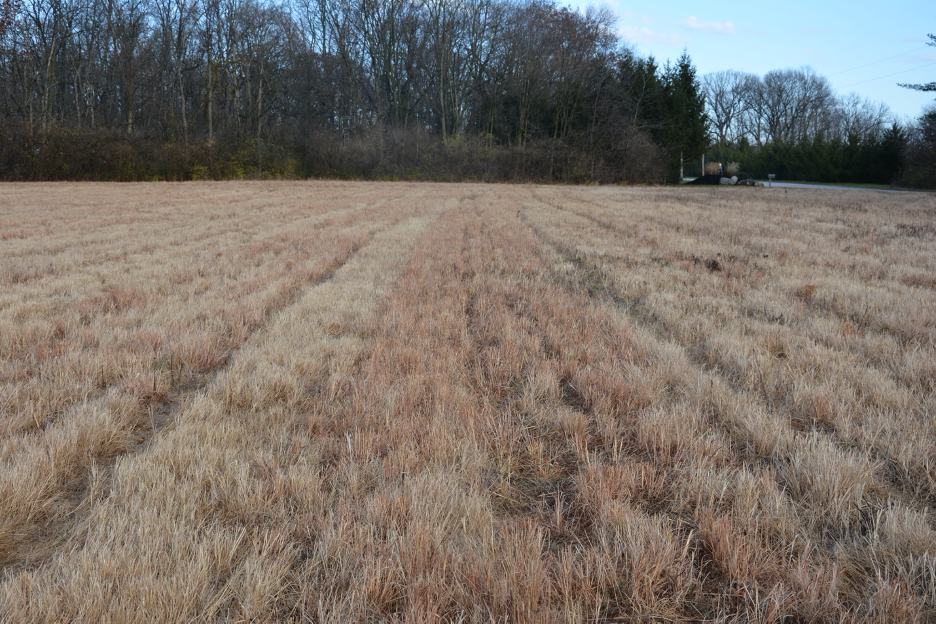
See the bronzish/orange grass in rows? That’s little bluestem. This landowner thought they had a failed planting, but it wasn’t until the following winter when the drilled rows of little bluestem were obvious.
3. Identify indicator plants
One the best ways I could calm the nerves of a landowner who thought they had a failed planting was by identifying species of wildflowers or grasses that they did indeed plant. Some of the annual or biennial wildflowers such as black-eyed susan or partridge pea will germinate quickly and may even flower during the first growing season. Learning how to identify some of the species you planted will help you determine if what you planted is indeed germinating and growing.
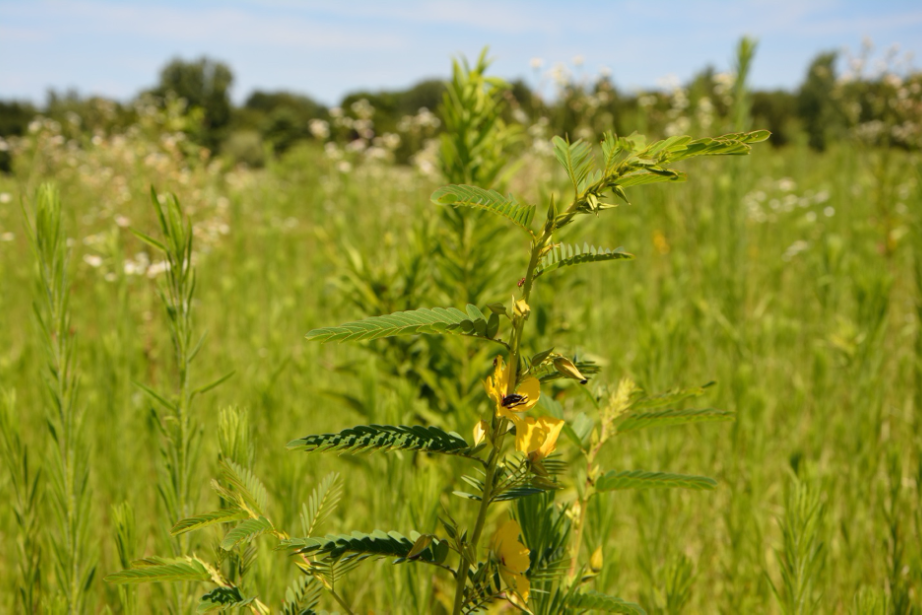
Partridge pea is a commonly planted species that grows and flowers during the first summer after planting. Their yellow flowers and compound leaves make them easy to identify.
4. Scout for invasives
Another topic of discussion on a site visit is invasive plants. It is important to catch invasive early in a planting so they do not cause problems later on. Some of the common invasive plants that show up early in the life of native grass and wildflower planting are Canada thistle, sericea lespedeza, and johnsongrass. Control of these species often requires herbicide. Catching them early when they can be spot-sprayed will save you time, money, and headaches.
Looking for these four signs when evaluating your newly established planting can help you determine if it’s on the right track and help you keep it there. But, many of the species you planted are perennials, and will not be very obvious the first growing season. They are putting most of their energy towards below ground (roots), not above ground (stems) growth. So, if you don’t see them during the first growing season, it doesn’t mean they are not there. Establishing a native grass and wildflower planting for wildlife takes a bit of patience and persistence.
Video: Tips for Evaluating a First Year Native Grass and Forb Planting expands even further regarding the tips on how to evaluate your first-year planting.
Resources
Purdue Extension Pond and Wildlife Management Website
Renovating Native Warm-Season Grass Stands for Wildlife: A Land Manager’s Guide, The Education Store, Purdue Extension resource center
Calibrating a No-Till Drill for Conservation Plantings and Wildlife Food Plots, Video
Habitat Help LIVE Q&A – Native Grasses and Forbs for Wildlife, Video, Purdue Extension – Forestry and Natural Resources Youtube channel
Jarred Brooke, Wildlife Extension Specialist
Purdue Department of Forestry and Natural Resources
In this “A Moment in the Wild” episode, Nick Burgmeier, Purdue Extension wildlife specialist, talks about the eastern hognose snake, which are often found in areas with sandy soil. They are named hognose, due to an upturned rostrum or nasal area.
If you have any questions regarding wildlife, trees, forest management, wood products, natural resource planning or other natural resource topics, feel free to contact us by using our Ask an Expert web page.
Resources
A Moment in the Wild, Playlist, Purdue Extension – Forestry and Natural Resources
Snakes of Indiana, The Education Store, Purdue Extension resource center
Indiana Amphibian and Reptile ID Package (4 softcover books), The Education Store
When Juvenile Snakes Come Calling, Purdue Extension
Nick Burgmeier, Research Biologist and Wildlife Extension Specialist
Purdue Department of Forestry and Natural Resources
In this “A Moment in the Wild” episode, Nick Burgmeier, Purdue Extension wildlife specialist, talks about how building chutes and dams in rivers and streams affects wildlife habitat and water quality.
If you have any questions regarding wildlife, trees, forest management, wood products, natural resource planning or other natural resource topics, feel free to contact us by using our Ask an Expert web page.
Resources
A Moment in the Wild, Playlist, Purdue Extension – Forestry and Natural Resources
Help the Hellbender, Playlist & Website
The Nature of Teaching: Adaptations for Aquatic Amphibians, The Education Store, Purdue Extension resource center
How Our Zoos Help Hellbenders, The Education Store
Help the Hellbender, North America’s Giant Salamander, The Education Store
Nick Burgmeier, Research Biologist and Wildlife Extension Specialist
Purdue Department of Forestry and Natural Resources
In this webinar, Purdue Extension forester Lenny Farlee talks about methods of controlling invasive plant species, which include: preventing invasions, early detection and rapid response, control techniques, accessing resources and assistance.
Don’t forget to fill out the Invasive Plants Threaten our Woodlands Part 2, Identification survey after watching the video to share your suggestions or other forest topics you would like to see and to help us learn more about you.
Check out Invasive Plants Threaten our Woodlands: Part 1, Identification (video). This video is also available on Purdue Extension – Forestry and Natural Resources Youtube channel.
If you have any questions regarding wildlife, trees, forest management, wood products, natural resource planning or other natural resource topics, feel free to contact us by using our Ask an Expert web page.
Resources
A Woodland Management Moment, Playlist
Invasive Species, Playlist
Report Invasive Species, Purdue Invasive Species
The GLEDN Phone App – Great Lakes Early Detection Network
EDDMaps – Early Detection and Distribution Mapping System (Report Invasives)
Cooperative Invasive Species Management Area (CISMA)
Indiana Department of Natural Resources: Invasive Species
Indiana Invasive Species Council
Woodland Stewardship for Landowners, Playlist
Invasive plants: impact on environment and people, The Education Store, Purdue Extension resource center
Woodland Invaders, Got Nature? Blog
Hardwood Tree Improvement & Regeneration Center (HTIRC)
Lenny Farlee, Extension Forester
Purdue University, Department of Forestry and Natural Resources
Purdue Extension forester Lenny Farlee talks about what woodland management means, defining your goals and objectives, invasive species control, timber stand improvement (TSI) and finding appropriate professional help in this webinar.
Note: evaluation slide at end is incorrect. Follow this link for proper evaluation: https://purdue.ca1.qualtrics.com/jfe/form/SV_3OQLWbE7gfMBjWl
If you have any questions regarding wildlife, trees, forest management, wood products, natural resource planning or other natural resource topics, feel free to contact us by using our Ask an Expert web page.
Resources
A Woodland Management Moment, Playlist, Purdue Extension – Forestry and Natural Resources Youtube Channel
Invasive Species, Playlist
Woodland Stewardship for Landowners, Playlist
Invasive Plant Species Identification, Video
Invasive plants: impact on environment and people, The Education Store, Purdue Extension resource center
A Landowner’s Guide to Sustainable Forestry: Part 7: Managing for a Diversity of Value-Added Forest Products, The Education Store
Investing in Indiana Woodlands, The Education Store
Woodland Invaders, Got Nature? Blog
Lenny Farlee, Sustaining Hardwood Extension Specialist
Purdue University Department of Forestry and Natural Resources
Purdue Landscape Report: Homeowners can easily become injured – often fatally – while attempting to trim trees near overhead electrical wires. Though it is tempting to try to save money with this “do-it-yourself” approach, the potential for electrocution is not worth the risk. It is important to recognize when to call a professional arborist.
Terrible accidents can happen when a homeowner uses any type of cutting tools and/or ladders when attempting to trim backyard trees and shrubs. Overhead wires are often unnoticed and is touched by directly or indirectly, causing injury or death.
Examples include:
- A homeowner climbed a ladder to trim a tree branch that was dropping leaves into his above ground swimming pool and causing a nuisance. A branch came in contact with the power line, shocking the man with a jolt of electricity and sending him into cardiac arrest. He fell 20 feet to the ground but was revived by medics at the scene.
- MATTHEWS, N.C. — A man trimming trees in a neighborhood was shocked Wednesday morning after a limb fell on power lines, authorities said. Nearby resident Margie Owens knows the man and said he does odd jobs around the neighborhood. According to officials, after the limb fell from pruning, the tree continued to be energized by the power line, leaving the man stuck.
- A Charlotte County man was electrocuted trimming trees in a backyard. The victim was part of a landscaping crew and came in direct contact with a utility line.
Preventable Accidents
Tree limbs can conduct electricity. When trees grow near overhead wires, they can contact the wires and become energized. Trees and wires are dangerous, full of electrical power that can injure or kill humans. How do we know which lines are energized? WE DON’T! Assume all are carrying dangerous electrical current and should be avoided when working around them.
A common house switch carries 120 volts, but the electric flow is usually limited to 10, 15 or 20 amps. A common “house drop” (service wire) contains 240 volts and up to 20 amps or more. Given the right set of circumstances, even the shock a person gets from a common light switch can kill, but at the same time, it is easier to break electrical contact while standing inside a house. If a person is climbing a ladder or is in the tree, it may be more difficult to break contact with the energized wire. This means that the service line over a typical yard could easily kill a person.

Utility service providers can help select a tree which is compatible with nearby lines and reduce the need for excessive pruning to maintain safety and reliability

These powerlines could be “energizing” the tree creating a potential shock hazard for anyone touching the tree. Notice the burning on the new growth.
Trees growing into utility lines should be pruned by a qualified arborist.
Here are a few tips to avoid trees in wires:
- Look for power lines before pruning trees and large shrubs. If lines are anywhere near the tree within 10 ft. don’t attempt any tree work. Tree care professionals have the training and equipment needed to perform these tasks safely.
- Never climb a tree in order to prune it. Even if the wires aren’t currently touching the tree, remember that the tree’s branches will shift once you begin climbing or removing limbs.
- Don’t move ladders or long-handled pruning tools around the yard without first looking up. Always read and heed ladder-use safety labels.
Find a professional
Be sure to always hire an insured, tree care professional, preferably and ISA Certified Arborist with the experience, expertise, and equipment to safely take down or prune trees in wires. Require proof of liability insurance to protect yourself as well.
Another easy way to find a tree care service provider in your area is to use the “Locate Your Local Tree Care Industry Association Member Companies” program. For more information refer to the publication Trees and Utilities at the Purdue Education Store.
Find a certified arborist in your area by going to Trees are good website.
Resources:
Tree Pruning for the Landscape, Video, Purdue Extension – Forestry and Natural Resources YouTube Channel
Tree Pruning Essentials, Video & Publication
Tree Appraisal and the Value of Trees, The Education Store, Purdue Extension’s resource center
Tree Pruning: What Do Trees Think?, The Education Store
Mechanical Damage to Trees: Mowing and Maintenance Equipment, The Education Store
Tree Installation Process and Practices, The Education Store
In this edition of ID That Tree, Purdue Extension forester Lenny Farlee introduces you to the Eastern White Pine, Indiana’s only native five-needle pine. This species, which can grow to 150 feet tall, grows a ring of branches as it ages. Learn more inside.
If you have any questions regarding trees, forests, wildlife, wood products or other natural resource topics, feel free to contact us by using our Ask an Expert web page.
Resources
ID That Tree, Playlist, Purdue Extension – Forestry and Natural Resources Youtube Channel
A Woodland Management Moment, Playlist, Purdue Extension – Forestry and Natural Resources Youtube Channel
White Pine and Salt Tolerance, The Education Store, Purdue Extension resource center
Tree Diseases: White Pine Decline in Indiana, The Education Store
Investing in Indiana Woodlands, The Education Store
Tree Appraisal and the Value of Trees, The Education Store
Forest Improvement Handbook, The Education Store
Lenny Farlee, Sustaining Hardwood Extension Specialist
Purdue University Department of Forestry and Natural Resources

Recent Posts
- Purdue Extension: Empowering Indiana Through Innovation, Education and Community Impact
Posted: January 28, 2026 in Community Development, How To, Invasive Insects, Invasive Plant Species, Natural Resource Planning, Woodlands - Forest Landowners: Share Your Experience with Regeneration and Restoration
Posted: January 27, 2026 in Forestry, How To, Timber Marketing, Woodlands - It’s Not Too Late to Order Trees for Spring Planting
Posted: January 13, 2026 in Forestry, How To, Plants - Now Is The Time To Control Non-Native Bush Honeysuckle
Posted: October 30, 2025 in Forestry, How To, Invasive Plant Species, Woodlands - October Is Firewood Month: Protect Indiana’s Forests by Making Smart Choices
Posted: October 13, 2025 in Forestry, Forests and Street Trees, How To, Invasive Insects, Urban Forestry - ID That Tree: Smooth Sumac
Posted: October 2, 2025 in Forestry, How To, Wildlife - ID That Tree: Wild Grape Vine
Posted: August 12, 2025 in Forestry, How To, Urban Forestry, Wildlife - Publication – Sericea Lespedeza Control
Posted: July 7, 2025 in Forestry, How To, Invasive Plant Species, Wildlife - How to ID Asian Jumping Worms, Purdue Landscape Report
Posted: July 2, 2025 in How To, Invasive Insects, Wildlife - Alert – Water Your Trees, Watch Video
Posted: June 20, 2025 in Alert, Drought, Forests and Street Trees, How To, Urban Forestry, Wildlife, Woodlands
Archives
Categories
- Alert
- Aquaculture/Fish
- Aquatic/Aquaculture Resources
- Ask the Expert
- Christmas Trees
- Community Development
- Disease
- Drought
- Forestry
- Forests and Street Trees
- Gardening
- Got Nature for Kids
- Great Lakes
- How To
- Invasive Animal Species
- Invasive Insects
- Invasive Plant Species
- Land Use
- Natural Resource Planning
- Nature of Teaching
- Plants
- Podcasts
- Ponds
- Publication
- Safety
- Spiders
- Timber Marketing
- Uncategorized
- Urban Forestry
- Webinar
- Wildlife
- Wood Products/Manufacturing
- Woodland Management Moment
- Woodlands